Oral Communication
in Context
Q U A R T E R 1
It arises when the sender of the message is
speaking in technical terms while the
receiver is unaware of the terms. It creates
confusion and misunderstanding between
the sender and receiver by acting as a barrier
to effective communication.
Language Barriers/
Semantic Noise
PICK ME! (ACTIVITY)
Those that arise due to certain factors like
faulty equipment, noise, closed doors, and
cabins cause the information sent from
sender to receiver to become distorted,
which results in improper communication.
Physical Barriers/
External Noises
PICK ME! (ACTIVITY)
When a person’s mind is distracted or
preoccupied with other things, the person is
not able to form a proper message, listen to
what others tell him/her, interpret the
message as required, and give proper
feedback. Communication will face problems
and becomes ineffective.
Psychological Barriers/
Internal Noises
PICK ME! (ACTIVITY)
Barriers arise when a sender or the receiver
of the communication is not in a position to
express or receive the message with clarity
due to some physiological issues like
dyslexia, or nerve disorders that interfere
with speech or hearing.
Physiological Barriers
PICK ME! (ACTIVITY)
Barriers arise due to a lack of
similarities among the different
cultures across the world.
Cultural Barriers
PICK ME! (ACTIVITY)
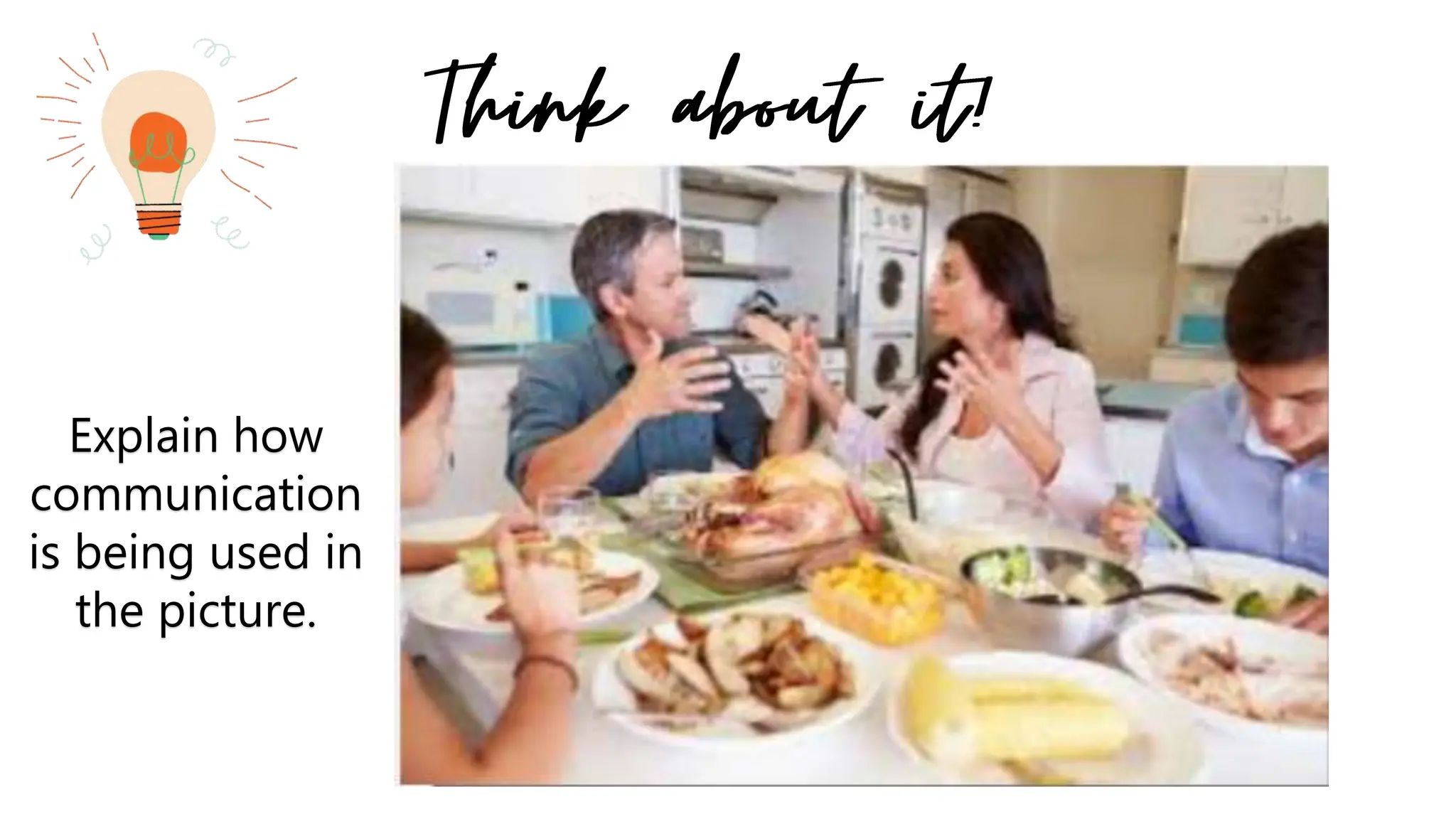
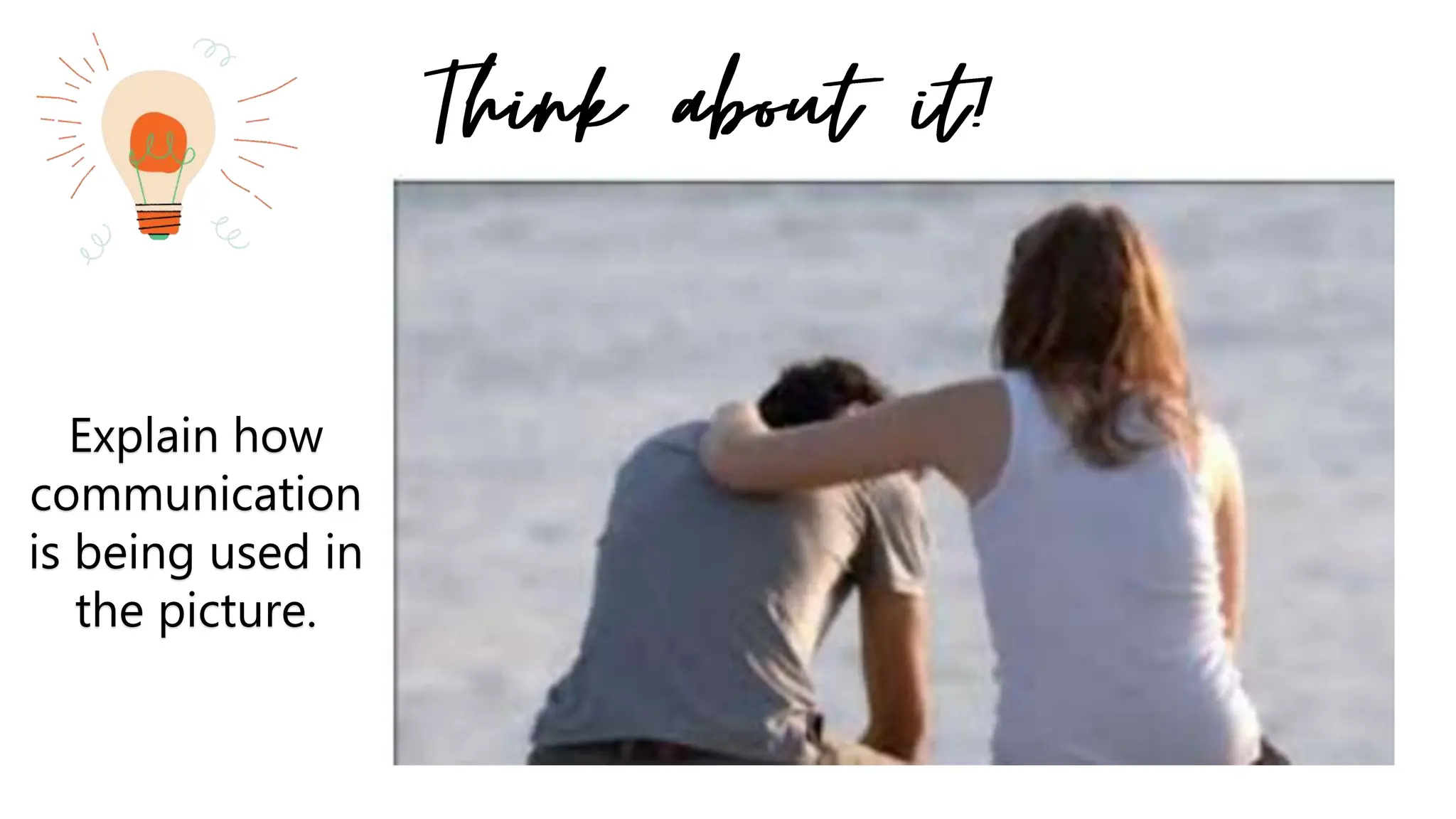
Explain how
communication
is being used in
the picture.
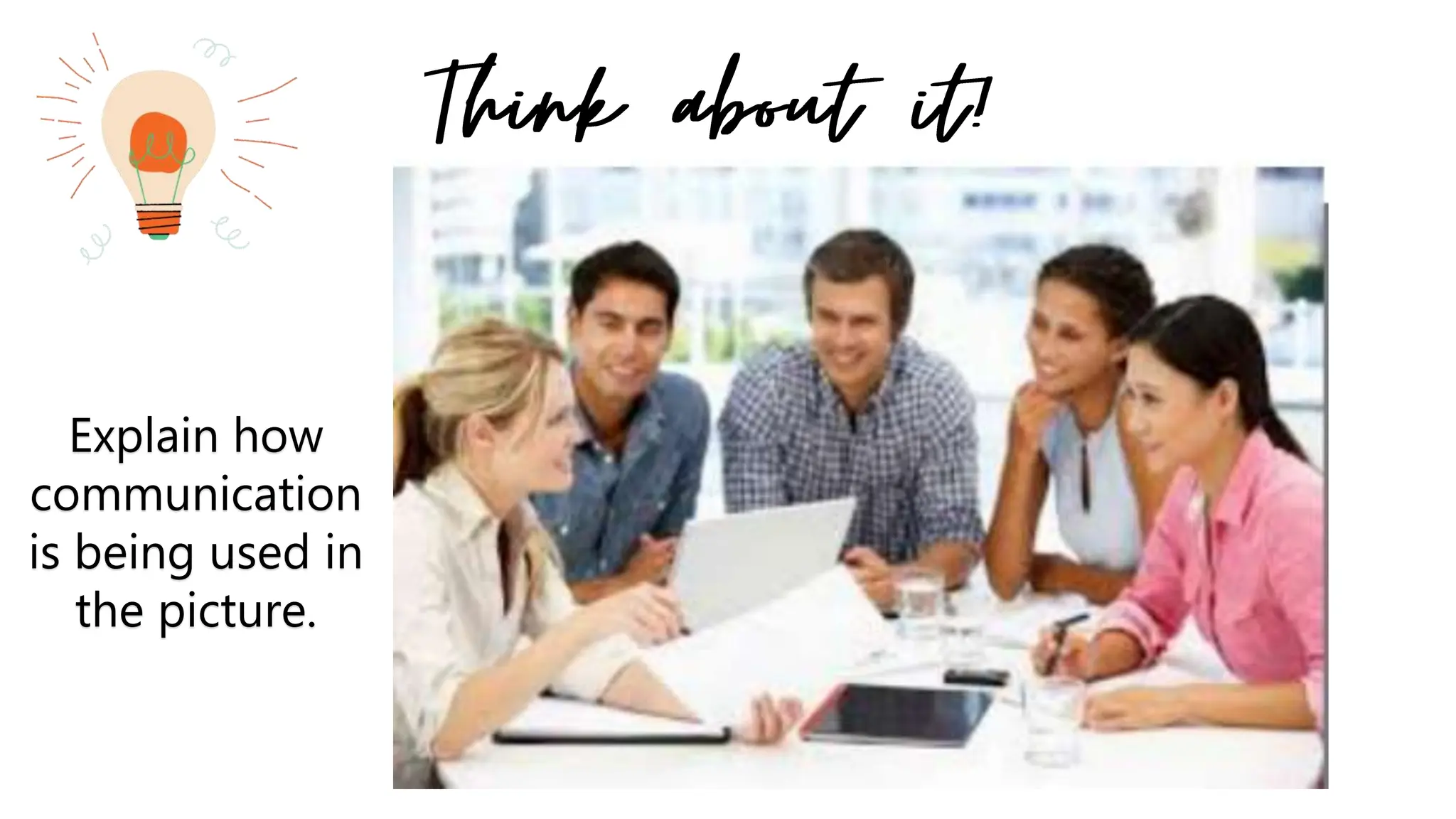
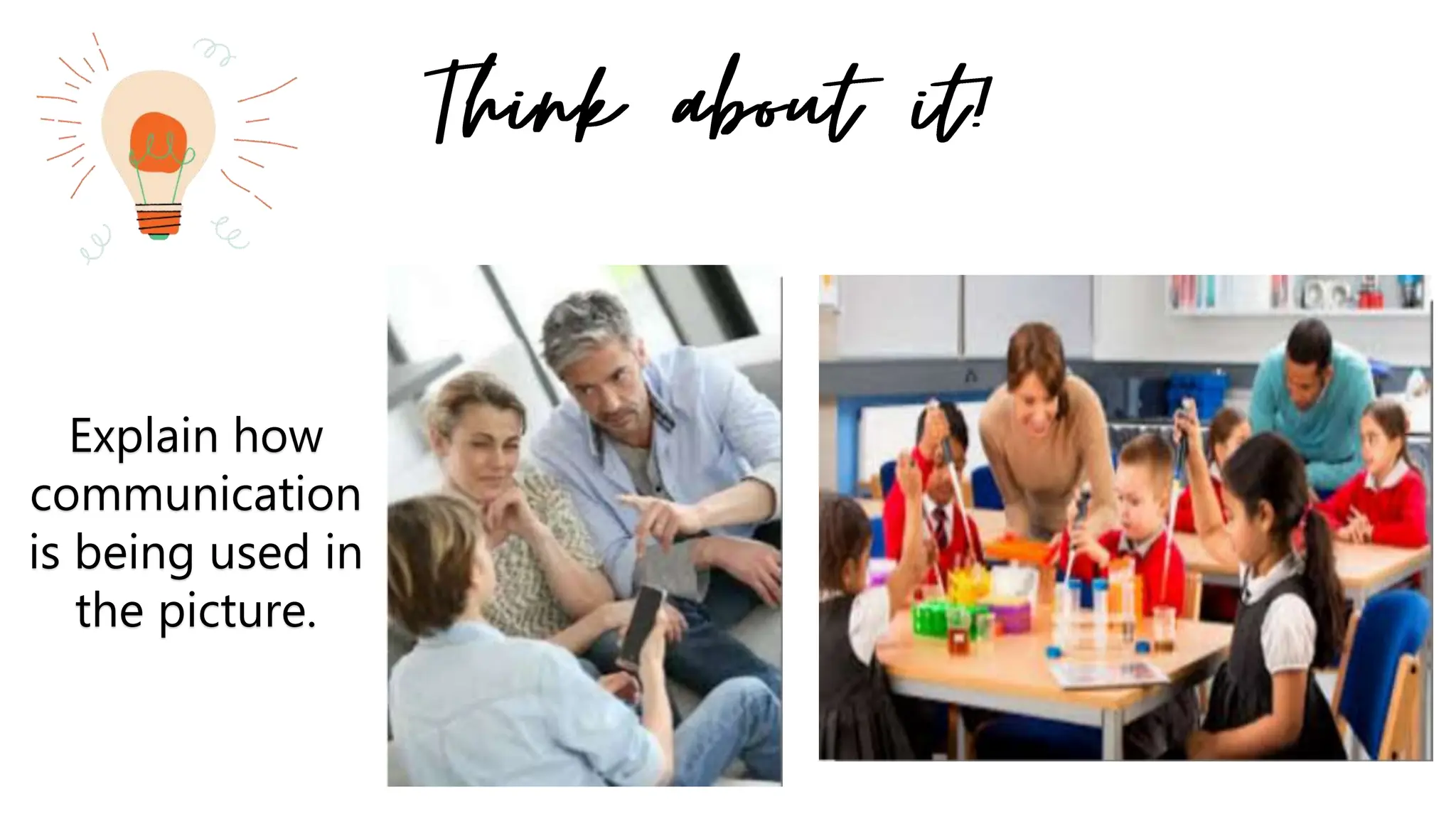
Explain how
communication
is being used in
the picture.
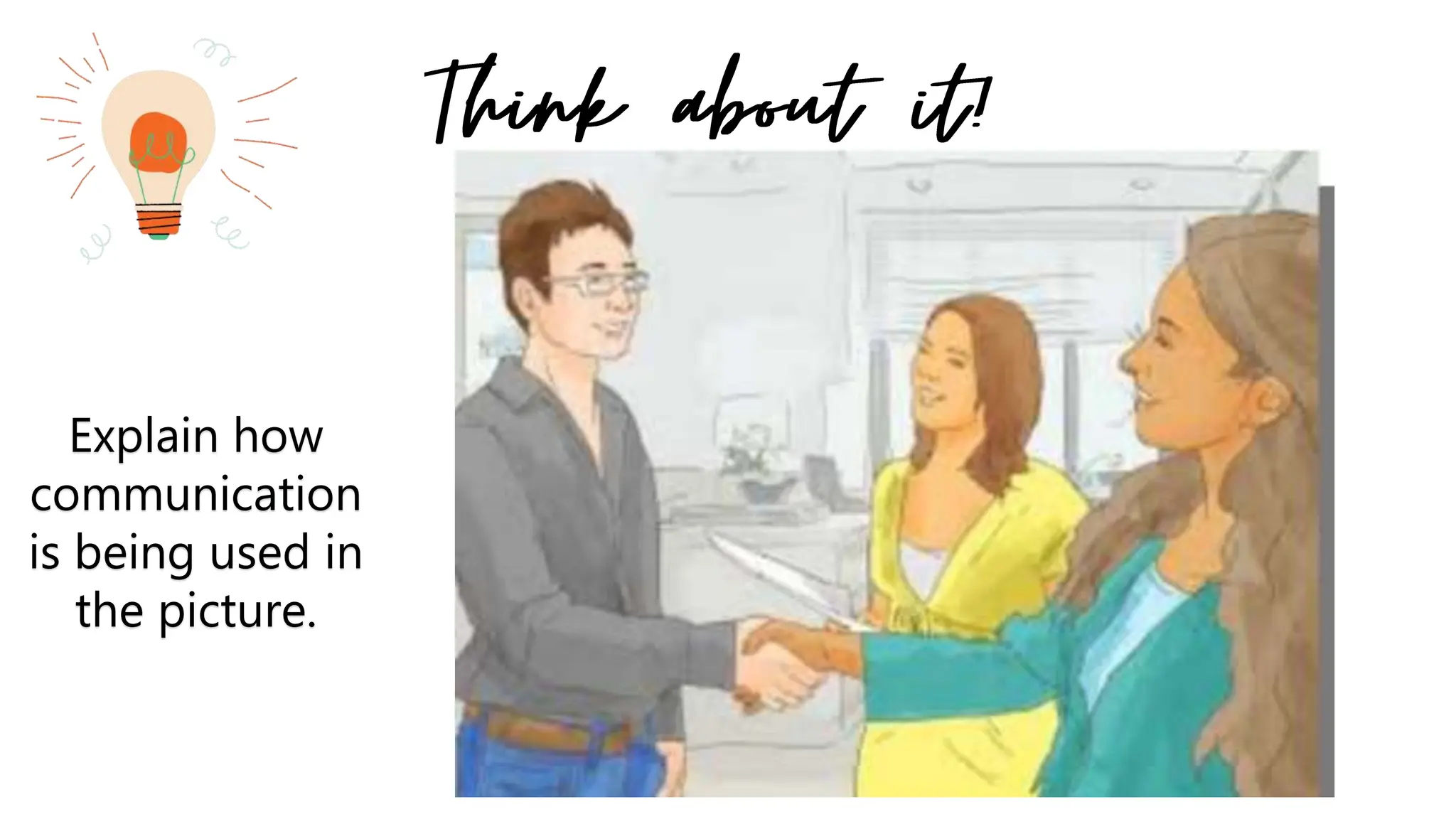
Explain how
communication
is being used in
the picture.
Explain how
communication
is being used in
the picture.
Explain how
communication
is being used in
the picture.
FUNCTIONS OF
COMMUNICATION
M O D U L E 5
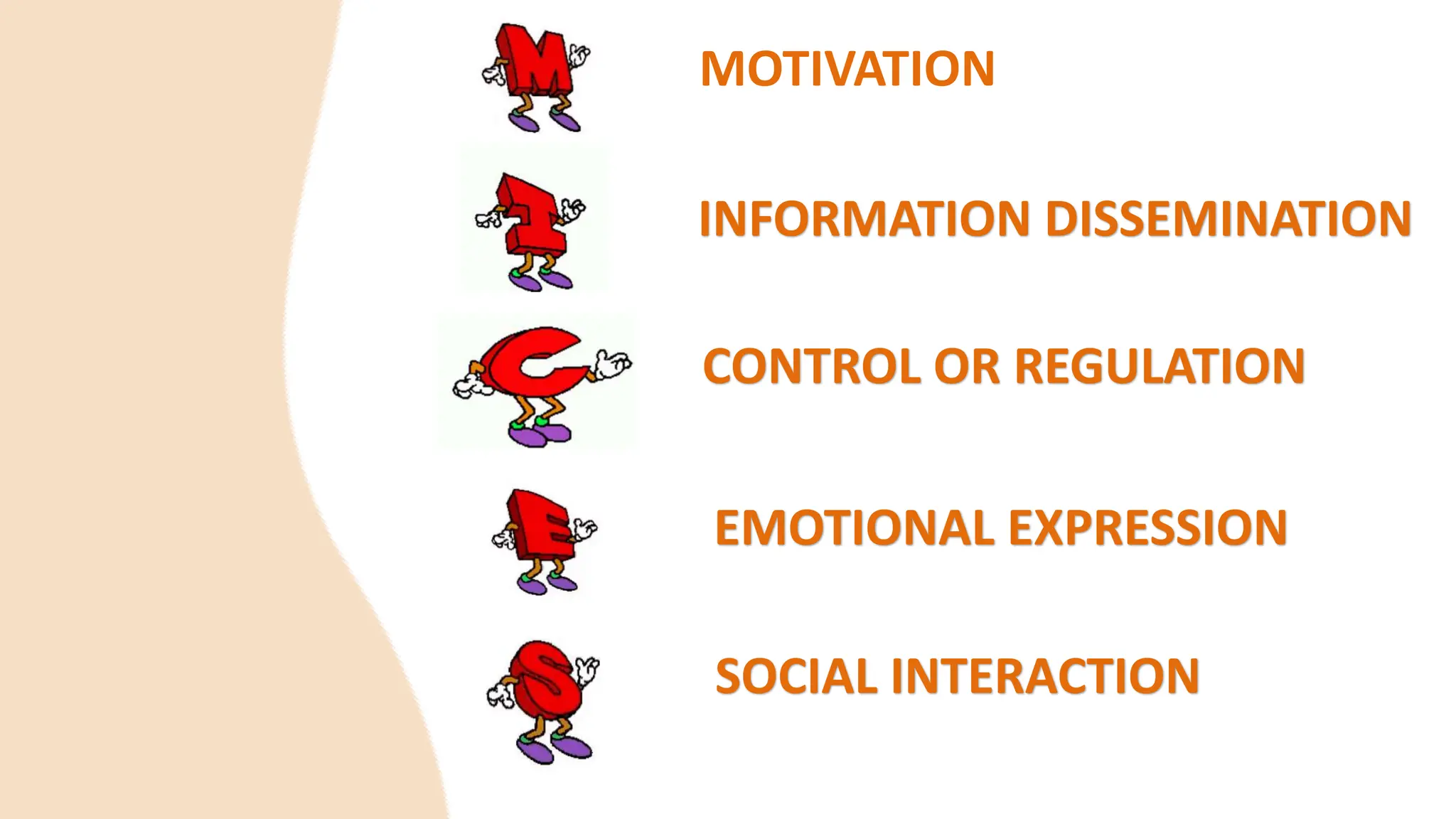
MOTIVATION
INFORMATION DISSEMINATION
CONTROL OR REGULATION
EMOTIONAL EXPRESSION
SOCIAL INTERACTION
MOTIVATION
Functions of Communication
It also refers to a person using a language to
express desires, needs, wants, likes and dislikes,
inclinations, choices and aspirations.
It happens when a speaker
motivates someone or a group
by using his or her skills in
communication towards self-
assessment confidence
knowledge, etc.
Positive Motivation
It can lead either to
communication
apprehension and
social anxiety.
Negative Motivation
INFORMATION
DISSEMINATION
Functions of Communication
It is the most basic function of communication that
provides data information for effective completion of
tasks solutions, of problems and elimination of
uncertainty.
CONTROL and
REGULATION
Functions of Communication
It can be used to control the behavior of human
beings. It can be used to regulate the nature and
amount of activities humans engage in.
EMOTIONAL
EXPRESSION
Functions of Communication
It is a manifestation of one’s internal emotional
state.
It is the process of releasing
and thereby providing relief
from strong or repressed
emotions here, it helps people
express their feelings and
emotions
Catharsis
SOCIAL
INTERACTION
Functions of Communication
Communication allows acting and reacting to the behavior of
people around us, but rebuilding our thoughts and feelings
release reactions from others.
VERBAL AND
NONVERBAL
COMMUNICATION
M O D U L E 5
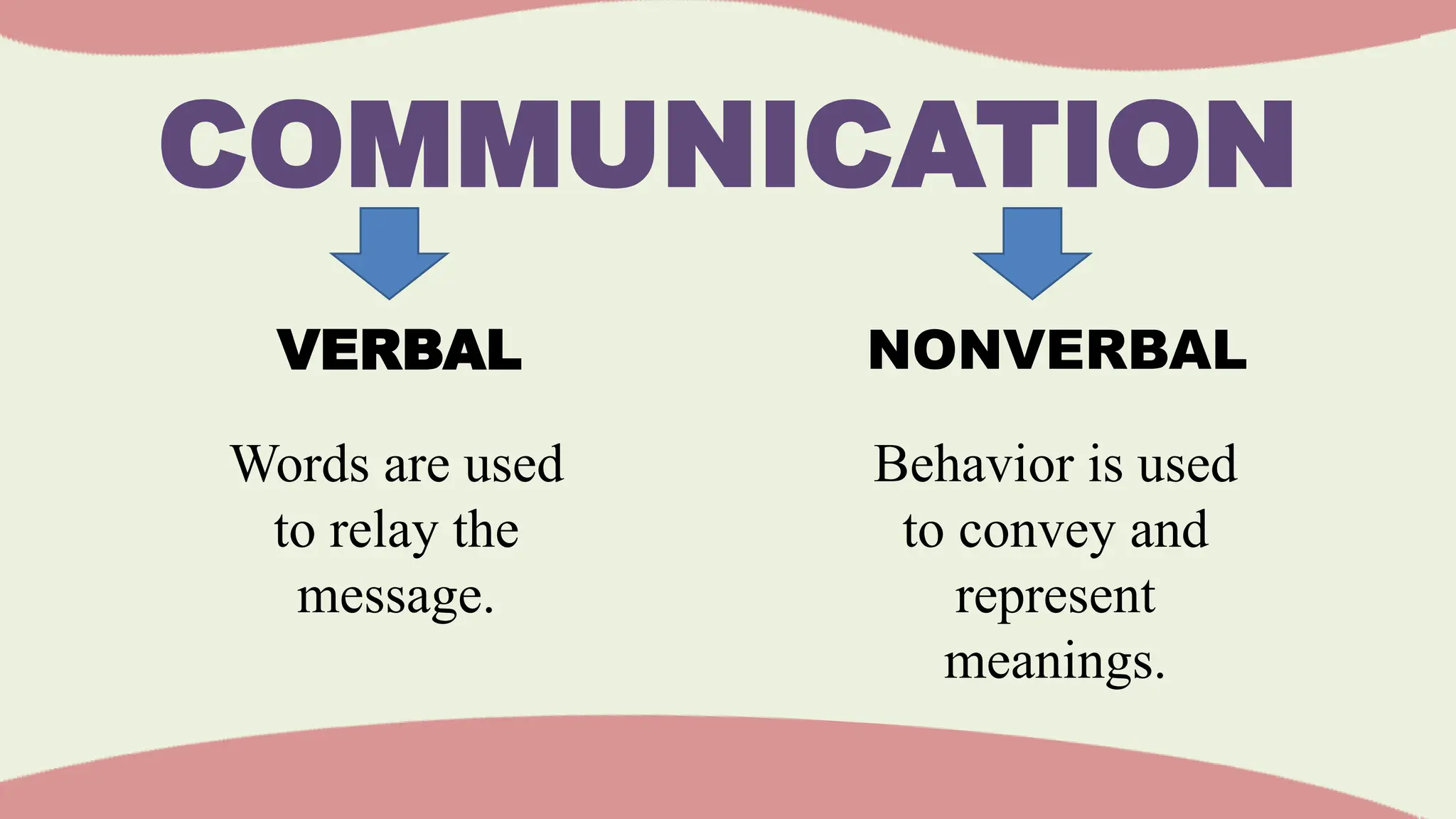
COMMUNICATION
VERBAL NONVERBAL
Words are used
to relay the
message.
Behavior is used
to convey and
represent
meanings.
VERBAL
COMMUNICATION
ASPECTS OF VERBAL
COMMUNICATION
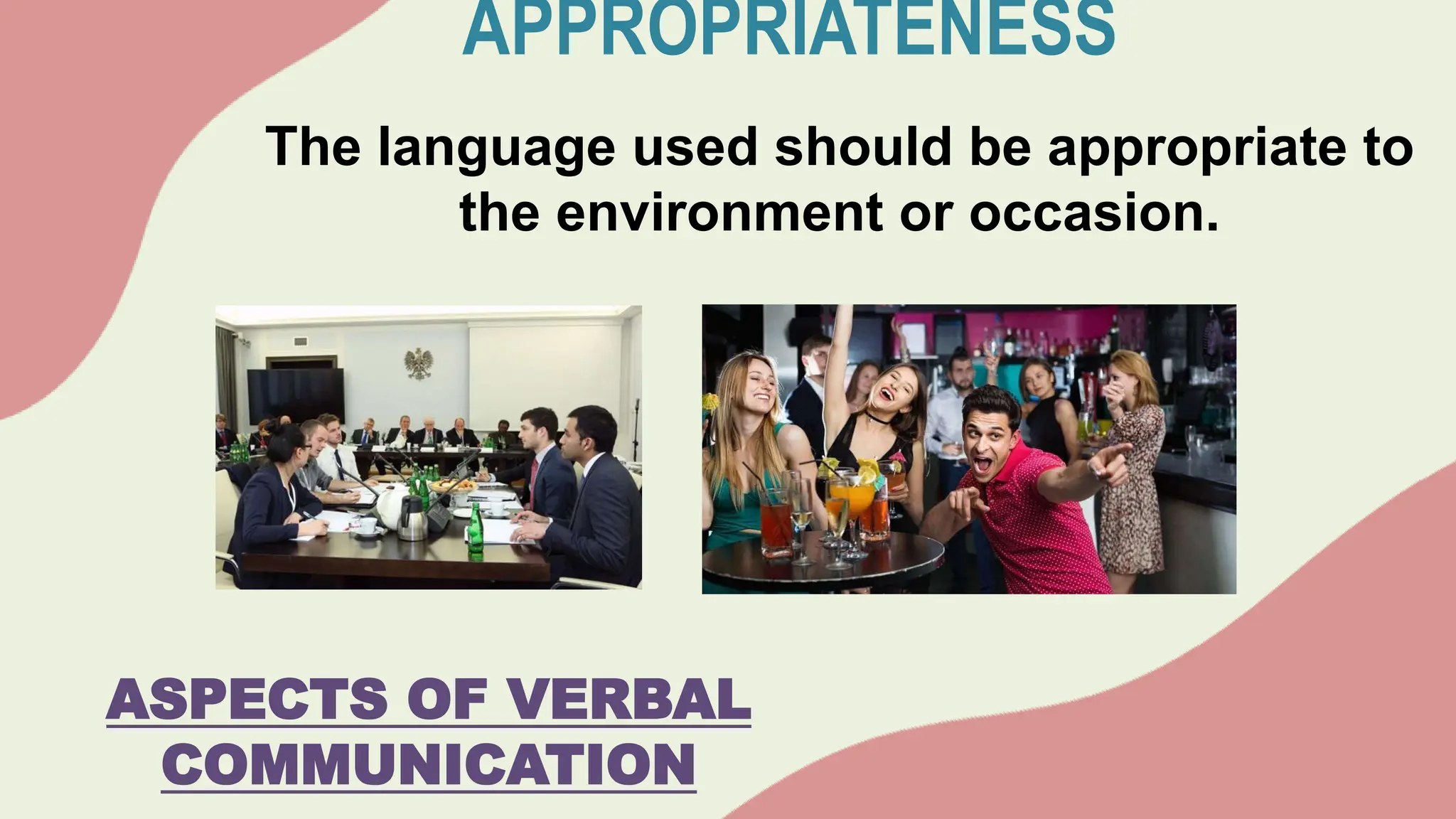
APPROPRIATENESS
The language used should be appropriate to
the environment or occasion.
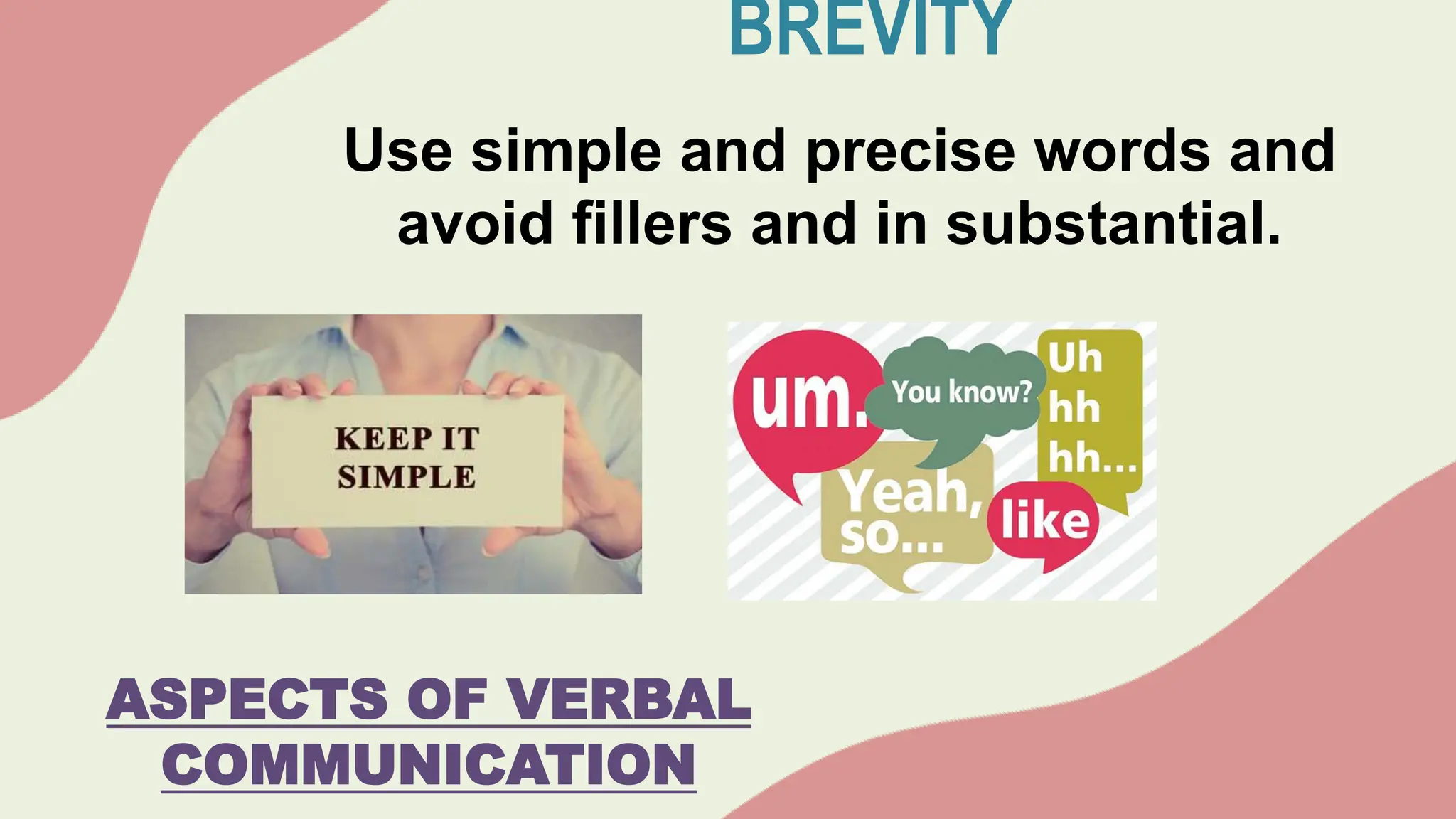
BREVITY
Use simple and precise words and
avoid fillers and in substantial.
ASPECTS OF VERBAL
COMMUNICATION
CLARITY
Clearly state your message and express
your ideas and feelings.
ASPECTS OF VERBAL
COMMUNICATION
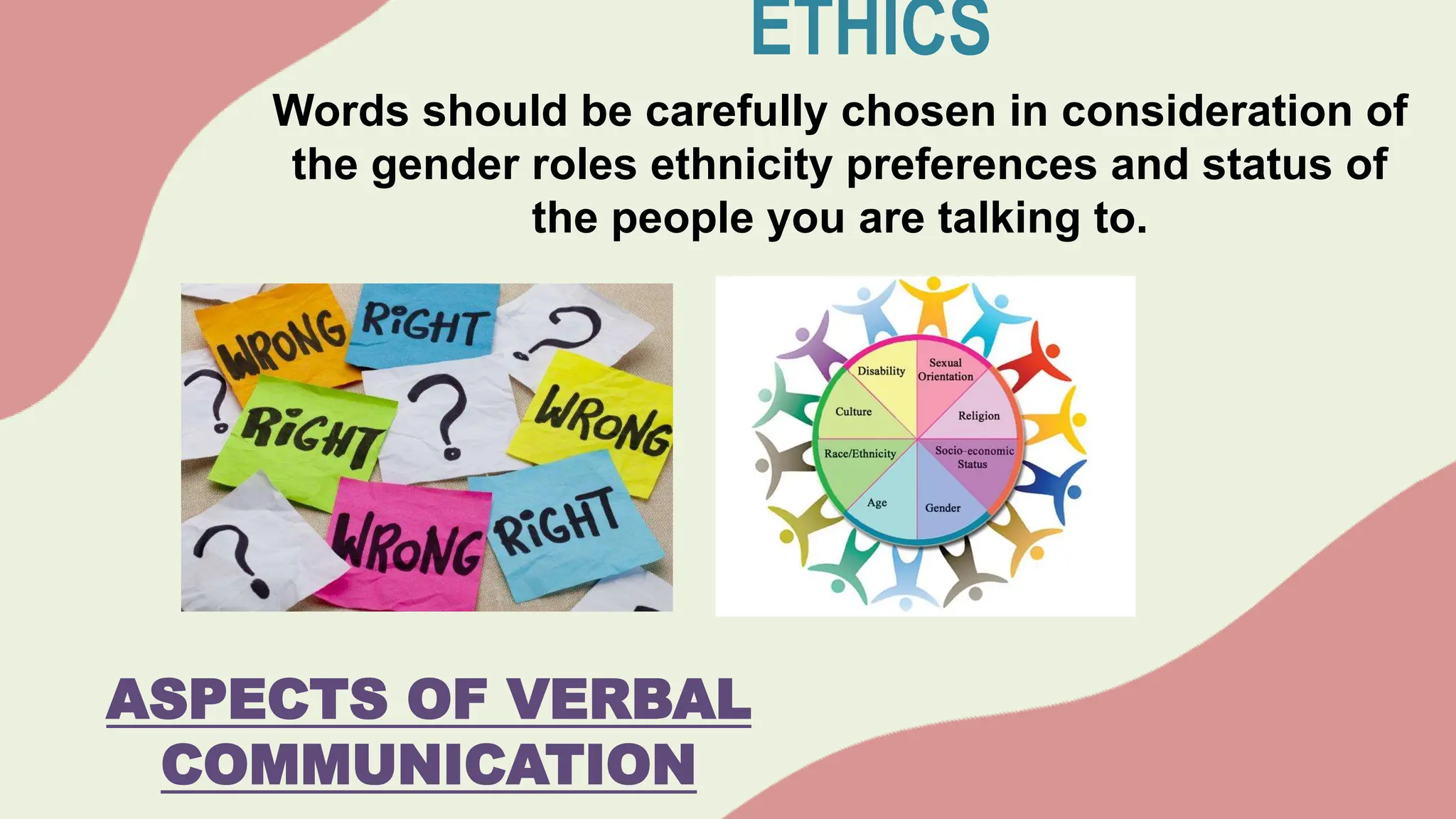
ETHICS
Words should be carefully chosen in consideration of
the gender roles ethnicity preferences and status of
the people you are talking to.
ASPECTS OF VERBAL
COMMUNICATION
VIVIDNESS
Find ways to charm your audience through
the use of vivid words.
ASPECTS OF VERBAL
COMMUNICATION
NON-VERBAL
COMMUNICATION
• Eye Contact
• Facial Expressions
• Head movements and body movements
• Posture
• Proximity
• Personal Appearance
STRATEGIES FOR NON-VERBAL
COMMUNICATION
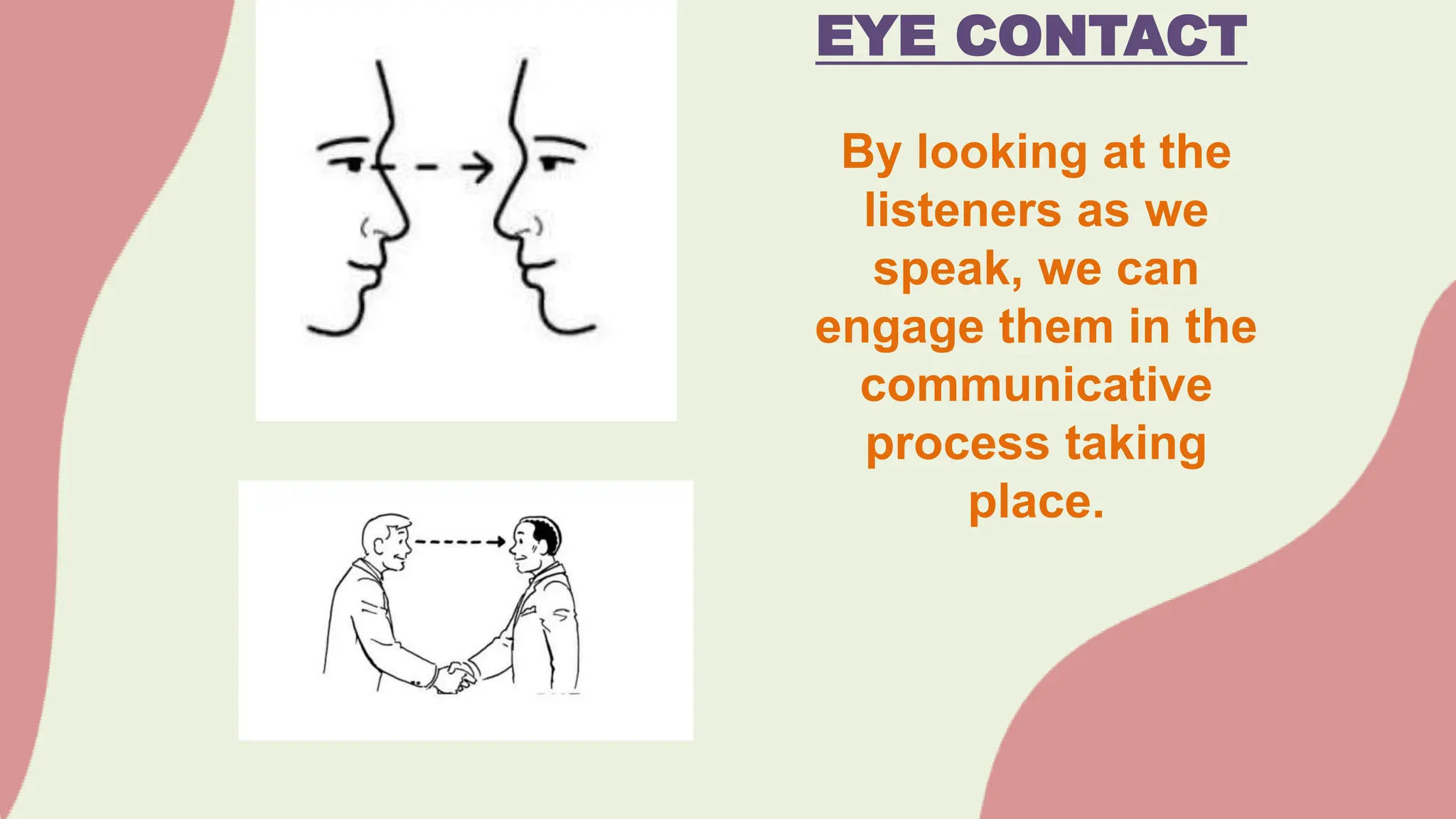
EYE CONTACT
By looking at the
listeners as we
speak, we can
engage them in the
communicative
process taking
place.
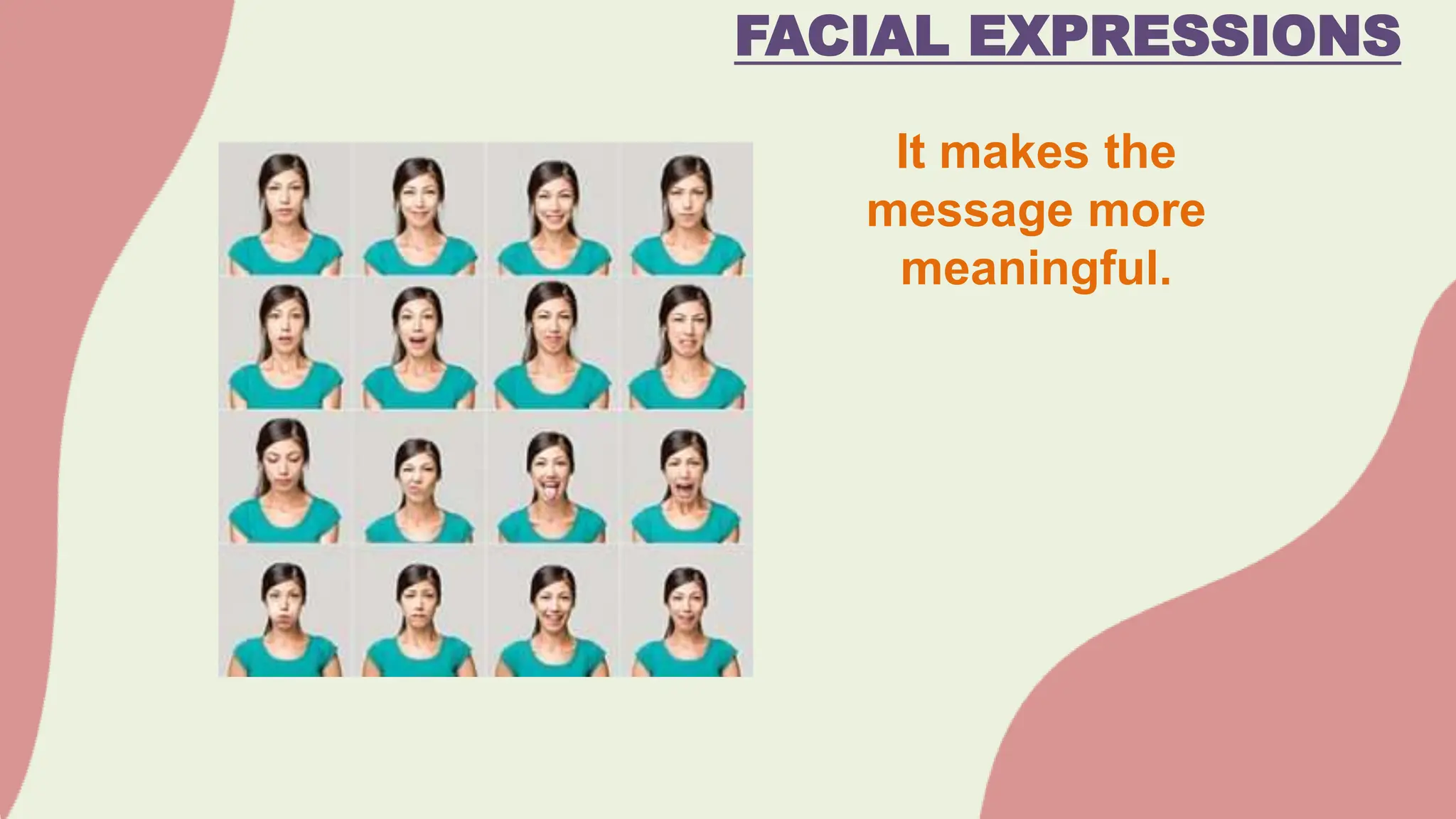
FACIAL EXPRESSIONS
It makes the
message more
meaningful.
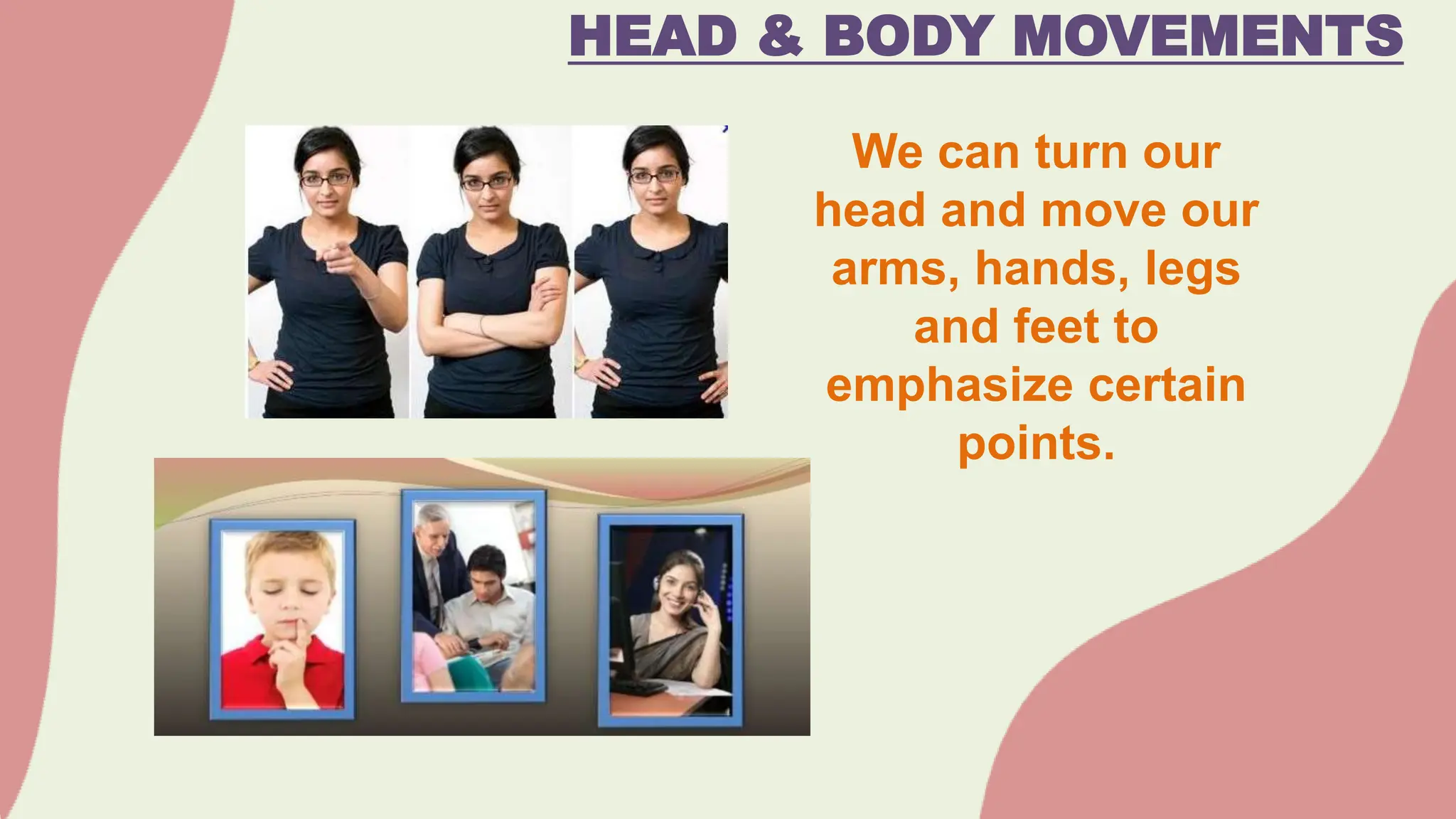
HEAD & BODY MOVEMENTS
We can turn our
head and move our
arms, hands, legs
and feet to
emphasize certain
points.
POSTURE
We should stand
upright to attain a
level of dignity or
formality as we
speak.
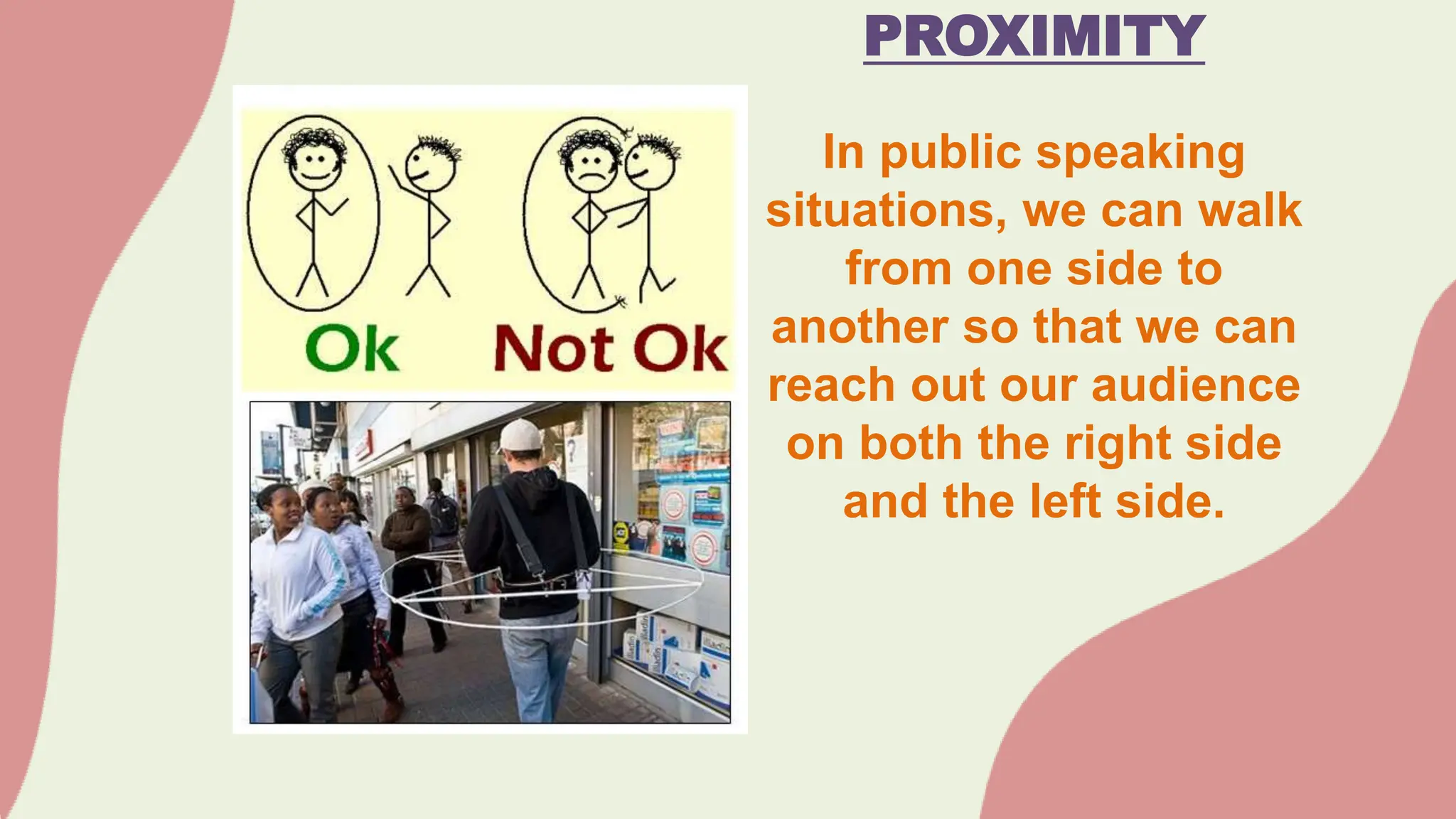
PROXIMITY
In public speaking
situations, we can walk
from one side to
another so that we can
reach out our audience
on both the right side
and the left side.
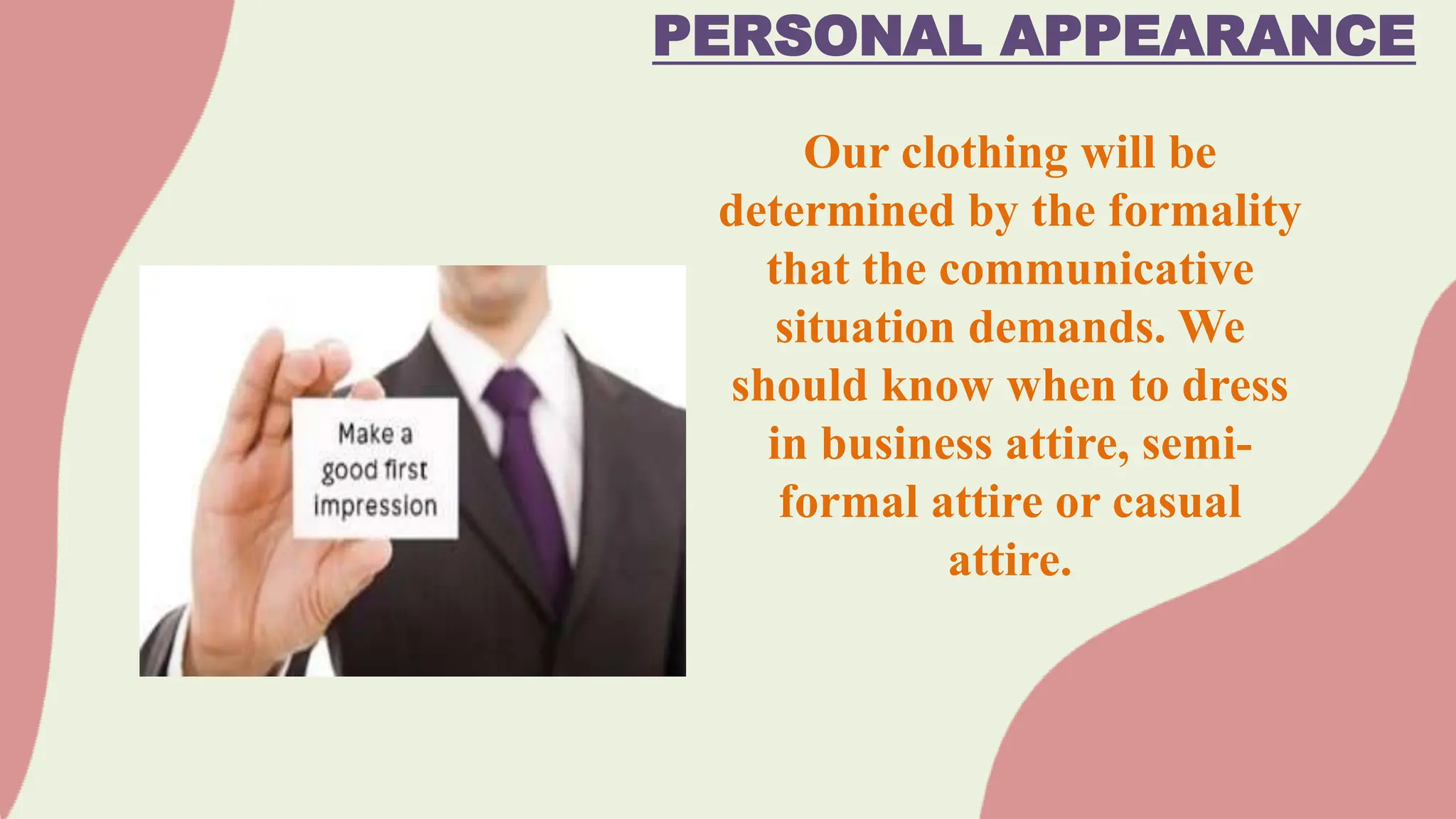
PERSONAL APPEARANCE
Our clothing will be
determined by the formality
that the communicative
situation demands. We
should know when to dress
in business attire, semi-
formal attire or casual
attire.
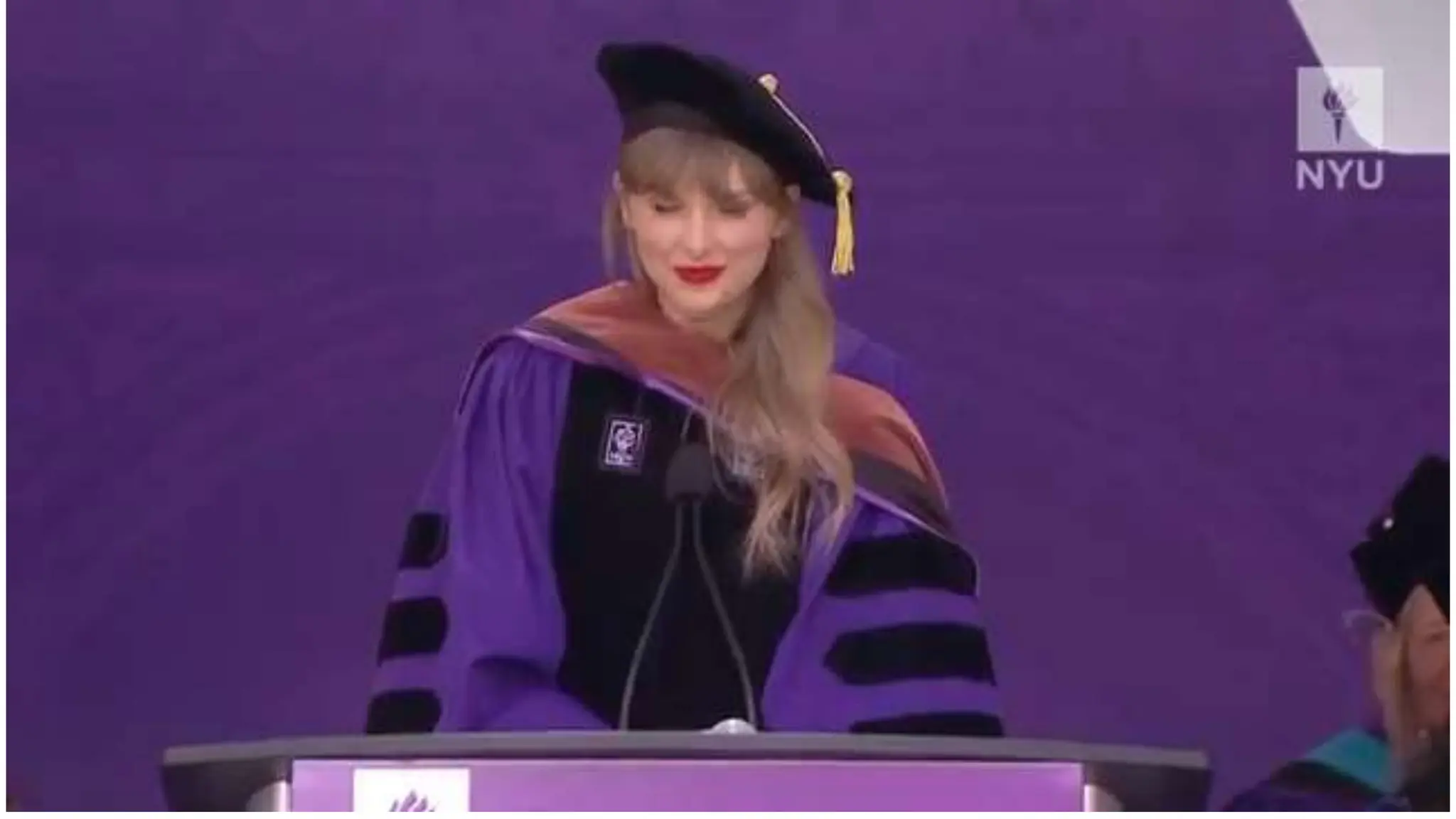
Write a 250-word essay of your observation and
evaluation of the speaker watched and listened to.
Use 1 whole sheet of paper to accomplish this
activity.
https://www.youtube.com/watch?v=OBG50aoUwlI
STOP, LOOK, & LISTEN (ACTIVITY)
“Productivity is never an accident. It is always
the result of a commitment to excellence,
intelligent planning and focused effort.”

FUNCTIONS OF COMMUNICATION- VERBAL & NONVERBAL COMMUNICATION.pptx