Download to read offline
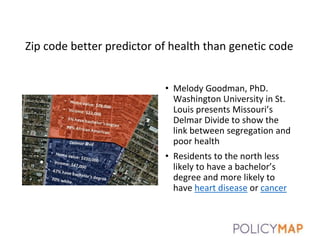

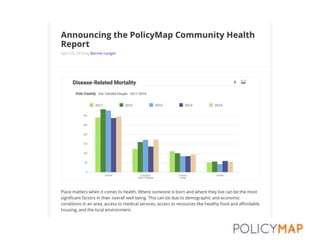
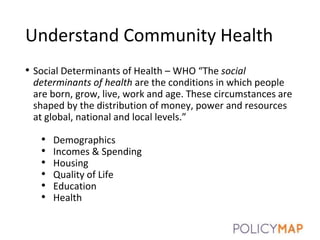
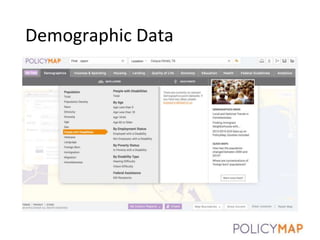
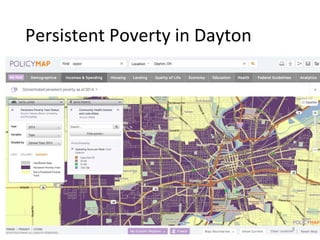
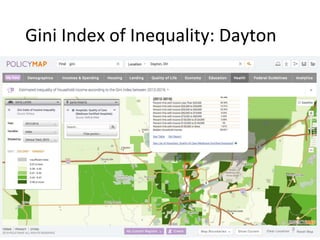
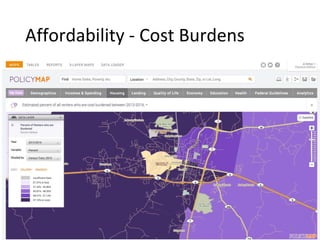
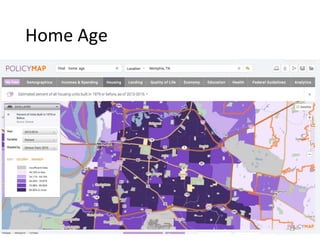
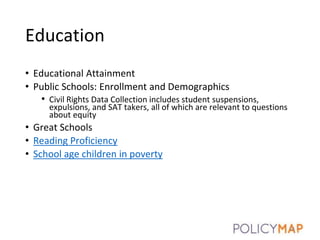
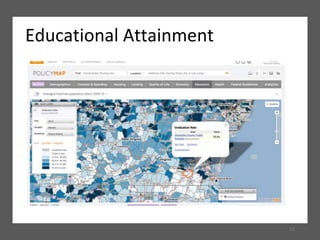
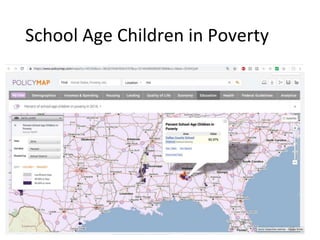
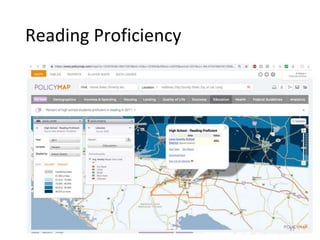
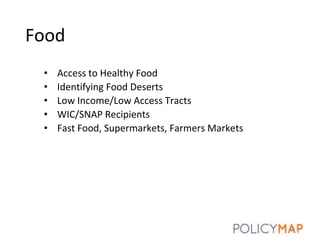

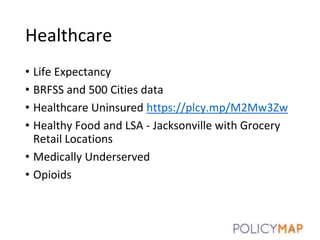
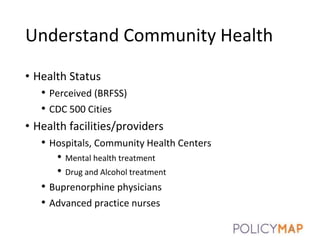
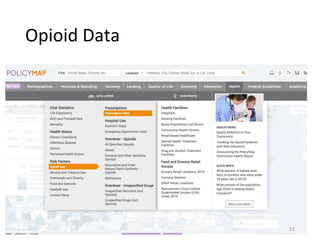
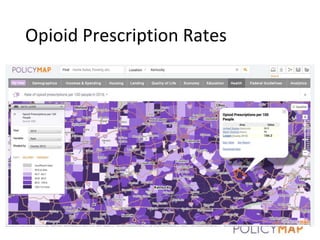
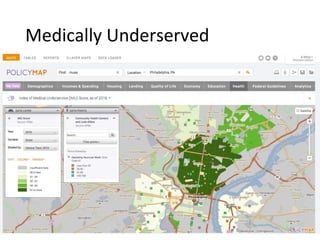
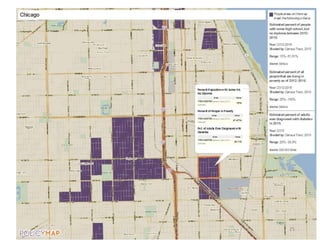
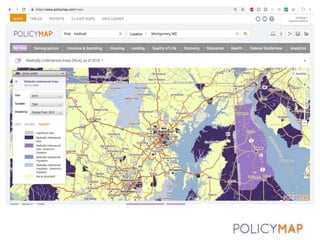
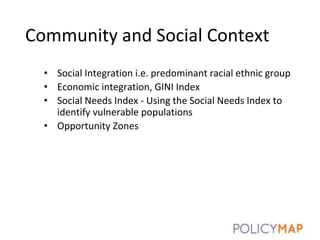
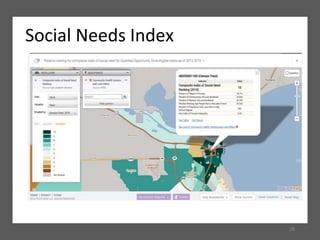
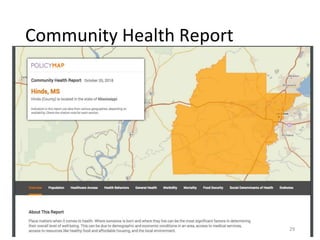

This document discusses using data to understand and improve community health. It outlines how analyzing social determinants of health like income, education, housing, and access to food and healthcare at the zip code level can help identify health disparities. The document provides examples of data that can be mapped, like rates of poverty, income inequality, affordable housing, educational attainment, reading proficiency, food access, life expectancy, rates of uninsured individuals, opioid prescription rates, and medically underserved areas. The goal is to understand how community and social factors shape health outcomes and identify vulnerable populations.


