Using Student Cartooning to
Teach S1 History
8 Feb and 3 March
Mr Lloyd Yeo, AST (SR), MTT History
Literature Review
They are thrice damned: damned as a culture,
Purpose: “Damned
as a culture. It is
popular not ‘high”
Outlandish fantasy involving
absurd characters acting in the
most bizarre fashion – the very
antithesis, one might think, of
plausibility.”
At best suitable only
for children (and
retarded
It’s impact is that it is
positively harmful at
worst….a perverse hybrid
Locke, (2005)
Good starting point for
thinking about the
specificities of certain
issues (Eisner, 2006)
In psychology, they are
used to represent
processes and thoughts
that people go through in
their mind.
They have the ability
to communicate
various messages.
Concept cartoons are “cartoon-
style drawings presenting
characters with different
viewpoints around a particular
situation (Roesky & Kennepohl,
2008)
Stages on using cartoons in the history classroom
 1: Decide on the historical concept
 2: Design and teach the elements that go into cartoons
 3: Activate student prior knowledge
 4: Expose students to local and student cartoon
examples
 5: Provide space for creativity and practice
 6: Get students to articulate and write about historical
evidence
 7: Provide feedback
 8: Design opportunities for group learning and debrief
Stage 1
Decide on the Historical Concept
Diversity/ Multiple Perspectives: Understanding the past
is complex and people’s experiences vary according to their
ethnic groups, geographical locations, social class, religious
affiliations, gender, age etc.
Evidence: For sources to become evidence, they need to
be judged on their usefulness and reliability in relation to
the inquiry question. source to be studied in terms of its
origins, nature, purpose and content, as well as its
typicality
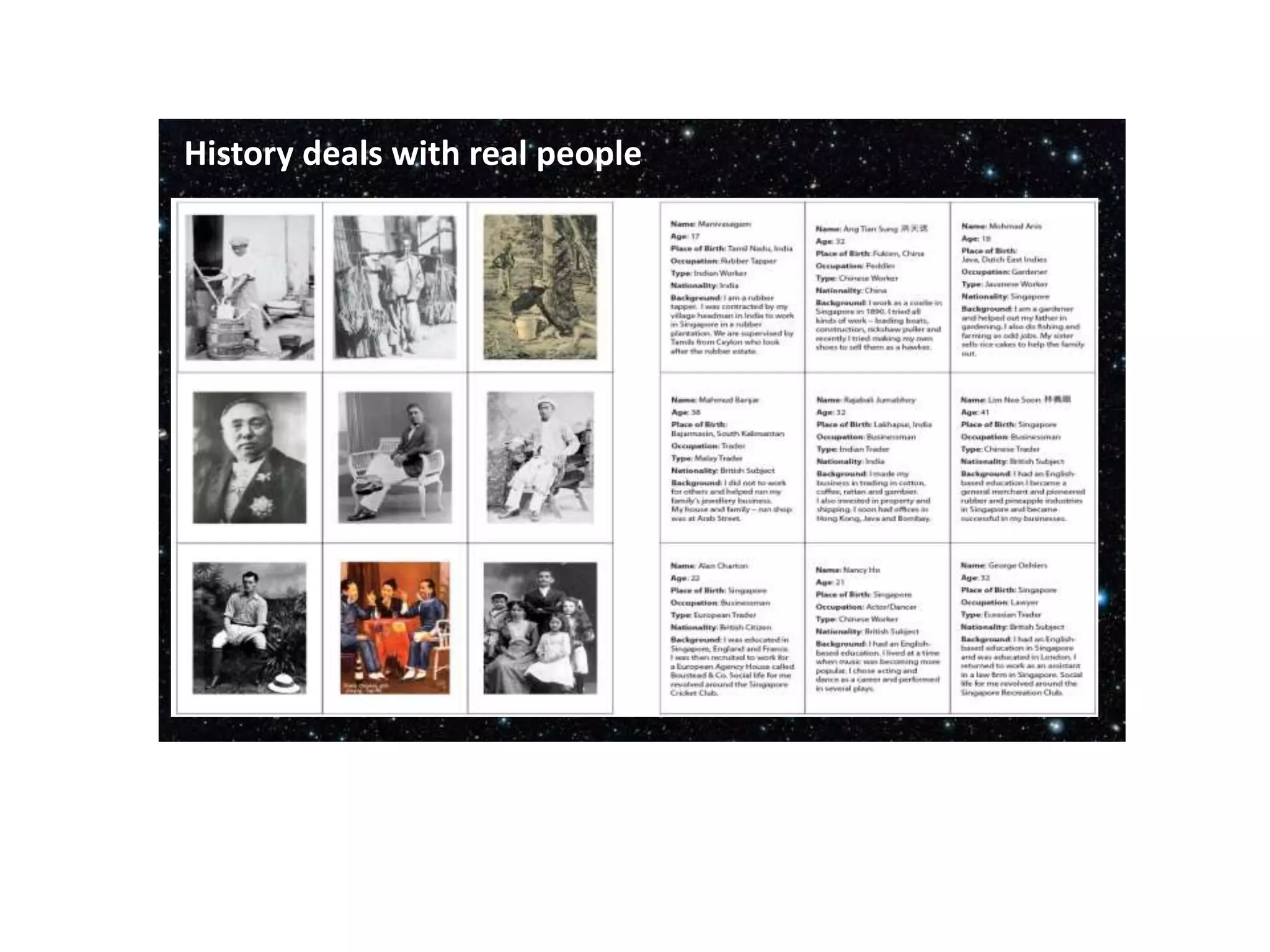
History deals with real people

 Why did we select this character to focus on?
 How are we going to find out more about this
character?
 How do we know that what we are planning to draw is
historicall authentic and realistic? (e.g. buildings, item
used etc)
 Is there any particular year we want to focus on? Why?
Sourcing and evidence
Stage 2
Design and teach the elements
that go into cartoons
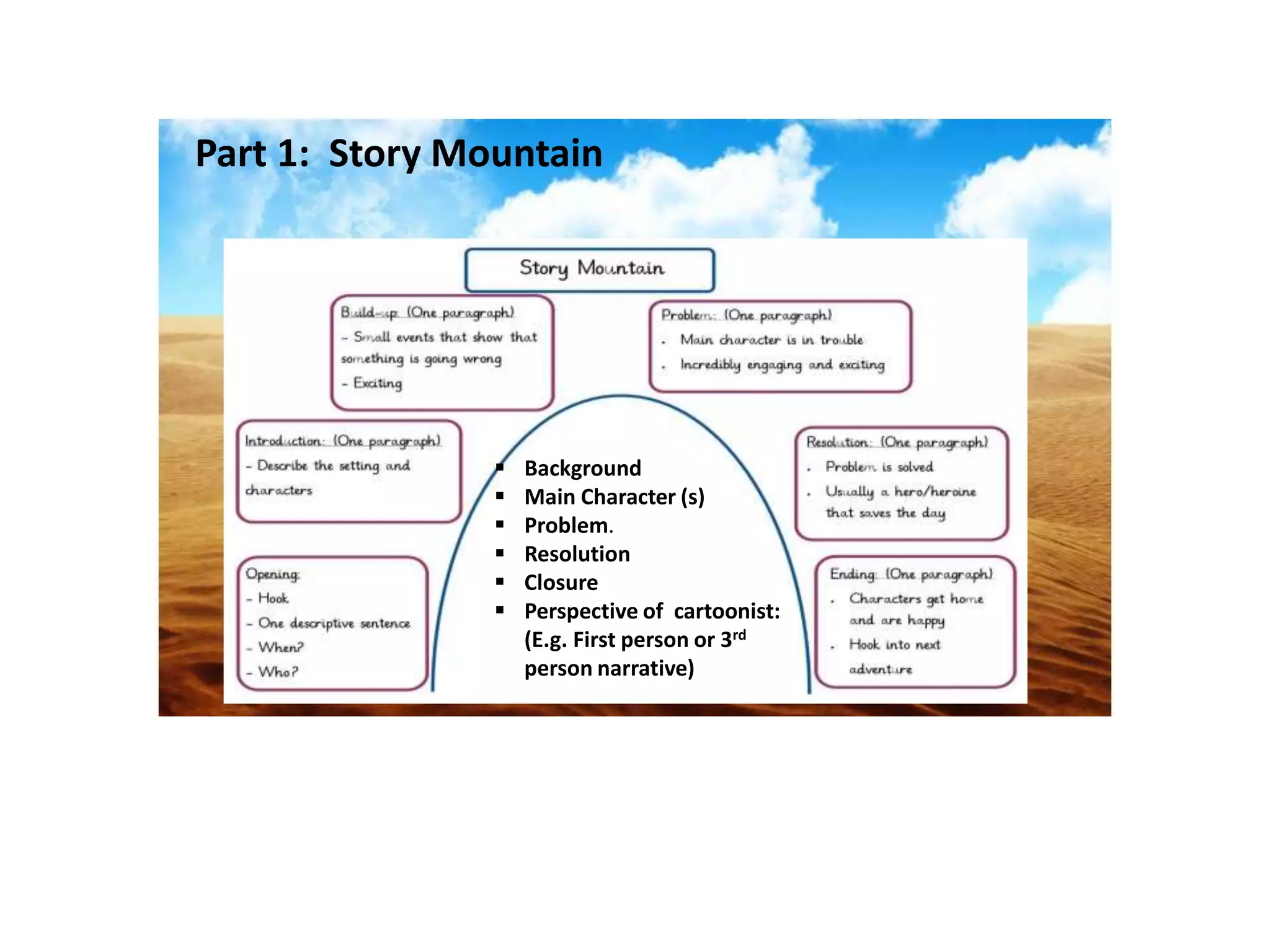
Part 1: Story Mountain
 Background
 Main Character (s)
 Problem.
 Resolution
 Closure
 Perspective of cartoonist:
(E.g. First person or 3rd
person narrative)
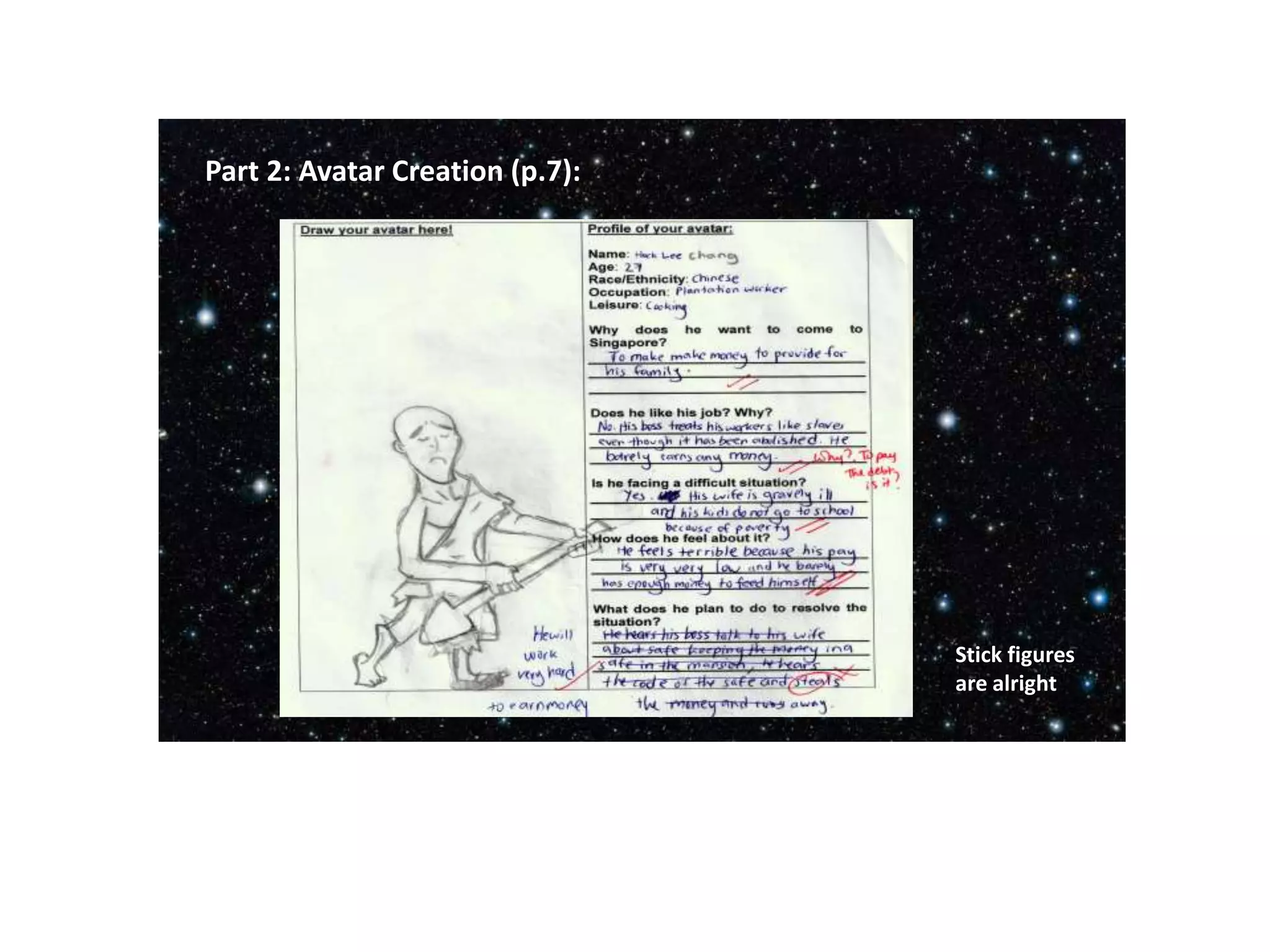
Part 2: Avatar Creation (p.7):
Stick figures
are alright
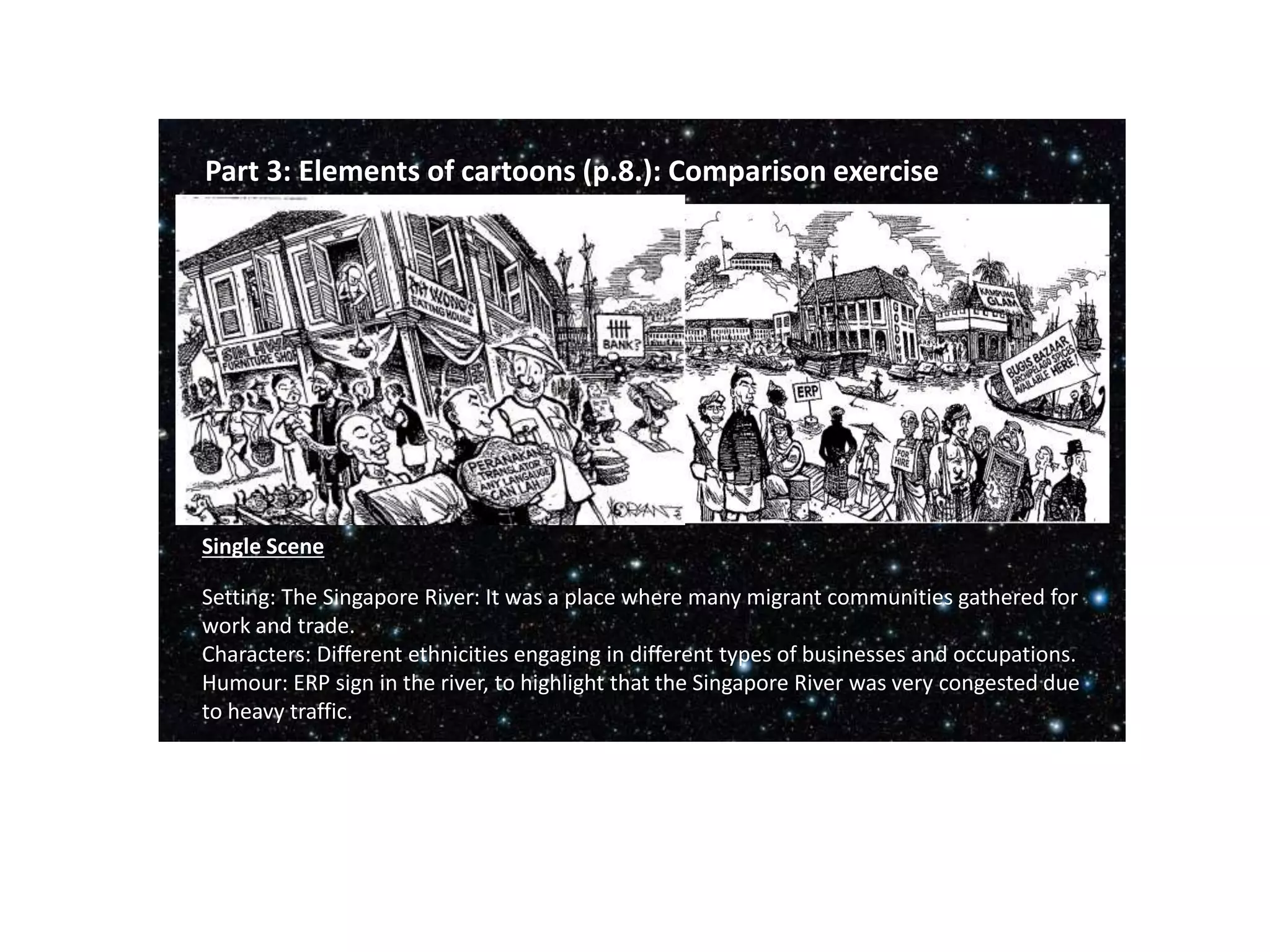
Part 3: Elements of cartoons (p.8.): Comparison exercise
Setting: The Singapore River: It was a place where many migrant communities gathered for
work and trade.
Characters: Different ethnicities engaging in different types of businesses and occupations.
Humour: ERP sign in the river, to highlight that the Singapore River was very congested due
to heavy traffic.
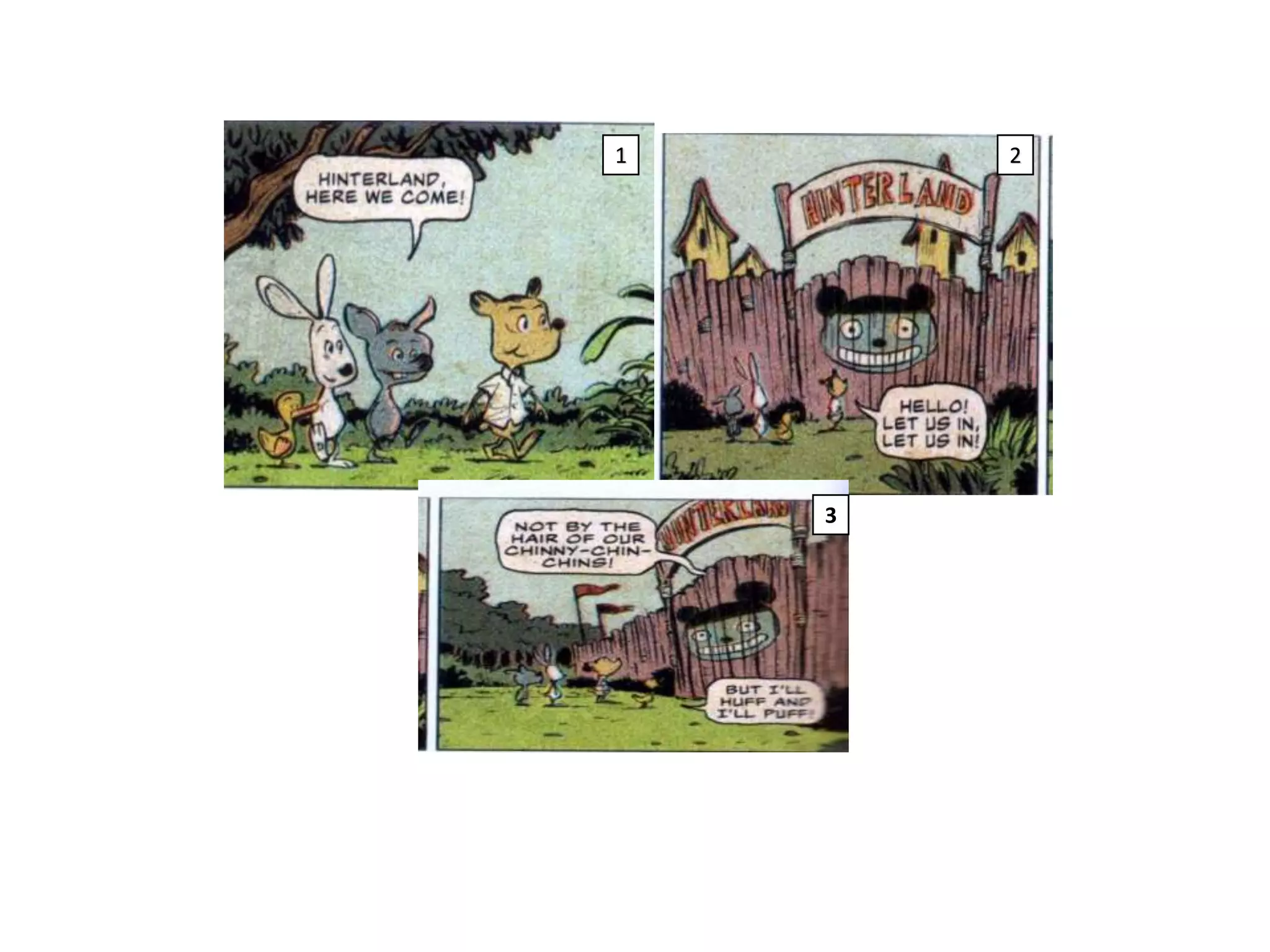
Single Scene
1 2
3
Quick Note about using digital cartoons
Using clothes or background to depict time change
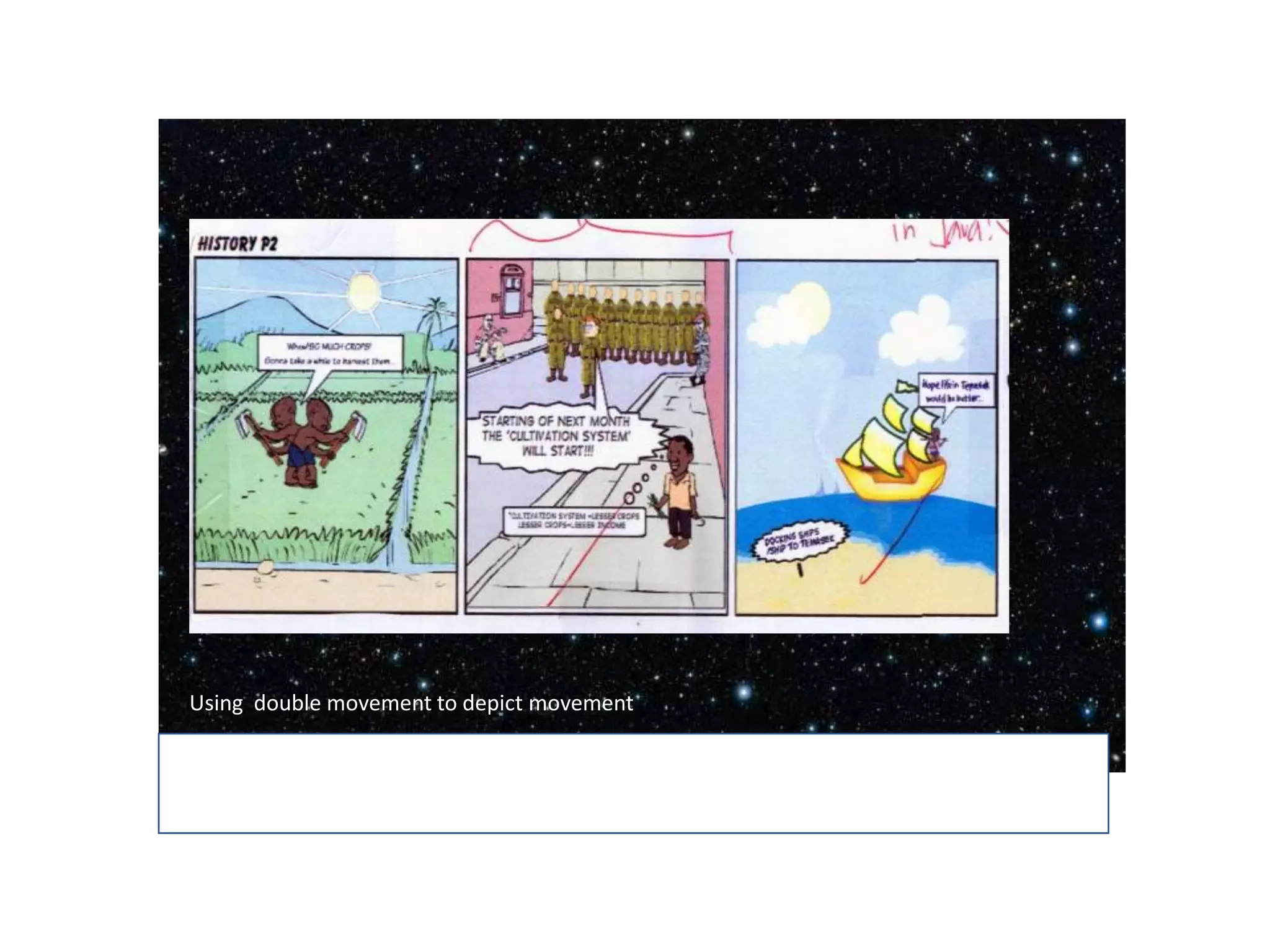
Using double movement to depict movement
Stage 3
Activate Prior Knowledge
 Activate Relevant Prior Knowledge
 Minimize Irrelevant Prior Knowledge
 Compensate for Missing Prior Knowledge
https://mindstepsinc.com/2012/09/activating-prior-knowledge/
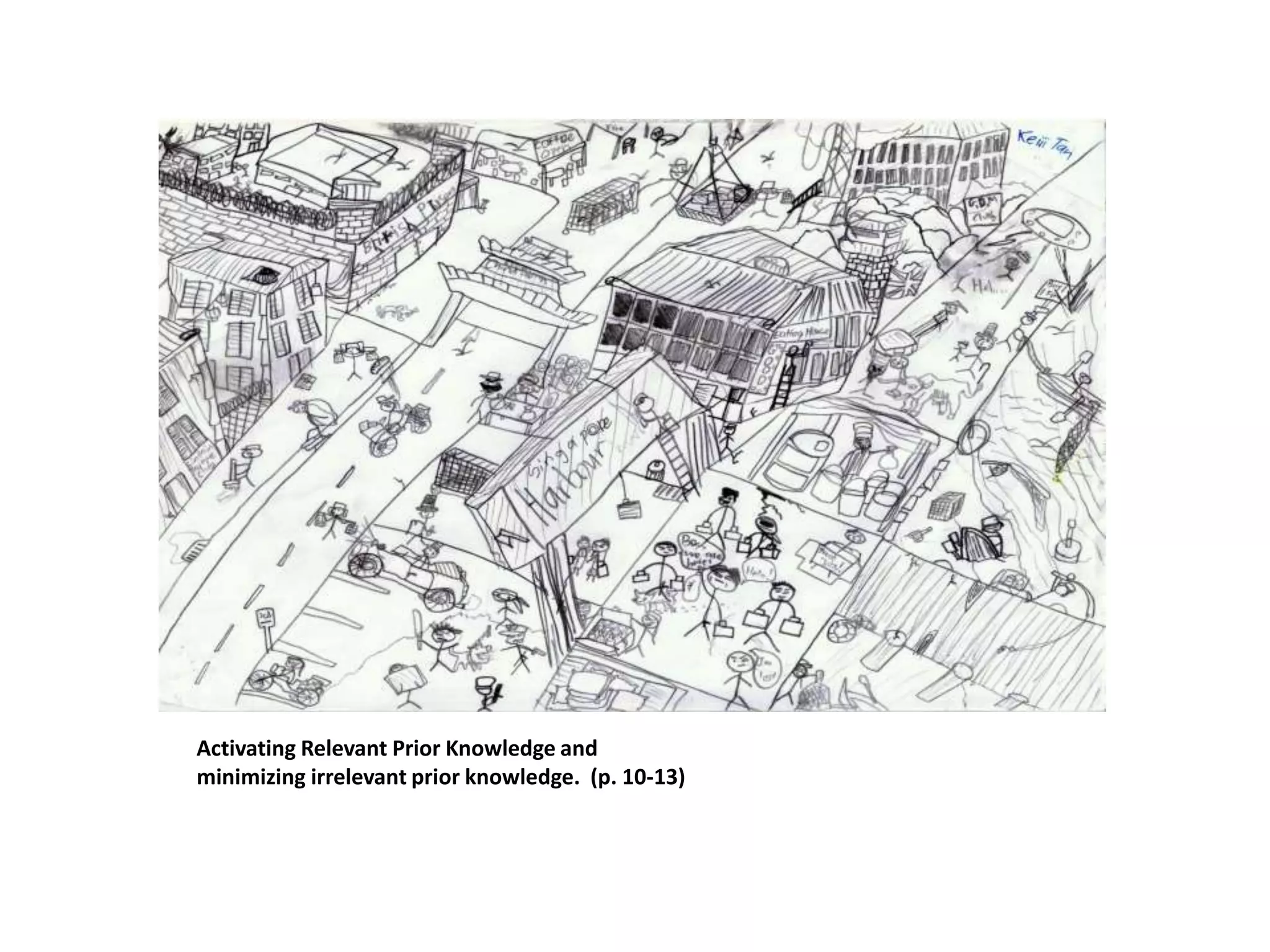
Activating Relevant Prior Knowledge and
minimizing irrelevant prior knowledge. (p. 10-13)
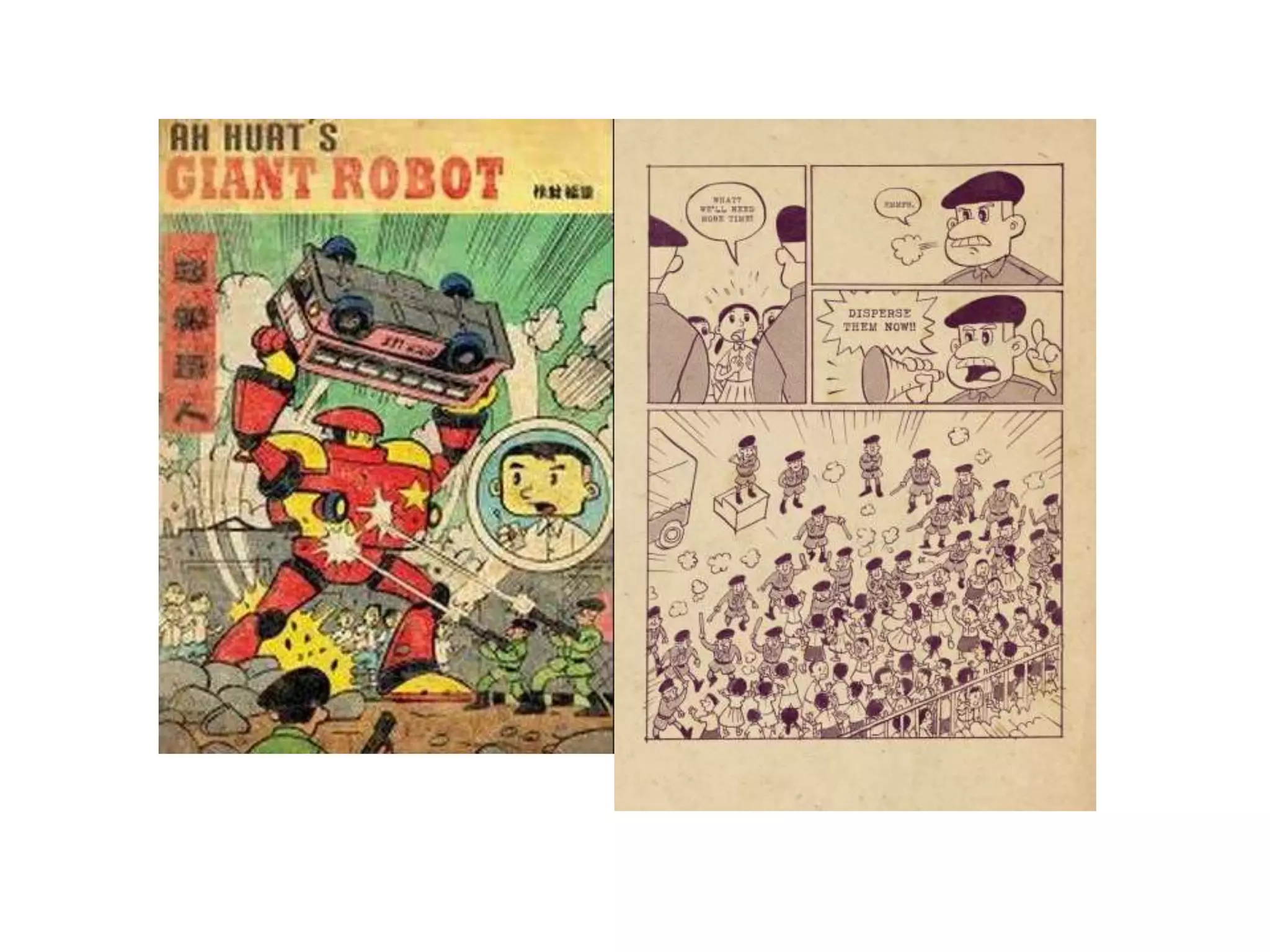
Stage 4: Expose students local and
student examples
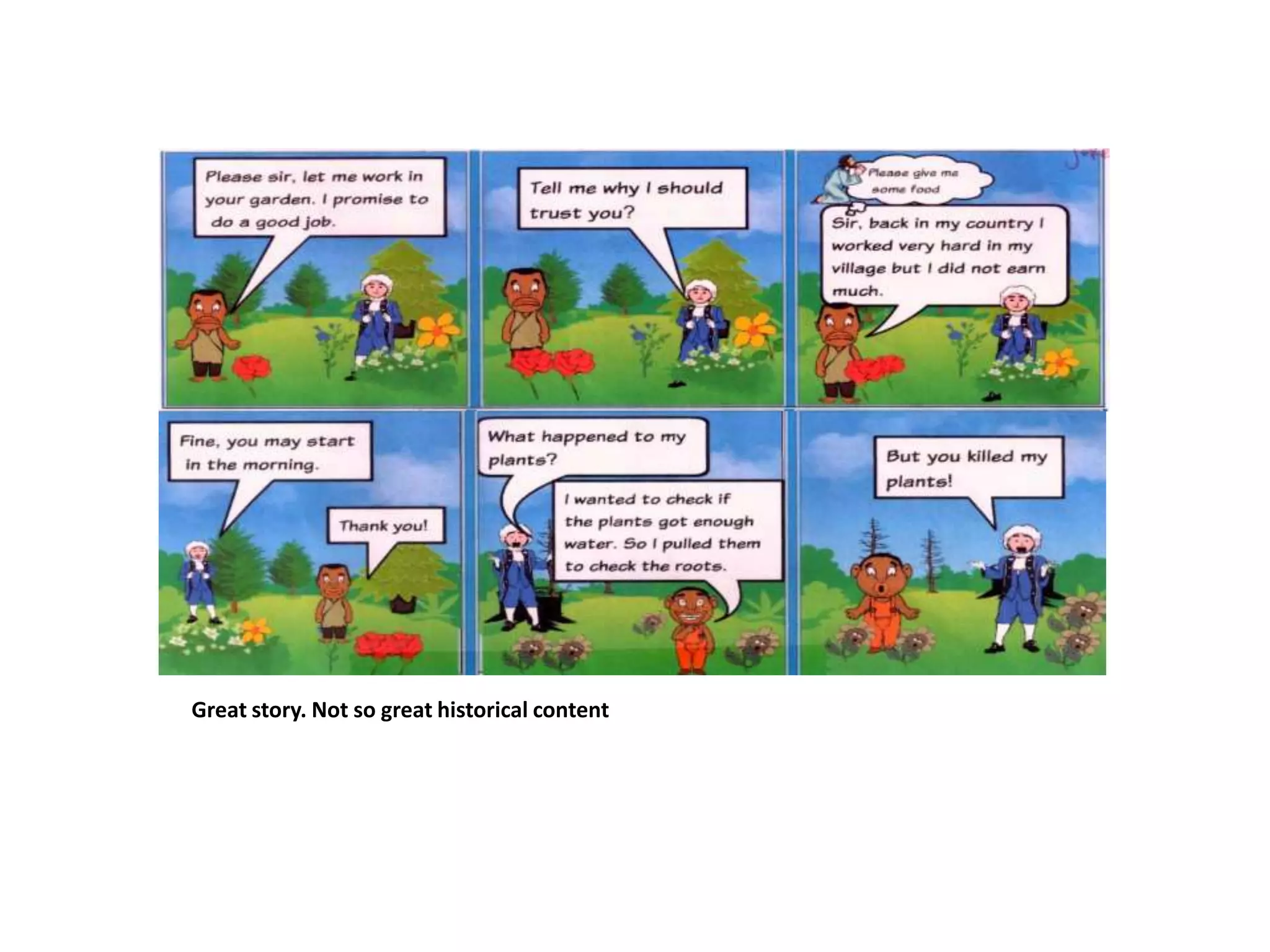
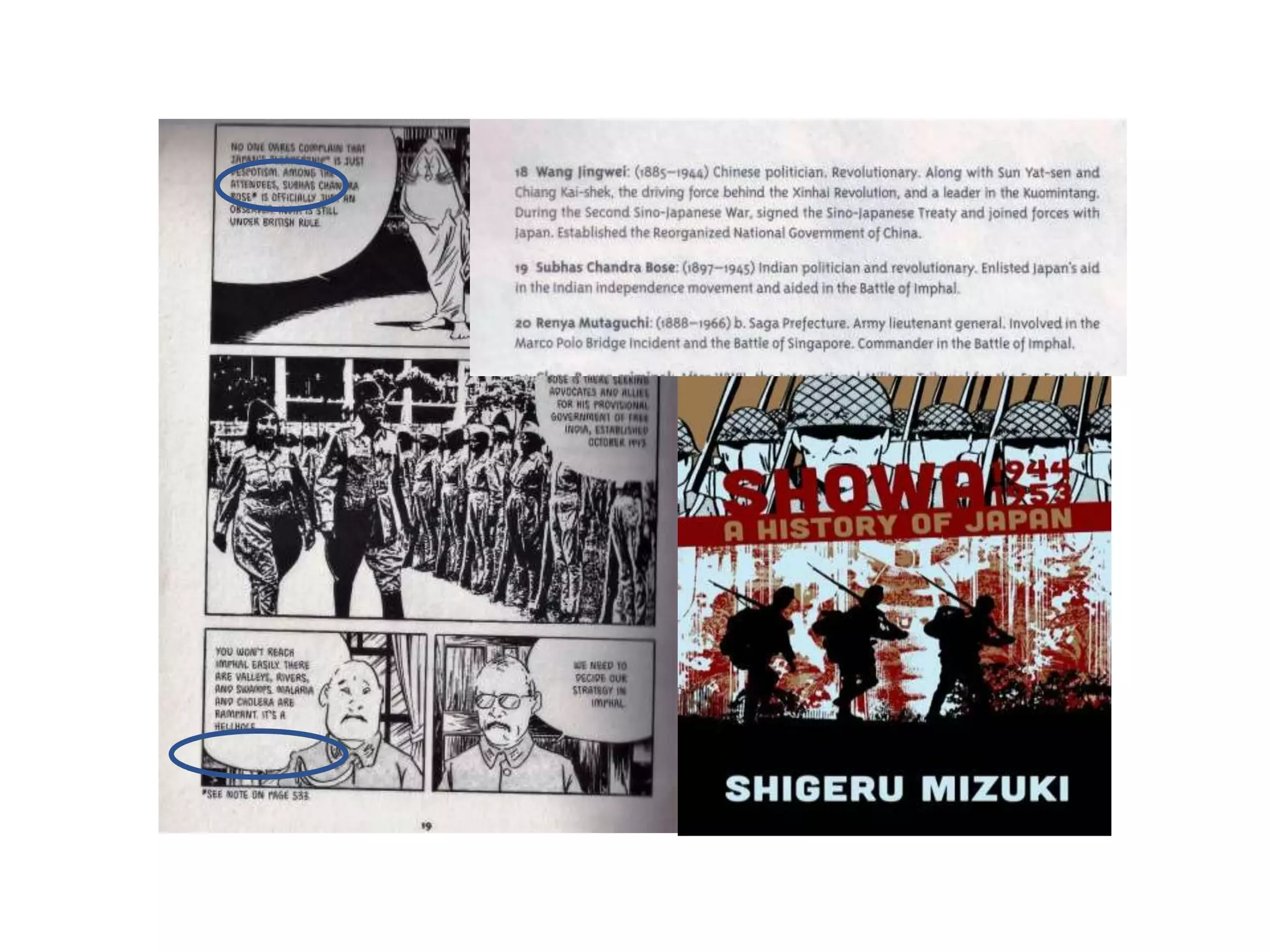
Great story. Not so great historical content
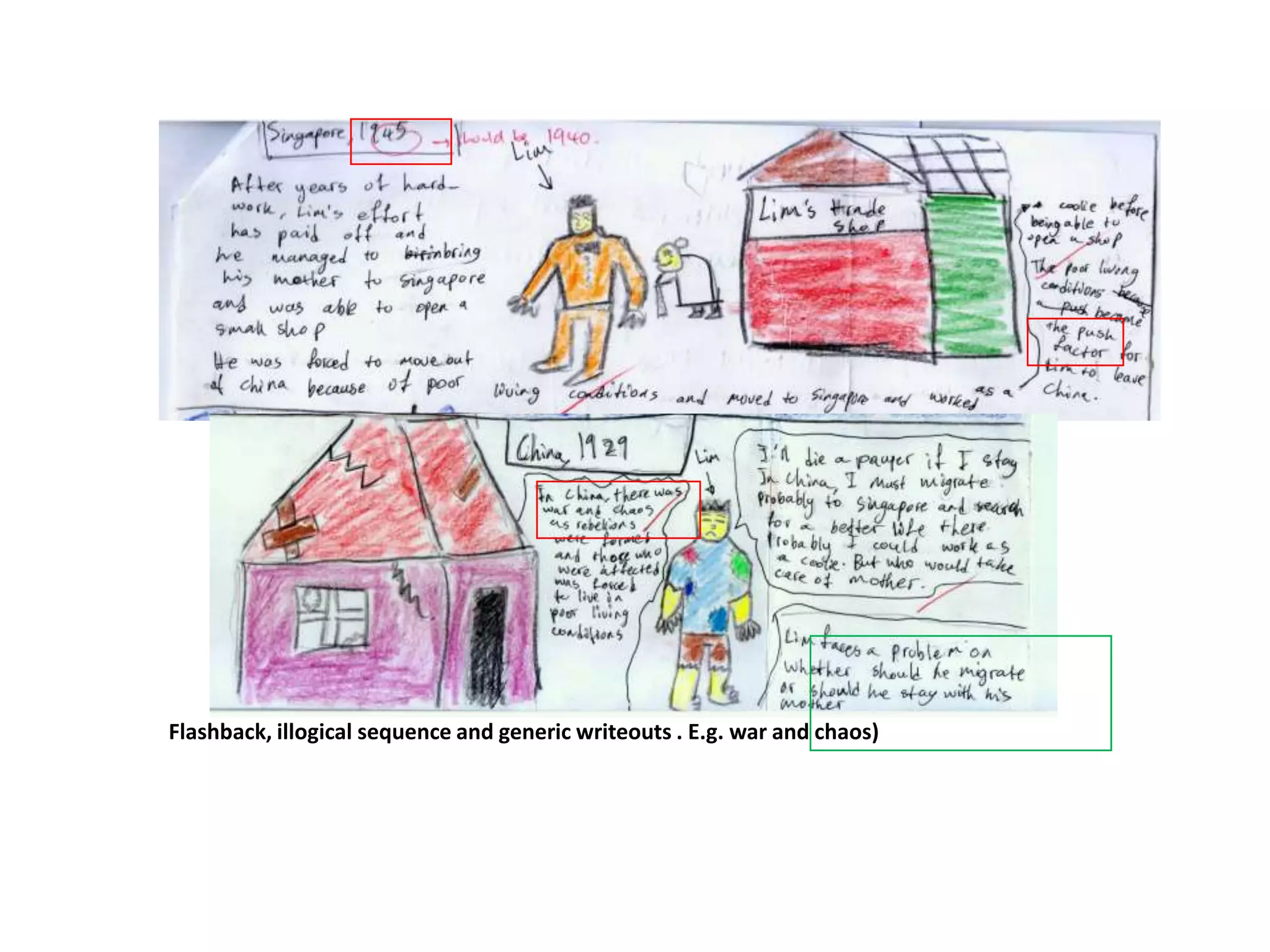
Flashback, illogical sequence and generic writeouts . E.g. war and chaos)
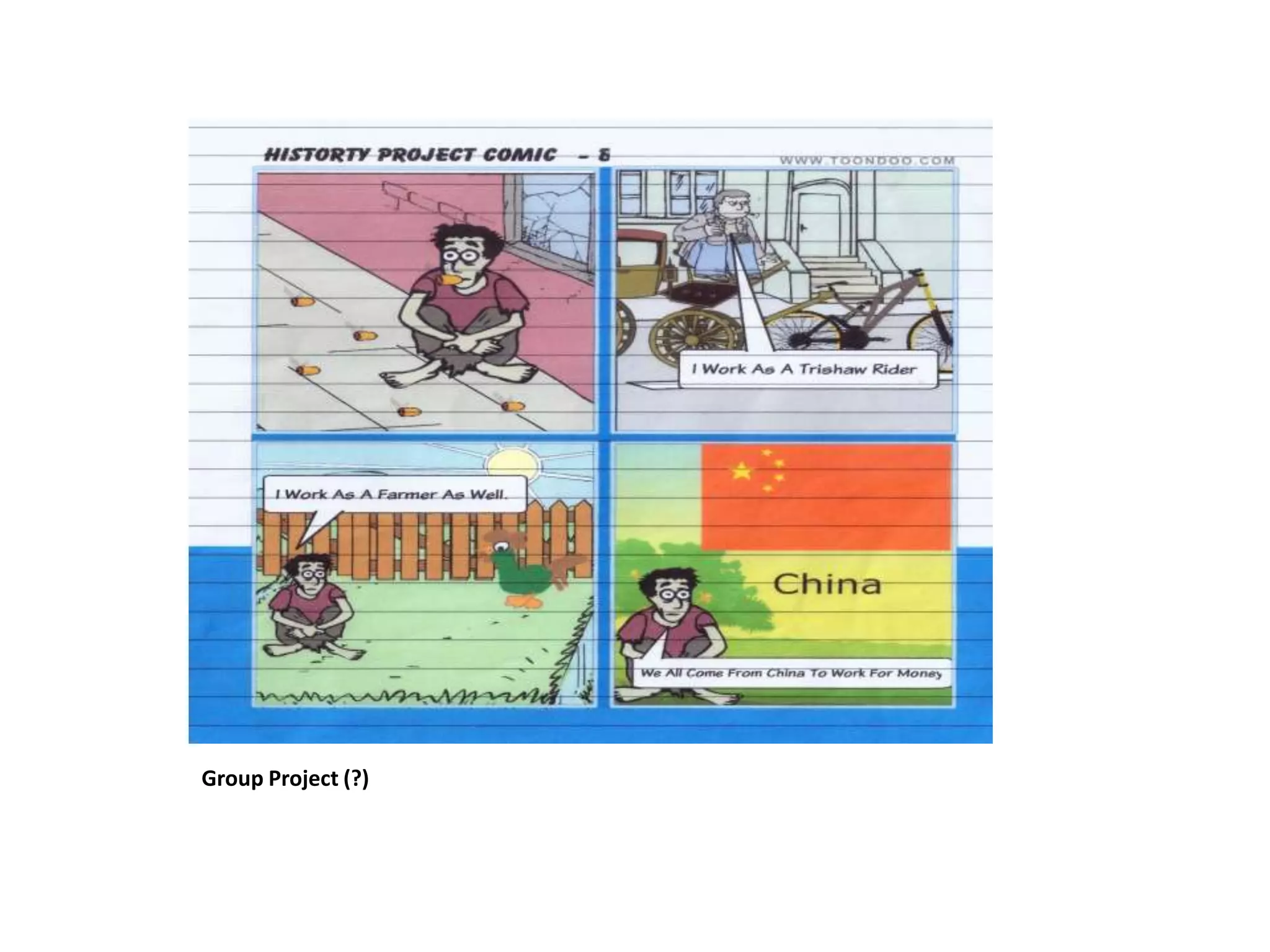
Group Project (?)
Stage 5: Provide space for
creativity and practice
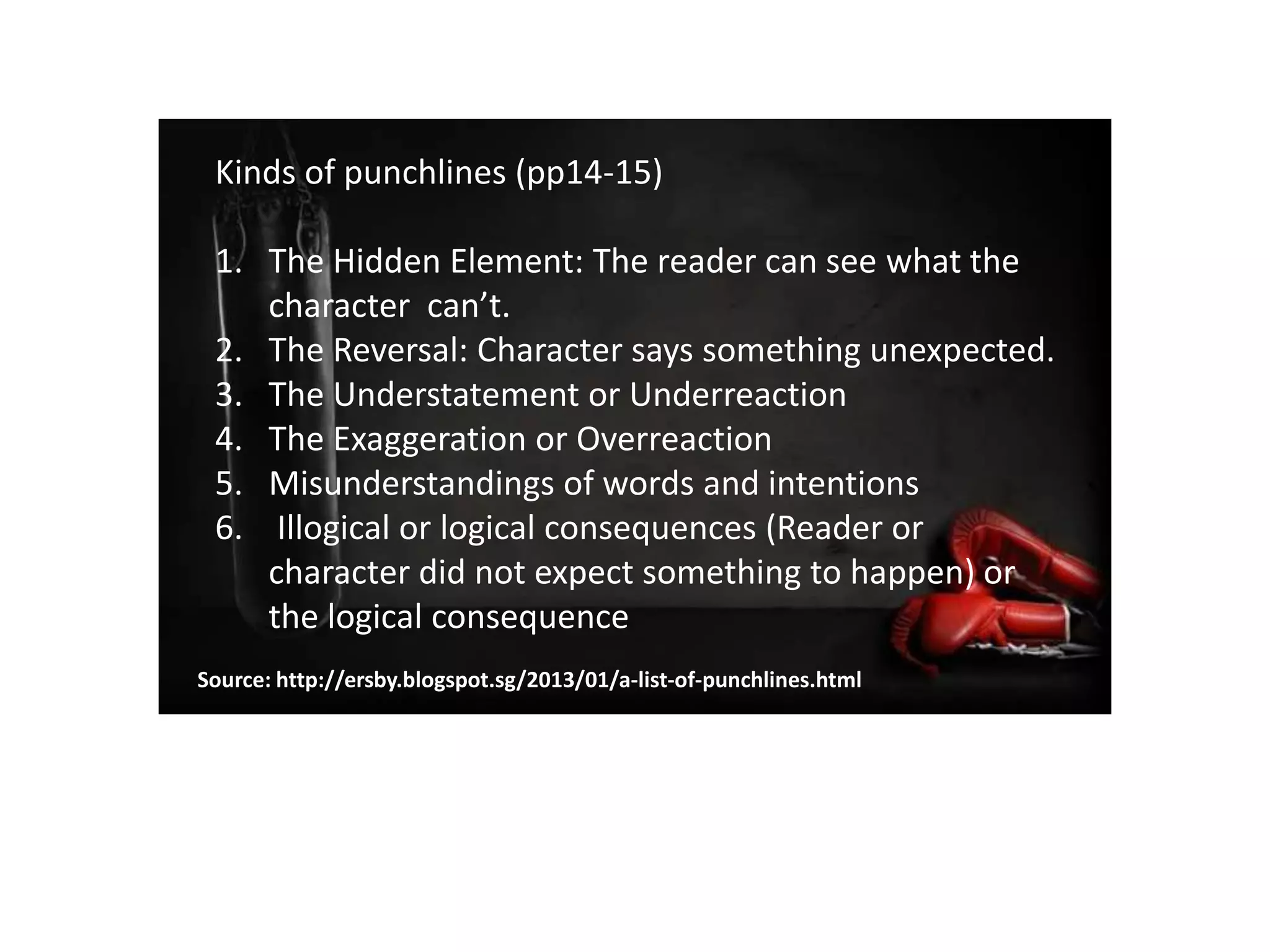
Kinds of punchlines (pp14-15)
1. The Hidden Element: The reader can see what the
character can’t.
2. The Reversal: Character says something unexpected.
3. The Understatement or Underreaction
4. The Exaggeration or Overreaction
5. Misunderstandings of words and intentions
6. Illogical or logical consequences (Reader or
character did not expect something to happen) or
the logical consequence
Source: http://ersby.blogspot.sg/2013/01/a-list-of-punchlines.html
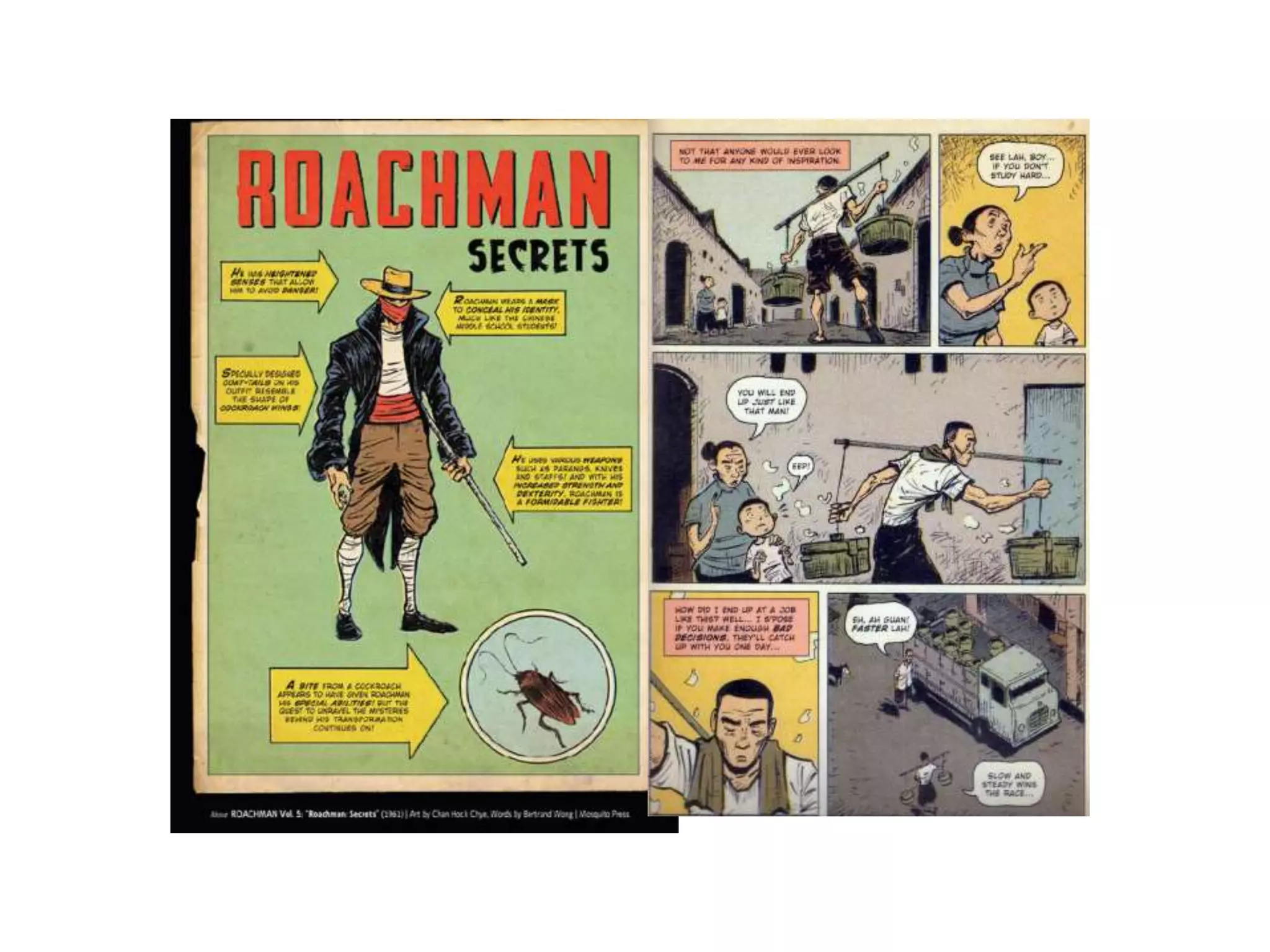
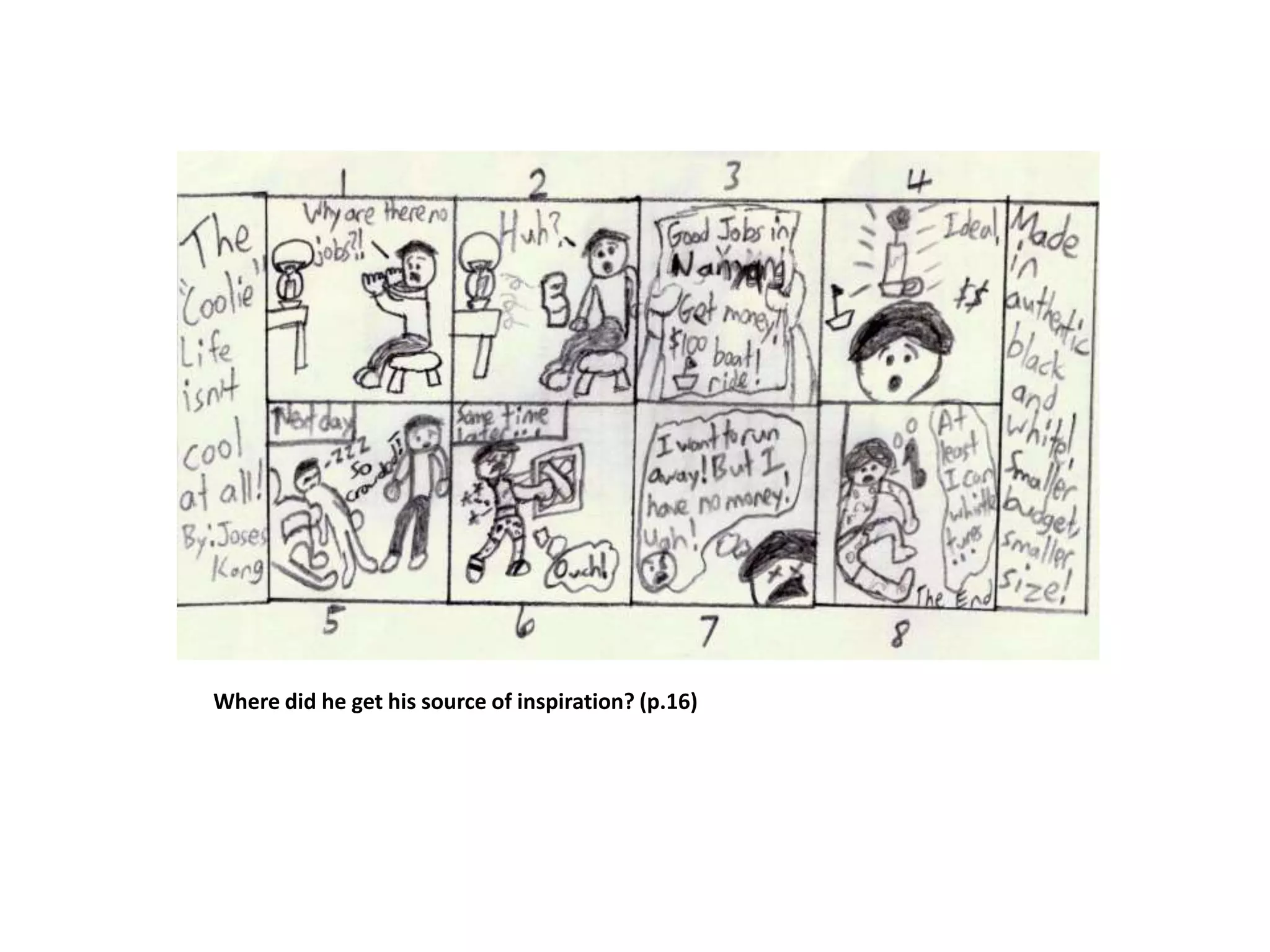
Where did he get his source of inspiration? (p.16)
Stage 6: Get students to articulate
and write about historical
evidence
 Footnotes
 Glossary and
explanations
 Evidence
 Recordings
Footnotes
Glossary and explanations
Evidence
Recordings
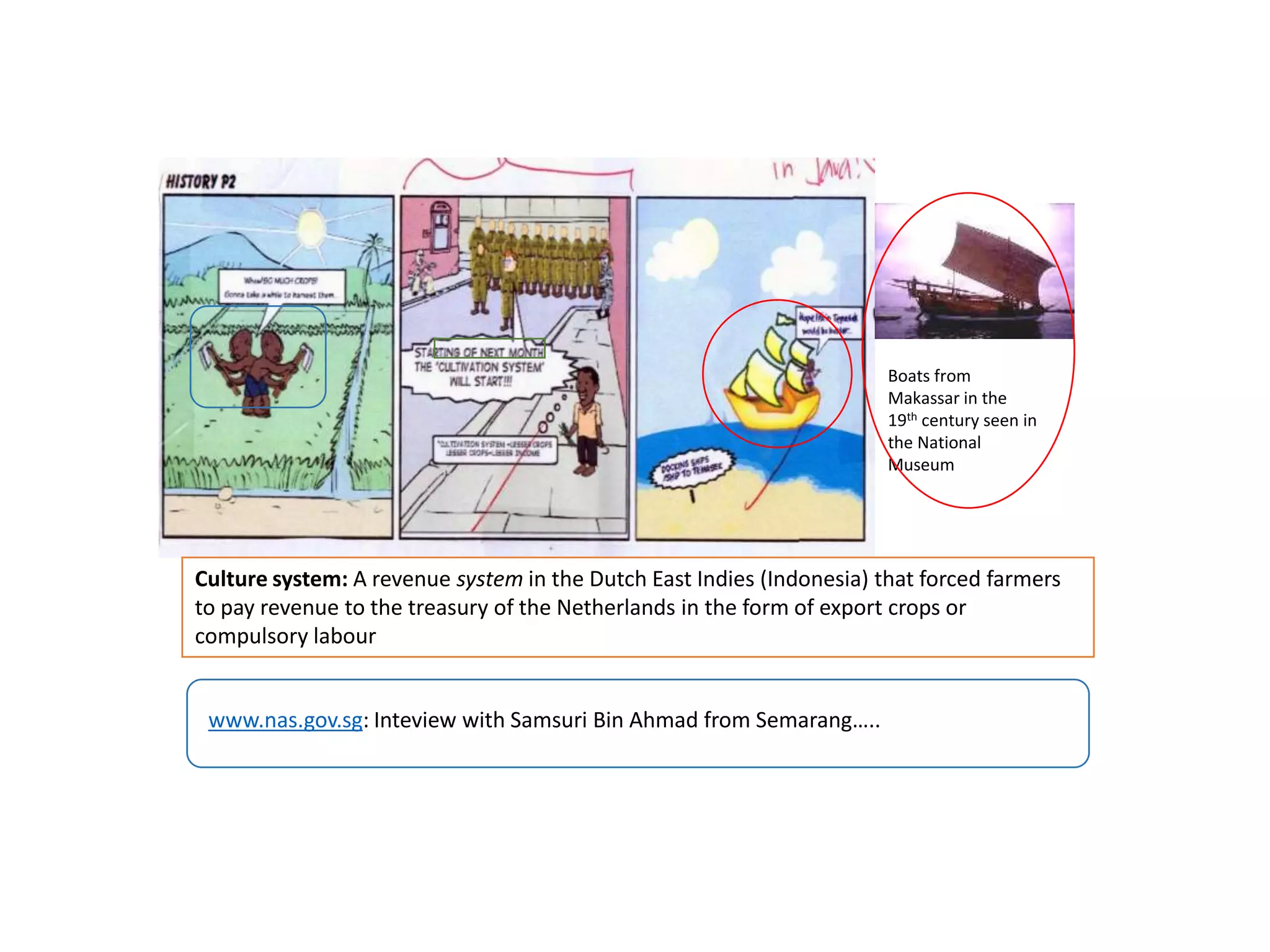
(p.6): Story Mountain: Setting, Character, Problem, Resolution,
Ending
Culture system: A revenue system in the Dutch East Indies (Indonesia) that forced farmers
to pay revenue to the treasury of the Netherlands in the form of export crops or
compulsory labour
Boats from
Makassar in the
19th century seen in
the National
Museum
www.nas.gov.sg: Inteview with Samsuri Bin Ahmad from Semarang…..
Stage 7: Provide feedback
p.17
Historical evidence / historical authenticity and realism
 Setting
 Characters
 Material culture
Reading
 Relevance to theme
 Readability
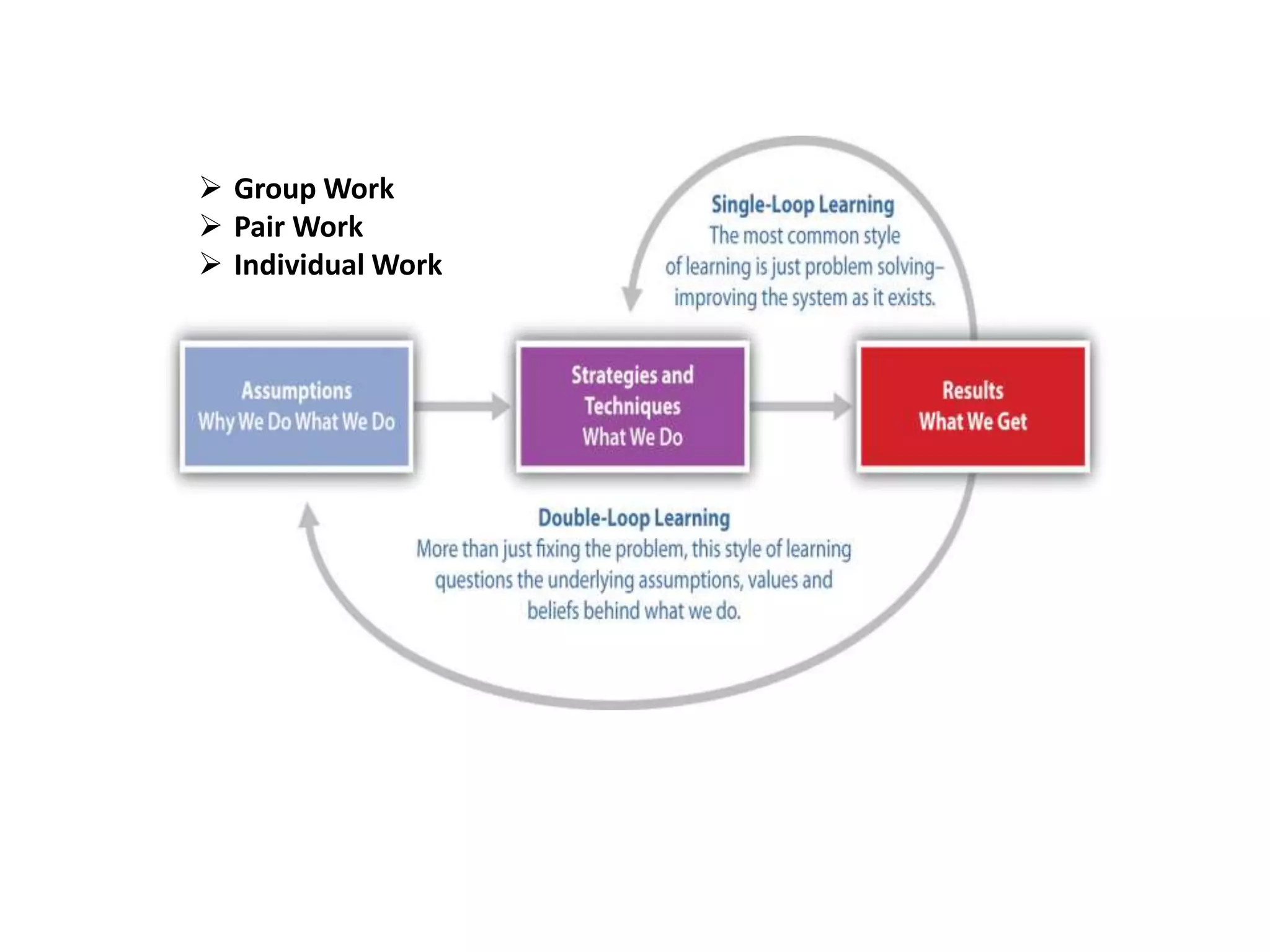
 Group Work
 Pair Work
 Individual Work
Stage 8: Design opportunities for
group learning and debrief
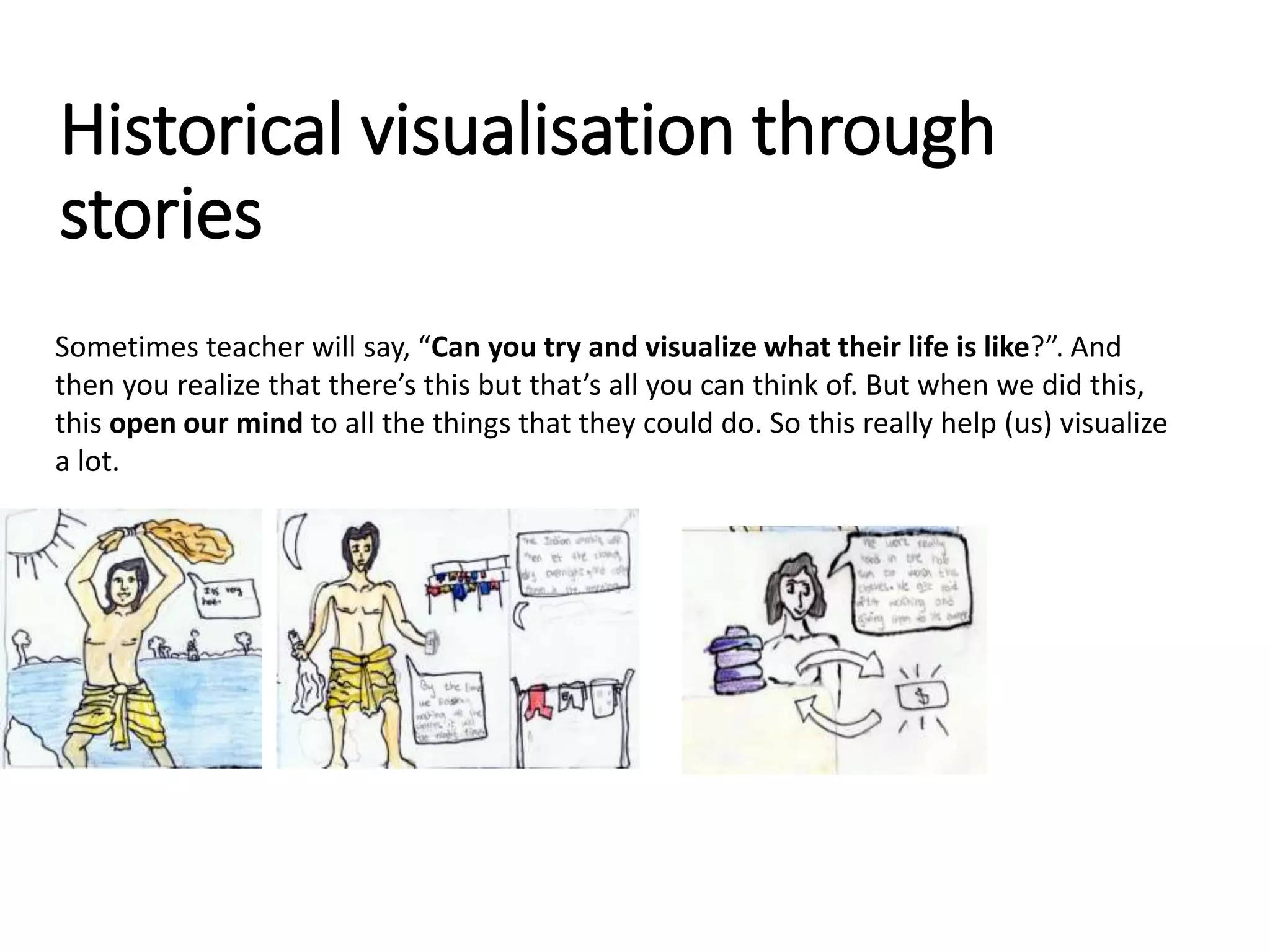
Sometimes teacher will say, “Can you try and visualize what their life is like?”. And
then you realize that there’s this but that’s all you can think of. But when we did this,
this open our mind to all the things that they could do. So this really help (us) visualize
a lot.
Historical visualisation through
stories
Historical agency/ ownership through creativity
It s new way to ‘see’ history: What is the first thing you think of when you say to him
‘History’. He will straight away say boring people. Historian. Talk about history.
Artifacts.
It’s a new way to look at history lessons: How about history lesson? Worksheets on
history. Research. For drawing maybe just sketches of artifacts and re-creations of it
but no one would think of comics (and stories)
It’s about motivation and creativity: I thought it was an easier way to earn marks and
better than just writing PEELS all the time. It was getting a bit boring. I thought this
was really something unique that I don’t see in Primary School.

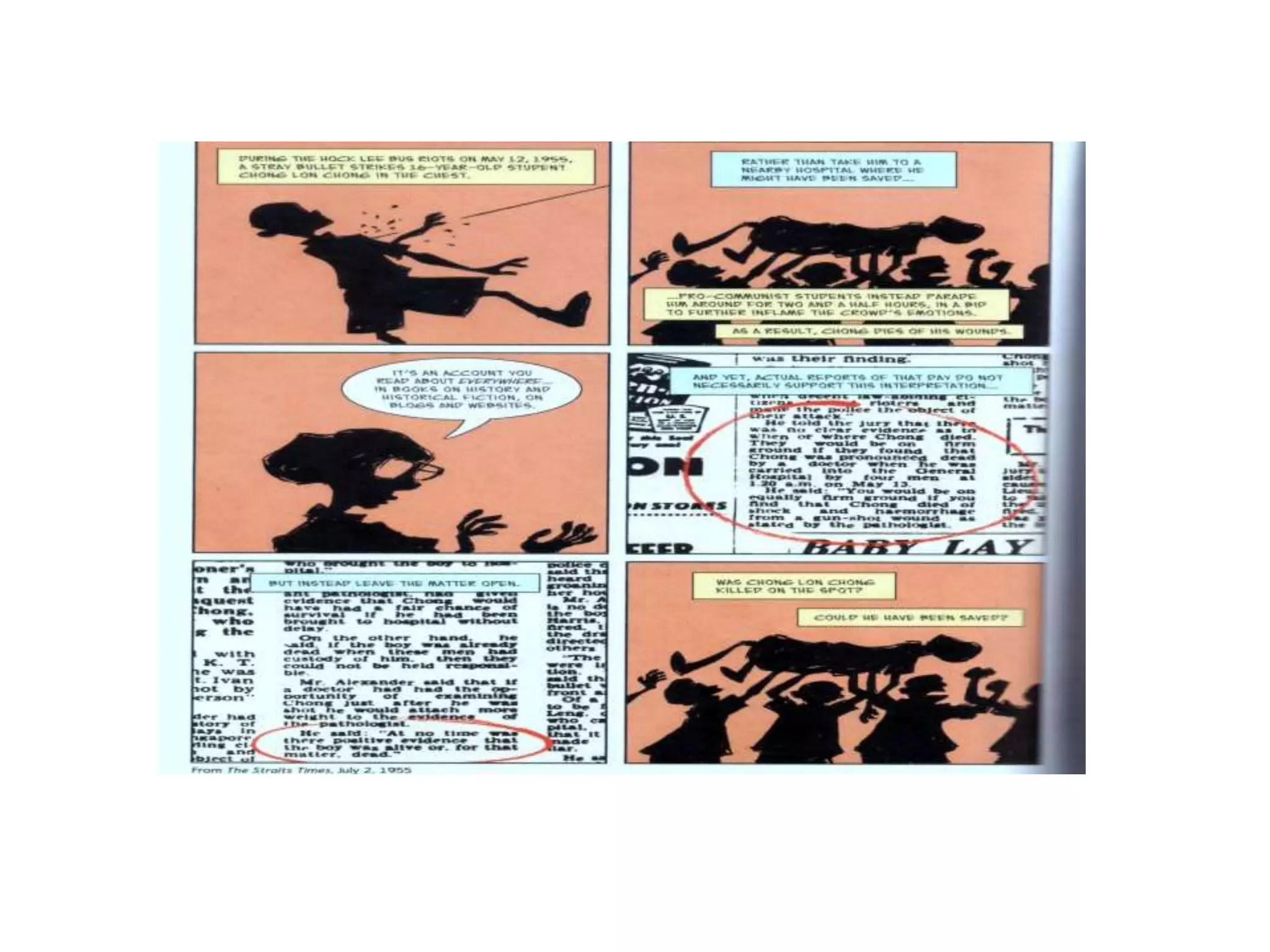
Use of cartoons in the history classroom (open source)

  • 1.
    Using Student Cartooningto Teach S1 History 8 Feb and 3 March Mr Lloyd Yeo, AST (SR), MTT History
  • 2.
    Literature Review They arethrice damned: damned as a culture, Purpose: “Damned as a culture. It is popular not ‘high” Outlandish fantasy involving absurd characters acting in the most bizarre fashion – the very antithesis, one might think, of plausibility.” At best suitable only for children (and retarded It’s impact is that it is positively harmful at worst….a perverse hybrid Locke, (2005)
  • 3.
    Good starting pointfor thinking about the specificities of certain issues (Eisner, 2006) In psychology, they are used to represent processes and thoughts that people go through in their mind. They have the ability to communicate various messages. Concept cartoons are “cartoon- style drawings presenting characters with different viewpoints around a particular situation (Roesky & Kennepohl, 2008)
  • 4.
    Stages on usingcartoons in the history classroom  1: Decide on the historical concept  2: Design and teach the elements that go into cartoons  3: Activate student prior knowledge  4: Expose students to local and student cartoon examples  5: Provide space for creativity and practice  6: Get students to articulate and write about historical evidence  7: Provide feedback  8: Design opportunities for group learning and debrief
  • 5.
    Stage 1 Decide onthe Historical Concept
  • 6.
    Diversity/ Multiple Perspectives:Understanding the past is complex and people’s experiences vary according to their ethnic groups, geographical locations, social class, religious affiliations, gender, age etc. Evidence: For sources to become evidence, they need to be judged on their usefulness and reliability in relation to the inquiry question. source to be studied in terms of its origins, nature, purpose and content, as well as its typicality
  • 7.
    History deals withreal people 
  • 8.
     Why didwe select this character to focus on?  How are we going to find out more about this character?  How do we know that what we are planning to draw is historicall authentic and realistic? (e.g. buildings, item used etc)  Is there any particular year we want to focus on? Why? Sourcing and evidence
  • 9.
    Stage 2 Design andteach the elements that go into cartoons
  • 10.
    Part 1: StoryMountain  Background  Main Character (s)  Problem.  Resolution  Closure  Perspective of cartoonist: (E.g. First person or 3rd person narrative)
  • 11.
    Part 2: AvatarCreation (p.7): Stick figures are alright
  • 12.
    Part 3: Elementsof cartoons (p.8.): Comparison exercise Setting: The Singapore River: It was a place where many migrant communities gathered for work and trade. Characters: Different ethnicities engaging in different types of businesses and occupations. Humour: ERP sign in the river, to highlight that the Singapore River was very congested due to heavy traffic. Single Scene
  • 14.
  • 15.
    Quick Note aboutusing digital cartoons Using clothes or background to depict time change
  • 16.
    Using double movementto depict movement
  • 17.
    Stage 3 Activate PriorKnowledge  Activate Relevant Prior Knowledge  Minimize Irrelevant Prior Knowledge  Compensate for Missing Prior Knowledge https://mindstepsinc.com/2012/09/activating-prior-knowledge/
  • 18.
    Activating Relevant PriorKnowledge and minimizing irrelevant prior knowledge. (p. 10-13)
  • 19.
    Stage 4: Exposestudents local and student examples
  • 22.
    Great story. Notso great historical content
  • 23.
    Flashback, illogical sequenceand generic writeouts . E.g. war and chaos)
  • 25.
  • 26.
    Stage 5: Providespace for creativity and practice
  • 27.
    Kinds of punchlines(pp14-15) 1. The Hidden Element: The reader can see what the character can’t. 2. The Reversal: Character says something unexpected. 3. The Understatement or Underreaction 4. The Exaggeration or Overreaction 5. Misunderstandings of words and intentions 6. Illogical or logical consequences (Reader or character did not expect something to happen) or the logical consequence Source: http://ersby.blogspot.sg/2013/01/a-list-of-punchlines.html
  • 28.
    Where did heget his source of inspiration? (p.16)
  • 29.
    Stage 6: Getstudents to articulate and write about historical evidence  Footnotes  Glossary and explanations  Evidence  Recordings
  • 30.
  • 31.
    (p.6): Story Mountain:Setting, Character, Problem, Resolution, Ending
  • 32.
    Culture system: Arevenue system in the Dutch East Indies (Indonesia) that forced farmers to pay revenue to the treasury of the Netherlands in the form of export crops or compulsory labour Boats from Makassar in the 19th century seen in the National Museum www.nas.gov.sg: Inteview with Samsuri Bin Ahmad from Semarang…..
  • 33.
    Stage 7: Providefeedback p.17 Historical evidence / historical authenticity and realism  Setting  Characters  Material culture Reading  Relevance to theme  Readability
  • 34.
     Group Work Pair Work  Individual Work
  • 35.
    Stage 8: Designopportunities for group learning and debrief
  • 36.
    Sometimes teacher willsay, “Can you try and visualize what their life is like?”. And then you realize that there’s this but that’s all you can think of. But when we did this, this open our mind to all the things that they could do. So this really help (us) visualize a lot. Historical visualisation through stories
  • 37.
    Historical agency/ ownershipthrough creativity It s new way to ‘see’ history: What is the first thing you think of when you say to him ‘History’. He will straight away say boring people. Historian. Talk about history. Artifacts. It’s a new way to look at history lessons: How about history lesson? Worksheets on history. Research. For drawing maybe just sketches of artifacts and re-creations of it but no one would think of comics (and stories) It’s about motivation and creativity: I thought it was an easier way to earn marks and better than just writing PEELS all the time. It was getting a bit boring. I thought this was really something unique that I don’t see in Primary School.

Editor's Notes

  • #5 You’re creating a supernova of sorts and it’s not easy. It’s an explosion of a star. It is the largest explosion that takes place in space. A supernova happens where there is a change in the core, or center, of a star. The first type of supernova happens in binary star systems. Binary stars are two stars that orbit the same point. One of the stars, a carbon-oxygen white dwarf, steals matter from its companion star. Eventually, the white dwarf accumulates too much matter. Having too much matter causes the star to explode, resulting in a supernova.
  • #7 You’re creating a supernova of sorts and it’s not easy. It’s an explosion of a star. It is the largest explosion that takes place in space. A supernova happens where there is a change in the core, or center, of a star. The first type of supernova happens in binary star systems. Binary stars are two stars that orbit the same point. One of the stars, a carbon-oxygen white dwarf, steals matter from its companion star. Eventually, the white dwarf accumulates too much matter. Having too much matter causes the star to explode, resulting in a supernova.