MAKING HISTORY
LESSONS INTERESTING
HISTORY AS A SUBJECT
IT IS LESS INTERESTING AND DOES NOT INVOLVE
LEARNERS IN ANY WAY
“WHO WANT TO LEARN ABOUT DEAD PEOPLE AND
PLACES WE DON’T KNOW?”
“HOW DOES IT CONCERN ME?”
THESE ARE SOME OF THE WRONG OPINIONS
CONCERNING HISTORY
THEKINDOF CLASSROOMSTO AVOID.
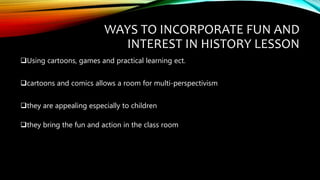
WAYS TO INCORPORATE FUN AND
INTEREST IN HISTORY LESSON
Using cartoons, games and practical learning ect.
cartoons and comics allows a room for multi-perspectivism
they are appealing especially to children
they bring the fun and action in the class room
WHY CARTOONS ARE EFFECTIVE
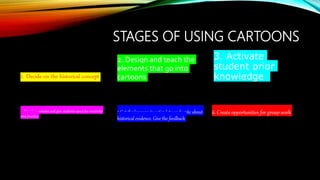
STAGES OF USING CARTOONS
1. Decide on the historical concept
4. Provide examples and give students space for creativity
and practice
2. Design and teach the
elements that go into
cartoons
5.Get the learners to articulate and write about
historical evidence. Give the feedback
3. Activate
student prior
knowledge
6. Create opportunities for group work
COMICS
 They create room for learner to use their prior knowledge
 Keeps their mind active
 And comics are fun
 Challenges them to remember they knowledge learned
 Teachers can assist learners learn the events dates of history
through story sequence. They will be required to put the comic
stories in their order
Playing games as a way of learning
 Have the learners play quiz
 games are effective because, who want to
lose?
 playing quiz brings competition in the
classroom and increase participation
 “name it” is another learning game
 have the learners name what the teacher
described or describe what the teacher
INCORPORATE MOVEMENT AND
ROLE PLAY
 Understanding that learners learn different is important
 Use teaching strategies like gallery walk, allowing learners to
move around the classroom.
 Monitored movement is good for learning, especially for
kinetic learners
ROLEPLAY AND
DISCUSSIONS/DEBATES
o History is a very broad subject of study
o Having learner roleplay the content shift the learning
process into a learner centered one.
o Contextualize the content to grasp learners attention.
o BECAUSE history is a multi perspective subject with a lot
of evidence. Debate and class discussions become very
effective.
o Learner are challenged to think out of the box and
analyze different perspectives
ROLE PLAY
 Learners take roles of different characters and act out a
scenario.
 Learners are able to construct meaning of the content
and not memorize
 This strategy helps learners move from their comfort
zones. It develops all learning domains (cognitive,
affective and psychomotor)
 It is fun and motivates the learners
 Help learners manage conflict
CRITICAL THINKING
• With the use of different teaching and learning tools, learners become critical
thinkers
• Their reasoning skills get tested and advanced.
• They are able to analyze, compare and contrast different resources and point of
views.
USE STORIES TO CREATE INTEREST &
INSPIRE
 When conducting a lesson, avoid making dates your central teaching
based. Focusing on stories of real men and women who made history.
 Use historical friction, and folktales books that contain real-life
events.
LIST OF TELLING A STORY TO USE
 legend
Fairytales
Myths
Fables
Folk tales
HISTORY LESSON CAN BE INTERESTING
IF TEACHERS FULLY MOVE TO A
LEARNER CENTERED TEACHING AND
LEARNING PROCESS
ALLOW LEARNERS TO BE RESPONSIBLE
FOR THEIR LEARNING
REFERENCE LIST
Lynch, m. (2018). Using Cartoons to Spark Engagement.
Available at https://www.thetechedvocate.org/using-cartoons-to-spark-engagement-in-the-
classroom/
Clare Rafferty and Jess Robinson (2018) HTAV. http://www.slideshare.net/craff/games-in-the-
history-classroom-htav-2018
Loyde, Yeo (2015)The Pedagogical Value of Comics in the History Classroom: An Exploratory case
study.
http://www.slideshare.net/lloydyeo77/pedagogical-value-of-comics-in-the-history-classroom-
historical-creativity
Lloyd Yeo Using student cartooning to teach S1 History. http://www.slideshare.net/LloydYeo/use-
of-cartoons-in-the-history-classroom-open-source
Kim, Todt. Move Over, Memorization: Getting Your Students To Think Critically About History.
University of Louisiana.
http://www.slideshare.net/CengegeLearning/cultivating-in-history-classrooms-cengege-learning-
webinae-by-kim-todt
Paulina, May. Principles of Teaching: Teaching Strategy.
http://www.slideshare.net/PaulinaMay1/principles-of-teaching-teaching-strategy-focus-on-
group-role-playing

interactive history lessons

  • 1.
  • 2.
    HISTORY AS ASUBJECT IT IS LESS INTERESTING AND DOES NOT INVOLVE LEARNERS IN ANY WAY “WHO WANT TO LEARN ABOUT DEAD PEOPLE AND PLACES WE DON’T KNOW?” “HOW DOES IT CONCERN ME?” THESE ARE SOME OF THE WRONG OPINIONS CONCERNING HISTORY THEKINDOF CLASSROOMSTO AVOID.
  • 3.
    WAYS TO INCORPORATEFUN AND INTEREST IN HISTORY LESSON Using cartoons, games and practical learning ect. cartoons and comics allows a room for multi-perspectivism they are appealing especially to children they bring the fun and action in the class room
  • 4.
  • 6.
    STAGES OF USINGCARTOONS 1. Decide on the historical concept 4. Provide examples and give students space for creativity and practice 2. Design and teach the elements that go into cartoons 5.Get the learners to articulate and write about historical evidence. Give the feedback 3. Activate student prior knowledge 6. Create opportunities for group work
  • 7.
    COMICS  They createroom for learner to use their prior knowledge  Keeps their mind active  And comics are fun  Challenges them to remember they knowledge learned
  • 8.
     Teachers canassist learners learn the events dates of history through story sequence. They will be required to put the comic stories in their order
  • 9.
    Playing games asa way of learning  Have the learners play quiz  games are effective because, who want to lose?  playing quiz brings competition in the classroom and increase participation  “name it” is another learning game  have the learners name what the teacher described or describe what the teacher
  • 10.
    INCORPORATE MOVEMENT AND ROLEPLAY  Understanding that learners learn different is important  Use teaching strategies like gallery walk, allowing learners to move around the classroom.  Monitored movement is good for learning, especially for kinetic learners
  • 11.
    ROLEPLAY AND DISCUSSIONS/DEBATES o Historyis a very broad subject of study o Having learner roleplay the content shift the learning process into a learner centered one. o Contextualize the content to grasp learners attention. o BECAUSE history is a multi perspective subject with a lot of evidence. Debate and class discussions become very effective. o Learner are challenged to think out of the box and analyze different perspectives
  • 12.
    ROLE PLAY  Learnerstake roles of different characters and act out a scenario.  Learners are able to construct meaning of the content and not memorize  This strategy helps learners move from their comfort zones. It develops all learning domains (cognitive, affective and psychomotor)  It is fun and motivates the learners  Help learners manage conflict
  • 13.
    CRITICAL THINKING • Withthe use of different teaching and learning tools, learners become critical thinkers • Their reasoning skills get tested and advanced. • They are able to analyze, compare and contrast different resources and point of views.
  • 14.
    USE STORIES TOCREATE INTEREST & INSPIRE  When conducting a lesson, avoid making dates your central teaching based. Focusing on stories of real men and women who made history.  Use historical friction, and folktales books that contain real-life events.
  • 15.
    LIST OF TELLINGA STORY TO USE  legend Fairytales Myths Fables Folk tales
  • 16.
    HISTORY LESSON CANBE INTERESTING IF TEACHERS FULLY MOVE TO A LEARNER CENTERED TEACHING AND LEARNING PROCESS ALLOW LEARNERS TO BE RESPONSIBLE FOR THEIR LEARNING
  • 17.
    REFERENCE LIST Lynch, m.(2018). Using Cartoons to Spark Engagement. Available at https://www.thetechedvocate.org/using-cartoons-to-spark-engagement-in-the- classroom/ Clare Rafferty and Jess Robinson (2018) HTAV. http://www.slideshare.net/craff/games-in-the- history-classroom-htav-2018 Loyde, Yeo (2015)The Pedagogical Value of Comics in the History Classroom: An Exploratory case study. http://www.slideshare.net/lloydyeo77/pedagogical-value-of-comics-in-the-history-classroom- historical-creativity Lloyd Yeo Using student cartooning to teach S1 History. http://www.slideshare.net/LloydYeo/use- of-cartoons-in-the-history-classroom-open-source Kim, Todt. Move Over, Memorization: Getting Your Students To Think Critically About History. University of Louisiana. http://www.slideshare.net/CengegeLearning/cultivating-in-history-classrooms-cengege-learning- webinae-by-kim-todt Paulina, May. Principles of Teaching: Teaching Strategy. http://www.slideshare.net/PaulinaMay1/principles-of-teaching-teaching-strategy-focus-on- group-role-playing