Pathophysiology of
Unilateral Ureteric
Obstruction
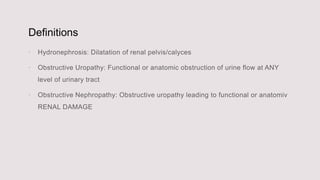
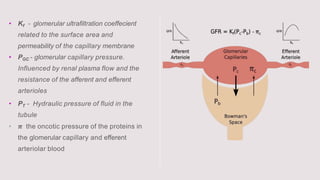
Definitions



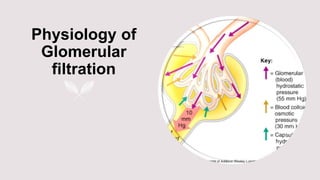
Physiology of
Glomerular
filtration
•
•
•
•
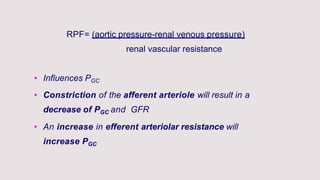
RPF= (aortic pressure-renal venous pressure)
renal vascular resistance
• Influences PGC
• Constriction of the afferent arteriole will result in a
decrease of PGC and GFR
• An increase in efferent arteriolar resistance will
increase PGC
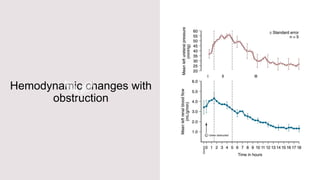
Hemodynamic changes with
obstruction
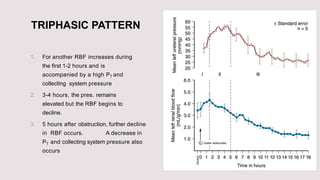
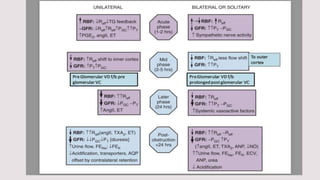
TRIPHASIC PATTERN
1. For another RBF increases during
the first 1-2 hours and is
accompanied by a high PT and
collecting system pressure
2. 3-4 hours, the pres. remains
elevated but the RBF begins to
decline.
3. 5 hours after obstruction, further decline
in RBF occurs. A decrease in
PT and collecting system pressure also
occurs
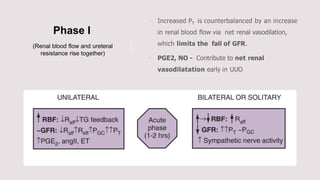
Phase I


(Renal blood flow and ureteral
resistance rise together)
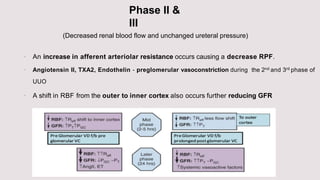
Phase II &
III
 An increase in afferent arteriolar resistance occurs causing a decrease RPF.
 Angiotensin II, TXA2, Endothelin - preglomerular vasoconstriction during the 2nd and 3rd phase of
UUO
 A shift in RBF from the outer to inner cortex also occurs further reducing GFR
(Decreased renal blood flow and unchanged ureteral pressure)
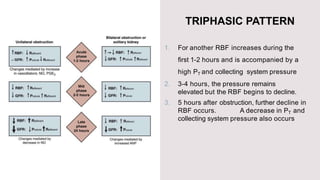
TRIPHASIC PATTERN
1. For another RBF increases during the
first 1-2 hours and is accompanied by a
high PT and collecting system pressure
2. 3-4 hours, the pressure remains
elevated but the RBF begins to decline.
3. 5 hours after obstruction, further decline in
RBF occurs. A decrease in PT and
collecting system pressure also occurs
Effects of Obstruction on Tubular Function
 Dysregulation of aquaporin water channels in the proximal tubule, thin descending
loop, and collecting tubule. Lead to polyuria and impaired concentrating capacity
 Sodium Transport
 Potassium and phosphate excretions follow changes in sodium
 Deficit in urinary acidification
 Magnesium excretion is increased after release of UUO or BUO
 Changes in peptide excretion mark renal damage
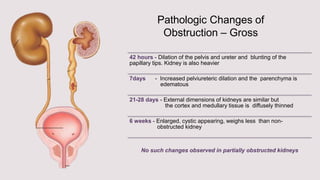
Pathologic Changes of
Obstruction – Gross
42 hours - Dilation of the pelvis and ureter and blunting of the
papillary tips. Kidney is also heavier
7days - Increased pelviureteric dilation and the parenchyma is
edematous
21-28 days - External dimensions of kidneys are similar but
the cortex and medullary tissue is diffusely thinned
6 weeks - Enlarged, cystic appearing, weighs less than non-
obstructed kidney
No such changes observed in partially obstructed kidneys
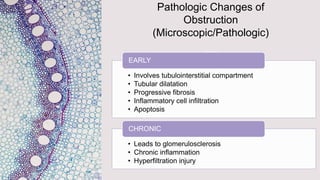
Pathologic Changes of
Obstruction
(Microscopic/Pathologic)
• Involves tubulointerstitial compartment
• Tubular dilatation
• Progressive fibrosis
• Inflammatory cell infiltration
• Apoptosis
EARLY
• Leads to glomerulosclerosis
• Chronic inflammation
• Hyperfiltration injury
CHRONIC
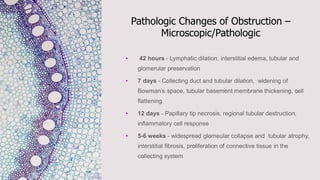
Pathologic Changes of Obstruction –
Microscopic/Pathologic
•
•
•
•
Clinical Relevance




THANK YOU
!

Urinary tract obstruction pathophysiology.pptx

  • 1.
  • 2.
  • 3.
  • 4.
  • 5.
    RPF= (aortic pressure-renalvenous pressure) renal vascular resistance • Influences PGC • Constriction of the afferent arteriole will result in a decrease of PGC and GFR • An increase in efferent arteriolar resistance will increase PGC
  • 6.
  • 7.
    TRIPHASIC PATTERN 1. Foranother RBF increases during the first 1-2 hours and is accompanied by a high PT and collecting system pressure 2. 3-4 hours, the pres. remains elevated but the RBF begins to decline. 3. 5 hours after obstruction, further decline in RBF occurs. A decrease in PT and collecting system pressure also occurs
  • 8.
    Phase I   (Renal bloodflow and ureteral resistance rise together)
  • 9.
    Phase II & III An increase in afferent arteriolar resistance occurs causing a decrease RPF.  Angiotensin II, TXA2, Endothelin - preglomerular vasoconstriction during the 2nd and 3rd phase of UUO  A shift in RBF from the outer to inner cortex also occurs further reducing GFR (Decreased renal blood flow and unchanged ureteral pressure)
  • 11.
    TRIPHASIC PATTERN 1. Foranother RBF increases during the first 1-2 hours and is accompanied by a high PT and collecting system pressure 2. 3-4 hours, the pressure remains elevated but the RBF begins to decline. 3. 5 hours after obstruction, further decline in RBF occurs. A decrease in PT and collecting system pressure also occurs
  • 12.
    Effects of Obstructionon Tubular Function  Dysregulation of aquaporin water channels in the proximal tubule, thin descending loop, and collecting tubule. Lead to polyuria and impaired concentrating capacity  Sodium Transport  Potassium and phosphate excretions follow changes in sodium  Deficit in urinary acidification  Magnesium excretion is increased after release of UUO or BUO  Changes in peptide excretion mark renal damage
  • 13.
    Pathologic Changes of Obstruction– Gross 42 hours - Dilation of the pelvis and ureter and blunting of the papillary tips. Kidney is also heavier 7days - Increased pelviureteric dilation and the parenchyma is edematous 21-28 days - External dimensions of kidneys are similar but the cortex and medullary tissue is diffusely thinned 6 weeks - Enlarged, cystic appearing, weighs less than non- obstructed kidney No such changes observed in partially obstructed kidneys
  • 14.
    Pathologic Changes of Obstruction (Microscopic/Pathologic) •Involves tubulointerstitial compartment • Tubular dilatation • Progressive fibrosis • Inflammatory cell infiltration • Apoptosis EARLY • Leads to glomerulosclerosis • Chronic inflammation • Hyperfiltration injury CHRONIC
  • 15.
    Pathologic Changes ofObstruction – Microscopic/Pathologic • • • •
  • 16.
  • 17.