NAME:- Riya Nikalje.
Class:- Raj Technology.
Name:- Riya Nikalje.
Class Raj Technology.
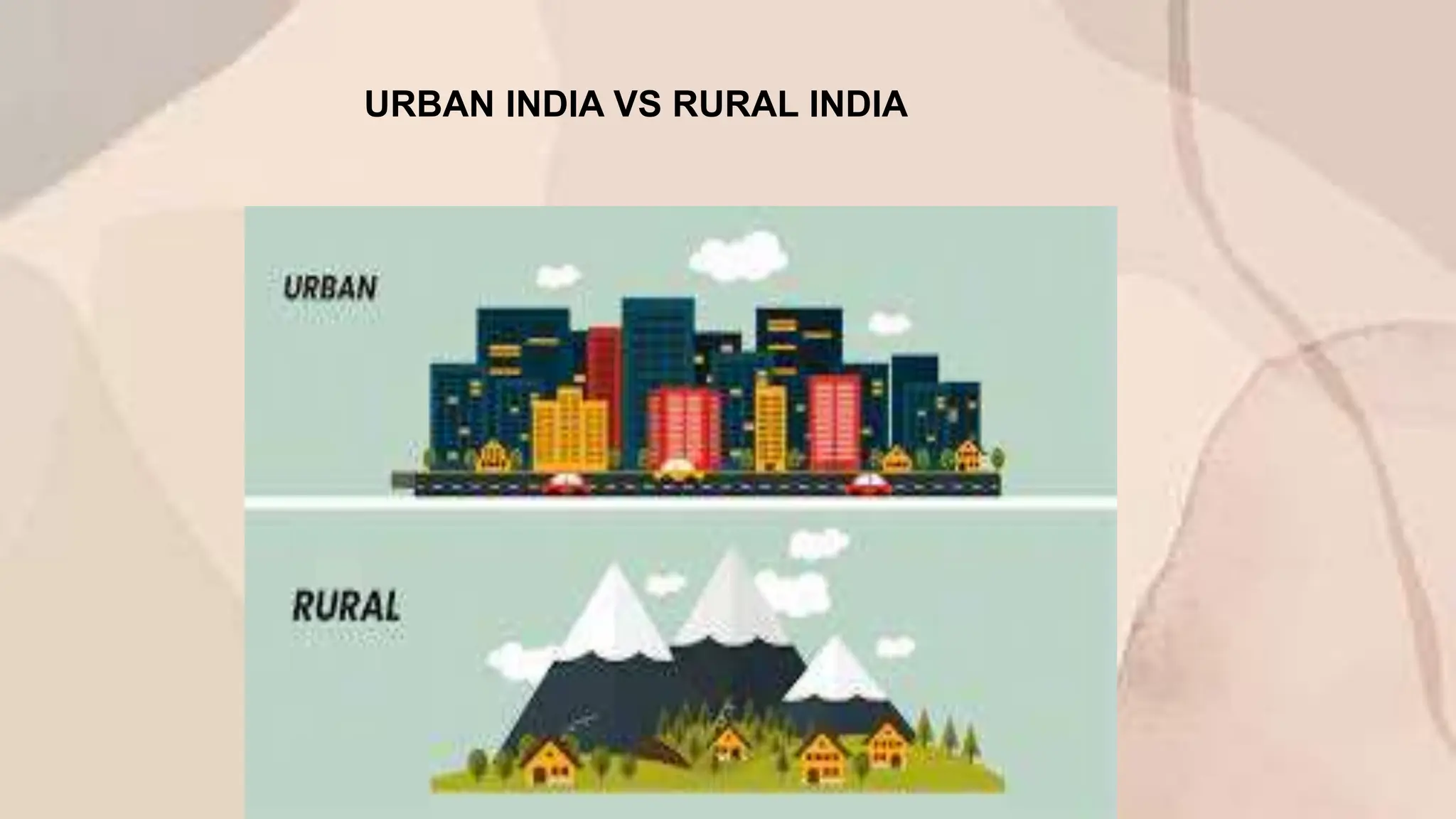
URBAN INDIA VS RURAL INDIA
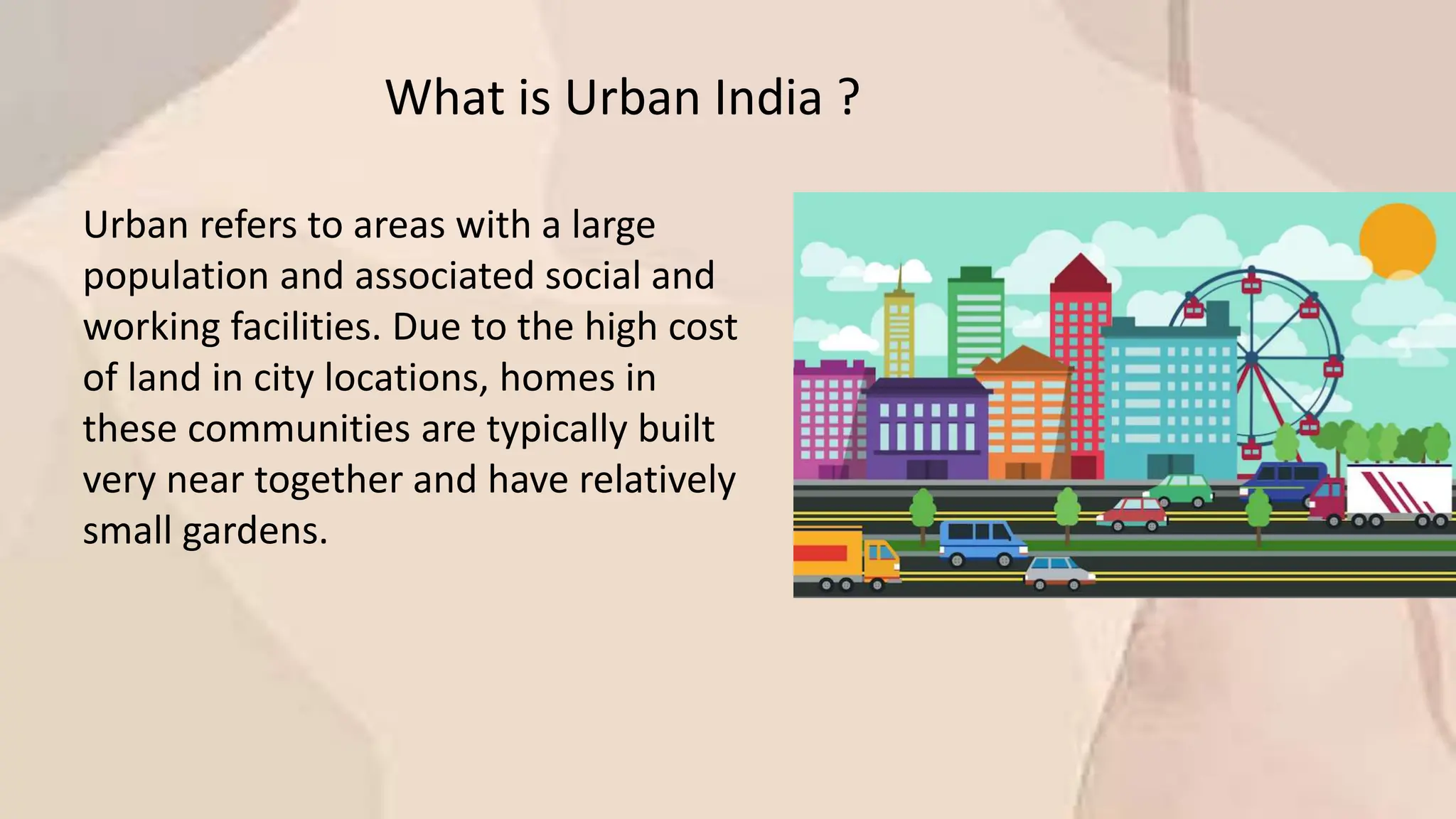
What is Urban India ?
Urban refers to areas with a large
population and associated social and
working facilities. Due to the high cost
of land in city locations, homes in
these communities are typically built
very near together and have relatively
small gardens.
What is Rural India ?
Rural areas are open places with
a low population, not crowded
areas. They mostly work in
mining areas. Open fields and a
somewhat peaceful lifestyle, free
of the rush, bustle, and city life
people, mark rural living.
WHAT IS THE DIFFERENCE ?
BASIS OF
COMPARISON
uRban RURAL
Location:
Population:
Lifestyle
Opportunities
Cities, towns Villages, countryside
Low density, more space
High density, crowded
population size, development, division of labour, social
mobility, and the type of environment.
Population size
Housing
Opportunity to develop
Type of environment
education
Urban india Vs Rural India - lets connect the bridge  (1).pptx

Urban india Vs Rural India - lets connect the bridge (1).pptx

  • 1.
    NAME:- Riya Nikalje. Class:-Raj Technology. Name:- Riya Nikalje. Class Raj Technology.
  • 2.
    URBAN INDIA VSRURAL INDIA
  • 3.
    What is UrbanIndia ? Urban refers to areas with a large population and associated social and working facilities. Due to the high cost of land in city locations, homes in these communities are typically built very near together and have relatively small gardens.
  • 4.
    What is RuralIndia ? Rural areas are open places with a low population, not crowded areas. They mostly work in mining areas. Open fields and a somewhat peaceful lifestyle, free of the rush, bustle, and city life people, mark rural living.
  • 6.
    WHAT IS THEDIFFERENCE ? BASIS OF COMPARISON uRban RURAL Location: Population: Lifestyle Opportunities Cities, towns Villages, countryside Low density, more space High density, crowded High density, crowded
  • 8.
    population size, development,division of labour, social mobility, and the type of environment. Population size Housing Opportunity to develop Type of environment education