http://bit.ly/ipcc_outreach_cambodia
Updates on the Preparations of the SRCCL: WGIII
Contribution to the AR6 Cycle
P. R. Shukla & Jim Skea, Co-Chairs, IPCC WGIII
Cambodia, 27 May 2019
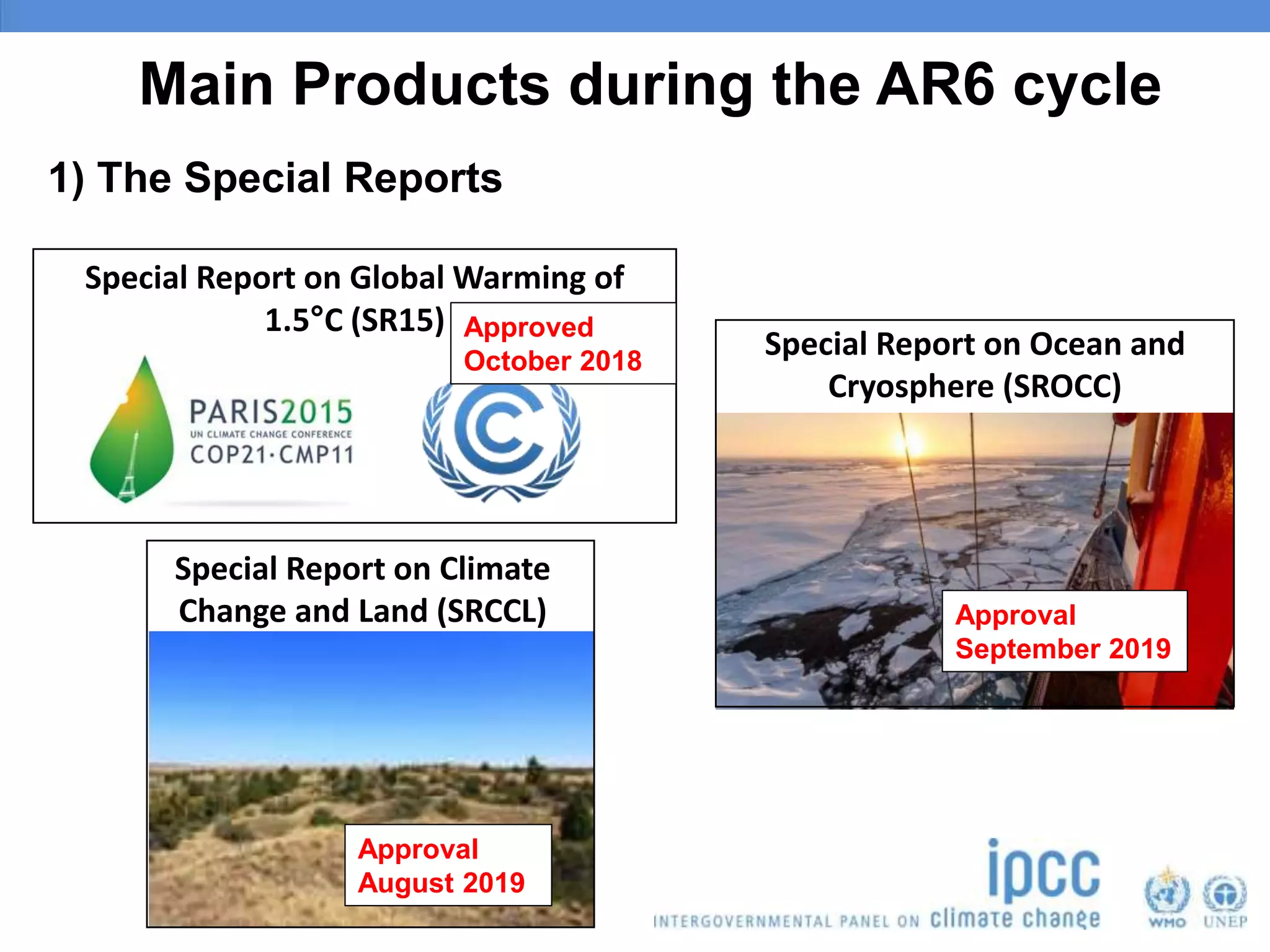
1) The Special Reports
Main Products during the AR6 cycle
Special Report on Global Warming of
1.5°C (SR15)
Special Report on Climate
Change and Land (SRCCL)
Special Report on Ocean and
Cryosphere (SROCC)
Approved
October 2018
Approval
August 2019
Approval
September 2019
IPCC Special Report on Climate Change and Land
(SRCCL): Introduction to SRCCL and timeline
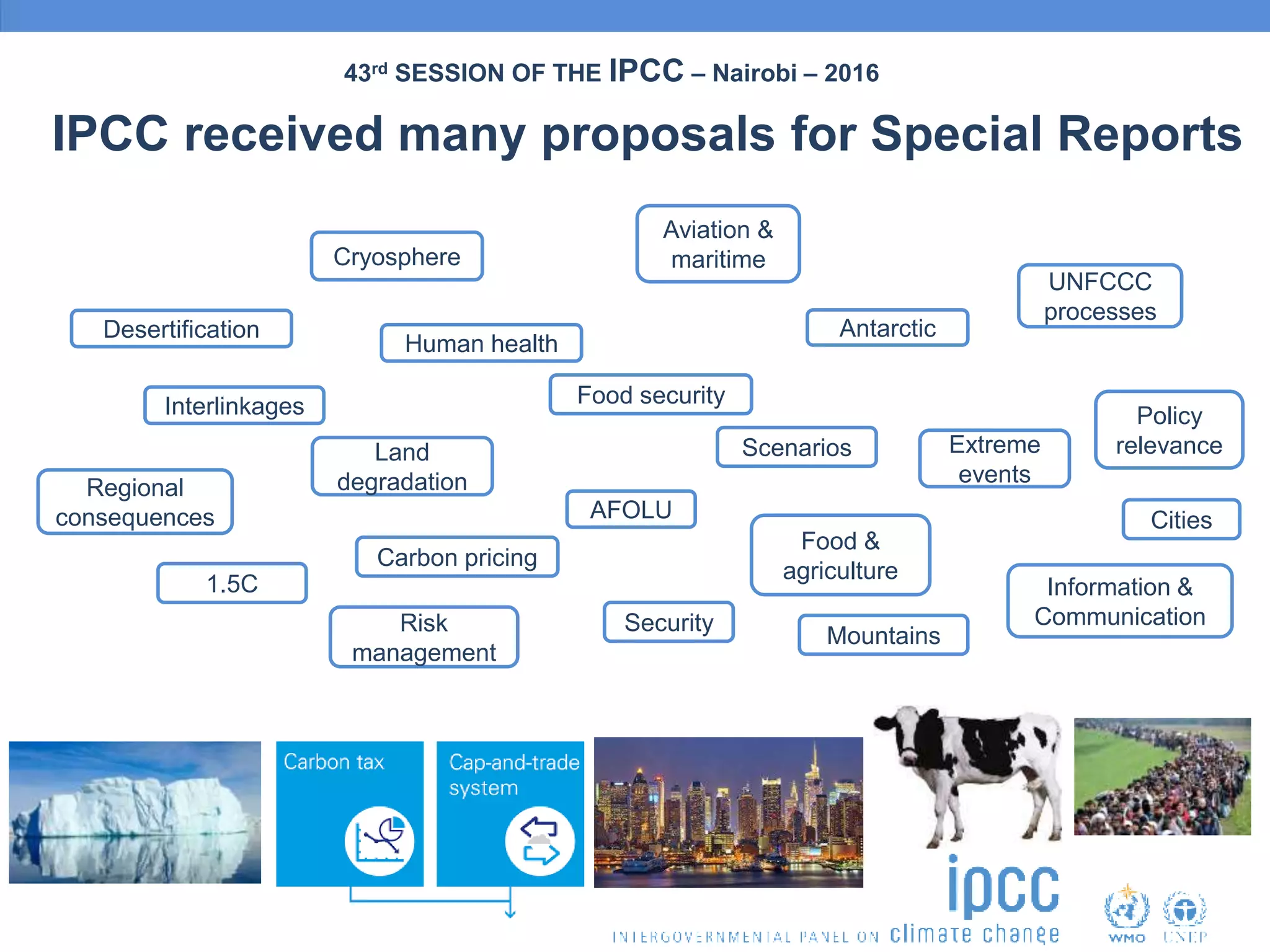
IPCC received many proposals for Special Reports
Desertification
Interlinkages
Human health
Cryosphere
Antarctic
Carbon pricing
Food &
agriculture
Security
Regional
consequences
Policy
relevance
Information &
Communication
Aviation &
maritime
Food security
1.5C
Extreme
events
Scenarios
Risk
management
Cities
Land
degradation
AFOLU
Mountains
UNFCCC
processes
43rd SESSION OF THE IPCC – Nairobi – 2016
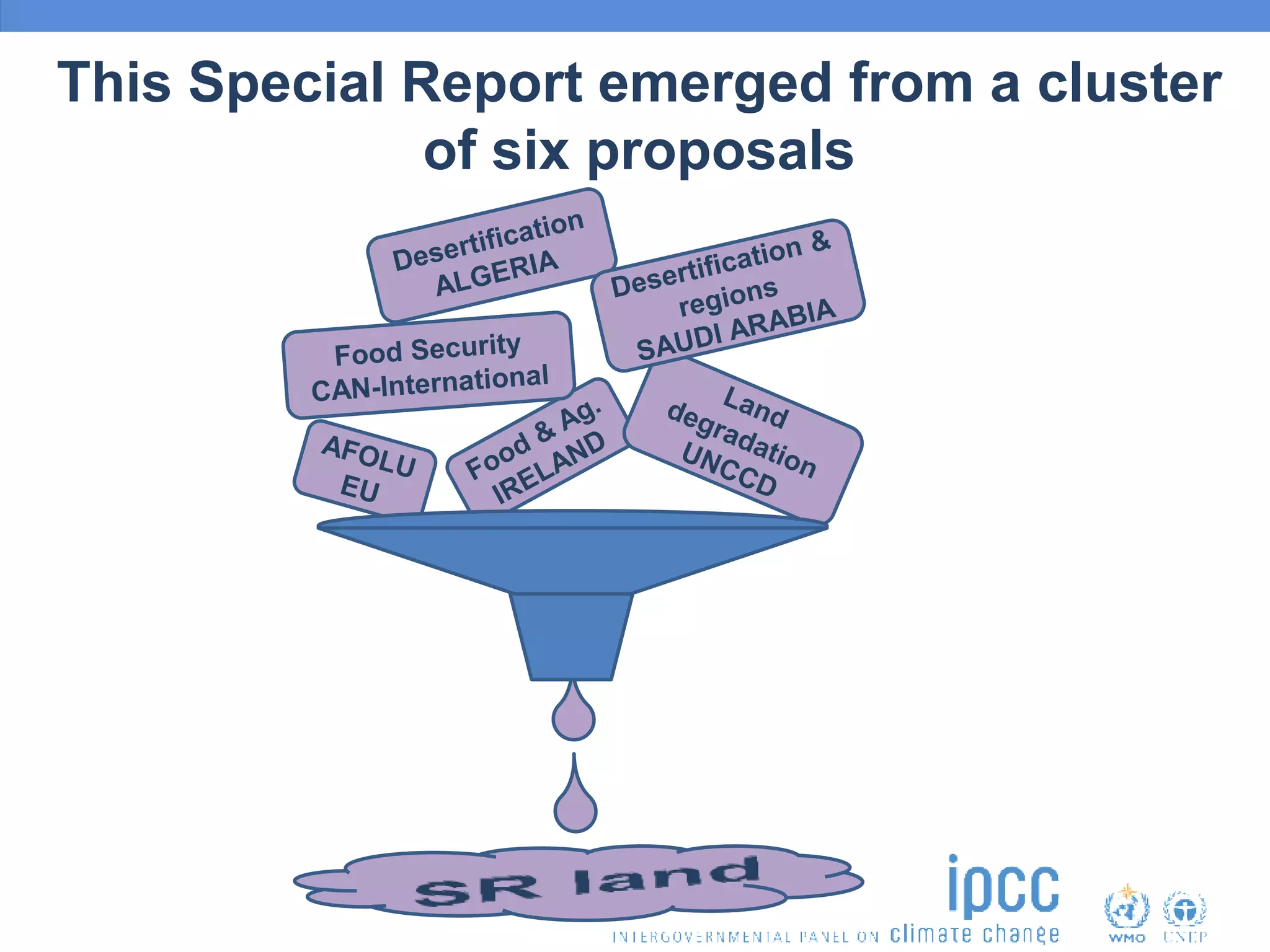
This Special Report emerged from a cluster
of six proposals
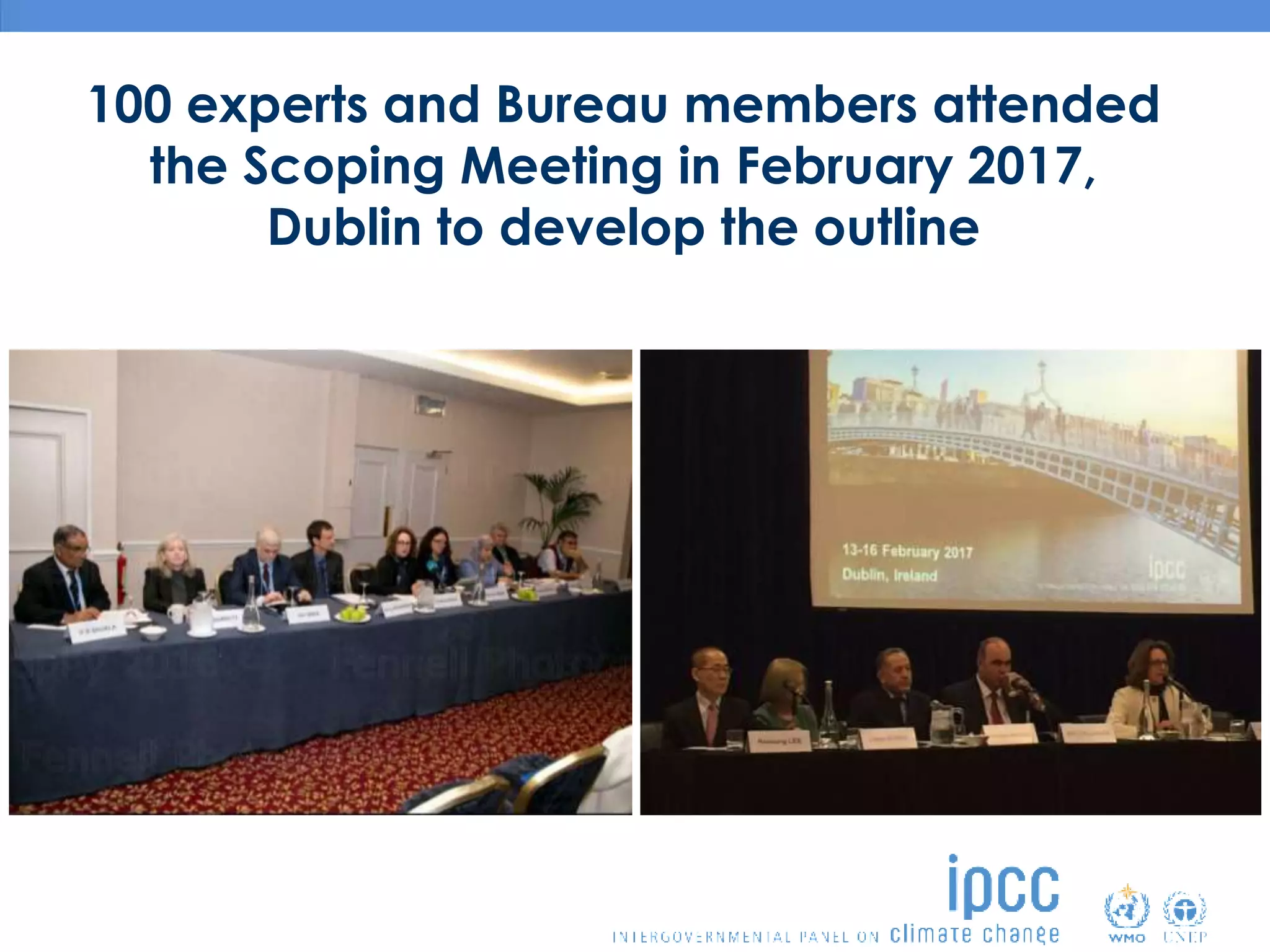
100 experts and Bureau members attended
the Scoping Meeting in February 2017,
Dublin to develop the outline
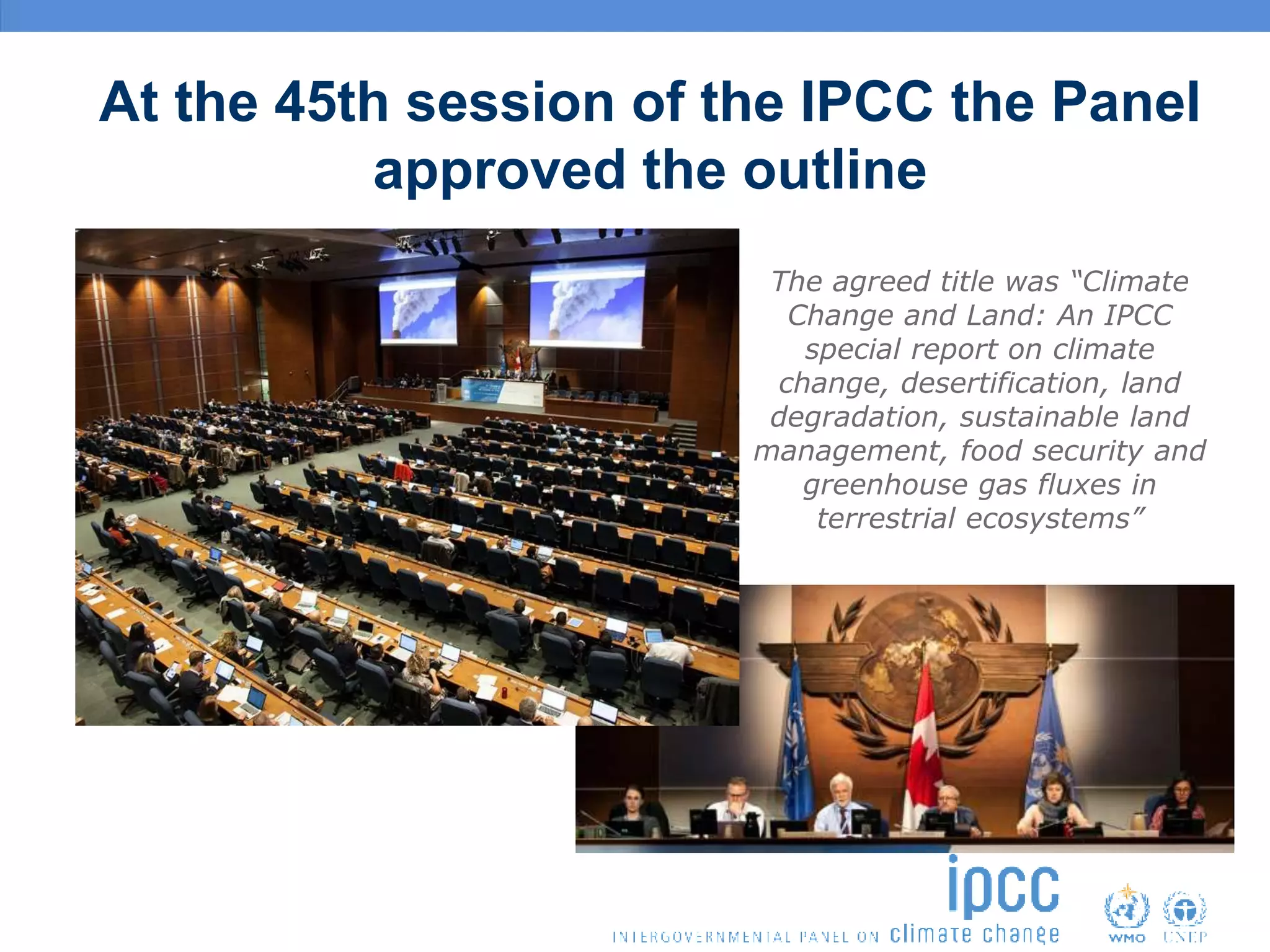
At the 45th session of the IPCC the Panel
approved the outline
The agreed title was “Climate
Change and Land: An IPCC
special report on climate
change, desertification, land
degradation, sustainable land
management, food security and
greenhouse gas fluxes in
terrestrial ecosystems”
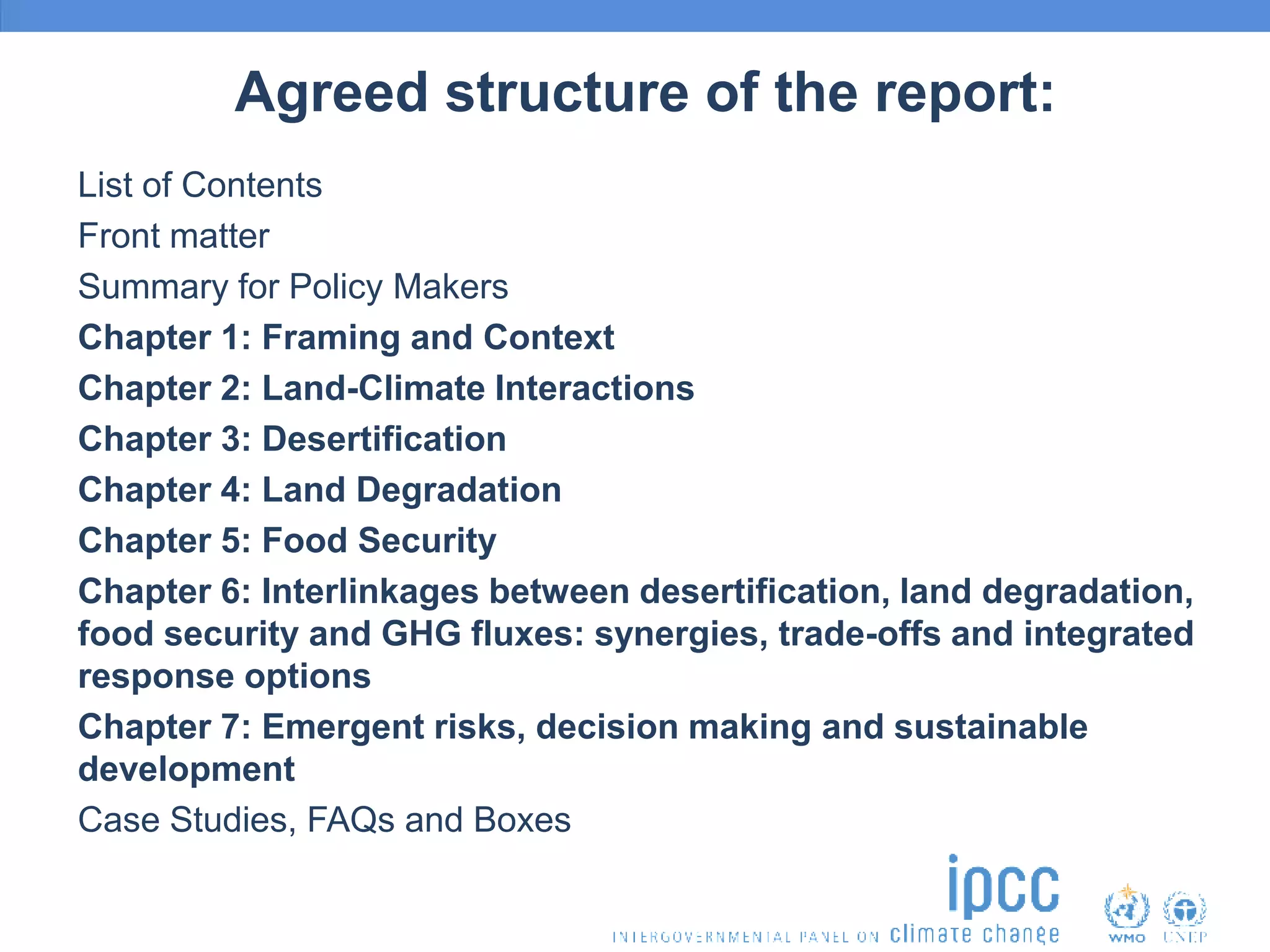
Agreed structure of the report:
List of Contents
Front matter
Summary for Policy Makers
Chapter 1: Framing and Context
Chapter 2: Land-Climate Interactions
Chapter 3: Desertification
Chapter 4: Land Degradation
Chapter 5: Food Security
Chapter 6: Interlinkages between desertification, land degradation,
food security and GHG fluxes: synergies, trade-offs and integrated
response options
Chapter 7: Emergent risks, decision making and sustainable
development
Case Studies, FAQs and Boxes
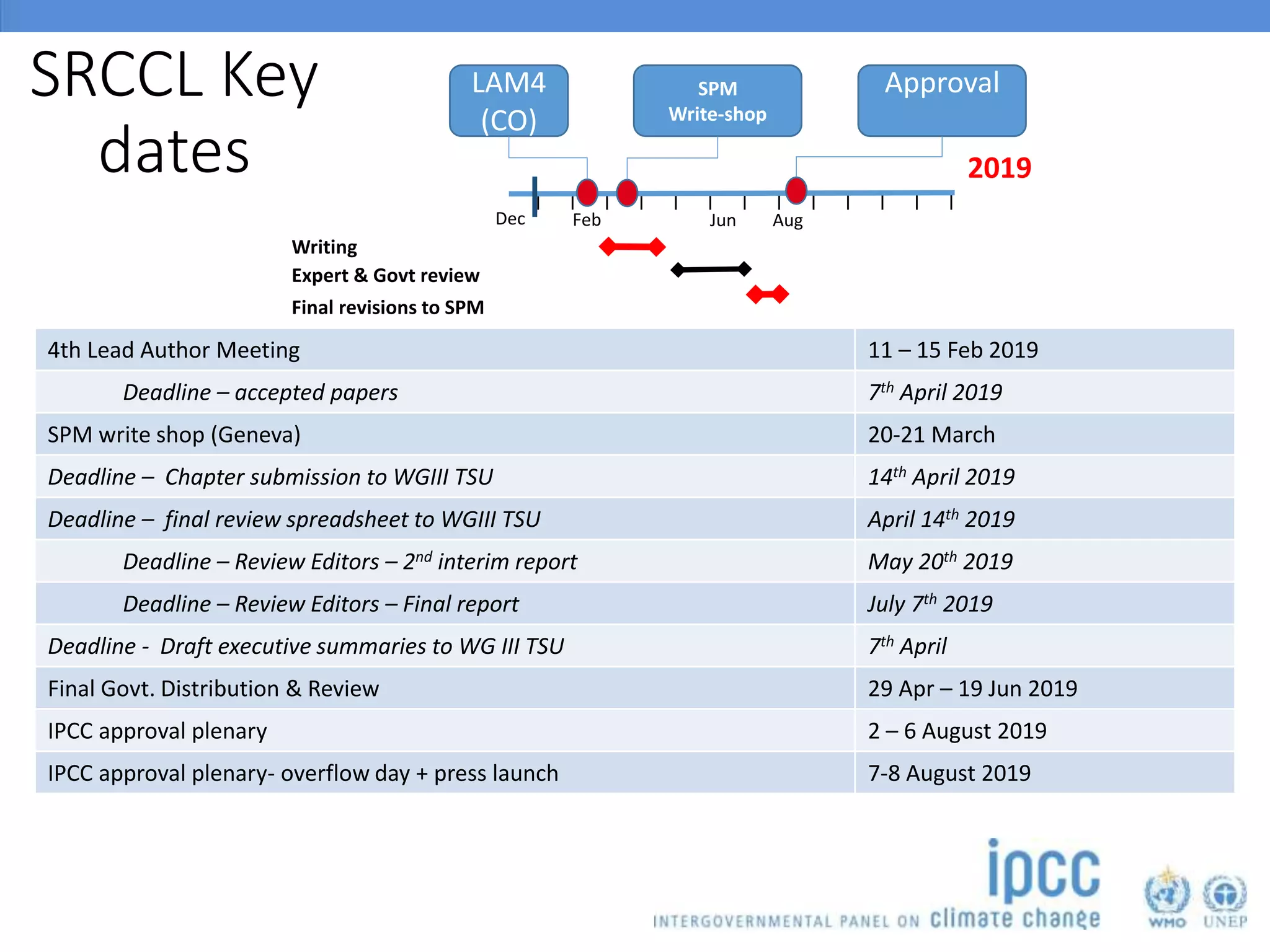
2019
LAM4
(CO)
Approval
Dec
Expert & Govt review
SRCCL Key
dates
Jun AugFeb
4th Lead Author Meeting 11 – 15 Feb 2019
Deadline – accepted papers 7th April 2019
SPM write shop (Geneva) 20-21 March
Deadline – Chapter submission to WGIII TSU 14th April 2019
Deadline – final review spreadsheet to WGIII TSU April 14th 2019
Deadline – Review Editors – 2nd interim report May 20th 2019
Deadline – Review Editors – Final report July 7th 2019
Deadline - Draft executive summaries to WG III TSU 7th April
Final Govt. Distribution & Review 29 Apr – 19 Jun 2019
IPCC approval plenary 2 – 6 August 2019
IPCC approval plenary- overflow day + press launch 7-8 August 2019
Writing
Final revisions to SPM
SPM
Write-shop
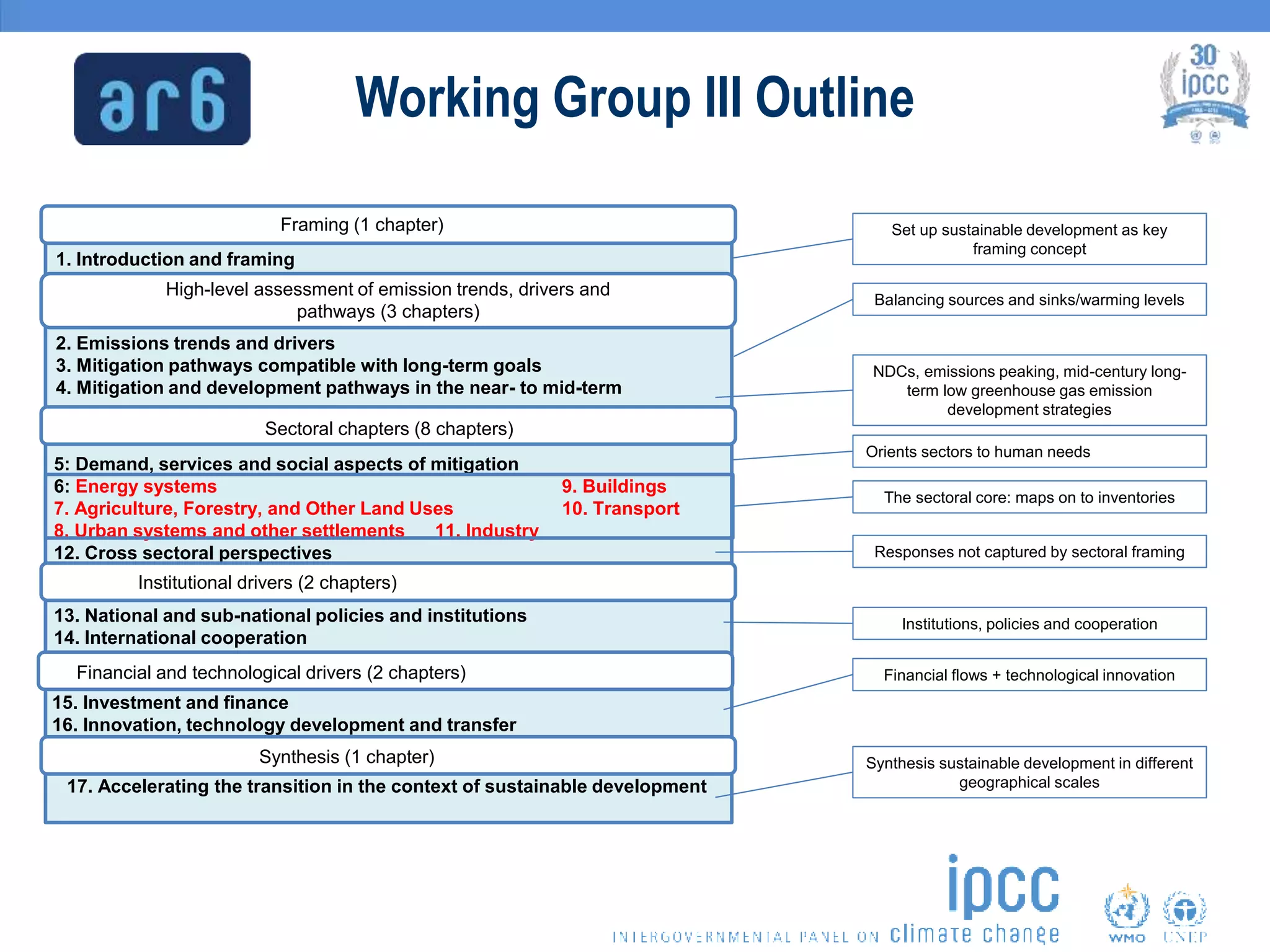
15. Investment and finance
16. Innovation, technology development and transfer
5: Demand, services and social aspects of mitigation
6: Energy systems 9. Buildings
7. Agriculture, Forestry, and Other Land Uses 10. Transport
8. Urban systems and other settlements 11. Industry
12. Cross sectoral perspectives
Framing (1 chapter)
High-level assessment of emission trends, drivers and
pathways (3 chapters)
Sectoral chapters (8 chapters)
Institutional drivers (2 chapters)
Synthesis (1 chapter)
17. Accelerating the transition in the context of sustainable development
13. National and sub-national policies and institutions
14. International cooperation
1. Introduction and framing
2. Emissions trends and drivers
3. Mitigation pathways compatible with long-term goals
4. Mitigation and development pathways in the near- to mid-term
Set up sustainable development as key
framing concept
Balancing sources and sinks/warming levels
NDCs, emissions peaking, mid-century long-
term low greenhouse gas emission
development strategies
Orients sectors to human needs
The sectoral core: maps on to inventories
Financial flows + technological innovation
Synthesis sustainable development in different
geographical scales
Financial and technological drivers (2 chapters)
Responses not captured by sectoral framing
Institutions, policies and cooperation
Working Group III Outline
IPCC
IPCC
http://www.slideshare.net/ipcc-
media/presentations
https://www.youtube.com/c/ipccgeneva
Find us on:
Website: http://ipcc.ch/
IPCC Secretariat: ipcc-sec@wmo.int
IPCC Press Office: ipcc-media@wmo.int
@IPCC_CH
https://www.linkedin.com/company/ipcc
https://www.flickr.com/photos/ipccphoto/sets/
https://vimeo.com/ipcc
THANK YOU FOR YOUR ATTENTION!
For more information:

Updates on the preparations of the SRCCL and Working Group III contribution to the Sixth Assessment cycle

  • 1.
    http://bit.ly/ipcc_outreach_cambodia Updates on thePreparations of the SRCCL: WGIII Contribution to the AR6 Cycle P. R. Shukla & Jim Skea, Co-Chairs, IPCC WGIII Cambodia, 27 May 2019
  • 2.
    1) The SpecialReports Main Products during the AR6 cycle Special Report on Global Warming of 1.5°C (SR15) Special Report on Climate Change and Land (SRCCL) Special Report on Ocean and Cryosphere (SROCC) Approved October 2018 Approval August 2019 Approval September 2019
  • 3.
    IPCC Special Reporton Climate Change and Land (SRCCL): Introduction to SRCCL and timeline
  • 4.
    IPCC received manyproposals for Special Reports Desertification Interlinkages Human health Cryosphere Antarctic Carbon pricing Food & agriculture Security Regional consequences Policy relevance Information & Communication Aviation & maritime Food security 1.5C Extreme events Scenarios Risk management Cities Land degradation AFOLU Mountains UNFCCC processes 43rd SESSION OF THE IPCC – Nairobi – 2016
  • 5.
    This Special Reportemerged from a cluster of six proposals
  • 6.
    100 experts andBureau members attended the Scoping Meeting in February 2017, Dublin to develop the outline
  • 7.
    At the 45thsession of the IPCC the Panel approved the outline The agreed title was “Climate Change and Land: An IPCC special report on climate change, desertification, land degradation, sustainable land management, food security and greenhouse gas fluxes in terrestrial ecosystems”
  • 8.
    Agreed structure ofthe report: List of Contents Front matter Summary for Policy Makers Chapter 1: Framing and Context Chapter 2: Land-Climate Interactions Chapter 3: Desertification Chapter 4: Land Degradation Chapter 5: Food Security Chapter 6: Interlinkages between desertification, land degradation, food security and GHG fluxes: synergies, trade-offs and integrated response options Chapter 7: Emergent risks, decision making and sustainable development Case Studies, FAQs and Boxes
  • 9.
    2019 LAM4 (CO) Approval Dec Expert & Govtreview SRCCL Key dates Jun AugFeb 4th Lead Author Meeting 11 – 15 Feb 2019 Deadline – accepted papers 7th April 2019 SPM write shop (Geneva) 20-21 March Deadline – Chapter submission to WGIII TSU 14th April 2019 Deadline – final review spreadsheet to WGIII TSU April 14th 2019 Deadline – Review Editors – 2nd interim report May 20th 2019 Deadline – Review Editors – Final report July 7th 2019 Deadline - Draft executive summaries to WG III TSU 7th April Final Govt. Distribution & Review 29 Apr – 19 Jun 2019 IPCC approval plenary 2 – 6 August 2019 IPCC approval plenary- overflow day + press launch 7-8 August 2019 Writing Final revisions to SPM SPM Write-shop
  • 10.
    15. Investment andfinance 16. Innovation, technology development and transfer 5: Demand, services and social aspects of mitigation 6: Energy systems 9. Buildings 7. Agriculture, Forestry, and Other Land Uses 10. Transport 8. Urban systems and other settlements 11. Industry 12. Cross sectoral perspectives Framing (1 chapter) High-level assessment of emission trends, drivers and pathways (3 chapters) Sectoral chapters (8 chapters) Institutional drivers (2 chapters) Synthesis (1 chapter) 17. Accelerating the transition in the context of sustainable development 13. National and sub-national policies and institutions 14. International cooperation 1. Introduction and framing 2. Emissions trends and drivers 3. Mitigation pathways compatible with long-term goals 4. Mitigation and development pathways in the near- to mid-term Set up sustainable development as key framing concept Balancing sources and sinks/warming levels NDCs, emissions peaking, mid-century long- term low greenhouse gas emission development strategies Orients sectors to human needs The sectoral core: maps on to inventories Financial flows + technological innovation Synthesis sustainable development in different geographical scales Financial and technological drivers (2 chapters) Responses not captured by sectoral framing Institutions, policies and cooperation Working Group III Outline
  • 11.
    IPCC IPCC http://www.slideshare.net/ipcc- media/presentations https://www.youtube.com/c/ipccgeneva Find us on: Website:http://ipcc.ch/ IPCC Secretariat: ipcc-sec@wmo.int IPCC Press Office: ipcc-media@wmo.int @IPCC_CH https://www.linkedin.com/company/ipcc https://www.flickr.com/photos/ipccphoto/sets/ https://vimeo.com/ipcc THANK YOU FOR YOUR ATTENTION! For more information: