Unit 5
Slavery, the Civil War, and
  What Happened After
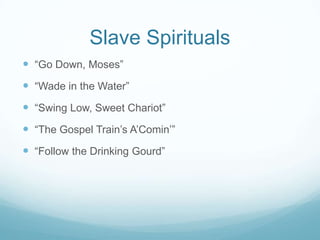
Slave Spirituals
 “Go Down, Moses”
 “Wade in the Water”
 “Swing Low, Sweet Chariot”
 “The Gospel Train’s A’Comin’”
 “Follow the Drinking Gourd”
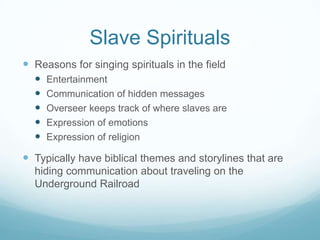
Slave Spirituals
 Reasons for singing spirituals in the field
     Entertainment
     Communication of hidden messages
     Overseer keeps track of where slaves are
     Expression of emotions
     Expression of religion

 Typically have biblical themes and storylines that are
  hiding communication about traveling on the
  Underground Railroad
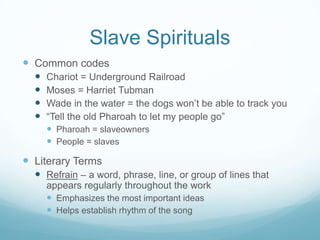
Slave Spirituals
 Common codes
     Chariot = Underground Railroad
     Moses = Harriet Tubman
     Wade in the water = the dogs won’t be able to track you
     “Tell the old Pharoah to let my people go”
       Pharoah = slaveowners
       People = slaves

 Literary Terms
   Refrain – a word, phrase, line, or group of lines that
      appears regularly throughout the work
       Emphasizes the most important ideas
       Helps establish rhythm of the song
Frederick Douglass
 Slave who eventually gained freedom and learned to
  read and write

 Became a major voice for change and the abolishment
  of slavery

 Summary of passage – When Frederick Douglass
  heard the singing of the slaves in the field, he could
  hear their sadness, as though singing was their form of
  crying. He could hear none of the joy that others
  thought they heard in the singing.
Gettysburg Address
 November 19, 1863 –
   Many from both sides wounded in
    battle – devastating results

 Main Ideas of the Address
   The nation was formed around the
    idea that all men are created equal.
   Do not let these soldiers die in vain.
   All of us have to continue to fight for
    freedom and equality.
Gettysburg Address
 Literary Terms
  Parallelism – similar grammatical structure to emphasize a point
       Lincoln says “we can not dedicate – we cannot consecrate – we
       cannot hallow” to emphasize how important it is to honor the
       soldiers who have fallen.
     Alliteration – repetition of consonant sounds at the beginning
       Lincoln says, “Four score and seven years ago, our fathers
       brought forth…”
     Antithesis – using opposites to emphasize contrasting ideas
       Lincoln contrasts “living” vs. “dead” and “little note” vs. “never
       forget”
     Repetition – repeating the same words and phrases to
       emphasize a point
       Lincoln says, “by the people, of the people, for the people.”
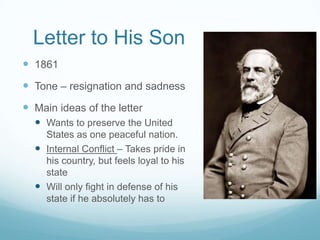
Letter to His Son
 1861
 Tone – resignation and sadness
 Main ideas of the letter
   Wants to preserve the United
    States as one peaceful nation.
   Internal Conflict – Takes pride in
    his country, but feels loyal to his
    state
   Will only fight in defense of his
    state if he absolutely has to
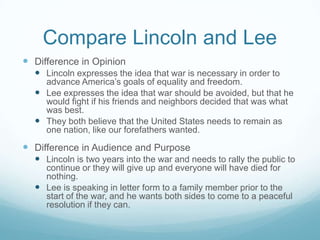
Compare Lincoln and Lee
 Difference in Opinion
   Lincoln expresses the idea that war is necessary in order to
    advance America’s goals of equality and freedom.
   Lee expresses the idea that war should be avoided, but that he
    would fight if his friends and neighbors decided that was what
    was best.
   They both believe that the United States needs to remain as
    one nation, like our forefathers wanted.

 Difference in Audience and Purpose
   Lincoln is two years into the war and needs to rally the public to
    continue or they will give up and everyone will have died for
    nothing.
   Lee is speaking in letter form to a family member prior to the
    start of the war, and he wants both sides to come to a peaceful
    resolution if they can.
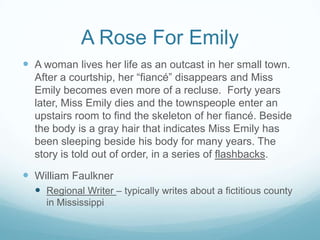
A Rose For Emily
 A woman lives her life as an outcast in her small town.
  After a courtship, her “fiancé” disappears and Miss
  Emily becomes even more of a recluse. Forty years
  later, Miss Emily dies and the townspeople enter an
  upstairs room to find the skeleton of her fiancé. Beside
  the body is a gray hair that indicates Miss Emily has
  been sleeping beside his body for many years. The
  story is told out of order, in a series of flashbacks.

 William Faulkner
   Regional Writer – typically writes about a fictitious county
     in Mississippi
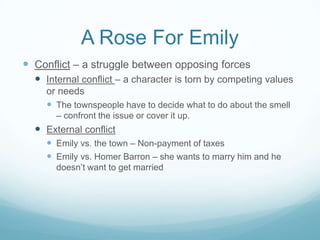
A Rose For Emily
 Conflict – a struggle between opposing forces
   Internal conflict – a character is torn by competing values
    or needs
     The townspeople have to decide what to do about the smell
       – confront the issue or cover it up.
   External conflict
     Emily vs. the town – Non-payment of taxes
     Emily vs. Homer Barron – she wants to marry him and he
       doesn’t want to get married
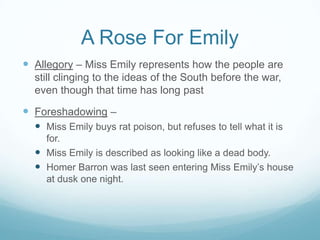
A Rose For Emily
 Allegory – Miss Emily represents how the people are
  still clinging to the ideas of the South before the war,
  even though that time has long past

 Foreshadowing –
   Miss Emily buys rat poison, but refuses to tell what it is
    for.
   Miss Emily is described as looking like a dead body.
   Homer Barron was last seen entering Miss Emily’s house
    at dusk one night.

Unit 5 review 2013

  • 1.
    Unit 5 Slavery, theCivil War, and What Happened After
  • 2.
    Slave Spirituals  “GoDown, Moses”  “Wade in the Water”  “Swing Low, Sweet Chariot”  “The Gospel Train’s A’Comin’”  “Follow the Drinking Gourd”
  • 3.
    Slave Spirituals  Reasonsfor singing spirituals in the field  Entertainment  Communication of hidden messages  Overseer keeps track of where slaves are  Expression of emotions  Expression of religion  Typically have biblical themes and storylines that are hiding communication about traveling on the Underground Railroad
  • 4.
    Slave Spirituals  Commoncodes  Chariot = Underground Railroad  Moses = Harriet Tubman  Wade in the water = the dogs won’t be able to track you  “Tell the old Pharoah to let my people go”  Pharoah = slaveowners  People = slaves  Literary Terms  Refrain – a word, phrase, line, or group of lines that appears regularly throughout the work  Emphasizes the most important ideas  Helps establish rhythm of the song
  • 5.
    Frederick Douglass  Slavewho eventually gained freedom and learned to read and write  Became a major voice for change and the abolishment of slavery  Summary of passage – When Frederick Douglass heard the singing of the slaves in the field, he could hear their sadness, as though singing was their form of crying. He could hear none of the joy that others thought they heard in the singing.
  • 6.
    Gettysburg Address  November19, 1863 –  Many from both sides wounded in battle – devastating results  Main Ideas of the Address  The nation was formed around the idea that all men are created equal.  Do not let these soldiers die in vain.  All of us have to continue to fight for freedom and equality.
  • 7.
    Gettysburg Address  LiteraryTerms Parallelism – similar grammatical structure to emphasize a point Lincoln says “we can not dedicate – we cannot consecrate – we cannot hallow” to emphasize how important it is to honor the soldiers who have fallen. Alliteration – repetition of consonant sounds at the beginning Lincoln says, “Four score and seven years ago, our fathers brought forth…” Antithesis – using opposites to emphasize contrasting ideas Lincoln contrasts “living” vs. “dead” and “little note” vs. “never forget” Repetition – repeating the same words and phrases to emphasize a point Lincoln says, “by the people, of the people, for the people.”
  • 8.
    Letter to HisSon  1861  Tone – resignation and sadness  Main ideas of the letter  Wants to preserve the United States as one peaceful nation.  Internal Conflict – Takes pride in his country, but feels loyal to his state  Will only fight in defense of his state if he absolutely has to
  • 9.
    Compare Lincoln andLee  Difference in Opinion  Lincoln expresses the idea that war is necessary in order to advance America’s goals of equality and freedom.  Lee expresses the idea that war should be avoided, but that he would fight if his friends and neighbors decided that was what was best.  They both believe that the United States needs to remain as one nation, like our forefathers wanted.  Difference in Audience and Purpose  Lincoln is two years into the war and needs to rally the public to continue or they will give up and everyone will have died for nothing.  Lee is speaking in letter form to a family member prior to the start of the war, and he wants both sides to come to a peaceful resolution if they can.
  • 10.
    A Rose ForEmily  A woman lives her life as an outcast in her small town. After a courtship, her “fiancé” disappears and Miss Emily becomes even more of a recluse. Forty years later, Miss Emily dies and the townspeople enter an upstairs room to find the skeleton of her fiancé. Beside the body is a gray hair that indicates Miss Emily has been sleeping beside his body for many years. The story is told out of order, in a series of flashbacks.  William Faulkner  Regional Writer – typically writes about a fictitious county in Mississippi
  • 11.
    A Rose ForEmily  Conflict – a struggle between opposing forces  Internal conflict – a character is torn by competing values or needs  The townspeople have to decide what to do about the smell – confront the issue or cover it up.  External conflict  Emily vs. the town – Non-payment of taxes  Emily vs. Homer Barron – she wants to marry him and he doesn’t want to get married
  • 12.
    A Rose ForEmily  Allegory – Miss Emily represents how the people are still clinging to the ideas of the South before the war, even though that time has long past  Foreshadowing –  Miss Emily buys rat poison, but refuses to tell what it is for.  Miss Emily is described as looking like a dead body.  Homer Barron was last seen entering Miss Emily’s house at dusk one night.