UNIT -5
MARKETING STRATEGY
INTRODUCTION
• A marketing strategy is a long-term vision
outlining a business’s value proposition to its
customers. Rather than describing the
concrete actions required in specific
advertising campaigns, marketing strategies
are used as a compass to direct overall
marketing efforts.
• What is a marketing strategy?
A marketing strategy is an overview of how a
business or organization will articulate its
overall value proposition to its customers.
Generally, a marketing strategy outlines the
business’ goals, its target market, buyer
personas, competitors, and value for
customers.
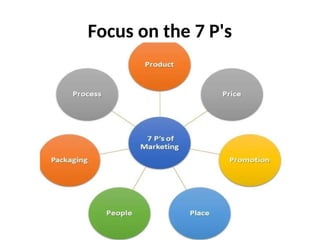
Focus on the 7 P's
• Product – how you satisfy customer needs
• Price – how much customers are willing to pay
for your product
• Promotion – which channels you use to tell
customers about your product
• Place – where you sell your product
• People – individuals who help sell your
product to customers
• Packaging – how you present your product to
the customer
• Process – how you deliver your product to
customers
MARKETING MIX
• INTRODUCTION
• A marketing mix includes multiple areas of
focus as part of a comprehensive marketing
plan. The term often refers to a common
classification that began as the four Ps:
product, price, placement, and promotion.
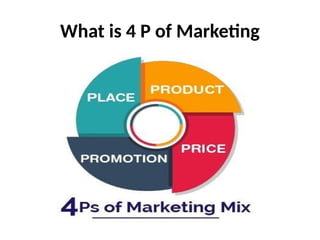
What is 4 P of Marketing
• 1.Product in Marketing Mix:
• A product is a commodity, produced or built to
satisfy the need of an individual or a group.
The product can be intangible or tangible as it
can be in the form of services or goods.
• 2.Price in Marketing Mix:
Price is a very important component of the
marketing mix definition. The price of the
product is basically the amount that a
customer pays for to enjoy it. Price is the most
critical element of a marketing plan because it
dictates a company’s survival and profit.
• Place in Marketing Mix:
• Placement or distribution is a very important
part of the marketing mix strategy. We should
position and distribute our product in a place
that is easily accessible to potential
buyers/customers.
• Promotion in Marketing Mix:
• It is a marketing communication process that
helps the company to publicize the product
and its features to the public.
CUSTOMER BEHAVIOR
• INTRODUCTION
• Customer behavior refers to an individual's
buying habits, including social trends,
frequency patterns, and background factors
influencing their decision to buy something.
Businesses study customer behavior to
understand their target audience and create
more-enticing products and service offers
SELLING PROCESS
• Sales is a key part of any business, helping
companies grow while building a strong
customer base.
• Learning about the selling process can help
you find potential buyers or prospective
clients, increase your overall sales and nurture
your relationship with consumers.
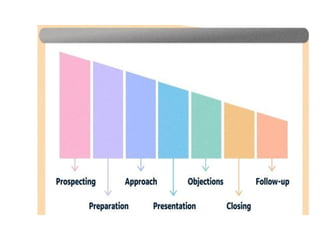
• 7-stepsellingprocess
•
• Here are seven steps that a retypically involved in making a sale:
• Prospecting
• Preparation OR pre-approach
• Approach
• Presentation
• Handling objections
• Closing
• Follow-up
SALES PLANNING
• INTRODUCTION
• A sales plan is a document that encompasses
goals, target audience, and sales strategy
aimed at attaining necessary results. It enables
a company’s team to predict business-related
risks and avoid them.
• How to write a sales plan?
• Creating a sales plan might require you to
spend some time defining goals, revenue
targets, tasks for departments, but it’s worth it.
In the end, you’ll have a clear roadmap for a
certain period your company’s team should
follow to get great results in sales. If you don’t
know where to start, we’ll help you. Follow our
guide to clarify the details of the process.
How to write a sales plan?
• Determine your major goals.
• Make your targets more specific and accurate.
• Assess your resources.
• Choose KPIs.
• Allocate time wisely.
ANALYTICS APPLICATIONS IN MARKETING AND SALES SALES
ANALYTICS
INTRODUCTION:
• It's important for sales and marketing teams to
review their strategies and performance to
make improvements. One way to measure
performance is with sales analytics. Sales
analytics can also help sales and marketing
teams create strategies, so it's useful to learn
about sales analytics and how to use them.
• What are Sales Analytics? Sales analytics are a
method business can use to predict sales
trends and model their sales process.
Analytics typically involve technology that can
collect and measure sales data, such as reach,
purchases and customer interactions with the
business.
Benefits of sales Analytics:
• Optimize the sales funnel
• Identify strengths and weakness
• Increase efficiency in sales
Types of Analytics for sale:
1. Market research
2. Sales trends
3. Predictive sales
4. The performance of sales
Prescriptive marketing
• Prescriptive marketing analysis reviews
marketing and customer data to inform sales
representatives of what to offer to which
clients and when. This is an intuitive analytic
and can be a great resource for
representatives by providing data on
prospects and customers to help make and
repeat sales.
Tips for using sales analytics
• conversion rate
• sales cycle length
• Tracking churn rate
• Sales productivity
MARKETING ANALYTICS
• INTRODUCTION:
Modern marketing is a data-driven process
fueled by analytics. Without analyzing relevant
key performance indicators (KPI), businesses
can't tell whether their marketing efforts are
providing the expected return on investment
(ROI). Marketing analytics is the key to
evaluating past performance and determining
how to improve it going forward.
What is marketing analytics?
• Marketing analytics is a set of technologies
and methods used to transform raw data into
marketing insights. The goal of marketing
analytics is to maximize ROI from an
enterprise's marketing initiatives. Marketing
analytics encompasses tools for planning,
managing, and evaluating these efforts across
every channel.
How to use marketing analytics
• Understand search marketing
• Analyze social media engagement
• Optimize email marketing
• Take advantage of predictive scoring
CONCLUSION:
• (Marketing analytics and the data warehouse)
Enterprises should integrate their data before
performing analytics, as analyzing data across
marketing channels can reveal new,
unexpected insights. Centralizing information
in a data warehouse allows analysts and
engineers to access it for analytics and
reporting.
UNIT -5
COMPLETED

UNIT -5 BUSINESS ANALYTICS.pptx vgtyyuiui jliuyughtft

  • 1.
  • 2.
    MARKETING STRATEGY INTRODUCTION • Amarketing strategy is a long-term vision outlining a business’s value proposition to its customers. Rather than describing the concrete actions required in specific advertising campaigns, marketing strategies are used as a compass to direct overall marketing efforts.
  • 3.
    • What isa marketing strategy? A marketing strategy is an overview of how a business or organization will articulate its overall value proposition to its customers. Generally, a marketing strategy outlines the business’ goals, its target market, buyer personas, competitors, and value for customers.
  • 5.
  • 6.
    • Product –how you satisfy customer needs • Price – how much customers are willing to pay for your product • Promotion – which channels you use to tell customers about your product • Place – where you sell your product • People – individuals who help sell your product to customers • Packaging – how you present your product to the customer • Process – how you deliver your product to customers
  • 7.
    MARKETING MIX • INTRODUCTION •A marketing mix includes multiple areas of focus as part of a comprehensive marketing plan. The term often refers to a common classification that began as the four Ps: product, price, placement, and promotion.
  • 8.
    What is 4P of Marketing
  • 9.
    • 1.Product inMarketing Mix: • A product is a commodity, produced or built to satisfy the need of an individual or a group. The product can be intangible or tangible as it can be in the form of services or goods.
  • 10.
    • 2.Price inMarketing Mix: Price is a very important component of the marketing mix definition. The price of the product is basically the amount that a customer pays for to enjoy it. Price is the most critical element of a marketing plan because it dictates a company’s survival and profit.
  • 11.
    • Place inMarketing Mix: • Placement or distribution is a very important part of the marketing mix strategy. We should position and distribute our product in a place that is easily accessible to potential buyers/customers.
  • 12.
    • Promotion inMarketing Mix: • It is a marketing communication process that helps the company to publicize the product and its features to the public.
  • 13.
    CUSTOMER BEHAVIOR • INTRODUCTION •Customer behavior refers to an individual's buying habits, including social trends, frequency patterns, and background factors influencing their decision to buy something. Businesses study customer behavior to understand their target audience and create more-enticing products and service offers
  • 14.
    SELLING PROCESS • Salesis a key part of any business, helping companies grow while building a strong customer base. • Learning about the selling process can help you find potential buyers or prospective clients, increase your overall sales and nurture your relationship with consumers.
  • 15.
    • 7-stepsellingprocess • • Hereare seven steps that a retypically involved in making a sale: • Prospecting • Preparation OR pre-approach • Approach • Presentation • Handling objections • Closing • Follow-up
  • 17.
    SALES PLANNING • INTRODUCTION •A sales plan is a document that encompasses goals, target audience, and sales strategy aimed at attaining necessary results. It enables a company’s team to predict business-related risks and avoid them.
  • 18.
    • How towrite a sales plan? • Creating a sales plan might require you to spend some time defining goals, revenue targets, tasks for departments, but it’s worth it. In the end, you’ll have a clear roadmap for a certain period your company’s team should follow to get great results in sales. If you don’t know where to start, we’ll help you. Follow our guide to clarify the details of the process.
  • 19.
    How to writea sales plan? • Determine your major goals. • Make your targets more specific and accurate. • Assess your resources. • Choose KPIs. • Allocate time wisely.
  • 20.
    ANALYTICS APPLICATIONS INMARKETING AND SALES SALES ANALYTICS INTRODUCTION: • It's important for sales and marketing teams to review their strategies and performance to make improvements. One way to measure performance is with sales analytics. Sales analytics can also help sales and marketing teams create strategies, so it's useful to learn about sales analytics and how to use them.
  • 21.
    • What areSales Analytics? Sales analytics are a method business can use to predict sales trends and model their sales process. Analytics typically involve technology that can collect and measure sales data, such as reach, purchases and customer interactions with the business.
  • 22.
    Benefits of salesAnalytics: • Optimize the sales funnel • Identify strengths and weakness • Increase efficiency in sales
  • 23.
    Types of Analyticsfor sale: 1. Market research 2. Sales trends 3. Predictive sales 4. The performance of sales
  • 24.
    Prescriptive marketing • Prescriptivemarketing analysis reviews marketing and customer data to inform sales representatives of what to offer to which clients and when. This is an intuitive analytic and can be a great resource for representatives by providing data on prospects and customers to help make and repeat sales.
  • 25.
    Tips for usingsales analytics • conversion rate • sales cycle length • Tracking churn rate • Sales productivity
  • 26.
    MARKETING ANALYTICS • INTRODUCTION: Modernmarketing is a data-driven process fueled by analytics. Without analyzing relevant key performance indicators (KPI), businesses can't tell whether their marketing efforts are providing the expected return on investment (ROI). Marketing analytics is the key to evaluating past performance and determining how to improve it going forward.
  • 27.
    What is marketinganalytics? • Marketing analytics is a set of technologies and methods used to transform raw data into marketing insights. The goal of marketing analytics is to maximize ROI from an enterprise's marketing initiatives. Marketing analytics encompasses tools for planning, managing, and evaluating these efforts across every channel.
  • 28.
    How to usemarketing analytics • Understand search marketing • Analyze social media engagement • Optimize email marketing • Take advantage of predictive scoring
  • 29.
    CONCLUSION: • (Marketing analyticsand the data warehouse) Enterprises should integrate their data before performing analytics, as analyzing data across marketing channels can reveal new, unexpected insights. Centralizing information in a data warehouse allows analysts and engineers to access it for analytics and reporting.

  • 30.