CONFIDENTIALITY-HIPAA
Presented by: Sandra Wong-Allen
Patients Rights
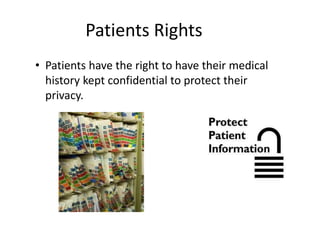
• Patients have the right to have their medical
history kept confidential to protect their
privacy.
Privacy Rule Disclosure
• Disclosing a patient’s personal information
can cause very serious professional or
personal problems as patients rely on medical
professionals, hospitals and other medical
facilities to keep their medical history private.
• The HIPAA Privacy Rule also accords certain
rights to patients, such as the right to request
copies of their health records in paper or
electronic format, or to request an
amendment of information in their records
HIPAA LAW
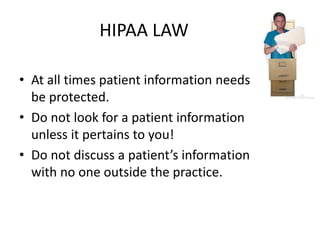
• At all times patient information needs to
be protected.
• Do not look for a patient information
unless it pertains to you!
• Do not discuss a patient’s information
with no one outside the practice.
SECURITY RULE
• Encrypting and Securing Mobile Computing
Devices, Smartphones, and Tablets.
• Password Security-DO NOT SHARE.
• Document, Workstation, and Mobile Device
Security-Lock workstation/mobile devices at all
times to prevent PHI to get into the wrong
hands.
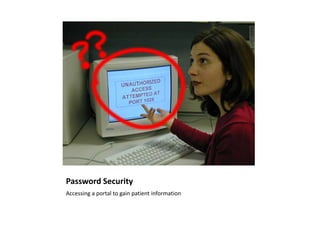
Password Security
Accessing a portal to gain patient information
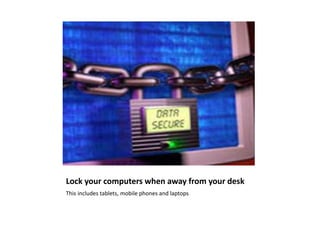
Lock your computers when away from your desk
This includes tablets, mobile phones and laptops
Consequences of Violating the Privacy
Rule
• Fines ranging from $100 to 1,500,000 per
violation.
• Costs and attorneys’ fees, depending on the
type of violation.
• Civil lawsuits, misdemeanor charges, the
reporting of individual violators to licensing
boards for violations, and imprisonment.
Legal fees
Attorney’s fees and cost
Being fined for breach of privacy
$100 to $1.500,00
Jail Time
Being imprisoned if sentenced
References
• Fox News. (2008). Report Over 120 UCLA
hospital staff saw celebrity health records.
Retrieved from
http://www.foxnews.com/story/0,2933,39878
4,00.html
• Web 2.0 tools. (http://www.go2web20.net/)
• Wolper, L.F. (2011). Health care
administration: Managing organized delivery
systems (5th ed.). Boston: Jones and Bartlett.

Confidentiality slide

  • 1.
  • 2.
    Patients Rights • Patientshave the right to have their medical history kept confidential to protect their privacy.
  • 3.
    Privacy Rule Disclosure •Disclosing a patient’s personal information can cause very serious professional or personal problems as patients rely on medical professionals, hospitals and other medical facilities to keep their medical history private. • The HIPAA Privacy Rule also accords certain rights to patients, such as the right to request copies of their health records in paper or electronic format, or to request an amendment of information in their records
  • 4.
    HIPAA LAW • Atall times patient information needs to be protected. • Do not look for a patient information unless it pertains to you! • Do not discuss a patient’s information with no one outside the practice.
  • 6.
    SECURITY RULE • Encryptingand Securing Mobile Computing Devices, Smartphones, and Tablets. • Password Security-DO NOT SHARE. • Document, Workstation, and Mobile Device Security-Lock workstation/mobile devices at all times to prevent PHI to get into the wrong hands.
  • 7.
    Password Security Accessing aportal to gain patient information
  • 8.
    Lock your computerswhen away from your desk This includes tablets, mobile phones and laptops
  • 9.
    Consequences of Violatingthe Privacy Rule • Fines ranging from $100 to 1,500,000 per violation. • Costs and attorneys’ fees, depending on the type of violation. • Civil lawsuits, misdemeanor charges, the reporting of individual violators to licensing boards for violations, and imprisonment.
  • 10.
  • 11.
    Being fined forbreach of privacy $100 to $1.500,00
  • 12.
  • 14.
    References • Fox News.(2008). Report Over 120 UCLA hospital staff saw celebrity health records. Retrieved from http://www.foxnews.com/story/0,2933,39878 4,00.html • Web 2.0 tools. (http://www.go2web20.net/) • Wolper, L.F. (2011). Health care administration: Managing organized delivery systems (5th ed.). Boston: Jones and Bartlett.