WHY UNGC? 
• Liberalization of markets – reduction of the 
regulatory approach 
• Emergence of global giants, consolidation of 
market share 
• Development of the ‘embedded firm’. 
– Development of supplier networks in developing 
countries
Key drivers of UNGC 
Around the world 
• NGO Activism 
• Responsible investment 
• Litigation 
• Gov initiatives 
Developing Countries 
• Foreign customers 
• Domestic consumers 
• FDI 
• Government
Key Drivers: NGO Activism 
• Facilitators: IT (esp 
Internet), media, etc. 
• Boycotts, brand damage, 
influence legislation, 
domino effect 
• e.g. Shell in Nigeria, Exxon 
in Cameroon, Coca Cola, 
Apparel Industry (Nike, 
Gap), GMO, Wood 
Products, etc.
MERITS 
 Fill governance gap 
 Socially Responsible 
- human rights 
- environment 
- anti corruption 
 Business Relevance 
- mitigating legal risks 
- mitigating reputational risk 
- improved operating environment 
- employee satisfaction 
 UN Millennium Development Goals
DEMERITS 
 No binding power 
- voluntary action can never substitute regulation 
 No effective monitoring power 
- Ayoreo Indians in Paraguay 
 Acts as the PRO of MNCs 
- excuse and argument to oppose any binding 
national regulation on corporate accountability 
- 2 of the 3 representatives of last UNGC where 
from MNCs 
- entry door to increase corporate influence on 
the policies of the United Nations
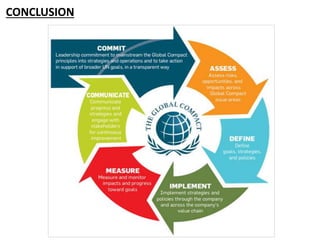
CONCLUSION

UNGC

  • 1.
    WHY UNGC? •Liberalization of markets – reduction of the regulatory approach • Emergence of global giants, consolidation of market share • Development of the ‘embedded firm’. – Development of supplier networks in developing countries
  • 2.
    Key drivers ofUNGC Around the world • NGO Activism • Responsible investment • Litigation • Gov initiatives Developing Countries • Foreign customers • Domestic consumers • FDI • Government
  • 3.
    Key Drivers: NGOActivism • Facilitators: IT (esp Internet), media, etc. • Boycotts, brand damage, influence legislation, domino effect • e.g. Shell in Nigeria, Exxon in Cameroon, Coca Cola, Apparel Industry (Nike, Gap), GMO, Wood Products, etc.
  • 4.
    MERITS  Fillgovernance gap  Socially Responsible - human rights - environment - anti corruption  Business Relevance - mitigating legal risks - mitigating reputational risk - improved operating environment - employee satisfaction  UN Millennium Development Goals
  • 5.
    DEMERITS  Nobinding power - voluntary action can never substitute regulation  No effective monitoring power - Ayoreo Indians in Paraguay  Acts as the PRO of MNCs - excuse and argument to oppose any binding national regulation on corporate accountability - 2 of the 3 representatives of last UNGC where from MNCs - entry door to increase corporate influence on the policies of the United Nations
  • 6.