Undertaking a part-time LIS PhD
10 tips in 20 minutes
Dr Hazel Hall, Emeritus Professor, Edinburgh Napier University
h.hall@napier.ac.uk @hazelh
Slides presented at Routes and experiences of doing an LIS PhD
18th November 2022
http://hazelhall.org
Experience of part-time PhDs
• Own completion 2004
• Completions of others: ~50% p/t
• Examinations: ~50% p/t
• ‘Classic’ and ‘other’ routes
‘Travel’ advice
 Tips for those thinking about taking this route (2)
 Tips for those seeking a starting point (3)
 Tips for the journey itself (5)
TIPS 1-2: THINKING ABOUT DOING A PART-TIME PHD
Tip 1: Only pursue the part-time PhD route if you can
answer yes to the following questions
 Can you work independently?
 Are you resilient, e.g. can you handle criticism,
overcome failure, embrace uncertainty?
 Do you enjoy reading and writing?
 Can you commit to up to six years to part-time study?
Summer vacation 2001
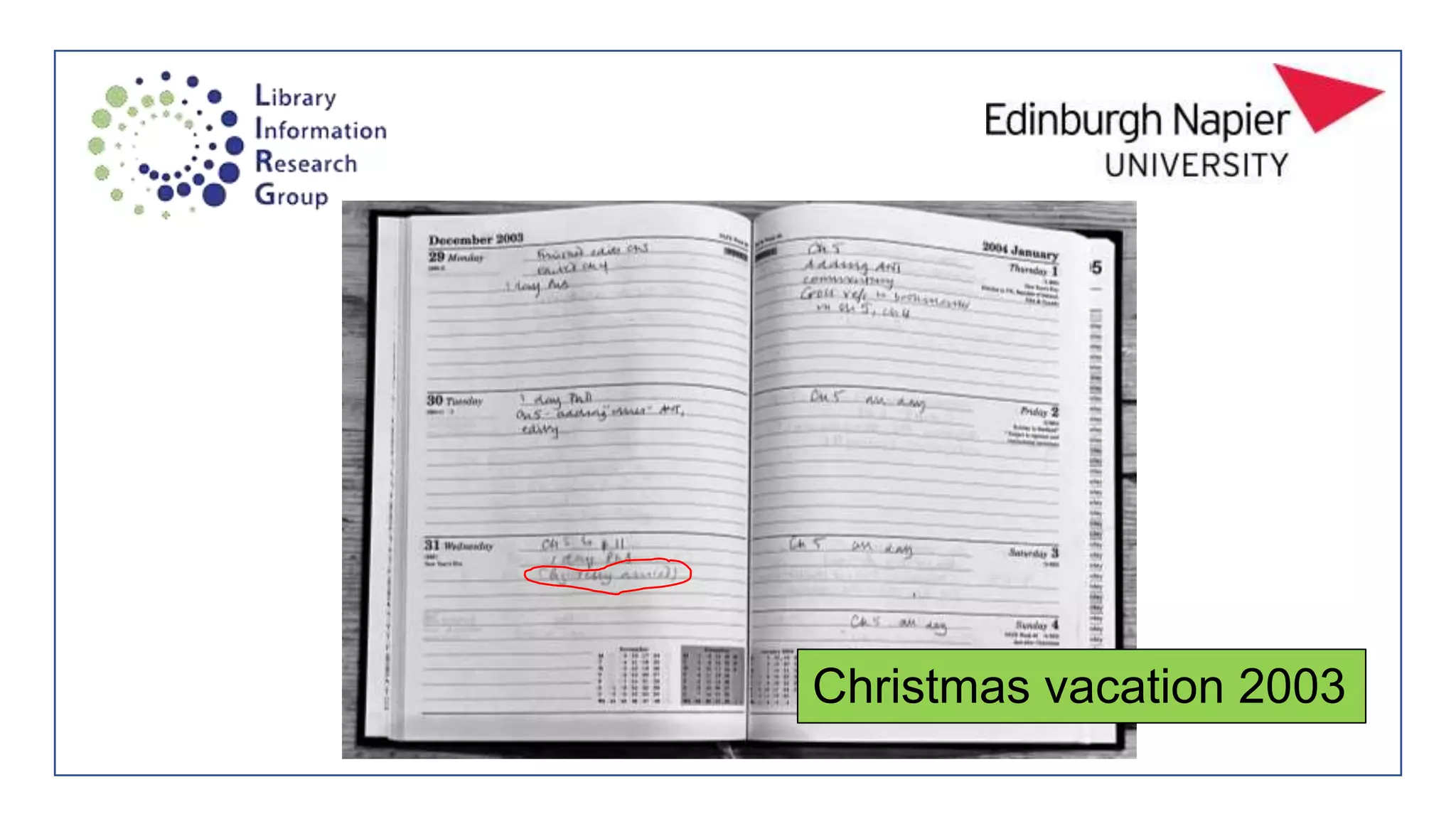
Christmas vacation 2003
Tip 2: Consider a Masters in Social Research
Methods first
 Tests commitment to further study
 Provides foundational knowledge that you would
otherwise need to gain on your own at PhD stage
 Gives a head start on PhD topic e.g. dissertation
 Adds to existing qualifications
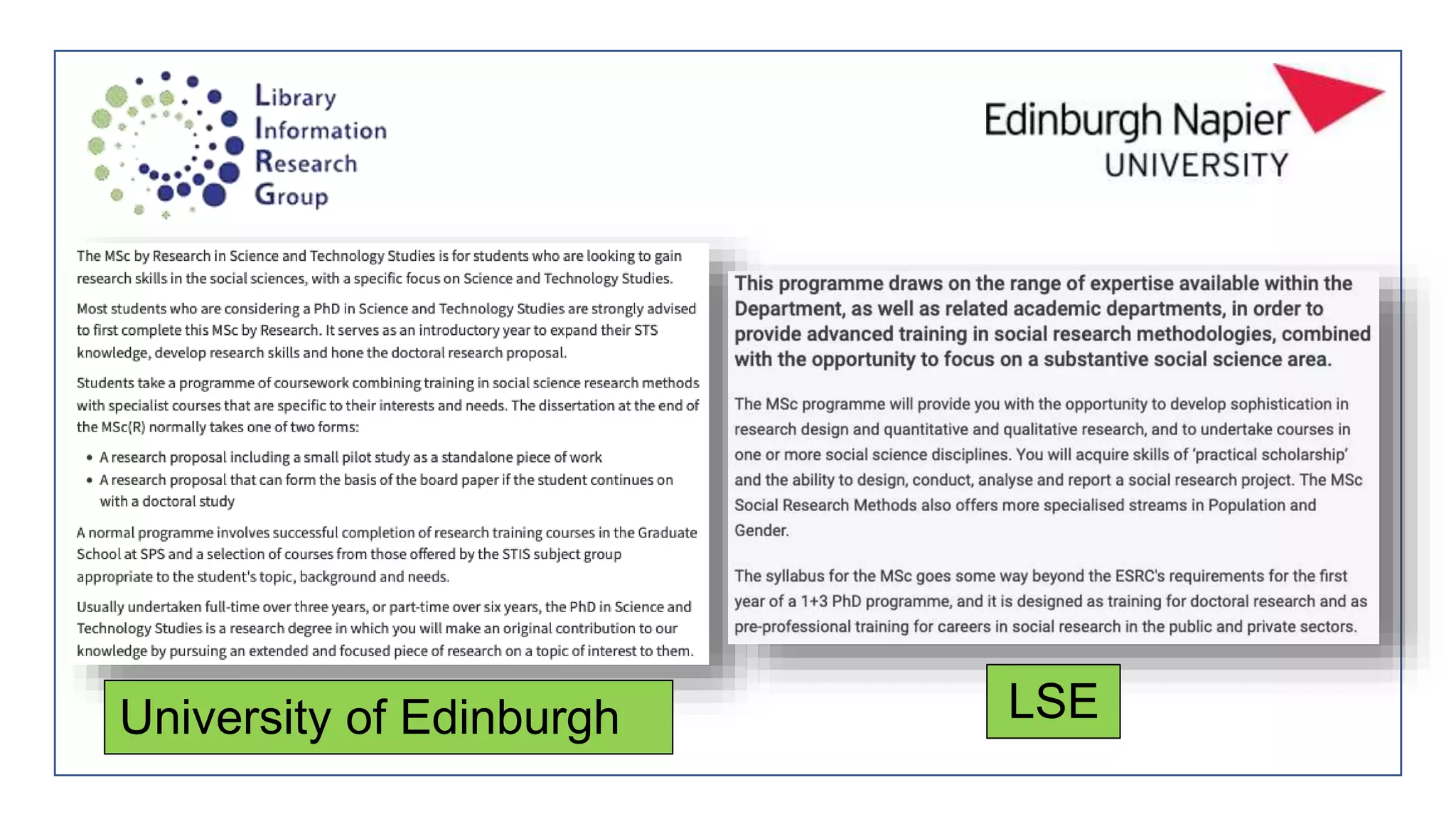
University of Edinburgh LSE
TIPS 3-5: STARTING OUT
Tip 3: Choose your supervisors wisely
 Someone famous may have little time for you
 Someone established may retire before you complete
 Someone mid-career may change jobs before you
complete
 Someone junior may not have sufficient experience
 The team needs experience, expertise, stability, with a
DoS who will review your work closely
Tip 4: Negotiate employer support
 Payment of tuition fees
 Payment of conference fees
 Study leave – to complete research, attend events
 Often most easily achieved if you register for your PhD
within your own (academic) institution
Tip 5: Select your topic with care
 Is there a genuine gap in knowledge to fill?
 Do you have an enduring passion for the topic?
 Does your supervision team share your passion?
 Is the topic suitable for part-time study?
 If the topic relates to your current role, what happens if
you change jobs or are made redundant?
This academic librarian researched public libraries
in a longitudinal study with employer support
TIPS 5-10: EN ROUTE
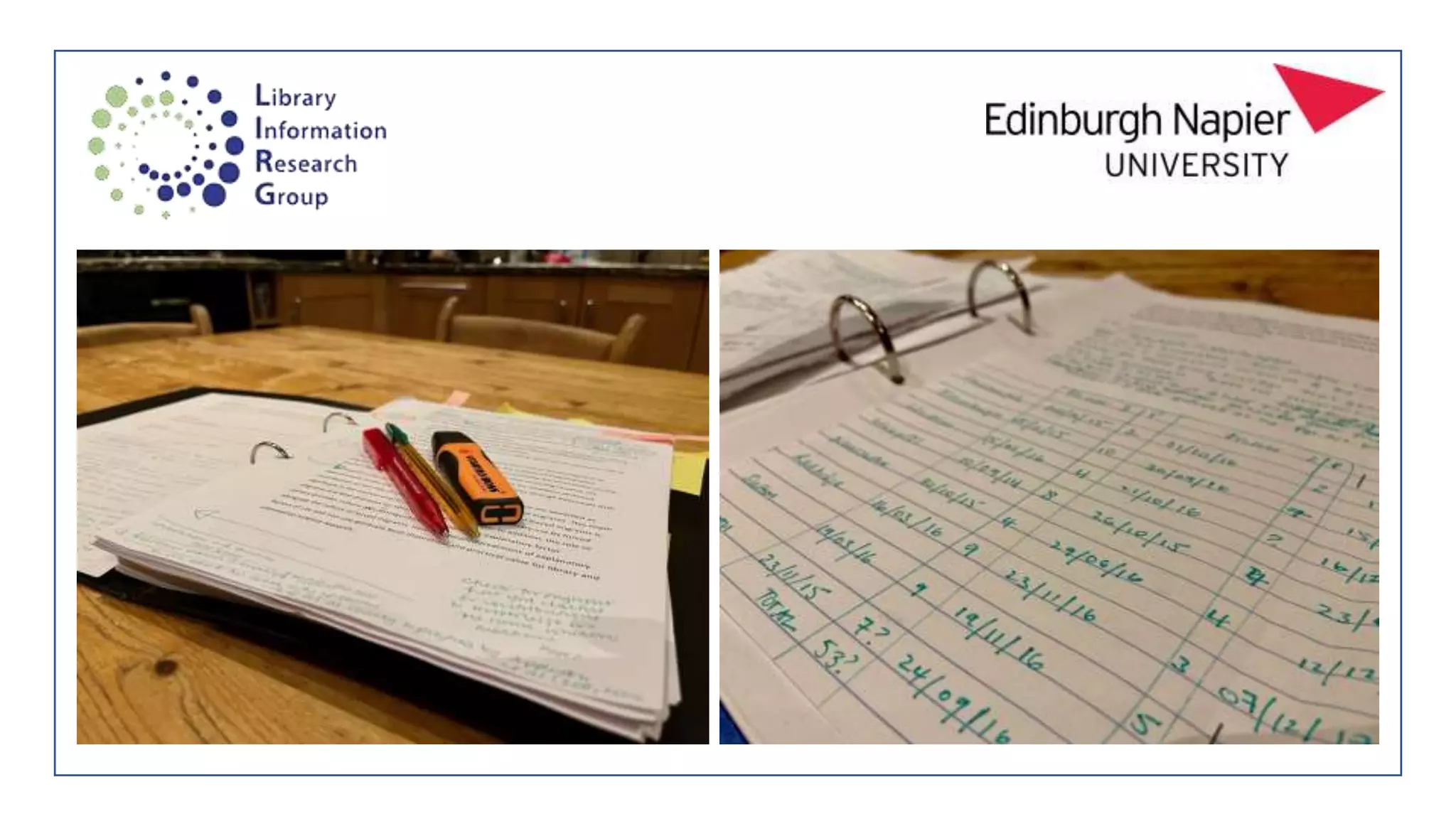
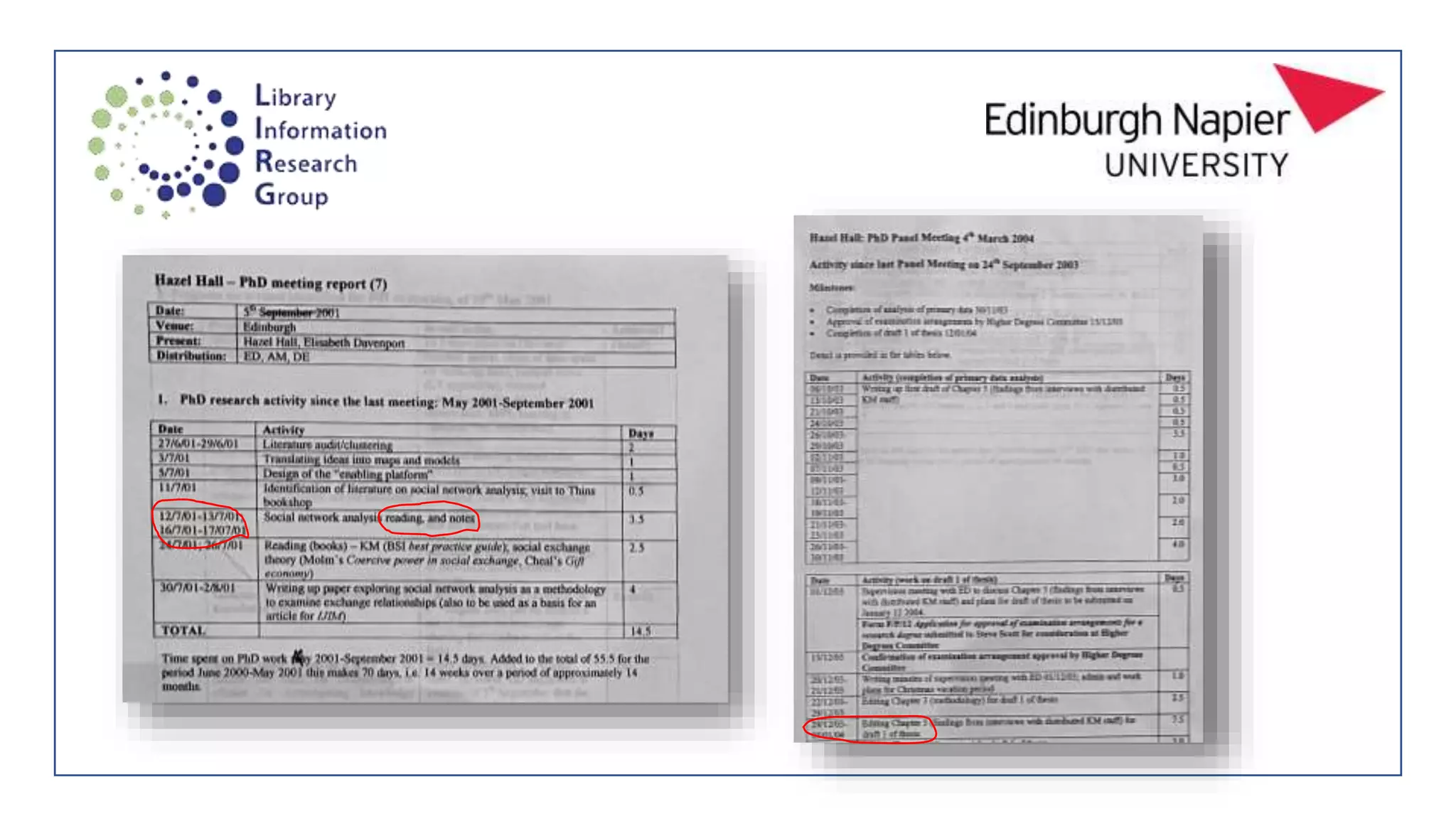
Tip 6: Keep records (a)
 To stay on track - especially when there are breaks
 To gain realistic estimate of working rate and time to
completion
 To avoid repeating unnecessary work
Tip 6: Keep records (b)
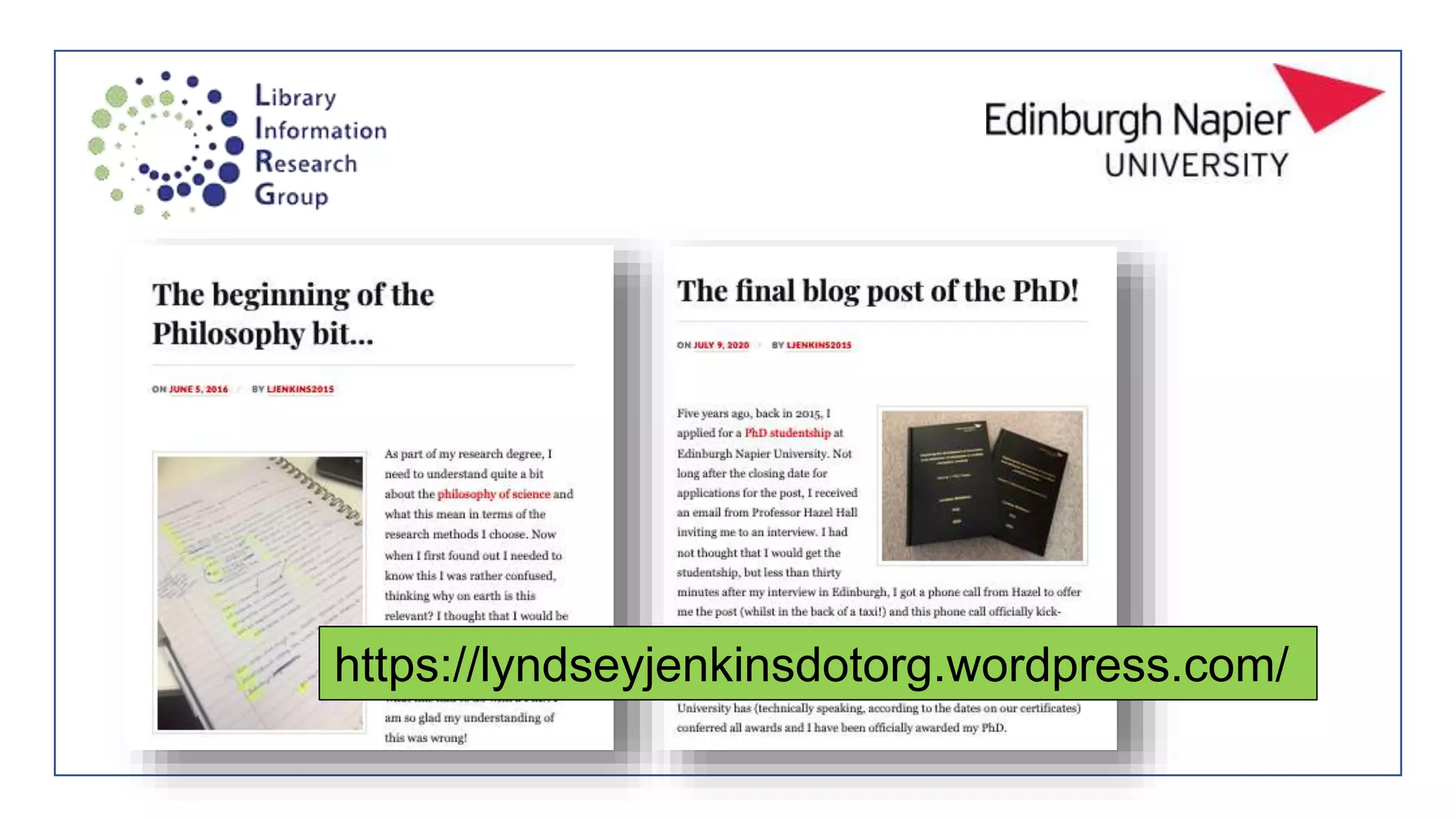
 To test out your ideas/thinking – privately, or publicly
https://lyndseyjenkinsdotorg.wordpress.com/
Tip 7: Present and publish as you go
 To develop your academic writing skills
 To access feedback from beyond the supervision team
 To create files for later writing of thesis chapters
 To widen your network
 To establish yourself as a name in the field
 To generate enthusiasm for writing the big, final
paper(s) at the end
Tip 8: Embrace feedback and accept criticism
 From supervision team at supervision meetings, e.g.
on draft thesis chapters
 From internal colleagues, e.g. presenting at research
group seminars on on-going work
 From wider community, e.g. conference papers,
journal articles, contributions to doctoral fora
Tip 9: Ensure that your thesis makes obvious
 That you have made a contribution to knowledge
 That your work will interest academic peers
 That you have completed your apprenticeship as a
researcher
Tip 10: Back up everything
 Different media
 Different places
 Different people
Undertaking a part-time LIS PhD
10 tips in 20 minutes
Dr Hazel Hall, Emeritus Professor, Edinburgh Napier University
h.hall@napier.ac.uk @hazelh
Slides presented at Routes and experiences of doing an LIS PhD
18th November 2022

Undertaking a part-time LIS PhD: 10 tips in 20 minutes

  • 1.
    Undertaking a part-timeLIS PhD 10 tips in 20 minutes Dr Hazel Hall, Emeritus Professor, Edinburgh Napier University h.hall@napier.ac.uk @hazelh Slides presented at Routes and experiences of doing an LIS PhD 18th November 2022
  • 2.
    http://hazelhall.org Experience of part-timePhDs • Own completion 2004 • Completions of others: ~50% p/t • Examinations: ~50% p/t • ‘Classic’ and ‘other’ routes
  • 3.
    ‘Travel’ advice  Tipsfor those thinking about taking this route (2)  Tips for those seeking a starting point (3)  Tips for the journey itself (5)
  • 4.
    TIPS 1-2: THINKINGABOUT DOING A PART-TIME PHD
  • 5.
    Tip 1: Onlypursue the part-time PhD route if you can answer yes to the following questions  Can you work independently?  Are you resilient, e.g. can you handle criticism, overcome failure, embrace uncertainty?  Do you enjoy reading and writing?  Can you commit to up to six years to part-time study?
  • 6.
  • 7.
  • 8.
    Tip 2: Considera Masters in Social Research Methods first  Tests commitment to further study  Provides foundational knowledge that you would otherwise need to gain on your own at PhD stage  Gives a head start on PhD topic e.g. dissertation  Adds to existing qualifications
  • 9.
  • 10.
  • 11.
    Tip 3: Chooseyour supervisors wisely  Someone famous may have little time for you  Someone established may retire before you complete  Someone mid-career may change jobs before you complete  Someone junior may not have sufficient experience  The team needs experience, expertise, stability, with a DoS who will review your work closely
  • 13.
    Tip 4: Negotiateemployer support  Payment of tuition fees  Payment of conference fees  Study leave – to complete research, attend events  Often most easily achieved if you register for your PhD within your own (academic) institution
  • 14.
    Tip 5: Selectyour topic with care  Is there a genuine gap in knowledge to fill?  Do you have an enduring passion for the topic?  Does your supervision team share your passion?  Is the topic suitable for part-time study?  If the topic relates to your current role, what happens if you change jobs or are made redundant?
  • 15.
    This academic librarianresearched public libraries in a longitudinal study with employer support
  • 16.
  • 17.
    Tip 6: Keeprecords (a)  To stay on track - especially when there are breaks  To gain realistic estimate of working rate and time to completion  To avoid repeating unnecessary work
  • 19.
    Tip 6: Keeprecords (b)  To test out your ideas/thinking – privately, or publicly
  • 20.
  • 21.
    Tip 7: Presentand publish as you go  To develop your academic writing skills  To access feedback from beyond the supervision team  To create files for later writing of thesis chapters  To widen your network  To establish yourself as a name in the field  To generate enthusiasm for writing the big, final paper(s) at the end
  • 23.
    Tip 8: Embracefeedback and accept criticism  From supervision team at supervision meetings, e.g. on draft thesis chapters  From internal colleagues, e.g. presenting at research group seminars on on-going work  From wider community, e.g. conference papers, journal articles, contributions to doctoral fora
  • 25.
    Tip 9: Ensurethat your thesis makes obvious  That you have made a contribution to knowledge  That your work will interest academic peers  That you have completed your apprenticeship as a researcher
  • 26.
    Tip 10: Backup everything  Different media  Different places  Different people
  • 27.
    Undertaking a part-timeLIS PhD 10 tips in 20 minutes Dr Hazel Hall, Emeritus Professor, Edinburgh Napier University h.hall@napier.ac.uk @hazelh Slides presented at Routes and experiences of doing an LIS PhD 18th November 2022