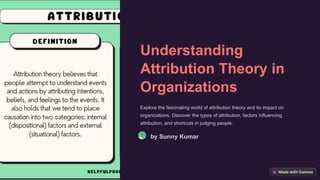
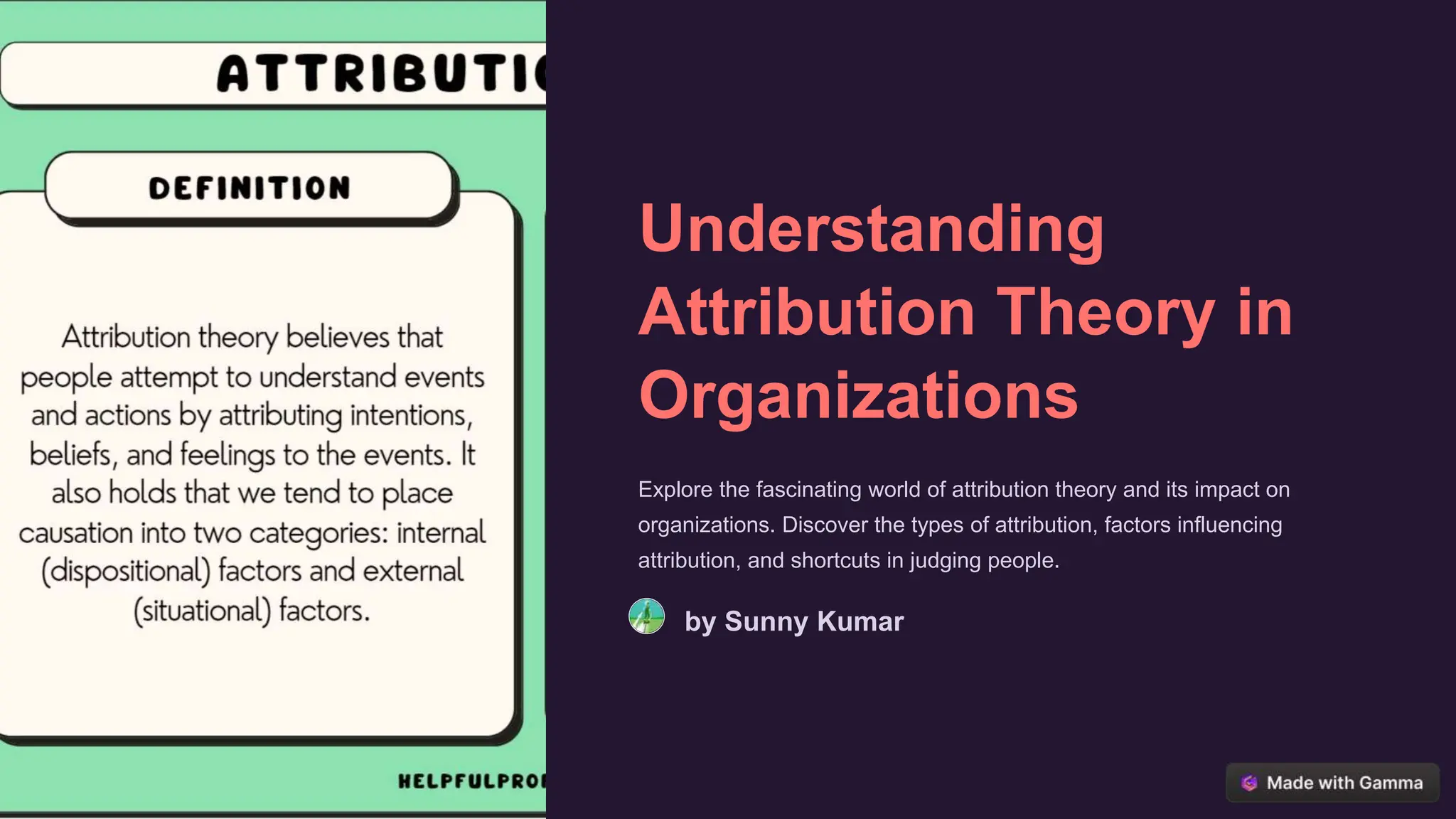
Understanding
Attribution Theory in
Organizations
Explore the fascinating world of attribution theory and its impact on
organizations. Discover the types of attribution, factors influencing
attribution, and shortcuts in judging people.
by Sunny Kumar
Introduction to Attribution Theory
Attribution theory examines how individuals interpret and explain the causes of behavior. Gain insights
into the definition, overview, and importance of understanding attribution in organizations.
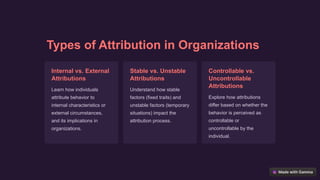
Types of Attribution in Organizations
Internal vs. External
Attributions
Learn how individuals
attribute behavior to
internal characteristics or
external circumstances,
and its implications in
organizations.
Stable vs. Unstable
Attributions
Understand how stable
factors (fixed traits) and
unstable factors (temporary
situations) impact the
attribution process.
Controllable vs.
Uncontrollable
Attributions
Explore how attributions
differ based on whether the
behavior is perceived as
controllable or
uncontrollable by the
individual.
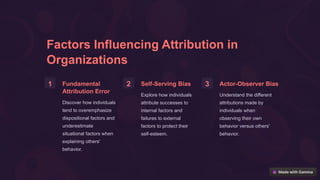
Factors Influencing Attribution in
Organizations
1 Fundamental
Attribution Error
Discover how individuals
tend to overemphasize
dispositional factors and
underestimate
situational factors when
explaining others'
behavior.
2 Self-Serving Bias
Explore how individuals
attribute successes to
internal factors and
failures to external
factors to protect their
self-esteem.
3 Actor-Observer Bias
Understand the different
attributions made by
individuals when
observing their own
behavior versus others'
behavior.
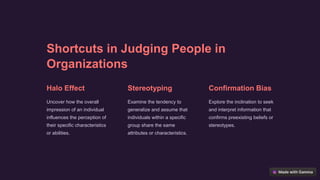
Shortcuts in Judging People in
Organizations
Halo Effect
Uncover how the overall
impression of an individual
influences the perception of
their specific characteristics
or abilities.
Stereotyping
Examine the tendency to
generalize and assume that
individuals within a specific
group share the same
attributes or characteristics.
Confirmation Bias
Explore the inclination to seek
and interpret information that
confirms preexisting beliefs or
stereotypes.
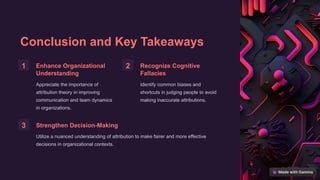
Conclusion and Key Takeaways
1 Enhance Organizational
Understanding
Appreciate the importance of
attribution theory in improving
communication and team dynamics
in organizations.
2 Recognize Cognitive
Fallacies
Identify common biases and
shortcuts in judging people to avoid
making inaccurate attributions.
3 Strengthen Decision-Making
Utilize a nuanced understanding of attribution to make fairer and more effective
decisions in organizational contexts.

Understanding-Attribution-Theory-in-Organizations (1).pptx

  • 1.
    Understanding Attribution Theory in Organizations Explorethe fascinating world of attribution theory and its impact on organizations. Discover the types of attribution, factors influencing attribution, and shortcuts in judging people. by Sunny Kumar
  • 2.
    Introduction to AttributionTheory Attribution theory examines how individuals interpret and explain the causes of behavior. Gain insights into the definition, overview, and importance of understanding attribution in organizations.
  • 3.
    Types of Attributionin Organizations Internal vs. External Attributions Learn how individuals attribute behavior to internal characteristics or external circumstances, and its implications in organizations. Stable vs. Unstable Attributions Understand how stable factors (fixed traits) and unstable factors (temporary situations) impact the attribution process. Controllable vs. Uncontrollable Attributions Explore how attributions differ based on whether the behavior is perceived as controllable or uncontrollable by the individual.
  • 4.
    Factors Influencing Attributionin Organizations 1 Fundamental Attribution Error Discover how individuals tend to overemphasize dispositional factors and underestimate situational factors when explaining others' behavior. 2 Self-Serving Bias Explore how individuals attribute successes to internal factors and failures to external factors to protect their self-esteem. 3 Actor-Observer Bias Understand the different attributions made by individuals when observing their own behavior versus others' behavior.
  • 5.
    Shortcuts in JudgingPeople in Organizations Halo Effect Uncover how the overall impression of an individual influences the perception of their specific characteristics or abilities. Stereotyping Examine the tendency to generalize and assume that individuals within a specific group share the same attributes or characteristics. Confirmation Bias Explore the inclination to seek and interpret information that confirms preexisting beliefs or stereotypes.
  • 6.
    Conclusion and KeyTakeaways 1 Enhance Organizational Understanding Appreciate the importance of attribution theory in improving communication and team dynamics in organizations. 2 Recognize Cognitive Fallacies Identify common biases and shortcuts in judging people to avoid making inaccurate attributions. 3 Strengthen Decision-Making Utilize a nuanced understanding of attribution to make fairer and more effective decisions in organizational contexts.