START
The cognitive aspect of the self is
known as self-concept(self is
unessential construct in
psychologists)
Self- concept –a collection of beliefs one rules about
one self and responses and others embodies the
answer to the question “who am I
1) the social domain – the ability of a person to interact
with others
2) the competence domain – ability to meet the basic
needs
3) the affect domain – the awareness of the emotional
state
4) the physical domain- the feeling about look, health,
physical condition and over all appearance
5) academic domain – success or failure in the school
6) family domain – how well one function within the
family unit
1) The private self or your internal standards
and private thoughts and feelings; and
2) The public self or your public image
commonly geared toward having a good
presentation of yourself to others
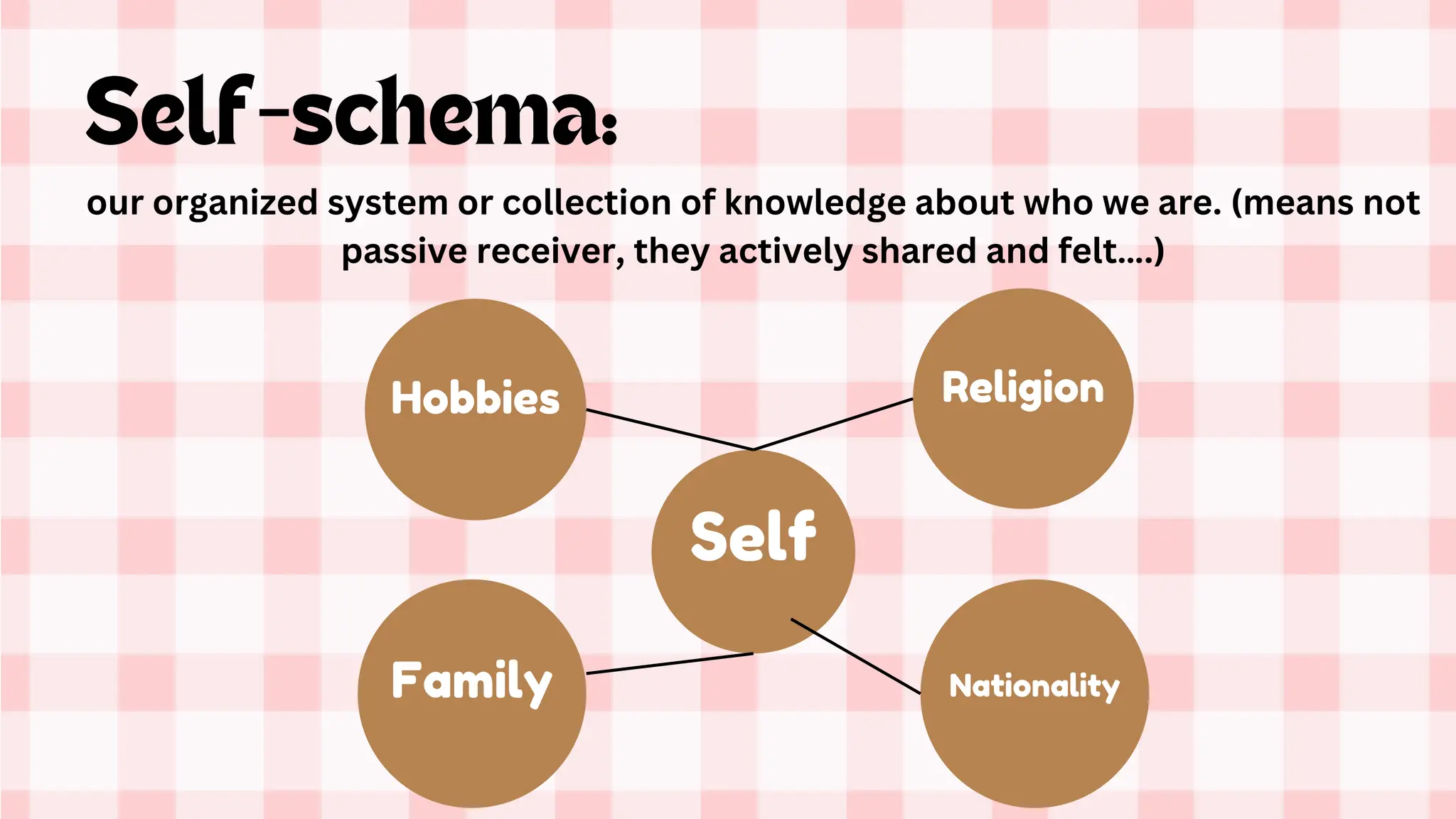
Self
our organized system or collection of knowledge about who we are. (means not
passive receiver, they actively shared and felt….)
Hobbies
Family
Religion
Nationality
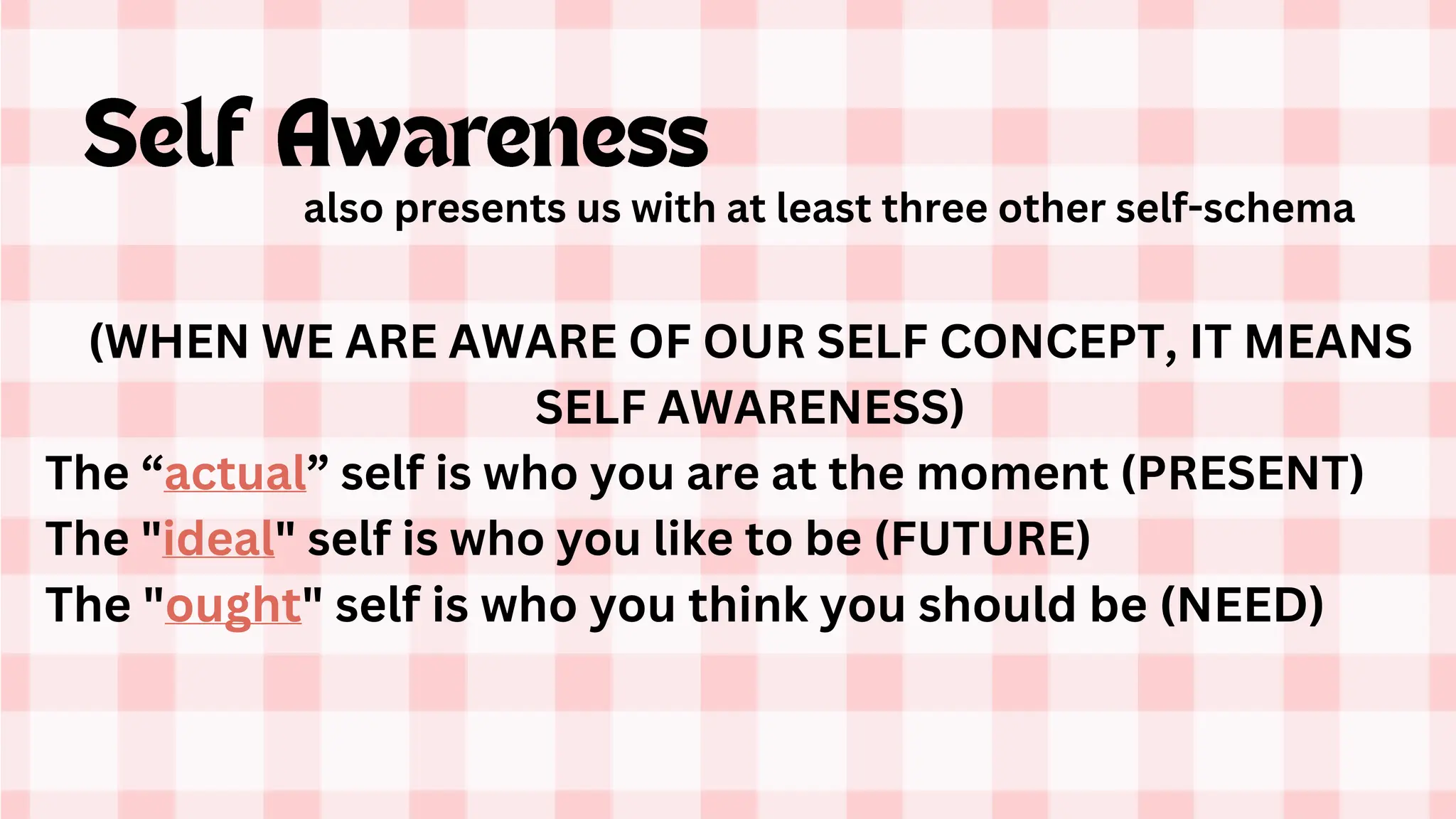
(WHEN WE ARE AWARE OF OUR SELF CONCEPT, IT MEANS
SELF AWARENESS)
The “actual” self is who you are at the moment (PRESENT)
The "ideal" self is who you like to be (FUTURE)
The "ought" self is who you think you should be (NEED)
also presents us with at least three other self-schema
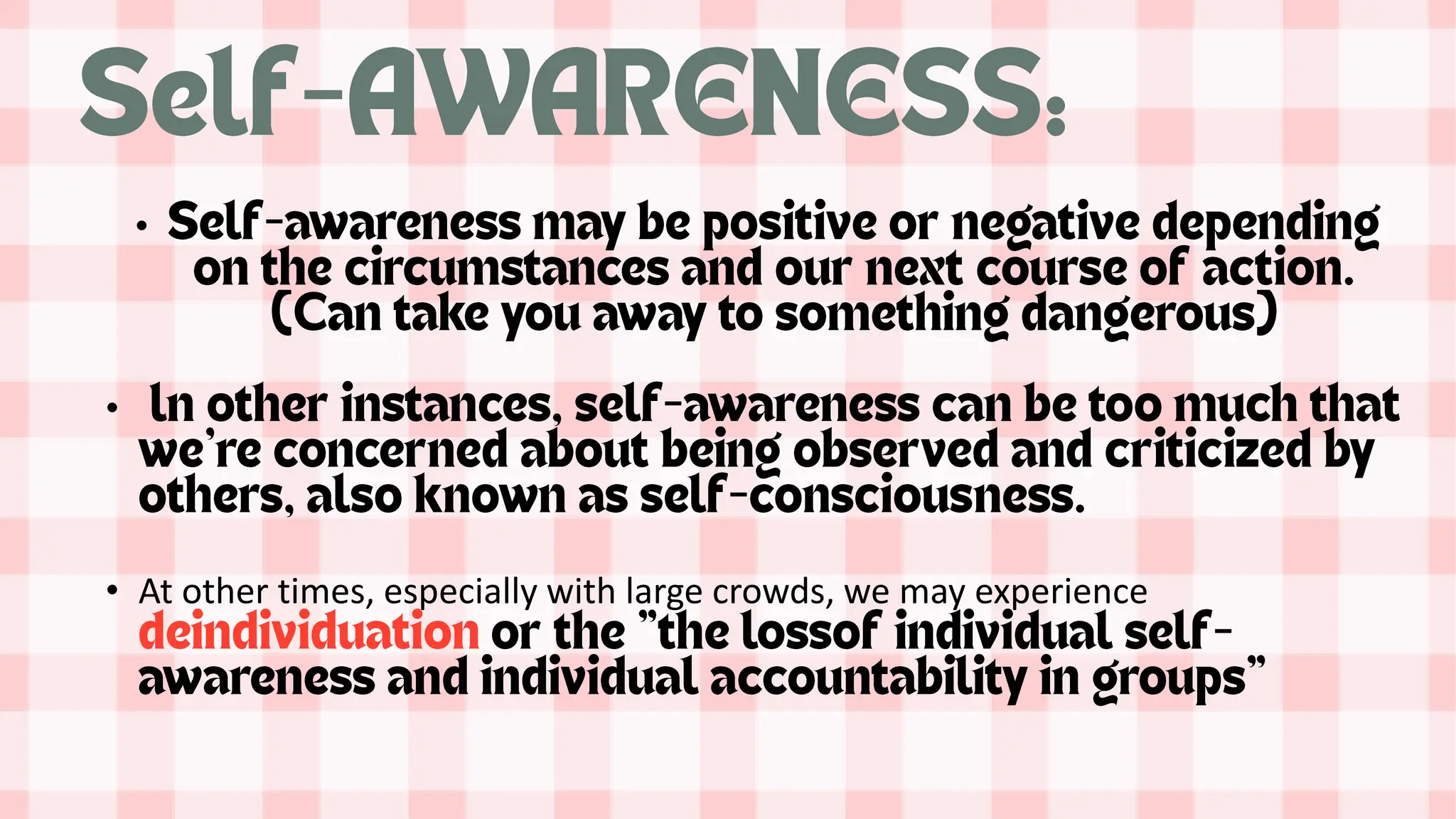
•
•
• At other times, especially with large crowds, we may experience
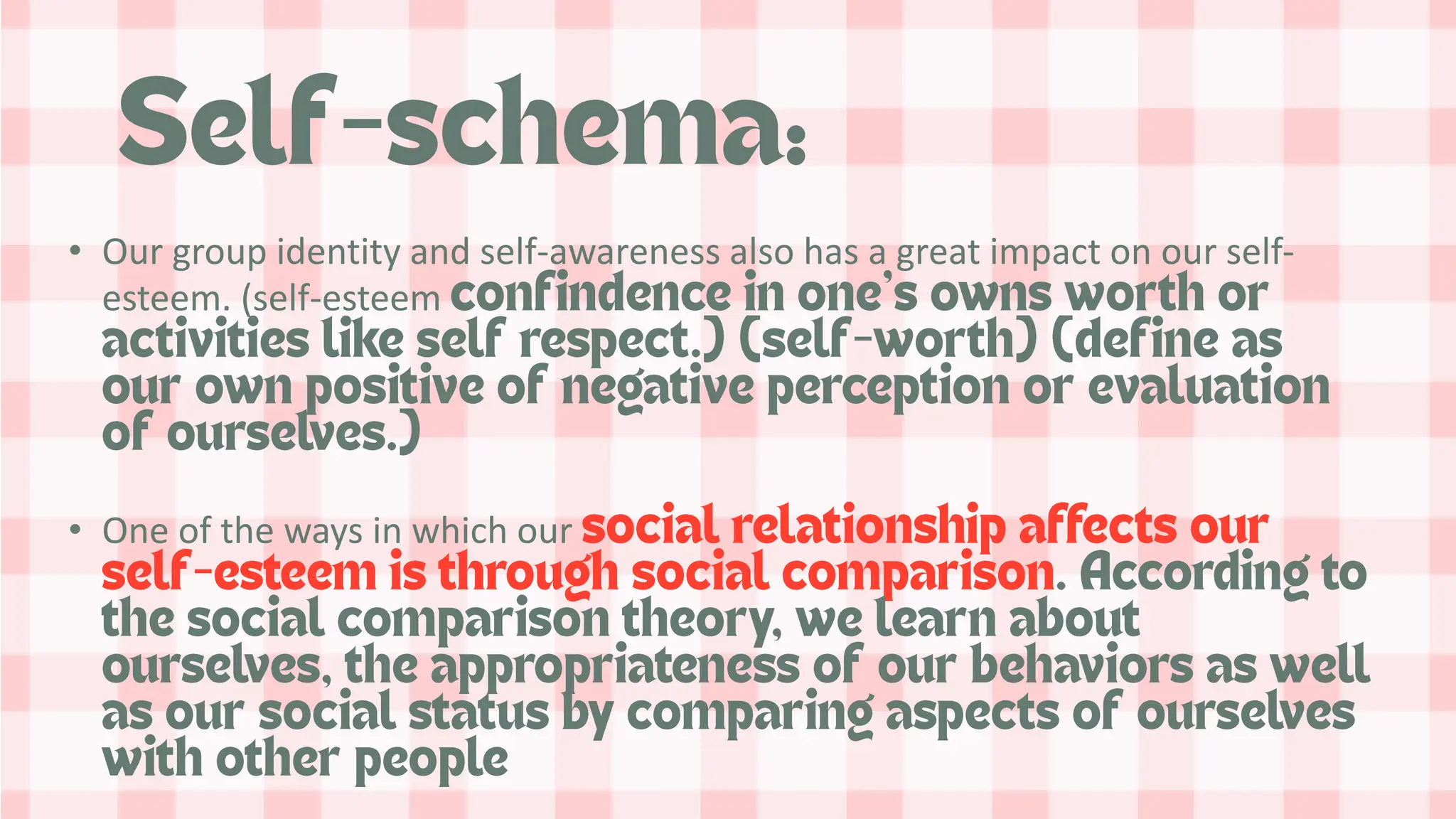
• Our group identity and self-awareness also has a great impact on our self-
esteem. (self-esteem
• One of the ways in which our
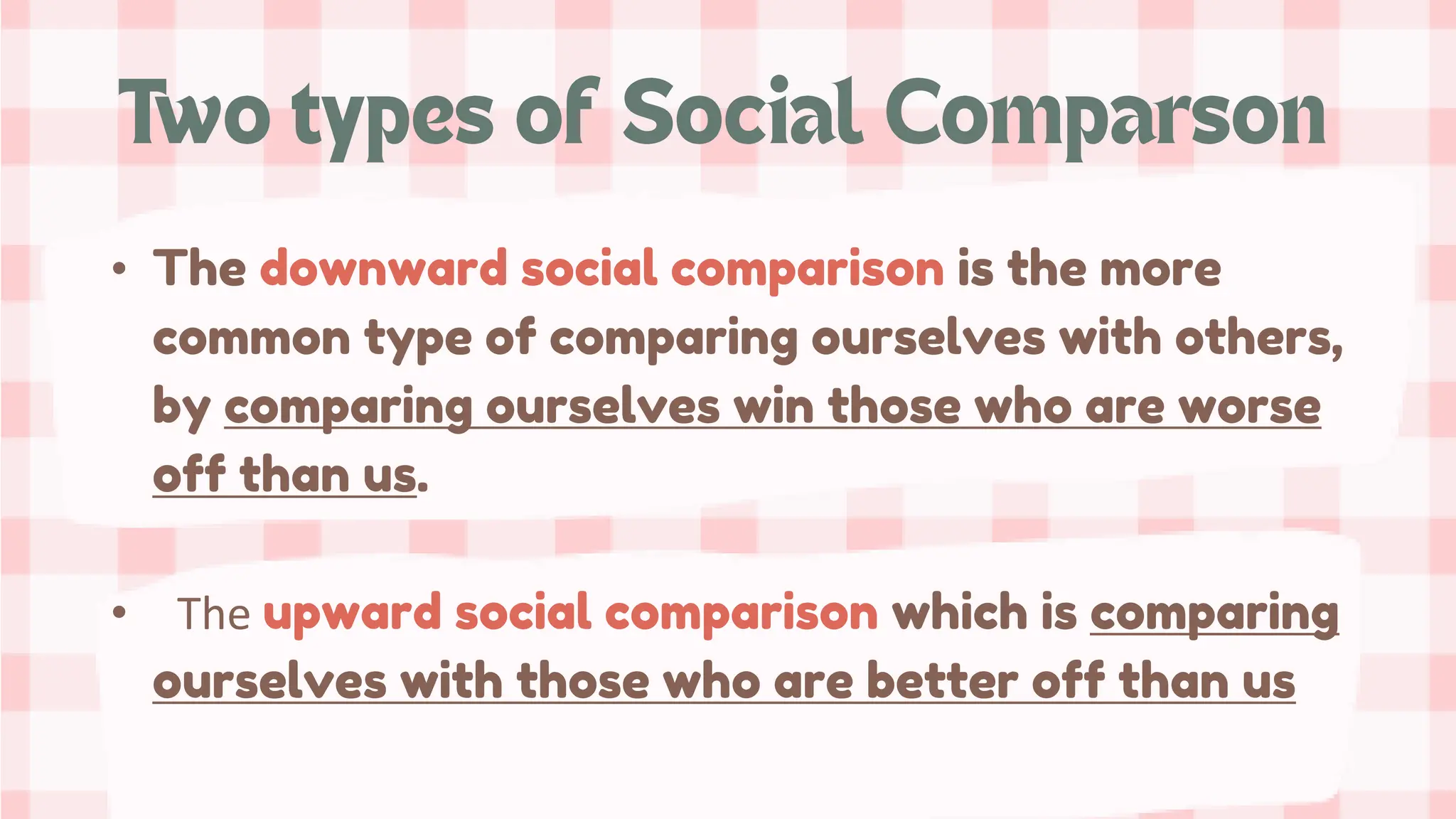
• The downward social comparison is the more
common type of comparing ourselves with others,
by comparing ourselves win those who are worse
off than us.
• The upward social comparison which is comparing
ourselves with those who are better off than us
Narcissism is a "trait characterized by overly high self-esteem,
self-admiration, and self-centeredness."
Rosenberg scale is the instrument most commonly used to
measure self-esteem
In the attempt to increase or maintain self-esteem,
some people become narcissistic
ME
• defined
as the
empirical
self
• describin
g the
person’s
personal
experien
ce
I
• thinking
self
• knows
everythi
ng about
the self
William James
(founder of functionalism)
REAL
• All those
aspects of
one's
identity
that are
perceived in
awareness.
• These are
the things
that are
known to
oneself like
the
attributes
that an
individual
possesses
IDEAL
• one's
view of
self as
one
wishes to
be
• This
contains
all the
aspirations
or wishes of
an individual
to
themselves
Carl Rogers
(person-centered theraphy)
ALBERT BANDURA
suggests that observation and
modeling play a primary role in how
and why people learn. Bandura's
theory goes beyond the perception of
learning being the result of direct
experience with the environment.

UNDERSTANDING THE SELF

  • 1.
  • 2.
    The cognitive aspectof the self is known as self-concept(self is unessential construct in psychologists) Self- concept –a collection of beliefs one rules about one self and responses and others embodies the answer to the question “who am I
  • 3.
    1) the socialdomain – the ability of a person to interact with others 2) the competence domain – ability to meet the basic needs 3) the affect domain – the awareness of the emotional state 4) the physical domain- the feeling about look, health, physical condition and over all appearance 5) academic domain – success or failure in the school 6) family domain – how well one function within the family unit
  • 4.
    1) The privateself or your internal standards and private thoughts and feelings; and 2) The public self or your public image commonly geared toward having a good presentation of yourself to others
  • 5.
    Self our organized systemor collection of knowledge about who we are. (means not passive receiver, they actively shared and felt….) Hobbies Family Religion Nationality
  • 6.
    (WHEN WE AREAWARE OF OUR SELF CONCEPT, IT MEANS SELF AWARENESS) The “actual” self is who you are at the moment (PRESENT) The "ideal" self is who you like to be (FUTURE) The "ought" self is who you think you should be (NEED) also presents us with at least three other self-schema
  • 7.
    • • • At othertimes, especially with large crowds, we may experience
  • 8.
    • Our groupidentity and self-awareness also has a great impact on our self- esteem. (self-esteem • One of the ways in which our
  • 9.
    • The downwardsocial comparison is the more common type of comparing ourselves with others, by comparing ourselves win those who are worse off than us. • The upward social comparison which is comparing ourselves with those who are better off than us
  • 10.
    Narcissism is a"trait characterized by overly high self-esteem, self-admiration, and self-centeredness." Rosenberg scale is the instrument most commonly used to measure self-esteem In the attempt to increase or maintain self-esteem, some people become narcissistic
  • 11.
    ME • defined as the empirical self •describin g the person’s personal experien ce I • thinking self • knows everythi ng about the self William James (founder of functionalism)
  • 12.
    REAL • All those aspectsof one's identity that are perceived in awareness. • These are the things that are known to oneself like the attributes that an individual possesses IDEAL • one's view of self as one wishes to be • This contains all the aspirations or wishes of an individual to themselves Carl Rogers (person-centered theraphy)
  • 13.
    ALBERT BANDURA suggests thatobservation and modeling play a primary role in how and why people learn. Bandura's theory goes beyond the perception of learning being the result of direct experience with the environment.

Editor's Notes