UNDERSTANDING THE STUDENT
LOAN DEBT STUDENTS
ACCUMULATE IN COLLEGE
Wendy M. Knight
Graduate Research Day
May 2, 2014
DISCUSSION POINTS
 Purpose
 Significance
 Findings
 Importance in Higher Education
 Implications for Student Affairs Professionals
 Recommendations
 Conclusion
PURPOSE
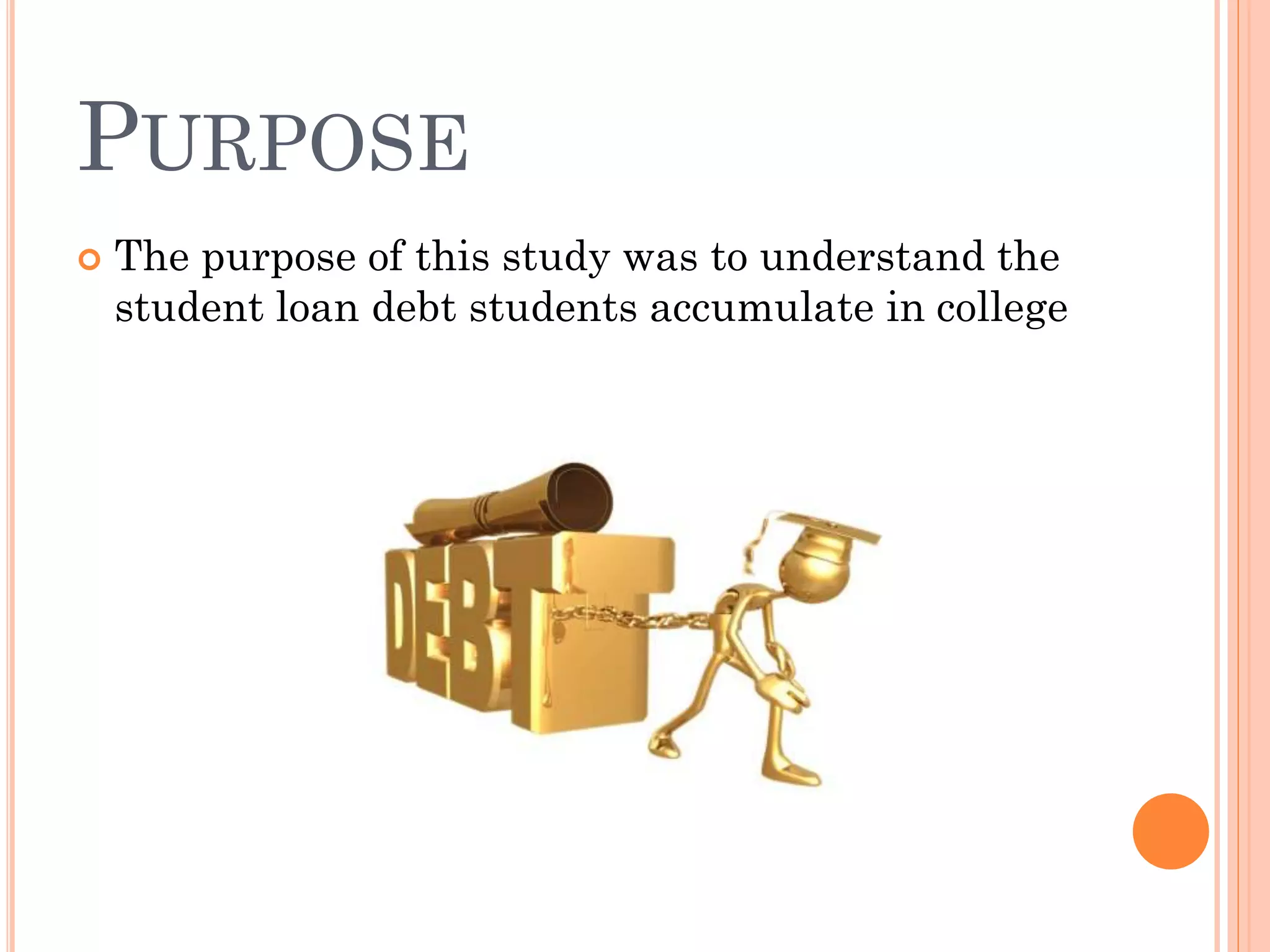
 The purpose of this study was to understand the
student loan debt students accumulate in college
SIGNIFICANCE
 To aid student affairs professionals in
understanding the student loan debt students
accumulate while in college
 To give understanding to student affairs
professionals the current interest rates on the
student loans, payback options, and the effect on
graduating seniors and job searches
 To find ways to address and potentially avoid the
student loan debt issue
FINDINGS
 The total amount of student loans outstanding
was over $800 BILLION dollars
 $300 billion was acquired between 2006 – 2010
 Interest rates are between 4.5% - 6.8%
 Average student loan debt (as of 2010) was
between $20,000 to $150,000
 First year undergraduate eligibility $3,500 - $9,500
 Second year undergraduate eligibility $4,500 - $10,500
 Third year and beyond undergraduate eligibility $5,500 -
$12,500
 Graduate or professional studies $20,500
 National default rate was over 8%
 Department of Education offers four repayment
plans; standard, extended, graduated, and
income-contingent
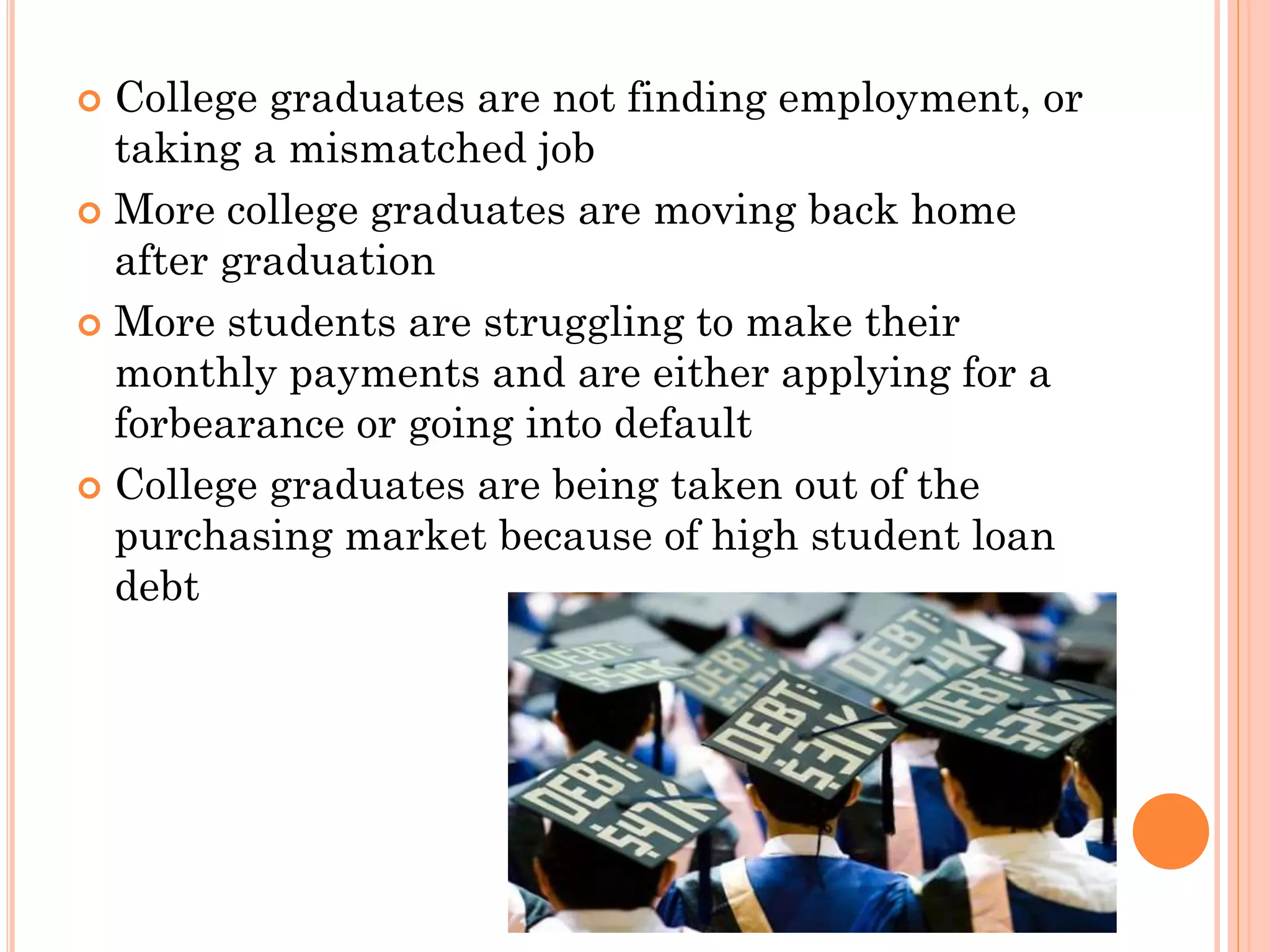
 The rising cost of tuition and the decrease in
grant funding is increasing the amount of loans
students are taking out
 College graduates are not finding employment, or
taking a mismatched job
 More college graduates are moving back home
after graduation
 More students are struggling to make their
monthly payments and are either applying for a
forbearance or going into default
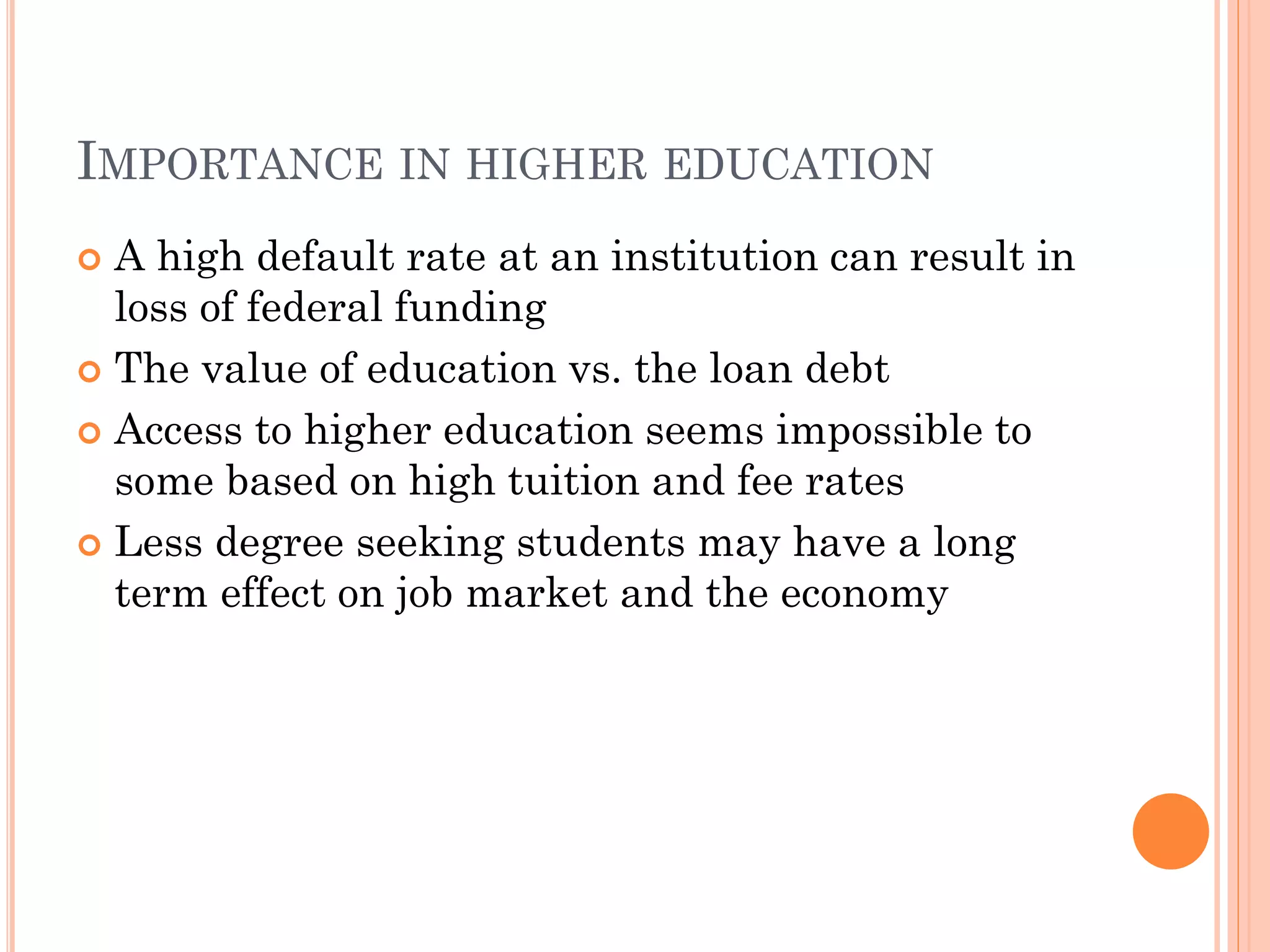
 College graduates are being taken out of the
purchasing market because of high student loan
debt
IMPORTANCE IN HIGHER EDUCATION
 A high default rate at an institution can result in
loss of federal funding
 The value of education vs. the loan debt
 Access to higher education seems impossible to
some based on high tuition and fee rates
 Less degree seeking students may have a long
term effect on job market and the economy
IMPLICATIONS FOR STUDENT
AFFAIRS PROFESSIONALS
 Decreased retention rates
 Value of education questioned
 Dealing with the student in shock of the amount
of student loans acquired while attending college
 The higher stress level of a student who is aware
of the debt he or she has accumulated
RECOMMENDATIONS
 Each college/university or lending institution
should have a specialized office on campus which
deals with student loans, past and present
 Mandated yearly meetings with the students so
they are aware of their current balances owed –
being updated on what expected monthly
payment will be
 Mandate financial literacy classes to students, at
least once a year as informative or refresher
CONCLUSION
 Current loan debt is a burden to students leaving
college, either by graduating or not
 Most students are unaware of their student loan
debt until they leave school
 Without a specially designated office with
knowledgeable staff students will not have a
place to go to get their questions answered
 The rising cost of tuition and fees is making
access to higher education almost beyond reach
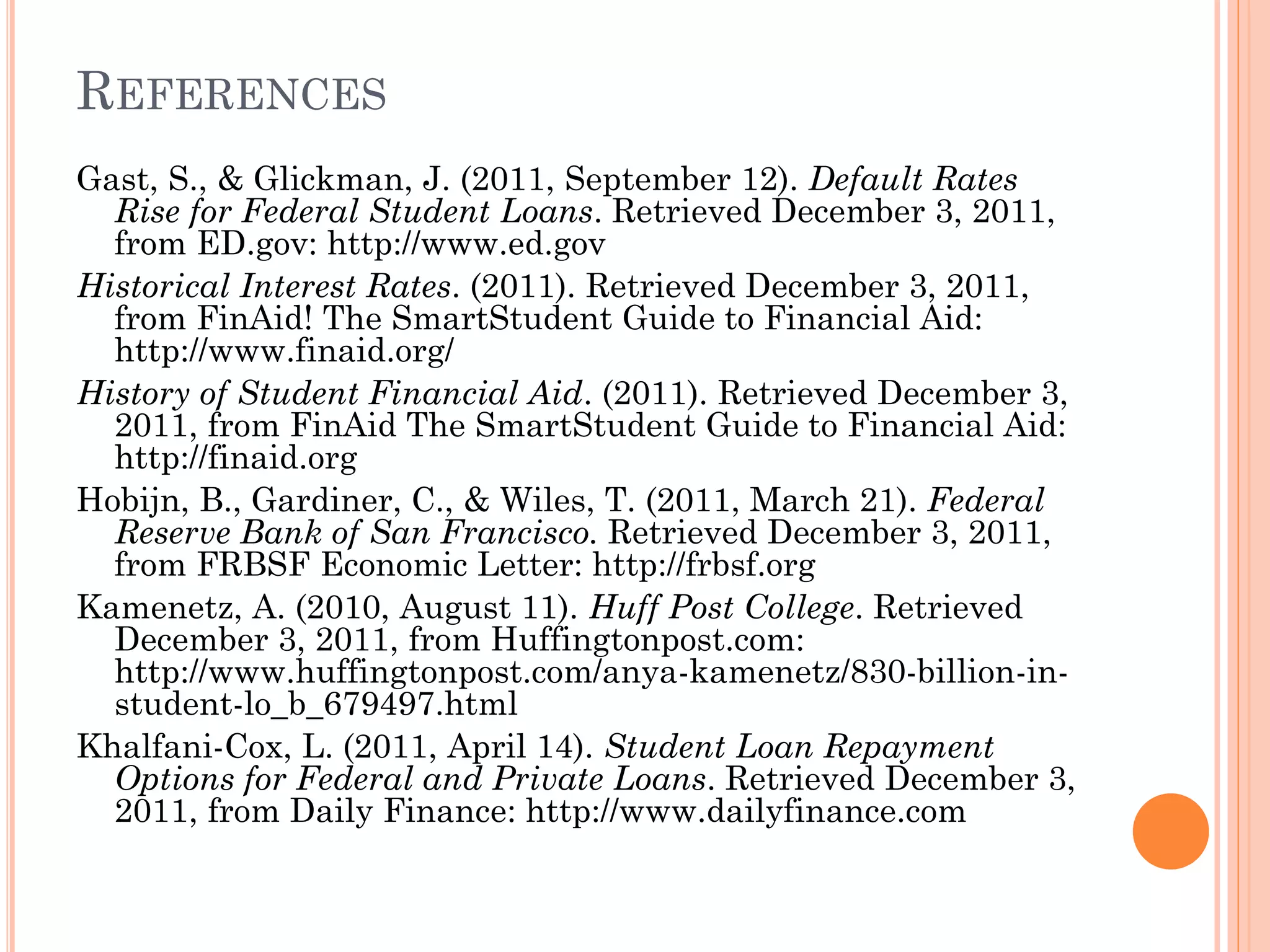
REFERENCES
Gast, S., & Glickman, J. (2011, September 12). Default Rates
Rise for Federal Student Loans. Retrieved December 3, 2011,
from ED.gov: http://www.ed.gov
Historical Interest Rates. (2011). Retrieved December 3, 2011,
from FinAid! The SmartStudent Guide to Financial Aid:
http://www.finaid.org/
History of Student Financial Aid. (2011). Retrieved December 3,
2011, from FinAid The SmartStudent Guide to Financial Aid:
http://finaid.org
Hobijn, B., Gardiner, C., & Wiles, T. (2011, March 21). Federal
Reserve Bank of San Francisco. Retrieved December 3, 2011,
from FRBSF Economic Letter: http://frbsf.org
Kamenetz, A. (2010, August 11). Huff Post College. Retrieved
December 3, 2011, from Huffingtonpost.com:
http://www.huffingtonpost.com/anya-kamenetz/830-billion-in-
student-lo_b_679497.html
Khalfani-Cox, L. (2011, April 14). Student Loan Repayment
Options for Federal and Private Loans. Retrieved December 3,
2011, from Daily Finance: http://www.dailyfinance.com
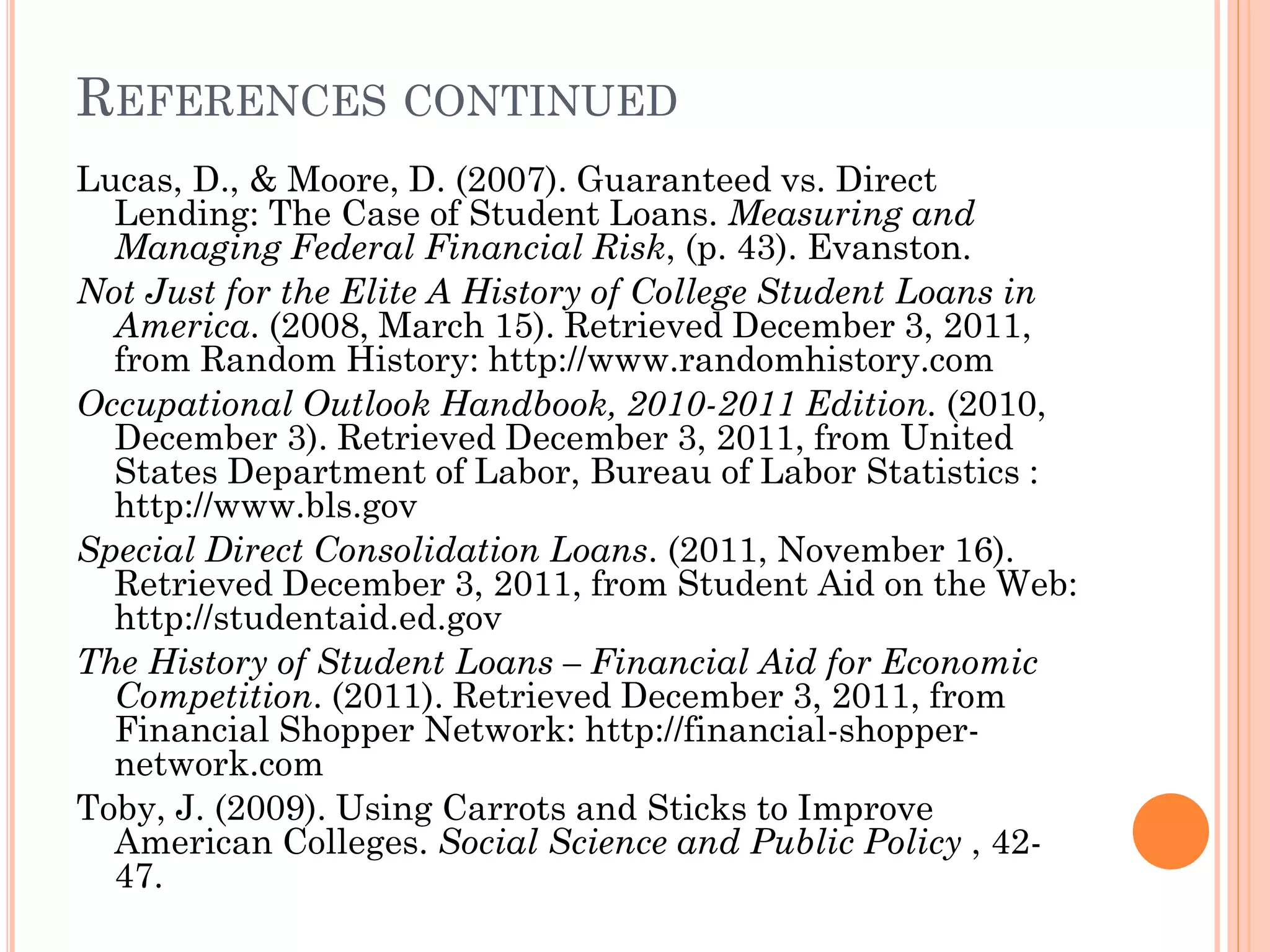
REFERENCES CONTINUED
Lucas, D., & Moore, D. (2007). Guaranteed vs. Direct
Lending: The Case of Student Loans. Measuring and
Managing Federal Financial Risk, (p. 43). Evanston.
Not Just for the Elite A History of College Student Loans in
America. (2008, March 15). Retrieved December 3, 2011,
from Random History: http://www.randomhistory.com
Occupational Outlook Handbook, 2010-2011 Edition. (2010,
December 3). Retrieved December 3, 2011, from United
States Department of Labor, Bureau of Labor Statistics :
http://www.bls.gov
Special Direct Consolidation Loans. (2011, November 16).
Retrieved December 3, 2011, from Student Aid on the Web:
http://studentaid.ed.gov
The History of Student Loans – Financial Aid for Economic
Competition. (2011). Retrieved December 3, 2011, from
Financial Shopper Network: http://financial-shopper-
network.com
Toby, J. (2009). Using Carrots and Sticks to Improve
American Colleges. Social Science and Public Policy , 42-
47.

Understanding Student Debt

  • 1.
    UNDERSTANDING THE STUDENT LOANDEBT STUDENTS ACCUMULATE IN COLLEGE Wendy M. Knight Graduate Research Day May 2, 2014
  • 2.
    DISCUSSION POINTS  Purpose Significance  Findings  Importance in Higher Education  Implications for Student Affairs Professionals  Recommendations  Conclusion
  • 3.
    PURPOSE  The purposeof this study was to understand the student loan debt students accumulate in college
  • 4.
    SIGNIFICANCE  To aidstudent affairs professionals in understanding the student loan debt students accumulate while in college  To give understanding to student affairs professionals the current interest rates on the student loans, payback options, and the effect on graduating seniors and job searches  To find ways to address and potentially avoid the student loan debt issue
  • 5.
    FINDINGS  The totalamount of student loans outstanding was over $800 BILLION dollars  $300 billion was acquired between 2006 – 2010  Interest rates are between 4.5% - 6.8%  Average student loan debt (as of 2010) was between $20,000 to $150,000  First year undergraduate eligibility $3,500 - $9,500  Second year undergraduate eligibility $4,500 - $10,500  Third year and beyond undergraduate eligibility $5,500 - $12,500  Graduate or professional studies $20,500
  • 6.
     National defaultrate was over 8%  Department of Education offers four repayment plans; standard, extended, graduated, and income-contingent  The rising cost of tuition and the decrease in grant funding is increasing the amount of loans students are taking out
  • 7.
     College graduatesare not finding employment, or taking a mismatched job  More college graduates are moving back home after graduation  More students are struggling to make their monthly payments and are either applying for a forbearance or going into default  College graduates are being taken out of the purchasing market because of high student loan debt
  • 8.
    IMPORTANCE IN HIGHEREDUCATION  A high default rate at an institution can result in loss of federal funding  The value of education vs. the loan debt  Access to higher education seems impossible to some based on high tuition and fee rates  Less degree seeking students may have a long term effect on job market and the economy
  • 9.
    IMPLICATIONS FOR STUDENT AFFAIRSPROFESSIONALS  Decreased retention rates  Value of education questioned  Dealing with the student in shock of the amount of student loans acquired while attending college  The higher stress level of a student who is aware of the debt he or she has accumulated
  • 10.
    RECOMMENDATIONS  Each college/universityor lending institution should have a specialized office on campus which deals with student loans, past and present  Mandated yearly meetings with the students so they are aware of their current balances owed – being updated on what expected monthly payment will be  Mandate financial literacy classes to students, at least once a year as informative or refresher
  • 11.
    CONCLUSION  Current loandebt is a burden to students leaving college, either by graduating or not  Most students are unaware of their student loan debt until they leave school  Without a specially designated office with knowledgeable staff students will not have a place to go to get their questions answered  The rising cost of tuition and fees is making access to higher education almost beyond reach
  • 13.
    REFERENCES Gast, S., &Glickman, J. (2011, September 12). Default Rates Rise for Federal Student Loans. Retrieved December 3, 2011, from ED.gov: http://www.ed.gov Historical Interest Rates. (2011). Retrieved December 3, 2011, from FinAid! The SmartStudent Guide to Financial Aid: http://www.finaid.org/ History of Student Financial Aid. (2011). Retrieved December 3, 2011, from FinAid The SmartStudent Guide to Financial Aid: http://finaid.org Hobijn, B., Gardiner, C., & Wiles, T. (2011, March 21). Federal Reserve Bank of San Francisco. Retrieved December 3, 2011, from FRBSF Economic Letter: http://frbsf.org Kamenetz, A. (2010, August 11). Huff Post College. Retrieved December 3, 2011, from Huffingtonpost.com: http://www.huffingtonpost.com/anya-kamenetz/830-billion-in- student-lo_b_679497.html Khalfani-Cox, L. (2011, April 14). Student Loan Repayment Options for Federal and Private Loans. Retrieved December 3, 2011, from Daily Finance: http://www.dailyfinance.com
  • 14.
    REFERENCES CONTINUED Lucas, D.,& Moore, D. (2007). Guaranteed vs. Direct Lending: The Case of Student Loans. Measuring and Managing Federal Financial Risk, (p. 43). Evanston. Not Just for the Elite A History of College Student Loans in America. (2008, March 15). Retrieved December 3, 2011, from Random History: http://www.randomhistory.com Occupational Outlook Handbook, 2010-2011 Edition. (2010, December 3). Retrieved December 3, 2011, from United States Department of Labor, Bureau of Labor Statistics : http://www.bls.gov Special Direct Consolidation Loans. (2011, November 16). Retrieved December 3, 2011, from Student Aid on the Web: http://studentaid.ed.gov The History of Student Loans – Financial Aid for Economic Competition. (2011). Retrieved December 3, 2011, from Financial Shopper Network: http://financial-shopper- network.com Toby, J. (2009). Using Carrots and Sticks to Improve American Colleges. Social Science and Public Policy , 42- 47.