My Burning Issue: The Effects of
High Student loan debt
By: Demetri Selmer, Cycle 52
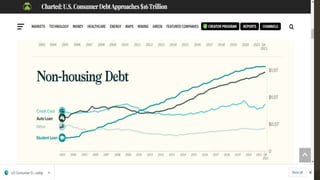
Student loan debt has reached record levels in the
United States.
•As of 2021, outstanding student loan debt
in the US was over $1.7 trillion, according
to the Federal Reserve. This makes it the
second-largest category of consumer debt
after mortgages.
Student loan debt and its negative effects on
borrowers hitting important life milstones.
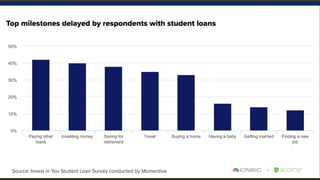
• A recent survey by Momentive of 5,162 American adults
conducted online in January 2022, in partnership with
CNBC and Acorn, found that 81% of people with student
loans had to delay one or more important life milestones due
to their debt. The survey showed that 42% of student loan
borrowers delayed paying off other loans, 40% delayed
investing money, 38% delayed saving for retirement, 35%
delayed travel, 33% delayed buying a home, 16% delayed
having a baby, 14% delayed getting married, and 12%
delayed finding a new job
Student loan debt disproportionately affects minority
and low-income borrowers.
•Black and Latino students are more likely to
borrow for college and to borrow more than
white students, according to the Brookings
Institution. Moreover, low-income borrowers
are more likely to default on their loans than
those with higher incomes. (Source:
Brookings Institution
The urgency of addressing student loan debt is
increasingly recognized.
• Politicians and policymakers from both sides of
the aisle have been calling for reforms to the
student loan system, including forgiving some or
all student loan debt. Moreover, public opinion
polls show that a majority of Americans support
some form of student loan forgiveness. (Source:
Pew Research Center
The problem of having to pay for college using loans
has many different aspects that make it complicated
Overall, student loan debt is a complex issue that
affects millions of people, and finding solutions to
alleviate the burden on borrowers is a pressing
concern for many.
Whose fighting for this cause:
nonprofits and other organizations
• One Million Degrees (OMD) - OMD is a non-profit organization that provides support and
resources to low-income, highly motivated community college students in the Chicago
area. Their services include academic coaching, financial assistance, career
development, and mentoring. By providing these resources, OMD helps to reduce the
financial burden of college education and improve college completion rates.
• One group that deals with the policy implications of student loan debt is the Student
Borrower Protection Center (SBPC). The SBPC is a non-profit organization based in
Washington, D.C. that is focused on advocating for policies that protect student loan
borrowers and promote access to higher education. They work with lawmakers,
regulators, and advocacy groups to develop and promote policies that address the issue
of student loan debt and protect the rights of borrowers.
• Student Debt Crisis is a non-profit organization that advocates for affordable higher
education and fair student loan policies. They work to raise awareness about the impact
of student loan debt on individuals and society, and to promote policies that address the
student loan debt crisis. They also provide resources and support for student loan
borrowers.
My Solution
• My solution is we should make college tuition repayable based on income
and only if graduates can find a job in their field that pays a livable wage.
Similar to some untraditional boot camps, graduates would be able to
attend college without having to pay upfront tuition costs. Instead, they
would be required to pay back the tuition cost based on their income after
graduation. If they are unable to find a job in their field or earn a low
income, they would not have to pay back the full tuition cost. This system
would help make college more accessible and affordable, while also
incentivizing graduates to pursue careers in fields that pay well.
Additionally, this could help reduce the burden of student loan debt, which
is a major concern for many students and their families.
Sources
• https://www.visualcapitalist.com/us-consumer-debt-16-trillion/
• https://www.cnbc.com/2022/01/28/81percent-of-adults-with-student-loans-
say-they-delay-key-life-miles
• https://www.brookings.edu/research/student-loans-the-racial-wealth-divide-
and-why-we-need-full-student-debt-cancellation/
• https://www.npr.org/2022/06/17/1104920545/poll-student-loan-forgiveness
Nonprofits
•https://onemilliondegrees.org/
•https://protectborrowers.org/
•https://studentdebtcrisis.org/help/
Thank you
By: Demetri Selmer, Cycle 52

my_buring_issue.pptx

  • 1.
    My Burning Issue:The Effects of High Student loan debt By: Demetri Selmer, Cycle 52
  • 2.
    Student loan debthas reached record levels in the United States. •As of 2021, outstanding student loan debt in the US was over $1.7 trillion, according to the Federal Reserve. This makes it the second-largest category of consumer debt after mortgages.
  • 4.
    Student loan debtand its negative effects on borrowers hitting important life milstones. • A recent survey by Momentive of 5,162 American adults conducted online in January 2022, in partnership with CNBC and Acorn, found that 81% of people with student loans had to delay one or more important life milestones due to their debt. The survey showed that 42% of student loan borrowers delayed paying off other loans, 40% delayed investing money, 38% delayed saving for retirement, 35% delayed travel, 33% delayed buying a home, 16% delayed having a baby, 14% delayed getting married, and 12% delayed finding a new job
  • 6.
    Student loan debtdisproportionately affects minority and low-income borrowers. •Black and Latino students are more likely to borrow for college and to borrow more than white students, according to the Brookings Institution. Moreover, low-income borrowers are more likely to default on their loans than those with higher incomes. (Source: Brookings Institution
  • 7.
    The urgency ofaddressing student loan debt is increasingly recognized. • Politicians and policymakers from both sides of the aisle have been calling for reforms to the student loan system, including forgiving some or all student loan debt. Moreover, public opinion polls show that a majority of Americans support some form of student loan forgiveness. (Source: Pew Research Center
  • 8.
    The problem ofhaving to pay for college using loans has many different aspects that make it complicated Overall, student loan debt is a complex issue that affects millions of people, and finding solutions to alleviate the burden on borrowers is a pressing concern for many.
  • 9.
    Whose fighting forthis cause: nonprofits and other organizations • One Million Degrees (OMD) - OMD is a non-profit organization that provides support and resources to low-income, highly motivated community college students in the Chicago area. Their services include academic coaching, financial assistance, career development, and mentoring. By providing these resources, OMD helps to reduce the financial burden of college education and improve college completion rates. • One group that deals with the policy implications of student loan debt is the Student Borrower Protection Center (SBPC). The SBPC is a non-profit organization based in Washington, D.C. that is focused on advocating for policies that protect student loan borrowers and promote access to higher education. They work with lawmakers, regulators, and advocacy groups to develop and promote policies that address the issue of student loan debt and protect the rights of borrowers. • Student Debt Crisis is a non-profit organization that advocates for affordable higher education and fair student loan policies. They work to raise awareness about the impact of student loan debt on individuals and society, and to promote policies that address the student loan debt crisis. They also provide resources and support for student loan borrowers.
  • 10.
    My Solution • Mysolution is we should make college tuition repayable based on income and only if graduates can find a job in their field that pays a livable wage. Similar to some untraditional boot camps, graduates would be able to attend college without having to pay upfront tuition costs. Instead, they would be required to pay back the tuition cost based on their income after graduation. If they are unable to find a job in their field or earn a low income, they would not have to pay back the full tuition cost. This system would help make college more accessible and affordable, while also incentivizing graduates to pursue careers in fields that pay well. Additionally, this could help reduce the burden of student loan debt, which is a major concern for many students and their families.
  • 11.
    Sources • https://www.visualcapitalist.com/us-consumer-debt-16-trillion/ • https://www.cnbc.com/2022/01/28/81percent-of-adults-with-student-loans- say-they-delay-key-life-miles •https://www.brookings.edu/research/student-loans-the-racial-wealth-divide- and-why-we-need-full-student-debt-cancellation/ • https://www.npr.org/2022/06/17/1104920545/poll-student-loan-forgiveness
  • 12.
  • 13.
    Thank you By: DemetriSelmer, Cycle 52