Understanding
Biogeochemical Cycles in
the Ecosystem
Explore the vital biogeochemical cycles: water, carbon, and nitrogen,
essential for life on Earth.
by John Wayne Guzman
Introduction to
Biogeochemical Cycles
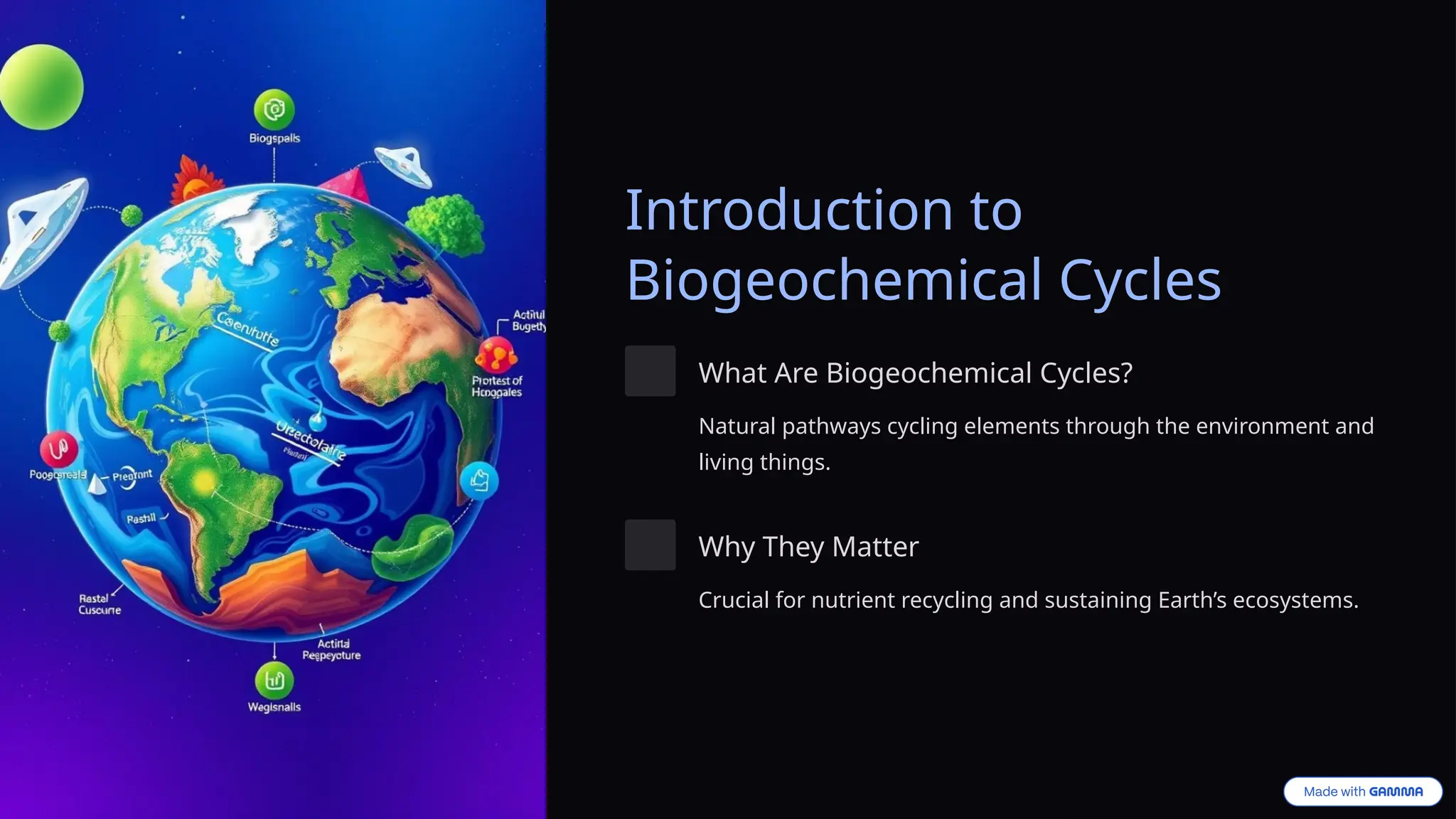
What Are Biogeochemical Cycles?
Natural pathways cycling elements through the environment and
living things.
Why They Matter
Crucial for nutrient recycling and sustaining Earth’s ecosystems.
Importance of Biogeochemical Cycles in
Ecosystems
Balance & Stability
Maintain ecological balance by regulating nutrient flow.
Energy Transfer
Enable energy flow across food webs and habitats.
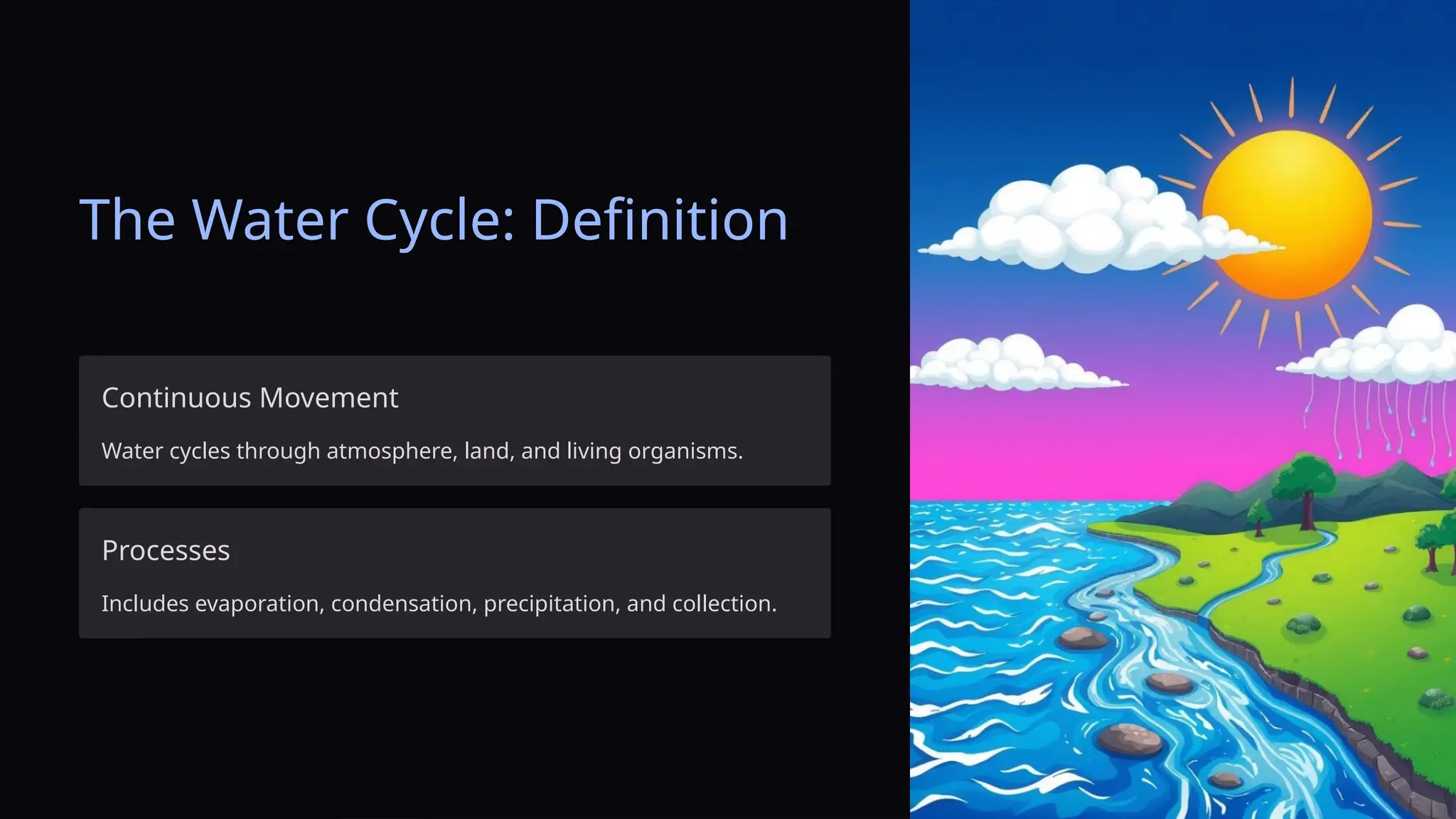
The Water Cycle: Definition
Continuous Movement
Water cycles through atmosphere, land, and living organisms.
Processes
Includes evaporation, condensation, precipitation, and collection.
Water Cycle Overview Diagram
1. Evaporation and Transpiration
2. Condensation and Cloud Formation
3. Precipitation
4. Collection and Infiltration
5. Groundwater and Runoff
Water Cycle Processes Explained
Evaporation
Water turns to vapor from oceans and lakes.
Transpiration
Plants release water vapor from leaves to the air.
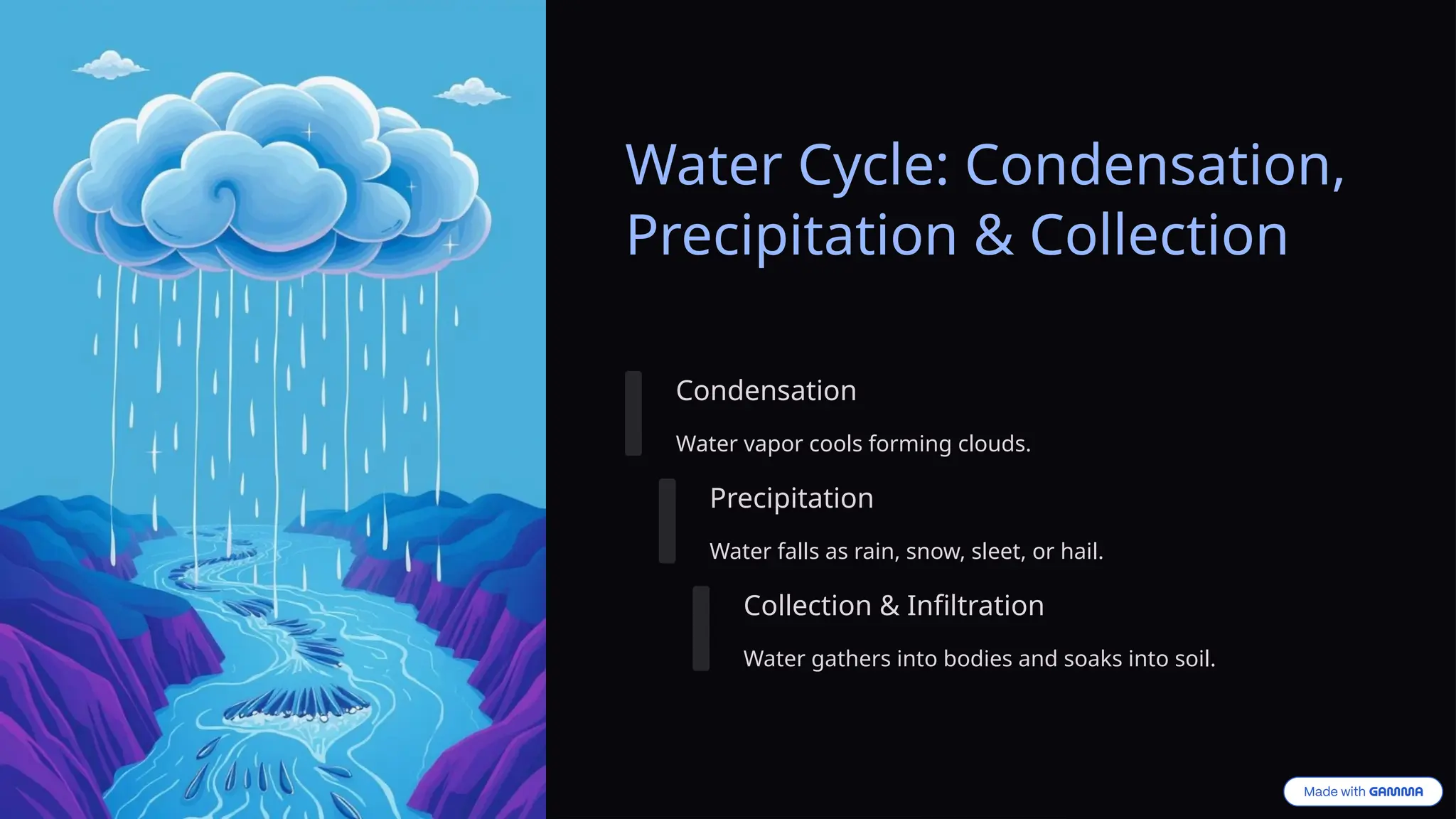
Water Cycle: Condensation,
Precipitation & Collection
Condensation
Water vapor cools forming clouds.
Precipitation
Water falls as rain, snow, sleet, or hail.
Collection & Infiltration
Water gathers into bodies and soaks into soil.
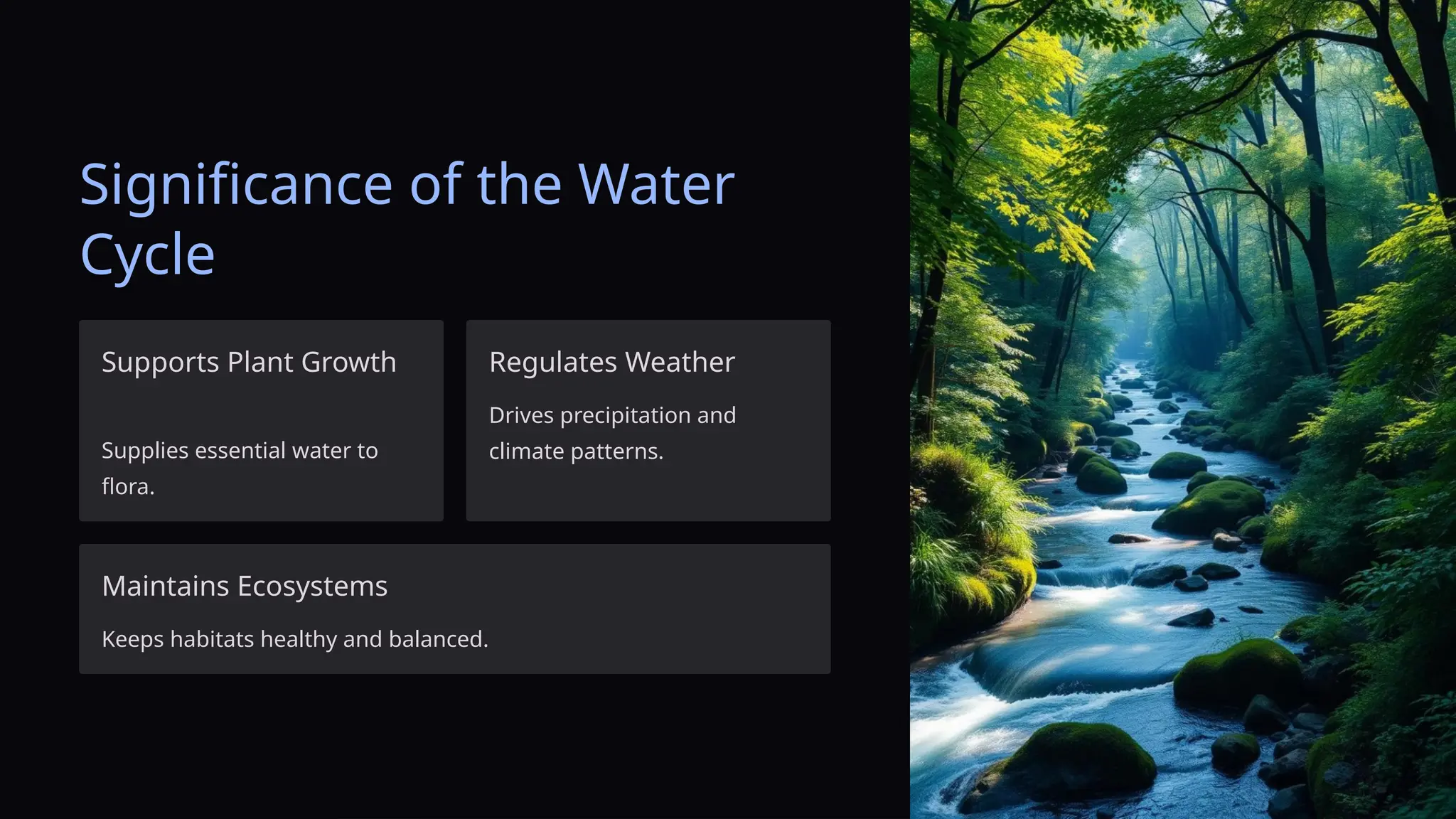
Significance of the Water
Cycle
Supports Plant Growth
Supplies essential water to
flora.
Regulates Weather
Drives precipitation and
climate patterns.
Maintains Ecosystems
Keeps habitats healthy and balanced.
The Carbon Cycle: Definition & Diagram
Carbon Cycle Defined
Movement of carbon through air, organisms, soil, and
oceans.
Key Processes
Includes photosynthesis, respiration, decomposition, and
combustion.
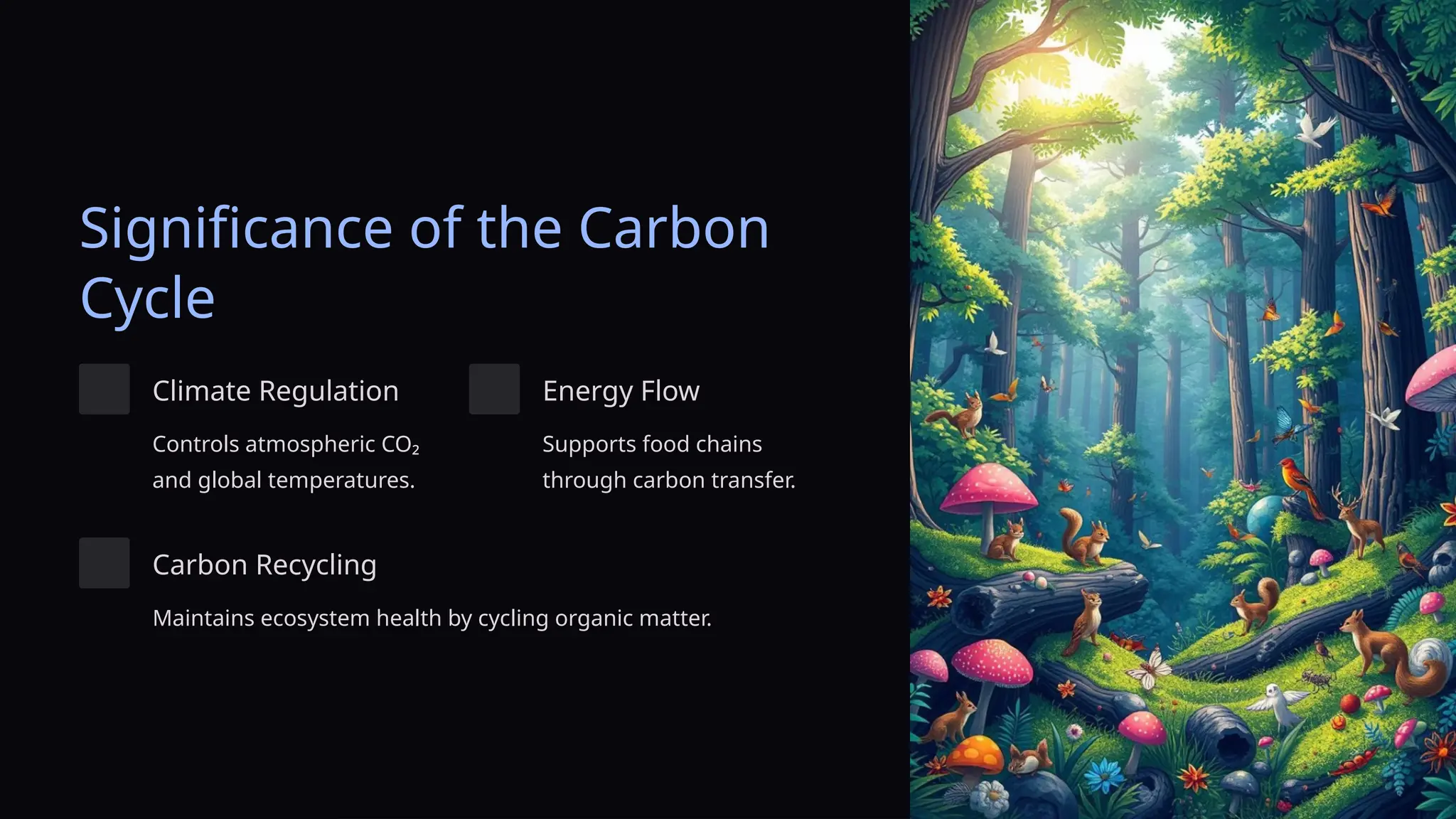
Significance of the Carbon
Cycle
Climate Regulation
Controls atmospheric CO₂
and global temperatures.
Energy Flow
Supports food chains
through carbon transfer.
Carbon Recycling
Maintains ecosystem health by cycling organic matter.
Understanding-Biogeochemical-Cycles-in-the-Ecosystem.pptx

  • 1.
    Understanding Biogeochemical Cycles in theEcosystem Explore the vital biogeochemical cycles: water, carbon, and nitrogen, essential for life on Earth. by John Wayne Guzman
  • 2.
    Introduction to Biogeochemical Cycles WhatAre Biogeochemical Cycles? Natural pathways cycling elements through the environment and living things. Why They Matter Crucial for nutrient recycling and sustaining Earth’s ecosystems.
  • 3.
    Importance of BiogeochemicalCycles in Ecosystems Balance & Stability Maintain ecological balance by regulating nutrient flow. Energy Transfer Enable energy flow across food webs and habitats.
  • 4.
    The Water Cycle:Definition Continuous Movement Water cycles through atmosphere, land, and living organisms. Processes Includes evaporation, condensation, precipitation, and collection.
  • 5.
    Water Cycle OverviewDiagram 1. Evaporation and Transpiration 2. Condensation and Cloud Formation 3. Precipitation 4. Collection and Infiltration 5. Groundwater and Runoff
  • 6.
    Water Cycle ProcessesExplained Evaporation Water turns to vapor from oceans and lakes. Transpiration Plants release water vapor from leaves to the air.
  • 7.
    Water Cycle: Condensation, Precipitation& Collection Condensation Water vapor cools forming clouds. Precipitation Water falls as rain, snow, sleet, or hail. Collection & Infiltration Water gathers into bodies and soaks into soil.
  • 8.
    Significance of theWater Cycle Supports Plant Growth Supplies essential water to flora. Regulates Weather Drives precipitation and climate patterns. Maintains Ecosystems Keeps habitats healthy and balanced.
  • 9.
    The Carbon Cycle:Definition & Diagram Carbon Cycle Defined Movement of carbon through air, organisms, soil, and oceans. Key Processes Includes photosynthesis, respiration, decomposition, and combustion.
  • 10.
    Significance of theCarbon Cycle Climate Regulation Controls atmospheric CO₂ and global temperatures. Energy Flow Supports food chains through carbon transfer. Carbon Recycling Maintains ecosystem health by cycling organic matter.