Understand the Qur’an & Salah
THE EASY WAY
Translated into 15 different languages & taught in various countries of the world.
Through common recitations such as Surah Al-Fatihah, six Surahs, and parts of Salah,
you will learn 125 important words that occur in the Quran 40,000 times
(from a total of 77,800 words in the Qur’an, i.e., 50% words of the Quran!)
Understand Al-Qur’an Academy
Hyderabad, INDIA
www.understandquran.com
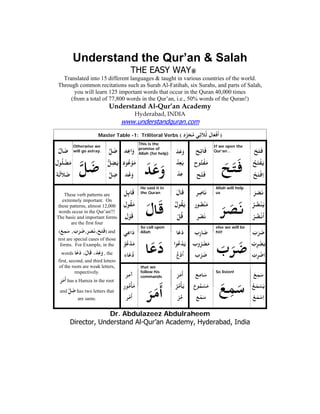
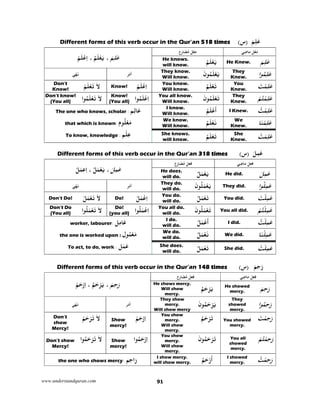
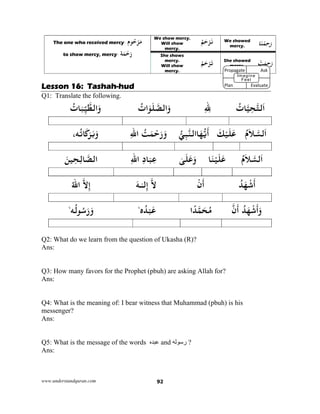
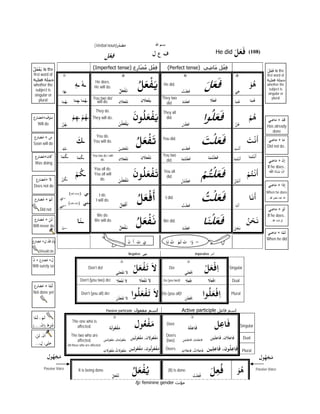
Master Table -1: Triliteral Verbs ( ‫د‬‫ﺮ‬َ‫ﺠ‬ُ‫ﻣ‬ ‫ﻲ‬ِ‫ﺛ‬َ‫ﻼ‬ُ ‫ﺎ‬َ‫ﻌ‬ْ‫ﻓ‬
َ
‫أ‬ )
َ‫ﺢ‬َ‫ﺘ‬َ‫ﻓ‬
ُ‫ﺢ‬َ‫ﺘ‬ْ‫ﻔ‬َ‫ﻳ‬
ْ‫ﺢ‬َ‫ﺘ‬ْ‫ﻓ‬ِ‫ا‬
If we open the
Qur’an…
َ‫ﺢ‬َ‫ﺘ‬َ‫ﻓ‬
‫ﺢ‬ِ‫ﺗ‬‫ﺎ‬َ‫ﻓ‬
‫ح‬ ُ‫ﺘ‬ْ‫ﻔ‬َ‫ﻣ‬
‫ﺢ‬ْ‫ﺘ‬َ‫ﻓ‬
َ‫ﺪ‬َ‫ﻋ‬َw
ُ‫ﺪ‬ِ‫ﻌ‬َ‫ﻳ‬
ْ‫ﺪ‬ِ‫ﻋ‬
This is the
promise of
Allah (for help)
َ‫ﺪ‬َ‫ﻋ‬َw
‫ﺪ‬ِ‫ﻋ‬‫ا‬َw
‫د‬ ُ‫ﻋ‬ْ َ‫ﻣ‬
‫ﺪ‬ْ‫ﻋ‬َw
‫ﻞ‬َ‫ﺿ‬
‫ﻞ‬ِ‫ﻀ‬َ‫ﻳ‬
‫ﻞ‬ِ‫ﺿ‬
Otherwise we
will go astray.
‫ﻞ‬َ‫ﺿ‬
ّ ‫ﺎ‬َ‫ﺿ‬
‫ل‬ ُ‫ﻠ‬ْ‫ﻀ‬َ‫ﻣ‬
‫ﺔ‬َ‫ﻟ‬َ‫ﻼ‬َ‫ﺿ‬
َ‫ﺮ‬َ‫ﺼ‬َ‫ﻧ‬
ُ‫ﺮ‬ُ‫ﺼ‬ْ‫ﻨ‬َ‫ﻳ‬
ْ‫ﺮ‬ُ‫ﺼ‬ْ‫ﻧ‬ُ‫ا‬
Allah will help
us
َ‫ﺮ‬َ‫ﺼ‬َ‫ﻧ‬
‫ﺮ‬ِ‫ﺻ‬‫ﺎ‬َ‫ﻧ‬
‫ﻮر‬ُ‫ﺼ‬ْ‫ﻨ‬َ‫ﻣ‬
‫ﺮ‬ْ‫ﺼ‬َ‫ﻧ‬
َ ‫ﺎ‬َ‫ﻗ‬
ُ‫ل‬ ُ‫ﻘ‬َ‫ﻳ‬
ْ‫ﻞ‬ُ‫ﻗ‬
He said it in
the Quran
َ ‫ﺎ‬َ‫ﻗ‬
‫ﻞ‬ِ‫ئ‬‫ﺎ‬َ‫ﻗ‬
‫ل‬ ُ‫ﻘ‬َ‫ﻣ‬
‫ل‬ْ َ‫ﻗ‬
These verb patterns are
extremely important. On
these patterns, almost 12,000
words occur in the Qur’an!!!
The basic and important forms
are the first four
(َ‫ﻊ‬ِ‫ﻤ‬َ‫ﺳ‬ , َ‫ب‬َ‫ﺮ‬َ‫,ﺿ‬َ‫ﺮ‬َ‫ﺼ‬َ‫,ﻧ‬َ‫ﺢ‬َ‫ﺘ‬َ‫ﻓ‬) and
rest are special cases of those
forms. For Example, in the
words ‫ﺎ‬َ‫ﻋ‬َ‫د‬ ،َ ‫ﺎ‬َ‫ﻗ‬ ،َ‫ﺪ‬َ‫ﻋ‬َw , the
first, second, and third letters
of the roots are weak letters,
respectively.
َ‫ﺮ‬َ‫ﻣ‬
َ
‫أ‬ has a Hamza in the root
and ‫ﻞ‬َ‫ﺿ‬ has two letters that
are same.
َ‫ب‬َ‫ﺮ‬َ‫ﺿ‬
ُ‫ب‬ِ ْ‫ﻀ‬َ‫ﻳ‬
ْ‫ب‬ِ ْ‫ﺿ‬ِ‫ا‬
else we will be
hit!
َ‫ب‬َ‫ﺮ‬َ‫ﺿ‬
‫ب‬ِr‫ﺎ‬َ‫ﺿ‬
‫ب‬wُ‫ﺮ‬ْ‫ﻀ‬َ‫ﻣ‬
‫ب‬ْ‫ﺮ‬َ‫ﺿ‬
‫ﺎ‬َ‫ﻋ‬َ‫د‬
‫ا‬ ُ‫ﻋ‬ْ‫ﺪ‬َ‫ﻳ‬
ُ‫ع‬ْ‫د‬ُ‫ا‬
So call upon
Allah
‫ﺎ‬َ‫ﻋ‬َ‫د‬
‫ﻲ‬ِ‫ﻋ‬‫ا‬َ‫د‬
ّ‫ﻮ‬ُ‫ﻋ‬ْ‫ﺪ‬َ‫ﻣ‬
‫ﺎء‬َ‫ﻋ‬ُ‫د‬
َ‫ﻊ‬ِ‫ﻤ‬َ‫ﺳ‬
ُ‫ﻊ‬َ‫ﻤ‬ْ‫ﺴ‬َ‫ﻳ‬
ْ‫ﻊ‬َ‫ﻤ‬ْ‫ﺳ‬ِ‫ا‬
So listen!
َ‫ﻊ‬ِ‫ﻤ‬َ‫ﺳ‬
‫ﻊ‬ِ‫ﻣ‬‫ﺎ‬َ‫ﺳ‬
‫ع‬ ُ‫ﻤ‬ْ‫ﺴ‬َ‫ﻣ‬
‫ﻊ‬ْ‫ﻤ‬َ‫ﺳ‬
َ‫ﺮ‬َ‫ﻣ‬
َ
‫أ‬
ُ‫ﺮ‬ُ‫ﻣ‬
ْ
‫ﺄ‬َ‫ﻳ‬
ْ‫ﺮ‬ُ‫ﻣ‬
that we
follow his
commands
َ‫ﺮ‬َ‫ﻣ‬
َ
‫أ‬
‫ﺮ‬ِ‫ﻣ‬‫آ‬
‫ﻮر‬ُ‫ﻣ‬
ْ
‫ﺄ‬َ‫ﻣ‬
‫ﺮ‬ْ‫ﻣ‬
َ
‫أ‬
Dr. Abdulazeez Abdulraheem
Director, Understand Al-Qur’an Academy, Hyderabad, India
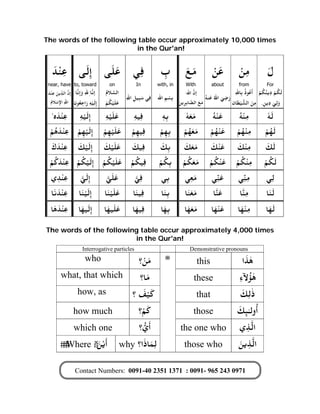
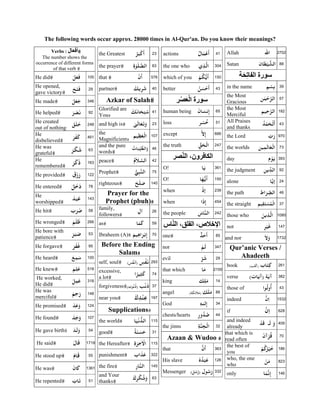
The words of the following table occur approximately 10,000 times
in the Qur'an!
َ‫ل‬ْ‫ﻦ‬ِ‫ﻣ‬ْ‫ﻦ‬َ‫ﻋ‬َ‫ﻊ‬َ‫ﻣ‬ِ‫ب‬‫ﻲ‬ِ‫ﻓ‬َ‫ﻠ‬َ‫ﻋ‬‫ﻰ‬َ‫ﻟ‬ِ‫إ‬‫ﻰ‬َ‫ﺪ‬ْ‫ﻨ‬ِ‫ﻋ‬
ForfromaboutWithwith, inInonto, towardnear, have
ْ‫ﻢ‬ُ‫ﻜ‬ُ‫ﻳﻨ‬ِ‫د‬ ْ‫ﻢ‬ُ‫ﻜ‬َ‫ﻟ‬
ِ‫ﻦ‬‫ﻳ‬ِ‫د‬ َ‫ﻲ‬ِ‫ﻟ‬َw.
ِ‫ﷲ‬‫ِﺎ‬ ُ‫ذ‬ ُ‫ﻋ‬
َ
‫أ‬
‫ﺎن‬َ‫ﻄ‬ْ‫ﻴ‬‫اﻟﺸ‬ َ‫ﻦ‬ِ‫ﻣ‬
ُ‫ﻨﻪ‬َ‫ﻋ‬ ُ‫ﷲ‬‫ا‬ َ‫ﻲ‬ِ‫ﺿ‬َ‫ر‬
َ ‫اﷲ‬ ‫إن‬
‫ﻳﻦ‬ِ‫ﺮ‬ِ‫ﺑ‬‫ﺎ‬‫اﻟﺼ‬ َ‫ﻊ‬َ‫ﻣ‬
‫اﷲ‬ ِ‫ﻢ‬ْ‫ِﺴ‬‫ﺑ‬ِ‫ﷲ‬‫ا‬ ِ‫ﻞ‬‫ِﻴ‬‫ﺒ‬َ‫ﺳ‬ ‫ﻲ‬ِ‫ﻓ‬
ُ‫ﻼم‬‫اﻟﺴ‬
ْ‫ﻢ‬ُ‫ﻜ‬ْ‫ﻴ‬َ‫ﻠ‬َ‫ﻋ‬
‫ﺎ‬‫ﻧ‬ِ‫إ‬َ‫و‬ ِ‫ﷲ‬ِ ‫ﺎ‬‫إﻧ‬
‫ن‬ ُ‫ﻌ‬ِ‫ﺟ‬‫ا‬َ‫ر‬ ِ‫ﻪ‬ْ‫ﻴ‬َ‫ﻟ‬ِ‫إ‬
َ‫ﻦ‬‫ﻳ‬ِّ‫اﻟﺪ‬ ‫ِن‬‫إ‬َ‫ﺪ‬ْ‫ﻨ‬ِ‫ﻋ‬
ُ‫ﻼم‬ْ‫ﺳ‬ِ‫ﻹ‬‫ا‬ ِ‫اﷲ‬
َ‫ﻟ‬ٗ‫ﻪ‬ْ‫ﻨ‬ِ‫ﻣ‬ُ‫ﻪ‬ْ‫ﻨ‬َ‫ﻋ‬ُ‫ﻪ‬َ‫ﻌ‬َ‫ﻣ‬ٗ‫ﻪ‬ِ‫ﺑ‬ٖ‫ﻪ‬‫ﻴ‬ِ‫ﻓ‬ِ‫ﻪ‬َ‫ﻠ‬َ‫ﻋ‬ْ‫ﻴ‬ِ‫ﻪ‬ْ‫ﻴ‬َ‫ﻟ‬ِ‫إ‬ِ‫ﻪ‬َ‫ﺪ‬ْ‫ﻨ‬ِ‫ﻋ‬‫ه‬،
ْ‫ﻢ‬ُ‫ﻬ‬َ‫ﻟ‬ْ‫ﻢ‬ُ‫ﻬ‬ْ‫ﻨ‬ِ‫ﻣ‬ْ‫ﻢ‬ُ‫ﻬ‬ْ‫ﻨ‬َ‫ﻋ‬ْ‫ﻢ‬ُ‫ﻬ‬َ‫ﻌ‬َ‫ﻣ‬ِ‫ﻬ‬ِ‫ﺑ‬ْ‫ﻢ‬ِ‫ﻬ‬‫ﻴ‬ِ‫ﻓ‬ْ‫ﻢ‬َ‫ﻠ‬َ‫ﻋ‬ْ‫ﻴ‬ِ‫ﻬ‬ْ‫ﻢ‬ْ‫ﻴ‬َ‫ﻟ‬ِ‫إ‬ِ‫ﻬ‬ْ‫ﻢ‬ْ‫ﻢ‬ُ‫ﻫ‬َ‫ﺪ‬ْ‫ﻨ‬ِ‫ﻋ‬
َ‫ﻚ‬َ‫ﻟ‬َ‫ﻚ‬ْ‫ﻨ‬ِ‫ﻣ‬َ‫ﻚ‬ْ‫ﻨ‬َ‫ﻋ‬َ‫ﻚ‬َ‫ﻌ‬َ‫ﻣ‬َ‫ﻚ‬ِ‫ﺑ‬َ‫ﻴﻚ‬ِ‫ﻓ‬َ‫ﻠ‬َ‫ﻋ‬ْ‫ﻴ‬َ‫ﻚ‬ْ‫ﻴ‬َ‫ﻟ‬ِ‫إ‬َ‫ﻚ‬َ‫ك‬َ‫ﺪ‬ْ‫ﻨ‬ِ‫ﻋ‬
ْ‫ﻢ‬ُ‫ﻜ‬َ‫ﻟ‬ْ‫ﻢ‬ُ‫ﻜ‬ْ‫ﻨ‬ِ‫ﻣ‬ْ‫ﻢ‬ُ‫ﻜ‬ْ‫ﻨ‬َ‫ﻋ‬ْ‫ﻢ‬ُ‫ﻜ‬َ‫ﻌ‬َ‫ﻣ‬ْ‫ﻢ‬ُ‫ﻜ‬ِ‫ﺑ‬ْ‫ﻢ‬ُ‫ﻴﻜ‬ِ‫ﻓ‬َ‫ﻠ‬َ‫ﻋ‬ْ‫ﻴ‬ْ‫ﻢ‬ُ‫ﻜ‬ْ‫ﻴ‬َ‫ﻟ‬ِ‫إ‬ْ‫ﻢ‬ُ‫ﻜ‬ْ‫ﻢ‬ُ‫כ‬َ‫ﺪ‬ْ‫ﻨ‬ِ‫ﻋ‬
‫ﻲ‬ِ‫ﻟ‬‫ﻲ‬ِّ‫ﻨ‬ِ‫ﻣ‬‫ﻲ‬ِّ‫ﻨ‬َ‫ﻋ‬‫ﻲ‬ِ‫ﻌ‬َ‫ﻣ‬‫ﻲ‬ِ‫ﺑ‬‫ﻲ‬ِ‫ﻓ‬‫ﻲ‬َ‫ﻠ‬َ‫ﻋ‬‫ﻲ‬َ‫ﻟ‬ِ‫إ‬ِ‫ﺪ‬ْ‫ﻨ‬ِ‫ﻋ‬‫ي‬
‫ﺎ‬َ‫ﻨ‬َ‫ﻟ‬‫ﺎ‬‫ﻨ‬ِ‫ﻣ‬‫ﻨ‬َ‫ﻋ‬‫ﺎ‬‫ﺎ‬َ‫ﻨ‬َ‫ﻌ‬َ‫ﻣ‬‫ﺎ‬َ‫ﻨ‬ِ‫ﺑ‬‫ﺎ‬َ‫ﻴﻨ‬ِ‫ﻓ‬َ‫ﻠ‬َ‫ﻋ‬ْ‫ﻴ‬‫ﺎ‬َ‫ﻨ‬ْ‫ﻴ‬َ‫ﻟ‬ِ‫إ‬‫ﺎ‬َ‫ﻨ‬‫ﺎ‬َ‫ﻧ‬َ‫ﺪ‬ْ‫ﻨ‬ِ‫ﻋ‬
‫ﺎ‬َ‫ﻬ‬َ‫ﻟ‬‫ﺎ‬َ‫ﻬ‬ْ‫ﻨ‬ِ‫ﻣ‬‫ﺎ‬َ‫ﻬ‬ْ‫ﻨ‬َ‫ﻋ‬‫ﺎ‬َ‫ﻬ‬َ‫ﻌ‬َ‫ﻣ‬‫ﺎ‬َ‫ﻬ‬ِ‫ﺑ‬‫ﺎ‬َ‫ﻴﻬ‬ِ‫ﻓ‬َ‫ﻠ‬َ‫ﻋ‬‫ﺎ‬َ‫ﻴﻬ‬‫ﺎ‬َ‫ﻴﻬ‬َ‫ﻟ‬ِ‫إ‬‫ﺎ‬َ‫ﻫ‬َ‫ﺪ‬ْ‫ﻨ‬ِ‫ﻋ‬
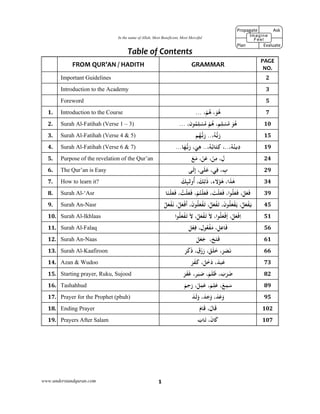
The words of the following table occur approximately 4,000 times
in the Qur'an!
Demonstrative pronounsInterrogative particles
‫ا‬َ‫ﺬ‬ٰ‫ﻫ‬this‫؟‬ْ‫ﻦ‬َ‫ﻣ‬who
ِ‫ء‬‫ﻵ‬ُ ٰ‫ﻫ‬these‫ﺎ؟‬َ‫ﻣ‬what, that which
َ‫ﻚ‬ِ‫ﻟ‬ٰ‫ذ‬that‫؟‬ َ‫ﻒ‬ْ‫ﻴ‬َ‫ﻛ‬how, as
َ‫ﻚ‬ ٰ‫ـ‬‫ﻟ‬w
ُ
‫أ‬those‫؟‬ْ‫ﻢ‬َ‫ﻛ‬how much
‫ي‬ِ‫ﺬ‬‫اﻟ‬the one who‫؟‬‫ي‬
َ
‫أ‬which one
َ‫ﻦ‬‫ﻳ‬ِ‫ﺬ‬‫اﻟ‬those who‫ا‬َ‫ﺎذ‬َ‫ﻤ‬ِ‫ﻟ‬‫؟‬whyَ‫ﻦ‬ْ‫ﻳ‬
َ
‫أ‬Where
Contact Numbers: 0091-40 2351 1371 : 0091- 965 243 0971
www.understandquran.com 1
In the name of Allah, Most Beneficent, Most Merciful
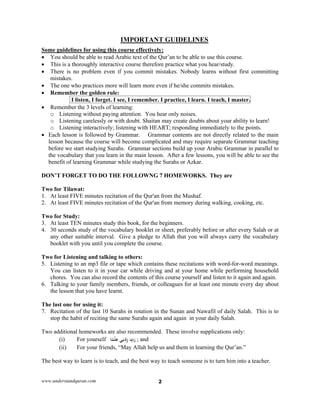
Table of Contents 
FROM QUR’AN / HADITH  GRAMMAR 
PAGE 
NO. 
  Important Guidelines 2	
  Introduction to the Academy 3	
	 Foreword 5	
1. 	 Introduction to the Course ... ،ْ‫ﻢ‬ُ‫ﻫ‬ ،َ‫ﻮ‬ُ‫ﻫ‬ 7	
2. 	 Surah Al-Fatihah (Verse 1 – 3) ... ،‫ن‬ ُ‫ﻤ‬ِ‫ﻠ‬ْ‫ﺴ‬ُ‫ﻣ‬ ْ‫ﻢ‬ُ‫ﻫ‬ ،‫ﻢ‬ِ‫ﻠ‬ْ‫ﺴ‬ُ‫ﻣ‬ َ‫ﻮ‬ُ‫ﻫ‬ 10	
3. 	 Surah Al-Fatihah (Verse 4 & 5) ‫ﻢ‬ُ‫ﻬ‬‫ﺑ‬َ‫ر‬ ..،ُ‫ﻪ‬‫ﺑ‬َ‫ر‬ 15	
4. 	 Surah Al-Fatihah (Verse 6 & 7) ...‫ﺎ‬َ‫ﻬ‬‫ﺑ‬َ‫ر‬ ،َ‫ﻲ‬ِ‫ﻫ‬ ..،ُ‫ﻪ‬ُ‫ﺑ‬‫ﺎ‬َ‫ﺘ‬ِ‫ﻛ‬ ،..،ُ‫ﻪ‬ُ‫ﻳﻨ‬ِ‫د‬ 19	
5. 	 Purpose of the revelation of the Qur’an َ‫ﻊ‬َ‫ﻣ‬ ،ْ‫ﻦ‬َ‫ﻋ‬ ،ْ‫ﻦ‬ِ‫ﻣ‬ ،ِ‫ل‬ 24	
6. 	 The Qur’an is Easy ‫ﻰ‬َ‫ﻟ‬ِ‫إ‬ ،‫ﻰ‬َ‫ﻠ‬َ‫ﻋ‬ ،‫ﻲ‬ِ‫ﻓ‬ ، ِ‫ب‬ 29	
7. 	 How to learn it? َ‫ﻚ‬ ‫و‬
ُ
‫أ‬ ،َ‫ﻚ‬ِ‫ﻟ‬ٰ‫ذ‬ ،‫ﻻء‬ ٰ‫ﻫ‬ ،‫ا‬َ‫ﺬ‬ٰ‫ﻫ‬ 34	
8. 	 Surah Al-‘Asr ‫ﺎ‬َ‫ﻨ‬ْ‫ﻠ‬َ‫ﻌ‬َ‫ﻓ‬ ، ُ‫ﺖ‬ْ‫ﻠ‬َ‫ﻌ‬َ‫ﻓ‬ ،ْ‫ﻢ‬ُ‫ﺘ‬ْ‫ﻠ‬َ‫ﻌ‬َ‫ﻓ‬ ، َ‫ﺖ‬ْ‫ﻠ‬َ‫ﻌ‬َ‫ﻓ‬ ،‫ا‬ ُ‫ﻠ‬َ‫ﻌ‬َ‫ﻓ‬ ،َ‫ﻞ‬َ‫ﻌ‬َ‫ﻓ‬ 39	
9. 	 Surah An-Nasr ُ‫ﻞ‬َ‫ﻌ‬ْ‫ﻔ‬َ ،ُ‫ﻞ‬َ‫ﻌ‬ْ‫ﻓ‬
َ
‫أ‬ ،َ‫ن‬ ُ‫ﻠ‬َ‫ﻌ‬ْ‫ﻔ‬َ ،ُ‫ﻞ‬َ‫ﻌ‬ْ‫ﻔ‬َ ،َ‫ن‬ ُ‫ﻠ‬َ‫ﻌ‬ْ‫ﻔ‬َ ،ُ‫ﻞ‬َ‫ﻌ‬ْ‫ﻔ‬َ‫ﻳ‬ 45	
10.	 Surah Al-Ikhlaas ‫ا‬ ُ‫ﻠ‬َ‫ﻌ‬ْ‫ﻔ‬َ َ‫ﻻ‬ ،ْ‫ﻞ‬َ‫ﻌ‬ْ‫ﻔ‬َ َ‫ﻻ‬ ،‫ا‬ ُ‫ﻠ‬َ‫ﻌ‬ْ‫ﻓ‬َ‫إ‬ ،ْ‫ﻞ‬َ‫ﻌ‬ْ‫ﻓ‬ِ‫ا‬ 51	
11.	 Surah Al-Falaq ‫ﻞ‬ْ‫ﻌ‬ِ‫ﻓ‬ ،‫ل‬ ُ‫ﻌ‬ْ‫ﻔ‬َ‫ﻣ‬ ،‫ﻞ‬ِ‫ﻋ‬‫ﺎ‬َ‫ﻓ‬ 56	
12.	 Surah An-Naas َ‫ﻞ‬َ‫ﻌ‬َ‫ﺟ‬ ،َ‫ﺢ‬َ‫ﺘ‬َ‫ﻓ‬ 61	
13.	 Surah Al-Kaafiroon َ‫ﺮ‬َ‫כ‬َ‫ذ‬ ، َ‫ق‬َzَ‫ر‬ ،َ‫ﻖ‬َ‫ﻠ‬َ‫ﺧ‬ ،َ‫ﺮ‬َ‫ﺼ‬َ‫ﻧ‬ 66	
14.	 Azan & Wudoo َ‫ﺮ‬َ‫ﻔ‬َ‫ﻛ‬ ،َ‫ﻞ‬َ‫ﺧ‬َ‫د‬ ،َ‫ﺪ‬َ‫ﺒ‬َ‫ﻋ‬ 73	
15.	 Starting prayer, Ruku, Sujood َ‫ﺮ‬َ‫ﻔ‬َ‫ﻏ‬ ،‫ﺮ‬َ‫ﺒ‬َ‫ﺻ‬ ،َ‫ﻢ‬َ‫ﻠ‬َ‫ﻇ‬ ، َ‫ب‬َ‫ﺮ‬َ‫ﺿ‬ 82	
16.	 Tashahhud َ‫ﻢ‬ِ‫ﺣ‬َ‫ر‬ ،َ‫ﻞ‬ِ‫ﻤ‬َ‫ﻋ‬ ،َ‫ﻢ‬ِ‫ﻠ‬َ‫ﻋ‬ ،َ‫ﻊ‬ِ‫ﻤ‬َ‫ﺳ‬ 89	
17.	 Prayer for the Prophet (pbuh) َ‫ﺪ‬َ‫ﻟ‬َw ،َ‫ﺪ‬َ‫ﺟ‬َw ،َ‫ﺪ‬َ‫ﻋ‬َw 95	
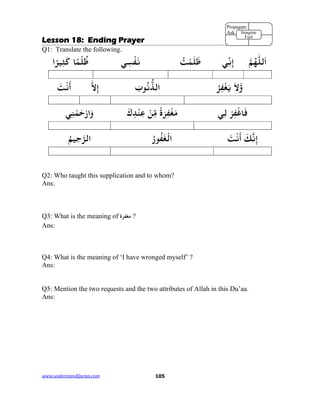
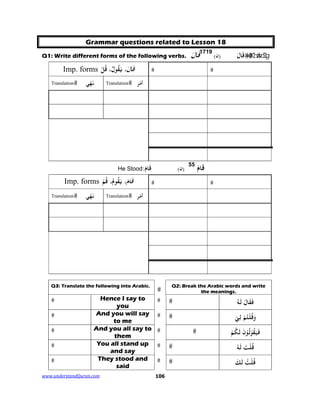
18.	 Ending Prayer َ‫ﺎم‬َ‫ﻗ‬ ،َ ‫ﺎ‬َ‫ﻗ‬ 102	
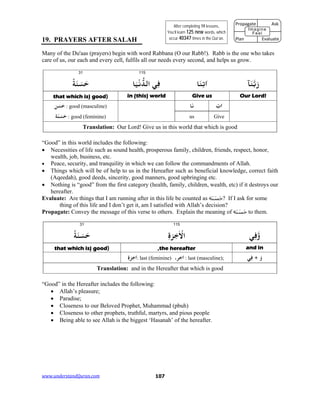
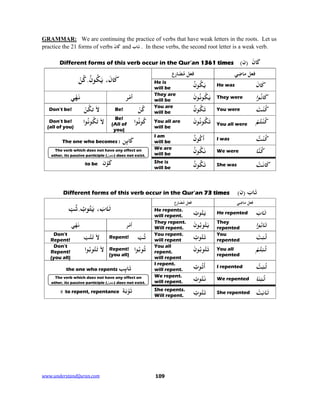
19.	 Prayers After Salam َ‫ﺎب‬َ ،َ‫ن‬ َ‫ﰷ‬ 107	
Propagate              Ask
 
Plan                Evaluate
Imagine
Feel
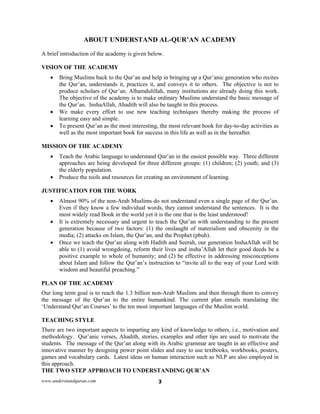
www.understandquran.com 2
IMPORTANT GUIDELINES
Some guidelines for using this course effectively:
 You should be able to read Arabic text of the Qur’an to be able to use this course.
 This is a thoroughly interactive course therefore practice what you hear/study.
 There is no problem even if you commit mistakes. Nobody learns without first committing
mistakes.
 The one who practices more will learn more even if he/she commits mistakes.
 Remember the golden rule:
I listen, I forget. I see, I remember. I practice, I learn. I teach, I master.
 Remember the 3 levels of learning:
o Listening without paying attention. You hear only noises.
o Listening carelessly or with doubt. Shaitan may create doubts about your ability to learn!
o Listening interactively; listening with HEART; responding immediately to the points.
 Each lesson is followed by Grammar. Grammar contents are not directly related to the main
lesson because the course will become complicated and may require separate Grammar teaching
before we start studying Surahs. Grammar sections build up your Arabic Grammar in parallel to
the vocabulary that you learn in the main lesson. After a few lessons, you will be able to see the
benefit of learning Grammar while studying the Surahs or Azkar.
DON’T FORGET TO DO THE FOLLOWNG 7 HOMEWORKS. They are
Two for Tilawat:
1. At least FIVE minutes recitation of the Qur'an from the Mushaf.
2. At least FIVE minutes recitation of the Qur'an from memory during walking, cooking, etc.
Two for Study:
3. At least TEN minutes study this book, for the beginners.
4. 30 seconds study of the vocabulary booklet or sheet, preferably before or after every Salah or at
any other suitable interval. Give a pledge to Allah that you will always carry the vocabulary
booklet with you until you complete the course.
Two for Listening and talking to others:
5. Listening to an mp3 file or tape which contains these recitations with word-for-word meanings.
You can listen to it in your car while driving and at your home while performing household
chores. You can also record the contents of this course yourself and listen to it again and again.
6. Talking to your family members, friends, or colleagues for at least one minute every day about
the lesson that you have learnt.
The last one for using it:
7. Recitation of the last 10 Surahs in rotation in the Sunan and Nawafil of daily Salah. This is to
stop the habit of reciting the same Surahs again and again in your daily Salah.
Two additional homeworks are also recommended. These involve supplications only:
(i) For yourself ‫ﺎ‬ً‫ﻤ‬ْ‫ﻠ‬ِ‫ﻋ‬ ‫ﻲ‬ِ‫ﻧ‬ْ‫د‬ِz ِّ‫ب‬َ‫ر‬ ; and
(ii) For your friends, “May Allah help us and them in learning the Qur’an.”
The best way to learn is to teach, and the best way to teach someone is to turn him into a teacher.
www.understandquran.com 3
ABOUT UNDERSTAND AL-QUR’AN ACADEMY
A brief introduction of the academy is given below.
VISION OF THE ACADEMY
 Bring Muslims back to the Qur’an and help in bringing up a Qur’anic generation who recites
the Qur’an, understands it, practices it, and conveys it to others. The objective is not to
produce scholars of Qur’an. Alhamdulillah, many institutions are already doing this work.
The objective of the academy is to make ordinary Muslims understand the basic message of
the Qur’an. InshaAllah, Ahadith will also be taught in this process.
 We make every effort to use new teaching techniques thereby making the process of
learning easy and simple.
 To present Qur’an as the most interesting, the most relevant book for day-to-day activities as
well as the most important book for success in this life as well as in the hereafter.
MISSION OF THE ACADEMY
 Teach the Arabic language to understand Qur’an in the easiest possible way. Three different
approaches are being developed for three different groups: (1) children; (2) youth; and (3)
the elderly population.
 Produce the tools and resources for creating an environment of learning.
JUSTIFICATION FOR THE WORK
 Almost 90% of the non-Arab Muslims do not understand even a single page of the Qur’an.
Even if they know a few individual words, they cannot understand the sentences. It is the
most widely read Book in the world yet it is the one that is the least understood!
 It is extremely necessary and urgent to teach the Qur’an with understanding to the present
generation because of two factors: (1) the onslaught of materialism and obscenity in the
media; (2) attacks on Islam, the Qur’an, and the Prophet (pbuh).
 Once we teach the Qur’an along with Hadith and Seerah, our generation InshaAllah will be
able to (1) avoid wrongdoing, reform their lives and insha’Allah let their good deeds be a
positive example to whole of humanity; and (2) be effective in addressing misconceptions
about Islam and follow the Qur’an’s instruction to “invite all to the way of your Lord with
wisdom and beautiful preaching.”
PLAN OF THE ACADEMY
Our long term goal is to reach the 1.3 billion non-Arab Muslims and then through them to convey
the message of the Qur’an to the entire humankind. The current plan entails translating the
‘Understand Qur’an Courses’ to the ten most important languages of the Muslim world.
TEACHING STYLE
There are two important aspects to imparting any kind of knowledge to others, i.e., motivation and
methodology. Qur’anic verses, Ahadith, stories, examples and other tips are used to motivate the
students. The message of the Qur’an along with its Arabic grammar are taught in an effective and
innovative manner by designing power point slides and easy to use textbooks, workbooks, posters,
games and vocabulary cards. Latest ideas on human interaction such as NLP are also employed in
this approach.
THE TWO STEP APPROACH TO UNDERSTANDING QUR’AN
www.understandquran.com 4
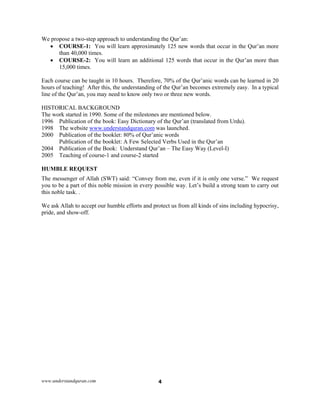
We propose a two-step approach to understanding the Qur’an:
 COURSE-1: You will learn approximately 125 new words that occur in the Qur’an more
than 40,000 times.
 COURSE-2: You will learn an additional 125 words that occur in the Qur’an more than
15,000 times.
Each course can be taught in 10 hours. Therefore, 70% of the Qur’anic words can be learned in 20
hours of teaching! After this, the understanding of the Qur’an becomes extremely easy. In a typical
line of the Qur’an, you may need to know only two or three new words.
HISTORICAL BACKGROUND
The work started in 1990. Some of the milestones are mentioned below.
1996 Publication of the book: Easy Dictionary of the Qur’an (translated from Urdu).
1998 The website www.understandquran.com was launched.
2000 Publication of the booklet: 80% of Qur’anic words
Publication of the booklet: A Few Selected Verbs Used in the Qur’an
2004 Publication of the Book: Understand Qur’an – The Easy Way (Level-I)
2005 Teaching of course-1 and course-2 started
HUMBLE REQUEST
The messenger of Allah (SWT) said: “Convey from me, even if it is only one verse.” We request
you to be a part of this noble mission in every possible way. Let’s build a strong team to carry out
this noble task. .
We ask Allah to accept our humble efforts and protect us from all kinds of sins including hypocrisy,
pride, and show-off.
www.understandquran.com 5
PREFACE
All Praise be to Allah, and peace and blessings be on His Messenger, Muhammad.
The Prophet (pbuh) said: “The best of you is the one who learns the Qur’an and teaches it (to
others).” In spite of this exhortation by the Prophet (pbuh), today the situation of Non-Arab
Muslims is that; almost 90% of them do not understand even a single page of the Qur’an.
InshaAllah, this course will help them learn the common recitations of Salah as well as the
fundamentals of Arabic Grammar that will be of great help in understanding the Qur’an.
One of the most distinguishing features of this course is that it is based on common recitations
instead of selections that are rarely used in everyday life. It is but natural to start the teaching of
Arabic using them. There are several advantages to this approach:
 A Muslim repeats almost 150 to 200 Arabic words or around 50 sentences everyday in
Salah. By understanding these sentences, he/she will be able to familiarize himself/herself
with the structure of the Arabic language without any special effort.
 He/she will have a golden chance to practice it daily by talking to Allah!
 He/she will start realizing the benefits from the first lesson itself.
 He/she can immediately feel the improvement in his/her Salah in terms of attention,
concentration, and attachment with Allah.
Another important feature of this course is the way the Arabic Grammar is taught. Since the
purpose of this course is to help them understand the Qur’an through translation, more attention is
given in this course on “Tasreef” (word construction from a root). A new simple yet powerful
technique of TPI (Total Physical Interaction) is introduced to teach different forms of verbs, nouns,
and pronouns. Please note that this is an introductory course and you can surely read advanced
books on Arabic Grammar at a later stage.
By the end of this course, you will learn 125 words that occur in the Qur’an more than 40,000 times
(out of approximately 78,000 words). In other words, you will know almost 50% of the Qur’anic
words. This does not mean that you will be able to understand 50% of the Qur’an because you may
still have new words in almost every verse. However, the understanding of the Qur’an will become
extremely easy after this course.
Dr. Abdulazeez has taught this course in the following countries:
 INDIA: In major cities in India including Hyderabad, Madras, Mumbai, Bangalore,
Delhi, Pune, Aurangabad, Azamgarh, Baraily, Bidar, etc.
 SAUDI ARABIA: In Makkah Mukarramah (two times), Jeddah, Riyadh, Dammam, Al-
Khobar, Khafji, and Abha.
 GULF STATES: Several times in Bahrain, Dubai, and Kuwait.
 ENGLAND: In London, Riding, Manchester, Birmingham and Edinburgh.
 SOUTH AFRICA: In Durban, the city of Shaikh Ahmed Deedat, and in Pretoria.
It is also being taught in many other countries by people who have learned the same on their own or
from Dr. Abdulazeez Abdulraheem. Such countries include US, Canada, UK, Pakistan, Sweden,
Ivory Coast, Malaysia, Indonesia, Germany, France, etc.
Translations of the Course: The course has been translated into Urdu, Bengali, Turkish, French,
Spanish, Indonesian, Chinese, Bosnian, Portuguese, Hindi, Malayalam, Tamil, and Telugu.
Propagate              Ask
 
Plan                Evaluate
Imagine
Feel
www.understandquran.com 6
On Television: The course has been relayed on the Peace TV Global Network Channel and the
International ETV Urdu channel. Local TV Channels of Hyderabad such as Channel 4 and others
have also broadcasted this course in Ramadan.
On the Internet (www.understandquran.com): Thousands of email recipients in the US,
Canada, UK, Turkey, Malaysia, Indonesia, Bangladesh, South Africa, and hundreds of other
countries have benefitted from Course-1. The website is visited by tens of thousands of people
every month. The site is listed among the top, most often the first, by Google when you search
using words such as “Learn Qur’an,” “Understand Qur’an,” or “Qur’anic Arabic.” People in
different countries such as US, Canada, UK, etc have already started offering it in their gatherings.
It is considered to be one of the most popular websites for teaching the meaning of the Qur’an,
globally.
InshaAllah, you will find this course easy, interesting, and effective in terms of learning. May
Allah accept our humble efforts. We request you to introduce this course in every mosque, school,
madrassah, organization, locality, and family that you know so that a trend is introduced in this
Ummah to understand the Salah as well as the Qur’an.
Please note that the brackets “( )” in the translation indicate the added words for better
understanding. The square brackets “[ ]” in the translation are used for those words which are there
in Arabic but are not translated into English. They are also used for showing references from the
Qur’an or Hadith.
May Allah forgive our mistakes. Please let us know if you find any, so that our future editions are
free from them.
Abdulazeez Abdulraheem (abdulazeez@understandquran.com)
November 24, 2010.
www.understandquran.com 7
LESSON-1: INTRODUCTION
OBJECTIVES OF THIS COURSE:
 To make the understanding of the Qur’an easy
 To pray Salah effectively and get the effects in our lives
 To encourage you to recite Qur’an again and again with understanding
 To help in interacting with the Qur’an, i.e., how to bring it into our lives
 To generate the team spirit to work for the good
UNDERSTANDING QUR’AN VS LEARNING ARABIC LANGUAGE:
There are three special features of this course:
1: We start from Salah because we spend almost an hour in performing the 5 prayers
2: We focus on listening and reading, because we recite and listen to the Qur’an daily
3: We focus more on vocabulary, because it is a natural approach, the way a kid learns.
GRAMMAR:
In this lesson we will learn 6 words: َ‫ﻮ‬ُ‫ﻫ‬،ُ‫ﻦ‬ْ‫ﺤ‬َ ،‫ﺎ‬َ‫ﻧ‬
َ
‫أ‬ ،ْ‫ﻢ‬ُ‫ﺘ‬ْ‫ﻧ‬
َ
‫أ‬ ، َ‫ﺖ‬ْ‫ﻧ‬
َ
‫أ‬ ،ْ‫ﻢ‬ُ‫ﻫ‬ . These six words occur 1295 times in
the Qur’an! Learn these words using TPI (Total Physical Interaction), i.e., using all your senses.
You hear it, see it, think over it, say it, and show it. Make sure that you don’t neglect it and do this
practice with full attention and love.
1. When you say َ‫ﻮ‬ُ‫ﻫ‬ (He), point the index finger of the right hand towards your right as if that
person is sitting on your right. When you say ْ‫ﻢ‬ُ‫ﻫ‬ (They), point all the four fingers of your
right hand towards your right. In a class, both the teacher and the student should practice
this together.
2. When you say َ‫ﺖ‬ْ‫ﻧ‬
َ
‫أ‬ (You), point the index finger of your right hand in front as if you are
pointing someone sitting in front of you. When you say ْ‫ﻢ‬ُ‫ﺘ‬ْ‫ﻧ‬
َ
‫أ‬ (All of you), point all the four
fingers to the front. In a class, the teacher should point his fingers towards the students and
the students should point their fingers towards the teacher.
3. When you say ‫ﺎ‬َ‫ﻧ‬
َ
‫أ‬ (I), point the index finger of your right hand towards yourself. When you
say ُ‫ﻦ‬ْ‫ﺤ‬َ‫ﻧ‬ (we) point all the four fingers of your right hand towards yourself.
Guidelines for Practice: For the first 3 times, practice these 6
forms with translation, i.e., just show and say َ‫ﻮ‬ُ‫ﻫ‬ he, ْ‫ﻢ‬ُ‫ﻫ‬
they, َ‫ﺖ‬ْ‫ﻧ‬
َ
‫أ‬ you, ْ‫ﻢ‬ُ‫ﺘ‬ْ‫ﻧ‬
َ
‫أ‬ you all, ‫ﺎ‬َ‫ﻧ‬
َ
‫أ‬ I, ُ‫ﻦ‬ْ‫ﺤ‬َ‫ﻧ‬ we. Since you will be
showing what you mean by your hand, you don’t need to
translate each of them after 3 cycles. Just say it in Arabic, i.e.,
،‫ﺎ‬َ‫ﻧ‬
َ
‫أ‬ ،ْ‫ﻢ‬ُ‫ﺘ‬ْ‫ﻧ‬
َ
‫أ‬ ، َ‫ﺖ‬ْ‫ﻧ‬
َ
‫أ‬ ،ْ‫ﻢ‬ُ‫ﻫ‬ ،َ‫ﻮ‬ُ‫ﻫ‬ُ‫ﻦ‬ْ‫ﺤ‬َ . This is the immediate benefit
of using TPI, among many others.
Continue the above steps without translating these words.
Just five minutes of your practice using TPI will make the
learning of these six words extremely easy!!!
At this point, don’t worry about learning the terminologies
(first person, singular, pronoun etc.). Just focus on these six
words and their meanings.
Detached / Personal
Pronouns
No. Person
He َ‫ﻮ‬ُ‫ﻫ‬ 481 sr.
(singular)
3rd
(Third person)
They ْ‫ﻢ‬ُ‫ﻫ‬ 444 pl.
(Plural)
You َ‫ﺖ‬ْ‫ﻧ‬
َ
‫أ‬ 81 sr.
(singular)
2nd
(Second person)you
all
ْ‫ﻢ‬ُ‫ﺘ‬ْ‫ﻧ‬
َ
‫أ‬ 135 pl.
(Plural)
I ‫ﺎ‬َ‫ﻧ‬
َ
‫أ‬ 68 sr.
(singular)
1st
(First person)
We ُ‫ﻦ‬ْ‫ﺤ‬َ‫ﻧ‬ 86
dl. (dual)
pl.
(Plural)
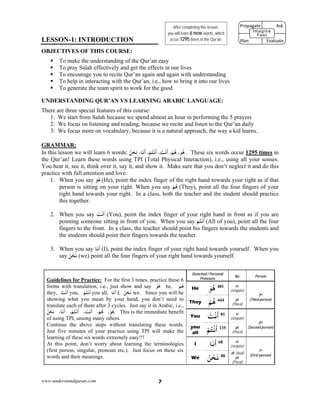
After completing this lesson,
you will learn 6 new words, which
occur 1295 times in the Qur’an.
Propagate              Ask
 
Plan                Evaluate
Imagine
Feel
www.understandquran.com 8
Lesson 1: Introduction
Q1: How many words and roots are there in the Qur’an?
Ans:
Q2: What are the objectives of this course?
Ans:
Q3: What are the benefits, we earn by starting this course with Salah?
Ans:
Q4: In this course, there is more emphasis on vocabulary than on Grammar! Why?
Ans:
Q5: Is this course, is the emphasis on recitation and listening or on writing and
speaking the Arabic language? Why?
Ans:
Propagate              Ask
 
Plan                Evaluate
Imagine
Feel
www.understandquran.com 9
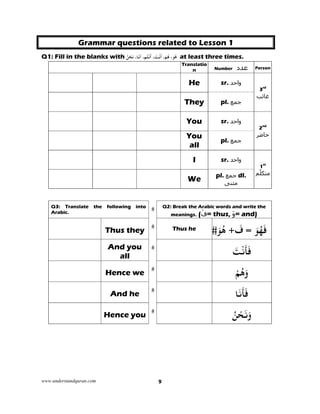
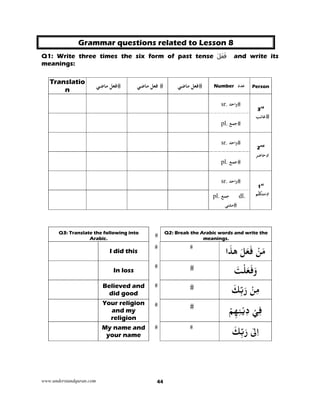
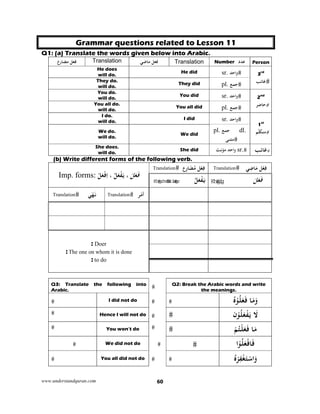
Grammar questions related to Lesson 1
Q1: Fill in the blanks with ‫ﻢ‬ُ‫ﺘ‬ْ‫ﻧ‬
َ
‫أ‬ ، َ‫ﺖ‬ْ‫ﻧ‬
َ
‫أ‬ ،ْ‫ﻢ‬ُ‫ﻫ‬ ،َ‫ﻮ‬ُ‫ﻫ‬ُ‫ﻦ‬ْ‫ﺤ‬َ ،‫ﺎ‬َ‫أﻧ‬ ، at least three times.
Translatio
n ‫عدد‬Number Person
He sr. ‫واحد‬
3rd
‫غائب‬
They pl. ‫جمع‬
You sr. ‫واحد‬
2nd
‫حاضر‬You
all
pl. ‫جمع‬
I sr. ‫واحد‬
1st
‫ّم‬‫ل‬‫متك‬
We
pl. ‫جمع‬ dl.
‫مثنى‬
Q2: Break the Arabic words and write the
meanings. (َ‫=ف‬ thus, َ‫و‬= and)
Q3: Translate the following into
Arabic.
= َ‫ﻮ‬ُ‫ﻬ‬َ‫ﻓ‬َ‫ﻮ‬ُ‫ﻫ‬ + َ‫ف‬Thus heThus they
َ‫ﺖ‬ْ‫ﻧ‬
َ
‫ﺄ‬َ‫ﻓ‬And you
all
ْ‫ﻢ‬ُ‫ﻫ‬َwHence we
‫ﺎ‬َ‫ﻧ‬
َ
‫ﺄ‬َ‫ﻓ‬And he
ُ‫ﻦ‬ْ‫ﺤ‬َ‫ﻧ‬َwHence you
www.understandquran.com 10
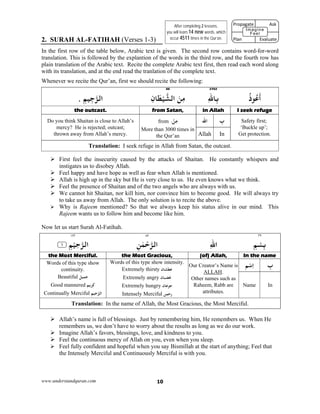
2. SURAH AL-FATIHAH (Verses 1-3)
In the first row of the table below, Arabic text is given. The second row contains word-for-word
translation. This is followed by the explantion of the words in the third row, and the fourth row has
plain translation of the Arabic text. Recite the complete Arabic text first, then read each word along
with its translation, and at the end read the tranlation of the complete text.
Whenever we recite the Qur’an, first we should recite the following:
270288
ُ‫ذ‬ ُ‫ﻋ‬
َ
‫أ‬ِ‫ﷲ‬‫ﺎ‬ِ‫ﺑ‬ِ‫ن‬‫ﺎ‬َ‫ﻄ‬ْ‫ﻴ‬‫اﻟﺸ‬ َ‫ﻦ‬ِ‫ﻣ‬ِ‫ﻢ‬‫ِﻴ‬‫ﺟ‬‫اﻟﺮ‬.
I seek refugein Allahfrom Satan,the outcast.
Safety first;
‘Buckle up’;
Get protection.
ِ‫ب‬‫اﷲ‬ْ‫ﻦ‬ِ‫ﻣ‬:from
More than 3000 times in
the Qur’an
Do you think Shaitan is close to Allah’s
mercy? He is rejected; outcast;
thrown away from Allah’s mercy. InAllah
Translation: I seek refuge in Allah from Satan, the outcast.
 First feel the insecurity caused by the attacks of Shaitan. He constantly whispers and
instigates us to disobey Allah.
 Feel happy and have hope as well as fear when Allah is mentioned.
 Allah is high up in the sky but He is very close to us. He even knows what we think.
 Feel the presence of Shaitan and of the two angels who are always with us.
 We cannot hit Shaitan, nor kill him, nor convince him to become good. He will always try
to take us away from Allah. The only solution is to recite the above.
 Why is Rajeem mentioned? So that we always keep his status alive in our mind. This
Rajeem wants us to follow him and become like him.
Now let us start Surah Al-Fatihah.
٣٩٥٧١٨٢
ِ‫ﻢ‬ْ‫ﺴ‬ِ‫ﺑ‬ِ‫ﷲ‬‫ا‬ٰ‫ﻤ‬ْ‫ﺣ‬‫اﻟﺮ‬ِ‫ﻦ‬٪﴿ ِ‫ﻢ‬ْ‫ﻴ‬ِ‫ﺣ‬‫اﻟﺮ‬١٪﴾
In the name(of) Allah, the Most Gracious,the Most Merciful.  
ِ‫ب‬‫ﻢ‬ْ‫ﺳ‬ِ‫ا‬Our Creator’s Name is
ALLAH.
Other names such as
Raheem, Rabb are
attributes.
Words of this type show intensity.
Extremely thirsty ‫ﻋﻄﺸﺎن‬
Extremely angry ‫ﻏﻀﺒﺎن‬
Extremely hungry ‫ﻋﺎن‬ ‫ﺟ‬
Intensely Merciful ‫ﺣﻤﻦ‬r
Words of this type show
continuity.
Beautiful ‫ﺟﻤﻴﻞ‬
Good mannered ‫ﻛﺮﻳﻢ‬
Continually Merciful ِ‫ﻢ‬‫ﻴ‬ِ‫ﺣ‬‫اﻟﺮ‬
InName
Translation: In the name of Allah, the Most Gracious, the Most Merciful.
 Allah’s name is full of blessings. Just by remembering him, He remembers us. When He
remembers us, we don’t have to worry about the results as long as we do our work.
 Imagine Allah’s favors, blessings, love, and kindness to you.
 Feel the continuous mercy of Allah on you, even when you sleep.
 Feel fully confident and hopeful when you say Bismillah at the start of anything; Feel that
the Intensely Merciful and Continuously Merciful is with you.
After completing 2 lessons,
you will learn 14 new words, which
occur 4511 times in the Qur’an.
Propagate              Ask
 
Plan                Evaluate
Imagine
Feel
www.understandquran.com 11
٤٣73
ُ‫ﺪ‬ْ‫ﻤ‬َ‫ﺤ‬ْ‫ﻟ‬َ‫ا‬ِ ِ‫ﷲ‬ِّ‫ب‬َ‫ر‬٪﴿ َ‫ﻦ‬ْ‫ﻴ‬ِ‫ﻤ‬َ‫ﻠ‬ٰ‫ﻌ‬ْ‫اﻟ‬٢m٪﴾
All the praises and thanksbe to Allahthe Lord of the worlds 
ُ‫ﺪ‬ْ‫ﻤ‬َ‫ﺣ‬Two meanings of
All Praises and thanks
ِ‫ل‬‫اﷲ‬
Takes care of us &
helps us grow.
Every cell of
billions of cells.
‫ﻢ‬َ‫ﺎﻟ‬َ‫ﻋ‬world
‫ﻴﻦ‬ِ‫ﻤ‬َ‫ﺎﻟ‬َ‫ﻋ‬worlds
Imagine billions of people; trillions
of insects; zillions of galaxies
ForAllah
be to Allah
Translation: All the praises and thanks be to Allah, the Lord of the worlds.
 Praise Him with your heart, that He is the Greatest, the Most Merciful, etc.
 Thank Him for the blessings. Think of something. He gave you the safety, the food that
you ate, and the chance to pray to Him, etc.
 Imagine and feel His Greatness. He is the Rabb of the world of humans, world of angels, of
Jinns, of galaxies, and Allah knows what else.
 Evaluate: How many times did I get influenced by this world and forget to say “All praises
belong to Allah”? How many times do I remember Him and thank Him?
ِ‫ﻦ‬ٰ‫ﻤ‬ْ‫ﺣ‬‫اﻟﺮ‬ِ‫ﻢ‬ْ‫ﻴ‬ِ‫ﺣ‬‫اﻟﺮ‬٪﴿٣m٪﴾
The Most GraciousThe Most Merciful
Translation: The Most Gracious, the Most Merciful.
 These words are already explained in Bismillah.
 Allah is intensely Merciful. Simultaneously, His Mercy is continuous also.
 Feel His Mercy on you in terms of His continuous blessings even after some of us disobey
Him.
 Be merciful to your family, friends, neighbours, and colleagues. Do it today and everyday
you hear or recite this verse. The Prophet (pbuh) said: “He who does not show mercy to
others will not be shown mercy (by Allah).” [Bukhari].
www.understandquran.com 12
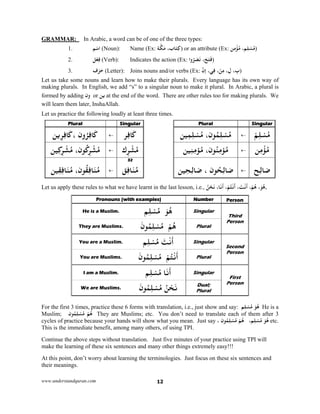
GRAMMAR: In Arabic, a word can be of one of the three types:
1. ‫ﻢ‬ْ‫ﺳ‬‫ا‬ (Noun): Name (Ex: ‫ﺔ‬‫ﻜ‬َ‫ﻣ‬ ،‫ﺎب‬َ‫ﺘ‬ِ‫ﻛ‬) or an attribute (Ex: ‫ﻦ‬ِ‫ﻣ‬ْ ُ‫ﻣ‬ ،‫ﻢ‬ِ‫ﻠ‬ْ‫ﺴ‬ُ‫ﻣ‬)
2. ‫ﻞ‬ْ‫ﻌ‬ِ‫ﻓ‬ (Verb): Indicates the action (Ex: ‫ا‬wُ‫ﺮ‬َ‫ﺼ‬َ ،َ‫ﺢ‬َ‫ﺘ‬َ‫ﻓ‬)
3. ‫ف‬ْ‫ﺮ‬َ‫ﺣ‬ (Letter): Joins nouns and/or verbs (Ex: ِ‫ﻣ‬ ،ِ‫ل‬ ، ِ‫ب‬ّ‫إن‬ ،‫ﻲ‬ِ‫ﻓ‬ ،ْ‫ﻦ‬ )
Let us take some nouns and learn how to make their plurals. Every language has its own way of
making plurals. In English, we add “s” to a singular noun to make it plural. In Arabic, a plural is
formed by adding ‫ن‬w or ‫ﻳﻦ‬ at the end of the word. There are other rules too for making plurals. We
will learn them later, InshaAllah.
Let us practice the following loudly at least three times.
Plural Singular Plural Singular
‫ﻳﻦ‬ِ‫ﺮ‬ِ‫ﻓ‬ َ‫،ﰷ‬ ‫ن‬wُ‫ﺮ‬ِ‫ﻓ‬ َ‫ﰷ‬  ‫ﺮ‬ِ‫ﻓ‬ َ‫ﰷ‬ ‫ﻴﻦ‬ِ‫ﻤ‬ِ‫ﻠ‬ْ‫ﺴ‬ُ‫ﻣ‬ ،‫ن‬ ُ‫ﻤ‬ِ‫ﻠ‬ْ‫ﺴ‬ُ‫ﻣ‬  ْ‫ﻢ‬ِ‫ﻠ‬ْ‫ﺴ‬ُ‫ﻣ‬
‫ﻴﻦ‬ِ‫ﻛ‬ِ‫ﺮ‬ْ‫ﺸ‬ُ‫ﻣ‬ ،‫ن‬ ُ‫ﻛ‬ِ‫ﺮ‬ْ‫ﺸ‬ُ‫ﻣ‬  ‫ك‬ِ ْ‫ﺸ‬ُ‫ﻣ‬ ‫ﻴﻦ‬ِ‫ﻨ‬ِ‫ﻣ‬ ُ‫ﻣ‬ ،‫ن‬ ُ‫ﻨ‬ِ‫ﻣ‬ ُ‫ﻣ‬  ‫ﻦ‬ِ‫ﻣ‬ْ ُ‫ﻣ‬
32
‫ﻴﻦ‬ِ‫ﻘ‬ِ‫ﻓ‬‫ﺎ‬َ‫ﻨ‬ُ‫ﻣ‬ ،‫ن‬ ُ‫ﻘ‬ِ‫ﻓ‬‫ﺎ‬َ‫ﻨ‬ُ‫ﻣ‬  ‫ﻖ‬ِ‫ﻓ‬‫ﺎ‬َ‫ﻨ‬ُ‫ﻣ‬ ‫ﻴﻦ‬ِ‫ﺤ‬ِ‫ﻟ‬‫ﺎ‬َ‫ﺻ‬ ، ‫ن‬ ُ‫ﺤ‬ِ‫ﻟ‬‫ﺎ‬َ‫ﺻ‬  ‫ﺢ‬ِ‫ﻟ‬‫ﺎ‬َ‫ﺻ‬
Let us apply these rules to what we have learnt in the last lesson, i.e., ،‫ﺎ‬َ‫ﻧ‬
َ
‫أ‬ ،ْ‫ﻢ‬ُ‫ﺘ‬ْ‫ﻧ‬
َ
‫أ‬ ، َ‫ﺖ‬ْ‫ﻧ‬
َ
‫أ‬ ،ْ‫ﻢ‬ُ‫ﻫ‬ ،َ‫ﻮ‬ُ‫ﻫ‬ُ‫ﻦ‬ْ‫ﺤ‬َ .
Pronouns (with examples) Number Person
He is a Muslim. ‫ﻢ‬ِ‫ﻠ‬ْ‫ﺴ‬ُ‫ﻣ‬ َ‫ﻮ‬ُ‫ﻫ‬ Singular
Third
Person
They are Muslims. َ‫ن‬ ُ‫ﻤ‬ِ‫ﻠ‬ْ‫ﺴ‬ُ‫ﻣ‬ ْ‫ﻢ‬ُ‫ﻫ‬ Plural
You are a Muslim. ‫ﻢ‬ِ‫ﻠ‬ْ‫ﺴ‬ُ‫ﻣ‬ َ‫ﺖ‬ْ‫ﻧ‬
َ
‫أ‬ Singular
Second
Person
You are Muslims. َ‫ن‬ ُ‫ﻤ‬ِ‫ﻠ‬ْ‫ﺴ‬ُ‫ﻣ‬ ْ‫ﻢ‬ُ‫ﺘ‬ْ‫ﻧ‬
َ
‫أ‬ Plural
I am a Muslim. ‫ﻢ‬ِ‫ﻠ‬ْ‫ﺴ‬ُ‫ﻣ‬ ‫ﺎ‬َ‫ﻧ‬
َ
‫أ‬ Singular
First
Person
We are Muslims. َ‫ن‬ ُ‫ﻤ‬ِ‫ﻠ‬ْ‫ﺴ‬ُ‫ﻣ‬ ُ‫ﻦ‬ْ‫ﺤ‬َ‫ﻧ‬ Dual;
Plural
For the first 3 times, practice these 6 forms with translation, i.e., just show and say: َ‫ﻮ‬ُ‫ﻫ‬‫ﻢ‬ِ‫ﻠ‬ْ‫ﺴ‬ُ‫ﻣ‬ He is a
Muslim; ‫ن‬ ُ‫ﻤ‬ِ‫ﻠ‬ْ‫ﺴ‬ُ‫ﻣ‬ ْ‫ﻢ‬ُ‫ﻫ‬ They are Muslims; etc. You don’t need to translate each of them after 3
cycles of practice because your hands will show what you mean. Just say ، ‫ن‬ ُ‫ﻤ‬ِ‫ﻠ‬ْ‫ﺴ‬ُ‫ﻣ‬ ْ‫ﻢ‬ُ‫ﻫ‬ ،‫ﻢ‬ِ‫ﻠ‬ْ‫ﺴ‬ُ‫ﻣ‬ َ‫ﻮ‬ُ‫ﻫ‬ etc.
This is the immediate benefit, among many others, of using TPI.
Continue the above steps without translation. Just five minutes of your practice using TPI will
make the learning of these six sentences and many other things extremely easy!!!
At this point, don’t worry about learning the terminologies. Just focus on these six sentences and
their meanings.
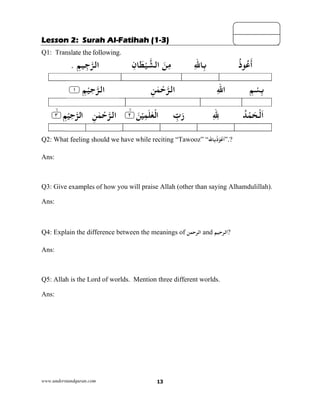
www.underst
Lesson
Q1: Tran
ِ‫ﻢ‬٪﴿٣m٪﴾
Q2: Wha
Ans:
Q3: Give
Ans:
Q4: Expl
Ans:
Q5: Allah
Ans:
tandquran.com
n 2: Sur
nslate the
ِ‫ﻢ‬‫ِﻴ‬‫ﺟ‬‫ﺮ‬.
٪﴿ ِ‫ﻢ‬ْ‫ﻴ‬ِ‫ﺣ‬١٪﴾
‫ﻦ‬ِ‫ﻢ‬ْ‫ﻴ‬ِ‫ﺣ‬‫اﻟﺮ‬
at feeling s
e examples
ain the dif
h is the Lo
m
rah Al-F
following
‫اﻟﺮ‬
ِ‫ﺣ‬‫اﻟﺮ‬
ِ‫ﻦ‬ٰ‫ﻤ‬ْ‫ﺣ‬‫اﻟﺮ‬
should we
s of how y
fference b
ord of wor
Fatihah
g.
ِ‫ن‬‫ﺎ‬َ‫ﻄ‬ْ‫ﻴ‬
٪﴿ َ‫ﻦ‬ْ‫ﻴ‬ِ‫ﻤ‬٢m٪﴾
have whi
you will pr
between th
rlds. Men
13
h (1-3)
ْ‫ﻴ‬‫اﻟﺸ‬ َ‫ﻦ‬ِ‫ﻣ‬
ِ‫ﻦ‬ٰ‫ﻤ‬ْ‫ﺣ‬‫ﻟﺮ‬
ِ‫ﻤ‬َ‫ﻠ‬ٰ‫ﻌ‬ْ‫اﻟ‬
le reciting
raise Allah
he meaning
ntion three
ِ‫ﷲ‬
‫اﻟ‬
ِّ‫ب‬َ‫ر‬
g “Tawooz
h (other th
gs of ‫ﺣﻤﻦ‬ ‫ﻟ‬
different
‫ﺎﷲ‬ِ‫ﺑ‬
ِ‫ﷲ‬‫ا‬
ِ ِ‫ﷲ‬
z” “‫ِﺎﷲ‬‫ﺑ‬ْ‫ذ‬ْ ُ‫ﻋ‬َ‫”ا‬
han saying
‫اﻟ‬ and ‫ﺣﻴﻢ‬ ‫ﻟ‬
worlds.
ُ‫ذ‬ ُ‫ﻋ‬
َ
‫أ‬
ِ‫ﻢ‬
ُ‫ﺪ‬ْ‫ﻤ‬
”.?
g Alhamdu
‫?اﻟ‬
Propagat
 
Plan        
Im
َ
‫أ‬
ِ‫ﻢ‬ْ‫ﺴ‬ِ‫ﺑ‬
‫ﻤ‬َ‫ﺤ‬ْ‫ﻟ‬َ‫ا‬
ulillah).
te              Ask
        Evaluate
magine
Feel
www.understandquran.com 14
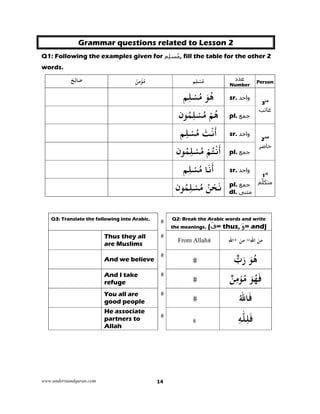
Grammar questions related to Lesson 2
Q1: Following the examples given for ‫م‬ِ‫ل‬‫س‬ُ‫م‬, fill the table for the other 2
words.
ْ‫ﺢ‬ِ‫ﻟ‬‫ﺎ‬َ‫ﺻ‬ ْ‫ﻦ‬ِ‫ﻣ‬ْ ُ‫ﻣ‬ ‫ﻢ‬ِ‫ﻠ‬ْ‫ﺴ‬ُ‫ﻣ‬ ‫عدد‬
Number
Person
‫ﻢ‬ِ‫ﻠ‬ْ‫ﺴ‬ُ‫ﻣ‬ َ‫ﻮ‬ُ‫ﻫ‬ sr. ‫واحد‬
3rd
‫غائب‬
‫ن‬ ُ‫ﻤ‬ِ‫ﻠ‬ْ‫ﺴ‬ُ‫ﻣ‬ ْ‫ﻢ‬ُ‫ﻫ‬ pl. ‫جمع‬
‫ﻢ‬ِ‫ﻠ‬ْ‫ﺴ‬ُ‫ﻣ‬ َ‫ﺖ‬ْ‫ﻧ‬
َ
‫أ‬ sr. ‫واحد‬
2nd
‫حاضر‬
‫ن‬ ُ‫ﻤ‬ِ‫ﻠ‬ْ‫ﺴ‬ُ‫ﻣ‬ ْ‫ﻢ‬ُ‫ﺘ‬ْ‫ﻧ‬
َ
‫أ‬ pl. ‫جمع‬
‫ﻢ‬ِ‫ﻠ‬ْ‫ﺴ‬ُ‫ﻣ‬ ‫ﺎ‬َ‫ﻧ‬
َ
‫أ‬ sr. ‫واحد‬
1st
‫ّم‬‫ل‬‫متك‬
‫ن‬ ُ‫ﻤ‬ِ‫ﻠ‬ْ‫ﺴ‬ُ‫ﻣ‬ ُ‫ﻦ‬ْ‫ﺤ‬َ‫ﻧ‬ pl. ‫جمع‬
dl. ‫مثنى‬
Q2: Break the Arabic words and write
the meanings. (َ‫=ف‬ thus, َ‫و‬= and)
Q3: Translate the following into Arabic.
ِ‫ﷲ‬‫ا‬ َ‫ﻦ‬ِ‫ﻣ‬=َ‫ﻦ‬ِ‫ﻣ‬+ِ‫ﷲ‬‫ا‬From Allah
Thus they all
are Muslims
‫ب‬َ‫ر‬ َ‫ﻮ‬ُ‫ﻫ‬And we believe
ٌ‫ﻦ‬ِ‫ﻣ‬ْ ُ‫ﻣ‬ َ‫ﻮ‬ُ‫ﻬ‬َ‫ﻓ‬And I take
refuge
ُ‫ﷲ‬‫ﺎ‬َ‫ﻓ‬You all are
good people
‫ﻠ‬ِ‫ﻠ‬َ‫ﻓ‬ِ‫ﻪ‬
He associate
partners to
Allah
www.understandquran.com 15
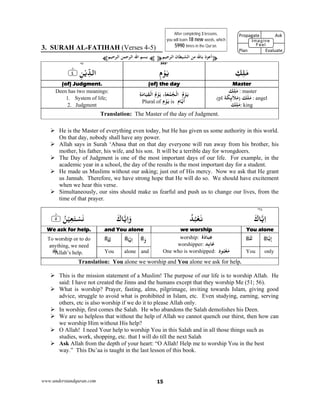
3. SURAH AL-FATIHAH (Verses 4-5)
¥‫ﺟﻴﻢ‬ ‫اﻟ‬ ‫اﻟﺸﻴﻄﺎن‬ ‫ﻣﻦ‬ ‫ﺎﷲ‬ ‫ذ‬ ‫أﻋ‬¥¤‫ﺣﻴﻢ‬ ‫اﻟ‬ ‫ﺣﻤﻦ‬ ‫اﻟ‬ ‫اﷲ‬ ‫ﺑﺴﻢ‬¤
393*٩٢
ٰ‫ﻣ‬ِ‫ﻚ‬ِ‫ﻠ‬ِ‫م‬ْ‫ﻮ‬َ‫ﻳ‬ِ‫ﻦ‬ْ‫ﻳ‬ِّ‫اﻟﺪ‬٪﴿٤ؕ٪﴾
Master(of) the day(of) Judgment.
ٰ‫ﻣ‬‫ﻚ‬ِ‫ﻠ‬ : master
: angel‫ﻚ‬َ‫ﻠ‬َ‫ﻣ‬‫ﺔ‬َ‫ﻜ‬ِ‫ئ‬َ‫ﻼ‬َ‫ﻣ‬)pl(
: king‫ﻚ‬ِ‫ﻠ‬َ‫ﻣ‬
َ‫ﻳ‬ِ‫ﺔ‬َ‫ﻣ‬‫ﺎ‬َ‫ﻴ‬ِ‫ﻘ‬ْ‫اﻟ‬ ُ‫م‬ْ‫ﻮ‬َ ،ِ‫ﺔ‬َ‫ﻌ‬ُ‫ﻤ‬ُ‫ﺠ‬ْ‫اﻟ‬ ُ‫م‬ْ‫ﻮ‬
‫ﺎم‬‫ﻳ‬
َ
‫أ‬is‫م‬ْ‫ﻮ‬َ‫ﻳ‬Plural of
Deen has two meanings:
1. System of life;
2. Judgment
Translation: The Master of the day of Judgment.
 He is the Master of everything even today, but He has given us some authority in this world.
On that day, nobody shall have any power.
 Allah says in Surah ‘Abasa that on that day everyone will run away from his brother, his
mother, his father, his wife, and his son. It will be a terrible day for wrongdoers.
 The Day of Judgment is one of the most important days of our life. For example, in the
academic year in a school, the day of the results is the most important day for a student.
 He made us Muslims without our asking; just out of His mercy. Now we ask that He grant
us Jannah. Therefore, we have strong hope that He will do so. We should have excitement
when we hear this verse.
 Simultaneously, our sins should make us fearful and push us to change our lives, from the
time of that prayer.
٢٤*
َ‫ﺎك‬‫ﻳ‬ِ‫ا‬ُ‫ﺪ‬ُ‫ﺒ‬ْ‫ﻌ‬َ‫ﻧ‬َ‫ﺎك‬‫ﻳ‬ِ‫ا‬َw٪﴿ ُ‫ﻦ‬ْ‫ﻴ‬ِ‫ﻌ‬َ‫ﺘ‬ْ‫ﺴ‬َ٥ؕ٪﴾
You alonewe worshipand You aloneWe ask for help.
‫ﺎ‬‫ﻳ‬ِ‫إ‬َ‫ك‬‫ة‬َ‫ﺎد‬َ‫ﺒ‬ِ‫ﻋ‬worship:
‫ِﺪ‬‫ﺑ‬‫ﺎ‬َ‫ﻋ‬worshipper:
‫د‬ ُ‫ﺒ‬ْ‫ﻌ‬َ‫ﻣ‬One who is worshipped:
َ‫و‬‫ﺎ‬‫ﻳ‬ِ‫ا‬َ‫ك‬To worship or to do
anything, we need
Allah’s help. onlyYouandaloneYou
Translation: You alone we worship and You alone we ask for help.
 This is the mission statement of a Muslim! The purpose of our life is to worship Allah. He
said: I have not created the Jinns and the humans except that they worship Me (51; 56).
 What is worship? Prayer, fasting, alms, pilgrimage, inviting towards Islam, giving good
advice, struggle to avoid what is prohibited in Islam, etc. Even studying, earning, serving
others, etc is also worship if we do it to please Allah only.
 In worship, first comes the Salah. He who abandons the Salah demolishes his Deen.
 We are so helpless that without the help of Allah we cannot quench our thirst, then how can
we worship Him without His help?
 O Allah! I need Your help to worship You in this Salah and in all those things such as
studies, work, shopping, etc. that I will do till the next Salah
 Ask Allah from the depth of your heart: “O Allah! Help me to worship You in the best
way.” This Du’aa is taught in the last lesson of this book.
After completing 3 lessons,
you will learn 18 new words, which
5990 times in the Qur’an.
Propagate              Ask
 
Plan                Evaluate
Imagine
Feel
www.understandquran.com 16
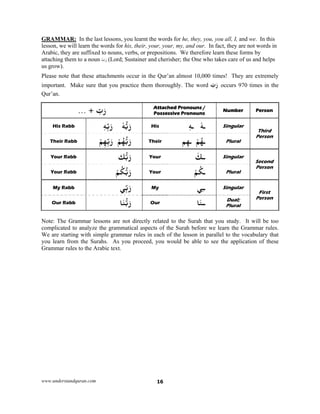
GRAMMAR: In the last lessons, you learnt the words for he, they, you, you all, I, and we. In this
lesson, we will learn the words for his, their, your, your, my, and our. In fact, they are not words in
Arabic, they are suffixed to nouns, verbs, or prepositions. We therefore learn these forms by
attaching them to a noun ّ‫ب‬َ‫ر‬ (Lord; Sustainer and cherisher; the One who takes care of us and helps
us grow).
Please note that these attachments occur in the Qur’an almost 10,000 times! They are extremely
important. Make sure that you practice them thoroughly. The word ّ‫ب‬َ‫ر‬ occurs 970 times in the
Qur’an.
ّ‫ب‬َ‫ر‬+... Attached Pronouns /
Possessive Pronouns
Number Person
His Rabb ٗ‫ﻪ‬‫ﺑ‬َ‫ر‬ٖ‫ﻪ‬ِّ‫ﺑ‬َ‫ر‬ His ٖ‫ﻪ‬‫ـ‬ ٗ‫ـﻪ‬ Singular
Third
Person
Their Rabb ْ‫ﻢ‬ُ‫ﻬ‬‫ﺑ‬َ‫ر‬ْ‫ﻢ‬ِ‫ﻬ‬ِّ‫ﺑ‬َ‫ر‬ Their ‫ﻢ‬ِ‫ﻬ‬‫ـ‬ ْ‫ﻢ‬ُ‫ـﻬ‬ Plural
Your Rabb ‫ﺑ‬َ‫ر‬‫ﻚ‬ Your ‫ــ‬َ‫ﻚ‬ Singular
Second
Person
Your Rabb ‫ﺑ‬َ‫ر‬ْ‫ﻢ‬ُ‫ﻜ‬ Your ْ‫ﻢ‬ُ‫ـﻜ‬ Plural
My Rabb ِّ‫ﺑ‬َ‫ر‬‫ﻲ‬ My ‫ﻲ‬ِ‫ـ‬‫ـ‬ Singular
First
Person
Our Rabb ‫ﺑ‬َ‫ر‬‫ﺎ‬َ‫ﻨ‬ Our ‫ﺎ‬َ‫ــﻨ‬ Dual;
Plural
Note: The Grammar lessons are not directly related to the Surah that you study. It will be too
complicated to analyze the grammatical aspects of the Surah before we learn the Grammar rules.
We are starting with simple grammar rules in each of the lesson in parallel to the vocabulary that
you learn from the Surahs. As you proceed, you would be able to see the application of these
Grammar rules to the Arabic text.
www.understandquran.com 17
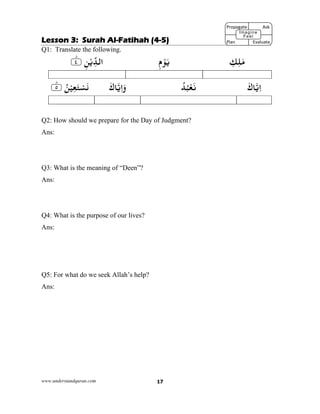
Lesson 3: Surah Al-Fatihah (4-5)
Q1: Translate the following.
ٰ‫ﻣ‬ِ‫ﻚ‬ِ‫ﻠ‬ِ‫م‬ْ‫ﻮ‬َ‫ﻳ‬ِ‫ﻦ‬ْ‫ﻳ‬ِّ‫اﻟﺪ‬٪﴿٤ؕ٪﴾
َ‫ﺎك‬‫ﻳ‬ِ‫ا‬ُ‫ﺪ‬ُ‫ﺒ‬ْ‫ﻌ‬َ‫ﻧ‬َ‫ﺎك‬‫ﻳ‬ِ‫ا‬َw٪﴿ ُ‫ﻦ‬ْ‫ﻴ‬ِ‫ﻌ‬َ‫ﺘ‬ْ‫ﺴ‬َ٥ؕ٪﴾
Q2: How should we prepare for the Day of Judgment?
Ans:
Q3: What is the meaning of “Deen”?
Ans:
Q4: What is the purpose of our lives?
Ans:
Q5: For what do we seek Allah’s help?
Ans:
Propagate              Ask
 
Plan                Evaluate
Imagine
Feel
www.understandquran.com 18
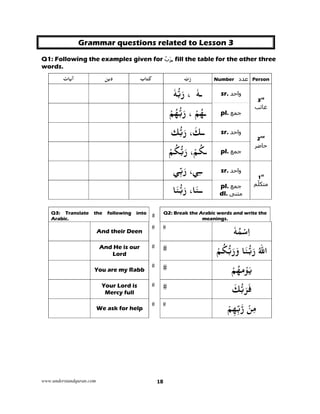
Grammar questions related to Lesson 3
Q1: Following the examples given for ّ‫ب‬َ‫ر‬, fill the table for the other three
words.
‫آﻳﺎت‬ ‫دﻳﻦ‬ ‫ﻛ‬‫ﺘﺎب‬ ّ‫ب‬َ‫ر‬ ‫عدد‬Number Person
، ٗ‫ـﻪ‬ٗ‫ﻪ‬‫ﺑ‬َ‫ر‬ sr. ‫واحد‬
3rd
‫غائب‬
‫ـ‬ْ‫ﻢ‬ُ‫ﻬ‬،ْ‫ﻢ‬ُ‫ﻬ‬‫ﺑ‬َ‫ر‬ pl. ‫جم‬‫ع‬
‫ــ‬َ‫ﻚ‬،‫ﻚ‬‫ﺑ‬َ‫ر‬ sr. ‫واحد‬
2nd
‫حاضر‬ُ‫ـﻜ‬ْ‫ﻢ‬،ْ‫ﻢ‬ُ‫ﻜ‬‫ﺑ‬َ‫ر‬ pl. ‫جمع‬
ِ‫ـ‬‫ـ‬‫ﻲ‬،‫ﻲ‬ِّ‫ﺑ‬َ‫ر‬ sr. ‫واحد‬
1st
‫ّم‬‫ل‬‫متك‬
‫ــ‬‫ﺎ‬َ‫ﻨ‬،‫ﺎ‬َ‫ﻨ‬‫ﺑ‬َ‫ر‬ pl. ‫جمع‬
dl. ‫مثنى‬
Q2: Break the Arabic words and write the
meanings.
Q3: Translate the following into
Arabic.
ٗ‫ﻪ‬ُ‫ﻤ‬ْ‫ﺳ‬ِ‫ا‬And their Deen
ْ‫ﻢ‬ُ‫ﻜ‬‫ﺑ‬َ‫ر‬َ‫و‬ ‫ﺎ‬َ‫ﻨ‬‫ﺑ‬َ‫ر‬ ُ‫ﷲ‬‫ا‬And He is our
Lord
ْ‫ﻢ‬ُ‫ﻣﻬ‬ْ َ‫ﻳ‬You are my Rabb
َ‫ﻚ‬‫ﺑ‬َ‫ﺮ‬َ‫ﻓ‬Your Lord is
Mercy full
‫ر‬ ْ‫ﻦ‬ِ‫ﻣ‬ْ‫ﻢ‬ِ‫ﻬ‬ِّ‫ﺑ‬We ask for help
www.understandquran.com 19
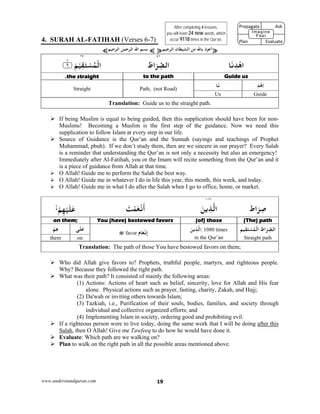
4. SURAH AL-FATIHAH (Verses 6-7)
¥‫ﺟﻴﻢ‬ ‫اﻟ‬ ‫اﻟﺸﻴﻄﺎن‬ ‫ﻣﻦ‬ ‫ﺎﷲ‬ ‫ذ‬ ‫أﻋ‬¥¤‫ﺣﻤ‬ ‫اﻟ‬ ‫اﷲ‬ ‫ﺑﺴﻢ‬‫ﺣﻴﻢ‬ ‫اﻟ‬ ‫ﻦ‬¤
٤٦٣٧
‫ﺎ‬َ‫ﻧ‬ِ‫ﺪ‬ْ‫اﻫ‬َ‫اط‬َ‫ﺮ‬ِّ‫اﻟﺼ‬٪﴿ َ‫ﻢ‬ْ‫ﻴ‬ِ‫ﻘ‬َ‫ﺘ‬ْ‫ﺴ‬ُ‫ﻤ‬ْ‫اﻟ‬٦m٪﴾
Guide usto the paththe straight.
ِ‫ﺪ‬ْ‫ﻫ‬ِ‫ا‬‫ﺎ‬َ‫ﻧ‬Path; (not Road)Straight
GuideUs
Translation: Guide us to the straight path.
 If being Muslim is equal to being guided, then this supplication should have been for non-
Muslims! Becoming a Muslim is the first step of the guidance. Now we need this
supplication to follow Islam at every step in our life.
 Source of Guidance is the Qur’an and the Sunnah (sayings and teachings of Prophet
Muhammad, pbuh). If we don’t study them, then are we sincere in our prayer? Every Salah
is a reminder that understanding the Qur’an is not only a necessity but also an emergency!
Immediately after Al-Fatihah, you or the Imam will recite something from the Qur’an and it
is a piece of guidance from Allah at that time.
 O Allah! Guide me to perform the Salah the best way.
 O Allah! Guide me in whatever I do in life this year, this month, this week, and today.
 O Allah! Guide me in what I do after the Salah when I go to office, home, or market.
١٠٨٠
‫اط‬َ‫ﺮ‬ِ‫ﺻ‬َ‫ﻦ‬‫ﻳ‬ِ‫ﺬ‬‫اﻟ‬
َ
‫أ‬َ‫ﺖ‬ْ‫ﻤ‬َ‫ﻌ‬ْ‫ﻧ‬ْ‫ﻢ‬ِ‫ﻬ‬ْ‫ﻴ‬َ‫ﻠ‬َ‫ﻋ‬
(The) path(of) thoseYou (have) bestowed favorson them;
‫ﻴﻢ‬ِ‫ﻘ‬َ‫ﺘ‬ْ‫ﺴ‬ُ‫ﻤ‬ْ‫اﻟ‬ َ‫اط‬َ‫ﺮ‬ِّ‫اﻟﺼ‬
Straight path
َ‫ﻦ‬‫ﻳ‬ِ‫ﺬ‬‫اﻟ‬: 1080 times
in the Qur’an
‫ﺎم‬َ‫ﻌ‬ْ‫ﻧ‬ِ‫إ‬favor
‫ﻰ‬َ‫ﻠ‬َ‫ﻋ‬ْ‫ﻢ‬ِ‫ﻫ‬
onthem
Translation: The path of those You have bestowed favors on them;
 Who did Allah give favors to? Prophets, truthful people, martyrs, and righteous people.
Why? Because they followed the right path.
 What was their path? It consisted of mainly the following areas:
(1) Actions: Actions of heart such as belief, sincerity, love for Allah and His fear
alone. Physical actions such as prayer, fasting, charity, Zakah, and Hajj;
(2) Da'wah or inviting others towards Islam;
(3) Tazkiah, i.e., Purification of their souls, bodies, families, and society through
individual and collective organized efforts; and
(4) Implementing Islam in society, ordering good and prohibiting evil.
 If a righteous person were to live today, doing the same work that I will be doing after this
Salah, then O Allah! Give me Tawfeeq to do how he would have done it.
 Evaluate: Which path are we walking on?
 Plan to walk on the right path in all the possible areas mentioned above.
After completing 4 lessons,
you will learn 24 new words, which
occur 9118 times in the Qur’an.
Propagate              Ask
 
Plan                Evaluate
Imagine
Feel
www.understandquran.com 20
١٤٧١٧٣٢
ِ‫ﺮ‬ْ‫ﻴ‬َ‫ﻏ‬ِ‫ب‬ ُ‫ﻀ‬ْ‫ﻐ‬َ‫ﻤ‬ْ‫اﻟ‬ْ‫ﻢ‬ِ‫ﻬ‬ْ‫ﻴ‬َ‫ﻠ‬َ‫ﻋ‬َ‫ﻻ‬َw‫ٓﺎ‬‫اﻟﻀ‬ِّ‫ﻟ‬٪﴿ َ‫ﻦ‬ْ‫ﻴ‬٧ۧ٪﴾
Not
of those who earned
(Your) wrath
on themand nor ofthose who go astray 
not;
other than.
‫ﻮم‬ُ‫ﻠ‬ْ‫ﻈ‬َ‫ﻣ‬ : One who is wronged
or oppressed
‫ب‬ ُ‫ﻀ‬ْ‫ﻐ‬َ‫ﻣ‬ : One who received
the wrath
‫ﻰ‬َ‫ﻠ‬َ‫ﻋ‬ْ‫ﻢ‬ِ‫ﻫ‬َ‫و‬َ‫ﻻ‬ّ ‫ﺎ‬َ‫ﺿ‬ :the one who goes astray
‫ﻴﻦ‬ِّ‫ﺎﻟ‬َ‫ﺿ‬ ،‫ن‬ ‫ﺎﻟ‬َ‫ﺿ‬ is plural.
(you make plural by adding ‫ن‬w, ‫)ﻳﻦ‬ onthemandno
Translation: Not of those who earned (Your) wrath on themselves and nor of those who go astray.
First Group (those who earned wrath):
 Those who know but do not act upon. Just imagine their terrible end in this world and in the
hereafter.
 Imagine today’s evil models, heroes, and leaders and sincerely ask Allah to help us avoid
being like them.
Second Group (those who go astray):
 Imagine today’s lost people and again sincerely pray that we avoid being like them
 Let us not be among those who are lost even after having the Qur’an with us because we
don’t study it or ‘we don’t have time’!
 Are we away from the Qur’an only because we do not know Arabic language? Let us
resolve today that we shall not abandon learning these lessons of Qur’anic Arabic.
Ask: O Allah! Help us follow the right path if we know it, and give us the knowledge if we don’t
know.
Try to remember this Hadith Qudsi every time you recite Al-Fatihah. The Prophet (pbuh) said that
Allah said: I have divided the prayer between Me and My slave. Half is for Me and half for him
and I give him what he asks for.
 When the slave says: َ‫ﻦ‬‫ﻴ‬ِ‫ﻤ‬َ‫ﺎﻟ‬َ‫ﻌ‬ْ‫اﻟ‬ ِّ‫ب‬َ‫ر‬ ِ َ ِ‫ﷲ‬ ُ‫ﺪ‬ْ‫ﻤ‬َ‫ﺤ‬ْ‫اﻟ‬ then Allah says: "‫ﻋﺒﺪي‬ ‫ﺣﻤﺪﻧﻲ‬" which means: My
slave has praised me, and
 When he says: ٰ‫ﻤ‬ْ‫ﺣ‬‫اﻟﺮ‬ِ‫ﻢ‬‫ﻴ‬ِ‫ﺣ‬‫اﻟﺮ‬ ِ‫ﻦ‬ then Allah says: "‫ﻋﺒﺪي‬ ّ‫ﻲ‬‫ﻋﻠ‬ ‫اﺛﻨﻲ‬" which means: My slave has
extolled Me; and
 When he says: ِّ‫اﻟﺪ‬ ِ‫م‬ْ‫ﻮ‬َ ِ‫ﻚ‬ِ‫ﻟ‬‫ﺎ‬َ‫ﻣ‬ِ‫ﻦ‬‫ﻳ‬ ,then Allah says: "‫ﻋﺒﺪي‬ ‫ﺪﻧﻲ‬ّ‫ﺠ‬‫ﻣ‬" which means: My slave has
glorified Me; and
 When he says: ُ‫ﻦ‬‫ﻴ‬ِ‫ﻌ‬َ‫ﺘ‬ْ‫ﺴ‬َ َ‫ﺎك‬‫ﻳ‬ِ‫إ‬َ‫و‬ ُ‫ﺪ‬ُ‫ﺒ‬ْ‫ﻌ‬َ َ‫ﺎك‬‫ﻳ‬ِ‫إ‬ then Allah says: This is between Me and My slave and
whatever he asks for, I will provide him. And
 When he says: ِ‫ﺪ‬ْ‫اﻫ‬َ‫ﻦ‬‫ﻴ‬ِّ‫ﺎﻟ‬‫اﻟﻀ‬ ‫ﻻ‬َw ْ‫ﻢ‬ِ‫ﻬ‬ْ‫ﻴ‬َ‫ﻠ‬َ‫ﻋ‬ ِ‫ب‬ ُ‫ﻀ‬ْ‫ﻐ‬َ‫ﻤ‬ْ‫اﻟ‬ ِ‫ﺮ‬ْ‫ﻴ‬َ‫ﻏ‬ ْ‫ﻢ‬ِ‫ﻬ‬ْ‫ﻴ‬َ‫ﻠ‬َ‫ﻋ‬ َ‫ﺖ‬ْ‫ﻤ‬َ‫ﻌ‬ْ‫ﻧ‬
َ
‫أ‬ َ‫ﻦ‬‫ﻳ‬ِ‫ﺬ‬‫اﻟ‬ َ‫اط‬َ‫ﺮ‬ِ‫ﺻ‬ . َ‫ﻢ‬‫ﻴ‬ِ‫ﻘ‬َ‫ﺘ‬ْ‫ﺴ‬ُ‫ﻤ‬ْ‫اﻟ‬ َ‫اط‬َ‫ﺮ‬ِّ‫اﻟﺼ‬ ‫ﺎ‬َ‫ﻧ‬
then Allah says: This is for my slave and whatever he asks for, he will be provided with it.
[Sahih Muslim, narrated by Abu Huraira, may Allah be pleased with him].
www.understandquran.com 21
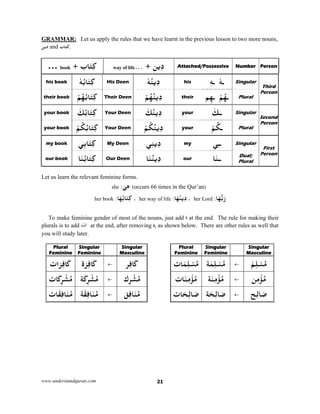
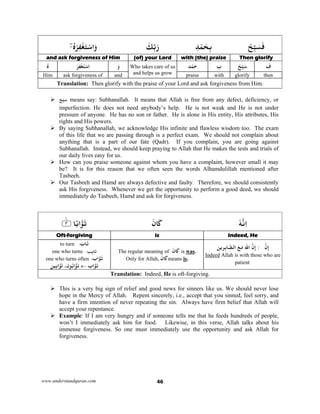
GRAMMAR: Let us apply the rules that we have learnt in the previous lesson to two more nouns,
‫دﻳﻦ‬ and ‫.ﻛﺘﺎب‬
+ ‫ﺎب‬َ‫ﺘ‬ِ‫ﻛ‬book… + ‫ﻳﻦ‬ِ‫د‬...way of life Attached/Possessive Number Person
his book ٗ‫ﻪ‬ُ‫ﺑ‬‫ﺎ‬َ‫ﺘ‬ِ‫ﻛ‬ His Deen ُ‫ﻳﻨ‬ِ‫د‬ٗ‫ﻪ‬ his ٖ‫ﻪ‬‫ـ‬ ٗ‫ـﻪ‬ Singular
Third
Person
their book ْ‫ﻢ‬ُ‫ﻬ‬ُ‫ﺑ‬‫ﺎ‬َ‫ﺘ‬ِ‫ﻛ‬ Their Deen ْ‫ﻢ‬ُ‫ﻬ‬ُ‫ﻳﻨ‬ِ‫د‬ their ‫ﻢ‬ِ‫ﻬ‬‫ـ‬ ْ‫ﻢ‬ُ‫ـﻬ‬ Plural
your book َ‫ﻚ‬ُ‫ﺑ‬‫ﺎ‬َ‫ﺘ‬ِ‫ﻛ‬ Your Deen َ‫ﻚ‬ُ‫ﻳﻨ‬ِ‫د‬ your ‫ــ‬َ‫ﻚ‬ Singular
Second
Person
your book ْ‫ﻢ‬ُ‫ﻜ‬ُ‫ﺑ‬‫ﺎ‬َ‫ﺘ‬ِ‫ﻛ‬ Your Deen ْ‫ﻢ‬ُ‫ﻜ‬ُ‫ﻳﻨ‬ِ‫د‬ your ْ‫ﻢ‬ُ‫ـﻜ‬ Plural
my book َ‫ﺘ‬ِ‫ﻛ‬‫ﻲ‬ِ‫ﺑ‬‫ﺎ‬ My Deen ‫ﻲ‬ِ‫ﻨ‬‫ﻳ‬ِ‫د‬ my ‫ﻲ‬ِ‫ـ‬‫ـ‬ Singular
First
Person
our book ‫ﺎ‬َ‫ﻨ‬ُ‫ﺑ‬‫ﺎ‬َ‫ﺘ‬ِ‫ﻛ‬ Our Deen ‫ﺎ‬َ‫ﻨ‬ُ‫ﻳﻨ‬ِ‫د‬ our ‫ﺎ‬َ‫ــﻨ‬ Dual;
Plural
Let us learn the relevant feminine forms.
(occurs 66 times in the Qur’an)َ‫ﻲ‬ِ‫ﻫ‬:she
‫ﺎ‬َ‫ﻬ‬‫ﺑ‬َ‫ر‬:her Lord،‫ﺎ‬َ‫ﻬ‬ُ‫ﻳﻨ‬ِ‫د‬:her way of life،‫ﺎ‬َ‫ﻬ‬ُ‫ﺑ‬‫ﺎ‬َ‫ﺘ‬ِ‫ﻛ‬:her book
To make feminine gender of most of the nouns, just add ‫ة‬ at the end. The rule for making their
plurals is to add ‫ات‬ at the end, after removing ‫,ة‬ as shown below. There are other rules as well that
you will study later.
Plural
Feminine
Singular
Feminine
Singular
Masculine
Plural
Feminine
Singular
Feminine
Singular
Masculine
‫ات‬َ‫ﺮ‬ِ‫ﻓ‬ َ‫ﰷ‬ ‫ة‬َ‫ﺮ‬ِ‫ﻓ‬ َ‫ﰷ‬  ‫ﺮ‬ِ‫ﻓ‬ َ‫ﰷ‬ ‫ﺎت‬َ‫ﻤ‬ِ‫ﻠ‬ْ‫ﺴ‬ُ‫ﻣ‬ ‫ﺔ‬َ‫ﻤ‬ِ‫ﻠ‬ْ‫ﺴ‬ُ‫ﻣ‬  ْ‫ﻢ‬ِ‫ﻠ‬ْ‫ﺴ‬ُ‫ﻣ‬
‫ت‬ َ ِ‫ﺮ‬ْ‫ﺸ‬ُ‫ﻣ‬ ‫ﺔ‬َ‫ﻛ‬ِ‫ﺮ‬ْ‫ﺸ‬ُ‫ﻣ‬  ‫ك‬ِ ْ‫ﺸ‬ُ‫ﻣ‬ ‫ﺎت‬َ‫ﻨ‬ِ‫ﻣ‬ْ ُ‫ﻣ‬ ‫ﺔ‬َ‫ﻨ‬ِ‫ﻣ‬ْ ُ‫ﻣ‬  ‫ﻦ‬ِ‫ﻣ‬ْ ُ‫ﻣ‬
‫ﺎت‬َ‫ﻘ‬ِ‫ﻓ‬‫ﺎ‬َ‫ﻨ‬ُ‫ﻣ‬ ‫ﺔ‬َ‫ﻘ‬ِ‫ﻓ‬‫ﺎ‬َ‫ﻨ‬ُ‫ﻣ‬  ُ‫ﻣ‬‫ﻖ‬ِ‫ﻓ‬‫ﺎ‬َ‫ﻨ‬ ‫ﺎت‬َ‫ﺤ‬ِ‫ﻟ‬‫ﺎ‬َ‫ﺻ‬ ‫ﺔ‬َ‫ﺤ‬ِ‫ﻟ‬‫ﺎ‬َ‫ﺻ‬  ‫ﺢ‬ِ‫ﻟ‬‫ﺎ‬َ‫ﺻ‬
www.understandquran.com 22
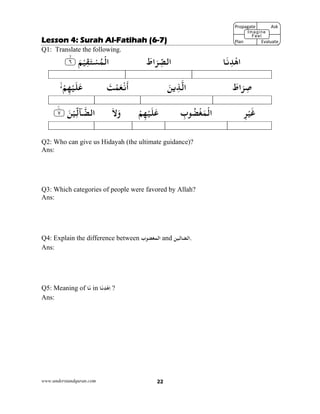
Lesson 4: Surah Al-Fatihah (6-7)
Q1: Translate the following.
‫ﺎ‬َ‫ﻧ‬ِ‫ﺪ‬ْ‫اﻫ‬َ‫اط‬َ‫ﺮ‬ِّ‫اﻟﺼ‬٪﴿ َ‫ﻢ‬ْ‫ﻴ‬ِ‫ﻘ‬َ‫ﺘ‬ْ‫ﺴ‬ُ‫ﻤ‬ْ‫اﻟ‬٦m٪﴾
َ‫اط‬َ‫ﺮ‬ِ‫ﺻ‬َ‫ﻦ‬‫ﻳ‬ِ‫ﺬ‬‫اﻟ‬َ‫ﺖ‬ْ‫ﻤ‬َ‫ﻌ‬ْ‫ﻧ‬
َ
‫أ‬ْ‫ﻢ‬ِ‫ﻬ‬ْ‫ﻴ‬َ‫ﻠ‬َ‫ﻋ‬
ِ‫ﺮ‬ْ‫ﻴ‬َ‫ﻏ‬ِ‫ب‬ ُ‫ﻀ‬ْ‫ﻐ‬َ‫ﻤ‬ْ‫اﻟ‬ْ‫ﻢ‬ِ‫ﻬ‬ْ‫ﻴ‬َ‫ﻠ‬َ‫ﻋ‬َ‫ﻻ‬َw‫ٓﺎ‬‫اﻟﻀ‬ِّ‫ﻟ‬٪﴿ َ‫ﻦ‬ْ‫ﻴ‬٧ۧ٪﴾
Q2: Who can give us Hidayah (the ultimate guidance)?
Ans:
Q3: Which categories of people were favored by Allah?
Ans:
Q4: Explain the difference between ‫اﻟ‬‫ب‬ ‫ﻤﻐﻀ‬ and ‫.اﻟﻀﺎﻟﻴﻦ‬
Ans:
Q5: Meaning of ‫ﺎ‬َ‫ﻧ‬ in ‫ﺎ‬َ‫ﻧ‬ِ‫ﺪ‬ْ‫ﻫ‬ِ‫ا‬ ?
Ans:
Propagate              Ask
 
Plan                Evaluate
Imagine
Feel
www.understandquran.com 23
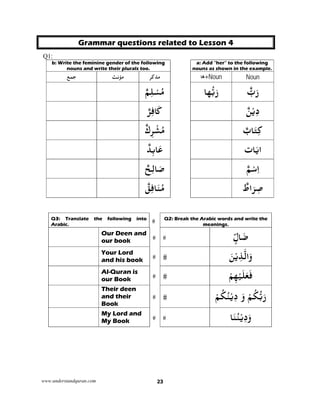
Grammar questions related to Lesson 4
Q1:
b: Write the feminine gender of the following
nouns and write their plurals too.
a: Add “her” to the following
nouns as shown in the example.
‫ﺟﻤﻊ‬ ‫ﻧﺚ‬ ‫ﻣ‬ ‫ﻣﺬ‬‫ﻛ‬‫ﺮ‬ +‫ھ‬‫ا‬ Noun Noun
ٌ‫ﻢ‬ِ‫ﻠ‬ْ‫ﺴ‬ُ‫ﻣ‬ ‫ﻬﺎ‬‫ﺑ‬َ‫ر‬ ‫ب‬َ‫ر‬
َ‫ﰷ‬ٌ‫ﺮ‬ِ‫ﻓ‬ ٌ‫ﻦ‬ْ‫ﻳ‬ِ‫د‬
ُ‫ﻣ‬ِ ْ‫ﺸ‬ٌ‫ك‬ ِ‫ﻛ‬ٌ‫ﺎب‬َ‫ﺘ‬
ٌ‫ﺪ‬ِ‫ﺑ‬‫ﺎ‬َ‫ﻋ‬ ‫ﺎت‬َ‫ﻳ‬‫ا‬
ٌ‫ﺢ‬ِ‫ﻟ‬‫ﺎ‬َ‫ﺻ‬ ٌ‫ﻢ‬ْ‫ﺳ‬ِ‫ا‬
ٌ‫ﻖ‬ِ‫ﻓ‬‫ﺎ‬َ‫ﻨ‬ُ‫ﻣ‬ ٌ‫اط‬َ‫ﺮ‬ِ‫ﺻ‬
Q2: Break the Arabic words and write the
meanings.
Q3: Translate the following into
Arabic.
ٍّ ‫ﺎ‬َ‫ﺿ‬Our Deen and
our book
َ‫ﻦ‬ْ‫ﻳ‬ِ‫ﺬ‬‫اﻟ‬َwYour Lord
and his book
َ‫ﻠ‬َ‫ﻌ‬َ‫ﻓ‬ْ‫ﻢ‬ِ‫ﻬ‬ْ‫ﻴ‬Al-Quran is
our Book
ُ‫ﻜ‬‫ﺑ‬َ‫ر‬ُ‫ﻨ‬ْ‫ﻳ‬ِ‫د‬ َ‫و‬ ْ‫ﻢ‬ُ‫ﻜ‬ْ‫ﻢ‬
Their deen
and their
Book
‫ﺎ‬َ‫ﻨ‬ُ‫ﻨ‬ْ‫ﻳ‬ِ‫د‬َwMy Lord and
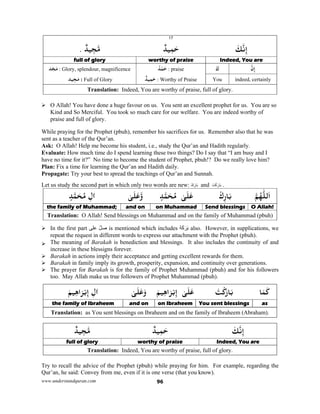
My Book
www.understandquran.com 24
5. PURPOSE OF REVELATION
¥‫ﺟﻴﻢ‬ ‫اﻟ‬ ‫اﻟﺸﻴﻄﺎن‬ ‫ﻣﻦ‬ ‫ﺎﷲ‬ ‫ذ‬ ‫أﻋ‬¥¤‫ﺣﻴﻢ‬ ‫اﻟ‬ ‫ﺣﻤﻦ‬ ‫اﻟ‬ ‫اﷲ‬ ‫ﺑﺴﻢ‬¤
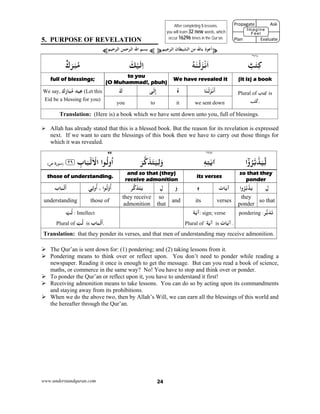
٢٦١*
ٌ‫ﺐ‬ٰ‫ﺘ‬ِ‫ﻛ‬ُ‫ﻪ‬ٰ‫ﻨ‬ْ‫ﻟ‬َ ْ‫ﻧ‬َ‫ا‬َ‫ﻚ‬ْ‫ﻴ‬َ‫ﻟ‬ِ‫ا‬ٌ‫ك‬َ‫ﺮ‬ٰ‫ﺒ‬ُ‫ﻣ‬
(it is) a book We have revealed it
to you
(O Muhammad!, pbuh)
full of blessings;
Plural of ‫ﺎب‬َ‫ﺘ‬ِ‫ﻛ‬ is
‫ﺐ‬ُ‫ﺘ‬ُ‫.ﻛ‬
‫ﺎ‬َ‫ﻨ‬ْ‫ﻟ‬َ ْ‫ﻧ‬
َ
‫أ‬ُ‫ه‬‫ﻰ‬َ‫ﻟ‬ِ‫إ‬َ‫ك‬We say, ‫ك‬َ‫ر‬‫ﺎ‬َ‫ﺒ‬ُ‫ﻣ‬ ‫ﻴﺪ‬ِ‫ﻋ‬ (Let this
Eid be a blessing for you)
we sent downittoyou
Translation: (Here is) a book which we have sent down unto you, full of blessings.
 Allah has already stated that this is a blessed book. But the reason for its revelation is expressed
next. If we want to earn the blessings of this book then we have to carry out those things for
which it was revealed.
٣٨٢*43
‫ا‬wُ‫ﺮ‬‫ﺑ‬‫ﺪ‬َ‫ﻴ‬ِّ‫ﻟ‬ٖ‫ﻪ‬ِ‫ﺘ‬ٰ‫ﻳ‬‫א‬َ‫ﺮ‬‫כ‬َ‫ﺬ‬َ‫ﺘ‬َ‫ﻴ‬ِ‫ﻟ‬َw‫﴿٭‬ ِ‫ﺎب‬َ‫ﺒ‬ْ‫ﻟ‬َ ْ‫اﻻ‬ ‫ا‬ ُ‫ﻟ‬wُ‫ا‬٢٩‫﴾٭‬)‫ة‬r‫ﺳﻮ‬(‫ص‬
so that they
ponder
its verses
and so that (they)
receive admonition
those of understanding.
ِ‫ل‬‫ا‬wُ‫ﺮ‬‫ﺑ‬‫ﺪ‬َ‫ﻳ‬‫ﺎت‬َ‫ﻳ‬‫آ‬ٖ‫ه‬َ‫و‬ِ‫ل‬‫ﺮ‬‫כ‬َ‫ﺬ‬َ‫ﺘ‬َ‫ﻳ‬‫ا‬ ُ‫ﻟ‬ْw
ُ
‫أ‬،‫ﻲ‬ِ‫ﻟ‬w
ُ
‫أ‬‫ﺎب‬َ‫ﺒ‬ْ‫ﻟ‬
َ
‫أ‬
so that
they
ponder
versesitsand
so
that
they receive
admonition
those ofunderstanding
‫ﺮ‬‫ﺑ‬َ‫ﺪ‬َ‫ﺗ‬:pondering‫ﺔ‬َ‫ﻳ‬‫آ‬: sign; verse
Plural of ‫ﺔ‬َ‫ﻳ‬‫آ‬ is ‫ﺎت‬َ‫ﻳ‬‫آ‬ .
ّ‫ﺐ‬ُ‫ﻟ‬ : Intellect
Plural of ّ‫ﺐ‬ُ‫ﻟ‬ is ‫ﺎب‬َ‫ﺒ‬ْ‫ﻟ‬
َ
‫أ‬.
Translation: that they ponder its verses, and that men of understanding may receive admonition.
 The Qur’an is sent down for: (1) pondering; and (2) taking lessons from it.
 Pondering means to think over or reflect upon. You don’t need to ponder while reading a
newspaper. Reading it once is enough to get the message. But can you read a book of science,
maths, or commerce in the same way? No! You have to stop and think over or ponder.
 To ponder the Qur’an or reflect upon it, you have to understand it first!
 Receiving admonition means to take lessons. You can do so by acting upon its commandments
and staying away from its prohibitions.
 When we do the above two, then by Allah’s Will, we can earn all the blessings of this world and
the hereafter through the Qur’an.
After completing 5 lessons,
you will learn 32 new words, which
occur 16296 times in the Qur’an.
Propagate              Ask
 
Plan                Evaluate
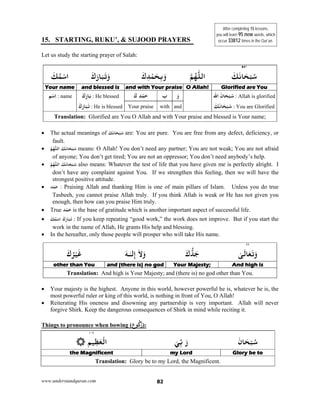
Imagine
Feel
www.understandquran.com 25
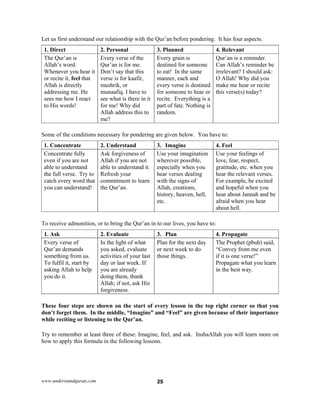
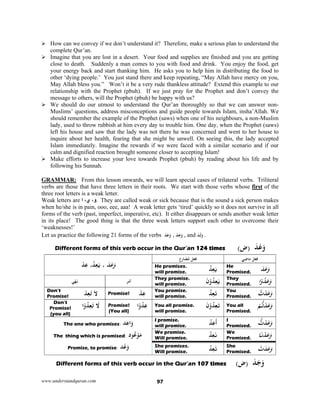
Let us first understand our relationship with the Qur’an before pondering. It has four aspects.
1. Direct 2. Personal 3. Planned 4. Relevant
The Qur’an is
Allah’s word.
Whenever you hear it
or recite it, feel that
Allah is directly
addressing me. He
sees me how I react
to His words!
Every verse of the
Qur’an is for me.
Don’t say that this
verse is for kaafir,
mushrik, or
munaafiq. I have to
see what is there in it
for me! Why did
Allah address this to
me?
Every grain is
destined for someone
to eat! In the same
manner, each and
every verse is destined
for someone to hear or
recite. Everything is a
part of fate. Nothing is
random.
Qur’an is a reminder.
Can Allah’s reminder be
irrelevant? I should ask:
O Allah! Why did you
make me hear or recite
this verse(s) today?
Some of the conditions necessary for pondering are given below. You have to:
1. Concentrate 2. Understand 3. Imagine 4. Feel
Concentrate fully
even if you are not
able to understand
the full verse. Try to
catch every word that
you can understand!
Ask forgiveness of
Allah if you are not
able to understand it.
Refresh your
commitment to learn
the Qur’an.
Use your imagination
wherever possible,
especially when you
hear verses dealing
with the signs of
Allah, creations,
history, heaven, hell,
etc.
Use your feelings of
love, fear, respect,
gratitude, etc. when you
hear the relevant verses.
For example, be excited
and hopeful when you
hear about Jannah and be
afraid when you hear
about hell.
To receive admonition, or to bring the Qur’an in to our lives, you have to:
1. Ask 2. Evaluate 3. Plan 4. Propagate
Every verse of
Qur’an demands
something from us.
To fulfil it, start by
asking Allah to help
you do it.
In the light of what
you asked, evaluate
activities of your last
day or last week. If
you are already
doing them, thank
Allah; if not, ask His
forgiveness.
Plan for the next day
or next week to do
those things.
The Prophet (pbuh) said,
“Convey from me even
if it is one verse!”
Propagate what you learn
in the best way.
These four steps are shown on the start of every lesson in the top right corner so that you
don’t forget them. In the middle, “Imagine” and “Feel” are given because of their importance
while reciting or listening to the Qur’an.
Try to remember at least three of these: Imagine, feel, and ask. InshaAllah you will learn more on
how to apply this formula in the following lessons.
www.understandquran.com 26
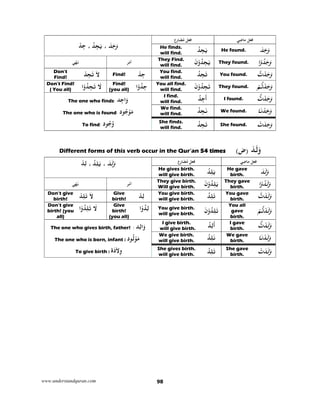
GRAMMAR: In Arabic, a word can be of one of the three types:
1. ‫ﻢ‬ْ‫ﺳ‬‫ا‬ (Noun): Name (Ex: ‫ﺔ‬‫ﻜ‬َ‫ﻣ‬ ،‫ﺎب‬َ‫ﺘ‬ِ‫ﻛ‬) or an attribute (Ex: ‫ﻦ‬ِ‫ﻣ‬ْ ُ‫ﻣ‬ ،‫ﻢ‬ِ‫ﻠ‬ْ‫ﺴ‬ُ‫ﻣ‬)
2. ‫ﻞ‬ْ‫ﻌ‬ِ‫ﻓ‬ (Verb): Indicates the action (Ex: َ‫ﻓ‬‫ا‬wُ‫ﺮ‬َ‫ﺼ‬َ ،َ‫ﺢ‬َ‫ﺘ‬ )
3. ‫ف‬ْ‫ﺮ‬َ‫ﺣ‬ (Letter): Joins nouns and/or verbs (Ex: ّ‫إن‬ ،‫ﻲ‬ِ‫ﻓ‬ ،ْ‫ﻦ‬ِ‫ﻣ‬ ،ِ‫ل‬ ، ِ‫ب‬)
In previous lessons, we took a few nouns and made their plurals. In this lesson we will learn
letters: َ‫ﻊ‬َ‫ﻣ‬ ،ْ‫ﻦ‬َ‫ﻋ‬ ،ْ‫ﻦ‬ِ‫ﻣ‬ ،َ‫ل‬ . The first three of these ( َ‫ﻋ‬ ،ْ‫ﻦ‬ِ‫ﻣ‬ ،َ‫ل‬ْ‫ﻦ‬ ) are prepositions. Learn the
meanings along with examples given below. These examples are very useful in remembering the
meanings of these letters. In the examples given below, the word ّ‫ن‬‫إ‬ comes in the Qur’an 1532
times!
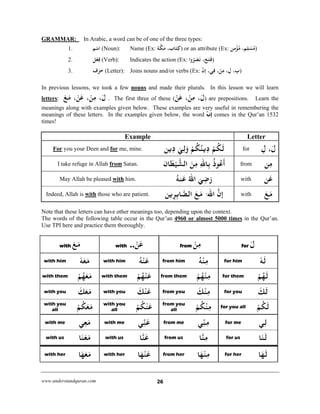
LetterExample
ِ‫ل‬ ،َ‫ل‬for‫ﻳﻦ‬ِ‫د‬ َ‫ﻲ‬ِ‫ﻟ‬َw ْ‫ﻢ‬ُ‫ﻜ‬ُ‫ﻳﻨ‬ِ‫د‬ ْ‫ﻢ‬ُ‫ﻜ‬َ‫ﻟ‬me, mine.foryou your Deen andFor
‫ﻦ‬ِ‫ﻣ‬from‫ﺎن‬َ‫ﻄ‬ْ‫ﻴ‬‫اﻟﺸ‬ َ‫ﻦ‬ِ‫ﻣ‬ ِ‫ﷲ‬‫ﺎ‬ِ ُ‫ذ‬ ُ‫ﻋ‬
َ
‫أ‬Satan.fromI take refuge in Allah
‫ﻦ‬َ‫ﻋ‬withُ‫ﻨﻪ‬َ‫ﻋ‬ ُ‫ﷲ‬‫ا‬ َ‫ﻲ‬ِ‫ﺿ‬َ‫ر‬him.withMay Allah be pleased
َ‫ﻊ‬َ‫ﻣ‬with‫ﻳﻦ‬ِ‫ﺮ‬ِ‫ﺑ‬‫ﺎ‬‫اﻟﺼ‬ َ‫ﻊ‬َ‫ﻣ‬ َ ‫اﷲ‬ ‫إن‬Indeed, Allah is with those who are patient.
Note that these letters can have other meanings too, depending upon the context.
The words of the following table occur in the Qur’an 4960 or almost 5000 times in the Qur’an.
Use TPI here and practice them thoroughly.
َ‫ل‬forْ‫ﻦ‬ِ‫ﻣ‬fromْ‫ﻦ‬َ‫ﻋ‬..withَ‫ﻊ‬َ‫ﻣ‬with
ٗ‫ﻪ‬َ‫ﻟ‬for himُ‫ﻪ‬ْ‫ﻨ‬ِ‫ﻣ‬from himُ‫ﻪ‬ْ‫ﻨ‬َ‫ﻋ‬with himٗ‫ﻪ‬َ‫ﻌ‬َ‫ﻣ‬with him
ْ‫ﻢ‬ُ‫ﻬ‬َ‫ﻟ‬for themْ‫ﻢ‬ُ‫ﻬ‬ْ‫ﻨ‬ِ‫ﻣ‬from themْ‫ﻢ‬ُ‫ﻬ‬ْ‫ﻨ‬َ‫ﻋ‬with themْ‫ﻢ‬ُ‫ﻬ‬َ‫ﻌ‬َ‫ﻣ‬with them
َ‫ﻚ‬َ‫ﻟ‬for youَ‫ﻚ‬ْ‫ﻨ‬ِ‫ﻣ‬from youَ‫ﻚ‬ْ‫ﻨ‬َ‫ﻋ‬with youَ‫ﻚ‬َ‫ﻌ‬َ‫ﻣ‬with you
ْ‫ﻢ‬ُ‫ﻜ‬َ‫ﻟ‬for you allْ‫ﻢ‬ُ‫ﻜ‬ْ‫ﻨ‬ِ‫ﻣ‬from you
allْ‫ﻢ‬ُ‫ﻜ‬ْ‫ﻨ‬َ‫ﻋ‬with you
allْ‫ﻢ‬ُ‫ﻜ‬َ‫ﻌ‬َ‫ﻣ‬with you
all
‫ﻲ‬ِ‫ﻟ‬for me‫ﻲ‬ِّ‫ﻨ‬ِ‫ﻣ‬from me‫ﻲ‬ِّ‫ﻨ‬َ‫ﻋ‬with me‫ﻲ‬ِ‫ﻌ‬َ‫ﻣ‬with me
‫ﺎ‬َ‫ﻨ‬َ‫ﻟ‬for us‫ﺎ‬‫ﻨ‬ِ‫ﻣ‬from us‫ﺎ‬‫ﻨ‬َ‫ﻋ‬with us‫ﺎ‬َ‫ﻨ‬َ‫ﻌ‬َ‫ﻣ‬with us
‫ﺎ‬َ‫ﻬ‬َ‫ﻟ‬for her‫ﺎ‬َ‫ﻬ‬ْ‫ﻨ‬ِ‫ﻣ‬from her‫ﺎ‬َ‫ﻬ‬ْ‫ﻨ‬َ‫ﻋ‬with her‫ﺎ‬َ‫ﻬ‬َ‫ﻌ‬َ‫ﻣ‬with her
www.understandquran.com 27
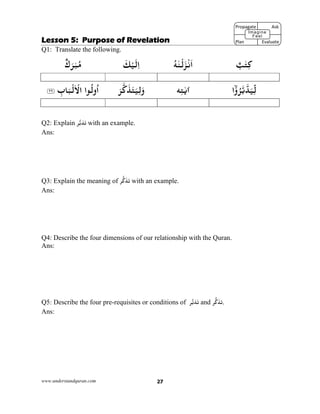
Lesson 5: Purpose of Revelation
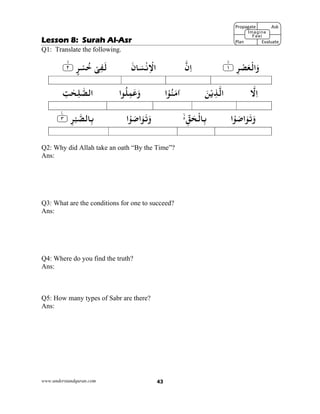
Q1: Translate the following.
ٌ‫ﺐ‬ٰ‫ﺘ‬ِ‫ﻛ‬ُ‫ﻪ‬ٰ‫ﻨ‬ْ‫ﻟ‬َ ْ‫ﻧ‬َ‫ا‬َ‫ﻚ‬ْ‫ﻴ‬َ‫ﻟ‬ِ‫ا‬ٌ‫ك‬َ‫ﺮ‬ٰ‫ﺒ‬ُ‫ﻣ‬
‫ا‬wُ‫ﺮ‬‫ﺑ‬‫ﺪ‬َ‫ﻴ‬ِّ‫ﻟ‬‫ﻪ‬ِ‫ﺘ‬ٰ‫ﻳ‬‫א‬َ‫ﺮ‬‫כ‬َ‫ﺬ‬َ‫ﺘ‬َ‫ﻴ‬ِ‫ﻟ‬َwِ‫ﺎب‬َ‫ﺒ‬ْ‫ﻟ‬َ ْ‫اﻻ‬ ‫ا‬ ُ‫ﻟ‬wُ‫ا‬‫﴿٭‬٢٩‫﴾٭‬
Q2: Explain ‫ﺮ‬‫ﺑ‬َ‫ﺪ‬َ‫ﺗ‬ with an example.
Ans:
Q3: Explain the meaning of ‫ﺮ‬‫כ‬َ‫ﺬ‬َ‫ﺗ‬ with an example.
Ans:
Q4: Describe the four dimensions of our relationship with the Quran.
Ans:
Q5: Describe the four pre-requisites or conditions of ‫ﺮ‬‫ﺑ‬َ‫ﺪ‬َ‫ﺗ‬ and ‫ﺮ‬‫כ‬َ‫ﺬ‬َ‫.ﺗ‬
Ans:
Propagate              Ask
 
Plan                Evaluate
Imagine
Feel
www.understandquran.com 28
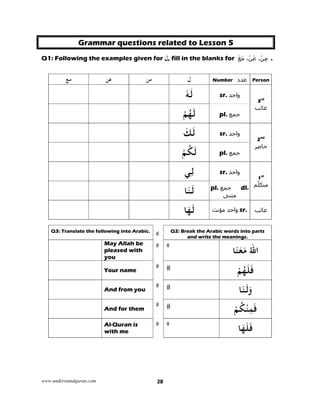
Grammar questions related to Lesson 5
Q1: Following the examples given for َ‫ل‬, fill in the blanks for َ‫ع‬َ‫م‬ ، ْ‫ن‬َ‫ع‬ ، ْ‫ن‬ِ‫م‬ .
‫ﻣﻊ‬ ‫ﻋﻦ‬ ‫ﻣﻦ‬ ‫ل‬ ‫عدد‬Number Person
َ‫ﻟ‬ٗ‫ﻪ‬ sr. ‫واحد‬
3rd
‫غائب‬
ْ‫ﻢ‬ُ‫ﻬ‬َ‫ﻟ‬ pl. ‫جمع‬
َ‫ﻚ‬َ‫ﻟ‬ sr. ‫واحد‬
2nd
‫حاضر‬
ْ‫ﻢ‬ُ‫ﻜ‬َ‫ﻟ‬ pl. ‫جمع‬
‫ﻲ‬ِ‫ﻟ‬ sr. ‫واحد‬
1st
‫ّم‬‫ل‬‫متك‬
‫ﺎ‬َ‫ﻨ‬َ‫ﻟ‬ pl. ‫جمع‬ dl.
‫مثنى‬
‫ﺎ‬َ‫ﻬ‬َ‫ﻟ‬ ‫مؤنث‬ ‫واحد‬ sr. ‫غائب‬
Q2: Break the Arabic words into parts
and write the meanings.
Q3: Translate the following into Arabic.
‫ﺎ‬َ‫ﻨ‬َ‫ﻌ‬َ‫ﻣ‬ ُ‫ﷲ‬‫ا‬
May Allah be
pleased with
you
ْ‫ﻢ‬ُ‫ﻬ‬َ‫ﻠ‬َ‫ﻓ‬Your name
‫ﺎ‬َ‫ﻨ‬َ‫ﻟ‬َwAnd from you
ْ‫ﻨ‬ِ‫ﻤ‬َ‫ﻓ‬ُ‫ﻜ‬ْ‫ﻢ‬And for them
‫ﺎ‬َ‫ﻬ‬َ‫ﻠ‬َ‫ﻓ‬Al-Quran is
with me
www.understandquran.com 29
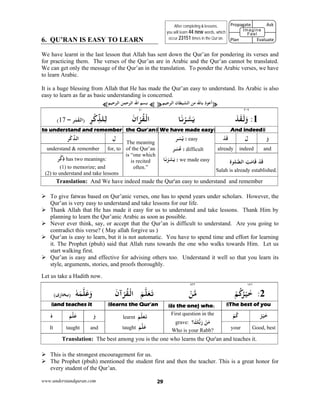
6. QU’RAN IS EASY TO LEARN
We have learnt in the last lesson that Allah has sent down the Qur’an for pondering its verses and
for practicing them. The verses of the Qur’an are in Arabic and the Qur’an cannot be translated.
We can get only the message of the Qur’an in the translation. To ponder the Arabic verses, we have
to learn Arabic.
It is a huge blessing from Allah that He has made the Qur’an easy to understand. Its Arabic is also
easy to learn as far as basic understanding is concerned.
¥‫ﺟﻴﻢ‬ ‫اﻟ‬ ‫اﻟﺸﻴﻄﺎن‬ ‫ﻣﻦ‬ ‫ﺎﷲ‬ ‫ذ‬ ‫أﻋ‬¥¤‫ﺣﻴﻢ‬ ‫اﻟ‬ ‫ﺣﻤﻦ‬ ‫اﻟ‬ ‫اﷲ‬ ‫ﺑﺴﻢ‬¤
٠٩٧٠
1:ْ‫ﺪ‬َ‫ﻘ‬َ‫ﻟ‬َw‫ﺎ‬َ‫ﻧ‬ْ ‫ﺴ‬َ‫ﻳ‬َ‫אن‬ْ‫ﺮ‬ُ‫ﻘ‬ْ‫اﻟ‬ِ‫ﺮ‬ْ‫כ‬ِّ‫ﻠﺬ‬ِ‫ﻟ‬‫ﺮ‬َ‫ﻤ‬َ‫)اﻟﻘ‬–17(
And indeedWe have made easythe Qur'anto understand and remember
َ‫و‬َ‫ل‬ْ‫ﺪ‬َ‫ﻗ‬‫ﺮ‬ْ‫ﺴ‬ُ‫ﻳ‬ : easy
‫ﺮ‬ْ‫ﺴ‬ُ‫ﻋ‬ : difficult
‫ﺎ‬َ‫ﻧ‬ْ ‫ﺴ‬َ‫ﻳ‬ : we made easy
The meaning
of the Qur’an
is “one which
is recited
often.”
ِ‫ل‬‫ﺮ‬ْ‫ﻛ‬ِّ‫ﺬ‬‫اﻟ‬
andindeedalreadyfor, tounderstand & remember
‫ﻠﻮة‬‫اﻟﺼ‬ ِ‫ﺖ‬َ‫ﻣ‬‫ﺎ‬َ‫ﻗ‬ ْ‫ﺪ‬َ‫ﻗ‬
Salah is already established.
‫ﺮ‬ْ‫כ‬ِ‫ذ‬ has two meanings:
(1) to memorize; and
(2) to understand and take lessons
Translation: And We have indeed made the Qur'an easy to understand and remember
 To give fatwas based on Qur’anic verses, one has to spend years under scholars. However, the
Qur’an is very easy to understand and take lessons for our life.
 Thank Allah that He has made it easy for us to understand and take lessons. Thank Him by
planning to learn the Qur’anic Arabic as soon as possible.
 Never ever think, say, or accept that the Qur’an is difficult to understand. Are you going to
contradict this verse? ( May allah forgive us )
 Qur’an is easy to learn, but it is not automatic. You have to spend time and effort for learning
it. The Prophet (pbuh) said that Allah runs towards the one who walks towards Him. Let us
start walking first.
 Qur’an is easy and effective for advising others too. Understand it well so that you learn its
style, arguments, stories, and proofs thoroughly.
Let us take a Hadith now.
١٨٦٨٢٣
2:ْ‫ﻢ‬ُ‫כ‬ُ‫ﺮ‬ْ‫ﻴ‬َ‫ﺧ‬ْ‫ﻦ‬‫ﻣ‬َ‫آن‬ْ‫ﺮ‬ُ‫ﻘ‬ْ‫اﻟ‬ َ‫ﻢ‬‫ﻠ‬َ‫ﻌ‬َ‫ﺗ‬ٗ‫ﻪ‬َ‫ﻤ‬‫ﻠ‬َ‫ﻋ‬َw(‫ى‬r‫)ﺑﺨﺎ‬
The best of you)is the one) wholearns the Qur'anand teaches it
ُ‫ﺮ‬ْ‫ﻴ‬َ‫ﺧ‬ْ‫ﻢ‬ُ‫ﻛ‬First question in the
grave: ‫؟‬َ‫ﻚ‬‫ﺑ‬َ‫ر‬ ْ‫ﻦ‬َ‫ﻣ‬
Who is your Rabb?
َ‫ﻢ‬‫ﻠ‬َ‫ﻌ‬َ‫ﺗ‬learnt
َ‫ﻢ‬‫ﻠ‬َ‫ﻋ‬taught
َ‫و‬َ‫ﻢ‬‫ﻠ‬َ‫ﻋ‬ٗ‫ه‬
Good, bestyourandtaughtIt
Translation: The best among you is the one who learns the Qur'an and teaches it.
 This is the strongest encouragement for us.
 The Prophet (pbuh) mentioned the student first and then the teacher. This is a great honor for
every student of the Qur’an.
After completing 6 lessons,
you will learn 44 new words, which
occur 23151 times in the Qur’an.
Propagate              Ask
 
Plan                Evaluate
Imagine
Feel
www.understandquran.com 30
 This also means that the best person is the one who does both the learning and the teaching.
 It also means that there is no end to learning the Book of Allah! Hence, we should keep
learning more and more about it till we die.
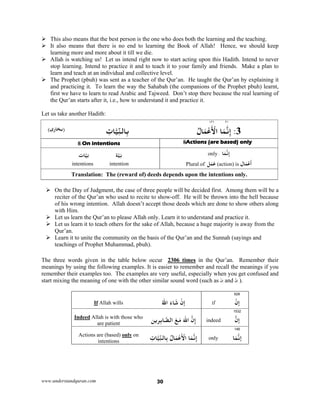
 Allah is watching us! Let us intend right now to start acting upon this Hadith. Intend to never
stop learning. Intend to practice it and to teach it to your family and friends. Make a plan to
learn and teach at an individual and collective level.
 The Prophet (pbuh) was sent as a teacher of the Qur’an. He taught the Qur’an by explaining it
and practicing it. To learn the way the Sahabah (the companions of the Prophet pbuh) learnt,
first we have to learn to read Arabic and Tajweed. Don’t stop there because the real learning of
the Qur’an starts after it, i.e., how to understand it and practice it.
Let us take another Hadith:
١١ ٦
3ُ ‫ﺎ‬َ‫ﻤ‬ْ‫ﻋ‬
َ ْ‫اﻷ‬ ‫ﺎ‬َ‫ﻤ‬‫ﻧ‬ِ‫إ‬ :ِ‫ﺎت‬‫ﻴ‬ِّ‫ﻨ‬‫ﺎﻟ‬ِ‫ﺑ‬(‫ى‬r‫)ﺑﺨﺎ‬
Actions (are based) onlyOn intentions.
‫ﺎ‬َ‫ﻤ‬‫ﻧ‬ِ‫إ‬:only
Plural of ‫ﻞ‬َ‫ﻤ‬َ‫ﻋ‬ (action) is ‫ﺎ‬َ‫ﻤ‬ْ‫ﻋ‬
َ
‫أ‬
‫ﺎت‬‫ﻴ‬ِ ‫ﺔ‬‫ﻴ‬ِ‫ﻧ‬
intentionintentions
Translation: The (reward of) deeds depends upon the intentions only.
 On the Day of Judgment, the case of three people will be decided first. Among them will be a
reciter of the Qur’an who used to recite to show-off. He will be thrown into the hell because
of his wrong intention. Allah doesn’t accept those deeds which are done to show others along
with Him.
 Let us learn the Qur’an to please Allah only. Learn it to understand and practice it.
 Let us learn it to teach others for the sake of Allah, because a huge majority is away from the
Qur’an.
 Learn it to unite the community on the basis of the Qur’an and the Sunnah (sayings and
teachings of Prophet Muhammad, pbuh).
The three words given in the table below occur 2306 times in the Qur’an. Remember their
meanings by using the following examples. It is easier to remember and recall the meanings if you
remember their examples too. The examples are very useful, especially when you get confused and
start mixing the meaning of one with the other similar sound word (such as ْ‫ن‬ِ‫ا‬ and ‫ن‬ِ‫ا‬ ).
628
ْ‫إن‬ifُ‫ﷲ‬‫ا‬ َ‫ء‬‫ﺎ‬َ‫ﺷ‬ ْ‫إن‬If Allah wills
1532
‫إن‬indeed‫ِﺮﻳﻦ‬‫ﺑ‬‫ﺎ‬‫اﻟﺼ‬ َ‫ﻊ‬َ‫ﻣ‬ َ‫ﷲ‬‫ا‬ ‫ن‬ِ‫إ‬Allah is with those whoIndeed
are patient
146
‫ﺎ‬َ‫ﻤ‬‫إﻧ‬onlyِ‫ﺎت‬‫ﻴ‬ِّ‫ﻨ‬‫ِﺎﻟ‬ ُ ‫ﺎ‬َ‫ﻤ‬ْ‫ﻋ‬
َ ْ‫اﻷ‬ ‫ﺎ‬َ‫ﻤ‬‫ﻧ‬ِ‫إ‬ononlyActions are (based)
intentions
www.understandquran.com 31
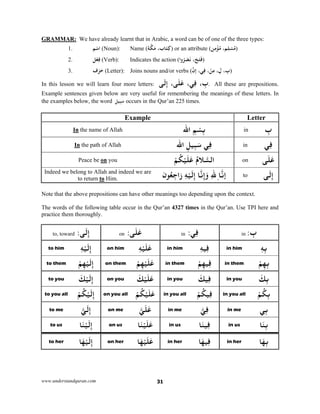
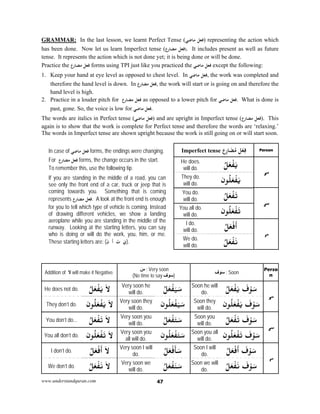
GRAMMAR: We have already learnt that in Arabic, a word can be of one of the three types:
1. ‫ﻢ‬ْ‫ﺳ‬‫ا‬ (Noun): Name (‫ﺔ‬‫ﻜ‬َ‫ﻣ‬ ،‫ﺎب‬َ‫ﺘ‬ِ‫ﻛ‬) or an attribute (‫ﻦ‬ِ‫ﻣ‬ْ ُ‫ﻣ‬ ،‫ﻢ‬ِ‫ﻠ‬ْ‫ﺴ‬ُ‫ﻣ‬)
2. ‫ﻞ‬ْ‫ﻌ‬ِ‫ﻓ‬ (Verb): Indicates the action (‫ا‬wُ‫ﺮ‬َ‫ﺼ‬َ ،َ‫ﺢ‬َ‫ﺘ‬َ‫ﻓ‬)
3. ‫ف‬ْ‫ﺮ‬َ‫ﺣ‬ (Letter): Joins nouns and/or verbs (ّ‫إن‬ ،‫ﻲ‬ِ‫ﻓ‬ ،ْ‫ﻦ‬ِ‫ﻣ‬ ،ِ‫ل‬ ، ِ‫ب‬)
In this lesson we will learn four more letters: ‫ﻰ‬َ‫ﻟ‬ِ‫إ‬ ،‫ﻰ‬َ‫ﻠ‬َ‫ﻋ‬ ،‫ﻲ‬ِ‫ﻓ‬ ، ِ‫ب‬. All these are prepositions.
Example sentences given below are very useful for remembering the meanings of these letters. In
the examples below, the word ‫ِﻴﻞ‬‫ﺒ‬َ‫ﺳ‬ occurs in the Qur’an 225 times.
LetterExample
ِ‫ب‬in‫اﷲ‬ ِ‫ﻢ‬ْ‫ﺴ‬ِ‫ﺑ‬the name of AllahIn
‫ﻲ‬ِ‫ﻓ‬in‫اﷲ‬ ِ‫ﻞ‬‫ﻴ‬ِ‫ﺒ‬َ‫ﺳ‬ ‫ﻲ‬ِ‫ﻓ‬the path of AllahIn
‫ﻰ‬َ‫ﻠ‬َ‫ﻋ‬onْ‫ﻢ‬ُ‫ﻜ‬ْ‫ﻴ‬َ‫ﻠ‬َ‫ﻋ‬ ُ‫ﻼم‬‫اﻟﺴ‬youonPeace be
‫ﻰ‬َ‫ﻟ‬ِ‫إ‬to‫ن‬ ُ‫ﻌ‬ِ‫ﺟ‬‫ا‬َ‫ر‬ ِ‫ﻪ‬ْ‫ﻴ‬َ‫ﻟ‬ِ‫إ‬ ‫ﺎ‬‫ﻧ‬ِ‫إ‬َ‫و‬ ِ‫ﷲ‬ِ ‫ﺎ‬‫إﻧ‬Indeed we belong to Allah and indeed we are
to return to Him.
Note that the above prepositions can have other meanings too depending upon the context.
The words of the following table occur in the Qur’an 4327 times in the Qur’an. Use TPI here and
practice them thoroughly.
: ِ‫ب‬in:‫ﻲ‬ِ‫ﻓ‬in:‫ﻰ‬َ‫ﻠ‬َ‫ﻋ‬on:‫ﻰ‬َ‫ﻟ‬ِ‫إ‬to, toward
ٖ‫ﻪ‬ِ‫ﺑ‬in himِ‫ﻪ‬‫ﻴ‬ِ‫ﻓ‬in himِ‫ﻪ‬ْ‫ﻴ‬َ‫ﻠ‬َ‫ﻋ‬on himِ‫ﻪ‬ْ‫ﻴ‬َ‫ﻟ‬ِ‫إ‬to him
ْ‫ﻢ‬ِ‫ﻬ‬ِ‫ﺑ‬in themْ‫ﻢ‬ِ‫ﻬ‬‫ﻴ‬ِ‫ﻓ‬in themْ‫ﻢ‬ِ‫ﻬ‬ْ‫ﻴ‬َ‫ﻠ‬َ‫ﻋ‬on themْ‫ﻢ‬ِ‫ﻬ‬ْ‫ﻴ‬َ‫ﻟ‬ِ‫إ‬to them
َ‫ﻚ‬ِ‫ﺑ‬in youَ‫ﻴﻚ‬ِ‫ﻓ‬in youَ‫ﻚ‬ْ‫ﻴ‬َ‫ﻠ‬َ‫ﻋ‬on youَ‫ﻚ‬ْ‫ﻴ‬َ‫ﻟ‬ِ‫إ‬to you
ْ‫ﻢ‬ُ‫ﻜ‬ِ‫ﺑ‬in you allْ‫ﻢ‬ُ‫ﻴﻜ‬ِ‫ﻓ‬in you allْ‫ﻢ‬ُ‫ﻜ‬ْ‫ﻴ‬َ‫ﻠ‬َ‫ﻋ‬on you allْ‫ﻢ‬ُ‫ﻜ‬ْ‫ﻴ‬َ‫ﻟ‬ِ‫إ‬to you all
‫ﻲ‬ِ‫ﺑ‬in me‫ﻲ‬ِ‫ﻓ‬in me‫ﻲ‬َ‫ﻠ‬َ‫ﻋ‬on me‫ﻲ‬َ‫ﻟ‬ِ‫إ‬to me
‫ﺎ‬َ‫ﻨ‬ِ‫ﺑ‬in us‫ﺎ‬َ‫ﻴﻨ‬ِ‫ﻓ‬in us‫ﺎ‬َ‫ﻨ‬ْ‫ﻴ‬َ‫ﻠ‬َ‫ﻋ‬on us‫ﺎ‬َ‫ﻨ‬ْ‫ﻴ‬َ‫ﻟ‬ِ‫إ‬to us
‫ﺎ‬َ‫ﻬ‬ِ‫ﺑ‬in her‫ﺎ‬َ‫ﻴﻬ‬ِ‫ﻓ‬in her‫ﺎ‬َ‫ﻬ‬ْ‫ﻴ‬َ‫ﻠ‬َ‫ﻋ‬on her‫ﺎ‬َ‫ﻬ‬ْ‫ﻴ‬َ‫ﻟ‬ِ‫إ‬to her
www.understandquran.com 32
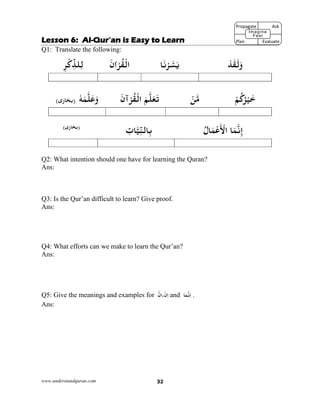
Lesson 6: Al-Qur’an is Easy to Learn
Q1: Translate the following:
ْ‫ﺪ‬َ‫ﻘ‬َ‫ﻟ‬َw‫ﺎ‬َ‫ﻧ‬ْ ‫ﺴ‬َ‫ﻳ‬َ‫אن‬ْ‫ﺮ‬ُ‫ﻘ‬ْ‫اﻟ‬ِ‫ﺮ‬ْ‫כ‬ِّ‫ﻠﺬ‬ِ‫ﻟ‬
ْ‫ﻢ‬ُ‫כ‬ُ‫ﺮ‬ْ‫ﻴ‬َ‫ﺧ‬ْ‫ﻦ‬‫ﻣ‬َ‫آن‬ْ‫ﺮ‬ُ‫ﻘ‬ْ‫اﻟ‬ َ‫ﻢ‬‫ﻠ‬َ‫ﻌ‬َ‫ﺗ‬ٗ‫ﻪ‬َ‫ﻤ‬‫ﻠ‬َ‫ﻋ‬َw(‫ى‬r‫)ﺑﺨﺎ‬
ُ ‫ﺎ‬َ‫ﻤ‬ْ‫ﻋ‬
َ ْ‫اﻷ‬ ‫ﺎ‬َ‫ﻤ‬‫ﻧ‬ِ‫إ‬ِ‫ﺎت‬‫ﻴ‬ِّ‫ﻨ‬‫ﺎﻟ‬ِ‫ﺑ‬(‫ى‬r‫)ﺑﺨﺎ‬
Q2: What intention should one have for learning the Quran?
Ans:
Q3: Is the Qur’an difficult to learn? Give proof.
Ans:
Q4: What efforts can we make to learn the Qur’an?
Ans:
Q5: Give the meanings and examples for ‫ن‬ِ‫ا‬،ْ‫ن‬ِ‫ا‬ and ‫ﺎ‬َ‫ﻤ‬‫ﻧ‬ِ‫ا‬ .
Ans:
Propagate              Ask
Plan                Evaluate
Imagine
Feel
www.understandquran.com 33
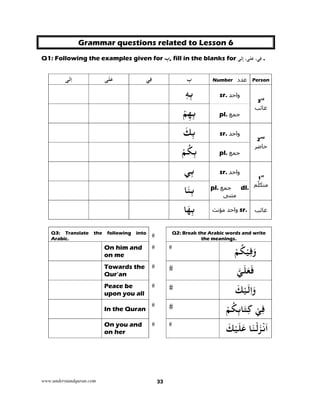
Grammar questions related to Lesson 6
Q1: Following the examples given for ِ‫ب‬, fill in the blanks for ‫ﻰ‬َ‫ِﻟ‬‫إ‬ ،‫ﻰ‬َ‫ﻠ‬َ‫ﻋ‬ ،‫ﻲ‬ِ‫ﻓ‬ .
‫ﻰ‬َ‫ﻟ‬ِ‫ا‬ ‫ﻰ‬َ‫ﻠ‬َ‫ﻋ‬ ‫ﻲ‬ِ‫ﻓ‬ ِ‫ب‬ ‫عدد‬Number Person
ِ‫ﺑ‬ٖ‫ﻪ‬ sr. ‫واحد‬
3rd
‫غائب‬
ْ‫ﻢ‬ِ‫ﻬ‬ِ‫ﺑ‬ pl. ‫جمع‬
َ‫ﻚ‬ِ‫ﺑ‬ sr. ‫واحد‬
2nd
‫حاضر‬
ْ‫ﻢ‬ُ‫ﻜ‬ِ‫ﺑ‬ pl. ‫جمع‬
‫ﻲ‬ِ‫ﺑ‬ sr. ‫واحد‬
1st
‫ّم‬‫ل‬‫متك‬
َ‫ﻨ‬ِ‫ﺑ‬‫ﺎ‬ pl. ‫جمع‬ dl.
‫مثنى‬
‫ﺎ‬َ‫ﻬ‬ِ‫ﺑ‬ ‫مؤنث‬ ‫واحد‬ sr. ‫غائب‬
Q2: Break the Arabic words and write
the meanings.
Q3: Translate the following into
Arabic.
ْ‫ﻢ‬ُ‫ﻜ‬ْ‫ﻴ‬ِ‫ﻓ‬َwOn him and
on me
‫ﻲ‬َ‫ﻠ‬َ‫ﻌ‬َ‫ﻓ‬Towards the
Qur’an
َ‫ﻚ‬ْ‫ﻴ‬َ‫ﻟ‬ِ‫ا‬َwPeace be
upon you all
ْ‫ﻲ‬ِ‫ﻓ‬ْ‫ﻢ‬ُ‫ﻜ‬ِ‫ﺑ‬‫ﺎ‬َ‫ﺘ‬ِ‫ﻛ‬In the Quran
َ‫ﻚ‬ْ‫ﻴ‬َ‫ﻠ‬َ‫ﻋ‬ ‫ﺎ‬َ‫ﻨ‬ْ‫ﻟ‬َ ْ‫ﻧ‬َ‫ا‬On you and
on her
www.understandquran.com 34
7. HOW TO LEARN IT?
The best way to learn the Qur’an is to follow the three steps mentioned in this lesson. First step is
to ask Allah for knowledge.
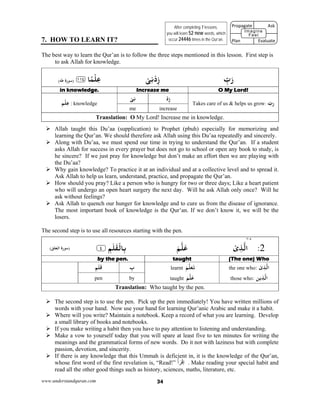
َ‫ر‬ِّ‫ب‬ْ‫ﻰ‬ِ‫ﻧ‬ْ‫د‬ِz﴿ ‫ﺎ‬ً‫ﻤ‬ْ‫ﻠ‬ِ‫ﻋ‬١١٤﴾(‫ﻃﻪ‬ ‫ة‬r‫)ﺳﻮ‬
O My Lord!Increase mein knowledge.
ّ‫ب‬r:Takes care of us & helps us grow
ْ‫د‬ِzْ‫ﻰ‬ِ‫ﻧ‬
‫ﻢ‬ْ‫ﻠ‬ِ‫ﻋ‬ : knowledge
increaseme
Translation: O My Lord! Increase me in knowledge.
 Allah taught this Du’aa (supplication) to Prophet (pbuh) especially for memorizing and
learning the Qur’an. We should therefore ask Allah using this Du’aa repeatedly and sincerely.
 Along with Du’aa, we must spend our time in trying to understand the Qur’an. If a student
asks Allah for success in every prayer but does not go to school or open any book to study, is
he sincere? If we just pray for knowledge but don’t make an effort then we are playing with
the Du’aa?
 Why gain knowledge? To practice it at an individual and at a collective level and to spread it.
Ask Allah to help us learn, understand, practice, and propagate the Qur’an.
 How should you pray? Like a person who is hungry for two or three days; Like a heart patient
who will undergo an open heart surgery the next day. Will he ask Allah only once? Will he
ask without feelings?
 Ask Allah to quench our hunger for knowledge and to cure us from the disease of ignorance.
The most important book of knowledge is the Qur’an. If we don’t know it, we will be the
losers.
The second step is to use all resources starting with the pen.
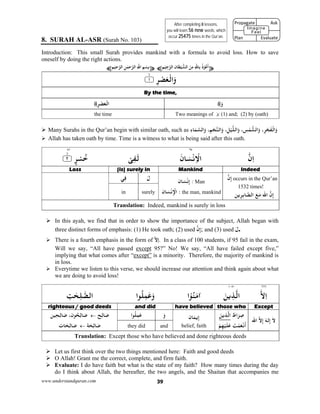
٣٠٤
2:ْ‫ى‬ِ‫ﺬ‬‫اﻟ‬َ‫ﻢ‬‫ﻠ‬َ‫ﻋ‬ِ‫ﻢ‬َ‫ﻠ‬َ‫ﻘ‬ْ‫ﺎﻟ‬ِ‫ﺑ‬٪﴿٤٪﴾(‫اﻟﻌﻠﻖ‬ ‫ة‬r‫)ﺳﻮ‬
(The one) Whotaughtby the pen.
: ْ‫ى‬ِ‫ﺬ‬‫اﻟ‬the one who
‫ﻳﻦ‬ِ‫ﺬ‬‫اﻟ‬:those who
َ‫ﻢ‬‫ﻠ‬َ‫ﻌ‬َ‫ﺗ‬learnt
َ‫ﻢ‬‫ﻠ‬َ‫ﻋ‬taught
ِ‫ب‬ِ‫ﻢ‬َ‫ﻠ‬َ‫ﻗ‬
bypen
Translation: Who taught by the pen.
 The second step is to use the pen. Pick up the pen immediately! You have written millions of
words with your hand. Now use your hand for learning Qur’anic Arabic and make it a habit.
 Where will you write? Maintain a notebook. Keep a record of what you are learning. Develop
a small library of books and notebooks.
 If you make writing a habit then you have to pay attention to listening and understanding.
 Make a vow to yourself today that you will spare at least five to ten minutes for writing the
meanings and the grammatical forms of new words. Do it not with laziness but with complete
passion, devotion, and sincerity.
 If there is any knowledge that this Ummah is deficient in, it is the knowledge of the Qur’an,
whose first word of the first revelation is, “Read!” ْ‫أ‬َ‫ر‬ْ‫ق‬‫إ‬ . Make reading your special habit and
read all the other good things such as history, sciences, maths, literature, etc.
After completing 7 lessons,
you will learn 52 new words, which
occur 24446 times in the Qur’an.
Propagate              Ask
 
Plan                Evaluate
Imagine
Feel
www.underst
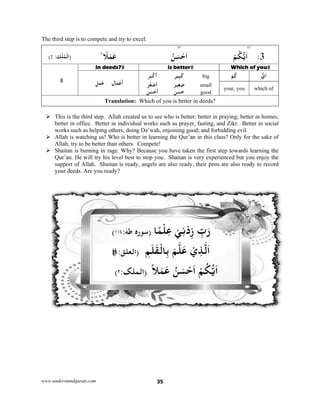
The third s
:‫ﻚ‬ْ‫ﻠ‬ُ‫ﻤ‬‫ﻟ‬2(
 This
better
work
 Allah
Allah
 Shait
Qur’a
suppo
your
tandquran.com
step is to com
ْ‫)اﻟ‬
is the third
r in office.
ks such as he
h is watchin
h, try to be b
tan is burnin
an. He will
ort of Allah
deeds. Are
m
mpete and t
٪‫ط‬ ً‫ﻼ‬َ‫ﻤ‬َ‫ﻋ‬
in deeds?
‫ﻞ‬َ‫ﻤ‬َ‫ﻋ‬ ‫ﺎ‬َ‫ﻤ‬‫ﻋ‬
Trans
step. Allah
Better in i
elping other
ng us! Who
better than o
ng in rage.
try his leve
h. Shaitan
you ready?
۱۱(
:۴(
۲(
try to excel.
?
ْ‫ﻋ‬
َ
‫أ‬
slation: Wh
h created us
ndividual w
rs, doing Da
is better in
others. Com
Why? Bec
el best to st
is ready, an
?
:ٰ‫ﻃﻪ‬ ‫ه‬r‫ﺳﻮ‬۴
‫ﻢ‬:‫)اﻟﻌﻠﻖ‬
:‫)اﻟﻤﻠﮏ‬۲
35
.
ُ‫ﻦ‬
is
‫ﺮ‬َ‫ﺒ‬ْ‫ﻛ‬
َ
‫أ‬
‫ﺮ‬َ‫ﻐ‬ْ‫ﺻ‬
َ
‫أ‬
‫ﻦ‬َ‫ﺴ‬ْ‫ﺣ‬
َ
‫أ‬
hich of you
s to see who
works such
a’wah, enjo
n learning th
mpete!
cause you h
top you. Sh
ngels are al
‫ﺎ‬ً‫ﻤ‬ْ‫ﻠ‬ِ‫ﻋ‬‫)ﺳ‬
َ‫ﻠ‬َ‫ﻘ‬ْ‫ﺎﻟ‬ِِ‫ﻢ‬
ً‫ﻼ‬َ‫ﻤ‬َ‫ﻋ‬)
٤٣
ُ‫ﻦ‬َ‫ﺴ‬ْ‫ﺣ‬َ‫ا‬
better
‫ِﻴﺮ‬‫ﺒ‬َ‫ﻛ‬
‫ﻴﺮ‬ِ‫ﻐ‬َ‫ﺻ‬
‫ﻦ‬َ‫ﺴ‬َ‫ﺣ‬
is better in
o is better; b
as prayer, f
oining good,
he Qur’an i
ave taken t
haitan is ve
so ready, th
ْ‫ﻲ‬ِ‫ﻧ‬ْ‫د‬ِz ‫ب‬
َ‫ﻢ‬‫ﻠ‬َ‫ﻋ‬ ْ‫ي‬‫ﺬ‬
ُ‫ﻦ‬َ‫ﺴ‬ْ‫ﺣ‬َ‫ا‬
big
y
small
good
deeds?
better in pra
fasting, and
, and forbid
in this class
the first step
ery experien
heir pens ar
ِّ‫ب‬َ‫ر‬
ِ‫ﺬ‬‫ﻟ‬َ‫ا‬
ْ‫ﻢ‬ُ‫ﻜ‬‫ﻳ‬َ‫ا‬
٤٦
ْ‫ﻢ‬ُ‫ﻜ‬‫ﻳ‬َ‫ا‬
Which o
ْ‫ﻢ‬ُ‫ﻛ‬
your, you
aying; bette
Zikr. Bett
dding evil.
s? Only for
p towards l
nced but yo
re also read
3:
of you
‫ي‬َ‫ا‬
which of
r in homes;
ter in social
the sake of
earning the
u enjoy the
dy to record
;
l
f
e
e
d
www.understandquran.com 36
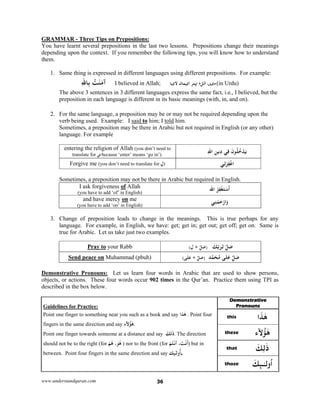
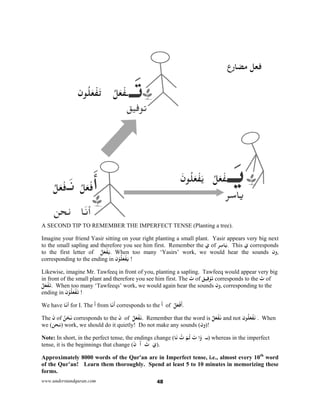
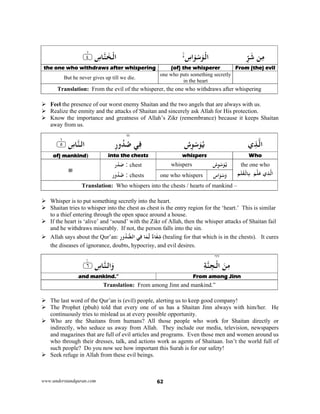
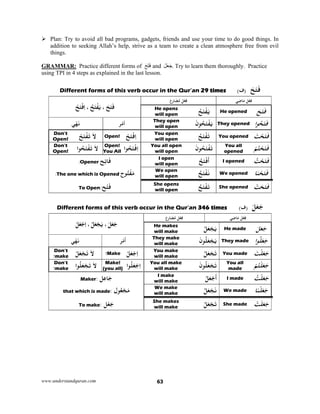
GRAMMAR - Three Tips on Prepositions:
You have learnt several prepositions in the last two lessons. Prepositions change their meanings
depending upon the context. If you remember the following tips, you will know how to understand
them.
1. Same thing is expressed in different languages using different prepositions. For example:
ِ‫ﷲ‬‫ﺎ‬ِ ُ‫ﺖ‬ْ‫ﻨ‬َ‫ﻣ‬‫آ‬ I believed in Allah; ‫ﻣی‬‫ں‬‫اﻟﻞ‬‫ه‬‫ﻻیﺎ‬ ‫ایﻤﺎن‬ ‫پﺮ‬ (in Urdu)
The above 3 sentences in 3 different languages express the same fact, i.e., I believed, but the
preposition in each language is different in its basic meanings (with, in, and on).
2. For the same language, a preposition may be or may not be required depending upon the
verb being used. Example: I said to him; I told him.
Sometimes, a preposition may be there in Arabic but not required in English (or any other)
language. For example
entering the religion of Allah (you don’t need to
translate for ‫ﻲ‬ِ‫ﻓ‬ because ‘enter’ means ‘go in’).
ِ‫ﷲ‬‫ا‬ ِ‫ﻦ‬‫ﻳ‬ِ‫د‬ ‫ﻲ‬ِ‫ﻓ‬ َ‫ن‬ ُ‫ﻠ‬ُ‫ﺧ‬ْ‫ﺪ‬َ‫ﻳ‬
Forgive me (you don’t need to translate for ِ‫ل‬) ‫ﻲ‬ِ‫ﻟ‬ْ ِ‫ﻔ‬ْ‫اﻏ‬
Sometimes, a preposition may not be there in Arabic but required in English.
I ask forgiveness of Allah
(you have to add ‘of’ in English)
‫اﷲ‬ ُ‫ﺮ‬ِ‫ﻔ‬ْ‫ﻐ‬َ‫ﺘ‬ْ‫ﺳ‬
َ
‫أ‬
and have mercy on me
(you have to add ‘on’ in English)
‫ﻲ‬ِ‫ﻨ‬ْ‫ﻤ‬َ‫ﺣ‬ْ‫ر‬‫ا‬َw
3. Change of preposition leads to change in the meanings. This is true perhaps for any
language. For example, in English, we have: get; get in; get out; get off; get on. Same is
true for Arabic. Let us take just two examples.
Pray to your Rabb َ‫ﻚ‬ِّ‫ﺑ‬َ‫ﺮ‬ِ‫ﻟ‬ ِّ‫ﻞ‬َ‫ﺻ‬(ِ‫ل‬ + ِّ‫ﻞ‬َ‫ﺻ‬)
Send peace on Muhammad (pbuh) ‫ﺪ‬‫ﻤ‬َ‫ﺤ‬ُ‫ﻣ‬ ‫ﻰ‬َ‫ﻠ‬َ‫ﻋ‬ ِّ‫ﻞ‬َ‫ﺻ‬(‫ﻰ‬َ‫ﻠ‬َ‫ﻋ‬ + ِّ‫ﻞ‬َ‫ﺻ‬)
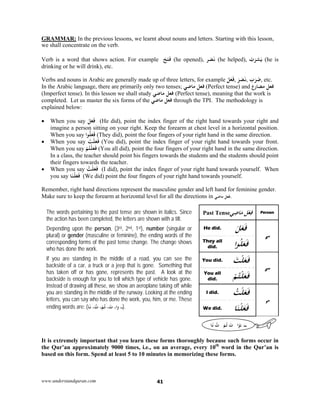
Demonstrative Pronouns: Let us learn four words in Arabic that are used to show persons,
objects, or actions. These four words occur 902 times in the Qur’an. Practice them using TPI as
described in the box below.
Guidelines for Practice:
Point one finger to something near you such as a book and say ٰ‫ﻫ‬‫ﺬا‬ . Point four
fingers in the same direction and say ٰ‫ﻫ‬‫ﻵء‬ُ .
Point one finger towards someone at a distance and say ٰ‫ذ‬َ‫ﻟﻚ‬ . The direction
should not be to the right (for ْ‫ﻢ‬ُ‫ﻫ‬ ،َ‫ﻮ‬ُ‫ﻫ‬ ) nor to the front (for ْ‫ﻢ‬ُ‫ﺘ‬ْ‫أﻧ‬ ،َ‫ﺖ‬ْ‫ﻧ‬
َ
‫أ‬) but in
between. Point four fingers in the same direction and say ‫و‬
ُ
‫أ‬‫ﻚ‬ .
Demonstrative
Pronouns
this ٰ‫ﻫ‬‫ا‬َ‫ﺬ‬
these ٰ‫ﻫ‬‫ﻵء‬ُ
that
ٰ‫ذ‬َ‫ﻚ‬ِ‫ﻟ‬
those ‫ﻟ‬wُ‫ا‬‫ـ‬ٰ‫ـ‬َ‫ﻚ‬
www.understandquran.com 37
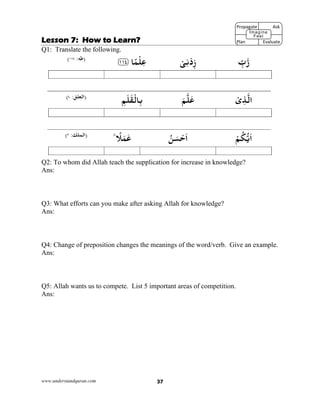
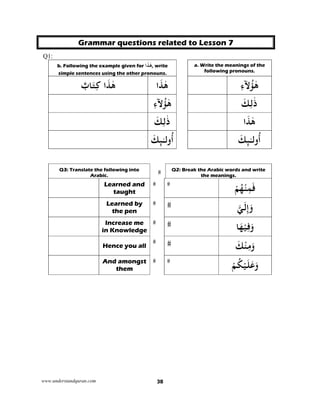
Lesson 7: How to Learn?
Q1: Translate the following.
ِّ‫ب‬‫ر‬ْ‫ﻰ‬ِ‫ﻧ‬ْ‫د‬ِz﴿ ‫ﺎ‬ً‫ﻤ‬ْ‫ﻠ‬ِ‫ﻋ‬١١٤﴾‫)ﻃﻪ‬:١١٤(
ْ‫ى‬ِ‫ﺬ‬‫اﻟ‬َ‫ﻢ‬‫ﻠ‬َ‫ﻋ‬ِ‫ﻢ‬َ‫ﻠ‬َ‫ﻘ‬ْ‫ﺎﻟ‬ِ‫ﺑ‬):‫اﻟﻌﻠﻖ‬٤(
ْ‫ﻢ‬ُ‫ﻜ‬‫ﻳ‬َ‫ا‬ُ‫ﻦ‬َ‫ﺴ‬ْ‫ﺣ‬َ‫ا‬٪‫ط‬ ً‫ﻼ‬َ‫ﻤ‬َ‫ﻋ‬:‫)اﻟﻤﻠﻚ‬٢(
Q2: To whom did Allah teach the supplication for increase in knowledge?
Ans:
Q3: What efforts can you make after asking Allah for knowledge?
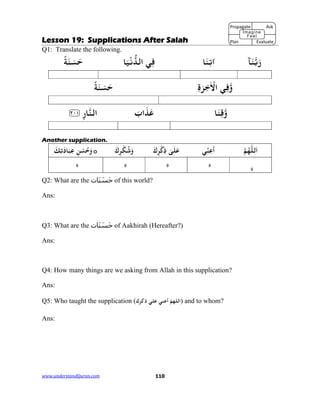
Ans:
Q4: Change of preposition changes the meanings of the word/verb. Give an example.
Ans:
Q5: Allah wants us to compete. List 5 important areas of competition.
Ans:
Propagate              Ask
 
Plan                Evaluate
Imagine
Feel
www.understandquran.com 38
Grammar questions related to Lesson 7
Q1:
b. Following the example given for ٰ‫ﻫ‬َ‫ﺬ‬‫ا‬ , write
simple sentences using the other pronouns.
a. Write the meanings of the
following pronouns.
‫ا‬َ‫ﺬ‬ٰ‫ﻫ‬ٌ‫ﺎب‬َ‫ﺘ‬ِ‫ﻛ‬ ‫ا‬َ‫ﺬ‬ٰ‫ﻫ‬ ِ‫ء‬‫ﻵ‬ُ ٰ‫ﻫ‬
ِ‫ء‬‫ﻵ‬ُ ٰ‫ﻫ‬ َ‫ﻚ‬ِ‫ﻟ‬ٰ‫ذ‬
َ‫ﻚ‬ِ‫ﻟ‬ٰ‫ذ‬ ‫ا‬َ‫ﺬ‬ٰ‫ﻫ‬
َ‫ﻚ‬ ٰ‫ـ‬‫ﻟ‬w
ُ
‫أ‬ َ‫ﻚ‬ ٰ‫ـ‬‫ﻟ‬w
ُ
‫أ‬
Q2: Break the Arabic words and write
the meanings.
Q3: Translate the following into
Arabic.
ْ‫ﻢ‬ُ‫ﻬ‬ْ‫ﻨ‬ِ‫ﻤ‬َ‫ﻓ‬Learned and
taught
‫ﻲ‬َ‫ﻟ‬ِ‫إ‬َ‫و‬Learned by
the pen
‫ﺎ‬َ‫ﻬ‬ْ‫ﻴ‬ِ‫ﻓ‬َwIncrease me
in Knowledge
َ‫ﻚ‬ْ‫ﻨ‬ِ‫ﻣ‬َwHence you all
ْ‫ﻢ‬ُ‫ﻜ‬ْ‫ﻴ‬َ‫ﻠ‬َ‫ﻋ‬َwAnd amongst
them
www.understandquran.com 39
8. SURAH AL-ASR (Surah No. 103)
Introduction: This small Surah provides mankind with a formula to avoid loss. How to save
oneself by doing the right actions.
¥‫ﻢ‬ْ‫ﻴ‬ِ‫ﺟ‬‫اﻟﺮ‬ ‫ﺎن‬َ‫ﻄ‬ْ‫ﻴ‬‫اﻟﺸ‬ َ‫ﻦ‬ِ‫ﻣ‬ِ‫ِﺎﷲ‬ ُ‫ذ‬ْ ُ‫ﻋ‬
َ
‫أ‬¤¥‫ﻢ‬ْ‫ﻴ‬ِ‫ﺣ‬‫اﻟﺮ‬ ِ‫ﻦ‬ٰ‫ﻤ‬‫ﺣ‬‫اﻟﺮ‬ِ‫اﷲ‬ ِ‫ﻢ‬ْ‫ِﺴ‬‫ﺑ‬¤
٪﴿ ِ‫ﺮ‬ْ‫ﺼ‬َ‫ﻌ‬ْ‫اﻟ‬َw١m٪﴾
By the time, 
َ‫و‬ِ‫ﺮ‬ْ‫ﺼ‬َ‫ﻌ‬ْ‫اﻟ‬
Two meanings of َ‫و‬: (1) and; (2) by (oath)the time
 Many Surahs in the Qur’an begin with similar oath, such as ِ‫ء‬‫ﺎ‬َ‫ﻤ‬‫اﻟﺴ‬َw ،ِ‫ﻢ‬ْ‫ﺠ‬‫اﻟﻨ‬َw ،ِ‫ﻞ‬ْ‫ﻴ‬‫اﻟﻠ‬َw ، ِ‫ﺲ‬ْ‫ﻤ‬‫اﻟﺸ‬َw ،ِ‫ﺮ‬ْ‫ﺠ‬َ‫ﻔ‬ْ‫اﻟ‬َw
 Allah has taken oath by time. Time is a witness to what is being said after this oath.
٦٥٥١
‫ن‬ِ‫ا‬َ‫ﺎن‬َ‫ﺴ‬ْ‫ﻧ‬ِ ْ‫اﻻ‬ْ‫ﻰ‬ِ‫ﻔ‬َ‫ﻟ‬٪﴿ ٍ‫ﺮ‬ْ‫ﺴ‬ُ‫ﺧ‬٢m٪﴾
IndeedMankind(is) surely inLoss 
‫ن‬ِ‫إ‬ occurs in the Qur’an
1532 times!
‫ا‬ ‫ن‬ِ‫إ‬َ ‫ﷲ‬‫ﻳﻦ‬ِ‫ﺮ‬ِ‫ﺑ‬‫ﺎ‬‫اﻟﺼ‬ َ‫ﻊ‬َ‫ﻣ‬
‫ﺎن‬َ‫ﺴ‬ْ‫ﻧ‬ِ‫إ‬ : Man
:ِ ْ‫اﻹ‬‫ﺎن‬َ‫ﺴ‬ْ‫ﻧ‬ the man, mankind
َ‫ل‬‫ﻲ‬ِ‫ﻓ‬
surelyin
Translation: Indeed, mankind is surely in loss
 In this ayah, we find that in order to show the importance of the subject, Allah began with
three distinct forms of emphasis: (1) He took oath; (2) used ‫ن‬ِ‫إ‬; and (3) used َ‫.ل‬
 There is a fourth emphasis in the form of ّ‫إﻻ‬. In a class of 100 students, if 95 fail in the exam,
Will we say, “All have passed except 95?” No! We say, “All have failed except five,”
implying that what comes after “except” is a minority. Therefore, the majority of mankind is
in loss.
 Everytime we listen to this verse, we should increase our attention and think again about what
we are doing to avoid loss!
٦٦٦١٠٨٠
‫ﻻ‬ِ‫ا‬َ‫ﻦ‬‫ﻳ‬ِ‫ﺬ‬‫اﻟ‬‫ا‬ْ ُ‫ﻨ‬َ‫ﻣ‬‫א‬‫ا‬ ُ‫ﻠ‬ِ‫ﻤ‬َ‫ﻋ‬َwِ‫ﺖ‬ٰ‫ﺤ‬ِ‫ﻠ‬‫اﻟﺼ‬
Except those whohave believedand didrighteous / good deeds 
‫ا‬ ‫ﻻ‬ِ‫إ‬ َ‫ﻟﻪ‬ِ‫إ‬ َ‫ﻻ‬‫ﷲ‬
َ‫اط‬َ‫ﺮ‬ِ‫ﺻ‬َ‫ﻦ‬‫ﻳ‬ِ‫ﺬ‬‫اﻟ‬
ْ‫ﻢ‬ِ‫ﻬ‬ْ‫ﻴ‬َ‫ﻠ‬َ‫ﻋ‬ َ‫ﺖ‬ْ‫ﻤ‬َ‫ﻌ‬ْ‫ﻧ‬
َ
‫أ‬
‫ﺎن‬َ‫ﻤ‬‫ﻳ‬ِ‫إ‬
belief, faith
َ‫و‬‫ا‬ ُ‫ﻠ‬ِ‫ﻤ‬َ‫ﻋ‬‫ﺢ‬ِ‫ﻟ‬‫ﺎ‬َ‫ﺻ‬‫ﻴﻦ‬ِ‫ﺤ‬ِ‫ﻟ‬‫ﺎ‬َ‫ﺻ‬ ،‫ن‬ ُ‫ﺤ‬ِ‫ﻟ‬‫ﺎ‬َ‫ﺻ‬
‫ﺔ‬َ‫ﺤ‬ِ‫ﻟ‬‫ﺎ‬َ‫ﺻ‬ِ‫ﻟ‬‫ﺎ‬َ‫ﺻ‬‫ﺎت‬َ‫ﺤ‬ andthey did
Translation: Except those who have believed and done righteous deeds
 Let us first think over the two things mentioned here: Faith and good deeds
 O Allah! Grant me the correct, complete, and firm faith.
 Evaluate: I do have faith but what is the state of my faith? How many times during the day
do I think about Allah, the hereafter, the two angels, and the Shaitan that accompanies me
After completing 8 lessons,
you will learn 56 new words, which
occur 25475 times in the Qur’an.
Propagate              Ask
 
Plan                Evaluate
Imagine
Feel
www.understandquran.com 40
throughout the day? How strong is my faith on fate? Do I say: Why did this happen to me?
Or do I take it as a test from Allah and try my best to overcome it.
 What is the state of my faith on Allah’s Book? Do I just have the faith or do I care to develop
relationship with it by studying and practicing it.
 The Qur’an deals with the details of our beliefs. Reciting the Qur’an with understanding and
studying Hadith strengthens and increases our faith.
 Just Iman (faith) is not enough to save me from the loss. Good deeds are also essential. What
is the quality of my Salah, fasts, Zakah, manners, morals, dealings, etc?
٢٤٧
‫ا‬ْ َ‫ﺻ‬‫ا‬َ َ‫ﺗ‬َwِّ‫ﻖ‬َ‫ﺤ‬ْ‫ﺎﻟ‬ِ‫ﺑ‬‫ا‬ْ َ‫ﺻ‬‫ا‬َ َ‫ﺗ‬َw٪﴿ ِ‫ﺮ‬ْ‫ﺒ‬‫ﺎﻟﺼ‬ِ‫ﺑ‬٣٪﴾
and advised each otherto the truth,and advised each otherto [the] patience. 
َ‫و‬‫ا‬ْ َ‫ﺻ‬‫ا‬َ َ‫ﺗ‬ّ‫ﻖ‬َ‫ﺣ‬ : Truth
َ‫و‬‫ا‬ْ َ‫ﺻ‬‫ا‬َ َ‫ﺗ‬‫ﺮ‬ْ‫ﺒ‬َ‫ﺻ‬
andadvised each otherandadvised each otherPerseverance, patience
Translation: And advised each other to truth and advised each other to patience.
 Iman and righteous deeds alone are not sufficient. It is also necessary to advise others to the
truth and to patience.
 Where will one find the truth? In the Qur’an and in the Sunnah of the Prophet, pbuh. If we are
not able to even understand the Qur’an, then how are we going to propagate the truth to
others?
 In many chapters of the Qur’an, Allah describes how the prophets and messengers advised
people to the truth, righteousness and patience. Learn from them the way to do it.
 In this ayah, Allah is addressing the people in the plural form! i.e. ‘those who do ...’ This
shows that we have to work as a team and advise each other to obey Allah in every aspect of
their life.
 You can start now by selecting a friend in this class and ask him to be a partner in advising
each other to learn the Qur’an and practice it till its completion.
 Patience (Sabr) is of three types: (1) Patience to do good deeds including Da’wah work; (2)
patience to stay away from sins; and (3) patience while facing difficulties, diseases, etc.
 When we tell our son or daughter to “Get Educated,” we have a detailed plan for his
education. Do we have a similar plan for advising people to the righteous path?
 The Prophet (pbuh) said, “None of you truly believes until he wishes for his brother what he
wishes for himself.” All of humanity are our brothers and sisters from Adam and Eve, so we
should wish for all of mankind the same things that we want for ourselves, including
knowledge of the message of Islam. In order to spread the message, we first need to know it
ourselves.
www.understandquran.com 41
GRAMMAR: In the previous lessons, we learnt about nouns and letters. Starting with this lesson,
we shall concentrate on the verb.
Verb is a word that shows action. For example َ‫ﺢ‬َ‫ﺘ‬َ‫ﻓ‬ (he opened), ‫ﺮ‬َ‫ﺼ‬َ‫ﻧ‬ (he helped), ُ‫ب‬َ‫ﺮ‬‫ﺸ‬َ‫ﻳ‬ (he is
drinking or he will drink), etc.
Verbs and nouns in Arabic are generally made up of three letters, for example َ‫ﻞ‬َ‫ﻌ‬َ‫ﻓ‬, َ‫ﺮ‬َ‫ﺼ‬َ‫ﻧ‬, َ‫ب‬َ‫ﺮ‬َ‫ﺿ‬, etc.
In the Arabic language, there are primarily only two tenses; ‫ﻣﺎﺿﻲ‬ ‫ﻓﻌﻞ‬ (Perfect tense) and ‫ﻣﻀﺎرع‬ ‫ﻓﻌﻞ‬
(Imperfect tense). In this lesson we shall study ‫ﻣﺎﺿﻲ‬ ‫ﻓﻌﻞ‬ (Perfect tense), meaning that the work is
completed. Let us master the six forms of the ‫ﻣﺎﺿﻲ‬ ‫ﻓﻌﻞ‬ through the TPI. The methodology is
explained below:
 When you say َ‫ﻞ‬َ‫ﻌ‬َ‫ﻓ‬ (He did), point the index finger of the right hand towards your right and
imagine a person sitting on your right. Keep the forearm at chest level in a horizontal position.
When you say ‫ا‬ ُ‫ﻠ‬َ‫ﻌ‬َ‫ﻓ‬ (They did), point the four fingers of your right hand in the same direction.
 When you say َ‫ﺖ‬ْ‫ﻠ‬َ‫ﻌ‬َ‫ﻓ‬ (You did), point the index finger of your right hand towards your front.
When you say ْ‫ﻢ‬ُ‫ﺘ‬ْ‫ﻠ‬َ‫ﻌ‬َ‫ﻓ‬ (You all did), point the four fingers of your right hand in the same direction.
In a class, the teacher should point his fingers towards the students and the students should point
their fingers towards the teacher.
 When you say ُ‫ﺖ‬ْ‫ﻠ‬َ‫ﻌ‬َ‫ﻓ‬ (I did), point the index finger of your right hand towards yourself. When
you say ‫ﺎ‬َ‫ﻨ‬ْ‫ﻠ‬َ‫ﻌ‬َ‫ﻓ‬ (We did) point the four fingers of your right hand towards yourself.
Remember, right hand directions represent the masculine gender and left hand for feminine gender.
Make sure to keep the forearm at horizontal level for all the directions in ‫ﻣﺎﺿﻲ‬ ‫ﻓﻌﻞ‬.
The words pertaining to the past tense are shown in italics. Since
the action has been completed, the letters are shown with a tilt.
Depending upon the person, (3rd, 2nd, 1st), number (singular or
plural) or gender (masculine or feminine), the ending words of the
corresponding forms of the past tense change. The change shows
who has done the work.
If you are standing in the middle of a road, you can see the
backside of a car, a truck or a jeep that is gone. Something that
has taken off or has gone, represents the past. A look at the
backside is enough for you to tell which type of vehicle has gone.
Instead of drawing all these, we show an aeroplane taking off while
you are standing in the middle of the runway. Looking at the ending
letters, you can say who has done the work, you, him, or me. These
ending words are: ( ،‫ـ‬،‫ا‬w،َ‫ت‬،ْ‫ﻢ‬ُ‫ﺗ‬،ُ‫ت‬‫ﺎ‬َ‫ﻧ‬ ).
Past Tense‫ﻲ‬ِ‫ﺿ‬‫ﺎ‬َ‫ﻣ‬ ‫ﻞ‬ْ‫ﻌ‬ِ‫ﻓ‬ Person
He did. َ‫ﻞ‬َ‫ﻌ‬َ‫ﻓ‬
3rd
They all
did. ‫ا‬ ُ‫ﻠ‬َ‫ﻌ‬َ‫ﻓ‬
You did. َ‫ﺖ‬ْ‫ﻠ‬َ‫ﻌ‬َ‫ﻓ‬
2nd
You all
did. ْ‫ﻢ‬ُ‫ﺘ‬ْ‫ﻠ‬َ‫ﻌ‬َ‫ﻓ‬
I did. ُ‫ﺖ‬ْ‫ﻠ‬َ‫ﻌ‬َ‫ﻓ‬
1st
We did. ‫ﺎ‬َ‫ﻨ‬ْ‫ﻠ‬َ‫ﻌ‬َ‫ﻓ‬
It is extremely important that you learn these forms thoroughly because such forms occur in
the Qur’an approximately 9000 times, i.e., on an average, every 10th
word in the Qur’an is
based on this form. Spend at least 5 to 10 minutes in memorizing these forms.
ُ‫ـ‬ َ‫ـ‬‫ـــ‬‫ا‬َْ‫ت‬ْ‫ﻢ‬ُُ‫ت‬‫ﺎ‬َ
www.underst
Lets try to
Imagine so
fruits. The
this scene,
see the SM
the action i
َ‫ت‬ْ‫ﻢ‬ُُ‫ت‬‫ﺎ‬َ
Addit
He a
They a
You
You a
I a
We
tandquran.com
grasp the ab
omeone has
e person wh
we will fir
MALLER TH
is the first p
).
tion of ْ‫ﺪ‬َ‫ﻗ‬ g
already did
all already d
already did
all already d
lready did
already did
m
bove conce
s planted a
ho did the a
rst see the B
HING i.e. th
part of the v
gives furth
d (it).
did (it).
d (it).
did (it).
(it).
d (it).
pt with ano
mango tree
action (plan
BIG THING
he person w
verb (‫ﻞ‬َ‫ﻌ‬َ‫ﻓ‬), f
er emphasi
42
ther examp
e several ye
nted the tree
G i.e. the tre
who did this
followed by
is to the Pe
ْ‫ﻗﺪ‬َ‫ﻞ‬َ‫ﻌ‬َ‫ﻓ‬
ْ‫ﺪ‬‫ا‬ ُ‫ﻠ‬َ‫ﻌ‬َ‫ﻓ‬
‫ﺪ‬َ‫ﺖ‬ْ‫ﻠ‬َ‫ﻌ‬َ‫ﻓ‬
‫ﺪ‬ْ‫ﻢ‬ُ‫ﺘ‬ْ‫ﻠ‬َ‫ﻌ‬َ‫ﻓ‬
‫ﺪ‬ُ‫ﺖ‬ْ‫ﻠ‬َ‫ﻌ‬َ‫ﻓ‬
ْ‫ﺪ‬‫ﺎ‬َ‫ﻨ‬ْ‫ﻠ‬َ‫ﻌ‬َ‫ﻓ‬
le:
ears ago. T
e) is standin
ee (result of
s action ( ُ‫ت‬‫ﺎ‬َ
the part tha
erfect tense
‫ﺪ‬َ‫ﻗ‬
ْ‫ﺪ‬َ‫ﻗ‬
ْ‫ﺪ‬َ‫ﻗ‬
ْ‫ﺪ‬َ‫ﻗ‬
ْ‫ﺪ‬َ‫ﻗ‬
ْ‫ﺪ‬َ‫ﻗ‬
The tree is
ng in its sh
f his action
ُ‫ـ‬‫ا‬َْ‫ت‬ْ‫ﻢ‬ُُ‫ت‬
at shows wh
.
now tall a
hade. When
‫ﻓﻌﻞ‬ ) and th
َ‫ـ‬‫.)ـــ‬ In the
ho did the a
Person
Third Pers
Second Per
First Pers
and bearing
we look at
hen we will
e past tense,
action ( ُ‫ـ‬ َ‫ـ‬‫ـــ‬‫ا‬ْ
rson
erson
son
g
t
l
,
‫ـ‬
www.understandquran.com 43
Lesson 8: Surah Al-Asr
Q1: Translate the following.
٪﴿ ِ‫ﺮ‬ْ‫ﺼ‬َ‫ﻌ‬ْ‫اﻟ‬َw١m٪﴾‫ن‬ِ‫ا‬َ‫ﺎن‬َ‫ﺴ‬ْ‫ﻧ‬ِ ْ‫اﻻ‬٪﴿ ٍ‫ﺮ‬ْ‫ﺴ‬ُ‫ﺧ‬ ْ‫ﻰ‬ِ‫ﻔ‬َ‫ﻟ‬٢m٪﴾
‫ﻻ‬ِ‫ا‬َ‫ﻦ‬ْ‫ﻳ‬ِ‫ﺬ‬‫اﻟ‬‫ا‬ْ ُ‫ﻨ‬َ‫ﻣ‬‫א‬‫ا‬ ُ‫ﻠ‬ِ‫ﻤ‬َ‫ﻋ‬َwِ‫ﺖ‬ٰ‫ﺤ‬ِ‫ﻠ‬‫اﻟﺼ‬
‫ا‬ْ َ‫ﺻ‬‫ا‬َ َ‫ﺗ‬َwِّ‫ﻖ‬َ‫ﺤ‬ْ‫ﺎﻟ‬ِ‫ﺑ‬‫ا‬ْ َ‫ﺻ‬‫ا‬َ َ‫ﺗ‬َw٪﴿ ِ‫ﺮ‬ْ‫ﺒ‬‫ﺎﻟﺼ‬ِ‫ﺑ‬٣ۧ٪﴾
Q2: Why did Allah take an oath “By the Time”?
Ans:
Q3: What are the conditions for one to succeed?
Ans:
Q4: Where do you find the truth?
Ans:
Q5: How many types of Sabr are there?
Ans:
Propagate              Ask
 
Plan                Evaluate
Imagine
Feel
www.understandquran.com 44
Grammar questions related to Lesson 8
Q1: Write three times the six form of past tense َ‫ل‬َ‫ع‬َ‫ف‬ and write its
meanings:
Translatio
n
‫ﻣﺎﺿ‬ ‫ﻓﻌﻞ‬‫ﻲ‬ ‫ﻣﺎﺿ‬ ‫ﻓﻌﻞ‬‫ﻲ‬ ‫ﻣﺎﺿ‬ ‫ﻓﻌﻞ‬‫ﻲ‬ ‫ﻋﺪد‬Number Person
sr. ‫اﺣﺪ‬w
3
rd
‫ﻏﺎﺋﺐ‬
pl. ‫ﺟﻤﻊ‬
sr. ‫اﺣﺪ‬w
2nd
‫ﺣﺎﺿﺮ‬
pl. ‫ﺟﻤﻊ‬
sr. ‫اﺣﺪ‬w
1st
‫ﻢ‬ّ‫ﻣﺘﳫ‬pl. ‫ﺟﻤﻊ‬ dl.
‫ﻣﺜﻨﻰ‬
Q2: Break the Arabic words and write the
meanings.
Q3: Translate the following into
Arabic.
‫ا‬َ‫ﻫﺬ‬ َ‫ﻞ‬َ‫ﻌ‬َ‫ﻓ‬ ْ‫ﻦ‬َ‫ﻣ‬I did this
َ‫ﺖ‬ْ‫ﻠ‬َ‫ﻌ‬َ‫ﻓ‬َwIn loss
َ‫ﻚ‬ِّ‫ﺑ‬َ‫ر‬ ْ‫ﻦ‬ِ‫ﻣ‬Believed and
did good
ْ‫ﻢ‬ِ‫ﻬ‬ِ‫ﻨ‬ْ‫ﻳ‬ِ‫د‬ ْ‫ﻲ‬ِ‫ﻓ‬
Your religion
and my
religion
ٰ‫ﱃ‬ِ‫ا‬َ‫ﻚ‬ِّ‫ﺑ‬َ‫ر‬My name and
your name
www.understandquran.com 45
9. SURAH AN-NASR (Surah No. 110)
Introduction: According to Abdullah bin Abbas, may Allah be pleased with him, this Surah is the
last COMPLETE Surah of the Qur’an that was revelaled to the Prophet, (pbuh) [Muslim, Nasai].
After this Surah, some verses of other Surahs were revealed. The enemies of Islam were defeated
in Arabia and people were accepting Islam in groups because there was no one to scare them or
confuse them by telling false things against Islam. They got the freedom to accept it.
¥‫ﻢ‬ْ‫ﻴ‬ِ‫ﺟ‬‫اﻟﺮ‬ ‫ﺎن‬َ‫ﻄ‬ْ‫ﻴ‬‫اﻟﺸ‬ َ‫ﻦ‬ِ‫ﻣ‬ِ‫ِﺎﷲ‬ ُ‫ذ‬ْ ُ‫ﻋ‬
َ
‫أ‬¤¥‫ﻢ‬ْ‫ﻴ‬ِ‫ﺣ‬‫اﻟﺮ‬ ِ‫ﻦ‬ٰ‫ﻤ‬‫ﺣ‬‫اﻟﺮ‬ِ‫اﷲ‬ ِ‫ﻢ‬ْ‫ِﺴ‬‫ﺑ‬¤
٤٥٤
‫ا‬َ‫ذ‬ِ‫ا‬َ‫ء‬‫ٓﺎ‬َ‫ﺟ‬ِ‫ﷲ‬‫ا‬ ُ‫ﺮ‬ْ‫ﺼ‬َ‫ﻧ‬٪﴿ ُ‫ﺢ‬ْ‫ﺘ‬َ‫ﻔ‬ْ‫اﻟ‬َw١m٪﴾
WhenComesthe Help of Allahand the Victory
ْ‫ذ‬ِ‫إ‬،‫ا‬َ‫ذ‬ِ‫إ‬ : When
َ‫ء‬‫ﺎ‬َ‫ﺟ‬ : came
َ‫ء‬‫ﺎ‬َ‫ﺟ‬ ‫ا‬َ‫ذ‬ِ‫ا‬ : when (it) comes
‫ﺮ‬ْ‫ﺼ‬َ‫ﻧ‬ : help
َ‫و‬ُ‫ﺢ‬ْ‫ﺘ‬َ‫ﻔ‬ْ‫اﻟ‬
andvictory; opening
Translation: When the Help of Allah and the victory comes
 The word ْ‫إذ‬ occurs 239 times and ‫ا‬َ‫إذ‬ occurs 454 times in the Qur’an. Both of them mean
‘when.’
 Allah’s help means the dominance of truth over everything else. Here the meaning of ‫ُﷲ‬‫ر‬‫َص‬‫ن‬
implies that we can only try and the results come from Allah’s help alone. Therefore we must
seek His help in our everyday lives.
 The victory here refers to the Conquest of Makkah in the 10th year of Hijrah. When the
believers sacrifice everything in the path of Allah, Allah certainly sends His help.
 Ask: O Allah! Grant us too your help and victory.
 Evaluate: It took 23 years of hardwork and complete devotion to Allah after which Allah
gave the victory. What have we done for Islam?
 Plan: What can I do today, this week, or at this stage in my life? One must make an
individual and a collective plan so that we also receive the help and victory from Allah. One
should spend his money, his time, his resources and his abilities to serve the Deen of Islam. If
you are a student, then do your best to excel in studies so you serve Islam the best way.
٢٤٢
َ‫ﺖ‬ْ‫ﻳ‬َ‫ا‬َ‫ر‬َ‫و‬َ‫ﺎس‬‫اﻟﻨ‬َ‫ن‬ْ ُ‫ﻠ‬ُ‫ﺧ‬ْ‫ﺪ‬َ‫ﻳ‬ِ‫ﷲ‬‫ا‬ ِ‫ﻦ‬ْ‫ﻳ‬ِ‫د‬ ْ‫ﻰ‬ِ‫ﻓ‬٪﴿ ‫ﺎ‬ً‫اﺟ‬َ ْ‫ﻓ‬َ‫ا‬٢m٪﴾
And you seethe peopleentering
[into] the
religion of Allah
in crowds /
troops,
َ‫و‬‫ﺖ‬ْ‫ﻳ‬
َ
‫أ‬َ‫ر‬‫ﺎن‬َ‫ﺴ‬ْ‫ﻧ‬ِ‫إ‬ : man‫ل‬ ُ‫ﺧ‬ُ‫د‬entryْ‫ﻰ‬ِ‫ﻓ‬‫ﻦ‬ْ‫ﻳ‬ِ‫د‬ِ‫ﷲ‬‫ا‬‫ج‬ْ َ‫ﻓ‬ : crowd
andyou saw‫ﺎس‬َ‫ﻧ‬ : people‫ج‬ ُ‫ﺮ‬ُ‫ﺧ‬exitintoreligionAllah‫اج‬َ ْ‫ﻓ‬
َ
‫أ‬ : crowds
Translation: And you see the people entering the religion of Allah in crowds/troops
 Here ‘the people’ refers to the different tribes of Arabia who entered Islam after the
conquest of Makkah.
 There are two meanings of Deen: (1) Judgment (2) System of life. Here it refers to the
system of life. In this verse, it means that those people have become Muslims.
 According to the above verse, what is the result of victory and help from Allah? People
getting guidance and entering the fold of Islam. Do we ask for victory for this purpose? Are
we helping others to understand Islam and follow it?
After completing 9 lessons,
you will learn 59 new words, which
occur 26410 times in the Qur’an.
Propagate              Ask
 
Plan                Evaluate
Imagine
Feel
www.understandquran.com 46
ْ‫ﺢ‬ِّ‫ﺒ‬َ‫ﺴ‬َ‫ﻓ‬ِ‫ﺪ‬ْ‫ﻤ‬َ‫ﺤ‬ِ‫ﺑ‬َ‫ﻚ‬ِّ‫ﺑ‬َ‫ر‬ُ‫ه‬ْ ِ‫ﻔ‬ْ‫ﻐ‬َ‫ﺘ‬ْ‫ﺳ‬‫ا‬َw
Then glorifywith (the) praise(of) your Lordand ask forgiveness of Him
َ‫ف‬ْ‫ﺢ‬ِّ‫ﺒ‬َ‫ﺳ‬ِ‫ب‬ِ‫ﺪ‬ْ‫ﻤ‬َ‫ﺣ‬Who takes care of us
and helps us grow
َ‫و‬ْ‫ﺮ‬ِ‫ﻔ‬ْ‫ﻐ‬َ‫ﺘ‬ْ‫ﺳ‬ِ‫ا‬ُ‫ه‬
thenglorifywithpraiseandask forgiveness ofHim
Translation: Then glorify with the praise of your Lord and ask forgiveness from Him.
 ‫ِﺢ‬ّ‫ﺒ‬َ‫ﺳ‬ means say: Subhanallah. It means that Allah is free from any defect, deficiency, or
imperfection. He does not need anybody’s help. He is not weak and He is not under
pressure of anyone. He has no son or father. He is alone in His entity, His attributes, His
rights and His powers.
 By saying Subhanallah, we acknowledge His infinite and flawless wisdom too. The exam
of this life that we are passing through is a perfect exam. We should not complain about
anything that is a part of our fate (Qadr). If you complain, you are going against
Subhanallah. Instead, we should keep praying to Allah that He makes the tests and trials of
our daily lives easy for us.
 How can you praise someone against whom you have a complaint, however small it may
be? It is for this reason that we often seen the words Alhamdulillah mentioned after
Tasbeeh.
 Our Tasbeeh and Hamd are always defective and faulty. Therefore, we should consistently
ask His forgiveness. Whenever we get the opportunity to perform a good deed, we should
immediately do Tasbeeh, Hamd and ask for forgiveness.
ٗ‫ﻪ‬‫ﻧ‬ِ‫ا‬َ‫ن‬ َ‫ﰷ‬٪﴿ ‫ﺎ‬ً‫ﺑ‬‫ا‬ َ‫ﺗ‬٣ۧ٪﴾
Indeed, HeisOft-forgiving
‫ن‬ِ‫إ‬:‫ِﺮﻳﻦ‬‫ﺑ‬‫ﺎ‬‫اﻟﺼ‬ َ‫ﻊ‬َ‫ﻣ‬ َ‫ﷲ‬‫ا‬ ‫ن‬ِ‫إ‬
Allah is with those who areIndeed
patient
.wasisَ‫ن‬ َ‫ﰷ‬The regular meaning of
Only for Allah, َ‫ن‬ َ‫ﰷ‬means is.
َ‫ﺎب‬َ‫ﺗ‬:to turn
‫ﺐ‬ِ‫ئ‬‫ﺎ‬َ‫ﺗ‬:one who turns
‫اب‬ َ‫ﺗ‬:one who turns often
‫اب‬ َ‫ﺗ‬‫ِﻴﻦ‬‫ﺑ‬‫ا‬ َ ،‫ن‬ ُ‫ﺑ‬‫ا‬ َ‫ﺗ‬
Translation: Indeed, He is oft-forgiving.
 This is a very big sign of relief and good news for sinners like us. We should never lose
hope in the Mercy of Allah. Repent sincerely, i.e., accept that you sinned, feel sorry, and
have a firm intention of never repeating the sin. Always have firm belief that Allah will
accept your repentance.
 Example: If I am very hungry and if someone tells me that he feeds hundreds of people,
won’t I immediately ask him for food. Likewise, in this verse, Allah talks about his
immense forgiveness. So one must immediately use the opportunity and ask Allah for
forgiveness.
www.understandquran.com 47
GRAMMAR: In the last lesson, we learnt Perfect Tense (‫ﻣﺎﺿﻲ‬ ‫)ﻓﻌﻞ‬ representing the action which
has been done. Now let us learn Imperfect tense (‫ﻣﻀﺎرع‬ ‫ﻓﻌﻞ‬). It includes present as well as future
tense. It represents the action which is not done yet; it is being done or will be done.
Practice the ‫ﻣﻀﺎرع‬ ‫ﻓﻌﻞ‬ forms using TPI just like you practiced the ‫ﻣﺎﺿﻲ‬ ‫ﻓﻌﻞ‬ except the following:
1. Keep your hand at eye level as opposed to chest level. In ‫ﻣﺎﺿﻲ‬ ‫,ﻓﻌﻞ‬ the work was completed and
therefore the hand level is down. In ‫ﻣﻀﺎرع‬ ‫,ﻓﻌﻞ‬ the work will start or is going on and therefore the
hand level is high.
2. Practice in a louder pitch for ‫ﻣﻀﺎرع‬ ‫ﻓﻌﻞ‬ as opposed to a lower pitch for ‫ﻣﺎﺿﻲ‬ ‫.ﻓﻌﻞ‬ What is done is
past, gone. So, the voice is low for ‫ﻣﺎﺿﻲ‬ ‫.ﻓﻌﻞ‬
The words are italics in Perfect tense (‫ﻣﺎﺿﻲ‬ ‫)ﻓﻌﻞ‬ and are upright in Imperfect tense (‫ﻣﻀﺎرع‬ ‫.)ﻓﻌﻞ‬ This
again is to show that the work is complete for Perfect tense and therefore the words are ‘relaxing.’
The words in Imperfect tense are shown upright because the work is still going on or will start soon.
In case of ‫ﻓﻌﻞ‬‫ﻣﺎﺿ‬‫ﻲ‬ forms, the endings were changing.
For ‫ﻓﻌﻞ‬‫ﻣﻀﺎرع‬ forms, the change occurs in the start.
To remember this, use the following tip.
If you are standing in the middle of a road, you can
see only the front end of a car, truck or jeep that is
coming towards you. Something that is coming
represents ‫ﻓﻌﻞ‬‫ﻣﻀﺎرع‬ . A look at the front end is enough
for you to tell which type of vehicle is coming. Instead
of drawing different vehicles, we show a landing
aeroplane while you are standing in the middle of the
runway. Looking at the starting letters, you can say
who is doing or will do the work, you, him, or me.
These starting letters are: ( َ‫ي‬َ‫ت‬
َ
‫أ‬َ‫ن‬ ).
‫ع‬ِ‫ر‬‫ﺎ‬َ‫ﻀ‬ُ‫ﻣ‬ ‫ﻞ‬ْ‫ﻌ‬ِ‫ﻓ‬Imperfect tense Person
He does.
will do.
ُ‫ﻞ‬َ‫ﻌ‬ْ‫ﻔ‬َ‫ﻳ‬
3rd
They do.
will do. ‫ن‬ ُ‫ﻠ‬َ‫ﻌ‬ْ‫ﻔ‬َ‫ﻳ‬
You do.
will do.
ُ‫ﻞ‬َ‫ﻌ‬ْ‫ﻔ‬َ‫ﺗ‬
2nd
You all do.
will do. ‫ن‬ ُ‫ﻠ‬َ‫ﻌ‬ْ‫ﻔ‬َ‫ﺗ‬
I do.
will do.
ُ‫ﻞ‬َ‫ﻌ‬ْ‫ﻓ‬
َ
‫أ‬
1st
We do.
will do.
ُ‫ﻞ‬َ‫ﻌ‬ْ‫ﻔ‬َ‫ﻧ‬
Addition of َ‫ال‬ will make it Negative. َ‫س‬ : Very soon
(No time to say ‫وف‬َ‫س‬)
‫وف‬َ‫س‬ : Soon
Perso
n
He does not do. َ‫ﻻ‬ُ‫ﻞ‬َ‫ﻌ‬ْ‫ﻔ‬َ‫ﻳ‬ Very soon he
will do.
ُ‫ﻞ‬َ‫ﻌ‬ْ‫ﻔ‬َ‫ﻴ‬َ‫ﺳ‬ Soon he will
do.
َ‫ف‬ْ َ‫ﺳ‬ُ‫ﻞ‬َ‫ﻌ‬ْ‫ﻔ‬َ‫ﻳ‬
3rd
They don’t do. َ‫ﻻ‬‫ن‬ ُ‫ﻠ‬َ‫ﻌ‬ْ‫ﻔ‬َ‫ﻳ‬ Very soon they
will do. ‫ن‬ ُ‫ﻠ‬َ‫ﻌ‬ْ‫ﻔ‬َ‫ﻴ‬َ‫ﺳ‬ Soon they
will do.
َ‫ف‬ْ َ‫ﺳ‬‫ن‬ ُ‫ﻠ‬َ‫ﻌ‬ْ‫ﻔ‬َ‫ﻳ‬
You don’t do... َ‫ﻻ‬ُ‫ﻞ‬َ‫ﻌ‬ْ‫ﻔ‬َ‫ﺗ‬ Very soon you
will do.
ُ‫ﻞ‬َ‫ﻌ‬ْ‫ﻔ‬َ‫ﺘ‬َ‫ﺳ‬ Soon you
will do.
ْ َ‫ﺳ‬َ‫ف‬ُ‫ﻞ‬َ‫ﻌ‬ْ‫ﻔ‬َ‫ﺗ‬
2nd
You all don’t do. َ‫ﻻ‬‫ن‬ ُ‫ﻠ‬َ‫ﻌ‬ْ‫ﻔ‬َ‫ﺗ‬ Very soon you
all will do. ‫ن‬ ُ‫ﻠ‬َ‫ﻌ‬ْ‫ﻔ‬َ‫ﺘ‬َ‫ﺳ‬ Soon you all
will do.
َ‫ف‬ْ َ‫ﺳ‬‫ن‬ ُ‫ﻠ‬َ‫ﻌ‬ْ‫ﻔ‬َ‫ﺗ‬
I don’t do. َ‫ﻻ‬ُ‫ﻞ‬َ‫ﻌ‬ْ‫ﻓ‬
َ
‫أ‬ Very soon I will
do.
ُ‫ﻞ‬َ‫ﻌ‬ْ‫ﻓ‬
َ
‫ﺄ‬َ‫ﺳ‬ Soon I will
do.
َ‫ف‬ْ َ‫ﺳ‬ُ‫ﻞ‬َ‫ﻌ‬ْ‫ﻓ‬
َ
‫أ‬
1st
We don’t do. َ‫ﻻ‬ُ‫ﻞ‬َ‫ﻌ‬ْ‫ﻔ‬َ‫ﻧ‬ Very soon we
will do.
ُ‫ﻞ‬َ‫ﻌ‬ْ‫ﻔ‬َ‫ﻨ‬َ‫ﺳ‬ Soon we will
do.
َ‫ف‬ْ َ‫ﺳ‬ُ‫ﻞ‬َ‫ﻌ‬ْ‫ﻔ‬َ‫ﻧ‬
www.underst
A SECON
Imagine yo
to the smal
to the firs
correspond
Likewise, i
in front of
ُ‫ﻞ‬َ‫ﻌ‬ْ‫ﻔ‬َ‫ﺗ‬. Whe
ending in ‫ن‬
We have ‫ﺎ‬َ‫ﻧ‬
The َ‫ن‬ of ُ‫ﻦ‬‫ﺤ‬
we (‫ﻧﺤﻦ‬) w
Note: In sh
tense, it is
Approxim
of the Qur
forms.
tandquran.com
ND TIP TO R
our friend Y
ll sapling an
st letter of
ding to the e
imagine Mr
the small p
en too many
‫ن‬ْ ُ‫ﻠ‬َ‫ﻌ‬ْ‫ﻔ‬َ‫ﺗ‬ !
َ‫أﻧ‬ for I. The
‫ﻦ‬ْ‫ﺤ‬َ‫ﻧ‬ correspo
work, we sh
hort, in the p
the beginni
mately 8000
r’an! Lea
m
REMEMBE
Yasir sitting
nd therefore
f ُ‫ﻞ‬َ‫ﻌ‬ْ‫ﻔ‬َ‫ﻳ‬. W
ending in ‫ن‬ْ
r. Tawfeeq i
lant and the
y ‘Tawfeeqs
َ
‫أ‬ from ‫ﺎ‬َ‫ﻧ‬
َ
‫أ‬ co
onds to the َ‫ن‬
hould do it q
perfect tens
ings that cha
0 words of
arn them th
ER THE IM
g on your ri
e you see h
When too m
ْ ُ‫ﻠ‬َ‫ﻌ‬ْ‫ﻔ‬َ‫ﻳ‬ !
in front of y
erefore you
s’ work, we
orresponds
َ‫ن‬ of ُ‫ﻞ‬َ‫ﻌ‬ْ‫ﻔ‬َ‫ﻧ‬.
quietly! Do
se, the endin
ange (َ‫ن‬
َ
‫أ‬ ‫ت‬
the Qur'an
horoughly.
48
MPERFECT
ight planting
him first. R
many ‘Yasi
you, plantin
see him firs
would agai
to the
َ
‫أ‬ of
Remember
not make a
ngs change
َ‫ت‬ َ‫ي‬).
n are in Im
Spend at
TENSE (P
g a small pl
Remember th
irs’ work,
ng a sapling.
st. The َ‫ت‬ of
in hear the s
ُ‫ﻞ‬َ‫ﻌ‬ْ‫ﻓ‬
َ
‫أ‬.
r that the wo
any sounds (
(‫ﺎ‬َ ُ‫ت‬ ْ‫ﻢ‬ُ َ‫ت‬
mperfect ten
least 5 to 1
lanting a tre
lant. Yasir
he َ‫ي‬ of ‫ﺮ‬ِ‫ﺳ‬‫ﻳﺎ‬
we would
. Tawfeeq w
f ‫ﻴﻖ‬ِ‫ﻓ‬ْ َ‫ﺗ‬ corre
sounds ‫ن‬w, c
ord is ُ‫ﻞ‬َ‫ﻌ‬ْ‫ﻔ‬َ‫ﻧ‬ a
(‫ن‬w)!
‫ــ‬َ‫ـ‬‫ا‬ْw ) where
nse, i.e., alm
10 minutes
ee).
r appears ve
‫ﺎ‬َ‫ﻳ‬. This َ‫ي‬ c
hear the
would appe
esponds to t
correspondin
and not ‫ن‬ ُ‫ﻠ‬َ‫ﻌ‬
eas in the im
most every
in memor
ery big next
corresponds
sounds ‫ن‬w,
ear very big
the َ‫ت‬ of
ng to the
‫ﻌ‬ْ‫ﻔ‬َ . When
mperfect
y 10th
word
rizing these
t
s
,
d
e
www.understandquran.com 49
Lesson 9: Surah An-Nasr
Q1: Translate the following.
‫ا‬َ‫ذ‬ِ‫ا‬َ‫ء‬‫ٓﺎ‬َ‫ﺟ‬ُ‫ﺮ‬ْ‫ﺼ‬َ‫ﻧ‬ِ‫ﷲ‬‫ا‬٪﴿ ُ‫ﺢ‬ْ‫ﺘ‬َ‫ﻔ‬ْ‫اﻟ‬َw١m٪﴾
َ‫ﺖ‬ْ‫ﻳ‬َ‫ا‬َ‫ر‬َ‫و‬َ‫ﺎس‬‫اﻟﻨ‬َ‫ن‬ْ ُ‫ﻠ‬ُ‫ﺧ‬ْ‫ﺪ‬َ‫ﻳ‬ِ‫ﷲ‬‫ا‬ ِ‫ﻦ‬ْ‫ﻳ‬ِ‫د‬ ْ‫ﻰ‬ِ‫ﻓ‬٪﴿ ‫ﺎ‬ً‫ﺟ‬‫ا‬َ ْ‫ﻓ‬َ‫ا‬٢m٪﴾
ْ‫ﺢ‬ِّ‫ﺒ‬َ‫ﺴ‬َ‫ﻓ‬ِ‫ﺪ‬ْ‫ﻤ‬َ‫ﺤ‬ِ‫ﺑ‬َ‫ﻚ‬ِّ‫ﺑ‬َ‫ر‬ُ‫ه‬ْ ِ‫ﻔ‬ْ‫ﻐ‬َ‫ﺘ‬ْ‫ﺳ‬‫ا‬َw
ٗ‫ﻪ‬‫ﻧ‬ِ‫ا‬٪﴿ ‫ﺎ‬ً‫ﺑ‬‫ا‬ َ َ‫ن‬ َ‫ﰷ‬٣ۧ٪﴾
Q2: When was this Surah revealed?
Ans:
Q3: Explain the difference between ‫تسبيح‬ and ‫?حمد‬
Ans:
Q4: What is meant by the Help of Allah and the victory in this Surah?
Ans:
Q5: What lessons do we get from Surah An-Nasr?
Ans:
Propagate              Ask
 
Plan                Evaluate
Imagine
Feel
www.understandquran.com 50
Grammar questions related to Lesson 9
Q1: Write three times the six form of imperfect tense َ‫ﻳ‬ْ‫ﻔ‬ُ‫ﻞ‬َ‫ﻌ‬ and write its
meanings:
Translation ‫ﻓﻌﻞ‬‫ﻣﻀﺎرع‬ ‫ﻓﻌﻞ‬‫ﻣﻀﺎرع‬ ‫ﻓﻌﻞ‬‫ﻣﻀﺎرع‬ ‫ﻋﺪد‬ Number Person
sr. ‫اﺣﺪ‬w
3rd
‫ﻏﺎﺋﺐ‬
pl. ‫ﺟﻤﻊ‬
sr. ‫اﺣﺪ‬w
2nd
‫ﺣﺎﺿﺮ‬
pl. ‫ﺟﻤﻊ‬
sr. ‫اﺣﺪ‬w
1st
‫ﻢ‬ّ‫ﻣﺘﳫ‬pl. ‫ﺟﻤﻊ‬ dl.
‫ﻣﺜﻨﻰ‬
Q2: Break the Arabic words and write the
meanings.
Q3: Translate the following into
Arabic.
َ‫ﻚ‬ِ‫ﻟ‬‫ذ‬ ُ‫ﻞ‬َ‫ﻌ‬ْ‫ﻔ‬َ ْ‫ﻦ‬َ‫ﻣ‬He did and I
did
ُ‫ﻞ‬َ‫ﻌ‬ْ‫ﻔ‬َ َ‫ﷲ‬‫ا‬ ‫ان‬They did and
you did
َ‫ﻟ‬ِ‫ا‬‫ﻰ‬ِ‫ﻦ‬ْ‫ﻳ‬ِّ‫اﻟﺪ‬ ِ‫م‬ْ‫ﻮ‬َ
He is doing
and I am
doing
‫ﺎ‬َ‫ﻬ‬ِ‫ﺑ‬‫ﺎ‬َ‫ﺘ‬ِ‫ﻛ‬ َ‫ﻊ‬َ‫ﻣ‬And we are
doing
َ‫ﻠ‬َ‫ﻋ‬َw‫ﻰ‬ِ‫ﷲ‬‫ا‬I am doing this
www.understandquran.com 51
10. SURAH AL-IKHLAAS (Surah No. 112)
Introduction: This is a small but very important Surah. When you recite this Surah in the Salah,
do not do so just because it is a small Surah but keep in mind its significance and importance also.
 It is equivalent to one third of the Qur’an.
 It answers the most fundamental question, i.e. who should we worship and who can qualify
to be God.
 It was the Sunnah of the Prophet (pbuh) to recite this Surah along with the last two Surahs
of the Qur’an once after every obligatory (Fard) Salah and thrice after Fajr and Maghrib
prayers.
¥‫ﻢ‬ْ‫ﻴ‬ِ‫ﺟ‬‫اﻟﺮ‬ ‫ﺎن‬َ‫ﻄ‬ْ‫ﻴ‬‫اﻟﺸ‬ َ‫ﻦ‬ِ‫ﻣ‬ِ‫ِﺎﷲ‬ ُ‫ذ‬ْ ُ‫ﻋ‬
َ
‫أ‬¤¥‫ﻢ‬ْ‫ﻴ‬ِ‫ﺣ‬‫اﻟﺮ‬ ِ‫ﻦ‬ٰ‫ﻤ‬‫ﺣ‬‫اﻟﺮ‬ِ‫اﷲ‬ ِ‫ﻢ‬ْ‫ِﺴ‬‫ﺑ‬¤
٨٥*
ْ‫ﻞ‬ُ‫ﻗ‬َ‫ﻮ‬ُ‫ﻫ‬ُ‫ﷲ‬‫ا‬٪﴿ ٌ‫ﺪ‬َ‫ﺣ‬َ‫ا‬١m٪﴾
SayHe(is) Allah(who is) One
Occurs in the Qur’an 100’s
of times
‫ا‬ َ‫ﻮ‬ُ‫ﻫ‬‫ﷲ‬He is Allah
One ‫ﺪ‬ِ‫ﺣ‬‫ا‬َw
‫ﺪ‬َ‫ﺣ‬
َ
‫أ‬One and only
Translation: Say, He is Allah, (Who is) One.
 Allah is alone. Let us take four important aspects of His Oneness with examples:
1. He is alone in His entity. He has no partners or relatives, no son or father.
2. He is alone in His attributes. Nobody has knowledge of the unseen, no one can hear,
help, or see the way Allah does.
3. He is alone in His rights. For example, only He has the right to be worshipped.
4. He is alone in His powers. For example, He alone has the right to declare something
lawful or unlawful, permissible or impermissible. If we live in a non-Muslim
environment, we should explain this wisdom and love to others who do not know.
 Du’aa/Ask: O Allah! Help me worship You alone.
 Evaluate: How many times did I follow my desires? According to the Qur’an, following one’s
own desire is to make it god [45:23]. How many times did I succumb to the whisperings of the
Shaitan? According to the Qur’an, following Shaitan is like worshipping him [23:60]. Why did
I listen to him? Because of bad company, TV, internet?
 Plan to remove bad things out of my life so that I can worship Allah alone.
 Propagate the word of Allah. This verse starts with “Qul.” We must propagate the message of
Islam to others with wisdom and kindness, like the way Prophet Mohammed (pbuh) did. Use
this Surah to spread the message of Tawheed and Ikhlaas (sincerity).
ُ‫ﷲ‬َ‫ا‬٪﴿ ُ‫ﺪ‬َ‫ﻤ‬‫اﻟﺼ‬٢m٪﴾
Allah,the Self-Sufficient.
This is Allah’s name. The rest are all attributes like
Ar-Raheem and Al-Kareem.
ُ‫ﺪ‬َ‫ﻤ‬‫اﻟﺼ‬: Everyone needs him, He needs no one.
Translation: Allah, the self-sufficient
 Recite this verse keeping in mind the fact that everyone needs Him and He needs no one.
Realize that there are billions of creatures including human beings that are alive because of His
mercy, kindness, and continuous support.
After completing 10 lessons,
you will learn 61 new words, which
occur 26842 times in the Qur’an.
Propagate              Ask
 
Plan                Evaluate
Imagine
Feel
www.understandquran.com 52
 We can also pray to Allah: O Allah! You alone have been fulfilling my needs in past, so please
continue to fulfil them in the future also! O Allah! Make me dependent upon You alone and
not upon anyone else.
347347
ْ‫ﺪ‬ِ‫ﻠ‬َ ْ‫ﻢ‬َ‫ﻟ‬ْ‫ﻢ‬َ‫ﻟ‬َw٪﴿ ْ‫ﺪ‬َ‫ﻟ‬ْ ُ‫ﻳ‬٣m٪﴾
He did neither begetand noris He begotten,
ْ‫ﻢ‬َ‫ﻟ‬ْ‫ﺪ‬ِ‫ﻠ‬َ‫ﻳ‬ْ‫ﻢ‬َ‫ﻟ‬ : Did not
ْ‫ﻦ‬َ‫ﻟ‬ : Will not
‫ﺪ‬ِ‫ﻠ‬َ‫ﻳ‬ : Begets (active voice)
‫ﺪ‬َ‫ﻟ‬ ُ‫ﻳ‬ : Is begotten (passive voice) He did notBeget
Translation: He did neither beget and nor is He begotten.
 While reciting this ayah we should feel the responsibility of conveying this message to over two
billion Christians who wrongly believe that Jesus (pbuh) is the son of Allah.
 Why do we have children? Because when we are tired or feel lonely, they cheer us up. When we
grow old, they take care of us. When we die, they continue our plans and our ambitions. Allah
is free from all such weaknesses and needs.
 Try to go back thousands, millions, billions of years in time and think!! And He was always
there. Do so for future, and He will always be there.
85*
ْ‫ﻦ‬ُ‫ﻜ‬َ ْ‫ﻢ‬َ‫ﻟ‬َw‫ﻪ‬‫ﻟ‬‫ا‬ً ُ‫ﻔ‬ُ‫ﻛ‬٪﴿ ٌ‫ﺪ‬َ‫ﺣ‬َ‫ا‬٤ۧ٪﴾
And (there) is notunto HimcomparableAnyone.
َ‫و‬ْ‫ﻢ‬َ‫ﻟ‬‫ﻦ‬ُ‫ﻜ‬َ‫ﻳ‬for Him,
unto Him
equal
‫ﺪ‬َ‫ﺣ‬َ‫أ‬ : one (used for Allah only)
‫ﺪ‬َ‫ﺣ‬
َ
‫أ‬ : anyone (used negatively, like here) andnotIs
Translation: And there is none comparable unto Him.”
 Nobody is equal or comparable to Allah in His Entity, His attributes, His Rights, and His
Powers. Try to imagine the vastness of this universe. Billiions and billions of light years wide!
And no one is there except Allah, the only Creator.
 Du’aa: O Allah! Help me develop strong faith that You are enough for me in all matters of life.
 Evaluate: Do I remember this aspect when I am in presence of powerful people? Is there
anybody whom I am afraid of? Do I expect benefits from someone else?
Recite it with love: One of the companions of the Prophet (pbuh) used to recite Surah Al-Ikhlaas
followed by some other Surah in every raka’h of Salah. When the Prophet (pbuh) asked him about
this, he said, “I love it very much.” The Prophet (pbuh) said, “Your love for this Surah has made
you enter Jannah.”
How can we develop the love of this Surah? Here is a tip. If you are an ordinary person and you
have a very close relative or friend who is an outstanding sportsperson or leader, won’t you happily
mention his name when you introduce yourself to new people? Let us extend this argument. Allah
is our Creator and our Sustainer. He created us and this whole wonderful world for us! His love for
us is 70 times more than that of a mother’s love for her children! Then why shouldn’t we love to
mention His name and praise him often? Say: My Allah is such that there is none in comparison to
Him in His creativity, in His wisdom, in His lordship, in His power, in His love, in His forgiveness
etc). Such feelings will inshaAllah help you in developing love of Allah and reciting this Surah with
love.
www.understandquran.com 53
GRAMMAR: In this lesson we will learn two new rules of grammar, inshaAllah.
1. The rules for making imperative and prohibitive forms of a verb.
 When you say ِ‫ا‬ْ‫ﻞ‬َ‫ﻌ‬ْ‫ﻓ‬ , point the index finger of your right
hand toward the one in front of you and move your
hand down from a raised position as if you are giving
a command to somebody in front of you. When you
say ‫ا‬ ُ‫ﻠ‬َ‫ﻌ‬ْ‫ﻓ‬ِ‫ا‬ , repeat the same with four fingers.
 When you say َ‫ﻻ‬ْ‫ﻞ‬َ‫ﻌ‬ْ‫ﻔ‬َ‫ﺗ‬ , point the index finger of your
right hand and move the hand from left to right as if
you are asking somebody not to do something.
When you say َ‫ﻻ‬‫ا‬ ُ‫ﻠ‬َ‫ﻌ‬ْ‫ﻔ‬َ‫ﺗ‬ , repeat the same with four
fingers.
‫ﻲ‬ْ‫ﻬ‬َ‫ﻧ‬Prohibitive ‫ﺮ‬ْ‫ﻣ‬
َ
‫أ‬Imperative
Don’t do! ْ‫ﻞ‬َ‫ﻌ‬ْ‫ﻔ‬َ َ‫ﻻ‬ Do! ْ‫ﻞ‬َ‫ﻌ‬ْ‫ﻓ‬ِ‫ا‬
Don’t do!
(you all) ‫ا‬ ُ‫ﻠ‬َ‫ﻌ‬ْ‫ﻔ‬َ َ‫ﻻ‬ Do!
(you all) ‫ا‬ ُ‫ﻠ‬َ‫ﻌ‬ْ‫ﻓ‬ِ‫ا‬
2. When pronouns are attached to the verbs, they become ‘objects’. See the example below with
a verb, َ‫ﻖ‬َ‫ﻠ‬َ‫ﺧ‬ (He created). Take special note of the form ‫ﻲ‬ِ‫ﻨ‬َ‫ﻘ‬َ‫ﻠ‬َ‫ﺧ‬ (He created me) where ‫ﻲ‬ِ‫ﻧ‬is
used instead of ‫ي‬ . The verb (first part) can be any of Perfect, Imperfect, Imperative, Negative,
or other forms.
َ‫ﻖ‬َ‫ﻠ‬َ‫ﺧ‬+...He (Allah) created Attached/Possessive pronouns No. Person
He created him. ٗ‫ـﻪ‬َ‫ﻘ‬َ‫ﻠ‬َ‫ﺧ‬ him ٗ‫ـﻪ‬ sr.
3rd
He created them. ْ‫ﻢ‬ُ‫ـﻬ‬َ‫ﻘ‬َ‫ﻠ‬َ‫ﺧ‬ them ْ‫ﻢ‬ُ‫ـﻬ‬ pl.
He created you.
َ‫ﻘ‬َ‫ﻠ‬َ‫ﺧ‬‫ــ‬َ‫ﻚ‬ you ‫ــ‬َ‫ﻚ‬ sr.
2nd
He created you all. ْ‫ﻢ‬ُ‫ـﻜ‬َ‫ﻘ‬َ‫ﻠ‬َ‫ﺧ‬ you all ْ‫ﻢ‬ُ‫ـﻜ‬ pl.
He created me. ‫ﻲ‬ِ‫ﻨ‬َ‫ﻘ‬َ‫ﻠ‬َ‫ﺧ‬ me ‫ﻲ‬ِ‫ﻧ‬ sr.
1st
He created us. ‫ﺎ‬َ‫ــﻨ‬َ‫ﻘ‬َ‫ﻠ‬َ‫ﺧ‬ us ‫ﺎ‬َ‫ــﻨ‬ dl.,
pl.
www.understandquran.com 54
Lesson 10: Surah Al-Ikhlas
Q1: Translate the following.
ْ‫ﻞ‬ُ‫ﻗ‬َ‫ﻮ‬ُ‫ﻫ‬ُ‫ﷲ‬‫ا‬٪﴿ ٌ‫ﺪ‬َ‫ﺣ‬َ‫ا‬١m٪﴾
ُ‫ﷲ‬َ‫ا‬ُ‫ﺪ‬َ‫ﻤ‬‫اﻟﺼ‬٪﴿٢m٪﴾
ْ‫ﺪ‬ِ‫ﻠ‬َ ْ‫ﻢ‬َ‫ﻟ‬٪﴿ ْ‫ﺪ‬َ‫ﻟ‬ْ ُ ْ‫ﻢ‬َ‫ﻟ‬َw٣m٪﴾
ْ‫ﻦ‬ُ‫ﻜ‬َ ْ‫ﻢ‬َ‫ﻟ‬َw‫ﻪ‬‫ﻟ‬‫ا‬ً ُ‫ﻔ‬ُ‫ﻛ‬٪﴿ ٌ‫ﺪ‬َ‫ﺣ‬َ‫ا‬٤ۧ٪﴾
Q2: Write a few sentences about the virtues of Surah Al-Ikhlas?
Ans:
Q3: Write five things mentioned in this Surah about Allah?
Ans:
Q4: How can we develop love towards this Surah?
Ans:
Q5: Narrate the story of the companion of our Prophet pbuh who loved this Surah?
Ans:
Propagate              Ask
 
Plan                Evaluate
Imagine
Feel
www.understandquran.com 55
Grammar questions related to Lesson 10
Q1: (a) Using all nominative pronouns fill in the blanks as is done in the
first row
Translation َ‫ﻖ‬َ‫ﻠ‬َ‫ﺧ‬ ‫ﺿﻤﺎﺋﺮ‬ ‫ﻋﺪد‬ Number Person
He created
him
ٗ‫ـﻪ‬َ‫ﻘ‬َ‫ﻠ‬َ‫ﺧ‬ ٖ‫ﻪ‬‫ـ‬ ٗ‫ـﻪ‬ sr. ‫اﺣﺪ‬w
3rd
‫ﻏﺎﺋﺐ‬
‫ـ‬ْ‫ﻢ‬ُ‫ﻬ‬‫ﻢ‬ِ‫ﻬ‬‫ـ‬ pl. ‫ﺟﻤﻊ‬
‫ــ‬َ‫ﻚ‬ sr. ‫اﺣﺪ‬w
2nd
‫ﺣﺎﺿﺮ‬ُ‫ـﻜ‬ْ‫ﻢ‬ pl. ‫ﺟﻤﻊ‬
ِ‫ﻧ‬‫ﻲ‬ sr. ‫اﺣﺪ‬w
1st
‫ﻢ‬ّ‫ﻣﺘﳫ‬
‫ــ‬‫ﺎ‬َ‫ﻨ‬ pl. ‫ﺟﻤﻊ‬ dl. ‫ﻣﺜﻨﻰ‬
(b) Write two times the ‫اﻣﺮ‬ ‫ﻓﻌﻞ‬ and ‫ن‬ ‫ﻓﻌﻞ‬‫ه‬‫ی‬ and write the meanings.
w ‫اﻣﺮ‬‫ﻧﻬﻲ‬w ‫اﻣﺮ‬‫ﻧﻬﻲ‬w ‫اﻣﺮ‬‫ﻧﻬﻲ‬Translation
ْ‫ﻞ‬َ‫ﻌ‬ْ‫ﻔ‬َ َ‫ﻻ‬
‫ا‬ ُ‫ﻠ‬َ‫ﻌ‬ْ‫ﻓ‬ِ‫ا‬
‫ا‬ ُ‫ﻠ‬َ‫ﻌ‬ْ‫ﻔ‬َ َ‫ﻻ‬
ْ‫ﻞ‬َ‫ﻌ‬ْ‫ﻓ‬ِ‫ا‬
Q2: Break the Arabic words and write the
meanings.
Q3: Translate the following into
Arabic.
َ‫ﻖ‬َ‫ﻠ‬َ‫ﺨ‬َ‫ﻓ‬He created me
َ‫ﻻ‬‫ا‬َ‫ﻫﺬ‬ ْ‫ﻞ‬َ‫ﻌ‬ْ‫ﻔ‬َ‫ﺗ‬He does not
do
ُ‫ﻪ‬َ‫ﻠ‬َ‫ﻌ‬َ‫ﻓ‬And we did
not do
‫ا‬ ُ‫ﻠ‬َ‫ﻌ‬ْ‫اﻓ‬َwَ‫ﺮ‬ْ‫ﻴ‬َ‫ﺨ‬ْ‫اﻟ‬Hence don’t
do this
‫ﺎ‬َ‫ﻣ‬َwُ‫ﻪ‬ُ‫ﺘ‬ْ‫ﻠ‬َ‫ﻌ‬َ‫ﻓ‬The one who
created you
www.understandquran.com 56
11. SURAH AL-FALAQ (Surah No. 113)
Introduction: Surah al-Falaq and Surah an-Nas, the last two Surahs teach us the excellent prayers
to protect ourselves.
 It is the sunnah of the Prophet (pbuh) to recite the last three Surahs once after every Salah and
thrice after Fajr and Maghrib.
 It has been reported by Ayesha (R) that before sleeping, the Prophet (pbuh) used to blow into
his hands, recite the last three Surahs and then pass his hands over his body [Bukhari and
Muslim].
Who among us wants to get protection? Everyone! We should then make it a habit to recite these
Surahs regularly. We get two benefits by doing so: (i) Get the protection, and (ii) receive the
reward for following the Sunnah.
¥‫ﺟﻴﻢ‬ ‫اﻟ‬ ‫اﻟﺸﻴﻄﺎن‬ ‫ﻣﻦ‬ ‫ﺎﷲ‬ ‫ذ‬ ‫أﻋ‬¥¤‫ﺣﻴﻢ‬ ‫اﻟ‬ ‫ﺣﻤﻦ‬ ‫اﻟ‬ ‫اﷲ‬ ‫ﺑﺴﻢ‬¤
ْ‫ﻞ‬ُ‫ﻗ‬ُ‫ذ‬ْ ُ‫ﻋ‬َ‫ا‬ِّ‫ب‬َ‫ﺮ‬ِ‫ﺑ‬٪﴿ ِ‫ﻖ‬َ‫ﻠ‬َ‫ﻔ‬ْ‫اﻟ‬١m٪﴾
SayI seek refugein (the) Lordof the daybreak
‫ِﺎ‬ ُ‫ذ‬ ُ‫ﻋ‬
َ
‫أ‬ِ‫ﷲ‬ِّ‫ب‬َ‫ر‬ + ِ‫ب‬‫ﻖ‬َ‫ﻠ‬َ‫ﻓ‬ : daybreak
Translation: Say, I seek refuge in the Lord of the Daybreak
 One should constantly remember that he is surrounded by evil attacks day and night including
those from viruses, mischief makers, and jealous people.
 Imagine: He is the Rabb of daybreak. Think and study about the Sun, the source of daylight,
its distance from the earth, earth’s orbit, etc. and then realize the greatness of Allah while
reciting it.
 Realize the two things mentioned here while reciting it: That Allah is the Rabb (who takes care
of everything and helps it grow), and that He brings out day from the darkness of night.
Darkness can be compared with evil and the daybreak signifying the rescue.
 Allah starts the Surah with “Say.” We should recite this Surah as well as convey it to others
with wisdom and kindness, the same way that the Prophet (pbuh) did.
٢٩٢١٥٥
‫ﻦ‬ِ‫ﻣ‬ِّ‫ﺮ‬َ‫ﺷ‬‫ﺎ‬َ‫ﻣ‬٪﴿ َ‫ﻖ‬َ‫ﻠ‬َ‫ﺧ‬٢m٪﴾
From(the) evil(of) that whichHe created;
what; not‫ﺧﺎﻟﻖ‬Creator :
Translation: From the evil of that which He created;
 ّ‫ﺮ‬‫ﺷ‬ has two meanings: evil and suffering. Some evil things appear to be good but their end is
suffering. Therefore they are also evil.
 We ask Allah’s protection from the evil of what He has created, i.e., from the evil of His
creations. For example, Allah created human beings to worship Him but some of them hurt
others. We ask Allah to protect us from the evil of such persons.
 Likewise we ask Allah’s protection from the evil of all living and non-living creatures.
 Allah is the Creator and the rest are His creations. We seek His help from the evil of His
creations which include everything. However, the next three verses talk of three specific evils.
One thing that is common to these three (night, magic, jealousy)! We don’t realize if these evils
are working against us!
After completing 11 lessons,
you will learn 64 words, which occur
29131 times in the Qur’an.
Propagate              Ask
 
Plan                Evaluate
Imagine
Feel
www.understandquran.com 57
ِّ‫ﺮ‬َ‫ﺷ‬ ْ‫ﻦ‬ِ‫ﻣ‬َwٍ‫ﻖ‬ِ‫ﺳ‬‫ﺎ‬َ‫ﻏ‬‫ا‬َ‫ذ‬ِ‫إ‬٪﴿ َ‫ﺐ‬َ‫ﻗ‬َw٣m٪﴾
And from the evil(of) darknesswhenit becomes intense,
َ‫و‬ْ‫ﻦ‬ِ‫ﻣ‬ّ‫ﺮ‬َ‫ﺷ‬َ‫ﺐ‬َ‫ﻗ‬َw : it became intense
َ‫ﺐ‬َ‫ﻗ‬َw ‫ا‬َ‫ذ‬ِ‫ا‬ : it became intense andfromevil
Translation: And from the evil of darkness when it is intense,
 After every 12 hours comes the night. The time for work is over and people are relatively free.
It is the time when the human mind can easily be corrupted by the devil. An empty man’s brain
is a devil’s workshop.
 Most of the evil, indecent and immoral acts happen at night such as bad TV programs, evil
parties, evil movies, and other evils.
 It is easier for the thieves and enemies to attack at night.
 Staying awake late is also evil because it becomes difficult to get up for Fajr. It is extremely
harmful for health too. You lose the excellent opportunities of morning work.
ِّ‫ﺮ‬َ‫ﺷ‬ ْ‫ﻦ‬ِ‫ﻣ‬َwِ‫ﺖ‬ٰ‫ﺜ‬‫ﻔ‬‫اﻟﻨ‬٪﴿ ِ‫ﺪ‬َ‫ﻘ‬ُ‫ﻌ‬ْ‫اﻟ‬ ‫ﻰ‬ِ‫ﻓ‬٤m٪﴾
And from (the) evil(of) those who blowin the knots,
‫ﻔ‬َ‫ﻧ‬‫ﺎ‬‫ﺔ‬َ‫ﺛ‬ : the one who blows (fg)
plural of ‫ﻔ‬َ‫ﻧ‬‫ﺎ‬‫ﺔ‬َ‫ﺛ‬ is ‫ﻔ‬َ‫ﻧ‬‫ﺎ‬َ‫ﺛ‬‫ﺎت‬
‫ة‬َ‫ﺪ‬ْ‫ﻘ‬ُ‫ﻋ‬ : knot
Translation: And from the evil of those who blow in the knots
 In some families where relations are not good, people are scared of visiting relatives. They are
afraid of magic or other evils from them. This Surah is the best cure for all problems.
 Magic or sorcery is a big test from Allah. If they don’t have strong faith in Allah, they may start
committing shirk and do unIslamic practices to find the solution.
 Don’t forget the daily blowing by the enemy who lives with us! The Prophet (pbuh) said,
"When any one of you sleeps, Satan ties three knots at the back of his neck. He recites this
incantation at every knot: `You have a long night, so sleep.' If he awakes and remembers Allah,
one knot is loosened. If he performs Wudoo, the (second) knot is loosened; and if he performs
prayer, (all) knots are loosened and he begins his morning in a happy and refreshed mood;
otherwise, he gets up in bad spirits and sluggish state.'' [Al-Bukhari and Muslim].
 If you stay awake late, you give a big chance to Shaitan to make you sleep and miss Fajr.
ِّ‫ﺮ‬َ‫ﺷ‬ ْ‫ﻦ‬ِ‫ﻣ‬َwٍ‫ﺪ‬ِ‫ﺳ‬‫ﺎ‬َ‫ﺣ‬‫ا‬َ‫ذ‬ِ‫ا‬٪﴿ َ‫ﺪ‬َ‫ﺴ‬َ‫ﺣ‬٥ۧ٪﴾
And from the evil(of) the envierwhenhe envies.
‫ﻞ‬ِ‫ﻋ‬‫ﺎ‬َ‫ﻓ‬ : doer
‫ﺪ‬ِ‫ﺳ‬‫ﺎ‬َ‫ﺣ‬ : the one who envies
َ‫ﺪ‬َ‫ﺴ‬َ‫ﺣ‬ : he envied
َ‫ﺪ‬َ‫ﺴ‬َ‫ﺣ‬ ‫ا‬َ‫ذ‬ِ‫ا‬ : when he envies
Translation: And from the evil of the envier when he envies.”
 A jealous person will either try to destroy your reputation, work, property, or hurt you.
 Pray to Allah that we are never jealous of anyone and that He protects us from those who are
jealous of us. The Prophet (pbuh) said, "Beware of envy because envy consumes (destroys) the
virtues just as the fire consumes the firewood,'' or he said "grass.'' [Abu Dawud].
www.understandquran.com 58
GRAMMAR: Let us learn to make the 3 forms: ‫ﻓﻌﻞ‬ ،‫ل‬ ُ‫ﻌ‬‫ﻣﻔ‬ ،‫ﺎﻋﻞ‬َ‫ﻓ‬
There was a time when Muslims used to give knowledge, art, technology, to
the world. Now the opposite is happening because we left the Qur’an.
Remember “to give.”
When you say ‫ﻞ‬ِ‫ﻋ‬‫ﺎ‬َ‫ﻓ‬ (doer), show it with your right hand as if you are giving, i.e.,
doing something good. Giving a coin to someone in charity!
When you say ‫ل‬ ُ‫ﻌ‬ْ‫ﻔ‬َ‫ﻣ‬ (the one who is affected), show it with your right hand as if
you are receiving something. Receive a coin in your plam!
While saying ِ‫ﻓ‬‫ﻞ‬ْ‫ﻌ‬ (to do), move your right hand by making a fist raised high as if
you are showing the power of the action.
active participle; passive
participle, and verbal noun
Doer. ‫ﻞ‬ِ‫ﻋ‬‫ﺎ‬َ‫ﻓ‬
The one who
is affected. ‫ل‬ ُ‫ﻌ‬ْ‫ﻔ‬َ‫ﻣ‬
To do,
act (of
doing)
‫ﻞ‬ْ‫ﻌ‬ِ‫ﻓ‬
‫ﻴﻦ‬ِ‫ﻠ‬ِ‫ﻋ‬‫ﺎ‬َ‫ﻓ‬ ،‫ن‬ ُ‫ﻠ‬ِ‫ﻋ‬‫ﺎ‬َ‫ﻓ‬pl.
pl.‫ﻴﻦ‬ِ‫ﻟ‬ ُ‫ﻌ‬ْ‫ﻔ‬َ‫ﻣ‬ ،‫ن‬ ُ‫ﻟ‬ ُ‫ﻌ‬ْ‫ﻔ‬َ‫ﻣ‬
Spare five to ten minutes and make sure that you memorize the complete َ‫ﻞ‬َ‫ﻌ‬َ‫ﻓ‬ table using TPI
thoroughly. Almost 19,000 words (approximately 25%) of the Qur’an occur on these patterns, i.e.,
on an average every fourth word of the Qur’an has one of these patterns!!
The table can be taught efficiently in 4 steps. (1) The teacher and the students repeat each word with
its meanings; (2) The teacher says Arabic words and the students give meanings; (3) The teacher
says Arabic words and the students repeat in Arabic; (4) The teacher and the students say the Arabic
words together. In each of these steps, TPI has to be used for effective learning.
َ‫ﻞ‬َ‫ﻌ‬َ‫ﻓ‬)‫ف‬(Different forms of this verb occur in the Qur’an 105 times
َ‫ﻞ‬َ‫ﻌ‬َ‫ﻓ‬،ُ‫ﻞ‬َ‫ﻌ‬ْ‫ﻔ‬َ،ْ‫ﻞ‬َ‫ﻌ‬ْ‫ﻓ‬ِ‫ا‬
‫ع‬ِ‫ر‬‫ﺎ‬َ‫ﻀ‬ُ‫ﻣ‬ ‫ﻞ‬ْ‫ﻌ‬ِ‫ﻓ‬ ‫ِﻲ‬‫ﺿ‬‫ﺎ‬َ‫ﻣ‬ ‫ﻞ‬ْ‫ﻌ‬ِ‫ﻓ‬
He does.
will do.
ُ‫ﻞ‬َ‫ﻌ‬ْ‫ﻔ‬َ‫ﻳ‬ He did. َ‫ﻞ‬َ‫ﻌ‬َ‫ﻓ‬
‫ﻲ‬ْ‫ﻬ‬َ‫ﻧ‬ ‫ﺮ‬ْ‫ﻣ‬‫أ‬
They do.
will do.
َ‫ن‬ ُ‫ﻠ‬َ‫ﻌ‬ْ‫ﻔ‬َ‫ﻳ‬ They all
did. ‫ا‬ ُ‫ﻠ‬َ‫ﻌ‬َ‫ﻓ‬
Don’t
do!
ْ‫ﻞ‬َ‫ﻌ‬ْ‫ﻔ‬َ َ‫ﻻ‬ Do! ْ‫ﻞ‬َ‫ﻌ‬ْ‫ﻓ‬ِ‫ا‬ You do.
will do.
ُ‫ﻞ‬َ‫ﻌ‬ْ‫ﻔ‬َ‫ﺗ‬ You did. َ‫ﺖ‬ْ‫ﻠ‬َ‫ﻌ‬َ‫ﻓ‬
Don’t
do! ‫ا‬ ُ‫ﻠ‬َ‫ﻌ‬ْ‫ﻔ‬َ َ‫ﻻ‬
Do!
(you
all)
‫ا‬ ُ‫ﻠ‬َ‫ﻌ‬ْ‫ﻓ‬ِ‫ا‬ Youalldo.
willdo.
َ‫ن‬ ُ‫ﻠ‬َ‫ﻌ‬ْ‫ﻔ‬َ‫ﺗ‬ You all
did.
ْ‫ﻢ‬ُ‫ﺘ‬ْ‫ﻠ‬َ‫ﻌ‬َ‫ﻓ‬
Doer : ‫ﻞ‬ِ‫ﻋ‬‫ﺎ‬َ‫ﻓ‬ I do.
will do.
ُ‫ﻞ‬َ‫ﻌ‬ْ‫ﻓ‬
َ
‫أ‬ I did. ُ‫ﺖ‬ْ‫ﻠ‬َ‫ﻌ‬َ‫ﻓ‬
the one who is affected : ‫ل‬ ُ‫ﻌ‬ْ‫ﻔ‬َ‫ﻣ‬ We do.
will do.
ُ‫ﻞ‬َ‫ﻌ‬ْ‫ﻔ‬َ‫ﻧ‬ We did. ‫ﺎ‬َ‫ﻨ‬ْ‫ﻠ‬َ‫ﻌ‬َ‫ﻓ‬
‫ﻞ‬ْ‫ﻌ‬ِ‫ﻓ‬to do, action:
She Does.
will do. ‫ﻞ‬َ‫ﻌ‬ْ‫ﻔ‬َ‫ﺗ‬ She did. ْ‫ﺖ‬َ‫ﻠ‬َ‫ﻌ‬َ‫ﻓ‬
www.understandquran.com 59
Lesson 11: Surah Al-Falaq
Q1: Translate the following.
ْ‫ﻞ‬ُ‫ﻗ‬ُ‫ذ‬ْ ُ‫ﻋ‬َ‫ا‬ِّ‫ب‬َ‫ﺮ‬ِ‫ﺑ‬٪﴿ ِ‫ﻖ‬َ‫ﻠ‬َ‫ﻔ‬ْ‫اﻟ‬١m٪﴾
ِّ‫ﺮ‬َ‫ﺷ‬ ‫ﻦ‬ِ‫ﻣ‬‫ﺎ‬َ‫ﻣ‬َ‫ﻠ‬َ‫ﺧ‬َ‫ﻖ‬٪﴿٢m٪﴾
ِّ‫ﺮ‬َ‫ﺷ‬ ‫ﻦ‬ِ‫ﻣ‬َwٍ‫ﻖ‬ِ‫ﺳ‬‫ﺎ‬َ‫ﻏ‬‫ا‬َ‫ذ‬ِ‫إ‬٪﴿ َ‫ﺐ‬َ‫ﻗ‬َw٣m٪﴾
ِّ‫ﺮ‬َ‫ﺷ‬ ‫ﻦ‬ِ‫ﻣ‬َwِ‫ﺖ‬ٰ‫ﺜ‬‫ﻔ‬‫اﻟﻨ‬٪﴿ ِ‫ﺪ‬َ‫ﻘ‬ُ‫ﻌ‬ْ‫اﻟ‬ ‫ﻰ‬ِ‫ﻓ‬٤m٪﴾
ِّ‫ﺮ‬َ‫ﺷ‬ ‫ﻦ‬ِ‫ﻣ‬َwٍ‫ﺪ‬ِ‫ﺳ‬‫ﺎ‬َ‫ﺣ‬َ‫ﺪ‬َ‫ﺴ‬َ‫ﺣ‬ ‫ا‬َ‫ذ‬ِ‫ا‬٪﴿٥ۧ٪﴾
Q2: Which Surahs did our prophet pbuh recite after every obligatory prayer?
Ans:
Q3: Which Surahs did our Prophet pbuh recite before going to sleep?
Ans:
Q4: Who blows on the knots on our heads in the nights?
Ans:
Q5: Explain the meaning of “‫”.ﺣﺴﺪ‬
Ans:
Propagate              Ask
 
Plan                Evaluate
Imagine
Feel
www.understandquran.com 60
Grammar questions related to Lesson 11
Q1: (a) Translate the words given below into Arabic.
‫ﻣﻀﺎرع‬ ‫ﻓﻌﻞ‬ Translation ‫ﻣﺎﺿﻲ‬ ‫ﻓﻌﻞ‬ Translation ‫ﻋﺪد‬Number Person
He does
will do.
He did sr. ‫اﺣﺪ‬w 3rd
‫ﻏﺎﺋﺐ‬They do.
will do.
They did pl. ‫ﺟﻤﻊ‬
You do.
will do.
You did sr. ‫اﺣﺪ‬w 2nd
‫ﺣﺎﺿﺮ‬You all do.
will do.
You all did pl. ‫ﺟﻤﻊ‬
I do.
will do.
I did sr. ‫اﺣﺪ‬w
1st
‫ﻢ‬ّ‫ﻣﺘﳫ‬We do.
will do.
We did
pl. ‫ﺟﻤﻊ‬ dl.
‫ﻣﺜﻨﻰ‬
She does.
will do.
She did ‫ﻧﺚ‬ ‫ﻣ‬ ‫اﺣﺪ‬w sr. ‫ﻏﺎﺋﺐ‬
(b) Write different forms of the following verb.
Imp. forms: َ‫ﻞ‬َ‫ﻌ‬َ‫ﻓ‬،َْ‫ﻔ‬ُ‫ﻞ‬َ‫ﻌ‬،ْ‫ﻓ‬ِ‫ا‬ْ‫ﻞ‬َ‫ﻌ‬
Translation ‫ع‬ِ‫ر‬‫ﺎ‬َ‫ﻀ‬ُ‫ﻣ‬ ‫ﻞ‬ْ‫ﻌ‬ِ‫ﻓ‬ Translation ‫ﻲ‬ِ‫ﺿ‬‫ﺎ‬َ‫ﻣ‬ ‫ﻞ‬ْ‫ﻌ‬ِ‫ﻓ‬
َ‫ﻳ‬ْ‫ﻔ‬ُ‫ﻞ‬َ‫ﻌ‬ َ‫ﻞ‬َ‫ﻌ‬َ‫ﻓ‬
Translation ‫ﻲ‬ْ‫ﻬ‬َ‫ﻧ‬ Translation ‫ﺮ‬ْ‫ﻣ‬‫أ‬
: Doer
:The one on whom it is done
: to do
Q2: Break the Arabic words and write
the meanings.
Q3: Translate the following into
Arabic.
ُ‫ه‬ْ ُ‫ﻠ‬َ‫ﻌ‬َ‫ﻓ‬ ‫ﺎ‬َ‫ﻣ‬َwI did not do
‫ن‬ْ ُ‫ﻠ‬َ‫ﻌ‬ْ‫ﻔ‬َ َ‫ﻻ‬Hence I will not do
ْ‫ﻢ‬ُ‫ﺘ‬ْ‫ﻠ‬َ‫ﻌ‬َ‫ﻓ‬ ‫ﺎ‬َ‫ﻣ‬You won’t do
‫ا‬ْ ُ‫ﻠ‬َ‫ﻌ‬ْ‫ﺎﻓ‬َ‫ﻓ‬We did not do
ُ‫ه‬ْ ِ‫ﻔ‬ْ‫ﻐ‬َ‫ﺘ‬ْ‫ﺳ‬‫ا‬َwYou all did not do
www.understandquran.com 61
12. SURAH AN-NAAS (Surah No. 114)
This is the last Surah of the Qur’an. The introduction to this Surah is given in the last lesson.
¥‫ﺟﻴﻢ‬ ‫اﻟ‬ ‫اﻟﺸﻴﻄﺎن‬ ‫ﻣﻦ‬ ‫ﺎﷲ‬ ‫ذ‬ ‫أﻋ‬¥¤‫ﺣﻴﻢ‬ ‫اﻟ‬ ‫ﺣﻤﻦ‬ ‫اﻟ‬ ‫اﷲ‬ ‫ﺑﺴﻢ‬¤
ْ‫ﻞ‬ُ‫ﻗ‬ُ‫ذ‬ْ ُ‫ﻋ‬َ‫ا‬ِّ‫ب‬َ‫ﺮ‬ِ‫ﺑ‬٪﴿ ِ‫ﺎس‬‫اﻟﻨ‬١m٪﴾
SayI seek refugein the Lord (of(mankind
َ‫ﻦ‬ِ‫ﻣ‬ِ‫ِﺎﷲ‬ ُ‫ذ‬ْ ُ‫ﻋ‬
َ
‫أ‬‫ﻢ‬ْ‫ﻴ‬ِ‫ﺟ‬‫اﻟﺮ‬ ‫ﺎن‬َ‫ﻄ‬ْ‫ﻴ‬‫اﻟﺸ‬ِّ‫ب‬َ‫ر‬ + ِ‫ب‬
‫ﺎن‬َ‫ﺴ‬ْ‫ﻧ‬ِ‫ا‬ : man
‫ﺎس‬َ‫ﻧ‬ : mankind
Translation: Say, “I seek refuge in the Lord of mankind”
 We should first realize that we are under continuous attacks by Satan who is always with us.
 Imagine: Allah is the Rabb of seven billion people living now on the planet, in addition to
those who died before and those who will be coming in future.
 He is the one who causes the rain to fall, brings forth the crops, maintains the sun and the earth
in their respective orbits, alters the seasons, and all other things for our survival.
 He looks after every cell and every atom of each one of us every second. He is all-time Rabb of
everyone. Feel His greatness while reciting it.
 Allah starts the Surah with “Say.” We should recite this Surah as well as convey it to others
with wisdom and kindness, the same way that the Prophet (pbuh) did.
١٤*٣٤*
٪﴿ ِ‫ﺎس‬‫اﻟﻨ‬ ِ‫ﻚ‬ِ‫ﻠ‬َ‫ﻣ‬٢m٪﴾٪﴿ ِ‫ﺎس‬‫اﻟﻨ‬ ِ٣m٪﴾
The King of Mankind,The God of Mankind
Translation: The King of Mankind, the God of Mankind.
 ‫ﻚ‬َ‫ﻠ‬َ‫ﻣ‬ and ‫ﻚ‬ِ‫ﻠ‬َ‫ﻣ‬ should not be mixed! The word ‫ﻚ‬َ‫ﻠ‬َ‫ﻣ‬ means angel (plural: ‫ﺔ‬َ‫ﻜ‬ِ‫ئ‬َ‫ﻼ‬َ‫ﻣ‬). The words ‫ﻚ‬َ‫ﻠ‬َ‫ﻣ‬
and ‫ﺔ‬َ‫ﻜ‬ِ‫ئ‬َ‫ﻼ‬َ‫ﻣ‬ occur in the Qur’an 88 times.
 Imagine: He is the true King of seven billion people alive today. He owns everything they
have, including their life and death. However much they deny or forget him, they call upon Him
especially during tough times and difficulties.
 Ask: O Allah! Help me accept you as the true King and the only God in my daily life in the
areas I have choice.
 Evaluate: If I don’t obey His laws, then I do not take him as the King in my actions!
 Evaluate: If I don’t obey Him, then I have not accepted him as God in the complete sense.
How many times did I follow my desires? According to the Qur’an, following one’s own desire
is to make it god [45:23]. How many times did I succumb to the whisperings of the Shaitan?
According to the Qur’an, following Shaitan is like worshipping him [23:60]. Why did I listen to
him? Because of bad company, TV, internet?
After completing 12 lessons,
you will learn 70 new words, which
occur 29718 times in the Qur’an.
Propagate              Ask
Plan                Evaluate
Imagine
Feel
www.understandquran.com 62
ِّ‫ﺮ‬َ‫ﺷ‬ ‫ﻦ‬ِ‫ﻣ‬ِ‫اس‬َ ْ‫ﺳ‬َ ْ‫اﻟ‬٪﴿ ِ‫ﺎس‬‫ﻨ‬َ‫ﺨ‬ْ‫اﻟ‬٤m٪﴾
From (the) evil(of) the whispererthe one who withdraws after whispering
one who puts something secretly
in the heart
But he never gives up till we die.
Translation: From the evil of the whisperer, the one who withdraws after whispering
 Feel the presence of our worst enemy Shaitan and the two angels that are always with us.
 Realize the enmity and the attacks of Shaitan and sincerely ask Allah for His protection.
 Know the importance and greatness of Allah’s Zikr (remembrance) because it keeps Shaitan
away from us.
٤٤
‫ي‬ِ‫ﺬ‬‫اﻟ‬ُ‫س‬ِ ْ‫ﺳ‬َ ُ‫ﻳ‬ِ‫ر‬‫و‬ُ‫ﺪ‬ُ‫ﺻ‬ ‫ﻲ‬ِ‫ﻓ‬٪﴿ ِ‫ﺎس‬‫اﻟﻨ‬٥m٪﴾
Whowhispersinto the chests)of) mankind
the one who
‫ي‬ِ‫ﺬ‬‫اﻟ‬َ‫ﻢ‬‫ﻠ‬َ‫ﻋ‬‫ﻢ‬َ‫ﻠ‬َ‫ﻘ‬ْ‫ِﺎﻟ‬‫ﺑ‬
ُ‫س‬ِ ْ‫ﺳ‬َ ُ‫ﻳ‬whispers‫ر‬ْ‫ﺪ‬َ‫ﺻ‬ : chest
‫ور‬ُ‫ﺪ‬ُ‫ﺻ‬ : chests ‫اس‬َ ْ‫ﺳ‬َwone who whispers
Translation: Who whispers into the chests / hearts of mankind –
 Whisper is to put something secretly into the heart.
 Shaitan tries to whisper into the chest as chest is the entry region for the ‘heart.’ This is similar
to a thief entering through the open space around a house.
 If the heart is ‘alive’ and ‘sound’ with the Zikr of Allah, then the whisper attacks of Shaitan fail
and he withdraws miserably. If not, the person falls into the sin.
 Allah says about the Qur’an: ِ‫ر‬‫و‬ُ‫ﺪ‬‫اﻟﺼ‬ ‫ﻲ‬ِ‫ﻓ‬ ‫ﺎ‬َ‫ﻤ‬ِّ‫ﻟ‬ ٌ‫ء‬‫ﺎ‬َ‫ﻔ‬ِ‫ﺷ‬ (healing for that which is in the chests). It cures
the diseases of ignorance, doubts, hypocrisy, and evil desires.
٣٢*
ِ‫ﺔ‬‫ِﻨ‬‫ﺠ‬ْ‫اﻟ‬ َ‫ﻦ‬ِ‫ﻣ‬٪﴿ ِ‫ﺎس‬‫اﻟﻨ‬َw٦ۧ٪﴾
From among Jinnand mankind.”
Translation: From among Jinn and mankind.”
 The last word of the Qur’an is (evil) people, alerting us to keep good company!
 The Prophet (pbuh) told that every one of us has a Shaitan Jinn always with him/her. He
continuously tries to mislead us at every possible opportunity.
 Who are the Shaitans from humans? All those people who work for Shaitan directly or
indirectly, who seduce us away from Allah. They include our media, television, newspapers
and magazines that are full of evil articles and programs. Even those men and women around us
who through their dresses, talk, and actions work as agents of Shaitaan. Isn’t the world full of
such people? Do you now see how important this Surah is for our safety!
 Seek refuge in Allah from these evil beings.
www.understandquran.com 63
 Plan: Try to avoid all bad programs, gadgets, friends and use your time to do good things. In
addition to seeking Allah’s help, strive as a team to create a clean atmosphere free from evil
things.
GRAMMAR: Practice different forms of َ‫ح‬َ‫ت‬َ‫ف‬ and َ‫ل‬َ‫ع‬َ‫ج‬. Try to learn them thoroughly. Practice
using TPI in 4 steps as explained in the last lesson.
َ‫ﺢ‬َ‫ﺘ‬َ‫ﻓ‬)‫ف‬(Different forms of this verb occur in the Qur’an 29 times
َ‫ﺢ‬َ‫ﺘ‬َ‫ﻓ‬،ُ‫ﺢ‬َ‫ﺘ‬ْ‫ﻔ‬َ‫ﻳ‬،ْ‫ﺢ‬َ‫ﺘ‬ْ‫ﻓ‬ِ‫ا‬
‫ﻞ‬ْ‫ﻌ‬ِ‫ﻓ‬‫ع‬ِ‫ر‬‫ﺎ‬َ‫ﻀ‬ُ‫ﻣ‬ ‫ﻞ‬ْ‫ﻌ‬ِ‫ﻓ‬‫ﻲ‬ِ‫ﺿ‬‫ﺎ‬َ‫ﻣ‬
He opens
will open
ُ‫ﺢ‬َ‫ﺘ‬ْ‫ﻔ‬َ‫ﻳ‬ He opened َ‫ﺢ‬َ‫ﺘ‬َ‫ﻓ‬
‫ﻲ‬ْ‫ﻬ‬َ‫ﻧ‬ ‫ﺮ‬ْ‫ﻣ‬‫أ‬ They open
will open
َ‫ن‬ ُ‫ﺤ‬َ‫ﺘ‬ْ‫ﻔ‬َ‫ﻳ‬ They opened ‫ا‬ ُ‫ﺤ‬َ‫ﺘ‬َ‫ﻓ‬
Don’t
Open!
َ‫ﻻ‬ْ‫ﺢ‬َ‫ﺘ‬ْ‫ﻔ‬َ‫ﺗ‬ Open! ْ‫ﺢ‬َ‫ﺘ‬ْ‫ﻓ‬ِ‫ا‬ You open
will open
ُ‫ﺢ‬َ‫ﺘ‬ْ‫ﻔ‬َ‫ﺗ‬ You opened َ‫ﺖ‬ْ‫ﺤ‬َ‫ﺘ‬َ‫ﻓ‬
Don’t
Open!
َ‫ﻻ‬‫ا‬ ُ‫ﺤ‬َ‫ﺘ‬ْ‫ﻔ‬َ‫ﺗ‬ Open!
You All ‫ا‬ ُ‫ﺤ‬َ‫ﺘ‬ْ‫ﻓ‬ِ‫ا‬ You all open
will open
َ‫ن‬ ُ‫ﺤ‬َ‫ﺘ‬ْ‫ﻔ‬َ‫ﺗ‬ You all
opened
ْ‫ﻢ‬ُ‫ﺘ‬ْ‫ﺤ‬َ‫ﺘ‬َ‫ﻓ‬
‫ﺢ‬ِ‫ﺗ‬‫ﺎ‬َ‫ﻓ‬Opener:
I open
will open
ُ‫ﺢ‬َ‫ﺘ‬ْ‫ﻓ‬
َ
‫أ‬ I opened ُ‫ﺖ‬ْ‫ﺤ‬َ‫ﺘ‬َ‫ﻓ‬
‫ح‬ ُ‫ﺘ‬ْ‫ﻔ‬َ‫ﻣ‬The one which is Opened:
We open
will open
َ‫ﻧ‬ُ‫ﺢ‬َ‫ﺘ‬ْ‫ﻔ‬ We opened ‫ﺎ‬َ‫ﻨ‬ْ‫ﺤ‬َ‫ﺘ‬َ‫ﻓ‬
‫ﺢ‬ْ‫ﺘ‬َ‫ﻓ‬:To Open
She opens
will open
َ‫ﺗ‬ُ‫ﺢ‬َ‫ﺘ‬ْ‫ﻔ‬ She opened َ‫ﺤ‬َ‫ﺘ‬َ‫ﻓ‬ْ‫ﺖ‬
َ‫ﻞ‬َ‫ﻌ‬َ‫ﺟ‬)‫ف‬(Different forms of this verb occur in the Qur’an 346 times
َ‫ﻞ‬َ‫ﻌ‬َ‫ﺟ‬،ُ‫ﻞ‬َ‫ﻌ‬ْ‫ﺠ‬َ‫ﻳ‬،ْ‫ﻞ‬َ‫ﻌ‬ْ‫ﺟ‬ِ‫ا‬
‫ﻞ‬ْ‫ﻌ‬ِ‫ﻓ‬‫ع‬ِ‫ر‬‫ﺎ‬َ‫ﻀ‬ُ‫ﻣ‬ ‫ﻞ‬ْ‫ﻌ‬ِ‫ﻓ‬‫ﻲ‬ِ‫ﺿ‬‫ﺎ‬َ‫ﻣ‬
He makes
will make
ُ‫ﻞ‬َ‫ﻌ‬ْ‫ﺠ‬َ‫ﻳ‬ He made َ‫ﻞ‬َ‫ﻌ‬َ‫ﺟ‬
‫ﻲ‬ْ‫ﻬ‬َ‫ﻧ‬ ‫ﺮ‬ْ‫ﻣ‬
َ
‫أ‬
They make
will make
َ‫ن‬ ُ‫ﻠ‬َ‫ﻌ‬ْ‫ﺠ‬َ‫ﻳ‬ They made ‫ا‬ ُ‫ﻠ‬َ‫ﻌ‬َ‫ﺟ‬
Don’t
make!
َ‫ﻻ‬ْ‫ﻞ‬َ‫ﻌ‬ْ‫ﺠ‬َ‫ﺗ‬ Make! ْ‫ﻞ‬َ‫ﻌ‬ْ‫ﺟ‬ِ‫ا‬ You make
will make
ُ‫ﻞ‬َ‫ﻌ‬ْ‫ﺠ‬َ‫ﺗ‬ You made َ‫ﺖ‬ْ‫ﻠ‬َ‫ﻌ‬َ‫ﺟ‬
Don’t
make!
َ‫ﻻ‬‫ا‬ ُ‫ﻠ‬َ‫ﻌ‬ْ‫ﺠ‬َ‫ﺗ‬ Make!
(you all) ‫ا‬ ُ‫ﻠ‬َ‫ﻌ‬ْ‫ﺟ‬ِ‫ا‬ You all make
will make
َ‫ن‬ ُ‫ﻠ‬َ‫ﻌ‬ْ‫ﺠ‬َ‫ﺗ‬ You all
made
ْ‫ﻢ‬ُ‫ﺘ‬ْ‫ﻠ‬َ‫ﻌ‬َ‫ﺟ‬
‫ﻞ‬ِ‫ﻋ‬‫ﺎ‬َ‫ﺟ‬:Maker
I make
will make
ُ‫ﻞ‬َ‫ﻌ‬ْ‫ﺟ‬
َ
‫أ‬ I made ُ‫ﺖ‬ْ‫ﻠ‬َ‫ﻌ‬َ‫ﺟ‬
ْ‫ﺠ‬َ‫ﻣ‬‫ل‬ ُ‫ﻌ‬:that which is made
We make
will make
َ‫ﻧ‬ُ‫ﻞ‬َ‫ﻌ‬ْ‫ﺠ‬ We made ‫ﺎ‬َ‫ﻨ‬ْ‫ﻠ‬َ‫ﻌ‬َ‫ﺟ‬
‫ﻞ‬ْ‫ﻌ‬َ‫ﺟ‬:To make
She makes
will make
ُ‫ﻞ‬َ‫ﻌ‬ْ‫ﺠ‬َ‫ﺗ‬ She made ْ‫ﺖ‬َ‫ﻠ‬َ‫ﻌ‬َ‫ﺟ‬
www.understandquran.com 64
Lesson 12: Surah An-Naas
Q1: Translate the following..
ُ‫ذ‬ْ ُ‫ﻋ‬َ‫ا‬ ْ‫ﻞ‬ُ‫ﻗ‬ِّ‫ب‬َ‫ﺮ‬ِ‫ﺑ‬٪﴿ ِ‫ﺎس‬‫اﻟﻨ‬١m٪﴾٪﴿ ِ‫ﺎس‬‫اﻟﻨ‬ ِ‫ﻚ‬ِ‫ﻠ‬َ‫ﻣ‬٢m٪﴾٪﴿ ِ‫ﺎس‬‫اﻟﻨ‬ ِ٣m٪﴾
ِّ‫ﺮ‬َ‫ﺷ‬ ‫ﻦ‬ِ‫ﻣ‬ِ‫اس‬َ ْ‫ﺳ‬َ ْ‫اﻟ‬٪﴿ ِ‫ﺎس‬‫ﻨ‬َ‫ﺨ‬ْ‫اﻟ‬٤m٪﴾
‫ي‬ِ‫ﺬ‬‫اﻟ‬ُ‫س‬ِ ْ‫ﺳ‬َ ُ‫ﻳ‬ِ‫ر‬‫و‬ُ‫ﺪ‬ُ‫ﺻ‬ ‫ﻲ‬ِ‫ﻓ‬٪﴿ ِ‫ﺎس‬‫اﻟﻨ‬٥m٪﴾
ِ‫ﺔ‬‫ِﻨ‬‫ﺠ‬ْ‫اﻟ‬ َ‫ﻦ‬ِ‫ﻣ‬٪﴿ ِ‫ﺎس‬‫اﻟﻨ‬َw٦ۧ٪﴾
Q2: Give the meanings of “‫ب‬r” with examples?
Ans:
Q3: Explain the term ّ‫ﺮ‬‫ﺷ‬ ?
Ans:
Q4: When does Shaitan whisper?
Ans:
Q5: How do the evil people whisper?
Ans:
Propagate              Ask
 
Plan                Evaluate
Imagine
Feel
www.understandquran.com 65
Grammar questions related to Lesson 12
Q1: Write different forms of the following verbs.
Imp. forms َ‫ﺢ‬َ‫ﺘ‬َ‫ﻓ‬،ُ‫ﺢ‬َ‫ﺘ‬ْ‫ﻔ‬َ،ْ‫ﺢ‬َ‫ﺘ‬ْ‫ﻓ‬ِ‫ا‬
Translation ‫ع‬ِ‫ر‬‫ﺎ‬َ‫ﻀ‬ُ‫ﻣ‬ ‫ﻞ‬ْ‫ﻌ‬ِ‫ﻓ‬ Translation ‫ﻲ‬ِ‫ﺿ‬‫ﺎ‬َ‫ﻣ‬ ‫ﻞ‬ْ‫ﻌ‬ِ‫ﻓ‬
ُ‫ﺢ‬َ‫ﺘ‬ْ‫ﻔ‬َ‫ﻳ‬ َ‫ﺢ‬َ‫ﺘ‬َ‫ﻓ‬
Translation ‫ﻲ‬ْ‫ﻬ‬َ‫ﻧ‬ Translation ‫ﺮ‬ْ‫ﻣ‬‫أ‬
Opener
Which is opened
To Open
Imp. forms َ‫ﻞ‬َ‫ﻌ‬َ‫ﺟ‬،ُ‫ﻞ‬َ‫ﻌ‬ْ‫ﺠ‬َ،ْ‫ﻞ‬َ‫ﻌ‬ْ‫ﺟ‬ِ‫ا‬
Translation ‫ع‬ِ‫ر‬‫ﺎ‬َ‫ﻀ‬ُ‫ﻣ‬ ‫ﻞ‬ْ‫ﻌ‬ِ‫ﻓ‬ Translation َ‫ﻣ‬ ‫ﻞ‬ْ‫ﻌ‬ِ‫ﻓ‬‫ﻲ‬ِ‫ﺿ‬‫ﺎ‬
ُ‫ﻞ‬َ‫ﻌ‬ْ‫ﺠ‬َ‫ﻳ‬ َ‫ﻞ‬َ‫ﻌ‬َ‫ﺟ‬
Translation ‫ﻲ‬ْ‫ﻬ‬َ‫ﻧ‬ Translation ‫ﺮ‬ْ‫ﻣ‬‫أ‬
Q2: Break the Arabic words and write the
meanings.
Q3: Translate the following into
Arabic.
ْ‫ﻢ‬ُ‫ﺎכ‬َ‫ﻨ‬ْ‫ﻠ‬َ‫ﻌ‬َ‫ﺟ‬We made it
َ‫ﻌ‬َ‫ﺟ‬‫ﺎ‬َ‫ﻨ‬ْ‫ﻠ‬thus we made them
ُ‫ﻪ‬ْ‫ﻠ‬َ‫ﻌ‬ْ‫ﺟ‬‫ا‬َwHe makes you all
َ‫ن‬ْ ُ‫ﺤ‬َ‫ﺘ‬ْ‫ﻔ‬َ‫ﺗ‬You make him
ُ‫ﺢ‬َ‫ﺘ‬ْ‫ﻔ‬َ‫ﻳ‬We opened
www.understandquran.com 66
13. SURAH AL-KAFIROON (Surah No. 109)
When the polytheists of Makkah saw that more and more people were leaving their religion and
converting to Islam, they came up with an offer of compromise. They told the Prophet (pbuh) that
they will worship Allah alone for one year but in the following year the Prophet (pbuh) has to
worship their gods too along with Allah. In response, Allah revealed this Surah.
The Surah contains a very important message. It tells us that there can be no compromise in the
matters of faith.
 The Prophet (pbuh) used to recite this Surah and Surah Al-Ikhlaas in the Sunnah prayers of Fajr
and Maghrib [Musnad Ahmad, Tirmidhi, Nasai, and Ibn Majah].
 The Prophet (pbuh) advised some of his companions to recite it before sleep: Recite Surah Al-
Kafiroon for it is a clearance from shirk (associating partners with Allah).” [Abu Dawood].
¥‫ﺎن‬َ‫ﻄ‬ْ‫ﻴ‬‫اﻟﺸ‬ َ‫ﻦ‬ِ‫ﻣ‬ِ‫ِﺎﷲ‬ ُ‫ذ‬ْ ُ‫ﻋ‬
َ
‫أ‬‫ﻢ‬ْ‫ﻴ‬ِ‫ﺟ‬‫اﻟﺮ‬¤¥‫ﻢ‬ْ‫ﻴ‬ِ‫ﺣ‬‫اﻟﺮ‬ ِ‫ﻦ‬ٰ‫ﻤ‬‫ﺣ‬‫اﻟﺮ‬ِ‫اﷲ‬ ِ‫ﻢ‬ْ‫ِﺴ‬‫ﺑ‬¤
ْ‫ﻞ‬ُ‫ﻗ‬‫ﺎ‬َ‫ﻬ‬‫ﻳ‬َ‫ﺎ‬٪﴿ َ‫ن‬ْwُ‫ﺮ‬ِ‫ﻔ‬ٰ‫ﻜ‬ْ‫اﻟ‬١m٪﴾
Say, ODisbelievers! 
‫ﺎ‬َ‫ﻳ‬،: ‫ﺎ‬َ‫ﻬ‬‫ﻳ‬
َ
‫أ‬ ‫ﺎ‬َ ،‫ﺎ‬َ‫ﻬ‬‫أﻳ‬O
These occur in the Qur’an 511 times.
‫ﺮ‬ِ‫ﻓ‬ َ‫ﰷ‬:Singular
‫ﻳﻦ‬ِ‫ﺮ‬ِ‫ﻓ‬ َ‫ﰷ‬ ،‫ن‬wُ‫ﺮ‬ِ‫ﻓ‬ َ‫ﰷ‬: Plurals
Translation: Say, “O disbelievers!
 Every non-Muslim is not a kafir! Only the one who rejects the message after receiving and
understanding it. The Qur’an has addressed the non-Muslims as ‫اس‬ّ‫ن‬‫ال‬ ‫ا‬َ‫ھ‬ُّ‫ي‬‫ياا‬ (O mankind!).
 When you were young and if your father used to get angry at one of your brothers or sisters, did
that not make the remaining brothers and sisters to be alert and careful? Here, Allah is very
angry at the disbelievers who came to the Prophet (pbuh). They not only disbelieved but were
inviting the Prophet (pbuh) to shirk. His address “O Disblievers!” should alert us not to disobey
Allah and not to do anything that has any resemblance with disbelievers.
 What was the real problem with the disbelievers? They rejected the truth even after recognizing
it because of their desires, ego, wealth, status, and traditions.
 Du’aa: O Allah! Let me not reject the truth because of my ego, desires, or status.
 Evaluate: How many times did I reject the truth or didn’t accept it instantly?
 Plan to repent. Plan to realize the greatness of Allah and to train oneself to follow the truth.
 Propagate: Create awareness among people regarding the dangerous consequences of following
one’s ego and traditions.
ُ‫ﺪ‬ُ‫ﺒ‬ْ‫ﻋ‬َ‫ا‬ۤ َ‫ﻻ‬‫ﺎ‬َ‫ﻣ‬٪﴿ َ‫ن‬ْwُ‫ﺪ‬ُ‫ﺒ‬ْ‫ﻌ‬َ‫ﺗ‬٢m٪﴾
I do not worshipwhatyou worship
ُ‫ﺪ‬َ‫ﻬ‬ْ‫ﺷ‬
َ
‫أ‬ : I bear witness;
ُ‫ذ‬ ُ‫ﻋ‬
َ
‫أ‬ : I take refuge‫ن‬ ُ‫ﻠ‬َ‫ﻌ‬ْ‫ﻔ‬َ‫ﺗ‬ : you all do
Translation: I do not worship what you worship.
After completing 13 lessons,
you will learn 76 new words, which
occur 30854 times in the Qur’an.
www.understandquran.com 67
 Ibadah has three meanings: (1) worship; (2) obedience; and (3) slavery. There is no
compromise in any of these three. All these are for Allah alone.
 Today, some non-Muslims are trying to defame Islam. In this environment, you have to follow
Islam without any inferiority complex. You have to be firm in your belief and thank Allah for
Islam.
 Look at those who are against Islam as a person who is blind and taking poison.
ْ‫ﻢ‬ُ‫ﺘ‬ْ‫ﻧ‬َ‫ا‬ۤ َ‫ﻻ‬َwَ‫ن‬ْwُ‫ﺪ‬ِ‫ﺒ‬ٰ‫ﻋ‬‫ﺂ‬َ‫ﻣ‬٪﴿ ُ‫ﺪ‬ُ‫ﺒ‬ْ‫ﻋ‬َ‫ا‬٣m٪﴾
And Nor are youworshippers)of) whatI worship
َ‫و‬ۤ َ‫ﻻ‬ْ‫ﻢ‬ُ‫ﺘ‬ْ‫ﻧ‬َ‫ا‬‫ِﺪ‬‫ﺑ‬‫ﺎ‬َ‫ﻋ‬ : Singular
ِ‫ﺪ‬ِ‫ﺑ‬‫ﺎ‬َ‫ﻋ‬ ،َ‫ن‬wُ‫ِﺪ‬‫ﺑ‬‫ﺎ‬َ‫ﻋ‬َ‫ﻦ‬‫ﻳ‬ : Plurals
ُ‫ﺪ‬َ‫ﻬ‬ْ‫ﺷ‬
َ
‫أ‬ : I bear witness
ُ‫ذ‬ ُ‫ﻋ‬
َ
‫أ‬ : I take refuge andnotYou
Translation: Nor are you worshippers of what I worship.
 Do not be under the misconception that they are the worshippers of Allah. A worship mixed
with shirk is never acceptable to Allah.
 All religions are not equal. We should try to present Islam in the best and wise way.
‫ﺎ‬َ‫ﻧ‬َ‫ا‬ۤ َ‫ﻻ‬َwٌ‫ﺪ‬ِ‫ﺑ‬‫ﺎ‬َ‫ﻋ‬‫ﺎ‬‫ﻣ‬٪﴿ ْ‫ﻢ‬‫ﺗ‬ْ‫ﺪ‬َ‫ﺒ‬َ‫ﻋ‬٤m٪﴾
And Nor (will) I)be) a worshipper)of) whatyou worshipped 
‫و‬ۤ َ‫ﻻ‬‫ﺎ‬َ‫ﻧ‬َ‫ا‬‫ﻞ‬ِ‫ﻋ‬‫ﺎ‬َ‫ﻓ‬ : doer
‫ِﺪ‬‫ﺑ‬‫ﺎ‬َ‫ﻋ‬ : worshipper
ْ‫ﻢ‬ُ‫ﺘ‬ْ‫ﻠ‬َ‫ﻌ‬َ‫ﻓ‬ : you all did
ْ‫ﻢ‬‫ﺗ‬ْ‫ﺪ‬َ‫ﺒ‬َ‫ﻋ‬ : you all worshipped andnotI
Translation: Nor will I be a worshipper of what you worshipped.
This appears to be a repetition but it is not. There are different messages in the two verses.
 Neither do I worship them now (‫أعبد‬ ‫ال‬), nor will I worship them in future (‫عابد‬ ‫أنا‬ ‫وال‬).
 Neither will I worship your present idols (‫تعبدون‬ ‫ما‬), nor will I worship your past idols (‫م‬ّ‫ت‬‫عبد‬ ‫ما‬)
 There is no compromise in the matter of faith. It is not because of arrogance but because we are
afraid of Allah’s wrath.
ْ‫ﻢ‬ُ‫ﺘ‬ْ‫ﻧ‬َ‫ا‬ۤ َ‫ﻻ‬َwَ‫ن‬ْwُ‫ﺪ‬ِ‫ﺒ‬ٰ‫ﻋ‬‫ﺂ‬َ‫ﻣ‬٪﴿ ُ‫ﺪ‬ُ‫ﺒ‬ْ‫ﻋ‬َ‫ا‬٥٪﴾
And Nor are youworshippers)of) whatI worship
Translation: Nor will you be worshippers of what I worship.
 This again appears to be a repetition but it is in a different context. The message here is:
Because of your arrogance, it is not expected that you will worship Allah alone.
ْ‫ﻢ‬ُ‫ﻜ‬َ‫ﻟ‬ْ‫ﻢ‬ُ‫ﻜ‬ُ‫ﻳﻨ‬ِ‫د‬َ‫ﻲ‬ِ‫ﻟ‬َw٪﴿ ِ‫ﻦ‬ْ‫ﻳ‬ِ‫د‬٦ۧ٪﴾
To you (be)your religionand to meMy religion.”
Translation: To you be your religion and to me my religion.”
www.understandquran.com 68
 This does not mean that all religions are equal or same. This also does not mean that we should
stop propagating the message of Islam. Did Prophet Muhammad (pbuh) stop propagating Islam
after this revelation? Never! This statement is in response to their offer of compromise.
 Do I really value Al-Islam? Do I spend time and efforts to practice it and to convey it to others?
GRAMMAR: Practice the 21 forms of َ‫ﺮ‬َ‫ﺼ‬َ‫ﻧ‬ , َ‫ﻖ‬َ‫ﻠ‬َ‫ﺧ‬ , َ‫ﺮ‬َ‫כ‬َ‫ذ‬ , and َ‫ق‬َzَ‫ر‬
Note that these verbs are of Type ‫ن‬ ( ‫ﺎب‬َ‫ﺑ‬َ‫ﺮ‬َ‫ﺼ‬َ‫ﻧ‬ ). Don’t be afraid of these classifications. There are
extremely minor differences in these classes. The little difference here is that instead of ،ُ‫ﺮ‬َ‫ﺼ‬ْ‫ﻳﻨ‬
َ‫ﺼ‬ْ‫ﻨ‬َ‫ﻳ‬َ‫ن‬wُ‫ﺮ‬ ...in the imperfect tense, we have َ‫ﻳ‬،َ‫ن‬wُ‫ﺮ‬ُ‫ﺼ‬ْ‫ﻨ‬َ ،ُ‫ﺮ‬ُ‫ﺼ‬ْ‫ﻨ‬ ... that is, we have ‘u’ sound on ‫ص‬ instead
of ‘a’ sound. Note similar small changes in the imperative forms too. Arabic verbs are mostly of
َ‫ﺮ‬َ‫ﺼ‬َ‫ﻧ‬ type.
َ‫ﺮ‬َ‫ﺼ‬َ‫ﻧ‬)‫ن‬(Different forms of this verb occur in the Qur’an 92 times
َ‫ﺮ‬َ‫ﺼ‬َ‫ﻧ‬،ُ‫ﺮ‬ُ‫ﺼ‬ْ‫ﻨ‬َ‫ﻳ‬،ْ‫ﺮ‬ُ‫ﺼ‬ْ‫ﻧ‬ُ‫ا‬
‫ﻞ‬ْ‫ﻌ‬ِ‫ﻓ‬‫ع‬ِ‫ر‬‫ﺎ‬َ‫ﻀ‬ُ‫ﻣ‬ ‫ﻞ‬ْ‫ﻌ‬ِ‫ﻓ‬‫ﻲ‬ِ‫ﺿ‬‫ﺎ‬َ‫ﻣ‬
He helps
will help ُ‫ﺮ‬ُ‫ﺼ‬ْ‫ﻨ‬َ‫ﻳ‬ He helped َ‫ﺮ‬َ‫ﺼ‬َ‫ﻧ‬
‫ﻲ‬ْ‫ﻬ‬َ‫ﻧ‬ ‫ﺮ‬ْ‫ﻣ‬‫أ‬
They help
will help
َ‫ن‬wُ‫ﺮ‬ُ‫ﺼ‬ْ‫ﻨ‬َ‫ﻳ‬ They helped ‫ا‬wُ‫ﺮ‬َ‫ﺼ‬َ‫ﻧ‬
Don’t
help!
َ‫ﻻ‬‫ﺮ‬ُ‫ﺼ‬ْ‫ﻨ‬َ‫ﺗ‬ Help! ْ‫ﺮ‬ُ‫ﺼ‬ْ‫ﻧ‬ُ‫ا‬ You help
will help ُ‫ﺮ‬ُ‫ﺼ‬ْ‫ﻨ‬َ‫ﺗ‬ You helped َ‫ت‬ْ‫ﺮ‬َ‫ﺼ‬َ‫ﻧ‬
Don’t
help!
َ‫ﻻ‬‫ا‬wُ‫ﺮ‬ُ‫ﺼ‬ْ‫ﻨ‬َ‫ﺗ‬ Help!
)You all( ‫ا‬wُ‫ﺮ‬ُ‫ﺼ‬ْ‫ﻧ‬ُ‫ا‬ You all help
will help
َ‫ن‬wُ‫ﺮ‬ُ‫ﺼ‬ْ‫ﻨ‬َ‫ﺗ‬ You all
helped
ْ‫ﻢ‬ُ‫ﺗ‬ْ‫ﺮ‬َ‫ﺼ‬َ‫ﻧ‬
‫ﺮ‬ِ‫ﺻ‬‫ﺎ‬َ‫ﻧ‬:Helper
I help
will help ُ‫ﺮ‬ُ‫ﺼ‬ْ‫ﻧ‬
َ
‫أ‬ I helped ُ‫ت‬ْ‫ﺮ‬َ‫ﺼ‬َ‫ﻧ‬
‫ﻮر‬ُ‫ﺼ‬ْ‫ﻨ‬َ‫ﻣ‬:The one who is helped
We help
will help ُ‫ﺮ‬ُ‫ﺼ‬ْ‫ﻨ‬َ‫ﻧ‬ We helped ‫ﺎ‬َ‫ﻧ‬ْ‫ﺮ‬َ‫ﺼ‬َ‫ﻧ‬
‫ﺮ‬ْ‫ﺼ‬َ‫ﻧ‬:Help, to help
She helps
will help ُ‫ﺮ‬ُ‫ﺼ‬ْ‫ﻨ‬َ‫ﺗ‬ She helped ْ‫ت‬َ‫ﺮ‬َ‫ﺼ‬َ‫ﻧ‬
َ‫ﻖ‬َ‫ﻠ‬َ‫ﺧ‬)‫ن‬(Different forms of this verb occur in the Qur’an 248 times
َ‫ﻖ‬َ‫ﻠ‬َ‫ﺧ‬،ُ‫ﻖ‬ُ‫ﻠ‬ْ‫ﺨ‬َ‫ﻳ‬،ْ‫ﻖ‬ُ‫ﻠ‬ْ‫ﺧ‬ُ‫ا‬
‫ﻞ‬ْ‫ﻌ‬ِ‫ﻓ‬‫ع‬ِ‫ر‬‫ﺎ‬َ‫ﻀ‬ُ‫ﻣ‬ ‫ﻞ‬ْ‫ﻌ‬ِ‫ﻓ‬‫ﻲ‬ِ‫ﺿ‬‫ﺎ‬َ‫ﻣ‬
He creates
will create
ُ‫ﻖ‬ُ‫ﻠ‬ْ‫ﺨ‬َ‫ﻳ‬ He created َ‫ﻖ‬َ‫ﻠ‬َ‫ﺧ‬
‫ﻲ‬ْ‫ﻬ‬َ‫ﻧ‬ ‫ﺮ‬ْ‫ﻣ‬‫أ‬
They create
will create
َ‫ن‬ ُ‫ﻘ‬ُ‫ﻠ‬ْ‫ﺨ‬َ‫ﻳ‬ They created ‫ا‬ ُ‫ﻘ‬َ‫ﻠ‬َ‫ﺧ‬
Don’t
create!
َ‫ﻻ‬ْ‫ﻖ‬ُ‫ﻠ‬ْ‫ﺨ‬َ‫ﺗ‬ Create! ْ‫ﻖ‬ُ‫ﻠ‬ْ‫ﺧ‬ُ‫ا‬ You create
will create
ُ‫ﻖ‬ُ‫ﻠ‬ْ‫ﺨ‬َ‫ﺗ‬ You created َ‫ﺖ‬ْ‫ﻘ‬َ‫ﻠ‬َ‫ﺧ‬
Don’t
create!
َ‫ﻻ‬‫ا‬ ُ‫ﻘ‬ُ‫ﻠ‬ْ‫ﺨ‬َ‫ﺗ‬ Create!
)You all( ‫ا‬ ُ‫ﻘ‬ُ‫ﻠ‬ْ‫ﺧ‬ُ‫ا‬ You all create
will create
َ‫ن‬ ُ‫ﻘ‬ُ‫ﻠ‬ْ‫ﺨ‬َ‫ﺗ‬ You all
created
ْ‫ﻢ‬ُ‫ﺘ‬ْ‫ﻘ‬َ‫ﻠ‬َ‫ﺧ‬
‫ﻖ‬ِ‫ﻟ‬‫ﺎ‬َ‫ﺧ‬:Creator
I create
will create
ُ‫ﻖ‬ُ‫ﻠ‬ْ‫ﺧ‬
َ
‫أ‬ I created ُ‫ﺖ‬ْ‫ﻘ‬َ‫ﻠ‬َ‫ﺧ‬
‫ق‬ ُ‫ﻠ‬ْ‫ﺨ‬َ‫ﻣ‬:The one who is created
We create
will create
ُ‫ﻖ‬ُ‫ﻠ‬ْ‫ﺨ‬َ‫ﻧ‬ We created ‫ﺎ‬َ‫ﻨ‬ْ‫ﻘ‬َ‫ﻠ‬َ‫ﺧ‬
‫ﻖ‬ْ‫ﻠ‬َ‫ﺧ‬:Creation, to create
She creates
will create
ُ‫ﻖ‬ُ‫ﻠ‬ْ‫ﺨ‬َ‫ﺗ‬ She created ْ‫ﺖ‬َ‫ﻘ‬َ‫ﻠ‬َ‫ﺧ‬
www.understandquran.com 69
َ‫ق‬َzَ‫ر‬)‫ن‬(Different forms of this verb occur in the Qur’an 122 times
َ‫ق‬َzَ‫ر‬،ُ‫ق‬ُzْ‫ﺮ‬َ‫ﻳ‬،ْ‫ق‬ُzْ‫ر‬ُ‫ا‬
‫ﻞ‬ْ‫ﻌ‬ِ‫ﻓ‬‫ع‬ِ‫ر‬‫ﺎ‬َ‫ﻀ‬ُ‫ﻣ‬ ‫ﻞ‬ْ‫ﻌ‬ِ‫ﻓ‬‫ﻲ‬ِ‫ﺿ‬‫ﺎ‬َ‫ﻣ‬
He provides
will provide
ُ‫ق‬ُzْ‫ﺮ‬َ‫ﻳ‬ He
provided
َ‫ق‬َzَ‫ر‬
‫ﻲ‬ْ‫ﻬ‬َ‫ﻧ‬ ‫ﺮ‬ْ‫ﻣ‬‫أ‬
They provide
will provide
َ‫ن‬ ُ‫ﻗ‬ُzْ‫ﺮ‬َ‫ﻳ‬ They
provided ‫ا‬ ُ‫ﻗ‬َzَ‫ر‬
Don’t
provide!
َ‫ﻻ‬ْ‫ق‬ُzْ‫ﺮ‬َ‫ﺗ‬ Provide! ْ‫ق‬ُzْ‫ر‬ُ‫ا‬ You provide
will provide
ُ‫ق‬ُzْ‫ﺮ‬َ‫ﺗ‬ You
provided
َ‫ﺖ‬ْ‫ﻗ‬َzَ‫ر‬
Don’t
provide!
You all
َ‫ﻻ‬‫ا‬ ُ‫ﻗ‬ُzْ‫ﺮ‬َ‫ﺗ‬ Provide!
(You all) ‫ا‬ ُ‫ﻗ‬ُzْ‫ر‬ُ‫ا‬ You all provide
will provide
َ‫ن‬ ُ‫ﻗ‬ُzْ‫ﺮ‬َ‫ﺗ‬ You all
provided
ْ‫ﻢ‬ُ‫ﺘ‬ْ‫ﻗ‬َzَ‫ر‬
‫ق‬ِz‫ا‬َ‫ر‬:Provider
I provide
will provide
ُ‫ق‬ُzْ‫ر‬
َ
‫أ‬ I
provided
ُ‫ﺖ‬ْ‫ﻗ‬َzَ‫ر‬
‫ق‬wُ‫ز‬ْ‫ﺮ‬َ‫ﻣ‬:One who is provided
We provide
will provide
ُ‫ق‬ُzْ‫ﺮ‬َ‫ﻧ‬ We
provided ‫ﺎ‬َ‫ﻨ‬ْ‫ﻗ‬َzَ‫ر‬
‫ق‬ْzِ‫ر‬:To provide, provision
She provides
will provide
ُ‫ق‬ُzْ‫ﺮ‬َ‫ﺗ‬ She
provided
ْ‫ﺖ‬َ‫ﻗ‬َzَ‫ر‬
َ‫ﺮ‬َ‫כ‬َ‫ذ‬)‫ن‬(Different forms of this verb occur in the Qur’an 163 times
َ‫ﺮ‬َ‫כ‬َ‫ذ‬،ُ‫ﺮ‬ُ‫כ‬ْ‫ﺬ‬َ‫ﻳ‬،ْ‫ﺮ‬ُ‫כ‬ْ‫ذ‬ُ‫ا‬
‫ﻞ‬ْ‫ﻌ‬ِ‫ﻓ‬‫ع‬ِ‫ر‬‫ﺎ‬َ‫ﻀ‬ُ‫ﻣ‬ ‫ﻞ‬ْ‫ﻌ‬ِ‫ﻓ‬‫ﻲ‬ِ‫ﺿ‬‫ﺎ‬َ‫ﻣ‬
He remembers
will remember ُ‫ﺮ‬ُ‫כ‬ْ‫ﺬ‬َ‫ﻳ‬ He
remembered
َ‫ذ‬‫כ‬َ‫ﺮ‬
‫ﻲ‬ْ‫ﻬ‬َ‫ﻧ‬ ‫ﺮ‬ْ‫ﻣ‬‫أ‬
They
remember
will remember
َ‫ن‬wُ‫ﺮ‬ُ‫כ‬ْ‫ﺬ‬َ‫ﻳ‬ They
remembered
َ‫ذ‬َ‫כ‬‫ا‬wُ‫ﺮ‬
Don’t
Remember!
َ‫ﻻ‬ْ‫ﺮ‬ُ‫כ‬ْ‫ﺬ‬َ‫ﺗ‬ Remember! ْ‫ﺮ‬ُ‫כ‬ْ‫ذ‬ُ‫ا‬ You remember
will remember ُ‫ﺮ‬ُ‫כ‬ْ‫ﺬ‬َ‫ﺗ‬ You
remembered
َ‫ذ‬َ‫כ‬َ‫ت‬ْ‫ﺮ‬
Don’t
Remember!
َ‫ﻻ‬
‫ا‬wُ‫ﺮ‬ُ‫כ‬ْ‫ﺬ‬َ‫ﺗ‬
Remember!
(you all) ‫ا‬wُ‫ﺮ‬ُ‫כ‬ْ‫ذ‬ُ‫ا‬
You all
remember
will remember
َ‫ن‬wُ‫ﺮ‬ُ‫כ‬ْ‫ﺬ‬َ‫ﺗ‬ You all
remembered
َ‫ذ‬َ‫כ‬ْ‫ﻢ‬ُ‫ﺗ‬ْ‫ﺮ‬
‫ﺮ‬ِ‫כ‬‫ا‬َ‫ذ‬:One who remembers
I remember
will remember ُ‫ﺮ‬ُ‫כ‬ْ‫ذ‬
َ
‫أ‬ I
remembered
َ‫ذ‬َ‫כ‬ُ‫ت‬ْ‫ﺮ‬
‫ﻮر‬ُ‫כ‬ْ‫ﺬ‬َ‫ﻣ‬:The one who is remembered
We remember
will remember ُ‫ﺮ‬ُ‫כ‬ْ‫ﺬ‬َ‫ﻧ‬ We
remembered
َ‫ذ‬َ‫כ‬‫ﺎ‬َ‫ﻧ‬ْ‫ﺮ‬
‫ﺮ‬ْ‫כ‬ِ‫ذ‬:To remember, remembrance
She
remembers
will remember
ُ‫ﺮ‬ُ‫כ‬ْ‫ﺬ‬َ‫ﺗ‬ She
remembered
َ‫ذ‬َ‫כ‬ْ‫ت‬َ‫ﺮ‬
www.understandquran.com 70
Lesson 13: Surah Al-Kafiroon
Q1: Translate the following.
ْ‫ﻞ‬ُ‫ﻗ‬‫ﺎ‬َ‫ﻬ‬‫ﻳ‬َ‫ﺎ‬٪﴿ َ‫ن‬ْwُ‫ﺮ‬ِ‫ﻔ‬ٰ‫ﻜ‬ْ‫اﻟ‬١m٪﴾
ۤ َ‫ﻻ‬ُ‫ﺪ‬ُ‫ﺒ‬ْ‫ﻋ‬َ‫ا‬‫ﺎ‬َ‫ﻣ‬٪﴿ َ‫ن‬ْwُ‫ﺪ‬ُ‫ﺒ‬ْ‫ﻌ‬َ‫ﺗ‬٢m٪﴾
ْ‫ﻢ‬ُ‫ﺘ‬ْ‫ﻧ‬َ‫ا‬ ۤ َ‫ﻻ‬َwٰ‫ﻋ‬َ‫ن‬ْwُ‫ﺪ‬ِ‫ﺒ‬‫ﺂ‬َ‫ﻣ‬ْ‫ﻋ‬َ‫ا‬٪﴿ ُ‫ﺪ‬ُ‫ﺒ‬٣m٪﴾
‫ﺎ‬َ‫ﻧ‬َ‫ا‬ ۤ َ‫ﻻ‬َwٌ‫ﺪ‬ِ‫ﺑ‬‫ﺎ‬َ‫ﻋ‬‫ﺎ‬‫ﻣ‬٪﴿ ْ‫ﻢ‬‫ﺗ‬ْ‫ﺪ‬َ‫ﺒ‬َ‫ﻋ‬٤m٪﴾
ْ‫ﻢ‬ُ‫ﺘ‬ْ‫ﻧ‬َ‫ا‬ ۤ َ‫ﻻ‬َwَ‫ن‬ْwُ‫ﺪ‬ِ‫ﺒ‬ٰ‫ﻋ‬‫ﺂ‬َ‫ﻣ‬٪﴿ ُ‫ﺪ‬ُ‫ﺒ‬ْ‫ﻋ‬َ‫ا‬٥٪﴾
ْ‫ﻢ‬ُ‫ﻜ‬َ‫ﻟ‬ْ‫ﻢ‬ُ‫ﻜ‬ُ‫ﻳﻨ‬ِ‫د‬َ‫ﻲ‬ِ‫ﻟ‬َw٪﴿ ِ‫ﻦ‬ْ‫ﻳ‬ِ‫د‬٦ۧ٪﴾
Q2: Is every non-Muslim a disbeliever? Who are the disbelievers?
Ans:
Q3: Do you think that ‫ﻟ‬‫ﻜ‬‫دﻳﻨ‬ ‫ﻢ‬‫ﻜ‬‫ﻢ‬‫دﻳﻦ‬ ‫ﻟﻲ‬w means that we should stop propagating Islam?
Ans:
Q4: In which Salah(s) did our Prophet pbuh use to recite this Surah?
Ans:
Q5: What are the benefits of reciting this Surah in the night?
Ans:
Propagate              Ask
 
Plan                Evaluate
Imagine
Feel
www.understandquran.com 71
Grammar questions related to Lesson 13
Q1: Write different forms of the following verbs.
َ‫ﺮ‬َ‫ﺼ‬َ‫ﻧ‬۹۲
(‫)ن‬‫ﺼﺮ‬َ‫ﻧ‬To help:
Imp. forms َ‫ﺮ‬َ‫ﺼ‬َ‫ﻧ‬،َ‫ﻳ‬ْ‫ﻨ‬‫ﺮ‬ُ‫ﺼ‬،ْ‫ﺮ‬ُ‫ﺼ‬ْ‫ﻧ‬ُ‫ا‬
Translation ‫ع‬ِ‫ر‬‫ﺎ‬َ‫ﻀ‬ُ‫ﻣ‬ ‫ﻞ‬ْ‫ﻌ‬ِ‫ﻓ‬ Translation ‫ﻲ‬ِ‫ﺿ‬‫ﺎ‬َ‫ﻣ‬ ‫ﻞ‬ْ‫ﻌ‬ِ‫ﻓ‬
Translation ‫ﻲ‬ْ‫ﻬ‬َ‫ﻧ‬ Translation ‫ﺮ‬ْ‫ﻣ‬‫أ‬
‫ﻖ‬َ‫ﻠ‬َ‫ﺧ‬٢٤٨
(‫)ن‬To create
Imp. forms َ‫ﻖ‬َ‫ﻠ‬َ‫ﺧ‬،َ‫ﻳ‬ْ‫ﺨ‬ُ‫ﻖ‬ُ‫ﻠ‬،ْ‫ﻖ‬ُ‫ﻠ‬ْ‫ﺧ‬ُ‫ا‬
Translation ‫ع‬ِ‫ر‬‫ﺎ‬َ‫ﻀ‬ُ‫ﻣ‬ ‫ﻞ‬ْ‫ﻌ‬ِ‫ﻓ‬ Translation ‫ﻲ‬ِ‫ﺿ‬‫ﺎ‬َ‫ﻣ‬ ‫ﻞ‬ْ‫ﻌ‬ِ‫ﻓ‬
Translation ‫ﻲ‬ْ‫ﻬ‬َ‫ﻧ‬ Translation ‫ﺮ‬ْ‫ﻣ‬‫أ‬
www.understandquran.com 72
َ‫ﺮ‬َ‫כ‬َ‫ذ‬163
(‫)ن‬‫ذﻛ‬‫ﺮ‬:to remember
Imp. forms َ‫ذ‬َ‫כ‬َ‫ﺮ‬،َْ‫ﺬ‬ُ‫ﺮ‬ُ‫כ‬،ْ‫ذ‬ُ‫ا‬ْ‫ﺮ‬ُ‫כ‬
Translation ‫ع‬ِ‫ر‬‫ﺎ‬َ‫ﻀ‬ُ‫ﻣ‬ ‫ﻞ‬ْ‫ﻌ‬ِ‫ﻓ‬ Translation ‫ﻲ‬ِ‫ﺿ‬‫ﺎ‬َ‫ﻣ‬ ‫ﻞ‬ْ‫ﻌ‬ِ‫ﻓ‬
Translation ‫ﻲ‬ْ‫ﻬ‬َ‫ﻧ‬ Translation ‫ﺮ‬ْ‫ﻣ‬‫أ‬
َ‫ق‬َzَ‫ر‬١٢٢
(‫)ن‬‫ق‬z‫ر‬:To Provide
Imp. forms َ‫ق‬َzَ‫ر‬،َ‫ﻳ‬ْ‫ﺮ‬ُ‫ق‬ُz،ْ‫ر‬ُ‫ا‬ْ‫ق‬ُz
Translation ‫ع‬ِ‫ر‬‫ﺎ‬َ‫ﻀ‬ُ‫ﻣ‬ ‫ﻞ‬ْ‫ﻌ‬ِ‫ﻓ‬ Translation ‫ﻲ‬ِ‫ﺿ‬‫ﺎ‬َ‫ﻣ‬ ‫ﻞ‬ْ‫ﻌ‬ِ‫ﻓ‬
Translation ‫ﻲ‬ْ‫ﻬ‬َ‫ﻧ‬ Translation ‫ﺮ‬ْ‫ﻣ‬‫أ‬
Q2: Break the Arabic words and write
the meanings.
Q3: Translate the following into
Arabic.
َ‫ﻘ‬َ‫ﻠ‬َ‫ﺧ‬ُ‫ﻜ‬َ‫ﻗ‬َzَ‫ر‬ َ‫و‬ ْ‫ﻢ‬ُ‫ﻜ‬ْ‫ﻢ‬You helped me
ْ‫ﺪ‬َ‫ﻘ‬َ‫ﻟ‬َwَ‫ﺮ‬َ‫ﺼ‬َُ‫ﻛ‬ُ‫ﷲ‬‫ا‬ ُ‫ﻢ‬I helped you
ْ‫ﻲ‬ِ‫ﻧ‬ُ‫ﺮ‬ُ‫ﺼ‬ْ‫ﻨ‬َ ْ‫ﻦ‬َ‫ﻣ‬He remembered
me
ْ‫ﺎذ‬َ‫ﻓ‬ُ‫כ‬ْ‫ﻲ‬ِ‫ﻧ‬ْwُ‫ﺮ‬I remembered him
ْ‫ذ‬َ‫ا‬ُ‫כ‬ُ‫ﺮ‬ُ‫כ‬ْ‫ﻢ‬Thus help us
www.understandquran.com 73
14. AZAAN & WUDOO PRAYERS
Let us start with Azan first:
23
ُ‫ﷲ‬َ‫ا‬ُ‫ﺮ‬َ‫ﺒ‬ْ‫ﻛ‬
َ
‫أ‬ُ‫ﷲ‬َ‫ا‬َ‫ﺒ‬ْ‫ﻛ‬
َ
‫أ‬ُ‫ﺮ‬ ُ‫ﷲ‬َ‫ا‬ُ‫ﺮ‬َ‫ﺒ‬ْ‫ﻛ‬
َ
‫أ‬ُ‫ﷲ‬َ‫ا‬ُ‫ﺮ‬َ‫ﺒ‬ْ‫ﻛ‬
َ
‫أ‬.
Allah is the Greatest Allah is the Greatest
 Allah is the Greatest in power, majesty, glory, kindness and all other good attributes.
 Ask: O Allah! Guide me to accept You as the greatest in my life. In other words, help me obey
You instead of my desires, family, false leaders, or traditions.
 At the call of Fajr Prayer, if I hear the call and still keep sleeping, whom did I obey? Whom did
I accept as the greatest? Allah or my desire? You can check other things too.
576
ُ‫ﺪ‬َ‫ﻬ‬ْ‫ﺷ‬
َ
‫أ‬ْ‫ن‬
َ
‫أ‬‫ﻻ‬ٰ‫ـ‬‫ﻟ‬ِ‫إ‬َ‫ـﻪ‬‫ﻻ‬ِ‫إ‬ُ‫ﷲ‬‫ا‬)٢times(
I bear witnessThat)there is) nogodexcept Allah
ُ‫ﻞ‬َ‫ﻌ‬ْ‫ﻓ‬
َ
‫أ‬ : I do
ُ‫ُﺪ‬‫ﺒ‬ْ‫ﻋ‬
َ
‫أ‬ : I worship
‫ﺎ‬َ‫ﻣ‬ : no
ْ‫ﻢ‬َ‫ﻟ‬: did not; ْ‫ﻦ‬َ‫ﻟ‬ : will not
plural of ِ‫ا‬‫ـﻪ‬ٰ‫ـ‬‫ﻟ‬ is
ٌ‫ﺔ‬َ‫ﻬ‬ِ‫ﻟ‬‫آ‬
‫ا‬ ُ‫ﻨ‬َ‫ﻣ‬‫א‬ َ‫ﻦ‬‫ﻳ‬ِ‫ﺬ‬‫اﻟ‬ ‫ﻻ‬ِ‫إ‬
َw‫ﺎت‬َ‫ﺤ‬ِ‫ﻟ‬‫ﺎ‬‫اﻟﺼ‬ ‫ا‬ ُ‫ﻠ‬ِ‫ﻤ‬َ‫ﻋ‬
Translation: I bear witness that (there is) no god except Allah.
The word ‫إ‬‫له‬ has different meanings: (1) the one who is worshipped; (2) the one who fulfills our
needs; (3) one who is obeyed. There is no God other than Allah in all the three meanings.
I bear witness means; my talks and my actions, in the house or outside, at the office or in market,
show that I:
 Love Allah more than anyone else.
 Accept Allah as my Creator, Master, Sustainer, Cherisher, and the Ruler of the entire universe.
 I worship and obey Him alone in all matters of my life and not my desires or others directions.
 I seek His help alone and trust Him alone.
363236*
ُ‫ﺪ‬َ‫ﻬ‬ْ‫ﺷ‬
َ
‫أ‬‫ن‬
َ
‫أ‬‫ا‬ً‫ﺪ‬‫ﻤ‬َ‫ﺤ‬ُ‫ﻣ‬ُ‫ل‬ ُ‫ﺳ‬‫ر‬ِ‫ﷲ‬‫ا‬)٢times(
I bear witnessthat
Muhammad
(pbuh(
is the Messenger of Allah.
ْ‫ن‬
َ
‫أ‬ : that;
‫ن‬
َ
‫أ‬ : that
‫ا‬ً‫ﺪ‬‫ﻤ‬َ‫ﺤ‬ُ‫ﻣ‬: one who is
praised a lot
‫ل‬ ُ‫ﺳ‬َ‫ر‬: messenger
‫ﻞ‬ُ‫ﺳ‬ُ‫ر‬ : messengers (96 times in the Qur’an)
Translation: I bear witness that Muhammad (pbuh) is the Messenger of Allah.
I bear witness means; my talks and my actions, in the house or outside, at the office or in market,
show that:
 I love Allah and His messenger (pbuh) more than anyone else;
 I accept and obey the teachings of the prophet (pbuh) without questioning;
 I consider the Qur’an and the Sunnah as the criterion between right and wrong;
 I don’t need any other evidence to follow the teachings of the prophet (pbuh); and
 My likes and dislikes are guided by the Prophet’s likes and dislikes.
After completing 14 lessons,
you will learn 87 new words, which
occur 33079 times in the Qur’an.
Propagate              Ask
 
Plan                Evaluate
Imagine
Feel
www.understandquran.com 74
83
‫ﻲ‬َ‫ﺣ‬‫ﻰ‬َ‫ﻠ‬َ‫ﻋ‬ٰ َ‫ﻠ‬‫اﻟﺼ‬ِ‫ة‬)٢times(‫ﻲ‬َ‫ﺣ‬َ‫ﻋ‬‫ﻰ‬َ‫ﻠ‬ِ‫ح‬َ‫ﻼ‬َ‫ﻔ‬ْ‫اﻟ‬)٢times(
Come tothe prayer.Come tothe prosperity
‫ﻲ‬َ‫ﺣ‬‫ﻰ‬َ‫ﻠ‬َ‫ﻋ‬‫ﻲ‬َ‫ﺣ‬‫ﻰ‬َ‫ﻠ‬َ‫ﻋ‬‫ﻼح‬َ‫ﻓ‬
Success, Prosperity CometoCometo
Translation: Come to prayer.Translation: Come to prosperity.
 The words are “Come to Salah” and not “Offer Salah wherever you are,” i.e., come to Masjid.
The Qur’an asks us to establish Salah by praying it with Imam and other Muslims in Jama’ah.
 If we establish Salah, then Allah will give us all types of success and prosperity. Salah is a
comprehensive form of remembering Allah.
 It will provide peace to the soul and peace of mind.
 Salah also gives several physical benefits such as sleeping early to get up early for Fajr and
developing a habit of punctuality.
 In terms of social benefits, Salah helps us bind together as friends, neighbours, and relatives.
 Most importantly, we will achieve eternal success in the hereafter, InshaAllah.
One of the reasons for this reminder of success is that a person avoids coming to Salah because he
thinks that he will lose worldly gains associated with work if he comes to prayer. He sometimes
behaves like a foolish person who is looking in a direction opposite to the real one.
ُ‫ﷲ‬َ‫ا‬ُ‫ﺮ‬َ‫ﺒ‬ْ‫ﻛ‬
َ
‫أ‬ُ‫ﷲ‬َ‫ا‬ُ‫ﺮ‬َ‫ﺒ‬ْ‫ﻛ‬
َ
‫أ‬.َ‫ﻻ‬‫ﻟ‬ِ‫إ‬ٰ‫ـ‬‫ـ‬َ‫ﻪ‬‫ﻻ‬ِ‫إ‬ُ‫ﷲ‬‫ا‬.
Allah is the greatest. Allah is the greatest.)There is) no god except Allah
 Adhan ends with the starting words.
 The starting message was: Come towards Salah keeping in mind Allah’s Greatness.
 The message at the end is: If you don’t come to Salah, you will be the loser. Allah will still be
the Greatest and the one truly worthy of worship. If you come, then you will please the one
who is the Greatest and the true God, thereby achieving the real success.
   
www.understandquran.com 75
 Supplication Before Starting Ablution (Wudoo): ِ‫ﻢ‬ْ‫ﺴ‬ِ‫ﺑ‬ِ‫ﷲ‬‫ا‬
Supplication After Completing Ablution (Wudoo):
40
ُ‫ﺪ‬َ‫ﻬ‬ْ‫ﺷ‬
َ
‫أ‬ْ‫ن‬
َ
‫أ‬‫ﻻ‬‫ﻟ‬ِ‫إ‬ٰ‫ـ‬‫ـ‬َ‫ﻪ‬‫ﻻ‬ِ‫إ‬ُ‫ﷲ‬‫ا‬ٗ‫ه‬َ‫ﺪ‬ْ‫ﺣ‬َwَ‫ﻻ‬َ‫ﻳﻚ‬ِ‫ﺮ‬َ‫ﺷ‬ٗ‫ﻪ‬َ‫ﻟ‬
I bear witness that (there is) no
god except Allah
He is alone,)there is) no partner to Him
، ‫ﺪ‬َ‫ﺣ‬
َ
‫أ‬ ، ‫ﺪ‬ِ‫ﺣ‬‫ا‬َw
‫ﺪ‬ْ‫ﻴ‬ِ‫ﺣ‬ْ َ‫ﺗ‬
ِ‫ﺷ‬ْ‫ك‬ : to associate partners with Allah:
‫ك‬ِ ْ‫ﺸ‬ُ‫ﻣ‬ the one who does ‫ك‬ْ ِ‫ﺷ‬
for him,
to him
Translation: I bear witness that (there is) no God except Allah. He is alone; there is no partner
to Him
 Allah’s oneness is repeated here along with rejection of any partnership with Allah. This
emphasis is important because Allah will never forgive those who do ‫ك‬ْ ِ‫ﺷ‬ (Shirk), i.e.,
associating partners with Allah.
 Recite this keeping in mind the dangerous consequences of Shirk.
126*
ُ‫ﺪ‬َ‫ﻬ‬ْ‫ﺷ‬
َ
‫أ‬َw‫ن‬
َ
‫أ‬‫ا‬ً‫ﺪ‬‫ﻤ‬َ‫ﺤ‬ُ‫ﻣ‬ٗ‫ه‬ُ‫ﺪ‬ْ‫ﺒ‬َ‫ﻋ‬ُ‫ﺳ‬َ‫ر‬َ‫و‬ٗ‫ﻪ‬ُ‫ﻟ‬
I bear witnessthat Muhammad (pbuh)(is) His slaveAnd His Messenger.
Remember these examples:
ْ‫ن‬
َ
‫أ‬ : ‫اﷲ‬ ‫إﻻ‬ َ‫إﻟﻪ‬ ‫ﻻ‬ ْ‫ن‬
َ
‫أ‬ ُ‫ﺪ‬َ‫ﻬ‬ْ‫ﺷ‬
َ
‫أ‬
‫ن‬
َ
‫أ‬ : ‫اﷲ‬ ُ‫ل‬ ُ‫ﺳ‬‫ر‬ ‫ا‬ً‫ﺪ‬‫ﻤ‬َ‫ﺤ‬ُ‫ﻣ‬ ‫ن‬
َ
‫أ‬ ُ‫ﺪ‬َ‫ﻬ‬ْ‫ﺷ‬
َ
‫أ‬
‫اﷲ‬ ُ‫ﺪ‬ْ‫ﺒ‬َ‫ﻋ‬:slave of Allah
َ‫و‬ُ‫ل‬ ُ‫ﺳ‬َ‫ر‬ٗ‫ه‬
andMessengerHis
Translation: I bear witness that Muhammad (pbuh) (is) His slave and His Messenger.
 The word “slave” is added here. Previous nations such as Christians had raised their Prophet
(Isa A) to the level of God by making him Allah’s son. Allah and His messenger, Prophet
Muhammad want us to be safe from such Shirk. Therefore we are asked to repeat these words
in our prayers.
 Allah made us and we are for Him. He owns us and everything else. We are all slaves of Allah
and should live like a true slave. The best slave of Allah is Prophet Muhammad (Pbus). He is a
model for us, how a true slave should be.
‫ﻢ‬ُ‫ﻬ‬ّ‫ﻟﻠ‬َ‫ا‬‫ﻲ‬ِ‫ﻨ‬ْ‫ﻠ‬َ‫ﻌ‬ْ‫اﺟ‬َ‫ﻦ‬ِ‫ﻣ‬َ‫ﻦ‬‫ﻴ‬ِ‫ﺑ‬‫ا‬ ‫اﻟﺘ‬‫ﻲ‬ِ‫ﻨ‬ْ‫ﻠ‬َ‫ﻌ‬ْ‫اﺟ‬َwَ‫ﻦ‬ِ‫ﻣ‬َ‫ﻦ‬‫ﻳ‬ِ‫ﺮ‬ِّ‫ﻬ‬َ‫ﻄ‬َ‫ﺘ‬ُ‫ﻤ‬ْ‫اﻟ‬
O Allah!Make me
From
among
those who
repent
and make me
from
among
Those who purify
themselves
ْ‫ﻞ‬َ‫ﻌ‬ْ‫ﺟ‬ِ‫ا‬‫ﻲ‬ِ‫ﻧ‬
‫اب‬ َ‫ﺗ‬‫ِﻴﻦ‬‫ﺑ‬‫ا‬ َ ،‫ن‬ ُ‫ﺑ‬‫ا‬ ََ‫و‬ْ‫ﻞ‬َ‫ﻌ‬ْ‫ﺟ‬ِ‫ا‬‫ﻲ‬ِ‫ﻧ‬
‫ﺮ‬ِّ‫ﻬ‬َ‫ﻄ‬َ‫ﺘ‬ُ‫ﻣ‬‫ن‬wُ‫ﺮ‬ِّ‫ﻬ‬َ‫ﻄ‬َ‫ﺘ‬ُ‫ﻣ‬َ‫ﻦ‬‫ﻳ‬ِ‫ﺮ‬ِّ‫ﻬ‬َ‫ﻄ‬َ‫ﺘ‬ُ‫ﻣ‬
makemeandmakeme
Translation: O Allah! Make me from among those who repent and make me from among those
who purify themselves.
www.understandquran.com 76
 We humans commit mistakes again and again. We don’t do many things that we are supposed
to do and if we do them, we don’t do them properly. Therefore we need to repent again and
again.
 O Allah! Make us pure in our beliefs, thoughts, body, clothes, and places.
GRAMMAR: Practice the following 21 forms of َ‫ﺮ‬َ‫ﻔ‬َ‫ﻛ‬ , َ‫ﻞ‬َ‫ﺧ‬َ‫د‬ , and َ‫ﺪ‬َ‫ﺒ‬َ‫ﻋ‬. Use TPI.
َ‫ﺮ‬َ‫ﻔ‬َ‫ﻛ‬)‫ن‬(Different forms of this verb occur in the Qur’an 461 times
َ‫ﺮ‬َ‫ﻔ‬َ‫ﻛ‬،ُ‫ﺮ‬ُ‫ﻔ‬ْ‫ﻜ‬َ‫ﻳ‬،ْ‫ﺮ‬ُ‫ﻔ‬ْ‫ﻛ‬ُ‫ا‬
‫ﻞ‬ْ‫ﻌ‬ِ‫ﻓ‬‫ع‬ِ‫ر‬‫ﺎ‬َ‫ﻀ‬ُ‫ﻣ‬ ‫ﻞ‬ْ‫ﻌ‬ِ‫ﻓ‬‫ﻲ‬ِ‫ﺿ‬‫ﺎ‬َ‫ﻣ‬
He disbelieves
will disbelieve ُ‫ﺮ‬ُ‫ﻔ‬ْ‫ﻜ‬َ‫ﻳ‬ He
disbelieved
َ‫ﻛ‬َ‫ﺮ‬َ‫ﻔ‬
‫ﻲ‬ْ‫ﻬ‬َ‫ﻧ‬ ‫ﺮ‬ْ‫ﻣ‬‫أ‬
They
disbelieve
will disbelieve
َ‫ن‬wُ‫ﺮ‬ُ‫ﻔ‬ْ‫ﻜ‬َ‫ﻳ‬ They
disbelieved ‫ا‬wُ‫ﺮ‬َ‫ﻔ‬َ‫ﻛ‬
Don’t
disbelieve!
َ‫ﻻ‬‫ﺮ‬ُ‫ﻔ‬ْ‫ﻜ‬َ‫ﺗ‬ Disbelieve! ْ‫ﺮ‬ُ‫ﻔ‬ْ‫ﻛ‬ُ‫ا‬ You disbelieve
will disbelieve ُ‫ﺮ‬ُ‫ﻔ‬ْ‫ﻜ‬َ‫ﺗ‬ You
disbelieved
َ‫ﻛ‬َ‫ت‬ْ‫ﺮ‬َ‫ﻔ‬
Don’t
disbelieve!
َ‫ﻻ‬
‫ا‬wُ‫ﺮ‬ُ‫ﻔ‬ْ‫ﻜ‬َ‫ﺗ‬
Disbelieve!
)you all( ‫ا‬wُ‫ﺮ‬ُ‫ﻔ‬ْ‫ﻛ‬ُ‫ا‬
You all
disbelieve
will disbelieve
َ‫ن‬wُ‫ﺮ‬ُ‫ﻔ‬ْ‫ﻜ‬َ‫ﺗ‬ You all
disbelieved
َ‫ﻛ‬ْ‫ﻢ‬ُ‫ﺗ‬ْ‫ﺮ‬َ‫ﻔ‬
‫ﺮ‬ِ‫ﻓ‬ َ‫ﰷ‬:One who disbelieves
I disbelieve
will disbelieve ُ‫ﺮ‬ُ‫ﻔ‬ْ‫ﻛ‬
َ
‫أ‬ I
disbelieved
َ‫ﻛ‬ُ‫ت‬ْ‫ﺮ‬َ‫ﻔ‬
‫ﻮر‬ُ‫ﻔ‬ْ‫ﻜ‬َ‫ﻣ‬:The one who is disbelieved
We disbelieve
will disbelieve ُ‫ﺮ‬ُ‫ﻔ‬ْ‫ﻜ‬َ‫ﻧ‬ We
disbelieved
َ‫ﻛ‬‫ﺎ‬َ‫ﻧ‬ْ‫ﺮ‬َ‫ﻔ‬
‫ﺮ‬ْ‫ﻔ‬ُ‫ﻛ‬:Disbelief, to disbelieve
She
disbelieves
will disbelieve
ُ‫ﺮ‬ُ‫ﻔ‬ْ‫ﻜ‬َ‫ﺗ‬ She
disbelieved
َ‫ﻛ‬ْ‫ت‬َ‫ﺮ‬َ‫ﻔ‬
َ‫ﻞ‬َ‫ﺧ‬َ‫د‬)‫ن‬(Different forms of this verb occur in the Qur’an 78 times
َ‫ﺧ‬َ‫د‬َ‫ﻞ‬،ُ‫ﻞ‬ُ‫ﺧ‬ْ‫ﺪ‬َ‫ﻳ‬،ْ‫ﻞ‬ُ‫ﺧ‬ْ‫د‬ُ‫ا‬
‫ﻞ‬ْ‫ﻌ‬ِ‫ﻓ‬‫ع‬ِ‫ر‬‫ﺎ‬َ‫ﻀ‬ُ‫ﻣ‬ ‫ﻞ‬ْ‫ﻌ‬ِ‫ﻓ‬‫ﻲ‬ِ‫ﺿ‬‫ﺎ‬َ‫ﻣ‬
He enters
will enter
ُ‫ﻞ‬ُ‫ﺧ‬ْ‫ﺪ‬َ‫ﻳ‬ He entered َ‫ﻞ‬َ‫ﺧ‬َ‫د‬
‫ﻲ‬ْ‫ﻬ‬َ‫ﻧ‬ ‫ﺮ‬ْ‫ﻣ‬‫أ‬ They enter
will enter
َ‫ن‬ ُ‫ﻠ‬ُ‫ﺧ‬ْ‫ﺪ‬َ‫ﻳ‬ They entered ‫ا‬ ُ‫ﻠ‬َ‫ﺧ‬َ‫د‬
Don’t
enter!
َ‫ﻻ‬ْ‫ﻞ‬ُ‫ﺧ‬ْ‫ﺪ‬َ‫ﺗ‬ Enter! ْ‫ﻞ‬ُ‫ﺧ‬ْ‫د‬ُ‫ا‬ You enter
will enter
ُ‫ﻞ‬ُ‫ﺧ‬ْ‫ﺪ‬َ‫ﺗ‬ You entered َ‫ﺖ‬ْ‫ﻠ‬َ‫ﺧ‬َ‫د‬
Don’t enter!
)you all(
َ‫ﻻ‬‫ا‬ ُ‫ﻠ‬ُ‫ﺧ‬ْ‫ﺪ‬َ‫ﺗ‬ Enter!
)you all( ‫ا‬ ُ‫ﻠ‬ُ‫ﺧ‬ْ‫د‬ُ‫ا‬ You all enter
will enter
َ‫ن‬ ُ‫ﻠ‬ُ‫ﺧ‬ْ‫ﺪ‬َ‫ﺗ‬ You all
entered
ْ‫ﻢ‬ُ‫ﺘ‬ْ‫ﻠ‬َ‫ﺧ‬َ‫د‬
‫ﻞ‬ِ‫ﺧ‬‫ا‬َ‫د‬:One who enters
I enter
will enter
ُ‫ﻞ‬ُ‫ﺧ‬ْ‫د‬
َ
‫أ‬ I entered ‫ﺖ‬ْ‫ﻠ‬َ‫ﺧ‬َ‫د‬
‫ل‬ ُ‫ﺧ‬ْ‫ﺪ‬َ‫ﻣ‬:The one who is entered
We enter
will enter
ُ‫ﻞ‬ُ‫ﺧ‬ْ‫ﺪ‬َ‫ﻧ‬ We entered ‫ﺎ‬َ‫ﻨ‬ْ‫ﻠ‬َ‫ﺧ‬َ‫د‬
‫ل‬ْ ُ‫ﺧ‬ُ‫د‬:to enter, entry
She enters
will enter
ُ‫ﻞ‬ُ‫ﺧ‬ْ‫ﺪ‬َ‫ﺗ‬ She entered ْ‫ﺖ‬َ‫ﻠ‬َ‫ﺧ‬َ‫د‬
www.understandquran.com 77
َ‫ﺪ‬َ‫ﺒ‬َ‫ﻋ‬۱۴۳
)‫ن‬(Different forms of this verb occur in the Qur’an 143 times
َ‫ﺪ‬َ‫ﺒ‬َ‫ﻋ‬،ُ‫ﺪ‬ُ‫ﺒ‬ْ‫ﻌ‬َ‫ﻳ‬،ْ‫ﺪ‬ُ‫ﺒ‬ْ‫ﻋ‬ُ‫ا‬
‫ﻞ‬ْ‫ﻌ‬ِ‫ﻓ‬‫ع‬ِ‫ر‬‫ﺎ‬َ‫ﻀ‬ُ‫ﻣ‬ ‫ﻞ‬ْ‫ﻌ‬ِ‫ﻓ‬‫ﻲ‬ِ‫ﺿ‬‫ﺎ‬َ‫ﻣ‬
He worships
will worship
ُ‫ﺪ‬ُ‫ﺒ‬ْ‫ﻌ‬َ‫ﻳ‬ He
worshipped
َ‫ﺪ‬َ‫ﺒ‬َ‫ﻋ‬
‫ﻲ‬ْ‫ﻬ‬َ‫ﻧ‬ ‫ﺮ‬ْ‫ﻣ‬‫أ‬
They worship
will worship
َ‫ن‬wُ‫ﺪ‬ُ‫ﺒ‬ْ‫ﻌ‬َ‫ﻳ‬ They
worshipped ‫ا‬wُ‫ﺪ‬َ‫ﺒ‬َ‫ﻋ‬
Don’t
Worship!
َ‫ﻻ‬ْ‫ﺪ‬ُ‫ﺒ‬ْ‫ﻌ‬َ‫ﺗ‬ Worship! ْ‫ﺪ‬ُ‫ﺒ‬ْ‫ﻋ‬ُ‫ا‬ You worship
will worship
ُ‫ﺪ‬ُ‫ﺒ‬ْ‫ﻌ‬َ‫ﺗ‬ You
worshipped ‫ت‬ْ‫ﺪ‬َ‫ﺒ‬َ‫ﻋ‬
Don’t
Worship!
You all
َ‫ﻻ‬‫ا‬wُ‫ﺪ‬ُ‫ﺒ‬ْ‫ﻌ‬َ‫ﺗ‬ Worship!
You all ‫ا‬wُ‫ﺪ‬ُ‫ﺒ‬ْ‫ﻋ‬ُ‫ا‬ You all worship
will worship
َ‫ن‬wُ‫ﺪ‬ُ‫ﺒ‬ْ‫ﻌ‬َ‫ﺗ‬ You all
worshipped
ْ‫ﻢ‬‫ﺗ‬ْ‫ﺪ‬َ‫ﺒ‬َ‫ﻋ‬
‫ِﺪ‬‫ﺑ‬‫ﺎ‬َ‫ﻋ‬:One who Worships
I worship
will worship
ُ‫ﺪ‬ُ‫ﺒ‬ْ‫ﻋ‬
َ
‫أ‬ I
worshipped ‫ت‬ْ‫ﺪ‬َ‫ﺒ‬َ‫ﻋ‬
‫د‬ ُ‫ﺒ‬ْ‫ﻌ‬َ‫ﻣ‬:The one who is worshipped
We worship
will worship
ُ‫ﺪ‬ُ‫ﺒ‬ْ‫ﻌ‬َ‫ﻧ‬ We
worshipped ‫ﺎ‬َ‫ﻧ‬ْ‫ﺪ‬َ‫ﺒ‬َ‫ﻋ‬
‫ة‬َ‫ﺎد‬َ‫ﺒ‬ِ‫ﻋ‬:Worship, to worship
She worships
will worship
ُ‫ﺪ‬ُ‫ﺒ‬ْ‫ﻌ‬َ‫ﺗ‬ She
worshipped
ْ‫ت‬َ‫ﺪ‬َ‫ﺒ‬َ‫ﻋ‬
www.understandquran.com 78
Lesson 14: Azan and Wudoo Prayers
Q1: Translate the following.
ُ‫ﷲ‬َ‫ا‬ُ‫ﺮ‬َ‫ﺒ‬ْ‫ﻛ‬
َ
‫أ‬ُ‫ﷲ‬َ‫ا‬ُ‫ﺮ‬َ‫ﺒ‬ْ‫ﻛ‬
َ
‫أ‬ُ‫ﷲ‬َ‫ا‬ُ‫ﺮ‬َ‫ﺒ‬ْ‫ﻛ‬
َ
‫أ‬ُ‫ﷲ‬َ‫ا‬ُ‫ﺮ‬َ‫ﺒ‬ْ‫ﻛ‬
َ
‫أ‬
ُ‫ﺪ‬َ‫ﻬ‬ْ‫ﺷ‬
َ
‫أ‬ْ‫ن‬
َ
‫أ‬‫ﻻ‬‫ﻟ‬ِ‫إ‬ٰ‫ـ‬‫ـ‬َ‫ﻪ‬‫ﻻ‬ِ‫إ‬ُ‫ﷲ‬‫ا‬
ُ‫ﺪ‬َ‫ﻬ‬ْ‫ﺷ‬
َ
‫أ‬‫ن‬
َ
‫أ‬‫ا‬ً‫ﺪ‬‫ﻤ‬َ‫ﺤ‬ُ‫ﻣ‬ُ‫ل‬ ُ‫ﺳ‬‫ر‬ِ‫ﷲ‬‫ا‬
‫ﻲ‬َ‫ﺣ‬‫ﻰ‬َ‫ﻠ‬َ‫ﻋ‬ٰ َ‫ﻠ‬‫اﻟﺼ‬ِ‫ة‬‫ﻲ‬َ‫ﺣ‬‫ﻰ‬َ‫ﻠ‬َ‫ﻋ‬ِ‫ح‬َ‫ﻼ‬َ‫ﻔ‬ْ‫اﻟ‬
ُ‫ﷲ‬َ‫ا‬ُ‫ﺮ‬َ‫ﺒ‬ْ‫ﻛ‬
َ
‫أ‬ُ‫ﷲ‬َ‫ا‬ُ‫ﺮ‬َ‫ﺒ‬ْ‫ﻛ‬
َ
‫أ‬َ‫ﻻ‬‫ﻟ‬ِ‫إ‬ٰ‫ـ‬‫ـ‬َ‫ﻪ‬‫ﻻ‬ِ‫إ‬ُ‫ﷲ‬‫ا‬)
Supplication after completing Wudoo
ُ‫ﺪ‬َ‫ﻬ‬ْ‫ﺷ‬
َ
‫أ‬ْ‫ن‬
َ
‫أ‬‫ﻻ‬َ‫ـﻪ‬ٰ‫ـ‬‫ﻟ‬ِ‫إ‬‫ﻻ‬ِ‫إ‬ُ‫ﷲ‬‫ا‬
‫ه‬َ‫ﺪ‬ْ‫ﺣ‬َw،َ‫ﻻ‬َ‫ﻳﻚ‬ِ‫ﺮ‬َ‫ﺷ‬‫ﻪ‬َ‫ﻟ‬،
ُ‫ﺪ‬َ‫ﻬ‬ْ‫ﺷ‬
َ
‫أ‬َw‫ن‬
َ
‫أ‬‫ا‬ً‫ﺪ‬‫ﻤ‬َ‫ﺤ‬ُ‫ﻣ‬‫ه‬ُ‫ﺪ‬ْ‫ﺒ‬َ‫ﻋ‬،
‫ﻪ‬ُ‫ﻟ‬ ُ‫ﺳ‬َ‫ر‬َ‫و‬،
‫ﻢ‬ُ‫ﻬ‬ّ‫ﻟﻠ‬َ‫ا‬‫ﻲ‬ِ‫ﻨ‬ْ‫ﻠ‬َ‫ﻌ‬ْ‫اﺟ‬َ‫ﻦ‬ِ‫ﻣ‬َ‫ﻦ‬‫ﻴ‬ِ‫ﺑ‬‫ا‬ ‫اﻟﺘ‬‫ﻲ‬ِ‫ﻨ‬ْ‫ﻠ‬َ‫ﻌ‬ْ‫اﺟ‬َwَ‫ﻦ‬ِ‫ﻣ‬َ‫ﻦ‬‫ﻳ‬ِ‫ﺮ‬ِّ‫ﻬ‬َ‫ﻄ‬َ‫ﺘ‬ُ‫ﻤ‬ْ‫اﻟ‬
Q2: How can we bring ‫ا‬ ‫اﷲ‬‫ﻛ‬‫ﺒﺮ‬ into our lives?
Ans:
Propagate              Ask
 
Plan                Evaluate
Imagine
Feel
www.understandquran.com 79
Q3: What is the meaning of Shahadah (Bearing witness)?
Ans:
Q4: What are the benefits of Salah in this world and in the hereafter?
Q5: What is reward of reciting the supplication after Wudu?
Ans:
www.understandquran.com 80
Grammar questions related to Lesson 14
Q1: Write different forms of the following verbs.
َ َ‫ﺮ‬َ‫ﻔ‬َ‫ﻛ‬461
)‫ن‬(ُ‫ﻛ‬‫ﻔﺮ‬:To deny
Imp. forms َ‫ﻛ‬َ‫ﺮ‬َ‫ﻔ‬،َْ‫ﻜ‬ُ‫ﺮ‬ُ‫ﻔ‬،ْ‫ﻛ‬ُ‫ا‬ْ‫ﺮ‬ُ‫ﻔ‬
Translation ‫ع‬ِ‫ر‬‫ﺎ‬َ‫ﻀ‬ُ‫ﻣ‬ ‫ﻞ‬ْ‫ﻌ‬ِ‫ﻓ‬ Translation ‫ﻲ‬ِ‫ﺿ‬‫ﺎ‬َ‫ﻣ‬ ‫ﻞ‬ْ‫ﻌ‬ِ‫ﻓ‬
Translation ‫ﻲ‬ْ‫ﻬ‬َ‫ﻧ‬ Translation ‫ﺮ‬ْ‫ﻣ‬‫أ‬
َ‫ﻞ‬َ‫ﺧ‬َ‫د‬٧٨
(‫)ن‬‫دﺧ‬‫ﻞ‬:To enter
Imp. forms َ‫ﻞ‬َ‫ﺧ‬َ‫د‬،َ‫ﻳ‬ْ‫ﺪ‬ُ‫ﻞ‬ُ‫ﺧ‬،ْ‫د‬ُ‫ا‬ْ‫ﻞ‬ُ‫ﺧ‬
Translation ‫ع‬ِ‫ر‬‫ﺎ‬َ‫ﻀ‬ُ‫ﻣ‬ ‫ﻞ‬ْ‫ﻌ‬ِ‫ﻓ‬ Translation ‫ﻲ‬ِ‫ﺿ‬‫ﺎ‬َ‫ﻣ‬ ‫ﻞ‬ْ‫ﻌ‬ِ‫ﻓ‬
Translation ‫ﻲ‬ْ‫ﻬ‬َ‫ﻧ‬ Translation ‫ﺮ‬ْ‫ﻣ‬‫أ‬
www.understandquran.com 81
َ‫ﺪ‬َ‫ﺒ‬َ‫ﻋ‬١ ٣
(‫)ن‬‫ﻋﺒ‬‫ﺪ‬:To Worship
Imp. forms ‫ﺪ‬َ‫ﺒ‬َ‫ﻋ‬،َ‫ﻳ‬ْ‫ﻌ‬ُ‫ﺪ‬ُ‫ﺒ‬،ْ‫ﻋ‬ُ‫ا‬ْ‫ﺪ‬ُ‫ﺒ‬
Translation ‫ع‬ِ‫ر‬‫ﺎ‬َ‫ﻀ‬ُ‫ﻣ‬ ‫ﻞ‬ْ‫ﻌ‬ِ‫ﻓ‬ Translation ‫ﻲ‬ِ‫ﺿ‬‫ﺎ‬َ‫ﻣ‬ ‫ﻞ‬ْ‫ﻌ‬ِ‫ﻓ‬
Translation ‫ﻲ‬ْ‫ﻬ‬َ‫ﻧ‬ Translation ‫ﺮ‬ْ‫ﻣ‬‫أ‬
Q2: Break the Arabic words and write
the meanings.
Q3: Translate the following into
Arabic.
ُ‫ه‬ْwُ‫ﺪ‬ُ‫ﺒ‬ْ‫ﺎﻋ‬َ‫ﻓ‬We worship
you
ُ‫ه‬ْ‫ﺪ‬ُ‫ﺒ‬ْ‫ﺎﻋ‬َ‫ﻓ‬
You entered
and I entered
َ‫ﺗ‬ َ‫ﻻ‬َwْ‫ﻜ‬ُ‫ﻔ‬ُ‫ﺮ‬ْw‫ا‬
I worshipped
and not
Denied
ْ‫ﺪ‬َ‫ﻗ‬َwَ‫ﻛ‬ْ‫ﻢ‬ُ‫ﺗ‬ْ‫ﺮ‬َ‫ﻔ‬
He denied and
not
ْ‫ﻦ‬َ‫ﻣ‬َwَ‫ﻛ‬َ‫ﺮ‬َ‫ﻔ‬I enter
www.understandquran.com 82
15. STARTING, RUKU’, & SUJOOD PRAYERS
Let us study the starting prayer of Salah:
41*
َ‫ﻚ‬َ‫ﺎﻧ‬َ‫ﺤ‬ْ‫ﺒ‬ُ‫ﺳ‬‫اﻟﻠ‬‫ﻢ‬ُ‫ﻬ‬َ‫ك‬ِ‫ﺪ‬ْ‫ﻤ‬َ‫ﺤ‬ِ‫ﺑ‬َ‫و‬َ‫ك‬َ‫ر‬‫ﺎ‬َ‫ﺒ‬َ‫ﺗ‬َwَ‫ﻚ‬ُ‫ﻤ‬ْ‫ﺳ‬‫ا‬
Glorified are YouO Allah!and with Your praiseand blessed isYour name
َ‫ﺎن‬َ‫ﺤ‬ْ‫ﺒ‬ُ‫ﺳ‬‫اﷲ‬ : Allah is glorified
ْ‫ﺒ‬ُ‫ﺳ‬َ‫ﺎﻧ‬َ‫ﺤ‬َ‫ﻚ‬ : You are Glorified
َ‫و‬ِ‫ب‬َ‫ك‬ ِ‫ﺪ‬ْ‫ﻤ‬َ‫ﺣ‬َ‫ﺑ‬‫ﺎ‬َ‫ك‬َ‫ر‬ : He blessed
َ‫ك‬َ‫ر‬‫ﺎ‬َ‫ﺒ‬َ‫ﺗ‬ : He is blessed
‫ﻢ‬ْ‫ﺳ‬ِ‫ا‬ : name
andwithYour praise
Translation: Glorified are You O Allah and with Your praise and blessed is Your name;
 The actual meanings of َ‫ﺎﻧ‬َ‫ﺤ‬ْ‫ﺒ‬ُ‫ﺳ‬َ‫ﻚ‬ are: You are pure. You are free from any defect, deficiency, or
fault.
 َ‫ﺎﻧ‬َ‫ﺤ‬ْ‫ﺒ‬ُ‫ﺳ‬‫ﻢ‬ُ‫ﻬ‬ّ‫اﻟﻠ‬ َ‫ﻚ‬ means: O Allah! You don’t need any partner; You are not weak; You are not afraid
of anyone; You don’t get tired; You are not an oppressor; You don’t need anybody’s help.
 َ‫ﺎﻧ‬َ‫ﺤ‬ْ‫ﺒ‬ُ‫ﺳ‬‫ﻢ‬ُ‫ﻬ‬ّ‫اﻟﻠ‬ َ‫ﻚ‬ also means: Whatever the test of life that you have given me is perfectly alright. I
don’t have any complaint against You. If we strengthen this feeling, then we will have the
strongest positive attitude.
 ‫ﺪ‬ْ‫ﻤ‬َ‫ﺣ‬ : Praising Allah and thanking Him is one of main pillars of Islam. Unless you do true
Tasbeeh, you cannot praise Allah truly. If you think Allah is weak or He has not given you
enough, then how can you praise Him truly.
 True ‫ﺪ‬ْ‫ﻤ‬َ‫ﺣ‬ is the base of gratitude which is another important aspect of successful life.
 َ‫ك‬َ‫ر‬‫ﺎ‬َ‫ﺒ‬َ‫ﺗ‬َ‫ﻚ‬ُ‫ﻤ‬ْ‫ﺳ‬‫ا‬ : If you keep repeating “good work,” the work does not improve. But if you start the
work in the name of Allah, He grants His help and blessing.
 In the hereafter, only those people will prosper who will take His name.
٢٣
ٰ‫ﻰ‬َ‫ﺎﻟ‬َ‫ﻌ‬َ‫ﺗ‬َwَ‫ك‬‫ﺪ‬َ‫ﺟ‬َ‫ﻻ‬َw‫ﻟ‬ِ‫إ‬ٰ‫ـ‬‫ـ‬َ‫ﻪ‬َ‫ك‬ُ‫ﺮ‬ْ‫ﻴ‬َ‫ﻏ‬
And high isYour Majesty;and (there is) no godother than You
Translation: And high is Your Majesty; and (there is) no god other than You.
 Your majesty is the highest. Anyone in this world, however powerful he is, whatever he is, the
most powerful ruler or king of this world, is nothing in front of You, O Allah!
 Reiterating His oneness and disowning any partnership is very important. Allah will never
forgive Shirk. Keep the dangerous consequences of Shirk in mind while reciting it.
Things to pronounce when bowing (‫ع‬ ُ‫כ‬ُ‫ر‬):
١٠٧
َ‫ﺎن‬َ‫ﺤ‬ْ‫ﺒ‬ُ‫ﺳ‬َ‫ر‬َ‫ﻲ‬ِّ‫ﺑ‬‫ﻴﻢ‬ِ‫ﻈ‬َ‫ﻌ‬ْ‫اﻟ‬
Glory be tomy Lordthe Magnificent
Translation: Glory be to my Lord, the Magnificent.
After completing 15 lessons,
you will learn 95 new words, which
occur 33812 times in the Qur’an.
www.understandquran.com 83
Try to imagine and feel the four things mentioned here:
 Allah is Subhaan (read the explanation given earlier for Subhanak).
 He is Rabb, i.e., who takes care of all of us and everything around us. He is the cherisher,
sustainer, and provider of everything that we need. He is the one who controls each and every
one of our 100 billion cells every second of our lives.
 You are addressing Allah saying: My Rabb. If your mother says: “my son is very good” or “my
daughter is very good” right in front of you, what does it show? It shows her love and affection!
Say it with love when you do Tasbeeh in Rukoo.
 He is magnificent. The word ‫م‬ْ‫ظ‬َ‫ع‬ in Arabic means bone. It represents strength. ‫يم‬ ِ‫عَظ‬ means
one who is Great and Strong. We say it while bowing down submitting to His Greatness and
Strength.
َ‫ﻊ‬ِ‫ﻤ‬َ‫ﺳ‬ُ‫ﷲ‬‫ا‬ْ‫ﻦ‬َ‫ﻤ‬ِ‫ﻟ‬ٗ‫ه‬َ‫ﺪ‬ِ‫ﻤ‬َ‫ﺣ‬
Allah has listenedto the one whopraised Him 
ِ‫ل‬ْ‫ﻦ‬َ‫ﻣ‬َ‫ﻤﺪ‬َ‫ﺣ‬ٗ‫ه‬
for, tothe one whopraisedhim
Translation: Allah listens to the one who praised Him
 Allah listens to everyone. Here it means that Allah gives special attention to the one who
praises Him.
 Allah does not need our praise for Him. It does not benefit him at all. He does not lose
anything if we don’t praise Him. Only we benefit by praising Him.
َ‫ر‬‫ﺎ‬َ‫ﻨ‬‫ﺑ‬َ‫ﻚ‬َ‫ﻟ‬َwْ‫اﻟ‬ُ‫ﺪ‬ْ‫ﻤ‬َ‫ﺤ‬
Our Lord!and to You(be) all the praise. 
Translation: Our Lord. All the praise be to you.
 Hamd has two meanings: Praise and thanks.
 Imagine and feel His best qualities: O Allah! You are the most Merciful, Most Powerful, Best
Creator, Best Designer, etc., and then praise Him from the depth of your heart.
 Imagine and feel His favors on you to thank Him truly.
Things to pronounce when prostrating (‫دَة‬ ْ‫ج‬َ‫س‬): Verb َ‫د‬َ‫ج‬َ‫س‬ occurs in the Qur’an 49 times in
different forms.
َ‫ﺎن‬َ‫ﺤ‬ْ‫ﺒ‬ُ‫ﺳ‬َ‫ر‬ِّ‫ﺑ‬َ‫ﻲ‬ٰ‫ﻰ‬َ‫ﻠ‬ْ‫ﻋ‬
َ ْ‫اﻷ‬
Glory be tomy Lordthe Exalted.
‫ِﻴﺮ‬‫ﺒ‬َ‫ﻛ‬(big)‫ﺮ‬َ‫ﺒ‬ْ‫أﻛ‬(bigger)‫ﺮ‬َ‫ﺒ‬ْ‫ﻛ‬ ْ‫اﻷ‬(the biggest)
‫ﻴﺮ‬ِ‫ﻐ‬َ‫ﺻ‬(small)‫ﺮ‬َ‫ﻐ‬ْ‫ﺻ‬
َ
‫أ‬(smaller)‫ﺮ‬َ‫ﻐ‬ْ‫ﺻ‬ ْ‫اﻷ‬(the smallest)
ّ‫ﻲ‬ِ‫ﻠ‬َ‫ﻋ‬(high)‫ﻰ‬َ‫ﻠ‬ْ‫ﻋ‬
َ
‫أ‬(higher)‫ﻰ‬َ‫ﻠ‬ْ‫ﻋ‬
َ ْ‫اﻷ‬(the highest)
Translation: Glory be to my Lord, the Exalted.
www.understandquran.com 84
Sajdah (prostration) is the expression of complete submission to Allah. Try to imagine and feel the
four things mentioned here. They are same as you say in Rukoo except ‫ﻰ‬َ‫ﻠ‬ْ‫ﻋ‬
َ ْ‫اﻷ‬ (the Highest). I am in
the lowest position on this earth and my Rabb is the highest on His throne.
Bring the Tasbeeh into your life:
Ask: O Allah! Help me to accept every test of my life and not have any complaint against
You. Never should I say: Why did this happen to me?
Evaluate: How many times do I complain about my color, nose, face, physique, family, weather,
country, etc.
Plan: Whatever Allah does is perfect. The situation we are in is either a test and/or due to our
own faults. We should pray to Allah to help us do our best in whatever situation we are
in or change it the best way.
Propagate: Spread the message and help people to always praise Allah and thank Him.
GRAMMAR: Practice the following 21 forms of the following verbs:
َ‫ب‬َ‫ﺮ‬َ‫ﺿ‬)‫ض‬(Different forms of this verb occur in the Qur’an 58 times
َ‫ب‬َ‫ﺮ‬َ‫ﺿ‬،َ‫ﻳ‬ْ‫ﻀ‬ُ‫ب‬ِ،ْ‫ب‬ِ ْ‫ﺿ‬ِ‫ا‬
‫ﻞ‬ْ‫ﻌ‬ِ‫ﻓ‬‫ع‬ِ‫ر‬‫ﺎ‬َ‫ﻀ‬ُ‫ﻣ‬ ‫ﻞ‬ْ‫ﻌ‬ِ‫ﻓ‬‫ﻲ‬ِ‫ﺿ‬‫ﺎ‬َ‫ﻣ‬
He hits.
will hit.
ُ‫ب‬ِ ْ‫ﻀ‬َ‫ﻳ‬ He hit. َ‫ب‬َ‫ﺮ‬َ‫ﺿ‬
‫ﻲ‬ْ‫ﻬ‬َ‫ﻧ‬ ‫ﺮ‬ْ‫ﻣ‬‫أ‬
They hit.
will hit.
َ‫ن‬ْ ُ‫ﺑ‬ِ ْ‫ﻀ‬َ‫ﻳ‬ They hit. ‫ا‬ْ ُ‫ﺑ‬َ‫ﺮ‬َ‫ﺿ‬
Don’t Hit! َ‫ﻻ‬ِ ْ‫ﻀ‬َ‫ﺗ‬ْ‫ب‬ Hit! ْ‫ب‬ِ ْ‫ﺿ‬ِ‫ا‬ You hit.
will hit.
ُ‫ب‬ِ ْ‫ﻀ‬َ‫ﺗ‬ You hit. َ‫ﺖ‬ْ‫ﺑ‬َ‫ﺮ‬َ‫ﺿ‬
Don’t Hit!
(You all)
َ‫ﻻ‬‫ا‬ْ ُ‫ﺑ‬ِ ْ‫ﻀ‬َ‫ﺗ‬ Hit!
(You all)
ِ‫ا‬‫ا‬ْ ُ‫ﺑ‬ِ ْ‫ﺿ‬ You all hit.
will hit.
َ‫ن‬ْ ُ‫ﺑ‬ِ ْ‫ﻀ‬َ‫ﺗ‬ You all hit. ْ‫ﻢ‬ُ‫ﺘ‬ْ‫ﺑ‬َ‫ﺮ‬َ‫ﺿ‬
‫ب‬ِr‫ﺎ‬َ‫ﺿ‬:one who hits
‫ب‬wُ‫ﺮ‬ْ‫ﻀ‬َ‫ﻣ‬:the one who is hit
‫ب‬ْ‫ﺮ‬َ‫ﺿ‬:to hit, hit
I hit.
will hit.
ُ‫ب‬ِ ْ‫ﺿ‬
َ
‫أ‬ I hit. َ‫ﺮ‬َ‫ﺿ‬ُ‫ﺖ‬ْ‫ﺑ‬
We hit.
will hit.
ُ‫ب‬ِ ْ‫ﻀ‬َ‫ﻧ‬ We hit. ‫ﺎ‬َ‫ﻨ‬ْ‫ﺑ‬َ‫ﺮ‬َ‫ﺿ‬
She hits.
will hit.
ُ‫ب‬ِ ْ‫ﻀ‬َ‫ﺗ‬ She hit. ْ‫ﺖ‬َ‫ﺑ‬َ‫ﺮ‬َ‫ﺿ‬
َ‫ﻢ‬َ‫ﻠ‬َ‫ﻇ‬)‫ض‬(Different forms of this verb occur in the Qur’an 266 times
َ‫ﻢ‬َ‫ﻠ‬َ‫ﻇ‬،َ‫ﻳ‬ُ‫ﻢ‬ِ‫ﻠ‬ْ‫ﻈ‬،ْ‫ﻢ‬ِ‫ﻠ‬ْ‫ﻇ‬ِ‫ا‬
‫ﻞ‬ْ‫ﻌ‬ِ‫ﻓ‬‫ع‬ِ‫ر‬‫ﺎ‬َ‫ﻀ‬ُ‫ﻣ‬ ‫ﻞ‬ْ‫ﻌ‬ِ‫ﻓ‬‫ﻲ‬ِ‫ﺿ‬‫ﺎ‬َ‫ﻣ‬
He wrongs.
will wrong. ‫ﻢ‬ِ‫ﻠ‬ْ‫ﻈ‬َ‫ﻳ‬ He
wronged.
َ‫ﻢ‬َ‫ﻠ‬َ‫ﻇ‬
‫ﻲ‬ْ‫ﻬ‬َ‫ﻧ‬ ‫ﺮ‬ْ‫ﻣ‬‫أ‬
They wrong.
will wrong.
َ‫ن‬ْ ُ‫ﻤ‬ِ‫ﻠ‬ْ‫ﻈ‬َ‫ﻳ‬ They
wronged. ‫ا‬ْ ُ‫ﻤ‬َ‫ﻠ‬َ‫ﻇ‬
Don’t
Wrong!
َ‫ﻻ‬ْ‫ﻢ‬ِ‫ﻠ‬‫ﻈ‬َ‫ﺗ‬ Do
Wrong!
ْ‫ﻢ‬ِ‫ﻠ‬ْ‫ﻇ‬ِ‫ا‬ You wrong.
will wrong.
ُ‫ﻢ‬ِ‫ﻠ‬ْ‫ﻈ‬َ‫ﺗ‬ You
wronged.
َ‫ﺖ‬ْ‫ﻤ‬َ‫ﻠ‬َ‫ﻇ‬
Don’t
Wrong! (you
all)
َ‫ﻻ‬‫ا‬ْ ُ‫ﻤ‬ِ‫ﻠ‬‫ﻈ‬َ‫ﺗ‬
Do
Wrong!
(you all)
ِ‫ا‬‫ا‬ْ ُ‫ﻤ‬ِ‫ﻠ‬ْ‫ﻇ‬ You all wrong.
will wrong.
َ‫ن‬ْ ُ‫ﻤ‬ِ‫ﻠ‬ْ‫ﻈ‬َ‫ﺗ‬ You all
wronged.
ْ‫ﻢ‬ُ‫ﺘ‬ْ‫ﻤ‬َ‫ﻠ‬َ‫ﻇ‬
‫ﻢ‬ِ‫ﻟ‬‫ﺎ‬َ‫ﻇ‬:Wrongdoer
‫ﻮم‬ُ‫ﻠ‬ْ‫ﻈ‬َ‫ﻣ‬:The one who received wrong
‫ﻠﻢ‬ُ‫ﻇ‬:to wrong
I wrong.
will wrong.
ِ‫ﻠ‬ْ‫ﻇ‬
َ
‫أ‬ُ‫ﻢ‬ I wronged. ُ‫ﺖ‬ْ‫ﻤ‬َ‫ﻠ‬َ‫ﻇ‬
We wrong.
will wrong.
ُ‫ﻢ‬ِ‫ﻠ‬ْ‫ﻈ‬َ‫ﻧ‬ We
wronged. ‫ﺎ‬َ‫ﻨ‬ْ‫ﻤ‬َ‫ﻠ‬َ‫ﻇ‬
She does Wrong.
will do Wrong.
ُ‫ﻢ‬ِ‫ﻠ‬ْ‫ﻈ‬َ‫ﺗ‬ She
Wronged.
ْ‫ﺖ‬َ‫ﻤ‬َ‫ﻠ‬َ‫ﻇ‬
www.underst
Di
Don’t b
Patient
Don’t b
Patient
Don’t
forgive
Don’t
forgive
(You al
th
To
The ve
other, its
tandquran.com
ifferent fo
‫ﺮ‬،ْ‫ﺮ‬ِ‫ﺒ‬ْ‫ﺻ‬ِ‫ا‬
‫ﻲ‬ْ‫ﻬ‬َ‫ﻧ‬
be
t! ْ‫ﺮ‬ِ‫ﺒ‬ْ‫ﺼ‬َ‫ﺗ‬
be
t!
‫ا‬ْwُ‫ﺮ‬ِ‫ﺒ‬ْ‫ﺼ‬
one who is
Patie
Differen
،ْ‫ﺮ‬ِ‫ﻔ‬ْ‫ﻏ‬ِ‫ا‬
‫ﻲ‬ْ‫ﻬ‬َ‫ﻧ‬
t
e! ْ‫ﺮ‬ِ‫ﻔ‬ْ‫ﻐ‬
t
e!
ll)
‫ا‬ْwُ‫ﺮ‬ِ‫ﻔ‬
One who
e one who
o forgive, f
‫ه‬َ‫ﻤﺪ‬
ٰ‫ﻰ‬َ‫ﻠ‬
rb which does
s passive parti
m
orms of th
َ‫ﺮ‬َ‫ﺒ‬َ‫ﺻ‬،َ‫ﻳ‬ُ‫ﺮ‬ِ‫ﺒ‬ْ‫ﺼ‬
َ‫ﻻ‬َ‫ﺗ‬ Be
patie
َ‫ﻻ‬‫ﺼ‬َ‫ﺗ‬
Be
Patie
(you
‫ِﺮ‬‫ﺑ‬:s patient
---
‫ﺮ‬ْ‫ﺒ‬َ‫ﺻ‬:ence
nt forms o
َ‫ﺮ‬َ‫ﻔ‬َ‫ﻏ‬،َ‫ﻳ‬ُ‫ﺮ‬ِ‫ﻔ‬ْ‫ﻐ‬،
َ‫ﻻ‬‫ﻐ‬َ‫ﺗ‬ Forg
َ‫ﻻ‬‫ﻔ‬ْ‫ﻐ‬َ‫ﺗ‬ Forg
(You
‫ﺮ‬:forgives
is forgiven
forgiveness
َ‫ﻚ‬ُ‫ﻤ‬ْ‫ﺳ‬‫ا‬ َ‫ك‬
َ‫ك‬
ِ‫ﻤ‬َ‫ﺣ‬ ْ‫ﻦ‬َ‫ﻤ‬ِ‫ﻟ‬
‫ﻠ‬ْ‫ﻋ‬َ ْ‫اﻻ‬ َ‫ﻲ‬ِّ‫ﺑ‬‫ر‬
s not have any
iciple (‫ل‬ ‫)ﻣﻔﻌ‬ do
his verb o
‫أﻣﺮ‬
e
ent! ْ‫ﺮ‬ِ‫ﺒ‬ْ‫ﺻ‬ِ‫ا‬
e
ent!
all)
‫ا‬ْwُ‫ﺮ‬ِ‫ﺒ‬ْ‫ﺻ‬
ِ‫ﺑ‬‫ﺎ‬َ‫ﺻ‬
of this ver
‫ﺮ‬ْ‫ﻣ‬‫أ‬
give! ْ‫ﺮ‬ِ‫ﻔ‬ْ‫ﻏ‬
give!
u all)
‫ا‬ْwُ‫ﺮ‬ِ‫ﻔ‬‫ﻏ‬
‫ﺮ‬ِ‫ﻓ‬‫ﺎ‬َ‫ﻏ‬
‫ﻮر‬ُ‫ﻔ‬ْ‫ﻐ‬َ‫ﻣ‬:n
‫ة‬َ‫ﺮ‬ِ‫ﻔ‬ْ‫ﻐ‬َ‫ﻣ‬:s
َ‫ك‬َ‫ر‬‫ﺎ‬َ‫ﺒ‬َ‫ﺗ‬َw َ‫ك‬
َ‫ك‬ُ‫ﺮ‬ْ‫ﻴ‬َ‫ﻏ‬ َ
ُ‫ﷲ‬‫ا‬ َ‫ﻊ‬ِ‫ﻤ‬َ‫ﺳ‬
َ‫ر‬ َ‫ﺎن‬َ‫ﺤ‬ْ‫ﺒ‬ُ‫ﺳ‬
y effect on
oes not exist.
85
occur in th
He is P
will be
They are
be Pa
ِ You are
will be
‫ﺻ‬ِ‫ا‬
You
pat
will be
I am p
will be
We are
will be
She is
will be
rb occur in
He forg
will for
They fo
will for
ِ‫ا‬ You for
will for
ْ‫ﻏ‬ِ‫ا‬ You all
will for
I forgiv
will for
We forg
will for
She for
will for
َ‫ك‬ِ‫ﺪ‬ْ‫ﻤ‬َ‫ﺤ‬ِ‫ﺑ‬َ‫و‬
‫ﺪ‬َ‫ﻻ‬َw َ‫ك‬
‫ﻢ‬َ‫ﺳ‬
ُ‫ﺳ‬
he Qur’an
‫ﻞ‬ْ‫ﻌ‬ِ‫ﻓ‬‫ع‬ِ‫ر‬‫ﺎ‬َ‫ﻀ‬ُ‫ﻣ‬
Patient.
Patient.
e patient.
atient.
e patient.
Patient.
all are
tient.
Patient.
patient.
Patient.
e patient.
Patient.
patient.
Patient.
n the Qur
‫ﻞ‬ْ‫ﻌ‬ِ‫ﻓ‬‫ع‬ِ‫ر‬‫ﺎ‬َ‫ﻀ‬ُ‫ﻣ‬
gives.
rgive.
orgive.
rgive.
rgive.
rgive.
forgive.
rgive.
ve.
rgive.
give.
rgive.
rgives.
rgive.
‫و‬ ‫ﻢ‬ُ‫ﻬ‬‫اﻟﻠ‬ ‫ﻚ‬
‫ﺪ‬َ‫ﺟ‬ ٰ‫ﻰ‬َ‫ﺎﻟ‬َ‫ﻌ‬َ‫ﺗ‬
‫ﻢ‬ْ‫ﻴ‬ِ‫ﻈ‬َ‫ﻌ‬ْ‫اﻟ‬ ‫ﻲ‬
ُ‫ﺪ‬ْ‫ﻤ‬َ‫ﺤ‬ْ‫ﻟ‬
n 53 times
ُ‫ﺮ‬ِ‫ﺒ‬ْ‫ﺼ‬َ‫ﻳ‬
َ‫ن‬ْwُ‫ﺮ‬ِ‫ﺒ‬ْ‫ﺼ‬َ‫ﻳ‬ T
ُ‫ﺮ‬ِ‫ﺒ‬ْ‫ﺼ‬َ‫ﺗ‬
َ‫ن‬ْwُ‫ﺮ‬ِ‫ﺒ‬ْ‫ﺼ‬َ‫ﺗ‬
ُ‫ﺮ‬ِ‫ﺒ‬ْ‫ﺻ‬
َ
‫أ‬
ُ‫ﺮ‬ِ‫ﺒ‬ْ‫ﺼ‬َ‫ﻧ‬
ُ‫ﺮ‬ِ‫ﺒ‬ْ‫ﺼ‬َ‫ﺗ‬
r’an 95 tim
ُ‫ﺮ‬ِ‫ﻔ‬ْ‫ﻐ‬َ‫ﻳ‬
َ‫ن‬ْwُ‫ﺮ‬ِ‫ﻔ‬ْ‫ﻐ‬َ‫ﻳ‬
ُ‫ﺮ‬ِ‫ﻔ‬ْ‫ﻐ‬َ‫ﺗ‬
َ‫ن‬ْwُ‫ﺮ‬ِ‫ﻔ‬ْ‫ﻐ‬َ‫ﺗ‬
ُ‫ﺮ‬ِ‫ﻔ‬ْ‫ﻏ‬
َ
‫أ‬
ُ‫ﺮ‬ِ‫ﻔ‬ْ‫ﻐ‬َ‫ﻧ‬
ُ‫ﺮ‬ِ‫ﻔ‬ْ‫ﻐ‬َ‫ﺗ‬
َ‫ﻚ‬َ‫ﺎﻧ‬َ‫ﺤ‬ْ‫ﺒ‬ُ‫ﺳ‬
َ‫ﺗ‬َw
َ‫ﻲ‬ِّ‫ﺑ‬َ‫ر‬ َ‫ﺎن‬َ‫ﺤ‬
ْ‫اﻟ‬ َ‫ﻚ‬َ‫ﻟ‬َw ‫ﺎ‬
َ‫ﺮ‬‫ﺒ‬)‫ض‬(s
‫ﻞ‬‫ﻲ‬ِ‫ﺿ‬‫ﻣﺎ‬
He was
Patient.
They were
Patient.
You were
Patient.
You were
Patient.
I was
patient.
We were
Patient.
She was
Patient.
‫ض‬(mes
‫ﻲ‬ِ‫ﺿ‬‫ﻣﺎ‬
He
forgave.
They
forgave.
You
forgave.
You all
forgave.
I
forgave.
We
forgave.
She
forgave.
‫ﺳ‬
َ‫ﺤ‬ْ‫ﺒ‬ُ‫ﺳ‬
‫ﺎ‬َ‫ﻨ‬‫ﺑ‬َ‫ر‬
َ‫ﺒ‬َ‫ﺻ‬
‫ﻞ‬ْ‫ﻌ‬ِ‫ﻓ‬
َ‫ﺮ‬َ‫ﺒ‬َ‫ﺻ‬
‫ا‬ْwُ‫ﺮ‬َ‫ﺒ‬َ‫ﺻ‬
َ‫ت‬ْ‫ﺮ‬َ‫ﺒ‬َ‫ﺻ‬
ْ‫ﻢ‬ُ‫ﺗ‬ْ‫ﺮ‬َ‫ﺒ‬َ‫ﺻ‬
ُ‫ت‬ْ‫ﺮ‬َ‫ﺒ‬َ‫ﺻ‬
‫ﺎ‬َ‫ﻧ‬ْ‫ﺮ‬َ‫ﺒ‬َ‫ﺻ‬
ْ‫ت‬َ‫ﺮ‬َ‫ﺒ‬َ‫ﺻ‬
َ‫ﺮ‬َ‫ﻔ‬َ‫ﻏ‬)‫ض‬
‫ﻞ‬ْ‫ﻌ‬ِ‫ﻓ‬‫ﻣ‬
َ‫ﺮ‬َ‫ﻔ‬َ‫ﻏ‬
‫ا‬ْwُ‫ﺮ‬َ‫ﻔ‬َ‫ﻏ‬
َ‫ت‬ْ‫ﺮ‬َ‫ﻔ‬َ‫ﻏ‬
ْ‫ﻢ‬ُ‫ﺗ‬ْ‫ﺮ‬َ‫ﻔ‬َ‫ﻏ‬
ُ‫ت‬ْ‫ﺮ‬َ‫ﻔ‬َ‫ﻏ‬
‫ﺎ‬َ‫ﻧ‬ْ‫ﺮ‬َ‫ﻔ‬َ‫ﻏ‬
ْ‫ت‬َ‫ﺮ‬َ‫ﻔ‬َ‫ﻏ‬
www.understandquran.com 86
Lesson 15: Starting, Rukoo, and Sujood Prayers
Q1: Translate the following.
******************** Sana********************
َ‫ﻚ‬َ‫ﺎﻧ‬َ‫ﺤ‬ْ‫ﺒ‬ُ‫ﺳ‬‫اﻟﻠ‬‫ﻢ‬ُ‫ﻬ‬َ‫ك‬ِ‫ﺪ‬ْ‫ﻤ‬َ‫ﺤ‬ِ‫ﺑ‬َ‫و‬َ‫ك‬َ‫ر‬‫ﺎ‬َ‫ﺒ‬َ‫ﺗ‬َwَ‫ﻚ‬ُ‫ﻤ‬ْ‫ﺳ‬‫ا‬
‫ﻰ‬َ‫ﺎﻟ‬َ‫ﻌ‬َ‫ﺗ‬َwَ‫ك‬‫ﺪ‬َ‫ﺟ‬َ‫ﻻ‬َwٰ‫ـ‬‫ﻟ‬ِ‫إ‬َ‫ـﻪ‬َ‫ك‬ُ‫ﺮ‬ْ‫ﻴ‬َ‫ﻏ‬
***** ***** ***** Ruku ***** ***** *****
َ‫ﺎن‬َ‫ﺤ‬ْ‫ﺒ‬ُ‫ﺳ‬َ‫ر‬َ‫ﻲ‬ِّ‫ﺑ‬‫ﻴﻢ‬ِ‫ﻈ‬َ‫ﻌ‬ْ‫اﻟ‬
***** ***** ***** Sajda ***** ***** *****
َ‫ﺎن‬َ‫ﺤ‬ْ‫ﺒ‬ُ‫ﺳ‬َ‫ر‬َ‫ﻲ‬ِّ‫ﺑ‬ٰ‫ﻰ‬َ‫ﻠ‬ْ‫ﻋ‬
َ ْ‫اﻷ‬
Q2: What is the meaning of “Allah’s name is blessed”?
Ans:
Q3: How many things do we say to Allah during Rukoo?
Ans:
Q4: How many things do we say to Allah during Sajdah?
Ans:
Q5: What are the meanings of ‫?ﺳﺒﺤﺎن‬
Ans:
Propagate              Ask
Plan                Evaluate
Imagine
Feel
www.understandquran.com 87
Grammar questions related to Lesson 15
Q1: Write different forms of the following verbs.
َ‫ب‬َ‫ﺮ‬َ‫ﺿ‬58
(‫)ض‬َ‫ب‬َ‫ﺮ‬َ‫ﺿ‬:He hitً‫ﻼ‬َ‫ﺜ‬َ‫ﻣ‬ َ‫ب‬َ‫ﺮ‬َ‫ﺿ‬:Gave example
Imp. forms َ‫ب‬َ‫ﺮ‬َ‫ﺿ‬،َ‫ﻳ‬ْ‫ﻀ‬ُ‫ب‬ِ،ْ‫ب‬ِ‫ﺮ‬ْ‫ﺿ‬ِ‫ا‬
Translation ‫ﻞ‬ْ‫ﻌ‬ِ‫ﻓ‬‫ع‬ِ‫ر‬‫ﺎ‬َ‫ﻀ‬ُ‫ﻣ‬ Translation ‫ﻲ‬ِ‫ﺿ‬‫ﺎ‬َ‫ﻣ‬ ‫ﻞ‬ْ‫ﻌ‬ِ‫ﻓ‬
Translation ‫ﻲ‬ْ‫ﻬ‬َ‫ﻧ‬ Translation ‫ﺮ‬ْ‫ﻣ‬‫أ‬
َ‫ﻢ‬َ‫ﻠ‬َ‫ﻇ‬266
(‫)ض‬َ‫ﻢ‬َ‫ﻠ‬َ‫ﻇ‬:He Wronged
Imp. forms َ‫ﻢ‬َ‫ﻠ‬َ‫ﻇ‬،َ‫ﻳ‬ُ‫ﻢ‬ِ‫ﻠ‬ْ‫ﻈ‬،ْ‫ﻢ‬ِ‫ﻠ‬ْ‫ﻇ‬ِ‫ا‬
Translation ‫ع‬ِ‫ر‬‫ﺎ‬َ‫ﻀ‬ُ‫ﻣ‬ ‫ﻞ‬ْ‫ﻌ‬ِ‫ﻓ‬ Translation ‫ﻲ‬ِ‫ﺿ‬‫ﺎ‬َ‫ﻣ‬ ‫ﻞ‬ْ‫ﻌ‬ِ‫ﻓ‬
Translation ‫ﻲ‬ْ‫ﻬ‬َ‫ﻧ‬ Translation ‫ﺮ‬ْ‫ﻣ‬‫أ‬
www.understandquran.com 88
َ‫ﺮ‬َ‫ﺒ‬َ‫ﺻ‬53
(‫)ض‬َ‫ﺮ‬َ‫ﺒ‬َ‫ﺻ‬:He observed patience
Imp. forms َ‫ﺮ‬َ‫ﺒ‬َ‫ﺻ‬،َ‫ﻳ‬ُ‫ﺮ‬ِ‫ﺒ‬ْ‫ﺼ‬،ْ‫ﺮ‬ِ‫ﺒ‬ْ‫ﺻ‬ِ‫ا‬
Translation ‫ع‬ِ‫ر‬‫ﺎ‬َ‫ﻀ‬ُ‫ﻣ‬ ‫ﻞ‬ْ‫ﻌ‬ِ‫ﻓ‬ Translation ‫ﻲ‬ِ‫ﺿ‬‫ﺎ‬َ‫ﻣ‬ ‫ﻞ‬ْ‫ﻌ‬ِ‫ﻓ‬
Translation ‫ﻲ‬ْ‫ﻬ‬َ‫ﻧ‬ Translation ‫ﺮ‬ْ‫ﻣ‬‫أ‬
َ‫ﺮ‬َ‫ﻔ‬َ‫ﻏ‬95
(‫)ض‬َ‫ﺮ‬َ‫ﻔ‬َ‫ﻏ‬:He Forgave
Imp. forms َ‫ﺮ‬َ‫ﻔ‬َ‫ﻏ‬،َ‫ﻳ‬،ُ‫ﺮ‬ِ‫ﻔ‬ْ‫ﻐ‬ْ‫ﺮ‬ِ‫ﻔ‬ْ‫ﻏ‬ِ‫ا‬
Translation ‫ﻲ‬ْ‫ﻬ‬َ‫ﻧ‬ Translation ‫ﺮ‬ْ‫ﻣ‬‫أ‬
Q2: Break the Arabic words and write
the meanings.
Q3: Translate the following into Arabic.
‫ا‬ْ ُ‫ﺑ‬ِ ْ‫ﺎﺿ‬َ‫ﻓ‬Don’t do wrong
ْ‫ﻢ‬ُ‫ﺗ‬ْ‫ﺮ‬َ‫ﺒ‬َ‫ﺻ‬
He beat, hence
he wronged
‫ﺎ‬َ‫ﻧ‬ْ‫ﺮ‬َ‫ﻔ‬َ‫ﻐ‬َ‫ﻓ‬
Be patient (you
all)!
ْ‫ﻢ‬ُ‫ﺎﻫ‬َ‫ﻨ‬ْ‫ﻤ‬َ‫ﻠ‬َ‫ﺎﻇ‬َ‫ﻣ‬َwThey wronged
‫ﺎ‬َ‫ﻧ‬ْ ُ‫ﻤ‬َ‫ﻠ‬َ‫ﺎﻇ‬َ‫ﻣ‬َwBe patient!
www.understandquran.com 89
16. TASHAH-HUD
46
‫ﻴ‬ِ‫ﺤ‬‫ﻟﺘ‬َ‫ا‬ُ‫ﺎت‬ِ ِ‫ﷲ‬ُ‫ات‬َ َ‫ﻠ‬‫اﻟﺼ‬َwُ‫ﺎت‬َ‫ﺒ‬ِّ‫ﻴ‬‫اﻟﻄ‬َw
all worships of
tongue
are due to
Allah
and all worships of
body
and all worships by
spending wealth
‫ﺔ‬‫ﻴ‬ِ‫ﺤ‬َ‫ﺗ‬ (Singular)
‫ﺎت‬‫ﻴ‬ِ‫ﺤ‬َ‫ﺗ‬ (Plural)
ِ‫ل‬‫ا‬‫ﷲ‬َ‫ﺻ‬ِ‫ة‬ (Singular)
‫ات‬َ َ‫ﻠ‬َ‫ﺻ‬ (plural)
‫ﺔ‬َ‫ﺒ‬ِّ‫ﻴ‬َ‫ﻃ‬ (Singular)
ِّ‫ﻴ‬َ‫ﻃ‬‫ﺎت‬َ‫ﺒ‬ (Plural) forAllah
Translation: All the worships of tongue, body, and of spending wealth are due to Allah.
Another translation: All the compliments are due to Allah and all the prayers and all the pure words
Once the Prophet (pbuh) said that seventy thousand people will enter Jannah without being taken to
account or torment. He then described their attributes. Among other things he said that they will
keep trust in their Rabb (Allah). On hearing this 'Ukashah bin Mihsan (RA) stood up and
requested: "Pray to Allah to make me one of them.'' The Prophet (pbuh) said, "You are one of
them.'' Then another man stood up and asked the same thing. The Prophet (pbuh) answered,
"'Ukashah has surpassed you." [Al-Bukhari and Muslim].
 The Hadith teaches us that the moment we hear of any good, ask Allah for it, or else someone
else will grab that chance.
 Ask: O Allah! Help me participate in all these three worhsips, mentioned above.
 Evaluate: How am I using my tongue, my brain, my intellect, and most importantly, where am
I spending my wealth?
4275
ُ‫م‬َ‫ﻼ‬‫ﻟﺴ‬َ‫ا‬َ‫ﻚ‬ْ‫ﻴ‬َ‫ﻠ‬َ‫ﻋ‬‫ﺎ‬َ‫ﻬ‬‫ﻳ‬
َ
‫أ‬‫ﻲ‬ِ‫ﺒ‬‫اﻟﻨ‬ُ‫ﺖ‬َ‫ﻤ‬ْ‫ﺣ‬َ‫ر‬َ‫و‬ِ‫ﷲ‬‫ا‬ٗ‫ﻪ‬ُ‫ﺗ‬ َ َ‫ﺮ‬َ‫ﺑ‬َw
Peace
be On
you
O Prophet and the Mercy of Allahand His blessings
General use:
ْ‫ﻢ‬ُ‫ﻜ‬ْ‫ﻴ‬َ‫ﻠ‬َ‫ﻋ‬ ُ‫م‬ َ‫ﻼ‬‫اﻟﺴ‬
ِّ‫ﻴ‬ِ‫ﺒ‬َ ،‫ن‬ ‫ِﻴ‬‫ﺒ‬َ‫ﻧ‬،‫ﻴﻦ‬
‫ﺂء‬َ‫ﻴ‬ِ‫ﺒ‬ْ‫ﻧ‬َ‫ا‬
Prophets
َ‫و‬ُ‫ﺖ‬َ‫ﻤ‬ْ‫ﺣ‬َ‫ر‬‫ا‬‫ﷲ‬َ‫و‬ُ‫ت‬ َ َ‫ﺮ‬َ‫ﺑ‬ٗ‫ه‬
andmercyAllahandblessingsHis
‫ﻴﻢ‬ِ‫ﺣ‬َ‫ر‬ : Continually MercifulPlural of ‫ﺔ‬َ‫ﻛ‬َ‫ﺮ‬َ‫ﺑ‬ is ‫ت‬ َ َ‫ﺮ‬َ‫ﺑ‬
Translation: Peace be on you O Prophet, and the mercy of Allah and His blessings.
Who performed the three worships (of tongue, body, and spending) the best way? Of course,
Prophet Muhammad (pbuh). He taught us what they are and how to do them. Therefore, we are
praying for three things for him: peace, mercy and blessings of Allah.
42140*
ُ‫م‬َ‫ﻼ‬‫ﻟﺴ‬َ‫ا‬‫ﺎ‬َ‫ﻨ‬ْ‫ﻴ‬َ‫ﻠ‬َ‫ﻋ‬َ‫ﻠ‬َ‫ﻋ‬َwٰ‫ﻰ‬ِ‫د‬‫ﺎ‬َ‫ﺒ‬ِ‫ﻋ‬ِ‫ﷲ‬‫ا‬َ‫ﻦ‬‫ﻴ‬ِ‫ﺤ‬ِ‫ﻟ‬‫ﺎ‬‫اﻟﺼ‬
Peacebe on usand onthe slaves of Allahthe righteous ones
‫ﻰ‬َ‫ﻠ‬َ‫ﻋ‬‫ﺎ‬َ‫ﻧ‬َ‫و‬ٰ‫ﻰ‬َ‫ﻠ‬َ‫ﻋ‬‫اﷲ‬ ُ‫ﺪ‬ْ‫ﺒ‬َ‫ﻋ‬ : Slave of Allah
‫اﷲ‬ ُ‫ﺎد‬َ‫ﺒ‬ِ‫ﻋ‬ : Slaves of Allah
‫ﺢ‬ِ‫ﻟ‬‫ﺎ‬َ‫ﺻ‬‫ﻴﻦ‬ِ‫ﺤ‬ِ‫ﻟ‬‫ﺎ‬َ‫ﺻ‬ ،‫ن‬ ُ‫ﺤ‬ِ‫ﻟ‬‫ﺎ‬َ‫ﺻ‬
onusandon
Translation: Peace be on us and on all the righteous slaves of Allah.
After completing 16 lessons,
You’ll learn 103 new words, which
occur 35199 times in the Qur’an.
Propagate              Ask
 
Plan                Evaluate
Imagine
Feel
www.understandquran.com 90
 Who received the favors of Allah? (1) Prophets; (2) Truthful people (Siddiqeen); (3) Martyrs
(Shuhada); and (4) the Righteous (Saliheen).
 The prayer for peace is for the Prophet (pbuh), then for us, and then for the Righteous ones. For
Prophets and for the righteous people, InshaAllah, the supplication will be answered. We are in
the middle of the two groups in the prayer, and we hope that Allah will grant peace for us too.
 Remember, Allah bestows his mercy on those who earn it, by acting upon the good and begging
for mercy, like the righteous people did.
ُ‫ﺪ‬َ‫ﻬ‬ْ‫ﺷ‬
َ
‫أ‬ْ‫ن‬
َ
‫أ‬‫ﻻ‬‫ﻟ‬ِ‫إ‬ٰ‫ـ‬‫ـ‬َ‫ﻪ‬‫ﻻ‬ِ‫إ‬ُ‫ﷲ‬‫ا‬
I bear witnessthat)there is) no godexceptAllah
Translation: I bear witness that there is no god except Allah.
ُ‫ﺪ‬َ‫ﻬ‬ْ‫ﺷ‬
َ
‫أ‬َw‫ن‬
َ
‫أ‬‫ا‬ً‫ﺪ‬‫ﻤ‬َ‫ﺤ‬ُ‫ﻣ‬ٗ‫ه‬ُ‫ﺪ‬ْ‫ﺒ‬َ‫ﻋ‬ٗ‫ﻪ‬ُ‫ﻟ‬ ُ‫ﺳ‬َ‫ر‬َ‫و‬
and I bear witnessthatMuhammadis His slave And His Messenger
Translation: And I bear witness that Muhammad (pbuh) is His slave and His Messenger.
 The explanation for the above is already given in Lesson No. 14 for Adhan.
 Allah made us and we are for Him. He owns us and everything else. We are all slaves of
Allah and should live like a true slave. The best slave of Allah is Prophet Muhammad
(pbuh). He is a model for us, how a true slave should be.
GRAMMAR: Practice the following 21 forms of َ‫ﻊ‬ِ‫ﻤ‬َ‫ﺳ‬ , َ‫ﻢ‬ِ‫ﻠ‬َ‫ﻋ‬ , َ‫ﻞ‬ِ‫ﻤ‬َ‫ﻋ‬, and َ‫ﻢ‬ِ‫ﺣ‬َ‫ر‬ using TPI.
َ‫ﻊ‬ِ‫ﻤ‬َ‫ﺳ‬(‫)س‬Different forms of this verb occur in the Qur’an 100 times
َ‫ﻊ‬ِ‫ﻤ‬َ‫ﺳ‬،َ‫ﻳ‬ُ‫ﻊ‬َ‫ﻤ‬ْ‫ﺴ‬،ْ‫ﻊ‬َ‫ﻤ‬ْ‫ﺳ‬ِ‫ا‬ ْ‫ﻌ‬َ‫ﻣ‬‫ﻞ‬‫ع‬ِ‫ر‬‫ﺎ‬َ‫ﻀ‬ُ‫ﻣ‬ ‫ﻞ‬ْ‫ﻌ‬َ‫ﻣ‬‫ﻲ‬ِ‫ﺿ‬‫ﻣﺎ‬
He listens.
will listen.
ُ‫ﻊ‬َ‫ﻤ‬ْ‫ﺴ‬َ‫ﻳ‬ He
listened.
َ‫ﻊ‬ِ‫ﻤ‬َ‫ﺳ‬
‫ﻲ‬ْ‫ﻬ‬َ‫ﻧ‬ ‫ﺮ‬ْ‫ﻣ‬‫أ‬
They listen.
will listen.
َ‫ن‬ْ ُ‫ﻌ‬َ‫ﻤ‬ْ‫ﺴ‬َ‫ﻳ‬ They
listened. ‫ا‬ْ ُ‫ﻌ‬ِ‫ﻤ‬َ‫ﺳ‬
Don’t
Listen!
َ‫ﻻ‬ْ‫ﻊ‬َ‫ﻤ‬ْ‫ﺴ‬َ‫ﺗ‬ Listen! ْ‫ﻊ‬َ‫ﻤ‬ْ‫ﺳ‬ِ‫ا‬ You listen.
will listen.
ُ‫ﻊ‬َ‫ﻤ‬ْ‫ﺴ‬َ‫ﺗ‬ You
listened.
ْ‫ﻌ‬ِ‫ﻤ‬َ‫ﺳ‬َ‫ﺖ‬
Don’t Listen
(You all)
َ‫ﻻ‬‫ا‬ْ ُ‫ﻌ‬َ‫ﻤ‬ْ‫ﺴ‬َ‫ﺗ‬ Listen!
(You all) ‫ا‬ْ ُ‫ﻌ‬َ‫ﻤ‬ْ‫ﺳ‬ِ‫ا‬ You all listen.
will listen.
َ‫ن‬ْ ُ‫ﻌ‬َ‫ﻤ‬ْ‫ﺴ‬َ‫ﺗ‬ You all
listened.
ْ‫ﻢ‬ُ‫ﺘ‬ْ‫ﻌ‬ِ‫ﻤ‬َ‫ﺳ‬
‫ﻊ‬َ‫ﻣ‬‫ﺎ‬َ‫ﺳ‬:One who listens
‫ع‬ ُ‫ﻤ‬ْ‫ﺴ‬َ‫ﻣ‬:The one who is listened to
ْ‫ﻤ‬َ‫ﺳ‬‫ﻊ‬:To listen
I listen.
will listen.
ُ‫ﻊ‬َ‫ﻤ‬ْ‫ﺳ‬
َ
‫أ‬ I listened. ُ‫ﺖ‬ْ‫ﻌ‬ِ‫ﻤ‬َ‫ﺳ‬
We listen.
will listen.
ُ‫ﻊ‬َ‫ﻤ‬ْ‫ﺴ‬َ‫ﻧ‬ We
listened. ‫ﺎ‬َ‫ﻨ‬ْ‫ﻌ‬ِ‫ﻤ‬َ‫ﺳ‬
She listens.
will listen.
ُ‫ﻊ‬َ‫ﻤ‬ْ‫ﺴ‬َ‫ﺗ‬ She
listened.
ْ‫ﺖ‬َ‫ﻌ‬ِ‫ﻤ‬َ‫ﺳ‬
www.understandquran.com 91
َ‫ﻢ‬ِ‫ﻠ‬َ‫ﻋ‬(‫)س‬Different forms of this verb occur in the Qur’an 518 times
َ‫ﻢ‬ِ‫ﻠ‬َ‫ﻋ‬،ُ‫ﻢ‬َ‫ﻠ‬ْ‫ﻌ‬َ‫ﻳ‬،ْ‫ﻢ‬َ‫ﻠ‬ْ‫ﻋ‬ِ‫ا‬
‫ﻞ‬ْ‫ﻌ‬َ‫ﻣ‬‫ع‬ِ‫ر‬‫ﺎ‬َ‫ﻀ‬ُ‫ﻣ‬ ‫ﻞ‬ْ‫ﻌ‬َ‫ﻣ‬‫ﻲ‬ِ‫ﺿ‬‫ﻣﺎ‬
He knows.
will know.
ُ‫ﻢ‬َ‫ﻠ‬ْ‫ﻌ‬َ‫ﻳ‬ He Knew. َ‫ﻢ‬ِ‫ﻠ‬َ‫ﻋ‬
‫ﻲ‬ْ‫ﻬ‬َ‫ﻧ‬ ‫ﺮ‬ْ‫ﻣ‬‫أ‬
They know.
Will know.
َ‫ن‬ ُ‫ﻤ‬َ‫ﻠ‬ْ‫ﻌ‬َ‫ﻳ‬ They
Knew. ‫ا‬ ُ‫ﻤ‬ِ‫ﻠ‬َ‫ﻋ‬
Don’t
Know!
َ‫ﻻ‬ْ‫ﻢ‬َ‫ﻠ‬ْ‫ﻌ‬َ‫ﺗ‬ Know! ْ‫ﻢ‬َ‫ﻠ‬ْ‫ﻋ‬ِ‫ا‬ You know.
Will know.
ُ‫ﻢ‬َ‫ﻠ‬ْ‫ﻌ‬َ‫ﺗ‬ You
Knew.
َ‫ﺖ‬ْ‫ﻤ‬ِ‫ﻠ‬َ‫ﻋ‬
Don’t know!
(You all)
َ‫ﻻ‬ْ‫ﻌ‬َ‫ﺗ‬‫ا‬ ُ‫ﻤ‬َ‫ﻠ‬ Know!
(You all) ‫ا‬ ُ‫ﻤ‬َ‫ﻠ‬ْ‫ﻋ‬ِ‫ا‬ You all know.
Will know.
َ‫ن‬ ُ‫ﻤ‬َ‫ﻠ‬ْ‫ﻌ‬َ‫ﺗ‬ They
Knew.
ْ‫ﻢ‬ُ‫ﺘ‬ْ‫ﻤ‬ِ‫ﻠ‬َ‫ﻋ‬
‫ﻢ‬ِ‫ﻟ‬‫ﺎ‬َ‫ﻋ‬:The one who knows, scholar
‫ﻮم‬ُ‫ﻠ‬ْ‫ﻌ‬َ‫ﻣ‬:that which is known
‫ﻢ‬ْ‫ﻠ‬ِ‫ﻋ‬:To know, knowledge
I know.
Will know.
ُ‫ﻢ‬َ‫ﻠ‬ْ‫ﻋ‬
َ
‫أ‬ I Knew. ُ‫ﺖ‬ْ‫ﻤ‬ِ‫ﻠ‬َ‫ﻋ‬
We know.
Will know.
ُ‫ﻢ‬َ‫ﻠ‬ْ‫ﻌ‬َ‫ﻧ‬ We
Knew. ‫ﺎ‬َ‫ﻨ‬ْ‫ﻤ‬ِ‫ﻠ‬َ‫ﻋ‬
She knows.
will know.
ُ‫ﻢ‬َ‫ﻠ‬ْ‫ﻌ‬َ‫ﺗ‬ She
Knew.
ْ‫ﺖ‬َ‫ﻤ‬ِ‫ﻠ‬َ‫ﻋ‬
َ‫ﻞ‬ِ‫ﻤ‬َ‫ﻋ‬(‫)س‬Different forms of this verb occur in the Qur’an 318 times
َ‫ﻞ‬ِ‫ﻤ‬َ‫ﻋ‬،ُ‫ﻞ‬َ‫ﻤ‬ْ‫ﻌ‬َ‫ﻳ‬،ْ‫ﻞ‬َ‫ﻤ‬‫ﻋ‬ِ‫ا‬
‫ﻓﻌﻞ‬‫ع‬ِ‫ر‬‫ﺎ‬َ‫ﻀ‬ُ‫ﻣ‬ ‫ﻓ‬‫ﻌ‬‫ﻞ‬‫ﻲ‬ِ‫ﺿ‬‫ﻣﺎ‬
He does.
will do.
ُ‫ﻞ‬َ‫ﻤ‬ْ‫ﻌ‬َ‫ﻳ‬ He did. َ‫ﻞ‬ِ‫ﻤ‬َ‫ﻋ‬
‫ﻲ‬ْ‫ﻬ‬َ‫ﻧ‬ ‫ﺮ‬ْ‫ﻣ‬‫أ‬
They do.
will do.
َ‫ن‬ ُ‫ﻠ‬َ‫ﻤ‬ْ‫ﻌ‬َ‫ﻳ‬ They did. ‫ا‬ ُ‫ﻠ‬ِ‫ﻤ‬َ‫ﻋ‬
Don’t Do! َ‫ﻻ‬ْ‫ﻞ‬َ‫ﻤ‬ْ‫ﻌ‬َ‫ﺗ‬ Do! ْ‫ﻞ‬َ‫ﻤ‬ْ‫ﻋ‬ِ‫ا‬ You do.
will do.
ُ‫ﻞ‬َ‫ﻤ‬ْ‫ﻌ‬َ‫ﺗ‬ You did. َ‫ﺖ‬ْ‫ﻠ‬ِ‫ﻤ‬َ‫ﻋ‬
Don’t Do
(You all)
َ‫ﻻ‬‫ا‬ ُ‫ﻠ‬َ‫ﻤ‬ْ‫ﻌ‬َ‫ﺗ‬ Do!
(you all) ‫ا‬ ُ‫ﻠ‬َ‫ﻤ‬ْ‫ﻋ‬ِ‫ا‬ You all do.
will do.
َ‫ن‬ ُ‫ﻠ‬َ‫ﻤ‬ْ‫ﻌ‬َ‫ﺗ‬ You all did. ْ‫ﻠ‬ِ‫ﻤ‬َ‫ﻋ‬ْ‫ﻢ‬ُ‫ﺘ‬
‫ﻞ‬ِ‫ﻣ‬‫ﺎ‬َ‫ﻋ‬:worker, labourer
the one is worked upon : ‫ل‬ ُ‫ﻤ‬ْ‫ﻌ‬َ‫ﻣ‬
‫ﻞ‬َ‫ﻤ‬َ‫ﻋ‬:To act, to do, work
I do.
will do.
ُ‫ﻞ‬َ‫ﻤ‬ْ‫ﻋ‬
َ
‫أ‬ I did. ُ‫ﺖ‬ْ‫ﻠ‬ِ‫ﻤ‬َ‫ﻋ‬
We do.
will do.
ُ‫ﻞ‬َ‫ﻤ‬ْ‫ﻌ‬َ‫ﻧ‬ We did. ‫ﺎ‬َ‫ﻨ‬ْ‫ﻠ‬ِ‫ﻤ‬َ‫ﻋ‬
She does.
will do.
ُ‫ﻞ‬َ‫ﻤ‬ْ‫ﻌ‬َ‫ﺗ‬ She did. ْ‫ﺖ‬َ‫ﻠ‬ِ‫ﻤ‬َ‫ﻋ‬
َ‫ﻢ‬ِ‫ﺣ‬َ‫ر‬(‫)س‬Different forms of this verb occur in the Qur’an 148 times
َ‫ﻢ‬ِ‫ﺣ‬َ‫ر‬،ُ‫ﻢ‬َ‫ﺣ‬ْ‫ﺮ‬َ‫ﻳ‬،ْ‫ﻢ‬َ‫ﺣ‬ْrِ‫ا‬
‫ﻓﻌﻞ‬‫ع‬ِ‫ر‬‫ﺎ‬َ‫ﻀ‬ُ‫ﻣ‬ ‫ﻓ‬‫ﻌ‬‫ﻞ‬‫ﻲ‬ِ‫ﺿ‬‫ﻣﺎ‬
He shows mercy.
Will show
mercy.
ُ‫ﻢ‬َ‫ﺣ‬ْ‫ﺮ‬َ‫ﻳ‬ He showed
mercy.
َ‫ﻢ‬ِ‫ﺣ‬َ‫ر‬
‫ﻲ‬ْ‫ﻬ‬َ‫ﻧ‬ ‫ﺮ‬ْ‫ﻣ‬‫أ‬
They show
mercy.
Will show mercy
َ‫ن‬ ُ‫ﻤ‬َ‫ﺣ‬ْ‫ﺮ‬َ‫ﻳ‬
They
showed
mercy.
ُ‫ﻤ‬ِ‫ﺣ‬َ‫ر‬‫ا‬
Don’t
show
Mercy!
َ‫ﻻ‬ْ‫ﻢ‬َ‫ﺣ‬ْ‫ﺮ‬َ‫ﺗ‬ Show
mercy!
ْ‫ﻢ‬َ‫ﺣ‬ْrِ‫ا‬
You show
mercy.
Will show
mercy.
ُ‫ﻢ‬َ‫ﺣ‬ْ‫ﺮ‬َ‫ﺗ‬ You showed
mercy.
َ‫ﺖ‬ْ‫ﻤ‬ِ‫ﺣ‬َ‫ر‬
Don’t show
Mercy!
َ‫ﻻ‬‫ا‬ ُ‫ﻤ‬َ‫ﺣ‬ْ‫ﺮ‬َ‫ﺗ‬ Show
mercy!
‫ا‬ ُ‫ﻤ‬َ‫ﺣ‬ْrِ‫ا‬
You show
mercy.
Will show
mercy.
َ‫ن‬ ُ‫ﻤ‬َ‫ﺣ‬ْ‫ﺮ‬َ‫ﺗ‬ You all
showed
mercy.
ُ‫ﺘ‬ْ‫ﻤ‬ِ‫ﺣ‬َ‫ر‬ْ‫ﻢ‬
‫ﻢ‬ِ‫ﺣ‬‫ا‬َ‫ر‬:the one who shows mercy
I show mercy.
will show mercy.
ُ‫ﻢ‬َ‫ﺣ‬ْ‫ر‬
َ
‫أ‬ I showed
mercy.
ُ‫ﺖ‬ْ‫ﻤ‬ِ‫ﺣ‬َ‫ر‬
www.understandquran.com 92
‫ﻮم‬ُ‫ﺣ‬ْ‫ﺮ‬َ‫ﻣ‬:The one who received mercy
‫ﺔ‬َ‫ﻤ‬ْ‫ﺣ‬َ‫ر‬:to show mercy, mercy
We show mercy.
Will show
mercy.
ُ‫ﻢ‬َ‫ﺣ‬ْ‫ﺮ‬َ‫ﻧ‬ We showed
mercy. ‫ﺎ‬َ‫ﻨ‬ْ‫ﻤ‬ِ‫ﺣ‬َ‫ر‬
She shows
mercy.
Will show
mercy.
ُ‫ﻢ‬َ‫ﺣ‬ْ‫ﺮ‬َ‫ﺗ‬ She showed
mercy.
ْ‫ﺖ‬َ‫ﻤ‬ِ‫ﺣ‬َ‫ر‬
Lesson 16: Tashah-hud
Q1: Translate the following.
ُ‫ﺎت‬‫ﻴ‬ِ‫ﺤ‬‫ﻟﺘ‬َ‫ا‬ِ ِ‫ﷲ‬ُ‫ات‬َ َ‫ﻠ‬‫اﻟﺼ‬َwُ‫ﺎت‬َ‫ﺒ‬ِّ‫ﻴ‬‫اﻟﻄ‬َw
ُ‫م‬َ‫ﻼ‬‫ﻟﺴ‬َ‫ا‬َ‫ﻚ‬ْ‫ﻴ‬َ‫ﻠ‬َ‫ﻋ‬‫ﻲ‬ِ‫ﺒ‬‫ﺎاﻟﻨ‬َ‫ﻬ‬‫ﻳ‬
َ
‫أ‬ُ‫ﺖ‬َ‫ﻤ‬ْ‫ﺣ‬َ‫ر‬َ‫و‬ِ‫ﷲ‬‫ا‬،‫ﻪ‬ُ‫ﺗ‬ َ َ‫ﺮ‬َ‫ﺑ‬َw
ُ‫م‬َ‫ﻼ‬‫ﻟﺴ‬َ‫ا‬‫ﺎ‬َ‫ﻨ‬ْ‫ﻴ‬َ‫ﻠ‬َ‫ﻋ‬ٰ‫ﻰ‬َ‫ﻠ‬َ‫ﻋ‬َwِ‫د‬‫ﺎ‬َ‫ﺒ‬ِ‫ﻋ‬ِ‫ﷲ‬‫ا‬َ‫ﻦ‬‫ﻴ‬ِ‫ﺤ‬ِ‫ﻟ‬‫ﺎ‬‫اﻟﺼ‬
ُ‫ﺪ‬َ‫ﻬ‬ْ‫ﺷ‬
َ
‫أ‬ْ‫ن‬
َ
‫أ‬‫ﻻ‬‫ﻟ‬ِ‫إ‬ٰ‫ـ‬‫ـ‬َ‫ﻪ‬‫ﻻ‬ِ‫إ‬ُ‫ﷲ‬‫ا‬
ُ‫ﺪ‬َ‫ﻬ‬ْ‫ﺷ‬
َ
‫أ‬َw‫ن‬
َ
‫أ‬‫ا‬ً‫ﺪ‬‫ﻤ‬َ‫ﺤ‬ُ‫ﻣ‬‫ه‬ُ‫ﺪ‬ْ‫ﺒ‬َ‫ﻋ‬،
‫ﻪ‬ُ‫ﻟ‬ ُ‫ﺳ‬َ‫ر‬َ‫و‬،
Q2: What do we learn from the question of Ukasha (R)?
Ans:
Q3: How many favors for the Prophet (pbuh) are asking Allah for?
Ans:
Q4: What is the meaning of: I bear witness that Muhammad (pbuh) is his
messenger?
Ans:
Q5: What is the message of the words ‫عبده‬ and ‫رسوله‬ ?
Ans:
Propagate              Ask
 
Plan                Evaluate
Imagine
Feel
www.understandquran.com 93
Grammar questions related to lesson 16
Q1: Write different forms of the following verbs.
َ‫ﻊ‬ِ‫ﻤ‬َ‫ﺳ‬100
)‫س‬(‫ﻤﻊ‬َ‫ﺳ‬:
Imp. forms َ‫ﻊ‬ِ‫ﻤ‬َ‫ﺳ‬،َ‫ﻳ‬ُ‫ﻊ‬َ‫ﻤ‬ْ‫ﺴ‬،ْ‫ﻊ‬َ‫ﻤ‬ْ‫ﺳ‬ِ‫ا‬
Translation ‫ع‬ِ‫ر‬‫ﺎ‬َ‫ﻀ‬ُ‫ﻣ‬ ‫ﻞ‬ْ‫ﻌ‬ِ‫ﻓ‬ Translation ‫ﻲ‬ِ‫ﺿ‬‫ﺎ‬َ‫ﻣ‬ ‫ﻞ‬ْ‫ﻌ‬ِ‫ﻓ‬
Translation ‫ﻲ‬ْ‫ﻬ‬َ‫ﻧ‬ Translation ‫ﺮ‬ْ‫ﻣ‬‫أ‬
َ‫ﻢ‬ِ‫ﻠ‬َ‫ﻋ‬518
)‫س‬(‫ﻋﻠﻢ‬:to know
Imp. forms َ‫ﻢ‬ِ‫ﻠ‬َ‫ﻋ‬،ُ‫ﻢ‬َ‫ﻠ‬ْ‫ﻌ‬َ‫ﻳ‬،ْ‫ﻢ‬َ‫ﻠ‬ْ‫ﻋ‬ِ‫ا‬
Translation ‫ع‬ِ‫ر‬‫ﺎ‬َ‫ﻀ‬ُ‫ﻣ‬ ‫ﻞ‬ْ‫ﻌ‬ِ‫ﻓ‬ Translation ‫ﻲ‬ِ‫ﺿ‬‫ﺎ‬َ‫ﻣ‬ ‫ﻞ‬ْ‫ﻌ‬ِ‫ﻓ‬
Translation ‫ﻲ‬ْ‫ﻬ‬َ‫ﻧ‬ Translation ‫ﺮ‬ْ‫ﻣ‬‫أ‬
www.understandquran.com 94
َ‫ﻞ‬ِ‫ﻤ‬َ‫ﻋ‬318
)‫س‬(َ‫ﻞ‬ِ‫ﻤ‬َ‫ﻋ‬:
Imp. forms َ‫ﻞ‬ِ‫ﻤ‬َ‫ﻋ‬،ْ‫ﻌ‬َ‫ﻳ‬َ‫ﻤ‬ُ‫ﻞ‬،‫ﻋ‬ِ‫ا‬َ‫ﻤ‬ْ‫ﻞ‬
Translation ‫ع‬ِ‫ر‬‫ﺎ‬َ‫ﻀ‬ُ‫ﻣ‬ ‫ﻞ‬ْ‫ﻌ‬ِ‫ﻓ‬ Translation ‫ﻲ‬ِ‫ﺿ‬‫ﺎ‬َ‫ﻣ‬ ‫ﻞ‬ْ‫ﻌ‬ِ‫ﻓ‬
Translation ‫ﻲ‬ْ‫ﻬ‬َ‫ﻧ‬ Translation ‫ﺮ‬ْ‫ﻣ‬‫أ‬
َ‫ﻢ‬ِ‫ﺣ‬َ‫ر‬148
)‫س‬(‫ﺣ‬r‫ﻢ‬:
Imp. forms َ‫ﻢ‬ِ‫ﺣ‬َ‫ر‬،ْ‫ﺮ‬َ‫ﻳ‬َ‫ﺣ‬ُ‫ﻢ‬،ِ‫ا‬َ‫ﺣ‬ْrْ‫ﻢ‬
Translation ‫ع‬ِ‫ر‬‫ﺎ‬َ‫ﻀ‬ُ‫ﻣ‬ ‫ﻞ‬ْ‫ﻌ‬ِ‫ﻓ‬ Translation ‫ﻞ‬ْ‫ﻌ‬ِ‫ﻓ‬‫ﻲ‬ِ‫ﺿ‬‫ﺎ‬َ‫ﻣ‬
Translation ‫ﻲ‬ْ‫ﻬ‬َ‫ﻧ‬ Translation ‫ﺮ‬ْ‫ﻣ‬‫أ‬
Q2: Break the Arabic words and write
the meanings.
Q3: Translate the following into Arabic.
ْ‫ﻢ‬ُ‫ﺘ‬ْ‫ﻌ‬ِ‫ﻤ‬َ‫ﺳ‬I heard, so I knew
َ‫ن‬ْ ُ‫ﻤ‬َ‫ﻠ‬ْ‫ﻌ‬َ‫ﺘ‬َ‫ﺳ‬
I knew, so I
worked
ْ‫ﻢ‬ُ‫ﻬ‬ُ‫ﻤ‬َ‫ﻠ‬ْ‫ﻌ‬َ‫ﻳ‬Thus you all listen!
َ‫ﻧ‬ْ ُ‫ﻌ‬َ‫ﻤ‬ْ‫ﺴ‬َ‫ﻳ‬ُ‫ﻜ‬ْ‫ﻢ‬Know you all and
act!
ْ‫ﻢ‬ُ‫ﻬ‬َ‫ﻧ‬ْ ُ‫ﻌ‬َ‫ﻤ‬ْ‫ﺴ‬َ‫ﺗ‬Show mercy you
all!
www.understandquran.com 95
17. PRAYER FOR THE PROPHET (pbuh)
Remember the sacrifices of our Prophet (pbuh) for spreading the message of Islam. If we are
Muslims 1400 years after his time and that too in a place far away from Makkah, then it is due to
the blessing of Allah and after that due to his sacrifices.
Let us take an incident from his life. In spite of being extremely tired after doing Da'wah all day,
once he went to a tribe late in the evening. I should think that perhaps Islam reached me through
that tribe. Along similar lines, I can feel the effect of every sacrifice on me and my life.
What can I do now in return for this favors? Invite him for dinner? Send him a gift? Nothing! I can
only pray for him.
The Prophet (pbuh) will receive the rewards from Allah anyway, whether I pray for him or not. It is
in fact a great honor for me to pray for him. In fact, we receive rewards on praying for him!
Everyone who prays for the Prophet (Pbuh) will receive in return ten rewards from Allah [Muslim].
‫ﻟﻠ‬َ‫ا‬‫ﻢ‬ُ‫ﻬ‬ِّ‫ﻞ‬َ‫ﺻ‬ٍ‫ﺪ‬‫ﻤ‬َ‫ﺤ‬ُ‫ﻣ‬ ٰ‫ﻰ‬َ‫ﻠ‬َ‫ﻋ‬ٰ‫ﻰ‬َ‫ﻠ‬َ‫ﻋ‬w‫א‬ِ‫ل‬ٍ‫ﺪ‬‫ﻤ‬َ‫ﺤ‬ُ‫ﻣ‬
O Allah!Send peace on Muhammadand onthe family of Muhammad;
‫ﻰ‬َ‫ﻠ‬َ‫ﻋ‬ ِّ‫ﻞ‬َ‫ﺻ‬ : send peace
ِّ‫ﻞ‬َ‫ﺻ‬: pray
ٰ‫ﻰ‬َ‫ﻠ‬َ‫ﻋ‬ٍ‫ﺪ‬‫ﻤ‬َ‫ﺤ‬ُ‫ﻣ‬‫و‬ٰ‫ﻰ‬َ‫ﻠ‬َ‫ﻋ‬‫אل‬ : Family, followers
‫ﻞ‬ْ‫ﻫ‬
َ
‫أ‬ : family onMuhammadandon
Translation: O Allah! Send peace on Muhammad and on the family of Muhammad, pbuh
 ‫ﻰ‬َ‫ﻠ‬َ‫ﻋ‬ ِّ‫ﻞ‬َ‫ﺻ‬ actually means: O Allah! Shower Your mercy on him, be very kind to him, raise his
name, and elevate his position.
 O Allah! The Prophet (pbuh) has done too many favors on us. We don’t have anything to pay
him back. Only You can reward him the best.
 ‫אل‬ has two meanings: family and followers. If we take the second meaning, then this prayer is
for us, the followers, too.
5970 26
‫ﺎ‬َ‫ﻤ‬َ‫ﻛ‬َ‫ﺖ‬ْ‫ﻴ‬‫ﻠ‬َ‫ﺻ‬َ‫ﻢ‬‫ﻴ‬ِ‫ﻫ‬‫ا‬َ‫ﺮ‬ْ‫ﺑ‬ِ‫إ‬ ٰ‫ﻰ‬َ‫ﻠ‬َ‫ﻋ‬ٰ‫ﻰ‬َ‫ﻠ‬َ‫ﻋ‬َwَ‫ﻢ‬‫ﻴ‬ِ‫ﻫ‬‫ا‬َ‫ﺮ‬ْ‫ﺑ‬ِ‫إ‬ ِ‫ل‬‫א‬
AsYou sent peaceon Ibraheemand onthe family of Ibraheem
‫ﺎ‬َ‫ﻤ‬َ‫ﻛ‬ ،َ‫ك‬ : as
َ‫ﺖ‬ْ‫ﻠ‬َ‫ﻌ‬َ‫ﻓ‬: you did
َ‫ﺖ‬ْ‫ﻴ‬‫ﻠ‬َ‫ﺻ‬ : you sent peace
on Ibraheem (upon
whom be peace)
َ‫و‬ٰ‫ﻰ‬َ‫ﻠ‬َ‫ﻋ‬
andon
Translation: as You sent peace on Ibraheem and on the family of Ibraheem
 O Allah! You gave Ibrahim (A) such a position and leadership that all the Muslims, Christians,
and Jews accept him as a Prophet. O Allah! Give Prophet Muhammad also such a status that all
the people on this planet accept him as Your last prophet.
After completing 17 lessons,
You’ll learn 110 new words, which
occur 35656 times in the Qur’an.
www.understandquran.com 96
17
َ‫ﻚ‬‫ﻧ‬ِ‫إ‬ٌ‫ﻴﺪ‬ِ‫ﻤ‬َ‫ﺣ‬. ٌ‫ِﻴﺪ‬‫ﺠ‬‫ﻣ‬
Indeed, You areworthy of praisefull of glory
‫ن‬ِ‫إ‬َ‫ك‬ُ‫ﺪ‬ْ‫ﻤ‬َ‫ﺣ‬ : praise
ٌ‫ﻴﺪ‬ِ‫ﻤ‬َ‫ﺣ‬ : Worthy of Praise
‫ﺪ‬ْ‫ﺠ‬َ‫ﻣ‬ : Glory, splendour, magnificence
‫ِﻴﺪ‬‫ﺠ‬َ‫ﻣ‬ : Full of Glory indeed, certainlyYou
Translation: Indeed, You are worthy of praise, full of glory.
 O Allah! You have done a huge favour on us. You sent an excellent prophet for us. You are so
Kind and So Merciful. You took so much care for our welfare. You are indeed worthy of
praise and full of glory.
While praying for the Prophet (pbuh), remember his sacrifices for us. Remember also that he was
sent as a teacher of the Qur’an.
Ask: O Allah! Help me become his student, i.e., study the Qur’an and Hadith regularly.
Evaluate: How much time do I spend learning these two things? Do I say that “I am busy and I
have no time for it?” No time to become the student of Prophet, pbuh!? Do we really love him?
Plan: Fix a time for learning the Qur’an and Hadith daily.
Propagate: Try your best to spread the teachings of Qur’an and Sunnah.
Let us study the second part in which only two words are new: ْ‫ك‬ ِ‫َار‬‫ب‬ and َ‫ت‬ْ‫ك‬َ‫َار‬‫ب‬ .
‫ﻟﻠ‬َ‫ا‬‫ﻢ‬ُ‫ﻬ‬ْ‫ك‬ِr‫ﺎ‬َ‫ﺑ‬ٍ‫ﺪ‬‫ﻤ‬َ‫ﺤ‬ُ‫ﻣ‬ ٰ‫ﻰ‬َ‫ﻠ‬َ‫ﻋ‬ٰ‫ﻰ‬َ‫ﻠ‬َ‫ﻋ‬wٍ‫ﺪ‬‫ﻤ‬َ‫ﺤ‬ُ‫ﻣ‬ ِ‫ل‬‫א‬
O Allah!Send blessings on Muhammadand onthe family of Muhammad;
Translation: O Allah! Send blessings on Muhammad and on the family of Muhammad (pbuh)
 In the first part ‫ص‬‫على‬ ّ‫ل‬ is mentioned which includes ‫ة‬َ‫ك‬َ‫ر‬َ‫ب‬ also. However, in supplications, we
repeat the request in different words to express our attachment with the Prophet (pbuh).
 The meaning of Barakah is benediction and blessings. It also includes the continuity of and
increase in these blessigns forever.
 Barakah in actions imply their acceptance and getting excellent rewards for them.
 Barakah in family imply its growth, prosperity, expansion, and continuity over generations.
 The prayer for Barakah is for the family of Prophet Muhammad (pbuh) and for his followers
too. May Allah make us true followers of Prophet Muhammad (pbuh).
‫ﺎ‬َ‫ﻤ‬َ‫ﻛ‬َ‫ﺖ‬ْ‫ﻛ‬َ‫ر‬‫ﺎ‬َ‫ﺑ‬َ‫ﻢ‬‫ﻴ‬ِ‫ﻫ‬‫ا‬َ‫ﺮ‬ْ‫ﺑ‬ِ‫إ‬ ٰ‫ﻰ‬َ‫ﻠ‬َ‫ﻋ‬ٰ‫ﻰ‬َ‫ﻠ‬َ‫ﻋ‬َw‫א‬َ‫ﻢ‬‫ﻴ‬ِ‫ﻫ‬‫ا‬َ‫ﺮ‬ْ‫ﺑ‬ِ‫إ‬ ِ‫ل‬
asYou sent blessingson Ibraheemand onthe family of Ibraheem
Translation: as You sent blessings on Ibraheem and on the family of Ibraheem (Abraham).
َ‫ﻚ‬‫ﻧ‬ِ‫إ‬ٌ‫ﻴﺪ‬ِ‫ﻤ‬َ‫ﺣ‬ٌ‫ِﻴﺪ‬‫ﺠ‬‫ﻣ‬
Indeed, You areworthy of praisefull of glory
Translation: Indeed, You are worthy of praise, full of glory.
Try to recall the advice of the Prophet (pbuh) while praying for him. For example, regarding the
Qur’an, he said: Convey from me, even if it is one verse (that you know).
www.understandquran.com 97
 How can we convey if we don’t understand it? Therefore, make a serious plan to understand the
complete Qur’an.
 Imagine that you are lost in a desert. Your food and supplies are finished and you are getting
close to death. Suddenly a man comes to you with food and drink. You enjoy the food, get
your energy back and start thanking him. He asks you to help him in distributing the food to
other ‘dying people.’ You just stand there and keep repeating, “May Allah have mercy on you,
May Allah bless you.” Won’t it be a very rude thankless attitude? Extend this example to our
relationship with the Prophet (pbuh). If we just pray for the Prophet and don’t convey the
message to others, will the Prophet (pbuh) be happy with us?
 We should do our utmost to understand the Qur’an thoroughly so that we can answer non-
Muslims’ questions, address misconceptions and guide people towards Islam, insha’Allah. We
should remember the example of the Prophet (saws) when one of his neighbours, a non-Muslim
lady, used to throw rubbish at him every day to trouble him. One day, when the Prophet (saws)
left his house and saw that the lady was not there he was concerned and went to her house to
inquire about her health, fearing that she might be unwell. On seeing this, the lady accepted
Islam immediately. Imagine the rewards if we were faced with a similar scenario and if our
calm and dignified reaction brought someone closer to accepting Islam!
 Make efforts to increase your love towards Prophet (pbuh) by reading about his life and by
following his Sunnah.
GRAMMAR: From this lesson onwards, we will learn special cases of trilateral verbs. Triliteral
verbs are those that have three letters in their roots. We start with those verbs whose first of the
three root letters is a weak letter.
Weak letters are ‫ا‬ ،‫ي‬ ،‫.و‬ They are called weak or sick because that is the sound a sick person makes
when he/she is in pain, ooo, eee, aaa! A weak letter gets ‘tired’ quickly so it does not survive in all
forms of the verb (past, imperfect, imperative, etc). It either disappears or sends another weak letter
in its place! The good thing is that the three weak letters support each other to overcome their
‘weaknesses!’
Let us practice the following 21 forms of the verbs َ‫ﺪ‬َ‫ﻋ‬َw , َ‫ﺪ‬َ‫ﺟ‬َw , and َ‫ﺪ‬َ‫ﻟ‬َw .
َ‫ﺪ‬َ‫ﻋ‬َw(‫)ض‬Different forms of this verb occur in the Qur’an 124 times
َ‫ﺪ‬َ‫ﻋ‬َw،ُ‫ﺪ‬ِ‫ﻌ‬َ‫ﻳ‬،ْ‫ﺪ‬ِ‫ﻋ‬
‫ﻓﻌﻞ‬‫ع‬ِ‫ر‬‫ﺎ‬َ‫ﻀ‬ُ‫ﻣ‬ ‫ﻓ‬‫ﻌ‬‫ﻲ‬ِ‫ﺿ‬‫ﻣﺎ‬ ‫ﻞ‬
He promises.
will promise.
ُ‫ﺪ‬ِ‫ﻌ‬َ‫ﻳ‬ He
Promised.
َ‫ﺪ‬َ‫ﻋ‬َw
‫ﻲ‬ْ‫ﻬ‬َ‫ﻧ‬ ‫ﺮ‬ْ‫ﻣ‬‫أ‬
They promise.
will promise.
َ‫ن‬ْwُ‫ﺪ‬ِ‫ﻌ‬َ‫ﻳ‬ They
Promised. ‫ا‬ْwُ‫ﺪ‬َ‫ﻋ‬َw
Don’t
Promise!
َ َ‫ﻻ‬ِ‫ﻌ‬ْ‫ﺪ‬ Promise! ِ‫ﻋ‬ْ‫ﺪ‬ You promise.
will promise.
ُ‫ﺪ‬ِ‫ﻌ‬َ‫ﺗ‬ You
Promised. ‫ت‬ْ‫ﺪ‬َ‫ﻋ‬َw
Don’t
Promise!
(you all)
‫ا‬ْwُ‫ﺪ‬ِ‫ﻌ‬َ َ‫ﻻ‬ Promise!
(You all)
‫ا‬ْwُ‫ﺪ‬ِ‫ﻋ‬ You all promise.
will promise.
َ‫ن‬ْwُ‫ﺪ‬ِ‫ﻌ‬َ‫ﺗ‬ You all
Promised.
‫ﺗ‬ْ‫ﺪ‬َ‫ﻋ‬َwْ‫ﻢ‬
‫ﺪ‬ِ‫ﻋ‬‫ا‬َw:The one who promises
‫د‬ ُ‫ﻋ‬ْ َ‫ﻣ‬:The thing which is promised
‫ﺪ‬ْ‫ﻋ‬َw:Promise, to promise
I promise.
will promise.
ُ‫ﺪ‬ِ‫ﻋ‬
َ
‫أ‬ I
Promised. ‫ت‬ْ‫ﺪ‬َ‫ﻋ‬َw
We promise.
Will promise.
ُ‫ﺪ‬ِ‫ﻌ‬َ‫ﻧ‬ We
Promised. ‫ﺎ‬َ‫ﻧ‬ْ‫ﺪ‬َ‫ﻋ‬َw
She promises.
Will promise.
ُ‫ﺪ‬ِ‫ﻌ‬َ‫ﺗ‬ She
Promised.
ْ‫ت‬َ‫ﺪ‬َ‫ﻋ‬َw
َ‫ﺪ‬َ‫ﺟ‬َw(‫)ض‬Different forms of this verb occur in the Qur’an 107 times
www.understandquran.com 98
َ‫ﺪ‬َ‫ﺟ‬َw،ُ‫ِﺪ‬‫ﺠ‬َ‫ﻳ‬،ِ‫ﺟ‬ْ‫ﺪ‬
‫ﻓﻌﻞ‬ُ‫ﻣ‬‫ع‬ِ‫ر‬‫ﺎ‬َ‫ﻀ‬ ‫ﻓ‬‫ﻌ‬‫ﻞ‬‫ﻲ‬ِ‫ﺿ‬‫ﻣﺎ‬
He finds.
will find.
ُ‫ِﺪ‬‫ﺠ‬َ‫ﻳ‬ He found. َ‫ﺪ‬َ‫ﺟ‬َw
‫ﻲ‬ْ‫ﻬ‬َ‫ﻧ‬ ‫ﺮ‬ْ‫ﻣ‬‫أ‬
They Find.
will find.
َ‫ن‬ْwُ‫ِﺪ‬‫ﺠ‬َ‫ﻳ‬ They found. ‫ا‬ْwُ‫ﺪ‬َ‫ﺟ‬َw
Don’t
Find!
َ‫ﻻ‬َ‫ﺗ‬ِ‫ﺠ‬ْ‫ﺪ‬ Find! ِ‫ﺟ‬ْ‫ﺪ‬ You find.
will find.
ُ‫ِﺪ‬‫ﺠ‬َ‫ﺗ‬ You found. ‫ت‬ْ‫ﺪ‬َ‫ﺟ‬َw
Don’t Find!
( You all)
َ‫ﻻ‬‫ا‬ْwُ‫ِﺪ‬‫ﺠ‬َ‫ﺗ‬ Find!
(you all) ‫ا‬ْwُ‫ِﺪ‬‫ﺟ‬ You all find.
will find.
َ‫ن‬ْwُ‫ِﺪ‬‫ﺠ‬َ‫ﺗ‬ They found. ‫ﺗ‬ْ‫ﺪ‬َ‫ﺟ‬َwْ‫ﻢ‬
َw‫ِﺪ‬‫ﺟ‬‫ا‬:The one who finds
َ‫ﻣ‬‫د‬ ُ‫ﺟ‬ْ:The one who is found
ُwُ‫ﺟ‬‫د‬:To find
I find.
will find.
ُ‫ِﺪ‬‫ﺟ‬
َ
‫أ‬ I found. ‫ت‬ْ‫ﺪ‬َ‫ﺟ‬َw
We find.
will find.
ُ‫ِﺪ‬‫ﺠ‬َ‫ﻧ‬ We found. ‫ﺎ‬َ‫ﻧ‬ْ‫ﺪ‬َ‫ﺟ‬َw
She finds.
will find.
ُ‫ِﺪ‬‫ﺠ‬َ‫ﺗ‬ She found. ْ‫ت‬َ‫ﺪ‬َ‫ﺟ‬َw
َ‫ﺪ‬َ‫ﻟ‬َw(‫)ض‬Different forms of this verb occur in the Qur’an 54 times
َ‫ﺪ‬َ‫ﻟ‬َw،ُ‫ﺪ‬ِ‫ﻠ‬َ‫ﻳ‬،ِ‫ﻟ‬ْ‫ﺪ‬ ‫ﻓﻌﻞ‬‫ع‬ِ‫ر‬‫ﺎ‬َ‫ﻀ‬ُ‫ﻣ‬ ‫ﻓ‬‫ﻌ‬‫ﻞ‬‫ﻲ‬ِ‫ﺿ‬‫ﻣﺎ‬
He gives birth.
will give birth.
ُ‫ﺪ‬ِ‫ﻠ‬َ‫ﻳ‬ He gave
birth.
َ‫ﺪ‬َ‫ﻟ‬َw
‫ﻲ‬ْ‫ﻬ‬َ‫ﻧ‬ ‫ﺮ‬ْ‫ﻣ‬‫أ‬
They give birth.
Will give birth.
َ‫ن‬ْwُ‫ﺪ‬ِ‫ﻠ‬َ‫ﻳ‬ They gave
birth. ‫ا‬ْwُ‫ﺪ‬َ‫ﻟ‬َw
Don’t give
birth!
َ‫ﻻ‬َ‫ﺗ‬ِ‫ﻠ‬ْ‫ﺪ‬ Give
birth!
ِ‫ﻟ‬ْ‫ﺪ‬ You give birth.
will give birth.
ُ‫ﺪ‬ِ‫ﻠ‬َ‫ﺗ‬ You gave
birth. ‫ت‬ْ‫ﺪ‬َ‫ﻟ‬َw
Don’t give
birth! (you
all)
َ‫ﻻ‬‫ا‬ْwُ‫ﺪ‬ِ‫ﻠ‬َ‫ﺗ‬
Give
birth!
(you all)
‫ا‬ْwُ‫ﺪ‬ِ‫ﻟ‬ You give birth.
will give birth.
َ‫ن‬ْwُ‫ﺪ‬ِ‫ﻠ‬َ‫ﺗ‬
You all
gave
birth.
‫ﺗ‬ْ‫ﺪ‬َ‫ﻟ‬َwْ‫ﻢ‬
The one who gives birth, father! َw‫ﺪ‬ِ‫ﻟ‬‫ا‬:
The one who is born, infant : َ‫ﻣ‬ُْ‫ﻟ‬‫د‬
To give birth : ‫ة‬َ‫د‬َ‫ﻻ‬ِw
I give birth.
will give birth.
ُ‫ﺪ‬ِ‫ﻟ‬
َ
‫أ‬ I gave
birth. ‫ت‬ْ‫ﺪ‬َ‫ﻟ‬َw
We give birth.
will give birth.
ُ‫ﺪ‬ِ‫ﻠ‬َ‫ﻧ‬ We gave
birth. ‫ﺎ‬َ‫ﻧ‬ْ‫ﺪ‬َ‫ﻟ‬َw
She gives birth.
will give birth.
ُ‫ﺪ‬ِ‫ﻠ‬َ‫ﺗ‬ She gave
birth.
ْ‫ت‬َ‫ﺪ‬َ‫ﻟ‬َw
www.understandquran.com 99
Lesson 17: Prayer for the Prophet (pbuh)
Q1: Translate the following.
‫ﻟﻠ‬َ‫ا‬‫ﻢ‬ُ‫ﻬ‬ِّ‫ﻞ‬َ‫ﺻ‬ٰ‫ﻰ‬َ‫ﻠ‬َ‫ﻋ‬ٍ‫ﺪ‬‫ﻤ‬َ‫ﺤ‬ُ‫ﻣ‬ٰ‫ﻰ‬َ‫ﻠ‬َ‫ﻋ‬wٰ ‫ا‬ِ‫ل‬َ‫ﺤ‬ُ‫ﻣ‬ٍ‫ﺪ‬‫ﻤ‬
‫ﺎ‬َ‫ﻤ‬َ‫ﻛ‬َ‫ﺖ‬ْ‫ﻴ‬‫ﻠ‬َ‫ﺻ‬ٰ‫ﻰ‬َ‫ﻠ‬َ‫ﻋ‬َ‫ﻢ‬‫ﻴ‬ِ‫ﻫ‬‫ا‬َ‫ﺮ‬ْ‫ﺑ‬ِ‫إ‬ٰ‫ﻰ‬َ‫ﻠ‬َ‫ﻋ‬َwِ‫ل‬ٰ ‫ا‬َ‫ﻢ‬‫ﻴ‬ِ‫ﻫ‬‫ا‬َ‫ﺮ‬ْ‫ﺑ‬ِ‫إ‬
َ‫ﻚ‬‫ﻧ‬ِ‫إ‬ٌ‫ﻴﺪ‬ِ‫ﻤ‬َ‫ﺣ‬ٌ‫ِﻴﺪ‬‫ﺠ‬‫ﻣ‬
ْ‫ك‬ِr‫ﺎ‬َ‫ﺑ‬---َ‫ﺖ‬ْ‫ﻛ‬َ‫ر‬‫ﺎ‬َ‫ﺑ‬
---
Q2: In order to recite the prayer for the Prophet effectively, what can we remember?
Ans:
Q3: How did Allah favor Ibrahim Alaihissalam?
Ans:
Q4: What is the meaning of ‫ﻰ‬َ‫ﻠ‬َ‫ﻋ‬ ِّ‫ﻞ‬َ‫ﺻ‬ and ‫ﻰ‬َ‫ﻠ‬َ‫ﻋ‬ ‫ك‬ِr‫ﺎ‬َ ?
Ans:
Q5: What feeling should we have when we say that Allah is Hameed and
Majeed at the end of this prayer?
Ans:
Propagate              Ask
Plan                Evaluate
Imagine
Feel
www.understandquran.com 100
Grammar questions related to Lesson 17
Q1: Write different forms of the following verbs.
َ‫ﺪ‬َ‫ﻋ‬َw107
)‫و‬(َ‫ﺪ‬َ‫ﻋ‬َwHe promised:
Imp. forms َ‫ﺪ‬َ‫ﻋ‬َw،َ‫ﻳ‬ُ‫ﺪ‬ِ‫ﻌ‬،ْ‫ﺪ‬ِ‫ﻋ‬
Translation ‫ﻞ‬ْ‫ﻌ‬ِ‫ﻓ‬ Translation ‫ﺎﺿﻲ‬َ‫ﻣ‬ ‫ﻞ‬ْ‫ﻌ‬ِ‫ﻓ‬
Translation ‫ﻲ‬ْ‫ﻬ‬َ‫ﻧ‬ Translation ‫ﺮ‬ْ‫ﻣ‬‫أ‬
َ‫ﺪ‬َ‫ﺟ‬َw107
)‫و‬(َ‫ﺪ‬َ‫ﺟ‬َw:
Imp. forms َ‫ﺪ‬َ‫ﺟ‬َw،ُ‫ِﺪ‬‫ﺠ‬َ‫ﻳ‬،ِ‫ﺟ‬ْ‫ﺪ‬
Translation ‫ع‬ِ‫ر‬‫ﺎ‬َ‫ﻀ‬ُ‫ﻣ‬ ‫ﻞ‬ْ‫ﻌ‬ِ‫ﻓ‬ Translation ‫ﻲ‬ِ‫ﺿ‬‫ﺎ‬َ‫ﻣ‬ ‫ﻞ‬ْ‫ﻌ‬ِ‫ﻓ‬
Translation ‫ﻲ‬ْ‫ﻬ‬َ‫ﻧ‬ Translation ‫ﺮ‬ْ‫ﻣ‬‫أ‬
www.understandquran.com 101
َ‫ﺪ‬َ‫ﻟ‬َw54
)‫و‬(‫ﺪ‬َ‫ﻟ‬َwَ◌:He gave birth
Imp. forms َ‫ﺪ‬َ‫ﻟ‬َw،ُ‫ﺪ‬ِ‫ﻠ‬َ‫ﻳ‬،ِ‫ﻟ‬ْ‫ﺪ‬
Translation ‫ع‬ِ‫ر‬‫ﺎ‬َ‫ﻀ‬ُ‫ﻣ‬ ‫ﻞ‬ْ‫ﻌ‬ِ‫ﻓ‬ Translation ‫ﻲ‬ِ‫ﺿ‬‫ﺎ‬َ‫ﻣ‬ ‫ﻞ‬ْ‫ﻌ‬ِ‫ﻓ‬
Translation ‫ﻲ‬ْ‫ﻬ‬َ‫ﻧ‬ Translation ‫ﺮ‬ْ‫ﻣ‬‫أ‬
Q2: Break the Arabic words and write
the meanings.
Q3: Translate the following into Arabic.
َ‫ﻋ‬َwَ‫ﺪ‬ُ‫כ‬ُ‫ﷲ‬‫ا‬ ُ‫ﻢ‬I found it/him
ُ‫ﻪ‬‫ﺗ‬ْ‫ﺪ‬َ‫ﻋ‬َwHe found me
َ‫ﺪ‬َ‫ﻋ‬َwَ‫ك‬He will find you
ْ‫ﺪ‬ِ‫ﻠ‬َ ْ‫ﻢ‬َ‫ﻟ‬
They promised
with him
‫ﺗ‬ْ‫ﺪ‬َ‫ﻋ‬َwُ‫ﻜ‬ْ‫ﻢ‬
You all will find
them
www.understandQuran.com	 102
18. ENDING PRAYER
The following supplication is taught by Prophet (pbuh) to Abu Bakr (R), who was the best person
of this Ummah. Look at the message, ponder it, and think what our feelings should be when we
recite this prayer. Please note that other supplications can also be recited before the ending Salam.
The message of the prayer is to ask forgiveness of Allah at the end of each Salah, and have an
intention to be on the righteous path. Plan to live from “Salah to Salah,” i.e., plan to obey Allah in
between Salahs too.
293*74
‫ﻟﻠ‬َ‫ا‬‫ﻢ‬ُ‫ﻬ‬‫ﻲ‬ِّ‫ﻧ‬ِ‫إ‬ُ‫ﺖ‬ْ‫ﻤ‬َ‫ﻠ‬َ‫ﻇ‬ِ‫ﺴ‬ْ‫ﻔ‬َ‫ﻧ‬‫ﻲ‬‫ﺎ‬ً‫ﻤ‬ْ‫ﻠ‬ُ‫ﻇ‬‫ا‬ً‫ﺮ‬‫ﻴ‬ِ‫ﺜ‬َ‫ﻛ‬
O AllahIndeed I,I have wrongedMyselfwith excessive wrongs
Translation: O Allah! Indeed, I have wronged myself with excessive wrongs;
 O Allah I have wronged myself. Nobody is responsible for my sins.
 There is no injustice or unfairness in Your commandments. They are perfect.
 I have disobeyed You in spite of all the favours and generosity from you. I am extremely sorry.
37*
َ‫ﻻ‬wُ‫ﺮ‬ِ‫ﻔ‬ْ‫ﻐ‬َ‫ﻳ‬َ‫ب‬ ُ‫ﻧ‬‫اﻟﺬ‬‫ﻻ‬ِ‫إ‬َ‫ﺖ‬ْ‫ﻧ‬
َ
‫أ‬
and nonecan forgivethe sinsexceptYou
َ‫و‬َ‫ﻻ‬ْ‫ﻐ‬َ‫ﻳ‬ُ‫ﺮ‬ِ‫ﻔ‬ٌ‫ﺐ‬ْ‫ﻧ‬َ‫ذ‬‫ب‬ ُ‫ﻧ‬ُ‫ذ‬
broken plural AndNo/Noneforgives, will forgive
Translation: and none can forgive the sins except You;
 No one can help me. No one can forgive my sins except You.
ْ‫ﺮ‬ِ‫ﻔ‬ْ‫ﺎﻏ‬َ‫ﻓ‬‫ﻲ‬ِ‫ﻟ‬ً‫ة‬َ‫ﺮ‬ِ‫ﻔ‬ْ‫ﻐ‬َ‫ﻣ‬ْ‫ﻦ‬ِّ‫ﻣ‬َ‫ك‬ِ‫ﺪ‬ْ‫ﻨ‬ِ‫ﻋ‬‫ﻲ‬ِ‫ﻨ‬ْ‫ﻤ‬َ‫ﺣ‬ْ‫ر‬‫ا‬َw
So forgive[for] meout of Your forgivenessand have mercy on me
َ‫ف‬ْ‫ﺮ‬ِ‫ﻔ‬ْ‫اﻏ‬ْ‫ﻲ‬ِ‫ﻟ‬ً‫ة‬َ‫ﺮ‬ِ‫ﻔ‬ْ‫ﻐ‬َ‫ﻣ‬‫ك‬ِ‫ﺪ‬ْ‫ﻨ‬ِ‫ﻋ‬ ْ‫ﻦ‬ِّ‫ﻣ‬َ‫و‬ْ‫ﻢ‬َ‫ﺣ‬ْrِ‫ا‬ْ‫ﻲ‬ِ‫ﻧ‬
So, thenForgive!for meforgivenessfrom near YouandHave mercy (on)Me
Translation: So forgive me (my sins) out of Your forgiveness and have mercy on me.
 The word [for] is kept in square brackets to show that it is not translated into English.
Check the three tips on prepositions that you learnt in Lesson No. 7.
 The word ‫ﻏﻔﺮ‬ means to cover, to hide the sins.
 I need Your mercy to follow the right path in this world.
 I need Your mercy on the Day of Judgment to enable me to enter Jannah. After you cover
my sins, I still do not have anything to enter Jannah. I need your mercy or else I will be in
the greatest loss.
After completing 18 lessons,
You’ll learn 117 new words, which
occur 38122 times in the Qur’an.
Propagate              Ask
 
Plan                Evaluate
Imagine
Feel
www.understandQuran.com	 103
91
‫ﻧ‬ِ‫إ‬َ‫ﻚ‬َ‫ﺖ‬ْ‫ﻧ‬
َ
‫أ‬ُ‫ر‬‫ﻮ‬ُ‫ﻔ‬َ‫ﻐ‬ْ‫اﻟ‬ُ‫ﻢ‬‫ﻴ‬ِ‫ﺣ‬‫اﻟﺮ‬.
Indeed You,You (Alone)are the Oft-Forgivingthe Most Merciful
‫ن‬ِ‫إ‬َ‫ك‬‫ﺎر‬َ‫ﻔ‬ْ‫ﻐ‬ِ‫ﺘ‬ْ‫ﺳ‬ِ‫ا‬ : asking for forgiveness
ُ‫ر‬‫ﻮ‬ُ‫ﻔ‬َ‫ﻏ‬: Oft-forgiving
ُ‫ﻢ‬‫ﻴ‬ِ‫ﺣ‬‫اﻟﺮ‬
Continually Merciful
Indeed,
Certainly
You
Translation: Indeed You Alone are the Oft-Forgiving, the Most Merciful.
 “You” is repeated twice. Actually, this style of Arabic language is used to show the emphasis.
Take a pause after “Indeed You,” and then say: “You Alone” and you can feel it!
 After all the disobedience and the sins, You did not punish me immediately. Indeed You are
the Most and Oft-forgiving, the Most Merciful.
GRAMMAR:
ٗ‫ه‬َ‫ﺪ‬ْ‫ﻨ‬ِ‫ﻋ‬ with him; near him
In this lesson there is a word َ‫ﺪ‬ْ‫ﻨ‬ِ‫ﻋ‬ . Remember the
following sentence to remember its meaning:
ْ‫ﻢ‬َ‫ﻛ‬َ‫ك‬َ‫ﺪ‬ْ‫ﻨ‬ِ‫ﻋ‬ ‫ﺎ‬َ‫ﻳ‬ِr : How many Riyals with you?,
i.e., How many Riyals do you have?
(Nobody likes to give you the answer to this!)
َ‫ﺪ‬ْ‫ﻨ‬ِ‫ﻋ‬ occurs in the Qur’an 197 times.
Practice these words using TPI
ْ‫ﻢ‬ُ‫ﻫ‬َ‫ﺪ‬ْ‫ﻨ‬ِ‫ﻋ‬ with them; near them
َ‫ك‬َ‫ﺪ‬ْ‫ﻨ‬ِ‫ﻋ‬ with you; near you
ْ‫ﻢ‬ُ‫כ‬َ‫ﺪ‬ْ‫ﻨ‬ِ‫ﻋ‬ with you all; near you
all
‫ي‬ِ‫ﺪ‬ْ‫ﻨ‬ِ‫ﻋ‬ with me; near me
‫ﺎ‬َ‫ﻧ‬َ‫ﺪ‬ْ‫ﻨ‬ِ‫ﻋ‬ with us; near us
‫ﺎ‬َ‫ﻫ‬َ‫ﺪ‬ْ‫ﻨ‬ِ‫ﻋ‬ with her; near her
In verbs, we are learning those that have weak letters in their roots. A weak letter gets ‘tired’
quickly so it does not survive in all forms of the verb (past, imperfect, imperative, etc). It either
disappears or sends another weak letter in its place! The good thing is that the three weak letters
support each other to overcome their ‘weaknesses’!
In this lesson, we will learn different forms of َ‫ل‬‫ا‬َ‫ق‬ and َ‫م‬‫ا‬َ‫ق‬ . The root letters of َ‫ل‬‫ا‬َ‫ق‬ are (‫ل‬ ‫و‬ ‫)ق‬ and
those of َ‫م‬‫ا‬َ‫ق‬ are (‫م‬ ‫و‬ ‫.)ق‬ In both cases, the second root letter ‫و‬ is a weak letter.
www.understandQuran.com	 104
َ ‫ﺎ‬َ‫ﻗ‬(‫)ن‬Different forms of this verb occur in the Qur’an 1719 times
َ‫ﻗ‬َ ‫ﺎ‬،ُ‫ﻘ‬َ‫ﻳ‬ُ‫ل‬،ُ‫ﻗ‬ْ‫ﻞ‬
‫ﻓﻌﻞ‬‫ع‬ِ‫ر‬‫ﺎ‬َ‫ﻀ‬ُ‫ﻣ‬ ‫ﻓ‬‫ﻌ‬‫ﻞ‬‫ﻲ‬ِ‫ﺿ‬‫ﻣﺎ‬
He says.
will say.
ُ‫ﻘ‬َ‫ﻳ‬ُ‫ل‬ He said. ‫ﺎ‬َ‫ﻗ‬َ
‫ﻲ‬ْ‫ﻬ‬َ‫ﻧ‬ ‫ﺮ‬ْ‫ﻣ‬‫أ‬
They say.
will say.
ُ‫ﻘ‬َ‫ﻳ‬ُ‫ﻟ‬َ‫ن‬ They said. ‫ﺎ‬َ‫ﻗ‬ُ‫ﻟ‬‫ا‬
Don’t say! َ‫ﻻ‬ُ‫ﺗﻘ‬ْ‫ﻞ‬ Say! ُ‫ﻗ‬ْ‫ﻞ‬ You say.
will say.
ُ‫ﻘ‬َ‫ﺗ‬ُ‫ل‬ You said. ‫ﻗ‬ْ‫ﻠ‬َ‫ﺖ‬
Don’t say!
(You all)
َ‫ﻻ‬ُ‫ﻘ‬َ‫ﺗ‬ُ‫ﻟ‬‫ا‬ Say!
(You all)
ُ‫ﻗ‬ُ‫ﻟ‬‫ا‬ You all say.
will say.
ُ‫ﻘ‬َ‫ﺗ‬ُ‫ﻟ‬َ‫ن‬ You all said. ‫ﻗ‬ْ‫ﻠ‬ُ‫ﺘ‬ْ‫ﻢ‬
‫ﻞ‬ِ‫ئ‬‫ﺎ‬َ‫ﻗ‬:The one who says, speaker
that which is said : ‫ل‬ ُ‫ﻘ‬َ‫ﻣ‬
‫ل‬ْ َ‫ﻗ‬:to say, saying
I say.
will say.
ُ‫ﻗ‬
َ
‫أ‬ُ‫ل‬ I said. ‫ﻗ‬ْ‫ﻠ‬ُ‫ﺖ‬
We say.
will say.
ُ‫ﻘ‬َ‫ﻧ‬ُ‫ل‬ We said. ‫ﻗ‬َ‫ﻨ‬ْ‫ﻠ‬‫ﺎ‬
She says.
will say.
ُ‫ﻘ‬َ‫ﺗ‬ُ‫ل‬ She said. ‫ﺎ‬َ‫ﻗ‬َ‫ﻟ‬ْ‫ﺖ‬
َ‫ﺎم‬َ‫ﻗ‬(‫)ن‬Different forms of this verb occur in the Qur’an 55 times
َ‫ﻗ‬َ‫ﺎم‬،‫ﻮ‬ُ‫ﻘ‬َ‫ﻳ‬ُ‫م‬،ُ‫ﻗ‬ْ‫ﻢ‬
‫ﻓﻌﻞ‬‫ع‬ِ‫ر‬‫ﺎ‬َ‫ﻀ‬ُ‫ﻣ‬ ‫ﻓ‬‫ﻌ‬‫ﻞ‬‫ﻲ‬ِ‫ﺿ‬‫ﻣﺎ‬
He stands.
will stand. ‫ﻮ‬ُ‫ﻘ‬َ‫ﻳ‬ُ‫م‬ He stood. ‫ﺎ‬َ‫ﻗ‬َ‫م‬
‫ﻲ‬ْ‫ﻬ‬َ‫ﻧ‬ ‫ﺮ‬ْ‫ﻣ‬‫أ‬
They stand.
will stand.
ُ‫ﻘ‬َ‫ﻳ‬ُ‫ﻣ‬َ‫ن‬ They stood. ‫ﺎ‬َ‫ﻗ‬ُ‫ﻣ‬‫ا‬
Don’t stand
up!
َ‫ﻻ‬ُ‫ﺗﻘ‬ْ‫ﻢ‬ Stand
up!
ُ‫ﻗ‬ْ‫ﻢ‬ You stand.
will stand. ‫ﻮ‬ُ‫ﻘ‬َ‫ﺗ‬ُ‫م‬ You stood. ُ‫ﻗ‬ْ‫ﻤ‬َ‫ﺖ‬
Don’t stand
up!
(you all)
َ‫ﻻ‬ُ‫ﻘ‬َ‫ﺗ‬ُ‫ﻣ‬‫ا‬ Stand up!
(you all)
ُ‫ﻗ‬ُ‫ﻣ‬‫ا‬ You all stand.
will stand.
ُ‫ﻘ‬َ‫ﺗ‬ُ‫ﻣ‬َ‫ن‬ You all
stood.
‫ﻗ‬ْ‫ﻤ‬ْ‫ﻢ‬ُ‫ﺘ‬
ِ‫ئ‬‫ﺎ‬َ‫ﻗ‬‫ﻢ‬The one who stands:
---
‫ﺎم‬َ‫ﻴ‬ِ‫ﻗ‬:to stand up, standing
I stand.
will stand. ‫ﻮ‬ُ‫ﻗ‬
َ
‫أ‬ُ‫م‬ I stood. ‫ﻗ‬ْ‫ﻤ‬ُ‫ﺖ‬
We stand.
will stand. ‫ﻮ‬ُ‫ﻘ‬َ‫ﻧ‬ُ‫م‬ We stood. ‫ﻗ‬َ‫ﻨ‬ْ‫ﻤ‬‫ﺎ‬
She stands.
will stand. ‫ﻮ‬ُ‫ﻘ‬َ‫ﺗ‬ُ‫م‬ She Stood. ‫ﺎ‬َ‫ﻗ‬َ‫ﻣ‬ْ‫ﺖ‬
The verb which does not have any effect on
other, its passive participle (‫ل‬ ‫)ﻣﻔﻌ‬ does not exist.
www.understandQuran.com	 105
Lesson 18: Ending Prayer
Q1: Translate the following.
‫ﻟﻠ‬َ‫ا‬‫ﻢ‬ُ‫ﻬ‬‫ﻲ‬ِّ‫ﻧ‬ِ‫إ‬ُ‫ﺖ‬ْ‫ﻤ‬َ‫ﻠ‬َ‫ﻇ‬‫ﻲ‬ِ‫ﺴ‬ْ‫ﻔ‬َ‫ﻧ‬‫ﺎ‬ً‫ﻤ‬ْ‫ﻠ‬ُ‫ﻇ‬‫ا‬ً‫ﺮ‬‫ﻴ‬ِ‫ﺜ‬َ‫ﻛ‬
َ‫ﻻ‬wُ‫ﺮ‬ِ‫ﻔ‬ْ‫ﻐ‬َ‫ﻳ‬َ‫ب‬ ُ‫ﻧ‬‫اﻟﺬ‬‫ﻻ‬ِ‫إ‬َ‫ﺖ‬ْ‫ﻧ‬
َ
‫أ‬
ْ‫ﺮ‬ِ‫ﻔ‬ْ‫ﺎﻏ‬َ‫ﻓ‬‫ﻲ‬ِ‫ﻟ‬ً‫ة‬َ‫ﺮ‬ِ‫ﻔ‬ْ‫ﻐ‬َ‫ﻣ‬ْ‫ﻦ‬ِّ‫ﻣ‬َ‫ك‬ِ‫ﺪ‬ْ‫ﻨ‬ِ‫ﻋ‬‫ﻲ‬ِ‫ﻨ‬ْ‫ﻤ‬َ‫ﺣ‬ْ‫ر‬‫ا‬َw
َ‫ﻚ‬‫ﻧ‬ِ‫إ‬َ‫ﺖ‬ْ‫ﻧ‬
َ
‫أ‬ُ‫ر‬‫ﻮ‬ُ‫ﻔ‬َ‫ﻐ‬ْ‫اﻟ‬ُ‫ﻢ‬‫ﻴ‬ِ‫ﺣ‬‫اﻟﺮ‬
Q2: Who taught this supplication and to whom?
Ans:
Q3: What is the meaning of ‫ﻣﻐﻔﺮ‬‫ة‬ ?
Ans:
Q4: What is the meaning of ‘I have wronged myself’ ?
Ans:
Q5: Mention the two requests and the two attributes of Allah in this Du’aa.
Ans:
Propagate
Ask Imagine
Feel
www.understandQuran.com	 106
Grammar questions related to Lesson 18
Q1: Write different forms of the following verbs. ‫ﺎ‬َ‫ﻗ‬َ 1719
)‫ن‬( ‫ﺎ‬َ‫ﻗ‬َ
Imp. forms َ‫ﻗ‬َ ‫ﺎ‬،ُ‫ﻘ‬َ‫ﻳ‬،ُ‫ل‬ُ‫ﻗ‬ْ‫ﻞ‬
Translation ‫ﻲ‬ْ‫ﻬ‬َ‫ﻧ‬ Translation ‫ﺮ‬ْ‫ﻣ‬‫أ‬
َ‫ﺎم‬َ‫ﻗ‬55
)‫ن‬(:َ‫ﺎم‬َ‫ﻗ‬He Stood
Imp. forms َ‫ﻗ‬َ‫ﺎم‬،‫ﻮ‬ُ‫ﻘ‬َ‫ﻳ‬ُ‫م‬،ُ‫ﻗ‬ْ‫ﻢ‬
Translation ‫ﻲ‬ْ‫ﻬ‬َ‫ﻧ‬ Translation ‫ﺮ‬ْ‫ﻣ‬‫أ‬
Q2: Break the Arabic words and write
the meanings.
Q3: Translate the following into Arabic.
ُ‫ﻪ‬َ‫ﻟ‬ َ ‫ﺎ‬َ‫ﻘ‬َ‫ﻓ‬
Hence I say to
you
ْ‫ﻲ‬ِ‫ﻟ‬ ْ‫ﻢ‬ُ‫ﺘ‬ْ‫ﻠ‬ُ‫ﻗ‬َw
And you will say
to me
َ‫ﻟ‬ َ‫ن‬ْ ُ‫ﻟ‬ْ ُ‫ﻘ‬َ‫ﻴ‬َ‫ﻓ‬ُ‫ﻜ‬ْ‫ﻢ‬
And you all say to
them
ْ‫ﻪ‬َ‫ﻟ‬ َ‫ﺖ‬ْ‫ﻠ‬ُ‫ﻗ‬
You all stand up
and say
َ‫ﻟ‬ ُ‫ﺖ‬ْ‫ﻠ‬ُ‫ﻗ‬َ‫ﻚ‬
They stood and
said
www.understandQuran.com	 107
19. PRAYERS AFTER SALAH
Many of the Du'aas (prayers) begin with word Rabbana (O our Rabb!). Rabb is the one who takes
care of us, our each and every cell, fulfils all our needs every second, and helps us grow.
11531
‫ﺂ‬َ‫ﻨ‬‫ﺑ‬َ‫ر‬‫א‬‫ﺎ‬َ‫ﻨ‬ِ‫ﺗ‬‫ﻲ‬ِ‫ﻓ‬‫ﺎ‬َ‫ﻴ‬ْ‫ﻧ‬‫اﻟﺪ‬ً‫ﺔ‬َ‫ﻨ‬َ‫ﺴ‬َ‫ﺣ‬
Our Lord!Give usin (this) world)that which is) good 
ِ‫אت‬‫ﺎ‬َ‫ﻧ‬‫ﻦ‬َ‫ﺴ‬َ‫ﺣ‬ : good (masculine)
: good (feminine)‫ﺔ‬َ‫ﻨ‬َ‫ﺴ‬َ‫ﺣ‬ Giveus
Translation: Our Lord! Give us in this world that which is good
“Good” in this world includes the following:
 Necessities of life such as sound health, prosperous family, children, friends, respect, honor,
wealth, job, business, etc.
 Peace, security, and tranquility in which we can follow the commandments of Allah.
 Things which will be of help to us in the Hereafter such as beneficial knowledge, correct faith
(Aqeedah), good deeds, sincerity, good manners, good upbringing etc.
 Nothing is “good” from the first category (health, family, children, wealth, etc) if it destroys our
hereafter.
Evaluate: Are things that I am running after in this life be counted as ‫ة‬َ‫ن‬ َ‫س‬َ‫ح‬? If I ask for some
thing of this life and I don’t get it, am I satisfied with Allah’s decision?
Propagate: Convey the message of this verse to others. Explain the meaning of ‫ة‬َ‫ن‬ َ‫س‬َ‫ح‬ to them.
11531
‫ﻲ‬ِ‫ﻓ‬wٰ ْ‫اﻻ‬ِ‫ة‬َ‫ﺮ‬ًِ‫ﺔ‬َ‫ﻨ‬َ‫ﺴ‬َ‫ﺣ‬
and inthe hereafter,)that which is) good 
‫ﻲ‬ِ‫ﻓ‬ + َ‫و‬: last (masculine);،‫ﺮ‬ِ‫ﺧ‬‫א‬: last (feminine)ِ‫ة‬َ‫ﺮ‬ِ‫ﺧ‬‫א‬
Translation: and in the Hereafter that which is good
“Good” in the Hereafter includes the following:
 Allah’s pleasure;
 Paradise;
 Closeness to our Beloved Prophet, Muhammad (pbuh)
 Closeness to other prophets, truthful, martyrs, and pious people
 Being able to see Allah is the biggest ‘Hasanah’ of the hereafter.
After completing 19 lessons,
You’ll learn 125 new words, which
occur 40347 times in the Qur’an.
Propagate              Ask
Plan                Evaluate
Imagine
Feel
www.understandQuran.com	 108
332145
‫ﺎ‬َ‫ﻨ‬ِ‫ﻗ‬wَ‫اب‬َ‫ﺬ‬َ‫ﻋ‬ِ‫ر‬‫ﺎ‬‫اﻟﻨ‬
and protect us fromthe punishment(of) the Fire.
َ‫و‬ِ‫ق‬‫ﺎ‬َ‫ﻧ‬‫ﺎر‬َ‫ﻧ‬ : Fire
‫ﺎر‬‫اﻟﻨ‬ : the Fire (hellfire) andprotectus
Translation: And protect us from the punishment of the Fire.
 Entry into Jannah does not always guarantee the freedom from hellfire. The scholars say
that if a believer’s sins outweigh his good deeds, he will be sent into the hellfire first so that
he is cleansed of all his sins.
 The easiest way to erase the sins is to do Istighfaar (ask for His forgiveness) as much as
possible. Pain, sufferings, and difficulties in a believer’s life also remove his sins.
 May Allah forgive our sins and give us the ability and the passion to do good deeds and
save us from the Fire.
A Very Important Du’aa (Prayer) After Salah
Mu’adh bin Jabal, May Allah be pleased with him reported: Messenger of Allah (pbuh) held my
hand and said, "O Mu’adh, By Allah, I love you and advise you not to miss supplicating after every
Salah (prayer) saying ‫ك‬ِ‫ت‬‫اد‬َ‫ب‬ِ‫ع‬ ِ‫ُسن‬‫ح‬‫و‬ ، َ‫ك‬ِ‫ر‬ْ‫ك‬ُ‫ش‬َ‫و‬ َ‫ك‬ِ‫ر‬ْ‫ك‬ِ‫ذ‬ ‫على‬ ‫ي‬‫ﱢ‬‫ن‬ِ‫ع‬َ‫أ‬ ‫ُم‬‫ھ‬‫ﱠ‬‫ل‬‫ال‬ [Abu Dawood and An-Nasa'i].
63
‫ﻟﻠ‬َ‫ا‬‫ﻢ‬ُ‫ﻬ‬‫ﻲ‬ِّ‫ﻨ‬ِ‫ﻋ‬
َ
‫أ‬َ‫ك‬ِ
ْ‫כ‬ِ‫ذ‬ ٰ‫ﻰ‬َ‫ﻠ‬َ‫ﻋ‬َ‫ك‬ِ
ْ‫ﻜ‬ُ‫ﺷ‬َwِ‫ﺗ‬َ‫ﺎد‬َ‫ﺒ‬ِ‫ﻋ‬ ِ‫ﻦ‬ْ‫ﺴ‬ُ‫ﺣ‬َwَ‫ﻚ‬
O Allah!Help meto remember You
And to give
thanks to You
And to worship You in
the best possible way
‫ﻲ‬ِ + ْ‫ﻦ‬ِ‫ﻋ‬
َ
‫أ‬on your remembranceand your thanksand the best of your worship
Translation: O Allah, Help me to remember You and to give thanks to You and to worship
You in the best possible way.
Realize first the importance of the Du’aa. Look at the emphasis given by the Prophet (pbuh) to this
Du’aa. He first held the hand of Mua’dh (r) and then said: I love you. Then he said: I advise you.
We can recite this Du’aa with different feelings. For example:
 O Allah! Although I just finished this Salah, I could not offer it in the very best way. Help
me to perform it better next time.
 O Allah! Help me thank You for giving me the opportunity to worship You.
 O Allah! Help me remember You after the Salah, when I will be busy with worldly affairs
outside the Masjid. Help me to thank You when I receive different benefits in my worldly
affairs and dealings.
 Help me live my whole life in such a way that it becomes full of Your worship.
www.understandQuran.com	 109
GRAMMAR: We are continuing the practice of verbs that have weak letters in the roots. Let us
practice the 21 forms of verbs َ‫ن‬ َ‫ﰷ‬ and َ‫ﺎب‬َ‫ﺗ‬ . In these verbs, the second root letter is a weak verb.
َ‫ﰷ‬َ‫ن‬(‫)ن‬Different forms of this verb occur in the Qur’an 1361 times
َ‫ن‬ َ‫ﰷ‬،ُ‫ن‬ ُ‫ﻜ‬َ‫ﻳ‬.ْ‫ﻦ‬ُ‫ﻛ‬
‫ع‬ِ‫ر‬‫ﺎ‬َ‫ﻀ‬ُ‫ﻣ‬ ‫ﻓﻌﻞ‬ ‫ﻓ‬‫ﻌ‬‫ﻲ‬ِ‫ﺿ‬‫ﻣﺎ‬ ‫ﻞ‬
He is
will be
ُ‫ن‬ ُ‫ﻜ‬َ‫ﻳ‬ He was َ‫ن‬ َ‫ﰷ‬
‫ﻲ‬ْ‫ﻬ‬َ‫ﻧ‬ ‫ﺮ‬ْ‫ﻣ‬‫أ‬ They are
will be
َ‫ن‬ ُ‫ﻧ‬ ُ‫ﻜ‬َ‫ﻳ‬ They were ‫ا‬ ُ‫ﻧ‬ َ‫ﰷ‬
Don’t be! ْ‫ﻦ‬ُ‫ﻜ‬ َ‫ﻻ‬ Be! ْ‫ﻦ‬ُ‫ﻛ‬ You are
will be
ُ‫ﻜ‬َ‫ﺗ‬ُ‫ن‬ You were َ‫ﺖ‬ْ‫ﻨ‬ُ‫ﻛ‬
Don’t be!
(all of you)
‫ا‬ ُ‫ﻧ‬ ُ‫ﻜ‬َ َ‫ﻻ‬
Be!
(All of
you)
‫ا‬ ُ‫ﻧ‬ ُ‫ﻛ‬ You all are
will be
َ‫ن‬ ُ‫ﻧ‬ ُ‫ﻜ‬َ‫ﺗ‬ You all were ْ‫ﻢ‬ُ‫ﺘ‬ْ‫ﻨ‬ُ‫ﻛ‬
‫ﻦ‬ِ‫ئ‬ َ‫ﰷ‬The one who becomes :
---
‫ن‬ْ َ‫ﻛ‬to be:
I am
will be
ُ‫ن‬ ُ‫ﻛ‬
َ
‫أ‬ I was ُ‫ﺖ‬ْ‫ﻨ‬ُ‫ﻛ‬
We are
will be
ُ‫ن‬ ُ‫ﻜ‬َ‫ﻧ‬ We were ‫ﺎ‬‫ﻨ‬ُ‫ﻛ‬
She is
will be
ُ‫ن‬ ُ‫ﻜ‬َ‫ﺗ‬ She was ْ‫ﺖ‬َ‫ﻧ‬ َ‫ﰷ‬
َ‫ﺎب‬َ‫ﺗ‬(‫)ن‬Different forms of this verb occur in the Qur’an 73 times
َ‫ﺗ‬َ‫ﺎب‬،ُ‫ﺘ‬َ‫ﻳ‬ُ‫ب‬.ُ‫ﺗ‬ْ‫ﺐ‬
‫ع‬ِ‫ر‬‫ﺎ‬َ‫ﻀ‬ُ‫ﻣ‬ ‫ﻓﻌﻞ‬ ‫ﻓ‬‫ﻌ‬‫ﻲ‬ِ‫ﺿ‬‫ﻣﺎ‬ ‫ﻞ‬
He repents.
will repent.
ُ‫ﺘ‬َ‫ﻳ‬ُ‫ب‬ He repented ‫ﺎ‬َ‫ﺗ‬َ‫ب‬
‫ﻲ‬ْ‫ﻬ‬َ‫ﻧ‬ ‫ﺮ‬ْ‫ﻣ‬‫أ‬ They repent.
Will repent. ‫ﻮ‬ُ‫ﺘ‬َ‫ﻳ‬ُ‫ﺑ‬َ‫ن‬ They
repented ‫ﺎ‬َ‫ﺗ‬ُ‫ﺑ‬‫ا‬
Don’t
Repent!
ُ‫ﺘ‬َ َ‫ﻻ‬ْ‫ﺐ‬ Repent! ُ‫ﺗ‬ْ‫ﺐ‬ You repent.
will repent
ُ‫ﺘ‬َ‫ﺗ‬ُ‫ب‬ You
repented
ُ‫ﺗ‬ْ‫ﺒ‬َ‫ﺖ‬
Don’t
Repent!
(you all)
‫ﻮ‬ُ‫ﺘ‬َ َ‫ﻻ‬ُ‫ﺑ‬‫ا‬ Repent!
(you all)
‫ﻮ‬ُ‫ﺗ‬ُ‫ﺑ‬‫ا‬
You all
repent.
will repent
‫ﻮ‬ُ‫ﺘ‬َ‫ﺗ‬ُ‫ﺑ‬َ‫ن‬ You all
repented
ُ‫ﺗ‬ْ‫ﺒ‬ُ‫ﺘ‬ْ‫ﻢ‬
‫ﺐ‬ِ‫ئ‬‫ﺎ‬َ‫ﺗ‬the one who repents:
---
ْ َ‫ﺗ‬‫ﺔ‬َ‫ﺑ‬to repent, repentance:
I repent.
will repent.
ُ‫ﺗ‬
َ
‫أ‬ُ‫ب‬ I repented ُ‫ﺗ‬ْ‫ﺒ‬ُ‫ﺖ‬
We repent.
will repent.
ُ‫ﺘ‬َ‫ﻧ‬ُ‫ب‬ We repented ُ‫ﺗ‬َ‫ﻨ‬ْ‫ﺒ‬‫ﺎ‬
She repents.
Will repent.
ُ‫ﺘ‬َ‫ﺗ‬ُ‫ب‬ She repented ‫ﺎ‬َ‫ﺗ‬َ‫ﺑ‬ْ‫ﺖ‬
The verb which does not have any effect on
other, its passive participle (‫ل‬ ‫)ﻣﻔﻌ‬ does not exist.
The verb which does not have any effect on
other, its passive participle (‫ل‬ ‫)ﻣﻔﻌ‬ does not exist.
www.understandQuran.com	 110
Lesson 19: Supplications After Salah
Q1: Translate the following.
‫ﺂ‬َ‫ﻨ‬‫ﺑ‬َ‫ر‬‫א‬‫ﺎ‬َ‫ﻨ‬ِ‫ﺗ‬‫ﻲ‬ِ‫ﻓ‬‫ﺎ‬َ‫ﻴ‬ْ‫ﻧ‬‫اﻟﺪ‬ً‫ﺔ‬َ‫ﻨ‬َ‫ﺴ‬َ‫ﺣ‬
‫ﻲ‬ِ‫ﻓ‬wٰ ْ‫اﻻ‬ِ‫ة‬َ‫ﺮ‬ًِ‫ﺔ‬َ‫ﻨ‬َ‫ﺴ‬َ‫ﺣ‬
‫ﺎ‬َ‫ﻨ‬ِ‫ﻗ‬wَ‫اب‬َ‫ﺬ‬َ‫ﻋ‬﴿ ِ‫ر‬‫ﺎ‬‫اﻟﻨ‬٢٠١﴾
Another supplication.
‫ﻟﻠ‬َ‫ا‬‫ﻢ‬ُ‫ﻬ‬ِّ‫ﻨ‬ِ‫ﻋ‬
َ
‫أ‬‫ﻲ‬َ‫ﻠ‬َ‫ﻋ‬ٰ‫ﻰ‬َ‫ك‬ِ
ْ‫כ‬ِ‫ذ‬َ‫ك‬ِ
ْ‫ﻜ‬ُ‫ﺷ‬َwِ‫ﻦ‬ْ‫ﺴ‬ُ‫ﺣ‬َwَ‫ﻚ‬ِ‫ﺗ‬َ‫ﺎد‬َ‫ﺒ‬ِ‫ﻋ‬ 
Q2: What are the َ‫ح‬َ‫س‬َ‫ن‬‫ات‬ of this world?
Ans:
Q3: What are the َ‫ح‬َ‫س‬َ‫ن‬‫ات‬ of Aakhirah (Hereafter?)
Ans:
Q4: How many things are we asking from Allah in this supplication?
Ans:
Q5: Who taught the supplication (‫ك‬ ‫ذﻛ‬ ‫ﻋﻠﻲ‬ ‫أﻋﻨﻲ‬ ّ‫ﻢ‬‫)اﻟﻠﻬ‬ and to whom?
Ans:
Propagate              Ask
 
Plan                Evaluate
Imagine
Feel
www.understandQuran.com	 111
Grammar questions related to Lesson 19
Q1: Write different forms of the following verbs.
َ‫ﰷ‬َ‫ن‬1361
)‫ن‬(
َ‫ﰷ‬َ‫ن‬:He was
Imp. forms َ‫ن‬ َ‫ﰷ‬،ُ‫ن‬ ُ‫ﻜ‬َ‫ﻳ‬،ْ‫ﻦ‬ُ‫ﻛ‬
Translation ‫ع‬ِ‫ر‬‫ﺎ‬َ‫ﻀ‬ُ‫ﻣ‬ ‫ﻞ‬ْ‫ﻌ‬ِ‫ﻓ‬ Translation ‫ﻲ‬ِ‫ﺿ‬‫ﺎ‬َ‫ﻣ‬ ‫ﻞ‬ْ‫ﻌ‬ِ‫ﻓ‬
Translation ‫ﻲ‬ْ‫ﻬ‬َ‫ﻧ‬ Translation ‫ﺮ‬ْ‫ﻣ‬‫أ‬
‫ﺎ‬َ‫ﺗ‬َ‫ب‬72
)‫ن‬(‫ﺎ‬َ‫ﺗ‬‫ب‬:
Imp. forms َ‫ﺗ‬َ‫ﺎب‬،ُ‫ﺘ‬َ‫ﻳ‬، ُ‫ب‬ُ‫ﺗ‬ْ‫ﺐ‬
Translation ‫ع‬ِ‫ر‬‫ﺎ‬َ‫ﻀ‬ُ‫ﻣ‬ ‫ﻞ‬ْ‫ﻌ‬ِ‫ﻓ‬ Translation ‫ﻲ‬ِ‫ﺿ‬‫ﺎ‬َ‫ﻣ‬ ‫ﻞ‬ْ‫ﻌ‬ِ‫ﻓ‬
Translation ‫ﻲ‬ْ‫ﻬ‬َ‫ﻧ‬ Translation ‫ﺮ‬ْ‫ﻣ‬‫أ‬
Q2: Break the Arabic words and write
the meanings.
Q3: Translate the following into Arabic.
ُ‫ر‬ْ‫ﻮ‬ُ‫ﻔ‬َ‫ﻏ‬ ‫ﺎ‬َ ْ‫ﺮ‬ِ‫ﻔ‬ْ‫ﻏ‬ِ‫ا‬And don’t be
ْ‫ﻮ‬ُ‫ﺑ‬‫ﺎ‬َ َ‫ﻦ‬ْ‫ﻳ‬ِ‫ﺬ‬‫ﻟ‬َ‫ا‬‫ا‬Soon he will be
‫ﺎ‬َ‫ﻣ‬َwَ‫ا‬ْ ُ‫ﻧ‬Thus he became
َ‫ﻴ‬َ‫ﻓ‬ُ‫ﻜ‬ُ‫ن‬ْRepent you all
َ‫و‬ُ‫כ‬‫ا‬ْ ُ‫ﻧ‬ْThose who
repents
‫ﻀﺎرع‬
Wa
‫ﻀﺎرع‬
W
‫ﻀﺎرع‬
Soo
‫ﺎرع‬
Doe
‫ﻀﺎرع‬
Will
‫ﻀﺎرع‬
ُ‫ل‬َ‫ع‬ْ‫ف‬
first
‫علية‬
whe
sub
sing
p
‫ﻀﺎرع‬ُ‫ﻣ‬
S
‫ع‬‫ن‬ +
Will s
‫ﻀﺎرع‬
Not d
‫ﺎ‬‫ﻤ‬ّ‫ﻟ‬ ،
(...
،ْ‫ﻦ‬َ‫ﻟ‬
...،
fg
‫ﺎ‬َ‫ـﻬ‬
‫ﺎ‬َ‫ﻤ‬ُ‫ﻬ‬
‫ﻦ‬ُ‫ـﻬ‬
ِ‫ـﻚ‬
‫ﺎ‬َ‫ﻤ‬ُ‫ﻜ‬
‫ﻦ‬ُ‫ﻜ‬
-‫ي‬
-‫ﻲ‬ِ‫ﻧ‬
-‫ﺎ‬َ‫ﻧ‬
‫ﻀ‬ُ‫ﻣ‬+‫ﰷن‬
as doing
َ‫ف‬ْ َ‫ﺳ‬‫ﻀ‬ُ‫ﻣ‬+
Will do
َ‫س‬+‫ﻀ‬ُ‫ﻣ‬
n will do
َ‫ﻻ‬‫ﻀﺎ‬ُ‫ﻣ‬+
es not do
ْ‫ﻦ‬َ‫ﻟ‬+‫ﻀ‬ُ‫ﻣ‬
never do
ْ‫ﻢ‬َ‫ﻟ‬+‫ﻀ‬ُ‫ﻣ‬
Did not
‫ف‬َ‫ي‬ is the
word of
‫فع‬ ‫جملة‬
ether the
bject is
gular or
plural
+ِ‫ل‬ ‫ـ‬ْ‫ﻠ‬َ‫ﻓ‬ ‫ـ‬ْ‫ﻟ‬َwُ‫ﻣ‬
Should do
َ‫ل‬+‫ﻀﺎرع‬ُ‫ﻣ‬
surely so
‫ﺎ‬‫ﻤ‬ّ‫ﻟ‬+‫ﻀ‬ُ‫ﻣ‬
done yet
، ْ‫ﻢ‬َ‫ﻟ‬
،ْ‫ن‬ِ‫ا‬) ‫ْط‬‫ﺮ‬َ‫ﺷ‬
،ْ‫ن‬
َ
‫أ‬
ِ‫ل‬ ،‫ﻰ‬‫ﺘ‬َ‫ﺣ‬
‫ل‬ ُ‫ﻬ‬ْ‫ﺠ‬َ‫ﻣ‬
Passive Voice
ٖ‫ﻪ‬‫ـ‬ ٗ‫ـﻪ‬
‫ـ‬
‫ـﻬ‬ ‫ﺎ‬َ‫ﻤ‬ُ‫ـﻬ‬‫ﺎ‬َ‫ﻤ‬ِ‫ﻬ‬‫ـ‬
‫ـ‬
ْ‫ﻢ‬ُ‫ـﻬ‬ْ‫ﻢ‬ِ‫ﻬ‬‫ـ‬ T
‫ـ‬
َ‫ـﻚ‬
‫ـﻜ‬ ‫ﺎ‬َ‫ﻤ‬ُ‫ـﻜ‬ Y
‫ـﻜ‬
ْ‫ﻢ‬ُ‫ـﻜ‬
‫ـﻲ‬)with noun(
‫ﻲ‬ِ‫ﻨ‬‫ـ‬)with verb(
-
‫ﺎ‬َ‫ـﻨ‬
Do
Don’t (yo
Don’t (y
The one who
affected.
The two who a
affected.
All those who are aff
It is being
Imperfect t(
He does.
He will do.
‫ﻞ‬
You two do/
will do. ‫ن‬
They do.
They will do.
َ‫ﻦ‬
You do.
You will do.
َ‫ﻦ‬
You two do / will
do. ‫ن‬
You all do.
You all will
do. َ‫ﻦ‬
I do.
I will do.
We do.
We will do.
‫ﻞ‬
n’t do!
ِ‫ﻠ‬‫ﻲ‬
ou two) do! َ‫ﻌﻼ‬
you all) do!
ْ‫ﻠ‬َ‫ﻦ‬
Passive p
is
fg
ُ‫ﻌ‬ْ‫ﻔ‬َ‫ﻣ‬‫ﺔ‬َ‫ﻟ‬
are
ِ‫ن‬‫ﺎ‬َ‫ﺘ‬َ‫ﻟ‬ ُ‫ﻌ‬ْ‫ﻔ‬َ‫ﻣ‬ ،ِ‫ﻦ‬ْ‫ﻴ‬َ‫ﺘ‬
fected.
‫ﻻ‬ٌ‫ت‬ُ‫ﻌ‬ْ‫ﻔ‬َ‫ﻣ‬ٍ‫ت‬ َ‫ﻻ‬
g done.
ُ‫ﺗ‬ُ‫ﻞ‬َ‫ﻌ‬ْ‫ﻔ‬
‫ر‬َ‫ﺪ‬(Verbal noun)
ْ‫ﻌ‬ِ‫ﻓ‬‫ﻞ‬
‫ع‬ِ‫َار‬‫ض‬ُ‫م‬)ense
fg
ُ‫ﻞ‬َ‫ﻌ‬ُ‫ﻞ‬َ‫ﻌ‬ْ‫ﻔ‬َ‫ﺗ‬
َ‫ﺗ‬ِ‫ن‬ َ‫ﻼ‬َ‫ﻌ‬ْ‫ﻔ‬ ِ‫ن‬ َ‫ﻼ‬
َ‫ﻦ‬ْ‫ﻠ‬َ‫ﻌ‬ْ‫ﻔ‬َ‫ﻳ‬
َ‫ن‬ ُ‫ﻠ‬
َ‫ﻦ‬‫ﻴ‬ِ‫ﻠ‬َ‫ﻌ‬ْ‫ﻔ‬َ‫ﺗ‬
ُ‫ﻞ‬َ‫ﻌ‬
َ‫ﺗ‬ِ‫ن‬ َ‫ﻼ‬َ‫ﻌ‬ْ‫ﻔ‬ ِ‫ن‬ َ‫ﻼ‬
َ‫ﻦ‬ْ‫ﻠ‬َ‫ﻌ‬ْ‫ﻔ‬َ‫ﺗ‬
َ‫ن‬ ُ‫ﻠ‬
ُ‫ﻞ‬َ‫ﻌ‬ْ‫ﻓ‬
َ
‫أ‬
ُ‫ﻞ‬َ‫ﻌ‬
ُ‫ﻞ‬َ‫ﻌ‬ْ‫ﻔ‬َ‫ﻧ‬
ُ‫ﻞ‬َ‫ﻌ‬
َ‫ن‬ َ‫أ‬ َ‫ت‬ َ‫ي‬
Negative ‫ﻬﻲ‬
fg
ْ‫ﻞ‬َ‫ﻌ‬ْ‫ﻔ‬ِ‫ﻠ‬َ‫ﻌ‬ْ‫ﻔ‬َ َ‫ﻻ‬
‫ﻼ‬َ‫ﻌ‬ْ‫ﻔ‬َ َ‫ﻻ‬ َ‫ﻼ‬َ‫ﻌ‬ْ‫ﻔ‬
‫ﻠ‬َ‫ﻌ‬ْ‫ﻔ‬َ َ‫ﻻ‬
‫ا‬ ُ‫ﻠ‬َ‫ﻌ‬ْ‫ﻔ‬
participle ‫مفعول‬
‫ل‬ ُ‫ﻌ‬َ‫ﻣ‬
َ‫ﻟ‬ ُ‫ﻌ‬ْ‫ﻔ‬َ‫ﻣ‬َ‫ﺘ‬ ‫ﻦ‬ْ‫ﻴ‬َ‫ﻟ‬ ُ‫ﻌ‬ْ‫ﻔ‬َ‫ﻣ‬ ،
َ‫ﻻ‬ ُ‫ﻌ‬ْ‫ﻔ‬َ‫ﻣ‬ ‫ﻴﻦ‬ِ‫ﻟ‬ ُ‫ﻌ‬ْ‫ﻔ‬َ‫ﻣ‬ ،
ُ‫ﻞ‬َ‫ﻌ‬ْ‫ﻳﻔ‬
fg: fe
َ‫ﺪ‬ْ‫ﺼ‬َ‫ﻣ‬
ُ‫م‬ ‫ل‬ْ‫ع‬ِ‫ف‬ P(
َ‫ﻌ‬ْ‫ﻔ‬َ‫ﻳ‬ He di
‫ﻼ‬َ‫ﻌ‬ْ‫ﻔ‬َ‫ﻳ‬ They tw
did.
‫ﻠ‬َ‫ﻌ‬ْ‫ﻔ‬َ‫ﻳ‬
They
did.
َ‫ﻌ‬ْ‫ﻔ‬َ‫ﺗ‬ You d
‫ﻼ‬َ‫ﻌ‬ْ‫ﻔ‬َ‫ﺗ‬ You tw
did.
‫ﻠ‬َ‫ﻌ‬ْ‫ﻔ‬َ‫ﺗ‬ You a
did.
َ‫ﻌ‬ْ‫ﻓ‬
َ
‫أ‬ I did
َ‫ﻌ‬ْ‫ﻔ‬َ‫ﻧ‬ We di
‫ي‬ ُ‫ت‬. ‫ﺎ‬َ
‫ﻧﻬ‬
‫ﻔ‬َ َ‫ﻻ‬ Do
َ َ‫ﻻ‬ Do (you
ْ‫ﻔ‬َ َ‫ﻻ‬ Do (yo
‫م‬ ‫اسم‬
‫ﻌ‬ْ‫ﻔ‬َ‫ﻣ‬ Doe
‫ن‬ َ‫ﻻ‬ ُ‫ﻌ‬ْ‫ﻔ‬َ‫ﻣ‬
Doe
(two
‫ن‬ ُ‫ﻟ‬ ُ‫ﻌ‬ْ‫ﻔ‬َ‫ﻣ‬ Doe
‫ﻔ‬ُ‫ﻳ‬ (It)
minine gende
‫اﷲ‬ ‫ﺑﺴﻢ‬
‫ل‬ ‫ع‬ ‫ف‬
)erfect tense
d.
fg
ْ‫ﺖ‬َ‫ﻠ‬َ‫ﻌ‬َ‫ﻓ‬
wo
‫ﺎ‬َ‫ﺘ‬َ‫ﻠ‬َ‫ﻌ‬َ‫ﻓ‬
all
َ‫ﻦ‬ْ‫ﻠ‬َ‫ﻌ‬َ‫ﻓ‬
id.
ِ‫ﺖ‬ْ‫ﻠ‬َ‫ﻌ‬َ‫ﻓ‬
wo
‫ﺎ‬َ‫ﻤ‬ُ‫ﺘ‬ْ‫ﻠ‬َ‫ﻌ‬َ‫ﻓ‬
all
‫ﻦ‬ُ‫ﺘ‬ْ‫ﻠ‬َ‫ﻌ‬َ‫ﻓ‬
d.
ُ‫ﺖ‬ْ‫ﻠ‬َ‫ﻌ‬َ‫ﻓ‬
id.
‫ﺎ‬َ‫ﻨ‬ْ‫ﻠ‬َ‫ﻌ‬َ‫ﻓ‬
-‫ا‬ْwَ‫ت‬ْ‫ﻢ‬ُُ‫ت‬
Imp
o!
fg
َ‫ﻌ‬ْ‫ﻓ‬ِ‫ا‬‫ﻲ‬ِ‫ﻠ‬
u two)! َ‫ﻼ‬َ‫ﻌ‬ْ‫ﻓ‬ِ‫ا‬
ou all)!
َ‫ﻌ‬ْ‫ﻓ‬ِ‫ا‬َ‫ﻦ‬ْ‫ﻠ‬
Active p
er.
fg
ِ‫ﻋ‬‫ﺎ‬َ‫ﻓ‬‫ﺔ‬َ‫ﻠ‬
ers
o).
َ‫ﻠ‬ِ‫ن‬‫ﺎ‬َ‫ﺘ‬َ‫ﻠ‬ِ‫ﻋ‬‫ﺎ‬َ‫ﻓ‬ ،ِ‫ﻦ‬ْ‫ﻴ‬َ‫ﺘ‬
ers. َ‫ﻼ‬ٌ‫ت‬َ‫ﻼ‬ِ‫ﻋ‬‫ﺎ‬َ‫ﻓ‬ ،ٍ‫ت‬
) is done.
َ‫ﻠ‬ِ‫ﻌ‬ْ‫ﺖ‬
r ‫مؤنث‬
‫ي‬ِ‫ض‬‫ا‬َ‫م‬ ‫ل‬ْ‫ع‬)
َ‫ﻞ‬َ‫ﻌ‬َ‫ﻓ‬
َ‫ﻼ‬َ‫ﻌ‬َ‫ﻓ‬
‫ا‬ ُ‫ﻠ‬َ‫ﻌ‬َ‫ﻓ‬
َ‫ﺖ‬ْ‫ﻠ‬َ‫ﻌ‬َ‫ﻓ‬
‫ﺎ‬َ‫ﻤ‬ُ‫ﺘ‬ْ‫ﻠ‬َ‫ﻌ‬َ‫ﻓ‬
ْ‫ﻢ‬ُ‫ﺘ‬ْ‫ﻠ‬َ‫ﻌ‬َ‫ﻓ‬
ُ‫ﺖ‬ْ‫ﻠ‬َ‫ﻌ‬َ‫ﻓ‬
‫ﺎ‬َ‫ﻨ‬ْ‫ﻠ‬َ‫ﻌ‬َ‫ﻓ‬
perative ‫أﻣﺮ‬
ْ‫ﻞ‬َ‫ﻌ‬ْ‫ﻓ‬ِ‫ا‬
َ‫ﻼ‬َ‫ﻌ‬ْ‫ﻓ‬ِ‫ا‬
‫ا‬ ُ‫ﻠ‬َ‫ﻌ‬ْ‫ﻓ‬ِ‫ا‬
participle ‫فاعل‬
‫ﻞ‬ِ‫ﻋ‬‫ﺎ‬
‫ﻠ‬ِ‫ﻋ‬‫ﺎ‬َ‫ﻓ‬ ‫ﻦ‬ْ‫ﻴ‬َ‫ﻠ‬ِ‫ﻋ‬‫ﺎ‬َ‫ﻓ‬ ،‫ن‬
َ‫ﻼ‬ِ‫ﻋ‬‫ﺎ‬َ‫ﻓ‬ ‫ﻴﻦ‬ِ‫ﻠ‬ِ‫ﻋ‬‫ﺎ‬َ‫ﻓ‬ ،‫ن‬
ِ‫ﻌ‬ُ‫ﻓ‬
َ‫ﻞ‬ِ‫ﻌ‬ُ‫ﻓ‬
He d
‫ع‬ِ‫ف‬
fg
َ‫ﻮ‬
َ‫ﻲ‬ِ‫ﻫ‬
‫ﺎ‬َ‫ﻤ‬ُ‫ﻫ‬ ‫ﺎ‬َ‫ﻤ‬
‫ﻦ‬ُ‫ﻫ‬
ْ‫ﻢ‬
‫ﻓ‬ ِ‫ﺖ‬ْ‫ﻧ‬
َ
‫أ‬
َ‫ﺖ‬
‫ﺎ‬َ‫ﻤ‬ُ‫ﺘ‬ْ‫ﻧ‬
َ
‫أ‬ ‫ﺎ‬َ‫ﻤ‬
‫ﻓ‬ ُ‫ﺘ‬ْ‫ﻧ‬
َ
‫أ‬‫ﻦ‬
ْ‫ﻢ‬ُ‫ﺘ‬
‫ﻓ‬ ‫ﺎ‬َ‫ﻧ‬
َ
‫أ‬
‫ﺎ‬َ‫ﻧ‬
ُ‫ﻦ‬ْ‫ﺤ‬َ‫ﻧ‬
ُ‫ﻦ‬‫ﺤ‬
Singular
Dual
Plural
‫ف‬ ‫اسم‬
‫ﺎ‬َ‫ﻓ‬ Singula
‫ن‬ َ‫ﻼ‬ِ‫ﻋ‬‫ﺎ‬َ‫ﻓ‬ Dual
‫ن‬ ُ‫ﻠ‬ِ‫ﻋ‬‫ﺎ‬َ‫ﻓ‬ Plural
َ‫ﻮ‬ُ‫ﻫ‬
did َ‫ﻞ‬َ‫ﻌ‬َ‫ﻓ‬ (1
َ‫ﻮ‬ُ‫ﻫ‬
َ‫ﻤ‬ُ‫ﻫ‬
‫ﻢ‬ُ‫ﻫ‬
‫ﺖ‬ْ‫ﻧ‬
َ
‫أ‬
‫ﻤ‬ُ‫ﺘ‬ْ‫ﻧ‬َ‫أ‬
ُ‫ﺘ‬ْ‫ﻧ‬
َ
‫أ‬
َ‫ﻧ‬
َ
‫أ‬
ْ‫ﺤ‬َ‫ﻧ‬
ar
108)
‫ﺎﺿﻲ‬َ‫ﻣ‬
Did not
‫ﺎﺿﻲ‬َ‫ﻣ‬
Has alr
don
َ‫ل‬َ‫ع‬َ‫ف‬ is
first wor
‫فعلية‬ ‫ة‬
whether
subjec
singula
plura
‫ﺎﺿﻲ‬َ‫ﻣ‬
If he do
َ‫ش‬َ‫ء‬‫ا‬‫ﷲ‬
+‫ﺎﺿﻲ‬َ‫ﻣ‬
When he
ُ‫ﺮ‬ْ‫ﺼ‬َ‫اﷲ‬..
‫ﺎﺿﻲ‬َ‫ﻣ‬
If he do
..ُ‫ﷲ‬‫ا‬ َ‫ء‬‫ﺎ‬
+‫ﺎﺿﻲ‬َ‫ﻣ‬
When h
‫ل‬ ُ‫ﻬ‬ْ‫ﺠ‬َ‫ﻣ‬
Passive Voice
‫ﺎ‬َ‫ﻣ‬+
t do..
ْ‫ﺪ‬َ‫ﻗ‬+
ready
ne
the
rd of
‫جملة‬
r the
ct is
ar or
al
ْ‫ِن‬‫إ‬+
oes..
َ‫ش‬ ْ‫ان‬
‫ا‬َ‫ِذ‬‫إ‬+
e does
‫ا‬َ‫ء‬‫ﺎ‬َ‫ﺟ‬ ‫ا‬َ‫ذ‬
ْ‫ﻮ‬َ‫ﻟ‬+
oes..
‫ﺎ‬َ‫ﺷ‬ ‫ﻮ‬َ‫ﻟ‬
‫ﺎ‬‫ﻤ‬َ‫ﻟ‬+
he did
The following words occur approx. 28000 times in Al-Qur'an. Do you know their meanings?
Allah ‫اﷲ‬ 2702
Satan ‫ﺎن‬َ‫ﻄ‬ْ‫ﻴ‬‫اﻟﺸ‬ 88
‫سورة‬‫ة‬َ‫ح‬ِ‫ت‬‫الفا‬
in the name ِ‫ﻢ‬ْ‫ِﺴ‬‫ﺑ‬ 39
the Most
Gracious
‫ﻦ‬ٰ‫ﻤ‬ْ‫ﺣ‬‫اﻟﺮ‬ 57
the Most
Merciful
‫ﻴﻢ‬ِ‫ﺣ‬‫اﻟﺮ‬ 182
All Praises
and thanks
ُ‫ﺪ‬ْ‫ﻤ‬َ‫ﺤ‬ْ‫ﻟ‬
َ
‫أ‬ 43
the Lord ّ‫ب‬َ‫ر‬ 970
the worlds ‫ﻴﻦ‬ِ‫ﻤ‬َ‫ﺎﻟ‬َ‫ﻌ‬ْ‫اﻟ‬ 73
day ‫م‬ْ‫ﻮ‬َ‫ﻳ‬ 393
the judgment ‫ﻳﻦ‬ِّ‫ﺪ‬‫اﻟ‬ 92
alone ‫ﺎ‬‫إﻳ‬ 24
the path ‫اط‬َ‫ﺮ‬ِّ‫اﻟﺼ‬ 46
the straight ‫ﻴﻢ‬ِ‫ﻘ‬َ‫ﺘ‬ْ‫ﺴ‬ُ‫ﻤ‬ْ‫اﻟ‬ 37
those who َ‫ﻦ‬‫ﻳ‬ِ‫ﺬ‬‫اﻟ‬ 1080
not ِ‫ﺮ‬ْ‫ﻴ‬َ‫ﻏ‬ 147
and nor َ‫ﻻ‬َw 1732
Qur’anic Verses /
Ahadeeth
book ‫ﺎب‬َ‫ﺘ‬ِ‫ﻛ‬(‫ﺐ‬ُ‫ﺘ‬ُ‫)ﻛ‬ 261
verse (‫ﺎت‬َ‫ﻳ‬‫)آ‬ ‫ﺔ‬َ‫ﻳ‬‫آ‬ 382
those of ‫ا‬ ُ‫ﻟ‬w
ُ
‫أ‬ 43
indeed ‫ن‬ِ‫ا‬ 1532
if ْ‫ن‬ِ‫ا‬ 628
and indeed
already
َ‫و‬َ‫ﻟ‬‫ـ‬ْ‫ﺪ‬َ‫ﻗ‬ 409
that which is
read often
َ‫آن‬ْ‫ﺮ‬ُ‫ﻗ‬ 70
the best of
you
ْ‫ﻢ‬ُ‫כ‬ُ‫ﺮ‬ْ‫ﻴ‬َ‫ﺧ‬ 186
who, the one
who
َ‫ﻣ‬ْ‫ﻦ‬ 823
only ‫ﺎ‬َ‫ﻤ‬‫ﻧ‬ِ‫إ‬ 146
actions ُ ‫ﺎ‬َ‫ﻤ‬ْ‫ﻋ‬
َ
‫أ‬ 41
the one who ‫ي‬ِ‫ﺬ‬‫اﻟ‬ 304
which of you ْ‫ﻢ‬ُ‫ﻜ‬‫ﻳ‬
َ
‫أ‬ 150
better ُ‫ﻦ‬َ‫ﺴ‬ْ‫ﺣ‬
َ
‫أ‬ 43
‫ر‬ْ‫ص‬َ‫ع‬ْ‫ل‬‫ا‬ ‫سورة‬
human being َ‫ﺎن‬َ‫ﻧﺴ‬ِ‫إ‬ 65
loss ‫ﺮ‬ْ‫ﺴ‬ُ‫ﺧ‬ 51
except ‫ﻻ‬ِ‫إ‬ 666
the truth ِّ‫ﻖ‬َ‫ﺤ‬ْ‫اﻟ‬ 247
،‫الكافرون‬ّ‫ن‬‫ال‬‫صر‬
O! ‫ﺎ‬َ‫ﻳ‬ 361
O! ‫ﺎ‬َ‫ﻬ‬‫ﻳ‬
َ
‫أ‬ 150
when ْ‫إذ‬ 239
when ‫ا‬َ‫ذ‬ِ‫إ‬ 454
the people َ‫ﺎس‬‫اﻟﻨ‬ 242
‫اس‬ّ‫ن‬‫ال‬ ،‫الفلق‬ ،‫اإلخالص‬
one ٌ‫ﺪ‬َ‫ﺣ‬
َ
‫أ‬ 85
nor ْ‫ﻢ‬َ‫ﻟ‬ 347
evil ِّ‫ﺮ‬َ‫ﺷ‬ 29
that which ‫ﺎ‬َ‫ﻣ‬ 2155
king ‫ﻚ‬ِ‫ﻠ‬َ‫ﻣ‬ 14
angel ‫ﻚ‬َ‫ﻠ‬َ‫ﻣ‬(‫ﺔ‬َ‫ﺋﻜ‬َ‫ﻼ‬َ‫ﻣ‬) 88
God ِ‫ﻪ‬‫ـ‬ٰ‫ـ‬‫ﻟ‬ِ‫إ‬ 34
chests/hearts ِ‫ر‬‫و‬ُ‫ﺪ‬ُ‫ﺻ‬ 44
the jinns ِ‫ﺔ‬‫ِﻨ‬‫ﺠ‬ْ‫اﻟ‬ 32
Azaan & Wudoo
that ‫ن‬
َ
‫أ‬ 363
His slave ٗ‫ه‬ُ‫ﺪ‬ْ‫ﺒ‬َ‫ﻋ‬ 126
Messenger ‫ل‬ ُ‫ﺳ‬َ‫ر‬(‫ﻞ‬ُ‫ﺳ‬ُ‫ر‬) 332
the Greatest ُ‫ﺮ‬َ‫ﺒ‬ْ‫ﻛ‬
َ
‫أ‬ 23
the prayer ِ‫ة‬ٰ َ‫ﻠ‬‫اﻟﺼ‬ 83
that ْ‫ن‬
َ
‫أ‬ 576
partner َ‫ﻳﻚ‬ِ‫ﺮ‬َ‫ﺷ‬ 40
Azkar of Salah
Glorified are
You
َ‫ﻚ‬َ‫ﺎﻧ‬َ‫ﺤ‬ْ‫ﺒ‬ُ‫ﺳ‬ 41
and high is ٰ‫ﻰ‬َ‫ﺎﻟ‬َ‫ﻌ‬َ‫ﺗ‬َw 23
the
Magnificient
‫ﻴﻢ‬ِ‫ﻈ‬َ‫ﻌ‬ْ‫اﻟ‬ 107
and the pure
words
ُ‫ﺎت‬َ‫ﺒ‬ِّ‫ﻴ‬‫اﻟﻄ‬َw 46
peace ُ‫م‬َ‫ﻼ‬‫ﻟﺴ‬َ‫ا‬ 42
Prophet ‫ِﻲ‬‫ﺒ‬‫اﻟﻨ‬ 75
righteous َ‫ﺢ‬َ‫ﻠ‬َ‫ﺻ‬ 140
Prayer for the
Prophet (pbuh)
family,
followers ِ‫ل‬‫א‬ 26
as ‫ﺎ‬َ‫ﻤ‬َ‫ﻛ‬ 59
Ibraheem (A) َ‫ﻢ‬‫ﻴ‬ِ‫ﻫ‬‫ا‬َ‫ﺮ‬ْ‫ﺑ‬ِ‫إ‬ 70
Before the Ending
Salam
self, soul ِ‫ﺲ‬ْ‫ﻔ‬َ‫ﻧ‬(‫ﺲ‬ُ‫ﻔ‬ْ‫)أﻧ‬ 293
excessive,
a lot
‫ا‬ً‫ﺮ‬‫ﻴ‬ِ‫ﺜ‬َ‫ﻛ‬ 74
forgiveness ‫ﺐ‬ْ‫ﻧ‬َ‫ذ‬)َ‫ب‬ ُ‫ﻧ‬ُ‫ذ‬( 37
near you َ‫ك‬ِ‫ﺪ‬ْ‫ﻨ‬ِ‫ﻋ‬ 197
Supplications
the world ‫ﺎ‬َ‫ﻴ‬ْ‫ﻧ‬‫اﻟﺪ‬ 115
good ً‫ﺔ‬َ‫ﻨ‬َ‫ﺴ‬َ‫ﺣ‬ 31
the Hereafter ِ‫ة‬َ‫ﺮ‬ِ ٰ ْ‫اﻻ‬ 115
punishment ‫اب‬َ‫ﺬ‬َ‫ﻋ‬ 322
the fire ِ‫ر‬‫ﺎ‬‫اﻟﻨ‬ 145
and Your
thanks
َ‫ك‬ِ
ْ‫ﻜ‬ُ‫ﺷ‬َw 63
Verbs : ‫أ‬‫فعال‬
The number shows the
occurrence of different forms
of that verb
He did َ‫ﻞ‬َ‫ﻌ‬َ‫ﻓ‬ 105
He opened,
gave victory
َ‫ﺢ‬َ‫ﺘ‬َ‫ﻓ‬ 29
He made َ‫ﻞ‬َ‫ﻌ‬َ‫ﺟ‬ 346
He helped َ‫ﺮ‬َ‫ﺼ‬َ‫ﻧ‬ 92
He created
out of nothing
َ‫ﻖ‬َ‫ﻠ‬َ‫ﺧ‬ 248
He
disbelieved
َ‫ﺮ‬َ‫ﻔ‬َ‫ﻛ‬ 461
He was
grateful
َ‫ﺮ‬َ‫ﻜ‬َ‫ﺷ‬ 63
He
remembered
َ‫ﺮ‬َ‫כ‬َ‫ذ‬ 163
He provided َ‫ق‬َzَ‫ر‬ 122
He entered َ‫ﻞ‬َ‫ﺧ‬َ‫د‬ 78
He
worshipped
َ‫ﺪ‬َ‫ﺒ‬َ‫ﻋ‬ 143
He hit َ‫ب‬َ‫ﺮ‬َ‫ﺿ‬ 58
He wronged َ‫ﻢ‬َ‫ﻠ‬َ‫ﻇ‬ 266
He bore with
patience
َ‫ﺮ‬َ‫ﺒ‬َ‫ﺻ‬ 53
He forgave َ‫ﺮ‬َ‫ﻔ‬َ‫ﻏ‬ 95
He heard َ‫ﻊ‬ِ‫ﻤ‬َ‫ﺳ‬ 100
He knew َ‫ﻢ‬ِ‫ﻠ‬َ‫ﻋ‬ 518
He worked,
He did
َ‫ﻞ‬ِ‫ﻤ‬َ‫ﻋ‬ 318
He was
merciful
َ‫ﻢ‬ِ‫ﺣ‬َ‫ر‬ 148
He promised َ‫ﺪ‬َ‫ﻋ‬َw 124
He found َ‫ﺪ‬َ‫ﺟ‬َw 107
He gave birth َ‫ﺪ‬َ‫ﻟ‬َw 54
He said َ ‫ﺎ‬َ‫ﻗ‬ 1719
He stood up َ‫ﺎم‬َ‫ﻗ‬ 55
He was َ‫ن‬ َ‫ﰷ‬ 1361
He repented َ‫ﺎب‬َ‫ﺗ‬ 51

Understand quran

  • 1.
    Understand the Qur’an& Salah THE EASY WAY Translated into 15 different languages & taught in various countries of the world. Through common recitations such as Surah Al-Fatihah, six Surahs, and parts of Salah, you will learn 125 important words that occur in the Quran 40,000 times (from a total of 77,800 words in the Qur’an, i.e., 50% words of the Quran!) Understand Al-Qur’an Academy Hyderabad, INDIA www.understandquran.com Master Table -1: Triliteral Verbs ( ‫د‬‫ﺮ‬َ‫ﺠ‬ُ‫ﻣ‬ ‫ﻲ‬ِ‫ﺛ‬َ‫ﻼ‬ُ ‫ﺎ‬َ‫ﻌ‬ْ‫ﻓ‬ َ ‫أ‬ ) َ‫ﺢ‬َ‫ﺘ‬َ‫ﻓ‬ ُ‫ﺢ‬َ‫ﺘ‬ْ‫ﻔ‬َ‫ﻳ‬ ْ‫ﺢ‬َ‫ﺘ‬ْ‫ﻓ‬ِ‫ا‬ If we open the Qur’an… َ‫ﺢ‬َ‫ﺘ‬َ‫ﻓ‬ ‫ﺢ‬ِ‫ﺗ‬‫ﺎ‬َ‫ﻓ‬ ‫ح‬ ُ‫ﺘ‬ْ‫ﻔ‬َ‫ﻣ‬ ‫ﺢ‬ْ‫ﺘ‬َ‫ﻓ‬ َ‫ﺪ‬َ‫ﻋ‬َw ُ‫ﺪ‬ِ‫ﻌ‬َ‫ﻳ‬ ْ‫ﺪ‬ِ‫ﻋ‬ This is the promise of Allah (for help) َ‫ﺪ‬َ‫ﻋ‬َw ‫ﺪ‬ِ‫ﻋ‬‫ا‬َw ‫د‬ ُ‫ﻋ‬ْ َ‫ﻣ‬ ‫ﺪ‬ْ‫ﻋ‬َw ‫ﻞ‬َ‫ﺿ‬ ‫ﻞ‬ِ‫ﻀ‬َ‫ﻳ‬ ‫ﻞ‬ِ‫ﺿ‬ Otherwise we will go astray. ‫ﻞ‬َ‫ﺿ‬ ّ ‫ﺎ‬َ‫ﺿ‬ ‫ل‬ ُ‫ﻠ‬ْ‫ﻀ‬َ‫ﻣ‬ ‫ﺔ‬َ‫ﻟ‬َ‫ﻼ‬َ‫ﺿ‬ َ‫ﺮ‬َ‫ﺼ‬َ‫ﻧ‬ ُ‫ﺮ‬ُ‫ﺼ‬ْ‫ﻨ‬َ‫ﻳ‬ ْ‫ﺮ‬ُ‫ﺼ‬ْ‫ﻧ‬ُ‫ا‬ Allah will help us َ‫ﺮ‬َ‫ﺼ‬َ‫ﻧ‬ ‫ﺮ‬ِ‫ﺻ‬‫ﺎ‬َ‫ﻧ‬ ‫ﻮر‬ُ‫ﺼ‬ْ‫ﻨ‬َ‫ﻣ‬ ‫ﺮ‬ْ‫ﺼ‬َ‫ﻧ‬ َ ‫ﺎ‬َ‫ﻗ‬ ُ‫ل‬ ُ‫ﻘ‬َ‫ﻳ‬ ْ‫ﻞ‬ُ‫ﻗ‬ He said it in the Quran َ ‫ﺎ‬َ‫ﻗ‬ ‫ﻞ‬ِ‫ئ‬‫ﺎ‬َ‫ﻗ‬ ‫ل‬ ُ‫ﻘ‬َ‫ﻣ‬ ‫ل‬ْ َ‫ﻗ‬ These verb patterns are extremely important. On these patterns, almost 12,000 words occur in the Qur’an!!! The basic and important forms are the first four (َ‫ﻊ‬ِ‫ﻤ‬َ‫ﺳ‬ , َ‫ب‬َ‫ﺮ‬َ‫,ﺿ‬َ‫ﺮ‬َ‫ﺼ‬َ‫,ﻧ‬َ‫ﺢ‬َ‫ﺘ‬َ‫ﻓ‬) and rest are special cases of those forms. For Example, in the words ‫ﺎ‬َ‫ﻋ‬َ‫د‬ ،َ ‫ﺎ‬َ‫ﻗ‬ ،َ‫ﺪ‬َ‫ﻋ‬َw , the first, second, and third letters of the roots are weak letters, respectively. َ‫ﺮ‬َ‫ﻣ‬ َ ‫أ‬ has a Hamza in the root and ‫ﻞ‬َ‫ﺿ‬ has two letters that are same. َ‫ب‬َ‫ﺮ‬َ‫ﺿ‬ ُ‫ب‬ِ ْ‫ﻀ‬َ‫ﻳ‬ ْ‫ب‬ِ ْ‫ﺿ‬ِ‫ا‬ else we will be hit! َ‫ب‬َ‫ﺮ‬َ‫ﺿ‬ ‫ب‬ِr‫ﺎ‬َ‫ﺿ‬ ‫ب‬wُ‫ﺮ‬ْ‫ﻀ‬َ‫ﻣ‬ ‫ب‬ْ‫ﺮ‬َ‫ﺿ‬ ‫ﺎ‬َ‫ﻋ‬َ‫د‬ ‫ا‬ ُ‫ﻋ‬ْ‫ﺪ‬َ‫ﻳ‬ ُ‫ع‬ْ‫د‬ُ‫ا‬ So call upon Allah ‫ﺎ‬َ‫ﻋ‬َ‫د‬ ‫ﻲ‬ِ‫ﻋ‬‫ا‬َ‫د‬ ّ‫ﻮ‬ُ‫ﻋ‬ْ‫ﺪ‬َ‫ﻣ‬ ‫ﺎء‬َ‫ﻋ‬ُ‫د‬ َ‫ﻊ‬ِ‫ﻤ‬َ‫ﺳ‬ ُ‫ﻊ‬َ‫ﻤ‬ْ‫ﺴ‬َ‫ﻳ‬ ْ‫ﻊ‬َ‫ﻤ‬ْ‫ﺳ‬ِ‫ا‬ So listen! َ‫ﻊ‬ِ‫ﻤ‬َ‫ﺳ‬ ‫ﻊ‬ِ‫ﻣ‬‫ﺎ‬َ‫ﺳ‬ ‫ع‬ ُ‫ﻤ‬ْ‫ﺴ‬َ‫ﻣ‬ ‫ﻊ‬ْ‫ﻤ‬َ‫ﺳ‬ َ‫ﺮ‬َ‫ﻣ‬ َ ‫أ‬ ُ‫ﺮ‬ُ‫ﻣ‬ ْ ‫ﺄ‬َ‫ﻳ‬ ْ‫ﺮ‬ُ‫ﻣ‬ that we follow his commands َ‫ﺮ‬َ‫ﻣ‬ َ ‫أ‬ ‫ﺮ‬ِ‫ﻣ‬‫آ‬ ‫ﻮر‬ُ‫ﻣ‬ ْ ‫ﺄ‬َ‫ﻣ‬ ‫ﺮ‬ْ‫ﻣ‬ َ ‫أ‬ Dr. Abdulazeez Abdulraheem Director, Understand Al-Qur’an Academy, Hyderabad, India
  • 2.
    The words ofthe following table occur approximately 10,000 times in the Qur'an! َ‫ل‬ْ‫ﻦ‬ِ‫ﻣ‬ْ‫ﻦ‬َ‫ﻋ‬َ‫ﻊ‬َ‫ﻣ‬ِ‫ب‬‫ﻲ‬ِ‫ﻓ‬َ‫ﻠ‬َ‫ﻋ‬‫ﻰ‬َ‫ﻟ‬ِ‫إ‬‫ﻰ‬َ‫ﺪ‬ْ‫ﻨ‬ِ‫ﻋ‬ ForfromaboutWithwith, inInonto, towardnear, have ْ‫ﻢ‬ُ‫ﻜ‬ُ‫ﻳﻨ‬ِ‫د‬ ْ‫ﻢ‬ُ‫ﻜ‬َ‫ﻟ‬ ِ‫ﻦ‬‫ﻳ‬ِ‫د‬ َ‫ﻲ‬ِ‫ﻟ‬َw. ِ‫ﷲ‬‫ِﺎ‬ ُ‫ذ‬ ُ‫ﻋ‬ َ ‫أ‬ ‫ﺎن‬َ‫ﻄ‬ْ‫ﻴ‬‫اﻟﺸ‬ َ‫ﻦ‬ِ‫ﻣ‬ ُ‫ﻨﻪ‬َ‫ﻋ‬ ُ‫ﷲ‬‫ا‬ َ‫ﻲ‬ِ‫ﺿ‬َ‫ر‬ َ ‫اﷲ‬ ‫إن‬ ‫ﻳﻦ‬ِ‫ﺮ‬ِ‫ﺑ‬‫ﺎ‬‫اﻟﺼ‬ َ‫ﻊ‬َ‫ﻣ‬ ‫اﷲ‬ ِ‫ﻢ‬ْ‫ِﺴ‬‫ﺑ‬ِ‫ﷲ‬‫ا‬ ِ‫ﻞ‬‫ِﻴ‬‫ﺒ‬َ‫ﺳ‬ ‫ﻲ‬ِ‫ﻓ‬ ُ‫ﻼم‬‫اﻟﺴ‬ ْ‫ﻢ‬ُ‫ﻜ‬ْ‫ﻴ‬َ‫ﻠ‬َ‫ﻋ‬ ‫ﺎ‬‫ﻧ‬ِ‫إ‬َ‫و‬ ِ‫ﷲ‬ِ ‫ﺎ‬‫إﻧ‬ ‫ن‬ ُ‫ﻌ‬ِ‫ﺟ‬‫ا‬َ‫ر‬ ِ‫ﻪ‬ْ‫ﻴ‬َ‫ﻟ‬ِ‫إ‬ َ‫ﻦ‬‫ﻳ‬ِّ‫اﻟﺪ‬ ‫ِن‬‫إ‬َ‫ﺪ‬ْ‫ﻨ‬ِ‫ﻋ‬ ُ‫ﻼم‬ْ‫ﺳ‬ِ‫ﻹ‬‫ا‬ ِ‫اﷲ‬ َ‫ﻟ‬ٗ‫ﻪ‬ْ‫ﻨ‬ِ‫ﻣ‬ُ‫ﻪ‬ْ‫ﻨ‬َ‫ﻋ‬ُ‫ﻪ‬َ‫ﻌ‬َ‫ﻣ‬ٗ‫ﻪ‬ِ‫ﺑ‬ٖ‫ﻪ‬‫ﻴ‬ِ‫ﻓ‬ِ‫ﻪ‬َ‫ﻠ‬َ‫ﻋ‬ْ‫ﻴ‬ِ‫ﻪ‬ْ‫ﻴ‬َ‫ﻟ‬ِ‫إ‬ِ‫ﻪ‬َ‫ﺪ‬ْ‫ﻨ‬ِ‫ﻋ‬‫ه‬، ْ‫ﻢ‬ُ‫ﻬ‬َ‫ﻟ‬ْ‫ﻢ‬ُ‫ﻬ‬ْ‫ﻨ‬ِ‫ﻣ‬ْ‫ﻢ‬ُ‫ﻬ‬ْ‫ﻨ‬َ‫ﻋ‬ْ‫ﻢ‬ُ‫ﻬ‬َ‫ﻌ‬َ‫ﻣ‬ِ‫ﻬ‬ِ‫ﺑ‬ْ‫ﻢ‬ِ‫ﻬ‬‫ﻴ‬ِ‫ﻓ‬ْ‫ﻢ‬َ‫ﻠ‬َ‫ﻋ‬ْ‫ﻴ‬ِ‫ﻬ‬ْ‫ﻢ‬ْ‫ﻴ‬َ‫ﻟ‬ِ‫إ‬ِ‫ﻬ‬ْ‫ﻢ‬ْ‫ﻢ‬ُ‫ﻫ‬َ‫ﺪ‬ْ‫ﻨ‬ِ‫ﻋ‬ َ‫ﻚ‬َ‫ﻟ‬َ‫ﻚ‬ْ‫ﻨ‬ِ‫ﻣ‬َ‫ﻚ‬ْ‫ﻨ‬َ‫ﻋ‬َ‫ﻚ‬َ‫ﻌ‬َ‫ﻣ‬َ‫ﻚ‬ِ‫ﺑ‬َ‫ﻴﻚ‬ِ‫ﻓ‬َ‫ﻠ‬َ‫ﻋ‬ْ‫ﻴ‬َ‫ﻚ‬ْ‫ﻴ‬َ‫ﻟ‬ِ‫إ‬َ‫ﻚ‬َ‫ك‬َ‫ﺪ‬ْ‫ﻨ‬ِ‫ﻋ‬ ْ‫ﻢ‬ُ‫ﻜ‬َ‫ﻟ‬ْ‫ﻢ‬ُ‫ﻜ‬ْ‫ﻨ‬ِ‫ﻣ‬ْ‫ﻢ‬ُ‫ﻜ‬ْ‫ﻨ‬َ‫ﻋ‬ْ‫ﻢ‬ُ‫ﻜ‬َ‫ﻌ‬َ‫ﻣ‬ْ‫ﻢ‬ُ‫ﻜ‬ِ‫ﺑ‬ْ‫ﻢ‬ُ‫ﻴﻜ‬ِ‫ﻓ‬َ‫ﻠ‬َ‫ﻋ‬ْ‫ﻴ‬ْ‫ﻢ‬ُ‫ﻜ‬ْ‫ﻴ‬َ‫ﻟ‬ِ‫إ‬ْ‫ﻢ‬ُ‫ﻜ‬ْ‫ﻢ‬ُ‫כ‬َ‫ﺪ‬ْ‫ﻨ‬ِ‫ﻋ‬ ‫ﻲ‬ِ‫ﻟ‬‫ﻲ‬ِّ‫ﻨ‬ِ‫ﻣ‬‫ﻲ‬ِّ‫ﻨ‬َ‫ﻋ‬‫ﻲ‬ِ‫ﻌ‬َ‫ﻣ‬‫ﻲ‬ِ‫ﺑ‬‫ﻲ‬ِ‫ﻓ‬‫ﻲ‬َ‫ﻠ‬َ‫ﻋ‬‫ﻲ‬َ‫ﻟ‬ِ‫إ‬ِ‫ﺪ‬ْ‫ﻨ‬ِ‫ﻋ‬‫ي‬ ‫ﺎ‬َ‫ﻨ‬َ‫ﻟ‬‫ﺎ‬‫ﻨ‬ِ‫ﻣ‬‫ﻨ‬َ‫ﻋ‬‫ﺎ‬‫ﺎ‬َ‫ﻨ‬َ‫ﻌ‬َ‫ﻣ‬‫ﺎ‬َ‫ﻨ‬ِ‫ﺑ‬‫ﺎ‬َ‫ﻴﻨ‬ِ‫ﻓ‬َ‫ﻠ‬َ‫ﻋ‬ْ‫ﻴ‬‫ﺎ‬َ‫ﻨ‬ْ‫ﻴ‬َ‫ﻟ‬ِ‫إ‬‫ﺎ‬َ‫ﻨ‬‫ﺎ‬َ‫ﻧ‬َ‫ﺪ‬ْ‫ﻨ‬ِ‫ﻋ‬ ‫ﺎ‬َ‫ﻬ‬َ‫ﻟ‬‫ﺎ‬َ‫ﻬ‬ْ‫ﻨ‬ِ‫ﻣ‬‫ﺎ‬َ‫ﻬ‬ْ‫ﻨ‬َ‫ﻋ‬‫ﺎ‬َ‫ﻬ‬َ‫ﻌ‬َ‫ﻣ‬‫ﺎ‬َ‫ﻬ‬ِ‫ﺑ‬‫ﺎ‬َ‫ﻴﻬ‬ِ‫ﻓ‬َ‫ﻠ‬َ‫ﻋ‬‫ﺎ‬َ‫ﻴﻬ‬‫ﺎ‬َ‫ﻴﻬ‬َ‫ﻟ‬ِ‫إ‬‫ﺎ‬َ‫ﻫ‬َ‫ﺪ‬ْ‫ﻨ‬ِ‫ﻋ‬ The words of the following table occur approximately 4,000 times in the Qur'an! Demonstrative pronounsInterrogative particles ‫ا‬َ‫ﺬ‬ٰ‫ﻫ‬this‫؟‬ْ‫ﻦ‬َ‫ﻣ‬who ِ‫ء‬‫ﻵ‬ُ ٰ‫ﻫ‬these‫ﺎ؟‬َ‫ﻣ‬what, that which َ‫ﻚ‬ِ‫ﻟ‬ٰ‫ذ‬that‫؟‬ َ‫ﻒ‬ْ‫ﻴ‬َ‫ﻛ‬how, as َ‫ﻚ‬ ٰ‫ـ‬‫ﻟ‬w ُ ‫أ‬those‫؟‬ْ‫ﻢ‬َ‫ﻛ‬how much ‫ي‬ِ‫ﺬ‬‫اﻟ‬the one who‫؟‬‫ي‬ َ ‫أ‬which one َ‫ﻦ‬‫ﻳ‬ِ‫ﺬ‬‫اﻟ‬those who‫ا‬َ‫ﺎذ‬َ‫ﻤ‬ِ‫ﻟ‬‫؟‬whyَ‫ﻦ‬ْ‫ﻳ‬ َ ‫أ‬Where Contact Numbers: 0091-40 2351 1371 : 0091- 965 243 0971
  • 3.
    www.understandquran.com 1 In thename of Allah, Most Beneficent, Most Merciful Table of Contents  FROM QUR’AN / HADITH  GRAMMAR  PAGE  NO.    Important Guidelines 2   Introduction to the Academy 3 Foreword 5 1. Introduction to the Course ... ،ْ‫ﻢ‬ُ‫ﻫ‬ ،َ‫ﻮ‬ُ‫ﻫ‬ 7 2. Surah Al-Fatihah (Verse 1 – 3) ... ،‫ن‬ ُ‫ﻤ‬ِ‫ﻠ‬ْ‫ﺴ‬ُ‫ﻣ‬ ْ‫ﻢ‬ُ‫ﻫ‬ ،‫ﻢ‬ِ‫ﻠ‬ْ‫ﺴ‬ُ‫ﻣ‬ َ‫ﻮ‬ُ‫ﻫ‬ 10 3. Surah Al-Fatihah (Verse 4 & 5) ‫ﻢ‬ُ‫ﻬ‬‫ﺑ‬َ‫ر‬ ..،ُ‫ﻪ‬‫ﺑ‬َ‫ر‬ 15 4. Surah Al-Fatihah (Verse 6 & 7) ...‫ﺎ‬َ‫ﻬ‬‫ﺑ‬َ‫ر‬ ،َ‫ﻲ‬ِ‫ﻫ‬ ..،ُ‫ﻪ‬ُ‫ﺑ‬‫ﺎ‬َ‫ﺘ‬ِ‫ﻛ‬ ،..،ُ‫ﻪ‬ُ‫ﻳﻨ‬ِ‫د‬ 19 5. Purpose of the revelation of the Qur’an َ‫ﻊ‬َ‫ﻣ‬ ،ْ‫ﻦ‬َ‫ﻋ‬ ،ْ‫ﻦ‬ِ‫ﻣ‬ ،ِ‫ل‬ 24 6. The Qur’an is Easy ‫ﻰ‬َ‫ﻟ‬ِ‫إ‬ ،‫ﻰ‬َ‫ﻠ‬َ‫ﻋ‬ ،‫ﻲ‬ِ‫ﻓ‬ ، ِ‫ب‬ 29 7. How to learn it? َ‫ﻚ‬ ‫و‬ ُ ‫أ‬ ،َ‫ﻚ‬ِ‫ﻟ‬ٰ‫ذ‬ ،‫ﻻء‬ ٰ‫ﻫ‬ ،‫ا‬َ‫ﺬ‬ٰ‫ﻫ‬ 34 8. Surah Al-‘Asr ‫ﺎ‬َ‫ﻨ‬ْ‫ﻠ‬َ‫ﻌ‬َ‫ﻓ‬ ، ُ‫ﺖ‬ْ‫ﻠ‬َ‫ﻌ‬َ‫ﻓ‬ ،ْ‫ﻢ‬ُ‫ﺘ‬ْ‫ﻠ‬َ‫ﻌ‬َ‫ﻓ‬ ، َ‫ﺖ‬ْ‫ﻠ‬َ‫ﻌ‬َ‫ﻓ‬ ،‫ا‬ ُ‫ﻠ‬َ‫ﻌ‬َ‫ﻓ‬ ،َ‫ﻞ‬َ‫ﻌ‬َ‫ﻓ‬ 39 9. Surah An-Nasr ُ‫ﻞ‬َ‫ﻌ‬ْ‫ﻔ‬َ ،ُ‫ﻞ‬َ‫ﻌ‬ْ‫ﻓ‬ َ ‫أ‬ ،َ‫ن‬ ُ‫ﻠ‬َ‫ﻌ‬ْ‫ﻔ‬َ ،ُ‫ﻞ‬َ‫ﻌ‬ْ‫ﻔ‬َ ،َ‫ن‬ ُ‫ﻠ‬َ‫ﻌ‬ْ‫ﻔ‬َ ،ُ‫ﻞ‬َ‫ﻌ‬ْ‫ﻔ‬َ‫ﻳ‬ 45 10. Surah Al-Ikhlaas ‫ا‬ ُ‫ﻠ‬َ‫ﻌ‬ْ‫ﻔ‬َ َ‫ﻻ‬ ،ْ‫ﻞ‬َ‫ﻌ‬ْ‫ﻔ‬َ َ‫ﻻ‬ ،‫ا‬ ُ‫ﻠ‬َ‫ﻌ‬ْ‫ﻓ‬َ‫إ‬ ،ْ‫ﻞ‬َ‫ﻌ‬ْ‫ﻓ‬ِ‫ا‬ 51 11. Surah Al-Falaq ‫ﻞ‬ْ‫ﻌ‬ِ‫ﻓ‬ ،‫ل‬ ُ‫ﻌ‬ْ‫ﻔ‬َ‫ﻣ‬ ،‫ﻞ‬ِ‫ﻋ‬‫ﺎ‬َ‫ﻓ‬ 56 12. Surah An-Naas َ‫ﻞ‬َ‫ﻌ‬َ‫ﺟ‬ ،َ‫ﺢ‬َ‫ﺘ‬َ‫ﻓ‬ 61 13. Surah Al-Kaafiroon َ‫ﺮ‬َ‫כ‬َ‫ذ‬ ، َ‫ق‬َzَ‫ر‬ ،َ‫ﻖ‬َ‫ﻠ‬َ‫ﺧ‬ ،َ‫ﺮ‬َ‫ﺼ‬َ‫ﻧ‬ 66 14. Azan & Wudoo َ‫ﺮ‬َ‫ﻔ‬َ‫ﻛ‬ ،َ‫ﻞ‬َ‫ﺧ‬َ‫د‬ ،َ‫ﺪ‬َ‫ﺒ‬َ‫ﻋ‬ 73 15. Starting prayer, Ruku, Sujood َ‫ﺮ‬َ‫ﻔ‬َ‫ﻏ‬ ،‫ﺮ‬َ‫ﺒ‬َ‫ﺻ‬ ،َ‫ﻢ‬َ‫ﻠ‬َ‫ﻇ‬ ، َ‫ب‬َ‫ﺮ‬َ‫ﺿ‬ 82 16. Tashahhud َ‫ﻢ‬ِ‫ﺣ‬َ‫ر‬ ،َ‫ﻞ‬ِ‫ﻤ‬َ‫ﻋ‬ ،َ‫ﻢ‬ِ‫ﻠ‬َ‫ﻋ‬ ،َ‫ﻊ‬ِ‫ﻤ‬َ‫ﺳ‬ 89 17. Prayer for the Prophet (pbuh) َ‫ﺪ‬َ‫ﻟ‬َw ،َ‫ﺪ‬َ‫ﺟ‬َw ،َ‫ﺪ‬َ‫ﻋ‬َw 95 18. Ending Prayer َ‫ﺎم‬َ‫ﻗ‬ ،َ ‫ﺎ‬َ‫ﻗ‬ 102 19. Prayers After Salam َ‫ﺎب‬َ ،َ‫ن‬ َ‫ﰷ‬ 107 Propagate              Ask   Plan                Evaluate Imagine Feel
  • 4.
    www.understandquran.com 2 IMPORTANT GUIDELINES Someguidelines for using this course effectively:  You should be able to read Arabic text of the Qur’an to be able to use this course.  This is a thoroughly interactive course therefore practice what you hear/study.  There is no problem even if you commit mistakes. Nobody learns without first committing mistakes.  The one who practices more will learn more even if he/she commits mistakes.  Remember the golden rule: I listen, I forget. I see, I remember. I practice, I learn. I teach, I master.  Remember the 3 levels of learning: o Listening without paying attention. You hear only noises. o Listening carelessly or with doubt. Shaitan may create doubts about your ability to learn! o Listening interactively; listening with HEART; responding immediately to the points.  Each lesson is followed by Grammar. Grammar contents are not directly related to the main lesson because the course will become complicated and may require separate Grammar teaching before we start studying Surahs. Grammar sections build up your Arabic Grammar in parallel to the vocabulary that you learn in the main lesson. After a few lessons, you will be able to see the benefit of learning Grammar while studying the Surahs or Azkar. DON’T FORGET TO DO THE FOLLOWNG 7 HOMEWORKS. They are Two for Tilawat: 1. At least FIVE minutes recitation of the Qur'an from the Mushaf. 2. At least FIVE minutes recitation of the Qur'an from memory during walking, cooking, etc. Two for Study: 3. At least TEN minutes study this book, for the beginners. 4. 30 seconds study of the vocabulary booklet or sheet, preferably before or after every Salah or at any other suitable interval. Give a pledge to Allah that you will always carry the vocabulary booklet with you until you complete the course. Two for Listening and talking to others: 5. Listening to an mp3 file or tape which contains these recitations with word-for-word meanings. You can listen to it in your car while driving and at your home while performing household chores. You can also record the contents of this course yourself and listen to it again and again. 6. Talking to your family members, friends, or colleagues for at least one minute every day about the lesson that you have learnt. The last one for using it: 7. Recitation of the last 10 Surahs in rotation in the Sunan and Nawafil of daily Salah. This is to stop the habit of reciting the same Surahs again and again in your daily Salah. Two additional homeworks are also recommended. These involve supplications only: (i) For yourself ‫ﺎ‬ً‫ﻤ‬ْ‫ﻠ‬ِ‫ﻋ‬ ‫ﻲ‬ِ‫ﻧ‬ْ‫د‬ِz ِّ‫ب‬َ‫ر‬ ; and (ii) For your friends, “May Allah help us and them in learning the Qur’an.” The best way to learn is to teach, and the best way to teach someone is to turn him into a teacher.
  • 5.
    www.understandquran.com 3 ABOUT UNDERSTANDAL-QUR’AN ACADEMY A brief introduction of the academy is given below. VISION OF THE ACADEMY  Bring Muslims back to the Qur’an and help in bringing up a Qur’anic generation who recites the Qur’an, understands it, practices it, and conveys it to others. The objective is not to produce scholars of Qur’an. Alhamdulillah, many institutions are already doing this work. The objective of the academy is to make ordinary Muslims understand the basic message of the Qur’an. InshaAllah, Ahadith will also be taught in this process.  We make every effort to use new teaching techniques thereby making the process of learning easy and simple.  To present Qur’an as the most interesting, the most relevant book for day-to-day activities as well as the most important book for success in this life as well as in the hereafter. MISSION OF THE ACADEMY  Teach the Arabic language to understand Qur’an in the easiest possible way. Three different approaches are being developed for three different groups: (1) children; (2) youth; and (3) the elderly population.  Produce the tools and resources for creating an environment of learning. JUSTIFICATION FOR THE WORK  Almost 90% of the non-Arab Muslims do not understand even a single page of the Qur’an. Even if they know a few individual words, they cannot understand the sentences. It is the most widely read Book in the world yet it is the one that is the least understood!  It is extremely necessary and urgent to teach the Qur’an with understanding to the present generation because of two factors: (1) the onslaught of materialism and obscenity in the media; (2) attacks on Islam, the Qur’an, and the Prophet (pbuh).  Once we teach the Qur’an along with Hadith and Seerah, our generation InshaAllah will be able to (1) avoid wrongdoing, reform their lives and insha’Allah let their good deeds be a positive example to whole of humanity; and (2) be effective in addressing misconceptions about Islam and follow the Qur’an’s instruction to “invite all to the way of your Lord with wisdom and beautiful preaching.” PLAN OF THE ACADEMY Our long term goal is to reach the 1.3 billion non-Arab Muslims and then through them to convey the message of the Qur’an to the entire humankind. The current plan entails translating the ‘Understand Qur’an Courses’ to the ten most important languages of the Muslim world. TEACHING STYLE There are two important aspects to imparting any kind of knowledge to others, i.e., motivation and methodology. Qur’anic verses, Ahadith, stories, examples and other tips are used to motivate the students. The message of the Qur’an along with its Arabic grammar are taught in an effective and innovative manner by designing power point slides and easy to use textbooks, workbooks, posters, games and vocabulary cards. Latest ideas on human interaction such as NLP are also employed in this approach. THE TWO STEP APPROACH TO UNDERSTANDING QUR’AN
  • 6.
    www.understandquran.com 4 We proposea two-step approach to understanding the Qur’an:  COURSE-1: You will learn approximately 125 new words that occur in the Qur’an more than 40,000 times.  COURSE-2: You will learn an additional 125 words that occur in the Qur’an more than 15,000 times. Each course can be taught in 10 hours. Therefore, 70% of the Qur’anic words can be learned in 20 hours of teaching! After this, the understanding of the Qur’an becomes extremely easy. In a typical line of the Qur’an, you may need to know only two or three new words. HISTORICAL BACKGROUND The work started in 1990. Some of the milestones are mentioned below. 1996 Publication of the book: Easy Dictionary of the Qur’an (translated from Urdu). 1998 The website www.understandquran.com was launched. 2000 Publication of the booklet: 80% of Qur’anic words Publication of the booklet: A Few Selected Verbs Used in the Qur’an 2004 Publication of the Book: Understand Qur’an – The Easy Way (Level-I) 2005 Teaching of course-1 and course-2 started HUMBLE REQUEST The messenger of Allah (SWT) said: “Convey from me, even if it is only one verse.” We request you to be a part of this noble mission in every possible way. Let’s build a strong team to carry out this noble task. . We ask Allah to accept our humble efforts and protect us from all kinds of sins including hypocrisy, pride, and show-off.
  • 7.
    www.understandquran.com 5 PREFACE All Praisebe to Allah, and peace and blessings be on His Messenger, Muhammad. The Prophet (pbuh) said: “The best of you is the one who learns the Qur’an and teaches it (to others).” In spite of this exhortation by the Prophet (pbuh), today the situation of Non-Arab Muslims is that; almost 90% of them do not understand even a single page of the Qur’an. InshaAllah, this course will help them learn the common recitations of Salah as well as the fundamentals of Arabic Grammar that will be of great help in understanding the Qur’an. One of the most distinguishing features of this course is that it is based on common recitations instead of selections that are rarely used in everyday life. It is but natural to start the teaching of Arabic using them. There are several advantages to this approach:  A Muslim repeats almost 150 to 200 Arabic words or around 50 sentences everyday in Salah. By understanding these sentences, he/she will be able to familiarize himself/herself with the structure of the Arabic language without any special effort.  He/she will have a golden chance to practice it daily by talking to Allah!  He/she will start realizing the benefits from the first lesson itself.  He/she can immediately feel the improvement in his/her Salah in terms of attention, concentration, and attachment with Allah. Another important feature of this course is the way the Arabic Grammar is taught. Since the purpose of this course is to help them understand the Qur’an through translation, more attention is given in this course on “Tasreef” (word construction from a root). A new simple yet powerful technique of TPI (Total Physical Interaction) is introduced to teach different forms of verbs, nouns, and pronouns. Please note that this is an introductory course and you can surely read advanced books on Arabic Grammar at a later stage. By the end of this course, you will learn 125 words that occur in the Qur’an more than 40,000 times (out of approximately 78,000 words). In other words, you will know almost 50% of the Qur’anic words. This does not mean that you will be able to understand 50% of the Qur’an because you may still have new words in almost every verse. However, the understanding of the Qur’an will become extremely easy after this course. Dr. Abdulazeez has taught this course in the following countries:  INDIA: In major cities in India including Hyderabad, Madras, Mumbai, Bangalore, Delhi, Pune, Aurangabad, Azamgarh, Baraily, Bidar, etc.  SAUDI ARABIA: In Makkah Mukarramah (two times), Jeddah, Riyadh, Dammam, Al- Khobar, Khafji, and Abha.  GULF STATES: Several times in Bahrain, Dubai, and Kuwait.  ENGLAND: In London, Riding, Manchester, Birmingham and Edinburgh.  SOUTH AFRICA: In Durban, the city of Shaikh Ahmed Deedat, and in Pretoria. It is also being taught in many other countries by people who have learned the same on their own or from Dr. Abdulazeez Abdulraheem. Such countries include US, Canada, UK, Pakistan, Sweden, Ivory Coast, Malaysia, Indonesia, Germany, France, etc. Translations of the Course: The course has been translated into Urdu, Bengali, Turkish, French, Spanish, Indonesian, Chinese, Bosnian, Portuguese, Hindi, Malayalam, Tamil, and Telugu. Propagate              Ask   Plan                Evaluate Imagine Feel
  • 8.
    www.understandquran.com 6 On Television:The course has been relayed on the Peace TV Global Network Channel and the International ETV Urdu channel. Local TV Channels of Hyderabad such as Channel 4 and others have also broadcasted this course in Ramadan. On the Internet (www.understandquran.com): Thousands of email recipients in the US, Canada, UK, Turkey, Malaysia, Indonesia, Bangladesh, South Africa, and hundreds of other countries have benefitted from Course-1. The website is visited by tens of thousands of people every month. The site is listed among the top, most often the first, by Google when you search using words such as “Learn Qur’an,” “Understand Qur’an,” or “Qur’anic Arabic.” People in different countries such as US, Canada, UK, etc have already started offering it in their gatherings. It is considered to be one of the most popular websites for teaching the meaning of the Qur’an, globally. InshaAllah, you will find this course easy, interesting, and effective in terms of learning. May Allah accept our humble efforts. We request you to introduce this course in every mosque, school, madrassah, organization, locality, and family that you know so that a trend is introduced in this Ummah to understand the Salah as well as the Qur’an. Please note that the brackets “( )” in the translation indicate the added words for better understanding. The square brackets “[ ]” in the translation are used for those words which are there in Arabic but are not translated into English. They are also used for showing references from the Qur’an or Hadith. May Allah forgive our mistakes. Please let us know if you find any, so that our future editions are free from them. Abdulazeez Abdulraheem (abdulazeez@understandquran.com) November 24, 2010.
  • 9.
    www.understandquran.com 7 LESSON-1: INTRODUCTION OBJECTIVESOF THIS COURSE:  To make the understanding of the Qur’an easy  To pray Salah effectively and get the effects in our lives  To encourage you to recite Qur’an again and again with understanding  To help in interacting with the Qur’an, i.e., how to bring it into our lives  To generate the team spirit to work for the good UNDERSTANDING QUR’AN VS LEARNING ARABIC LANGUAGE: There are three special features of this course: 1: We start from Salah because we spend almost an hour in performing the 5 prayers 2: We focus on listening and reading, because we recite and listen to the Qur’an daily 3: We focus more on vocabulary, because it is a natural approach, the way a kid learns. GRAMMAR: In this lesson we will learn 6 words: َ‫ﻮ‬ُ‫ﻫ‬،ُ‫ﻦ‬ْ‫ﺤ‬َ ،‫ﺎ‬َ‫ﻧ‬ َ ‫أ‬ ،ْ‫ﻢ‬ُ‫ﺘ‬ْ‫ﻧ‬ َ ‫أ‬ ، َ‫ﺖ‬ْ‫ﻧ‬ َ ‫أ‬ ،ْ‫ﻢ‬ُ‫ﻫ‬ . These six words occur 1295 times in the Qur’an! Learn these words using TPI (Total Physical Interaction), i.e., using all your senses. You hear it, see it, think over it, say it, and show it. Make sure that you don’t neglect it and do this practice with full attention and love. 1. When you say َ‫ﻮ‬ُ‫ﻫ‬ (He), point the index finger of the right hand towards your right as if that person is sitting on your right. When you say ْ‫ﻢ‬ُ‫ﻫ‬ (They), point all the four fingers of your right hand towards your right. In a class, both the teacher and the student should practice this together. 2. When you say َ‫ﺖ‬ْ‫ﻧ‬ َ ‫أ‬ (You), point the index finger of your right hand in front as if you are pointing someone sitting in front of you. When you say ْ‫ﻢ‬ُ‫ﺘ‬ْ‫ﻧ‬ َ ‫أ‬ (All of you), point all the four fingers to the front. In a class, the teacher should point his fingers towards the students and the students should point their fingers towards the teacher. 3. When you say ‫ﺎ‬َ‫ﻧ‬ َ ‫أ‬ (I), point the index finger of your right hand towards yourself. When you say ُ‫ﻦ‬ْ‫ﺤ‬َ‫ﻧ‬ (we) point all the four fingers of your right hand towards yourself. Guidelines for Practice: For the first 3 times, practice these 6 forms with translation, i.e., just show and say َ‫ﻮ‬ُ‫ﻫ‬ he, ْ‫ﻢ‬ُ‫ﻫ‬ they, َ‫ﺖ‬ْ‫ﻧ‬ َ ‫أ‬ you, ْ‫ﻢ‬ُ‫ﺘ‬ْ‫ﻧ‬ َ ‫أ‬ you all, ‫ﺎ‬َ‫ﻧ‬ َ ‫أ‬ I, ُ‫ﻦ‬ْ‫ﺤ‬َ‫ﻧ‬ we. Since you will be showing what you mean by your hand, you don’t need to translate each of them after 3 cycles. Just say it in Arabic, i.e., ،‫ﺎ‬َ‫ﻧ‬ َ ‫أ‬ ،ْ‫ﻢ‬ُ‫ﺘ‬ْ‫ﻧ‬ َ ‫أ‬ ، َ‫ﺖ‬ْ‫ﻧ‬ َ ‫أ‬ ،ْ‫ﻢ‬ُ‫ﻫ‬ ،َ‫ﻮ‬ُ‫ﻫ‬ُ‫ﻦ‬ْ‫ﺤ‬َ . This is the immediate benefit of using TPI, among many others. Continue the above steps without translating these words. Just five minutes of your practice using TPI will make the learning of these six words extremely easy!!! At this point, don’t worry about learning the terminologies (first person, singular, pronoun etc.). Just focus on these six words and their meanings. Detached / Personal Pronouns No. Person He َ‫ﻮ‬ُ‫ﻫ‬ 481 sr. (singular) 3rd (Third person) They ْ‫ﻢ‬ُ‫ﻫ‬ 444 pl. (Plural) You َ‫ﺖ‬ْ‫ﻧ‬ َ ‫أ‬ 81 sr. (singular) 2nd (Second person)you all ْ‫ﻢ‬ُ‫ﺘ‬ْ‫ﻧ‬ َ ‫أ‬ 135 pl. (Plural) I ‫ﺎ‬َ‫ﻧ‬ َ ‫أ‬ 68 sr. (singular) 1st (First person) We ُ‫ﻦ‬ْ‫ﺤ‬َ‫ﻧ‬ 86 dl. (dual) pl. (Plural) After completing this lesson, you will learn 6 new words, which occur 1295 times in the Qur’an. Propagate              Ask   Plan                Evaluate Imagine Feel
  • 10.
    www.understandquran.com 8 Lesson 1:Introduction Q1: How many words and roots are there in the Qur’an? Ans: Q2: What are the objectives of this course? Ans: Q3: What are the benefits, we earn by starting this course with Salah? Ans: Q4: In this course, there is more emphasis on vocabulary than on Grammar! Why? Ans: Q5: Is this course, is the emphasis on recitation and listening or on writing and speaking the Arabic language? Why? Ans: Propagate              Ask   Plan                Evaluate Imagine Feel
  • 11.
    www.understandquran.com 9 Grammar questionsrelated to Lesson 1 Q1: Fill in the blanks with ‫ﻢ‬ُ‫ﺘ‬ْ‫ﻧ‬ َ ‫أ‬ ، َ‫ﺖ‬ْ‫ﻧ‬ َ ‫أ‬ ،ْ‫ﻢ‬ُ‫ﻫ‬ ،َ‫ﻮ‬ُ‫ﻫ‬ُ‫ﻦ‬ْ‫ﺤ‬َ ،‫ﺎ‬َ‫أﻧ‬ ، at least three times. Translatio n ‫عدد‬Number Person He sr. ‫واحد‬ 3rd ‫غائب‬ They pl. ‫جمع‬ You sr. ‫واحد‬ 2nd ‫حاضر‬You all pl. ‫جمع‬ I sr. ‫واحد‬ 1st ‫ّم‬‫ل‬‫متك‬ We pl. ‫جمع‬ dl. ‫مثنى‬ Q2: Break the Arabic words and write the meanings. (َ‫=ف‬ thus, َ‫و‬= and) Q3: Translate the following into Arabic. = َ‫ﻮ‬ُ‫ﻬ‬َ‫ﻓ‬َ‫ﻮ‬ُ‫ﻫ‬ + َ‫ف‬Thus heThus they َ‫ﺖ‬ْ‫ﻧ‬ َ ‫ﺄ‬َ‫ﻓ‬And you all ْ‫ﻢ‬ُ‫ﻫ‬َwHence we ‫ﺎ‬َ‫ﻧ‬ َ ‫ﺄ‬َ‫ﻓ‬And he ُ‫ﻦ‬ْ‫ﺤ‬َ‫ﻧ‬َwHence you
  • 12.
    www.understandquran.com 10 2. SURAHAL-FATIHAH (Verses 1-3) In the first row of the table below, Arabic text is given. The second row contains word-for-word translation. This is followed by the explantion of the words in the third row, and the fourth row has plain translation of the Arabic text. Recite the complete Arabic text first, then read each word along with its translation, and at the end read the tranlation of the complete text. Whenever we recite the Qur’an, first we should recite the following: 270288 ُ‫ذ‬ ُ‫ﻋ‬ َ ‫أ‬ِ‫ﷲ‬‫ﺎ‬ِ‫ﺑ‬ِ‫ن‬‫ﺎ‬َ‫ﻄ‬ْ‫ﻴ‬‫اﻟﺸ‬ َ‫ﻦ‬ِ‫ﻣ‬ِ‫ﻢ‬‫ِﻴ‬‫ﺟ‬‫اﻟﺮ‬. I seek refugein Allahfrom Satan,the outcast. Safety first; ‘Buckle up’; Get protection. ِ‫ب‬‫اﷲ‬ْ‫ﻦ‬ِ‫ﻣ‬:from More than 3000 times in the Qur’an Do you think Shaitan is close to Allah’s mercy? He is rejected; outcast; thrown away from Allah’s mercy. InAllah Translation: I seek refuge in Allah from Satan, the outcast.  First feel the insecurity caused by the attacks of Shaitan. He constantly whispers and instigates us to disobey Allah.  Feel happy and have hope as well as fear when Allah is mentioned.  Allah is high up in the sky but He is very close to us. He even knows what we think.  Feel the presence of Shaitan and of the two angels who are always with us.  We cannot hit Shaitan, nor kill him, nor convince him to become good. He will always try to take us away from Allah. The only solution is to recite the above.  Why is Rajeem mentioned? So that we always keep his status alive in our mind. This Rajeem wants us to follow him and become like him. Now let us start Surah Al-Fatihah. ٣٩٥٧١٨٢ ِ‫ﻢ‬ْ‫ﺴ‬ِ‫ﺑ‬ِ‫ﷲ‬‫ا‬ٰ‫ﻤ‬ْ‫ﺣ‬‫اﻟﺮ‬ِ‫ﻦ‬٪﴿ ِ‫ﻢ‬ْ‫ﻴ‬ِ‫ﺣ‬‫اﻟﺮ‬١٪﴾ In the name(of) Allah, the Most Gracious,the Most Merciful.   ِ‫ب‬‫ﻢ‬ْ‫ﺳ‬ِ‫ا‬Our Creator’s Name is ALLAH. Other names such as Raheem, Rabb are attributes. Words of this type show intensity. Extremely thirsty ‫ﻋﻄﺸﺎن‬ Extremely angry ‫ﻏﻀﺒﺎن‬ Extremely hungry ‫ﻋﺎن‬ ‫ﺟ‬ Intensely Merciful ‫ﺣﻤﻦ‬r Words of this type show continuity. Beautiful ‫ﺟﻤﻴﻞ‬ Good mannered ‫ﻛﺮﻳﻢ‬ Continually Merciful ِ‫ﻢ‬‫ﻴ‬ِ‫ﺣ‬‫اﻟﺮ‬ InName Translation: In the name of Allah, the Most Gracious, the Most Merciful.  Allah’s name is full of blessings. Just by remembering him, He remembers us. When He remembers us, we don’t have to worry about the results as long as we do our work.  Imagine Allah’s favors, blessings, love, and kindness to you.  Feel the continuous mercy of Allah on you, even when you sleep.  Feel fully confident and hopeful when you say Bismillah at the start of anything; Feel that the Intensely Merciful and Continuously Merciful is with you. After completing 2 lessons, you will learn 14 new words, which occur 4511 times in the Qur’an. Propagate              Ask   Plan                Evaluate Imagine Feel
  • 13.
    www.understandquran.com 11 ٤٣73 ُ‫ﺪ‬ْ‫ﻤ‬َ‫ﺤ‬ْ‫ﻟ‬َ‫ا‬ِ ِ‫ﷲ‬ِّ‫ب‬َ‫ر‬٪﴿َ‫ﻦ‬ْ‫ﻴ‬ِ‫ﻤ‬َ‫ﻠ‬ٰ‫ﻌ‬ْ‫اﻟ‬٢m٪﴾ All the praises and thanksbe to Allahthe Lord of the worlds  ُ‫ﺪ‬ْ‫ﻤ‬َ‫ﺣ‬Two meanings of All Praises and thanks ِ‫ل‬‫اﷲ‬ Takes care of us & helps us grow. Every cell of billions of cells. ‫ﻢ‬َ‫ﺎﻟ‬َ‫ﻋ‬world ‫ﻴﻦ‬ِ‫ﻤ‬َ‫ﺎﻟ‬َ‫ﻋ‬worlds Imagine billions of people; trillions of insects; zillions of galaxies ForAllah be to Allah Translation: All the praises and thanks be to Allah, the Lord of the worlds.  Praise Him with your heart, that He is the Greatest, the Most Merciful, etc.  Thank Him for the blessings. Think of something. He gave you the safety, the food that you ate, and the chance to pray to Him, etc.  Imagine and feel His Greatness. He is the Rabb of the world of humans, world of angels, of Jinns, of galaxies, and Allah knows what else.  Evaluate: How many times did I get influenced by this world and forget to say “All praises belong to Allah”? How many times do I remember Him and thank Him? ِ‫ﻦ‬ٰ‫ﻤ‬ْ‫ﺣ‬‫اﻟﺮ‬ِ‫ﻢ‬ْ‫ﻴ‬ِ‫ﺣ‬‫اﻟﺮ‬٪﴿٣m٪﴾ The Most GraciousThe Most Merciful Translation: The Most Gracious, the Most Merciful.  These words are already explained in Bismillah.  Allah is intensely Merciful. Simultaneously, His Mercy is continuous also.  Feel His Mercy on you in terms of His continuous blessings even after some of us disobey Him.  Be merciful to your family, friends, neighbours, and colleagues. Do it today and everyday you hear or recite this verse. The Prophet (pbuh) said: “He who does not show mercy to others will not be shown mercy (by Allah).” [Bukhari].
  • 14.
    www.understandquran.com 12 GRAMMAR: InArabic, a word can be of one of the three types: 1. ‫ﻢ‬ْ‫ﺳ‬‫ا‬ (Noun): Name (Ex: ‫ﺔ‬‫ﻜ‬َ‫ﻣ‬ ،‫ﺎب‬َ‫ﺘ‬ِ‫ﻛ‬) or an attribute (Ex: ‫ﻦ‬ِ‫ﻣ‬ْ ُ‫ﻣ‬ ،‫ﻢ‬ِ‫ﻠ‬ْ‫ﺴ‬ُ‫ﻣ‬) 2. ‫ﻞ‬ْ‫ﻌ‬ِ‫ﻓ‬ (Verb): Indicates the action (Ex: ‫ا‬wُ‫ﺮ‬َ‫ﺼ‬َ ،َ‫ﺢ‬َ‫ﺘ‬َ‫ﻓ‬) 3. ‫ف‬ْ‫ﺮ‬َ‫ﺣ‬ (Letter): Joins nouns and/or verbs (Ex: ِ‫ﻣ‬ ،ِ‫ل‬ ، ِ‫ب‬ّ‫إن‬ ،‫ﻲ‬ِ‫ﻓ‬ ،ْ‫ﻦ‬ ) Let us take some nouns and learn how to make their plurals. Every language has its own way of making plurals. In English, we add “s” to a singular noun to make it plural. In Arabic, a plural is formed by adding ‫ن‬w or ‫ﻳﻦ‬ at the end of the word. There are other rules too for making plurals. We will learn them later, InshaAllah. Let us practice the following loudly at least three times. Plural Singular Plural Singular ‫ﻳﻦ‬ِ‫ﺮ‬ِ‫ﻓ‬ َ‫،ﰷ‬ ‫ن‬wُ‫ﺮ‬ِ‫ﻓ‬ َ‫ﰷ‬  ‫ﺮ‬ِ‫ﻓ‬ َ‫ﰷ‬ ‫ﻴﻦ‬ِ‫ﻤ‬ِ‫ﻠ‬ْ‫ﺴ‬ُ‫ﻣ‬ ،‫ن‬ ُ‫ﻤ‬ِ‫ﻠ‬ْ‫ﺴ‬ُ‫ﻣ‬  ْ‫ﻢ‬ِ‫ﻠ‬ْ‫ﺴ‬ُ‫ﻣ‬ ‫ﻴﻦ‬ِ‫ﻛ‬ِ‫ﺮ‬ْ‫ﺸ‬ُ‫ﻣ‬ ،‫ن‬ ُ‫ﻛ‬ِ‫ﺮ‬ْ‫ﺸ‬ُ‫ﻣ‬  ‫ك‬ِ ْ‫ﺸ‬ُ‫ﻣ‬ ‫ﻴﻦ‬ِ‫ﻨ‬ِ‫ﻣ‬ ُ‫ﻣ‬ ،‫ن‬ ُ‫ﻨ‬ِ‫ﻣ‬ ُ‫ﻣ‬  ‫ﻦ‬ِ‫ﻣ‬ْ ُ‫ﻣ‬ 32 ‫ﻴﻦ‬ِ‫ﻘ‬ِ‫ﻓ‬‫ﺎ‬َ‫ﻨ‬ُ‫ﻣ‬ ،‫ن‬ ُ‫ﻘ‬ِ‫ﻓ‬‫ﺎ‬َ‫ﻨ‬ُ‫ﻣ‬  ‫ﻖ‬ِ‫ﻓ‬‫ﺎ‬َ‫ﻨ‬ُ‫ﻣ‬ ‫ﻴﻦ‬ِ‫ﺤ‬ِ‫ﻟ‬‫ﺎ‬َ‫ﺻ‬ ، ‫ن‬ ُ‫ﺤ‬ِ‫ﻟ‬‫ﺎ‬َ‫ﺻ‬  ‫ﺢ‬ِ‫ﻟ‬‫ﺎ‬َ‫ﺻ‬ Let us apply these rules to what we have learnt in the last lesson, i.e., ،‫ﺎ‬َ‫ﻧ‬ َ ‫أ‬ ،ْ‫ﻢ‬ُ‫ﺘ‬ْ‫ﻧ‬ َ ‫أ‬ ، َ‫ﺖ‬ْ‫ﻧ‬ َ ‫أ‬ ،ْ‫ﻢ‬ُ‫ﻫ‬ ،َ‫ﻮ‬ُ‫ﻫ‬ُ‫ﻦ‬ْ‫ﺤ‬َ . Pronouns (with examples) Number Person He is a Muslim. ‫ﻢ‬ِ‫ﻠ‬ْ‫ﺴ‬ُ‫ﻣ‬ َ‫ﻮ‬ُ‫ﻫ‬ Singular Third Person They are Muslims. َ‫ن‬ ُ‫ﻤ‬ِ‫ﻠ‬ْ‫ﺴ‬ُ‫ﻣ‬ ْ‫ﻢ‬ُ‫ﻫ‬ Plural You are a Muslim. ‫ﻢ‬ِ‫ﻠ‬ْ‫ﺴ‬ُ‫ﻣ‬ َ‫ﺖ‬ْ‫ﻧ‬ َ ‫أ‬ Singular Second Person You are Muslims. َ‫ن‬ ُ‫ﻤ‬ِ‫ﻠ‬ْ‫ﺴ‬ُ‫ﻣ‬ ْ‫ﻢ‬ُ‫ﺘ‬ْ‫ﻧ‬ َ ‫أ‬ Plural I am a Muslim. ‫ﻢ‬ِ‫ﻠ‬ْ‫ﺴ‬ُ‫ﻣ‬ ‫ﺎ‬َ‫ﻧ‬ َ ‫أ‬ Singular First Person We are Muslims. َ‫ن‬ ُ‫ﻤ‬ِ‫ﻠ‬ْ‫ﺴ‬ُ‫ﻣ‬ ُ‫ﻦ‬ْ‫ﺤ‬َ‫ﻧ‬ Dual; Plural For the first 3 times, practice these 6 forms with translation, i.e., just show and say: َ‫ﻮ‬ُ‫ﻫ‬‫ﻢ‬ِ‫ﻠ‬ْ‫ﺴ‬ُ‫ﻣ‬ He is a Muslim; ‫ن‬ ُ‫ﻤ‬ِ‫ﻠ‬ْ‫ﺴ‬ُ‫ﻣ‬ ْ‫ﻢ‬ُ‫ﻫ‬ They are Muslims; etc. You don’t need to translate each of them after 3 cycles of practice because your hands will show what you mean. Just say ، ‫ن‬ ُ‫ﻤ‬ِ‫ﻠ‬ْ‫ﺴ‬ُ‫ﻣ‬ ْ‫ﻢ‬ُ‫ﻫ‬ ،‫ﻢ‬ِ‫ﻠ‬ْ‫ﺴ‬ُ‫ﻣ‬ َ‫ﻮ‬ُ‫ﻫ‬ etc. This is the immediate benefit, among many others, of using TPI. Continue the above steps without translation. Just five minutes of your practice using TPI will make the learning of these six sentences and many other things extremely easy!!! At this point, don’t worry about learning the terminologies. Just focus on these six sentences and their meanings.
  • 15.
    www.underst Lesson Q1: Tran ِ‫ﻢ‬٪﴿٣m٪﴾ Q2: Wha Ans: Q3:Give Ans: Q4: Expl Ans: Q5: Allah Ans: tandquran.com n 2: Sur nslate the ِ‫ﻢ‬‫ِﻴ‬‫ﺟ‬‫ﺮ‬. ٪﴿ ِ‫ﻢ‬ْ‫ﻴ‬ِ‫ﺣ‬١٪﴾ ‫ﻦ‬ِ‫ﻢ‬ْ‫ﻴ‬ِ‫ﺣ‬‫اﻟﺮ‬ at feeling s e examples ain the dif h is the Lo m rah Al-F following ‫اﻟﺮ‬ ِ‫ﺣ‬‫اﻟﺮ‬ ِ‫ﻦ‬ٰ‫ﻤ‬ْ‫ﺣ‬‫اﻟﺮ‬ should we s of how y fference b ord of wor Fatihah g. ِ‫ن‬‫ﺎ‬َ‫ﻄ‬ْ‫ﻴ‬ ٪﴿ َ‫ﻦ‬ْ‫ﻴ‬ِ‫ﻤ‬٢m٪﴾ have whi you will pr between th rlds. Men 13 h (1-3) ْ‫ﻴ‬‫اﻟﺸ‬ َ‫ﻦ‬ِ‫ﻣ‬ ِ‫ﻦ‬ٰ‫ﻤ‬ْ‫ﺣ‬‫ﻟﺮ‬ ِ‫ﻤ‬َ‫ﻠ‬ٰ‫ﻌ‬ْ‫اﻟ‬ le reciting raise Allah he meaning ntion three ِ‫ﷲ‬ ‫اﻟ‬ ِّ‫ب‬َ‫ر‬ g “Tawooz h (other th gs of ‫ﺣﻤﻦ‬ ‫ﻟ‬ different ‫ﺎﷲ‬ِ‫ﺑ‬ ِ‫ﷲ‬‫ا‬ ِ ِ‫ﷲ‬ z” “‫ِﺎﷲ‬‫ﺑ‬ْ‫ذ‬ْ ُ‫ﻋ‬َ‫”ا‬ han saying ‫اﻟ‬ and ‫ﺣﻴﻢ‬ ‫ﻟ‬ worlds. ُ‫ذ‬ ُ‫ﻋ‬ َ ‫أ‬ ِ‫ﻢ‬ ُ‫ﺪ‬ْ‫ﻤ‬ ”.? g Alhamdu ‫?اﻟ‬ Propagat   Plan         Im َ ‫أ‬ ِ‫ﻢ‬ْ‫ﺴ‬ِ‫ﺑ‬ ‫ﻤ‬َ‫ﺤ‬ْ‫ﻟ‬َ‫ا‬ ulillah). te              Ask         Evaluate magine Feel
  • 16.
    www.understandquran.com 14 Grammar questionsrelated to Lesson 2 Q1: Following the examples given for ‫م‬ِ‫ل‬‫س‬ُ‫م‬, fill the table for the other 2 words. ْ‫ﺢ‬ِ‫ﻟ‬‫ﺎ‬َ‫ﺻ‬ ْ‫ﻦ‬ِ‫ﻣ‬ْ ُ‫ﻣ‬ ‫ﻢ‬ِ‫ﻠ‬ْ‫ﺴ‬ُ‫ﻣ‬ ‫عدد‬ Number Person ‫ﻢ‬ِ‫ﻠ‬ْ‫ﺴ‬ُ‫ﻣ‬ َ‫ﻮ‬ُ‫ﻫ‬ sr. ‫واحد‬ 3rd ‫غائب‬ ‫ن‬ ُ‫ﻤ‬ِ‫ﻠ‬ْ‫ﺴ‬ُ‫ﻣ‬ ْ‫ﻢ‬ُ‫ﻫ‬ pl. ‫جمع‬ ‫ﻢ‬ِ‫ﻠ‬ْ‫ﺴ‬ُ‫ﻣ‬ َ‫ﺖ‬ْ‫ﻧ‬ َ ‫أ‬ sr. ‫واحد‬ 2nd ‫حاضر‬ ‫ن‬ ُ‫ﻤ‬ِ‫ﻠ‬ْ‫ﺴ‬ُ‫ﻣ‬ ْ‫ﻢ‬ُ‫ﺘ‬ْ‫ﻧ‬ َ ‫أ‬ pl. ‫جمع‬ ‫ﻢ‬ِ‫ﻠ‬ْ‫ﺴ‬ُ‫ﻣ‬ ‫ﺎ‬َ‫ﻧ‬ َ ‫أ‬ sr. ‫واحد‬ 1st ‫ّم‬‫ل‬‫متك‬ ‫ن‬ ُ‫ﻤ‬ِ‫ﻠ‬ْ‫ﺴ‬ُ‫ﻣ‬ ُ‫ﻦ‬ْ‫ﺤ‬َ‫ﻧ‬ pl. ‫جمع‬ dl. ‫مثنى‬ Q2: Break the Arabic words and write the meanings. (َ‫=ف‬ thus, َ‫و‬= and) Q3: Translate the following into Arabic. ِ‫ﷲ‬‫ا‬ َ‫ﻦ‬ِ‫ﻣ‬=َ‫ﻦ‬ِ‫ﻣ‬+ِ‫ﷲ‬‫ا‬From Allah Thus they all are Muslims ‫ب‬َ‫ر‬ َ‫ﻮ‬ُ‫ﻫ‬And we believe ٌ‫ﻦ‬ِ‫ﻣ‬ْ ُ‫ﻣ‬ َ‫ﻮ‬ُ‫ﻬ‬َ‫ﻓ‬And I take refuge ُ‫ﷲ‬‫ﺎ‬َ‫ﻓ‬You all are good people ‫ﻠ‬ِ‫ﻠ‬َ‫ﻓ‬ِ‫ﻪ‬ He associate partners to Allah
  • 17.
    www.understandquran.com 15 3. SURAHAL-FATIHAH (Verses 4-5) ¥‫ﺟﻴﻢ‬ ‫اﻟ‬ ‫اﻟﺸﻴﻄﺎن‬ ‫ﻣﻦ‬ ‫ﺎﷲ‬ ‫ذ‬ ‫أﻋ‬¥¤‫ﺣﻴﻢ‬ ‫اﻟ‬ ‫ﺣﻤﻦ‬ ‫اﻟ‬ ‫اﷲ‬ ‫ﺑﺴﻢ‬¤ 393*٩٢ ٰ‫ﻣ‬ِ‫ﻚ‬ِ‫ﻠ‬ِ‫م‬ْ‫ﻮ‬َ‫ﻳ‬ِ‫ﻦ‬ْ‫ﻳ‬ِّ‫اﻟﺪ‬٪﴿٤ؕ٪﴾ Master(of) the day(of) Judgment. ٰ‫ﻣ‬‫ﻚ‬ِ‫ﻠ‬ : master : angel‫ﻚ‬َ‫ﻠ‬َ‫ﻣ‬‫ﺔ‬َ‫ﻜ‬ِ‫ئ‬َ‫ﻼ‬َ‫ﻣ‬)pl( : king‫ﻚ‬ِ‫ﻠ‬َ‫ﻣ‬ َ‫ﻳ‬ِ‫ﺔ‬َ‫ﻣ‬‫ﺎ‬َ‫ﻴ‬ِ‫ﻘ‬ْ‫اﻟ‬ ُ‫م‬ْ‫ﻮ‬َ ،ِ‫ﺔ‬َ‫ﻌ‬ُ‫ﻤ‬ُ‫ﺠ‬ْ‫اﻟ‬ ُ‫م‬ْ‫ﻮ‬ ‫ﺎم‬‫ﻳ‬ َ ‫أ‬is‫م‬ْ‫ﻮ‬َ‫ﻳ‬Plural of Deen has two meanings: 1. System of life; 2. Judgment Translation: The Master of the day of Judgment.  He is the Master of everything even today, but He has given us some authority in this world. On that day, nobody shall have any power.  Allah says in Surah ‘Abasa that on that day everyone will run away from his brother, his mother, his father, his wife, and his son. It will be a terrible day for wrongdoers.  The Day of Judgment is one of the most important days of our life. For example, in the academic year in a school, the day of the results is the most important day for a student.  He made us Muslims without our asking; just out of His mercy. Now we ask that He grant us Jannah. Therefore, we have strong hope that He will do so. We should have excitement when we hear this verse.  Simultaneously, our sins should make us fearful and push us to change our lives, from the time of that prayer. ٢٤* َ‫ﺎك‬‫ﻳ‬ِ‫ا‬ُ‫ﺪ‬ُ‫ﺒ‬ْ‫ﻌ‬َ‫ﻧ‬َ‫ﺎك‬‫ﻳ‬ِ‫ا‬َw٪﴿ ُ‫ﻦ‬ْ‫ﻴ‬ِ‫ﻌ‬َ‫ﺘ‬ْ‫ﺴ‬َ٥ؕ٪﴾ You alonewe worshipand You aloneWe ask for help. ‫ﺎ‬‫ﻳ‬ِ‫إ‬َ‫ك‬‫ة‬َ‫ﺎد‬َ‫ﺒ‬ِ‫ﻋ‬worship: ‫ِﺪ‬‫ﺑ‬‫ﺎ‬َ‫ﻋ‬worshipper: ‫د‬ ُ‫ﺒ‬ْ‫ﻌ‬َ‫ﻣ‬One who is worshipped: َ‫و‬‫ﺎ‬‫ﻳ‬ِ‫ا‬َ‫ك‬To worship or to do anything, we need Allah’s help. onlyYouandaloneYou Translation: You alone we worship and You alone we ask for help.  This is the mission statement of a Muslim! The purpose of our life is to worship Allah. He said: I have not created the Jinns and the humans except that they worship Me (51; 56).  What is worship? Prayer, fasting, alms, pilgrimage, inviting towards Islam, giving good advice, struggle to avoid what is prohibited in Islam, etc. Even studying, earning, serving others, etc is also worship if we do it to please Allah only.  In worship, first comes the Salah. He who abandons the Salah demolishes his Deen.  We are so helpless that without the help of Allah we cannot quench our thirst, then how can we worship Him without His help?  O Allah! I need Your help to worship You in this Salah and in all those things such as studies, work, shopping, etc. that I will do till the next Salah  Ask Allah from the depth of your heart: “O Allah! Help me to worship You in the best way.” This Du’aa is taught in the last lesson of this book. After completing 3 lessons, you will learn 18 new words, which 5990 times in the Qur’an. Propagate              Ask   Plan                Evaluate Imagine Feel
  • 18.
    www.understandquran.com 16 GRAMMAR: Inthe last lessons, you learnt the words for he, they, you, you all, I, and we. In this lesson, we will learn the words for his, their, your, your, my, and our. In fact, they are not words in Arabic, they are suffixed to nouns, verbs, or prepositions. We therefore learn these forms by attaching them to a noun ّ‫ب‬َ‫ر‬ (Lord; Sustainer and cherisher; the One who takes care of us and helps us grow). Please note that these attachments occur in the Qur’an almost 10,000 times! They are extremely important. Make sure that you practice them thoroughly. The word ّ‫ب‬َ‫ر‬ occurs 970 times in the Qur’an. ّ‫ب‬َ‫ر‬+... Attached Pronouns / Possessive Pronouns Number Person His Rabb ٗ‫ﻪ‬‫ﺑ‬َ‫ر‬ٖ‫ﻪ‬ِّ‫ﺑ‬َ‫ر‬ His ٖ‫ﻪ‬‫ـ‬ ٗ‫ـﻪ‬ Singular Third Person Their Rabb ْ‫ﻢ‬ُ‫ﻬ‬‫ﺑ‬َ‫ر‬ْ‫ﻢ‬ِ‫ﻬ‬ِّ‫ﺑ‬َ‫ر‬ Their ‫ﻢ‬ِ‫ﻬ‬‫ـ‬ ْ‫ﻢ‬ُ‫ـﻬ‬ Plural Your Rabb ‫ﺑ‬َ‫ر‬‫ﻚ‬ Your ‫ــ‬َ‫ﻚ‬ Singular Second Person Your Rabb ‫ﺑ‬َ‫ر‬ْ‫ﻢ‬ُ‫ﻜ‬ Your ْ‫ﻢ‬ُ‫ـﻜ‬ Plural My Rabb ِّ‫ﺑ‬َ‫ر‬‫ﻲ‬ My ‫ﻲ‬ِ‫ـ‬‫ـ‬ Singular First Person Our Rabb ‫ﺑ‬َ‫ر‬‫ﺎ‬َ‫ﻨ‬ Our ‫ﺎ‬َ‫ــﻨ‬ Dual; Plural Note: The Grammar lessons are not directly related to the Surah that you study. It will be too complicated to analyze the grammatical aspects of the Surah before we learn the Grammar rules. We are starting with simple grammar rules in each of the lesson in parallel to the vocabulary that you learn from the Surahs. As you proceed, you would be able to see the application of these Grammar rules to the Arabic text.
  • 19.
    www.understandquran.com 17 Lesson 3:Surah Al-Fatihah (4-5) Q1: Translate the following. ٰ‫ﻣ‬ِ‫ﻚ‬ِ‫ﻠ‬ِ‫م‬ْ‫ﻮ‬َ‫ﻳ‬ِ‫ﻦ‬ْ‫ﻳ‬ِّ‫اﻟﺪ‬٪﴿٤ؕ٪﴾ َ‫ﺎك‬‫ﻳ‬ِ‫ا‬ُ‫ﺪ‬ُ‫ﺒ‬ْ‫ﻌ‬َ‫ﻧ‬َ‫ﺎك‬‫ﻳ‬ِ‫ا‬َw٪﴿ ُ‫ﻦ‬ْ‫ﻴ‬ِ‫ﻌ‬َ‫ﺘ‬ْ‫ﺴ‬َ٥ؕ٪﴾ Q2: How should we prepare for the Day of Judgment? Ans: Q3: What is the meaning of “Deen”? Ans: Q4: What is the purpose of our lives? Ans: Q5: For what do we seek Allah’s help? Ans: Propagate              Ask   Plan                Evaluate Imagine Feel
  • 20.
    www.understandquran.com 18 Grammar questionsrelated to Lesson 3 Q1: Following the examples given for ّ‫ب‬َ‫ر‬, fill the table for the other three words. ‫آﻳﺎت‬ ‫دﻳﻦ‬ ‫ﻛ‬‫ﺘﺎب‬ ّ‫ب‬َ‫ر‬ ‫عدد‬Number Person ، ٗ‫ـﻪ‬ٗ‫ﻪ‬‫ﺑ‬َ‫ر‬ sr. ‫واحد‬ 3rd ‫غائب‬ ‫ـ‬ْ‫ﻢ‬ُ‫ﻬ‬،ْ‫ﻢ‬ُ‫ﻬ‬‫ﺑ‬َ‫ر‬ pl. ‫جم‬‫ع‬ ‫ــ‬َ‫ﻚ‬،‫ﻚ‬‫ﺑ‬َ‫ر‬ sr. ‫واحد‬ 2nd ‫حاضر‬ُ‫ـﻜ‬ْ‫ﻢ‬،ْ‫ﻢ‬ُ‫ﻜ‬‫ﺑ‬َ‫ر‬ pl. ‫جمع‬ ِ‫ـ‬‫ـ‬‫ﻲ‬،‫ﻲ‬ِّ‫ﺑ‬َ‫ر‬ sr. ‫واحد‬ 1st ‫ّم‬‫ل‬‫متك‬ ‫ــ‬‫ﺎ‬َ‫ﻨ‬،‫ﺎ‬َ‫ﻨ‬‫ﺑ‬َ‫ر‬ pl. ‫جمع‬ dl. ‫مثنى‬ Q2: Break the Arabic words and write the meanings. Q3: Translate the following into Arabic. ٗ‫ﻪ‬ُ‫ﻤ‬ْ‫ﺳ‬ِ‫ا‬And their Deen ْ‫ﻢ‬ُ‫ﻜ‬‫ﺑ‬َ‫ر‬َ‫و‬ ‫ﺎ‬َ‫ﻨ‬‫ﺑ‬َ‫ر‬ ُ‫ﷲ‬‫ا‬And He is our Lord ْ‫ﻢ‬ُ‫ﻣﻬ‬ْ َ‫ﻳ‬You are my Rabb َ‫ﻚ‬‫ﺑ‬َ‫ﺮ‬َ‫ﻓ‬Your Lord is Mercy full ‫ر‬ ْ‫ﻦ‬ِ‫ﻣ‬ْ‫ﻢ‬ِ‫ﻬ‬ِّ‫ﺑ‬We ask for help
  • 21.
    www.understandquran.com 19 4. SURAHAL-FATIHAH (Verses 6-7) ¥‫ﺟﻴﻢ‬ ‫اﻟ‬ ‫اﻟﺸﻴﻄﺎن‬ ‫ﻣﻦ‬ ‫ﺎﷲ‬ ‫ذ‬ ‫أﻋ‬¥¤‫ﺣﻤ‬ ‫اﻟ‬ ‫اﷲ‬ ‫ﺑﺴﻢ‬‫ﺣﻴﻢ‬ ‫اﻟ‬ ‫ﻦ‬¤ ٤٦٣٧ ‫ﺎ‬َ‫ﻧ‬ِ‫ﺪ‬ْ‫اﻫ‬َ‫اط‬َ‫ﺮ‬ِّ‫اﻟﺼ‬٪﴿ َ‫ﻢ‬ْ‫ﻴ‬ِ‫ﻘ‬َ‫ﺘ‬ْ‫ﺴ‬ُ‫ﻤ‬ْ‫اﻟ‬٦m٪﴾ Guide usto the paththe straight. ِ‫ﺪ‬ْ‫ﻫ‬ِ‫ا‬‫ﺎ‬َ‫ﻧ‬Path; (not Road)Straight GuideUs Translation: Guide us to the straight path.  If being Muslim is equal to being guided, then this supplication should have been for non- Muslims! Becoming a Muslim is the first step of the guidance. Now we need this supplication to follow Islam at every step in our life.  Source of Guidance is the Qur’an and the Sunnah (sayings and teachings of Prophet Muhammad, pbuh). If we don’t study them, then are we sincere in our prayer? Every Salah is a reminder that understanding the Qur’an is not only a necessity but also an emergency! Immediately after Al-Fatihah, you or the Imam will recite something from the Qur’an and it is a piece of guidance from Allah at that time.  O Allah! Guide me to perform the Salah the best way.  O Allah! Guide me in whatever I do in life this year, this month, this week, and today.  O Allah! Guide me in what I do after the Salah when I go to office, home, or market. ١٠٨٠ ‫اط‬َ‫ﺮ‬ِ‫ﺻ‬َ‫ﻦ‬‫ﻳ‬ِ‫ﺬ‬‫اﻟ‬ َ ‫أ‬َ‫ﺖ‬ْ‫ﻤ‬َ‫ﻌ‬ْ‫ﻧ‬ْ‫ﻢ‬ِ‫ﻬ‬ْ‫ﻴ‬َ‫ﻠ‬َ‫ﻋ‬ (The) path(of) thoseYou (have) bestowed favorson them; ‫ﻴﻢ‬ِ‫ﻘ‬َ‫ﺘ‬ْ‫ﺴ‬ُ‫ﻤ‬ْ‫اﻟ‬ َ‫اط‬َ‫ﺮ‬ِّ‫اﻟﺼ‬ Straight path َ‫ﻦ‬‫ﻳ‬ِ‫ﺬ‬‫اﻟ‬: 1080 times in the Qur’an ‫ﺎم‬َ‫ﻌ‬ْ‫ﻧ‬ِ‫إ‬favor ‫ﻰ‬َ‫ﻠ‬َ‫ﻋ‬ْ‫ﻢ‬ِ‫ﻫ‬ onthem Translation: The path of those You have bestowed favors on them;  Who did Allah give favors to? Prophets, truthful people, martyrs, and righteous people. Why? Because they followed the right path.  What was their path? It consisted of mainly the following areas: (1) Actions: Actions of heart such as belief, sincerity, love for Allah and His fear alone. Physical actions such as prayer, fasting, charity, Zakah, and Hajj; (2) Da'wah or inviting others towards Islam; (3) Tazkiah, i.e., Purification of their souls, bodies, families, and society through individual and collective organized efforts; and (4) Implementing Islam in society, ordering good and prohibiting evil.  If a righteous person were to live today, doing the same work that I will be doing after this Salah, then O Allah! Give me Tawfeeq to do how he would have done it.  Evaluate: Which path are we walking on?  Plan to walk on the right path in all the possible areas mentioned above. After completing 4 lessons, you will learn 24 new words, which occur 9118 times in the Qur’an. Propagate              Ask   Plan                Evaluate Imagine Feel
  • 22.
    www.understandquran.com 20 ١٤٧١٧٣٢ ِ‫ﺮ‬ْ‫ﻴ‬َ‫ﻏ‬ِ‫ب‬ ُ‫ﻀ‬ْ‫ﻐ‬َ‫ﻤ‬ْ‫اﻟ‬ْ‫ﻢ‬ِ‫ﻬ‬ْ‫ﻴ‬َ‫ﻠ‬َ‫ﻋ‬َ‫ﻻ‬َw‫ٓﺎ‬‫اﻟﻀ‬ِّ‫ﻟ‬٪﴿َ‫ﻦ‬ْ‫ﻴ‬٧ۧ٪﴾ Not of those who earned (Your) wrath on themand nor ofthose who go astray  not; other than. ‫ﻮم‬ُ‫ﻠ‬ْ‫ﻈ‬َ‫ﻣ‬ : One who is wronged or oppressed ‫ب‬ ُ‫ﻀ‬ْ‫ﻐ‬َ‫ﻣ‬ : One who received the wrath ‫ﻰ‬َ‫ﻠ‬َ‫ﻋ‬ْ‫ﻢ‬ِ‫ﻫ‬َ‫و‬َ‫ﻻ‬ّ ‫ﺎ‬َ‫ﺿ‬ :the one who goes astray ‫ﻴﻦ‬ِّ‫ﺎﻟ‬َ‫ﺿ‬ ،‫ن‬ ‫ﺎﻟ‬َ‫ﺿ‬ is plural. (you make plural by adding ‫ن‬w, ‫)ﻳﻦ‬ onthemandno Translation: Not of those who earned (Your) wrath on themselves and nor of those who go astray. First Group (those who earned wrath):  Those who know but do not act upon. Just imagine their terrible end in this world and in the hereafter.  Imagine today’s evil models, heroes, and leaders and sincerely ask Allah to help us avoid being like them. Second Group (those who go astray):  Imagine today’s lost people and again sincerely pray that we avoid being like them  Let us not be among those who are lost even after having the Qur’an with us because we don’t study it or ‘we don’t have time’!  Are we away from the Qur’an only because we do not know Arabic language? Let us resolve today that we shall not abandon learning these lessons of Qur’anic Arabic. Ask: O Allah! Help us follow the right path if we know it, and give us the knowledge if we don’t know. Try to remember this Hadith Qudsi every time you recite Al-Fatihah. The Prophet (pbuh) said that Allah said: I have divided the prayer between Me and My slave. Half is for Me and half for him and I give him what he asks for.  When the slave says: َ‫ﻦ‬‫ﻴ‬ِ‫ﻤ‬َ‫ﺎﻟ‬َ‫ﻌ‬ْ‫اﻟ‬ ِّ‫ب‬َ‫ر‬ ِ َ ِ‫ﷲ‬ ُ‫ﺪ‬ْ‫ﻤ‬َ‫ﺤ‬ْ‫اﻟ‬ then Allah says: "‫ﻋﺒﺪي‬ ‫ﺣﻤﺪﻧﻲ‬" which means: My slave has praised me, and  When he says: ٰ‫ﻤ‬ْ‫ﺣ‬‫اﻟﺮ‬ِ‫ﻢ‬‫ﻴ‬ِ‫ﺣ‬‫اﻟﺮ‬ ِ‫ﻦ‬ then Allah says: "‫ﻋﺒﺪي‬ ّ‫ﻲ‬‫ﻋﻠ‬ ‫اﺛﻨﻲ‬" which means: My slave has extolled Me; and  When he says: ِّ‫اﻟﺪ‬ ِ‫م‬ْ‫ﻮ‬َ ِ‫ﻚ‬ِ‫ﻟ‬‫ﺎ‬َ‫ﻣ‬ِ‫ﻦ‬‫ﻳ‬ ,then Allah says: "‫ﻋﺒﺪي‬ ‫ﺪﻧﻲ‬ّ‫ﺠ‬‫ﻣ‬" which means: My slave has glorified Me; and  When he says: ُ‫ﻦ‬‫ﻴ‬ِ‫ﻌ‬َ‫ﺘ‬ْ‫ﺴ‬َ َ‫ﺎك‬‫ﻳ‬ِ‫إ‬َ‫و‬ ُ‫ﺪ‬ُ‫ﺒ‬ْ‫ﻌ‬َ َ‫ﺎك‬‫ﻳ‬ِ‫إ‬ then Allah says: This is between Me and My slave and whatever he asks for, I will provide him. And  When he says: ِ‫ﺪ‬ْ‫اﻫ‬َ‫ﻦ‬‫ﻴ‬ِّ‫ﺎﻟ‬‫اﻟﻀ‬ ‫ﻻ‬َw ْ‫ﻢ‬ِ‫ﻬ‬ْ‫ﻴ‬َ‫ﻠ‬َ‫ﻋ‬ ِ‫ب‬ ُ‫ﻀ‬ْ‫ﻐ‬َ‫ﻤ‬ْ‫اﻟ‬ ِ‫ﺮ‬ْ‫ﻴ‬َ‫ﻏ‬ ْ‫ﻢ‬ِ‫ﻬ‬ْ‫ﻴ‬َ‫ﻠ‬َ‫ﻋ‬ َ‫ﺖ‬ْ‫ﻤ‬َ‫ﻌ‬ْ‫ﻧ‬ َ ‫أ‬ َ‫ﻦ‬‫ﻳ‬ِ‫ﺬ‬‫اﻟ‬ َ‫اط‬َ‫ﺮ‬ِ‫ﺻ‬ . َ‫ﻢ‬‫ﻴ‬ِ‫ﻘ‬َ‫ﺘ‬ْ‫ﺴ‬ُ‫ﻤ‬ْ‫اﻟ‬ َ‫اط‬َ‫ﺮ‬ِّ‫اﻟﺼ‬ ‫ﺎ‬َ‫ﻧ‬ then Allah says: This is for my slave and whatever he asks for, he will be provided with it. [Sahih Muslim, narrated by Abu Huraira, may Allah be pleased with him].
  • 23.
    www.understandquran.com 21 GRAMMAR: Letus apply the rules that we have learnt in the previous lesson to two more nouns, ‫دﻳﻦ‬ and ‫.ﻛﺘﺎب‬ + ‫ﺎب‬َ‫ﺘ‬ِ‫ﻛ‬book… + ‫ﻳﻦ‬ِ‫د‬...way of life Attached/Possessive Number Person his book ٗ‫ﻪ‬ُ‫ﺑ‬‫ﺎ‬َ‫ﺘ‬ِ‫ﻛ‬ His Deen ُ‫ﻳﻨ‬ِ‫د‬ٗ‫ﻪ‬ his ٖ‫ﻪ‬‫ـ‬ ٗ‫ـﻪ‬ Singular Third Person their book ْ‫ﻢ‬ُ‫ﻬ‬ُ‫ﺑ‬‫ﺎ‬َ‫ﺘ‬ِ‫ﻛ‬ Their Deen ْ‫ﻢ‬ُ‫ﻬ‬ُ‫ﻳﻨ‬ِ‫د‬ their ‫ﻢ‬ِ‫ﻬ‬‫ـ‬ ْ‫ﻢ‬ُ‫ـﻬ‬ Plural your book َ‫ﻚ‬ُ‫ﺑ‬‫ﺎ‬َ‫ﺘ‬ِ‫ﻛ‬ Your Deen َ‫ﻚ‬ُ‫ﻳﻨ‬ِ‫د‬ your ‫ــ‬َ‫ﻚ‬ Singular Second Person your book ْ‫ﻢ‬ُ‫ﻜ‬ُ‫ﺑ‬‫ﺎ‬َ‫ﺘ‬ِ‫ﻛ‬ Your Deen ْ‫ﻢ‬ُ‫ﻜ‬ُ‫ﻳﻨ‬ِ‫د‬ your ْ‫ﻢ‬ُ‫ـﻜ‬ Plural my book َ‫ﺘ‬ِ‫ﻛ‬‫ﻲ‬ِ‫ﺑ‬‫ﺎ‬ My Deen ‫ﻲ‬ِ‫ﻨ‬‫ﻳ‬ِ‫د‬ my ‫ﻲ‬ِ‫ـ‬‫ـ‬ Singular First Person our book ‫ﺎ‬َ‫ﻨ‬ُ‫ﺑ‬‫ﺎ‬َ‫ﺘ‬ِ‫ﻛ‬ Our Deen ‫ﺎ‬َ‫ﻨ‬ُ‫ﻳﻨ‬ِ‫د‬ our ‫ﺎ‬َ‫ــﻨ‬ Dual; Plural Let us learn the relevant feminine forms. (occurs 66 times in the Qur’an)َ‫ﻲ‬ِ‫ﻫ‬:she ‫ﺎ‬َ‫ﻬ‬‫ﺑ‬َ‫ر‬:her Lord،‫ﺎ‬َ‫ﻬ‬ُ‫ﻳﻨ‬ِ‫د‬:her way of life،‫ﺎ‬َ‫ﻬ‬ُ‫ﺑ‬‫ﺎ‬َ‫ﺘ‬ِ‫ﻛ‬:her book To make feminine gender of most of the nouns, just add ‫ة‬ at the end. The rule for making their plurals is to add ‫ات‬ at the end, after removing ‫,ة‬ as shown below. There are other rules as well that you will study later. Plural Feminine Singular Feminine Singular Masculine Plural Feminine Singular Feminine Singular Masculine ‫ات‬َ‫ﺮ‬ِ‫ﻓ‬ َ‫ﰷ‬ ‫ة‬َ‫ﺮ‬ِ‫ﻓ‬ َ‫ﰷ‬  ‫ﺮ‬ِ‫ﻓ‬ َ‫ﰷ‬ ‫ﺎت‬َ‫ﻤ‬ِ‫ﻠ‬ْ‫ﺴ‬ُ‫ﻣ‬ ‫ﺔ‬َ‫ﻤ‬ِ‫ﻠ‬ْ‫ﺴ‬ُ‫ﻣ‬  ْ‫ﻢ‬ِ‫ﻠ‬ْ‫ﺴ‬ُ‫ﻣ‬ ‫ت‬ َ ِ‫ﺮ‬ْ‫ﺸ‬ُ‫ﻣ‬ ‫ﺔ‬َ‫ﻛ‬ِ‫ﺮ‬ْ‫ﺸ‬ُ‫ﻣ‬  ‫ك‬ِ ْ‫ﺸ‬ُ‫ﻣ‬ ‫ﺎت‬َ‫ﻨ‬ِ‫ﻣ‬ْ ُ‫ﻣ‬ ‫ﺔ‬َ‫ﻨ‬ِ‫ﻣ‬ْ ُ‫ﻣ‬  ‫ﻦ‬ِ‫ﻣ‬ْ ُ‫ﻣ‬ ‫ﺎت‬َ‫ﻘ‬ِ‫ﻓ‬‫ﺎ‬َ‫ﻨ‬ُ‫ﻣ‬ ‫ﺔ‬َ‫ﻘ‬ِ‫ﻓ‬‫ﺎ‬َ‫ﻨ‬ُ‫ﻣ‬  ُ‫ﻣ‬‫ﻖ‬ِ‫ﻓ‬‫ﺎ‬َ‫ﻨ‬ ‫ﺎت‬َ‫ﺤ‬ِ‫ﻟ‬‫ﺎ‬َ‫ﺻ‬ ‫ﺔ‬َ‫ﺤ‬ِ‫ﻟ‬‫ﺎ‬َ‫ﺻ‬  ‫ﺢ‬ِ‫ﻟ‬‫ﺎ‬َ‫ﺻ‬
  • 24.
    www.understandquran.com 22 Lesson 4:Surah Al-Fatihah (6-7) Q1: Translate the following. ‫ﺎ‬َ‫ﻧ‬ِ‫ﺪ‬ْ‫اﻫ‬َ‫اط‬َ‫ﺮ‬ِّ‫اﻟﺼ‬٪﴿ َ‫ﻢ‬ْ‫ﻴ‬ِ‫ﻘ‬َ‫ﺘ‬ْ‫ﺴ‬ُ‫ﻤ‬ْ‫اﻟ‬٦m٪﴾ َ‫اط‬َ‫ﺮ‬ِ‫ﺻ‬َ‫ﻦ‬‫ﻳ‬ِ‫ﺬ‬‫اﻟ‬َ‫ﺖ‬ْ‫ﻤ‬َ‫ﻌ‬ْ‫ﻧ‬ َ ‫أ‬ْ‫ﻢ‬ِ‫ﻬ‬ْ‫ﻴ‬َ‫ﻠ‬َ‫ﻋ‬ ِ‫ﺮ‬ْ‫ﻴ‬َ‫ﻏ‬ِ‫ب‬ ُ‫ﻀ‬ْ‫ﻐ‬َ‫ﻤ‬ْ‫اﻟ‬ْ‫ﻢ‬ِ‫ﻬ‬ْ‫ﻴ‬َ‫ﻠ‬َ‫ﻋ‬َ‫ﻻ‬َw‫ٓﺎ‬‫اﻟﻀ‬ِّ‫ﻟ‬٪﴿ َ‫ﻦ‬ْ‫ﻴ‬٧ۧ٪﴾ Q2: Who can give us Hidayah (the ultimate guidance)? Ans: Q3: Which categories of people were favored by Allah? Ans: Q4: Explain the difference between ‫اﻟ‬‫ب‬ ‫ﻤﻐﻀ‬ and ‫.اﻟﻀﺎﻟﻴﻦ‬ Ans: Q5: Meaning of ‫ﺎ‬َ‫ﻧ‬ in ‫ﺎ‬َ‫ﻧ‬ِ‫ﺪ‬ْ‫ﻫ‬ِ‫ا‬ ? Ans: Propagate              Ask   Plan                Evaluate Imagine Feel
  • 25.
    www.understandquran.com 23 Grammar questionsrelated to Lesson 4 Q1: b: Write the feminine gender of the following nouns and write their plurals too. a: Add “her” to the following nouns as shown in the example. ‫ﺟﻤﻊ‬ ‫ﻧﺚ‬ ‫ﻣ‬ ‫ﻣﺬ‬‫ﻛ‬‫ﺮ‬ +‫ھ‬‫ا‬ Noun Noun ٌ‫ﻢ‬ِ‫ﻠ‬ْ‫ﺴ‬ُ‫ﻣ‬ ‫ﻬﺎ‬‫ﺑ‬َ‫ر‬ ‫ب‬َ‫ر‬ َ‫ﰷ‬ٌ‫ﺮ‬ِ‫ﻓ‬ ٌ‫ﻦ‬ْ‫ﻳ‬ِ‫د‬ ُ‫ﻣ‬ِ ْ‫ﺸ‬ٌ‫ك‬ ِ‫ﻛ‬ٌ‫ﺎب‬َ‫ﺘ‬ ٌ‫ﺪ‬ِ‫ﺑ‬‫ﺎ‬َ‫ﻋ‬ ‫ﺎت‬َ‫ﻳ‬‫ا‬ ٌ‫ﺢ‬ِ‫ﻟ‬‫ﺎ‬َ‫ﺻ‬ ٌ‫ﻢ‬ْ‫ﺳ‬ِ‫ا‬ ٌ‫ﻖ‬ِ‫ﻓ‬‫ﺎ‬َ‫ﻨ‬ُ‫ﻣ‬ ٌ‫اط‬َ‫ﺮ‬ِ‫ﺻ‬ Q2: Break the Arabic words and write the meanings. Q3: Translate the following into Arabic. ٍّ ‫ﺎ‬َ‫ﺿ‬Our Deen and our book َ‫ﻦ‬ْ‫ﻳ‬ِ‫ﺬ‬‫اﻟ‬َwYour Lord and his book َ‫ﻠ‬َ‫ﻌ‬َ‫ﻓ‬ْ‫ﻢ‬ِ‫ﻬ‬ْ‫ﻴ‬Al-Quran is our Book ُ‫ﻜ‬‫ﺑ‬َ‫ر‬ُ‫ﻨ‬ْ‫ﻳ‬ِ‫د‬ َ‫و‬ ْ‫ﻢ‬ُ‫ﻜ‬ْ‫ﻢ‬ Their deen and their Book ‫ﺎ‬َ‫ﻨ‬ُ‫ﻨ‬ْ‫ﻳ‬ِ‫د‬َwMy Lord and My Book
  • 26.
    www.understandquran.com 24 5. PURPOSEOF REVELATION ¥‫ﺟﻴﻢ‬ ‫اﻟ‬ ‫اﻟﺸﻴﻄﺎن‬ ‫ﻣﻦ‬ ‫ﺎﷲ‬ ‫ذ‬ ‫أﻋ‬¥¤‫ﺣﻴﻢ‬ ‫اﻟ‬ ‫ﺣﻤﻦ‬ ‫اﻟ‬ ‫اﷲ‬ ‫ﺑﺴﻢ‬¤ ٢٦١* ٌ‫ﺐ‬ٰ‫ﺘ‬ِ‫ﻛ‬ُ‫ﻪ‬ٰ‫ﻨ‬ْ‫ﻟ‬َ ْ‫ﻧ‬َ‫ا‬َ‫ﻚ‬ْ‫ﻴ‬َ‫ﻟ‬ِ‫ا‬ٌ‫ك‬َ‫ﺮ‬ٰ‫ﺒ‬ُ‫ﻣ‬ (it is) a book We have revealed it to you (O Muhammad!, pbuh) full of blessings; Plural of ‫ﺎب‬َ‫ﺘ‬ِ‫ﻛ‬ is ‫ﺐ‬ُ‫ﺘ‬ُ‫.ﻛ‬ ‫ﺎ‬َ‫ﻨ‬ْ‫ﻟ‬َ ْ‫ﻧ‬ َ ‫أ‬ُ‫ه‬‫ﻰ‬َ‫ﻟ‬ِ‫إ‬َ‫ك‬We say, ‫ك‬َ‫ر‬‫ﺎ‬َ‫ﺒ‬ُ‫ﻣ‬ ‫ﻴﺪ‬ِ‫ﻋ‬ (Let this Eid be a blessing for you) we sent downittoyou Translation: (Here is) a book which we have sent down unto you, full of blessings.  Allah has already stated that this is a blessed book. But the reason for its revelation is expressed next. If we want to earn the blessings of this book then we have to carry out those things for which it was revealed. ٣٨٢*43 ‫ا‬wُ‫ﺮ‬‫ﺑ‬‫ﺪ‬َ‫ﻴ‬ِّ‫ﻟ‬ٖ‫ﻪ‬ِ‫ﺘ‬ٰ‫ﻳ‬‫א‬َ‫ﺮ‬‫כ‬َ‫ﺬ‬َ‫ﺘ‬َ‫ﻴ‬ِ‫ﻟ‬َw‫﴿٭‬ ِ‫ﺎب‬َ‫ﺒ‬ْ‫ﻟ‬َ ْ‫اﻻ‬ ‫ا‬ ُ‫ﻟ‬wُ‫ا‬٢٩‫﴾٭‬)‫ة‬r‫ﺳﻮ‬(‫ص‬ so that they ponder its verses and so that (they) receive admonition those of understanding. ِ‫ل‬‫ا‬wُ‫ﺮ‬‫ﺑ‬‫ﺪ‬َ‫ﻳ‬‫ﺎت‬َ‫ﻳ‬‫آ‬ٖ‫ه‬َ‫و‬ِ‫ل‬‫ﺮ‬‫כ‬َ‫ﺬ‬َ‫ﺘ‬َ‫ﻳ‬‫ا‬ ُ‫ﻟ‬ْw ُ ‫أ‬،‫ﻲ‬ِ‫ﻟ‬w ُ ‫أ‬‫ﺎب‬َ‫ﺒ‬ْ‫ﻟ‬ َ ‫أ‬ so that they ponder versesitsand so that they receive admonition those ofunderstanding ‫ﺮ‬‫ﺑ‬َ‫ﺪ‬َ‫ﺗ‬:pondering‫ﺔ‬َ‫ﻳ‬‫آ‬: sign; verse Plural of ‫ﺔ‬َ‫ﻳ‬‫آ‬ is ‫ﺎت‬َ‫ﻳ‬‫آ‬ . ّ‫ﺐ‬ُ‫ﻟ‬ : Intellect Plural of ّ‫ﺐ‬ُ‫ﻟ‬ is ‫ﺎب‬َ‫ﺒ‬ْ‫ﻟ‬ َ ‫أ‬. Translation: that they ponder its verses, and that men of understanding may receive admonition.  The Qur’an is sent down for: (1) pondering; and (2) taking lessons from it.  Pondering means to think over or reflect upon. You don’t need to ponder while reading a newspaper. Reading it once is enough to get the message. But can you read a book of science, maths, or commerce in the same way? No! You have to stop and think over or ponder.  To ponder the Qur’an or reflect upon it, you have to understand it first!  Receiving admonition means to take lessons. You can do so by acting upon its commandments and staying away from its prohibitions.  When we do the above two, then by Allah’s Will, we can earn all the blessings of this world and the hereafter through the Qur’an. After completing 5 lessons, you will learn 32 new words, which occur 16296 times in the Qur’an. Propagate              Ask   Plan                Evaluate Imagine Feel
  • 27.
    www.understandquran.com 25 Let usfirst understand our relationship with the Qur’an before pondering. It has four aspects. 1. Direct 2. Personal 3. Planned 4. Relevant The Qur’an is Allah’s word. Whenever you hear it or recite it, feel that Allah is directly addressing me. He sees me how I react to His words! Every verse of the Qur’an is for me. Don’t say that this verse is for kaafir, mushrik, or munaafiq. I have to see what is there in it for me! Why did Allah address this to me? Every grain is destined for someone to eat! In the same manner, each and every verse is destined for someone to hear or recite. Everything is a part of fate. Nothing is random. Qur’an is a reminder. Can Allah’s reminder be irrelevant? I should ask: O Allah! Why did you make me hear or recite this verse(s) today? Some of the conditions necessary for pondering are given below. You have to: 1. Concentrate 2. Understand 3. Imagine 4. Feel Concentrate fully even if you are not able to understand the full verse. Try to catch every word that you can understand! Ask forgiveness of Allah if you are not able to understand it. Refresh your commitment to learn the Qur’an. Use your imagination wherever possible, especially when you hear verses dealing with the signs of Allah, creations, history, heaven, hell, etc. Use your feelings of love, fear, respect, gratitude, etc. when you hear the relevant verses. For example, be excited and hopeful when you hear about Jannah and be afraid when you hear about hell. To receive admonition, or to bring the Qur’an in to our lives, you have to: 1. Ask 2. Evaluate 3. Plan 4. Propagate Every verse of Qur’an demands something from us. To fulfil it, start by asking Allah to help you do it. In the light of what you asked, evaluate activities of your last day or last week. If you are already doing them, thank Allah; if not, ask His forgiveness. Plan for the next day or next week to do those things. The Prophet (pbuh) said, “Convey from me even if it is one verse!” Propagate what you learn in the best way. These four steps are shown on the start of every lesson in the top right corner so that you don’t forget them. In the middle, “Imagine” and “Feel” are given because of their importance while reciting or listening to the Qur’an. Try to remember at least three of these: Imagine, feel, and ask. InshaAllah you will learn more on how to apply this formula in the following lessons.
  • 28.
    www.understandquran.com 26 GRAMMAR: InArabic, a word can be of one of the three types: 1. ‫ﻢ‬ْ‫ﺳ‬‫ا‬ (Noun): Name (Ex: ‫ﺔ‬‫ﻜ‬َ‫ﻣ‬ ،‫ﺎب‬َ‫ﺘ‬ِ‫ﻛ‬) or an attribute (Ex: ‫ﻦ‬ِ‫ﻣ‬ْ ُ‫ﻣ‬ ،‫ﻢ‬ِ‫ﻠ‬ْ‫ﺴ‬ُ‫ﻣ‬) 2. ‫ﻞ‬ْ‫ﻌ‬ِ‫ﻓ‬ (Verb): Indicates the action (Ex: َ‫ﻓ‬‫ا‬wُ‫ﺮ‬َ‫ﺼ‬َ ،َ‫ﺢ‬َ‫ﺘ‬ ) 3. ‫ف‬ْ‫ﺮ‬َ‫ﺣ‬ (Letter): Joins nouns and/or verbs (Ex: ّ‫إن‬ ،‫ﻲ‬ِ‫ﻓ‬ ،ْ‫ﻦ‬ِ‫ﻣ‬ ،ِ‫ل‬ ، ِ‫ب‬) In previous lessons, we took a few nouns and made their plurals. In this lesson we will learn letters: َ‫ﻊ‬َ‫ﻣ‬ ،ْ‫ﻦ‬َ‫ﻋ‬ ،ْ‫ﻦ‬ِ‫ﻣ‬ ،َ‫ل‬ . The first three of these ( َ‫ﻋ‬ ،ْ‫ﻦ‬ِ‫ﻣ‬ ،َ‫ل‬ْ‫ﻦ‬ ) are prepositions. Learn the meanings along with examples given below. These examples are very useful in remembering the meanings of these letters. In the examples given below, the word ّ‫ن‬‫إ‬ comes in the Qur’an 1532 times! LetterExample ِ‫ل‬ ،َ‫ل‬for‫ﻳﻦ‬ِ‫د‬ َ‫ﻲ‬ِ‫ﻟ‬َw ْ‫ﻢ‬ُ‫ﻜ‬ُ‫ﻳﻨ‬ِ‫د‬ ْ‫ﻢ‬ُ‫ﻜ‬َ‫ﻟ‬me, mine.foryou your Deen andFor ‫ﻦ‬ِ‫ﻣ‬from‫ﺎن‬َ‫ﻄ‬ْ‫ﻴ‬‫اﻟﺸ‬ َ‫ﻦ‬ِ‫ﻣ‬ ِ‫ﷲ‬‫ﺎ‬ِ ُ‫ذ‬ ُ‫ﻋ‬ َ ‫أ‬Satan.fromI take refuge in Allah ‫ﻦ‬َ‫ﻋ‬withُ‫ﻨﻪ‬َ‫ﻋ‬ ُ‫ﷲ‬‫ا‬ َ‫ﻲ‬ِ‫ﺿ‬َ‫ر‬him.withMay Allah be pleased َ‫ﻊ‬َ‫ﻣ‬with‫ﻳﻦ‬ِ‫ﺮ‬ِ‫ﺑ‬‫ﺎ‬‫اﻟﺼ‬ َ‫ﻊ‬َ‫ﻣ‬ َ ‫اﷲ‬ ‫إن‬Indeed, Allah is with those who are patient. Note that these letters can have other meanings too, depending upon the context. The words of the following table occur in the Qur’an 4960 or almost 5000 times in the Qur’an. Use TPI here and practice them thoroughly. َ‫ل‬forْ‫ﻦ‬ِ‫ﻣ‬fromْ‫ﻦ‬َ‫ﻋ‬..withَ‫ﻊ‬َ‫ﻣ‬with ٗ‫ﻪ‬َ‫ﻟ‬for himُ‫ﻪ‬ْ‫ﻨ‬ِ‫ﻣ‬from himُ‫ﻪ‬ْ‫ﻨ‬َ‫ﻋ‬with himٗ‫ﻪ‬َ‫ﻌ‬َ‫ﻣ‬with him ْ‫ﻢ‬ُ‫ﻬ‬َ‫ﻟ‬for themْ‫ﻢ‬ُ‫ﻬ‬ْ‫ﻨ‬ِ‫ﻣ‬from themْ‫ﻢ‬ُ‫ﻬ‬ْ‫ﻨ‬َ‫ﻋ‬with themْ‫ﻢ‬ُ‫ﻬ‬َ‫ﻌ‬َ‫ﻣ‬with them َ‫ﻚ‬َ‫ﻟ‬for youَ‫ﻚ‬ْ‫ﻨ‬ِ‫ﻣ‬from youَ‫ﻚ‬ْ‫ﻨ‬َ‫ﻋ‬with youَ‫ﻚ‬َ‫ﻌ‬َ‫ﻣ‬with you ْ‫ﻢ‬ُ‫ﻜ‬َ‫ﻟ‬for you allْ‫ﻢ‬ُ‫ﻜ‬ْ‫ﻨ‬ِ‫ﻣ‬from you allْ‫ﻢ‬ُ‫ﻜ‬ْ‫ﻨ‬َ‫ﻋ‬with you allْ‫ﻢ‬ُ‫ﻜ‬َ‫ﻌ‬َ‫ﻣ‬with you all ‫ﻲ‬ِ‫ﻟ‬for me‫ﻲ‬ِّ‫ﻨ‬ِ‫ﻣ‬from me‫ﻲ‬ِّ‫ﻨ‬َ‫ﻋ‬with me‫ﻲ‬ِ‫ﻌ‬َ‫ﻣ‬with me ‫ﺎ‬َ‫ﻨ‬َ‫ﻟ‬for us‫ﺎ‬‫ﻨ‬ِ‫ﻣ‬from us‫ﺎ‬‫ﻨ‬َ‫ﻋ‬with us‫ﺎ‬َ‫ﻨ‬َ‫ﻌ‬َ‫ﻣ‬with us ‫ﺎ‬َ‫ﻬ‬َ‫ﻟ‬for her‫ﺎ‬َ‫ﻬ‬ْ‫ﻨ‬ِ‫ﻣ‬from her‫ﺎ‬َ‫ﻬ‬ْ‫ﻨ‬َ‫ﻋ‬with her‫ﺎ‬َ‫ﻬ‬َ‫ﻌ‬َ‫ﻣ‬with her
  • 29.
    www.understandquran.com 27 Lesson 5:Purpose of Revelation Q1: Translate the following. ٌ‫ﺐ‬ٰ‫ﺘ‬ِ‫ﻛ‬ُ‫ﻪ‬ٰ‫ﻨ‬ْ‫ﻟ‬َ ْ‫ﻧ‬َ‫ا‬َ‫ﻚ‬ْ‫ﻴ‬َ‫ﻟ‬ِ‫ا‬ٌ‫ك‬َ‫ﺮ‬ٰ‫ﺒ‬ُ‫ﻣ‬ ‫ا‬wُ‫ﺮ‬‫ﺑ‬‫ﺪ‬َ‫ﻴ‬ِّ‫ﻟ‬‫ﻪ‬ِ‫ﺘ‬ٰ‫ﻳ‬‫א‬َ‫ﺮ‬‫כ‬َ‫ﺬ‬َ‫ﺘ‬َ‫ﻴ‬ِ‫ﻟ‬َwِ‫ﺎب‬َ‫ﺒ‬ْ‫ﻟ‬َ ْ‫اﻻ‬ ‫ا‬ ُ‫ﻟ‬wُ‫ا‬‫﴿٭‬٢٩‫﴾٭‬ Q2: Explain ‫ﺮ‬‫ﺑ‬َ‫ﺪ‬َ‫ﺗ‬ with an example. Ans: Q3: Explain the meaning of ‫ﺮ‬‫כ‬َ‫ﺬ‬َ‫ﺗ‬ with an example. Ans: Q4: Describe the four dimensions of our relationship with the Quran. Ans: Q5: Describe the four pre-requisites or conditions of ‫ﺮ‬‫ﺑ‬َ‫ﺪ‬َ‫ﺗ‬ and ‫ﺮ‬‫כ‬َ‫ﺬ‬َ‫.ﺗ‬ Ans: Propagate              Ask   Plan                Evaluate Imagine Feel
  • 30.
    www.understandquran.com 28 Grammar questionsrelated to Lesson 5 Q1: Following the examples given for َ‫ل‬, fill in the blanks for َ‫ع‬َ‫م‬ ، ْ‫ن‬َ‫ع‬ ، ْ‫ن‬ِ‫م‬ . ‫ﻣﻊ‬ ‫ﻋﻦ‬ ‫ﻣﻦ‬ ‫ل‬ ‫عدد‬Number Person َ‫ﻟ‬ٗ‫ﻪ‬ sr. ‫واحد‬ 3rd ‫غائب‬ ْ‫ﻢ‬ُ‫ﻬ‬َ‫ﻟ‬ pl. ‫جمع‬ َ‫ﻚ‬َ‫ﻟ‬ sr. ‫واحد‬ 2nd ‫حاضر‬ ْ‫ﻢ‬ُ‫ﻜ‬َ‫ﻟ‬ pl. ‫جمع‬ ‫ﻲ‬ِ‫ﻟ‬ sr. ‫واحد‬ 1st ‫ّم‬‫ل‬‫متك‬ ‫ﺎ‬َ‫ﻨ‬َ‫ﻟ‬ pl. ‫جمع‬ dl. ‫مثنى‬ ‫ﺎ‬َ‫ﻬ‬َ‫ﻟ‬ ‫مؤنث‬ ‫واحد‬ sr. ‫غائب‬ Q2: Break the Arabic words into parts and write the meanings. Q3: Translate the following into Arabic. ‫ﺎ‬َ‫ﻨ‬َ‫ﻌ‬َ‫ﻣ‬ ُ‫ﷲ‬‫ا‬ May Allah be pleased with you ْ‫ﻢ‬ُ‫ﻬ‬َ‫ﻠ‬َ‫ﻓ‬Your name ‫ﺎ‬َ‫ﻨ‬َ‫ﻟ‬َwAnd from you ْ‫ﻨ‬ِ‫ﻤ‬َ‫ﻓ‬ُ‫ﻜ‬ْ‫ﻢ‬And for them ‫ﺎ‬َ‫ﻬ‬َ‫ﻠ‬َ‫ﻓ‬Al-Quran is with me
  • 31.
    www.understandquran.com 29 6. QU’RANIS EASY TO LEARN We have learnt in the last lesson that Allah has sent down the Qur’an for pondering its verses and for practicing them. The verses of the Qur’an are in Arabic and the Qur’an cannot be translated. We can get only the message of the Qur’an in the translation. To ponder the Arabic verses, we have to learn Arabic. It is a huge blessing from Allah that He has made the Qur’an easy to understand. Its Arabic is also easy to learn as far as basic understanding is concerned. ¥‫ﺟﻴﻢ‬ ‫اﻟ‬ ‫اﻟﺸﻴﻄﺎن‬ ‫ﻣﻦ‬ ‫ﺎﷲ‬ ‫ذ‬ ‫أﻋ‬¥¤‫ﺣﻴﻢ‬ ‫اﻟ‬ ‫ﺣﻤﻦ‬ ‫اﻟ‬ ‫اﷲ‬ ‫ﺑﺴﻢ‬¤ ٠٩٧٠ 1:ْ‫ﺪ‬َ‫ﻘ‬َ‫ﻟ‬َw‫ﺎ‬َ‫ﻧ‬ْ ‫ﺴ‬َ‫ﻳ‬َ‫אن‬ْ‫ﺮ‬ُ‫ﻘ‬ْ‫اﻟ‬ِ‫ﺮ‬ْ‫כ‬ِّ‫ﻠﺬ‬ِ‫ﻟ‬‫ﺮ‬َ‫ﻤ‬َ‫)اﻟﻘ‬–17( And indeedWe have made easythe Qur'anto understand and remember َ‫و‬َ‫ل‬ْ‫ﺪ‬َ‫ﻗ‬‫ﺮ‬ْ‫ﺴ‬ُ‫ﻳ‬ : easy ‫ﺮ‬ْ‫ﺴ‬ُ‫ﻋ‬ : difficult ‫ﺎ‬َ‫ﻧ‬ْ ‫ﺴ‬َ‫ﻳ‬ : we made easy The meaning of the Qur’an is “one which is recited often.” ِ‫ل‬‫ﺮ‬ْ‫ﻛ‬ِّ‫ﺬ‬‫اﻟ‬ andindeedalreadyfor, tounderstand & remember ‫ﻠﻮة‬‫اﻟﺼ‬ ِ‫ﺖ‬َ‫ﻣ‬‫ﺎ‬َ‫ﻗ‬ ْ‫ﺪ‬َ‫ﻗ‬ Salah is already established. ‫ﺮ‬ْ‫כ‬ِ‫ذ‬ has two meanings: (1) to memorize; and (2) to understand and take lessons Translation: And We have indeed made the Qur'an easy to understand and remember  To give fatwas based on Qur’anic verses, one has to spend years under scholars. However, the Qur’an is very easy to understand and take lessons for our life.  Thank Allah that He has made it easy for us to understand and take lessons. Thank Him by planning to learn the Qur’anic Arabic as soon as possible.  Never ever think, say, or accept that the Qur’an is difficult to understand. Are you going to contradict this verse? ( May allah forgive us )  Qur’an is easy to learn, but it is not automatic. You have to spend time and effort for learning it. The Prophet (pbuh) said that Allah runs towards the one who walks towards Him. Let us start walking first.  Qur’an is easy and effective for advising others too. Understand it well so that you learn its style, arguments, stories, and proofs thoroughly. Let us take a Hadith now. ١٨٦٨٢٣ 2:ْ‫ﻢ‬ُ‫כ‬ُ‫ﺮ‬ْ‫ﻴ‬َ‫ﺧ‬ْ‫ﻦ‬‫ﻣ‬َ‫آن‬ْ‫ﺮ‬ُ‫ﻘ‬ْ‫اﻟ‬ َ‫ﻢ‬‫ﻠ‬َ‫ﻌ‬َ‫ﺗ‬ٗ‫ﻪ‬َ‫ﻤ‬‫ﻠ‬َ‫ﻋ‬َw(‫ى‬r‫)ﺑﺨﺎ‬ The best of you)is the one) wholearns the Qur'anand teaches it ُ‫ﺮ‬ْ‫ﻴ‬َ‫ﺧ‬ْ‫ﻢ‬ُ‫ﻛ‬First question in the grave: ‫؟‬َ‫ﻚ‬‫ﺑ‬َ‫ر‬ ْ‫ﻦ‬َ‫ﻣ‬ Who is your Rabb? َ‫ﻢ‬‫ﻠ‬َ‫ﻌ‬َ‫ﺗ‬learnt َ‫ﻢ‬‫ﻠ‬َ‫ﻋ‬taught َ‫و‬َ‫ﻢ‬‫ﻠ‬َ‫ﻋ‬ٗ‫ه‬ Good, bestyourandtaughtIt Translation: The best among you is the one who learns the Qur'an and teaches it.  This is the strongest encouragement for us.  The Prophet (pbuh) mentioned the student first and then the teacher. This is a great honor for every student of the Qur’an. After completing 6 lessons, you will learn 44 new words, which occur 23151 times in the Qur’an. Propagate              Ask   Plan                Evaluate Imagine Feel
  • 32.
    www.understandquran.com 30  Thisalso means that the best person is the one who does both the learning and the teaching.  It also means that there is no end to learning the Book of Allah! Hence, we should keep learning more and more about it till we die.  Allah is watching us! Let us intend right now to start acting upon this Hadith. Intend to never stop learning. Intend to practice it and to teach it to your family and friends. Make a plan to learn and teach at an individual and collective level.  The Prophet (pbuh) was sent as a teacher of the Qur’an. He taught the Qur’an by explaining it and practicing it. To learn the way the Sahabah (the companions of the Prophet pbuh) learnt, first we have to learn to read Arabic and Tajweed. Don’t stop there because the real learning of the Qur’an starts after it, i.e., how to understand it and practice it. Let us take another Hadith: ١١ ٦ 3ُ ‫ﺎ‬َ‫ﻤ‬ْ‫ﻋ‬ َ ْ‫اﻷ‬ ‫ﺎ‬َ‫ﻤ‬‫ﻧ‬ِ‫إ‬ :ِ‫ﺎت‬‫ﻴ‬ِّ‫ﻨ‬‫ﺎﻟ‬ِ‫ﺑ‬(‫ى‬r‫)ﺑﺨﺎ‬ Actions (are based) onlyOn intentions. ‫ﺎ‬َ‫ﻤ‬‫ﻧ‬ِ‫إ‬:only Plural of ‫ﻞ‬َ‫ﻤ‬َ‫ﻋ‬ (action) is ‫ﺎ‬َ‫ﻤ‬ْ‫ﻋ‬ َ ‫أ‬ ‫ﺎت‬‫ﻴ‬ِ ‫ﺔ‬‫ﻴ‬ِ‫ﻧ‬ intentionintentions Translation: The (reward of) deeds depends upon the intentions only.  On the Day of Judgment, the case of three people will be decided first. Among them will be a reciter of the Qur’an who used to recite to show-off. He will be thrown into the hell because of his wrong intention. Allah doesn’t accept those deeds which are done to show others along with Him.  Let us learn the Qur’an to please Allah only. Learn it to understand and practice it.  Let us learn it to teach others for the sake of Allah, because a huge majority is away from the Qur’an.  Learn it to unite the community on the basis of the Qur’an and the Sunnah (sayings and teachings of Prophet Muhammad, pbuh). The three words given in the table below occur 2306 times in the Qur’an. Remember their meanings by using the following examples. It is easier to remember and recall the meanings if you remember their examples too. The examples are very useful, especially when you get confused and start mixing the meaning of one with the other similar sound word (such as ْ‫ن‬ِ‫ا‬ and ‫ن‬ِ‫ا‬ ). 628 ْ‫إن‬ifُ‫ﷲ‬‫ا‬ َ‫ء‬‫ﺎ‬َ‫ﺷ‬ ْ‫إن‬If Allah wills 1532 ‫إن‬indeed‫ِﺮﻳﻦ‬‫ﺑ‬‫ﺎ‬‫اﻟﺼ‬ َ‫ﻊ‬َ‫ﻣ‬ َ‫ﷲ‬‫ا‬ ‫ن‬ِ‫إ‬Allah is with those whoIndeed are patient 146 ‫ﺎ‬َ‫ﻤ‬‫إﻧ‬onlyِ‫ﺎت‬‫ﻴ‬ِّ‫ﻨ‬‫ِﺎﻟ‬ ُ ‫ﺎ‬َ‫ﻤ‬ْ‫ﻋ‬ َ ْ‫اﻷ‬ ‫ﺎ‬َ‫ﻤ‬‫ﻧ‬ِ‫إ‬ononlyActions are (based) intentions
  • 33.
    www.understandquran.com 31 GRAMMAR: Wehave already learnt that in Arabic, a word can be of one of the three types: 1. ‫ﻢ‬ْ‫ﺳ‬‫ا‬ (Noun): Name (‫ﺔ‬‫ﻜ‬َ‫ﻣ‬ ،‫ﺎب‬َ‫ﺘ‬ِ‫ﻛ‬) or an attribute (‫ﻦ‬ِ‫ﻣ‬ْ ُ‫ﻣ‬ ،‫ﻢ‬ِ‫ﻠ‬ْ‫ﺴ‬ُ‫ﻣ‬) 2. ‫ﻞ‬ْ‫ﻌ‬ِ‫ﻓ‬ (Verb): Indicates the action (‫ا‬wُ‫ﺮ‬َ‫ﺼ‬َ ،َ‫ﺢ‬َ‫ﺘ‬َ‫ﻓ‬) 3. ‫ف‬ْ‫ﺮ‬َ‫ﺣ‬ (Letter): Joins nouns and/or verbs (ّ‫إن‬ ،‫ﻲ‬ِ‫ﻓ‬ ،ْ‫ﻦ‬ِ‫ﻣ‬ ،ِ‫ل‬ ، ِ‫ب‬) In this lesson we will learn four more letters: ‫ﻰ‬َ‫ﻟ‬ِ‫إ‬ ،‫ﻰ‬َ‫ﻠ‬َ‫ﻋ‬ ،‫ﻲ‬ِ‫ﻓ‬ ، ِ‫ب‬. All these are prepositions. Example sentences given below are very useful for remembering the meanings of these letters. In the examples below, the word ‫ِﻴﻞ‬‫ﺒ‬َ‫ﺳ‬ occurs in the Qur’an 225 times. LetterExample ِ‫ب‬in‫اﷲ‬ ِ‫ﻢ‬ْ‫ﺴ‬ِ‫ﺑ‬the name of AllahIn ‫ﻲ‬ِ‫ﻓ‬in‫اﷲ‬ ِ‫ﻞ‬‫ﻴ‬ِ‫ﺒ‬َ‫ﺳ‬ ‫ﻲ‬ِ‫ﻓ‬the path of AllahIn ‫ﻰ‬َ‫ﻠ‬َ‫ﻋ‬onْ‫ﻢ‬ُ‫ﻜ‬ْ‫ﻴ‬َ‫ﻠ‬َ‫ﻋ‬ ُ‫ﻼم‬‫اﻟﺴ‬youonPeace be ‫ﻰ‬َ‫ﻟ‬ِ‫إ‬to‫ن‬ ُ‫ﻌ‬ِ‫ﺟ‬‫ا‬َ‫ر‬ ِ‫ﻪ‬ْ‫ﻴ‬َ‫ﻟ‬ِ‫إ‬ ‫ﺎ‬‫ﻧ‬ِ‫إ‬َ‫و‬ ِ‫ﷲ‬ِ ‫ﺎ‬‫إﻧ‬Indeed we belong to Allah and indeed we are to return to Him. Note that the above prepositions can have other meanings too depending upon the context. The words of the following table occur in the Qur’an 4327 times in the Qur’an. Use TPI here and practice them thoroughly. : ِ‫ب‬in:‫ﻲ‬ِ‫ﻓ‬in:‫ﻰ‬َ‫ﻠ‬َ‫ﻋ‬on:‫ﻰ‬َ‫ﻟ‬ِ‫إ‬to, toward ٖ‫ﻪ‬ِ‫ﺑ‬in himِ‫ﻪ‬‫ﻴ‬ِ‫ﻓ‬in himِ‫ﻪ‬ْ‫ﻴ‬َ‫ﻠ‬َ‫ﻋ‬on himِ‫ﻪ‬ْ‫ﻴ‬َ‫ﻟ‬ِ‫إ‬to him ْ‫ﻢ‬ِ‫ﻬ‬ِ‫ﺑ‬in themْ‫ﻢ‬ِ‫ﻬ‬‫ﻴ‬ِ‫ﻓ‬in themْ‫ﻢ‬ِ‫ﻬ‬ْ‫ﻴ‬َ‫ﻠ‬َ‫ﻋ‬on themْ‫ﻢ‬ِ‫ﻬ‬ْ‫ﻴ‬َ‫ﻟ‬ِ‫إ‬to them َ‫ﻚ‬ِ‫ﺑ‬in youَ‫ﻴﻚ‬ِ‫ﻓ‬in youَ‫ﻚ‬ْ‫ﻴ‬َ‫ﻠ‬َ‫ﻋ‬on youَ‫ﻚ‬ْ‫ﻴ‬َ‫ﻟ‬ِ‫إ‬to you ْ‫ﻢ‬ُ‫ﻜ‬ِ‫ﺑ‬in you allْ‫ﻢ‬ُ‫ﻴﻜ‬ِ‫ﻓ‬in you allْ‫ﻢ‬ُ‫ﻜ‬ْ‫ﻴ‬َ‫ﻠ‬َ‫ﻋ‬on you allْ‫ﻢ‬ُ‫ﻜ‬ْ‫ﻴ‬َ‫ﻟ‬ِ‫إ‬to you all ‫ﻲ‬ِ‫ﺑ‬in me‫ﻲ‬ِ‫ﻓ‬in me‫ﻲ‬َ‫ﻠ‬َ‫ﻋ‬on me‫ﻲ‬َ‫ﻟ‬ِ‫إ‬to me ‫ﺎ‬َ‫ﻨ‬ِ‫ﺑ‬in us‫ﺎ‬َ‫ﻴﻨ‬ِ‫ﻓ‬in us‫ﺎ‬َ‫ﻨ‬ْ‫ﻴ‬َ‫ﻠ‬َ‫ﻋ‬on us‫ﺎ‬َ‫ﻨ‬ْ‫ﻴ‬َ‫ﻟ‬ِ‫إ‬to us ‫ﺎ‬َ‫ﻬ‬ِ‫ﺑ‬in her‫ﺎ‬َ‫ﻴﻬ‬ِ‫ﻓ‬in her‫ﺎ‬َ‫ﻬ‬ْ‫ﻴ‬َ‫ﻠ‬َ‫ﻋ‬on her‫ﺎ‬َ‫ﻬ‬ْ‫ﻴ‬َ‫ﻟ‬ِ‫إ‬to her
  • 34.
    www.understandquran.com 32 Lesson 6:Al-Qur’an is Easy to Learn Q1: Translate the following: ْ‫ﺪ‬َ‫ﻘ‬َ‫ﻟ‬َw‫ﺎ‬َ‫ﻧ‬ْ ‫ﺴ‬َ‫ﻳ‬َ‫אن‬ْ‫ﺮ‬ُ‫ﻘ‬ْ‫اﻟ‬ِ‫ﺮ‬ْ‫כ‬ِّ‫ﻠﺬ‬ِ‫ﻟ‬ ْ‫ﻢ‬ُ‫כ‬ُ‫ﺮ‬ْ‫ﻴ‬َ‫ﺧ‬ْ‫ﻦ‬‫ﻣ‬َ‫آن‬ْ‫ﺮ‬ُ‫ﻘ‬ْ‫اﻟ‬ َ‫ﻢ‬‫ﻠ‬َ‫ﻌ‬َ‫ﺗ‬ٗ‫ﻪ‬َ‫ﻤ‬‫ﻠ‬َ‫ﻋ‬َw(‫ى‬r‫)ﺑﺨﺎ‬ ُ ‫ﺎ‬َ‫ﻤ‬ْ‫ﻋ‬ َ ْ‫اﻷ‬ ‫ﺎ‬َ‫ﻤ‬‫ﻧ‬ِ‫إ‬ِ‫ﺎت‬‫ﻴ‬ِّ‫ﻨ‬‫ﺎﻟ‬ِ‫ﺑ‬(‫ى‬r‫)ﺑﺨﺎ‬ Q2: What intention should one have for learning the Quran? Ans: Q3: Is the Qur’an difficult to learn? Give proof. Ans: Q4: What efforts can we make to learn the Qur’an? Ans: Q5: Give the meanings and examples for ‫ن‬ِ‫ا‬،ْ‫ن‬ِ‫ا‬ and ‫ﺎ‬َ‫ﻤ‬‫ﻧ‬ِ‫ا‬ . Ans: Propagate              Ask Plan                Evaluate Imagine Feel
  • 35.
    www.understandquran.com 33 Grammar questionsrelated to Lesson 6 Q1: Following the examples given for ِ‫ب‬, fill in the blanks for ‫ﻰ‬َ‫ِﻟ‬‫إ‬ ،‫ﻰ‬َ‫ﻠ‬َ‫ﻋ‬ ،‫ﻲ‬ِ‫ﻓ‬ . ‫ﻰ‬َ‫ﻟ‬ِ‫ا‬ ‫ﻰ‬َ‫ﻠ‬َ‫ﻋ‬ ‫ﻲ‬ِ‫ﻓ‬ ِ‫ب‬ ‫عدد‬Number Person ِ‫ﺑ‬ٖ‫ﻪ‬ sr. ‫واحد‬ 3rd ‫غائب‬ ْ‫ﻢ‬ِ‫ﻬ‬ِ‫ﺑ‬ pl. ‫جمع‬ َ‫ﻚ‬ِ‫ﺑ‬ sr. ‫واحد‬ 2nd ‫حاضر‬ ْ‫ﻢ‬ُ‫ﻜ‬ِ‫ﺑ‬ pl. ‫جمع‬ ‫ﻲ‬ِ‫ﺑ‬ sr. ‫واحد‬ 1st ‫ّم‬‫ل‬‫متك‬ َ‫ﻨ‬ِ‫ﺑ‬‫ﺎ‬ pl. ‫جمع‬ dl. ‫مثنى‬ ‫ﺎ‬َ‫ﻬ‬ِ‫ﺑ‬ ‫مؤنث‬ ‫واحد‬ sr. ‫غائب‬ Q2: Break the Arabic words and write the meanings. Q3: Translate the following into Arabic. ْ‫ﻢ‬ُ‫ﻜ‬ْ‫ﻴ‬ِ‫ﻓ‬َwOn him and on me ‫ﻲ‬َ‫ﻠ‬َ‫ﻌ‬َ‫ﻓ‬Towards the Qur’an َ‫ﻚ‬ْ‫ﻴ‬َ‫ﻟ‬ِ‫ا‬َwPeace be upon you all ْ‫ﻲ‬ِ‫ﻓ‬ْ‫ﻢ‬ُ‫ﻜ‬ِ‫ﺑ‬‫ﺎ‬َ‫ﺘ‬ِ‫ﻛ‬In the Quran َ‫ﻚ‬ْ‫ﻴ‬َ‫ﻠ‬َ‫ﻋ‬ ‫ﺎ‬َ‫ﻨ‬ْ‫ﻟ‬َ ْ‫ﻧ‬َ‫ا‬On you and on her
  • 36.
    www.understandquran.com 34 7. HOWTO LEARN IT? The best way to learn the Qur’an is to follow the three steps mentioned in this lesson. First step is to ask Allah for knowledge. َ‫ر‬ِّ‫ب‬ْ‫ﻰ‬ِ‫ﻧ‬ْ‫د‬ِz﴿ ‫ﺎ‬ً‫ﻤ‬ْ‫ﻠ‬ِ‫ﻋ‬١١٤﴾(‫ﻃﻪ‬ ‫ة‬r‫)ﺳﻮ‬ O My Lord!Increase mein knowledge. ّ‫ب‬r:Takes care of us & helps us grow ْ‫د‬ِzْ‫ﻰ‬ِ‫ﻧ‬ ‫ﻢ‬ْ‫ﻠ‬ِ‫ﻋ‬ : knowledge increaseme Translation: O My Lord! Increase me in knowledge.  Allah taught this Du’aa (supplication) to Prophet (pbuh) especially for memorizing and learning the Qur’an. We should therefore ask Allah using this Du’aa repeatedly and sincerely.  Along with Du’aa, we must spend our time in trying to understand the Qur’an. If a student asks Allah for success in every prayer but does not go to school or open any book to study, is he sincere? If we just pray for knowledge but don’t make an effort then we are playing with the Du’aa?  Why gain knowledge? To practice it at an individual and at a collective level and to spread it. Ask Allah to help us learn, understand, practice, and propagate the Qur’an.  How should you pray? Like a person who is hungry for two or three days; Like a heart patient who will undergo an open heart surgery the next day. Will he ask Allah only once? Will he ask without feelings?  Ask Allah to quench our hunger for knowledge and to cure us from the disease of ignorance. The most important book of knowledge is the Qur’an. If we don’t know it, we will be the losers. The second step is to use all resources starting with the pen. ٣٠٤ 2:ْ‫ى‬ِ‫ﺬ‬‫اﻟ‬َ‫ﻢ‬‫ﻠ‬َ‫ﻋ‬ِ‫ﻢ‬َ‫ﻠ‬َ‫ﻘ‬ْ‫ﺎﻟ‬ِ‫ﺑ‬٪﴿٤٪﴾(‫اﻟﻌﻠﻖ‬ ‫ة‬r‫)ﺳﻮ‬ (The one) Whotaughtby the pen. : ْ‫ى‬ِ‫ﺬ‬‫اﻟ‬the one who ‫ﻳﻦ‬ِ‫ﺬ‬‫اﻟ‬:those who َ‫ﻢ‬‫ﻠ‬َ‫ﻌ‬َ‫ﺗ‬learnt َ‫ﻢ‬‫ﻠ‬َ‫ﻋ‬taught ِ‫ب‬ِ‫ﻢ‬َ‫ﻠ‬َ‫ﻗ‬ bypen Translation: Who taught by the pen.  The second step is to use the pen. Pick up the pen immediately! You have written millions of words with your hand. Now use your hand for learning Qur’anic Arabic and make it a habit.  Where will you write? Maintain a notebook. Keep a record of what you are learning. Develop a small library of books and notebooks.  If you make writing a habit then you have to pay attention to listening and understanding.  Make a vow to yourself today that you will spare at least five to ten minutes for writing the meanings and the grammatical forms of new words. Do it not with laziness but with complete passion, devotion, and sincerity.  If there is any knowledge that this Ummah is deficient in, it is the knowledge of the Qur’an, whose first word of the first revelation is, “Read!” ْ‫أ‬َ‫ر‬ْ‫ق‬‫إ‬ . Make reading your special habit and read all the other good things such as history, sciences, maths, literature, etc. After completing 7 lessons, you will learn 52 new words, which occur 24446 times in the Qur’an. Propagate              Ask   Plan                Evaluate Imagine Feel
  • 37.
    www.underst The third s :‫ﻚ‬ْ‫ﻠ‬ُ‫ﻤ‬‫ﻟ‬2( This better work  Allah Allah  Shait Qur’a suppo your tandquran.com step is to com ْ‫)اﻟ‬ is the third r in office. ks such as he h is watchin h, try to be b tan is burnin an. He will ort of Allah deeds. Are m mpete and t ٪‫ط‬ ً‫ﻼ‬َ‫ﻤ‬َ‫ﻋ‬ in deeds? ‫ﻞ‬َ‫ﻤ‬َ‫ﻋ‬ ‫ﺎ‬َ‫ﻤ‬‫ﻋ‬ Trans step. Allah Better in i elping other ng us! Who better than o ng in rage. try his leve h. Shaitan you ready? ۱۱( :۴( ۲( try to excel. ? ْ‫ﻋ‬ َ ‫أ‬ slation: Wh h created us ndividual w rs, doing Da is better in others. Com Why? Bec el best to st is ready, an ? :ٰ‫ﻃﻪ‬ ‫ه‬r‫ﺳﻮ‬۴ ‫ﻢ‬:‫)اﻟﻌﻠﻖ‬ :‫)اﻟﻤﻠﮏ‬۲ 35 . ُ‫ﻦ‬ is ‫ﺮ‬َ‫ﺒ‬ْ‫ﻛ‬ َ ‫أ‬ ‫ﺮ‬َ‫ﻐ‬ْ‫ﺻ‬ َ ‫أ‬ ‫ﻦ‬َ‫ﺴ‬ْ‫ﺣ‬ َ ‫أ‬ hich of you s to see who works such a’wah, enjo n learning th mpete! cause you h top you. Sh ngels are al ‫ﺎ‬ً‫ﻤ‬ْ‫ﻠ‬ِ‫ﻋ‬‫)ﺳ‬ َ‫ﻠ‬َ‫ﻘ‬ْ‫ﺎﻟ‬ِِ‫ﻢ‬ ً‫ﻼ‬َ‫ﻤ‬َ‫ﻋ‬) ٤٣ ُ‫ﻦ‬َ‫ﺴ‬ْ‫ﺣ‬َ‫ا‬ better ‫ِﻴﺮ‬‫ﺒ‬َ‫ﻛ‬ ‫ﻴﺮ‬ِ‫ﻐ‬َ‫ﺻ‬ ‫ﻦ‬َ‫ﺴ‬َ‫ﺣ‬ is better in o is better; b as prayer, f oining good, he Qur’an i ave taken t haitan is ve so ready, th ْ‫ﻲ‬ِ‫ﻧ‬ْ‫د‬ِz ‫ب‬ َ‫ﻢ‬‫ﻠ‬َ‫ﻋ‬ ْ‫ي‬‫ﺬ‬ ُ‫ﻦ‬َ‫ﺴ‬ْ‫ﺣ‬َ‫ا‬ big y small good deeds? better in pra fasting, and , and forbid in this class the first step ery experien heir pens ar ِّ‫ب‬َ‫ر‬ ِ‫ﺬ‬‫ﻟ‬َ‫ا‬ ْ‫ﻢ‬ُ‫ﻜ‬‫ﻳ‬َ‫ا‬ ٤٦ ْ‫ﻢ‬ُ‫ﻜ‬‫ﻳ‬َ‫ا‬ Which o ْ‫ﻢ‬ُ‫ﻛ‬ your, you aying; bette Zikr. Bett dding evil. s? Only for p towards l nced but yo re also read 3: of you ‫ي‬َ‫ا‬ which of r in homes; ter in social the sake of earning the u enjoy the dy to record ; l f e e d
  • 38.
    www.understandquran.com 36 GRAMMAR -Three Tips on Prepositions: You have learnt several prepositions in the last two lessons. Prepositions change their meanings depending upon the context. If you remember the following tips, you will know how to understand them. 1. Same thing is expressed in different languages using different prepositions. For example: ِ‫ﷲ‬‫ﺎ‬ِ ُ‫ﺖ‬ْ‫ﻨ‬َ‫ﻣ‬‫آ‬ I believed in Allah; ‫ﻣی‬‫ں‬‫اﻟﻞ‬‫ه‬‫ﻻیﺎ‬ ‫ایﻤﺎن‬ ‫پﺮ‬ (in Urdu) The above 3 sentences in 3 different languages express the same fact, i.e., I believed, but the preposition in each language is different in its basic meanings (with, in, and on). 2. For the same language, a preposition may be or may not be required depending upon the verb being used. Example: I said to him; I told him. Sometimes, a preposition may be there in Arabic but not required in English (or any other) language. For example entering the religion of Allah (you don’t need to translate for ‫ﻲ‬ِ‫ﻓ‬ because ‘enter’ means ‘go in’). ِ‫ﷲ‬‫ا‬ ِ‫ﻦ‬‫ﻳ‬ِ‫د‬ ‫ﻲ‬ِ‫ﻓ‬ َ‫ن‬ ُ‫ﻠ‬ُ‫ﺧ‬ْ‫ﺪ‬َ‫ﻳ‬ Forgive me (you don’t need to translate for ِ‫ل‬) ‫ﻲ‬ِ‫ﻟ‬ْ ِ‫ﻔ‬ْ‫اﻏ‬ Sometimes, a preposition may not be there in Arabic but required in English. I ask forgiveness of Allah (you have to add ‘of’ in English) ‫اﷲ‬ ُ‫ﺮ‬ِ‫ﻔ‬ْ‫ﻐ‬َ‫ﺘ‬ْ‫ﺳ‬ َ ‫أ‬ and have mercy on me (you have to add ‘on’ in English) ‫ﻲ‬ِ‫ﻨ‬ْ‫ﻤ‬َ‫ﺣ‬ْ‫ر‬‫ا‬َw 3. Change of preposition leads to change in the meanings. This is true perhaps for any language. For example, in English, we have: get; get in; get out; get off; get on. Same is true for Arabic. Let us take just two examples. Pray to your Rabb َ‫ﻚ‬ِّ‫ﺑ‬َ‫ﺮ‬ِ‫ﻟ‬ ِّ‫ﻞ‬َ‫ﺻ‬(ِ‫ل‬ + ِّ‫ﻞ‬َ‫ﺻ‬) Send peace on Muhammad (pbuh) ‫ﺪ‬‫ﻤ‬َ‫ﺤ‬ُ‫ﻣ‬ ‫ﻰ‬َ‫ﻠ‬َ‫ﻋ‬ ِّ‫ﻞ‬َ‫ﺻ‬(‫ﻰ‬َ‫ﻠ‬َ‫ﻋ‬ + ِّ‫ﻞ‬َ‫ﺻ‬) Demonstrative Pronouns: Let us learn four words in Arabic that are used to show persons, objects, or actions. These four words occur 902 times in the Qur’an. Practice them using TPI as described in the box below. Guidelines for Practice: Point one finger to something near you such as a book and say ٰ‫ﻫ‬‫ﺬا‬ . Point four fingers in the same direction and say ٰ‫ﻫ‬‫ﻵء‬ُ . Point one finger towards someone at a distance and say ٰ‫ذ‬َ‫ﻟﻚ‬ . The direction should not be to the right (for ْ‫ﻢ‬ُ‫ﻫ‬ ،َ‫ﻮ‬ُ‫ﻫ‬ ) nor to the front (for ْ‫ﻢ‬ُ‫ﺘ‬ْ‫أﻧ‬ ،َ‫ﺖ‬ْ‫ﻧ‬ َ ‫أ‬) but in between. Point four fingers in the same direction and say ‫و‬ ُ ‫أ‬‫ﻚ‬ . Demonstrative Pronouns this ٰ‫ﻫ‬‫ا‬َ‫ﺬ‬ these ٰ‫ﻫ‬‫ﻵء‬ُ that ٰ‫ذ‬َ‫ﻚ‬ِ‫ﻟ‬ those ‫ﻟ‬wُ‫ا‬‫ـ‬ٰ‫ـ‬َ‫ﻚ‬
  • 39.
    www.understandquran.com 37 Lesson 7:How to Learn? Q1: Translate the following. ِّ‫ب‬‫ر‬ْ‫ﻰ‬ِ‫ﻧ‬ْ‫د‬ِz﴿ ‫ﺎ‬ً‫ﻤ‬ْ‫ﻠ‬ِ‫ﻋ‬١١٤﴾‫)ﻃﻪ‬:١١٤( ْ‫ى‬ِ‫ﺬ‬‫اﻟ‬َ‫ﻢ‬‫ﻠ‬َ‫ﻋ‬ِ‫ﻢ‬َ‫ﻠ‬َ‫ﻘ‬ْ‫ﺎﻟ‬ِ‫ﺑ‬):‫اﻟﻌﻠﻖ‬٤( ْ‫ﻢ‬ُ‫ﻜ‬‫ﻳ‬َ‫ا‬ُ‫ﻦ‬َ‫ﺴ‬ْ‫ﺣ‬َ‫ا‬٪‫ط‬ ً‫ﻼ‬َ‫ﻤ‬َ‫ﻋ‬:‫)اﻟﻤﻠﻚ‬٢( Q2: To whom did Allah teach the supplication for increase in knowledge? Ans: Q3: What efforts can you make after asking Allah for knowledge? Ans: Q4: Change of preposition changes the meanings of the word/verb. Give an example. Ans: Q5: Allah wants us to compete. List 5 important areas of competition. Ans: Propagate              Ask   Plan                Evaluate Imagine Feel
  • 40.
    www.understandquran.com 38 Grammar questionsrelated to Lesson 7 Q1: b. Following the example given for ٰ‫ﻫ‬َ‫ﺬ‬‫ا‬ , write simple sentences using the other pronouns. a. Write the meanings of the following pronouns. ‫ا‬َ‫ﺬ‬ٰ‫ﻫ‬ٌ‫ﺎب‬َ‫ﺘ‬ِ‫ﻛ‬ ‫ا‬َ‫ﺬ‬ٰ‫ﻫ‬ ِ‫ء‬‫ﻵ‬ُ ٰ‫ﻫ‬ ِ‫ء‬‫ﻵ‬ُ ٰ‫ﻫ‬ َ‫ﻚ‬ِ‫ﻟ‬ٰ‫ذ‬ َ‫ﻚ‬ِ‫ﻟ‬ٰ‫ذ‬ ‫ا‬َ‫ﺬ‬ٰ‫ﻫ‬ َ‫ﻚ‬ ٰ‫ـ‬‫ﻟ‬w ُ ‫أ‬ َ‫ﻚ‬ ٰ‫ـ‬‫ﻟ‬w ُ ‫أ‬ Q2: Break the Arabic words and write the meanings. Q3: Translate the following into Arabic. ْ‫ﻢ‬ُ‫ﻬ‬ْ‫ﻨ‬ِ‫ﻤ‬َ‫ﻓ‬Learned and taught ‫ﻲ‬َ‫ﻟ‬ِ‫إ‬َ‫و‬Learned by the pen ‫ﺎ‬َ‫ﻬ‬ْ‫ﻴ‬ِ‫ﻓ‬َwIncrease me in Knowledge َ‫ﻚ‬ْ‫ﻨ‬ِ‫ﻣ‬َwHence you all ْ‫ﻢ‬ُ‫ﻜ‬ْ‫ﻴ‬َ‫ﻠ‬َ‫ﻋ‬َwAnd amongst them
  • 41.
    www.understandquran.com 39 8. SURAHAL-ASR (Surah No. 103) Introduction: This small Surah provides mankind with a formula to avoid loss. How to save oneself by doing the right actions. ¥‫ﻢ‬ْ‫ﻴ‬ِ‫ﺟ‬‫اﻟﺮ‬ ‫ﺎن‬َ‫ﻄ‬ْ‫ﻴ‬‫اﻟﺸ‬ َ‫ﻦ‬ِ‫ﻣ‬ِ‫ِﺎﷲ‬ ُ‫ذ‬ْ ُ‫ﻋ‬ َ ‫أ‬¤¥‫ﻢ‬ْ‫ﻴ‬ِ‫ﺣ‬‫اﻟﺮ‬ ِ‫ﻦ‬ٰ‫ﻤ‬‫ﺣ‬‫اﻟﺮ‬ِ‫اﷲ‬ ِ‫ﻢ‬ْ‫ِﺴ‬‫ﺑ‬¤ ٪﴿ ِ‫ﺮ‬ْ‫ﺼ‬َ‫ﻌ‬ْ‫اﻟ‬َw١m٪﴾ By the time,  َ‫و‬ِ‫ﺮ‬ْ‫ﺼ‬َ‫ﻌ‬ْ‫اﻟ‬ Two meanings of َ‫و‬: (1) and; (2) by (oath)the time  Many Surahs in the Qur’an begin with similar oath, such as ِ‫ء‬‫ﺎ‬َ‫ﻤ‬‫اﻟﺴ‬َw ،ِ‫ﻢ‬ْ‫ﺠ‬‫اﻟﻨ‬َw ،ِ‫ﻞ‬ْ‫ﻴ‬‫اﻟﻠ‬َw ، ِ‫ﺲ‬ْ‫ﻤ‬‫اﻟﺸ‬َw ،ِ‫ﺮ‬ْ‫ﺠ‬َ‫ﻔ‬ْ‫اﻟ‬َw  Allah has taken oath by time. Time is a witness to what is being said after this oath. ٦٥٥١ ‫ن‬ِ‫ا‬َ‫ﺎن‬َ‫ﺴ‬ْ‫ﻧ‬ِ ْ‫اﻻ‬ْ‫ﻰ‬ِ‫ﻔ‬َ‫ﻟ‬٪﴿ ٍ‫ﺮ‬ْ‫ﺴ‬ُ‫ﺧ‬٢m٪﴾ IndeedMankind(is) surely inLoss  ‫ن‬ِ‫إ‬ occurs in the Qur’an 1532 times! ‫ا‬ ‫ن‬ِ‫إ‬َ ‫ﷲ‬‫ﻳﻦ‬ِ‫ﺮ‬ِ‫ﺑ‬‫ﺎ‬‫اﻟﺼ‬ َ‫ﻊ‬َ‫ﻣ‬ ‫ﺎن‬َ‫ﺴ‬ْ‫ﻧ‬ِ‫إ‬ : Man :ِ ْ‫اﻹ‬‫ﺎن‬َ‫ﺴ‬ْ‫ﻧ‬ the man, mankind َ‫ل‬‫ﻲ‬ِ‫ﻓ‬ surelyin Translation: Indeed, mankind is surely in loss  In this ayah, we find that in order to show the importance of the subject, Allah began with three distinct forms of emphasis: (1) He took oath; (2) used ‫ن‬ِ‫إ‬; and (3) used َ‫.ل‬  There is a fourth emphasis in the form of ّ‫إﻻ‬. In a class of 100 students, if 95 fail in the exam, Will we say, “All have passed except 95?” No! We say, “All have failed except five,” implying that what comes after “except” is a minority. Therefore, the majority of mankind is in loss.  Everytime we listen to this verse, we should increase our attention and think again about what we are doing to avoid loss! ٦٦٦١٠٨٠ ‫ﻻ‬ِ‫ا‬َ‫ﻦ‬‫ﻳ‬ِ‫ﺬ‬‫اﻟ‬‫ا‬ْ ُ‫ﻨ‬َ‫ﻣ‬‫א‬‫ا‬ ُ‫ﻠ‬ِ‫ﻤ‬َ‫ﻋ‬َwِ‫ﺖ‬ٰ‫ﺤ‬ِ‫ﻠ‬‫اﻟﺼ‬ Except those whohave believedand didrighteous / good deeds  ‫ا‬ ‫ﻻ‬ِ‫إ‬ َ‫ﻟﻪ‬ِ‫إ‬ َ‫ﻻ‬‫ﷲ‬ َ‫اط‬َ‫ﺮ‬ِ‫ﺻ‬َ‫ﻦ‬‫ﻳ‬ِ‫ﺬ‬‫اﻟ‬ ْ‫ﻢ‬ِ‫ﻬ‬ْ‫ﻴ‬َ‫ﻠ‬َ‫ﻋ‬ َ‫ﺖ‬ْ‫ﻤ‬َ‫ﻌ‬ْ‫ﻧ‬ َ ‫أ‬ ‫ﺎن‬َ‫ﻤ‬‫ﻳ‬ِ‫إ‬ belief, faith َ‫و‬‫ا‬ ُ‫ﻠ‬ِ‫ﻤ‬َ‫ﻋ‬‫ﺢ‬ِ‫ﻟ‬‫ﺎ‬َ‫ﺻ‬‫ﻴﻦ‬ِ‫ﺤ‬ِ‫ﻟ‬‫ﺎ‬َ‫ﺻ‬ ،‫ن‬ ُ‫ﺤ‬ِ‫ﻟ‬‫ﺎ‬َ‫ﺻ‬ ‫ﺔ‬َ‫ﺤ‬ِ‫ﻟ‬‫ﺎ‬َ‫ﺻ‬ِ‫ﻟ‬‫ﺎ‬َ‫ﺻ‬‫ﺎت‬َ‫ﺤ‬ andthey did Translation: Except those who have believed and done righteous deeds  Let us first think over the two things mentioned here: Faith and good deeds  O Allah! Grant me the correct, complete, and firm faith.  Evaluate: I do have faith but what is the state of my faith? How many times during the day do I think about Allah, the hereafter, the two angels, and the Shaitan that accompanies me After completing 8 lessons, you will learn 56 new words, which occur 25475 times in the Qur’an. Propagate              Ask   Plan                Evaluate Imagine Feel
  • 42.
    www.understandquran.com 40 throughout theday? How strong is my faith on fate? Do I say: Why did this happen to me? Or do I take it as a test from Allah and try my best to overcome it.  What is the state of my faith on Allah’s Book? Do I just have the faith or do I care to develop relationship with it by studying and practicing it.  The Qur’an deals with the details of our beliefs. Reciting the Qur’an with understanding and studying Hadith strengthens and increases our faith.  Just Iman (faith) is not enough to save me from the loss. Good deeds are also essential. What is the quality of my Salah, fasts, Zakah, manners, morals, dealings, etc? ٢٤٧ ‫ا‬ْ َ‫ﺻ‬‫ا‬َ َ‫ﺗ‬َwِّ‫ﻖ‬َ‫ﺤ‬ْ‫ﺎﻟ‬ِ‫ﺑ‬‫ا‬ْ َ‫ﺻ‬‫ا‬َ َ‫ﺗ‬َw٪﴿ ِ‫ﺮ‬ْ‫ﺒ‬‫ﺎﻟﺼ‬ِ‫ﺑ‬٣٪﴾ and advised each otherto the truth,and advised each otherto [the] patience.  َ‫و‬‫ا‬ْ َ‫ﺻ‬‫ا‬َ َ‫ﺗ‬ّ‫ﻖ‬َ‫ﺣ‬ : Truth َ‫و‬‫ا‬ْ َ‫ﺻ‬‫ا‬َ َ‫ﺗ‬‫ﺮ‬ْ‫ﺒ‬َ‫ﺻ‬ andadvised each otherandadvised each otherPerseverance, patience Translation: And advised each other to truth and advised each other to patience.  Iman and righteous deeds alone are not sufficient. It is also necessary to advise others to the truth and to patience.  Where will one find the truth? In the Qur’an and in the Sunnah of the Prophet, pbuh. If we are not able to even understand the Qur’an, then how are we going to propagate the truth to others?  In many chapters of the Qur’an, Allah describes how the prophets and messengers advised people to the truth, righteousness and patience. Learn from them the way to do it.  In this ayah, Allah is addressing the people in the plural form! i.e. ‘those who do ...’ This shows that we have to work as a team and advise each other to obey Allah in every aspect of their life.  You can start now by selecting a friend in this class and ask him to be a partner in advising each other to learn the Qur’an and practice it till its completion.  Patience (Sabr) is of three types: (1) Patience to do good deeds including Da’wah work; (2) patience to stay away from sins; and (3) patience while facing difficulties, diseases, etc.  When we tell our son or daughter to “Get Educated,” we have a detailed plan for his education. Do we have a similar plan for advising people to the righteous path?  The Prophet (pbuh) said, “None of you truly believes until he wishes for his brother what he wishes for himself.” All of humanity are our brothers and sisters from Adam and Eve, so we should wish for all of mankind the same things that we want for ourselves, including knowledge of the message of Islam. In order to spread the message, we first need to know it ourselves.
  • 43.
    www.understandquran.com 41 GRAMMAR: Inthe previous lessons, we learnt about nouns and letters. Starting with this lesson, we shall concentrate on the verb. Verb is a word that shows action. For example َ‫ﺢ‬َ‫ﺘ‬َ‫ﻓ‬ (he opened), ‫ﺮ‬َ‫ﺼ‬َ‫ﻧ‬ (he helped), ُ‫ب‬َ‫ﺮ‬‫ﺸ‬َ‫ﻳ‬ (he is drinking or he will drink), etc. Verbs and nouns in Arabic are generally made up of three letters, for example َ‫ﻞ‬َ‫ﻌ‬َ‫ﻓ‬, َ‫ﺮ‬َ‫ﺼ‬َ‫ﻧ‬, َ‫ب‬َ‫ﺮ‬َ‫ﺿ‬, etc. In the Arabic language, there are primarily only two tenses; ‫ﻣﺎﺿﻲ‬ ‫ﻓﻌﻞ‬ (Perfect tense) and ‫ﻣﻀﺎرع‬ ‫ﻓﻌﻞ‬ (Imperfect tense). In this lesson we shall study ‫ﻣﺎﺿﻲ‬ ‫ﻓﻌﻞ‬ (Perfect tense), meaning that the work is completed. Let us master the six forms of the ‫ﻣﺎﺿﻲ‬ ‫ﻓﻌﻞ‬ through the TPI. The methodology is explained below:  When you say َ‫ﻞ‬َ‫ﻌ‬َ‫ﻓ‬ (He did), point the index finger of the right hand towards your right and imagine a person sitting on your right. Keep the forearm at chest level in a horizontal position. When you say ‫ا‬ ُ‫ﻠ‬َ‫ﻌ‬َ‫ﻓ‬ (They did), point the four fingers of your right hand in the same direction.  When you say َ‫ﺖ‬ْ‫ﻠ‬َ‫ﻌ‬َ‫ﻓ‬ (You did), point the index finger of your right hand towards your front. When you say ْ‫ﻢ‬ُ‫ﺘ‬ْ‫ﻠ‬َ‫ﻌ‬َ‫ﻓ‬ (You all did), point the four fingers of your right hand in the same direction. In a class, the teacher should point his fingers towards the students and the students should point their fingers towards the teacher.  When you say ُ‫ﺖ‬ْ‫ﻠ‬َ‫ﻌ‬َ‫ﻓ‬ (I did), point the index finger of your right hand towards yourself. When you say ‫ﺎ‬َ‫ﻨ‬ْ‫ﻠ‬َ‫ﻌ‬َ‫ﻓ‬ (We did) point the four fingers of your right hand towards yourself. Remember, right hand directions represent the masculine gender and left hand for feminine gender. Make sure to keep the forearm at horizontal level for all the directions in ‫ﻣﺎﺿﻲ‬ ‫ﻓﻌﻞ‬. The words pertaining to the past tense are shown in italics. Since the action has been completed, the letters are shown with a tilt. Depending upon the person, (3rd, 2nd, 1st), number (singular or plural) or gender (masculine or feminine), the ending words of the corresponding forms of the past tense change. The change shows who has done the work. If you are standing in the middle of a road, you can see the backside of a car, a truck or a jeep that is gone. Something that has taken off or has gone, represents the past. A look at the backside is enough for you to tell which type of vehicle has gone. Instead of drawing all these, we show an aeroplane taking off while you are standing in the middle of the runway. Looking at the ending letters, you can say who has done the work, you, him, or me. These ending words are: ( ،‫ـ‬،‫ا‬w،َ‫ت‬،ْ‫ﻢ‬ُ‫ﺗ‬،ُ‫ت‬‫ﺎ‬َ‫ﻧ‬ ). Past Tense‫ﻲ‬ِ‫ﺿ‬‫ﺎ‬َ‫ﻣ‬ ‫ﻞ‬ْ‫ﻌ‬ِ‫ﻓ‬ Person He did. َ‫ﻞ‬َ‫ﻌ‬َ‫ﻓ‬ 3rd They all did. ‫ا‬ ُ‫ﻠ‬َ‫ﻌ‬َ‫ﻓ‬ You did. َ‫ﺖ‬ْ‫ﻠ‬َ‫ﻌ‬َ‫ﻓ‬ 2nd You all did. ْ‫ﻢ‬ُ‫ﺘ‬ْ‫ﻠ‬َ‫ﻌ‬َ‫ﻓ‬ I did. ُ‫ﺖ‬ْ‫ﻠ‬َ‫ﻌ‬َ‫ﻓ‬ 1st We did. ‫ﺎ‬َ‫ﻨ‬ْ‫ﻠ‬َ‫ﻌ‬َ‫ﻓ‬ It is extremely important that you learn these forms thoroughly because such forms occur in the Qur’an approximately 9000 times, i.e., on an average, every 10th word in the Qur’an is based on this form. Spend at least 5 to 10 minutes in memorizing these forms. ُ‫ـ‬ َ‫ـ‬‫ـــ‬‫ا‬َْ‫ت‬ْ‫ﻢ‬ُُ‫ت‬‫ﺎ‬َ
  • 44.
    www.underst Lets try to Imagineso fruits. The this scene, see the SM the action i َ‫ت‬ْ‫ﻢ‬ُُ‫ت‬‫ﺎ‬َ Addit He a They a You You a I a We tandquran.com grasp the ab omeone has e person wh we will fir MALLER TH is the first p ). tion of ْ‫ﺪ‬َ‫ﻗ‬ g already did all already d already did all already d lready did already did m bove conce s planted a ho did the a rst see the B HING i.e. th part of the v gives furth d (it). did (it). d (it). did (it). (it). d (it). pt with ano mango tree action (plan BIG THING he person w verb (‫ﻞ‬َ‫ﻌ‬َ‫ﻓ‬), f er emphasi 42 ther examp e several ye nted the tree G i.e. the tre who did this followed by is to the Pe ْ‫ﻗﺪ‬َ‫ﻞ‬َ‫ﻌ‬َ‫ﻓ‬ ْ‫ﺪ‬‫ا‬ ُ‫ﻠ‬َ‫ﻌ‬َ‫ﻓ‬ ‫ﺪ‬َ‫ﺖ‬ْ‫ﻠ‬َ‫ﻌ‬َ‫ﻓ‬ ‫ﺪ‬ْ‫ﻢ‬ُ‫ﺘ‬ْ‫ﻠ‬َ‫ﻌ‬َ‫ﻓ‬ ‫ﺪ‬ُ‫ﺖ‬ْ‫ﻠ‬َ‫ﻌ‬َ‫ﻓ‬ ْ‫ﺪ‬‫ﺎ‬َ‫ﻨ‬ْ‫ﻠ‬َ‫ﻌ‬َ‫ﻓ‬ le: ears ago. T e) is standin ee (result of s action ( ُ‫ت‬‫ﺎ‬َ the part tha erfect tense ‫ﺪ‬َ‫ﻗ‬ ْ‫ﺪ‬َ‫ﻗ‬ ْ‫ﺪ‬َ‫ﻗ‬ ْ‫ﺪ‬َ‫ﻗ‬ ْ‫ﺪ‬َ‫ﻗ‬ ْ‫ﺪ‬َ‫ﻗ‬ The tree is ng in its sh f his action ُ‫ـ‬‫ا‬َْ‫ت‬ْ‫ﻢ‬ُُ‫ت‬ at shows wh . now tall a hade. When ‫ﻓﻌﻞ‬ ) and th َ‫ـ‬‫.)ـــ‬ In the ho did the a Person Third Pers Second Per First Pers and bearing we look at hen we will e past tense, action ( ُ‫ـ‬ َ‫ـ‬‫ـــ‬‫ا‬ْ rson erson son g t l , ‫ـ‬
  • 45.
    www.understandquran.com 43 Lesson 8:Surah Al-Asr Q1: Translate the following. ٪﴿ ِ‫ﺮ‬ْ‫ﺼ‬َ‫ﻌ‬ْ‫اﻟ‬َw١m٪﴾‫ن‬ِ‫ا‬َ‫ﺎن‬َ‫ﺴ‬ْ‫ﻧ‬ِ ْ‫اﻻ‬٪﴿ ٍ‫ﺮ‬ْ‫ﺴ‬ُ‫ﺧ‬ ْ‫ﻰ‬ِ‫ﻔ‬َ‫ﻟ‬٢m٪﴾ ‫ﻻ‬ِ‫ا‬َ‫ﻦ‬ْ‫ﻳ‬ِ‫ﺬ‬‫اﻟ‬‫ا‬ْ ُ‫ﻨ‬َ‫ﻣ‬‫א‬‫ا‬ ُ‫ﻠ‬ِ‫ﻤ‬َ‫ﻋ‬َwِ‫ﺖ‬ٰ‫ﺤ‬ِ‫ﻠ‬‫اﻟﺼ‬ ‫ا‬ْ َ‫ﺻ‬‫ا‬َ َ‫ﺗ‬َwِّ‫ﻖ‬َ‫ﺤ‬ْ‫ﺎﻟ‬ِ‫ﺑ‬‫ا‬ْ َ‫ﺻ‬‫ا‬َ َ‫ﺗ‬َw٪﴿ ِ‫ﺮ‬ْ‫ﺒ‬‫ﺎﻟﺼ‬ِ‫ﺑ‬٣ۧ٪﴾ Q2: Why did Allah take an oath “By the Time”? Ans: Q3: What are the conditions for one to succeed? Ans: Q4: Where do you find the truth? Ans: Q5: How many types of Sabr are there? Ans: Propagate              Ask   Plan                Evaluate Imagine Feel
  • 46.
    www.understandquran.com 44 Grammar questionsrelated to Lesson 8 Q1: Write three times the six form of past tense َ‫ل‬َ‫ع‬َ‫ف‬ and write its meanings: Translatio n ‫ﻣﺎﺿ‬ ‫ﻓﻌﻞ‬‫ﻲ‬ ‫ﻣﺎﺿ‬ ‫ﻓﻌﻞ‬‫ﻲ‬ ‫ﻣﺎﺿ‬ ‫ﻓﻌﻞ‬‫ﻲ‬ ‫ﻋﺪد‬Number Person sr. ‫اﺣﺪ‬w 3 rd ‫ﻏﺎﺋﺐ‬ pl. ‫ﺟﻤﻊ‬ sr. ‫اﺣﺪ‬w 2nd ‫ﺣﺎﺿﺮ‬ pl. ‫ﺟﻤﻊ‬ sr. ‫اﺣﺪ‬w 1st ‫ﻢ‬ّ‫ﻣﺘﳫ‬pl. ‫ﺟﻤﻊ‬ dl. ‫ﻣﺜﻨﻰ‬ Q2: Break the Arabic words and write the meanings. Q3: Translate the following into Arabic. ‫ا‬َ‫ﻫﺬ‬ َ‫ﻞ‬َ‫ﻌ‬َ‫ﻓ‬ ْ‫ﻦ‬َ‫ﻣ‬I did this َ‫ﺖ‬ْ‫ﻠ‬َ‫ﻌ‬َ‫ﻓ‬َwIn loss َ‫ﻚ‬ِّ‫ﺑ‬َ‫ر‬ ْ‫ﻦ‬ِ‫ﻣ‬Believed and did good ْ‫ﻢ‬ِ‫ﻬ‬ِ‫ﻨ‬ْ‫ﻳ‬ِ‫د‬ ْ‫ﻲ‬ِ‫ﻓ‬ Your religion and my religion ٰ‫ﱃ‬ِ‫ا‬َ‫ﻚ‬ِّ‫ﺑ‬َ‫ر‬My name and your name
  • 47.
    www.understandquran.com 45 9. SURAHAN-NASR (Surah No. 110) Introduction: According to Abdullah bin Abbas, may Allah be pleased with him, this Surah is the last COMPLETE Surah of the Qur’an that was revelaled to the Prophet, (pbuh) [Muslim, Nasai]. After this Surah, some verses of other Surahs were revealed. The enemies of Islam were defeated in Arabia and people were accepting Islam in groups because there was no one to scare them or confuse them by telling false things against Islam. They got the freedom to accept it. ¥‫ﻢ‬ْ‫ﻴ‬ِ‫ﺟ‬‫اﻟﺮ‬ ‫ﺎن‬َ‫ﻄ‬ْ‫ﻴ‬‫اﻟﺸ‬ َ‫ﻦ‬ِ‫ﻣ‬ِ‫ِﺎﷲ‬ ُ‫ذ‬ْ ُ‫ﻋ‬ َ ‫أ‬¤¥‫ﻢ‬ْ‫ﻴ‬ِ‫ﺣ‬‫اﻟﺮ‬ ِ‫ﻦ‬ٰ‫ﻤ‬‫ﺣ‬‫اﻟﺮ‬ِ‫اﷲ‬ ِ‫ﻢ‬ْ‫ِﺴ‬‫ﺑ‬¤ ٤٥٤ ‫ا‬َ‫ذ‬ِ‫ا‬َ‫ء‬‫ٓﺎ‬َ‫ﺟ‬ِ‫ﷲ‬‫ا‬ ُ‫ﺮ‬ْ‫ﺼ‬َ‫ﻧ‬٪﴿ ُ‫ﺢ‬ْ‫ﺘ‬َ‫ﻔ‬ْ‫اﻟ‬َw١m٪﴾ WhenComesthe Help of Allahand the Victory ْ‫ذ‬ِ‫إ‬،‫ا‬َ‫ذ‬ِ‫إ‬ : When َ‫ء‬‫ﺎ‬َ‫ﺟ‬ : came َ‫ء‬‫ﺎ‬َ‫ﺟ‬ ‫ا‬َ‫ذ‬ِ‫ا‬ : when (it) comes ‫ﺮ‬ْ‫ﺼ‬َ‫ﻧ‬ : help َ‫و‬ُ‫ﺢ‬ْ‫ﺘ‬َ‫ﻔ‬ْ‫اﻟ‬ andvictory; opening Translation: When the Help of Allah and the victory comes  The word ْ‫إذ‬ occurs 239 times and ‫ا‬َ‫إذ‬ occurs 454 times in the Qur’an. Both of them mean ‘when.’  Allah’s help means the dominance of truth over everything else. Here the meaning of ‫ُﷲ‬‫ر‬‫َص‬‫ن‬ implies that we can only try and the results come from Allah’s help alone. Therefore we must seek His help in our everyday lives.  The victory here refers to the Conquest of Makkah in the 10th year of Hijrah. When the believers sacrifice everything in the path of Allah, Allah certainly sends His help.  Ask: O Allah! Grant us too your help and victory.  Evaluate: It took 23 years of hardwork and complete devotion to Allah after which Allah gave the victory. What have we done for Islam?  Plan: What can I do today, this week, or at this stage in my life? One must make an individual and a collective plan so that we also receive the help and victory from Allah. One should spend his money, his time, his resources and his abilities to serve the Deen of Islam. If you are a student, then do your best to excel in studies so you serve Islam the best way. ٢٤٢ َ‫ﺖ‬ْ‫ﻳ‬َ‫ا‬َ‫ر‬َ‫و‬َ‫ﺎس‬‫اﻟﻨ‬َ‫ن‬ْ ُ‫ﻠ‬ُ‫ﺧ‬ْ‫ﺪ‬َ‫ﻳ‬ِ‫ﷲ‬‫ا‬ ِ‫ﻦ‬ْ‫ﻳ‬ِ‫د‬ ْ‫ﻰ‬ِ‫ﻓ‬٪﴿ ‫ﺎ‬ً‫اﺟ‬َ ْ‫ﻓ‬َ‫ا‬٢m٪﴾ And you seethe peopleentering [into] the religion of Allah in crowds / troops, َ‫و‬‫ﺖ‬ْ‫ﻳ‬ َ ‫أ‬َ‫ر‬‫ﺎن‬َ‫ﺴ‬ْ‫ﻧ‬ِ‫إ‬ : man‫ل‬ ُ‫ﺧ‬ُ‫د‬entryْ‫ﻰ‬ِ‫ﻓ‬‫ﻦ‬ْ‫ﻳ‬ِ‫د‬ِ‫ﷲ‬‫ا‬‫ج‬ْ َ‫ﻓ‬ : crowd andyou saw‫ﺎس‬َ‫ﻧ‬ : people‫ج‬ ُ‫ﺮ‬ُ‫ﺧ‬exitintoreligionAllah‫اج‬َ ْ‫ﻓ‬ َ ‫أ‬ : crowds Translation: And you see the people entering the religion of Allah in crowds/troops  Here ‘the people’ refers to the different tribes of Arabia who entered Islam after the conquest of Makkah.  There are two meanings of Deen: (1) Judgment (2) System of life. Here it refers to the system of life. In this verse, it means that those people have become Muslims.  According to the above verse, what is the result of victory and help from Allah? People getting guidance and entering the fold of Islam. Do we ask for victory for this purpose? Are we helping others to understand Islam and follow it? After completing 9 lessons, you will learn 59 new words, which occur 26410 times in the Qur’an. Propagate              Ask   Plan                Evaluate Imagine Feel
  • 48.
    www.understandquran.com 46 ْ‫ﺢ‬ِّ‫ﺒ‬َ‫ﺴ‬َ‫ﻓ‬ِ‫ﺪ‬ْ‫ﻤ‬َ‫ﺤ‬ِ‫ﺑ‬َ‫ﻚ‬ِّ‫ﺑ‬َ‫ر‬ُ‫ه‬ْ ِ‫ﻔ‬ْ‫ﻐ‬َ‫ﺘ‬ْ‫ﺳ‬‫ا‬َw Thenglorifywith (the) praise(of) your Lordand ask forgiveness of Him َ‫ف‬ْ‫ﺢ‬ِّ‫ﺒ‬َ‫ﺳ‬ِ‫ب‬ِ‫ﺪ‬ْ‫ﻤ‬َ‫ﺣ‬Who takes care of us and helps us grow َ‫و‬ْ‫ﺮ‬ِ‫ﻔ‬ْ‫ﻐ‬َ‫ﺘ‬ْ‫ﺳ‬ِ‫ا‬ُ‫ه‬ thenglorifywithpraiseandask forgiveness ofHim Translation: Then glorify with the praise of your Lord and ask forgiveness from Him.  ‫ِﺢ‬ّ‫ﺒ‬َ‫ﺳ‬ means say: Subhanallah. It means that Allah is free from any defect, deficiency, or imperfection. He does not need anybody’s help. He is not weak and He is not under pressure of anyone. He has no son or father. He is alone in His entity, His attributes, His rights and His powers.  By saying Subhanallah, we acknowledge His infinite and flawless wisdom too. The exam of this life that we are passing through is a perfect exam. We should not complain about anything that is a part of our fate (Qadr). If you complain, you are going against Subhanallah. Instead, we should keep praying to Allah that He makes the tests and trials of our daily lives easy for us.  How can you praise someone against whom you have a complaint, however small it may be? It is for this reason that we often seen the words Alhamdulillah mentioned after Tasbeeh.  Our Tasbeeh and Hamd are always defective and faulty. Therefore, we should consistently ask His forgiveness. Whenever we get the opportunity to perform a good deed, we should immediately do Tasbeeh, Hamd and ask for forgiveness. ٗ‫ﻪ‬‫ﻧ‬ِ‫ا‬َ‫ن‬ َ‫ﰷ‬٪﴿ ‫ﺎ‬ً‫ﺑ‬‫ا‬ َ‫ﺗ‬٣ۧ٪﴾ Indeed, HeisOft-forgiving ‫ن‬ِ‫إ‬:‫ِﺮﻳﻦ‬‫ﺑ‬‫ﺎ‬‫اﻟﺼ‬ َ‫ﻊ‬َ‫ﻣ‬ َ‫ﷲ‬‫ا‬ ‫ن‬ِ‫إ‬ Allah is with those who areIndeed patient .wasisَ‫ن‬ َ‫ﰷ‬The regular meaning of Only for Allah, َ‫ن‬ َ‫ﰷ‬means is. َ‫ﺎب‬َ‫ﺗ‬:to turn ‫ﺐ‬ِ‫ئ‬‫ﺎ‬َ‫ﺗ‬:one who turns ‫اب‬ َ‫ﺗ‬:one who turns often ‫اب‬ َ‫ﺗ‬‫ِﻴﻦ‬‫ﺑ‬‫ا‬ َ ،‫ن‬ ُ‫ﺑ‬‫ا‬ َ‫ﺗ‬ Translation: Indeed, He is oft-forgiving.  This is a very big sign of relief and good news for sinners like us. We should never lose hope in the Mercy of Allah. Repent sincerely, i.e., accept that you sinned, feel sorry, and have a firm intention of never repeating the sin. Always have firm belief that Allah will accept your repentance.  Example: If I am very hungry and if someone tells me that he feeds hundreds of people, won’t I immediately ask him for food. Likewise, in this verse, Allah talks about his immense forgiveness. So one must immediately use the opportunity and ask Allah for forgiveness.
  • 49.
    www.understandquran.com 47 GRAMMAR: Inthe last lesson, we learnt Perfect Tense (‫ﻣﺎﺿﻲ‬ ‫)ﻓﻌﻞ‬ representing the action which has been done. Now let us learn Imperfect tense (‫ﻣﻀﺎرع‬ ‫ﻓﻌﻞ‬). It includes present as well as future tense. It represents the action which is not done yet; it is being done or will be done. Practice the ‫ﻣﻀﺎرع‬ ‫ﻓﻌﻞ‬ forms using TPI just like you practiced the ‫ﻣﺎﺿﻲ‬ ‫ﻓﻌﻞ‬ except the following: 1. Keep your hand at eye level as opposed to chest level. In ‫ﻣﺎﺿﻲ‬ ‫,ﻓﻌﻞ‬ the work was completed and therefore the hand level is down. In ‫ﻣﻀﺎرع‬ ‫,ﻓﻌﻞ‬ the work will start or is going on and therefore the hand level is high. 2. Practice in a louder pitch for ‫ﻣﻀﺎرع‬ ‫ﻓﻌﻞ‬ as opposed to a lower pitch for ‫ﻣﺎﺿﻲ‬ ‫.ﻓﻌﻞ‬ What is done is past, gone. So, the voice is low for ‫ﻣﺎﺿﻲ‬ ‫.ﻓﻌﻞ‬ The words are italics in Perfect tense (‫ﻣﺎﺿﻲ‬ ‫)ﻓﻌﻞ‬ and are upright in Imperfect tense (‫ﻣﻀﺎرع‬ ‫.)ﻓﻌﻞ‬ This again is to show that the work is complete for Perfect tense and therefore the words are ‘relaxing.’ The words in Imperfect tense are shown upright because the work is still going on or will start soon. In case of ‫ﻓﻌﻞ‬‫ﻣﺎﺿ‬‫ﻲ‬ forms, the endings were changing. For ‫ﻓﻌﻞ‬‫ﻣﻀﺎرع‬ forms, the change occurs in the start. To remember this, use the following tip. If you are standing in the middle of a road, you can see only the front end of a car, truck or jeep that is coming towards you. Something that is coming represents ‫ﻓﻌﻞ‬‫ﻣﻀﺎرع‬ . A look at the front end is enough for you to tell which type of vehicle is coming. Instead of drawing different vehicles, we show a landing aeroplane while you are standing in the middle of the runway. Looking at the starting letters, you can say who is doing or will do the work, you, him, or me. These starting letters are: ( َ‫ي‬َ‫ت‬ َ ‫أ‬َ‫ن‬ ). ‫ع‬ِ‫ر‬‫ﺎ‬َ‫ﻀ‬ُ‫ﻣ‬ ‫ﻞ‬ْ‫ﻌ‬ِ‫ﻓ‬Imperfect tense Person He does. will do. ُ‫ﻞ‬َ‫ﻌ‬ْ‫ﻔ‬َ‫ﻳ‬ 3rd They do. will do. ‫ن‬ ُ‫ﻠ‬َ‫ﻌ‬ْ‫ﻔ‬َ‫ﻳ‬ You do. will do. ُ‫ﻞ‬َ‫ﻌ‬ْ‫ﻔ‬َ‫ﺗ‬ 2nd You all do. will do. ‫ن‬ ُ‫ﻠ‬َ‫ﻌ‬ْ‫ﻔ‬َ‫ﺗ‬ I do. will do. ُ‫ﻞ‬َ‫ﻌ‬ْ‫ﻓ‬ َ ‫أ‬ 1st We do. will do. ُ‫ﻞ‬َ‫ﻌ‬ْ‫ﻔ‬َ‫ﻧ‬ Addition of َ‫ال‬ will make it Negative. َ‫س‬ : Very soon (No time to say ‫وف‬َ‫س‬) ‫وف‬َ‫س‬ : Soon Perso n He does not do. َ‫ﻻ‬ُ‫ﻞ‬َ‫ﻌ‬ْ‫ﻔ‬َ‫ﻳ‬ Very soon he will do. ُ‫ﻞ‬َ‫ﻌ‬ْ‫ﻔ‬َ‫ﻴ‬َ‫ﺳ‬ Soon he will do. َ‫ف‬ْ َ‫ﺳ‬ُ‫ﻞ‬َ‫ﻌ‬ْ‫ﻔ‬َ‫ﻳ‬ 3rd They don’t do. َ‫ﻻ‬‫ن‬ ُ‫ﻠ‬َ‫ﻌ‬ْ‫ﻔ‬َ‫ﻳ‬ Very soon they will do. ‫ن‬ ُ‫ﻠ‬َ‫ﻌ‬ْ‫ﻔ‬َ‫ﻴ‬َ‫ﺳ‬ Soon they will do. َ‫ف‬ْ َ‫ﺳ‬‫ن‬ ُ‫ﻠ‬َ‫ﻌ‬ْ‫ﻔ‬َ‫ﻳ‬ You don’t do... َ‫ﻻ‬ُ‫ﻞ‬َ‫ﻌ‬ْ‫ﻔ‬َ‫ﺗ‬ Very soon you will do. ُ‫ﻞ‬َ‫ﻌ‬ْ‫ﻔ‬َ‫ﺘ‬َ‫ﺳ‬ Soon you will do. ْ َ‫ﺳ‬َ‫ف‬ُ‫ﻞ‬َ‫ﻌ‬ْ‫ﻔ‬َ‫ﺗ‬ 2nd You all don’t do. َ‫ﻻ‬‫ن‬ ُ‫ﻠ‬َ‫ﻌ‬ْ‫ﻔ‬َ‫ﺗ‬ Very soon you all will do. ‫ن‬ ُ‫ﻠ‬َ‫ﻌ‬ْ‫ﻔ‬َ‫ﺘ‬َ‫ﺳ‬ Soon you all will do. َ‫ف‬ْ َ‫ﺳ‬‫ن‬ ُ‫ﻠ‬َ‫ﻌ‬ْ‫ﻔ‬َ‫ﺗ‬ I don’t do. َ‫ﻻ‬ُ‫ﻞ‬َ‫ﻌ‬ْ‫ﻓ‬ َ ‫أ‬ Very soon I will do. ُ‫ﻞ‬َ‫ﻌ‬ْ‫ﻓ‬ َ ‫ﺄ‬َ‫ﺳ‬ Soon I will do. َ‫ف‬ْ َ‫ﺳ‬ُ‫ﻞ‬َ‫ﻌ‬ْ‫ﻓ‬ َ ‫أ‬ 1st We don’t do. َ‫ﻻ‬ُ‫ﻞ‬َ‫ﻌ‬ْ‫ﻔ‬َ‫ﻧ‬ Very soon we will do. ُ‫ﻞ‬َ‫ﻌ‬ْ‫ﻔ‬َ‫ﻨ‬َ‫ﺳ‬ Soon we will do. َ‫ف‬ْ َ‫ﺳ‬ُ‫ﻞ‬َ‫ﻌ‬ْ‫ﻔ‬َ‫ﻧ‬
  • 50.
    www.underst A SECON Imagine yo tothe smal to the firs correspond Likewise, i in front of ُ‫ﻞ‬َ‫ﻌ‬ْ‫ﻔ‬َ‫ﺗ‬. Whe ending in ‫ن‬ We have ‫ﺎ‬َ‫ﻧ‬ The َ‫ن‬ of ُ‫ﻦ‬‫ﺤ‬ we (‫ﻧﺤﻦ‬) w Note: In sh tense, it is Approxim of the Qur forms. tandquran.com ND TIP TO R our friend Y ll sapling an st letter of ding to the e imagine Mr the small p en too many ‫ن‬ْ ُ‫ﻠ‬َ‫ﻌ‬ْ‫ﻔ‬َ‫ﺗ‬ ! َ‫أﻧ‬ for I. The ‫ﻦ‬ْ‫ﺤ‬َ‫ﻧ‬ correspo work, we sh hort, in the p the beginni mately 8000 r’an! Lea m REMEMBE Yasir sitting nd therefore f ُ‫ﻞ‬َ‫ﻌ‬ْ‫ﻔ‬َ‫ﻳ‬. W ending in ‫ن‬ْ r. Tawfeeq i lant and the y ‘Tawfeeqs َ ‫أ‬ from ‫ﺎ‬َ‫ﻧ‬ َ ‫أ‬ co onds to the َ‫ن‬ hould do it q perfect tens ings that cha 0 words of arn them th ER THE IM g on your ri e you see h When too m ْ ُ‫ﻠ‬َ‫ﻌ‬ْ‫ﻔ‬َ‫ﻳ‬ ! in front of y erefore you s’ work, we orresponds َ‫ن‬ of ُ‫ﻞ‬َ‫ﻌ‬ْ‫ﻔ‬َ‫ﻧ‬. quietly! Do se, the endin ange (َ‫ن‬ َ ‫أ‬ ‫ت‬ the Qur'an horoughly. 48 MPERFECT ight planting him first. R many ‘Yasi you, plantin see him firs would agai to the َ ‫أ‬ of Remember not make a ngs change َ‫ت‬ َ‫ي‬). n are in Im Spend at TENSE (P g a small pl Remember th irs’ work, ng a sapling. st. The َ‫ت‬ of in hear the s ُ‫ﻞ‬َ‫ﻌ‬ْ‫ﻓ‬ َ ‫أ‬. r that the wo any sounds ( (‫ﺎ‬َ ُ‫ت‬ ْ‫ﻢ‬ُ َ‫ت‬ mperfect ten least 5 to 1 lanting a tre lant. Yasir he َ‫ي‬ of ‫ﺮ‬ِ‫ﺳ‬‫ﻳﺎ‬ we would . Tawfeeq w f ‫ﻴﻖ‬ِ‫ﻓ‬ْ َ‫ﺗ‬ corre sounds ‫ن‬w, c ord is ُ‫ﻞ‬َ‫ﻌ‬ْ‫ﻔ‬َ‫ﻧ‬ a (‫ن‬w)! ‫ــ‬َ‫ـ‬‫ا‬ْw ) where nse, i.e., alm 10 minutes ee). r appears ve ‫ﺎ‬َ‫ﻳ‬. This َ‫ي‬ c hear the would appe esponds to t correspondin and not ‫ن‬ ُ‫ﻠ‬َ‫ﻌ‬ eas in the im most every in memor ery big next corresponds sounds ‫ن‬w, ear very big the َ‫ت‬ of ng to the ‫ﻌ‬ْ‫ﻔ‬َ . When mperfect y 10th word rizing these t s , d e
  • 51.
    www.understandquran.com 49 Lesson 9:Surah An-Nasr Q1: Translate the following. ‫ا‬َ‫ذ‬ِ‫ا‬َ‫ء‬‫ٓﺎ‬َ‫ﺟ‬ُ‫ﺮ‬ْ‫ﺼ‬َ‫ﻧ‬ِ‫ﷲ‬‫ا‬٪﴿ ُ‫ﺢ‬ْ‫ﺘ‬َ‫ﻔ‬ْ‫اﻟ‬َw١m٪﴾ َ‫ﺖ‬ْ‫ﻳ‬َ‫ا‬َ‫ر‬َ‫و‬َ‫ﺎس‬‫اﻟﻨ‬َ‫ن‬ْ ُ‫ﻠ‬ُ‫ﺧ‬ْ‫ﺪ‬َ‫ﻳ‬ِ‫ﷲ‬‫ا‬ ِ‫ﻦ‬ْ‫ﻳ‬ِ‫د‬ ْ‫ﻰ‬ِ‫ﻓ‬٪﴿ ‫ﺎ‬ً‫ﺟ‬‫ا‬َ ْ‫ﻓ‬َ‫ا‬٢m٪﴾ ْ‫ﺢ‬ِّ‫ﺒ‬َ‫ﺴ‬َ‫ﻓ‬ِ‫ﺪ‬ْ‫ﻤ‬َ‫ﺤ‬ِ‫ﺑ‬َ‫ﻚ‬ِّ‫ﺑ‬َ‫ر‬ُ‫ه‬ْ ِ‫ﻔ‬ْ‫ﻐ‬َ‫ﺘ‬ْ‫ﺳ‬‫ا‬َw ٗ‫ﻪ‬‫ﻧ‬ِ‫ا‬٪﴿ ‫ﺎ‬ً‫ﺑ‬‫ا‬ َ َ‫ن‬ َ‫ﰷ‬٣ۧ٪﴾ Q2: When was this Surah revealed? Ans: Q3: Explain the difference between ‫تسبيح‬ and ‫?حمد‬ Ans: Q4: What is meant by the Help of Allah and the victory in this Surah? Ans: Q5: What lessons do we get from Surah An-Nasr? Ans: Propagate              Ask   Plan                Evaluate Imagine Feel
  • 52.
    www.understandquran.com 50 Grammar questionsrelated to Lesson 9 Q1: Write three times the six form of imperfect tense َ‫ﻳ‬ْ‫ﻔ‬ُ‫ﻞ‬َ‫ﻌ‬ and write its meanings: Translation ‫ﻓﻌﻞ‬‫ﻣﻀﺎرع‬ ‫ﻓﻌﻞ‬‫ﻣﻀﺎرع‬ ‫ﻓﻌﻞ‬‫ﻣﻀﺎرع‬ ‫ﻋﺪد‬ Number Person sr. ‫اﺣﺪ‬w 3rd ‫ﻏﺎﺋﺐ‬ pl. ‫ﺟﻤﻊ‬ sr. ‫اﺣﺪ‬w 2nd ‫ﺣﺎﺿﺮ‬ pl. ‫ﺟﻤﻊ‬ sr. ‫اﺣﺪ‬w 1st ‫ﻢ‬ّ‫ﻣﺘﳫ‬pl. ‫ﺟﻤﻊ‬ dl. ‫ﻣﺜﻨﻰ‬ Q2: Break the Arabic words and write the meanings. Q3: Translate the following into Arabic. َ‫ﻚ‬ِ‫ﻟ‬‫ذ‬ ُ‫ﻞ‬َ‫ﻌ‬ْ‫ﻔ‬َ ْ‫ﻦ‬َ‫ﻣ‬He did and I did ُ‫ﻞ‬َ‫ﻌ‬ْ‫ﻔ‬َ َ‫ﷲ‬‫ا‬ ‫ان‬They did and you did َ‫ﻟ‬ِ‫ا‬‫ﻰ‬ِ‫ﻦ‬ْ‫ﻳ‬ِّ‫اﻟﺪ‬ ِ‫م‬ْ‫ﻮ‬َ He is doing and I am doing ‫ﺎ‬َ‫ﻬ‬ِ‫ﺑ‬‫ﺎ‬َ‫ﺘ‬ِ‫ﻛ‬ َ‫ﻊ‬َ‫ﻣ‬And we are doing َ‫ﻠ‬َ‫ﻋ‬َw‫ﻰ‬ِ‫ﷲ‬‫ا‬I am doing this
  • 53.
    www.understandquran.com 51 10. SURAHAL-IKHLAAS (Surah No. 112) Introduction: This is a small but very important Surah. When you recite this Surah in the Salah, do not do so just because it is a small Surah but keep in mind its significance and importance also.  It is equivalent to one third of the Qur’an.  It answers the most fundamental question, i.e. who should we worship and who can qualify to be God.  It was the Sunnah of the Prophet (pbuh) to recite this Surah along with the last two Surahs of the Qur’an once after every obligatory (Fard) Salah and thrice after Fajr and Maghrib prayers. ¥‫ﻢ‬ْ‫ﻴ‬ِ‫ﺟ‬‫اﻟﺮ‬ ‫ﺎن‬َ‫ﻄ‬ْ‫ﻴ‬‫اﻟﺸ‬ َ‫ﻦ‬ِ‫ﻣ‬ِ‫ِﺎﷲ‬ ُ‫ذ‬ْ ُ‫ﻋ‬ َ ‫أ‬¤¥‫ﻢ‬ْ‫ﻴ‬ِ‫ﺣ‬‫اﻟﺮ‬ ِ‫ﻦ‬ٰ‫ﻤ‬‫ﺣ‬‫اﻟﺮ‬ِ‫اﷲ‬ ِ‫ﻢ‬ْ‫ِﺴ‬‫ﺑ‬¤ ٨٥* ْ‫ﻞ‬ُ‫ﻗ‬َ‫ﻮ‬ُ‫ﻫ‬ُ‫ﷲ‬‫ا‬٪﴿ ٌ‫ﺪ‬َ‫ﺣ‬َ‫ا‬١m٪﴾ SayHe(is) Allah(who is) One Occurs in the Qur’an 100’s of times ‫ا‬ َ‫ﻮ‬ُ‫ﻫ‬‫ﷲ‬He is Allah One ‫ﺪ‬ِ‫ﺣ‬‫ا‬َw ‫ﺪ‬َ‫ﺣ‬ َ ‫أ‬One and only Translation: Say, He is Allah, (Who is) One.  Allah is alone. Let us take four important aspects of His Oneness with examples: 1. He is alone in His entity. He has no partners or relatives, no son or father. 2. He is alone in His attributes. Nobody has knowledge of the unseen, no one can hear, help, or see the way Allah does. 3. He is alone in His rights. For example, only He has the right to be worshipped. 4. He is alone in His powers. For example, He alone has the right to declare something lawful or unlawful, permissible or impermissible. If we live in a non-Muslim environment, we should explain this wisdom and love to others who do not know.  Du’aa/Ask: O Allah! Help me worship You alone.  Evaluate: How many times did I follow my desires? According to the Qur’an, following one’s own desire is to make it god [45:23]. How many times did I succumb to the whisperings of the Shaitan? According to the Qur’an, following Shaitan is like worshipping him [23:60]. Why did I listen to him? Because of bad company, TV, internet?  Plan to remove bad things out of my life so that I can worship Allah alone.  Propagate the word of Allah. This verse starts with “Qul.” We must propagate the message of Islam to others with wisdom and kindness, like the way Prophet Mohammed (pbuh) did. Use this Surah to spread the message of Tawheed and Ikhlaas (sincerity). ُ‫ﷲ‬َ‫ا‬٪﴿ ُ‫ﺪ‬َ‫ﻤ‬‫اﻟﺼ‬٢m٪﴾ Allah,the Self-Sufficient. This is Allah’s name. The rest are all attributes like Ar-Raheem and Al-Kareem. ُ‫ﺪ‬َ‫ﻤ‬‫اﻟﺼ‬: Everyone needs him, He needs no one. Translation: Allah, the self-sufficient  Recite this verse keeping in mind the fact that everyone needs Him and He needs no one. Realize that there are billions of creatures including human beings that are alive because of His mercy, kindness, and continuous support. After completing 10 lessons, you will learn 61 new words, which occur 26842 times in the Qur’an. Propagate              Ask   Plan                Evaluate Imagine Feel
  • 54.
    www.understandquran.com 52  Wecan also pray to Allah: O Allah! You alone have been fulfilling my needs in past, so please continue to fulfil them in the future also! O Allah! Make me dependent upon You alone and not upon anyone else. 347347 ْ‫ﺪ‬ِ‫ﻠ‬َ ْ‫ﻢ‬َ‫ﻟ‬ْ‫ﻢ‬َ‫ﻟ‬َw٪﴿ ْ‫ﺪ‬َ‫ﻟ‬ْ ُ‫ﻳ‬٣m٪﴾ He did neither begetand noris He begotten, ْ‫ﻢ‬َ‫ﻟ‬ْ‫ﺪ‬ِ‫ﻠ‬َ‫ﻳ‬ْ‫ﻢ‬َ‫ﻟ‬ : Did not ْ‫ﻦ‬َ‫ﻟ‬ : Will not ‫ﺪ‬ِ‫ﻠ‬َ‫ﻳ‬ : Begets (active voice) ‫ﺪ‬َ‫ﻟ‬ ُ‫ﻳ‬ : Is begotten (passive voice) He did notBeget Translation: He did neither beget and nor is He begotten.  While reciting this ayah we should feel the responsibility of conveying this message to over two billion Christians who wrongly believe that Jesus (pbuh) is the son of Allah.  Why do we have children? Because when we are tired or feel lonely, they cheer us up. When we grow old, they take care of us. When we die, they continue our plans and our ambitions. Allah is free from all such weaknesses and needs.  Try to go back thousands, millions, billions of years in time and think!! And He was always there. Do so for future, and He will always be there. 85* ْ‫ﻦ‬ُ‫ﻜ‬َ ْ‫ﻢ‬َ‫ﻟ‬َw‫ﻪ‬‫ﻟ‬‫ا‬ً ُ‫ﻔ‬ُ‫ﻛ‬٪﴿ ٌ‫ﺪ‬َ‫ﺣ‬َ‫ا‬٤ۧ٪﴾ And (there) is notunto HimcomparableAnyone. َ‫و‬ْ‫ﻢ‬َ‫ﻟ‬‫ﻦ‬ُ‫ﻜ‬َ‫ﻳ‬for Him, unto Him equal ‫ﺪ‬َ‫ﺣ‬َ‫أ‬ : one (used for Allah only) ‫ﺪ‬َ‫ﺣ‬ َ ‫أ‬ : anyone (used negatively, like here) andnotIs Translation: And there is none comparable unto Him.”  Nobody is equal or comparable to Allah in His Entity, His attributes, His Rights, and His Powers. Try to imagine the vastness of this universe. Billiions and billions of light years wide! And no one is there except Allah, the only Creator.  Du’aa: O Allah! Help me develop strong faith that You are enough for me in all matters of life.  Evaluate: Do I remember this aspect when I am in presence of powerful people? Is there anybody whom I am afraid of? Do I expect benefits from someone else? Recite it with love: One of the companions of the Prophet (pbuh) used to recite Surah Al-Ikhlaas followed by some other Surah in every raka’h of Salah. When the Prophet (pbuh) asked him about this, he said, “I love it very much.” The Prophet (pbuh) said, “Your love for this Surah has made you enter Jannah.” How can we develop the love of this Surah? Here is a tip. If you are an ordinary person and you have a very close relative or friend who is an outstanding sportsperson or leader, won’t you happily mention his name when you introduce yourself to new people? Let us extend this argument. Allah is our Creator and our Sustainer. He created us and this whole wonderful world for us! His love for us is 70 times more than that of a mother’s love for her children! Then why shouldn’t we love to mention His name and praise him often? Say: My Allah is such that there is none in comparison to Him in His creativity, in His wisdom, in His lordship, in His power, in His love, in His forgiveness etc). Such feelings will inshaAllah help you in developing love of Allah and reciting this Surah with love.
  • 55.
    www.understandquran.com 53 GRAMMAR: Inthis lesson we will learn two new rules of grammar, inshaAllah. 1. The rules for making imperative and prohibitive forms of a verb.  When you say ِ‫ا‬ْ‫ﻞ‬َ‫ﻌ‬ْ‫ﻓ‬ , point the index finger of your right hand toward the one in front of you and move your hand down from a raised position as if you are giving a command to somebody in front of you. When you say ‫ا‬ ُ‫ﻠ‬َ‫ﻌ‬ْ‫ﻓ‬ِ‫ا‬ , repeat the same with four fingers.  When you say َ‫ﻻ‬ْ‫ﻞ‬َ‫ﻌ‬ْ‫ﻔ‬َ‫ﺗ‬ , point the index finger of your right hand and move the hand from left to right as if you are asking somebody not to do something. When you say َ‫ﻻ‬‫ا‬ ُ‫ﻠ‬َ‫ﻌ‬ْ‫ﻔ‬َ‫ﺗ‬ , repeat the same with four fingers. ‫ﻲ‬ْ‫ﻬ‬َ‫ﻧ‬Prohibitive ‫ﺮ‬ْ‫ﻣ‬ َ ‫أ‬Imperative Don’t do! ْ‫ﻞ‬َ‫ﻌ‬ْ‫ﻔ‬َ َ‫ﻻ‬ Do! ْ‫ﻞ‬َ‫ﻌ‬ْ‫ﻓ‬ِ‫ا‬ Don’t do! (you all) ‫ا‬ ُ‫ﻠ‬َ‫ﻌ‬ْ‫ﻔ‬َ َ‫ﻻ‬ Do! (you all) ‫ا‬ ُ‫ﻠ‬َ‫ﻌ‬ْ‫ﻓ‬ِ‫ا‬ 2. When pronouns are attached to the verbs, they become ‘objects’. See the example below with a verb, َ‫ﻖ‬َ‫ﻠ‬َ‫ﺧ‬ (He created). Take special note of the form ‫ﻲ‬ِ‫ﻨ‬َ‫ﻘ‬َ‫ﻠ‬َ‫ﺧ‬ (He created me) where ‫ﻲ‬ِ‫ﻧ‬is used instead of ‫ي‬ . The verb (first part) can be any of Perfect, Imperfect, Imperative, Negative, or other forms. َ‫ﻖ‬َ‫ﻠ‬َ‫ﺧ‬+...He (Allah) created Attached/Possessive pronouns No. Person He created him. ٗ‫ـﻪ‬َ‫ﻘ‬َ‫ﻠ‬َ‫ﺧ‬ him ٗ‫ـﻪ‬ sr. 3rd He created them. ْ‫ﻢ‬ُ‫ـﻬ‬َ‫ﻘ‬َ‫ﻠ‬َ‫ﺧ‬ them ْ‫ﻢ‬ُ‫ـﻬ‬ pl. He created you. َ‫ﻘ‬َ‫ﻠ‬َ‫ﺧ‬‫ــ‬َ‫ﻚ‬ you ‫ــ‬َ‫ﻚ‬ sr. 2nd He created you all. ْ‫ﻢ‬ُ‫ـﻜ‬َ‫ﻘ‬َ‫ﻠ‬َ‫ﺧ‬ you all ْ‫ﻢ‬ُ‫ـﻜ‬ pl. He created me. ‫ﻲ‬ِ‫ﻨ‬َ‫ﻘ‬َ‫ﻠ‬َ‫ﺧ‬ me ‫ﻲ‬ِ‫ﻧ‬ sr. 1st He created us. ‫ﺎ‬َ‫ــﻨ‬َ‫ﻘ‬َ‫ﻠ‬َ‫ﺧ‬ us ‫ﺎ‬َ‫ــﻨ‬ dl., pl.
  • 56.
    www.understandquran.com 54 Lesson 10:Surah Al-Ikhlas Q1: Translate the following. ْ‫ﻞ‬ُ‫ﻗ‬َ‫ﻮ‬ُ‫ﻫ‬ُ‫ﷲ‬‫ا‬٪﴿ ٌ‫ﺪ‬َ‫ﺣ‬َ‫ا‬١m٪﴾ ُ‫ﷲ‬َ‫ا‬ُ‫ﺪ‬َ‫ﻤ‬‫اﻟﺼ‬٪﴿٢m٪﴾ ْ‫ﺪ‬ِ‫ﻠ‬َ ْ‫ﻢ‬َ‫ﻟ‬٪﴿ ْ‫ﺪ‬َ‫ﻟ‬ْ ُ ْ‫ﻢ‬َ‫ﻟ‬َw٣m٪﴾ ْ‫ﻦ‬ُ‫ﻜ‬َ ْ‫ﻢ‬َ‫ﻟ‬َw‫ﻪ‬‫ﻟ‬‫ا‬ً ُ‫ﻔ‬ُ‫ﻛ‬٪﴿ ٌ‫ﺪ‬َ‫ﺣ‬َ‫ا‬٤ۧ٪﴾ Q2: Write a few sentences about the virtues of Surah Al-Ikhlas? Ans: Q3: Write five things mentioned in this Surah about Allah? Ans: Q4: How can we develop love towards this Surah? Ans: Q5: Narrate the story of the companion of our Prophet pbuh who loved this Surah? Ans: Propagate              Ask   Plan                Evaluate Imagine Feel
  • 57.
    www.understandquran.com 55 Grammar questionsrelated to Lesson 10 Q1: (a) Using all nominative pronouns fill in the blanks as is done in the first row Translation َ‫ﻖ‬َ‫ﻠ‬َ‫ﺧ‬ ‫ﺿﻤﺎﺋﺮ‬ ‫ﻋﺪد‬ Number Person He created him ٗ‫ـﻪ‬َ‫ﻘ‬َ‫ﻠ‬َ‫ﺧ‬ ٖ‫ﻪ‬‫ـ‬ ٗ‫ـﻪ‬ sr. ‫اﺣﺪ‬w 3rd ‫ﻏﺎﺋﺐ‬ ‫ـ‬ْ‫ﻢ‬ُ‫ﻬ‬‫ﻢ‬ِ‫ﻬ‬‫ـ‬ pl. ‫ﺟﻤﻊ‬ ‫ــ‬َ‫ﻚ‬ sr. ‫اﺣﺪ‬w 2nd ‫ﺣﺎﺿﺮ‬ُ‫ـﻜ‬ْ‫ﻢ‬ pl. ‫ﺟﻤﻊ‬ ِ‫ﻧ‬‫ﻲ‬ sr. ‫اﺣﺪ‬w 1st ‫ﻢ‬ّ‫ﻣﺘﳫ‬ ‫ــ‬‫ﺎ‬َ‫ﻨ‬ pl. ‫ﺟﻤﻊ‬ dl. ‫ﻣﺜﻨﻰ‬ (b) Write two times the ‫اﻣﺮ‬ ‫ﻓﻌﻞ‬ and ‫ن‬ ‫ﻓﻌﻞ‬‫ه‬‫ی‬ and write the meanings. w ‫اﻣﺮ‬‫ﻧﻬﻲ‬w ‫اﻣﺮ‬‫ﻧﻬﻲ‬w ‫اﻣﺮ‬‫ﻧﻬﻲ‬Translation ْ‫ﻞ‬َ‫ﻌ‬ْ‫ﻔ‬َ َ‫ﻻ‬ ‫ا‬ ُ‫ﻠ‬َ‫ﻌ‬ْ‫ﻓ‬ِ‫ا‬ ‫ا‬ ُ‫ﻠ‬َ‫ﻌ‬ْ‫ﻔ‬َ َ‫ﻻ‬ ْ‫ﻞ‬َ‫ﻌ‬ْ‫ﻓ‬ِ‫ا‬ Q2: Break the Arabic words and write the meanings. Q3: Translate the following into Arabic. َ‫ﻖ‬َ‫ﻠ‬َ‫ﺨ‬َ‫ﻓ‬He created me َ‫ﻻ‬‫ا‬َ‫ﻫﺬ‬ ْ‫ﻞ‬َ‫ﻌ‬ْ‫ﻔ‬َ‫ﺗ‬He does not do ُ‫ﻪ‬َ‫ﻠ‬َ‫ﻌ‬َ‫ﻓ‬And we did not do ‫ا‬ ُ‫ﻠ‬َ‫ﻌ‬ْ‫اﻓ‬َwَ‫ﺮ‬ْ‫ﻴ‬َ‫ﺨ‬ْ‫اﻟ‬Hence don’t do this ‫ﺎ‬َ‫ﻣ‬َwُ‫ﻪ‬ُ‫ﺘ‬ْ‫ﻠ‬َ‫ﻌ‬َ‫ﻓ‬The one who created you
  • 58.
    www.understandquran.com 56 11. SURAHAL-FALAQ (Surah No. 113) Introduction: Surah al-Falaq and Surah an-Nas, the last two Surahs teach us the excellent prayers to protect ourselves.  It is the sunnah of the Prophet (pbuh) to recite the last three Surahs once after every Salah and thrice after Fajr and Maghrib.  It has been reported by Ayesha (R) that before sleeping, the Prophet (pbuh) used to blow into his hands, recite the last three Surahs and then pass his hands over his body [Bukhari and Muslim]. Who among us wants to get protection? Everyone! We should then make it a habit to recite these Surahs regularly. We get two benefits by doing so: (i) Get the protection, and (ii) receive the reward for following the Sunnah. ¥‫ﺟﻴﻢ‬ ‫اﻟ‬ ‫اﻟﺸﻴﻄﺎن‬ ‫ﻣﻦ‬ ‫ﺎﷲ‬ ‫ذ‬ ‫أﻋ‬¥¤‫ﺣﻴﻢ‬ ‫اﻟ‬ ‫ﺣﻤﻦ‬ ‫اﻟ‬ ‫اﷲ‬ ‫ﺑﺴﻢ‬¤ ْ‫ﻞ‬ُ‫ﻗ‬ُ‫ذ‬ْ ُ‫ﻋ‬َ‫ا‬ِّ‫ب‬َ‫ﺮ‬ِ‫ﺑ‬٪﴿ ِ‫ﻖ‬َ‫ﻠ‬َ‫ﻔ‬ْ‫اﻟ‬١m٪﴾ SayI seek refugein (the) Lordof the daybreak ‫ِﺎ‬ ُ‫ذ‬ ُ‫ﻋ‬ َ ‫أ‬ِ‫ﷲ‬ِّ‫ب‬َ‫ر‬ + ِ‫ب‬‫ﻖ‬َ‫ﻠ‬َ‫ﻓ‬ : daybreak Translation: Say, I seek refuge in the Lord of the Daybreak  One should constantly remember that he is surrounded by evil attacks day and night including those from viruses, mischief makers, and jealous people.  Imagine: He is the Rabb of daybreak. Think and study about the Sun, the source of daylight, its distance from the earth, earth’s orbit, etc. and then realize the greatness of Allah while reciting it.  Realize the two things mentioned here while reciting it: That Allah is the Rabb (who takes care of everything and helps it grow), and that He brings out day from the darkness of night. Darkness can be compared with evil and the daybreak signifying the rescue.  Allah starts the Surah with “Say.” We should recite this Surah as well as convey it to others with wisdom and kindness, the same way that the Prophet (pbuh) did. ٢٩٢١٥٥ ‫ﻦ‬ِ‫ﻣ‬ِّ‫ﺮ‬َ‫ﺷ‬‫ﺎ‬َ‫ﻣ‬٪﴿ َ‫ﻖ‬َ‫ﻠ‬َ‫ﺧ‬٢m٪﴾ From(the) evil(of) that whichHe created; what; not‫ﺧﺎﻟﻖ‬Creator : Translation: From the evil of that which He created;  ّ‫ﺮ‬‫ﺷ‬ has two meanings: evil and suffering. Some evil things appear to be good but their end is suffering. Therefore they are also evil.  We ask Allah’s protection from the evil of what He has created, i.e., from the evil of His creations. For example, Allah created human beings to worship Him but some of them hurt others. We ask Allah to protect us from the evil of such persons.  Likewise we ask Allah’s protection from the evil of all living and non-living creatures.  Allah is the Creator and the rest are His creations. We seek His help from the evil of His creations which include everything. However, the next three verses talk of three specific evils. One thing that is common to these three (night, magic, jealousy)! We don’t realize if these evils are working against us! After completing 11 lessons, you will learn 64 words, which occur 29131 times in the Qur’an. Propagate              Ask   Plan                Evaluate Imagine Feel
  • 59.
    www.understandquran.com 57 ِّ‫ﺮ‬َ‫ﺷ‬ ْ‫ﻦ‬ِ‫ﻣ‬َwٍ‫ﻖ‬ِ‫ﺳ‬‫ﺎ‬َ‫ﻏ‬‫ا‬َ‫ذ‬ِ‫إ‬٪﴿َ‫ﺐ‬َ‫ﻗ‬َw٣m٪﴾ And from the evil(of) darknesswhenit becomes intense, َ‫و‬ْ‫ﻦ‬ِ‫ﻣ‬ّ‫ﺮ‬َ‫ﺷ‬َ‫ﺐ‬َ‫ﻗ‬َw : it became intense َ‫ﺐ‬َ‫ﻗ‬َw ‫ا‬َ‫ذ‬ِ‫ا‬ : it became intense andfromevil Translation: And from the evil of darkness when it is intense,  After every 12 hours comes the night. The time for work is over and people are relatively free. It is the time when the human mind can easily be corrupted by the devil. An empty man’s brain is a devil’s workshop.  Most of the evil, indecent and immoral acts happen at night such as bad TV programs, evil parties, evil movies, and other evils.  It is easier for the thieves and enemies to attack at night.  Staying awake late is also evil because it becomes difficult to get up for Fajr. It is extremely harmful for health too. You lose the excellent opportunities of morning work. ِّ‫ﺮ‬َ‫ﺷ‬ ْ‫ﻦ‬ِ‫ﻣ‬َwِ‫ﺖ‬ٰ‫ﺜ‬‫ﻔ‬‫اﻟﻨ‬٪﴿ ِ‫ﺪ‬َ‫ﻘ‬ُ‫ﻌ‬ْ‫اﻟ‬ ‫ﻰ‬ِ‫ﻓ‬٤m٪﴾ And from (the) evil(of) those who blowin the knots, ‫ﻔ‬َ‫ﻧ‬‫ﺎ‬‫ﺔ‬َ‫ﺛ‬ : the one who blows (fg) plural of ‫ﻔ‬َ‫ﻧ‬‫ﺎ‬‫ﺔ‬َ‫ﺛ‬ is ‫ﻔ‬َ‫ﻧ‬‫ﺎ‬َ‫ﺛ‬‫ﺎت‬ ‫ة‬َ‫ﺪ‬ْ‫ﻘ‬ُ‫ﻋ‬ : knot Translation: And from the evil of those who blow in the knots  In some families where relations are not good, people are scared of visiting relatives. They are afraid of magic or other evils from them. This Surah is the best cure for all problems.  Magic or sorcery is a big test from Allah. If they don’t have strong faith in Allah, they may start committing shirk and do unIslamic practices to find the solution.  Don’t forget the daily blowing by the enemy who lives with us! The Prophet (pbuh) said, "When any one of you sleeps, Satan ties three knots at the back of his neck. He recites this incantation at every knot: `You have a long night, so sleep.' If he awakes and remembers Allah, one knot is loosened. If he performs Wudoo, the (second) knot is loosened; and if he performs prayer, (all) knots are loosened and he begins his morning in a happy and refreshed mood; otherwise, he gets up in bad spirits and sluggish state.'' [Al-Bukhari and Muslim].  If you stay awake late, you give a big chance to Shaitan to make you sleep and miss Fajr. ِّ‫ﺮ‬َ‫ﺷ‬ ْ‫ﻦ‬ِ‫ﻣ‬َwٍ‫ﺪ‬ِ‫ﺳ‬‫ﺎ‬َ‫ﺣ‬‫ا‬َ‫ذ‬ِ‫ا‬٪﴿ َ‫ﺪ‬َ‫ﺴ‬َ‫ﺣ‬٥ۧ٪﴾ And from the evil(of) the envierwhenhe envies. ‫ﻞ‬ِ‫ﻋ‬‫ﺎ‬َ‫ﻓ‬ : doer ‫ﺪ‬ِ‫ﺳ‬‫ﺎ‬َ‫ﺣ‬ : the one who envies َ‫ﺪ‬َ‫ﺴ‬َ‫ﺣ‬ : he envied َ‫ﺪ‬َ‫ﺴ‬َ‫ﺣ‬ ‫ا‬َ‫ذ‬ِ‫ا‬ : when he envies Translation: And from the evil of the envier when he envies.”  A jealous person will either try to destroy your reputation, work, property, or hurt you.  Pray to Allah that we are never jealous of anyone and that He protects us from those who are jealous of us. The Prophet (pbuh) said, "Beware of envy because envy consumes (destroys) the virtues just as the fire consumes the firewood,'' or he said "grass.'' [Abu Dawud].
  • 60.
    www.understandquran.com 58 GRAMMAR: Letus learn to make the 3 forms: ‫ﻓﻌﻞ‬ ،‫ل‬ ُ‫ﻌ‬‫ﻣﻔ‬ ،‫ﺎﻋﻞ‬َ‫ﻓ‬ There was a time when Muslims used to give knowledge, art, technology, to the world. Now the opposite is happening because we left the Qur’an. Remember “to give.” When you say ‫ﻞ‬ِ‫ﻋ‬‫ﺎ‬َ‫ﻓ‬ (doer), show it with your right hand as if you are giving, i.e., doing something good. Giving a coin to someone in charity! When you say ‫ل‬ ُ‫ﻌ‬ْ‫ﻔ‬َ‫ﻣ‬ (the one who is affected), show it with your right hand as if you are receiving something. Receive a coin in your plam! While saying ِ‫ﻓ‬‫ﻞ‬ْ‫ﻌ‬ (to do), move your right hand by making a fist raised high as if you are showing the power of the action. active participle; passive participle, and verbal noun Doer. ‫ﻞ‬ِ‫ﻋ‬‫ﺎ‬َ‫ﻓ‬ The one who is affected. ‫ل‬ ُ‫ﻌ‬ْ‫ﻔ‬َ‫ﻣ‬ To do, act (of doing) ‫ﻞ‬ْ‫ﻌ‬ِ‫ﻓ‬ ‫ﻴﻦ‬ِ‫ﻠ‬ِ‫ﻋ‬‫ﺎ‬َ‫ﻓ‬ ،‫ن‬ ُ‫ﻠ‬ِ‫ﻋ‬‫ﺎ‬َ‫ﻓ‬pl. pl.‫ﻴﻦ‬ِ‫ﻟ‬ ُ‫ﻌ‬ْ‫ﻔ‬َ‫ﻣ‬ ،‫ن‬ ُ‫ﻟ‬ ُ‫ﻌ‬ْ‫ﻔ‬َ‫ﻣ‬ Spare five to ten minutes and make sure that you memorize the complete َ‫ﻞ‬َ‫ﻌ‬َ‫ﻓ‬ table using TPI thoroughly. Almost 19,000 words (approximately 25%) of the Qur’an occur on these patterns, i.e., on an average every fourth word of the Qur’an has one of these patterns!! The table can be taught efficiently in 4 steps. (1) The teacher and the students repeat each word with its meanings; (2) The teacher says Arabic words and the students give meanings; (3) The teacher says Arabic words and the students repeat in Arabic; (4) The teacher and the students say the Arabic words together. In each of these steps, TPI has to be used for effective learning. َ‫ﻞ‬َ‫ﻌ‬َ‫ﻓ‬)‫ف‬(Different forms of this verb occur in the Qur’an 105 times َ‫ﻞ‬َ‫ﻌ‬َ‫ﻓ‬،ُ‫ﻞ‬َ‫ﻌ‬ْ‫ﻔ‬َ،ْ‫ﻞ‬َ‫ﻌ‬ْ‫ﻓ‬ِ‫ا‬ ‫ع‬ِ‫ر‬‫ﺎ‬َ‫ﻀ‬ُ‫ﻣ‬ ‫ﻞ‬ْ‫ﻌ‬ِ‫ﻓ‬ ‫ِﻲ‬‫ﺿ‬‫ﺎ‬َ‫ﻣ‬ ‫ﻞ‬ْ‫ﻌ‬ِ‫ﻓ‬ He does. will do. ُ‫ﻞ‬َ‫ﻌ‬ْ‫ﻔ‬َ‫ﻳ‬ He did. َ‫ﻞ‬َ‫ﻌ‬َ‫ﻓ‬ ‫ﻲ‬ْ‫ﻬ‬َ‫ﻧ‬ ‫ﺮ‬ْ‫ﻣ‬‫أ‬ They do. will do. َ‫ن‬ ُ‫ﻠ‬َ‫ﻌ‬ْ‫ﻔ‬َ‫ﻳ‬ They all did. ‫ا‬ ُ‫ﻠ‬َ‫ﻌ‬َ‫ﻓ‬ Don’t do! ْ‫ﻞ‬َ‫ﻌ‬ْ‫ﻔ‬َ َ‫ﻻ‬ Do! ْ‫ﻞ‬َ‫ﻌ‬ْ‫ﻓ‬ِ‫ا‬ You do. will do. ُ‫ﻞ‬َ‫ﻌ‬ْ‫ﻔ‬َ‫ﺗ‬ You did. َ‫ﺖ‬ْ‫ﻠ‬َ‫ﻌ‬َ‫ﻓ‬ Don’t do! ‫ا‬ ُ‫ﻠ‬َ‫ﻌ‬ْ‫ﻔ‬َ َ‫ﻻ‬ Do! (you all) ‫ا‬ ُ‫ﻠ‬َ‫ﻌ‬ْ‫ﻓ‬ِ‫ا‬ Youalldo. willdo. َ‫ن‬ ُ‫ﻠ‬َ‫ﻌ‬ْ‫ﻔ‬َ‫ﺗ‬ You all did. ْ‫ﻢ‬ُ‫ﺘ‬ْ‫ﻠ‬َ‫ﻌ‬َ‫ﻓ‬ Doer : ‫ﻞ‬ِ‫ﻋ‬‫ﺎ‬َ‫ﻓ‬ I do. will do. ُ‫ﻞ‬َ‫ﻌ‬ْ‫ﻓ‬ َ ‫أ‬ I did. ُ‫ﺖ‬ْ‫ﻠ‬َ‫ﻌ‬َ‫ﻓ‬ the one who is affected : ‫ل‬ ُ‫ﻌ‬ْ‫ﻔ‬َ‫ﻣ‬ We do. will do. ُ‫ﻞ‬َ‫ﻌ‬ْ‫ﻔ‬َ‫ﻧ‬ We did. ‫ﺎ‬َ‫ﻨ‬ْ‫ﻠ‬َ‫ﻌ‬َ‫ﻓ‬ ‫ﻞ‬ْ‫ﻌ‬ِ‫ﻓ‬to do, action: She Does. will do. ‫ﻞ‬َ‫ﻌ‬ْ‫ﻔ‬َ‫ﺗ‬ She did. ْ‫ﺖ‬َ‫ﻠ‬َ‫ﻌ‬َ‫ﻓ‬
  • 61.
    www.understandquran.com 59 Lesson 11:Surah Al-Falaq Q1: Translate the following. ْ‫ﻞ‬ُ‫ﻗ‬ُ‫ذ‬ْ ُ‫ﻋ‬َ‫ا‬ِّ‫ب‬َ‫ﺮ‬ِ‫ﺑ‬٪﴿ ِ‫ﻖ‬َ‫ﻠ‬َ‫ﻔ‬ْ‫اﻟ‬١m٪﴾ ِّ‫ﺮ‬َ‫ﺷ‬ ‫ﻦ‬ِ‫ﻣ‬‫ﺎ‬َ‫ﻣ‬َ‫ﻠ‬َ‫ﺧ‬َ‫ﻖ‬٪﴿٢m٪﴾ ِّ‫ﺮ‬َ‫ﺷ‬ ‫ﻦ‬ِ‫ﻣ‬َwٍ‫ﻖ‬ِ‫ﺳ‬‫ﺎ‬َ‫ﻏ‬‫ا‬َ‫ذ‬ِ‫إ‬٪﴿ َ‫ﺐ‬َ‫ﻗ‬َw٣m٪﴾ ِّ‫ﺮ‬َ‫ﺷ‬ ‫ﻦ‬ِ‫ﻣ‬َwِ‫ﺖ‬ٰ‫ﺜ‬‫ﻔ‬‫اﻟﻨ‬٪﴿ ِ‫ﺪ‬َ‫ﻘ‬ُ‫ﻌ‬ْ‫اﻟ‬ ‫ﻰ‬ِ‫ﻓ‬٤m٪﴾ ِّ‫ﺮ‬َ‫ﺷ‬ ‫ﻦ‬ِ‫ﻣ‬َwٍ‫ﺪ‬ِ‫ﺳ‬‫ﺎ‬َ‫ﺣ‬َ‫ﺪ‬َ‫ﺴ‬َ‫ﺣ‬ ‫ا‬َ‫ذ‬ِ‫ا‬٪﴿٥ۧ٪﴾ Q2: Which Surahs did our prophet pbuh recite after every obligatory prayer? Ans: Q3: Which Surahs did our Prophet pbuh recite before going to sleep? Ans: Q4: Who blows on the knots on our heads in the nights? Ans: Q5: Explain the meaning of “‫”.ﺣﺴﺪ‬ Ans: Propagate              Ask   Plan                Evaluate Imagine Feel
  • 62.
    www.understandquran.com 60 Grammar questionsrelated to Lesson 11 Q1: (a) Translate the words given below into Arabic. ‫ﻣﻀﺎرع‬ ‫ﻓﻌﻞ‬ Translation ‫ﻣﺎﺿﻲ‬ ‫ﻓﻌﻞ‬ Translation ‫ﻋﺪد‬Number Person He does will do. He did sr. ‫اﺣﺪ‬w 3rd ‫ﻏﺎﺋﺐ‬They do. will do. They did pl. ‫ﺟﻤﻊ‬ You do. will do. You did sr. ‫اﺣﺪ‬w 2nd ‫ﺣﺎﺿﺮ‬You all do. will do. You all did pl. ‫ﺟﻤﻊ‬ I do. will do. I did sr. ‫اﺣﺪ‬w 1st ‫ﻢ‬ّ‫ﻣﺘﳫ‬We do. will do. We did pl. ‫ﺟﻤﻊ‬ dl. ‫ﻣﺜﻨﻰ‬ She does. will do. She did ‫ﻧﺚ‬ ‫ﻣ‬ ‫اﺣﺪ‬w sr. ‫ﻏﺎﺋﺐ‬ (b) Write different forms of the following verb. Imp. forms: َ‫ﻞ‬َ‫ﻌ‬َ‫ﻓ‬،َْ‫ﻔ‬ُ‫ﻞ‬َ‫ﻌ‬،ْ‫ﻓ‬ِ‫ا‬ْ‫ﻞ‬َ‫ﻌ‬ Translation ‫ع‬ِ‫ر‬‫ﺎ‬َ‫ﻀ‬ُ‫ﻣ‬ ‫ﻞ‬ْ‫ﻌ‬ِ‫ﻓ‬ Translation ‫ﻲ‬ِ‫ﺿ‬‫ﺎ‬َ‫ﻣ‬ ‫ﻞ‬ْ‫ﻌ‬ِ‫ﻓ‬ َ‫ﻳ‬ْ‫ﻔ‬ُ‫ﻞ‬َ‫ﻌ‬ َ‫ﻞ‬َ‫ﻌ‬َ‫ﻓ‬ Translation ‫ﻲ‬ْ‫ﻬ‬َ‫ﻧ‬ Translation ‫ﺮ‬ْ‫ﻣ‬‫أ‬ : Doer :The one on whom it is done : to do Q2: Break the Arabic words and write the meanings. Q3: Translate the following into Arabic. ُ‫ه‬ْ ُ‫ﻠ‬َ‫ﻌ‬َ‫ﻓ‬ ‫ﺎ‬َ‫ﻣ‬َwI did not do ‫ن‬ْ ُ‫ﻠ‬َ‫ﻌ‬ْ‫ﻔ‬َ َ‫ﻻ‬Hence I will not do ْ‫ﻢ‬ُ‫ﺘ‬ْ‫ﻠ‬َ‫ﻌ‬َ‫ﻓ‬ ‫ﺎ‬َ‫ﻣ‬You won’t do ‫ا‬ْ ُ‫ﻠ‬َ‫ﻌ‬ْ‫ﺎﻓ‬َ‫ﻓ‬We did not do ُ‫ه‬ْ ِ‫ﻔ‬ْ‫ﻐ‬َ‫ﺘ‬ْ‫ﺳ‬‫ا‬َwYou all did not do
  • 63.
    www.understandquran.com 61 12. SURAHAN-NAAS (Surah No. 114) This is the last Surah of the Qur’an. The introduction to this Surah is given in the last lesson. ¥‫ﺟﻴﻢ‬ ‫اﻟ‬ ‫اﻟﺸﻴﻄﺎن‬ ‫ﻣﻦ‬ ‫ﺎﷲ‬ ‫ذ‬ ‫أﻋ‬¥¤‫ﺣﻴﻢ‬ ‫اﻟ‬ ‫ﺣﻤﻦ‬ ‫اﻟ‬ ‫اﷲ‬ ‫ﺑﺴﻢ‬¤ ْ‫ﻞ‬ُ‫ﻗ‬ُ‫ذ‬ْ ُ‫ﻋ‬َ‫ا‬ِّ‫ب‬َ‫ﺮ‬ِ‫ﺑ‬٪﴿ ِ‫ﺎس‬‫اﻟﻨ‬١m٪﴾ SayI seek refugein the Lord (of(mankind َ‫ﻦ‬ِ‫ﻣ‬ِ‫ِﺎﷲ‬ ُ‫ذ‬ْ ُ‫ﻋ‬ َ ‫أ‬‫ﻢ‬ْ‫ﻴ‬ِ‫ﺟ‬‫اﻟﺮ‬ ‫ﺎن‬َ‫ﻄ‬ْ‫ﻴ‬‫اﻟﺸ‬ِّ‫ب‬َ‫ر‬ + ِ‫ب‬ ‫ﺎن‬َ‫ﺴ‬ْ‫ﻧ‬ِ‫ا‬ : man ‫ﺎس‬َ‫ﻧ‬ : mankind Translation: Say, “I seek refuge in the Lord of mankind”  We should first realize that we are under continuous attacks by Satan who is always with us.  Imagine: Allah is the Rabb of seven billion people living now on the planet, in addition to those who died before and those who will be coming in future.  He is the one who causes the rain to fall, brings forth the crops, maintains the sun and the earth in their respective orbits, alters the seasons, and all other things for our survival.  He looks after every cell and every atom of each one of us every second. He is all-time Rabb of everyone. Feel His greatness while reciting it.  Allah starts the Surah with “Say.” We should recite this Surah as well as convey it to others with wisdom and kindness, the same way that the Prophet (pbuh) did. ١٤*٣٤* ٪﴿ ِ‫ﺎس‬‫اﻟﻨ‬ ِ‫ﻚ‬ِ‫ﻠ‬َ‫ﻣ‬٢m٪﴾٪﴿ ِ‫ﺎس‬‫اﻟﻨ‬ ِ٣m٪﴾ The King of Mankind,The God of Mankind Translation: The King of Mankind, the God of Mankind.  ‫ﻚ‬َ‫ﻠ‬َ‫ﻣ‬ and ‫ﻚ‬ِ‫ﻠ‬َ‫ﻣ‬ should not be mixed! The word ‫ﻚ‬َ‫ﻠ‬َ‫ﻣ‬ means angel (plural: ‫ﺔ‬َ‫ﻜ‬ِ‫ئ‬َ‫ﻼ‬َ‫ﻣ‬). The words ‫ﻚ‬َ‫ﻠ‬َ‫ﻣ‬ and ‫ﺔ‬َ‫ﻜ‬ِ‫ئ‬َ‫ﻼ‬َ‫ﻣ‬ occur in the Qur’an 88 times.  Imagine: He is the true King of seven billion people alive today. He owns everything they have, including their life and death. However much they deny or forget him, they call upon Him especially during tough times and difficulties.  Ask: O Allah! Help me accept you as the true King and the only God in my daily life in the areas I have choice.  Evaluate: If I don’t obey His laws, then I do not take him as the King in my actions!  Evaluate: If I don’t obey Him, then I have not accepted him as God in the complete sense. How many times did I follow my desires? According to the Qur’an, following one’s own desire is to make it god [45:23]. How many times did I succumb to the whisperings of the Shaitan? According to the Qur’an, following Shaitan is like worshipping him [23:60]. Why did I listen to him? Because of bad company, TV, internet? After completing 12 lessons, you will learn 70 new words, which occur 29718 times in the Qur’an. Propagate              Ask Plan                Evaluate Imagine Feel
  • 64.
    www.understandquran.com 62 ِّ‫ﺮ‬َ‫ﺷ‬ ‫ﻦ‬ِ‫ﻣ‬ِ‫اس‬َْ‫ﺳ‬َ ْ‫اﻟ‬٪﴿ ِ‫ﺎس‬‫ﻨ‬َ‫ﺨ‬ْ‫اﻟ‬٤m٪﴾ From (the) evil(of) the whispererthe one who withdraws after whispering one who puts something secretly in the heart But he never gives up till we die. Translation: From the evil of the whisperer, the one who withdraws after whispering  Feel the presence of our worst enemy Shaitan and the two angels that are always with us.  Realize the enmity and the attacks of Shaitan and sincerely ask Allah for His protection.  Know the importance and greatness of Allah’s Zikr (remembrance) because it keeps Shaitan away from us. ٤٤ ‫ي‬ِ‫ﺬ‬‫اﻟ‬ُ‫س‬ِ ْ‫ﺳ‬َ ُ‫ﻳ‬ِ‫ر‬‫و‬ُ‫ﺪ‬ُ‫ﺻ‬ ‫ﻲ‬ِ‫ﻓ‬٪﴿ ِ‫ﺎس‬‫اﻟﻨ‬٥m٪﴾ Whowhispersinto the chests)of) mankind the one who ‫ي‬ِ‫ﺬ‬‫اﻟ‬َ‫ﻢ‬‫ﻠ‬َ‫ﻋ‬‫ﻢ‬َ‫ﻠ‬َ‫ﻘ‬ْ‫ِﺎﻟ‬‫ﺑ‬ ُ‫س‬ِ ْ‫ﺳ‬َ ُ‫ﻳ‬whispers‫ر‬ْ‫ﺪ‬َ‫ﺻ‬ : chest ‫ور‬ُ‫ﺪ‬ُ‫ﺻ‬ : chests ‫اس‬َ ْ‫ﺳ‬َwone who whispers Translation: Who whispers into the chests / hearts of mankind –  Whisper is to put something secretly into the heart.  Shaitan tries to whisper into the chest as chest is the entry region for the ‘heart.’ This is similar to a thief entering through the open space around a house.  If the heart is ‘alive’ and ‘sound’ with the Zikr of Allah, then the whisper attacks of Shaitan fail and he withdraws miserably. If not, the person falls into the sin.  Allah says about the Qur’an: ِ‫ر‬‫و‬ُ‫ﺪ‬‫اﻟﺼ‬ ‫ﻲ‬ِ‫ﻓ‬ ‫ﺎ‬َ‫ﻤ‬ِّ‫ﻟ‬ ٌ‫ء‬‫ﺎ‬َ‫ﻔ‬ِ‫ﺷ‬ (healing for that which is in the chests). It cures the diseases of ignorance, doubts, hypocrisy, and evil desires. ٣٢* ِ‫ﺔ‬‫ِﻨ‬‫ﺠ‬ْ‫اﻟ‬ َ‫ﻦ‬ِ‫ﻣ‬٪﴿ ِ‫ﺎس‬‫اﻟﻨ‬َw٦ۧ٪﴾ From among Jinnand mankind.” Translation: From among Jinn and mankind.”  The last word of the Qur’an is (evil) people, alerting us to keep good company!  The Prophet (pbuh) told that every one of us has a Shaitan Jinn always with him/her. He continuously tries to mislead us at every possible opportunity.  Who are the Shaitans from humans? All those people who work for Shaitan directly or indirectly, who seduce us away from Allah. They include our media, television, newspapers and magazines that are full of evil articles and programs. Even those men and women around us who through their dresses, talk, and actions work as agents of Shaitaan. Isn’t the world full of such people? Do you now see how important this Surah is for our safety!  Seek refuge in Allah from these evil beings.
  • 65.
    www.understandquran.com 63  Plan:Try to avoid all bad programs, gadgets, friends and use your time to do good things. In addition to seeking Allah’s help, strive as a team to create a clean atmosphere free from evil things. GRAMMAR: Practice different forms of َ‫ح‬َ‫ت‬َ‫ف‬ and َ‫ل‬َ‫ع‬َ‫ج‬. Try to learn them thoroughly. Practice using TPI in 4 steps as explained in the last lesson. َ‫ﺢ‬َ‫ﺘ‬َ‫ﻓ‬)‫ف‬(Different forms of this verb occur in the Qur’an 29 times َ‫ﺢ‬َ‫ﺘ‬َ‫ﻓ‬،ُ‫ﺢ‬َ‫ﺘ‬ْ‫ﻔ‬َ‫ﻳ‬،ْ‫ﺢ‬َ‫ﺘ‬ْ‫ﻓ‬ِ‫ا‬ ‫ﻞ‬ْ‫ﻌ‬ِ‫ﻓ‬‫ع‬ِ‫ر‬‫ﺎ‬َ‫ﻀ‬ُ‫ﻣ‬ ‫ﻞ‬ْ‫ﻌ‬ِ‫ﻓ‬‫ﻲ‬ِ‫ﺿ‬‫ﺎ‬َ‫ﻣ‬ He opens will open ُ‫ﺢ‬َ‫ﺘ‬ْ‫ﻔ‬َ‫ﻳ‬ He opened َ‫ﺢ‬َ‫ﺘ‬َ‫ﻓ‬ ‫ﻲ‬ْ‫ﻬ‬َ‫ﻧ‬ ‫ﺮ‬ْ‫ﻣ‬‫أ‬ They open will open َ‫ن‬ ُ‫ﺤ‬َ‫ﺘ‬ْ‫ﻔ‬َ‫ﻳ‬ They opened ‫ا‬ ُ‫ﺤ‬َ‫ﺘ‬َ‫ﻓ‬ Don’t Open! َ‫ﻻ‬ْ‫ﺢ‬َ‫ﺘ‬ْ‫ﻔ‬َ‫ﺗ‬ Open! ْ‫ﺢ‬َ‫ﺘ‬ْ‫ﻓ‬ِ‫ا‬ You open will open ُ‫ﺢ‬َ‫ﺘ‬ْ‫ﻔ‬َ‫ﺗ‬ You opened َ‫ﺖ‬ْ‫ﺤ‬َ‫ﺘ‬َ‫ﻓ‬ Don’t Open! َ‫ﻻ‬‫ا‬ ُ‫ﺤ‬َ‫ﺘ‬ْ‫ﻔ‬َ‫ﺗ‬ Open! You All ‫ا‬ ُ‫ﺤ‬َ‫ﺘ‬ْ‫ﻓ‬ِ‫ا‬ You all open will open َ‫ن‬ ُ‫ﺤ‬َ‫ﺘ‬ْ‫ﻔ‬َ‫ﺗ‬ You all opened ْ‫ﻢ‬ُ‫ﺘ‬ْ‫ﺤ‬َ‫ﺘ‬َ‫ﻓ‬ ‫ﺢ‬ِ‫ﺗ‬‫ﺎ‬َ‫ﻓ‬Opener: I open will open ُ‫ﺢ‬َ‫ﺘ‬ْ‫ﻓ‬ َ ‫أ‬ I opened ُ‫ﺖ‬ْ‫ﺤ‬َ‫ﺘ‬َ‫ﻓ‬ ‫ح‬ ُ‫ﺘ‬ْ‫ﻔ‬َ‫ﻣ‬The one which is Opened: We open will open َ‫ﻧ‬ُ‫ﺢ‬َ‫ﺘ‬ْ‫ﻔ‬ We opened ‫ﺎ‬َ‫ﻨ‬ْ‫ﺤ‬َ‫ﺘ‬َ‫ﻓ‬ ‫ﺢ‬ْ‫ﺘ‬َ‫ﻓ‬:To Open She opens will open َ‫ﺗ‬ُ‫ﺢ‬َ‫ﺘ‬ْ‫ﻔ‬ She opened َ‫ﺤ‬َ‫ﺘ‬َ‫ﻓ‬ْ‫ﺖ‬ َ‫ﻞ‬َ‫ﻌ‬َ‫ﺟ‬)‫ف‬(Different forms of this verb occur in the Qur’an 346 times َ‫ﻞ‬َ‫ﻌ‬َ‫ﺟ‬،ُ‫ﻞ‬َ‫ﻌ‬ْ‫ﺠ‬َ‫ﻳ‬،ْ‫ﻞ‬َ‫ﻌ‬ْ‫ﺟ‬ِ‫ا‬ ‫ﻞ‬ْ‫ﻌ‬ِ‫ﻓ‬‫ع‬ِ‫ر‬‫ﺎ‬َ‫ﻀ‬ُ‫ﻣ‬ ‫ﻞ‬ْ‫ﻌ‬ِ‫ﻓ‬‫ﻲ‬ِ‫ﺿ‬‫ﺎ‬َ‫ﻣ‬ He makes will make ُ‫ﻞ‬َ‫ﻌ‬ْ‫ﺠ‬َ‫ﻳ‬ He made َ‫ﻞ‬َ‫ﻌ‬َ‫ﺟ‬ ‫ﻲ‬ْ‫ﻬ‬َ‫ﻧ‬ ‫ﺮ‬ْ‫ﻣ‬ َ ‫أ‬ They make will make َ‫ن‬ ُ‫ﻠ‬َ‫ﻌ‬ْ‫ﺠ‬َ‫ﻳ‬ They made ‫ا‬ ُ‫ﻠ‬َ‫ﻌ‬َ‫ﺟ‬ Don’t make! َ‫ﻻ‬ْ‫ﻞ‬َ‫ﻌ‬ْ‫ﺠ‬َ‫ﺗ‬ Make! ْ‫ﻞ‬َ‫ﻌ‬ْ‫ﺟ‬ِ‫ا‬ You make will make ُ‫ﻞ‬َ‫ﻌ‬ْ‫ﺠ‬َ‫ﺗ‬ You made َ‫ﺖ‬ْ‫ﻠ‬َ‫ﻌ‬َ‫ﺟ‬ Don’t make! َ‫ﻻ‬‫ا‬ ُ‫ﻠ‬َ‫ﻌ‬ْ‫ﺠ‬َ‫ﺗ‬ Make! (you all) ‫ا‬ ُ‫ﻠ‬َ‫ﻌ‬ْ‫ﺟ‬ِ‫ا‬ You all make will make َ‫ن‬ ُ‫ﻠ‬َ‫ﻌ‬ْ‫ﺠ‬َ‫ﺗ‬ You all made ْ‫ﻢ‬ُ‫ﺘ‬ْ‫ﻠ‬َ‫ﻌ‬َ‫ﺟ‬ ‫ﻞ‬ِ‫ﻋ‬‫ﺎ‬َ‫ﺟ‬:Maker I make will make ُ‫ﻞ‬َ‫ﻌ‬ْ‫ﺟ‬ َ ‫أ‬ I made ُ‫ﺖ‬ْ‫ﻠ‬َ‫ﻌ‬َ‫ﺟ‬ ْ‫ﺠ‬َ‫ﻣ‬‫ل‬ ُ‫ﻌ‬:that which is made We make will make َ‫ﻧ‬ُ‫ﻞ‬َ‫ﻌ‬ْ‫ﺠ‬ We made ‫ﺎ‬َ‫ﻨ‬ْ‫ﻠ‬َ‫ﻌ‬َ‫ﺟ‬ ‫ﻞ‬ْ‫ﻌ‬َ‫ﺟ‬:To make She makes will make ُ‫ﻞ‬َ‫ﻌ‬ْ‫ﺠ‬َ‫ﺗ‬ She made ْ‫ﺖ‬َ‫ﻠ‬َ‫ﻌ‬َ‫ﺟ‬
  • 66.
    www.understandquran.com 64 Lesson 12:Surah An-Naas Q1: Translate the following.. ُ‫ذ‬ْ ُ‫ﻋ‬َ‫ا‬ ْ‫ﻞ‬ُ‫ﻗ‬ِّ‫ب‬َ‫ﺮ‬ِ‫ﺑ‬٪﴿ ِ‫ﺎس‬‫اﻟﻨ‬١m٪﴾٪﴿ ِ‫ﺎس‬‫اﻟﻨ‬ ِ‫ﻚ‬ِ‫ﻠ‬َ‫ﻣ‬٢m٪﴾٪﴿ ِ‫ﺎس‬‫اﻟﻨ‬ ِ٣m٪﴾ ِّ‫ﺮ‬َ‫ﺷ‬ ‫ﻦ‬ِ‫ﻣ‬ِ‫اس‬َ ْ‫ﺳ‬َ ْ‫اﻟ‬٪﴿ ِ‫ﺎس‬‫ﻨ‬َ‫ﺨ‬ْ‫اﻟ‬٤m٪﴾ ‫ي‬ِ‫ﺬ‬‫اﻟ‬ُ‫س‬ِ ْ‫ﺳ‬َ ُ‫ﻳ‬ِ‫ر‬‫و‬ُ‫ﺪ‬ُ‫ﺻ‬ ‫ﻲ‬ِ‫ﻓ‬٪﴿ ِ‫ﺎس‬‫اﻟﻨ‬٥m٪﴾ ِ‫ﺔ‬‫ِﻨ‬‫ﺠ‬ْ‫اﻟ‬ َ‫ﻦ‬ِ‫ﻣ‬٪﴿ ِ‫ﺎس‬‫اﻟﻨ‬َw٦ۧ٪﴾ Q2: Give the meanings of “‫ب‬r” with examples? Ans: Q3: Explain the term ّ‫ﺮ‬‫ﺷ‬ ? Ans: Q4: When does Shaitan whisper? Ans: Q5: How do the evil people whisper? Ans: Propagate              Ask   Plan                Evaluate Imagine Feel
  • 67.
    www.understandquran.com 65 Grammar questionsrelated to Lesson 12 Q1: Write different forms of the following verbs. Imp. forms َ‫ﺢ‬َ‫ﺘ‬َ‫ﻓ‬،ُ‫ﺢ‬َ‫ﺘ‬ْ‫ﻔ‬َ،ْ‫ﺢ‬َ‫ﺘ‬ْ‫ﻓ‬ِ‫ا‬ Translation ‫ع‬ِ‫ر‬‫ﺎ‬َ‫ﻀ‬ُ‫ﻣ‬ ‫ﻞ‬ْ‫ﻌ‬ِ‫ﻓ‬ Translation ‫ﻲ‬ِ‫ﺿ‬‫ﺎ‬َ‫ﻣ‬ ‫ﻞ‬ْ‫ﻌ‬ِ‫ﻓ‬ ُ‫ﺢ‬َ‫ﺘ‬ْ‫ﻔ‬َ‫ﻳ‬ َ‫ﺢ‬َ‫ﺘ‬َ‫ﻓ‬ Translation ‫ﻲ‬ْ‫ﻬ‬َ‫ﻧ‬ Translation ‫ﺮ‬ْ‫ﻣ‬‫أ‬ Opener Which is opened To Open Imp. forms َ‫ﻞ‬َ‫ﻌ‬َ‫ﺟ‬،ُ‫ﻞ‬َ‫ﻌ‬ْ‫ﺠ‬َ،ْ‫ﻞ‬َ‫ﻌ‬ْ‫ﺟ‬ِ‫ا‬ Translation ‫ع‬ِ‫ر‬‫ﺎ‬َ‫ﻀ‬ُ‫ﻣ‬ ‫ﻞ‬ْ‫ﻌ‬ِ‫ﻓ‬ Translation َ‫ﻣ‬ ‫ﻞ‬ْ‫ﻌ‬ِ‫ﻓ‬‫ﻲ‬ِ‫ﺿ‬‫ﺎ‬ ُ‫ﻞ‬َ‫ﻌ‬ْ‫ﺠ‬َ‫ﻳ‬ َ‫ﻞ‬َ‫ﻌ‬َ‫ﺟ‬ Translation ‫ﻲ‬ْ‫ﻬ‬َ‫ﻧ‬ Translation ‫ﺮ‬ْ‫ﻣ‬‫أ‬ Q2: Break the Arabic words and write the meanings. Q3: Translate the following into Arabic. ْ‫ﻢ‬ُ‫ﺎכ‬َ‫ﻨ‬ْ‫ﻠ‬َ‫ﻌ‬َ‫ﺟ‬We made it َ‫ﻌ‬َ‫ﺟ‬‫ﺎ‬َ‫ﻨ‬ْ‫ﻠ‬thus we made them ُ‫ﻪ‬ْ‫ﻠ‬َ‫ﻌ‬ْ‫ﺟ‬‫ا‬َwHe makes you all َ‫ن‬ْ ُ‫ﺤ‬َ‫ﺘ‬ْ‫ﻔ‬َ‫ﺗ‬You make him ُ‫ﺢ‬َ‫ﺘ‬ْ‫ﻔ‬َ‫ﻳ‬We opened
  • 68.
    www.understandquran.com 66 13. SURAHAL-KAFIROON (Surah No. 109) When the polytheists of Makkah saw that more and more people were leaving their religion and converting to Islam, they came up with an offer of compromise. They told the Prophet (pbuh) that they will worship Allah alone for one year but in the following year the Prophet (pbuh) has to worship their gods too along with Allah. In response, Allah revealed this Surah. The Surah contains a very important message. It tells us that there can be no compromise in the matters of faith.  The Prophet (pbuh) used to recite this Surah and Surah Al-Ikhlaas in the Sunnah prayers of Fajr and Maghrib [Musnad Ahmad, Tirmidhi, Nasai, and Ibn Majah].  The Prophet (pbuh) advised some of his companions to recite it before sleep: Recite Surah Al- Kafiroon for it is a clearance from shirk (associating partners with Allah).” [Abu Dawood]. ¥‫ﺎن‬َ‫ﻄ‬ْ‫ﻴ‬‫اﻟﺸ‬ َ‫ﻦ‬ِ‫ﻣ‬ِ‫ِﺎﷲ‬ ُ‫ذ‬ْ ُ‫ﻋ‬ َ ‫أ‬‫ﻢ‬ْ‫ﻴ‬ِ‫ﺟ‬‫اﻟﺮ‬¤¥‫ﻢ‬ْ‫ﻴ‬ِ‫ﺣ‬‫اﻟﺮ‬ ِ‫ﻦ‬ٰ‫ﻤ‬‫ﺣ‬‫اﻟﺮ‬ِ‫اﷲ‬ ِ‫ﻢ‬ْ‫ِﺴ‬‫ﺑ‬¤ ْ‫ﻞ‬ُ‫ﻗ‬‫ﺎ‬َ‫ﻬ‬‫ﻳ‬َ‫ﺎ‬٪﴿ َ‫ن‬ْwُ‫ﺮ‬ِ‫ﻔ‬ٰ‫ﻜ‬ْ‫اﻟ‬١m٪﴾ Say, ODisbelievers!  ‫ﺎ‬َ‫ﻳ‬،: ‫ﺎ‬َ‫ﻬ‬‫ﻳ‬ َ ‫أ‬ ‫ﺎ‬َ ،‫ﺎ‬َ‫ﻬ‬‫أﻳ‬O These occur in the Qur’an 511 times. ‫ﺮ‬ِ‫ﻓ‬ َ‫ﰷ‬:Singular ‫ﻳﻦ‬ِ‫ﺮ‬ِ‫ﻓ‬ َ‫ﰷ‬ ،‫ن‬wُ‫ﺮ‬ِ‫ﻓ‬ َ‫ﰷ‬: Plurals Translation: Say, “O disbelievers!  Every non-Muslim is not a kafir! Only the one who rejects the message after receiving and understanding it. The Qur’an has addressed the non-Muslims as ‫اس‬ّ‫ن‬‫ال‬ ‫ا‬َ‫ھ‬ُّ‫ي‬‫ياا‬ (O mankind!).  When you were young and if your father used to get angry at one of your brothers or sisters, did that not make the remaining brothers and sisters to be alert and careful? Here, Allah is very angry at the disbelievers who came to the Prophet (pbuh). They not only disbelieved but were inviting the Prophet (pbuh) to shirk. His address “O Disblievers!” should alert us not to disobey Allah and not to do anything that has any resemblance with disbelievers.  What was the real problem with the disbelievers? They rejected the truth even after recognizing it because of their desires, ego, wealth, status, and traditions.  Du’aa: O Allah! Let me not reject the truth because of my ego, desires, or status.  Evaluate: How many times did I reject the truth or didn’t accept it instantly?  Plan to repent. Plan to realize the greatness of Allah and to train oneself to follow the truth.  Propagate: Create awareness among people regarding the dangerous consequences of following one’s ego and traditions. ُ‫ﺪ‬ُ‫ﺒ‬ْ‫ﻋ‬َ‫ا‬ۤ َ‫ﻻ‬‫ﺎ‬َ‫ﻣ‬٪﴿ َ‫ن‬ْwُ‫ﺪ‬ُ‫ﺒ‬ْ‫ﻌ‬َ‫ﺗ‬٢m٪﴾ I do not worshipwhatyou worship ُ‫ﺪ‬َ‫ﻬ‬ْ‫ﺷ‬ َ ‫أ‬ : I bear witness; ُ‫ذ‬ ُ‫ﻋ‬ َ ‫أ‬ : I take refuge‫ن‬ ُ‫ﻠ‬َ‫ﻌ‬ْ‫ﻔ‬َ‫ﺗ‬ : you all do Translation: I do not worship what you worship. After completing 13 lessons, you will learn 76 new words, which occur 30854 times in the Qur’an.
  • 69.
    www.understandquran.com 67  Ibadahhas three meanings: (1) worship; (2) obedience; and (3) slavery. There is no compromise in any of these three. All these are for Allah alone.  Today, some non-Muslims are trying to defame Islam. In this environment, you have to follow Islam without any inferiority complex. You have to be firm in your belief and thank Allah for Islam.  Look at those who are against Islam as a person who is blind and taking poison. ْ‫ﻢ‬ُ‫ﺘ‬ْ‫ﻧ‬َ‫ا‬ۤ َ‫ﻻ‬َwَ‫ن‬ْwُ‫ﺪ‬ِ‫ﺒ‬ٰ‫ﻋ‬‫ﺂ‬َ‫ﻣ‬٪﴿ ُ‫ﺪ‬ُ‫ﺒ‬ْ‫ﻋ‬َ‫ا‬٣m٪﴾ And Nor are youworshippers)of) whatI worship َ‫و‬ۤ َ‫ﻻ‬ْ‫ﻢ‬ُ‫ﺘ‬ْ‫ﻧ‬َ‫ا‬‫ِﺪ‬‫ﺑ‬‫ﺎ‬َ‫ﻋ‬ : Singular ِ‫ﺪ‬ِ‫ﺑ‬‫ﺎ‬َ‫ﻋ‬ ،َ‫ن‬wُ‫ِﺪ‬‫ﺑ‬‫ﺎ‬َ‫ﻋ‬َ‫ﻦ‬‫ﻳ‬ : Plurals ُ‫ﺪ‬َ‫ﻬ‬ْ‫ﺷ‬ َ ‫أ‬ : I bear witness ُ‫ذ‬ ُ‫ﻋ‬ َ ‫أ‬ : I take refuge andnotYou Translation: Nor are you worshippers of what I worship.  Do not be under the misconception that they are the worshippers of Allah. A worship mixed with shirk is never acceptable to Allah.  All religions are not equal. We should try to present Islam in the best and wise way. ‫ﺎ‬َ‫ﻧ‬َ‫ا‬ۤ َ‫ﻻ‬َwٌ‫ﺪ‬ِ‫ﺑ‬‫ﺎ‬َ‫ﻋ‬‫ﺎ‬‫ﻣ‬٪﴿ ْ‫ﻢ‬‫ﺗ‬ْ‫ﺪ‬َ‫ﺒ‬َ‫ﻋ‬٤m٪﴾ And Nor (will) I)be) a worshipper)of) whatyou worshipped  ‫و‬ۤ َ‫ﻻ‬‫ﺎ‬َ‫ﻧ‬َ‫ا‬‫ﻞ‬ِ‫ﻋ‬‫ﺎ‬َ‫ﻓ‬ : doer ‫ِﺪ‬‫ﺑ‬‫ﺎ‬َ‫ﻋ‬ : worshipper ْ‫ﻢ‬ُ‫ﺘ‬ْ‫ﻠ‬َ‫ﻌ‬َ‫ﻓ‬ : you all did ْ‫ﻢ‬‫ﺗ‬ْ‫ﺪ‬َ‫ﺒ‬َ‫ﻋ‬ : you all worshipped andnotI Translation: Nor will I be a worshipper of what you worshipped. This appears to be a repetition but it is not. There are different messages in the two verses.  Neither do I worship them now (‫أعبد‬ ‫ال‬), nor will I worship them in future (‫عابد‬ ‫أنا‬ ‫وال‬).  Neither will I worship your present idols (‫تعبدون‬ ‫ما‬), nor will I worship your past idols (‫م‬ّ‫ت‬‫عبد‬ ‫ما‬)  There is no compromise in the matter of faith. It is not because of arrogance but because we are afraid of Allah’s wrath. ْ‫ﻢ‬ُ‫ﺘ‬ْ‫ﻧ‬َ‫ا‬ۤ َ‫ﻻ‬َwَ‫ن‬ْwُ‫ﺪ‬ِ‫ﺒ‬ٰ‫ﻋ‬‫ﺂ‬َ‫ﻣ‬٪﴿ ُ‫ﺪ‬ُ‫ﺒ‬ْ‫ﻋ‬َ‫ا‬٥٪﴾ And Nor are youworshippers)of) whatI worship Translation: Nor will you be worshippers of what I worship.  This again appears to be a repetition but it is in a different context. The message here is: Because of your arrogance, it is not expected that you will worship Allah alone. ْ‫ﻢ‬ُ‫ﻜ‬َ‫ﻟ‬ْ‫ﻢ‬ُ‫ﻜ‬ُ‫ﻳﻨ‬ِ‫د‬َ‫ﻲ‬ِ‫ﻟ‬َw٪﴿ ِ‫ﻦ‬ْ‫ﻳ‬ِ‫د‬٦ۧ٪﴾ To you (be)your religionand to meMy religion.” Translation: To you be your religion and to me my religion.”
  • 70.
    www.understandquran.com 68  Thisdoes not mean that all religions are equal or same. This also does not mean that we should stop propagating the message of Islam. Did Prophet Muhammad (pbuh) stop propagating Islam after this revelation? Never! This statement is in response to their offer of compromise.  Do I really value Al-Islam? Do I spend time and efforts to practice it and to convey it to others? GRAMMAR: Practice the 21 forms of َ‫ﺮ‬َ‫ﺼ‬َ‫ﻧ‬ , َ‫ﻖ‬َ‫ﻠ‬َ‫ﺧ‬ , َ‫ﺮ‬َ‫כ‬َ‫ذ‬ , and َ‫ق‬َzَ‫ر‬ Note that these verbs are of Type ‫ن‬ ( ‫ﺎب‬َ‫ﺑ‬َ‫ﺮ‬َ‫ﺼ‬َ‫ﻧ‬ ). Don’t be afraid of these classifications. There are extremely minor differences in these classes. The little difference here is that instead of ،ُ‫ﺮ‬َ‫ﺼ‬ْ‫ﻳﻨ‬ َ‫ﺼ‬ْ‫ﻨ‬َ‫ﻳ‬َ‫ن‬wُ‫ﺮ‬ ...in the imperfect tense, we have َ‫ﻳ‬،َ‫ن‬wُ‫ﺮ‬ُ‫ﺼ‬ْ‫ﻨ‬َ ،ُ‫ﺮ‬ُ‫ﺼ‬ْ‫ﻨ‬ ... that is, we have ‘u’ sound on ‫ص‬ instead of ‘a’ sound. Note similar small changes in the imperative forms too. Arabic verbs are mostly of َ‫ﺮ‬َ‫ﺼ‬َ‫ﻧ‬ type. َ‫ﺮ‬َ‫ﺼ‬َ‫ﻧ‬)‫ن‬(Different forms of this verb occur in the Qur’an 92 times َ‫ﺮ‬َ‫ﺼ‬َ‫ﻧ‬،ُ‫ﺮ‬ُ‫ﺼ‬ْ‫ﻨ‬َ‫ﻳ‬،ْ‫ﺮ‬ُ‫ﺼ‬ْ‫ﻧ‬ُ‫ا‬ ‫ﻞ‬ْ‫ﻌ‬ِ‫ﻓ‬‫ع‬ِ‫ر‬‫ﺎ‬َ‫ﻀ‬ُ‫ﻣ‬ ‫ﻞ‬ْ‫ﻌ‬ِ‫ﻓ‬‫ﻲ‬ِ‫ﺿ‬‫ﺎ‬َ‫ﻣ‬ He helps will help ُ‫ﺮ‬ُ‫ﺼ‬ْ‫ﻨ‬َ‫ﻳ‬ He helped َ‫ﺮ‬َ‫ﺼ‬َ‫ﻧ‬ ‫ﻲ‬ْ‫ﻬ‬َ‫ﻧ‬ ‫ﺮ‬ْ‫ﻣ‬‫أ‬ They help will help َ‫ن‬wُ‫ﺮ‬ُ‫ﺼ‬ْ‫ﻨ‬َ‫ﻳ‬ They helped ‫ا‬wُ‫ﺮ‬َ‫ﺼ‬َ‫ﻧ‬ Don’t help! َ‫ﻻ‬‫ﺮ‬ُ‫ﺼ‬ْ‫ﻨ‬َ‫ﺗ‬ Help! ْ‫ﺮ‬ُ‫ﺼ‬ْ‫ﻧ‬ُ‫ا‬ You help will help ُ‫ﺮ‬ُ‫ﺼ‬ْ‫ﻨ‬َ‫ﺗ‬ You helped َ‫ت‬ْ‫ﺮ‬َ‫ﺼ‬َ‫ﻧ‬ Don’t help! َ‫ﻻ‬‫ا‬wُ‫ﺮ‬ُ‫ﺼ‬ْ‫ﻨ‬َ‫ﺗ‬ Help! )You all( ‫ا‬wُ‫ﺮ‬ُ‫ﺼ‬ْ‫ﻧ‬ُ‫ا‬ You all help will help َ‫ن‬wُ‫ﺮ‬ُ‫ﺼ‬ْ‫ﻨ‬َ‫ﺗ‬ You all helped ْ‫ﻢ‬ُ‫ﺗ‬ْ‫ﺮ‬َ‫ﺼ‬َ‫ﻧ‬ ‫ﺮ‬ِ‫ﺻ‬‫ﺎ‬َ‫ﻧ‬:Helper I help will help ُ‫ﺮ‬ُ‫ﺼ‬ْ‫ﻧ‬ َ ‫أ‬ I helped ُ‫ت‬ْ‫ﺮ‬َ‫ﺼ‬َ‫ﻧ‬ ‫ﻮر‬ُ‫ﺼ‬ْ‫ﻨ‬َ‫ﻣ‬:The one who is helped We help will help ُ‫ﺮ‬ُ‫ﺼ‬ْ‫ﻨ‬َ‫ﻧ‬ We helped ‫ﺎ‬َ‫ﻧ‬ْ‫ﺮ‬َ‫ﺼ‬َ‫ﻧ‬ ‫ﺮ‬ْ‫ﺼ‬َ‫ﻧ‬:Help, to help She helps will help ُ‫ﺮ‬ُ‫ﺼ‬ْ‫ﻨ‬َ‫ﺗ‬ She helped ْ‫ت‬َ‫ﺮ‬َ‫ﺼ‬َ‫ﻧ‬ َ‫ﻖ‬َ‫ﻠ‬َ‫ﺧ‬)‫ن‬(Different forms of this verb occur in the Qur’an 248 times َ‫ﻖ‬َ‫ﻠ‬َ‫ﺧ‬،ُ‫ﻖ‬ُ‫ﻠ‬ْ‫ﺨ‬َ‫ﻳ‬،ْ‫ﻖ‬ُ‫ﻠ‬ْ‫ﺧ‬ُ‫ا‬ ‫ﻞ‬ْ‫ﻌ‬ِ‫ﻓ‬‫ع‬ِ‫ر‬‫ﺎ‬َ‫ﻀ‬ُ‫ﻣ‬ ‫ﻞ‬ْ‫ﻌ‬ِ‫ﻓ‬‫ﻲ‬ِ‫ﺿ‬‫ﺎ‬َ‫ﻣ‬ He creates will create ُ‫ﻖ‬ُ‫ﻠ‬ْ‫ﺨ‬َ‫ﻳ‬ He created َ‫ﻖ‬َ‫ﻠ‬َ‫ﺧ‬ ‫ﻲ‬ْ‫ﻬ‬َ‫ﻧ‬ ‫ﺮ‬ْ‫ﻣ‬‫أ‬ They create will create َ‫ن‬ ُ‫ﻘ‬ُ‫ﻠ‬ْ‫ﺨ‬َ‫ﻳ‬ They created ‫ا‬ ُ‫ﻘ‬َ‫ﻠ‬َ‫ﺧ‬ Don’t create! َ‫ﻻ‬ْ‫ﻖ‬ُ‫ﻠ‬ْ‫ﺨ‬َ‫ﺗ‬ Create! ْ‫ﻖ‬ُ‫ﻠ‬ْ‫ﺧ‬ُ‫ا‬ You create will create ُ‫ﻖ‬ُ‫ﻠ‬ْ‫ﺨ‬َ‫ﺗ‬ You created َ‫ﺖ‬ْ‫ﻘ‬َ‫ﻠ‬َ‫ﺧ‬ Don’t create! َ‫ﻻ‬‫ا‬ ُ‫ﻘ‬ُ‫ﻠ‬ْ‫ﺨ‬َ‫ﺗ‬ Create! )You all( ‫ا‬ ُ‫ﻘ‬ُ‫ﻠ‬ْ‫ﺧ‬ُ‫ا‬ You all create will create َ‫ن‬ ُ‫ﻘ‬ُ‫ﻠ‬ْ‫ﺨ‬َ‫ﺗ‬ You all created ْ‫ﻢ‬ُ‫ﺘ‬ْ‫ﻘ‬َ‫ﻠ‬َ‫ﺧ‬ ‫ﻖ‬ِ‫ﻟ‬‫ﺎ‬َ‫ﺧ‬:Creator I create will create ُ‫ﻖ‬ُ‫ﻠ‬ْ‫ﺧ‬ َ ‫أ‬ I created ُ‫ﺖ‬ْ‫ﻘ‬َ‫ﻠ‬َ‫ﺧ‬ ‫ق‬ ُ‫ﻠ‬ْ‫ﺨ‬َ‫ﻣ‬:The one who is created We create will create ُ‫ﻖ‬ُ‫ﻠ‬ْ‫ﺨ‬َ‫ﻧ‬ We created ‫ﺎ‬َ‫ﻨ‬ْ‫ﻘ‬َ‫ﻠ‬َ‫ﺧ‬ ‫ﻖ‬ْ‫ﻠ‬َ‫ﺧ‬:Creation, to create She creates will create ُ‫ﻖ‬ُ‫ﻠ‬ْ‫ﺨ‬َ‫ﺗ‬ She created ْ‫ﺖ‬َ‫ﻘ‬َ‫ﻠ‬َ‫ﺧ‬
  • 71.
    www.understandquran.com 69 َ‫ق‬َzَ‫ر‬)‫ن‬(Different formsof this verb occur in the Qur’an 122 times َ‫ق‬َzَ‫ر‬،ُ‫ق‬ُzْ‫ﺮ‬َ‫ﻳ‬،ْ‫ق‬ُzْ‫ر‬ُ‫ا‬ ‫ﻞ‬ْ‫ﻌ‬ِ‫ﻓ‬‫ع‬ِ‫ر‬‫ﺎ‬َ‫ﻀ‬ُ‫ﻣ‬ ‫ﻞ‬ْ‫ﻌ‬ِ‫ﻓ‬‫ﻲ‬ِ‫ﺿ‬‫ﺎ‬َ‫ﻣ‬ He provides will provide ُ‫ق‬ُzْ‫ﺮ‬َ‫ﻳ‬ He provided َ‫ق‬َzَ‫ر‬ ‫ﻲ‬ْ‫ﻬ‬َ‫ﻧ‬ ‫ﺮ‬ْ‫ﻣ‬‫أ‬ They provide will provide َ‫ن‬ ُ‫ﻗ‬ُzْ‫ﺮ‬َ‫ﻳ‬ They provided ‫ا‬ ُ‫ﻗ‬َzَ‫ر‬ Don’t provide! َ‫ﻻ‬ْ‫ق‬ُzْ‫ﺮ‬َ‫ﺗ‬ Provide! ْ‫ق‬ُzْ‫ر‬ُ‫ا‬ You provide will provide ُ‫ق‬ُzْ‫ﺮ‬َ‫ﺗ‬ You provided َ‫ﺖ‬ْ‫ﻗ‬َzَ‫ر‬ Don’t provide! You all َ‫ﻻ‬‫ا‬ ُ‫ﻗ‬ُzْ‫ﺮ‬َ‫ﺗ‬ Provide! (You all) ‫ا‬ ُ‫ﻗ‬ُzْ‫ر‬ُ‫ا‬ You all provide will provide َ‫ن‬ ُ‫ﻗ‬ُzْ‫ﺮ‬َ‫ﺗ‬ You all provided ْ‫ﻢ‬ُ‫ﺘ‬ْ‫ﻗ‬َzَ‫ر‬ ‫ق‬ِz‫ا‬َ‫ر‬:Provider I provide will provide ُ‫ق‬ُzْ‫ر‬ َ ‫أ‬ I provided ُ‫ﺖ‬ْ‫ﻗ‬َzَ‫ر‬ ‫ق‬wُ‫ز‬ْ‫ﺮ‬َ‫ﻣ‬:One who is provided We provide will provide ُ‫ق‬ُzْ‫ﺮ‬َ‫ﻧ‬ We provided ‫ﺎ‬َ‫ﻨ‬ْ‫ﻗ‬َzَ‫ر‬ ‫ق‬ْzِ‫ر‬:To provide, provision She provides will provide ُ‫ق‬ُzْ‫ﺮ‬َ‫ﺗ‬ She provided ْ‫ﺖ‬َ‫ﻗ‬َzَ‫ر‬ َ‫ﺮ‬َ‫כ‬َ‫ذ‬)‫ن‬(Different forms of this verb occur in the Qur’an 163 times َ‫ﺮ‬َ‫כ‬َ‫ذ‬،ُ‫ﺮ‬ُ‫כ‬ْ‫ﺬ‬َ‫ﻳ‬،ْ‫ﺮ‬ُ‫כ‬ْ‫ذ‬ُ‫ا‬ ‫ﻞ‬ْ‫ﻌ‬ِ‫ﻓ‬‫ع‬ِ‫ر‬‫ﺎ‬َ‫ﻀ‬ُ‫ﻣ‬ ‫ﻞ‬ْ‫ﻌ‬ِ‫ﻓ‬‫ﻲ‬ِ‫ﺿ‬‫ﺎ‬َ‫ﻣ‬ He remembers will remember ُ‫ﺮ‬ُ‫כ‬ْ‫ﺬ‬َ‫ﻳ‬ He remembered َ‫ذ‬‫כ‬َ‫ﺮ‬ ‫ﻲ‬ْ‫ﻬ‬َ‫ﻧ‬ ‫ﺮ‬ْ‫ﻣ‬‫أ‬ They remember will remember َ‫ن‬wُ‫ﺮ‬ُ‫כ‬ْ‫ﺬ‬َ‫ﻳ‬ They remembered َ‫ذ‬َ‫כ‬‫ا‬wُ‫ﺮ‬ Don’t Remember! َ‫ﻻ‬ْ‫ﺮ‬ُ‫כ‬ْ‫ﺬ‬َ‫ﺗ‬ Remember! ْ‫ﺮ‬ُ‫כ‬ْ‫ذ‬ُ‫ا‬ You remember will remember ُ‫ﺮ‬ُ‫כ‬ْ‫ﺬ‬َ‫ﺗ‬ You remembered َ‫ذ‬َ‫כ‬َ‫ت‬ْ‫ﺮ‬ Don’t Remember! َ‫ﻻ‬ ‫ا‬wُ‫ﺮ‬ُ‫כ‬ْ‫ﺬ‬َ‫ﺗ‬ Remember! (you all) ‫ا‬wُ‫ﺮ‬ُ‫כ‬ْ‫ذ‬ُ‫ا‬ You all remember will remember َ‫ن‬wُ‫ﺮ‬ُ‫כ‬ْ‫ﺬ‬َ‫ﺗ‬ You all remembered َ‫ذ‬َ‫כ‬ْ‫ﻢ‬ُ‫ﺗ‬ْ‫ﺮ‬ ‫ﺮ‬ِ‫כ‬‫ا‬َ‫ذ‬:One who remembers I remember will remember ُ‫ﺮ‬ُ‫כ‬ْ‫ذ‬ َ ‫أ‬ I remembered َ‫ذ‬َ‫כ‬ُ‫ت‬ْ‫ﺮ‬ ‫ﻮر‬ُ‫כ‬ْ‫ﺬ‬َ‫ﻣ‬:The one who is remembered We remember will remember ُ‫ﺮ‬ُ‫כ‬ْ‫ﺬ‬َ‫ﻧ‬ We remembered َ‫ذ‬َ‫כ‬‫ﺎ‬َ‫ﻧ‬ْ‫ﺮ‬ ‫ﺮ‬ْ‫כ‬ِ‫ذ‬:To remember, remembrance She remembers will remember ُ‫ﺮ‬ُ‫כ‬ْ‫ﺬ‬َ‫ﺗ‬ She remembered َ‫ذ‬َ‫כ‬ْ‫ت‬َ‫ﺮ‬
  • 72.
    www.understandquran.com 70 Lesson 13:Surah Al-Kafiroon Q1: Translate the following. ْ‫ﻞ‬ُ‫ﻗ‬‫ﺎ‬َ‫ﻬ‬‫ﻳ‬َ‫ﺎ‬٪﴿ َ‫ن‬ْwُ‫ﺮ‬ِ‫ﻔ‬ٰ‫ﻜ‬ْ‫اﻟ‬١m٪﴾ ۤ َ‫ﻻ‬ُ‫ﺪ‬ُ‫ﺒ‬ْ‫ﻋ‬َ‫ا‬‫ﺎ‬َ‫ﻣ‬٪﴿ َ‫ن‬ْwُ‫ﺪ‬ُ‫ﺒ‬ْ‫ﻌ‬َ‫ﺗ‬٢m٪﴾ ْ‫ﻢ‬ُ‫ﺘ‬ْ‫ﻧ‬َ‫ا‬ ۤ َ‫ﻻ‬َwٰ‫ﻋ‬َ‫ن‬ْwُ‫ﺪ‬ِ‫ﺒ‬‫ﺂ‬َ‫ﻣ‬ْ‫ﻋ‬َ‫ا‬٪﴿ ُ‫ﺪ‬ُ‫ﺒ‬٣m٪﴾ ‫ﺎ‬َ‫ﻧ‬َ‫ا‬ ۤ َ‫ﻻ‬َwٌ‫ﺪ‬ِ‫ﺑ‬‫ﺎ‬َ‫ﻋ‬‫ﺎ‬‫ﻣ‬٪﴿ ْ‫ﻢ‬‫ﺗ‬ْ‫ﺪ‬َ‫ﺒ‬َ‫ﻋ‬٤m٪﴾ ْ‫ﻢ‬ُ‫ﺘ‬ْ‫ﻧ‬َ‫ا‬ ۤ َ‫ﻻ‬َwَ‫ن‬ْwُ‫ﺪ‬ِ‫ﺒ‬ٰ‫ﻋ‬‫ﺂ‬َ‫ﻣ‬٪﴿ ُ‫ﺪ‬ُ‫ﺒ‬ْ‫ﻋ‬َ‫ا‬٥٪﴾ ْ‫ﻢ‬ُ‫ﻜ‬َ‫ﻟ‬ْ‫ﻢ‬ُ‫ﻜ‬ُ‫ﻳﻨ‬ِ‫د‬َ‫ﻲ‬ِ‫ﻟ‬َw٪﴿ ِ‫ﻦ‬ْ‫ﻳ‬ِ‫د‬٦ۧ٪﴾ Q2: Is every non-Muslim a disbeliever? Who are the disbelievers? Ans: Q3: Do you think that ‫ﻟ‬‫ﻜ‬‫دﻳﻨ‬ ‫ﻢ‬‫ﻜ‬‫ﻢ‬‫دﻳﻦ‬ ‫ﻟﻲ‬w means that we should stop propagating Islam? Ans: Q4: In which Salah(s) did our Prophet pbuh use to recite this Surah? Ans: Q5: What are the benefits of reciting this Surah in the night? Ans: Propagate              Ask   Plan                Evaluate Imagine Feel
  • 73.
    www.understandquran.com 71 Grammar questionsrelated to Lesson 13 Q1: Write different forms of the following verbs. َ‫ﺮ‬َ‫ﺼ‬َ‫ﻧ‬۹۲ (‫)ن‬‫ﺼﺮ‬َ‫ﻧ‬To help: Imp. forms َ‫ﺮ‬َ‫ﺼ‬َ‫ﻧ‬،َ‫ﻳ‬ْ‫ﻨ‬‫ﺮ‬ُ‫ﺼ‬،ْ‫ﺮ‬ُ‫ﺼ‬ْ‫ﻧ‬ُ‫ا‬ Translation ‫ع‬ِ‫ر‬‫ﺎ‬َ‫ﻀ‬ُ‫ﻣ‬ ‫ﻞ‬ْ‫ﻌ‬ِ‫ﻓ‬ Translation ‫ﻲ‬ِ‫ﺿ‬‫ﺎ‬َ‫ﻣ‬ ‫ﻞ‬ْ‫ﻌ‬ِ‫ﻓ‬ Translation ‫ﻲ‬ْ‫ﻬ‬َ‫ﻧ‬ Translation ‫ﺮ‬ْ‫ﻣ‬‫أ‬ ‫ﻖ‬َ‫ﻠ‬َ‫ﺧ‬٢٤٨ (‫)ن‬To create Imp. forms َ‫ﻖ‬َ‫ﻠ‬َ‫ﺧ‬،َ‫ﻳ‬ْ‫ﺨ‬ُ‫ﻖ‬ُ‫ﻠ‬،ْ‫ﻖ‬ُ‫ﻠ‬ْ‫ﺧ‬ُ‫ا‬ Translation ‫ع‬ِ‫ر‬‫ﺎ‬َ‫ﻀ‬ُ‫ﻣ‬ ‫ﻞ‬ْ‫ﻌ‬ِ‫ﻓ‬ Translation ‫ﻲ‬ِ‫ﺿ‬‫ﺎ‬َ‫ﻣ‬ ‫ﻞ‬ْ‫ﻌ‬ِ‫ﻓ‬ Translation ‫ﻲ‬ْ‫ﻬ‬َ‫ﻧ‬ Translation ‫ﺮ‬ْ‫ﻣ‬‫أ‬
  • 74.
    www.understandquran.com 72 َ‫ﺮ‬َ‫כ‬َ‫ذ‬163 (‫)ن‬‫ذﻛ‬‫ﺮ‬:to remember Imp.forms َ‫ذ‬َ‫כ‬َ‫ﺮ‬،َْ‫ﺬ‬ُ‫ﺮ‬ُ‫כ‬،ْ‫ذ‬ُ‫ا‬ْ‫ﺮ‬ُ‫כ‬ Translation ‫ع‬ِ‫ر‬‫ﺎ‬َ‫ﻀ‬ُ‫ﻣ‬ ‫ﻞ‬ْ‫ﻌ‬ِ‫ﻓ‬ Translation ‫ﻲ‬ِ‫ﺿ‬‫ﺎ‬َ‫ﻣ‬ ‫ﻞ‬ْ‫ﻌ‬ِ‫ﻓ‬ Translation ‫ﻲ‬ْ‫ﻬ‬َ‫ﻧ‬ Translation ‫ﺮ‬ْ‫ﻣ‬‫أ‬ َ‫ق‬َzَ‫ر‬١٢٢ (‫)ن‬‫ق‬z‫ر‬:To Provide Imp. forms َ‫ق‬َzَ‫ر‬،َ‫ﻳ‬ْ‫ﺮ‬ُ‫ق‬ُz،ْ‫ر‬ُ‫ا‬ْ‫ق‬ُz Translation ‫ع‬ِ‫ر‬‫ﺎ‬َ‫ﻀ‬ُ‫ﻣ‬ ‫ﻞ‬ْ‫ﻌ‬ِ‫ﻓ‬ Translation ‫ﻲ‬ِ‫ﺿ‬‫ﺎ‬َ‫ﻣ‬ ‫ﻞ‬ْ‫ﻌ‬ِ‫ﻓ‬ Translation ‫ﻲ‬ْ‫ﻬ‬َ‫ﻧ‬ Translation ‫ﺮ‬ْ‫ﻣ‬‫أ‬ Q2: Break the Arabic words and write the meanings. Q3: Translate the following into Arabic. َ‫ﻘ‬َ‫ﻠ‬َ‫ﺧ‬ُ‫ﻜ‬َ‫ﻗ‬َzَ‫ر‬ َ‫و‬ ْ‫ﻢ‬ُ‫ﻜ‬ْ‫ﻢ‬You helped me ْ‫ﺪ‬َ‫ﻘ‬َ‫ﻟ‬َwَ‫ﺮ‬َ‫ﺼ‬َُ‫ﻛ‬ُ‫ﷲ‬‫ا‬ ُ‫ﻢ‬I helped you ْ‫ﻲ‬ِ‫ﻧ‬ُ‫ﺮ‬ُ‫ﺼ‬ْ‫ﻨ‬َ ْ‫ﻦ‬َ‫ﻣ‬He remembered me ْ‫ﺎذ‬َ‫ﻓ‬ُ‫כ‬ْ‫ﻲ‬ِ‫ﻧ‬ْwُ‫ﺮ‬I remembered him ْ‫ذ‬َ‫ا‬ُ‫כ‬ُ‫ﺮ‬ُ‫כ‬ْ‫ﻢ‬Thus help us
  • 75.
    www.understandquran.com 73 14. AZAAN& WUDOO PRAYERS Let us start with Azan first: 23 ُ‫ﷲ‬َ‫ا‬ُ‫ﺮ‬َ‫ﺒ‬ْ‫ﻛ‬ َ ‫أ‬ُ‫ﷲ‬َ‫ا‬َ‫ﺒ‬ْ‫ﻛ‬ َ ‫أ‬ُ‫ﺮ‬ ُ‫ﷲ‬َ‫ا‬ُ‫ﺮ‬َ‫ﺒ‬ْ‫ﻛ‬ َ ‫أ‬ُ‫ﷲ‬َ‫ا‬ُ‫ﺮ‬َ‫ﺒ‬ْ‫ﻛ‬ َ ‫أ‬. Allah is the Greatest Allah is the Greatest  Allah is the Greatest in power, majesty, glory, kindness and all other good attributes.  Ask: O Allah! Guide me to accept You as the greatest in my life. In other words, help me obey You instead of my desires, family, false leaders, or traditions.  At the call of Fajr Prayer, if I hear the call and still keep sleeping, whom did I obey? Whom did I accept as the greatest? Allah or my desire? You can check other things too. 576 ُ‫ﺪ‬َ‫ﻬ‬ْ‫ﺷ‬ َ ‫أ‬ْ‫ن‬ َ ‫أ‬‫ﻻ‬ٰ‫ـ‬‫ﻟ‬ِ‫إ‬َ‫ـﻪ‬‫ﻻ‬ِ‫إ‬ُ‫ﷲ‬‫ا‬)٢times( I bear witnessThat)there is) nogodexcept Allah ُ‫ﻞ‬َ‫ﻌ‬ْ‫ﻓ‬ َ ‫أ‬ : I do ُ‫ُﺪ‬‫ﺒ‬ْ‫ﻋ‬ َ ‫أ‬ : I worship ‫ﺎ‬َ‫ﻣ‬ : no ْ‫ﻢ‬َ‫ﻟ‬: did not; ْ‫ﻦ‬َ‫ﻟ‬ : will not plural of ِ‫ا‬‫ـﻪ‬ٰ‫ـ‬‫ﻟ‬ is ٌ‫ﺔ‬َ‫ﻬ‬ِ‫ﻟ‬‫آ‬ ‫ا‬ ُ‫ﻨ‬َ‫ﻣ‬‫א‬ َ‫ﻦ‬‫ﻳ‬ِ‫ﺬ‬‫اﻟ‬ ‫ﻻ‬ِ‫إ‬ َw‫ﺎت‬َ‫ﺤ‬ِ‫ﻟ‬‫ﺎ‬‫اﻟﺼ‬ ‫ا‬ ُ‫ﻠ‬ِ‫ﻤ‬َ‫ﻋ‬ Translation: I bear witness that (there is) no god except Allah. The word ‫إ‬‫له‬ has different meanings: (1) the one who is worshipped; (2) the one who fulfills our needs; (3) one who is obeyed. There is no God other than Allah in all the three meanings. I bear witness means; my talks and my actions, in the house or outside, at the office or in market, show that I:  Love Allah more than anyone else.  Accept Allah as my Creator, Master, Sustainer, Cherisher, and the Ruler of the entire universe.  I worship and obey Him alone in all matters of my life and not my desires or others directions.  I seek His help alone and trust Him alone. 363236* ُ‫ﺪ‬َ‫ﻬ‬ْ‫ﺷ‬ َ ‫أ‬‫ن‬ َ ‫أ‬‫ا‬ً‫ﺪ‬‫ﻤ‬َ‫ﺤ‬ُ‫ﻣ‬ُ‫ل‬ ُ‫ﺳ‬‫ر‬ِ‫ﷲ‬‫ا‬)٢times( I bear witnessthat Muhammad (pbuh( is the Messenger of Allah. ْ‫ن‬ َ ‫أ‬ : that; ‫ن‬ َ ‫أ‬ : that ‫ا‬ً‫ﺪ‬‫ﻤ‬َ‫ﺤ‬ُ‫ﻣ‬: one who is praised a lot ‫ل‬ ُ‫ﺳ‬َ‫ر‬: messenger ‫ﻞ‬ُ‫ﺳ‬ُ‫ر‬ : messengers (96 times in the Qur’an) Translation: I bear witness that Muhammad (pbuh) is the Messenger of Allah. I bear witness means; my talks and my actions, in the house or outside, at the office or in market, show that:  I love Allah and His messenger (pbuh) more than anyone else;  I accept and obey the teachings of the prophet (pbuh) without questioning;  I consider the Qur’an and the Sunnah as the criterion between right and wrong;  I don’t need any other evidence to follow the teachings of the prophet (pbuh); and  My likes and dislikes are guided by the Prophet’s likes and dislikes. After completing 14 lessons, you will learn 87 new words, which occur 33079 times in the Qur’an. Propagate              Ask   Plan                Evaluate Imagine Feel
  • 76.
    www.understandquran.com 74 83 ‫ﻲ‬َ‫ﺣ‬‫ﻰ‬َ‫ﻠ‬َ‫ﻋ‬ٰ َ‫ﻠ‬‫اﻟﺼ‬ِ‫ة‬)٢times(‫ﻲ‬َ‫ﺣ‬َ‫ﻋ‬‫ﻰ‬َ‫ﻠ‬ِ‫ح‬َ‫ﻼ‬َ‫ﻔ‬ْ‫اﻟ‬)٢times( Cometothe prayer.Come tothe prosperity ‫ﻲ‬َ‫ﺣ‬‫ﻰ‬َ‫ﻠ‬َ‫ﻋ‬‫ﻲ‬َ‫ﺣ‬‫ﻰ‬َ‫ﻠ‬َ‫ﻋ‬‫ﻼح‬َ‫ﻓ‬ Success, Prosperity CometoCometo Translation: Come to prayer.Translation: Come to prosperity.  The words are “Come to Salah” and not “Offer Salah wherever you are,” i.e., come to Masjid. The Qur’an asks us to establish Salah by praying it with Imam and other Muslims in Jama’ah.  If we establish Salah, then Allah will give us all types of success and prosperity. Salah is a comprehensive form of remembering Allah.  It will provide peace to the soul and peace of mind.  Salah also gives several physical benefits such as sleeping early to get up early for Fajr and developing a habit of punctuality.  In terms of social benefits, Salah helps us bind together as friends, neighbours, and relatives.  Most importantly, we will achieve eternal success in the hereafter, InshaAllah. One of the reasons for this reminder of success is that a person avoids coming to Salah because he thinks that he will lose worldly gains associated with work if he comes to prayer. He sometimes behaves like a foolish person who is looking in a direction opposite to the real one. ُ‫ﷲ‬َ‫ا‬ُ‫ﺮ‬َ‫ﺒ‬ْ‫ﻛ‬ َ ‫أ‬ُ‫ﷲ‬َ‫ا‬ُ‫ﺮ‬َ‫ﺒ‬ْ‫ﻛ‬ َ ‫أ‬.َ‫ﻻ‬‫ﻟ‬ِ‫إ‬ٰ‫ـ‬‫ـ‬َ‫ﻪ‬‫ﻻ‬ِ‫إ‬ُ‫ﷲ‬‫ا‬. Allah is the greatest. Allah is the greatest.)There is) no god except Allah  Adhan ends with the starting words.  The starting message was: Come towards Salah keeping in mind Allah’s Greatness.  The message at the end is: If you don’t come to Salah, you will be the loser. Allah will still be the Greatest and the one truly worthy of worship. If you come, then you will please the one who is the Greatest and the true God, thereby achieving the real success.    
  • 77.
    www.understandquran.com 75  Supplication BeforeStarting Ablution (Wudoo): ِ‫ﻢ‬ْ‫ﺴ‬ِ‫ﺑ‬ِ‫ﷲ‬‫ا‬ Supplication After Completing Ablution (Wudoo): 40 ُ‫ﺪ‬َ‫ﻬ‬ْ‫ﺷ‬ َ ‫أ‬ْ‫ن‬ َ ‫أ‬‫ﻻ‬‫ﻟ‬ِ‫إ‬ٰ‫ـ‬‫ـ‬َ‫ﻪ‬‫ﻻ‬ِ‫إ‬ُ‫ﷲ‬‫ا‬ٗ‫ه‬َ‫ﺪ‬ْ‫ﺣ‬َwَ‫ﻻ‬َ‫ﻳﻚ‬ِ‫ﺮ‬َ‫ﺷ‬ٗ‫ﻪ‬َ‫ﻟ‬ I bear witness that (there is) no god except Allah He is alone,)there is) no partner to Him ، ‫ﺪ‬َ‫ﺣ‬ َ ‫أ‬ ، ‫ﺪ‬ِ‫ﺣ‬‫ا‬َw ‫ﺪ‬ْ‫ﻴ‬ِ‫ﺣ‬ْ َ‫ﺗ‬ ِ‫ﺷ‬ْ‫ك‬ : to associate partners with Allah: ‫ك‬ِ ْ‫ﺸ‬ُ‫ﻣ‬ the one who does ‫ك‬ْ ِ‫ﺷ‬ for him, to him Translation: I bear witness that (there is) no God except Allah. He is alone; there is no partner to Him  Allah’s oneness is repeated here along with rejection of any partnership with Allah. This emphasis is important because Allah will never forgive those who do ‫ك‬ْ ِ‫ﺷ‬ (Shirk), i.e., associating partners with Allah.  Recite this keeping in mind the dangerous consequences of Shirk. 126* ُ‫ﺪ‬َ‫ﻬ‬ْ‫ﺷ‬ َ ‫أ‬َw‫ن‬ َ ‫أ‬‫ا‬ً‫ﺪ‬‫ﻤ‬َ‫ﺤ‬ُ‫ﻣ‬ٗ‫ه‬ُ‫ﺪ‬ْ‫ﺒ‬َ‫ﻋ‬ُ‫ﺳ‬َ‫ر‬َ‫و‬ٗ‫ﻪ‬ُ‫ﻟ‬ I bear witnessthat Muhammad (pbuh)(is) His slaveAnd His Messenger. Remember these examples: ْ‫ن‬ َ ‫أ‬ : ‫اﷲ‬ ‫إﻻ‬ َ‫إﻟﻪ‬ ‫ﻻ‬ ْ‫ن‬ َ ‫أ‬ ُ‫ﺪ‬َ‫ﻬ‬ْ‫ﺷ‬ َ ‫أ‬ ‫ن‬ َ ‫أ‬ : ‫اﷲ‬ ُ‫ل‬ ُ‫ﺳ‬‫ر‬ ‫ا‬ً‫ﺪ‬‫ﻤ‬َ‫ﺤ‬ُ‫ﻣ‬ ‫ن‬ َ ‫أ‬ ُ‫ﺪ‬َ‫ﻬ‬ْ‫ﺷ‬ َ ‫أ‬ ‫اﷲ‬ ُ‫ﺪ‬ْ‫ﺒ‬َ‫ﻋ‬:slave of Allah َ‫و‬ُ‫ل‬ ُ‫ﺳ‬َ‫ر‬ٗ‫ه‬ andMessengerHis Translation: I bear witness that Muhammad (pbuh) (is) His slave and His Messenger.  The word “slave” is added here. Previous nations such as Christians had raised their Prophet (Isa A) to the level of God by making him Allah’s son. Allah and His messenger, Prophet Muhammad want us to be safe from such Shirk. Therefore we are asked to repeat these words in our prayers.  Allah made us and we are for Him. He owns us and everything else. We are all slaves of Allah and should live like a true slave. The best slave of Allah is Prophet Muhammad (Pbus). He is a model for us, how a true slave should be. ‫ﻢ‬ُ‫ﻬ‬ّ‫ﻟﻠ‬َ‫ا‬‫ﻲ‬ِ‫ﻨ‬ْ‫ﻠ‬َ‫ﻌ‬ْ‫اﺟ‬َ‫ﻦ‬ِ‫ﻣ‬َ‫ﻦ‬‫ﻴ‬ِ‫ﺑ‬‫ا‬ ‫اﻟﺘ‬‫ﻲ‬ِ‫ﻨ‬ْ‫ﻠ‬َ‫ﻌ‬ْ‫اﺟ‬َwَ‫ﻦ‬ِ‫ﻣ‬َ‫ﻦ‬‫ﻳ‬ِ‫ﺮ‬ِّ‫ﻬ‬َ‫ﻄ‬َ‫ﺘ‬ُ‫ﻤ‬ْ‫اﻟ‬ O Allah!Make me From among those who repent and make me from among Those who purify themselves ْ‫ﻞ‬َ‫ﻌ‬ْ‫ﺟ‬ِ‫ا‬‫ﻲ‬ِ‫ﻧ‬ ‫اب‬ َ‫ﺗ‬‫ِﻴﻦ‬‫ﺑ‬‫ا‬ َ ،‫ن‬ ُ‫ﺑ‬‫ا‬ ََ‫و‬ْ‫ﻞ‬َ‫ﻌ‬ْ‫ﺟ‬ِ‫ا‬‫ﻲ‬ِ‫ﻧ‬ ‫ﺮ‬ِّ‫ﻬ‬َ‫ﻄ‬َ‫ﺘ‬ُ‫ﻣ‬‫ن‬wُ‫ﺮ‬ِّ‫ﻬ‬َ‫ﻄ‬َ‫ﺘ‬ُ‫ﻣ‬َ‫ﻦ‬‫ﻳ‬ِ‫ﺮ‬ِّ‫ﻬ‬َ‫ﻄ‬َ‫ﺘ‬ُ‫ﻣ‬ makemeandmakeme Translation: O Allah! Make me from among those who repent and make me from among those who purify themselves.
  • 78.
    www.understandquran.com 76  Wehumans commit mistakes again and again. We don’t do many things that we are supposed to do and if we do them, we don’t do them properly. Therefore we need to repent again and again.  O Allah! Make us pure in our beliefs, thoughts, body, clothes, and places. GRAMMAR: Practice the following 21 forms of َ‫ﺮ‬َ‫ﻔ‬َ‫ﻛ‬ , َ‫ﻞ‬َ‫ﺧ‬َ‫د‬ , and َ‫ﺪ‬َ‫ﺒ‬َ‫ﻋ‬. Use TPI. َ‫ﺮ‬َ‫ﻔ‬َ‫ﻛ‬)‫ن‬(Different forms of this verb occur in the Qur’an 461 times َ‫ﺮ‬َ‫ﻔ‬َ‫ﻛ‬،ُ‫ﺮ‬ُ‫ﻔ‬ْ‫ﻜ‬َ‫ﻳ‬،ْ‫ﺮ‬ُ‫ﻔ‬ْ‫ﻛ‬ُ‫ا‬ ‫ﻞ‬ْ‫ﻌ‬ِ‫ﻓ‬‫ع‬ِ‫ر‬‫ﺎ‬َ‫ﻀ‬ُ‫ﻣ‬ ‫ﻞ‬ْ‫ﻌ‬ِ‫ﻓ‬‫ﻲ‬ِ‫ﺿ‬‫ﺎ‬َ‫ﻣ‬ He disbelieves will disbelieve ُ‫ﺮ‬ُ‫ﻔ‬ْ‫ﻜ‬َ‫ﻳ‬ He disbelieved َ‫ﻛ‬َ‫ﺮ‬َ‫ﻔ‬ ‫ﻲ‬ْ‫ﻬ‬َ‫ﻧ‬ ‫ﺮ‬ْ‫ﻣ‬‫أ‬ They disbelieve will disbelieve َ‫ن‬wُ‫ﺮ‬ُ‫ﻔ‬ْ‫ﻜ‬َ‫ﻳ‬ They disbelieved ‫ا‬wُ‫ﺮ‬َ‫ﻔ‬َ‫ﻛ‬ Don’t disbelieve! َ‫ﻻ‬‫ﺮ‬ُ‫ﻔ‬ْ‫ﻜ‬َ‫ﺗ‬ Disbelieve! ْ‫ﺮ‬ُ‫ﻔ‬ْ‫ﻛ‬ُ‫ا‬ You disbelieve will disbelieve ُ‫ﺮ‬ُ‫ﻔ‬ْ‫ﻜ‬َ‫ﺗ‬ You disbelieved َ‫ﻛ‬َ‫ت‬ْ‫ﺮ‬َ‫ﻔ‬ Don’t disbelieve! َ‫ﻻ‬ ‫ا‬wُ‫ﺮ‬ُ‫ﻔ‬ْ‫ﻜ‬َ‫ﺗ‬ Disbelieve! )you all( ‫ا‬wُ‫ﺮ‬ُ‫ﻔ‬ْ‫ﻛ‬ُ‫ا‬ You all disbelieve will disbelieve َ‫ن‬wُ‫ﺮ‬ُ‫ﻔ‬ْ‫ﻜ‬َ‫ﺗ‬ You all disbelieved َ‫ﻛ‬ْ‫ﻢ‬ُ‫ﺗ‬ْ‫ﺮ‬َ‫ﻔ‬ ‫ﺮ‬ِ‫ﻓ‬ َ‫ﰷ‬:One who disbelieves I disbelieve will disbelieve ُ‫ﺮ‬ُ‫ﻔ‬ْ‫ﻛ‬ َ ‫أ‬ I disbelieved َ‫ﻛ‬ُ‫ت‬ْ‫ﺮ‬َ‫ﻔ‬ ‫ﻮر‬ُ‫ﻔ‬ْ‫ﻜ‬َ‫ﻣ‬:The one who is disbelieved We disbelieve will disbelieve ُ‫ﺮ‬ُ‫ﻔ‬ْ‫ﻜ‬َ‫ﻧ‬ We disbelieved َ‫ﻛ‬‫ﺎ‬َ‫ﻧ‬ْ‫ﺮ‬َ‫ﻔ‬ ‫ﺮ‬ْ‫ﻔ‬ُ‫ﻛ‬:Disbelief, to disbelieve She disbelieves will disbelieve ُ‫ﺮ‬ُ‫ﻔ‬ْ‫ﻜ‬َ‫ﺗ‬ She disbelieved َ‫ﻛ‬ْ‫ت‬َ‫ﺮ‬َ‫ﻔ‬ َ‫ﻞ‬َ‫ﺧ‬َ‫د‬)‫ن‬(Different forms of this verb occur in the Qur’an 78 times َ‫ﺧ‬َ‫د‬َ‫ﻞ‬،ُ‫ﻞ‬ُ‫ﺧ‬ْ‫ﺪ‬َ‫ﻳ‬،ْ‫ﻞ‬ُ‫ﺧ‬ْ‫د‬ُ‫ا‬ ‫ﻞ‬ْ‫ﻌ‬ِ‫ﻓ‬‫ع‬ِ‫ر‬‫ﺎ‬َ‫ﻀ‬ُ‫ﻣ‬ ‫ﻞ‬ْ‫ﻌ‬ِ‫ﻓ‬‫ﻲ‬ِ‫ﺿ‬‫ﺎ‬َ‫ﻣ‬ He enters will enter ُ‫ﻞ‬ُ‫ﺧ‬ْ‫ﺪ‬َ‫ﻳ‬ He entered َ‫ﻞ‬َ‫ﺧ‬َ‫د‬ ‫ﻲ‬ْ‫ﻬ‬َ‫ﻧ‬ ‫ﺮ‬ْ‫ﻣ‬‫أ‬ They enter will enter َ‫ن‬ ُ‫ﻠ‬ُ‫ﺧ‬ْ‫ﺪ‬َ‫ﻳ‬ They entered ‫ا‬ ُ‫ﻠ‬َ‫ﺧ‬َ‫د‬ Don’t enter! َ‫ﻻ‬ْ‫ﻞ‬ُ‫ﺧ‬ْ‫ﺪ‬َ‫ﺗ‬ Enter! ْ‫ﻞ‬ُ‫ﺧ‬ْ‫د‬ُ‫ا‬ You enter will enter ُ‫ﻞ‬ُ‫ﺧ‬ْ‫ﺪ‬َ‫ﺗ‬ You entered َ‫ﺖ‬ْ‫ﻠ‬َ‫ﺧ‬َ‫د‬ Don’t enter! )you all( َ‫ﻻ‬‫ا‬ ُ‫ﻠ‬ُ‫ﺧ‬ْ‫ﺪ‬َ‫ﺗ‬ Enter! )you all( ‫ا‬ ُ‫ﻠ‬ُ‫ﺧ‬ْ‫د‬ُ‫ا‬ You all enter will enter َ‫ن‬ ُ‫ﻠ‬ُ‫ﺧ‬ْ‫ﺪ‬َ‫ﺗ‬ You all entered ْ‫ﻢ‬ُ‫ﺘ‬ْ‫ﻠ‬َ‫ﺧ‬َ‫د‬ ‫ﻞ‬ِ‫ﺧ‬‫ا‬َ‫د‬:One who enters I enter will enter ُ‫ﻞ‬ُ‫ﺧ‬ْ‫د‬ َ ‫أ‬ I entered ‫ﺖ‬ْ‫ﻠ‬َ‫ﺧ‬َ‫د‬ ‫ل‬ ُ‫ﺧ‬ْ‫ﺪ‬َ‫ﻣ‬:The one who is entered We enter will enter ُ‫ﻞ‬ُ‫ﺧ‬ْ‫ﺪ‬َ‫ﻧ‬ We entered ‫ﺎ‬َ‫ﻨ‬ْ‫ﻠ‬َ‫ﺧ‬َ‫د‬ ‫ل‬ْ ُ‫ﺧ‬ُ‫د‬:to enter, entry She enters will enter ُ‫ﻞ‬ُ‫ﺧ‬ْ‫ﺪ‬َ‫ﺗ‬ She entered ْ‫ﺖ‬َ‫ﻠ‬َ‫ﺧ‬َ‫د‬
  • 79.
    www.understandquran.com 77 َ‫ﺪ‬َ‫ﺒ‬َ‫ﻋ‬۱۴۳ )‫ن‬(Different formsof this verb occur in the Qur’an 143 times َ‫ﺪ‬َ‫ﺒ‬َ‫ﻋ‬،ُ‫ﺪ‬ُ‫ﺒ‬ْ‫ﻌ‬َ‫ﻳ‬،ْ‫ﺪ‬ُ‫ﺒ‬ْ‫ﻋ‬ُ‫ا‬ ‫ﻞ‬ْ‫ﻌ‬ِ‫ﻓ‬‫ع‬ِ‫ر‬‫ﺎ‬َ‫ﻀ‬ُ‫ﻣ‬ ‫ﻞ‬ْ‫ﻌ‬ِ‫ﻓ‬‫ﻲ‬ِ‫ﺿ‬‫ﺎ‬َ‫ﻣ‬ He worships will worship ُ‫ﺪ‬ُ‫ﺒ‬ْ‫ﻌ‬َ‫ﻳ‬ He worshipped َ‫ﺪ‬َ‫ﺒ‬َ‫ﻋ‬ ‫ﻲ‬ْ‫ﻬ‬َ‫ﻧ‬ ‫ﺮ‬ْ‫ﻣ‬‫أ‬ They worship will worship َ‫ن‬wُ‫ﺪ‬ُ‫ﺒ‬ْ‫ﻌ‬َ‫ﻳ‬ They worshipped ‫ا‬wُ‫ﺪ‬َ‫ﺒ‬َ‫ﻋ‬ Don’t Worship! َ‫ﻻ‬ْ‫ﺪ‬ُ‫ﺒ‬ْ‫ﻌ‬َ‫ﺗ‬ Worship! ْ‫ﺪ‬ُ‫ﺒ‬ْ‫ﻋ‬ُ‫ا‬ You worship will worship ُ‫ﺪ‬ُ‫ﺒ‬ْ‫ﻌ‬َ‫ﺗ‬ You worshipped ‫ت‬ْ‫ﺪ‬َ‫ﺒ‬َ‫ﻋ‬ Don’t Worship! You all َ‫ﻻ‬‫ا‬wُ‫ﺪ‬ُ‫ﺒ‬ْ‫ﻌ‬َ‫ﺗ‬ Worship! You all ‫ا‬wُ‫ﺪ‬ُ‫ﺒ‬ْ‫ﻋ‬ُ‫ا‬ You all worship will worship َ‫ن‬wُ‫ﺪ‬ُ‫ﺒ‬ْ‫ﻌ‬َ‫ﺗ‬ You all worshipped ْ‫ﻢ‬‫ﺗ‬ْ‫ﺪ‬َ‫ﺒ‬َ‫ﻋ‬ ‫ِﺪ‬‫ﺑ‬‫ﺎ‬َ‫ﻋ‬:One who Worships I worship will worship ُ‫ﺪ‬ُ‫ﺒ‬ْ‫ﻋ‬ َ ‫أ‬ I worshipped ‫ت‬ْ‫ﺪ‬َ‫ﺒ‬َ‫ﻋ‬ ‫د‬ ُ‫ﺒ‬ْ‫ﻌ‬َ‫ﻣ‬:The one who is worshipped We worship will worship ُ‫ﺪ‬ُ‫ﺒ‬ْ‫ﻌ‬َ‫ﻧ‬ We worshipped ‫ﺎ‬َ‫ﻧ‬ْ‫ﺪ‬َ‫ﺒ‬َ‫ﻋ‬ ‫ة‬َ‫ﺎد‬َ‫ﺒ‬ِ‫ﻋ‬:Worship, to worship She worships will worship ُ‫ﺪ‬ُ‫ﺒ‬ْ‫ﻌ‬َ‫ﺗ‬ She worshipped ْ‫ت‬َ‫ﺪ‬َ‫ﺒ‬َ‫ﻋ‬
  • 80.
    www.understandquran.com 78 Lesson 14:Azan and Wudoo Prayers Q1: Translate the following. ُ‫ﷲ‬َ‫ا‬ُ‫ﺮ‬َ‫ﺒ‬ْ‫ﻛ‬ َ ‫أ‬ُ‫ﷲ‬َ‫ا‬ُ‫ﺮ‬َ‫ﺒ‬ْ‫ﻛ‬ َ ‫أ‬ُ‫ﷲ‬َ‫ا‬ُ‫ﺮ‬َ‫ﺒ‬ْ‫ﻛ‬ َ ‫أ‬ُ‫ﷲ‬َ‫ا‬ُ‫ﺮ‬َ‫ﺒ‬ْ‫ﻛ‬ َ ‫أ‬ ُ‫ﺪ‬َ‫ﻬ‬ْ‫ﺷ‬ َ ‫أ‬ْ‫ن‬ َ ‫أ‬‫ﻻ‬‫ﻟ‬ِ‫إ‬ٰ‫ـ‬‫ـ‬َ‫ﻪ‬‫ﻻ‬ِ‫إ‬ُ‫ﷲ‬‫ا‬ ُ‫ﺪ‬َ‫ﻬ‬ْ‫ﺷ‬ َ ‫أ‬‫ن‬ َ ‫أ‬‫ا‬ً‫ﺪ‬‫ﻤ‬َ‫ﺤ‬ُ‫ﻣ‬ُ‫ل‬ ُ‫ﺳ‬‫ر‬ِ‫ﷲ‬‫ا‬ ‫ﻲ‬َ‫ﺣ‬‫ﻰ‬َ‫ﻠ‬َ‫ﻋ‬ٰ َ‫ﻠ‬‫اﻟﺼ‬ِ‫ة‬‫ﻲ‬َ‫ﺣ‬‫ﻰ‬َ‫ﻠ‬َ‫ﻋ‬ِ‫ح‬َ‫ﻼ‬َ‫ﻔ‬ْ‫اﻟ‬ ُ‫ﷲ‬َ‫ا‬ُ‫ﺮ‬َ‫ﺒ‬ْ‫ﻛ‬ َ ‫أ‬ُ‫ﷲ‬َ‫ا‬ُ‫ﺮ‬َ‫ﺒ‬ْ‫ﻛ‬ َ ‫أ‬َ‫ﻻ‬‫ﻟ‬ِ‫إ‬ٰ‫ـ‬‫ـ‬َ‫ﻪ‬‫ﻻ‬ِ‫إ‬ُ‫ﷲ‬‫ا‬) Supplication after completing Wudoo ُ‫ﺪ‬َ‫ﻬ‬ْ‫ﺷ‬ َ ‫أ‬ْ‫ن‬ َ ‫أ‬‫ﻻ‬َ‫ـﻪ‬ٰ‫ـ‬‫ﻟ‬ِ‫إ‬‫ﻻ‬ِ‫إ‬ُ‫ﷲ‬‫ا‬ ‫ه‬َ‫ﺪ‬ْ‫ﺣ‬َw،َ‫ﻻ‬َ‫ﻳﻚ‬ِ‫ﺮ‬َ‫ﺷ‬‫ﻪ‬َ‫ﻟ‬، ُ‫ﺪ‬َ‫ﻬ‬ْ‫ﺷ‬ َ ‫أ‬َw‫ن‬ َ ‫أ‬‫ا‬ً‫ﺪ‬‫ﻤ‬َ‫ﺤ‬ُ‫ﻣ‬‫ه‬ُ‫ﺪ‬ْ‫ﺒ‬َ‫ﻋ‬، ‫ﻪ‬ُ‫ﻟ‬ ُ‫ﺳ‬َ‫ر‬َ‫و‬، ‫ﻢ‬ُ‫ﻬ‬ّ‫ﻟﻠ‬َ‫ا‬‫ﻲ‬ِ‫ﻨ‬ْ‫ﻠ‬َ‫ﻌ‬ْ‫اﺟ‬َ‫ﻦ‬ِ‫ﻣ‬َ‫ﻦ‬‫ﻴ‬ِ‫ﺑ‬‫ا‬ ‫اﻟﺘ‬‫ﻲ‬ِ‫ﻨ‬ْ‫ﻠ‬َ‫ﻌ‬ْ‫اﺟ‬َwَ‫ﻦ‬ِ‫ﻣ‬َ‫ﻦ‬‫ﻳ‬ِ‫ﺮ‬ِّ‫ﻬ‬َ‫ﻄ‬َ‫ﺘ‬ُ‫ﻤ‬ْ‫اﻟ‬ Q2: How can we bring ‫ا‬ ‫اﷲ‬‫ﻛ‬‫ﺒﺮ‬ into our lives? Ans: Propagate              Ask   Plan                Evaluate Imagine Feel
  • 81.
    www.understandquran.com 79 Q3: Whatis the meaning of Shahadah (Bearing witness)? Ans: Q4: What are the benefits of Salah in this world and in the hereafter? Q5: What is reward of reciting the supplication after Wudu? Ans:
  • 82.
    www.understandquran.com 80 Grammar questionsrelated to Lesson 14 Q1: Write different forms of the following verbs. َ َ‫ﺮ‬َ‫ﻔ‬َ‫ﻛ‬461 )‫ن‬(ُ‫ﻛ‬‫ﻔﺮ‬:To deny Imp. forms َ‫ﻛ‬َ‫ﺮ‬َ‫ﻔ‬،َْ‫ﻜ‬ُ‫ﺮ‬ُ‫ﻔ‬،ْ‫ﻛ‬ُ‫ا‬ْ‫ﺮ‬ُ‫ﻔ‬ Translation ‫ع‬ِ‫ر‬‫ﺎ‬َ‫ﻀ‬ُ‫ﻣ‬ ‫ﻞ‬ْ‫ﻌ‬ِ‫ﻓ‬ Translation ‫ﻲ‬ِ‫ﺿ‬‫ﺎ‬َ‫ﻣ‬ ‫ﻞ‬ْ‫ﻌ‬ِ‫ﻓ‬ Translation ‫ﻲ‬ْ‫ﻬ‬َ‫ﻧ‬ Translation ‫ﺮ‬ْ‫ﻣ‬‫أ‬ َ‫ﻞ‬َ‫ﺧ‬َ‫د‬٧٨ (‫)ن‬‫دﺧ‬‫ﻞ‬:To enter Imp. forms َ‫ﻞ‬َ‫ﺧ‬َ‫د‬،َ‫ﻳ‬ْ‫ﺪ‬ُ‫ﻞ‬ُ‫ﺧ‬،ْ‫د‬ُ‫ا‬ْ‫ﻞ‬ُ‫ﺧ‬ Translation ‫ع‬ِ‫ر‬‫ﺎ‬َ‫ﻀ‬ُ‫ﻣ‬ ‫ﻞ‬ْ‫ﻌ‬ِ‫ﻓ‬ Translation ‫ﻲ‬ِ‫ﺿ‬‫ﺎ‬َ‫ﻣ‬ ‫ﻞ‬ْ‫ﻌ‬ِ‫ﻓ‬ Translation ‫ﻲ‬ْ‫ﻬ‬َ‫ﻧ‬ Translation ‫ﺮ‬ْ‫ﻣ‬‫أ‬
  • 83.
    www.understandquran.com 81 َ‫ﺪ‬َ‫ﺒ‬َ‫ﻋ‬١ ٣ (‫)ن‬‫ﻋﺒ‬‫ﺪ‬:ToWorship Imp. forms ‫ﺪ‬َ‫ﺒ‬َ‫ﻋ‬،َ‫ﻳ‬ْ‫ﻌ‬ُ‫ﺪ‬ُ‫ﺒ‬،ْ‫ﻋ‬ُ‫ا‬ْ‫ﺪ‬ُ‫ﺒ‬ Translation ‫ع‬ِ‫ر‬‫ﺎ‬َ‫ﻀ‬ُ‫ﻣ‬ ‫ﻞ‬ْ‫ﻌ‬ِ‫ﻓ‬ Translation ‫ﻲ‬ِ‫ﺿ‬‫ﺎ‬َ‫ﻣ‬ ‫ﻞ‬ْ‫ﻌ‬ِ‫ﻓ‬ Translation ‫ﻲ‬ْ‫ﻬ‬َ‫ﻧ‬ Translation ‫ﺮ‬ْ‫ﻣ‬‫أ‬ Q2: Break the Arabic words and write the meanings. Q3: Translate the following into Arabic. ُ‫ه‬ْwُ‫ﺪ‬ُ‫ﺒ‬ْ‫ﺎﻋ‬َ‫ﻓ‬We worship you ُ‫ه‬ْ‫ﺪ‬ُ‫ﺒ‬ْ‫ﺎﻋ‬َ‫ﻓ‬ You entered and I entered َ‫ﺗ‬ َ‫ﻻ‬َwْ‫ﻜ‬ُ‫ﻔ‬ُ‫ﺮ‬ْw‫ا‬ I worshipped and not Denied ْ‫ﺪ‬َ‫ﻗ‬َwَ‫ﻛ‬ْ‫ﻢ‬ُ‫ﺗ‬ْ‫ﺮ‬َ‫ﻔ‬ He denied and not ْ‫ﻦ‬َ‫ﻣ‬َwَ‫ﻛ‬َ‫ﺮ‬َ‫ﻔ‬I enter
  • 84.
    www.understandquran.com 82 15. STARTING,RUKU’, & SUJOOD PRAYERS Let us study the starting prayer of Salah: 41* َ‫ﻚ‬َ‫ﺎﻧ‬َ‫ﺤ‬ْ‫ﺒ‬ُ‫ﺳ‬‫اﻟﻠ‬‫ﻢ‬ُ‫ﻬ‬َ‫ك‬ِ‫ﺪ‬ْ‫ﻤ‬َ‫ﺤ‬ِ‫ﺑ‬َ‫و‬َ‫ك‬َ‫ر‬‫ﺎ‬َ‫ﺒ‬َ‫ﺗ‬َwَ‫ﻚ‬ُ‫ﻤ‬ْ‫ﺳ‬‫ا‬ Glorified are YouO Allah!and with Your praiseand blessed isYour name َ‫ﺎن‬َ‫ﺤ‬ْ‫ﺒ‬ُ‫ﺳ‬‫اﷲ‬ : Allah is glorified ْ‫ﺒ‬ُ‫ﺳ‬َ‫ﺎﻧ‬َ‫ﺤ‬َ‫ﻚ‬ : You are Glorified َ‫و‬ِ‫ب‬َ‫ك‬ ِ‫ﺪ‬ْ‫ﻤ‬َ‫ﺣ‬َ‫ﺑ‬‫ﺎ‬َ‫ك‬َ‫ر‬ : He blessed َ‫ك‬َ‫ر‬‫ﺎ‬َ‫ﺒ‬َ‫ﺗ‬ : He is blessed ‫ﻢ‬ْ‫ﺳ‬ِ‫ا‬ : name andwithYour praise Translation: Glorified are You O Allah and with Your praise and blessed is Your name;  The actual meanings of َ‫ﺎﻧ‬َ‫ﺤ‬ْ‫ﺒ‬ُ‫ﺳ‬َ‫ﻚ‬ are: You are pure. You are free from any defect, deficiency, or fault.  َ‫ﺎﻧ‬َ‫ﺤ‬ْ‫ﺒ‬ُ‫ﺳ‬‫ﻢ‬ُ‫ﻬ‬ّ‫اﻟﻠ‬ َ‫ﻚ‬ means: O Allah! You don’t need any partner; You are not weak; You are not afraid of anyone; You don’t get tired; You are not an oppressor; You don’t need anybody’s help.  َ‫ﺎﻧ‬َ‫ﺤ‬ْ‫ﺒ‬ُ‫ﺳ‬‫ﻢ‬ُ‫ﻬ‬ّ‫اﻟﻠ‬ َ‫ﻚ‬ also means: Whatever the test of life that you have given me is perfectly alright. I don’t have any complaint against You. If we strengthen this feeling, then we will have the strongest positive attitude.  ‫ﺪ‬ْ‫ﻤ‬َ‫ﺣ‬ : Praising Allah and thanking Him is one of main pillars of Islam. Unless you do true Tasbeeh, you cannot praise Allah truly. If you think Allah is weak or He has not given you enough, then how can you praise Him truly.  True ‫ﺪ‬ْ‫ﻤ‬َ‫ﺣ‬ is the base of gratitude which is another important aspect of successful life.  َ‫ك‬َ‫ر‬‫ﺎ‬َ‫ﺒ‬َ‫ﺗ‬َ‫ﻚ‬ُ‫ﻤ‬ْ‫ﺳ‬‫ا‬ : If you keep repeating “good work,” the work does not improve. But if you start the work in the name of Allah, He grants His help and blessing.  In the hereafter, only those people will prosper who will take His name. ٢٣ ٰ‫ﻰ‬َ‫ﺎﻟ‬َ‫ﻌ‬َ‫ﺗ‬َwَ‫ك‬‫ﺪ‬َ‫ﺟ‬َ‫ﻻ‬َw‫ﻟ‬ِ‫إ‬ٰ‫ـ‬‫ـ‬َ‫ﻪ‬َ‫ك‬ُ‫ﺮ‬ْ‫ﻴ‬َ‫ﻏ‬ And high isYour Majesty;and (there is) no godother than You Translation: And high is Your Majesty; and (there is) no god other than You.  Your majesty is the highest. Anyone in this world, however powerful he is, whatever he is, the most powerful ruler or king of this world, is nothing in front of You, O Allah!  Reiterating His oneness and disowning any partnership is very important. Allah will never forgive Shirk. Keep the dangerous consequences of Shirk in mind while reciting it. Things to pronounce when bowing (‫ع‬ ُ‫כ‬ُ‫ر‬): ١٠٧ َ‫ﺎن‬َ‫ﺤ‬ْ‫ﺒ‬ُ‫ﺳ‬َ‫ر‬َ‫ﻲ‬ِّ‫ﺑ‬‫ﻴﻢ‬ِ‫ﻈ‬َ‫ﻌ‬ْ‫اﻟ‬ Glory be tomy Lordthe Magnificent Translation: Glory be to my Lord, the Magnificent. After completing 15 lessons, you will learn 95 new words, which occur 33812 times in the Qur’an.
  • 85.
    www.understandquran.com 83 Try toimagine and feel the four things mentioned here:  Allah is Subhaan (read the explanation given earlier for Subhanak).  He is Rabb, i.e., who takes care of all of us and everything around us. He is the cherisher, sustainer, and provider of everything that we need. He is the one who controls each and every one of our 100 billion cells every second of our lives.  You are addressing Allah saying: My Rabb. If your mother says: “my son is very good” or “my daughter is very good” right in front of you, what does it show? It shows her love and affection! Say it with love when you do Tasbeeh in Rukoo.  He is magnificent. The word ‫م‬ْ‫ظ‬َ‫ع‬ in Arabic means bone. It represents strength. ‫يم‬ ِ‫عَظ‬ means one who is Great and Strong. We say it while bowing down submitting to His Greatness and Strength. َ‫ﻊ‬ِ‫ﻤ‬َ‫ﺳ‬ُ‫ﷲ‬‫ا‬ْ‫ﻦ‬َ‫ﻤ‬ِ‫ﻟ‬ٗ‫ه‬َ‫ﺪ‬ِ‫ﻤ‬َ‫ﺣ‬ Allah has listenedto the one whopraised Him  ِ‫ل‬ْ‫ﻦ‬َ‫ﻣ‬َ‫ﻤﺪ‬َ‫ﺣ‬ٗ‫ه‬ for, tothe one whopraisedhim Translation: Allah listens to the one who praised Him  Allah listens to everyone. Here it means that Allah gives special attention to the one who praises Him.  Allah does not need our praise for Him. It does not benefit him at all. He does not lose anything if we don’t praise Him. Only we benefit by praising Him. َ‫ر‬‫ﺎ‬َ‫ﻨ‬‫ﺑ‬َ‫ﻚ‬َ‫ﻟ‬َwْ‫اﻟ‬ُ‫ﺪ‬ْ‫ﻤ‬َ‫ﺤ‬ Our Lord!and to You(be) all the praise.  Translation: Our Lord. All the praise be to you.  Hamd has two meanings: Praise and thanks.  Imagine and feel His best qualities: O Allah! You are the most Merciful, Most Powerful, Best Creator, Best Designer, etc., and then praise Him from the depth of your heart.  Imagine and feel His favors on you to thank Him truly. Things to pronounce when prostrating (‫دَة‬ ْ‫ج‬َ‫س‬): Verb َ‫د‬َ‫ج‬َ‫س‬ occurs in the Qur’an 49 times in different forms. َ‫ﺎن‬َ‫ﺤ‬ْ‫ﺒ‬ُ‫ﺳ‬َ‫ر‬ِّ‫ﺑ‬َ‫ﻲ‬ٰ‫ﻰ‬َ‫ﻠ‬ْ‫ﻋ‬ َ ْ‫اﻷ‬ Glory be tomy Lordthe Exalted. ‫ِﻴﺮ‬‫ﺒ‬َ‫ﻛ‬(big)‫ﺮ‬َ‫ﺒ‬ْ‫أﻛ‬(bigger)‫ﺮ‬َ‫ﺒ‬ْ‫ﻛ‬ ْ‫اﻷ‬(the biggest) ‫ﻴﺮ‬ِ‫ﻐ‬َ‫ﺻ‬(small)‫ﺮ‬َ‫ﻐ‬ْ‫ﺻ‬ َ ‫أ‬(smaller)‫ﺮ‬َ‫ﻐ‬ْ‫ﺻ‬ ْ‫اﻷ‬(the smallest) ّ‫ﻲ‬ِ‫ﻠ‬َ‫ﻋ‬(high)‫ﻰ‬َ‫ﻠ‬ْ‫ﻋ‬ َ ‫أ‬(higher)‫ﻰ‬َ‫ﻠ‬ْ‫ﻋ‬ َ ْ‫اﻷ‬(the highest) Translation: Glory be to my Lord, the Exalted.
  • 86.
    www.understandquran.com 84 Sajdah (prostration)is the expression of complete submission to Allah. Try to imagine and feel the four things mentioned here. They are same as you say in Rukoo except ‫ﻰ‬َ‫ﻠ‬ْ‫ﻋ‬ َ ْ‫اﻷ‬ (the Highest). I am in the lowest position on this earth and my Rabb is the highest on His throne. Bring the Tasbeeh into your life: Ask: O Allah! Help me to accept every test of my life and not have any complaint against You. Never should I say: Why did this happen to me? Evaluate: How many times do I complain about my color, nose, face, physique, family, weather, country, etc. Plan: Whatever Allah does is perfect. The situation we are in is either a test and/or due to our own faults. We should pray to Allah to help us do our best in whatever situation we are in or change it the best way. Propagate: Spread the message and help people to always praise Allah and thank Him. GRAMMAR: Practice the following 21 forms of the following verbs: َ‫ب‬َ‫ﺮ‬َ‫ﺿ‬)‫ض‬(Different forms of this verb occur in the Qur’an 58 times َ‫ب‬َ‫ﺮ‬َ‫ﺿ‬،َ‫ﻳ‬ْ‫ﻀ‬ُ‫ب‬ِ،ْ‫ب‬ِ ْ‫ﺿ‬ِ‫ا‬ ‫ﻞ‬ْ‫ﻌ‬ِ‫ﻓ‬‫ع‬ِ‫ر‬‫ﺎ‬َ‫ﻀ‬ُ‫ﻣ‬ ‫ﻞ‬ْ‫ﻌ‬ِ‫ﻓ‬‫ﻲ‬ِ‫ﺿ‬‫ﺎ‬َ‫ﻣ‬ He hits. will hit. ُ‫ب‬ِ ْ‫ﻀ‬َ‫ﻳ‬ He hit. َ‫ب‬َ‫ﺮ‬َ‫ﺿ‬ ‫ﻲ‬ْ‫ﻬ‬َ‫ﻧ‬ ‫ﺮ‬ْ‫ﻣ‬‫أ‬ They hit. will hit. َ‫ن‬ْ ُ‫ﺑ‬ِ ْ‫ﻀ‬َ‫ﻳ‬ They hit. ‫ا‬ْ ُ‫ﺑ‬َ‫ﺮ‬َ‫ﺿ‬ Don’t Hit! َ‫ﻻ‬ِ ْ‫ﻀ‬َ‫ﺗ‬ْ‫ب‬ Hit! ْ‫ب‬ِ ْ‫ﺿ‬ِ‫ا‬ You hit. will hit. ُ‫ب‬ِ ْ‫ﻀ‬َ‫ﺗ‬ You hit. َ‫ﺖ‬ْ‫ﺑ‬َ‫ﺮ‬َ‫ﺿ‬ Don’t Hit! (You all) َ‫ﻻ‬‫ا‬ْ ُ‫ﺑ‬ِ ْ‫ﻀ‬َ‫ﺗ‬ Hit! (You all) ِ‫ا‬‫ا‬ْ ُ‫ﺑ‬ِ ْ‫ﺿ‬ You all hit. will hit. َ‫ن‬ْ ُ‫ﺑ‬ِ ْ‫ﻀ‬َ‫ﺗ‬ You all hit. ْ‫ﻢ‬ُ‫ﺘ‬ْ‫ﺑ‬َ‫ﺮ‬َ‫ﺿ‬ ‫ب‬ِr‫ﺎ‬َ‫ﺿ‬:one who hits ‫ب‬wُ‫ﺮ‬ْ‫ﻀ‬َ‫ﻣ‬:the one who is hit ‫ب‬ْ‫ﺮ‬َ‫ﺿ‬:to hit, hit I hit. will hit. ُ‫ب‬ِ ْ‫ﺿ‬ َ ‫أ‬ I hit. َ‫ﺮ‬َ‫ﺿ‬ُ‫ﺖ‬ْ‫ﺑ‬ We hit. will hit. ُ‫ب‬ِ ْ‫ﻀ‬َ‫ﻧ‬ We hit. ‫ﺎ‬َ‫ﻨ‬ْ‫ﺑ‬َ‫ﺮ‬َ‫ﺿ‬ She hits. will hit. ُ‫ب‬ِ ْ‫ﻀ‬َ‫ﺗ‬ She hit. ْ‫ﺖ‬َ‫ﺑ‬َ‫ﺮ‬َ‫ﺿ‬ َ‫ﻢ‬َ‫ﻠ‬َ‫ﻇ‬)‫ض‬(Different forms of this verb occur in the Qur’an 266 times َ‫ﻢ‬َ‫ﻠ‬َ‫ﻇ‬،َ‫ﻳ‬ُ‫ﻢ‬ِ‫ﻠ‬ْ‫ﻈ‬،ْ‫ﻢ‬ِ‫ﻠ‬ْ‫ﻇ‬ِ‫ا‬ ‫ﻞ‬ْ‫ﻌ‬ِ‫ﻓ‬‫ع‬ِ‫ر‬‫ﺎ‬َ‫ﻀ‬ُ‫ﻣ‬ ‫ﻞ‬ْ‫ﻌ‬ِ‫ﻓ‬‫ﻲ‬ِ‫ﺿ‬‫ﺎ‬َ‫ﻣ‬ He wrongs. will wrong. ‫ﻢ‬ِ‫ﻠ‬ْ‫ﻈ‬َ‫ﻳ‬ He wronged. َ‫ﻢ‬َ‫ﻠ‬َ‫ﻇ‬ ‫ﻲ‬ْ‫ﻬ‬َ‫ﻧ‬ ‫ﺮ‬ْ‫ﻣ‬‫أ‬ They wrong. will wrong. َ‫ن‬ْ ُ‫ﻤ‬ِ‫ﻠ‬ْ‫ﻈ‬َ‫ﻳ‬ They wronged. ‫ا‬ْ ُ‫ﻤ‬َ‫ﻠ‬َ‫ﻇ‬ Don’t Wrong! َ‫ﻻ‬ْ‫ﻢ‬ِ‫ﻠ‬‫ﻈ‬َ‫ﺗ‬ Do Wrong! ْ‫ﻢ‬ِ‫ﻠ‬ْ‫ﻇ‬ِ‫ا‬ You wrong. will wrong. ُ‫ﻢ‬ِ‫ﻠ‬ْ‫ﻈ‬َ‫ﺗ‬ You wronged. َ‫ﺖ‬ْ‫ﻤ‬َ‫ﻠ‬َ‫ﻇ‬ Don’t Wrong! (you all) َ‫ﻻ‬‫ا‬ْ ُ‫ﻤ‬ِ‫ﻠ‬‫ﻈ‬َ‫ﺗ‬ Do Wrong! (you all) ِ‫ا‬‫ا‬ْ ُ‫ﻤ‬ِ‫ﻠ‬ْ‫ﻇ‬ You all wrong. will wrong. َ‫ن‬ْ ُ‫ﻤ‬ِ‫ﻠ‬ْ‫ﻈ‬َ‫ﺗ‬ You all wronged. ْ‫ﻢ‬ُ‫ﺘ‬ْ‫ﻤ‬َ‫ﻠ‬َ‫ﻇ‬ ‫ﻢ‬ِ‫ﻟ‬‫ﺎ‬َ‫ﻇ‬:Wrongdoer ‫ﻮم‬ُ‫ﻠ‬ْ‫ﻈ‬َ‫ﻣ‬:The one who received wrong ‫ﻠﻢ‬ُ‫ﻇ‬:to wrong I wrong. will wrong. ِ‫ﻠ‬ْ‫ﻇ‬ َ ‫أ‬ُ‫ﻢ‬ I wronged. ُ‫ﺖ‬ْ‫ﻤ‬َ‫ﻠ‬َ‫ﻇ‬ We wrong. will wrong. ُ‫ﻢ‬ِ‫ﻠ‬ْ‫ﻈ‬َ‫ﻧ‬ We wronged. ‫ﺎ‬َ‫ﻨ‬ْ‫ﻤ‬َ‫ﻠ‬َ‫ﻇ‬ She does Wrong. will do Wrong. ُ‫ﻢ‬ِ‫ﻠ‬ْ‫ﻈ‬َ‫ﺗ‬ She Wronged. ْ‫ﺖ‬َ‫ﻤ‬َ‫ﻠ‬َ‫ﻇ‬
  • 87.
    www.underst Di Don’t b Patient Don’t b Patient Don’t forgive Don’t forgive (Youal th To The ve other, its tandquran.com ifferent fo ‫ﺮ‬،ْ‫ﺮ‬ِ‫ﺒ‬ْ‫ﺻ‬ِ‫ا‬ ‫ﻲ‬ْ‫ﻬ‬َ‫ﻧ‬ be t! ْ‫ﺮ‬ِ‫ﺒ‬ْ‫ﺼ‬َ‫ﺗ‬ be t! ‫ا‬ْwُ‫ﺮ‬ِ‫ﺒ‬ْ‫ﺼ‬ one who is Patie Differen ،ْ‫ﺮ‬ِ‫ﻔ‬ْ‫ﻏ‬ِ‫ا‬ ‫ﻲ‬ْ‫ﻬ‬َ‫ﻧ‬ t e! ْ‫ﺮ‬ِ‫ﻔ‬ْ‫ﻐ‬ t e! ll) ‫ا‬ْwُ‫ﺮ‬ِ‫ﻔ‬ One who e one who o forgive, f ‫ه‬َ‫ﻤﺪ‬ ٰ‫ﻰ‬َ‫ﻠ‬ rb which does s passive parti m orms of th َ‫ﺮ‬َ‫ﺒ‬َ‫ﺻ‬،َ‫ﻳ‬ُ‫ﺮ‬ِ‫ﺒ‬ْ‫ﺼ‬ َ‫ﻻ‬َ‫ﺗ‬ Be patie َ‫ﻻ‬‫ﺼ‬َ‫ﺗ‬ Be Patie (you ‫ِﺮ‬‫ﺑ‬:s patient --- ‫ﺮ‬ْ‫ﺒ‬َ‫ﺻ‬:ence nt forms o َ‫ﺮ‬َ‫ﻔ‬َ‫ﻏ‬،َ‫ﻳ‬ُ‫ﺮ‬ِ‫ﻔ‬ْ‫ﻐ‬، َ‫ﻻ‬‫ﻐ‬َ‫ﺗ‬ Forg َ‫ﻻ‬‫ﻔ‬ْ‫ﻐ‬َ‫ﺗ‬ Forg (You ‫ﺮ‬:forgives is forgiven forgiveness َ‫ﻚ‬ُ‫ﻤ‬ْ‫ﺳ‬‫ا‬ َ‫ك‬ َ‫ك‬ ِ‫ﻤ‬َ‫ﺣ‬ ْ‫ﻦ‬َ‫ﻤ‬ِ‫ﻟ‬ ‫ﻠ‬ْ‫ﻋ‬َ ْ‫اﻻ‬ َ‫ﻲ‬ِّ‫ﺑ‬‫ر‬ s not have any iciple (‫ل‬ ‫)ﻣﻔﻌ‬ do his verb o ‫أﻣﺮ‬ e ent! ْ‫ﺮ‬ِ‫ﺒ‬ْ‫ﺻ‬ِ‫ا‬ e ent! all) ‫ا‬ْwُ‫ﺮ‬ِ‫ﺒ‬ْ‫ﺻ‬ ِ‫ﺑ‬‫ﺎ‬َ‫ﺻ‬ of this ver ‫ﺮ‬ْ‫ﻣ‬‫أ‬ give! ْ‫ﺮ‬ِ‫ﻔ‬ْ‫ﻏ‬ give! u all) ‫ا‬ْwُ‫ﺮ‬ِ‫ﻔ‬‫ﻏ‬ ‫ﺮ‬ِ‫ﻓ‬‫ﺎ‬َ‫ﻏ‬ ‫ﻮر‬ُ‫ﻔ‬ْ‫ﻐ‬َ‫ﻣ‬:n ‫ة‬َ‫ﺮ‬ِ‫ﻔ‬ْ‫ﻐ‬َ‫ﻣ‬:s َ‫ك‬َ‫ر‬‫ﺎ‬َ‫ﺒ‬َ‫ﺗ‬َw َ‫ك‬ َ‫ك‬ُ‫ﺮ‬ْ‫ﻴ‬َ‫ﻏ‬ َ ُ‫ﷲ‬‫ا‬ َ‫ﻊ‬ِ‫ﻤ‬َ‫ﺳ‬ َ‫ر‬ َ‫ﺎن‬َ‫ﺤ‬ْ‫ﺒ‬ُ‫ﺳ‬ y effect on oes not exist. 85 occur in th He is P will be They are be Pa ِ You are will be ‫ﺻ‬ِ‫ا‬ You pat will be I am p will be We are will be She is will be rb occur in He forg will for They fo will for ِ‫ا‬ You for will for ْ‫ﻏ‬ِ‫ا‬ You all will for I forgiv will for We forg will for She for will for َ‫ك‬ِ‫ﺪ‬ْ‫ﻤ‬َ‫ﺤ‬ِ‫ﺑ‬َ‫و‬ ‫ﺪ‬َ‫ﻻ‬َw َ‫ك‬ ‫ﻢ‬َ‫ﺳ‬ ُ‫ﺳ‬ he Qur’an ‫ﻞ‬ْ‫ﻌ‬ِ‫ﻓ‬‫ع‬ِ‫ر‬‫ﺎ‬َ‫ﻀ‬ُ‫ﻣ‬ Patient. Patient. e patient. atient. e patient. Patient. all are tient. Patient. patient. Patient. e patient. Patient. patient. Patient. n the Qur ‫ﻞ‬ْ‫ﻌ‬ِ‫ﻓ‬‫ع‬ِ‫ر‬‫ﺎ‬َ‫ﻀ‬ُ‫ﻣ‬ gives. rgive. orgive. rgive. rgive. rgive. forgive. rgive. ve. rgive. give. rgive. rgives. rgive. ‫و‬ ‫ﻢ‬ُ‫ﻬ‬‫اﻟﻠ‬ ‫ﻚ‬ ‫ﺪ‬َ‫ﺟ‬ ٰ‫ﻰ‬َ‫ﺎﻟ‬َ‫ﻌ‬َ‫ﺗ‬ ‫ﻢ‬ْ‫ﻴ‬ِ‫ﻈ‬َ‫ﻌ‬ْ‫اﻟ‬ ‫ﻲ‬ ُ‫ﺪ‬ْ‫ﻤ‬َ‫ﺤ‬ْ‫ﻟ‬ n 53 times ُ‫ﺮ‬ِ‫ﺒ‬ْ‫ﺼ‬َ‫ﻳ‬ َ‫ن‬ْwُ‫ﺮ‬ِ‫ﺒ‬ْ‫ﺼ‬َ‫ﻳ‬ T ُ‫ﺮ‬ِ‫ﺒ‬ْ‫ﺼ‬َ‫ﺗ‬ َ‫ن‬ْwُ‫ﺮ‬ِ‫ﺒ‬ْ‫ﺼ‬َ‫ﺗ‬ ُ‫ﺮ‬ِ‫ﺒ‬ْ‫ﺻ‬ َ ‫أ‬ ُ‫ﺮ‬ِ‫ﺒ‬ْ‫ﺼ‬َ‫ﻧ‬ ُ‫ﺮ‬ِ‫ﺒ‬ْ‫ﺼ‬َ‫ﺗ‬ r’an 95 tim ُ‫ﺮ‬ِ‫ﻔ‬ْ‫ﻐ‬َ‫ﻳ‬ َ‫ن‬ْwُ‫ﺮ‬ِ‫ﻔ‬ْ‫ﻐ‬َ‫ﻳ‬ ُ‫ﺮ‬ِ‫ﻔ‬ْ‫ﻐ‬َ‫ﺗ‬ َ‫ن‬ْwُ‫ﺮ‬ِ‫ﻔ‬ْ‫ﻐ‬َ‫ﺗ‬ ُ‫ﺮ‬ِ‫ﻔ‬ْ‫ﻏ‬ َ ‫أ‬ ُ‫ﺮ‬ِ‫ﻔ‬ْ‫ﻐ‬َ‫ﻧ‬ ُ‫ﺮ‬ِ‫ﻔ‬ْ‫ﻐ‬َ‫ﺗ‬ َ‫ﻚ‬َ‫ﺎﻧ‬َ‫ﺤ‬ْ‫ﺒ‬ُ‫ﺳ‬ َ‫ﺗ‬َw َ‫ﻲ‬ِّ‫ﺑ‬َ‫ر‬ َ‫ﺎن‬َ‫ﺤ‬ ْ‫اﻟ‬ َ‫ﻚ‬َ‫ﻟ‬َw ‫ﺎ‬ َ‫ﺮ‬‫ﺒ‬)‫ض‬(s ‫ﻞ‬‫ﻲ‬ِ‫ﺿ‬‫ﻣﺎ‬ He was Patient. They were Patient. You were Patient. You were Patient. I was patient. We were Patient. She was Patient. ‫ض‬(mes ‫ﻲ‬ِ‫ﺿ‬‫ﻣﺎ‬ He forgave. They forgave. You forgave. You all forgave. I forgave. We forgave. She forgave. ‫ﺳ‬ َ‫ﺤ‬ْ‫ﺒ‬ُ‫ﺳ‬ ‫ﺎ‬َ‫ﻨ‬‫ﺑ‬َ‫ر‬ َ‫ﺒ‬َ‫ﺻ‬ ‫ﻞ‬ْ‫ﻌ‬ِ‫ﻓ‬ َ‫ﺮ‬َ‫ﺒ‬َ‫ﺻ‬ ‫ا‬ْwُ‫ﺮ‬َ‫ﺒ‬َ‫ﺻ‬ َ‫ت‬ْ‫ﺮ‬َ‫ﺒ‬َ‫ﺻ‬ ْ‫ﻢ‬ُ‫ﺗ‬ْ‫ﺮ‬َ‫ﺒ‬َ‫ﺻ‬ ُ‫ت‬ْ‫ﺮ‬َ‫ﺒ‬َ‫ﺻ‬ ‫ﺎ‬َ‫ﻧ‬ْ‫ﺮ‬َ‫ﺒ‬َ‫ﺻ‬ ْ‫ت‬َ‫ﺮ‬َ‫ﺒ‬َ‫ﺻ‬ َ‫ﺮ‬َ‫ﻔ‬َ‫ﻏ‬)‫ض‬ ‫ﻞ‬ْ‫ﻌ‬ِ‫ﻓ‬‫ﻣ‬ َ‫ﺮ‬َ‫ﻔ‬َ‫ﻏ‬ ‫ا‬ْwُ‫ﺮ‬َ‫ﻔ‬َ‫ﻏ‬ َ‫ت‬ْ‫ﺮ‬َ‫ﻔ‬َ‫ﻏ‬ ْ‫ﻢ‬ُ‫ﺗ‬ْ‫ﺮ‬َ‫ﻔ‬َ‫ﻏ‬ ُ‫ت‬ْ‫ﺮ‬َ‫ﻔ‬َ‫ﻏ‬ ‫ﺎ‬َ‫ﻧ‬ْ‫ﺮ‬َ‫ﻔ‬َ‫ﻏ‬ ْ‫ت‬َ‫ﺮ‬َ‫ﻔ‬َ‫ﻏ‬
  • 88.
    www.understandquran.com 86 Lesson 15:Starting, Rukoo, and Sujood Prayers Q1: Translate the following. ******************** Sana******************** َ‫ﻚ‬َ‫ﺎﻧ‬َ‫ﺤ‬ْ‫ﺒ‬ُ‫ﺳ‬‫اﻟﻠ‬‫ﻢ‬ُ‫ﻬ‬َ‫ك‬ِ‫ﺪ‬ْ‫ﻤ‬َ‫ﺤ‬ِ‫ﺑ‬َ‫و‬َ‫ك‬َ‫ر‬‫ﺎ‬َ‫ﺒ‬َ‫ﺗ‬َwَ‫ﻚ‬ُ‫ﻤ‬ْ‫ﺳ‬‫ا‬ ‫ﻰ‬َ‫ﺎﻟ‬َ‫ﻌ‬َ‫ﺗ‬َwَ‫ك‬‫ﺪ‬َ‫ﺟ‬َ‫ﻻ‬َwٰ‫ـ‬‫ﻟ‬ِ‫إ‬َ‫ـﻪ‬َ‫ك‬ُ‫ﺮ‬ْ‫ﻴ‬َ‫ﻏ‬ ***** ***** ***** Ruku ***** ***** ***** َ‫ﺎن‬َ‫ﺤ‬ْ‫ﺒ‬ُ‫ﺳ‬َ‫ر‬َ‫ﻲ‬ِّ‫ﺑ‬‫ﻴﻢ‬ِ‫ﻈ‬َ‫ﻌ‬ْ‫اﻟ‬ ***** ***** ***** Sajda ***** ***** ***** َ‫ﺎن‬َ‫ﺤ‬ْ‫ﺒ‬ُ‫ﺳ‬َ‫ر‬َ‫ﻲ‬ِّ‫ﺑ‬ٰ‫ﻰ‬َ‫ﻠ‬ْ‫ﻋ‬ َ ْ‫اﻷ‬ Q2: What is the meaning of “Allah’s name is blessed”? Ans: Q3: How many things do we say to Allah during Rukoo? Ans: Q4: How many things do we say to Allah during Sajdah? Ans: Q5: What are the meanings of ‫?ﺳﺒﺤﺎن‬ Ans: Propagate              Ask Plan                Evaluate Imagine Feel
  • 89.
    www.understandquran.com 87 Grammar questionsrelated to Lesson 15 Q1: Write different forms of the following verbs. َ‫ب‬َ‫ﺮ‬َ‫ﺿ‬58 (‫)ض‬َ‫ب‬َ‫ﺮ‬َ‫ﺿ‬:He hitً‫ﻼ‬َ‫ﺜ‬َ‫ﻣ‬ َ‫ب‬َ‫ﺮ‬َ‫ﺿ‬:Gave example Imp. forms َ‫ب‬َ‫ﺮ‬َ‫ﺿ‬،َ‫ﻳ‬ْ‫ﻀ‬ُ‫ب‬ِ،ْ‫ب‬ِ‫ﺮ‬ْ‫ﺿ‬ِ‫ا‬ Translation ‫ﻞ‬ْ‫ﻌ‬ِ‫ﻓ‬‫ع‬ِ‫ر‬‫ﺎ‬َ‫ﻀ‬ُ‫ﻣ‬ Translation ‫ﻲ‬ِ‫ﺿ‬‫ﺎ‬َ‫ﻣ‬ ‫ﻞ‬ْ‫ﻌ‬ِ‫ﻓ‬ Translation ‫ﻲ‬ْ‫ﻬ‬َ‫ﻧ‬ Translation ‫ﺮ‬ْ‫ﻣ‬‫أ‬ َ‫ﻢ‬َ‫ﻠ‬َ‫ﻇ‬266 (‫)ض‬َ‫ﻢ‬َ‫ﻠ‬َ‫ﻇ‬:He Wronged Imp. forms َ‫ﻢ‬َ‫ﻠ‬َ‫ﻇ‬،َ‫ﻳ‬ُ‫ﻢ‬ِ‫ﻠ‬ْ‫ﻈ‬،ْ‫ﻢ‬ِ‫ﻠ‬ْ‫ﻇ‬ِ‫ا‬ Translation ‫ع‬ِ‫ر‬‫ﺎ‬َ‫ﻀ‬ُ‫ﻣ‬ ‫ﻞ‬ْ‫ﻌ‬ِ‫ﻓ‬ Translation ‫ﻲ‬ِ‫ﺿ‬‫ﺎ‬َ‫ﻣ‬ ‫ﻞ‬ْ‫ﻌ‬ِ‫ﻓ‬ Translation ‫ﻲ‬ْ‫ﻬ‬َ‫ﻧ‬ Translation ‫ﺮ‬ْ‫ﻣ‬‫أ‬
  • 90.
    www.understandquran.com 88 َ‫ﺮ‬َ‫ﺒ‬َ‫ﺻ‬53 (‫)ض‬َ‫ﺮ‬َ‫ﺒ‬َ‫ﺻ‬:He observedpatience Imp. forms َ‫ﺮ‬َ‫ﺒ‬َ‫ﺻ‬،َ‫ﻳ‬ُ‫ﺮ‬ِ‫ﺒ‬ْ‫ﺼ‬،ْ‫ﺮ‬ِ‫ﺒ‬ْ‫ﺻ‬ِ‫ا‬ Translation ‫ع‬ِ‫ر‬‫ﺎ‬َ‫ﻀ‬ُ‫ﻣ‬ ‫ﻞ‬ْ‫ﻌ‬ِ‫ﻓ‬ Translation ‫ﻲ‬ِ‫ﺿ‬‫ﺎ‬َ‫ﻣ‬ ‫ﻞ‬ْ‫ﻌ‬ِ‫ﻓ‬ Translation ‫ﻲ‬ْ‫ﻬ‬َ‫ﻧ‬ Translation ‫ﺮ‬ْ‫ﻣ‬‫أ‬ َ‫ﺮ‬َ‫ﻔ‬َ‫ﻏ‬95 (‫)ض‬َ‫ﺮ‬َ‫ﻔ‬َ‫ﻏ‬:He Forgave Imp. forms َ‫ﺮ‬َ‫ﻔ‬َ‫ﻏ‬،َ‫ﻳ‬،ُ‫ﺮ‬ِ‫ﻔ‬ْ‫ﻐ‬ْ‫ﺮ‬ِ‫ﻔ‬ْ‫ﻏ‬ِ‫ا‬ Translation ‫ﻲ‬ْ‫ﻬ‬َ‫ﻧ‬ Translation ‫ﺮ‬ْ‫ﻣ‬‫أ‬ Q2: Break the Arabic words and write the meanings. Q3: Translate the following into Arabic. ‫ا‬ْ ُ‫ﺑ‬ِ ْ‫ﺎﺿ‬َ‫ﻓ‬Don’t do wrong ْ‫ﻢ‬ُ‫ﺗ‬ْ‫ﺮ‬َ‫ﺒ‬َ‫ﺻ‬ He beat, hence he wronged ‫ﺎ‬َ‫ﻧ‬ْ‫ﺮ‬َ‫ﻔ‬َ‫ﻐ‬َ‫ﻓ‬ Be patient (you all)! ْ‫ﻢ‬ُ‫ﺎﻫ‬َ‫ﻨ‬ْ‫ﻤ‬َ‫ﻠ‬َ‫ﺎﻇ‬َ‫ﻣ‬َwThey wronged ‫ﺎ‬َ‫ﻧ‬ْ ُ‫ﻤ‬َ‫ﻠ‬َ‫ﺎﻇ‬َ‫ﻣ‬َwBe patient!
  • 91.
    www.understandquran.com 89 16. TASHAH-HUD 46 ‫ﻴ‬ِ‫ﺤ‬‫ﻟﺘ‬َ‫ا‬ُ‫ﺎت‬ِِ‫ﷲ‬ُ‫ات‬َ َ‫ﻠ‬‫اﻟﺼ‬َwُ‫ﺎت‬َ‫ﺒ‬ِّ‫ﻴ‬‫اﻟﻄ‬َw all worships of tongue are due to Allah and all worships of body and all worships by spending wealth ‫ﺔ‬‫ﻴ‬ِ‫ﺤ‬َ‫ﺗ‬ (Singular) ‫ﺎت‬‫ﻴ‬ِ‫ﺤ‬َ‫ﺗ‬ (Plural) ِ‫ل‬‫ا‬‫ﷲ‬َ‫ﺻ‬ِ‫ة‬ (Singular) ‫ات‬َ َ‫ﻠ‬َ‫ﺻ‬ (plural) ‫ﺔ‬َ‫ﺒ‬ِّ‫ﻴ‬َ‫ﻃ‬ (Singular) ِّ‫ﻴ‬َ‫ﻃ‬‫ﺎت‬َ‫ﺒ‬ (Plural) forAllah Translation: All the worships of tongue, body, and of spending wealth are due to Allah. Another translation: All the compliments are due to Allah and all the prayers and all the pure words Once the Prophet (pbuh) said that seventy thousand people will enter Jannah without being taken to account or torment. He then described their attributes. Among other things he said that they will keep trust in their Rabb (Allah). On hearing this 'Ukashah bin Mihsan (RA) stood up and requested: "Pray to Allah to make me one of them.'' The Prophet (pbuh) said, "You are one of them.'' Then another man stood up and asked the same thing. The Prophet (pbuh) answered, "'Ukashah has surpassed you." [Al-Bukhari and Muslim].  The Hadith teaches us that the moment we hear of any good, ask Allah for it, or else someone else will grab that chance.  Ask: O Allah! Help me participate in all these three worhsips, mentioned above.  Evaluate: How am I using my tongue, my brain, my intellect, and most importantly, where am I spending my wealth? 4275 ُ‫م‬َ‫ﻼ‬‫ﻟﺴ‬َ‫ا‬َ‫ﻚ‬ْ‫ﻴ‬َ‫ﻠ‬َ‫ﻋ‬‫ﺎ‬َ‫ﻬ‬‫ﻳ‬ َ ‫أ‬‫ﻲ‬ِ‫ﺒ‬‫اﻟﻨ‬ُ‫ﺖ‬َ‫ﻤ‬ْ‫ﺣ‬َ‫ر‬َ‫و‬ِ‫ﷲ‬‫ا‬ٗ‫ﻪ‬ُ‫ﺗ‬ َ َ‫ﺮ‬َ‫ﺑ‬َw Peace be On you O Prophet and the Mercy of Allahand His blessings General use: ْ‫ﻢ‬ُ‫ﻜ‬ْ‫ﻴ‬َ‫ﻠ‬َ‫ﻋ‬ ُ‫م‬ َ‫ﻼ‬‫اﻟﺴ‬ ِّ‫ﻴ‬ِ‫ﺒ‬َ ،‫ن‬ ‫ِﻴ‬‫ﺒ‬َ‫ﻧ‬،‫ﻴﻦ‬ ‫ﺂء‬َ‫ﻴ‬ِ‫ﺒ‬ْ‫ﻧ‬َ‫ا‬ Prophets َ‫و‬ُ‫ﺖ‬َ‫ﻤ‬ْ‫ﺣ‬َ‫ر‬‫ا‬‫ﷲ‬َ‫و‬ُ‫ت‬ َ َ‫ﺮ‬َ‫ﺑ‬ٗ‫ه‬ andmercyAllahandblessingsHis ‫ﻴﻢ‬ِ‫ﺣ‬َ‫ر‬ : Continually MercifulPlural of ‫ﺔ‬َ‫ﻛ‬َ‫ﺮ‬َ‫ﺑ‬ is ‫ت‬ َ َ‫ﺮ‬َ‫ﺑ‬ Translation: Peace be on you O Prophet, and the mercy of Allah and His blessings. Who performed the three worships (of tongue, body, and spending) the best way? Of course, Prophet Muhammad (pbuh). He taught us what they are and how to do them. Therefore, we are praying for three things for him: peace, mercy and blessings of Allah. 42140* ُ‫م‬َ‫ﻼ‬‫ﻟﺴ‬َ‫ا‬‫ﺎ‬َ‫ﻨ‬ْ‫ﻴ‬َ‫ﻠ‬َ‫ﻋ‬َ‫ﻠ‬َ‫ﻋ‬َwٰ‫ﻰ‬ِ‫د‬‫ﺎ‬َ‫ﺒ‬ِ‫ﻋ‬ِ‫ﷲ‬‫ا‬َ‫ﻦ‬‫ﻴ‬ِ‫ﺤ‬ِ‫ﻟ‬‫ﺎ‬‫اﻟﺼ‬ Peacebe on usand onthe slaves of Allahthe righteous ones ‫ﻰ‬َ‫ﻠ‬َ‫ﻋ‬‫ﺎ‬َ‫ﻧ‬َ‫و‬ٰ‫ﻰ‬َ‫ﻠ‬َ‫ﻋ‬‫اﷲ‬ ُ‫ﺪ‬ْ‫ﺒ‬َ‫ﻋ‬ : Slave of Allah ‫اﷲ‬ ُ‫ﺎد‬َ‫ﺒ‬ِ‫ﻋ‬ : Slaves of Allah ‫ﺢ‬ِ‫ﻟ‬‫ﺎ‬َ‫ﺻ‬‫ﻴﻦ‬ِ‫ﺤ‬ِ‫ﻟ‬‫ﺎ‬َ‫ﺻ‬ ،‫ن‬ ُ‫ﺤ‬ِ‫ﻟ‬‫ﺎ‬َ‫ﺻ‬ onusandon Translation: Peace be on us and on all the righteous slaves of Allah. After completing 16 lessons, You’ll learn 103 new words, which occur 35199 times in the Qur’an. Propagate              Ask   Plan                Evaluate Imagine Feel
  • 92.
    www.understandquran.com 90  Whoreceived the favors of Allah? (1) Prophets; (2) Truthful people (Siddiqeen); (3) Martyrs (Shuhada); and (4) the Righteous (Saliheen).  The prayer for peace is for the Prophet (pbuh), then for us, and then for the Righteous ones. For Prophets and for the righteous people, InshaAllah, the supplication will be answered. We are in the middle of the two groups in the prayer, and we hope that Allah will grant peace for us too.  Remember, Allah bestows his mercy on those who earn it, by acting upon the good and begging for mercy, like the righteous people did. ُ‫ﺪ‬َ‫ﻬ‬ْ‫ﺷ‬ َ ‫أ‬ْ‫ن‬ َ ‫أ‬‫ﻻ‬‫ﻟ‬ِ‫إ‬ٰ‫ـ‬‫ـ‬َ‫ﻪ‬‫ﻻ‬ِ‫إ‬ُ‫ﷲ‬‫ا‬ I bear witnessthat)there is) no godexceptAllah Translation: I bear witness that there is no god except Allah. ُ‫ﺪ‬َ‫ﻬ‬ْ‫ﺷ‬ َ ‫أ‬َw‫ن‬ َ ‫أ‬‫ا‬ً‫ﺪ‬‫ﻤ‬َ‫ﺤ‬ُ‫ﻣ‬ٗ‫ه‬ُ‫ﺪ‬ْ‫ﺒ‬َ‫ﻋ‬ٗ‫ﻪ‬ُ‫ﻟ‬ ُ‫ﺳ‬َ‫ر‬َ‫و‬ and I bear witnessthatMuhammadis His slave And His Messenger Translation: And I bear witness that Muhammad (pbuh) is His slave and His Messenger.  The explanation for the above is already given in Lesson No. 14 for Adhan.  Allah made us and we are for Him. He owns us and everything else. We are all slaves of Allah and should live like a true slave. The best slave of Allah is Prophet Muhammad (pbuh). He is a model for us, how a true slave should be. GRAMMAR: Practice the following 21 forms of َ‫ﻊ‬ِ‫ﻤ‬َ‫ﺳ‬ , َ‫ﻢ‬ِ‫ﻠ‬َ‫ﻋ‬ , َ‫ﻞ‬ِ‫ﻤ‬َ‫ﻋ‬, and َ‫ﻢ‬ِ‫ﺣ‬َ‫ر‬ using TPI. َ‫ﻊ‬ِ‫ﻤ‬َ‫ﺳ‬(‫)س‬Different forms of this verb occur in the Qur’an 100 times َ‫ﻊ‬ِ‫ﻤ‬َ‫ﺳ‬،َ‫ﻳ‬ُ‫ﻊ‬َ‫ﻤ‬ْ‫ﺴ‬،ْ‫ﻊ‬َ‫ﻤ‬ْ‫ﺳ‬ِ‫ا‬ ْ‫ﻌ‬َ‫ﻣ‬‫ﻞ‬‫ع‬ِ‫ر‬‫ﺎ‬َ‫ﻀ‬ُ‫ﻣ‬ ‫ﻞ‬ْ‫ﻌ‬َ‫ﻣ‬‫ﻲ‬ِ‫ﺿ‬‫ﻣﺎ‬ He listens. will listen. ُ‫ﻊ‬َ‫ﻤ‬ْ‫ﺴ‬َ‫ﻳ‬ He listened. َ‫ﻊ‬ِ‫ﻤ‬َ‫ﺳ‬ ‫ﻲ‬ْ‫ﻬ‬َ‫ﻧ‬ ‫ﺮ‬ْ‫ﻣ‬‫أ‬ They listen. will listen. َ‫ن‬ْ ُ‫ﻌ‬َ‫ﻤ‬ْ‫ﺴ‬َ‫ﻳ‬ They listened. ‫ا‬ْ ُ‫ﻌ‬ِ‫ﻤ‬َ‫ﺳ‬ Don’t Listen! َ‫ﻻ‬ْ‫ﻊ‬َ‫ﻤ‬ْ‫ﺴ‬َ‫ﺗ‬ Listen! ْ‫ﻊ‬َ‫ﻤ‬ْ‫ﺳ‬ِ‫ا‬ You listen. will listen. ُ‫ﻊ‬َ‫ﻤ‬ْ‫ﺴ‬َ‫ﺗ‬ You listened. ْ‫ﻌ‬ِ‫ﻤ‬َ‫ﺳ‬َ‫ﺖ‬ Don’t Listen (You all) َ‫ﻻ‬‫ا‬ْ ُ‫ﻌ‬َ‫ﻤ‬ْ‫ﺴ‬َ‫ﺗ‬ Listen! (You all) ‫ا‬ْ ُ‫ﻌ‬َ‫ﻤ‬ْ‫ﺳ‬ِ‫ا‬ You all listen. will listen. َ‫ن‬ْ ُ‫ﻌ‬َ‫ﻤ‬ْ‫ﺴ‬َ‫ﺗ‬ You all listened. ْ‫ﻢ‬ُ‫ﺘ‬ْ‫ﻌ‬ِ‫ﻤ‬َ‫ﺳ‬ ‫ﻊ‬َ‫ﻣ‬‫ﺎ‬َ‫ﺳ‬:One who listens ‫ع‬ ُ‫ﻤ‬ْ‫ﺴ‬َ‫ﻣ‬:The one who is listened to ْ‫ﻤ‬َ‫ﺳ‬‫ﻊ‬:To listen I listen. will listen. ُ‫ﻊ‬َ‫ﻤ‬ْ‫ﺳ‬ َ ‫أ‬ I listened. ُ‫ﺖ‬ْ‫ﻌ‬ِ‫ﻤ‬َ‫ﺳ‬ We listen. will listen. ُ‫ﻊ‬َ‫ﻤ‬ْ‫ﺴ‬َ‫ﻧ‬ We listened. ‫ﺎ‬َ‫ﻨ‬ْ‫ﻌ‬ِ‫ﻤ‬َ‫ﺳ‬ She listens. will listen. ُ‫ﻊ‬َ‫ﻤ‬ْ‫ﺴ‬َ‫ﺗ‬ She listened. ْ‫ﺖ‬َ‫ﻌ‬ِ‫ﻤ‬َ‫ﺳ‬
  • 93.
    www.understandquran.com 91 َ‫ﻢ‬ِ‫ﻠ‬َ‫ﻋ‬(‫)س‬Different formsof this verb occur in the Qur’an 518 times َ‫ﻢ‬ِ‫ﻠ‬َ‫ﻋ‬،ُ‫ﻢ‬َ‫ﻠ‬ْ‫ﻌ‬َ‫ﻳ‬،ْ‫ﻢ‬َ‫ﻠ‬ْ‫ﻋ‬ِ‫ا‬ ‫ﻞ‬ْ‫ﻌ‬َ‫ﻣ‬‫ع‬ِ‫ر‬‫ﺎ‬َ‫ﻀ‬ُ‫ﻣ‬ ‫ﻞ‬ْ‫ﻌ‬َ‫ﻣ‬‫ﻲ‬ِ‫ﺿ‬‫ﻣﺎ‬ He knows. will know. ُ‫ﻢ‬َ‫ﻠ‬ْ‫ﻌ‬َ‫ﻳ‬ He Knew. َ‫ﻢ‬ِ‫ﻠ‬َ‫ﻋ‬ ‫ﻲ‬ْ‫ﻬ‬َ‫ﻧ‬ ‫ﺮ‬ْ‫ﻣ‬‫أ‬ They know. Will know. َ‫ن‬ ُ‫ﻤ‬َ‫ﻠ‬ْ‫ﻌ‬َ‫ﻳ‬ They Knew. ‫ا‬ ُ‫ﻤ‬ِ‫ﻠ‬َ‫ﻋ‬ Don’t Know! َ‫ﻻ‬ْ‫ﻢ‬َ‫ﻠ‬ْ‫ﻌ‬َ‫ﺗ‬ Know! ْ‫ﻢ‬َ‫ﻠ‬ْ‫ﻋ‬ِ‫ا‬ You know. Will know. ُ‫ﻢ‬َ‫ﻠ‬ْ‫ﻌ‬َ‫ﺗ‬ You Knew. َ‫ﺖ‬ْ‫ﻤ‬ِ‫ﻠ‬َ‫ﻋ‬ Don’t know! (You all) َ‫ﻻ‬ْ‫ﻌ‬َ‫ﺗ‬‫ا‬ ُ‫ﻤ‬َ‫ﻠ‬ Know! (You all) ‫ا‬ ُ‫ﻤ‬َ‫ﻠ‬ْ‫ﻋ‬ِ‫ا‬ You all know. Will know. َ‫ن‬ ُ‫ﻤ‬َ‫ﻠ‬ْ‫ﻌ‬َ‫ﺗ‬ They Knew. ْ‫ﻢ‬ُ‫ﺘ‬ْ‫ﻤ‬ِ‫ﻠ‬َ‫ﻋ‬ ‫ﻢ‬ِ‫ﻟ‬‫ﺎ‬َ‫ﻋ‬:The one who knows, scholar ‫ﻮم‬ُ‫ﻠ‬ْ‫ﻌ‬َ‫ﻣ‬:that which is known ‫ﻢ‬ْ‫ﻠ‬ِ‫ﻋ‬:To know, knowledge I know. Will know. ُ‫ﻢ‬َ‫ﻠ‬ْ‫ﻋ‬ َ ‫أ‬ I Knew. ُ‫ﺖ‬ْ‫ﻤ‬ِ‫ﻠ‬َ‫ﻋ‬ We know. Will know. ُ‫ﻢ‬َ‫ﻠ‬ْ‫ﻌ‬َ‫ﻧ‬ We Knew. ‫ﺎ‬َ‫ﻨ‬ْ‫ﻤ‬ِ‫ﻠ‬َ‫ﻋ‬ She knows. will know. ُ‫ﻢ‬َ‫ﻠ‬ْ‫ﻌ‬َ‫ﺗ‬ She Knew. ْ‫ﺖ‬َ‫ﻤ‬ِ‫ﻠ‬َ‫ﻋ‬ َ‫ﻞ‬ِ‫ﻤ‬َ‫ﻋ‬(‫)س‬Different forms of this verb occur in the Qur’an 318 times َ‫ﻞ‬ِ‫ﻤ‬َ‫ﻋ‬،ُ‫ﻞ‬َ‫ﻤ‬ْ‫ﻌ‬َ‫ﻳ‬،ْ‫ﻞ‬َ‫ﻤ‬‫ﻋ‬ِ‫ا‬ ‫ﻓﻌﻞ‬‫ع‬ِ‫ر‬‫ﺎ‬َ‫ﻀ‬ُ‫ﻣ‬ ‫ﻓ‬‫ﻌ‬‫ﻞ‬‫ﻲ‬ِ‫ﺿ‬‫ﻣﺎ‬ He does. will do. ُ‫ﻞ‬َ‫ﻤ‬ْ‫ﻌ‬َ‫ﻳ‬ He did. َ‫ﻞ‬ِ‫ﻤ‬َ‫ﻋ‬ ‫ﻲ‬ْ‫ﻬ‬َ‫ﻧ‬ ‫ﺮ‬ْ‫ﻣ‬‫أ‬ They do. will do. َ‫ن‬ ُ‫ﻠ‬َ‫ﻤ‬ْ‫ﻌ‬َ‫ﻳ‬ They did. ‫ا‬ ُ‫ﻠ‬ِ‫ﻤ‬َ‫ﻋ‬ Don’t Do! َ‫ﻻ‬ْ‫ﻞ‬َ‫ﻤ‬ْ‫ﻌ‬َ‫ﺗ‬ Do! ْ‫ﻞ‬َ‫ﻤ‬ْ‫ﻋ‬ِ‫ا‬ You do. will do. ُ‫ﻞ‬َ‫ﻤ‬ْ‫ﻌ‬َ‫ﺗ‬ You did. َ‫ﺖ‬ْ‫ﻠ‬ِ‫ﻤ‬َ‫ﻋ‬ Don’t Do (You all) َ‫ﻻ‬‫ا‬ ُ‫ﻠ‬َ‫ﻤ‬ْ‫ﻌ‬َ‫ﺗ‬ Do! (you all) ‫ا‬ ُ‫ﻠ‬َ‫ﻤ‬ْ‫ﻋ‬ِ‫ا‬ You all do. will do. َ‫ن‬ ُ‫ﻠ‬َ‫ﻤ‬ْ‫ﻌ‬َ‫ﺗ‬ You all did. ْ‫ﻠ‬ِ‫ﻤ‬َ‫ﻋ‬ْ‫ﻢ‬ُ‫ﺘ‬ ‫ﻞ‬ِ‫ﻣ‬‫ﺎ‬َ‫ﻋ‬:worker, labourer the one is worked upon : ‫ل‬ ُ‫ﻤ‬ْ‫ﻌ‬َ‫ﻣ‬ ‫ﻞ‬َ‫ﻤ‬َ‫ﻋ‬:To act, to do, work I do. will do. ُ‫ﻞ‬َ‫ﻤ‬ْ‫ﻋ‬ َ ‫أ‬ I did. ُ‫ﺖ‬ْ‫ﻠ‬ِ‫ﻤ‬َ‫ﻋ‬ We do. will do. ُ‫ﻞ‬َ‫ﻤ‬ْ‫ﻌ‬َ‫ﻧ‬ We did. ‫ﺎ‬َ‫ﻨ‬ْ‫ﻠ‬ِ‫ﻤ‬َ‫ﻋ‬ She does. will do. ُ‫ﻞ‬َ‫ﻤ‬ْ‫ﻌ‬َ‫ﺗ‬ She did. ْ‫ﺖ‬َ‫ﻠ‬ِ‫ﻤ‬َ‫ﻋ‬ َ‫ﻢ‬ِ‫ﺣ‬َ‫ر‬(‫)س‬Different forms of this verb occur in the Qur’an 148 times َ‫ﻢ‬ِ‫ﺣ‬َ‫ر‬،ُ‫ﻢ‬َ‫ﺣ‬ْ‫ﺮ‬َ‫ﻳ‬،ْ‫ﻢ‬َ‫ﺣ‬ْrِ‫ا‬ ‫ﻓﻌﻞ‬‫ع‬ِ‫ر‬‫ﺎ‬َ‫ﻀ‬ُ‫ﻣ‬ ‫ﻓ‬‫ﻌ‬‫ﻞ‬‫ﻲ‬ِ‫ﺿ‬‫ﻣﺎ‬ He shows mercy. Will show mercy. ُ‫ﻢ‬َ‫ﺣ‬ْ‫ﺮ‬َ‫ﻳ‬ He showed mercy. َ‫ﻢ‬ِ‫ﺣ‬َ‫ر‬ ‫ﻲ‬ْ‫ﻬ‬َ‫ﻧ‬ ‫ﺮ‬ْ‫ﻣ‬‫أ‬ They show mercy. Will show mercy َ‫ن‬ ُ‫ﻤ‬َ‫ﺣ‬ْ‫ﺮ‬َ‫ﻳ‬ They showed mercy. ُ‫ﻤ‬ِ‫ﺣ‬َ‫ر‬‫ا‬ Don’t show Mercy! َ‫ﻻ‬ْ‫ﻢ‬َ‫ﺣ‬ْ‫ﺮ‬َ‫ﺗ‬ Show mercy! ْ‫ﻢ‬َ‫ﺣ‬ْrِ‫ا‬ You show mercy. Will show mercy. ُ‫ﻢ‬َ‫ﺣ‬ْ‫ﺮ‬َ‫ﺗ‬ You showed mercy. َ‫ﺖ‬ْ‫ﻤ‬ِ‫ﺣ‬َ‫ر‬ Don’t show Mercy! َ‫ﻻ‬‫ا‬ ُ‫ﻤ‬َ‫ﺣ‬ْ‫ﺮ‬َ‫ﺗ‬ Show mercy! ‫ا‬ ُ‫ﻤ‬َ‫ﺣ‬ْrِ‫ا‬ You show mercy. Will show mercy. َ‫ن‬ ُ‫ﻤ‬َ‫ﺣ‬ْ‫ﺮ‬َ‫ﺗ‬ You all showed mercy. ُ‫ﺘ‬ْ‫ﻤ‬ِ‫ﺣ‬َ‫ر‬ْ‫ﻢ‬ ‫ﻢ‬ِ‫ﺣ‬‫ا‬َ‫ر‬:the one who shows mercy I show mercy. will show mercy. ُ‫ﻢ‬َ‫ﺣ‬ْ‫ر‬ َ ‫أ‬ I showed mercy. ُ‫ﺖ‬ْ‫ﻤ‬ِ‫ﺣ‬َ‫ر‬
  • 94.
    www.understandquran.com 92 ‫ﻮم‬ُ‫ﺣ‬ْ‫ﺮ‬َ‫ﻣ‬:The onewho received mercy ‫ﺔ‬َ‫ﻤ‬ْ‫ﺣ‬َ‫ر‬:to show mercy, mercy We show mercy. Will show mercy. ُ‫ﻢ‬َ‫ﺣ‬ْ‫ﺮ‬َ‫ﻧ‬ We showed mercy. ‫ﺎ‬َ‫ﻨ‬ْ‫ﻤ‬ِ‫ﺣ‬َ‫ر‬ She shows mercy. Will show mercy. ُ‫ﻢ‬َ‫ﺣ‬ْ‫ﺮ‬َ‫ﺗ‬ She showed mercy. ْ‫ﺖ‬َ‫ﻤ‬ِ‫ﺣ‬َ‫ر‬ Lesson 16: Tashah-hud Q1: Translate the following. ُ‫ﺎت‬‫ﻴ‬ِ‫ﺤ‬‫ﻟﺘ‬َ‫ا‬ِ ِ‫ﷲ‬ُ‫ات‬َ َ‫ﻠ‬‫اﻟﺼ‬َwُ‫ﺎت‬َ‫ﺒ‬ِّ‫ﻴ‬‫اﻟﻄ‬َw ُ‫م‬َ‫ﻼ‬‫ﻟﺴ‬َ‫ا‬َ‫ﻚ‬ْ‫ﻴ‬َ‫ﻠ‬َ‫ﻋ‬‫ﻲ‬ِ‫ﺒ‬‫ﺎاﻟﻨ‬َ‫ﻬ‬‫ﻳ‬ َ ‫أ‬ُ‫ﺖ‬َ‫ﻤ‬ْ‫ﺣ‬َ‫ر‬َ‫و‬ِ‫ﷲ‬‫ا‬،‫ﻪ‬ُ‫ﺗ‬ َ َ‫ﺮ‬َ‫ﺑ‬َw ُ‫م‬َ‫ﻼ‬‫ﻟﺴ‬َ‫ا‬‫ﺎ‬َ‫ﻨ‬ْ‫ﻴ‬َ‫ﻠ‬َ‫ﻋ‬ٰ‫ﻰ‬َ‫ﻠ‬َ‫ﻋ‬َwِ‫د‬‫ﺎ‬َ‫ﺒ‬ِ‫ﻋ‬ِ‫ﷲ‬‫ا‬َ‫ﻦ‬‫ﻴ‬ِ‫ﺤ‬ِ‫ﻟ‬‫ﺎ‬‫اﻟﺼ‬ ُ‫ﺪ‬َ‫ﻬ‬ْ‫ﺷ‬ َ ‫أ‬ْ‫ن‬ َ ‫أ‬‫ﻻ‬‫ﻟ‬ِ‫إ‬ٰ‫ـ‬‫ـ‬َ‫ﻪ‬‫ﻻ‬ِ‫إ‬ُ‫ﷲ‬‫ا‬ ُ‫ﺪ‬َ‫ﻬ‬ْ‫ﺷ‬ َ ‫أ‬َw‫ن‬ َ ‫أ‬‫ا‬ً‫ﺪ‬‫ﻤ‬َ‫ﺤ‬ُ‫ﻣ‬‫ه‬ُ‫ﺪ‬ْ‫ﺒ‬َ‫ﻋ‬، ‫ﻪ‬ُ‫ﻟ‬ ُ‫ﺳ‬َ‫ر‬َ‫و‬، Q2: What do we learn from the question of Ukasha (R)? Ans: Q3: How many favors for the Prophet (pbuh) are asking Allah for? Ans: Q4: What is the meaning of: I bear witness that Muhammad (pbuh) is his messenger? Ans: Q5: What is the message of the words ‫عبده‬ and ‫رسوله‬ ? Ans: Propagate              Ask   Plan                Evaluate Imagine Feel
  • 95.
    www.understandquran.com 93 Grammar questionsrelated to lesson 16 Q1: Write different forms of the following verbs. َ‫ﻊ‬ِ‫ﻤ‬َ‫ﺳ‬100 )‫س‬(‫ﻤﻊ‬َ‫ﺳ‬: Imp. forms َ‫ﻊ‬ِ‫ﻤ‬َ‫ﺳ‬،َ‫ﻳ‬ُ‫ﻊ‬َ‫ﻤ‬ْ‫ﺴ‬،ْ‫ﻊ‬َ‫ﻤ‬ْ‫ﺳ‬ِ‫ا‬ Translation ‫ع‬ِ‫ر‬‫ﺎ‬َ‫ﻀ‬ُ‫ﻣ‬ ‫ﻞ‬ْ‫ﻌ‬ِ‫ﻓ‬ Translation ‫ﻲ‬ِ‫ﺿ‬‫ﺎ‬َ‫ﻣ‬ ‫ﻞ‬ْ‫ﻌ‬ِ‫ﻓ‬ Translation ‫ﻲ‬ْ‫ﻬ‬َ‫ﻧ‬ Translation ‫ﺮ‬ْ‫ﻣ‬‫أ‬ َ‫ﻢ‬ِ‫ﻠ‬َ‫ﻋ‬518 )‫س‬(‫ﻋﻠﻢ‬:to know Imp. forms َ‫ﻢ‬ِ‫ﻠ‬َ‫ﻋ‬،ُ‫ﻢ‬َ‫ﻠ‬ْ‫ﻌ‬َ‫ﻳ‬،ْ‫ﻢ‬َ‫ﻠ‬ْ‫ﻋ‬ِ‫ا‬ Translation ‫ع‬ِ‫ر‬‫ﺎ‬َ‫ﻀ‬ُ‫ﻣ‬ ‫ﻞ‬ْ‫ﻌ‬ِ‫ﻓ‬ Translation ‫ﻲ‬ِ‫ﺿ‬‫ﺎ‬َ‫ﻣ‬ ‫ﻞ‬ْ‫ﻌ‬ِ‫ﻓ‬ Translation ‫ﻲ‬ْ‫ﻬ‬َ‫ﻧ‬ Translation ‫ﺮ‬ْ‫ﻣ‬‫أ‬
  • 96.
    www.understandquran.com 94 َ‫ﻞ‬ِ‫ﻤ‬َ‫ﻋ‬318 )‫س‬(َ‫ﻞ‬ِ‫ﻤ‬َ‫ﻋ‬: Imp. formsَ‫ﻞ‬ِ‫ﻤ‬َ‫ﻋ‬،ْ‫ﻌ‬َ‫ﻳ‬َ‫ﻤ‬ُ‫ﻞ‬،‫ﻋ‬ِ‫ا‬َ‫ﻤ‬ْ‫ﻞ‬ Translation ‫ع‬ِ‫ر‬‫ﺎ‬َ‫ﻀ‬ُ‫ﻣ‬ ‫ﻞ‬ْ‫ﻌ‬ِ‫ﻓ‬ Translation ‫ﻲ‬ِ‫ﺿ‬‫ﺎ‬َ‫ﻣ‬ ‫ﻞ‬ْ‫ﻌ‬ِ‫ﻓ‬ Translation ‫ﻲ‬ْ‫ﻬ‬َ‫ﻧ‬ Translation ‫ﺮ‬ْ‫ﻣ‬‫أ‬ َ‫ﻢ‬ِ‫ﺣ‬َ‫ر‬148 )‫س‬(‫ﺣ‬r‫ﻢ‬: Imp. forms َ‫ﻢ‬ِ‫ﺣ‬َ‫ر‬،ْ‫ﺮ‬َ‫ﻳ‬َ‫ﺣ‬ُ‫ﻢ‬،ِ‫ا‬َ‫ﺣ‬ْrْ‫ﻢ‬ Translation ‫ع‬ِ‫ر‬‫ﺎ‬َ‫ﻀ‬ُ‫ﻣ‬ ‫ﻞ‬ْ‫ﻌ‬ِ‫ﻓ‬ Translation ‫ﻞ‬ْ‫ﻌ‬ِ‫ﻓ‬‫ﻲ‬ِ‫ﺿ‬‫ﺎ‬َ‫ﻣ‬ Translation ‫ﻲ‬ْ‫ﻬ‬َ‫ﻧ‬ Translation ‫ﺮ‬ْ‫ﻣ‬‫أ‬ Q2: Break the Arabic words and write the meanings. Q3: Translate the following into Arabic. ْ‫ﻢ‬ُ‫ﺘ‬ْ‫ﻌ‬ِ‫ﻤ‬َ‫ﺳ‬I heard, so I knew َ‫ن‬ْ ُ‫ﻤ‬َ‫ﻠ‬ْ‫ﻌ‬َ‫ﺘ‬َ‫ﺳ‬ I knew, so I worked ْ‫ﻢ‬ُ‫ﻬ‬ُ‫ﻤ‬َ‫ﻠ‬ْ‫ﻌ‬َ‫ﻳ‬Thus you all listen! َ‫ﻧ‬ْ ُ‫ﻌ‬َ‫ﻤ‬ْ‫ﺴ‬َ‫ﻳ‬ُ‫ﻜ‬ْ‫ﻢ‬Know you all and act! ْ‫ﻢ‬ُ‫ﻬ‬َ‫ﻧ‬ْ ُ‫ﻌ‬َ‫ﻤ‬ْ‫ﺴ‬َ‫ﺗ‬Show mercy you all!
  • 97.
    www.understandquran.com 95 17. PRAYERFOR THE PROPHET (pbuh) Remember the sacrifices of our Prophet (pbuh) for spreading the message of Islam. If we are Muslims 1400 years after his time and that too in a place far away from Makkah, then it is due to the blessing of Allah and after that due to his sacrifices. Let us take an incident from his life. In spite of being extremely tired after doing Da'wah all day, once he went to a tribe late in the evening. I should think that perhaps Islam reached me through that tribe. Along similar lines, I can feel the effect of every sacrifice on me and my life. What can I do now in return for this favors? Invite him for dinner? Send him a gift? Nothing! I can only pray for him. The Prophet (pbuh) will receive the rewards from Allah anyway, whether I pray for him or not. It is in fact a great honor for me to pray for him. In fact, we receive rewards on praying for him! Everyone who prays for the Prophet (Pbuh) will receive in return ten rewards from Allah [Muslim]. ‫ﻟﻠ‬َ‫ا‬‫ﻢ‬ُ‫ﻬ‬ِّ‫ﻞ‬َ‫ﺻ‬ٍ‫ﺪ‬‫ﻤ‬َ‫ﺤ‬ُ‫ﻣ‬ ٰ‫ﻰ‬َ‫ﻠ‬َ‫ﻋ‬ٰ‫ﻰ‬َ‫ﻠ‬َ‫ﻋ‬w‫א‬ِ‫ل‬ٍ‫ﺪ‬‫ﻤ‬َ‫ﺤ‬ُ‫ﻣ‬ O Allah!Send peace on Muhammadand onthe family of Muhammad; ‫ﻰ‬َ‫ﻠ‬َ‫ﻋ‬ ِّ‫ﻞ‬َ‫ﺻ‬ : send peace ِّ‫ﻞ‬َ‫ﺻ‬: pray ٰ‫ﻰ‬َ‫ﻠ‬َ‫ﻋ‬ٍ‫ﺪ‬‫ﻤ‬َ‫ﺤ‬ُ‫ﻣ‬‫و‬ٰ‫ﻰ‬َ‫ﻠ‬َ‫ﻋ‬‫אل‬ : Family, followers ‫ﻞ‬ْ‫ﻫ‬ َ ‫أ‬ : family onMuhammadandon Translation: O Allah! Send peace on Muhammad and on the family of Muhammad, pbuh  ‫ﻰ‬َ‫ﻠ‬َ‫ﻋ‬ ِّ‫ﻞ‬َ‫ﺻ‬ actually means: O Allah! Shower Your mercy on him, be very kind to him, raise his name, and elevate his position.  O Allah! The Prophet (pbuh) has done too many favors on us. We don’t have anything to pay him back. Only You can reward him the best.  ‫אل‬ has two meanings: family and followers. If we take the second meaning, then this prayer is for us, the followers, too. 5970 26 ‫ﺎ‬َ‫ﻤ‬َ‫ﻛ‬َ‫ﺖ‬ْ‫ﻴ‬‫ﻠ‬َ‫ﺻ‬َ‫ﻢ‬‫ﻴ‬ِ‫ﻫ‬‫ا‬َ‫ﺮ‬ْ‫ﺑ‬ِ‫إ‬ ٰ‫ﻰ‬َ‫ﻠ‬َ‫ﻋ‬ٰ‫ﻰ‬َ‫ﻠ‬َ‫ﻋ‬َwَ‫ﻢ‬‫ﻴ‬ِ‫ﻫ‬‫ا‬َ‫ﺮ‬ْ‫ﺑ‬ِ‫إ‬ ِ‫ل‬‫א‬ AsYou sent peaceon Ibraheemand onthe family of Ibraheem ‫ﺎ‬َ‫ﻤ‬َ‫ﻛ‬ ،َ‫ك‬ : as َ‫ﺖ‬ْ‫ﻠ‬َ‫ﻌ‬َ‫ﻓ‬: you did َ‫ﺖ‬ْ‫ﻴ‬‫ﻠ‬َ‫ﺻ‬ : you sent peace on Ibraheem (upon whom be peace) َ‫و‬ٰ‫ﻰ‬َ‫ﻠ‬َ‫ﻋ‬ andon Translation: as You sent peace on Ibraheem and on the family of Ibraheem  O Allah! You gave Ibrahim (A) such a position and leadership that all the Muslims, Christians, and Jews accept him as a Prophet. O Allah! Give Prophet Muhammad also such a status that all the people on this planet accept him as Your last prophet. After completing 17 lessons, You’ll learn 110 new words, which occur 35656 times in the Qur’an.
  • 98.
    www.understandquran.com 96 17 َ‫ﻚ‬‫ﻧ‬ِ‫إ‬ٌ‫ﻴﺪ‬ِ‫ﻤ‬َ‫ﺣ‬. ٌ‫ِﻴﺪ‬‫ﺠ‬‫ﻣ‬ Indeed,You areworthy of praisefull of glory ‫ن‬ِ‫إ‬َ‫ك‬ُ‫ﺪ‬ْ‫ﻤ‬َ‫ﺣ‬ : praise ٌ‫ﻴﺪ‬ِ‫ﻤ‬َ‫ﺣ‬ : Worthy of Praise ‫ﺪ‬ْ‫ﺠ‬َ‫ﻣ‬ : Glory, splendour, magnificence ‫ِﻴﺪ‬‫ﺠ‬َ‫ﻣ‬ : Full of Glory indeed, certainlyYou Translation: Indeed, You are worthy of praise, full of glory.  O Allah! You have done a huge favour on us. You sent an excellent prophet for us. You are so Kind and So Merciful. You took so much care for our welfare. You are indeed worthy of praise and full of glory. While praying for the Prophet (pbuh), remember his sacrifices for us. Remember also that he was sent as a teacher of the Qur’an. Ask: O Allah! Help me become his student, i.e., study the Qur’an and Hadith regularly. Evaluate: How much time do I spend learning these two things? Do I say that “I am busy and I have no time for it?” No time to become the student of Prophet, pbuh!? Do we really love him? Plan: Fix a time for learning the Qur’an and Hadith daily. Propagate: Try your best to spread the teachings of Qur’an and Sunnah. Let us study the second part in which only two words are new: ْ‫ك‬ ِ‫َار‬‫ب‬ and َ‫ت‬ْ‫ك‬َ‫َار‬‫ب‬ . ‫ﻟﻠ‬َ‫ا‬‫ﻢ‬ُ‫ﻬ‬ْ‫ك‬ِr‫ﺎ‬َ‫ﺑ‬ٍ‫ﺪ‬‫ﻤ‬َ‫ﺤ‬ُ‫ﻣ‬ ٰ‫ﻰ‬َ‫ﻠ‬َ‫ﻋ‬ٰ‫ﻰ‬َ‫ﻠ‬َ‫ﻋ‬wٍ‫ﺪ‬‫ﻤ‬َ‫ﺤ‬ُ‫ﻣ‬ ِ‫ل‬‫א‬ O Allah!Send blessings on Muhammadand onthe family of Muhammad; Translation: O Allah! Send blessings on Muhammad and on the family of Muhammad (pbuh)  In the first part ‫ص‬‫على‬ ّ‫ل‬ is mentioned which includes ‫ة‬َ‫ك‬َ‫ر‬َ‫ب‬ also. However, in supplications, we repeat the request in different words to express our attachment with the Prophet (pbuh).  The meaning of Barakah is benediction and blessings. It also includes the continuity of and increase in these blessigns forever.  Barakah in actions imply their acceptance and getting excellent rewards for them.  Barakah in family imply its growth, prosperity, expansion, and continuity over generations.  The prayer for Barakah is for the family of Prophet Muhammad (pbuh) and for his followers too. May Allah make us true followers of Prophet Muhammad (pbuh). ‫ﺎ‬َ‫ﻤ‬َ‫ﻛ‬َ‫ﺖ‬ْ‫ﻛ‬َ‫ر‬‫ﺎ‬َ‫ﺑ‬َ‫ﻢ‬‫ﻴ‬ِ‫ﻫ‬‫ا‬َ‫ﺮ‬ْ‫ﺑ‬ِ‫إ‬ ٰ‫ﻰ‬َ‫ﻠ‬َ‫ﻋ‬ٰ‫ﻰ‬َ‫ﻠ‬َ‫ﻋ‬َw‫א‬َ‫ﻢ‬‫ﻴ‬ِ‫ﻫ‬‫ا‬َ‫ﺮ‬ْ‫ﺑ‬ِ‫إ‬ ِ‫ل‬ asYou sent blessingson Ibraheemand onthe family of Ibraheem Translation: as You sent blessings on Ibraheem and on the family of Ibraheem (Abraham). َ‫ﻚ‬‫ﻧ‬ِ‫إ‬ٌ‫ﻴﺪ‬ِ‫ﻤ‬َ‫ﺣ‬ٌ‫ِﻴﺪ‬‫ﺠ‬‫ﻣ‬ Indeed, You areworthy of praisefull of glory Translation: Indeed, You are worthy of praise, full of glory. Try to recall the advice of the Prophet (pbuh) while praying for him. For example, regarding the Qur’an, he said: Convey from me, even if it is one verse (that you know).
  • 99.
    www.understandquran.com 97  Howcan we convey if we don’t understand it? Therefore, make a serious plan to understand the complete Qur’an.  Imagine that you are lost in a desert. Your food and supplies are finished and you are getting close to death. Suddenly a man comes to you with food and drink. You enjoy the food, get your energy back and start thanking him. He asks you to help him in distributing the food to other ‘dying people.’ You just stand there and keep repeating, “May Allah have mercy on you, May Allah bless you.” Won’t it be a very rude thankless attitude? Extend this example to our relationship with the Prophet (pbuh). If we just pray for the Prophet and don’t convey the message to others, will the Prophet (pbuh) be happy with us?  We should do our utmost to understand the Qur’an thoroughly so that we can answer non- Muslims’ questions, address misconceptions and guide people towards Islam, insha’Allah. We should remember the example of the Prophet (saws) when one of his neighbours, a non-Muslim lady, used to throw rubbish at him every day to trouble him. One day, when the Prophet (saws) left his house and saw that the lady was not there he was concerned and went to her house to inquire about her health, fearing that she might be unwell. On seeing this, the lady accepted Islam immediately. Imagine the rewards if we were faced with a similar scenario and if our calm and dignified reaction brought someone closer to accepting Islam!  Make efforts to increase your love towards Prophet (pbuh) by reading about his life and by following his Sunnah. GRAMMAR: From this lesson onwards, we will learn special cases of trilateral verbs. Triliteral verbs are those that have three letters in their roots. We start with those verbs whose first of the three root letters is a weak letter. Weak letters are ‫ا‬ ،‫ي‬ ،‫.و‬ They are called weak or sick because that is the sound a sick person makes when he/she is in pain, ooo, eee, aaa! A weak letter gets ‘tired’ quickly so it does not survive in all forms of the verb (past, imperfect, imperative, etc). It either disappears or sends another weak letter in its place! The good thing is that the three weak letters support each other to overcome their ‘weaknesses!’ Let us practice the following 21 forms of the verbs َ‫ﺪ‬َ‫ﻋ‬َw , َ‫ﺪ‬َ‫ﺟ‬َw , and َ‫ﺪ‬َ‫ﻟ‬َw . َ‫ﺪ‬َ‫ﻋ‬َw(‫)ض‬Different forms of this verb occur in the Qur’an 124 times َ‫ﺪ‬َ‫ﻋ‬َw،ُ‫ﺪ‬ِ‫ﻌ‬َ‫ﻳ‬،ْ‫ﺪ‬ِ‫ﻋ‬ ‫ﻓﻌﻞ‬‫ع‬ِ‫ر‬‫ﺎ‬َ‫ﻀ‬ُ‫ﻣ‬ ‫ﻓ‬‫ﻌ‬‫ﻲ‬ِ‫ﺿ‬‫ﻣﺎ‬ ‫ﻞ‬ He promises. will promise. ُ‫ﺪ‬ِ‫ﻌ‬َ‫ﻳ‬ He Promised. َ‫ﺪ‬َ‫ﻋ‬َw ‫ﻲ‬ْ‫ﻬ‬َ‫ﻧ‬ ‫ﺮ‬ْ‫ﻣ‬‫أ‬ They promise. will promise. َ‫ن‬ْwُ‫ﺪ‬ِ‫ﻌ‬َ‫ﻳ‬ They Promised. ‫ا‬ْwُ‫ﺪ‬َ‫ﻋ‬َw Don’t Promise! َ َ‫ﻻ‬ِ‫ﻌ‬ْ‫ﺪ‬ Promise! ِ‫ﻋ‬ْ‫ﺪ‬ You promise. will promise. ُ‫ﺪ‬ِ‫ﻌ‬َ‫ﺗ‬ You Promised. ‫ت‬ْ‫ﺪ‬َ‫ﻋ‬َw Don’t Promise! (you all) ‫ا‬ْwُ‫ﺪ‬ِ‫ﻌ‬َ َ‫ﻻ‬ Promise! (You all) ‫ا‬ْwُ‫ﺪ‬ِ‫ﻋ‬ You all promise. will promise. َ‫ن‬ْwُ‫ﺪ‬ِ‫ﻌ‬َ‫ﺗ‬ You all Promised. ‫ﺗ‬ْ‫ﺪ‬َ‫ﻋ‬َwْ‫ﻢ‬ ‫ﺪ‬ِ‫ﻋ‬‫ا‬َw:The one who promises ‫د‬ ُ‫ﻋ‬ْ َ‫ﻣ‬:The thing which is promised ‫ﺪ‬ْ‫ﻋ‬َw:Promise, to promise I promise. will promise. ُ‫ﺪ‬ِ‫ﻋ‬ َ ‫أ‬ I Promised. ‫ت‬ْ‫ﺪ‬َ‫ﻋ‬َw We promise. Will promise. ُ‫ﺪ‬ِ‫ﻌ‬َ‫ﻧ‬ We Promised. ‫ﺎ‬َ‫ﻧ‬ْ‫ﺪ‬َ‫ﻋ‬َw She promises. Will promise. ُ‫ﺪ‬ِ‫ﻌ‬َ‫ﺗ‬ She Promised. ْ‫ت‬َ‫ﺪ‬َ‫ﻋ‬َw َ‫ﺪ‬َ‫ﺟ‬َw(‫)ض‬Different forms of this verb occur in the Qur’an 107 times
  • 100.
    www.understandquran.com 98 َ‫ﺪ‬َ‫ﺟ‬َw،ُ‫ِﺪ‬‫ﺠ‬َ‫ﻳ‬،ِ‫ﺟ‬ْ‫ﺪ‬ ‫ﻓﻌﻞ‬ُ‫ﻣ‬‫ع‬ِ‫ر‬‫ﺎ‬َ‫ﻀ‬ ‫ﻓ‬‫ﻌ‬‫ﻞ‬‫ﻲ‬ِ‫ﺿ‬‫ﻣﺎ‬ Hefinds. will find. ُ‫ِﺪ‬‫ﺠ‬َ‫ﻳ‬ He found. َ‫ﺪ‬َ‫ﺟ‬َw ‫ﻲ‬ْ‫ﻬ‬َ‫ﻧ‬ ‫ﺮ‬ْ‫ﻣ‬‫أ‬ They Find. will find. َ‫ن‬ْwُ‫ِﺪ‬‫ﺠ‬َ‫ﻳ‬ They found. ‫ا‬ْwُ‫ﺪ‬َ‫ﺟ‬َw Don’t Find! َ‫ﻻ‬َ‫ﺗ‬ِ‫ﺠ‬ْ‫ﺪ‬ Find! ِ‫ﺟ‬ْ‫ﺪ‬ You find. will find. ُ‫ِﺪ‬‫ﺠ‬َ‫ﺗ‬ You found. ‫ت‬ْ‫ﺪ‬َ‫ﺟ‬َw Don’t Find! ( You all) َ‫ﻻ‬‫ا‬ْwُ‫ِﺪ‬‫ﺠ‬َ‫ﺗ‬ Find! (you all) ‫ا‬ْwُ‫ِﺪ‬‫ﺟ‬ You all find. will find. َ‫ن‬ْwُ‫ِﺪ‬‫ﺠ‬َ‫ﺗ‬ They found. ‫ﺗ‬ْ‫ﺪ‬َ‫ﺟ‬َwْ‫ﻢ‬ َw‫ِﺪ‬‫ﺟ‬‫ا‬:The one who finds َ‫ﻣ‬‫د‬ ُ‫ﺟ‬ْ:The one who is found ُwُ‫ﺟ‬‫د‬:To find I find. will find. ُ‫ِﺪ‬‫ﺟ‬ َ ‫أ‬ I found. ‫ت‬ْ‫ﺪ‬َ‫ﺟ‬َw We find. will find. ُ‫ِﺪ‬‫ﺠ‬َ‫ﻧ‬ We found. ‫ﺎ‬َ‫ﻧ‬ْ‫ﺪ‬َ‫ﺟ‬َw She finds. will find. ُ‫ِﺪ‬‫ﺠ‬َ‫ﺗ‬ She found. ْ‫ت‬َ‫ﺪ‬َ‫ﺟ‬َw َ‫ﺪ‬َ‫ﻟ‬َw(‫)ض‬Different forms of this verb occur in the Qur’an 54 times َ‫ﺪ‬َ‫ﻟ‬َw،ُ‫ﺪ‬ِ‫ﻠ‬َ‫ﻳ‬،ِ‫ﻟ‬ْ‫ﺪ‬ ‫ﻓﻌﻞ‬‫ع‬ِ‫ر‬‫ﺎ‬َ‫ﻀ‬ُ‫ﻣ‬ ‫ﻓ‬‫ﻌ‬‫ﻞ‬‫ﻲ‬ِ‫ﺿ‬‫ﻣﺎ‬ He gives birth. will give birth. ُ‫ﺪ‬ِ‫ﻠ‬َ‫ﻳ‬ He gave birth. َ‫ﺪ‬َ‫ﻟ‬َw ‫ﻲ‬ْ‫ﻬ‬َ‫ﻧ‬ ‫ﺮ‬ْ‫ﻣ‬‫أ‬ They give birth. Will give birth. َ‫ن‬ْwُ‫ﺪ‬ِ‫ﻠ‬َ‫ﻳ‬ They gave birth. ‫ا‬ْwُ‫ﺪ‬َ‫ﻟ‬َw Don’t give birth! َ‫ﻻ‬َ‫ﺗ‬ِ‫ﻠ‬ْ‫ﺪ‬ Give birth! ِ‫ﻟ‬ْ‫ﺪ‬ You give birth. will give birth. ُ‫ﺪ‬ِ‫ﻠ‬َ‫ﺗ‬ You gave birth. ‫ت‬ْ‫ﺪ‬َ‫ﻟ‬َw Don’t give birth! (you all) َ‫ﻻ‬‫ا‬ْwُ‫ﺪ‬ِ‫ﻠ‬َ‫ﺗ‬ Give birth! (you all) ‫ا‬ْwُ‫ﺪ‬ِ‫ﻟ‬ You give birth. will give birth. َ‫ن‬ْwُ‫ﺪ‬ِ‫ﻠ‬َ‫ﺗ‬ You all gave birth. ‫ﺗ‬ْ‫ﺪ‬َ‫ﻟ‬َwْ‫ﻢ‬ The one who gives birth, father! َw‫ﺪ‬ِ‫ﻟ‬‫ا‬: The one who is born, infant : َ‫ﻣ‬ُْ‫ﻟ‬‫د‬ To give birth : ‫ة‬َ‫د‬َ‫ﻻ‬ِw I give birth. will give birth. ُ‫ﺪ‬ِ‫ﻟ‬ َ ‫أ‬ I gave birth. ‫ت‬ْ‫ﺪ‬َ‫ﻟ‬َw We give birth. will give birth. ُ‫ﺪ‬ِ‫ﻠ‬َ‫ﻧ‬ We gave birth. ‫ﺎ‬َ‫ﻧ‬ْ‫ﺪ‬َ‫ﻟ‬َw She gives birth. will give birth. ُ‫ﺪ‬ِ‫ﻠ‬َ‫ﺗ‬ She gave birth. ْ‫ت‬َ‫ﺪ‬َ‫ﻟ‬َw
  • 101.
    www.understandquran.com 99 Lesson 17:Prayer for the Prophet (pbuh) Q1: Translate the following. ‫ﻟﻠ‬َ‫ا‬‫ﻢ‬ُ‫ﻬ‬ِّ‫ﻞ‬َ‫ﺻ‬ٰ‫ﻰ‬َ‫ﻠ‬َ‫ﻋ‬ٍ‫ﺪ‬‫ﻤ‬َ‫ﺤ‬ُ‫ﻣ‬ٰ‫ﻰ‬َ‫ﻠ‬َ‫ﻋ‬wٰ ‫ا‬ِ‫ل‬َ‫ﺤ‬ُ‫ﻣ‬ٍ‫ﺪ‬‫ﻤ‬ ‫ﺎ‬َ‫ﻤ‬َ‫ﻛ‬َ‫ﺖ‬ْ‫ﻴ‬‫ﻠ‬َ‫ﺻ‬ٰ‫ﻰ‬َ‫ﻠ‬َ‫ﻋ‬َ‫ﻢ‬‫ﻴ‬ِ‫ﻫ‬‫ا‬َ‫ﺮ‬ْ‫ﺑ‬ِ‫إ‬ٰ‫ﻰ‬َ‫ﻠ‬َ‫ﻋ‬َwِ‫ل‬ٰ ‫ا‬َ‫ﻢ‬‫ﻴ‬ِ‫ﻫ‬‫ا‬َ‫ﺮ‬ْ‫ﺑ‬ِ‫إ‬ َ‫ﻚ‬‫ﻧ‬ِ‫إ‬ٌ‫ﻴﺪ‬ِ‫ﻤ‬َ‫ﺣ‬ٌ‫ِﻴﺪ‬‫ﺠ‬‫ﻣ‬ ْ‫ك‬ِr‫ﺎ‬َ‫ﺑ‬---َ‫ﺖ‬ْ‫ﻛ‬َ‫ر‬‫ﺎ‬َ‫ﺑ‬ --- Q2: In order to recite the prayer for the Prophet effectively, what can we remember? Ans: Q3: How did Allah favor Ibrahim Alaihissalam? Ans: Q4: What is the meaning of ‫ﻰ‬َ‫ﻠ‬َ‫ﻋ‬ ِّ‫ﻞ‬َ‫ﺻ‬ and ‫ﻰ‬َ‫ﻠ‬َ‫ﻋ‬ ‫ك‬ِr‫ﺎ‬َ ? Ans: Q5: What feeling should we have when we say that Allah is Hameed and Majeed at the end of this prayer? Ans: Propagate              Ask Plan                Evaluate Imagine Feel
  • 102.
    www.understandquran.com 100 Grammar questionsrelated to Lesson 17 Q1: Write different forms of the following verbs. َ‫ﺪ‬َ‫ﻋ‬َw107 )‫و‬(َ‫ﺪ‬َ‫ﻋ‬َwHe promised: Imp. forms َ‫ﺪ‬َ‫ﻋ‬َw،َ‫ﻳ‬ُ‫ﺪ‬ِ‫ﻌ‬،ْ‫ﺪ‬ِ‫ﻋ‬ Translation ‫ﻞ‬ْ‫ﻌ‬ِ‫ﻓ‬ Translation ‫ﺎﺿﻲ‬َ‫ﻣ‬ ‫ﻞ‬ْ‫ﻌ‬ِ‫ﻓ‬ Translation ‫ﻲ‬ْ‫ﻬ‬َ‫ﻧ‬ Translation ‫ﺮ‬ْ‫ﻣ‬‫أ‬ َ‫ﺪ‬َ‫ﺟ‬َw107 )‫و‬(َ‫ﺪ‬َ‫ﺟ‬َw: Imp. forms َ‫ﺪ‬َ‫ﺟ‬َw،ُ‫ِﺪ‬‫ﺠ‬َ‫ﻳ‬،ِ‫ﺟ‬ْ‫ﺪ‬ Translation ‫ع‬ِ‫ر‬‫ﺎ‬َ‫ﻀ‬ُ‫ﻣ‬ ‫ﻞ‬ْ‫ﻌ‬ِ‫ﻓ‬ Translation ‫ﻲ‬ِ‫ﺿ‬‫ﺎ‬َ‫ﻣ‬ ‫ﻞ‬ْ‫ﻌ‬ِ‫ﻓ‬ Translation ‫ﻲ‬ْ‫ﻬ‬َ‫ﻧ‬ Translation ‫ﺮ‬ْ‫ﻣ‬‫أ‬
  • 103.
    www.understandquran.com 101 َ‫ﺪ‬َ‫ﻟ‬َw54 )‫و‬(‫ﺪ‬َ‫ﻟ‬َwَ◌:He gavebirth Imp. forms َ‫ﺪ‬َ‫ﻟ‬َw،ُ‫ﺪ‬ِ‫ﻠ‬َ‫ﻳ‬،ِ‫ﻟ‬ْ‫ﺪ‬ Translation ‫ع‬ِ‫ر‬‫ﺎ‬َ‫ﻀ‬ُ‫ﻣ‬ ‫ﻞ‬ْ‫ﻌ‬ِ‫ﻓ‬ Translation ‫ﻲ‬ِ‫ﺿ‬‫ﺎ‬َ‫ﻣ‬ ‫ﻞ‬ْ‫ﻌ‬ِ‫ﻓ‬ Translation ‫ﻲ‬ْ‫ﻬ‬َ‫ﻧ‬ Translation ‫ﺮ‬ْ‫ﻣ‬‫أ‬ Q2: Break the Arabic words and write the meanings. Q3: Translate the following into Arabic. َ‫ﻋ‬َwَ‫ﺪ‬ُ‫כ‬ُ‫ﷲ‬‫ا‬ ُ‫ﻢ‬I found it/him ُ‫ﻪ‬‫ﺗ‬ْ‫ﺪ‬َ‫ﻋ‬َwHe found me َ‫ﺪ‬َ‫ﻋ‬َwَ‫ك‬He will find you ْ‫ﺪ‬ِ‫ﻠ‬َ ْ‫ﻢ‬َ‫ﻟ‬ They promised with him ‫ﺗ‬ْ‫ﺪ‬َ‫ﻋ‬َwُ‫ﻜ‬ْ‫ﻢ‬ You all will find them
  • 104.
    www.understandQuran.com 102 18. ENDINGPRAYER The following supplication is taught by Prophet (pbuh) to Abu Bakr (R), who was the best person of this Ummah. Look at the message, ponder it, and think what our feelings should be when we recite this prayer. Please note that other supplications can also be recited before the ending Salam. The message of the prayer is to ask forgiveness of Allah at the end of each Salah, and have an intention to be on the righteous path. Plan to live from “Salah to Salah,” i.e., plan to obey Allah in between Salahs too. 293*74 ‫ﻟﻠ‬َ‫ا‬‫ﻢ‬ُ‫ﻬ‬‫ﻲ‬ِّ‫ﻧ‬ِ‫إ‬ُ‫ﺖ‬ْ‫ﻤ‬َ‫ﻠ‬َ‫ﻇ‬ِ‫ﺴ‬ْ‫ﻔ‬َ‫ﻧ‬‫ﻲ‬‫ﺎ‬ً‫ﻤ‬ْ‫ﻠ‬ُ‫ﻇ‬‫ا‬ً‫ﺮ‬‫ﻴ‬ِ‫ﺜ‬َ‫ﻛ‬ O AllahIndeed I,I have wrongedMyselfwith excessive wrongs Translation: O Allah! Indeed, I have wronged myself with excessive wrongs;  O Allah I have wronged myself. Nobody is responsible for my sins.  There is no injustice or unfairness in Your commandments. They are perfect.  I have disobeyed You in spite of all the favours and generosity from you. I am extremely sorry. 37* َ‫ﻻ‬wُ‫ﺮ‬ِ‫ﻔ‬ْ‫ﻐ‬َ‫ﻳ‬َ‫ب‬ ُ‫ﻧ‬‫اﻟﺬ‬‫ﻻ‬ِ‫إ‬َ‫ﺖ‬ْ‫ﻧ‬ َ ‫أ‬ and nonecan forgivethe sinsexceptYou َ‫و‬َ‫ﻻ‬ْ‫ﻐ‬َ‫ﻳ‬ُ‫ﺮ‬ِ‫ﻔ‬ٌ‫ﺐ‬ْ‫ﻧ‬َ‫ذ‬‫ب‬ ُ‫ﻧ‬ُ‫ذ‬ broken plural AndNo/Noneforgives, will forgive Translation: and none can forgive the sins except You;  No one can help me. No one can forgive my sins except You. ْ‫ﺮ‬ِ‫ﻔ‬ْ‫ﺎﻏ‬َ‫ﻓ‬‫ﻲ‬ِ‫ﻟ‬ً‫ة‬َ‫ﺮ‬ِ‫ﻔ‬ْ‫ﻐ‬َ‫ﻣ‬ْ‫ﻦ‬ِّ‫ﻣ‬َ‫ك‬ِ‫ﺪ‬ْ‫ﻨ‬ِ‫ﻋ‬‫ﻲ‬ِ‫ﻨ‬ْ‫ﻤ‬َ‫ﺣ‬ْ‫ر‬‫ا‬َw So forgive[for] meout of Your forgivenessand have mercy on me َ‫ف‬ْ‫ﺮ‬ِ‫ﻔ‬ْ‫اﻏ‬ْ‫ﻲ‬ِ‫ﻟ‬ً‫ة‬َ‫ﺮ‬ِ‫ﻔ‬ْ‫ﻐ‬َ‫ﻣ‬‫ك‬ِ‫ﺪ‬ْ‫ﻨ‬ِ‫ﻋ‬ ْ‫ﻦ‬ِّ‫ﻣ‬َ‫و‬ْ‫ﻢ‬َ‫ﺣ‬ْrِ‫ا‬ْ‫ﻲ‬ِ‫ﻧ‬ So, thenForgive!for meforgivenessfrom near YouandHave mercy (on)Me Translation: So forgive me (my sins) out of Your forgiveness and have mercy on me.  The word [for] is kept in square brackets to show that it is not translated into English. Check the three tips on prepositions that you learnt in Lesson No. 7.  The word ‫ﻏﻔﺮ‬ means to cover, to hide the sins.  I need Your mercy to follow the right path in this world.  I need Your mercy on the Day of Judgment to enable me to enter Jannah. After you cover my sins, I still do not have anything to enter Jannah. I need your mercy or else I will be in the greatest loss. After completing 18 lessons, You’ll learn 117 new words, which occur 38122 times in the Qur’an. Propagate              Ask   Plan                Evaluate Imagine Feel
  • 105.
    www.understandQuran.com 103 91 ‫ﻧ‬ِ‫إ‬َ‫ﻚ‬َ‫ﺖ‬ْ‫ﻧ‬ َ ‫أ‬ُ‫ر‬‫ﻮ‬ُ‫ﻔ‬َ‫ﻐ‬ْ‫اﻟ‬ُ‫ﻢ‬‫ﻴ‬ِ‫ﺣ‬‫اﻟﺮ‬. Indeed You,You(Alone)are the Oft-Forgivingthe Most Merciful ‫ن‬ِ‫إ‬َ‫ك‬‫ﺎر‬َ‫ﻔ‬ْ‫ﻐ‬ِ‫ﺘ‬ْ‫ﺳ‬ِ‫ا‬ : asking for forgiveness ُ‫ر‬‫ﻮ‬ُ‫ﻔ‬َ‫ﻏ‬: Oft-forgiving ُ‫ﻢ‬‫ﻴ‬ِ‫ﺣ‬‫اﻟﺮ‬ Continually Merciful Indeed, Certainly You Translation: Indeed You Alone are the Oft-Forgiving, the Most Merciful.  “You” is repeated twice. Actually, this style of Arabic language is used to show the emphasis. Take a pause after “Indeed You,” and then say: “You Alone” and you can feel it!  After all the disobedience and the sins, You did not punish me immediately. Indeed You are the Most and Oft-forgiving, the Most Merciful. GRAMMAR: ٗ‫ه‬َ‫ﺪ‬ْ‫ﻨ‬ِ‫ﻋ‬ with him; near him In this lesson there is a word َ‫ﺪ‬ْ‫ﻨ‬ِ‫ﻋ‬ . Remember the following sentence to remember its meaning: ْ‫ﻢ‬َ‫ﻛ‬َ‫ك‬َ‫ﺪ‬ْ‫ﻨ‬ِ‫ﻋ‬ ‫ﺎ‬َ‫ﻳ‬ِr : How many Riyals with you?, i.e., How many Riyals do you have? (Nobody likes to give you the answer to this!) َ‫ﺪ‬ْ‫ﻨ‬ِ‫ﻋ‬ occurs in the Qur’an 197 times. Practice these words using TPI ْ‫ﻢ‬ُ‫ﻫ‬َ‫ﺪ‬ْ‫ﻨ‬ِ‫ﻋ‬ with them; near them َ‫ك‬َ‫ﺪ‬ْ‫ﻨ‬ِ‫ﻋ‬ with you; near you ْ‫ﻢ‬ُ‫כ‬َ‫ﺪ‬ْ‫ﻨ‬ِ‫ﻋ‬ with you all; near you all ‫ي‬ِ‫ﺪ‬ْ‫ﻨ‬ِ‫ﻋ‬ with me; near me ‫ﺎ‬َ‫ﻧ‬َ‫ﺪ‬ْ‫ﻨ‬ِ‫ﻋ‬ with us; near us ‫ﺎ‬َ‫ﻫ‬َ‫ﺪ‬ْ‫ﻨ‬ِ‫ﻋ‬ with her; near her In verbs, we are learning those that have weak letters in their roots. A weak letter gets ‘tired’ quickly so it does not survive in all forms of the verb (past, imperfect, imperative, etc). It either disappears or sends another weak letter in its place! The good thing is that the three weak letters support each other to overcome their ‘weaknesses’! In this lesson, we will learn different forms of َ‫ل‬‫ا‬َ‫ق‬ and َ‫م‬‫ا‬َ‫ق‬ . The root letters of َ‫ل‬‫ا‬َ‫ق‬ are (‫ل‬ ‫و‬ ‫)ق‬ and those of َ‫م‬‫ا‬َ‫ق‬ are (‫م‬ ‫و‬ ‫.)ق‬ In both cases, the second root letter ‫و‬ is a weak letter.
  • 106.
    www.understandQuran.com 104 َ ‫ﺎ‬َ‫ﻗ‬(‫)ن‬Differentforms of this verb occur in the Qur’an 1719 times َ‫ﻗ‬َ ‫ﺎ‬،ُ‫ﻘ‬َ‫ﻳ‬ُ‫ل‬،ُ‫ﻗ‬ْ‫ﻞ‬ ‫ﻓﻌﻞ‬‫ع‬ِ‫ر‬‫ﺎ‬َ‫ﻀ‬ُ‫ﻣ‬ ‫ﻓ‬‫ﻌ‬‫ﻞ‬‫ﻲ‬ِ‫ﺿ‬‫ﻣﺎ‬ He says. will say. ُ‫ﻘ‬َ‫ﻳ‬ُ‫ل‬ He said. ‫ﺎ‬َ‫ﻗ‬َ ‫ﻲ‬ْ‫ﻬ‬َ‫ﻧ‬ ‫ﺮ‬ْ‫ﻣ‬‫أ‬ They say. will say. ُ‫ﻘ‬َ‫ﻳ‬ُ‫ﻟ‬َ‫ن‬ They said. ‫ﺎ‬َ‫ﻗ‬ُ‫ﻟ‬‫ا‬ Don’t say! َ‫ﻻ‬ُ‫ﺗﻘ‬ْ‫ﻞ‬ Say! ُ‫ﻗ‬ْ‫ﻞ‬ You say. will say. ُ‫ﻘ‬َ‫ﺗ‬ُ‫ل‬ You said. ‫ﻗ‬ْ‫ﻠ‬َ‫ﺖ‬ Don’t say! (You all) َ‫ﻻ‬ُ‫ﻘ‬َ‫ﺗ‬ُ‫ﻟ‬‫ا‬ Say! (You all) ُ‫ﻗ‬ُ‫ﻟ‬‫ا‬ You all say. will say. ُ‫ﻘ‬َ‫ﺗ‬ُ‫ﻟ‬َ‫ن‬ You all said. ‫ﻗ‬ْ‫ﻠ‬ُ‫ﺘ‬ْ‫ﻢ‬ ‫ﻞ‬ِ‫ئ‬‫ﺎ‬َ‫ﻗ‬:The one who says, speaker that which is said : ‫ل‬ ُ‫ﻘ‬َ‫ﻣ‬ ‫ل‬ْ َ‫ﻗ‬:to say, saying I say. will say. ُ‫ﻗ‬ َ ‫أ‬ُ‫ل‬ I said. ‫ﻗ‬ْ‫ﻠ‬ُ‫ﺖ‬ We say. will say. ُ‫ﻘ‬َ‫ﻧ‬ُ‫ل‬ We said. ‫ﻗ‬َ‫ﻨ‬ْ‫ﻠ‬‫ﺎ‬ She says. will say. ُ‫ﻘ‬َ‫ﺗ‬ُ‫ل‬ She said. ‫ﺎ‬َ‫ﻗ‬َ‫ﻟ‬ْ‫ﺖ‬ َ‫ﺎم‬َ‫ﻗ‬(‫)ن‬Different forms of this verb occur in the Qur’an 55 times َ‫ﻗ‬َ‫ﺎم‬،‫ﻮ‬ُ‫ﻘ‬َ‫ﻳ‬ُ‫م‬،ُ‫ﻗ‬ْ‫ﻢ‬ ‫ﻓﻌﻞ‬‫ع‬ِ‫ر‬‫ﺎ‬َ‫ﻀ‬ُ‫ﻣ‬ ‫ﻓ‬‫ﻌ‬‫ﻞ‬‫ﻲ‬ِ‫ﺿ‬‫ﻣﺎ‬ He stands. will stand. ‫ﻮ‬ُ‫ﻘ‬َ‫ﻳ‬ُ‫م‬ He stood. ‫ﺎ‬َ‫ﻗ‬َ‫م‬ ‫ﻲ‬ْ‫ﻬ‬َ‫ﻧ‬ ‫ﺮ‬ْ‫ﻣ‬‫أ‬ They stand. will stand. ُ‫ﻘ‬َ‫ﻳ‬ُ‫ﻣ‬َ‫ن‬ They stood. ‫ﺎ‬َ‫ﻗ‬ُ‫ﻣ‬‫ا‬ Don’t stand up! َ‫ﻻ‬ُ‫ﺗﻘ‬ْ‫ﻢ‬ Stand up! ُ‫ﻗ‬ْ‫ﻢ‬ You stand. will stand. ‫ﻮ‬ُ‫ﻘ‬َ‫ﺗ‬ُ‫م‬ You stood. ُ‫ﻗ‬ْ‫ﻤ‬َ‫ﺖ‬ Don’t stand up! (you all) َ‫ﻻ‬ُ‫ﻘ‬َ‫ﺗ‬ُ‫ﻣ‬‫ا‬ Stand up! (you all) ُ‫ﻗ‬ُ‫ﻣ‬‫ا‬ You all stand. will stand. ُ‫ﻘ‬َ‫ﺗ‬ُ‫ﻣ‬َ‫ن‬ You all stood. ‫ﻗ‬ْ‫ﻤ‬ْ‫ﻢ‬ُ‫ﺘ‬ ِ‫ئ‬‫ﺎ‬َ‫ﻗ‬‫ﻢ‬The one who stands: --- ‫ﺎم‬َ‫ﻴ‬ِ‫ﻗ‬:to stand up, standing I stand. will stand. ‫ﻮ‬ُ‫ﻗ‬ َ ‫أ‬ُ‫م‬ I stood. ‫ﻗ‬ْ‫ﻤ‬ُ‫ﺖ‬ We stand. will stand. ‫ﻮ‬ُ‫ﻘ‬َ‫ﻧ‬ُ‫م‬ We stood. ‫ﻗ‬َ‫ﻨ‬ْ‫ﻤ‬‫ﺎ‬ She stands. will stand. ‫ﻮ‬ُ‫ﻘ‬َ‫ﺗ‬ُ‫م‬ She Stood. ‫ﺎ‬َ‫ﻗ‬َ‫ﻣ‬ْ‫ﺖ‬ The verb which does not have any effect on other, its passive participle (‫ل‬ ‫)ﻣﻔﻌ‬ does not exist.
  • 107.
    www.understandQuran.com 105 Lesson 18:Ending Prayer Q1: Translate the following. ‫ﻟﻠ‬َ‫ا‬‫ﻢ‬ُ‫ﻬ‬‫ﻲ‬ِّ‫ﻧ‬ِ‫إ‬ُ‫ﺖ‬ْ‫ﻤ‬َ‫ﻠ‬َ‫ﻇ‬‫ﻲ‬ِ‫ﺴ‬ْ‫ﻔ‬َ‫ﻧ‬‫ﺎ‬ً‫ﻤ‬ْ‫ﻠ‬ُ‫ﻇ‬‫ا‬ً‫ﺮ‬‫ﻴ‬ِ‫ﺜ‬َ‫ﻛ‬ َ‫ﻻ‬wُ‫ﺮ‬ِ‫ﻔ‬ْ‫ﻐ‬َ‫ﻳ‬َ‫ب‬ ُ‫ﻧ‬‫اﻟﺬ‬‫ﻻ‬ِ‫إ‬َ‫ﺖ‬ْ‫ﻧ‬ َ ‫أ‬ ْ‫ﺮ‬ِ‫ﻔ‬ْ‫ﺎﻏ‬َ‫ﻓ‬‫ﻲ‬ِ‫ﻟ‬ً‫ة‬َ‫ﺮ‬ِ‫ﻔ‬ْ‫ﻐ‬َ‫ﻣ‬ْ‫ﻦ‬ِّ‫ﻣ‬َ‫ك‬ِ‫ﺪ‬ْ‫ﻨ‬ِ‫ﻋ‬‫ﻲ‬ِ‫ﻨ‬ْ‫ﻤ‬َ‫ﺣ‬ْ‫ر‬‫ا‬َw َ‫ﻚ‬‫ﻧ‬ِ‫إ‬َ‫ﺖ‬ْ‫ﻧ‬ َ ‫أ‬ُ‫ر‬‫ﻮ‬ُ‫ﻔ‬َ‫ﻐ‬ْ‫اﻟ‬ُ‫ﻢ‬‫ﻴ‬ِ‫ﺣ‬‫اﻟﺮ‬ Q2: Who taught this supplication and to whom? Ans: Q3: What is the meaning of ‫ﻣﻐﻔﺮ‬‫ة‬ ? Ans: Q4: What is the meaning of ‘I have wronged myself’ ? Ans: Q5: Mention the two requests and the two attributes of Allah in this Du’aa. Ans: Propagate Ask Imagine Feel
  • 108.
    www.understandQuran.com 106 Grammar questionsrelated to Lesson 18 Q1: Write different forms of the following verbs. ‫ﺎ‬َ‫ﻗ‬َ 1719 )‫ن‬( ‫ﺎ‬َ‫ﻗ‬َ Imp. forms َ‫ﻗ‬َ ‫ﺎ‬،ُ‫ﻘ‬َ‫ﻳ‬،ُ‫ل‬ُ‫ﻗ‬ْ‫ﻞ‬ Translation ‫ﻲ‬ْ‫ﻬ‬َ‫ﻧ‬ Translation ‫ﺮ‬ْ‫ﻣ‬‫أ‬ َ‫ﺎم‬َ‫ﻗ‬55 )‫ن‬(:َ‫ﺎم‬َ‫ﻗ‬He Stood Imp. forms َ‫ﻗ‬َ‫ﺎم‬،‫ﻮ‬ُ‫ﻘ‬َ‫ﻳ‬ُ‫م‬،ُ‫ﻗ‬ْ‫ﻢ‬ Translation ‫ﻲ‬ْ‫ﻬ‬َ‫ﻧ‬ Translation ‫ﺮ‬ْ‫ﻣ‬‫أ‬ Q2: Break the Arabic words and write the meanings. Q3: Translate the following into Arabic. ُ‫ﻪ‬َ‫ﻟ‬ َ ‫ﺎ‬َ‫ﻘ‬َ‫ﻓ‬ Hence I say to you ْ‫ﻲ‬ِ‫ﻟ‬ ْ‫ﻢ‬ُ‫ﺘ‬ْ‫ﻠ‬ُ‫ﻗ‬َw And you will say to me َ‫ﻟ‬ َ‫ن‬ْ ُ‫ﻟ‬ْ ُ‫ﻘ‬َ‫ﻴ‬َ‫ﻓ‬ُ‫ﻜ‬ْ‫ﻢ‬ And you all say to them ْ‫ﻪ‬َ‫ﻟ‬ َ‫ﺖ‬ْ‫ﻠ‬ُ‫ﻗ‬ You all stand up and say َ‫ﻟ‬ ُ‫ﺖ‬ْ‫ﻠ‬ُ‫ﻗ‬َ‫ﻚ‬ They stood and said
  • 109.
    www.understandQuran.com 107 19. PRAYERSAFTER SALAH Many of the Du'aas (prayers) begin with word Rabbana (O our Rabb!). Rabb is the one who takes care of us, our each and every cell, fulfils all our needs every second, and helps us grow. 11531 ‫ﺂ‬َ‫ﻨ‬‫ﺑ‬َ‫ر‬‫א‬‫ﺎ‬َ‫ﻨ‬ِ‫ﺗ‬‫ﻲ‬ِ‫ﻓ‬‫ﺎ‬َ‫ﻴ‬ْ‫ﻧ‬‫اﻟﺪ‬ً‫ﺔ‬َ‫ﻨ‬َ‫ﺴ‬َ‫ﺣ‬ Our Lord!Give usin (this) world)that which is) good  ِ‫אت‬‫ﺎ‬َ‫ﻧ‬‫ﻦ‬َ‫ﺴ‬َ‫ﺣ‬ : good (masculine) : good (feminine)‫ﺔ‬َ‫ﻨ‬َ‫ﺴ‬َ‫ﺣ‬ Giveus Translation: Our Lord! Give us in this world that which is good “Good” in this world includes the following:  Necessities of life such as sound health, prosperous family, children, friends, respect, honor, wealth, job, business, etc.  Peace, security, and tranquility in which we can follow the commandments of Allah.  Things which will be of help to us in the Hereafter such as beneficial knowledge, correct faith (Aqeedah), good deeds, sincerity, good manners, good upbringing etc.  Nothing is “good” from the first category (health, family, children, wealth, etc) if it destroys our hereafter. Evaluate: Are things that I am running after in this life be counted as ‫ة‬َ‫ن‬ َ‫س‬َ‫ح‬? If I ask for some thing of this life and I don’t get it, am I satisfied with Allah’s decision? Propagate: Convey the message of this verse to others. Explain the meaning of ‫ة‬َ‫ن‬ َ‫س‬َ‫ح‬ to them. 11531 ‫ﻲ‬ِ‫ﻓ‬wٰ ْ‫اﻻ‬ِ‫ة‬َ‫ﺮ‬ًِ‫ﺔ‬َ‫ﻨ‬َ‫ﺴ‬َ‫ﺣ‬ and inthe hereafter,)that which is) good  ‫ﻲ‬ِ‫ﻓ‬ + َ‫و‬: last (masculine);،‫ﺮ‬ِ‫ﺧ‬‫א‬: last (feminine)ِ‫ة‬َ‫ﺮ‬ِ‫ﺧ‬‫א‬ Translation: and in the Hereafter that which is good “Good” in the Hereafter includes the following:  Allah’s pleasure;  Paradise;  Closeness to our Beloved Prophet, Muhammad (pbuh)  Closeness to other prophets, truthful, martyrs, and pious people  Being able to see Allah is the biggest ‘Hasanah’ of the hereafter. After completing 19 lessons, You’ll learn 125 new words, which occur 40347 times in the Qur’an. Propagate              Ask Plan                Evaluate Imagine Feel
  • 110.
    www.understandQuran.com 108 332145 ‫ﺎ‬َ‫ﻨ‬ِ‫ﻗ‬wَ‫اب‬َ‫ﺬ‬َ‫ﻋ‬ِ‫ر‬‫ﺎ‬‫اﻟﻨ‬ and protectus fromthe punishment(of) the Fire. َ‫و‬ِ‫ق‬‫ﺎ‬َ‫ﻧ‬‫ﺎر‬َ‫ﻧ‬ : Fire ‫ﺎر‬‫اﻟﻨ‬ : the Fire (hellfire) andprotectus Translation: And protect us from the punishment of the Fire.  Entry into Jannah does not always guarantee the freedom from hellfire. The scholars say that if a believer’s sins outweigh his good deeds, he will be sent into the hellfire first so that he is cleansed of all his sins.  The easiest way to erase the sins is to do Istighfaar (ask for His forgiveness) as much as possible. Pain, sufferings, and difficulties in a believer’s life also remove his sins.  May Allah forgive our sins and give us the ability and the passion to do good deeds and save us from the Fire. A Very Important Du’aa (Prayer) After Salah Mu’adh bin Jabal, May Allah be pleased with him reported: Messenger of Allah (pbuh) held my hand and said, "O Mu’adh, By Allah, I love you and advise you not to miss supplicating after every Salah (prayer) saying ‫ك‬ِ‫ت‬‫اد‬َ‫ب‬ِ‫ع‬ ِ‫ُسن‬‫ح‬‫و‬ ، َ‫ك‬ِ‫ر‬ْ‫ك‬ُ‫ش‬َ‫و‬ َ‫ك‬ِ‫ر‬ْ‫ك‬ِ‫ذ‬ ‫على‬ ‫ي‬‫ﱢ‬‫ن‬ِ‫ع‬َ‫أ‬ ‫ُم‬‫ھ‬‫ﱠ‬‫ل‬‫ال‬ [Abu Dawood and An-Nasa'i]. 63 ‫ﻟﻠ‬َ‫ا‬‫ﻢ‬ُ‫ﻬ‬‫ﻲ‬ِّ‫ﻨ‬ِ‫ﻋ‬ َ ‫أ‬َ‫ك‬ِ ْ‫כ‬ِ‫ذ‬ ٰ‫ﻰ‬َ‫ﻠ‬َ‫ﻋ‬َ‫ك‬ِ ْ‫ﻜ‬ُ‫ﺷ‬َwِ‫ﺗ‬َ‫ﺎد‬َ‫ﺒ‬ِ‫ﻋ‬ ِ‫ﻦ‬ْ‫ﺴ‬ُ‫ﺣ‬َwَ‫ﻚ‬ O Allah!Help meto remember You And to give thanks to You And to worship You in the best possible way ‫ﻲ‬ِ + ْ‫ﻦ‬ِ‫ﻋ‬ َ ‫أ‬on your remembranceand your thanksand the best of your worship Translation: O Allah, Help me to remember You and to give thanks to You and to worship You in the best possible way. Realize first the importance of the Du’aa. Look at the emphasis given by the Prophet (pbuh) to this Du’aa. He first held the hand of Mua’dh (r) and then said: I love you. Then he said: I advise you. We can recite this Du’aa with different feelings. For example:  O Allah! Although I just finished this Salah, I could not offer it in the very best way. Help me to perform it better next time.  O Allah! Help me thank You for giving me the opportunity to worship You.  O Allah! Help me remember You after the Salah, when I will be busy with worldly affairs outside the Masjid. Help me to thank You when I receive different benefits in my worldly affairs and dealings.  Help me live my whole life in such a way that it becomes full of Your worship.
  • 111.
    www.understandQuran.com 109 GRAMMAR: Weare continuing the practice of verbs that have weak letters in the roots. Let us practice the 21 forms of verbs َ‫ن‬ َ‫ﰷ‬ and َ‫ﺎب‬َ‫ﺗ‬ . In these verbs, the second root letter is a weak verb. َ‫ﰷ‬َ‫ن‬(‫)ن‬Different forms of this verb occur in the Qur’an 1361 times َ‫ن‬ َ‫ﰷ‬،ُ‫ن‬ ُ‫ﻜ‬َ‫ﻳ‬.ْ‫ﻦ‬ُ‫ﻛ‬ ‫ع‬ِ‫ر‬‫ﺎ‬َ‫ﻀ‬ُ‫ﻣ‬ ‫ﻓﻌﻞ‬ ‫ﻓ‬‫ﻌ‬‫ﻲ‬ِ‫ﺿ‬‫ﻣﺎ‬ ‫ﻞ‬ He is will be ُ‫ن‬ ُ‫ﻜ‬َ‫ﻳ‬ He was َ‫ن‬ َ‫ﰷ‬ ‫ﻲ‬ْ‫ﻬ‬َ‫ﻧ‬ ‫ﺮ‬ْ‫ﻣ‬‫أ‬ They are will be َ‫ن‬ ُ‫ﻧ‬ ُ‫ﻜ‬َ‫ﻳ‬ They were ‫ا‬ ُ‫ﻧ‬ َ‫ﰷ‬ Don’t be! ْ‫ﻦ‬ُ‫ﻜ‬ َ‫ﻻ‬ Be! ْ‫ﻦ‬ُ‫ﻛ‬ You are will be ُ‫ﻜ‬َ‫ﺗ‬ُ‫ن‬ You were َ‫ﺖ‬ْ‫ﻨ‬ُ‫ﻛ‬ Don’t be! (all of you) ‫ا‬ ُ‫ﻧ‬ ُ‫ﻜ‬َ َ‫ﻻ‬ Be! (All of you) ‫ا‬ ُ‫ﻧ‬ ُ‫ﻛ‬ You all are will be َ‫ن‬ ُ‫ﻧ‬ ُ‫ﻜ‬َ‫ﺗ‬ You all were ْ‫ﻢ‬ُ‫ﺘ‬ْ‫ﻨ‬ُ‫ﻛ‬ ‫ﻦ‬ِ‫ئ‬ َ‫ﰷ‬The one who becomes : --- ‫ن‬ْ َ‫ﻛ‬to be: I am will be ُ‫ن‬ ُ‫ﻛ‬ َ ‫أ‬ I was ُ‫ﺖ‬ْ‫ﻨ‬ُ‫ﻛ‬ We are will be ُ‫ن‬ ُ‫ﻜ‬َ‫ﻧ‬ We were ‫ﺎ‬‫ﻨ‬ُ‫ﻛ‬ She is will be ُ‫ن‬ ُ‫ﻜ‬َ‫ﺗ‬ She was ْ‫ﺖ‬َ‫ﻧ‬ َ‫ﰷ‬ َ‫ﺎب‬َ‫ﺗ‬(‫)ن‬Different forms of this verb occur in the Qur’an 73 times َ‫ﺗ‬َ‫ﺎب‬،ُ‫ﺘ‬َ‫ﻳ‬ُ‫ب‬.ُ‫ﺗ‬ْ‫ﺐ‬ ‫ع‬ِ‫ر‬‫ﺎ‬َ‫ﻀ‬ُ‫ﻣ‬ ‫ﻓﻌﻞ‬ ‫ﻓ‬‫ﻌ‬‫ﻲ‬ِ‫ﺿ‬‫ﻣﺎ‬ ‫ﻞ‬ He repents. will repent. ُ‫ﺘ‬َ‫ﻳ‬ُ‫ب‬ He repented ‫ﺎ‬َ‫ﺗ‬َ‫ب‬ ‫ﻲ‬ْ‫ﻬ‬َ‫ﻧ‬ ‫ﺮ‬ْ‫ﻣ‬‫أ‬ They repent. Will repent. ‫ﻮ‬ُ‫ﺘ‬َ‫ﻳ‬ُ‫ﺑ‬َ‫ن‬ They repented ‫ﺎ‬َ‫ﺗ‬ُ‫ﺑ‬‫ا‬ Don’t Repent! ُ‫ﺘ‬َ َ‫ﻻ‬ْ‫ﺐ‬ Repent! ُ‫ﺗ‬ْ‫ﺐ‬ You repent. will repent ُ‫ﺘ‬َ‫ﺗ‬ُ‫ب‬ You repented ُ‫ﺗ‬ْ‫ﺒ‬َ‫ﺖ‬ Don’t Repent! (you all) ‫ﻮ‬ُ‫ﺘ‬َ َ‫ﻻ‬ُ‫ﺑ‬‫ا‬ Repent! (you all) ‫ﻮ‬ُ‫ﺗ‬ُ‫ﺑ‬‫ا‬ You all repent. will repent ‫ﻮ‬ُ‫ﺘ‬َ‫ﺗ‬ُ‫ﺑ‬َ‫ن‬ You all repented ُ‫ﺗ‬ْ‫ﺒ‬ُ‫ﺘ‬ْ‫ﻢ‬ ‫ﺐ‬ِ‫ئ‬‫ﺎ‬َ‫ﺗ‬the one who repents: --- ْ َ‫ﺗ‬‫ﺔ‬َ‫ﺑ‬to repent, repentance: I repent. will repent. ُ‫ﺗ‬ َ ‫أ‬ُ‫ب‬ I repented ُ‫ﺗ‬ْ‫ﺒ‬ُ‫ﺖ‬ We repent. will repent. ُ‫ﺘ‬َ‫ﻧ‬ُ‫ب‬ We repented ُ‫ﺗ‬َ‫ﻨ‬ْ‫ﺒ‬‫ﺎ‬ She repents. Will repent. ُ‫ﺘ‬َ‫ﺗ‬ُ‫ب‬ She repented ‫ﺎ‬َ‫ﺗ‬َ‫ﺑ‬ْ‫ﺖ‬ The verb which does not have any effect on other, its passive participle (‫ل‬ ‫)ﻣﻔﻌ‬ does not exist. The verb which does not have any effect on other, its passive participle (‫ل‬ ‫)ﻣﻔﻌ‬ does not exist.
  • 112.
    www.understandQuran.com 110 Lesson 19:Supplications After Salah Q1: Translate the following. ‫ﺂ‬َ‫ﻨ‬‫ﺑ‬َ‫ر‬‫א‬‫ﺎ‬َ‫ﻨ‬ِ‫ﺗ‬‫ﻲ‬ِ‫ﻓ‬‫ﺎ‬َ‫ﻴ‬ْ‫ﻧ‬‫اﻟﺪ‬ً‫ﺔ‬َ‫ﻨ‬َ‫ﺴ‬َ‫ﺣ‬ ‫ﻲ‬ِ‫ﻓ‬wٰ ْ‫اﻻ‬ِ‫ة‬َ‫ﺮ‬ًِ‫ﺔ‬َ‫ﻨ‬َ‫ﺴ‬َ‫ﺣ‬ ‫ﺎ‬َ‫ﻨ‬ِ‫ﻗ‬wَ‫اب‬َ‫ﺬ‬َ‫ﻋ‬﴿ ِ‫ر‬‫ﺎ‬‫اﻟﻨ‬٢٠١﴾ Another supplication. ‫ﻟﻠ‬َ‫ا‬‫ﻢ‬ُ‫ﻬ‬ِّ‫ﻨ‬ِ‫ﻋ‬ َ ‫أ‬‫ﻲ‬َ‫ﻠ‬َ‫ﻋ‬ٰ‫ﻰ‬َ‫ك‬ِ ْ‫כ‬ِ‫ذ‬َ‫ك‬ِ ْ‫ﻜ‬ُ‫ﺷ‬َwِ‫ﻦ‬ْ‫ﺴ‬ُ‫ﺣ‬َwَ‫ﻚ‬ِ‫ﺗ‬َ‫ﺎد‬َ‫ﺒ‬ِ‫ﻋ‬  Q2: What are the َ‫ح‬َ‫س‬َ‫ن‬‫ات‬ of this world? Ans: Q3: What are the َ‫ح‬َ‫س‬َ‫ن‬‫ات‬ of Aakhirah (Hereafter?) Ans: Q4: How many things are we asking from Allah in this supplication? Ans: Q5: Who taught the supplication (‫ك‬ ‫ذﻛ‬ ‫ﻋﻠﻲ‬ ‫أﻋﻨﻲ‬ ّ‫ﻢ‬‫)اﻟﻠﻬ‬ and to whom? Ans: Propagate              Ask   Plan                Evaluate Imagine Feel
  • 113.
    www.understandQuran.com 111 Grammar questionsrelated to Lesson 19 Q1: Write different forms of the following verbs. َ‫ﰷ‬َ‫ن‬1361 )‫ن‬( َ‫ﰷ‬َ‫ن‬:He was Imp. forms َ‫ن‬ َ‫ﰷ‬،ُ‫ن‬ ُ‫ﻜ‬َ‫ﻳ‬،ْ‫ﻦ‬ُ‫ﻛ‬ Translation ‫ع‬ِ‫ر‬‫ﺎ‬َ‫ﻀ‬ُ‫ﻣ‬ ‫ﻞ‬ْ‫ﻌ‬ِ‫ﻓ‬ Translation ‫ﻲ‬ِ‫ﺿ‬‫ﺎ‬َ‫ﻣ‬ ‫ﻞ‬ْ‫ﻌ‬ِ‫ﻓ‬ Translation ‫ﻲ‬ْ‫ﻬ‬َ‫ﻧ‬ Translation ‫ﺮ‬ْ‫ﻣ‬‫أ‬ ‫ﺎ‬َ‫ﺗ‬َ‫ب‬72 )‫ن‬(‫ﺎ‬َ‫ﺗ‬‫ب‬: Imp. forms َ‫ﺗ‬َ‫ﺎب‬،ُ‫ﺘ‬َ‫ﻳ‬، ُ‫ب‬ُ‫ﺗ‬ْ‫ﺐ‬ Translation ‫ع‬ِ‫ر‬‫ﺎ‬َ‫ﻀ‬ُ‫ﻣ‬ ‫ﻞ‬ْ‫ﻌ‬ِ‫ﻓ‬ Translation ‫ﻲ‬ِ‫ﺿ‬‫ﺎ‬َ‫ﻣ‬ ‫ﻞ‬ْ‫ﻌ‬ِ‫ﻓ‬ Translation ‫ﻲ‬ْ‫ﻬ‬َ‫ﻧ‬ Translation ‫ﺮ‬ْ‫ﻣ‬‫أ‬ Q2: Break the Arabic words and write the meanings. Q3: Translate the following into Arabic. ُ‫ر‬ْ‫ﻮ‬ُ‫ﻔ‬َ‫ﻏ‬ ‫ﺎ‬َ ْ‫ﺮ‬ِ‫ﻔ‬ْ‫ﻏ‬ِ‫ا‬And don’t be ْ‫ﻮ‬ُ‫ﺑ‬‫ﺎ‬َ َ‫ﻦ‬ْ‫ﻳ‬ِ‫ﺬ‬‫ﻟ‬َ‫ا‬‫ا‬Soon he will be ‫ﺎ‬َ‫ﻣ‬َwَ‫ا‬ْ ُ‫ﻧ‬Thus he became َ‫ﻴ‬َ‫ﻓ‬ُ‫ﻜ‬ُ‫ن‬ْRepent you all َ‫و‬ُ‫כ‬‫ا‬ْ ُ‫ﻧ‬ْThose who repents
  • 114.
    ‫ﻀﺎرع‬ Wa ‫ﻀﺎرع‬ W ‫ﻀﺎرع‬ Soo ‫ﺎرع‬ Doe ‫ﻀﺎرع‬ Will ‫ﻀﺎرع‬ ُ‫ل‬َ‫ع‬ْ‫ف‬ first ‫علية‬ whe sub sing p ‫ﻀﺎرع‬ُ‫ﻣ‬ S ‫ع‬‫ن‬ + Will s ‫ﻀﺎرع‬ Notd ‫ﺎ‬‫ﻤ‬ّ‫ﻟ‬ ، (... ،ْ‫ﻦ‬َ‫ﻟ‬ ...، fg ‫ﺎ‬َ‫ـﻬ‬ ‫ﺎ‬َ‫ﻤ‬ُ‫ﻬ‬ ‫ﻦ‬ُ‫ـﻬ‬ ِ‫ـﻚ‬ ‫ﺎ‬َ‫ﻤ‬ُ‫ﻜ‬ ‫ﻦ‬ُ‫ﻜ‬ -‫ي‬ -‫ﻲ‬ِ‫ﻧ‬ -‫ﺎ‬َ‫ﻧ‬ ‫ﻀ‬ُ‫ﻣ‬+‫ﰷن‬ as doing َ‫ف‬ْ َ‫ﺳ‬‫ﻀ‬ُ‫ﻣ‬+ Will do َ‫س‬+‫ﻀ‬ُ‫ﻣ‬ n will do َ‫ﻻ‬‫ﻀﺎ‬ُ‫ﻣ‬+ es not do ْ‫ﻦ‬َ‫ﻟ‬+‫ﻀ‬ُ‫ﻣ‬ never do ْ‫ﻢ‬َ‫ﻟ‬+‫ﻀ‬ُ‫ﻣ‬ Did not ‫ف‬َ‫ي‬ is the word of ‫فع‬ ‫جملة‬ ether the bject is gular or plural +ِ‫ل‬ ‫ـ‬ْ‫ﻠ‬َ‫ﻓ‬ ‫ـ‬ْ‫ﻟ‬َwُ‫ﻣ‬ Should do َ‫ل‬+‫ﻀﺎرع‬ُ‫ﻣ‬ surely so ‫ﺎ‬‫ﻤ‬ّ‫ﻟ‬+‫ﻀ‬ُ‫ﻣ‬ done yet ، ْ‫ﻢ‬َ‫ﻟ‬ ،ْ‫ن‬ِ‫ا‬) ‫ْط‬‫ﺮ‬َ‫ﺷ‬ ،ْ‫ن‬ َ ‫أ‬ ِ‫ل‬ ،‫ﻰ‬‫ﺘ‬َ‫ﺣ‬ ‫ل‬ ُ‫ﻬ‬ْ‫ﺠ‬َ‫ﻣ‬ Passive Voice ٖ‫ﻪ‬‫ـ‬ ٗ‫ـﻪ‬ ‫ـ‬ ‫ـﻬ‬ ‫ﺎ‬َ‫ﻤ‬ُ‫ـﻬ‬‫ﺎ‬َ‫ﻤ‬ِ‫ﻬ‬‫ـ‬ ‫ـ‬ ْ‫ﻢ‬ُ‫ـﻬ‬ْ‫ﻢ‬ِ‫ﻬ‬‫ـ‬ T ‫ـ‬ َ‫ـﻚ‬ ‫ـﻜ‬ ‫ﺎ‬َ‫ﻤ‬ُ‫ـﻜ‬ Y ‫ـﻜ‬ ْ‫ﻢ‬ُ‫ـﻜ‬ ‫ـﻲ‬)with noun( ‫ﻲ‬ِ‫ﻨ‬‫ـ‬)with verb( - ‫ﺎ‬َ‫ـﻨ‬ Do Don’t (yo Don’t (y The one who affected. The two who a affected. All those who are aff It is being Imperfect t( He does. He will do. ‫ﻞ‬ You two do/ will do. ‫ن‬ They do. They will do. َ‫ﻦ‬ You do. You will do. َ‫ﻦ‬ You two do / will do. ‫ن‬ You all do. You all will do. َ‫ﻦ‬ I do. I will do. We do. We will do. ‫ﻞ‬ n’t do! ِ‫ﻠ‬‫ﻲ‬ ou two) do! َ‫ﻌﻼ‬ you all) do! ْ‫ﻠ‬َ‫ﻦ‬ Passive p is fg ُ‫ﻌ‬ْ‫ﻔ‬َ‫ﻣ‬‫ﺔ‬َ‫ﻟ‬ are ِ‫ن‬‫ﺎ‬َ‫ﺘ‬َ‫ﻟ‬ ُ‫ﻌ‬ْ‫ﻔ‬َ‫ﻣ‬ ،ِ‫ﻦ‬ْ‫ﻴ‬َ‫ﺘ‬ fected. ‫ﻻ‬ٌ‫ت‬ُ‫ﻌ‬ْ‫ﻔ‬َ‫ﻣ‬ٍ‫ت‬ َ‫ﻻ‬ g done. ُ‫ﺗ‬ُ‫ﻞ‬َ‫ﻌ‬ْ‫ﻔ‬ ‫ر‬َ‫ﺪ‬(Verbal noun) ْ‫ﻌ‬ِ‫ﻓ‬‫ﻞ‬ ‫ع‬ِ‫َار‬‫ض‬ُ‫م‬)ense fg ُ‫ﻞ‬َ‫ﻌ‬ُ‫ﻞ‬َ‫ﻌ‬ْ‫ﻔ‬َ‫ﺗ‬ َ‫ﺗ‬ِ‫ن‬ َ‫ﻼ‬َ‫ﻌ‬ْ‫ﻔ‬ ِ‫ن‬ َ‫ﻼ‬ َ‫ﻦ‬ْ‫ﻠ‬َ‫ﻌ‬ْ‫ﻔ‬َ‫ﻳ‬ َ‫ن‬ ُ‫ﻠ‬ َ‫ﻦ‬‫ﻴ‬ِ‫ﻠ‬َ‫ﻌ‬ْ‫ﻔ‬َ‫ﺗ‬ ُ‫ﻞ‬َ‫ﻌ‬ َ‫ﺗ‬ِ‫ن‬ َ‫ﻼ‬َ‫ﻌ‬ْ‫ﻔ‬ ِ‫ن‬ َ‫ﻼ‬ َ‫ﻦ‬ْ‫ﻠ‬َ‫ﻌ‬ْ‫ﻔ‬َ‫ﺗ‬ َ‫ن‬ ُ‫ﻠ‬ ُ‫ﻞ‬َ‫ﻌ‬ْ‫ﻓ‬ َ ‫أ‬ ُ‫ﻞ‬َ‫ﻌ‬ ُ‫ﻞ‬َ‫ﻌ‬ْ‫ﻔ‬َ‫ﻧ‬ ُ‫ﻞ‬َ‫ﻌ‬ َ‫ن‬ َ‫أ‬ َ‫ت‬ َ‫ي‬ Negative ‫ﻬﻲ‬ fg ْ‫ﻞ‬َ‫ﻌ‬ْ‫ﻔ‬ِ‫ﻠ‬َ‫ﻌ‬ْ‫ﻔ‬َ َ‫ﻻ‬ ‫ﻼ‬َ‫ﻌ‬ْ‫ﻔ‬َ َ‫ﻻ‬ َ‫ﻼ‬َ‫ﻌ‬ْ‫ﻔ‬ ‫ﻠ‬َ‫ﻌ‬ْ‫ﻔ‬َ َ‫ﻻ‬ ‫ا‬ ُ‫ﻠ‬َ‫ﻌ‬ْ‫ﻔ‬ participle ‫مفعول‬ ‫ل‬ ُ‫ﻌ‬َ‫ﻣ‬ َ‫ﻟ‬ ُ‫ﻌ‬ْ‫ﻔ‬َ‫ﻣ‬َ‫ﺘ‬ ‫ﻦ‬ْ‫ﻴ‬َ‫ﻟ‬ ُ‫ﻌ‬ْ‫ﻔ‬َ‫ﻣ‬ ، َ‫ﻻ‬ ُ‫ﻌ‬ْ‫ﻔ‬َ‫ﻣ‬ ‫ﻴﻦ‬ِ‫ﻟ‬ ُ‫ﻌ‬ْ‫ﻔ‬َ‫ﻣ‬ ، ُ‫ﻞ‬َ‫ﻌ‬ْ‫ﻳﻔ‬ fg: fe َ‫ﺪ‬ْ‫ﺼ‬َ‫ﻣ‬ ُ‫م‬ ‫ل‬ْ‫ع‬ِ‫ف‬ P( َ‫ﻌ‬ْ‫ﻔ‬َ‫ﻳ‬ He di ‫ﻼ‬َ‫ﻌ‬ْ‫ﻔ‬َ‫ﻳ‬ They tw did. ‫ﻠ‬َ‫ﻌ‬ْ‫ﻔ‬َ‫ﻳ‬ They did. َ‫ﻌ‬ْ‫ﻔ‬َ‫ﺗ‬ You d ‫ﻼ‬َ‫ﻌ‬ْ‫ﻔ‬َ‫ﺗ‬ You tw did. ‫ﻠ‬َ‫ﻌ‬ْ‫ﻔ‬َ‫ﺗ‬ You a did. َ‫ﻌ‬ْ‫ﻓ‬ َ ‫أ‬ I did َ‫ﻌ‬ْ‫ﻔ‬َ‫ﻧ‬ We di ‫ي‬ ُ‫ت‬. ‫ﺎ‬َ ‫ﻧﻬ‬ ‫ﻔ‬َ َ‫ﻻ‬ Do َ َ‫ﻻ‬ Do (you ْ‫ﻔ‬َ َ‫ﻻ‬ Do (yo ‫م‬ ‫اسم‬ ‫ﻌ‬ْ‫ﻔ‬َ‫ﻣ‬ Doe ‫ن‬ َ‫ﻻ‬ ُ‫ﻌ‬ْ‫ﻔ‬َ‫ﻣ‬ Doe (two ‫ن‬ ُ‫ﻟ‬ ُ‫ﻌ‬ْ‫ﻔ‬َ‫ﻣ‬ Doe ‫ﻔ‬ُ‫ﻳ‬ (It) minine gende ‫اﷲ‬ ‫ﺑﺴﻢ‬ ‫ل‬ ‫ع‬ ‫ف‬ )erfect tense d. fg ْ‫ﺖ‬َ‫ﻠ‬َ‫ﻌ‬َ‫ﻓ‬ wo ‫ﺎ‬َ‫ﺘ‬َ‫ﻠ‬َ‫ﻌ‬َ‫ﻓ‬ all َ‫ﻦ‬ْ‫ﻠ‬َ‫ﻌ‬َ‫ﻓ‬ id. ِ‫ﺖ‬ْ‫ﻠ‬َ‫ﻌ‬َ‫ﻓ‬ wo ‫ﺎ‬َ‫ﻤ‬ُ‫ﺘ‬ْ‫ﻠ‬َ‫ﻌ‬َ‫ﻓ‬ all ‫ﻦ‬ُ‫ﺘ‬ْ‫ﻠ‬َ‫ﻌ‬َ‫ﻓ‬ d. ُ‫ﺖ‬ْ‫ﻠ‬َ‫ﻌ‬َ‫ﻓ‬ id. ‫ﺎ‬َ‫ﻨ‬ْ‫ﻠ‬َ‫ﻌ‬َ‫ﻓ‬ -‫ا‬ْwَ‫ت‬ْ‫ﻢ‬ُُ‫ت‬ Imp o! fg َ‫ﻌ‬ْ‫ﻓ‬ِ‫ا‬‫ﻲ‬ِ‫ﻠ‬ u two)! َ‫ﻼ‬َ‫ﻌ‬ْ‫ﻓ‬ِ‫ا‬ ou all)! َ‫ﻌ‬ْ‫ﻓ‬ِ‫ا‬َ‫ﻦ‬ْ‫ﻠ‬ Active p er. fg ِ‫ﻋ‬‫ﺎ‬َ‫ﻓ‬‫ﺔ‬َ‫ﻠ‬ ers o). َ‫ﻠ‬ِ‫ن‬‫ﺎ‬َ‫ﺘ‬َ‫ﻠ‬ِ‫ﻋ‬‫ﺎ‬َ‫ﻓ‬ ،ِ‫ﻦ‬ْ‫ﻴ‬َ‫ﺘ‬ ers. َ‫ﻼ‬ٌ‫ت‬َ‫ﻼ‬ِ‫ﻋ‬‫ﺎ‬َ‫ﻓ‬ ،ٍ‫ت‬ ) is done. َ‫ﻠ‬ِ‫ﻌ‬ْ‫ﺖ‬ r ‫مؤنث‬ ‫ي‬ِ‫ض‬‫ا‬َ‫م‬ ‫ل‬ْ‫ع‬) َ‫ﻞ‬َ‫ﻌ‬َ‫ﻓ‬ َ‫ﻼ‬َ‫ﻌ‬َ‫ﻓ‬ ‫ا‬ ُ‫ﻠ‬َ‫ﻌ‬َ‫ﻓ‬ َ‫ﺖ‬ْ‫ﻠ‬َ‫ﻌ‬َ‫ﻓ‬ ‫ﺎ‬َ‫ﻤ‬ُ‫ﺘ‬ْ‫ﻠ‬َ‫ﻌ‬َ‫ﻓ‬ ْ‫ﻢ‬ُ‫ﺘ‬ْ‫ﻠ‬َ‫ﻌ‬َ‫ﻓ‬ ُ‫ﺖ‬ْ‫ﻠ‬َ‫ﻌ‬َ‫ﻓ‬ ‫ﺎ‬َ‫ﻨ‬ْ‫ﻠ‬َ‫ﻌ‬َ‫ﻓ‬ perative ‫أﻣﺮ‬ ْ‫ﻞ‬َ‫ﻌ‬ْ‫ﻓ‬ِ‫ا‬ َ‫ﻼ‬َ‫ﻌ‬ْ‫ﻓ‬ِ‫ا‬ ‫ا‬ ُ‫ﻠ‬َ‫ﻌ‬ْ‫ﻓ‬ِ‫ا‬ participle ‫فاعل‬ ‫ﻞ‬ِ‫ﻋ‬‫ﺎ‬ ‫ﻠ‬ِ‫ﻋ‬‫ﺎ‬َ‫ﻓ‬ ‫ﻦ‬ْ‫ﻴ‬َ‫ﻠ‬ِ‫ﻋ‬‫ﺎ‬َ‫ﻓ‬ ،‫ن‬ َ‫ﻼ‬ِ‫ﻋ‬‫ﺎ‬َ‫ﻓ‬ ‫ﻴﻦ‬ِ‫ﻠ‬ِ‫ﻋ‬‫ﺎ‬َ‫ﻓ‬ ،‫ن‬ ِ‫ﻌ‬ُ‫ﻓ‬ َ‫ﻞ‬ِ‫ﻌ‬ُ‫ﻓ‬ He d ‫ع‬ِ‫ف‬ fg َ‫ﻮ‬ َ‫ﻲ‬ِ‫ﻫ‬ ‫ﺎ‬َ‫ﻤ‬ُ‫ﻫ‬ ‫ﺎ‬َ‫ﻤ‬ ‫ﻦ‬ُ‫ﻫ‬ ْ‫ﻢ‬ ‫ﻓ‬ ِ‫ﺖ‬ْ‫ﻧ‬ َ ‫أ‬ َ‫ﺖ‬ ‫ﺎ‬َ‫ﻤ‬ُ‫ﺘ‬ْ‫ﻧ‬ َ ‫أ‬ ‫ﺎ‬َ‫ﻤ‬ ‫ﻓ‬ ُ‫ﺘ‬ْ‫ﻧ‬ َ ‫أ‬‫ﻦ‬ ْ‫ﻢ‬ُ‫ﺘ‬ ‫ﻓ‬ ‫ﺎ‬َ‫ﻧ‬ َ ‫أ‬ ‫ﺎ‬َ‫ﻧ‬ ُ‫ﻦ‬ْ‫ﺤ‬َ‫ﻧ‬ ُ‫ﻦ‬‫ﺤ‬ Singular Dual Plural ‫ف‬ ‫اسم‬ ‫ﺎ‬َ‫ﻓ‬ Singula ‫ن‬ َ‫ﻼ‬ِ‫ﻋ‬‫ﺎ‬َ‫ﻓ‬ Dual ‫ن‬ ُ‫ﻠ‬ِ‫ﻋ‬‫ﺎ‬َ‫ﻓ‬ Plural َ‫ﻮ‬ُ‫ﻫ‬ did َ‫ﻞ‬َ‫ﻌ‬َ‫ﻓ‬ (1 َ‫ﻮ‬ُ‫ﻫ‬ َ‫ﻤ‬ُ‫ﻫ‬ ‫ﻢ‬ُ‫ﻫ‬ ‫ﺖ‬ْ‫ﻧ‬ َ ‫أ‬ ‫ﻤ‬ُ‫ﺘ‬ْ‫ﻧ‬َ‫أ‬ ُ‫ﺘ‬ْ‫ﻧ‬ َ ‫أ‬ َ‫ﻧ‬ َ ‫أ‬ ْ‫ﺤ‬َ‫ﻧ‬ ar 108) ‫ﺎﺿﻲ‬َ‫ﻣ‬ Did not ‫ﺎﺿﻲ‬َ‫ﻣ‬ Has alr don َ‫ل‬َ‫ع‬َ‫ف‬ is first wor ‫فعلية‬ ‫ة‬ whether subjec singula plura ‫ﺎﺿﻲ‬َ‫ﻣ‬ If he do َ‫ش‬َ‫ء‬‫ا‬‫ﷲ‬ +‫ﺎﺿﻲ‬َ‫ﻣ‬ When he ُ‫ﺮ‬ْ‫ﺼ‬َ‫اﷲ‬.. ‫ﺎﺿﻲ‬َ‫ﻣ‬ If he do ..ُ‫ﷲ‬‫ا‬ َ‫ء‬‫ﺎ‬ +‫ﺎﺿﻲ‬َ‫ﻣ‬ When h ‫ل‬ ُ‫ﻬ‬ْ‫ﺠ‬َ‫ﻣ‬ Passive Voice ‫ﺎ‬َ‫ﻣ‬+ t do.. ْ‫ﺪ‬َ‫ﻗ‬+ ready ne the rd of ‫جملة‬ r the ct is ar or al ْ‫ِن‬‫إ‬+ oes.. َ‫ش‬ ْ‫ان‬ ‫ا‬َ‫ِذ‬‫إ‬+ e does ‫ا‬َ‫ء‬‫ﺎ‬َ‫ﺟ‬ ‫ا‬َ‫ذ‬ ْ‫ﻮ‬َ‫ﻟ‬+ oes.. ‫ﺎ‬َ‫ﺷ‬ ‫ﻮ‬َ‫ﻟ‬ ‫ﺎ‬‫ﻤ‬َ‫ﻟ‬+ he did
  • 115.
    The following wordsoccur approx. 28000 times in Al-Qur'an. Do you know their meanings? Allah ‫اﷲ‬ 2702 Satan ‫ﺎن‬َ‫ﻄ‬ْ‫ﻴ‬‫اﻟﺸ‬ 88 ‫سورة‬‫ة‬َ‫ح‬ِ‫ت‬‫الفا‬ in the name ِ‫ﻢ‬ْ‫ِﺴ‬‫ﺑ‬ 39 the Most Gracious ‫ﻦ‬ٰ‫ﻤ‬ْ‫ﺣ‬‫اﻟﺮ‬ 57 the Most Merciful ‫ﻴﻢ‬ِ‫ﺣ‬‫اﻟﺮ‬ 182 All Praises and thanks ُ‫ﺪ‬ْ‫ﻤ‬َ‫ﺤ‬ْ‫ﻟ‬ َ ‫أ‬ 43 the Lord ّ‫ب‬َ‫ر‬ 970 the worlds ‫ﻴﻦ‬ِ‫ﻤ‬َ‫ﺎﻟ‬َ‫ﻌ‬ْ‫اﻟ‬ 73 day ‫م‬ْ‫ﻮ‬َ‫ﻳ‬ 393 the judgment ‫ﻳﻦ‬ِّ‫ﺪ‬‫اﻟ‬ 92 alone ‫ﺎ‬‫إﻳ‬ 24 the path ‫اط‬َ‫ﺮ‬ِّ‫اﻟﺼ‬ 46 the straight ‫ﻴﻢ‬ِ‫ﻘ‬َ‫ﺘ‬ْ‫ﺴ‬ُ‫ﻤ‬ْ‫اﻟ‬ 37 those who َ‫ﻦ‬‫ﻳ‬ِ‫ﺬ‬‫اﻟ‬ 1080 not ِ‫ﺮ‬ْ‫ﻴ‬َ‫ﻏ‬ 147 and nor َ‫ﻻ‬َw 1732 Qur’anic Verses / Ahadeeth book ‫ﺎب‬َ‫ﺘ‬ِ‫ﻛ‬(‫ﺐ‬ُ‫ﺘ‬ُ‫)ﻛ‬ 261 verse (‫ﺎت‬َ‫ﻳ‬‫)آ‬ ‫ﺔ‬َ‫ﻳ‬‫آ‬ 382 those of ‫ا‬ ُ‫ﻟ‬w ُ ‫أ‬ 43 indeed ‫ن‬ِ‫ا‬ 1532 if ْ‫ن‬ِ‫ا‬ 628 and indeed already َ‫و‬َ‫ﻟ‬‫ـ‬ْ‫ﺪ‬َ‫ﻗ‬ 409 that which is read often َ‫آن‬ْ‫ﺮ‬ُ‫ﻗ‬ 70 the best of you ْ‫ﻢ‬ُ‫כ‬ُ‫ﺮ‬ْ‫ﻴ‬َ‫ﺧ‬ 186 who, the one who َ‫ﻣ‬ْ‫ﻦ‬ 823 only ‫ﺎ‬َ‫ﻤ‬‫ﻧ‬ِ‫إ‬ 146 actions ُ ‫ﺎ‬َ‫ﻤ‬ْ‫ﻋ‬ َ ‫أ‬ 41 the one who ‫ي‬ِ‫ﺬ‬‫اﻟ‬ 304 which of you ْ‫ﻢ‬ُ‫ﻜ‬‫ﻳ‬ َ ‫أ‬ 150 better ُ‫ﻦ‬َ‫ﺴ‬ْ‫ﺣ‬ َ ‫أ‬ 43 ‫ر‬ْ‫ص‬َ‫ع‬ْ‫ل‬‫ا‬ ‫سورة‬ human being َ‫ﺎن‬َ‫ﻧﺴ‬ِ‫إ‬ 65 loss ‫ﺮ‬ْ‫ﺴ‬ُ‫ﺧ‬ 51 except ‫ﻻ‬ِ‫إ‬ 666 the truth ِّ‫ﻖ‬َ‫ﺤ‬ْ‫اﻟ‬ 247 ،‫الكافرون‬ّ‫ن‬‫ال‬‫صر‬ O! ‫ﺎ‬َ‫ﻳ‬ 361 O! ‫ﺎ‬َ‫ﻬ‬‫ﻳ‬ َ ‫أ‬ 150 when ْ‫إذ‬ 239 when ‫ا‬َ‫ذ‬ِ‫إ‬ 454 the people َ‫ﺎس‬‫اﻟﻨ‬ 242 ‫اس‬ّ‫ن‬‫ال‬ ،‫الفلق‬ ،‫اإلخالص‬ one ٌ‫ﺪ‬َ‫ﺣ‬ َ ‫أ‬ 85 nor ْ‫ﻢ‬َ‫ﻟ‬ 347 evil ِّ‫ﺮ‬َ‫ﺷ‬ 29 that which ‫ﺎ‬َ‫ﻣ‬ 2155 king ‫ﻚ‬ِ‫ﻠ‬َ‫ﻣ‬ 14 angel ‫ﻚ‬َ‫ﻠ‬َ‫ﻣ‬(‫ﺔ‬َ‫ﺋﻜ‬َ‫ﻼ‬َ‫ﻣ‬) 88 God ِ‫ﻪ‬‫ـ‬ٰ‫ـ‬‫ﻟ‬ِ‫إ‬ 34 chests/hearts ِ‫ر‬‫و‬ُ‫ﺪ‬ُ‫ﺻ‬ 44 the jinns ِ‫ﺔ‬‫ِﻨ‬‫ﺠ‬ْ‫اﻟ‬ 32 Azaan & Wudoo that ‫ن‬ َ ‫أ‬ 363 His slave ٗ‫ه‬ُ‫ﺪ‬ْ‫ﺒ‬َ‫ﻋ‬ 126 Messenger ‫ل‬ ُ‫ﺳ‬َ‫ر‬(‫ﻞ‬ُ‫ﺳ‬ُ‫ر‬) 332 the Greatest ُ‫ﺮ‬َ‫ﺒ‬ْ‫ﻛ‬ َ ‫أ‬ 23 the prayer ِ‫ة‬ٰ َ‫ﻠ‬‫اﻟﺼ‬ 83 that ْ‫ن‬ َ ‫أ‬ 576 partner َ‫ﻳﻚ‬ِ‫ﺮ‬َ‫ﺷ‬ 40 Azkar of Salah Glorified are You َ‫ﻚ‬َ‫ﺎﻧ‬َ‫ﺤ‬ْ‫ﺒ‬ُ‫ﺳ‬ 41 and high is ٰ‫ﻰ‬َ‫ﺎﻟ‬َ‫ﻌ‬َ‫ﺗ‬َw 23 the Magnificient ‫ﻴﻢ‬ِ‫ﻈ‬َ‫ﻌ‬ْ‫اﻟ‬ 107 and the pure words ُ‫ﺎت‬َ‫ﺒ‬ِّ‫ﻴ‬‫اﻟﻄ‬َw 46 peace ُ‫م‬َ‫ﻼ‬‫ﻟﺴ‬َ‫ا‬ 42 Prophet ‫ِﻲ‬‫ﺒ‬‫اﻟﻨ‬ 75 righteous َ‫ﺢ‬َ‫ﻠ‬َ‫ﺻ‬ 140 Prayer for the Prophet (pbuh) family, followers ِ‫ل‬‫א‬ 26 as ‫ﺎ‬َ‫ﻤ‬َ‫ﻛ‬ 59 Ibraheem (A) َ‫ﻢ‬‫ﻴ‬ِ‫ﻫ‬‫ا‬َ‫ﺮ‬ْ‫ﺑ‬ِ‫إ‬ 70 Before the Ending Salam self, soul ِ‫ﺲ‬ْ‫ﻔ‬َ‫ﻧ‬(‫ﺲ‬ُ‫ﻔ‬ْ‫)أﻧ‬ 293 excessive, a lot ‫ا‬ً‫ﺮ‬‫ﻴ‬ِ‫ﺜ‬َ‫ﻛ‬ 74 forgiveness ‫ﺐ‬ْ‫ﻧ‬َ‫ذ‬)َ‫ب‬ ُ‫ﻧ‬ُ‫ذ‬( 37 near you َ‫ك‬ِ‫ﺪ‬ْ‫ﻨ‬ِ‫ﻋ‬ 197 Supplications the world ‫ﺎ‬َ‫ﻴ‬ْ‫ﻧ‬‫اﻟﺪ‬ 115 good ً‫ﺔ‬َ‫ﻨ‬َ‫ﺴ‬َ‫ﺣ‬ 31 the Hereafter ِ‫ة‬َ‫ﺮ‬ِ ٰ ْ‫اﻻ‬ 115 punishment ‫اب‬َ‫ﺬ‬َ‫ﻋ‬ 322 the fire ِ‫ر‬‫ﺎ‬‫اﻟﻨ‬ 145 and Your thanks َ‫ك‬ِ ْ‫ﻜ‬ُ‫ﺷ‬َw 63 Verbs : ‫أ‬‫فعال‬ The number shows the occurrence of different forms of that verb He did َ‫ﻞ‬َ‫ﻌ‬َ‫ﻓ‬ 105 He opened, gave victory َ‫ﺢ‬َ‫ﺘ‬َ‫ﻓ‬ 29 He made َ‫ﻞ‬َ‫ﻌ‬َ‫ﺟ‬ 346 He helped َ‫ﺮ‬َ‫ﺼ‬َ‫ﻧ‬ 92 He created out of nothing َ‫ﻖ‬َ‫ﻠ‬َ‫ﺧ‬ 248 He disbelieved َ‫ﺮ‬َ‫ﻔ‬َ‫ﻛ‬ 461 He was grateful َ‫ﺮ‬َ‫ﻜ‬َ‫ﺷ‬ 63 He remembered َ‫ﺮ‬َ‫כ‬َ‫ذ‬ 163 He provided َ‫ق‬َzَ‫ر‬ 122 He entered َ‫ﻞ‬َ‫ﺧ‬َ‫د‬ 78 He worshipped َ‫ﺪ‬َ‫ﺒ‬َ‫ﻋ‬ 143 He hit َ‫ب‬َ‫ﺮ‬َ‫ﺿ‬ 58 He wronged َ‫ﻢ‬َ‫ﻠ‬َ‫ﻇ‬ 266 He bore with patience َ‫ﺮ‬َ‫ﺒ‬َ‫ﺻ‬ 53 He forgave َ‫ﺮ‬َ‫ﻔ‬َ‫ﻏ‬ 95 He heard َ‫ﻊ‬ِ‫ﻤ‬َ‫ﺳ‬ 100 He knew َ‫ﻢ‬ِ‫ﻠ‬َ‫ﻋ‬ 518 He worked, He did َ‫ﻞ‬ِ‫ﻤ‬َ‫ﻋ‬ 318 He was merciful َ‫ﻢ‬ِ‫ﺣ‬َ‫ر‬ 148 He promised َ‫ﺪ‬َ‫ﻋ‬َw 124 He found َ‫ﺪ‬َ‫ﺟ‬َw 107 He gave birth َ‫ﺪ‬َ‫ﻟ‬َw 54 He said َ ‫ﺎ‬َ‫ﻗ‬ 1719 He stood up َ‫ﺎم‬َ‫ﻗ‬ 55 He was َ‫ن‬ َ‫ﰷ‬ 1361 He repented َ‫ﺎب‬َ‫ﺗ‬ 51