Discussion areas
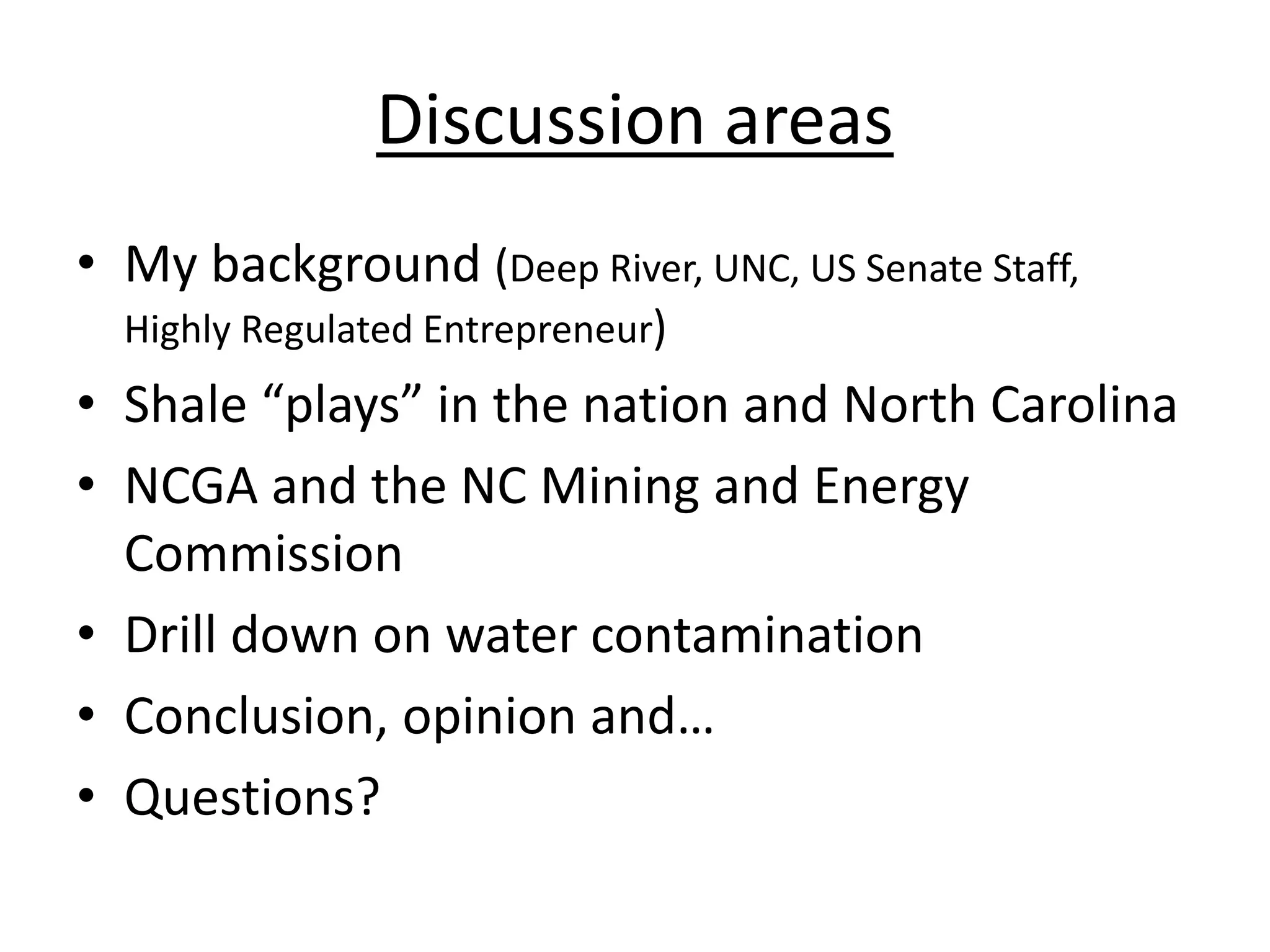
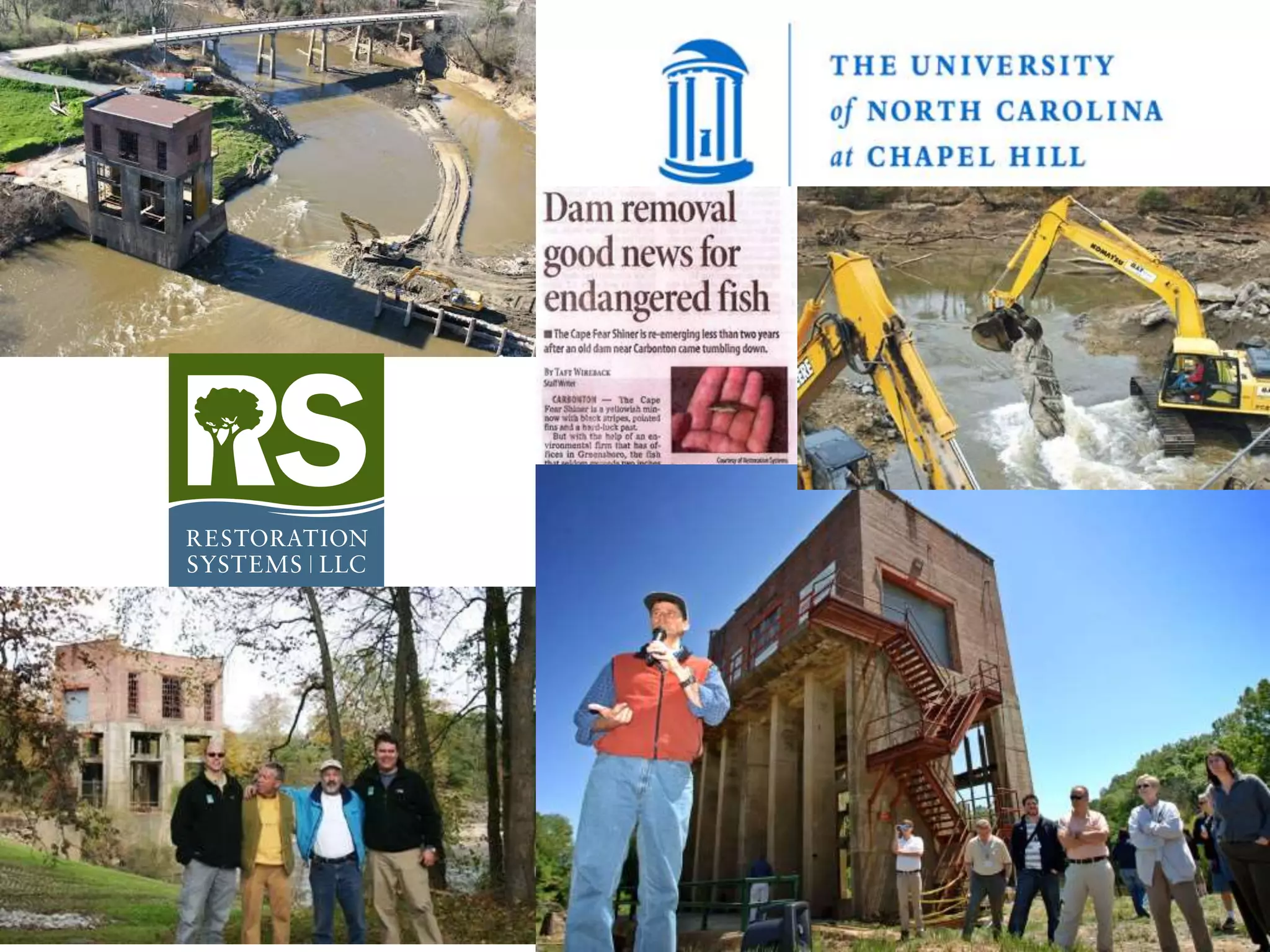
• My background (Deep River, UNC, US Senate Staff,
Highly Regulated Entrepreneur)
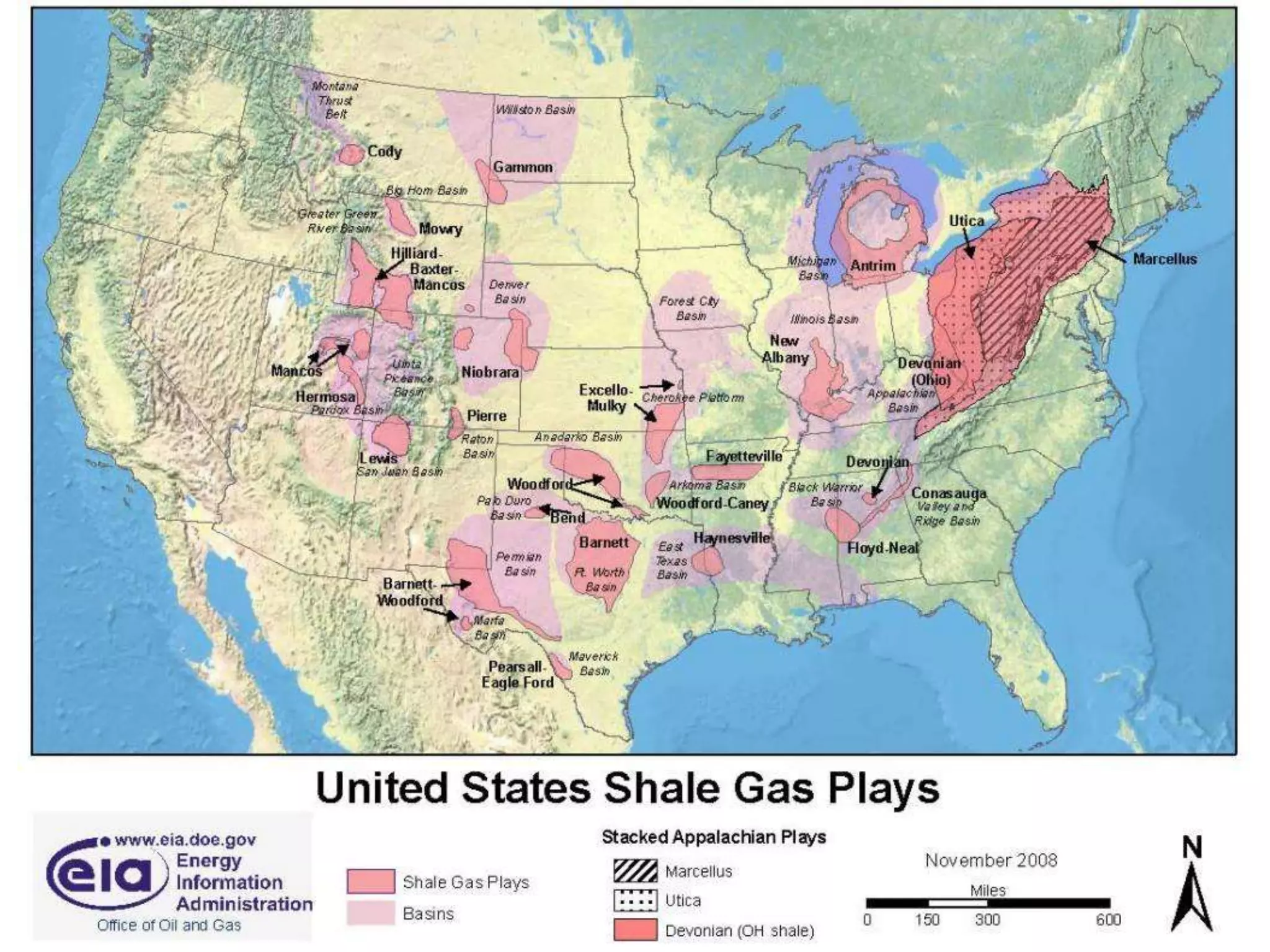
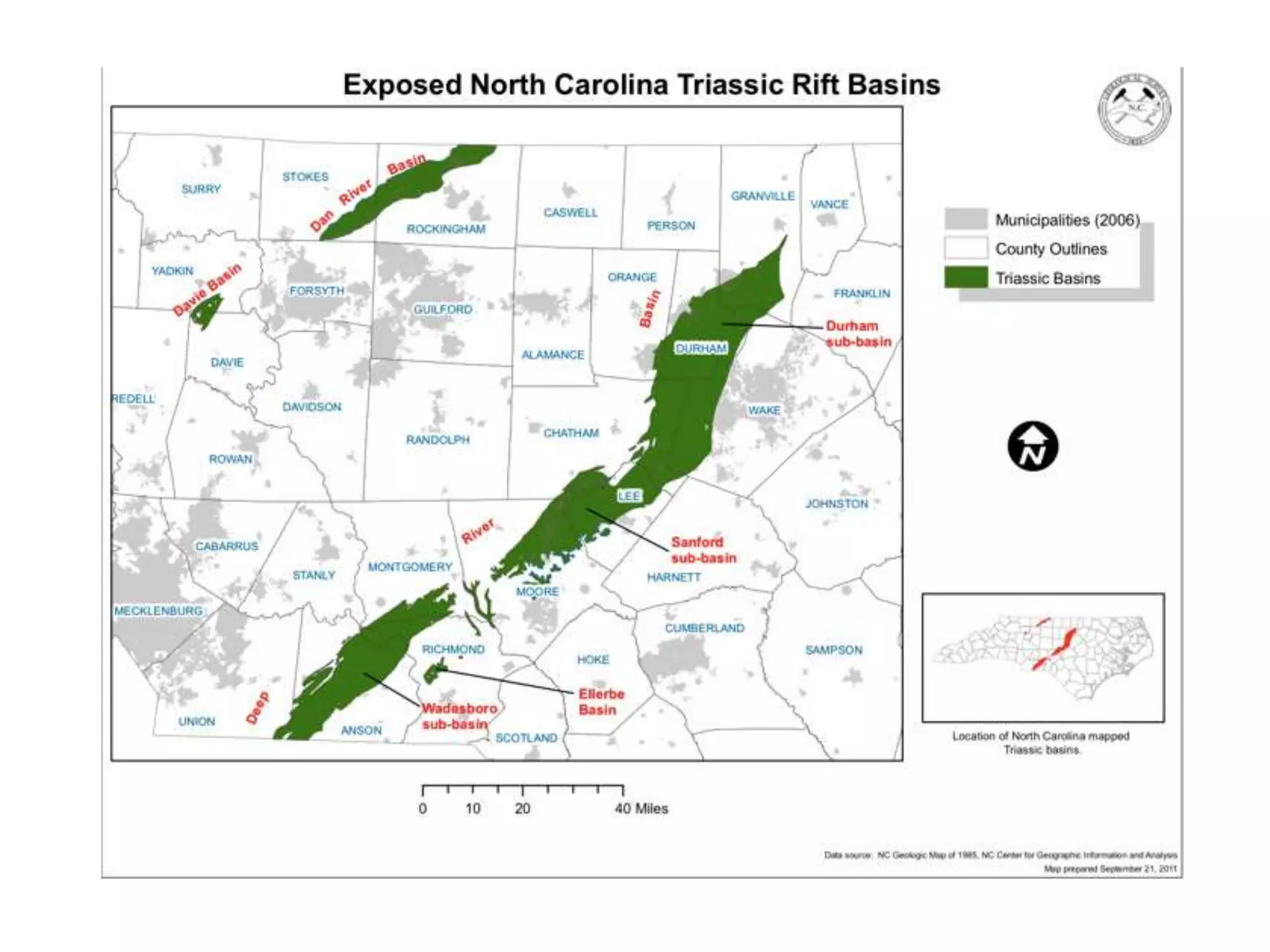
• Shale “plays” in the nation and North Carolina
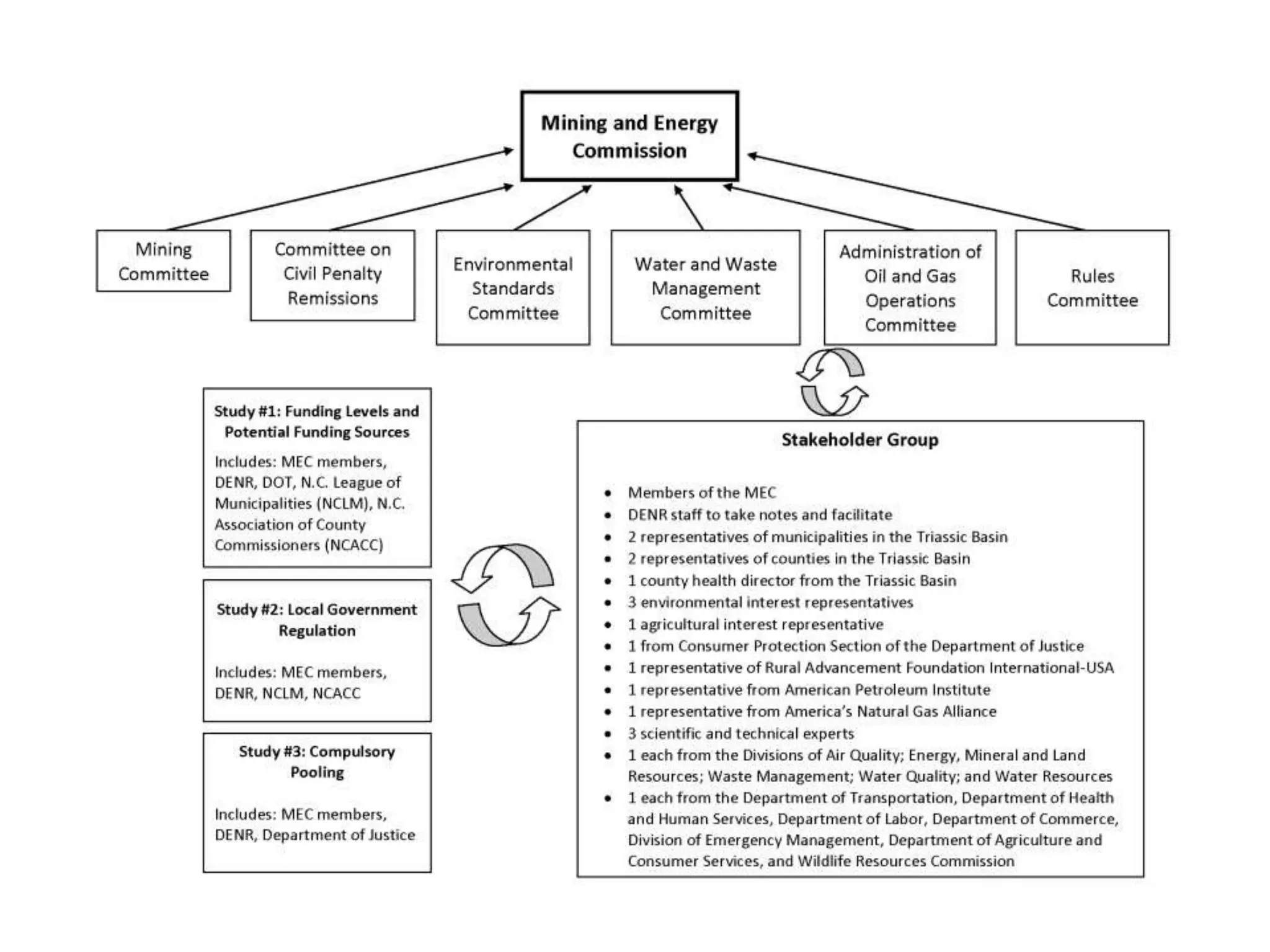
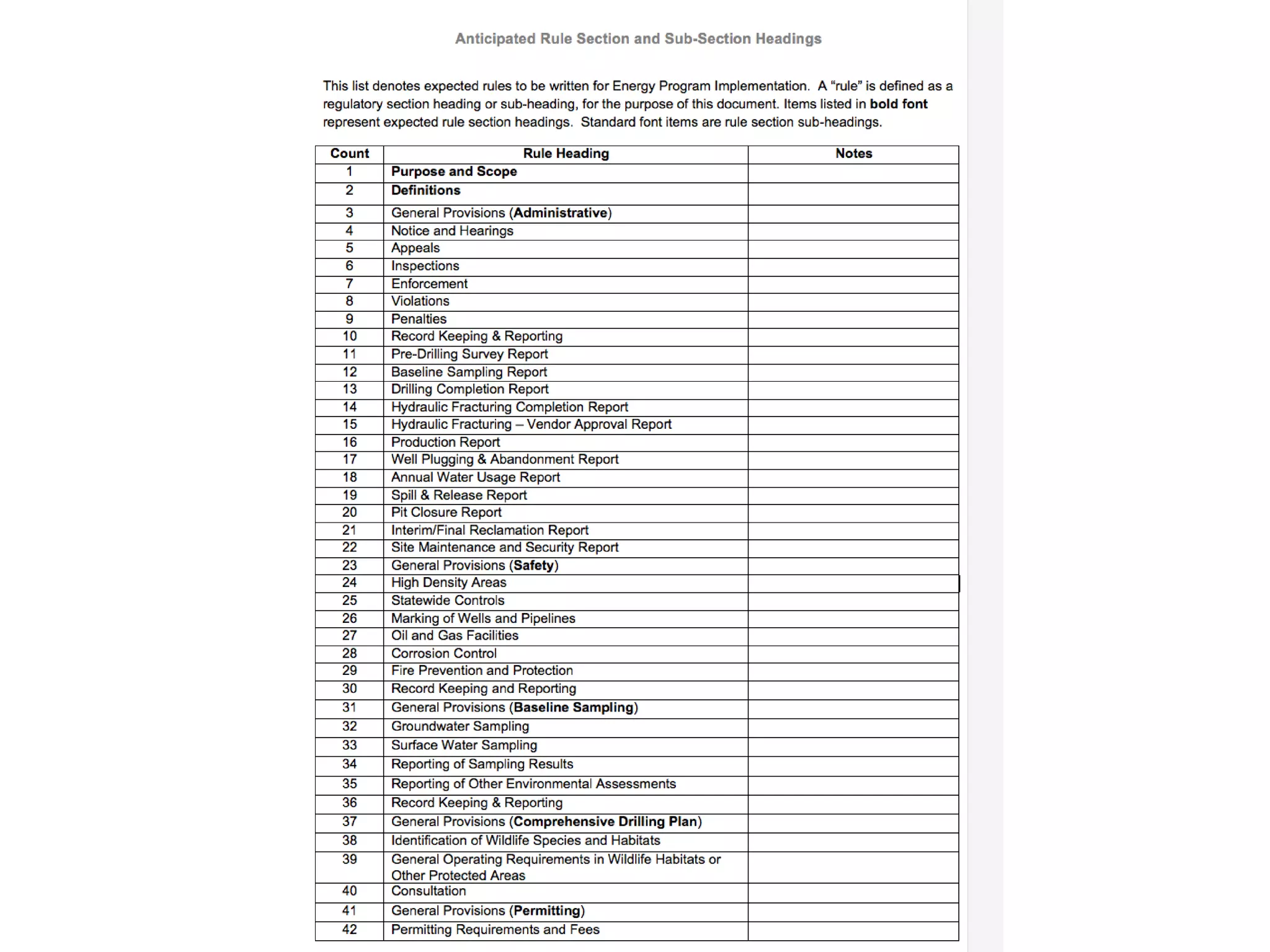
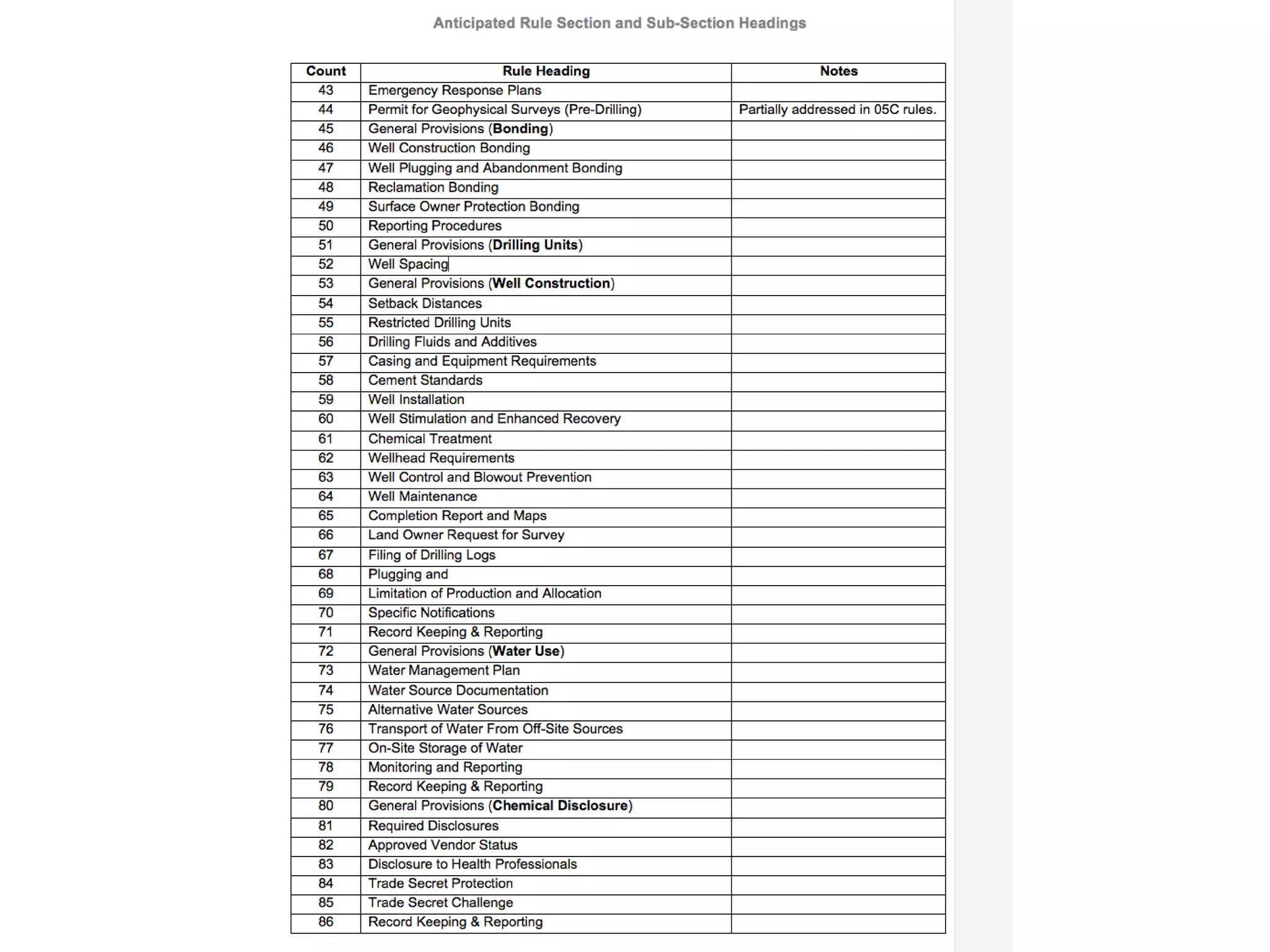
• NCGA and the NC Mining and Energy
Commission
• Drill down on water contamination
• Conclusion, opinion and…
• Questions?
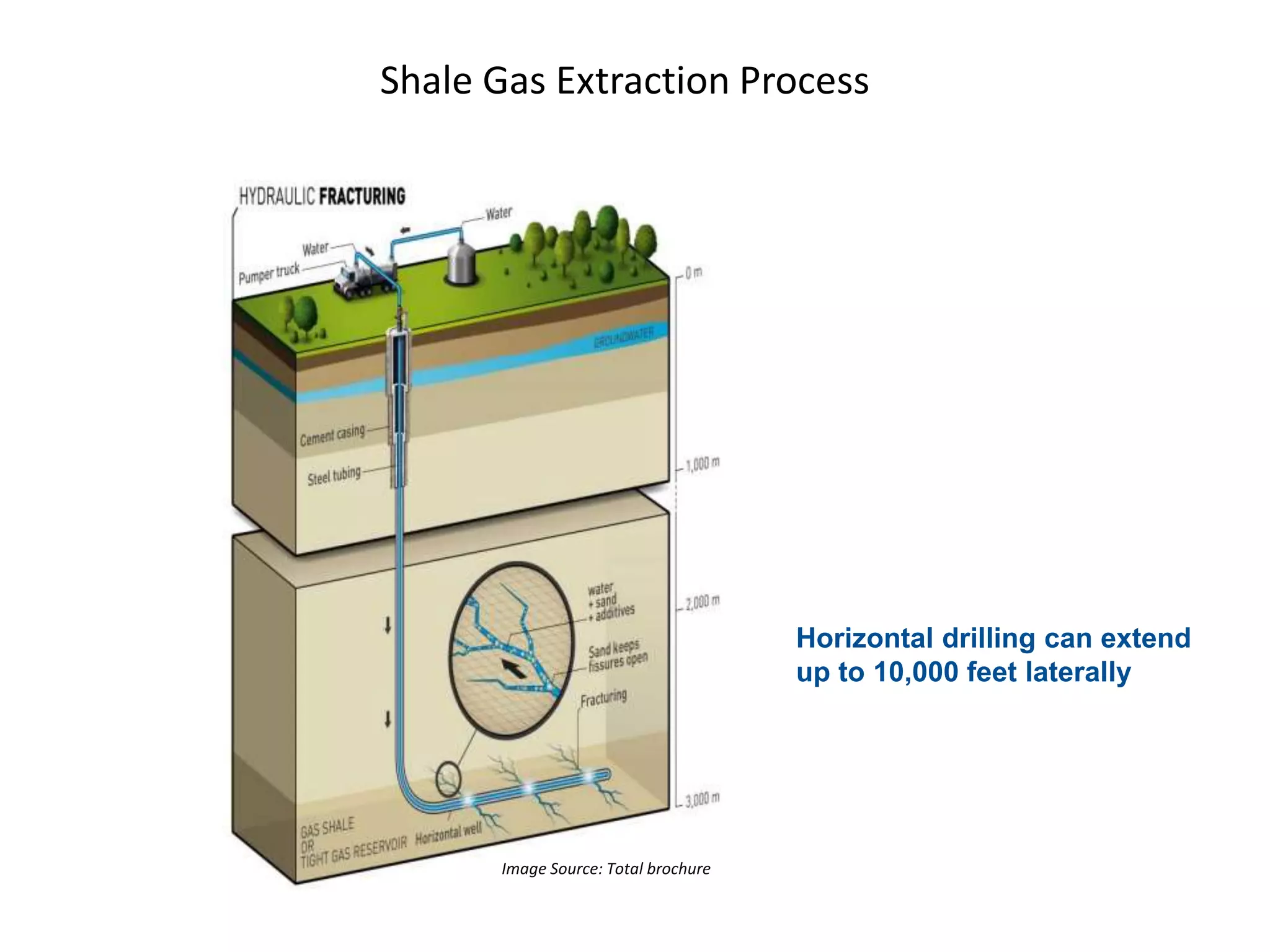
Shale Gas Extraction Process
Horizontal drilling can extend
up to 10,000 feet laterally
Image Source: Total brochure
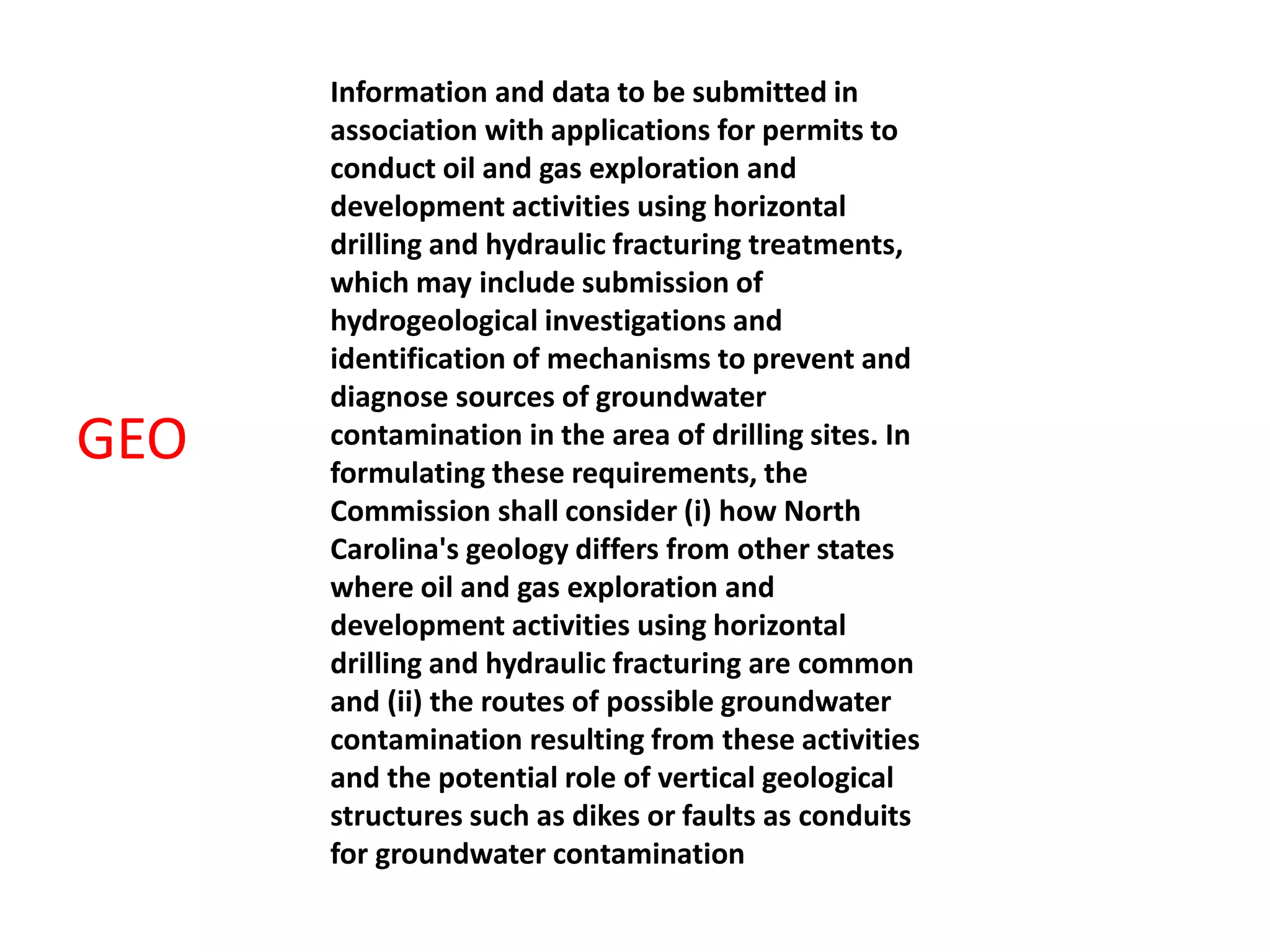
Information and data to be submitted in
association with applications for permits to
conduct oil and gas exploration and
development activities using horizontal
drilling and hydraulic fracturing treatments,
which may include submission of
hydrogeological investigations and
identification of mechanisms to prevent and
diagnose sources of groundwater
contamination in the area of drilling sites. In
formulating these requirements, the
Commission shall consider (i) how North
Carolina's geology differs from other states
where oil and gas exploration and
development activities using horizontal
drilling and hydraulic fracturing are common
and (ii) the routes of possible groundwater
contamination resulting from these activities
and the potential role of vertical geological
structures such as dikes or faults as conduits
for groundwater contamination
GEO
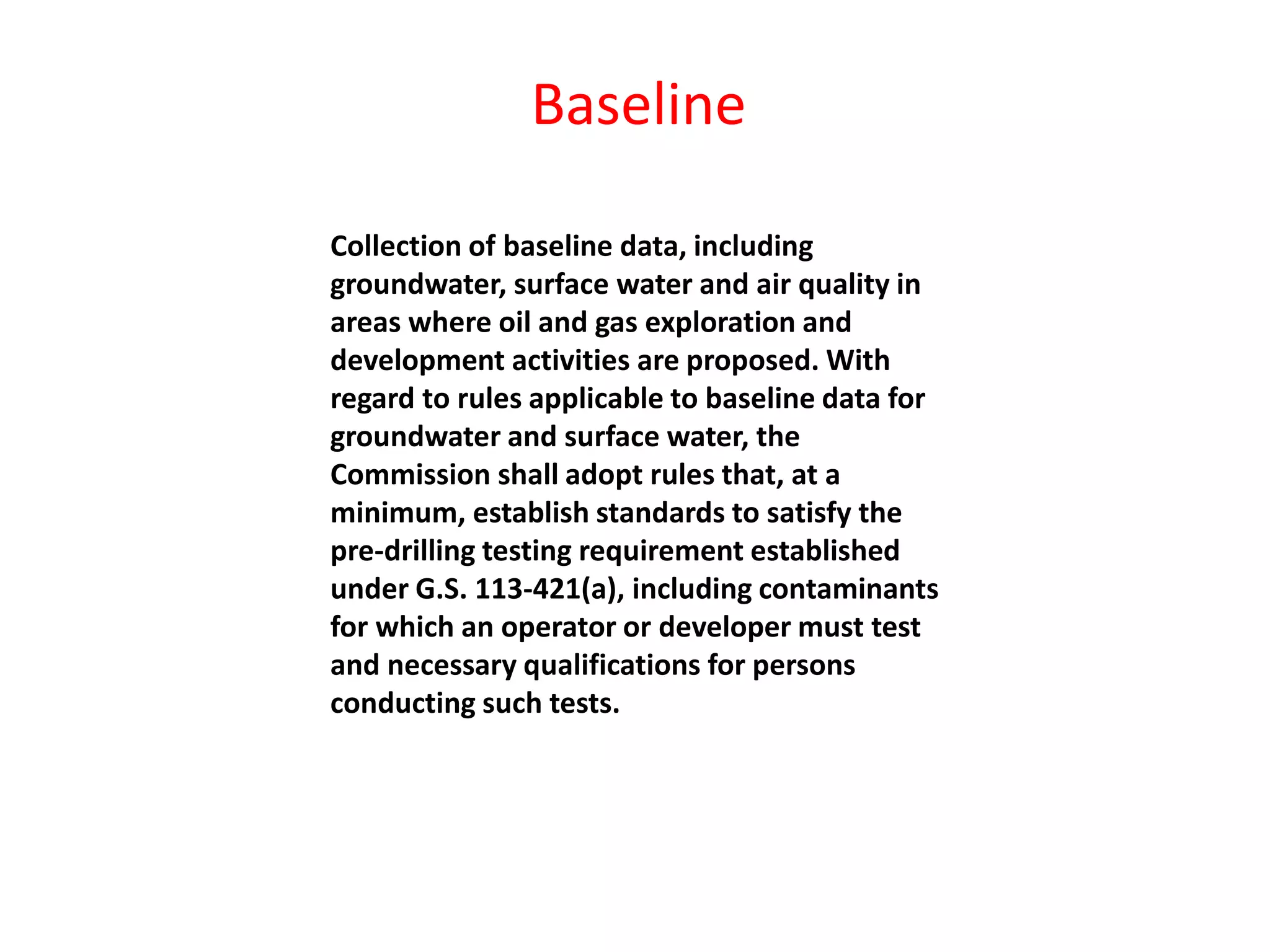
Collection of baseline data, including
groundwater, surface water and air quality in
areas where oil and gas exploration and
development activities are proposed. With
regard to rules applicable to baseline data for
groundwater and surface water, the
Commission shall adopt rules that, at a
minimum, establish standards to satisfy the
pre-drilling testing requirement established
under G.S. 113-421(a), including contaminants
for which an operator or developer must test
and necessary qualifications for persons
conducting such tests.
Baseline
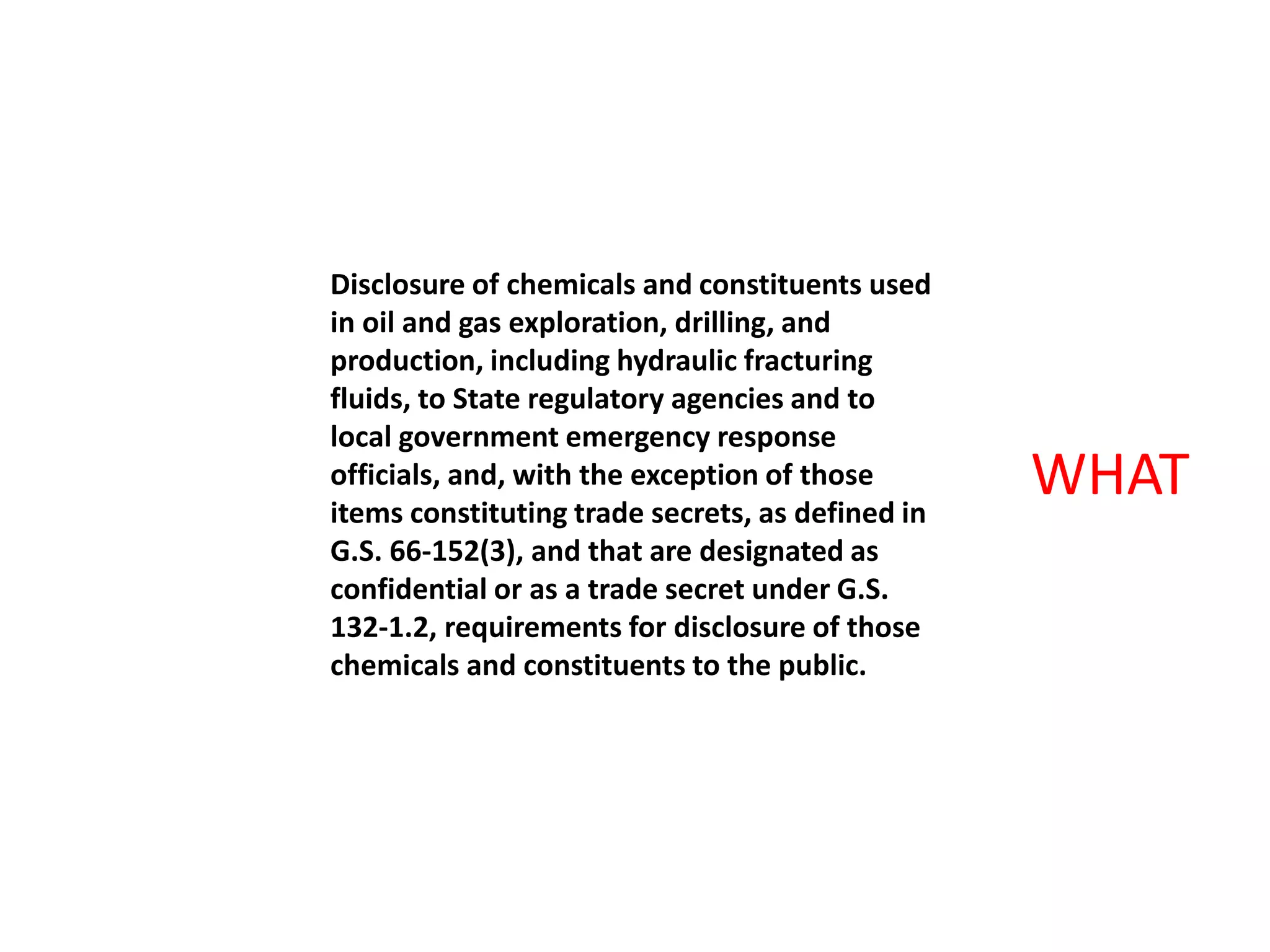
Disclosure of chemicals and constituents used
in oil and gas exploration, drilling, and
production, including hydraulic fracturing
fluids, to State regulatory agencies and to
local government emergency response
officials, and, with the exception of those
items constituting trade secrets, as defined in
G.S. 66-152(3), and that are designated as
confidential or as a trade secret under G.S.
132-1.2, requirements for disclosure of those
chemicals and constituents to the public.
WHAT
To regulate and, if necessary in its judgment
for the protection of unique environmental
values, to prohibit the location of wells in the
interest of protecting the quality of the water,
air, soil, or any other environmental resource
against injury, damage, or impairment.
WHERE
Appropriate siting standards for wells and
other gas production infrastructure, such as
storage pits and tanks, including appropriate
setback requirements and identification of
areas, such as floodplains, where oil and gas
exploration and production activities should
be prohibited. Siting standards adopted shall
be consistent with any applicable water
quality standards adopted by the EMC or by
local governments pursuant to water quality
statutes, including standards for development
in water supply watersheds.
WHERE 2
Prohibitions on use of certain chemicals and
constituents in hydraulic fracturing fluids,
particularly diesel fuel.
WHAT 2
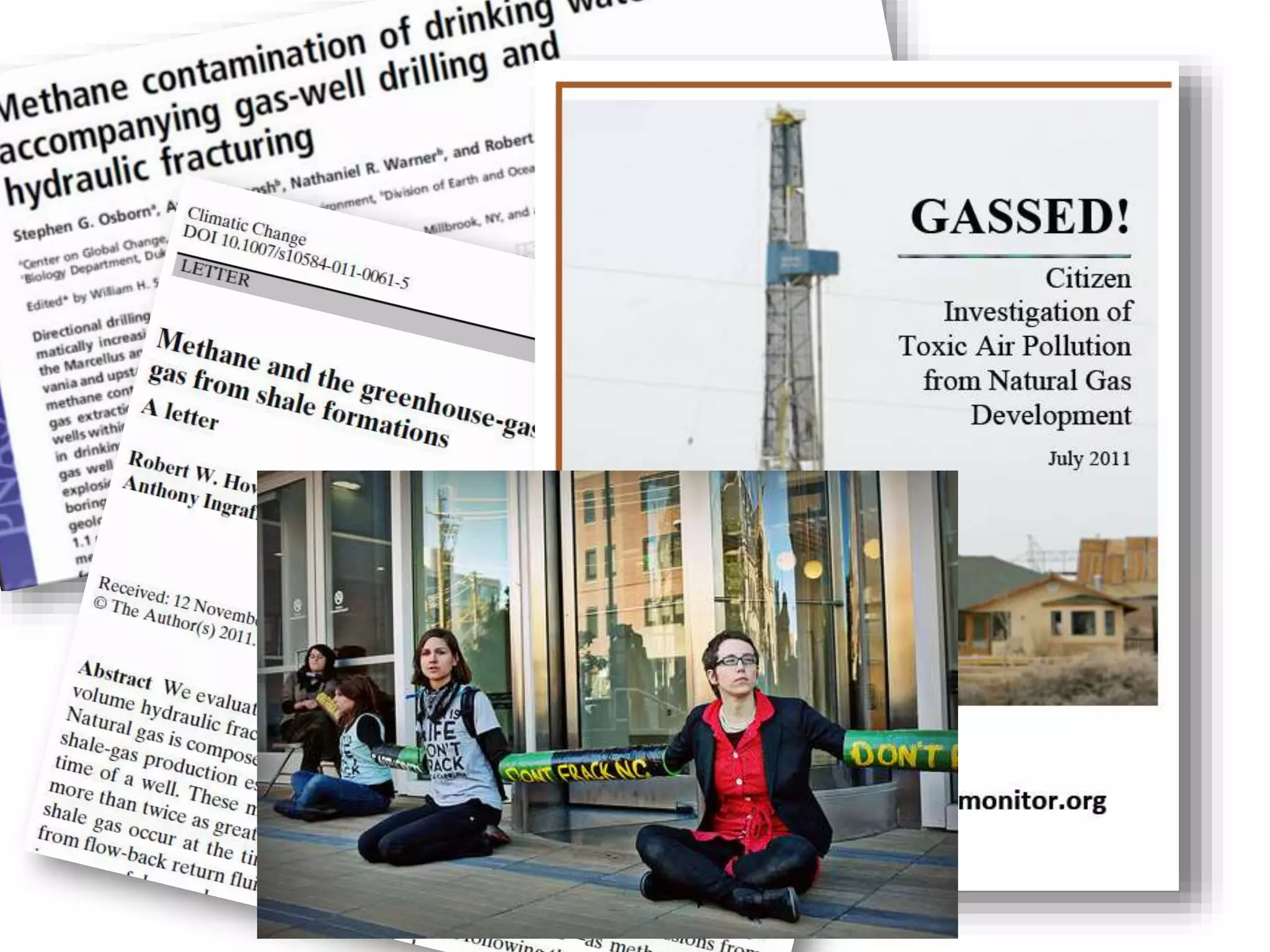
Drilldown > Water Contamination
Two key rules called for by statute:
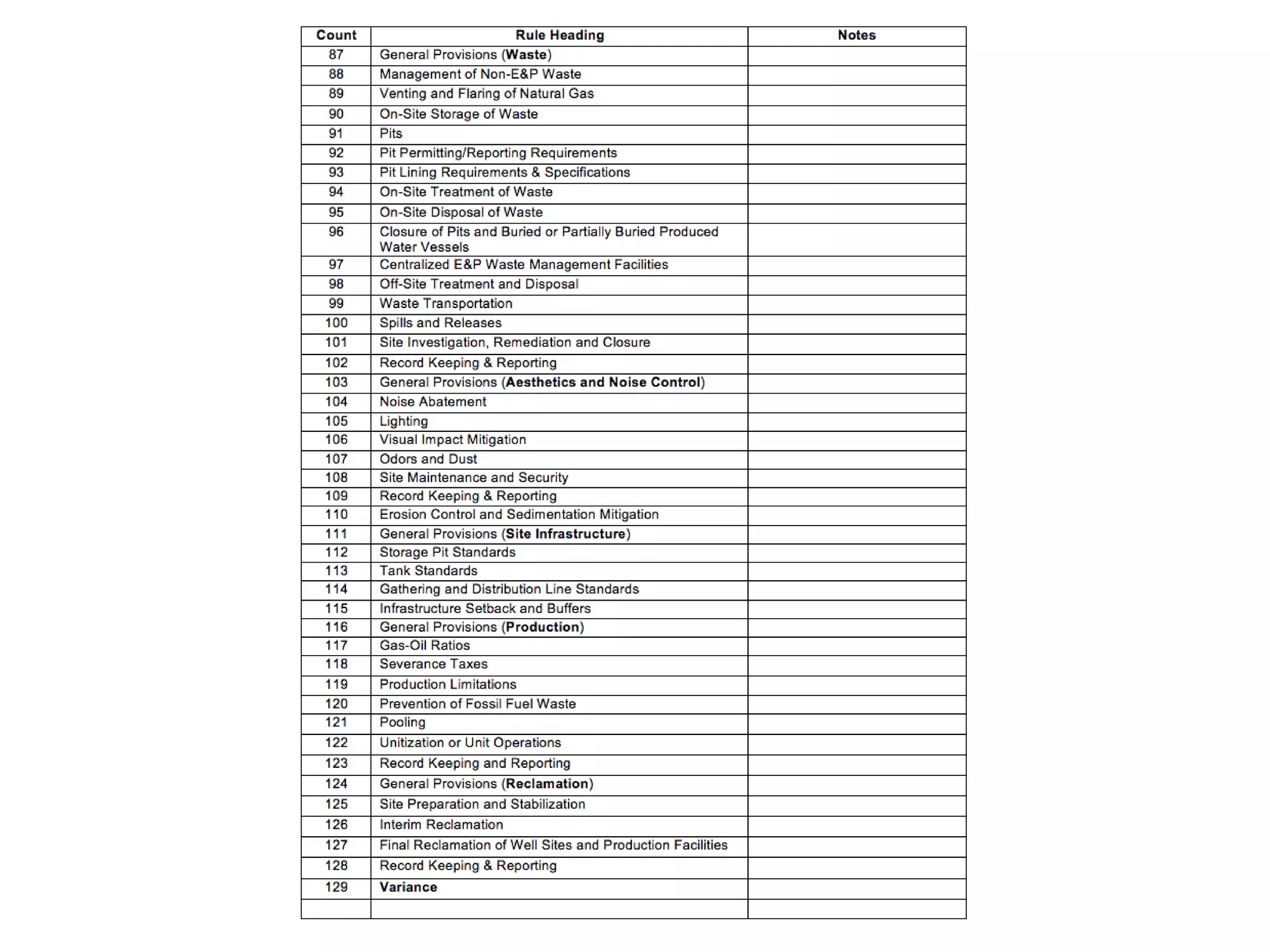
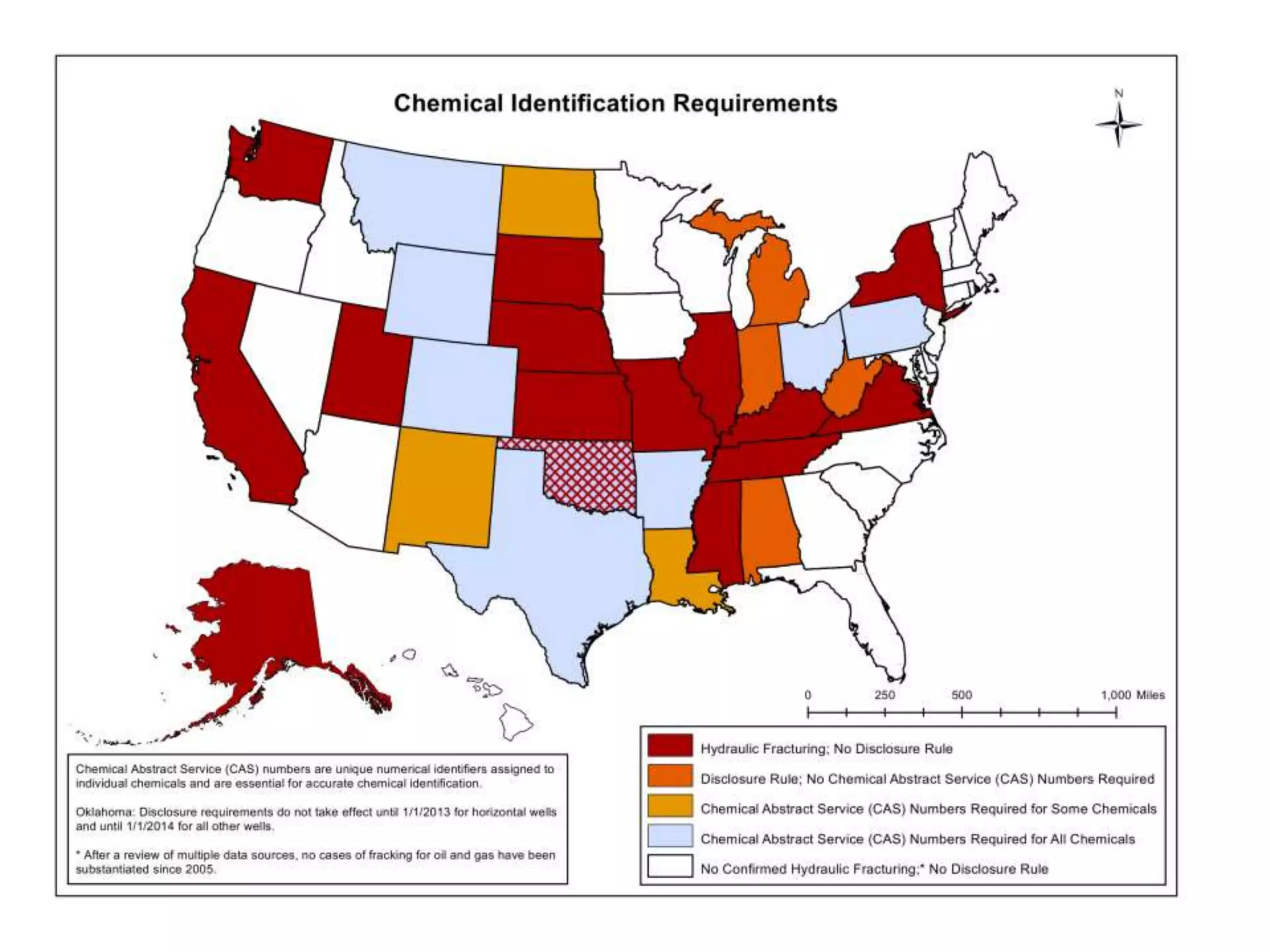
1) Chemical Disclosure and Trade Secrets
2) Baseline Testing and presumptive liability
(Chemical Disclosure Rule is out
Baseline is pending for next week)
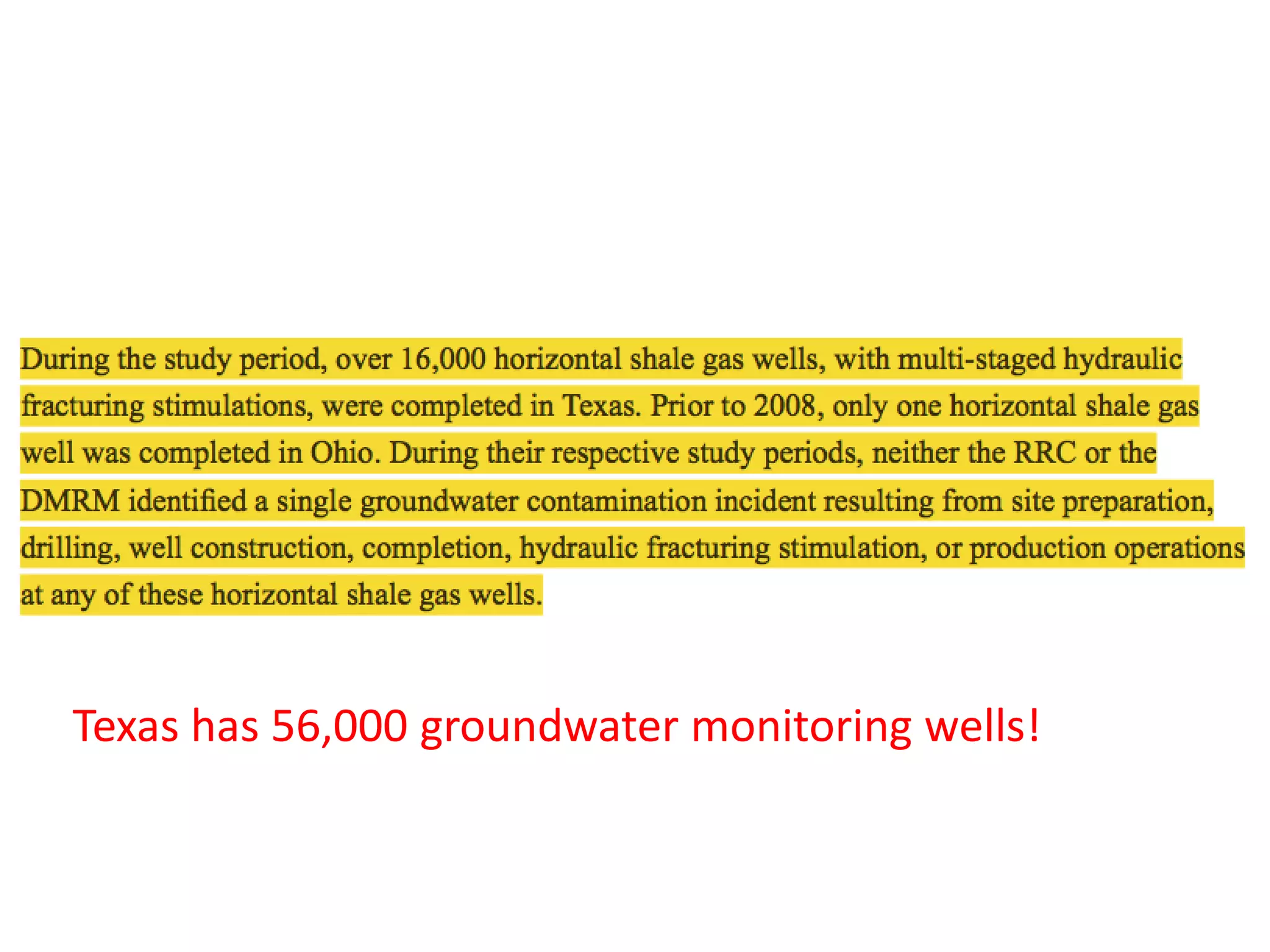
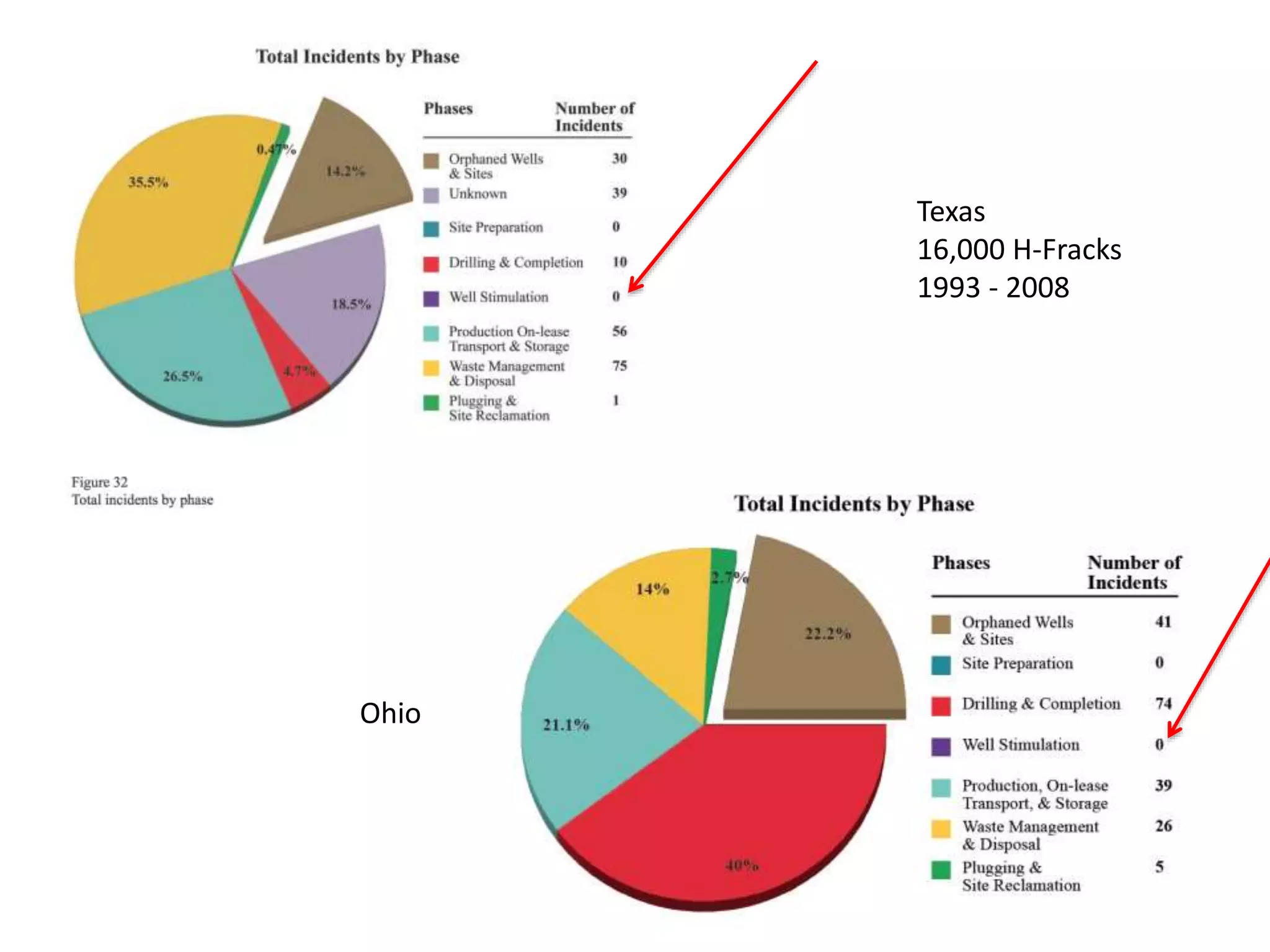
Texas has 56,000 groundwater monitoring wells!
Ohio
Texas
16,000 H-Fracks
1993 - 2008
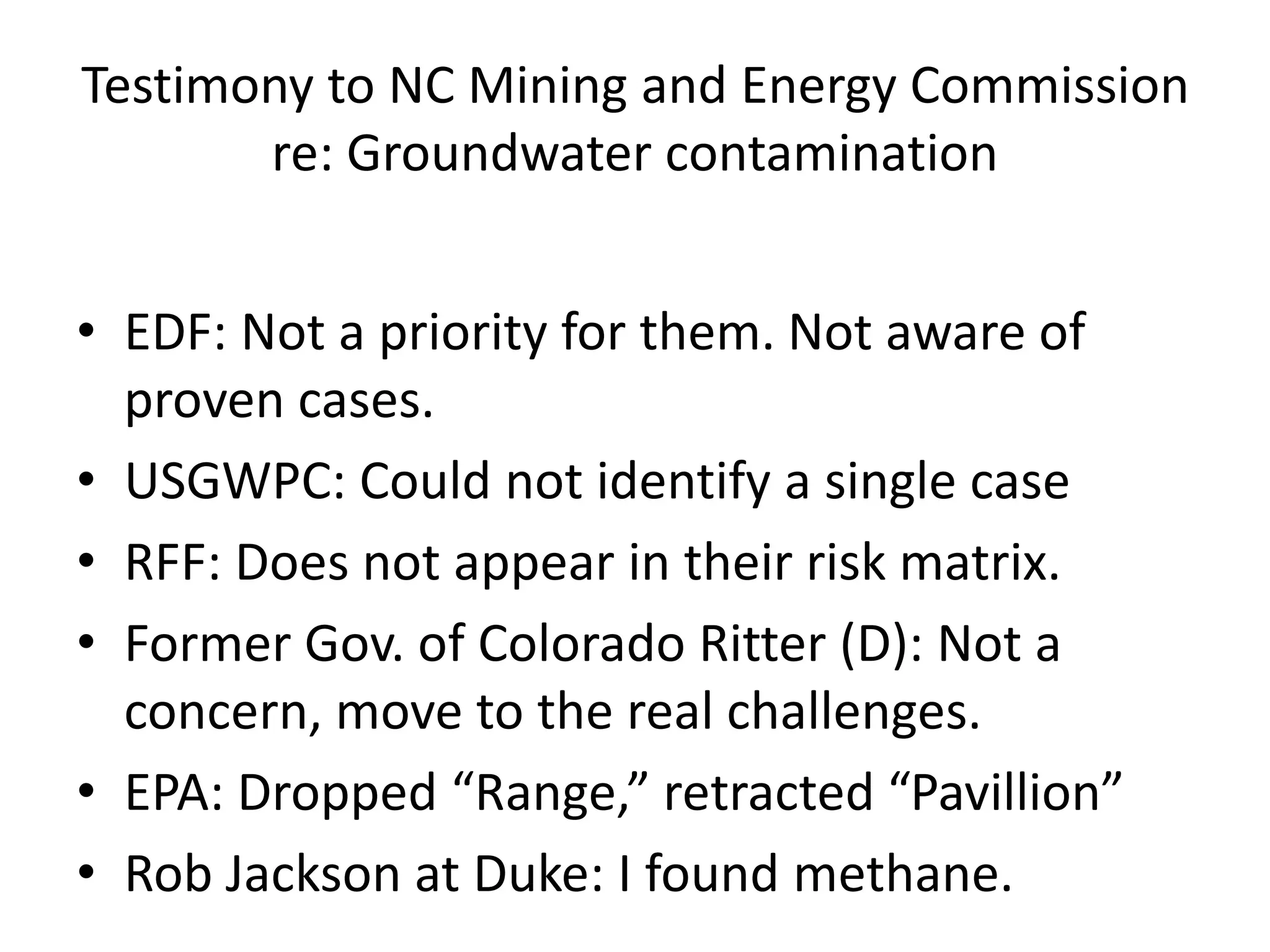
Testimony to NC Mining and Energy Commission
re: Groundwater contamination
• EDF: Not a priority for them. Not aware of
proven cases.
• USGWPC: Could not identify a single case
• RFF: Does not appear in their risk matrix.
• Former Gov. of Colorado Ritter (D): Not a
concern, move to the real challenges.
• EPA: Dropped “Range,” retracted “Pavillion”
• Rob Jackson at Duke: I found methane.
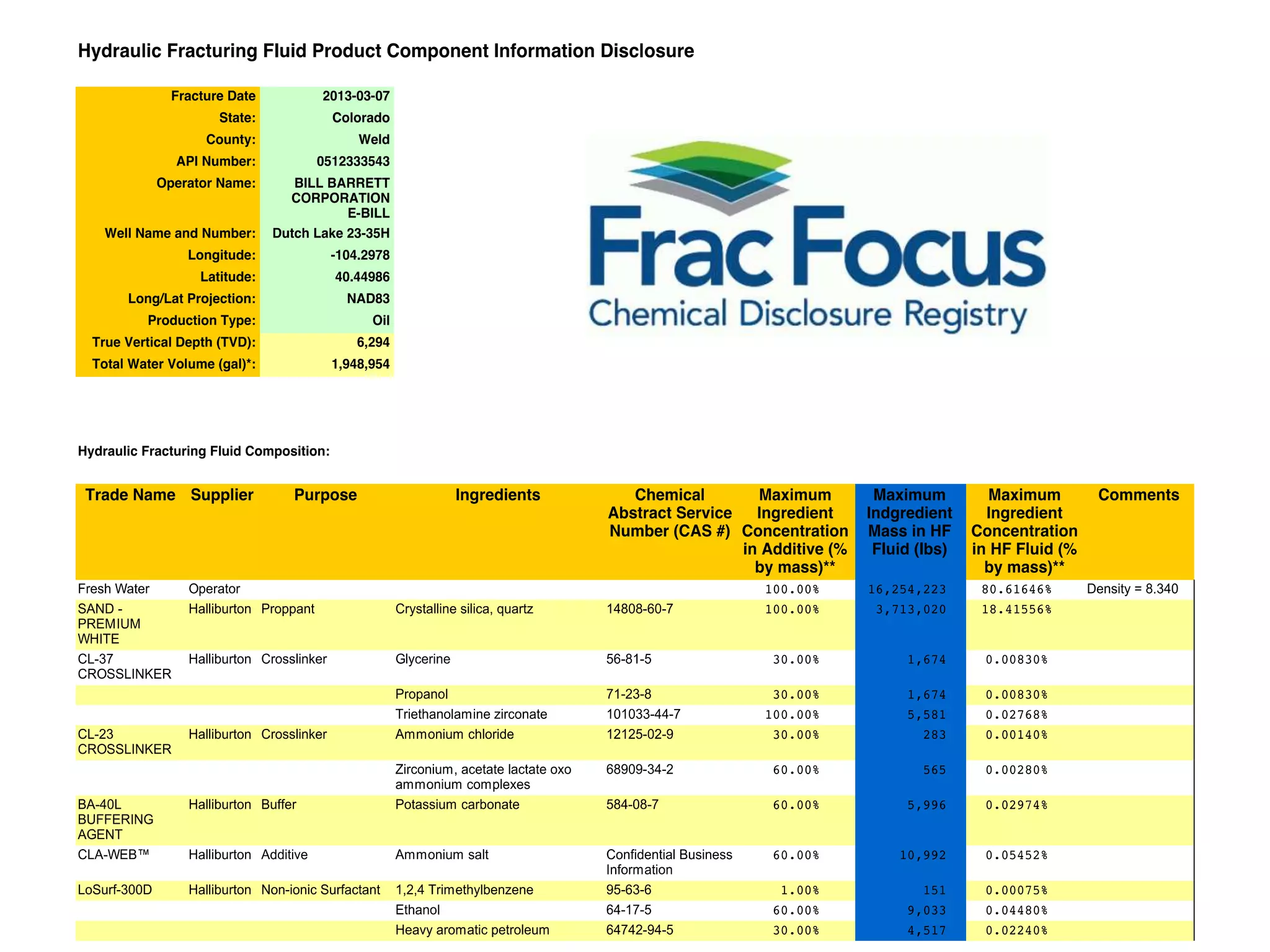
Information Required to be Disclosed PER WELL to DENR and FracFocus
The operator name
Beginning and ending date of treatment
County
API number
Well name and number
Longitude and latitude of the well
Certified directional survey
Measured depth and true vertical depth
Total volume of water used in treatment including total volume of reused water,
Volume of base fluid if something different than water
Source of water or fluid
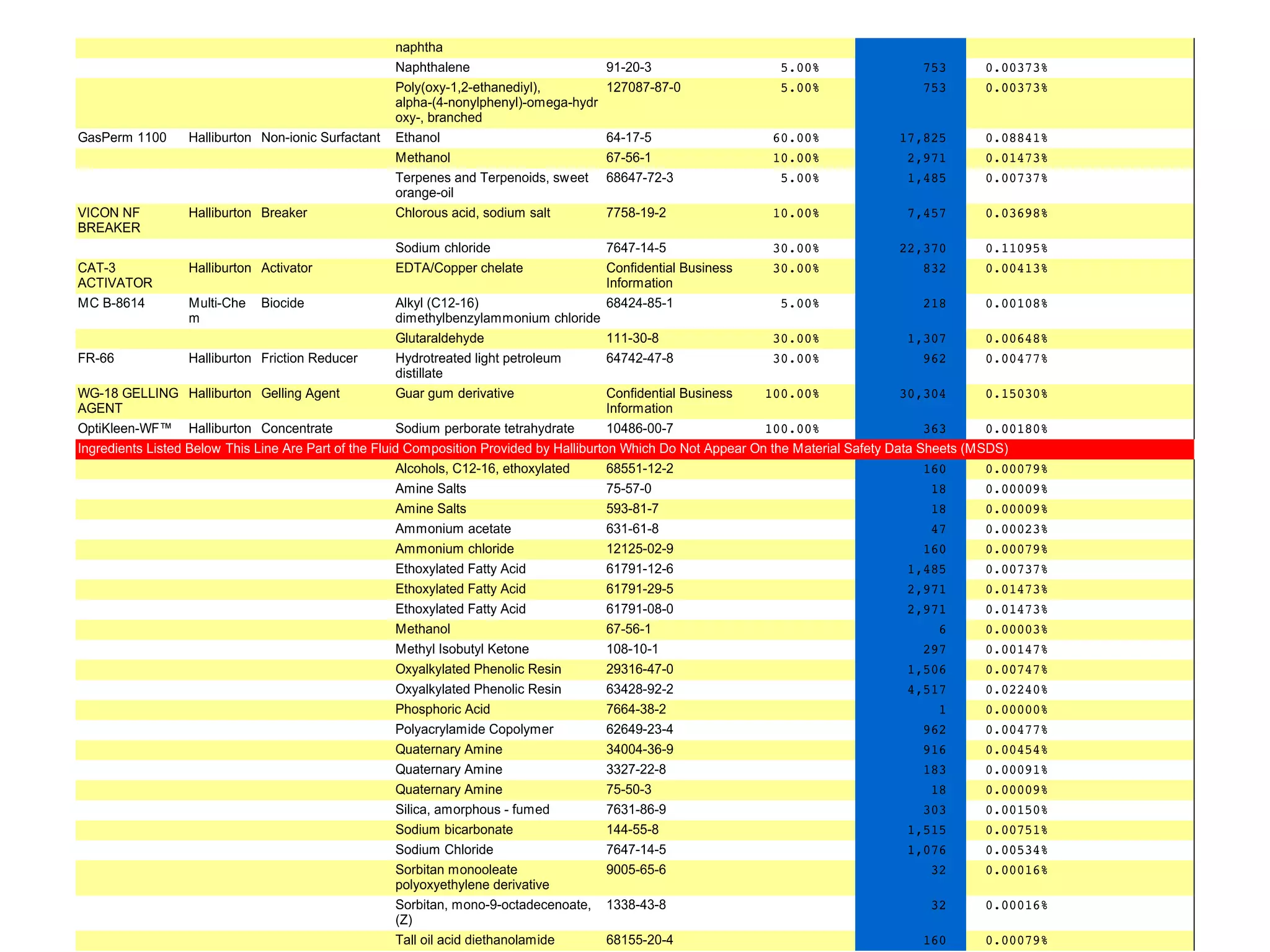
Trade name of each additive with a brief description
Each Chemical Ingredient and their CAS number
Actual or maximum concentration
CAS number for each chemical ingredient listed.
Not To Be Disclosed
Incidental trace amountscontamination
Claimed as Trade Secrets
Trade Secret Caveats:
Chemical family must be named.
DENR Director and MEC keep the trade secret informationCAS #
Trade Secrets challenged by anyone with an interest in real property
adversely affected.
Must be Revealed to Health Pros and First Responders immediately.
Arguably the strongest of 34 Oil and Gas states
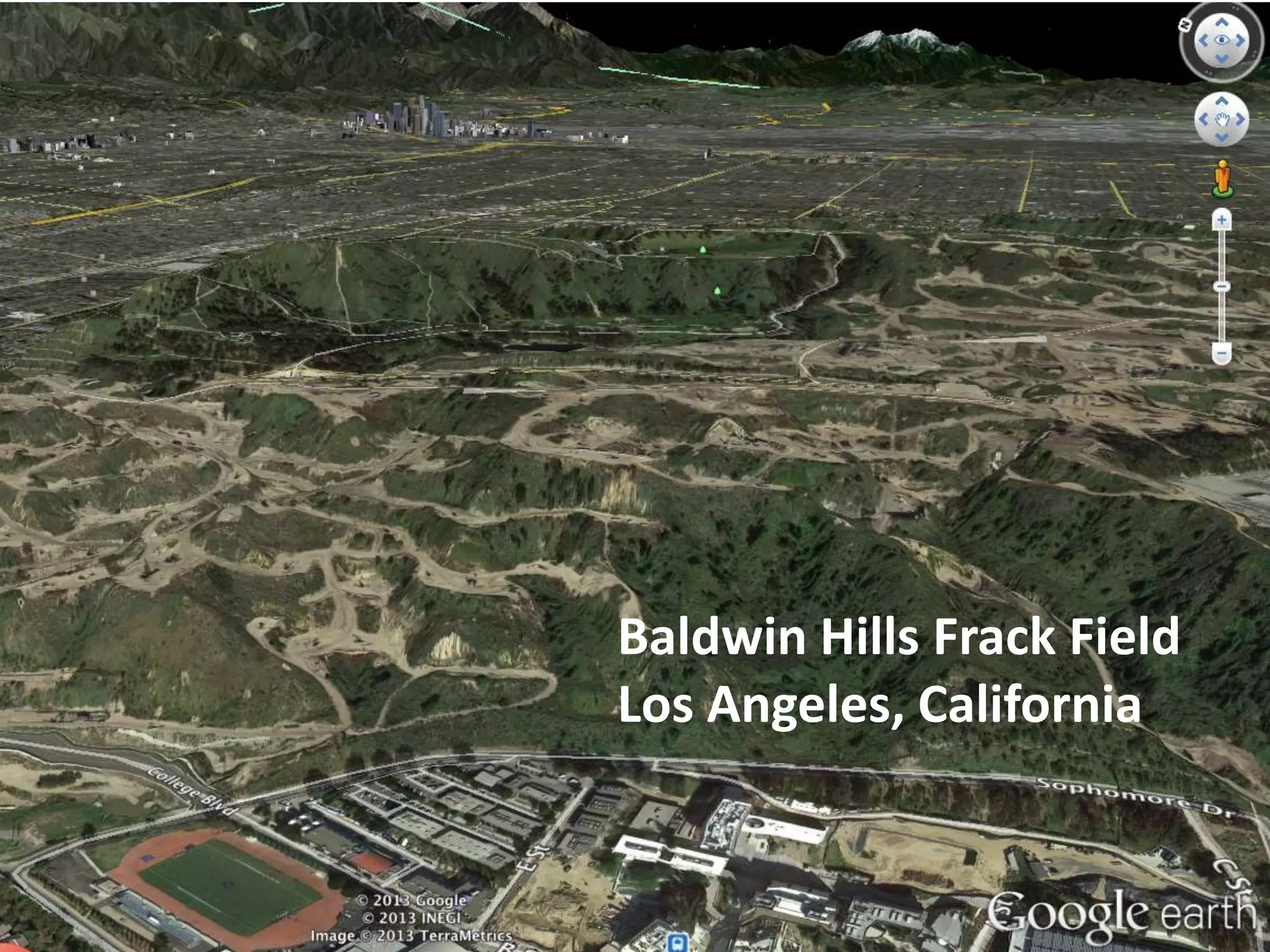
Baldwin Hills Frack Field
Los Angeles, California
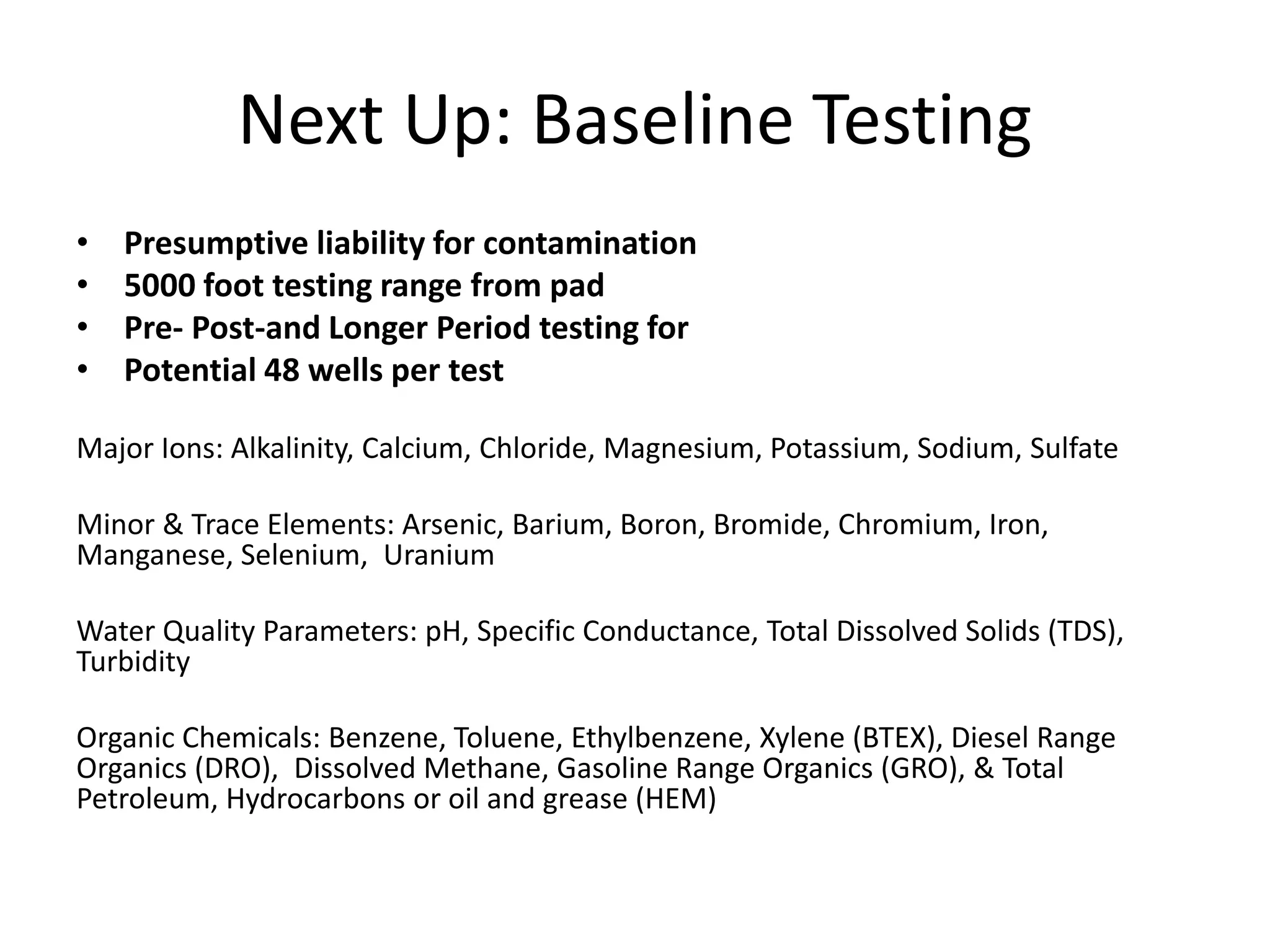
Next Up: Baseline Testing
• Presumptive liability for contamination
• 5000 foot testing range from pad
• Pre- Post-and Longer Period testing for
• Potential 48 wells per test
Major Ions: Alkalinity, Calcium, Chloride, Magnesium, Potassium, Sodium, Sulfate
Minor & Trace Elements: Arsenic, Barium, Boron, Bromide, Chromium, Iron,
Manganese, Selenium, Uranium
Water Quality Parameters: pH, Specific Conductance, Total Dissolved Solids (TDS),
Turbidity
Organic Chemicals: Benzene, Toluene, Ethylbenzene, Xylene (BTEX), Diesel Range
Organics (DRO), Dissolved Methane, Gasoline Range Organics (GRO), & Total
Petroleum, Hydrocarbons or oil and grease (HEM)
Thank you!
Please contact me with questions or concerns:
Office direct:
919-334-9105
Public email:
mec.commissioner.howard@gmail.com
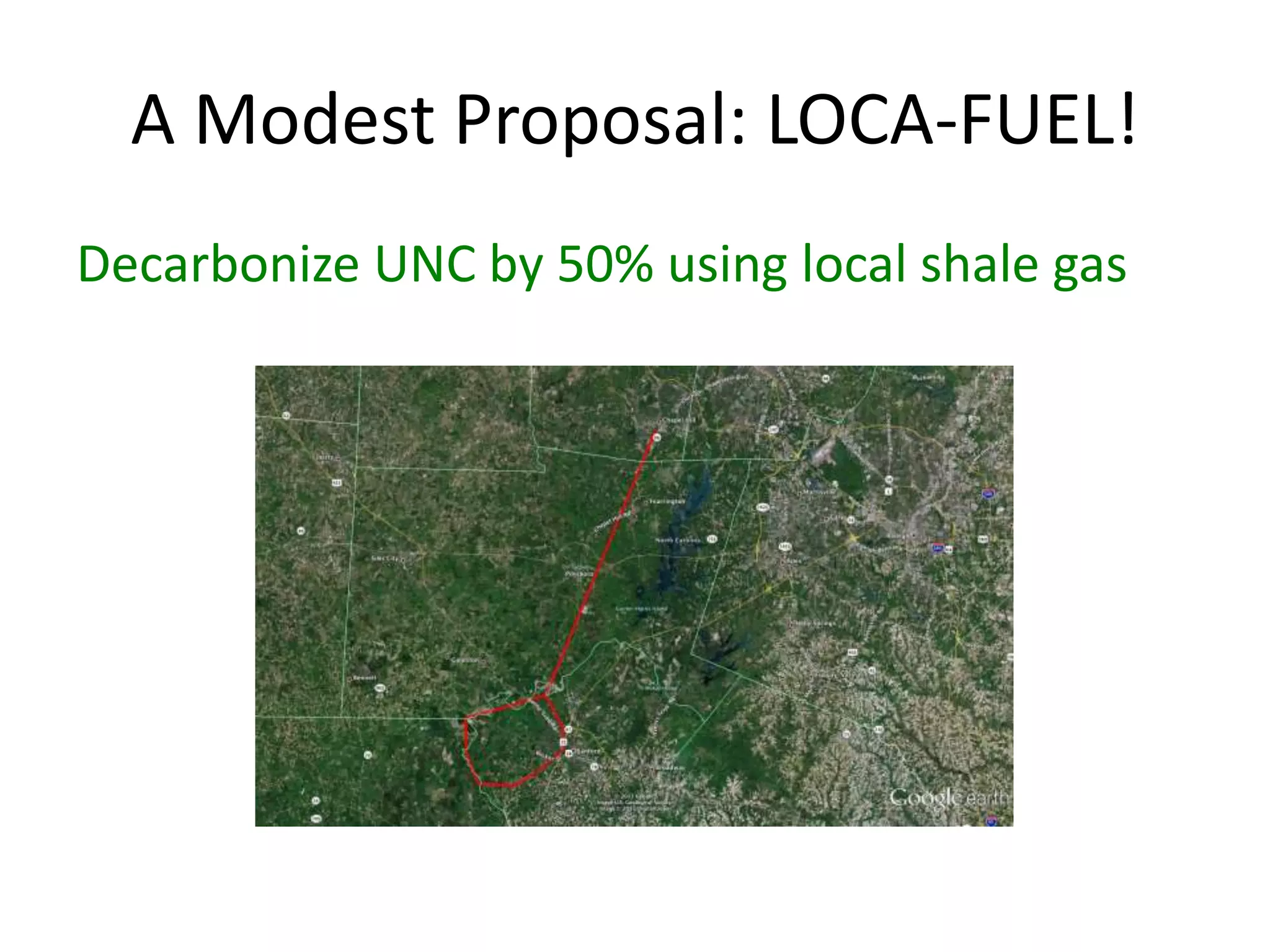
A Modest Proposal: LOCA-FUEL!
Decarbonize UNC by 50% using local shale gas

Unc fracking

  • 1.
    Discussion areas • Mybackground (Deep River, UNC, US Senate Staff, Highly Regulated Entrepreneur) • Shale “plays” in the nation and North Carolina • NCGA and the NC Mining and Energy Commission • Drill down on water contamination • Conclusion, opinion and… • Questions?
  • 3.
    Shale Gas ExtractionProcess Horizontal drilling can extend up to 10,000 feet laterally Image Source: Total brochure
  • 10.
    Information and datato be submitted in association with applications for permits to conduct oil and gas exploration and development activities using horizontal drilling and hydraulic fracturing treatments, which may include submission of hydrogeological investigations and identification of mechanisms to prevent and diagnose sources of groundwater contamination in the area of drilling sites. In formulating these requirements, the Commission shall consider (i) how North Carolina's geology differs from other states where oil and gas exploration and development activities using horizontal drilling and hydraulic fracturing are common and (ii) the routes of possible groundwater contamination resulting from these activities and the potential role of vertical geological structures such as dikes or faults as conduits for groundwater contamination GEO
  • 11.
    Collection of baselinedata, including groundwater, surface water and air quality in areas where oil and gas exploration and development activities are proposed. With regard to rules applicable to baseline data for groundwater and surface water, the Commission shall adopt rules that, at a minimum, establish standards to satisfy the pre-drilling testing requirement established under G.S. 113-421(a), including contaminants for which an operator or developer must test and necessary qualifications for persons conducting such tests. Baseline
  • 12.
    Disclosure of chemicalsand constituents used in oil and gas exploration, drilling, and production, including hydraulic fracturing fluids, to State regulatory agencies and to local government emergency response officials, and, with the exception of those items constituting trade secrets, as defined in G.S. 66-152(3), and that are designated as confidential or as a trade secret under G.S. 132-1.2, requirements for disclosure of those chemicals and constituents to the public. WHAT
  • 13.
    To regulate and,if necessary in its judgment for the protection of unique environmental values, to prohibit the location of wells in the interest of protecting the quality of the water, air, soil, or any other environmental resource against injury, damage, or impairment. WHERE
  • 14.
    Appropriate siting standardsfor wells and other gas production infrastructure, such as storage pits and tanks, including appropriate setback requirements and identification of areas, such as floodplains, where oil and gas exploration and production activities should be prohibited. Siting standards adopted shall be consistent with any applicable water quality standards adopted by the EMC or by local governments pursuant to water quality statutes, including standards for development in water supply watersheds. WHERE 2
  • 15.
    Prohibitions on useof certain chemicals and constituents in hydraulic fracturing fluids, particularly diesel fuel. WHAT 2
  • 17.
    Drilldown > WaterContamination Two key rules called for by statute: 1) Chemical Disclosure and Trade Secrets 2) Baseline Testing and presumptive liability (Chemical Disclosure Rule is out Baseline is pending for next week)
  • 21.
    Texas has 56,000groundwater monitoring wells!
  • 22.
  • 23.
    Testimony to NCMining and Energy Commission re: Groundwater contamination • EDF: Not a priority for them. Not aware of proven cases. • USGWPC: Could not identify a single case • RFF: Does not appear in their risk matrix. • Former Gov. of Colorado Ritter (D): Not a concern, move to the real challenges. • EPA: Dropped “Range,” retracted “Pavillion” • Rob Jackson at Duke: I found methane.
  • 25.
    Information Required tobe Disclosed PER WELL to DENR and FracFocus The operator name Beginning and ending date of treatment County API number Well name and number Longitude and latitude of the well Certified directional survey Measured depth and true vertical depth Total volume of water used in treatment including total volume of reused water, Volume of base fluid if something different than water Source of water or fluid Trade name of each additive with a brief description Each Chemical Ingredient and their CAS number Actual or maximum concentration CAS number for each chemical ingredient listed. Not To Be Disclosed Incidental trace amountscontamination Claimed as Trade Secrets
  • 28.
    Trade Secret Caveats: Chemicalfamily must be named. DENR Director and MEC keep the trade secret informationCAS # Trade Secrets challenged by anyone with an interest in real property adversely affected. Must be Revealed to Health Pros and First Responders immediately. Arguably the strongest of 34 Oil and Gas states
  • 29.
    Baldwin Hills FrackField Los Angeles, California
  • 30.
    Next Up: BaselineTesting • Presumptive liability for contamination • 5000 foot testing range from pad • Pre- Post-and Longer Period testing for • Potential 48 wells per test Major Ions: Alkalinity, Calcium, Chloride, Magnesium, Potassium, Sodium, Sulfate Minor & Trace Elements: Arsenic, Barium, Boron, Bromide, Chromium, Iron, Manganese, Selenium, Uranium Water Quality Parameters: pH, Specific Conductance, Total Dissolved Solids (TDS), Turbidity Organic Chemicals: Benzene, Toluene, Ethylbenzene, Xylene (BTEX), Diesel Range Organics (DRO), Dissolved Methane, Gasoline Range Organics (GRO), & Total Petroleum, Hydrocarbons or oil and grease (HEM)
  • 31.
    Thank you! Please contactme with questions or concerns: Office direct: 919-334-9105 Public email: mec.commissioner.howard@gmail.com
  • 33.
    A Modest Proposal:LOCA-FUEL! Decarbonize UNC by 50% using local shale gas