UN-ECE 4th Regional  Implementation Meeting 1-2 December, 2009 Thematic Cluster: Mining Patrick Chevalier Director Minerals, Metals & Materials Policy Branch Natural Resources Canada
Importance of Mining Contribution to society: Essential materials;  Mining the source of all raw materials. All regions of the ECE engaged Mining important to the several ECE economies Importance highly variable across the region World attention typically focused on problems Benefits ignored or misunderstood Contribution to Sustainable Development Benefits remain available to future generations
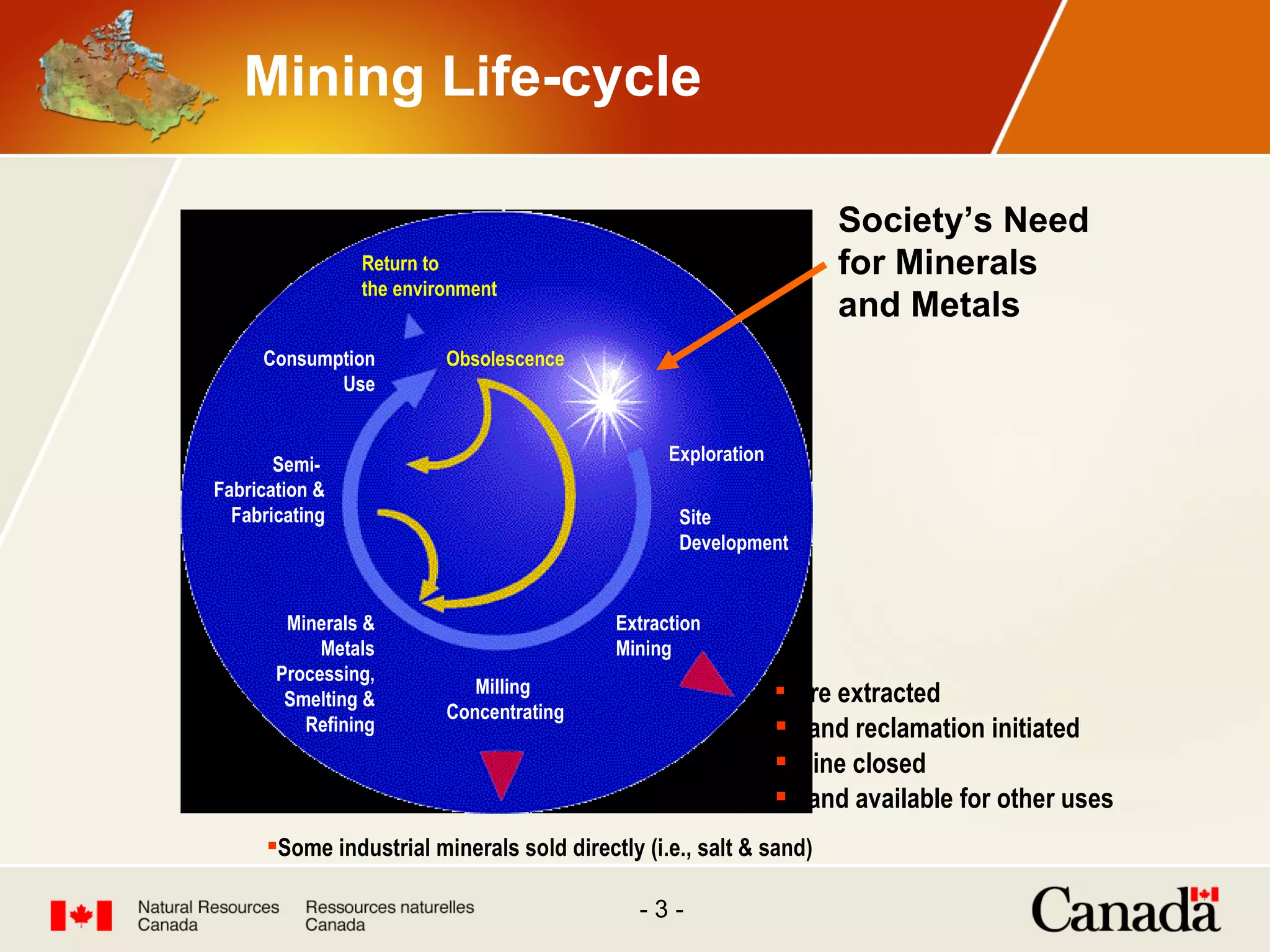
Mining Life-cycle Society’s Need  for Minerals  and Metals Exploration Site Development Extraction Mining Ore extracted  Land reclamation initiated Mine closed Land available for other uses Milling  Concentrating Some industrial minerals sold directly (i.e., salt & sand) Minerals & Metals Processing, Smelting & Refining Semi-  Fabrication & Fabricating Consumption Use Return to the environment Obsolescence
Issues related to mining  Environmental footprint: Land-use planning Waste management Ecosystem risk management Mine closure and rehabilitation Social licence to operate: Distribution of benefits Corporate Social Responsibility Challenge is to transform mineral resource potential while: Creating sustainable benefits; Addressing social needs; and Protecting the environment
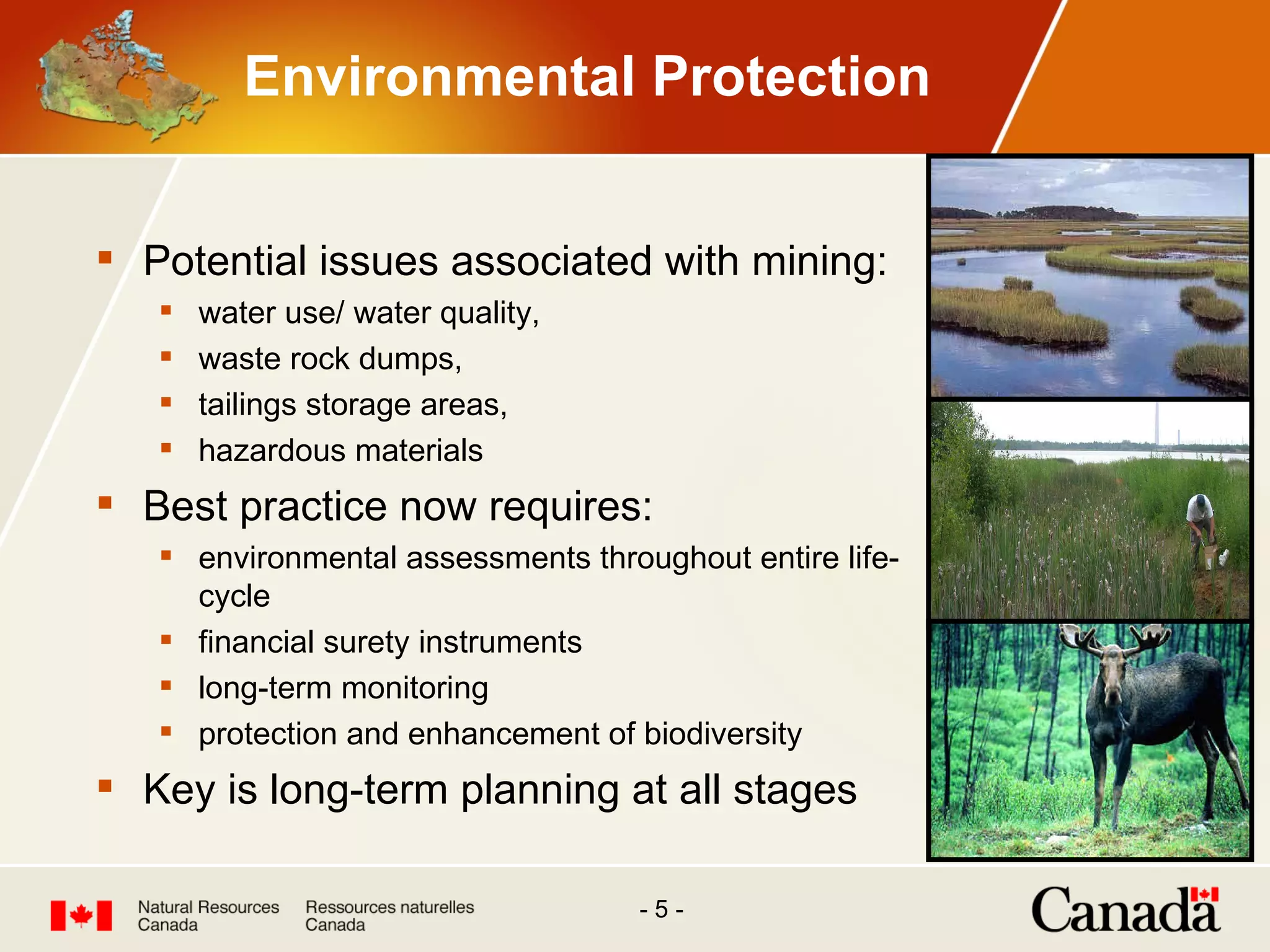
Environmental Protection Potential issues associated with mining: water use/ water quality, waste rock dumps, tailings storage areas, hazardous materials Best practice now requires: environmental assessments throughout entire life-cycle financial surety instruments long-term monitoring protection and enhancement of biodiversity Key is long-term planning at all stages
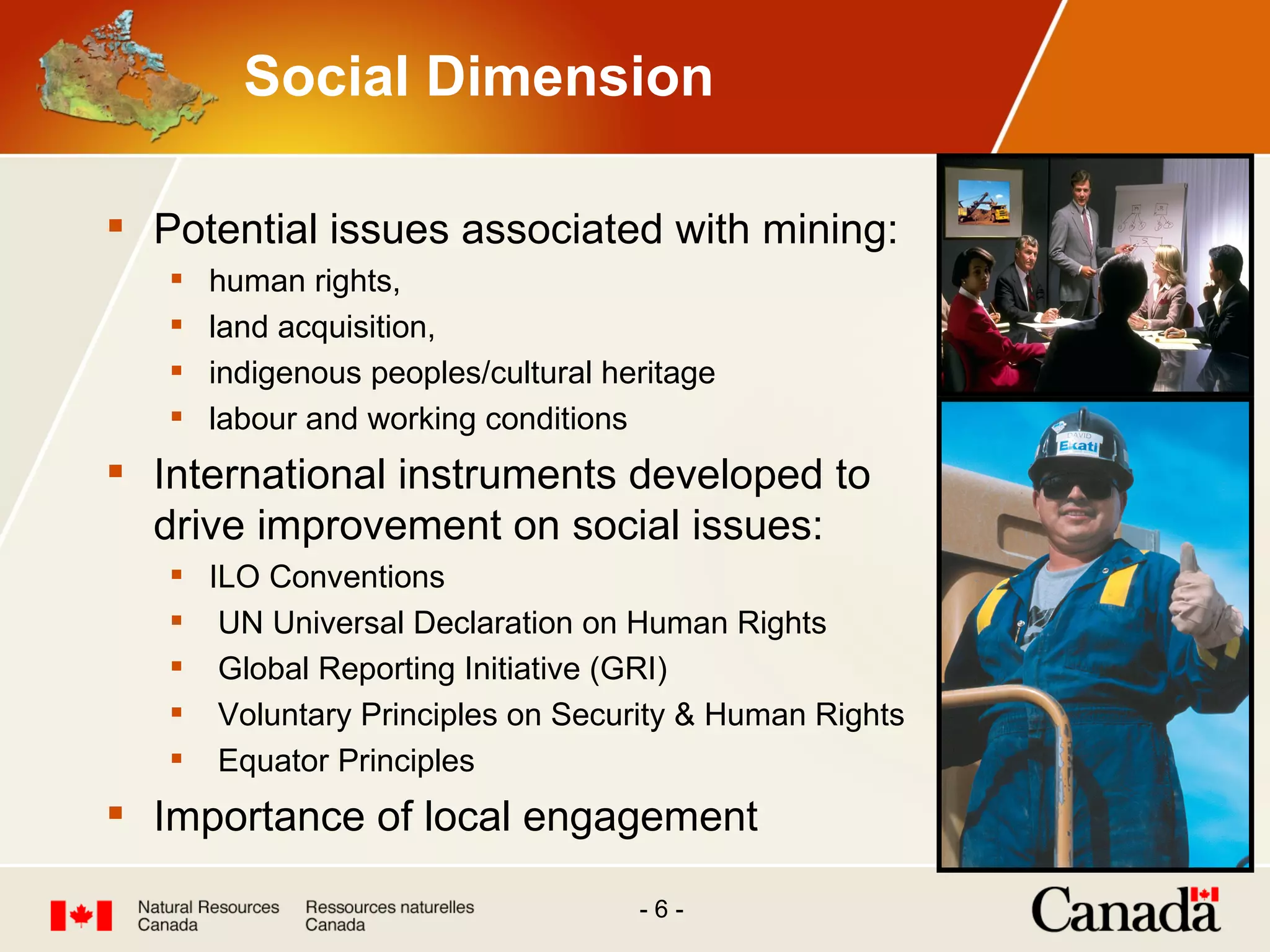
Social Dimension Potential issues associated with mining: human rights, land acquisition, indigenous peoples/cultural heritage labour and working conditions International instruments developed to drive improvement on social issues: ILO Conventions  UN Universal Declaration on Human Rights Global Reporting Initiative (GRI) Voluntary Principles on Security & Human Rights Equator Principles Importance of local engagement
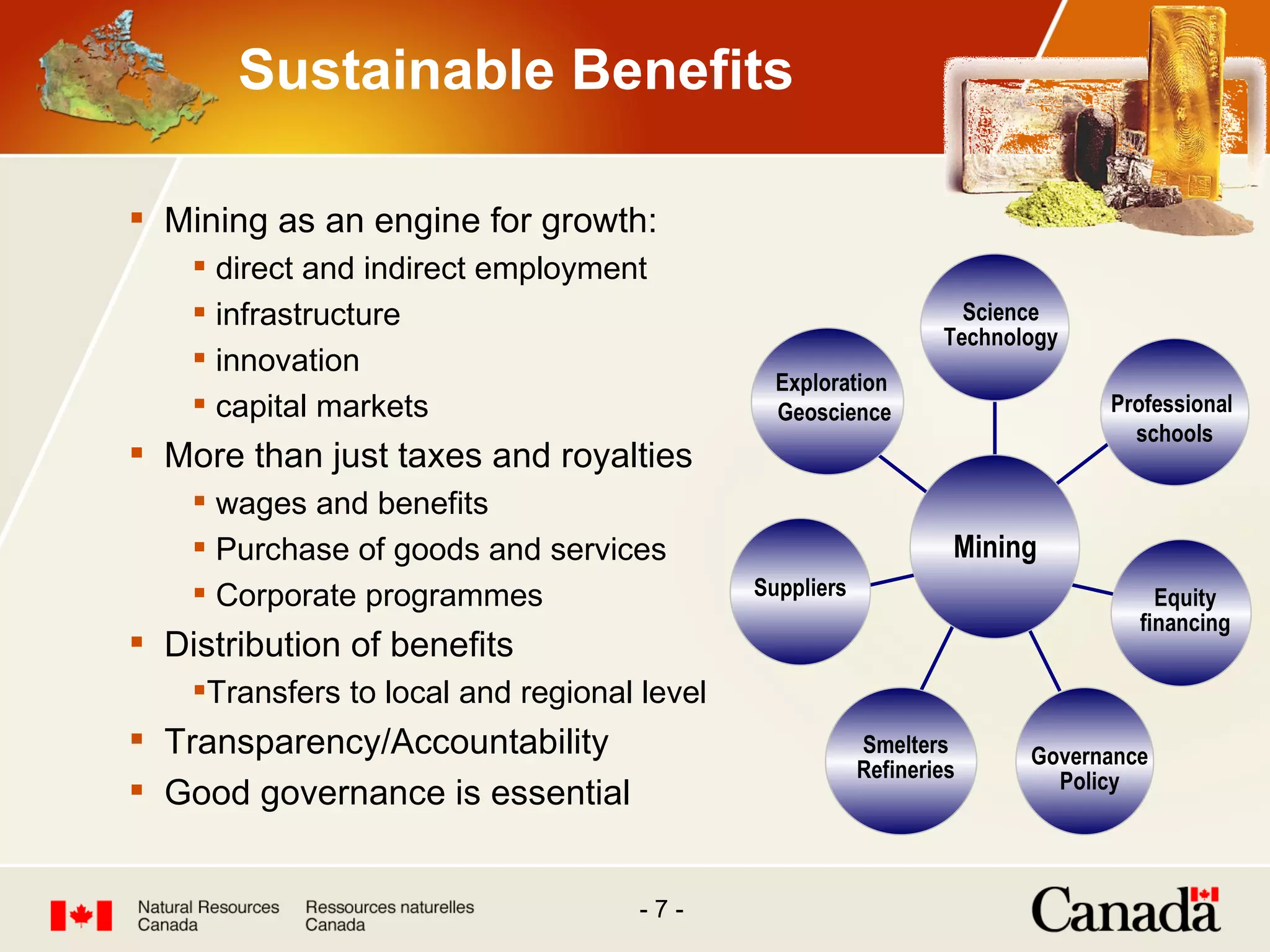
Sustainable Benefits Science Technology Exploration Geoscience Suppliers Mining Smelters Refineries Governance Policy Equity financing Professional  schools Mining as an engine for growth: direct and indirect employment infrastructure innovation capital markets More than just taxes and royalties wages and benefits Purchase of goods and services Corporate programmes Distribution of benefits Transfers to local and regional level Transparency/Accountability Good governance is essential
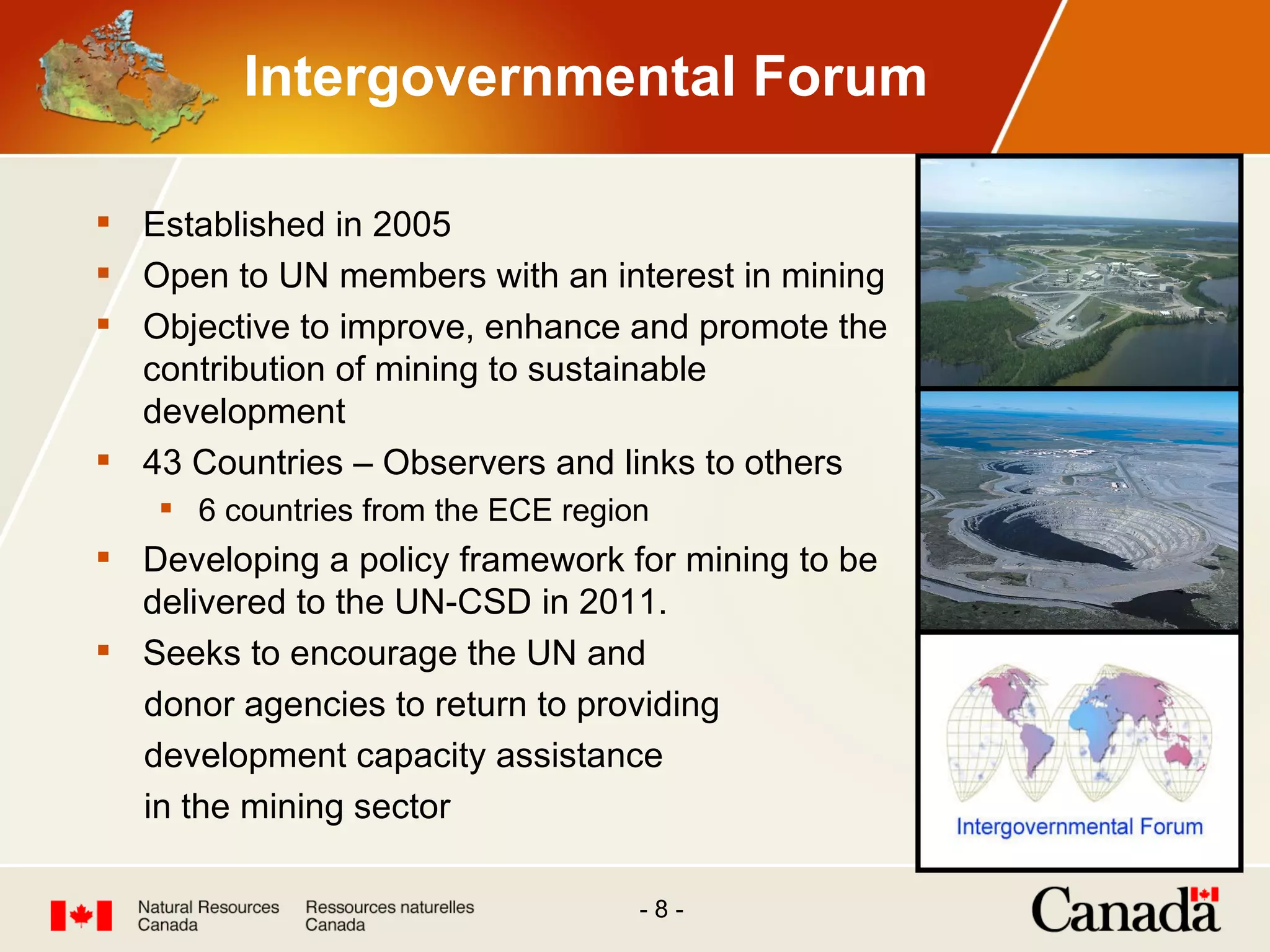
Intergovernmental Forum Established in 2005  Open to UN members with an interest in mining Objective to improve, enhance and promote the contribution of mining to sustainable development 43 Countries – Observers and links to others 6 countries from the ECE region Developing a policy framework for mining to be delivered to the UN-CSD in 2011. Seeks to encourage the UN and  donor agencies to return to providing development capacity assistance in the mining sector
Key Messages Mining can contribute to sustainable development Requires good governance to address Environmental considerations Social concerns Measures to create lasting benefits Best Practice in mining requires:  Multi-stakeholder consultation and dialogue Transparency/access to information. Corporate social responsibility & environmental stewardship

Un Ece Presentation Dec 2009 Final

  • 1.
    UN-ECE 4th Regional Implementation Meeting 1-2 December, 2009 Thematic Cluster: Mining Patrick Chevalier Director Minerals, Metals & Materials Policy Branch Natural Resources Canada
  • 2.
    Importance of MiningContribution to society: Essential materials; Mining the source of all raw materials. All regions of the ECE engaged Mining important to the several ECE economies Importance highly variable across the region World attention typically focused on problems Benefits ignored or misunderstood Contribution to Sustainable Development Benefits remain available to future generations
  • 3.
    Mining Life-cycle Society’sNeed for Minerals and Metals Exploration Site Development Extraction Mining Ore extracted Land reclamation initiated Mine closed Land available for other uses Milling Concentrating Some industrial minerals sold directly (i.e., salt & sand) Minerals & Metals Processing, Smelting & Refining Semi- Fabrication & Fabricating Consumption Use Return to the environment Obsolescence
  • 4.
    Issues related tomining Environmental footprint: Land-use planning Waste management Ecosystem risk management Mine closure and rehabilitation Social licence to operate: Distribution of benefits Corporate Social Responsibility Challenge is to transform mineral resource potential while: Creating sustainable benefits; Addressing social needs; and Protecting the environment
  • 5.
    Environmental Protection Potentialissues associated with mining: water use/ water quality, waste rock dumps, tailings storage areas, hazardous materials Best practice now requires: environmental assessments throughout entire life-cycle financial surety instruments long-term monitoring protection and enhancement of biodiversity Key is long-term planning at all stages
  • 6.
    Social Dimension Potentialissues associated with mining: human rights, land acquisition, indigenous peoples/cultural heritage labour and working conditions International instruments developed to drive improvement on social issues: ILO Conventions UN Universal Declaration on Human Rights Global Reporting Initiative (GRI) Voluntary Principles on Security & Human Rights Equator Principles Importance of local engagement
  • 7.
    Sustainable Benefits ScienceTechnology Exploration Geoscience Suppliers Mining Smelters Refineries Governance Policy Equity financing Professional schools Mining as an engine for growth: direct and indirect employment infrastructure innovation capital markets More than just taxes and royalties wages and benefits Purchase of goods and services Corporate programmes Distribution of benefits Transfers to local and regional level Transparency/Accountability Good governance is essential
  • 8.
    Intergovernmental Forum Establishedin 2005 Open to UN members with an interest in mining Objective to improve, enhance and promote the contribution of mining to sustainable development 43 Countries – Observers and links to others 6 countries from the ECE region Developing a policy framework for mining to be delivered to the UN-CSD in 2011. Seeks to encourage the UN and donor agencies to return to providing development capacity assistance in the mining sector
  • 9.
    Key Messages Miningcan contribute to sustainable development Requires good governance to address Environmental considerations Social concerns Measures to create lasting benefits Best Practice in mining requires: Multi-stakeholder consultation and dialogue Transparency/access to information. Corporate social responsibility & environmental stewardship

Editor's Notes