ULCERATIVE COLITIS
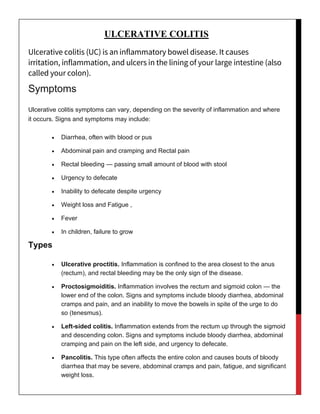
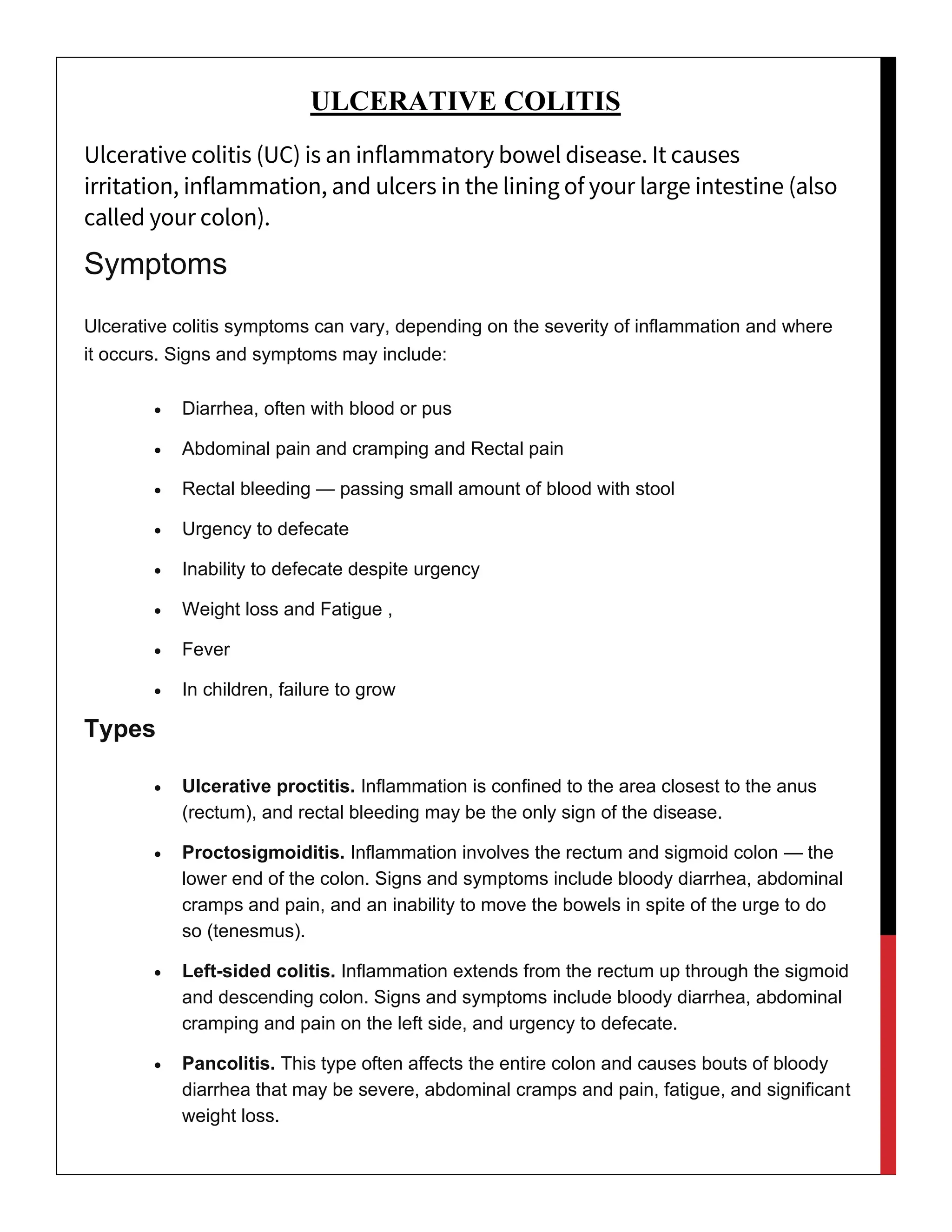
Ulcerative colitis (UC) is an inflammatory bowel disease. It causes
irritation, inflammation, and ulcers in the lining of your large intestine (also
called your colon).
Symptoms
Ulcerative colitis symptoms can vary, depending on the severity of inflammation and where
it occurs. Signs and symptoms may include:
• Diarrhea, often with blood or pus
• Abdominal pain and cramping and Rectal pain
• Rectal bleeding — passing small amount of blood with stool
• Urgency to defecate
• Inability to defecate despite urgency
• Weight loss and Fatigue ,
• Fever
• In children, failure to grow
Types
• Ulcerative proctitis. Inflammation is confined to the area closest to the anus
(rectum), and rectal bleeding may be the only sign of the disease.
• Proctosigmoiditis. Inflammation involves the rectum and sigmoid colon — the
lower end of the colon. Signs and symptoms include bloody diarrhea, abdominal
cramps and pain, and an inability to move the bowels in spite of the urge to do
so (tenesmus).
• Left-sided colitis. Inflammation extends from the rectum up through the sigmoid
and descending colon. Signs and symptoms include bloody diarrhea, abdominal
cramping and pain on the left side, and urgency to defecate.
• Pancolitis. This type often affects the entire colon and causes bouts of bloody
diarrhea that may be severe, abdominal cramps and pain, fatigue, and significant
weight loss.
Causes
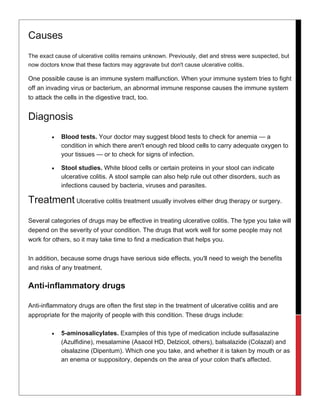
The exact cause of ulcerative colitis remains unknown. Previously, diet and stress were suspected, but
now doctors know that these factors may aggravate but don't cause ulcerative colitis.
One possible cause is an immune system malfunction. When your immune system tries to fight
off an invading virus or bacterium, an abnormal immune response causes the immune system
to attack the cells in the digestive tract, too.
Diagnosis
• Blood tests. Your doctor may suggest blood tests to check for anemia — a
condition in which there aren't enough red blood cells to carry adequate oxygen to
your tissues — or to check for signs of infection.
• Stool studies. White blood cells or certain proteins in your stool can indicate
ulcerative colitis. A stool sample can also help rule out other disorders, such as
infections caused by bacteria, viruses and parasites.
Treatment Ulcerative colitis treatment usually involves either drug therapy or surgery.
Several categories of drugs may be effective in treating ulcerative colitis. The type you take will
depend on the severity of your condition. The drugs that work well for some people may not
work for others, so it may take time to find a medication that helps you.
In addition, because some drugs have serious side effects, you'll need to weigh the benefits
and risks of any treatment.
Anti-inflammatory drugs
Anti-inflammatory drugs are often the first step in the treatment of ulcerative colitis and are
appropriate for the majority of people with this condition. These drugs include:
• 5-aminosalicylates. Examples of this type of medication include sulfasalazine
(Azulfidine), mesalamine (Asacol HD, Delzicol, others), balsalazide (Colazal) and
olsalazine (Dipentum). Which one you take, and whether it is taken by mouth or as
an enema or suppository, depends on the area of your colon that's affected.
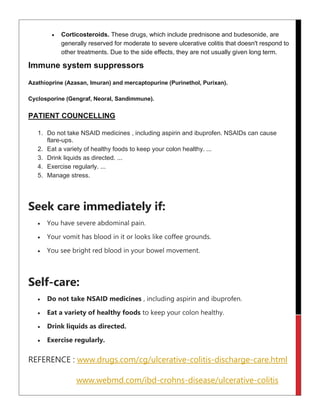
• Corticosteroids. These drugs, which include prednisone and budesonide, are
generally reserved for moderate to severe ulcerative colitis that doesn't respond to
other treatments. Due to the side effects, they are not usually given long term.
Immune system suppressors
Azathioprine (Azasan, Imuran) and mercaptopurine (Purinethol, Purixan).
Cyclosporine (Gengraf, Neoral, Sandimmune).
PATIENT COUNCELLING
1. Do not take NSAID medicines , including aspirin and ibuprofen. NSAIDs can cause
flare-ups.
2. Eat a variety of healthy foods to keep your colon healthy. ...
3. Drink liquids as directed. ...
4. Exercise regularly. ...
5. Manage stress.
Seek care immediately if:
• You have severe abdominal pain.
• Your vomit has blood in it or looks like coffee grounds.
• You see bright red blood in your bowel movement.
Self-care:
• Do not take NSAID medicines , including aspirin and ibuprofen.
• Eat a variety of healthy foods to keep your colon healthy.
• Drink liquids as directed.
• Exercise regularly.
REFERENCE : www.drugs.com/cg/ulcerative-colitis-discharge-care.html
www.webmd.com/ibd-crohns-disease/ulcerative-colitis

ULCERATIVE COLITIS

  • 1.
    ULCERATIVE COLITIS Ulcerative colitis(UC) is an inflammatory bowel disease. It causes irritation, inflammation, and ulcers in the lining of your large intestine (also called your colon). Symptoms Ulcerative colitis symptoms can vary, depending on the severity of inflammation and where it occurs. Signs and symptoms may include: • Diarrhea, often with blood or pus • Abdominal pain and cramping and Rectal pain • Rectal bleeding — passing small amount of blood with stool • Urgency to defecate • Inability to defecate despite urgency • Weight loss and Fatigue , • Fever • In children, failure to grow Types • Ulcerative proctitis. Inflammation is confined to the area closest to the anus (rectum), and rectal bleeding may be the only sign of the disease. • Proctosigmoiditis. Inflammation involves the rectum and sigmoid colon — the lower end of the colon. Signs and symptoms include bloody diarrhea, abdominal cramps and pain, and an inability to move the bowels in spite of the urge to do so (tenesmus). • Left-sided colitis. Inflammation extends from the rectum up through the sigmoid and descending colon. Signs and symptoms include bloody diarrhea, abdominal cramping and pain on the left side, and urgency to defecate. • Pancolitis. This type often affects the entire colon and causes bouts of bloody diarrhea that may be severe, abdominal cramps and pain, fatigue, and significant weight loss.
  • 2.
    Causes The exact causeof ulcerative colitis remains unknown. Previously, diet and stress were suspected, but now doctors know that these factors may aggravate but don't cause ulcerative colitis. One possible cause is an immune system malfunction. When your immune system tries to fight off an invading virus or bacterium, an abnormal immune response causes the immune system to attack the cells in the digestive tract, too. Diagnosis • Blood tests. Your doctor may suggest blood tests to check for anemia — a condition in which there aren't enough red blood cells to carry adequate oxygen to your tissues — or to check for signs of infection. • Stool studies. White blood cells or certain proteins in your stool can indicate ulcerative colitis. A stool sample can also help rule out other disorders, such as infections caused by bacteria, viruses and parasites. Treatment Ulcerative colitis treatment usually involves either drug therapy or surgery. Several categories of drugs may be effective in treating ulcerative colitis. The type you take will depend on the severity of your condition. The drugs that work well for some people may not work for others, so it may take time to find a medication that helps you. In addition, because some drugs have serious side effects, you'll need to weigh the benefits and risks of any treatment. Anti-inflammatory drugs Anti-inflammatory drugs are often the first step in the treatment of ulcerative colitis and are appropriate for the majority of people with this condition. These drugs include: • 5-aminosalicylates. Examples of this type of medication include sulfasalazine (Azulfidine), mesalamine (Asacol HD, Delzicol, others), balsalazide (Colazal) and olsalazine (Dipentum). Which one you take, and whether it is taken by mouth or as an enema or suppository, depends on the area of your colon that's affected.
  • 3.
    • Corticosteroids. Thesedrugs, which include prednisone and budesonide, are generally reserved for moderate to severe ulcerative colitis that doesn't respond to other treatments. Due to the side effects, they are not usually given long term. Immune system suppressors Azathioprine (Azasan, Imuran) and mercaptopurine (Purinethol, Purixan). Cyclosporine (Gengraf, Neoral, Sandimmune). PATIENT COUNCELLING 1. Do not take NSAID medicines , including aspirin and ibuprofen. NSAIDs can cause flare-ups. 2. Eat a variety of healthy foods to keep your colon healthy. ... 3. Drink liquids as directed. ... 4. Exercise regularly. ... 5. Manage stress. Seek care immediately if: • You have severe abdominal pain. • Your vomit has blood in it or looks like coffee grounds. • You see bright red blood in your bowel movement. Self-care: • Do not take NSAID medicines , including aspirin and ibuprofen. • Eat a variety of healthy foods to keep your colon healthy. • Drink liquids as directed. • Exercise regularly. REFERENCE : www.drugs.com/cg/ulcerative-colitis-discharge-care.html www.webmd.com/ibd-crohns-disease/ulcerative-colitis