Lost in the Deep? Performance
Evaluation of Dead Reckoning
Techniques in Underwater
Environments
Marko Radeta, Claudio Rodrigues, Francisco Silva, Pedro Abreu, João
Pestana, Ngoc Thi Nguyen, Agustin Zuniga, Huber Flores, Petteri Nurmi
1
October 10, 2023, Cancun, Mexico
Importance
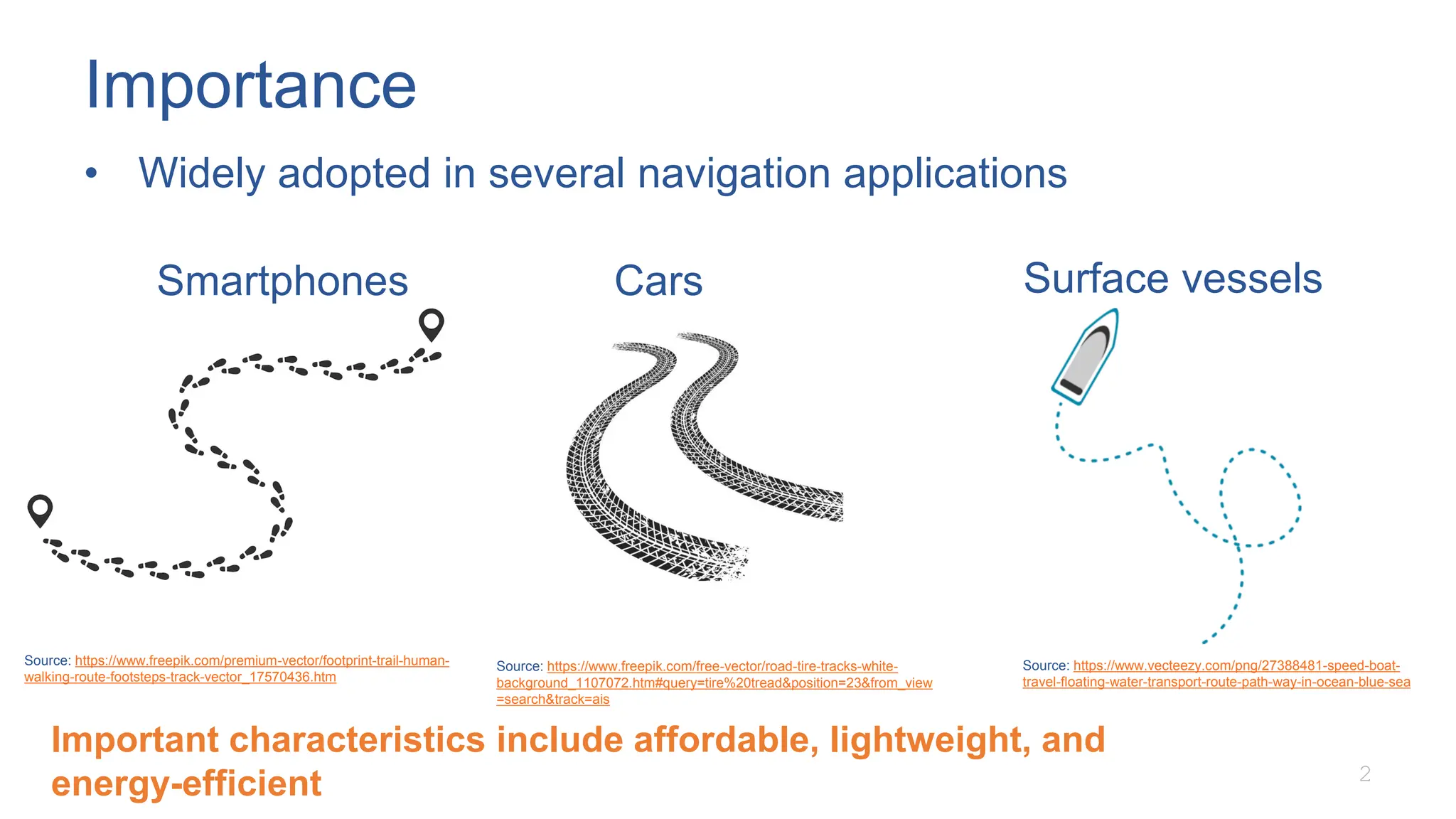
• Widely adopted in several navigation applications
2
Source: https://www.freepik.com/premium-vector/footprint-trail-human-
walking-route-footsteps-track-vector_17570436.htm
Source: https://www.freepik.com/free-vector/road-tire-tracks-white-
background_1107072.htm#query=tire%20tread&position=23&from_view
=search&track=ais
Cars
Source: https://www.vecteezy.com/png/27388481-speed-boat-
travel-floating-water-transport-route-path-way-in-ocean-blue-sea
Important characteristics include affordable, lightweight, and
energy-efficient
Surface vessels
Smartphones
Dead reckoning
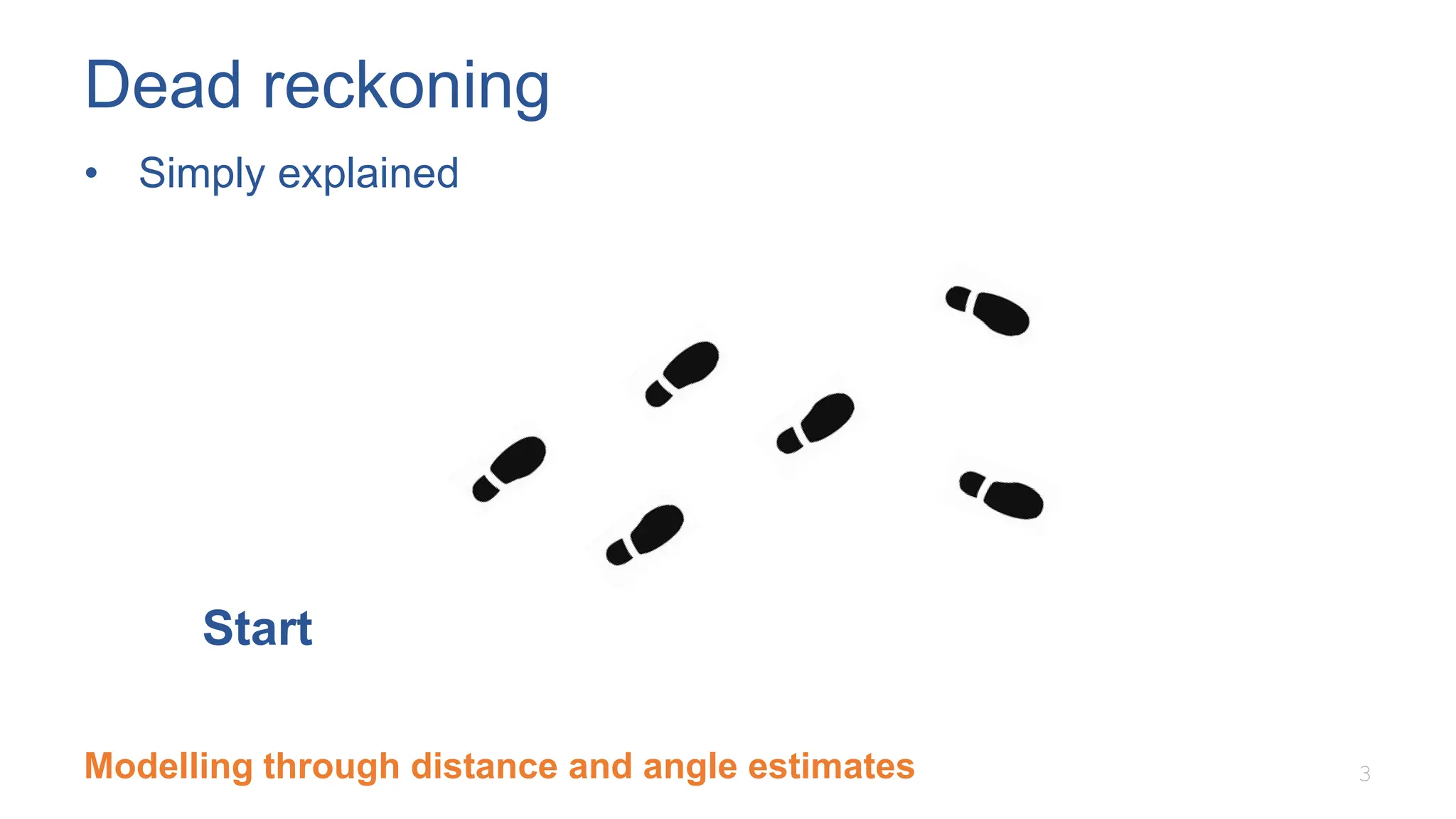
• Simply explained
3
Modelling through distance and angle estimates
Start
Dead reckoning
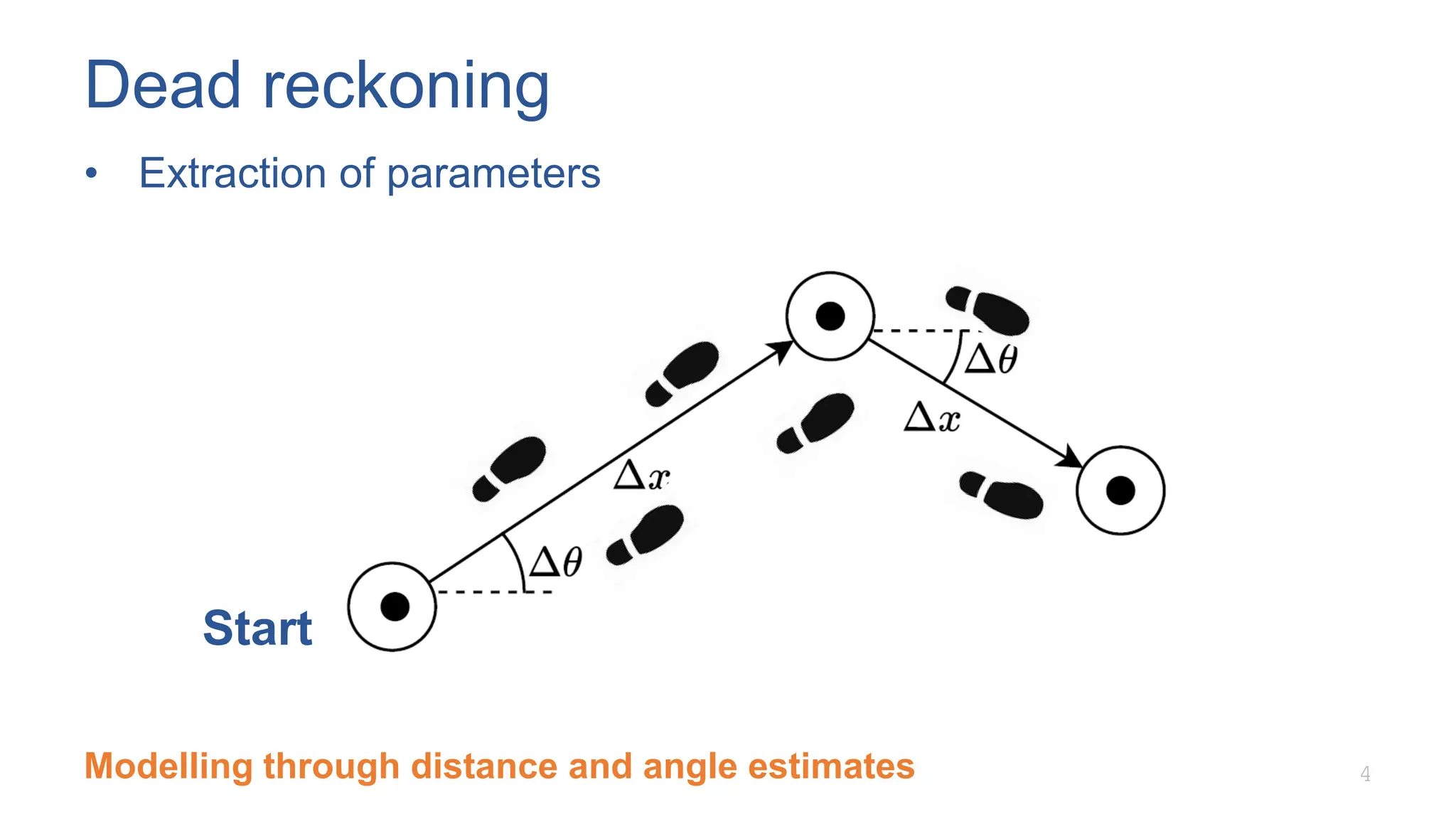
• Extraction of parameters
4
Modelling through distance and angle estimates
Start
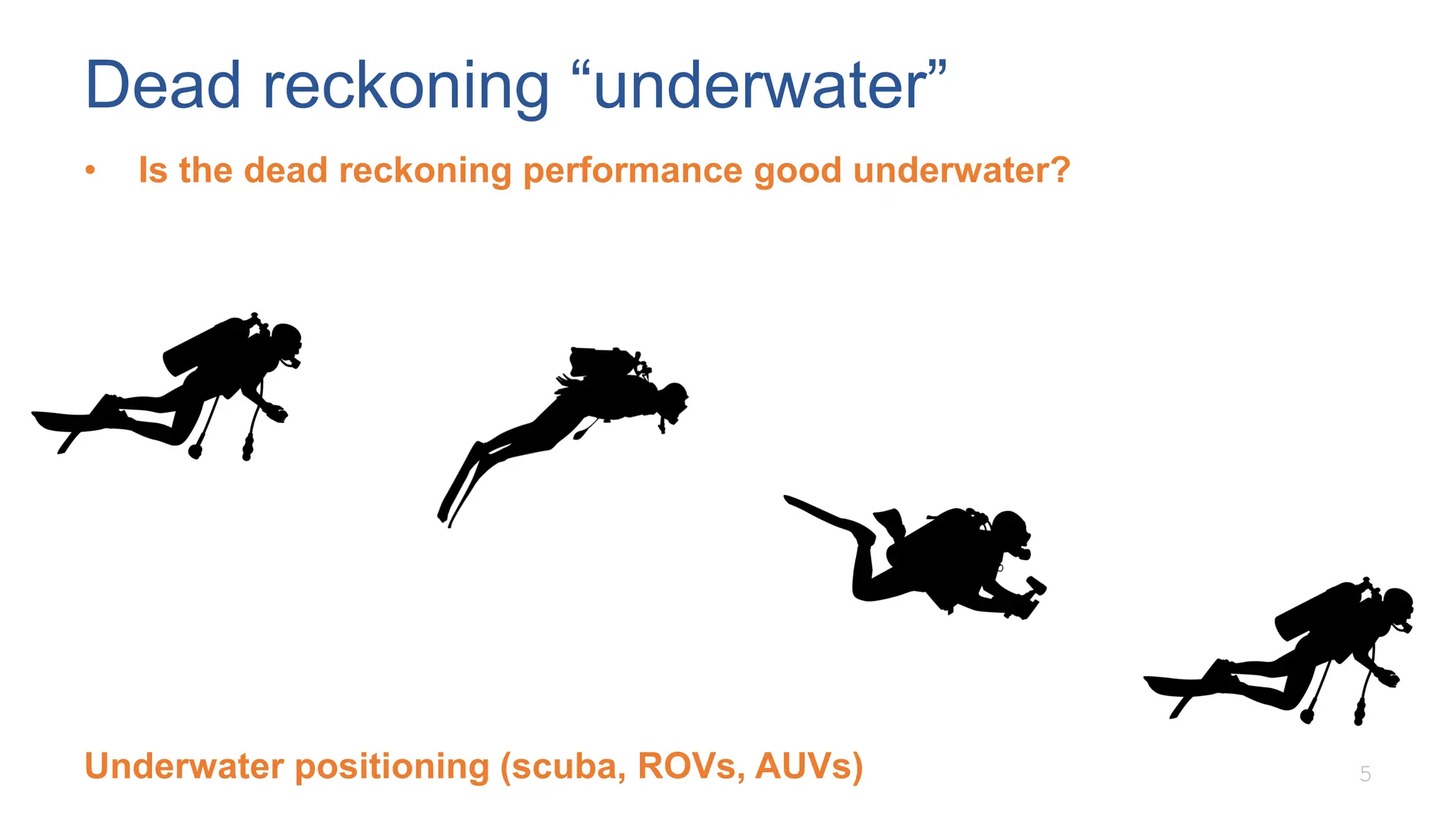
Dead reckoning “underwater”
• Is the dead reckoning performance good underwater?
5
Underwater positioning (scuba, ROVs, AUVs)
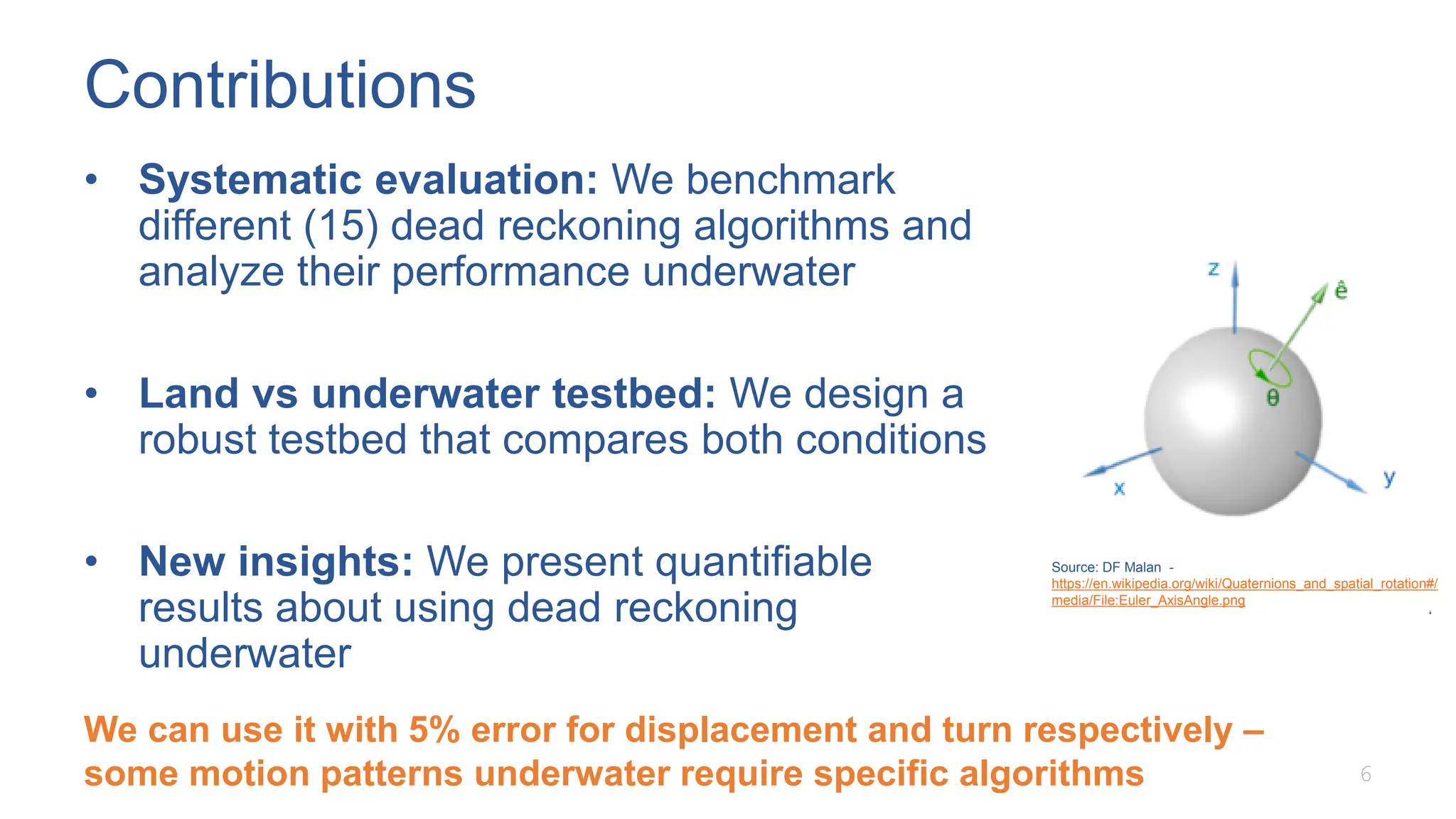
Contributions
• Systematic evaluation: We benchmark
different (15) dead reckoning algorithms and
analyze their performance underwater
• Land vs underwater testbed: We design a
robust testbed that compares both conditions
• New insights: We present quantifiable
results about using dead reckoning
underwater
6
We can use it with 5% error for displacement and turn respectively –
some motion patterns underwater require specific algorithms
Source: DF Malan -
https://en.wikipedia.org/wiki/Quaternions_and_spatial_rotation#/
media/File:Euler_AxisAngle.png
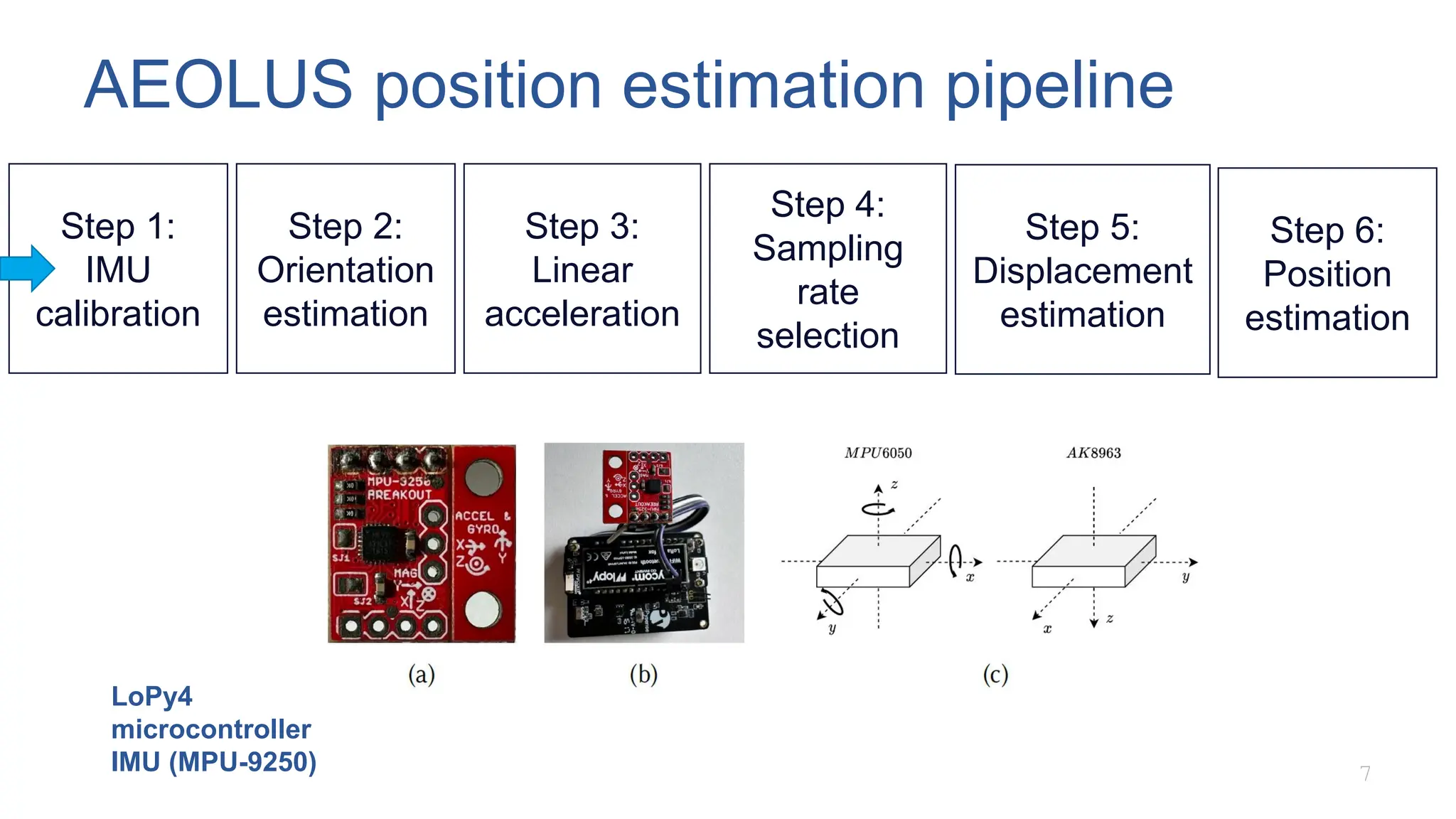
AEOLUS position estimation pipeline
7
Step 1:
IMU
calibration
Step 2:
Orientation
estimation
Step 3:
Linear
acceleration
Step 4:
Sampling
rate
selection
Step 5:
Displacement
estimation
Step 6:
Position
estimation
LoPy4
microcontroller
IMU (MPU-9250)
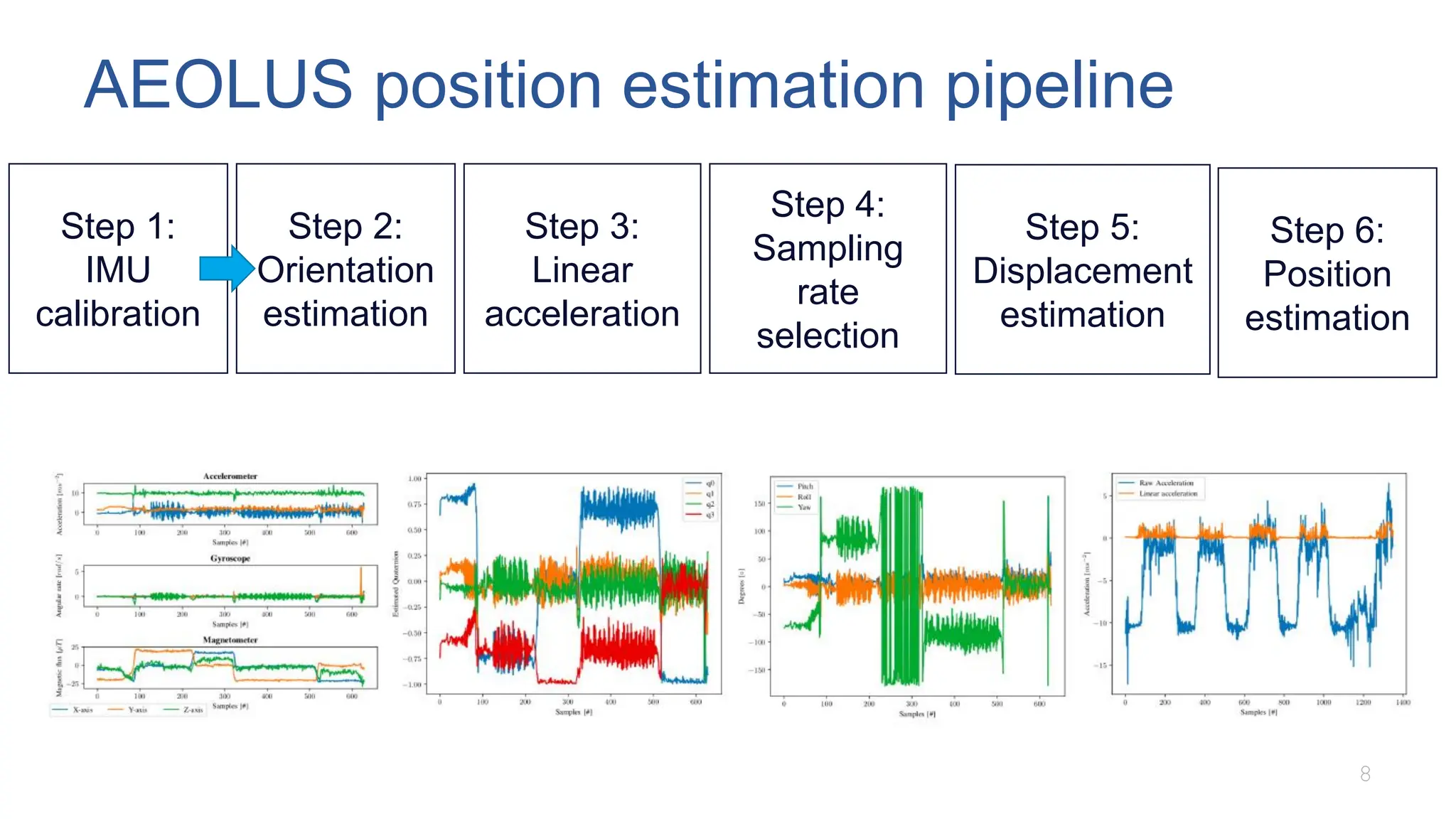
AEOLUS position estimation pipeline
8
Step 1:
IMU
calibration
Step 2:
Orientation
estimation
Step 3:
Linear
acceleration
Step 4:
Sampling
rate
selection
Step 5:
Displacement
estimation
Step 6:
Position
estimation
AEOLUS position estimation pipeline
9
Step 1:
IMU
calibration
Step 2:
Orientation
estimation
Step 3:
Linear
acceleration
Step 4:
Sampling
rate
selection
Step 5:
Displacement
estimation
Step 6:
Position
estimation
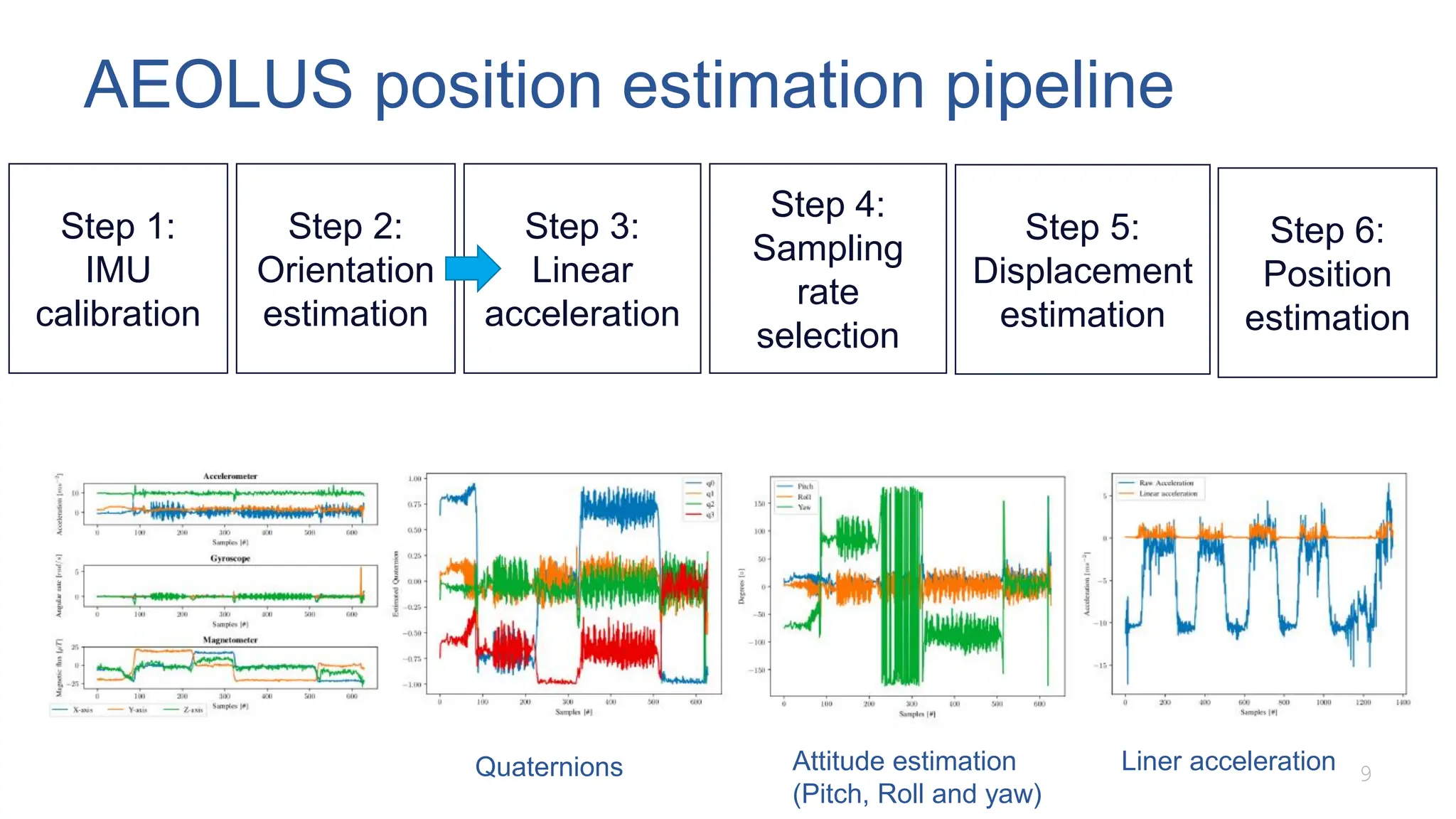
Attitude estimation
(Pitch, Roll and yaw)
Liner acceleration
Quaternions
AEOLUS position estimation pipeline
10
Step 1:
IMU
calibration
Step 2:
Orientation
estimation
Step 3:
Linear
acceleration
Step 4:
Sampling
rate
selection
Step 5:
Displacement
estimation
Step 6:
Position
estimation
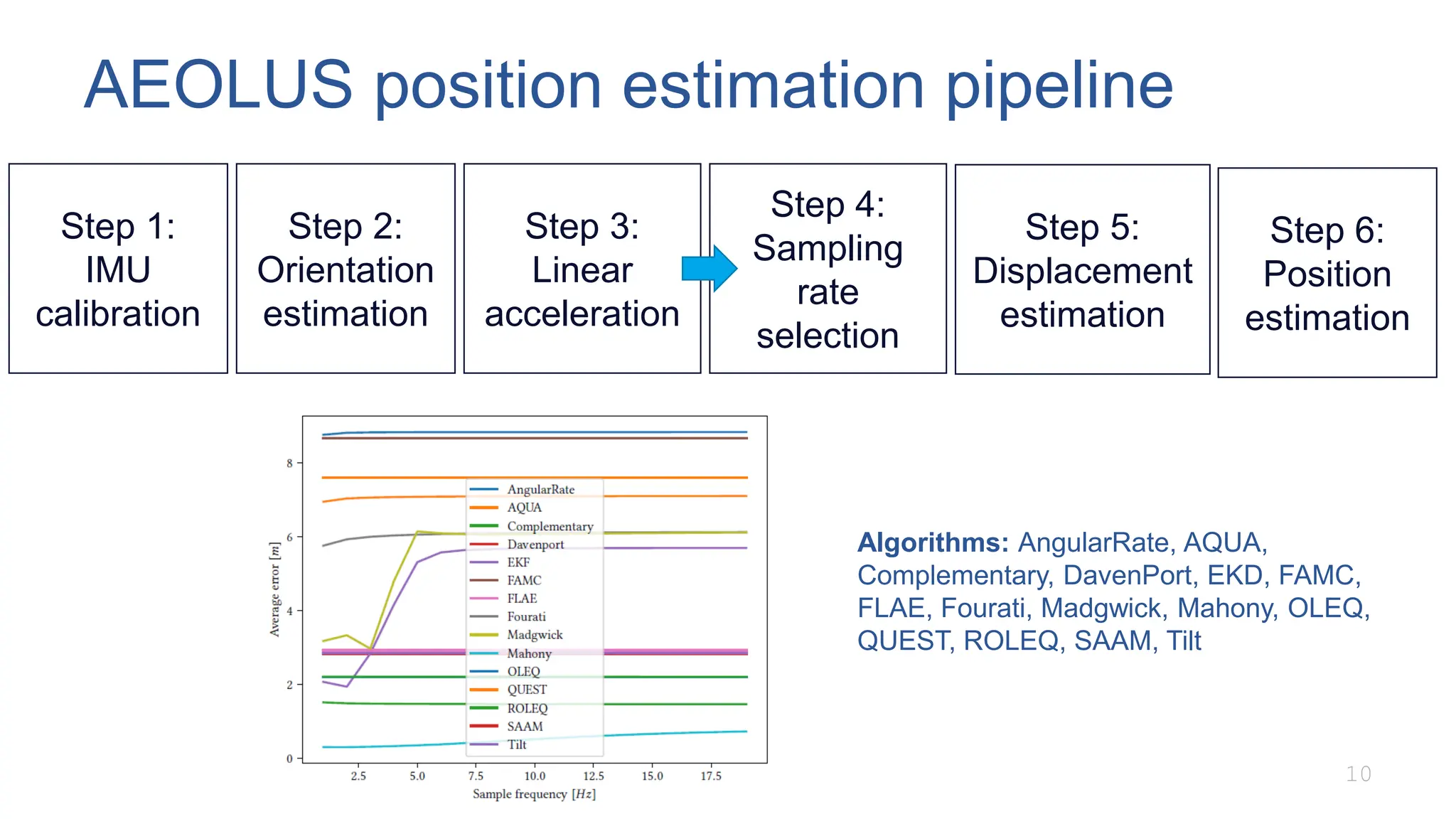
Algorithms: AngularRate, AQUA,
Complementary, DavenPort, EKD, FAMC,
FLAE, Fourati, Madgwick, Mahony, OLEQ,
QUEST, ROLEQ, SAAM, Tilt
AEOLUS position estimation pipeline
11
Step 1:
IMU
calibration
Step 2:
Orientation
estimation
Step 3:
Linear
acceleration
Step 4:
Sampling
rate
selection
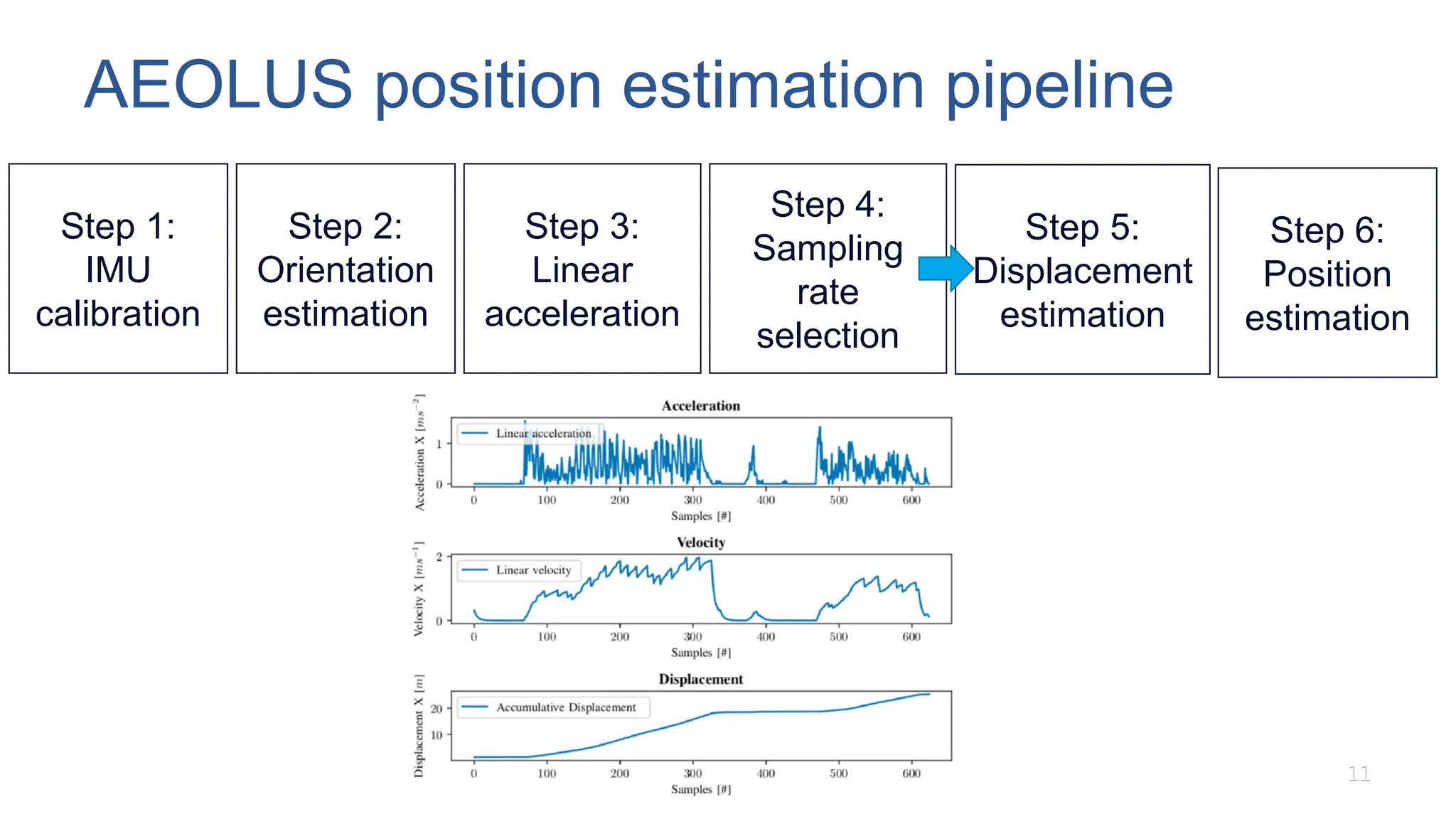
Step 5:
Displacement
estimation
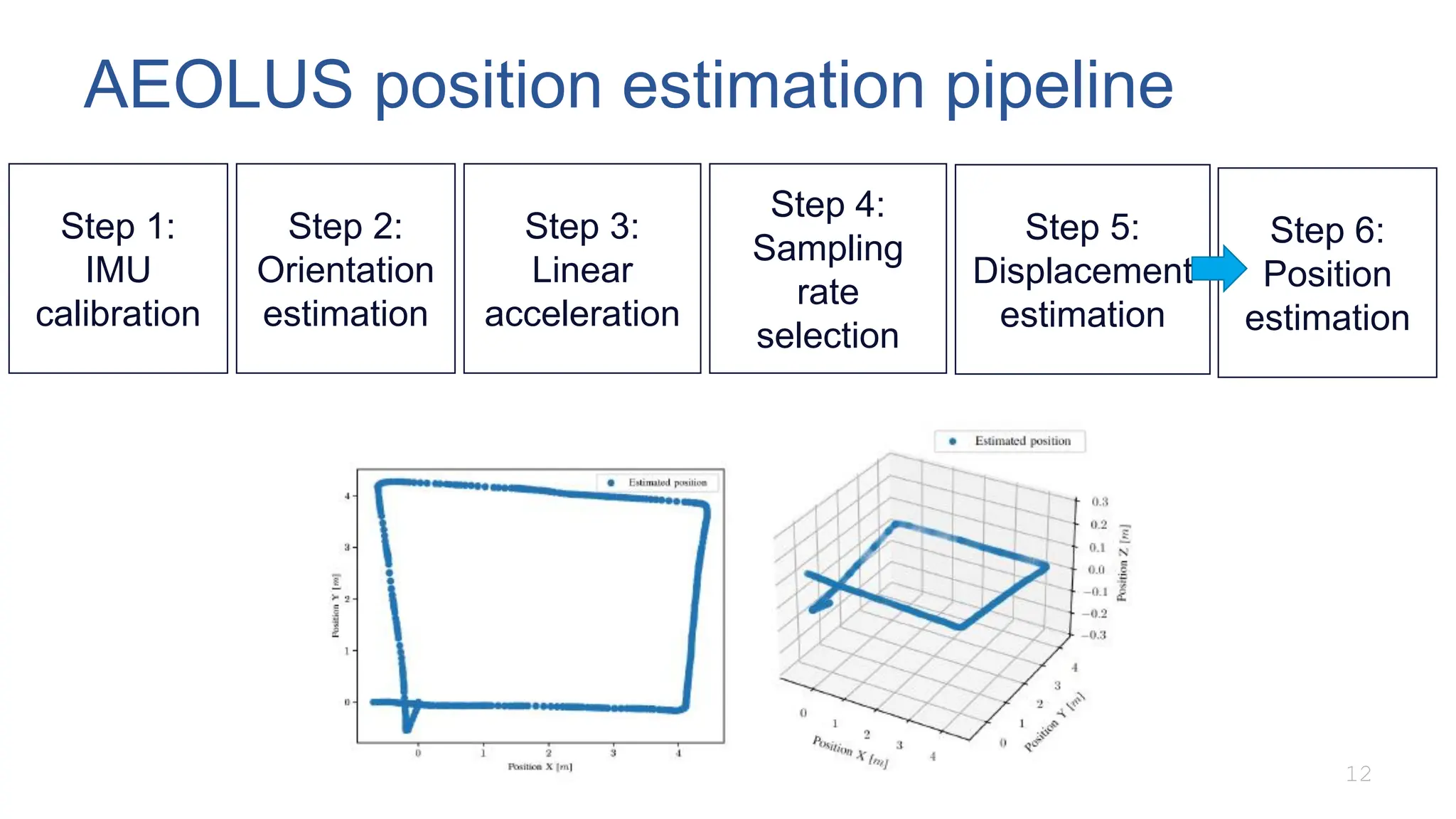
Step 6:
Position
estimation
AEOLUS position estimation pipeline
12
Step 1:
IMU
calibration
Step 2:
Orientation
estimation
Step 3:
Linear
acceleration
Step 4:
Sampling
rate
selection
Step 5:
Displacement
estimation
Step 6:
Position
estimation
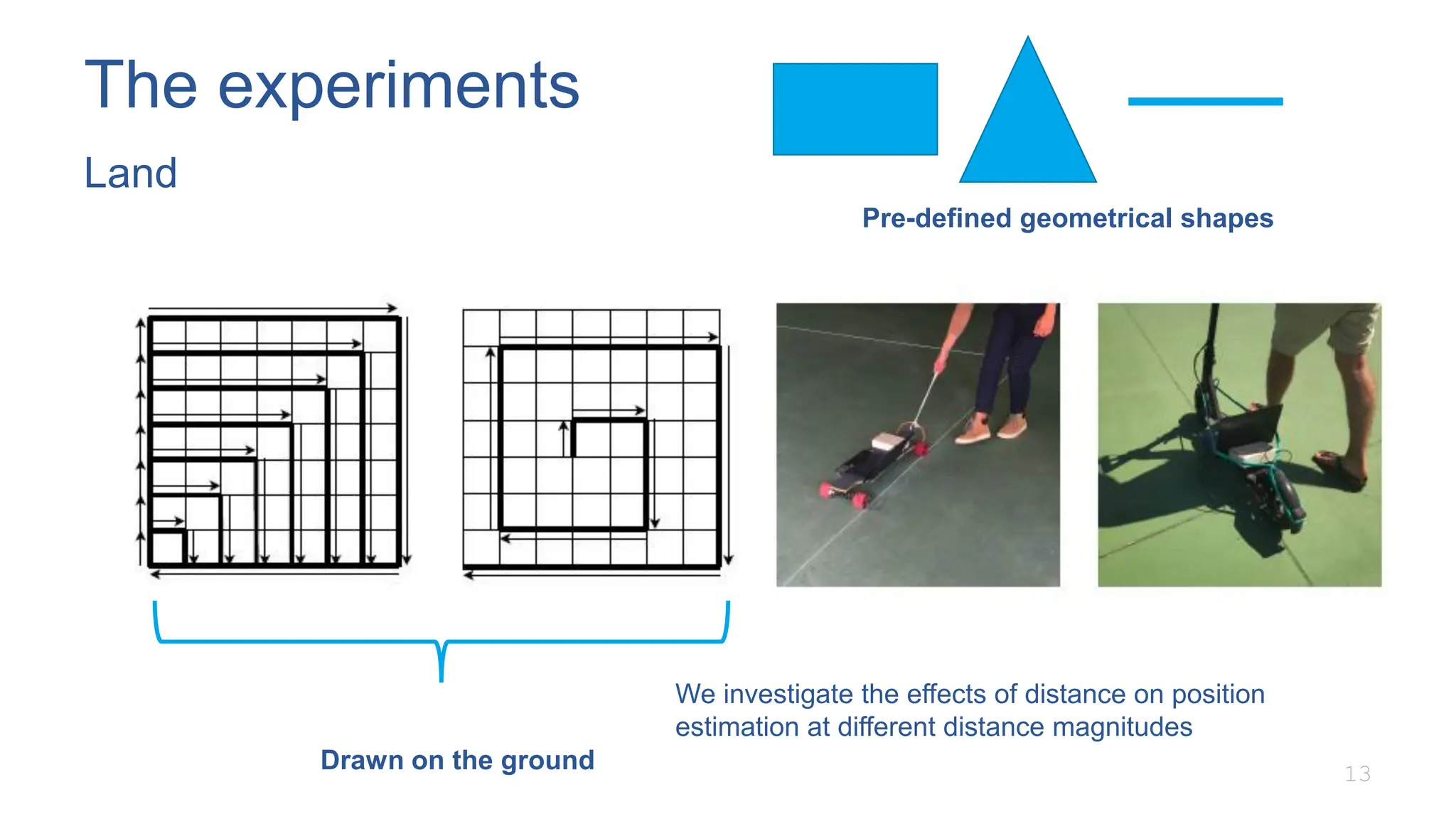
The experiments
Land
13
Drawn on the ground
We investigate the effects of distance on position
estimation at different distance magnitudes
Pre-defined geometrical shapes
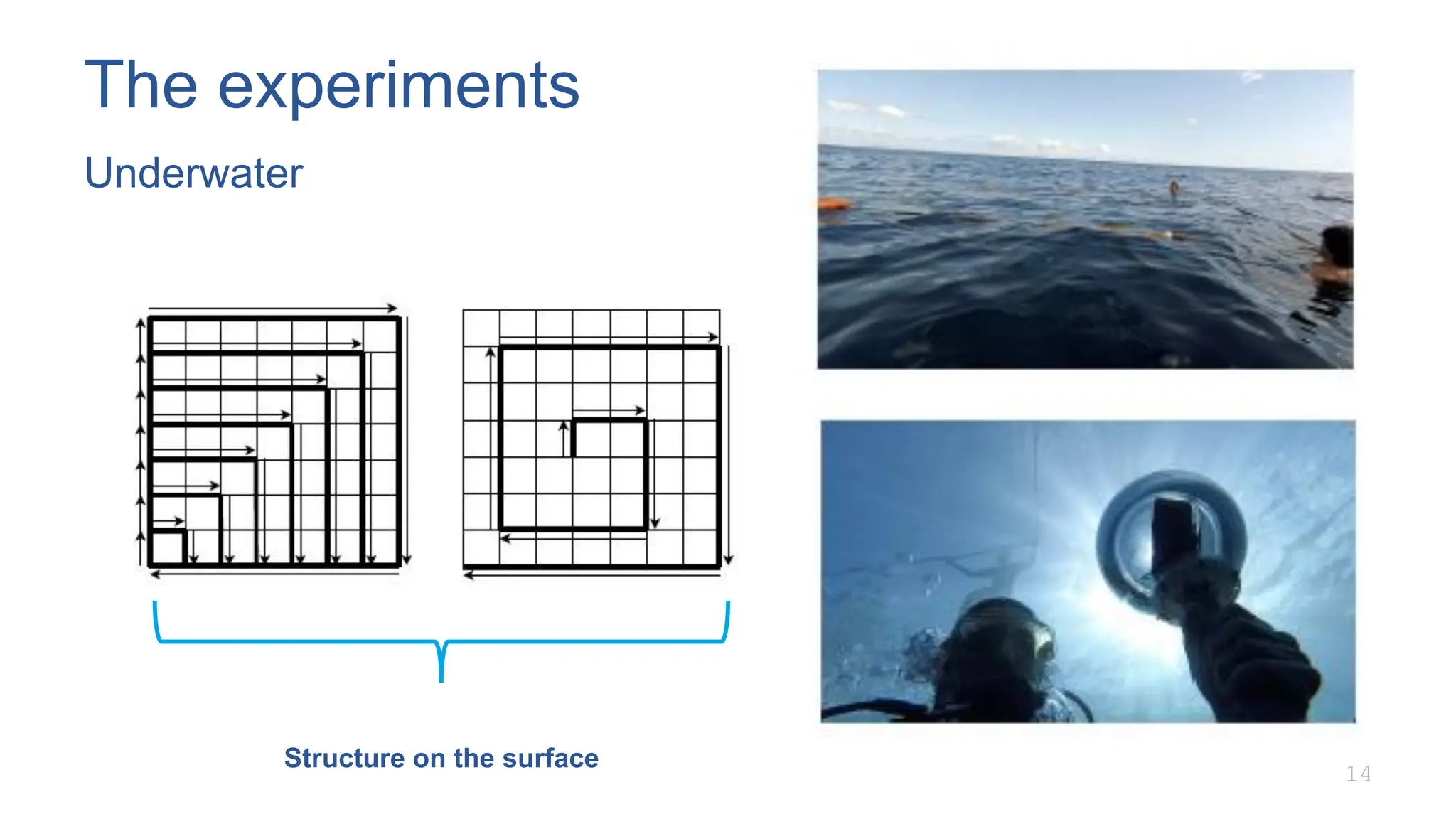
The experiments
Underwater
14
Structure on the surface
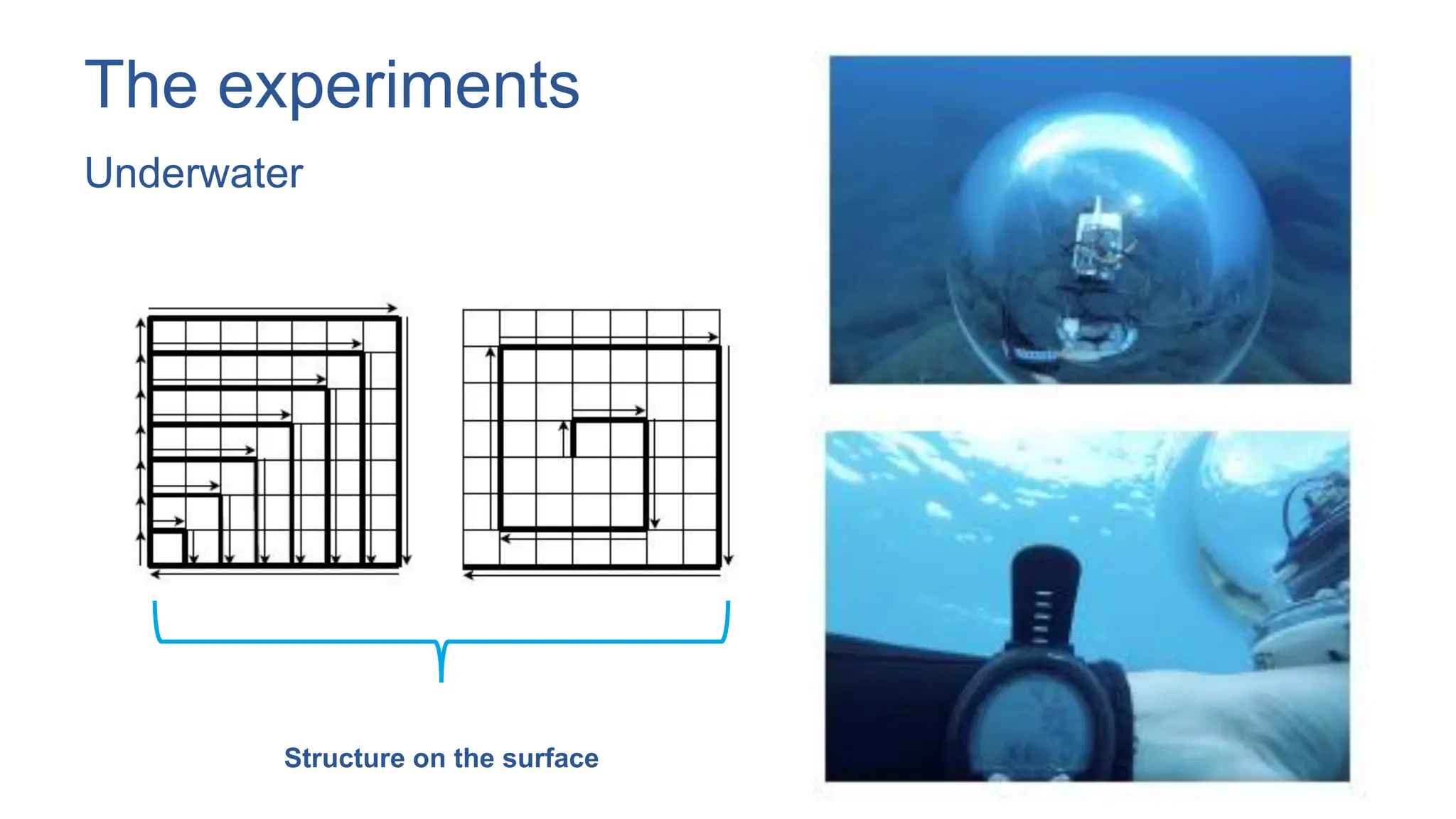
The experiments
Underwater
15
Structure on the surface
Evaluation
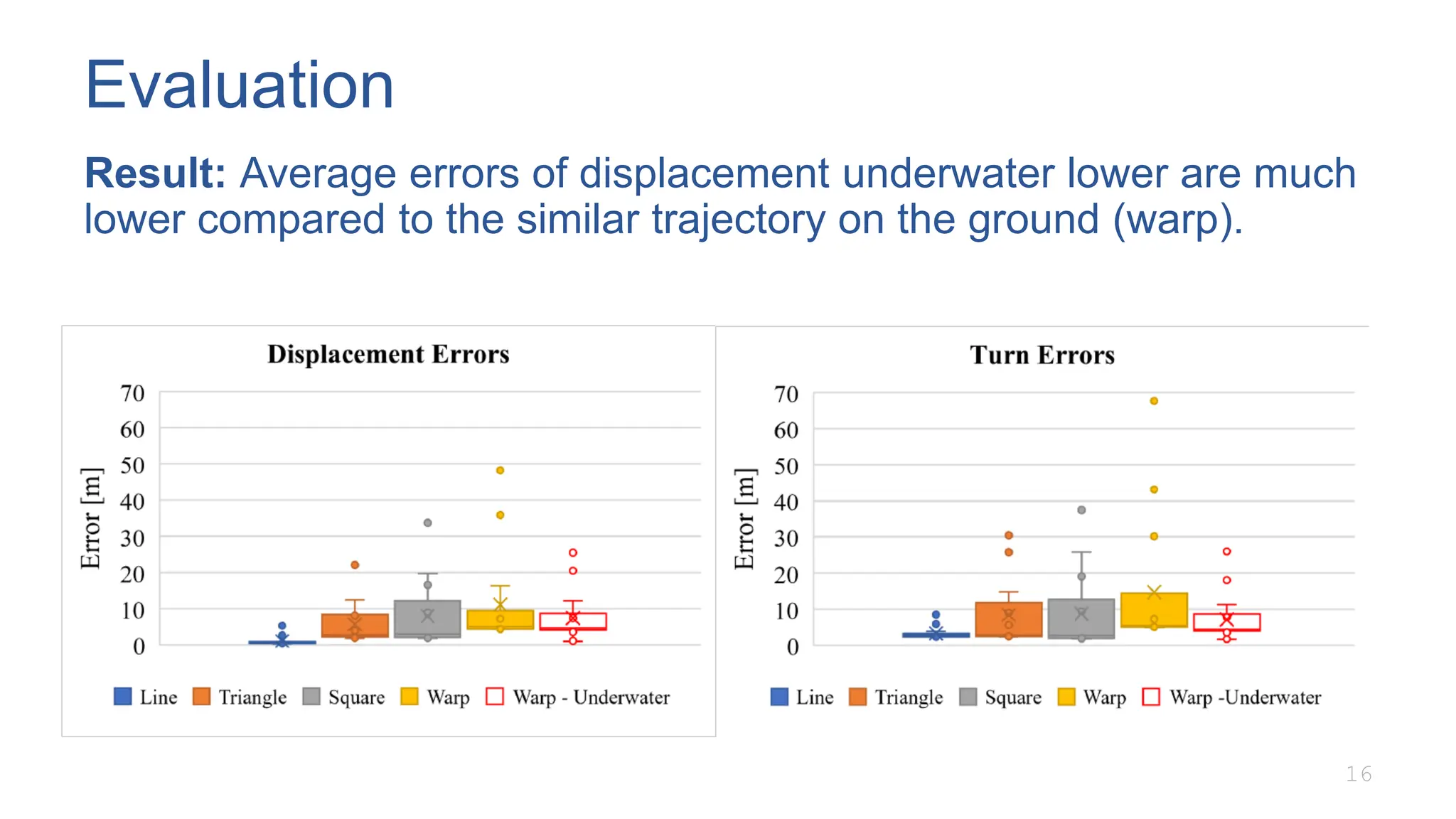
Result: Average errors of displacement underwater lower are much
lower compared to the similar trajectory on the ground (warp).
16
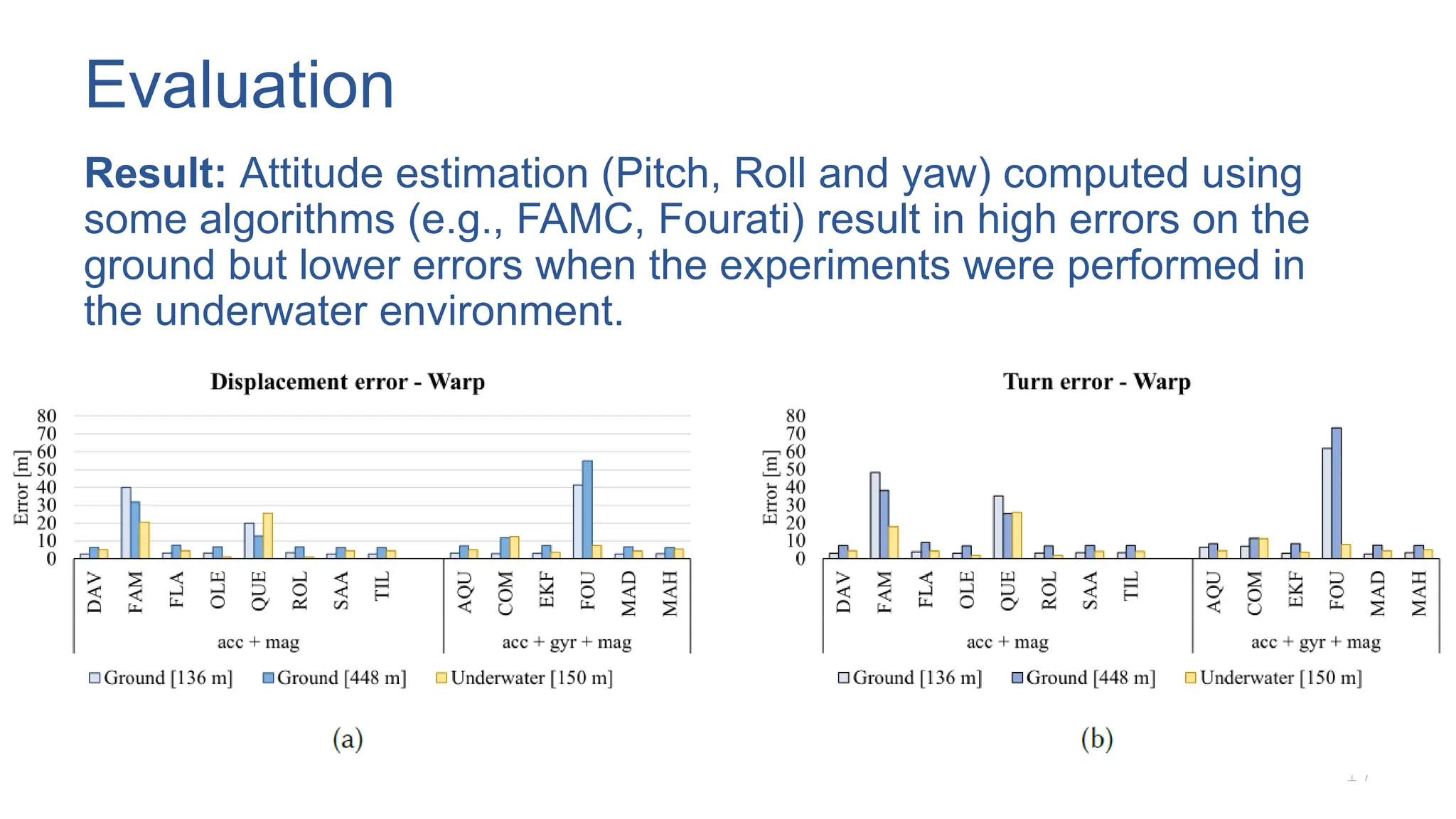
Evaluation
Result: Attitude estimation (Pitch, Roll and yaw) computed using
some algorithms (e.g., FAMC, Fourati) result in high errors on the
ground but lower errors when the experiments were performed in
the underwater environment.
17
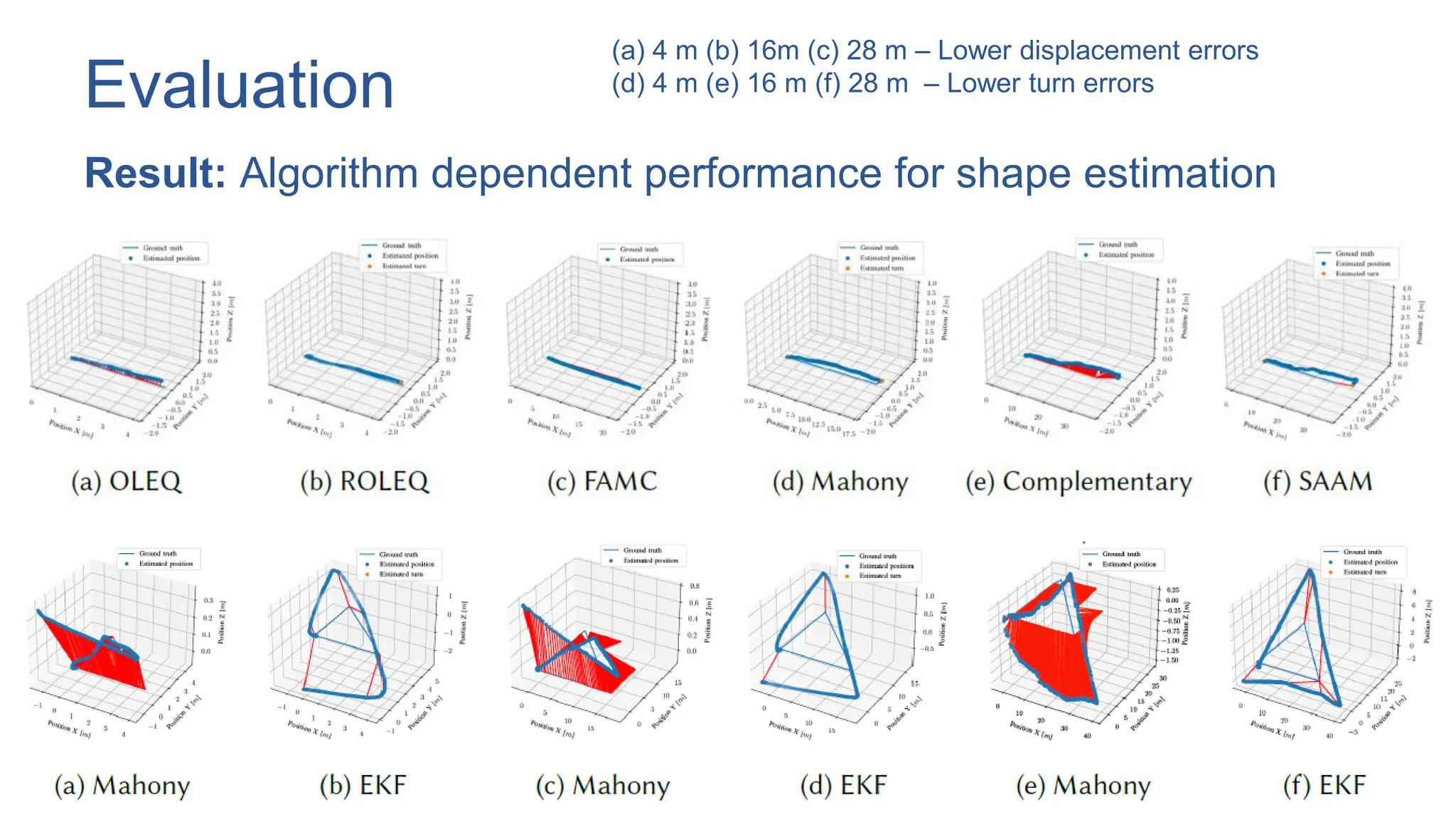
Evaluation
Result: Algorithm dependent performance for shape estimation
18
(a) 4 m (b) 16m (c) 28 m – Lower displacement errors
(d) 4 m (e) 16 m (f) 28 m – Lower turn errors
Evaluation
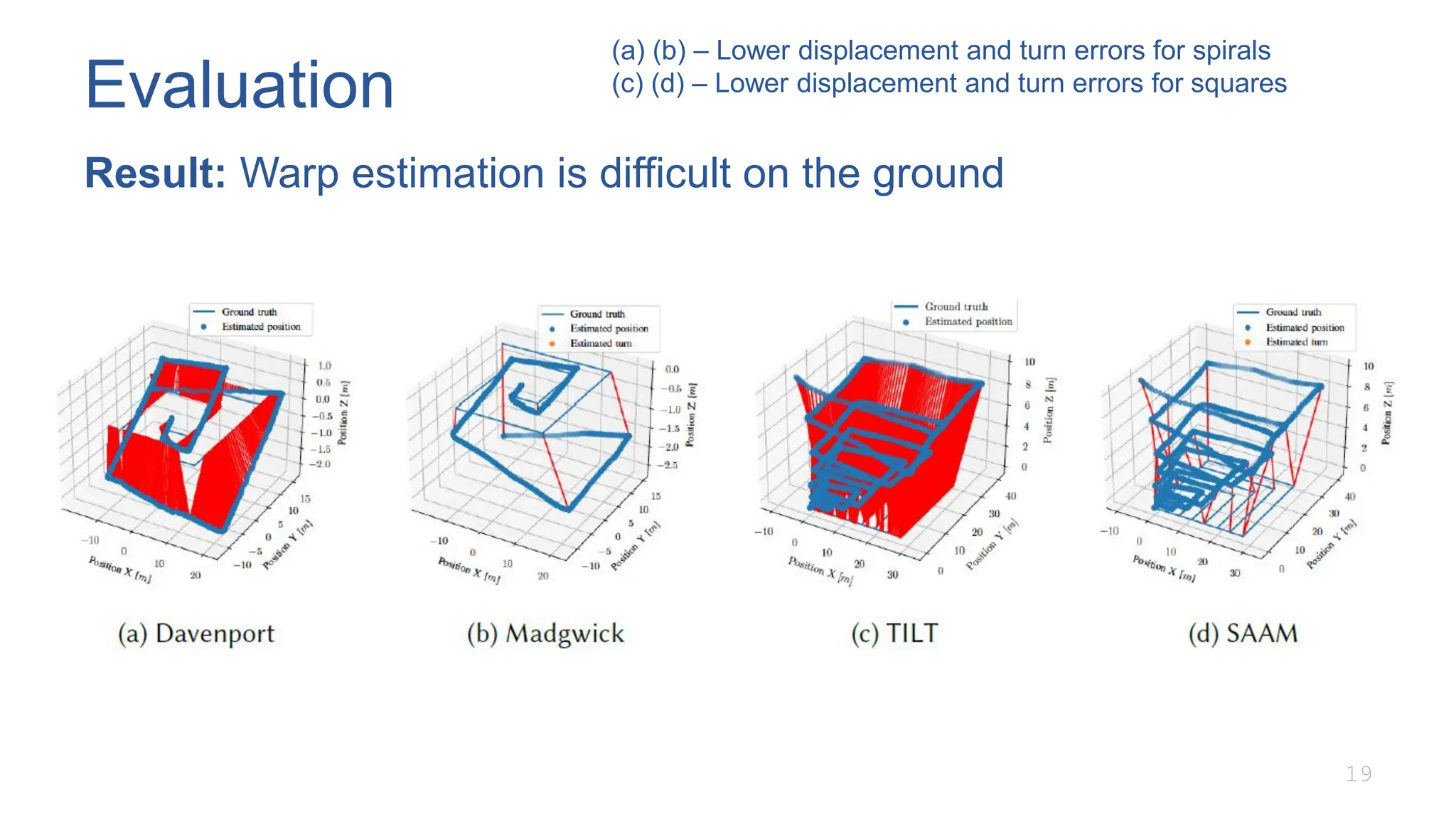
Result: Warp estimation is difficult on the ground
19
(a) (b) – Lower displacement and turn errors for spirals
(c) (d) – Lower displacement and turn errors for squares
Evaluation
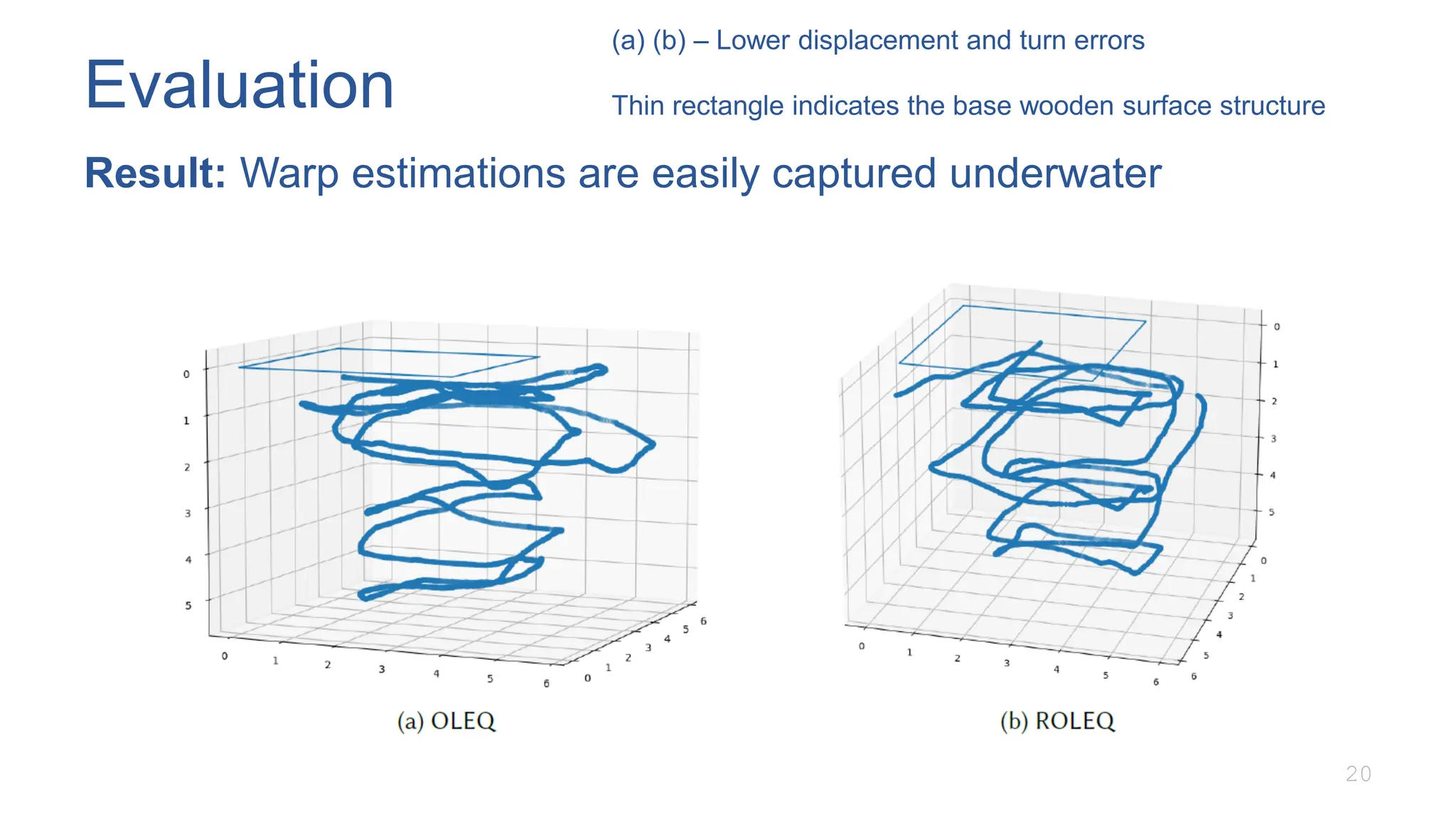
Result: Warp estimations are easily captured underwater
20
(a) (b) – Lower displacement and turn errors
Thin rectangle indicates the base wooden surface structure
Summary and conclusions
• Systematic evaluation: We benchmark different (15) dead
reckoning algorithms and analyze their performance underwater
• Land vs underwater testbed: We design a robust testbed that
compares both conditions
• New insights:
• We can use it with 5% error for displacement and turn respectively
• Warp estimations are better captured underwater rather than on the
ground
• Performance of dead reckoning algorithm is quite volatile on the
ground
21
Questions?
Thank you! (Do not hesitate to reach us via e-mail)
Marko Radeta (marko.radeta@wave-labs.org)
Claudio Rodrigues (claudio.rodrigues@wave-labs.org)
Francisco Silva (francisco.silva@wave-labs.org)
Pedro Abreu (pedro.abreu@wave-labs.org)
João Pestana (joao.pestana@wave-labs.org)
Ngoc Thi Nguyen (ngoc.nguyen@helsinki.fi)
Agustin Zuniga (agustin.zuniga@helsinki.fi)
Huber Flores (huber.flores@ut.ee)
Petteri Nurmi (petteri.nurmi@helsinki.fi)
22

UbiComp_LostInPerformance2023-Flores.pdf

  • 1.
    Lost in theDeep? Performance Evaluation of Dead Reckoning Techniques in Underwater Environments Marko Radeta, Claudio Rodrigues, Francisco Silva, Pedro Abreu, João Pestana, Ngoc Thi Nguyen, Agustin Zuniga, Huber Flores, Petteri Nurmi 1 October 10, 2023, Cancun, Mexico
  • 2.
    Importance • Widely adoptedin several navigation applications 2 Source: https://www.freepik.com/premium-vector/footprint-trail-human- walking-route-footsteps-track-vector_17570436.htm Source: https://www.freepik.com/free-vector/road-tire-tracks-white- background_1107072.htm#query=tire%20tread&position=23&from_view =search&track=ais Cars Source: https://www.vecteezy.com/png/27388481-speed-boat- travel-floating-water-transport-route-path-way-in-ocean-blue-sea Important characteristics include affordable, lightweight, and energy-efficient Surface vessels Smartphones
  • 3.
    Dead reckoning • Simplyexplained 3 Modelling through distance and angle estimates Start
  • 4.
    Dead reckoning • Extractionof parameters 4 Modelling through distance and angle estimates Start
  • 5.
    Dead reckoning “underwater” •Is the dead reckoning performance good underwater? 5 Underwater positioning (scuba, ROVs, AUVs)
  • 6.
    Contributions • Systematic evaluation:We benchmark different (15) dead reckoning algorithms and analyze their performance underwater • Land vs underwater testbed: We design a robust testbed that compares both conditions • New insights: We present quantifiable results about using dead reckoning underwater 6 We can use it with 5% error for displacement and turn respectively – some motion patterns underwater require specific algorithms Source: DF Malan - https://en.wikipedia.org/wiki/Quaternions_and_spatial_rotation#/ media/File:Euler_AxisAngle.png
  • 7.
    AEOLUS position estimationpipeline 7 Step 1: IMU calibration Step 2: Orientation estimation Step 3: Linear acceleration Step 4: Sampling rate selection Step 5: Displacement estimation Step 6: Position estimation LoPy4 microcontroller IMU (MPU-9250)
  • 8.
    AEOLUS position estimationpipeline 8 Step 1: IMU calibration Step 2: Orientation estimation Step 3: Linear acceleration Step 4: Sampling rate selection Step 5: Displacement estimation Step 6: Position estimation
  • 9.
    AEOLUS position estimationpipeline 9 Step 1: IMU calibration Step 2: Orientation estimation Step 3: Linear acceleration Step 4: Sampling rate selection Step 5: Displacement estimation Step 6: Position estimation Attitude estimation (Pitch, Roll and yaw) Liner acceleration Quaternions
  • 10.
    AEOLUS position estimationpipeline 10 Step 1: IMU calibration Step 2: Orientation estimation Step 3: Linear acceleration Step 4: Sampling rate selection Step 5: Displacement estimation Step 6: Position estimation Algorithms: AngularRate, AQUA, Complementary, DavenPort, EKD, FAMC, FLAE, Fourati, Madgwick, Mahony, OLEQ, QUEST, ROLEQ, SAAM, Tilt
  • 11.
    AEOLUS position estimationpipeline 11 Step 1: IMU calibration Step 2: Orientation estimation Step 3: Linear acceleration Step 4: Sampling rate selection Step 5: Displacement estimation Step 6: Position estimation
  • 12.
    AEOLUS position estimationpipeline 12 Step 1: IMU calibration Step 2: Orientation estimation Step 3: Linear acceleration Step 4: Sampling rate selection Step 5: Displacement estimation Step 6: Position estimation
  • 13.
    The experiments Land 13 Drawn onthe ground We investigate the effects of distance on position estimation at different distance magnitudes Pre-defined geometrical shapes
  • 14.
  • 15.
  • 16.
    Evaluation Result: Average errorsof displacement underwater lower are much lower compared to the similar trajectory on the ground (warp). 16
  • 17.
    Evaluation Result: Attitude estimation(Pitch, Roll and yaw) computed using some algorithms (e.g., FAMC, Fourati) result in high errors on the ground but lower errors when the experiments were performed in the underwater environment. 17
  • 18.
    Evaluation Result: Algorithm dependentperformance for shape estimation 18 (a) 4 m (b) 16m (c) 28 m – Lower displacement errors (d) 4 m (e) 16 m (f) 28 m – Lower turn errors
  • 19.
    Evaluation Result: Warp estimationis difficult on the ground 19 (a) (b) – Lower displacement and turn errors for spirals (c) (d) – Lower displacement and turn errors for squares
  • 20.
    Evaluation Result: Warp estimationsare easily captured underwater 20 (a) (b) – Lower displacement and turn errors Thin rectangle indicates the base wooden surface structure
  • 21.
    Summary and conclusions •Systematic evaluation: We benchmark different (15) dead reckoning algorithms and analyze their performance underwater • Land vs underwater testbed: We design a robust testbed that compares both conditions • New insights: • We can use it with 5% error for displacement and turn respectively • Warp estimations are better captured underwater rather than on the ground • Performance of dead reckoning algorithm is quite volatile on the ground 21
  • 22.
    Questions? Thank you! (Donot hesitate to reach us via e-mail) Marko Radeta (marko.radeta@wave-labs.org) Claudio Rodrigues (claudio.rodrigues@wave-labs.org) Francisco Silva (francisco.silva@wave-labs.org) Pedro Abreu (pedro.abreu@wave-labs.org) João Pestana (joao.pestana@wave-labs.org) Ngoc Thi Nguyen (ngoc.nguyen@helsinki.fi) Agustin Zuniga (agustin.zuniga@helsinki.fi) Huber Flores (huber.flores@ut.ee) Petteri Nurmi (petteri.nurmi@helsinki.fi) 22