Design and Development Experiences from
Gauging and Monitoring the AI Inference
Capabilities of Modern Applications.
The SPATIAL Architecture:
A. Ottun and the EU SPATIAL consortium
This research is part of SPATIAL project that has received funding from the European Union’s Horizon 2020
research and innovation programme under grant agreement No.101021808.
Our Team
Collaborators
Security and Privacy Accountable Technology Innovations,
Algorithms, and Machine Learning
Background
[Source]https://dribbble.com/shots1 [Source] https://static.wixstatic.com
[Source] https://www.blog.google
[Source ]hhttp://www.kiwibot.com
[Source] waymo.com
AI is fast becoming ubiquitous in our society.
Product recommendation Home automation Autonomous Robot Drone Delivery
https://cdn.rarejob.com
[Source]
Driverless Taxi Chat Agent Health monitor Personal Assistance Social networking
Some day-to-day interaction with AI
AI failures: From safety to bias concerns
[Source] https://gbagenlaw.com/drone-related-injuries-are-
becoming-more-common/
[Source] https://www.farrin.com/blog
[Source] Yahoo news
[Source] https://medium.com/@aliborji
An Open Letter - Future of Life Institute
[Source]
AI Trustworthy Requirements
Global AI Governance and Framework
are designed to ensure the:
[Source] https://legalnodes.com
Protection of values and rights
Societal safety
AI trustworthiness
Trustworthiness Requirements/ Properties
Human oversight
Robustness
Privacy
Fairness and non-bias
Accuracy
Explainability
Resilience
Software Architecture
Classical Architecture
+ Federated Learning
[source] Muccini, H., & Vaidhyanathan, K. (2021, May). Software architecture for ML-based systems: what exists and what lies
ahead. In Proceedings of IEEE/ACM WAIN@ICSE 2021 (pp. 121-128). IEEE.
Classical Architecture
+ Machine Learning
Software Architecture
Classical architecture
+ Federated learning
[source] Ottun, Abdul-Rasheed., &.. Flores, Huber.
(2023). Detection mechanisms to identify data biases
and exploratory studies about different data quality
trade-offs. Deliverable 3.1, H2020 EU SPATIAL, 2023.
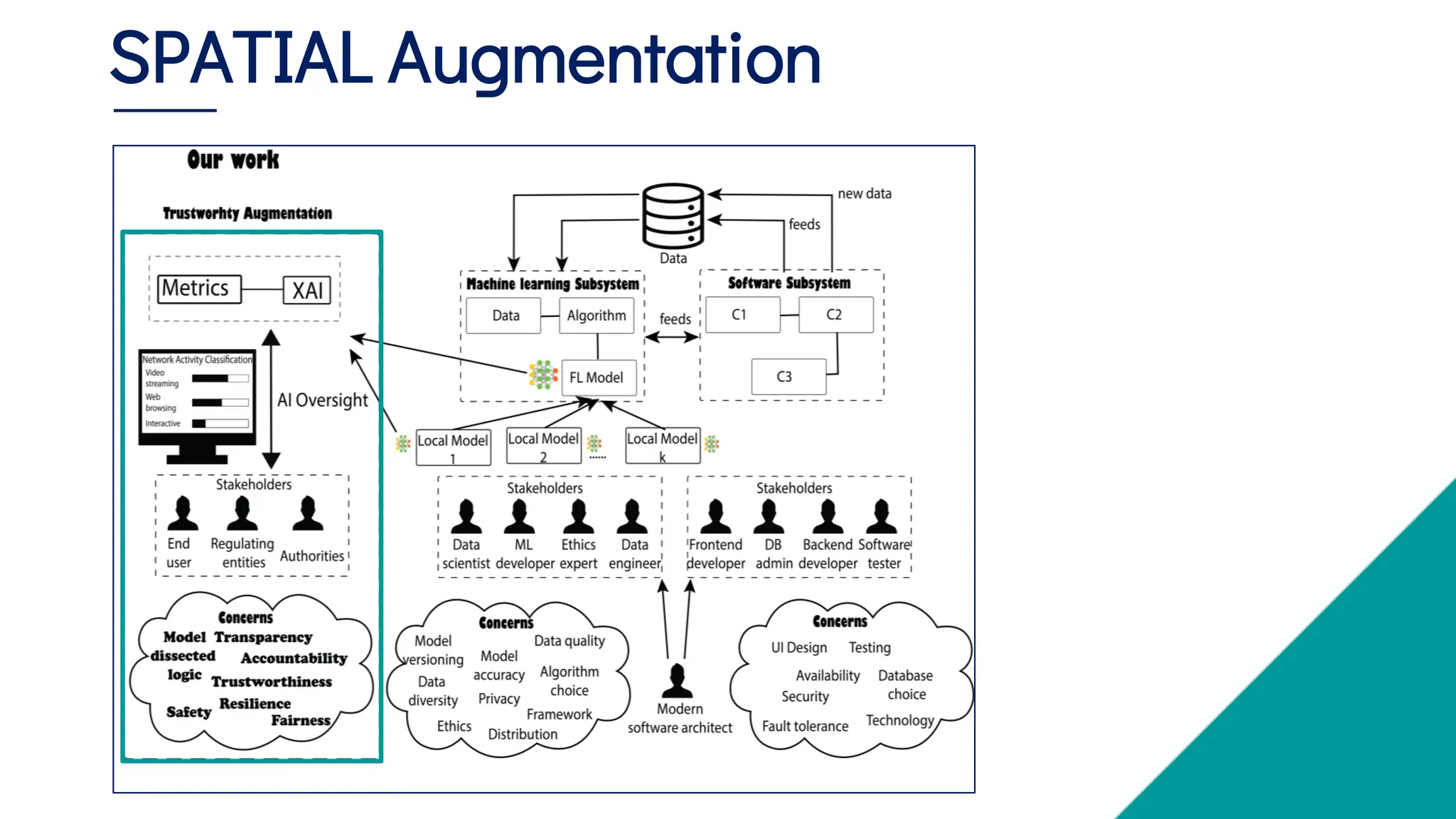
SPATIAL Augmentation
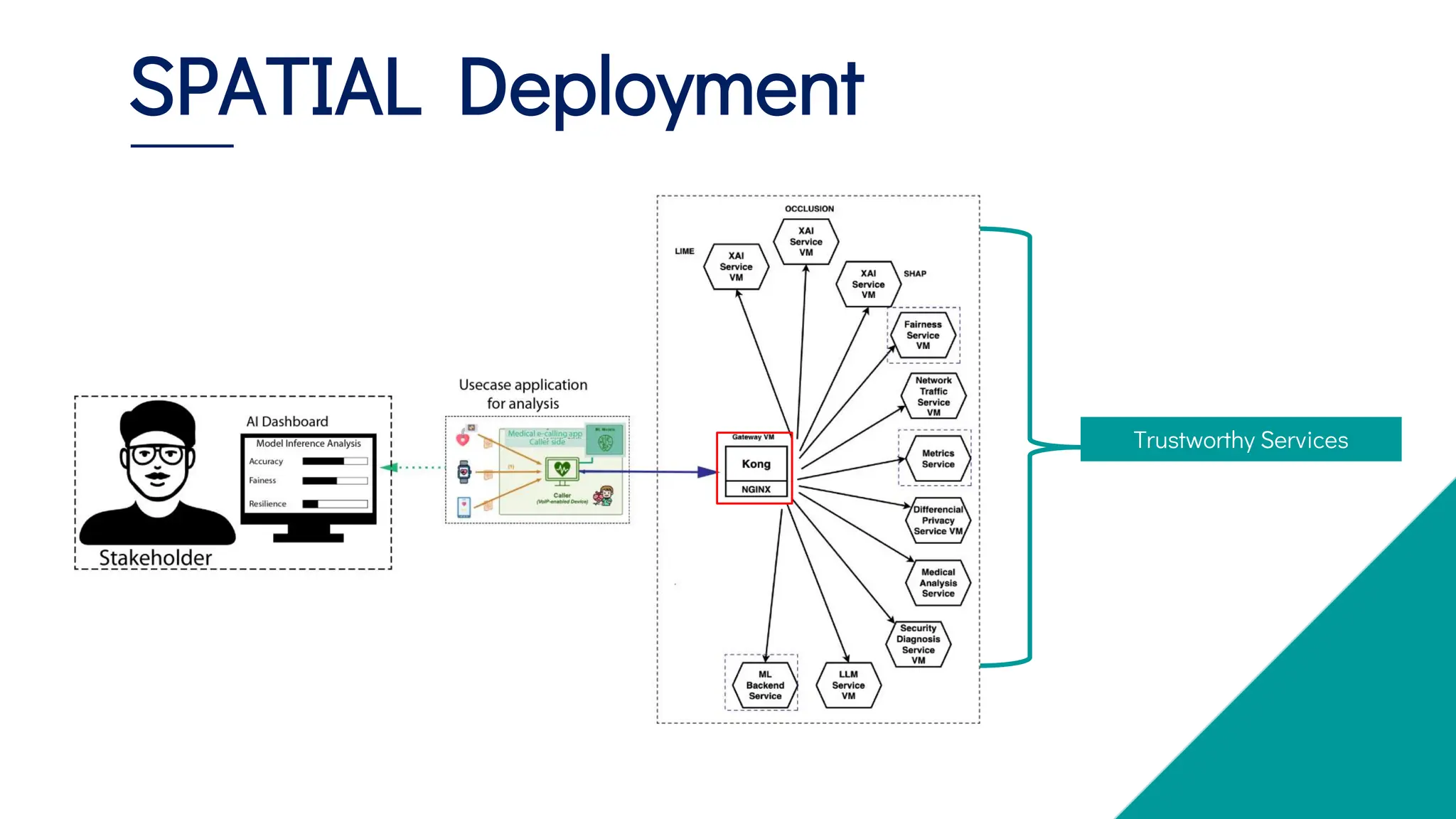
SPATIAL Deployment
Trustworthy Services
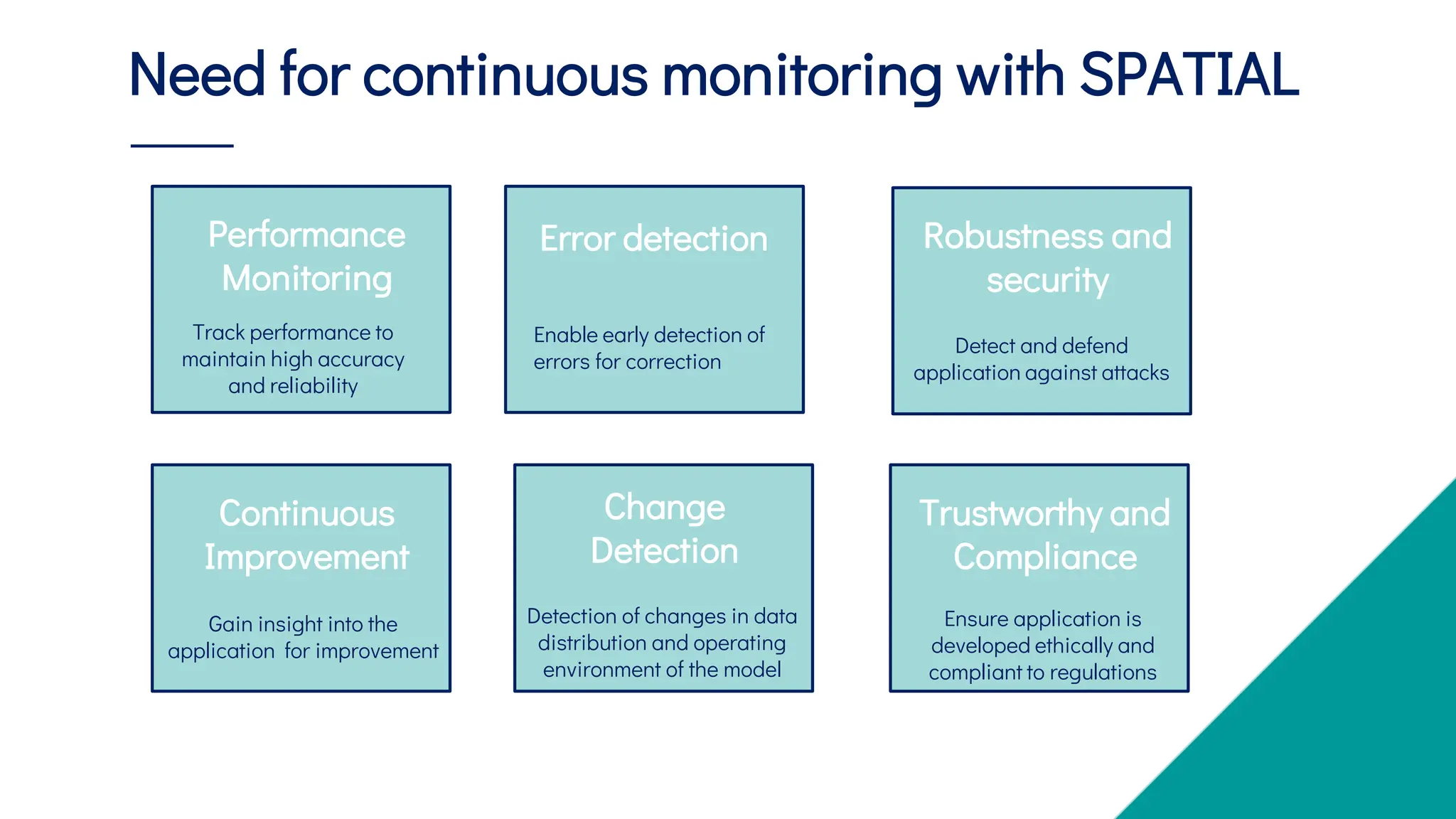
Need for continuous monitoring with SPATIAL
Performance
Monitoring
Track performance to
maintain high accuracy
and reliability
Continuous
Improvement
Gain insight into the
application for improvement
Error detection
Enable early detection of
errors for correction
Change
Detection
Detection of changes in data
distribution and operating
environment of the model
Robustness and
security
Detect and defend
application against attacks
Trustworthy and
Compliance
Ensure application is
developed ethically and
compliant to regulations
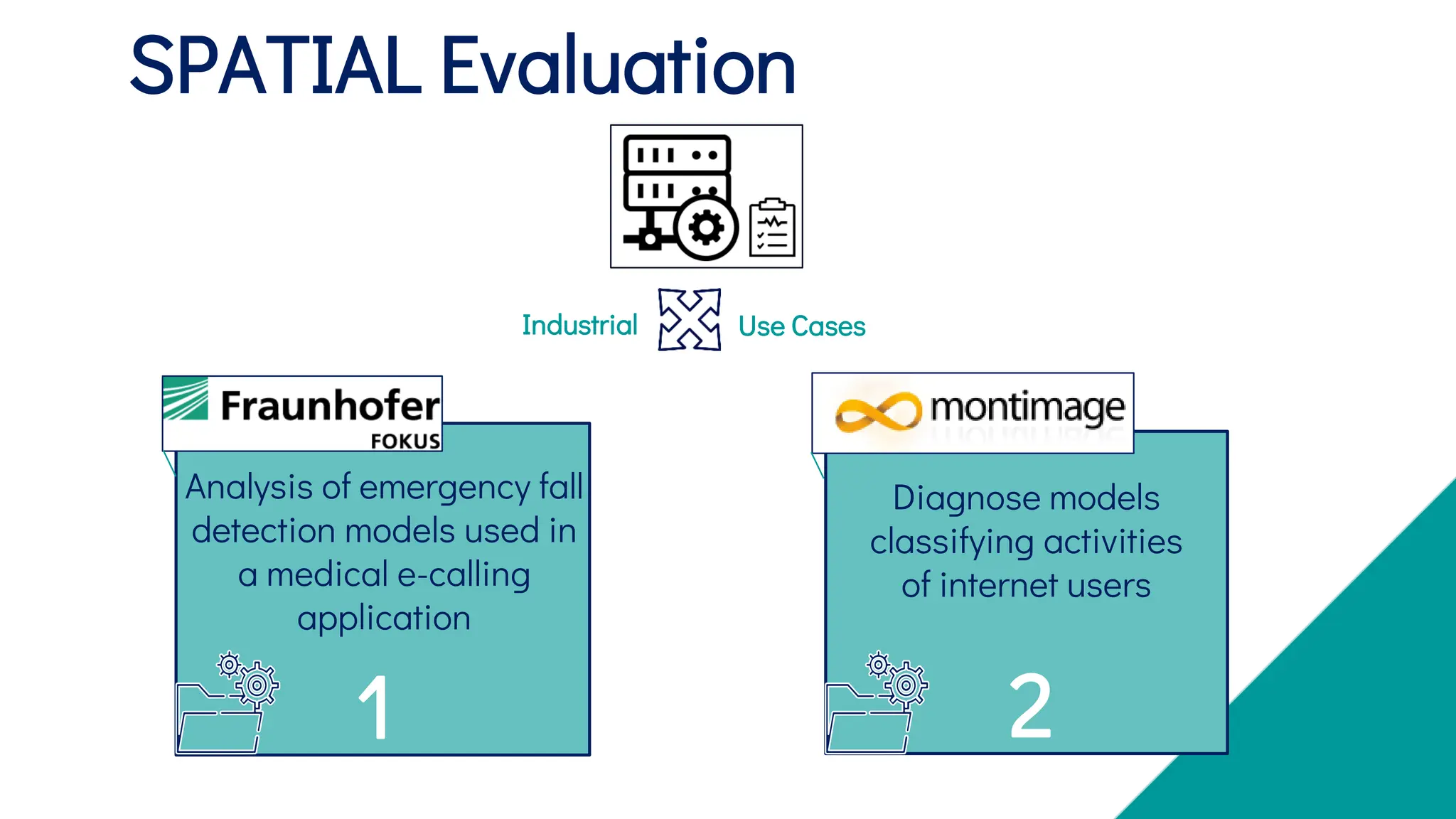
SPATIAL Evaluation
Industrial Use Cases
1
Analysis of emergency fall
detection models used in
a medical e-calling
application
Diagnose models
classifying activities
of internet users
2
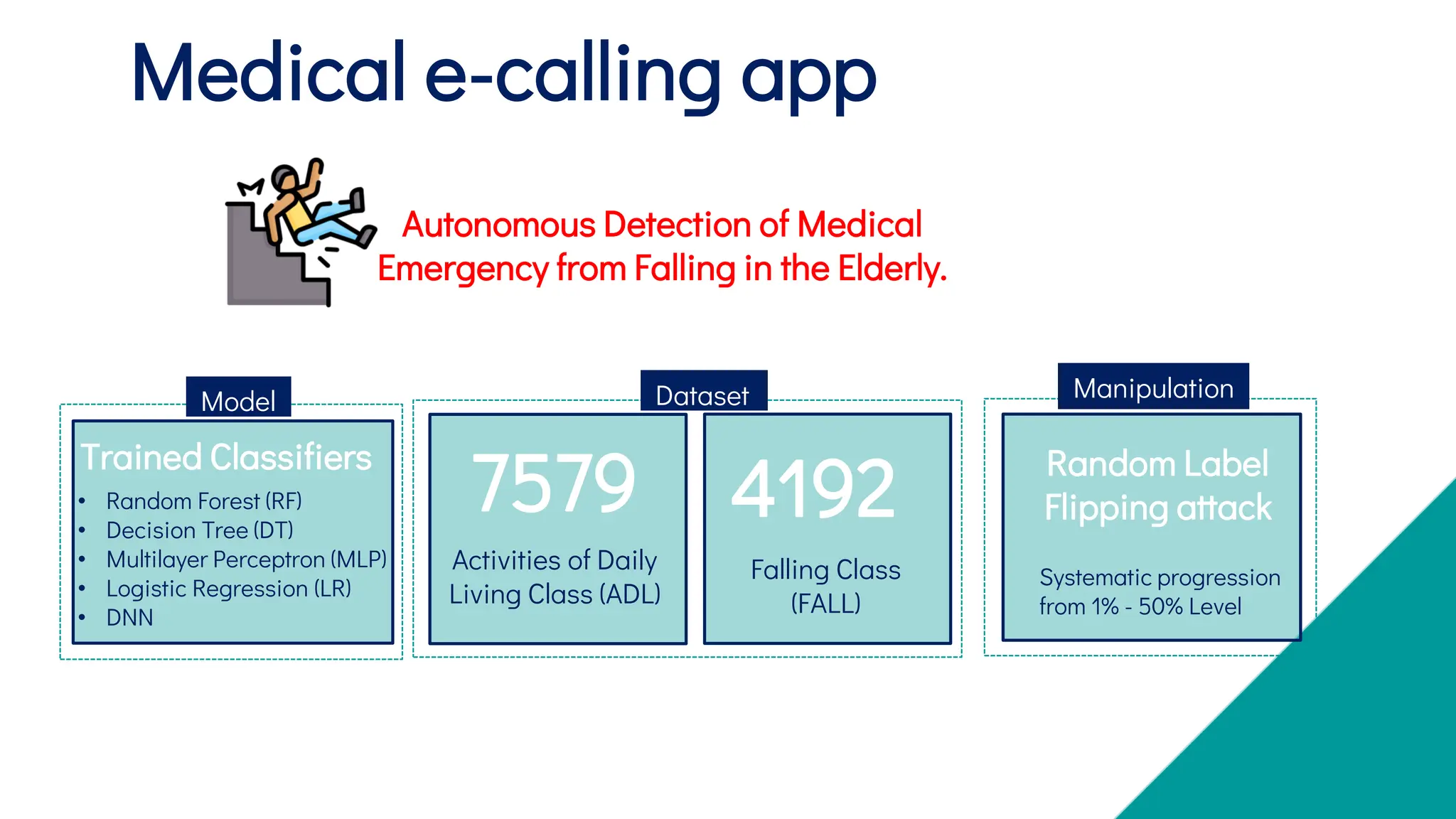
Medical e-calling app
Autonomous Detection of Medical
Emergency from Falling in the Elderly.
Random Label
Flipping attack
Systematic progression
from 1% - 50% Level
• Random Forest (RF)
• Decision Tree (DT)
• Multilayer Perceptron (MLP)
• Logistic Regression (LR)
• DNN
Trained Classifiers
Dataset
4192
Falling Class
(FALL)
7579
Activities of Daily
Living Class (ADL)
Model Manipulation
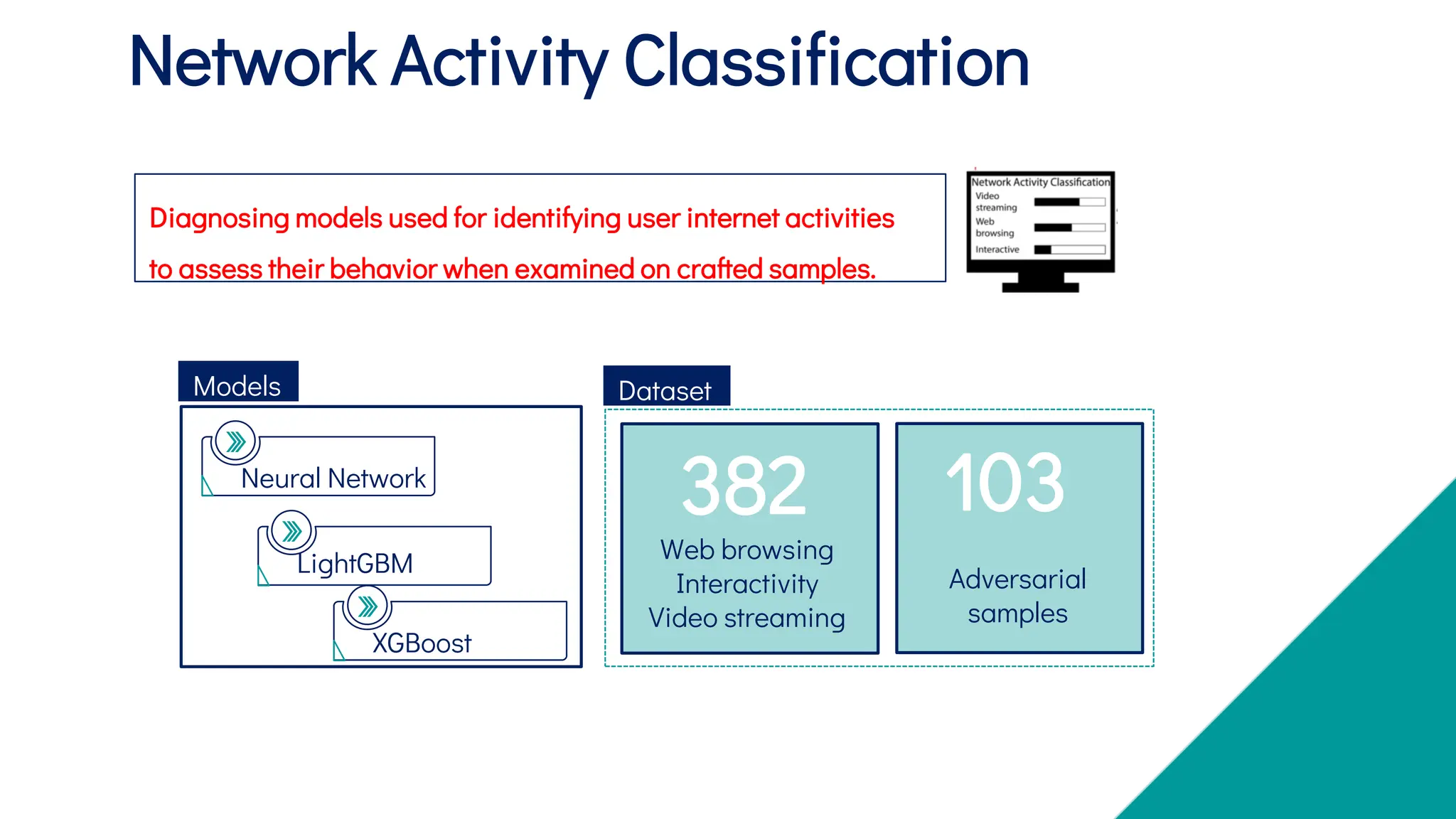
Network Activity Classification
Diagnosing models used for identifying user internet activities
to assess their behavior when examined on crafted samples.
Neural Network
LightGBM
XGBoost
Dataset
103
Adversarial
samples
382
Web browsing
Interactivity
Video streaming
Models
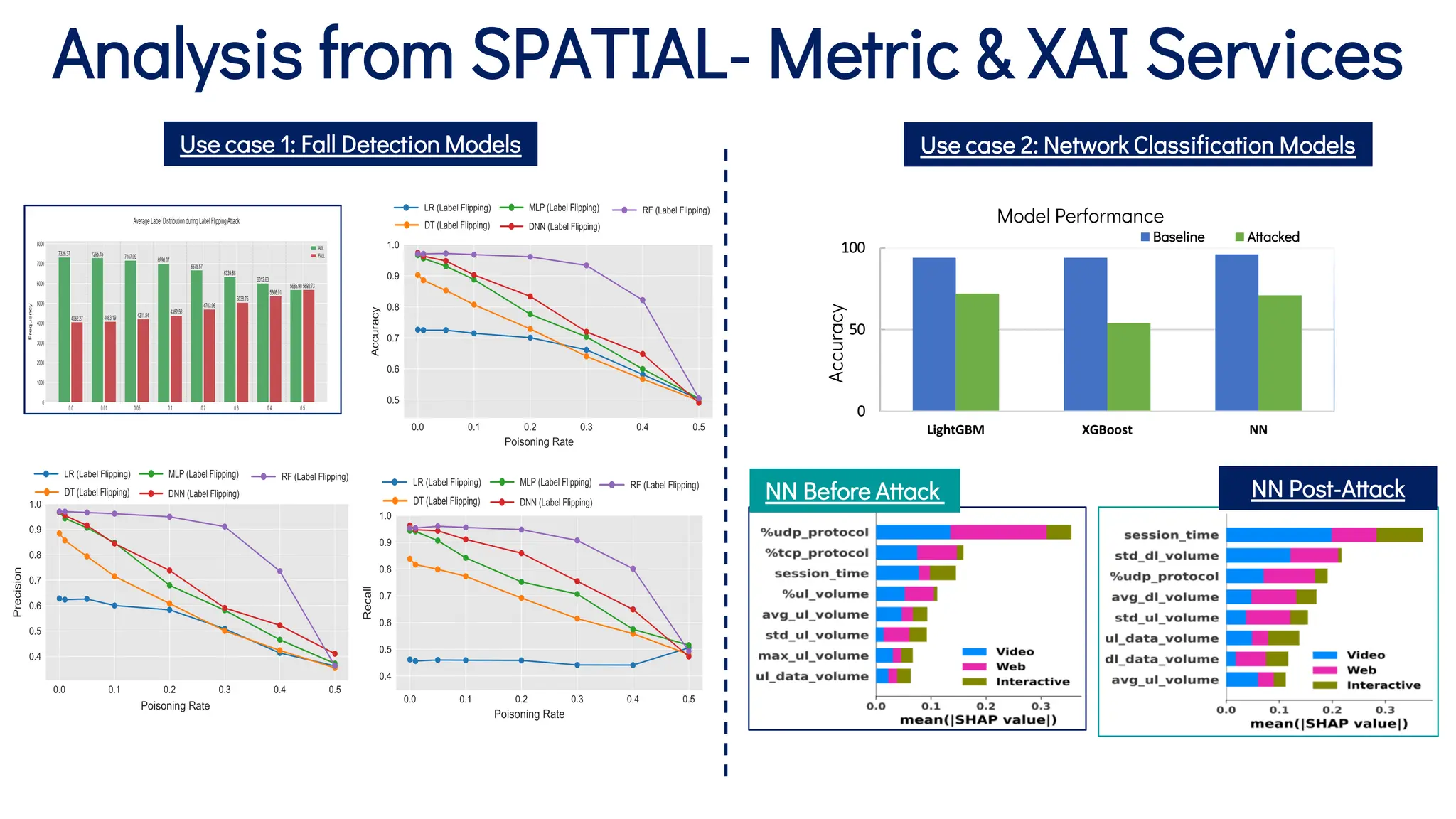
Analysis from SPATIAL- Metric & XAI Services
NN Post-Attack
NN Before Attack
Use case 2: Network Classification Models
Use case 1: Fall Detection Models
0
50
100
LightGBM XGBoost NN
Accuracy
Model Performance
Baseline Attacked
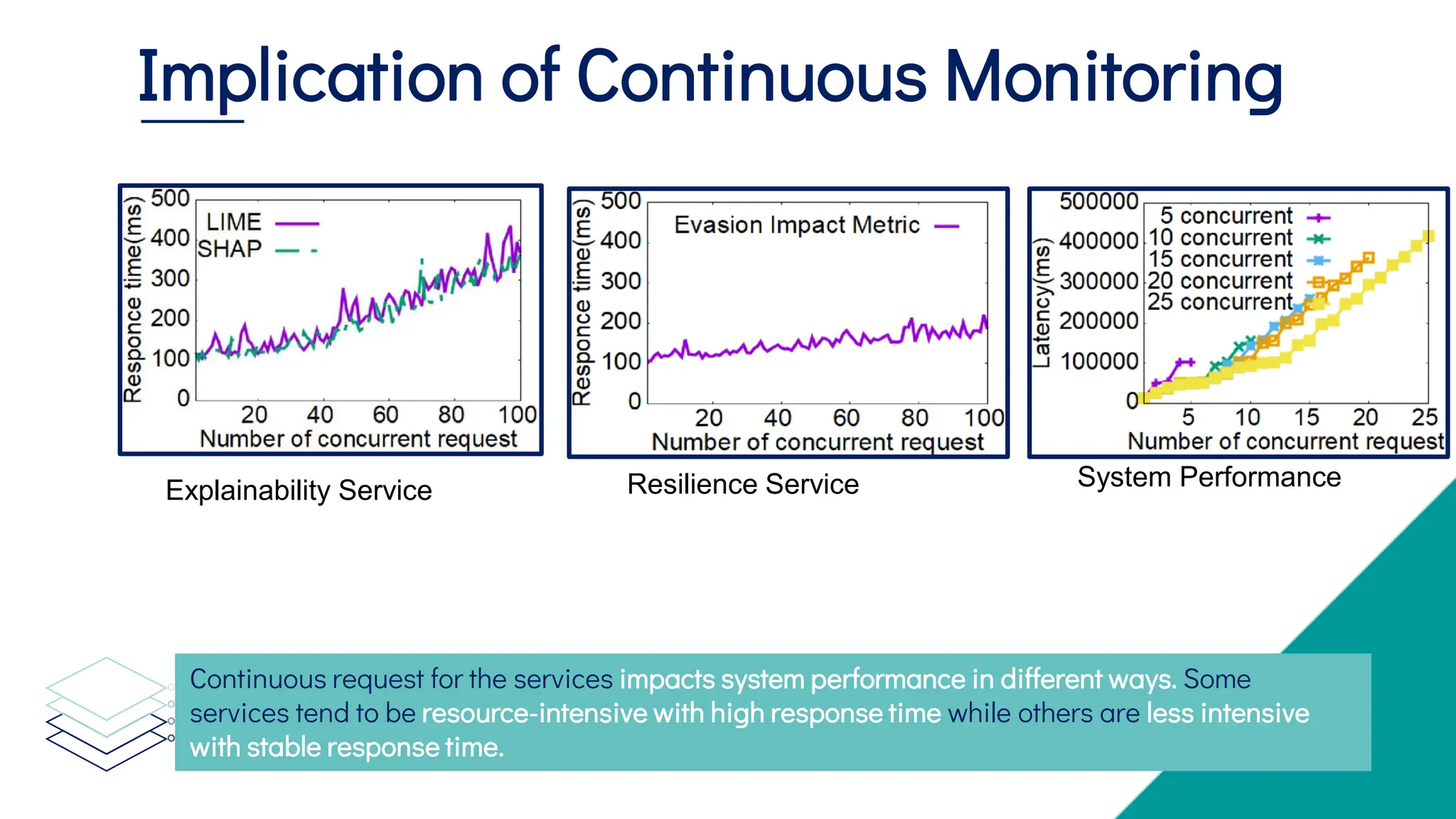
Implication of Continuous Monitoring
Explainability Service Resilience Service System Performance
Continuous request for the services impacts system performance in different ways. Some
services tend to be resource-intensive with high response time while others are less intensive
with stable response time.
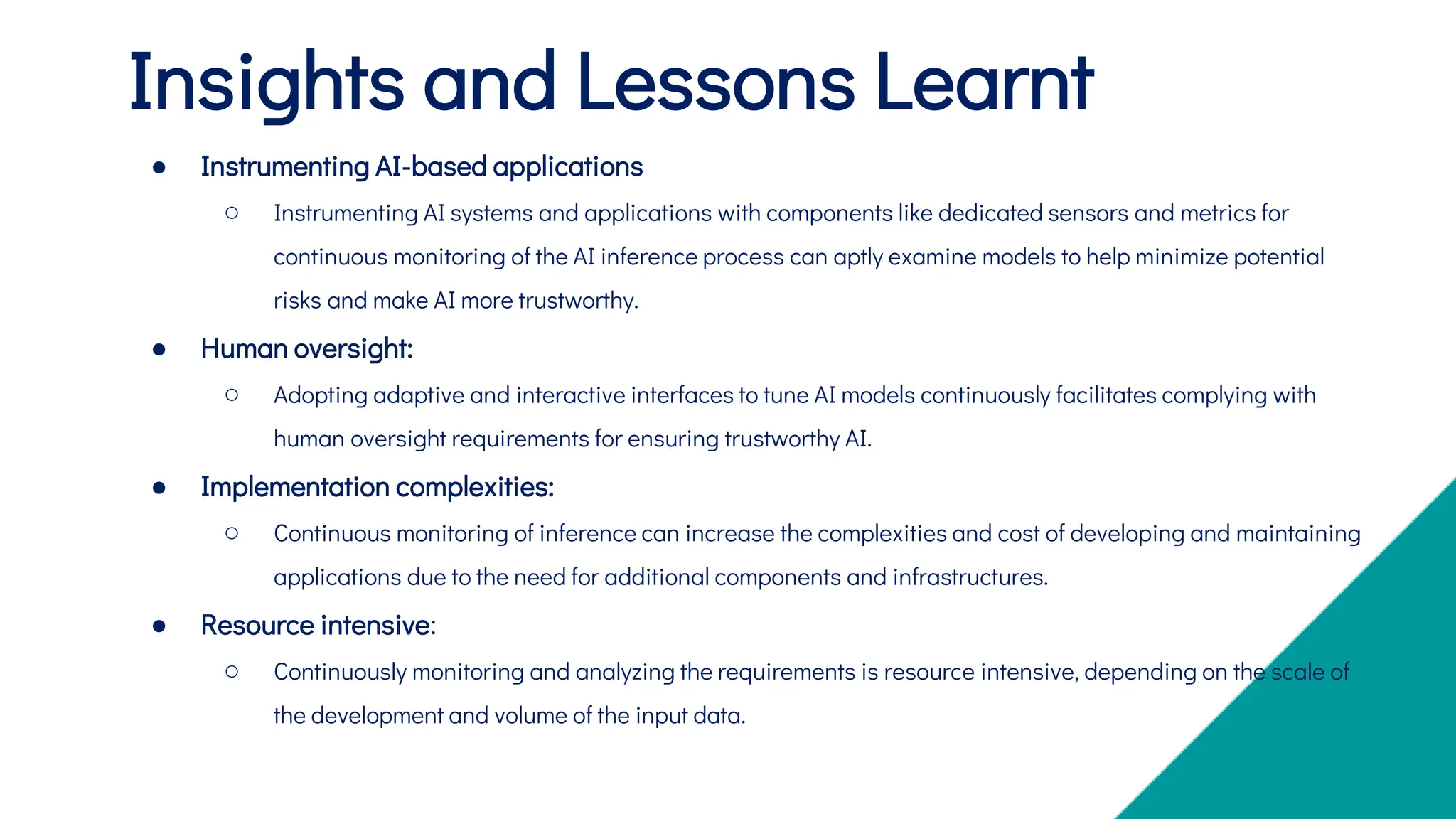
● Instrumenting AI-based applications
○ Instrumenting AI systems and applications with components like dedicated sensors and metrics for
continuous monitoring of the AI inference process can aptly examine models to help minimize potential
risks and make AI more trustworthy.
● Human oversight:
○ Adopting adaptive and interactive interfaces to tune AI models continuously facilitates complying with
human oversight requirements for ensuring trustworthy AI.
● Implementation complexities:
○ Continuous monitoring of inference can increase the complexities and cost of developing and maintaining
applications due to the need for additional components and infrastructures.
● Resource intensive:
○ Continuously monitoring and analyzing the requirements is resource intensive, depending on the scale of
the development and volume of the input data.
Insights and Lessons Learnt
Thank you
MORE INFO
rasheed.ottun@ut.ee
http://spatial-h2020.eu
This project has received funding from the European Union’s Horizon 2020 research and innovation
programme under grant agreement N° 101021808.
Scan QR to read the paper

The SPATIAL Architecture: Design and Development Experiences from Gauging and Monitoring the AI Inferences Capabilities of Modern Applications

  • 1.
    Design and DevelopmentExperiences from Gauging and Monitoring the AI Inference Capabilities of Modern Applications. The SPATIAL Architecture: A. Ottun and the EU SPATIAL consortium This research is part of SPATIAL project that has received funding from the European Union’s Horizon 2020 research and innovation programme under grant agreement No.101021808.
  • 2.
    Our Team Collaborators Security andPrivacy Accountable Technology Innovations, Algorithms, and Machine Learning
  • 3.
    Background [Source]https://dribbble.com/shots1 [Source] https://static.wixstatic.com [Source]https://www.blog.google [Source ]hhttp://www.kiwibot.com [Source] waymo.com AI is fast becoming ubiquitous in our society. Product recommendation Home automation Autonomous Robot Drone Delivery https://cdn.rarejob.com [Source] Driverless Taxi Chat Agent Health monitor Personal Assistance Social networking Some day-to-day interaction with AI
  • 4.
    AI failures: Fromsafety to bias concerns [Source] https://gbagenlaw.com/drone-related-injuries-are- becoming-more-common/ [Source] https://www.farrin.com/blog [Source] Yahoo news [Source] https://medium.com/@aliborji An Open Letter - Future of Life Institute [Source]
  • 5.
    AI Trustworthy Requirements GlobalAI Governance and Framework are designed to ensure the: [Source] https://legalnodes.com Protection of values and rights Societal safety AI trustworthiness Trustworthiness Requirements/ Properties Human oversight Robustness Privacy Fairness and non-bias Accuracy Explainability Resilience
  • 6.
    Software Architecture Classical Architecture +Federated Learning [source] Muccini, H., & Vaidhyanathan, K. (2021, May). Software architecture for ML-based systems: what exists and what lies ahead. In Proceedings of IEEE/ACM WAIN@ICSE 2021 (pp. 121-128). IEEE. Classical Architecture Classical Architecture + Machine Learning
  • 7.
    Software Architecture Classical architecture +Federated learning [source] Ottun, Abdul-Rasheed., &.. Flores, Huber. (2023). Detection mechanisms to identify data biases and exploratory studies about different data quality trade-offs. Deliverable 3.1, H2020 EU SPATIAL, 2023.
  • 8.
  • 9.
  • 10.
    Need for continuousmonitoring with SPATIAL Performance Monitoring Track performance to maintain high accuracy and reliability Continuous Improvement Gain insight into the application for improvement Error detection Enable early detection of errors for correction Change Detection Detection of changes in data distribution and operating environment of the model Robustness and security Detect and defend application against attacks Trustworthy and Compliance Ensure application is developed ethically and compliant to regulations
  • 11.
    SPATIAL Evaluation Industrial UseCases 1 Analysis of emergency fall detection models used in a medical e-calling application Diagnose models classifying activities of internet users 2
  • 12.
    Medical e-calling app AutonomousDetection of Medical Emergency from Falling in the Elderly. Random Label Flipping attack Systematic progression from 1% - 50% Level • Random Forest (RF) • Decision Tree (DT) • Multilayer Perceptron (MLP) • Logistic Regression (LR) • DNN Trained Classifiers Dataset 4192 Falling Class (FALL) 7579 Activities of Daily Living Class (ADL) Model Manipulation
  • 13.
    Network Activity Classification Diagnosingmodels used for identifying user internet activities to assess their behavior when examined on crafted samples. Neural Network LightGBM XGBoost Dataset 103 Adversarial samples 382 Web browsing Interactivity Video streaming Models
  • 14.
    Analysis from SPATIAL-Metric & XAI Services NN Post-Attack NN Before Attack Use case 2: Network Classification Models Use case 1: Fall Detection Models 0 50 100 LightGBM XGBoost NN Accuracy Model Performance Baseline Attacked
  • 15.
    Implication of ContinuousMonitoring Explainability Service Resilience Service System Performance Continuous request for the services impacts system performance in different ways. Some services tend to be resource-intensive with high response time while others are less intensive with stable response time.
  • 16.
    ● Instrumenting AI-basedapplications ○ Instrumenting AI systems and applications with components like dedicated sensors and metrics for continuous monitoring of the AI inference process can aptly examine models to help minimize potential risks and make AI more trustworthy. ● Human oversight: ○ Adopting adaptive and interactive interfaces to tune AI models continuously facilitates complying with human oversight requirements for ensuring trustworthy AI. ● Implementation complexities: ○ Continuous monitoring of inference can increase the complexities and cost of developing and maintaining applications due to the need for additional components and infrastructures. ● Resource intensive: ○ Continuously monitoring and analyzing the requirements is resource intensive, depending on the scale of the development and volume of the input data. Insights and Lessons Learnt
  • 17.
    Thank you MORE INFO rasheed.ottun@ut.ee http://spatial-h2020.eu Thisproject has received funding from the European Union’s Horizon 2020 research and innovation programme under grant agreement N° 101021808. Scan QR to read the paper