Types of Computer
Understanding the Different Kinds of
Computers
Presented by: [Your Name]
What is a Computer?
• A computer is an electronic device that
processes data to produce information.
• It can store, retrieve, and process data
efficiently.
• Main functions: Input → Process → Output →
Storage.
Major Categories of Computers
• Based on size, power, and purpose, computers
are classified into:
• 1. Supercomputers
• 2. Mainframe Computers
• 3. Minicomputers (Mid-range)
• 4. Microcomputers (Personal Computers)
Supercomputers
• Definition: The fastest and most powerful
computers.
• Use: Weather forecasting, scientific research,
simulations, and cryptography.
• Examples: IBM Summit, Fugaku, Frontier.
Mainframe Computers
• Definition: Large and powerful systems used
by big organizations.
• Use: Banking, government, airline
reservations, data processing.
• Features: Multi-user capability, high reliability,
and data security.
• Example: IBM Z Series.
Minicomputers (Mid-range
Computers)
• Definition: Smaller than mainframes but still
handle large workloads.
• Use: Small and medium businesses,
manufacturing, or as servers.
• Example: DEC PDP, IBM AS/400.
Microcomputers (Personal
Computers)
• Definition: Designed for individual use.
• Types: Desktop, Laptop, Tablet, Smartphone.
• Use: Education, business, entertainment,
personal productivity.
Embedded Computers
• Definition: Computers built into other devices
to perform specific tasks.
• Examples: Smart TVs, washing machines,
ATMs, cars.
• Feature: Not user-programmable; designed for
one function.
Comparison Table
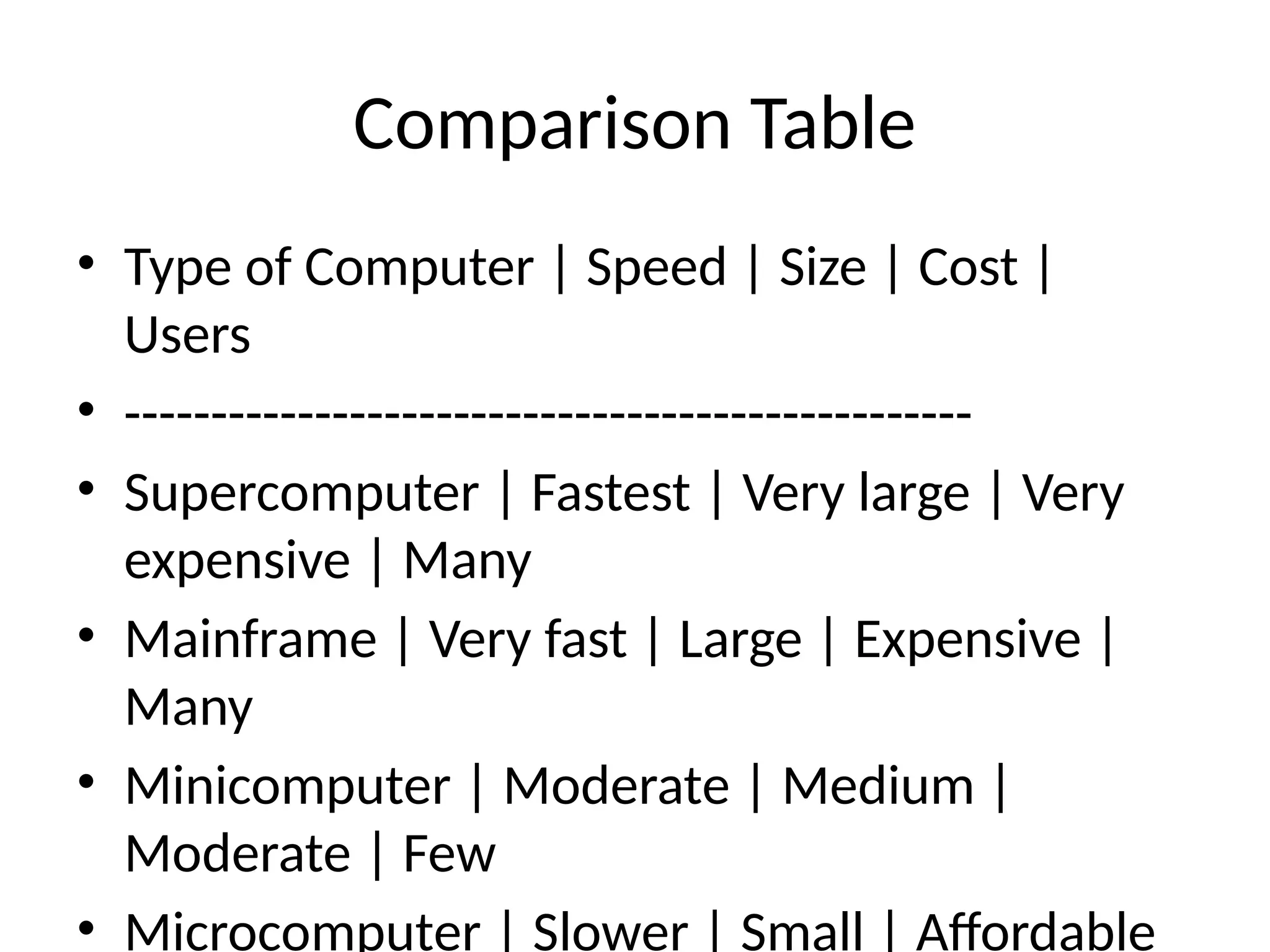
• Type of Computer | Speed | Size | Cost |
Users
• -------------------------------------------------
• Supercomputer | Fastest | Very large | Very
expensive | Many
• Mainframe | Very fast | Large | Expensive |
Many
• Minicomputer | Moderate | Medium |
Moderate | Few
• Microcomputer | Slower | Small | Affordable
Summary
• Computers vary in size, power, and purpose.
• From supercomputers powering science to
microcomputers used at home, each type
plays an important role in modern life.
References
• • Computer Fundamentals by P.K. Sinha
• • www.computerhope.com
• • www.techtarget.com

Types_of_Computer_Presentation and the use.pptx

  • 1.
    Types of Computer Understandingthe Different Kinds of Computers Presented by: [Your Name]
  • 2.
    What is aComputer? • A computer is an electronic device that processes data to produce information. • It can store, retrieve, and process data efficiently. • Main functions: Input → Process → Output → Storage.
  • 3.
    Major Categories ofComputers • Based on size, power, and purpose, computers are classified into: • 1. Supercomputers • 2. Mainframe Computers • 3. Minicomputers (Mid-range) • 4. Microcomputers (Personal Computers)
  • 4.
    Supercomputers • Definition: Thefastest and most powerful computers. • Use: Weather forecasting, scientific research, simulations, and cryptography. • Examples: IBM Summit, Fugaku, Frontier.
  • 5.
    Mainframe Computers • Definition:Large and powerful systems used by big organizations. • Use: Banking, government, airline reservations, data processing. • Features: Multi-user capability, high reliability, and data security. • Example: IBM Z Series.
  • 6.
    Minicomputers (Mid-range Computers) • Definition:Smaller than mainframes but still handle large workloads. • Use: Small and medium businesses, manufacturing, or as servers. • Example: DEC PDP, IBM AS/400.
  • 7.
    Microcomputers (Personal Computers) • Definition:Designed for individual use. • Types: Desktop, Laptop, Tablet, Smartphone. • Use: Education, business, entertainment, personal productivity.
  • 8.
    Embedded Computers • Definition:Computers built into other devices to perform specific tasks. • Examples: Smart TVs, washing machines, ATMs, cars. • Feature: Not user-programmable; designed for one function.
  • 9.
    Comparison Table • Typeof Computer | Speed | Size | Cost | Users • ------------------------------------------------- • Supercomputer | Fastest | Very large | Very expensive | Many • Mainframe | Very fast | Large | Expensive | Many • Minicomputer | Moderate | Medium | Moderate | Few • Microcomputer | Slower | Small | Affordable
  • 10.
    Summary • Computers varyin size, power, and purpose. • From supercomputers powering science to microcomputers used at home, each type plays an important role in modern life.
  • 11.
    References • • ComputerFundamentals by P.K. Sinha • • www.computerhope.com • • www.techtarget.com