RESEARCH INSTRUMENTS AND TOOLS
AND THEIR APPLICATION TO
BUSINESS
ACTIVITY – ICEBREAKER
Quick class poll:“Which snack would you
buy if given 50?”
₱
Students vote using hands or sticky notes.
Introduces students to data collection in a
fun way.
WHAT ARE RESEARCH INSTRUMENTS?
Tools used to collect information or
data.
Help businesses make decisions.
Research instruments allow us to
gather facts and opinions
systematically.
Example: A bubble tea shop asks customers what
new flavors they want.
WHY BUSINESSES NEED RESEARCH
 Understand customers
 Improve products/services
 Reduce risks in decision-making
Example: A store checks which items sell best
before restocking.
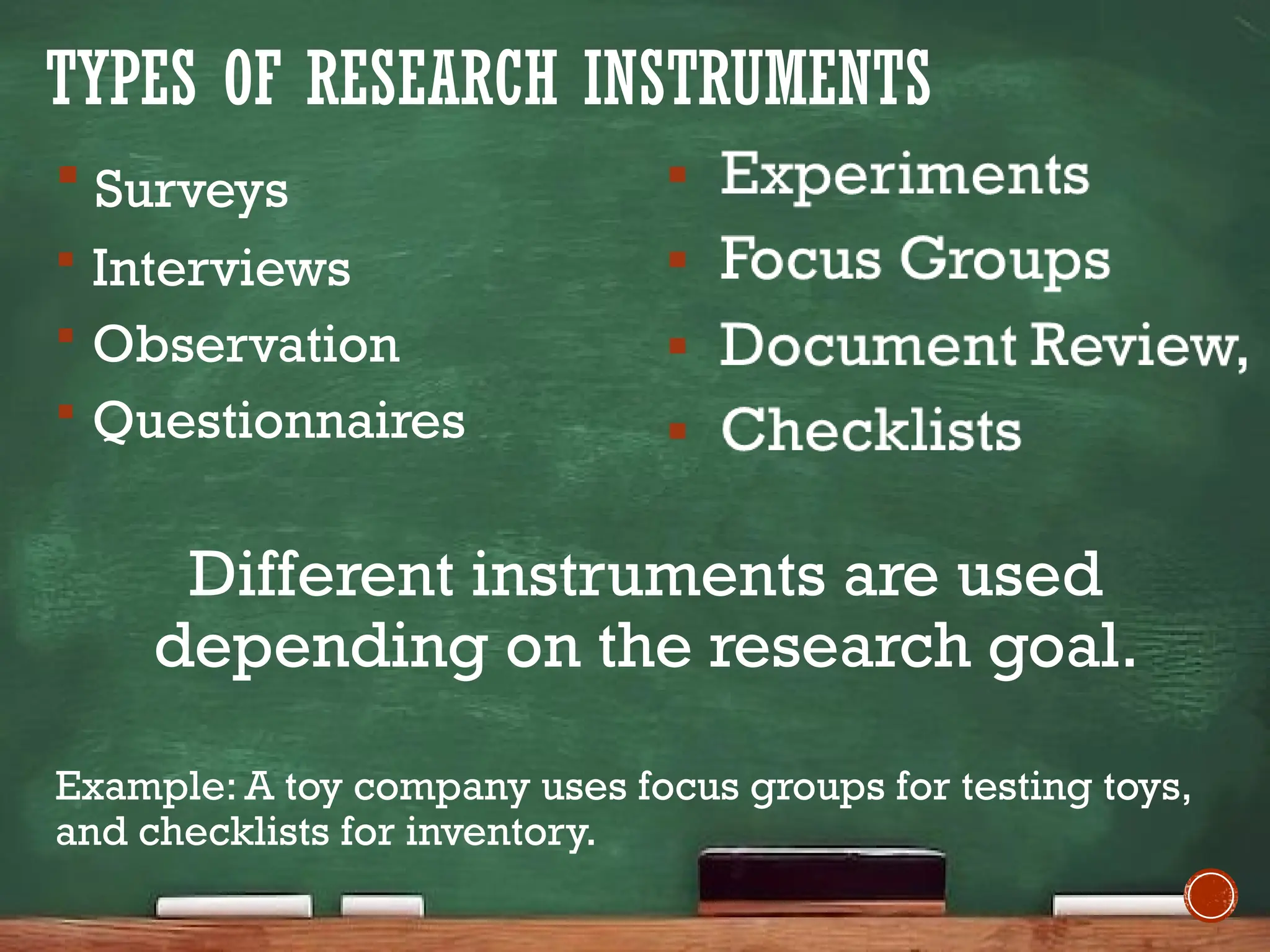
TYPES OF RESEARCH INSTRUMENTS
 Surveys
 Interviews
 Observation
 Questionnaires
Different instruments are used
depending on the research goal.
Example: A toy company uses focus groups for testing toys,
and checklists for inventory.
SURVEYS
Questions asked to many people;
Can be printed or online.
Helps businesses gather opinions
quickly.
Example: School cafeteria surveys students for snack
preferences.
INTERVIEWS
One-on-one questions for detailed
answers.
Provides in-depth insights.
Example: Clothing store interviews shoppers
about preferred styles.
OBSERVATION
Watching behavior without
asking.
Helps see actual behavior.
Example:Toy store observes which toys kids
pick most.
QUESTIONNAIRES
Written questions answered by
respondents.
Structured data collection.
Example: Bookstore asks students which
genres they prefer.
EXPERIMENTS
Changing variables to test outcomes.
Helps test strategies.
Example: Bakery tests two cupcake flavors.
FOCUS GROUPS
Small group discussions.
Useful for product testing.
Example:Toy company gathers children to test
a new toy.
DOCUMENT REVIEW
Analyzing existing records.
Helps learn from past data.
Example: Restaurant reviews past sales.
CHECKLISTS
Lists to track items or tasks.
Ensures no steps are missed.
Example: Store uses checklist for inventory.
CHOOSING THE RIGHT INSTRUMENT
Depends on research
goal, time, and
resources.
Example: Surveys for many people,
interviews for detailed info.
REAL-LIFE BUSINESS APPLICATION
Improve products and
services; Understand
customer needs.
Example: Clothing brand surveys teens to
know trending styles.
HOW STUDENTS CAN APPLY RESEARCH
School projects, fundraising
surveys, community
activities.
Example: Students survey classmates for
fundraising ideas.
ACTIVITY – CREATE A MINI SURVEY
In groups, design 3-5
questions.
Hands-on activity.
INTERPRETING DATA
Organize results in charts or
tables.
Look for trends.
Example: Most students prefer chocolate
snacks.
DISCUSSION AND REFLECTION
How did your survey help
you understand preferences?
Why is this important for
businesses?

Research_Instruments_and_Tools for JHS.pptx

  • 1.
    RESEARCH INSTRUMENTS ANDTOOLS AND THEIR APPLICATION TO BUSINESS
  • 2.
    ACTIVITY – ICEBREAKER Quickclass poll:“Which snack would you buy if given 50?” ₱ Students vote using hands or sticky notes. Introduces students to data collection in a fun way.
  • 3.
    WHAT ARE RESEARCHINSTRUMENTS? Tools used to collect information or data. Help businesses make decisions. Research instruments allow us to gather facts and opinions systematically. Example: A bubble tea shop asks customers what new flavors they want.
  • 4.
    WHY BUSINESSES NEEDRESEARCH  Understand customers  Improve products/services  Reduce risks in decision-making Example: A store checks which items sell best before restocking.
  • 5.
    TYPES OF RESEARCHINSTRUMENTS  Surveys  Interviews  Observation  Questionnaires Different instruments are used depending on the research goal. Example: A toy company uses focus groups for testing toys, and checklists for inventory.
  • 6.
    SURVEYS Questions asked tomany people; Can be printed or online. Helps businesses gather opinions quickly. Example: School cafeteria surveys students for snack preferences.
  • 7.
    INTERVIEWS One-on-one questions fordetailed answers. Provides in-depth insights. Example: Clothing store interviews shoppers about preferred styles.
  • 8.
    OBSERVATION Watching behavior without asking. Helpssee actual behavior. Example:Toy store observes which toys kids pick most.
  • 9.
    QUESTIONNAIRES Written questions answeredby respondents. Structured data collection. Example: Bookstore asks students which genres they prefer.
  • 10.
    EXPERIMENTS Changing variables totest outcomes. Helps test strategies. Example: Bakery tests two cupcake flavors.
  • 11.
    FOCUS GROUPS Small groupdiscussions. Useful for product testing. Example:Toy company gathers children to test a new toy.
  • 12.
    DOCUMENT REVIEW Analyzing existingrecords. Helps learn from past data. Example: Restaurant reviews past sales.
  • 13.
    CHECKLISTS Lists to trackitems or tasks. Ensures no steps are missed. Example: Store uses checklist for inventory.
  • 14.
    CHOOSING THE RIGHTINSTRUMENT Depends on research goal, time, and resources. Example: Surveys for many people, interviews for detailed info.
  • 15.
    REAL-LIFE BUSINESS APPLICATION Improveproducts and services; Understand customer needs. Example: Clothing brand surveys teens to know trending styles.
  • 16.
    HOW STUDENTS CANAPPLY RESEARCH School projects, fundraising surveys, community activities. Example: Students survey classmates for fundraising ideas.
  • 17.
    ACTIVITY – CREATEA MINI SURVEY In groups, design 3-5 questions. Hands-on activity.
  • 18.
    INTERPRETING DATA Organize resultsin charts or tables. Look for trends. Example: Most students prefer chocolate snacks.
  • 19.
    DISCUSSION AND REFLECTION Howdid your survey help you understand preferences? Why is this important for businesses?