Prepared by: Ms. Leody C. Jumao-as
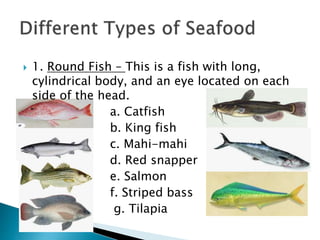
 1. Round Fish – This is a fish with long,
cylindrical body, and an eye located on each
side of the head.
a. Catfish
b. King fish
c. Mahi-mahi
d. Red snapper
e. Salmon
f. Striped bass
g. Tilapia
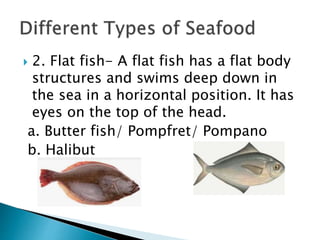
 2. Flat fish- A flat fish has a flat body
structures and swims deep down in
the sea in a horizontal position. It has
eyes on the top of the head.
a. Butter fish/ Pompfret/ Pompano
b. Halibut
 3. Mollusks- These are shellfishes
which have soft meat without any
bones but with a hard outer shell.
a. Clams
b. Mussels
c. Octopus
d. Oysters
e. Scallops
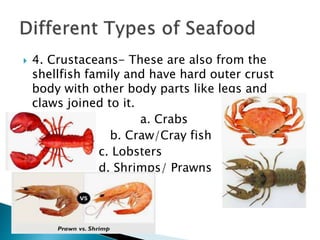
 4. Crustaceans- These are also from the
shellfish family and have hard outer crust
body with other body parts like legs and
claws joined to it.
a. Crabs
b. Craw/Cray fish
c. Lobsters
d. Shrimps/ Prawns
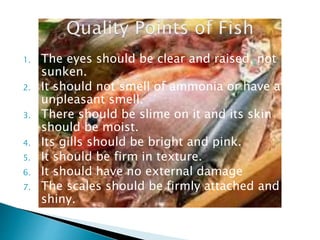
1. The eyes should be clear and raised, not
sunken.
2. It should not smell of ammonia or have an
unpleasant smell.
3. There should be slime on it and its skin
should be moist.
4. Its gills should be bright and pink.
5. It should be firm in texture.
6. It should have no external damage
7. The scales should be firmly attached and
shiny.
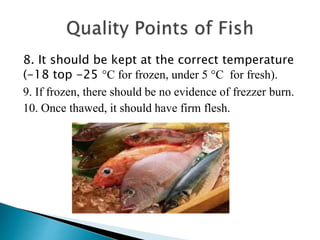
8. It should be kept at the correct temperature
(-18 top -25 °C for frozen, under 5 °C for fresh).
9. If frozen, there should be no evidence of frezzer burn.
10. Once thawed, it should have firm flesh.
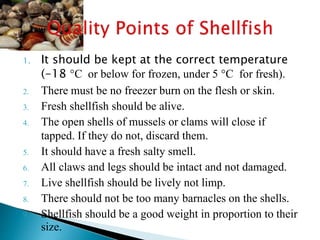
1. It should be kept at the correct temperature
(-18 °C or below for frozen, under 5 °C for fresh).
2. There must be no freezer burn on the flesh or skin.
3. Fresh shellfish should be alive.
4. The open shells of mussels or clams will close if
tapped. If they do not, discard them.
5. It should have a fresh salty smell.
6. All claws and legs should be intact and not damaged.
7. Live shellfish should be lively not limp.
8. There should not be too many barnacles on the shells.
9. Shellfish should be a good weight in proportion to their
size.
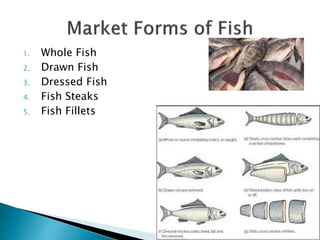
1. Whole Fish
2. Drawn Fish
3. Dressed Fish
4. Fish Steaks
5. Fish Fillets
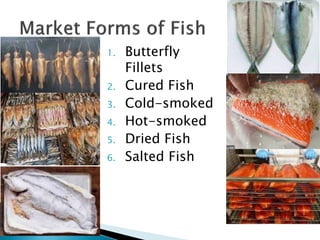
1. Butterfly
Fillets
2. Cured Fish
3. Cold-smoked
4. Hot-smoked
5. Dried Fish
6. Salted Fish
Dry- Heat Cooking
1. Grilling
2. Broiling
3. Baking
4. Deep- frying
5. Sautéing and pan-frying
6. Stir- frying
Moist-Heat Cooking
1. Steaming
2. Simmering
3. Microwaving
4. Marinating
5. Poaching
1. Tomato Sauce (Accompaniment)
2. Lemon Slices(Garnish)
3. Parsley chopped or deep-fried (Garnish)
4. Tartar sauce (accompaniment)
5. Brown bread and butter (accompaniment)
6. Hollandaise sauce (accompaniment)
7. Beure noisette (accompaniment)
1. All foods, including seafood, must be
handled and prepared in a clean area to
avoid cross-contamination.
2. Always remember to keep your hands,
preparation area, and utensils clean
3. Marinades are great for seafood but should
not be saved and used as a sauce unless the
marinade has been cooked to a temperature
of at least 165 F to eliminate
microorganisms from the raw fish.
4. Never serve cooked seafood on a plate that eld
the raw product without proper cleaning.
5. Store leftovers properly wrapped, in the
refrigerator within 2 hours.
6. Cook seafood properly.
7. Use a food thermometer to check the internal
temperature in the thickest part to make sure that
it is fully cooked without overcooking.
8. Shellfish like clams, mussels and oysters will
become plump and opaque and their shells will
open.

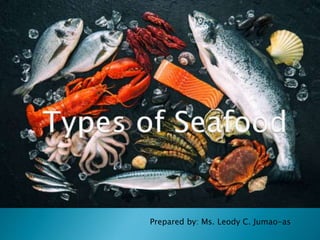
Types of-seafood

  • 1.
    Prepared by: Ms.Leody C. Jumao-as
  • 2.
     1. RoundFish – This is a fish with long, cylindrical body, and an eye located on each side of the head. a. Catfish b. King fish c. Mahi-mahi d. Red snapper e. Salmon f. Striped bass g. Tilapia
  • 3.
     2. Flatfish- A flat fish has a flat body structures and swims deep down in the sea in a horizontal position. It has eyes on the top of the head. a. Butter fish/ Pompfret/ Pompano b. Halibut
  • 4.
     3. Mollusks-These are shellfishes which have soft meat without any bones but with a hard outer shell. a. Clams b. Mussels c. Octopus d. Oysters e. Scallops
  • 5.
     4. Crustaceans-These are also from the shellfish family and have hard outer crust body with other body parts like legs and claws joined to it. a. Crabs b. Craw/Cray fish c. Lobsters d. Shrimps/ Prawns
  • 6.
    1. The eyesshould be clear and raised, not sunken. 2. It should not smell of ammonia or have an unpleasant smell. 3. There should be slime on it and its skin should be moist. 4. Its gills should be bright and pink. 5. It should be firm in texture. 6. It should have no external damage 7. The scales should be firmly attached and shiny.
  • 7.
    8. It shouldbe kept at the correct temperature (-18 top -25 °C for frozen, under 5 °C for fresh). 9. If frozen, there should be no evidence of frezzer burn. 10. Once thawed, it should have firm flesh.
  • 8.
    1. It shouldbe kept at the correct temperature (-18 °C or below for frozen, under 5 °C for fresh). 2. There must be no freezer burn on the flesh or skin. 3. Fresh shellfish should be alive. 4. The open shells of mussels or clams will close if tapped. If they do not, discard them. 5. It should have a fresh salty smell. 6. All claws and legs should be intact and not damaged. 7. Live shellfish should be lively not limp. 8. There should not be too many barnacles on the shells. 9. Shellfish should be a good weight in proportion to their size.
  • 9.
    1. Whole Fish 2.Drawn Fish 3. Dressed Fish 4. Fish Steaks 5. Fish Fillets
  • 10.
    1. Butterfly Fillets 2. CuredFish 3. Cold-smoked 4. Hot-smoked 5. Dried Fish 6. Salted Fish
  • 11.
    Dry- Heat Cooking 1.Grilling 2. Broiling 3. Baking 4. Deep- frying 5. Sautéing and pan-frying 6. Stir- frying
  • 12.
    Moist-Heat Cooking 1. Steaming 2.Simmering 3. Microwaving 4. Marinating 5. Poaching
  • 13.
    1. Tomato Sauce(Accompaniment) 2. Lemon Slices(Garnish) 3. Parsley chopped or deep-fried (Garnish) 4. Tartar sauce (accompaniment) 5. Brown bread and butter (accompaniment) 6. Hollandaise sauce (accompaniment) 7. Beure noisette (accompaniment)
  • 14.
    1. All foods,including seafood, must be handled and prepared in a clean area to avoid cross-contamination. 2. Always remember to keep your hands, preparation area, and utensils clean 3. Marinades are great for seafood but should not be saved and used as a sauce unless the marinade has been cooked to a temperature of at least 165 F to eliminate microorganisms from the raw fish.
  • 15.
    4. Never servecooked seafood on a plate that eld the raw product without proper cleaning. 5. Store leftovers properly wrapped, in the refrigerator within 2 hours. 6. Cook seafood properly. 7. Use a food thermometer to check the internal temperature in the thickest part to make sure that it is fully cooked without overcooking. 8. Shellfish like clams, mussels and oysters will become plump and opaque and their shells will open.