Types of Software
Development Testing:
Ensuring Quality and
Reliability
Software development testing is the best method to confirm the functionality of the product
being developed. It should be applied at all stages of development, from the beginning of the
project to the end, so that isolated faults can be discovered at an early stage or erroneous
behaviour can be detected at the end.
by Intellisource Technologies
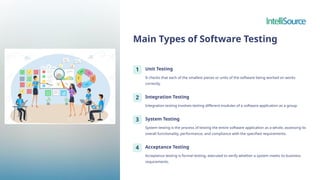
Main Types of Software Testing
1 Unit Testing
It checks that each of the smallest pieces or units of the software being worked on works
correctly.
2 Integration Testing
Integration testing involves testing different modules of a software application as a group.
3 System Testing
System testing is the process of testing the entire software application as a whole, assessing its
overall functionality, performance, and compliance with the specified requirements.
4 Acceptance Testing
Acceptance testing is formal testing, executed to verify whether a system meets its business
requirements.
Performance Testing
Performance Testing
It is a type of non-functional
testing, which is carried out to
determine the speed, stability,
and scalability of a software app.
Load Testing
Simulates a large number of users
accessing the application
simultaneously to assess its
performance under heavy load.
Stress Testing
Pushes the application beyond its
normal limits to identify its
breaking point and ensure its
stability under extreme
conditions.
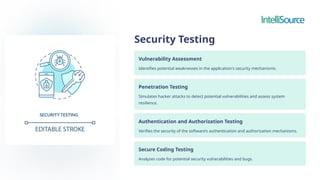
Security Testing
Vulnerability Assessment
Identifies potential weaknesses in the application's security mechanisms.
Penetration Testing
Simulates hacker attacks to detect potential vulnerabilities and assess system
resilience.
Authentication and Authorization Testing
Verifies the security of the software’s authentication and authorization mechanisms.
Secure Coding Testing
Analyzes code for potential security vulnerabilities and bugs.
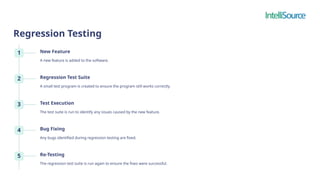
Regression Testing
1 New Feature
A new feature is added to the software.
2 Regression Test Suite
A small test program is created to ensure the program still works correctly.
3 Test Execution
The test suite is run to identify any issues caused by the new feature.
4 Bug Fixing
Any bugs identified during regression testing are fixed.
5 Re-Testing
The regression test suite is run again to ensure the fixes were successful.
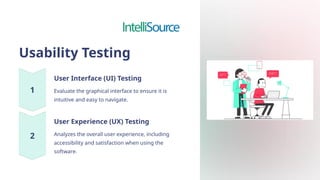
Usability Testing
User Interface (UI) Testing
Evaluate the graphical interface to ensure it is
intuitive and easy to navigate.
User Experience (UX) Testing
Analyzes the overall user experience, including
accessibility and satisfaction when using the
software.
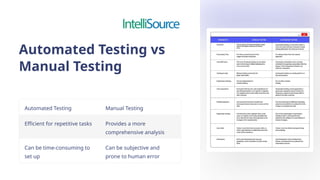
Automated Testing vs
Manual Testing
Automated Testing Manual Testing
Efficient for repetitive tasks Provides a more
comprehensive analysis
Can be time-consuming to
set up
Can be subjective and
prone to human error
Get In Touch
• +1 (561) 798-3204
• +1 (561) 798-3255
Sales & General Inquiries:
• sales@intellisourcetech.net
Careers:
• hr@intellisourcetech.net

Types-of-Software-Development-Testing-Ensuring-Quality-and-Reliability.pptx

  • 1.
    Types of Software DevelopmentTesting: Ensuring Quality and Reliability Software development testing is the best method to confirm the functionality of the product being developed. It should be applied at all stages of development, from the beginning of the project to the end, so that isolated faults can be discovered at an early stage or erroneous behaviour can be detected at the end. by Intellisource Technologies
  • 2.
    Main Types ofSoftware Testing 1 Unit Testing It checks that each of the smallest pieces or units of the software being worked on works correctly. 2 Integration Testing Integration testing involves testing different modules of a software application as a group. 3 System Testing System testing is the process of testing the entire software application as a whole, assessing its overall functionality, performance, and compliance with the specified requirements. 4 Acceptance Testing Acceptance testing is formal testing, executed to verify whether a system meets its business requirements.
  • 3.
    Performance Testing Performance Testing Itis a type of non-functional testing, which is carried out to determine the speed, stability, and scalability of a software app. Load Testing Simulates a large number of users accessing the application simultaneously to assess its performance under heavy load. Stress Testing Pushes the application beyond its normal limits to identify its breaking point and ensure its stability under extreme conditions.
  • 4.
    Security Testing Vulnerability Assessment Identifiespotential weaknesses in the application's security mechanisms. Penetration Testing Simulates hacker attacks to detect potential vulnerabilities and assess system resilience. Authentication and Authorization Testing Verifies the security of the software’s authentication and authorization mechanisms. Secure Coding Testing Analyzes code for potential security vulnerabilities and bugs.
  • 5.
    Regression Testing 1 NewFeature A new feature is added to the software. 2 Regression Test Suite A small test program is created to ensure the program still works correctly. 3 Test Execution The test suite is run to identify any issues caused by the new feature. 4 Bug Fixing Any bugs identified during regression testing are fixed. 5 Re-Testing The regression test suite is run again to ensure the fixes were successful.
  • 6.
    Usability Testing User Interface(UI) Testing Evaluate the graphical interface to ensure it is intuitive and easy to navigate. User Experience (UX) Testing Analyzes the overall user experience, including accessibility and satisfaction when using the software.
  • 7.
    Automated Testing vs ManualTesting Automated Testing Manual Testing Efficient for repetitive tasks Provides a more comprehensive analysis Can be time-consuming to set up Can be subjective and prone to human error
  • 8.
    Get In Touch •+1 (561) 798-3204 • +1 (561) 798-3255 Sales & General Inquiries: • sales@intellisourcetech.net Careers: • hr@intellisourcetech.net