There are many different types of interviews but
  they should all generally follow these 5 steps

• Introduction & Welcome
  – Establish rapport and explain the purpose of the interview
• Obtain Relevant Information
  – Use job-related questions
• Discuss the Position
  – Provide full information about duties and responsibilities
• Respond to the Applicant’s Questions
• End the Interview
  – Express appreciation of their time
  – Explain when decision will be made and how they will be
    notified
Phone Screen vs. Phone Interview
• A phone interview should be scheduled with a
  candidate
• A phone screen is merely the call to set up that
  interview, and ask a few basic things (phone
  number, best time to call, interest level)
• To be fair to the candidate, give them an
  opportunity to schedule the interview
• Set up a phone interview after phone screen
The Phone Interview

  As an employer, you are looking for 3 things

  – Fill in any missing information
  – Assess communication
  – Gauge interest and fit for the position

Most important: Make the phone interview
 count as a meaningful part of the screening and
 hiring process
The Phone Interview: Missing
             Information
• Filling in any missing information is done to
  make sure the candidate has the right skills
  and abilities for the job
• Make sure you have a copy of their resume
  and job description on hand
• Jot down questions on their resume that need
  clarification
• Anything that is unclear needs to be addresses
  at a preliminary level before the candidate is
  brought in for a face to face interview
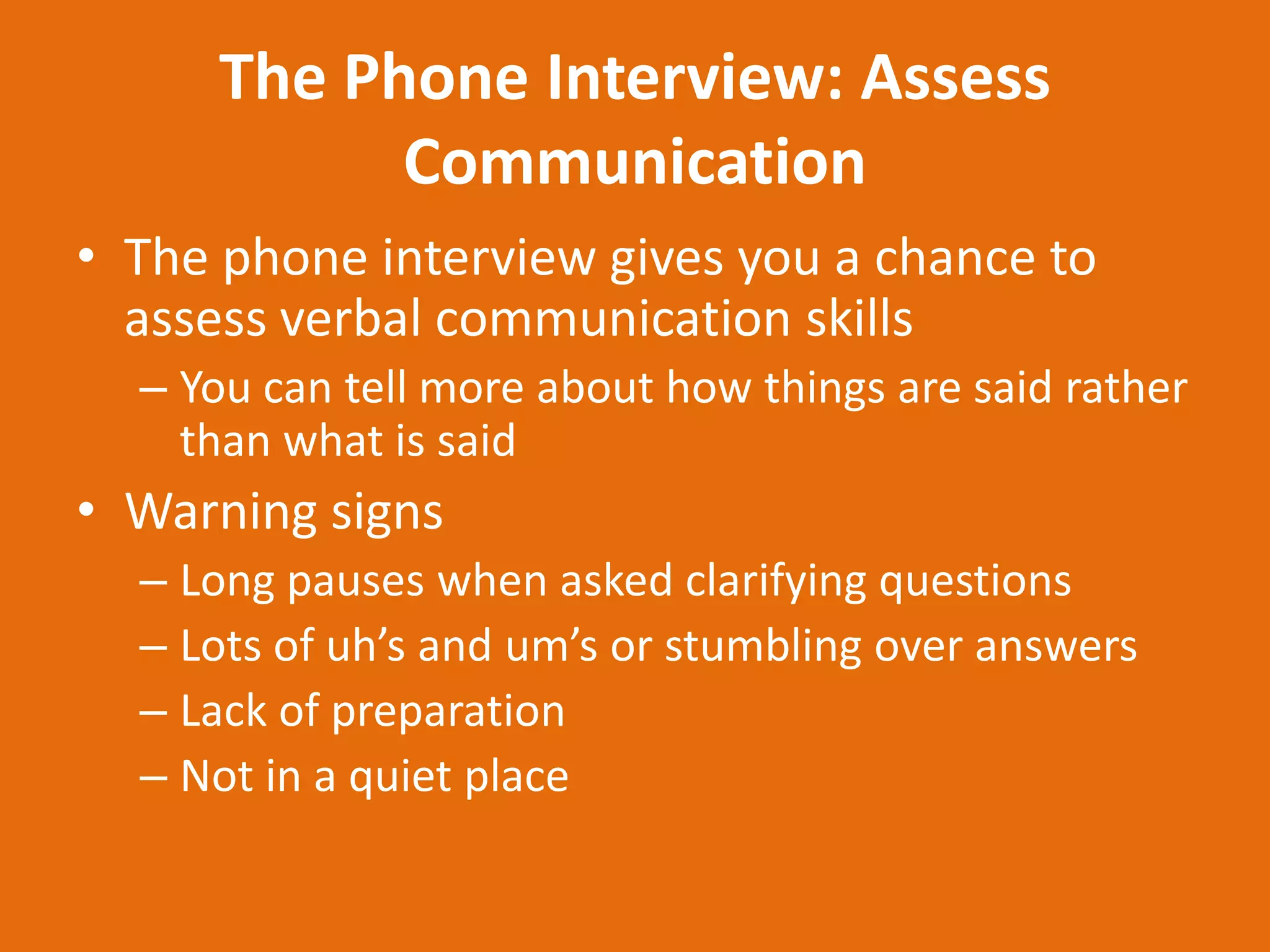
The Phone Interview: Assess
            Communication
• The phone interview gives you a chance to
  assess verbal communication skills
  – You can tell more about how things are said rather
    than what is said
• Warning signs
  – Long pauses when asked clarifying questions
  – Lots of uh’s and um’s or stumbling over answers
  – Lack of preparation
  – Not in a quiet place
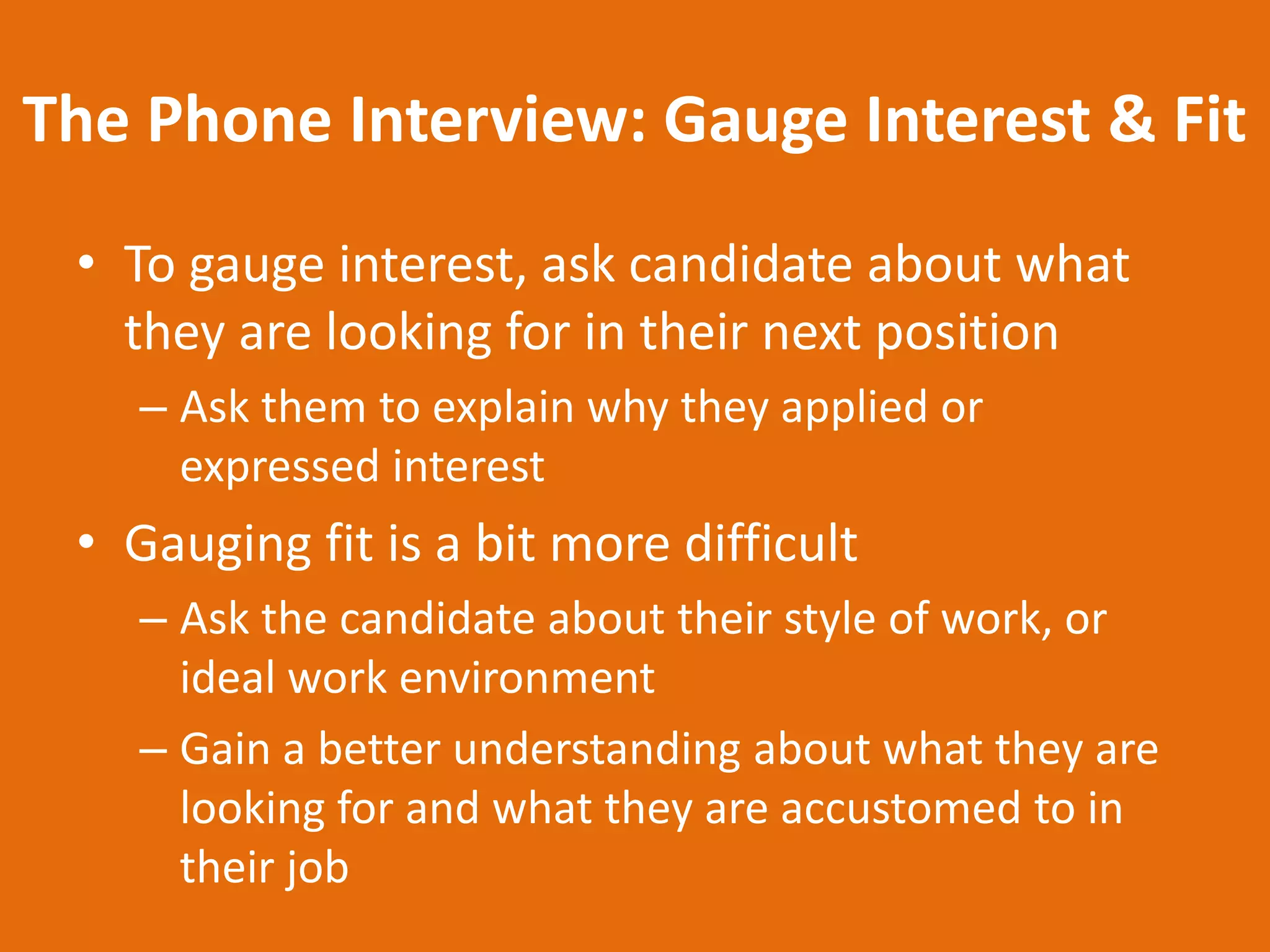
The Phone Interview: Gauge Interest & Fit
 • To gauge interest, ask candidate about what
   they are looking for in their next position
    – Ask them to explain why they applied or
      expressed interest
 • Gauging fit is a bit more difficult
    – Ask the candidate about their style of work, or
      ideal work environment
    – Gain a better understanding about what they are
      looking for and what they are accustomed to in
      their job
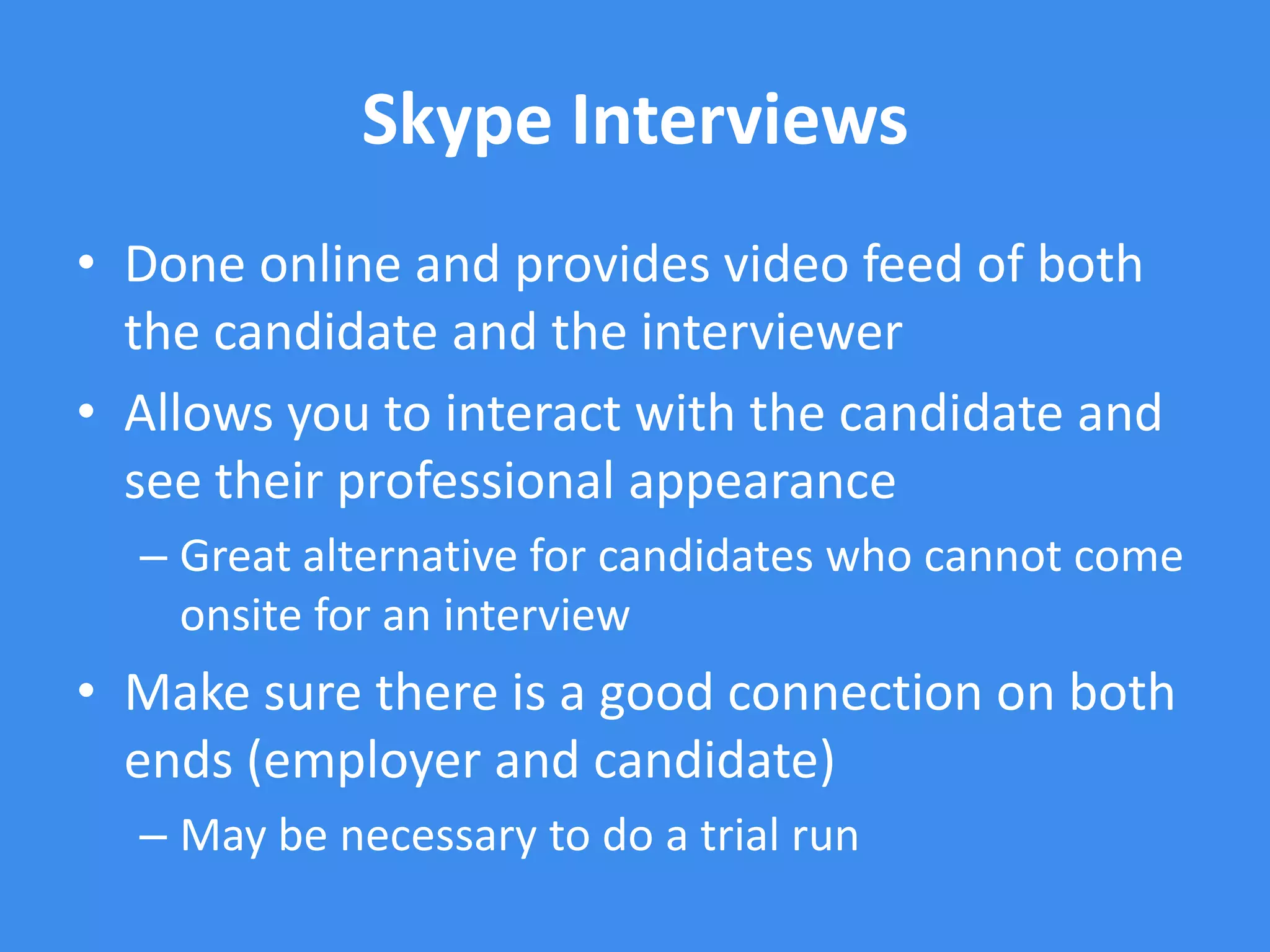
Skype Interviews
• Done online and provides video feed of both
  the candidate and the interviewer
• Allows you to interact with the candidate and
  see their professional appearance
  – Great alternative for candidates who cannot come
    onsite for an interview
• Make sure there is a good connection on both
  ends (employer and candidate)
  – May be necessary to do a trial run
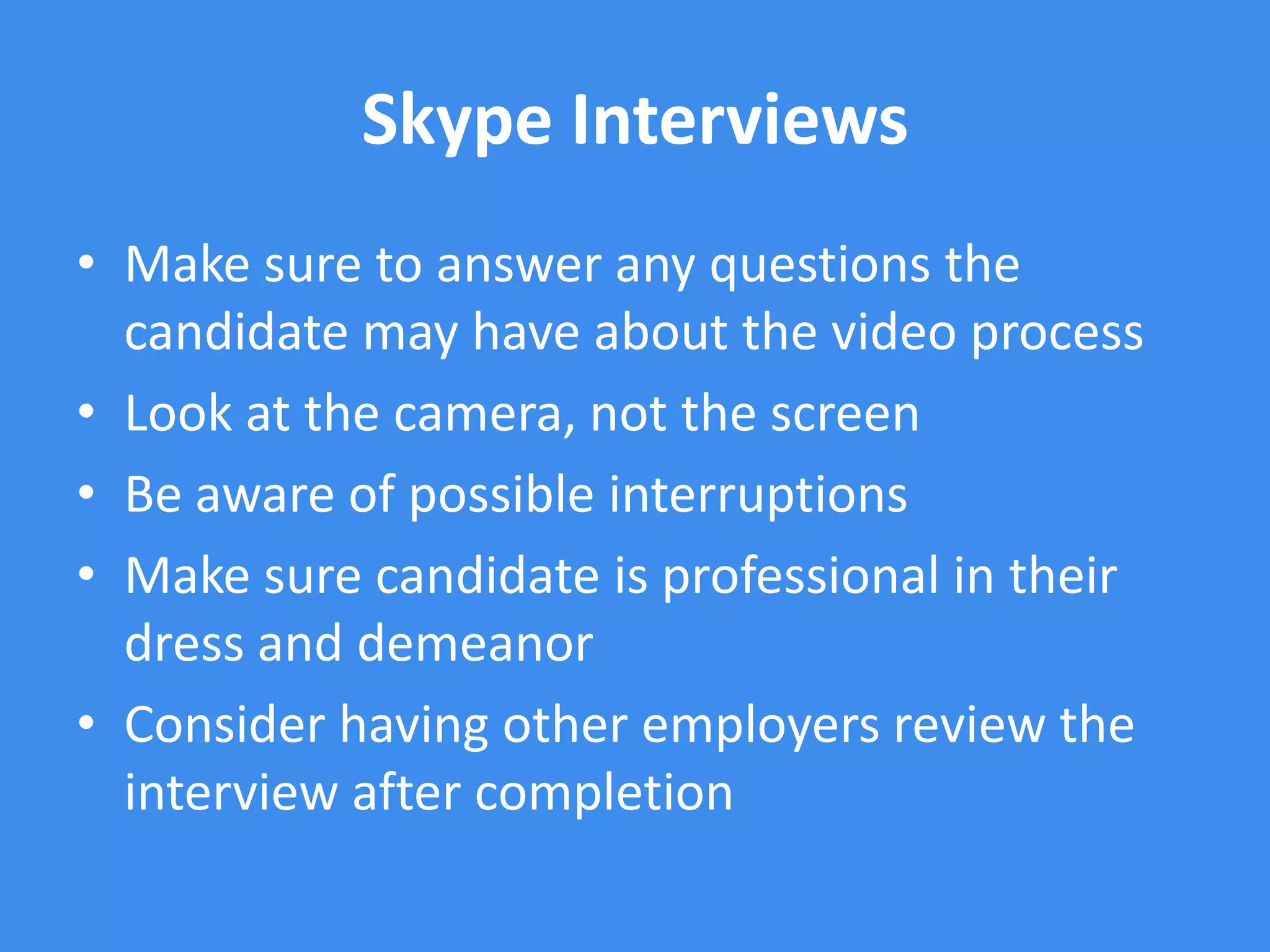
Skype Interviews
• Make sure to answer any questions the
  candidate may have about the video process
• Look at the camera, not the screen
• Be aware of possible interruptions
• Make sure candidate is professional in their
  dress and demeanor
• Consider having other employers review the
  interview after completion

Types of interviews

  • 2.
    There are manydifferent types of interviews but they should all generally follow these 5 steps • Introduction & Welcome – Establish rapport and explain the purpose of the interview • Obtain Relevant Information – Use job-related questions • Discuss the Position – Provide full information about duties and responsibilities • Respond to the Applicant’s Questions • End the Interview – Express appreciation of their time – Explain when decision will be made and how they will be notified
  • 4.
    Phone Screen vs.Phone Interview • A phone interview should be scheduled with a candidate • A phone screen is merely the call to set up that interview, and ask a few basic things (phone number, best time to call, interest level) • To be fair to the candidate, give them an opportunity to schedule the interview • Set up a phone interview after phone screen
  • 5.
    The Phone Interview As an employer, you are looking for 3 things – Fill in any missing information – Assess communication – Gauge interest and fit for the position Most important: Make the phone interview count as a meaningful part of the screening and hiring process
  • 6.
    The Phone Interview:Missing Information • Filling in any missing information is done to make sure the candidate has the right skills and abilities for the job • Make sure you have a copy of their resume and job description on hand • Jot down questions on their resume that need clarification • Anything that is unclear needs to be addresses at a preliminary level before the candidate is brought in for a face to face interview
  • 7.
    The Phone Interview:Assess Communication • The phone interview gives you a chance to assess verbal communication skills – You can tell more about how things are said rather than what is said • Warning signs – Long pauses when asked clarifying questions – Lots of uh’s and um’s or stumbling over answers – Lack of preparation – Not in a quiet place
  • 8.
    The Phone Interview:Gauge Interest & Fit • To gauge interest, ask candidate about what they are looking for in their next position – Ask them to explain why they applied or expressed interest • Gauging fit is a bit more difficult – Ask the candidate about their style of work, or ideal work environment – Gain a better understanding about what they are looking for and what they are accustomed to in their job
  • 10.
    Skype Interviews • Doneonline and provides video feed of both the candidate and the interviewer • Allows you to interact with the candidate and see their professional appearance – Great alternative for candidates who cannot come onsite for an interview • Make sure there is a good connection on both ends (employer and candidate) – May be necessary to do a trial run
  • 11.
    Skype Interviews • Makesure to answer any questions the candidate may have about the video process • Look at the camera, not the screen • Be aware of possible interruptions • Make sure candidate is professional in their dress and demeanor • Consider having other employers review the interview after completion