DOCUMENTARY
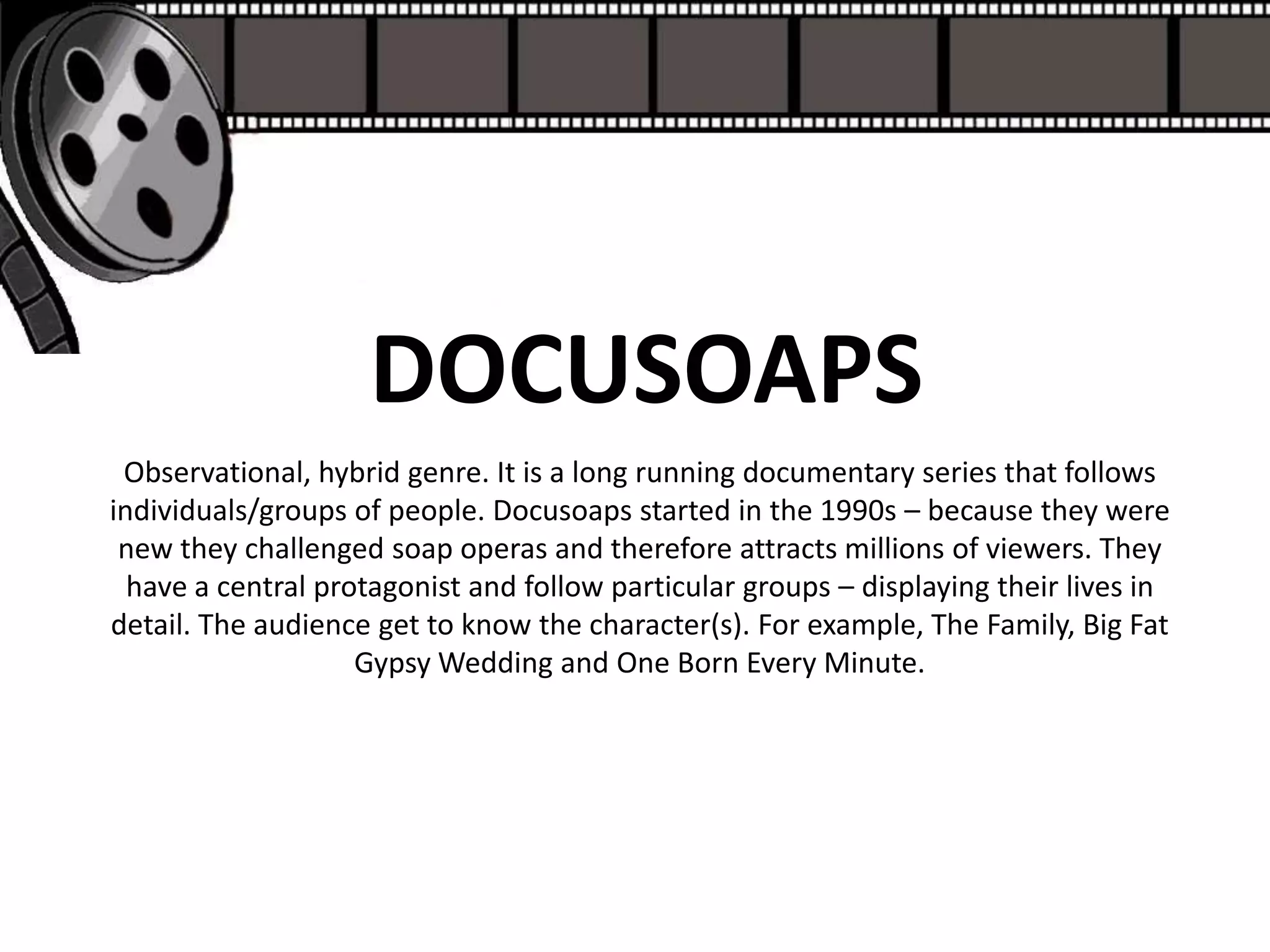
DOCUSOAPS
 Observational, hybrid genre. It is a long running documentary series that follows
individuals/groups of people. Docusoaps started in the 1990s – because they were
 new they challenged soap operas and therefore attracts millions of viewers. They
  have a central protagonist and follow particular groups – displaying their lives in
detail. The audience get to know the character(s). For example, The Family, Big Fat
                    Gypsy Wedding and One Born Every Minute.
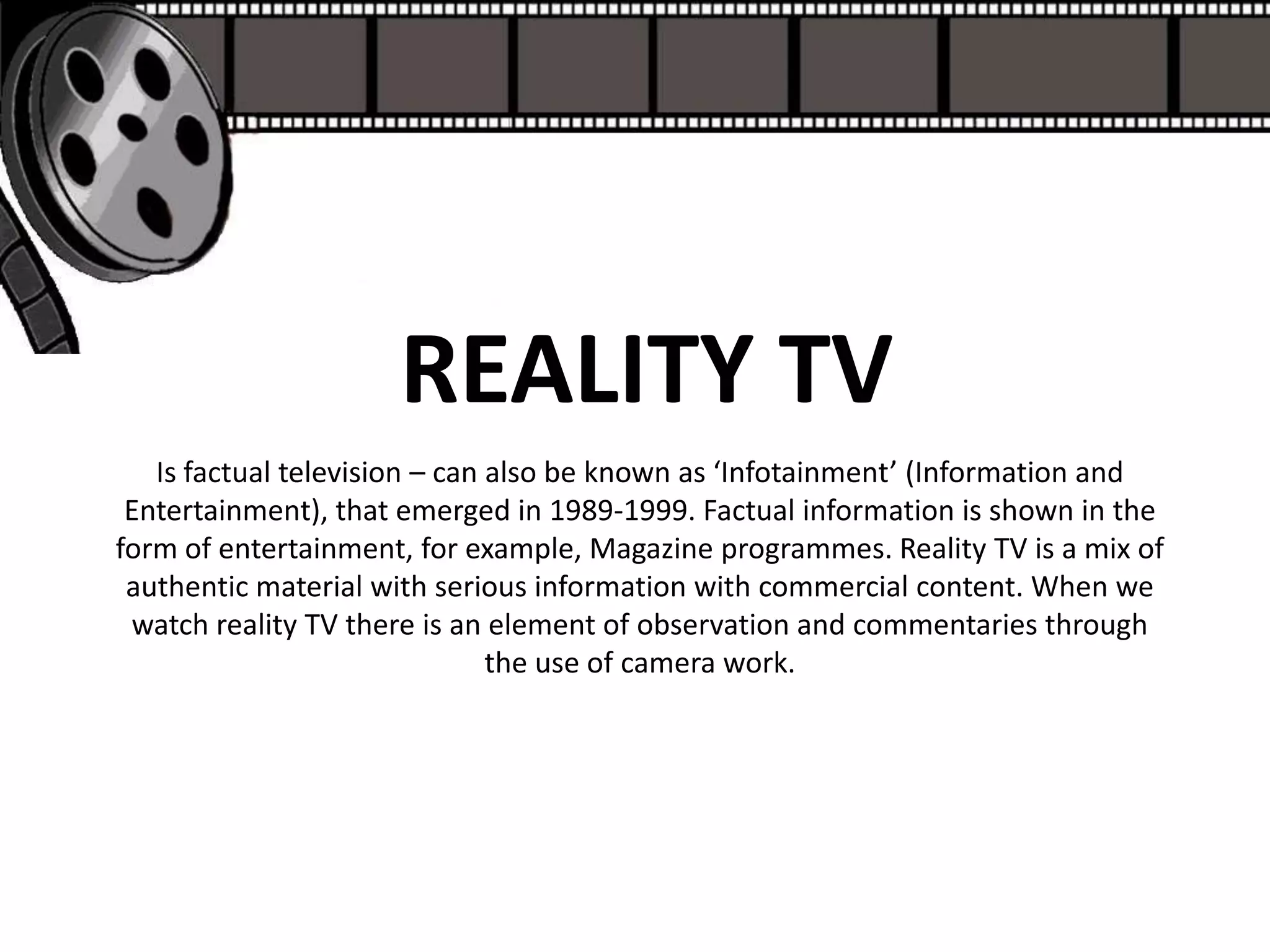
REALITY TV
   Is factual television – can also be known as ‘Infotainment’ (Information and
 Entertainment), that emerged in 1989-1999. Factual information is shown in the
form of entertainment, for example, Magazine programmes. Reality TV is a mix of
 authentic material with serious information with commercial content. When we
 watch reality TV there is an element of observation and commentaries through
                               the use of camera work.
FLY ON THE WALL
The camera is hidden or unseen and records the vents that unfold. For example,
                       Big Brother and Educating Essex.
MIXED
Combination of interviews, observation, actuality footage, archive material and
                                 narration.
                                     ↓
  Links everything together and advances the argument and the narrative.
SELF REFLEXIVE
People are aware that the camera is following them and so often purposely talk to
                the camera. For example, The Secret Millionaire.
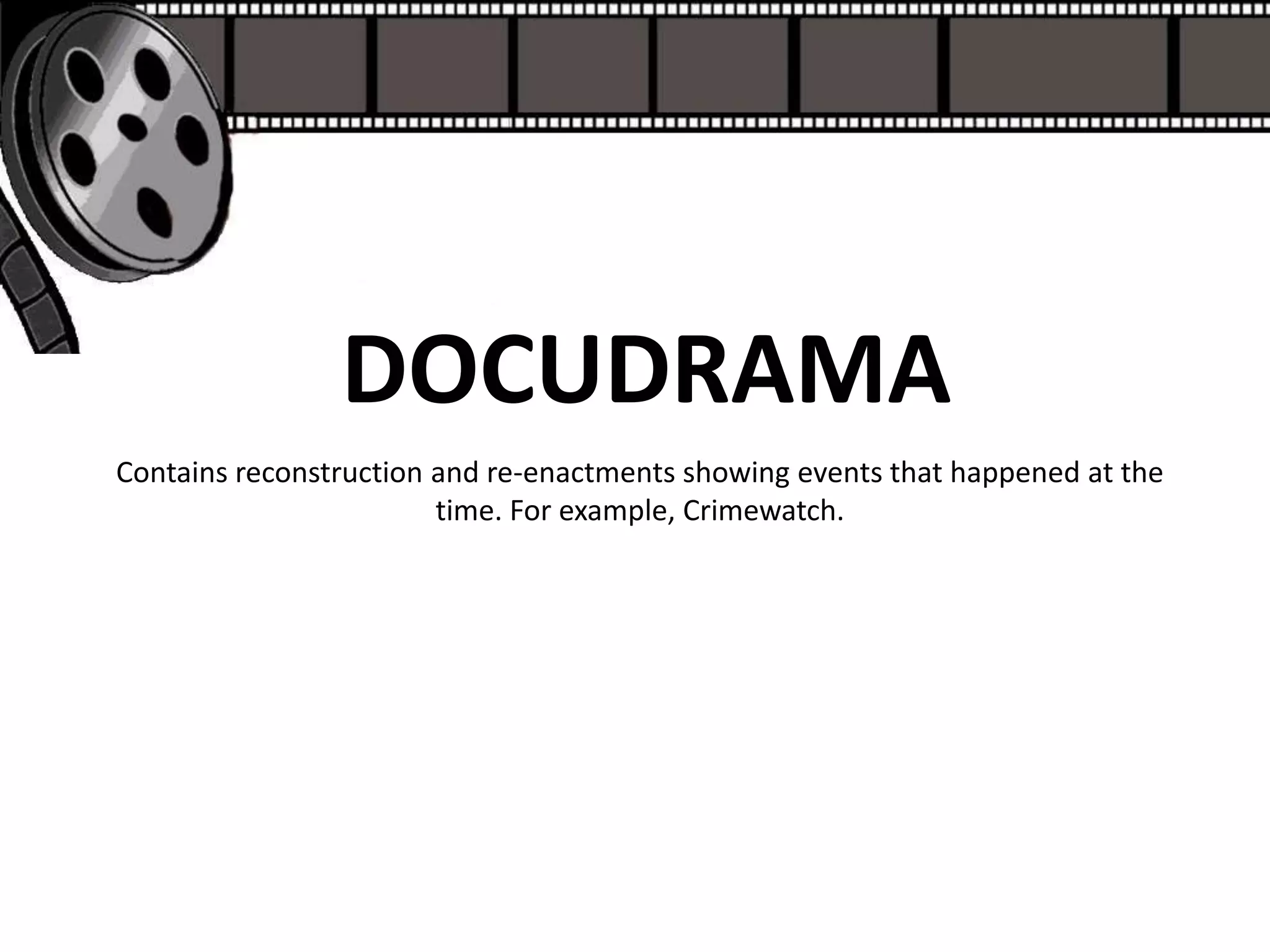
DOCUDRAMA
Contains reconstruction and re-enactments showing events that happened at the
                        time. For example, Crimewatch.
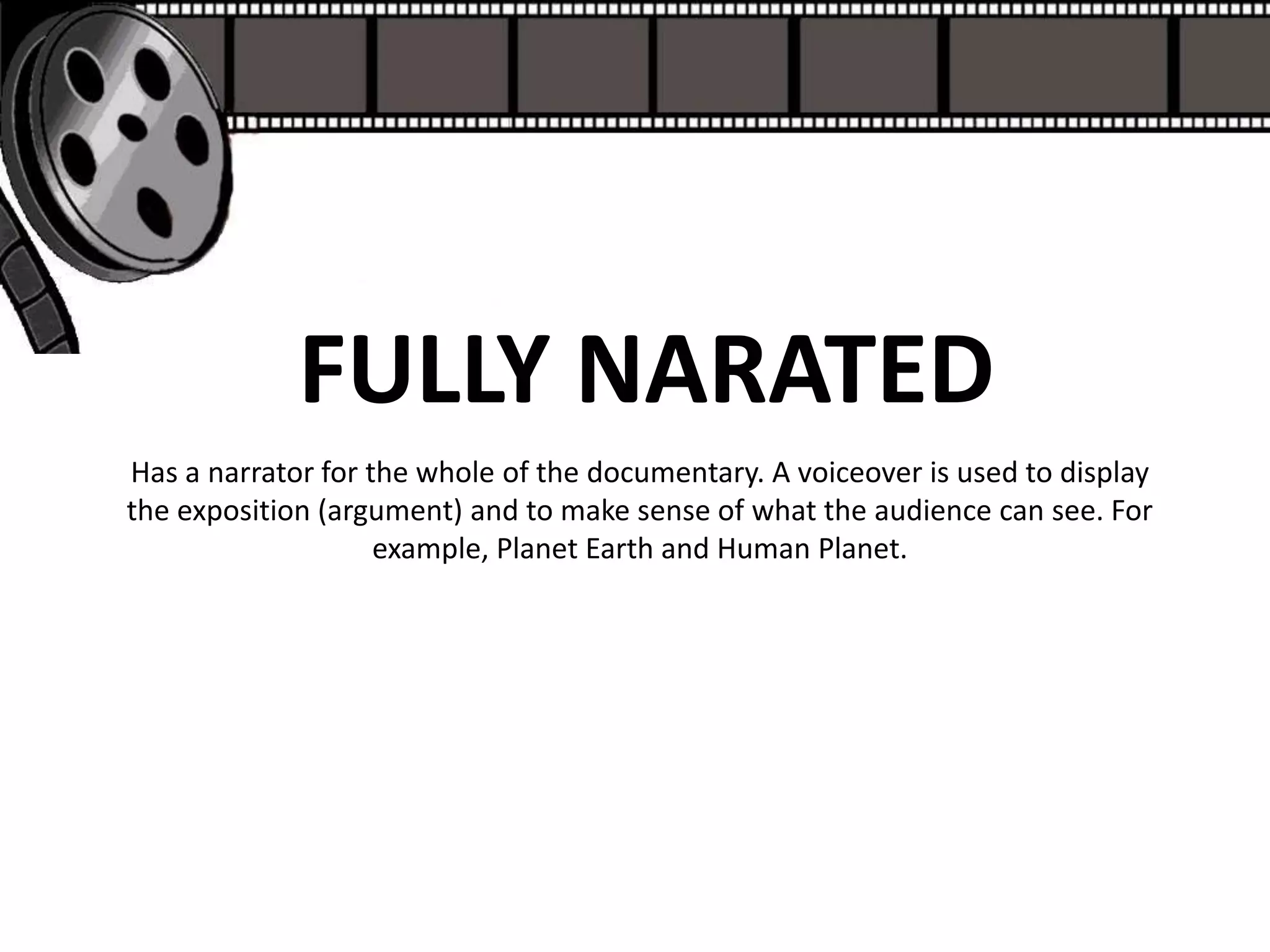
FULLY NARATED
Has a narrator for the whole of the documentary. A voiceover is used to display
the exposition (argument) and to make sense of what the audience can see. For
                    example, Planet Earth and Human Planet.
DOCUMENTARIES & CURRENT AFFAIRS
  Current Affairs are journalistic lead, based on things that affect society, and aim to
      address the news and political agendas in more depth than news bulletins.
  Current affairs often argue a case or prove something wrong. Reporters frequently
   appear in vision, but there may be a voiceover. For example, Tonight with Trevor
    McDonald. Current affairs are mid way between documentaries and news, that
   explore important social developments. For example, Newsnight and Dispatches.
    A documentary may take longer to produce. Current affairs get stories together
                                      much quicker.

Types of Documentary

  • 1.
  • 2.
    DOCUSOAPS Observational, hybridgenre. It is a long running documentary series that follows individuals/groups of people. Docusoaps started in the 1990s – because they were new they challenged soap operas and therefore attracts millions of viewers. They have a central protagonist and follow particular groups – displaying their lives in detail. The audience get to know the character(s). For example, The Family, Big Fat Gypsy Wedding and One Born Every Minute.
  • 3.
    REALITY TV Is factual television – can also be known as ‘Infotainment’ (Information and Entertainment), that emerged in 1989-1999. Factual information is shown in the form of entertainment, for example, Magazine programmes. Reality TV is a mix of authentic material with serious information with commercial content. When we watch reality TV there is an element of observation and commentaries through the use of camera work.
  • 4.
    FLY ON THEWALL The camera is hidden or unseen and records the vents that unfold. For example, Big Brother and Educating Essex.
  • 5.
    MIXED Combination of interviews,observation, actuality footage, archive material and narration. ↓ Links everything together and advances the argument and the narrative.
  • 6.
    SELF REFLEXIVE People areaware that the camera is following them and so often purposely talk to the camera. For example, The Secret Millionaire.
  • 7.
    DOCUDRAMA Contains reconstruction andre-enactments showing events that happened at the time. For example, Crimewatch.
  • 8.
    FULLY NARATED Has anarrator for the whole of the documentary. A voiceover is used to display the exposition (argument) and to make sense of what the audience can see. For example, Planet Earth and Human Planet.
  • 9.
    DOCUMENTARIES & CURRENTAFFAIRS Current Affairs are journalistic lead, based on things that affect society, and aim to address the news and political agendas in more depth than news bulletins. Current affairs often argue a case or prove something wrong. Reporters frequently appear in vision, but there may be a voiceover. For example, Tonight with Trevor McDonald. Current affairs are mid way between documentaries and news, that explore important social developments. For example, Newsnight and Dispatches. A documentary may take longer to produce. Current affairs get stories together much quicker.