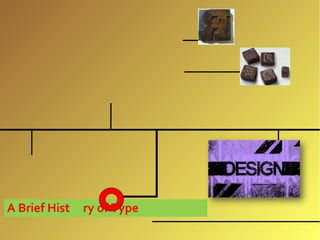
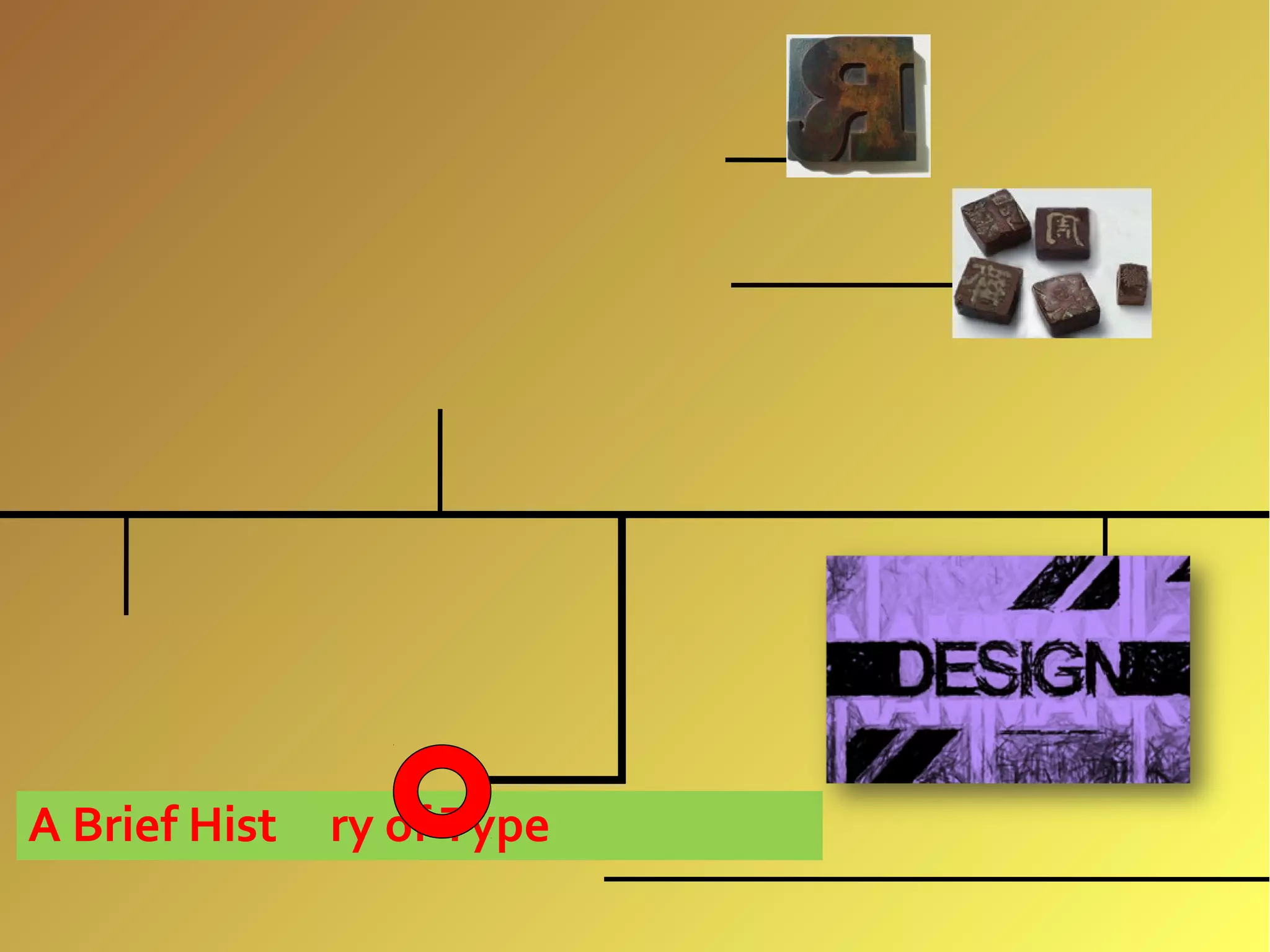
A Brief Hist   ry of Type
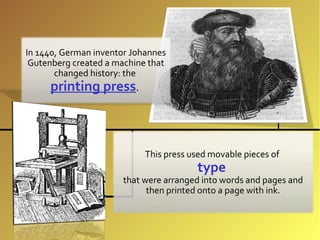
In 1440, German inventor Johannes
 Gutenberg created a machine that
       changed history: the
     printing press.


                            This press used movable pieces of
                                        type
                      that were arranged into words and pages and
                            then printed onto a page with ink.
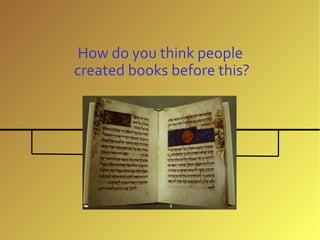
How do you think people
created books before this?
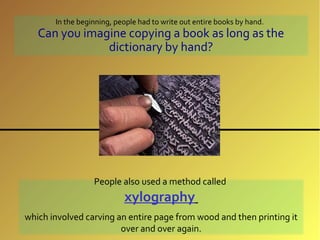
In the beginning, people had to write out entire books by hand.
   Can you imagine copying a book as long as the
               dictionary by hand?


                  People also used a method called
                           xylography
which involved carving an entire page from wood and then printing it
                        over and over again.
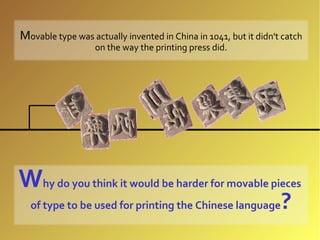
Movable type was actually invented in China in 1041, but it didn't catch
                   on the way the printing press did.


Why do you think it would be harder for movable pieces
  of type to be used for printing the Chinese language            ?
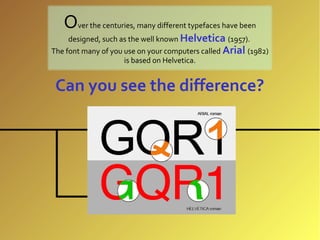
Over the centuries, many different typefaces have been
     designed, such as the well known Helvetica (1957).
The font many of you use on your computers called Arial (1982)
                     is based on Helvetica.


 Can you see the difference?
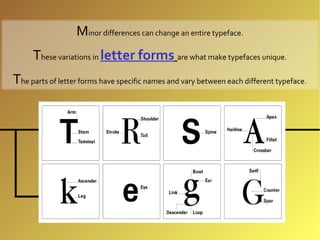
Minor differences can change an entire typeface.
     These variations in letter forms are what make typefaces unique.
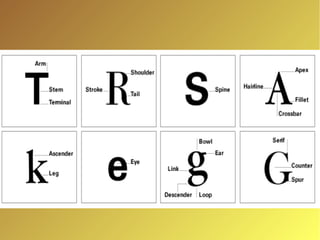
The parts of letter forms have specific names and vary between each different typeface.
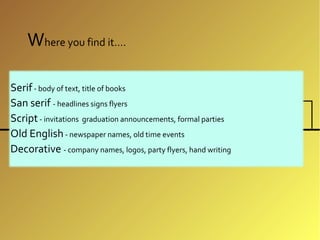
Where you find it….

Serif - body of text, title of books
San serif - headlines signs flyers
Script - invitations graduation announcements, formal parties
Old English - newspaper names, old time events
Decorative - company names, logos, party flyers, hand writing
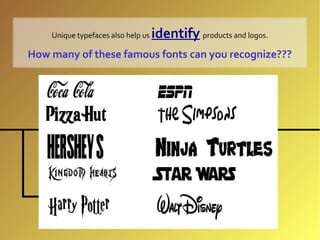
Unique typefaces also help us   identify products and logos.
How many of these famous fonts can you recognize???
Type.2012

Type.2012

  • 1.
    A Brief Hist ry of Type
  • 2.
    In 1440, Germaninventor Johannes Gutenberg created a machine that changed history: the printing press. This press used movable pieces of type that were arranged into words and pages and then printed onto a page with ink.
  • 3.
    How do youthink people created books before this?
  • 4.
    In the beginning,people had to write out entire books by hand. Can you imagine copying a book as long as the dictionary by hand? People also used a method called xylography which involved carving an entire page from wood and then printing it over and over again.
  • 5.
    Movable type wasactually invented in China in 1041, but it didn't catch on the way the printing press did. Why do you think it would be harder for movable pieces of type to be used for printing the Chinese language ?
  • 6.
    Over the centuries,many different typefaces have been designed, such as the well known Helvetica (1957). The font many of you use on your computers called Arial (1982) is based on Helvetica. Can you see the difference?
  • 7.
    Minor differences canchange an entire typeface. These variations in letter forms are what make typefaces unique. The parts of letter forms have specific names and vary between each different typeface.
  • 9.
    Where you findit…. Serif - body of text, title of books San serif - headlines signs flyers Script - invitations graduation announcements, formal parties Old English - newspaper names, old time events Decorative - company names, logos, party flyers, hand writing
  • 10.
    Unique typefaces alsohelp us identify products and logos. How many of these famous fonts can you recognize???