TV Crime Drama - Setting
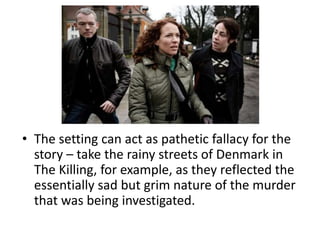
• The setting can act as pathetic fallacy for the
  story – take the rainy streets of Denmark in
  The Killing, for example, as they reflected the
  essentially sad but grim nature of the murder
  that was being investigated.
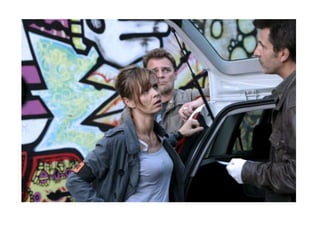
• b. A series set on the streets of a fast-paced
  modern city will be fast-paced itself. The
  crimes in the Paris-set Spiral are violent and
  often play on the city’s racial conflicts. The
  police often have to investigate amongst run
  down, graffiti-covered buildings inhabited by
  prostitutes and immigrant gangs - though the
  series is also set amongst the court rooms and
  political offices of Paris, reflecting the series'
  interest in corruption among politicians and
  the legal system.
• c. The Oxford-set Inspector Morse and
  Lewis involved cerebral crimes
  amongst students and academic staff.
• d. The wealthy neighbourhood of
  some criminal families reflects the
  level of their success and the way in
  which crime can permeate the upper
  levels of society.
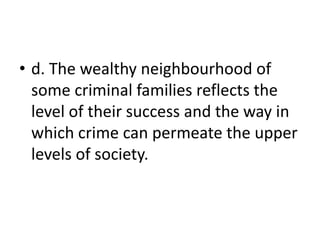
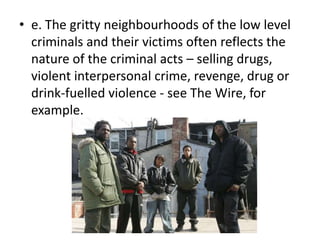
• e. The gritty neighbourhoods of the low level
  criminals and their victims often reflects the
  nature of the criminal acts – selling drugs,
  violent interpersonal crime, revenge, drug or
  drink-fuelled violence - see The Wire, for
  example.
• f. The gritty urban London-setting of Luther or
  the Baltimore streets of Homicide and the
  often gruesome nature of the crimes depicted
  contrasts considerably with the ‘idyllic’ English
  village setting of Midsomer Murders
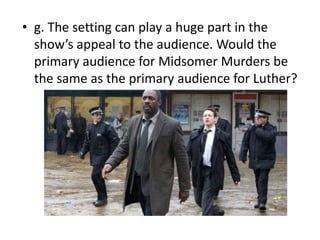
• g. The setting can play a huge part in the
  show’s appeal to the audience. Would the
  primary audience for Midsomer Murders be
  the same as the primary audience for Luther?
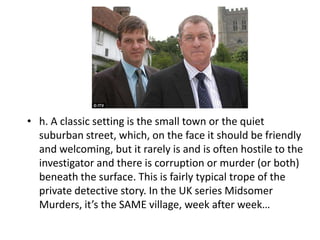
• h. A classic setting is the small town or the quiet
  suburban street, which, on the face it should be friendly
  and welcoming, but it rarely is and is often hostile to the
  investigator and there is corruption or murder (or both)
  beneath the surface. This is fairly typical trope of the
  private detective story. In the UK series Midsomer
  Murders, it’s the SAME village, week after week…
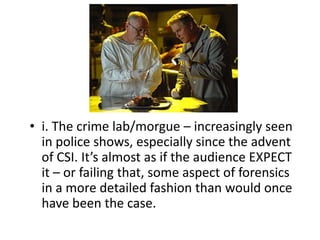
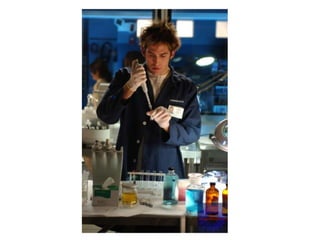
• i. The crime lab/morgue – increasingly seen
  in police shows, especially since the advent
  of CSI. It’s almost as if the audience EXPECT
  it – or failing that, some aspect of forensics
  in a more detailed fashion than would once
  have been the case.
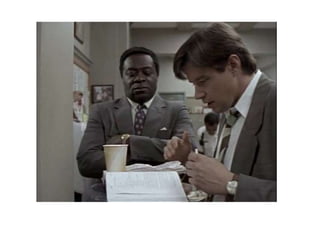
• j. The squad room/station house/precinct – a
  busy, bustling place which often reveals the
  characters’ position in the hierarchy.
  Policeman/detectives are seen answering
  phones, typing up paperwork, discussing cases,
  eating, drinking coffee, standing around the
  water cooler, pulling practical jokes on each
  other. Pictures or keepsakes related to their
  private lives can be seen on some desks. In
  Homicide: Life on the Street, the room is
  dominated by a board featuring solved and
  unsolved cases.
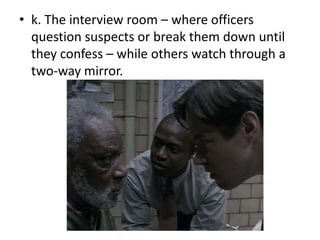
• k. The interview room – where officers
  question suspects or break them down until
  they confess – while others watch through a
  two-way mirror.
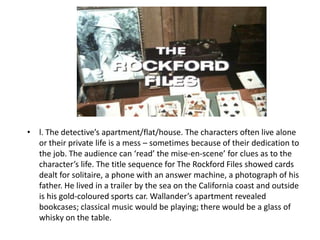
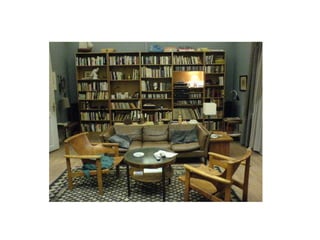
• l. The detective’s apartment/flat/house. The characters often live alone
  or their private life is a mess – sometimes because of their dedication to
  the job. The audience can ‘read’ the mise-en-scene’ for clues as to the
  character’s life. The title sequence for The Rockford Files showed cards
  dealt for solitaire, a phone with an answer machine, a photograph of his
  father. He lived in a trailer by the sea on the California coast and outside
  is his gold-coloured sports car. Wallander’s apartment revealed
  bookcases; classical music would be playing; there would be a glass of
  whisky on the table.
• m. A bleak setting - the kind that often
  features in Wallander - can act as pathetic
  fallacy for both the nature of the crime and
  the personal life of the character.

Tv crime drama setting

  • 1.
    TV Crime Drama- Setting
  • 2.
    • The settingcan act as pathetic fallacy for the story – take the rainy streets of Denmark in The Killing, for example, as they reflected the essentially sad but grim nature of the murder that was being investigated.
  • 3.
    • b. Aseries set on the streets of a fast-paced modern city will be fast-paced itself. The crimes in the Paris-set Spiral are violent and often play on the city’s racial conflicts. The police often have to investigate amongst run down, graffiti-covered buildings inhabited by prostitutes and immigrant gangs - though the series is also set amongst the court rooms and political offices of Paris, reflecting the series' interest in corruption among politicians and the legal system.
  • 5.
    • c. TheOxford-set Inspector Morse and Lewis involved cerebral crimes amongst students and academic staff.
  • 6.
    • d. Thewealthy neighbourhood of some criminal families reflects the level of their success and the way in which crime can permeate the upper levels of society.
  • 7.
    • e. Thegritty neighbourhoods of the low level criminals and their victims often reflects the nature of the criminal acts – selling drugs, violent interpersonal crime, revenge, drug or drink-fuelled violence - see The Wire, for example.
  • 8.
    • f. Thegritty urban London-setting of Luther or the Baltimore streets of Homicide and the often gruesome nature of the crimes depicted contrasts considerably with the ‘idyllic’ English village setting of Midsomer Murders
  • 9.
    • g. Thesetting can play a huge part in the show’s appeal to the audience. Would the primary audience for Midsomer Murders be the same as the primary audience for Luther?
  • 10.
    • h. Aclassic setting is the small town or the quiet suburban street, which, on the face it should be friendly and welcoming, but it rarely is and is often hostile to the investigator and there is corruption or murder (or both) beneath the surface. This is fairly typical trope of the private detective story. In the UK series Midsomer Murders, it’s the SAME village, week after week…
  • 11.
    • i. Thecrime lab/morgue – increasingly seen in police shows, especially since the advent of CSI. It’s almost as if the audience EXPECT it – or failing that, some aspect of forensics in a more detailed fashion than would once have been the case.
  • 13.
    • j. Thesquad room/station house/precinct – a busy, bustling place which often reveals the characters’ position in the hierarchy. Policeman/detectives are seen answering phones, typing up paperwork, discussing cases, eating, drinking coffee, standing around the water cooler, pulling practical jokes on each other. Pictures or keepsakes related to their private lives can be seen on some desks. In Homicide: Life on the Street, the room is dominated by a board featuring solved and unsolved cases.
  • 15.
    • k. Theinterview room – where officers question suspects or break them down until they confess – while others watch through a two-way mirror.
  • 16.
    • l. Thedetective’s apartment/flat/house. The characters often live alone or their private life is a mess – sometimes because of their dedication to the job. The audience can ‘read’ the mise-en-scene’ for clues as to the character’s life. The title sequence for The Rockford Files showed cards dealt for solitaire, a phone with an answer machine, a photograph of his father. He lived in a trailer by the sea on the California coast and outside is his gold-coloured sports car. Wallander’s apartment revealed bookcases; classical music would be playing; there would be a glass of whisky on the table.
  • 18.
    • m. Ableak setting - the kind that often features in Wallander - can act as pathetic fallacy for both the nature of the crime and the personal life of the character.