Bend It Like Beckham
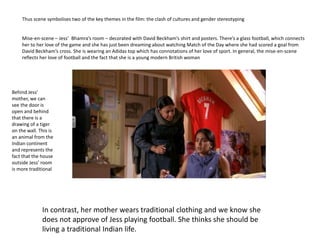
Thus scene symbolises two of the key themes in the film: the clash of cultures and gender stereotyping
Mise-en-scene – Jess’ Bhamra’s room – decorated with David Beckham’s shirt and posters. There’s a glass football, which connects
her to her love of the game and she has just been dreaming about watching Match of the Day where she had scored a goal from
David Beckham’s cross. She is wearing an Adidas top which has connotations of her love of sport. In general, the mise-en-scene
reflects her love of football and the fact that she is a young modern British woman
In contrast, her mother wears traditional clothing and we know she
does not approve of Jess playing football. She thinks she should be
living a traditional Indian life.
Behind Jess’
mother, we can
see the door is
open and behind
that there is a
drawing of a tiger
on the wall. This is
an animal from the
Indian continent
and represents the
fact that the house
outside Jess’ room
is more traditional
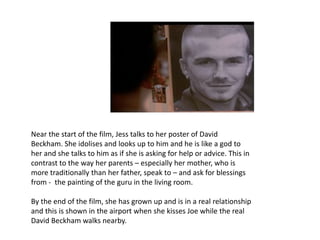
Near the start of the film, Jess talks to her poster of David
Beckham. She idolises and looks up to him and he is like a god to
her and she talks to him as if she is asking for help or advice. This in
contrast to the way her parents – especially her mother, who is
more traditionally than her father, speak to – and ask for blessings
from - the painting of the guru in the living room.
By the end of the film, she has grown up and is in a real relationship
and this is shown in the airport when she kisses Joe while the real
David Beckham walks nearby.
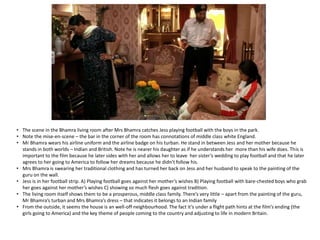
• The scene in the Bhamra living room after Mrs Bhamra catches Jess playing football with the boys in the park.
• Note the mise-en-scene – the bar in the corner of the room has connotations of middle class white England.
• Mr Bhamra wears his airline uniform and the airline badge on his turban. He stand in between Jess and her mother because he
stands in both worlds – Indian and British. Note he is nearer his daughter as if he understands her more than his wife does. This is
important to the film because he later sides with her and allows her to leave her sister’s wedding to play football and that he later
agrees to her going to America to follow her dreams because he didn’t follow his.
• Mrs Bhamra is swearing her traditional clothing and has turned her back on Jess and her husband to speak to the painting of the
guru on the wall.
• Jess is in her football strip. A) Playing football goes against her mother’s wishes B) Playing football with bare-chested boys who grab
her goes against her mother’s wishes C) showing so much flesh goes against tradition.
• The living room itself shows them to be a prosperous, middle class family. There’s very little – apart from the painting of the guru,
Mr Bhamra’s turban and Mrs Bhamra’s dress – that indicates it belongs to an Indian family
• From the outside, it seems the house is an well-off neighbourhood. The fact it’s under a flight path hints at the film’s ending (the
girls going to America) and the key theme of people coming to the country and adjusting to life in modern Britain.
Who is Jess looking up and talking to in this shot? Note the
newspaper behind her head and how it describes Beckham and
the other footballers.
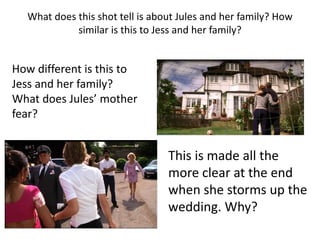
What does this shot tell is about Jules and her family? How
similar is this to Jess and her family?
This is made all the
more clear at the end
when she storms up the
wedding. Why?
How different is this to
Jess and her family?
What does Jules’ mother
fear?
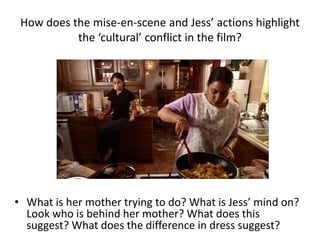
How does the mise-en-scene and Jess’ actions highlight
the ‘cultural’ conflict in the film?
• What is her mother trying to do? What is Jess’ mind on?
Look who is behind her mother? What does this
suggest? What does the difference in dress suggest?
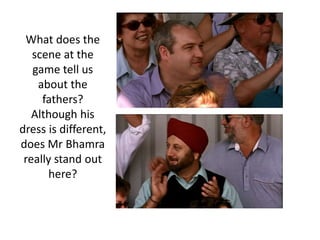
What does the
scene at the
game tell us
about the
fathers?
Although his
dress is different,
does Mr Bhamra
really stand out
here?
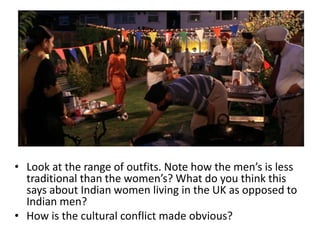
• Look at the range of outfits. Note how the men’s is less
traditional than the women’s? What do you think this
says about Indian women living in the UK as opposed to
Indian men?
• How is the cultural conflict made obvious?
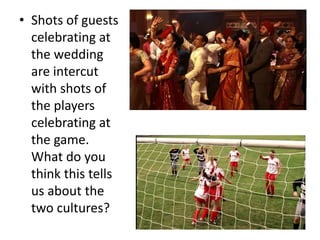
• Shots of guests
celebrating at
the wedding
are intercut
with shots of
the players
celebrating at
the game.
What do you
think this tells
us about the
two cultures?
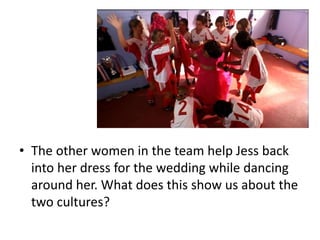
• The other women in the team help Jess back
into her dress for the wedding while dancing
around her. What does this show us about the
two cultures?
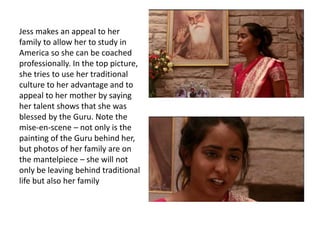
Jess makes an appeal to her
family to allow her to study in
America so she can be coached
professionally. In the top picture,
she tries to use her traditional
culture to her advantage and to
appeal to her mother by saying
her talent shows that she was
blessed by the Guru. Note the
mise-en-scene – not only is the
painting of the Guru behind her,
but photos of her family are on
the mantelpiece – she will not
only be leaving behind traditional
life but also her family
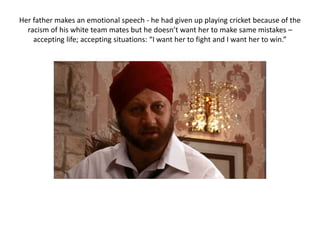
Her father makes an emotional speech - he had given up playing cricket because of the
racism of his white team mates but he doesn’t want her to make same mistakes –
accepting life; accepting situations: “I want her to fight and I want her to win.”
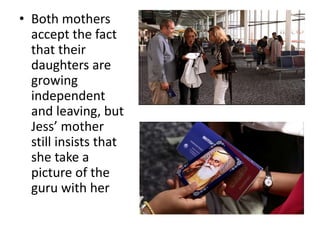
• Both mothers
accept the fact
that their
daughters are
growing
independent
and leaving, but
Jess’ mother
still insists that
she take a
picture of the
guru with her
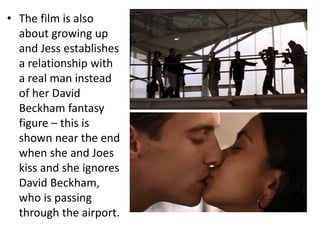
• The film is also
about growing up
and Jess establishes
a relationship with
a real man instead
of her David
Beckham fantasy
figure – this is
shown near the end
when she and Joes
kiss and she ignores
David Beckham,
who is passing
through the airport.

A bend it like beckham

  • 1.
    Bend It LikeBeckham
  • 2.
    Thus scene symbolisestwo of the key themes in the film: the clash of cultures and gender stereotyping Mise-en-scene – Jess’ Bhamra’s room – decorated with David Beckham’s shirt and posters. There’s a glass football, which connects her to her love of the game and she has just been dreaming about watching Match of the Day where she had scored a goal from David Beckham’s cross. She is wearing an Adidas top which has connotations of her love of sport. In general, the mise-en-scene reflects her love of football and the fact that she is a young modern British woman In contrast, her mother wears traditional clothing and we know she does not approve of Jess playing football. She thinks she should be living a traditional Indian life. Behind Jess’ mother, we can see the door is open and behind that there is a drawing of a tiger on the wall. This is an animal from the Indian continent and represents the fact that the house outside Jess’ room is more traditional
  • 3.
    Near the startof the film, Jess talks to her poster of David Beckham. She idolises and looks up to him and he is like a god to her and she talks to him as if she is asking for help or advice. This in contrast to the way her parents – especially her mother, who is more traditionally than her father, speak to – and ask for blessings from - the painting of the guru in the living room. By the end of the film, she has grown up and is in a real relationship and this is shown in the airport when she kisses Joe while the real David Beckham walks nearby.
  • 4.
    • The scenein the Bhamra living room after Mrs Bhamra catches Jess playing football with the boys in the park. • Note the mise-en-scene – the bar in the corner of the room has connotations of middle class white England. • Mr Bhamra wears his airline uniform and the airline badge on his turban. He stand in between Jess and her mother because he stands in both worlds – Indian and British. Note he is nearer his daughter as if he understands her more than his wife does. This is important to the film because he later sides with her and allows her to leave her sister’s wedding to play football and that he later agrees to her going to America to follow her dreams because he didn’t follow his. • Mrs Bhamra is swearing her traditional clothing and has turned her back on Jess and her husband to speak to the painting of the guru on the wall. • Jess is in her football strip. A) Playing football goes against her mother’s wishes B) Playing football with bare-chested boys who grab her goes against her mother’s wishes C) showing so much flesh goes against tradition. • The living room itself shows them to be a prosperous, middle class family. There’s very little – apart from the painting of the guru, Mr Bhamra’s turban and Mrs Bhamra’s dress – that indicates it belongs to an Indian family • From the outside, it seems the house is an well-off neighbourhood. The fact it’s under a flight path hints at the film’s ending (the girls going to America) and the key theme of people coming to the country and adjusting to life in modern Britain.
  • 5.
    Who is Jesslooking up and talking to in this shot? Note the newspaper behind her head and how it describes Beckham and the other footballers.
  • 6.
    What does thisshot tell is about Jules and her family? How similar is this to Jess and her family? This is made all the more clear at the end when she storms up the wedding. Why? How different is this to Jess and her family? What does Jules’ mother fear?
  • 7.
    How does themise-en-scene and Jess’ actions highlight the ‘cultural’ conflict in the film? • What is her mother trying to do? What is Jess’ mind on? Look who is behind her mother? What does this suggest? What does the difference in dress suggest?
  • 8.
    What does the sceneat the game tell us about the fathers? Although his dress is different, does Mr Bhamra really stand out here?
  • 9.
    • Look atthe range of outfits. Note how the men’s is less traditional than the women’s? What do you think this says about Indian women living in the UK as opposed to Indian men? • How is the cultural conflict made obvious?
  • 10.
    • Shots ofguests celebrating at the wedding are intercut with shots of the players celebrating at the game. What do you think this tells us about the two cultures?
  • 11.
    • The otherwomen in the team help Jess back into her dress for the wedding while dancing around her. What does this show us about the two cultures?
  • 12.
    Jess makes anappeal to her family to allow her to study in America so she can be coached professionally. In the top picture, she tries to use her traditional culture to her advantage and to appeal to her mother by saying her talent shows that she was blessed by the Guru. Note the mise-en-scene – not only is the painting of the Guru behind her, but photos of her family are on the mantelpiece – she will not only be leaving behind traditional life but also her family
  • 13.
    Her father makesan emotional speech - he had given up playing cricket because of the racism of his white team mates but he doesn’t want her to make same mistakes – accepting life; accepting situations: “I want her to fight and I want her to win.”
  • 14.
    • Both mothers acceptthe fact that their daughters are growing independent and leaving, but Jess’ mother still insists that she take a picture of the guru with her
  • 15.
    • The filmis also about growing up and Jess establishes a relationship with a real man instead of her David Beckham fantasy figure – this is shown near the end when she and Joes kiss and she ignores David Beckham, who is passing through the airport.