Our great leader MUSTAFA KEMAL ATATURK has explained
through one of his maxims that "the basic principle of the republic
of turkey is culture".
We believe that folk culture is a cornerstone for our natural
cohesion and unity. An overall development on various fields of
economic and social life can only be achieve through education and
culture. Cultural values that reflect our national pride and aesthetic
values are very important. We can as a stable society find our
spiritual, physical and aesthetic needs from the values of Turkish
folk culture.
The unusual wealth and variety of Turkish folk music and dance
attracts the attention of people from all over the world. Many of
the melodies and movements have very ancient origins stemming
from the many different aspects of Turkish culture that form the
background of modern Turkey.
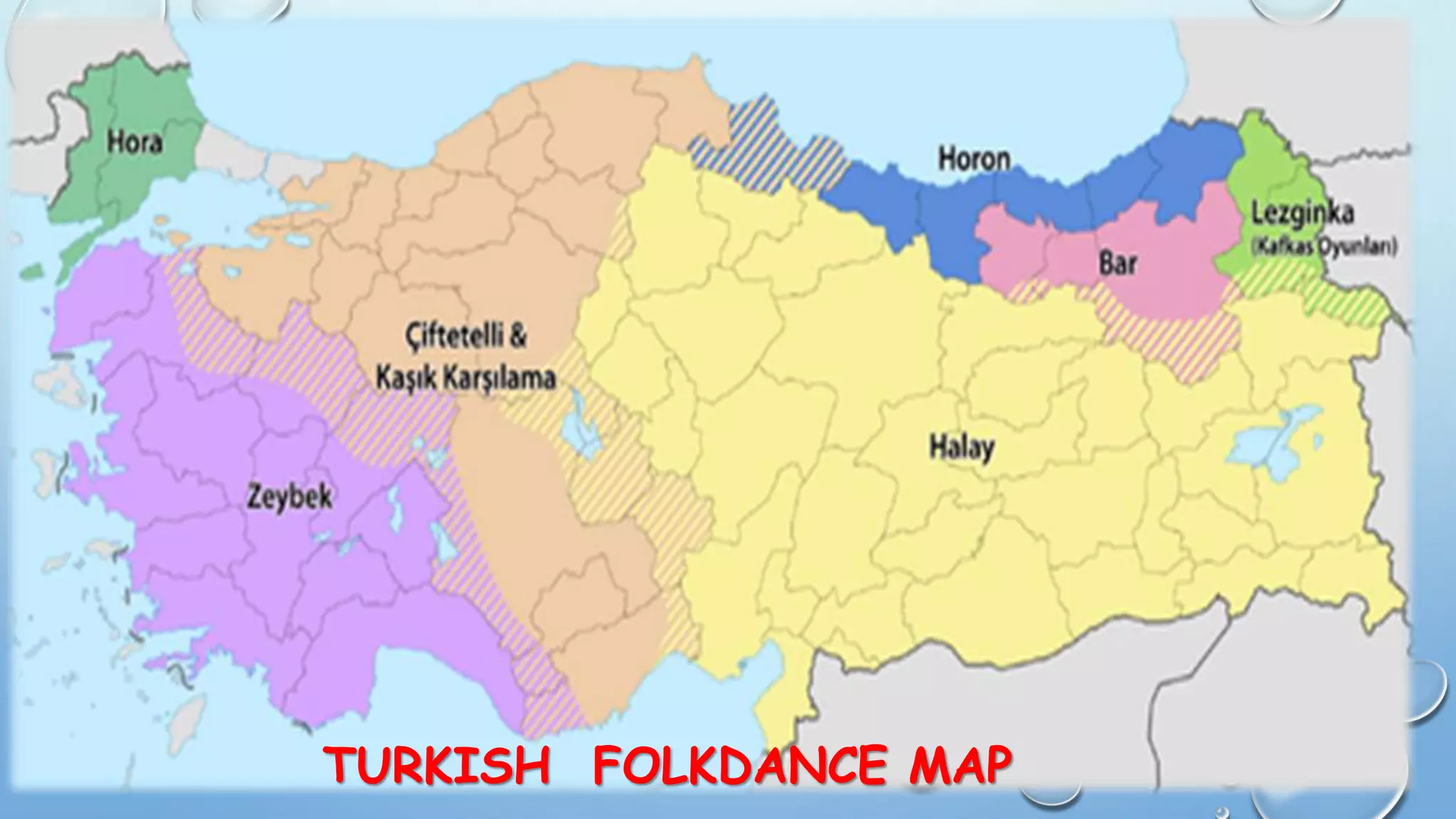
The 'bar' in Erzurum
province, the 'halay' in the
east and southeast, the
'hora' in Thrace, the 'horon'
in the Black Sea, 'spoon
dances' in and around Konya
'lezginka' in Kars and
Ardahan and the Zeybek
are the best known
examples of these.
TURKISH FOLKDANCE MAP
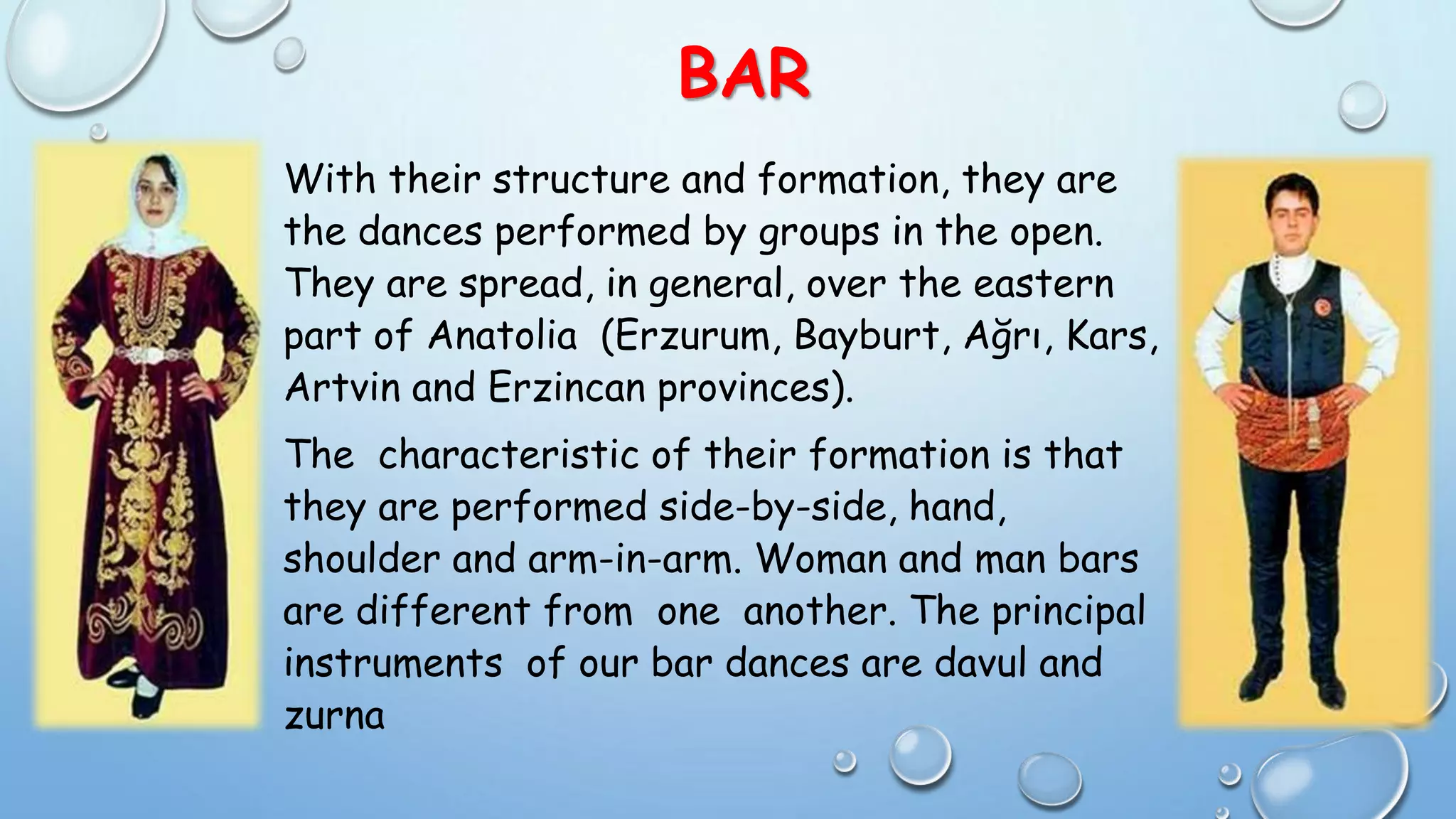
BAR
With their structure and formation, they are
the dances performed by groups in the open.
They are spread, in general, over the eastern
part of Anatolia (Erzurum, Bayburt, Ağrı, Kars,
Artvin and Erzincan provinces).
The characteristic of their formation is that
they are performed side-by-side, hand,
shoulder and arm-in-arm. Woman and man bars
are different from one another. The principal
instruments of our bar dances are davul and
zurna
BAR DANCE ( THE EASTERN ANATOLIA)
HALAY
This folk-dance, is a part of
Turkish dance and is performed
to a large extent in the Eastern,
South- Eastern And Central
Anatolia and it is one of the most
striking dances. It has a rich
figure structure. Simplicity is the
symbol of creation and originality
of the folk.
HALAY ( EASTERN ANATOLIA)
HORON
In this region, corn and the sea play an
important role in the local economy and
social life. One of the types of fish that
lives primarily in the black sea is the hamsi,
a kind of anchovy. This small fish is caught
in great numbers by the fishermen's nets.
One of the most characteristic movements,
in horon dances, is a fast shoulder shimmy
and a trembling of the entire body, which
imitates or suggests the movements of the
hamsi as it swims in the sea or struggles in
the nets for its life.
HORON ( THE BLAK SEA – NORTHERN -
REGION
MİSKET
The game Seğmen tells about the
heroic stories of the Turkish
Independence War. The posture is
the most important characteristic
of the dance
SEĞMEN
It expresses a true love that was
experienced years ago.The game is
dominated by the foot movements
Played by three or four people. This
game is essentially three movements.
SEĞMEN – MİSKET ( ANKARA – THE CENTRAL
ANATOLIA)
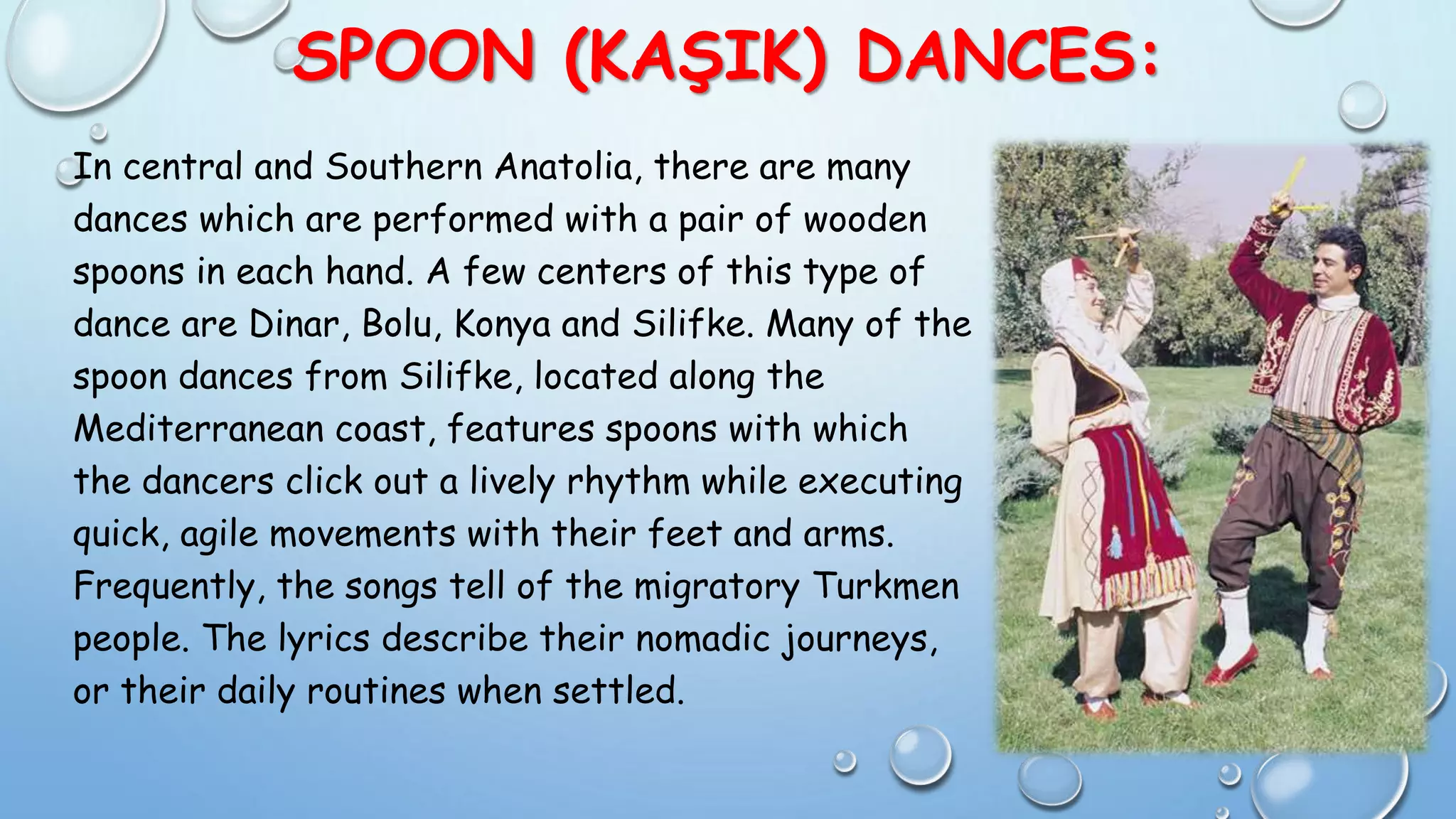
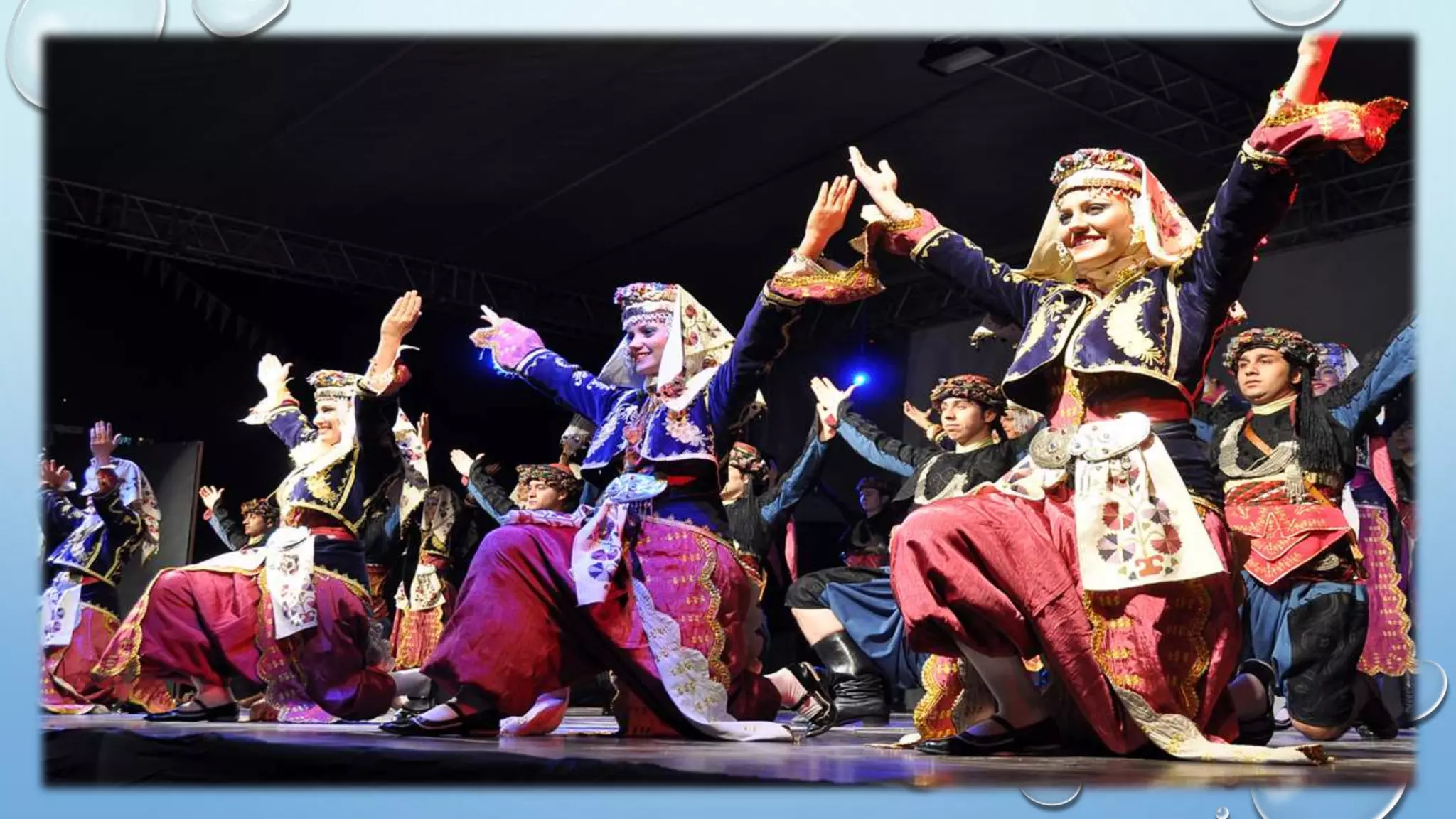
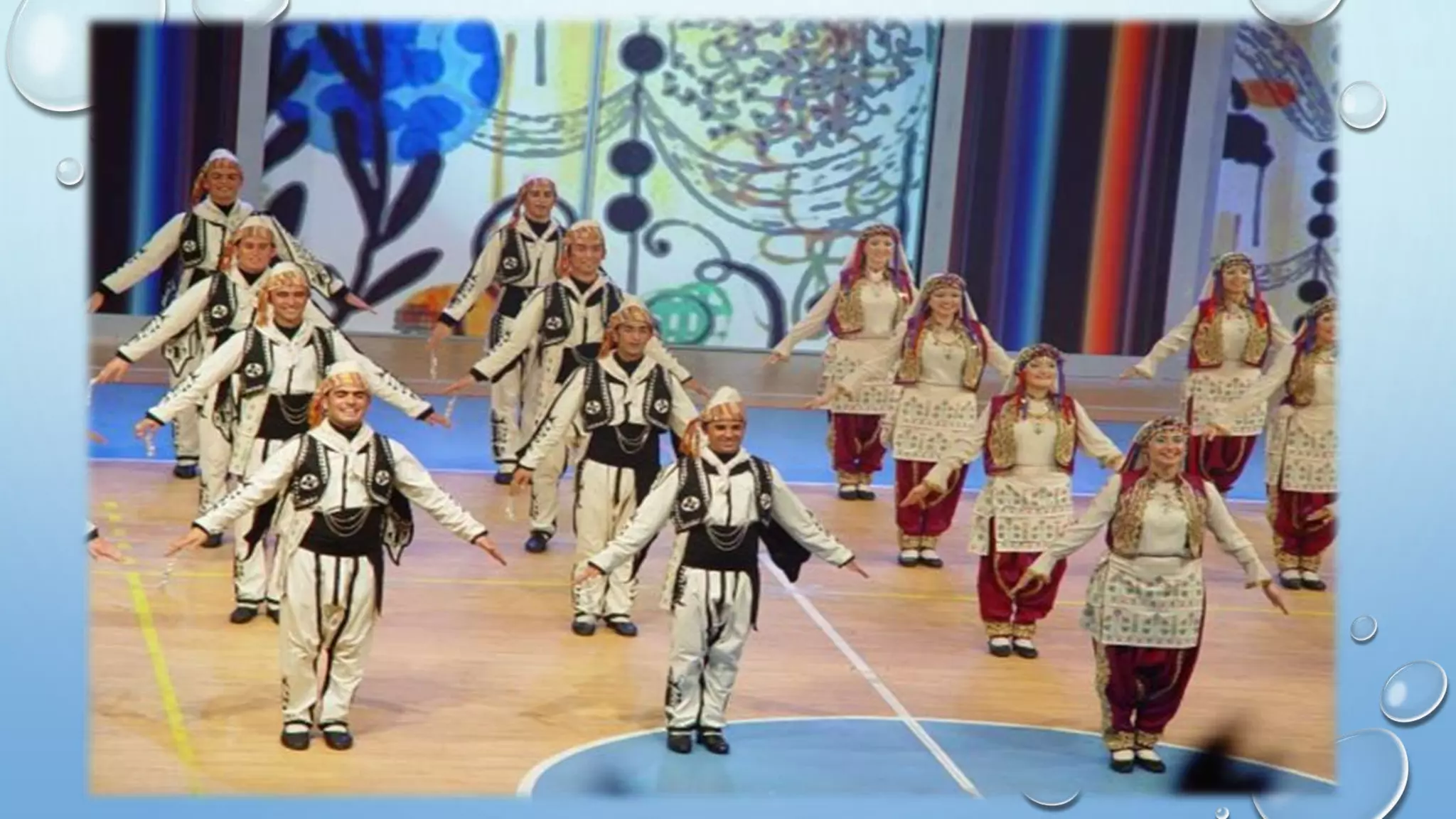
SPOON (KAŞIK) DANCES:
In central and Southern Anatolia, there are many
dances which are performed with a pair of wooden
spoons in each hand. A few centers of this type of
dance are Dinar, Bolu, Konya and Silifke. Many of the
spoon dances from Silifke, located along the
Mediterranean coast, features spoons with which
the dancers click out a lively rhythm while executing
quick, agile movements with their feet and arms.
Frequently, the songs tell of the migratory Turkmen
people. The lyrics describe their nomadic journeys,
or their daily routines when settled.
KAŞIK (SPOON) THE MEDITERRENEAN
REGION
ZEYBEK
In contrast to the ferverish pitch common to
Karadeniz dances, the zeybek dances of
Western Anatolia, near the Aegean coast, are
slow and graceful.
The work zeybek refers to a man, who is a
brother, a friend, a protector of his people. In a
sense he is akin to a samurai type of figure.
Performed individually, in a circle or often as a
solo, the zeybek dance usually begins with the
man strutting boastfully to tight strains of
music.
ÜRK
Our Great Leader MUSTAFA KEMAL ATATÜRK,
while dancing ZEYBEK in İstanbul
ZEYBEK Dance ( The Western Anatolia )
KARŞILAMA
Karşılama, reciprocity, which means
take the road to welcome the sake
of arriving. Starts at a slow pace
becomes accelerated double drum
double flutes used in public places.
Thrace, Marmara and Black Sea
regions.
KARŞILAMA ( THE WESTERN ANATOLIA )
THANK YOU FOR WATCHING
ÖZCE
AYDIN
CEM
AHMET
ERTAY,
THE TURKISH COMENIUS OCER GROUP

Turkish folk dances

  • 2.
    Our great leaderMUSTAFA KEMAL ATATURK has explained through one of his maxims that "the basic principle of the republic of turkey is culture". We believe that folk culture is a cornerstone for our natural cohesion and unity. An overall development on various fields of economic and social life can only be achieve through education and culture. Cultural values that reflect our national pride and aesthetic values are very important. We can as a stable society find our spiritual, physical and aesthetic needs from the values of Turkish folk culture. The unusual wealth and variety of Turkish folk music and dance attracts the attention of people from all over the world. Many of the melodies and movements have very ancient origins stemming from the many different aspects of Turkish culture that form the background of modern Turkey.
  • 3.
    The 'bar' inErzurum province, the 'halay' in the east and southeast, the 'hora' in Thrace, the 'horon' in the Black Sea, 'spoon dances' in and around Konya 'lezginka' in Kars and Ardahan and the Zeybek are the best known examples of these.
  • 4.
  • 5.
    BAR With their structureand formation, they are the dances performed by groups in the open. They are spread, in general, over the eastern part of Anatolia (Erzurum, Bayburt, Ağrı, Kars, Artvin and Erzincan provinces). The characteristic of their formation is that they are performed side-by-side, hand, shoulder and arm-in-arm. Woman and man bars are different from one another. The principal instruments of our bar dances are davul and zurna
  • 7.
    BAR DANCE (THE EASTERN ANATOLIA)
  • 8.
    HALAY This folk-dance, isa part of Turkish dance and is performed to a large extent in the Eastern, South- Eastern And Central Anatolia and it is one of the most striking dances. It has a rich figure structure. Simplicity is the symbol of creation and originality of the folk.
  • 10.
    HALAY ( EASTERNANATOLIA)
  • 11.
    HORON In this region,corn and the sea play an important role in the local economy and social life. One of the types of fish that lives primarily in the black sea is the hamsi, a kind of anchovy. This small fish is caught in great numbers by the fishermen's nets. One of the most characteristic movements, in horon dances, is a fast shoulder shimmy and a trembling of the entire body, which imitates or suggests the movements of the hamsi as it swims in the sea or struggles in the nets for its life.
  • 13.
    HORON ( THEBLAK SEA – NORTHERN - REGION
  • 14.
    MİSKET The game Seğmentells about the heroic stories of the Turkish Independence War. The posture is the most important characteristic of the dance SEĞMEN It expresses a true love that was experienced years ago.The game is dominated by the foot movements Played by three or four people. This game is essentially three movements.
  • 15.
    SEĞMEN – MİSKET( ANKARA – THE CENTRAL ANATOLIA)
  • 16.
    SPOON (KAŞIK) DANCES: Incentral and Southern Anatolia, there are many dances which are performed with a pair of wooden spoons in each hand. A few centers of this type of dance are Dinar, Bolu, Konya and Silifke. Many of the spoon dances from Silifke, located along the Mediterranean coast, features spoons with which the dancers click out a lively rhythm while executing quick, agile movements with their feet and arms. Frequently, the songs tell of the migratory Turkmen people. The lyrics describe their nomadic journeys, or their daily routines when settled.
  • 18.
    KAŞIK (SPOON) THEMEDITERRENEAN REGION
  • 19.
    ZEYBEK In contrast tothe ferverish pitch common to Karadeniz dances, the zeybek dances of Western Anatolia, near the Aegean coast, are slow and graceful. The work zeybek refers to a man, who is a brother, a friend, a protector of his people. In a sense he is akin to a samurai type of figure. Performed individually, in a circle or often as a solo, the zeybek dance usually begins with the man strutting boastfully to tight strains of music.
  • 21.
    ÜRK Our Great LeaderMUSTAFA KEMAL ATATÜRK, while dancing ZEYBEK in İstanbul
  • 22.
    ZEYBEK Dance (The Western Anatolia )
  • 23.
    KARŞILAMA Karşılama, reciprocity, whichmeans take the road to welcome the sake of arriving. Starts at a slow pace becomes accelerated double drum double flutes used in public places. Thrace, Marmara and Black Sea regions.
  • 25.
    KARŞILAMA ( THEWESTERN ANATOLIA )
  • 26.
    THANK YOU FORWATCHING ÖZCE AYDIN CEM AHMET ERTAY, THE TURKISH COMENIUS OCER GROUP