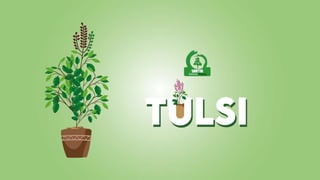
Tulsi
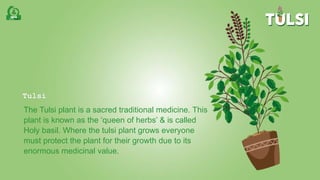
The Tulsi plant is a sacred traditional medicine. This
plant is known as the ‘queen of herbs’ & is called
Holy basil. Where the tulsi plant grows everyone
must protect the plant for their growth due to its
enormous medicinal value.
About tulsi
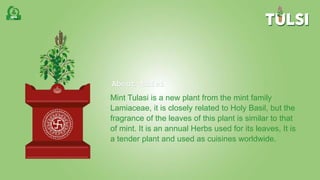
Mint Tulasi is a new plant from the mint family
Lamiaceae, it is closely related to Holy Basil, but the
fragrance of the leaves of this plant is similar to that
of mint. It is an annual Herbs used for its leaves, It is
a tender plant and used as cuisines worldwide.
Mint tulsi
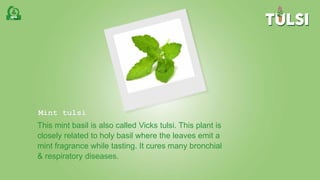
This mint basil is also called Vicks tulsi. This plant is
closely related to holy basil where the leaves emit a
mint fragrance while tasting. It cures many bronchial
& respiratory diseases.
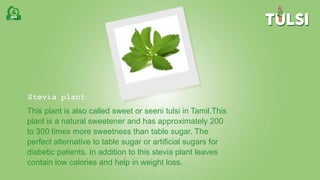
Stevia plant
This plant is also called sweet or seeni tulsi in Tamil.This
plant is a natural sweetener and has approximately 200
to 300 times more sweetness than table sugar. The
perfect alternative to table sugar or artificial sugars for
diabetic patients. In addition to this stevia plant leaves
contain low calories and help in weight loss.
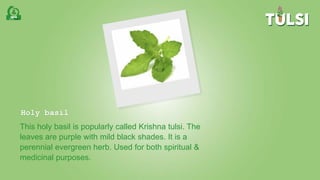
Holy basil
This holy basil is popularly called Krishna tulsi. The
leaves are purple with mild black shades. It is a
perennial evergreen herb. Used for both spiritual &
medicinal purposes.
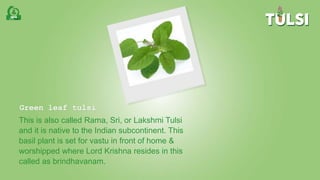
Green leaf tulsi
This is also called Rama, Sri, or Lakshmi Tulsi
and it is native to the Indian subcontinent. This
basil plant is set for vastu in front of home &
worshipped where Lord Krishna resides in this
called as brindhavanam.
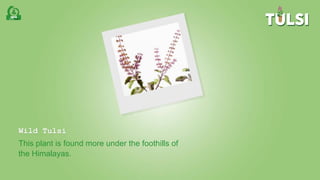
Wild Tulsi
This plant is found more under the foothills of
the Himalayas.
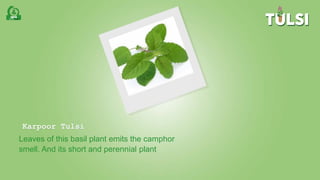
Karpoor Tulsi
Leaves of this basil plant emits the camphor
smell. And its short and perennial plant
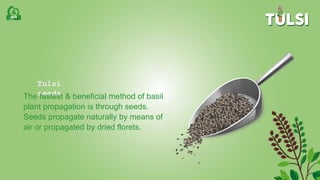
Tulsi
seeds
The fastest & beneficial method of basil
plant propagation is through seeds.
Seeds propagate naturally by means of
air or propagated by dried florets.
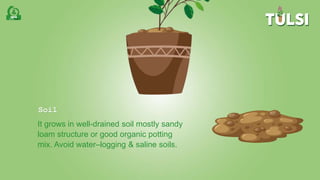
Soil
It grows in well-drained soil mostly sandy
loam structure or good organic potting
mix. Avoid water–logging & saline soils.
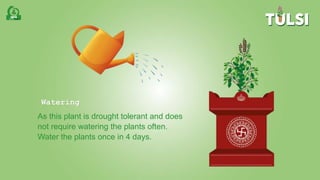
Watering
As this plant is drought tolerant and does
not require watering the plants often.
Water the plants once in 4 days.
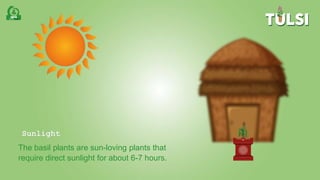
Sunlight
The basil plants are sun-loving plants that
require direct sunlight for about 6-7 hours.
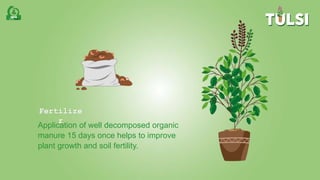
Fertilize
r
Application of well decomposed organic
manure 15 days once helps to improve
plant growth and soil fertility.
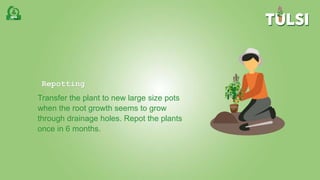
Repotting
Transfer the plant to new large size pots
when the root growth seems to grow
through drainage holes. Repot the plants
once in 6 months.
Pruning
Pruning done any time of the year. Pinch
the top stems with 4-6 pairs of leaves. Be
sure not to remove more than half an inch
of the stem.
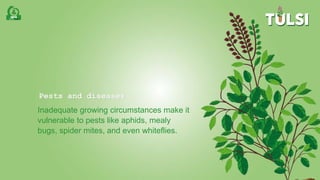
Pests and diseases
Inadequate growing circumstances make it
vulnerable to pests like aphids, mealy
bugs, spider mites, and even whiteflies.
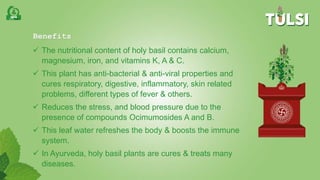
Benefits
 The nutritional content of holy basil contains calcium,
magnesium, iron, and vitamins K, A & C.
 This plant has anti-bacterial & anti-viral properties and
cures respiratory, digestive, inflammatory, skin related
problems, different types of fever & others.
 Reduces the stress, and blood pressure due to the
presence of compounds Ocimumosides A and B.
 This leaf water refreshes the body & boosts the immune
system.
 In Ayurveda, holy basil plants are cures & treats many
diseases.
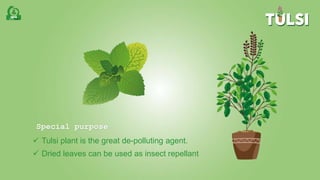
Special purpose
 Tulsi plant is the great de-polluting agent.
 Dried leaves can be used as insect repellant
www.santhionlineplants.com
Phone : +91 63844 11222
Thankyou

Tulsi

  • 2.
    Tulsi The Tulsi plantis a sacred traditional medicine. This plant is known as the ‘queen of herbs’ & is called Holy basil. Where the tulsi plant grows everyone must protect the plant for their growth due to its enormous medicinal value.
  • 3.
    About tulsi Mint Tulasiis a new plant from the mint family Lamiaceae, it is closely related to Holy Basil, but the fragrance of the leaves of this plant is similar to that of mint. It is an annual Herbs used for its leaves, It is a tender plant and used as cuisines worldwide.
  • 4.
    Mint tulsi This mintbasil is also called Vicks tulsi. This plant is closely related to holy basil where the leaves emit a mint fragrance while tasting. It cures many bronchial & respiratory diseases.
  • 5.
    Stevia plant This plantis also called sweet or seeni tulsi in Tamil.This plant is a natural sweetener and has approximately 200 to 300 times more sweetness than table sugar. The perfect alternative to table sugar or artificial sugars for diabetic patients. In addition to this stevia plant leaves contain low calories and help in weight loss.
  • 6.
    Holy basil This holybasil is popularly called Krishna tulsi. The leaves are purple with mild black shades. It is a perennial evergreen herb. Used for both spiritual & medicinal purposes.
  • 7.
    Green leaf tulsi Thisis also called Rama, Sri, or Lakshmi Tulsi and it is native to the Indian subcontinent. This basil plant is set for vastu in front of home & worshipped where Lord Krishna resides in this called as brindhavanam.
  • 8.
    Wild Tulsi This plantis found more under the foothills of the Himalayas.
  • 9.
    Karpoor Tulsi Leaves ofthis basil plant emits the camphor smell. And its short and perennial plant
  • 10.
    Tulsi seeds The fastest &beneficial method of basil plant propagation is through seeds. Seeds propagate naturally by means of air or propagated by dried florets.
  • 11.
    Soil It grows inwell-drained soil mostly sandy loam structure or good organic potting mix. Avoid water–logging & saline soils.
  • 12.
    Watering As this plantis drought tolerant and does not require watering the plants often. Water the plants once in 4 days.
  • 13.
    Sunlight The basil plantsare sun-loving plants that require direct sunlight for about 6-7 hours.
  • 14.
    Fertilize r Application of welldecomposed organic manure 15 days once helps to improve plant growth and soil fertility.
  • 15.
    Repotting Transfer the plantto new large size pots when the root growth seems to grow through drainage holes. Repot the plants once in 6 months.
  • 16.
    Pruning Pruning done anytime of the year. Pinch the top stems with 4-6 pairs of leaves. Be sure not to remove more than half an inch of the stem.
  • 17.
    Pests and diseases Inadequategrowing circumstances make it vulnerable to pests like aphids, mealy bugs, spider mites, and even whiteflies.
  • 18.
    Benefits  The nutritionalcontent of holy basil contains calcium, magnesium, iron, and vitamins K, A & C.  This plant has anti-bacterial & anti-viral properties and cures respiratory, digestive, inflammatory, skin related problems, different types of fever & others.  Reduces the stress, and blood pressure due to the presence of compounds Ocimumosides A and B.  This leaf water refreshes the body & boosts the immune system.  In Ayurveda, holy basil plants are cures & treats many diseases.
  • 19.
    Special purpose  Tulsiplant is the great de-polluting agent.  Dried leaves can be used as insect repellant
  • 20.