Introduction to Supply
       Chain Management


NAMA: Z U L K I F L I
NIM : 244312003
KELAS : B STMT TRISAKTI ANG XXII
National Taiwan Ocean
         University
Department of Transportation
   and Navigation Science
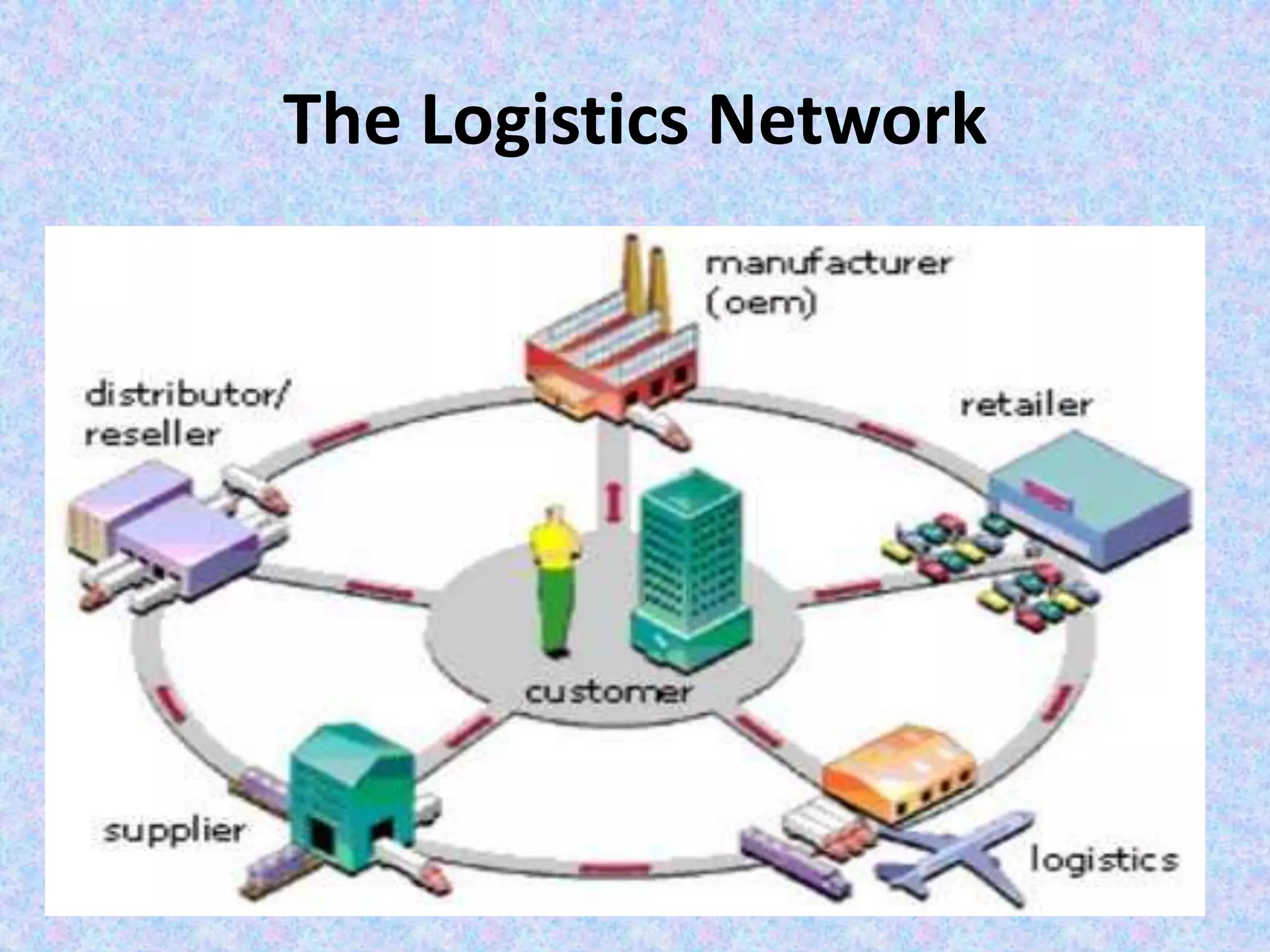
The Logistics Network
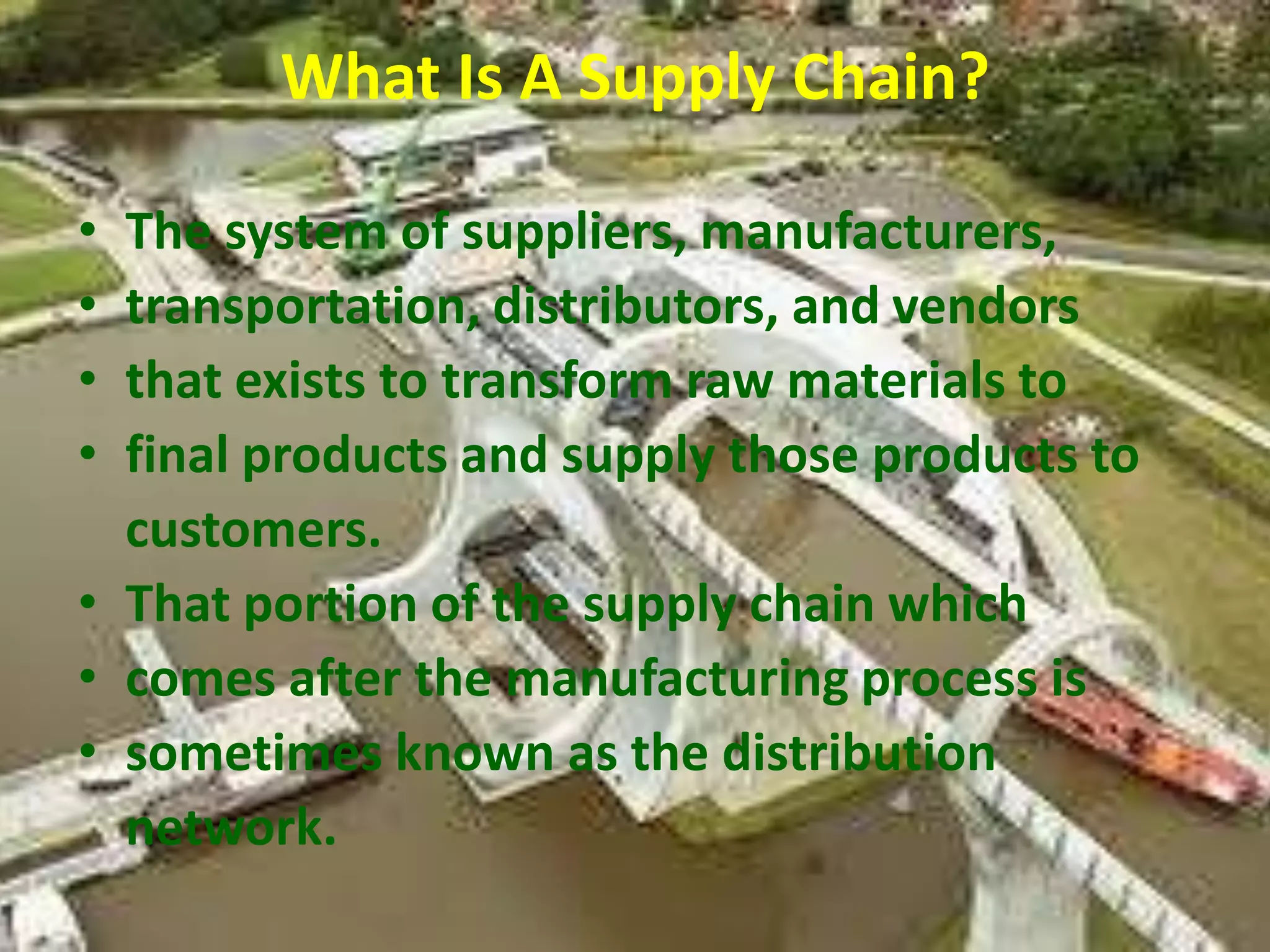
What Is A Supply Chain?

• The system of suppliers, manufacturers,
• transportation, distributors, and vendors
• that exists to transform raw materials to
• final products and supply those products to
  customers.
• That portion of the supply chain which
• comes after the manufacturing process is
• sometimes known as the distribution
  network.
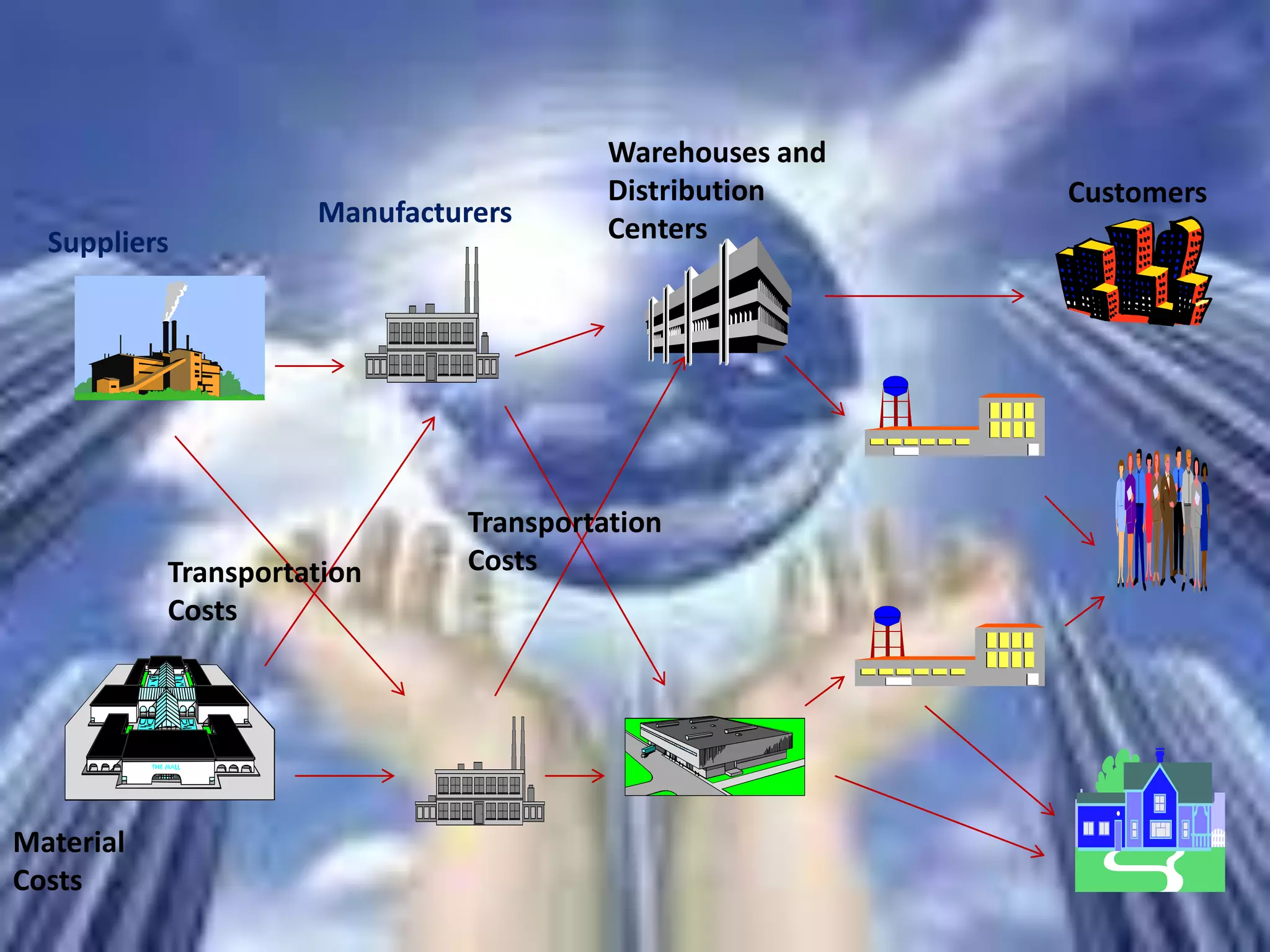
Warehouses and
                                         Distribution     Customers
                     Manufacturers
  Suppliers                              Centers


                               Transportation
           Transportation      Costs
           Costs


Material
Costs
What Is the Goal of Supply Chain
             Management?
 Supply chain management is concerned
  with the efficient integration of suppliers,
   factories, warehouses and stores so that
   merchandise is produced and distributed:
  •In the right quantities
  •To the right locations
  •At the right time
 In order to
  •Minimize total system cost
  •Satisfy customer service requirements
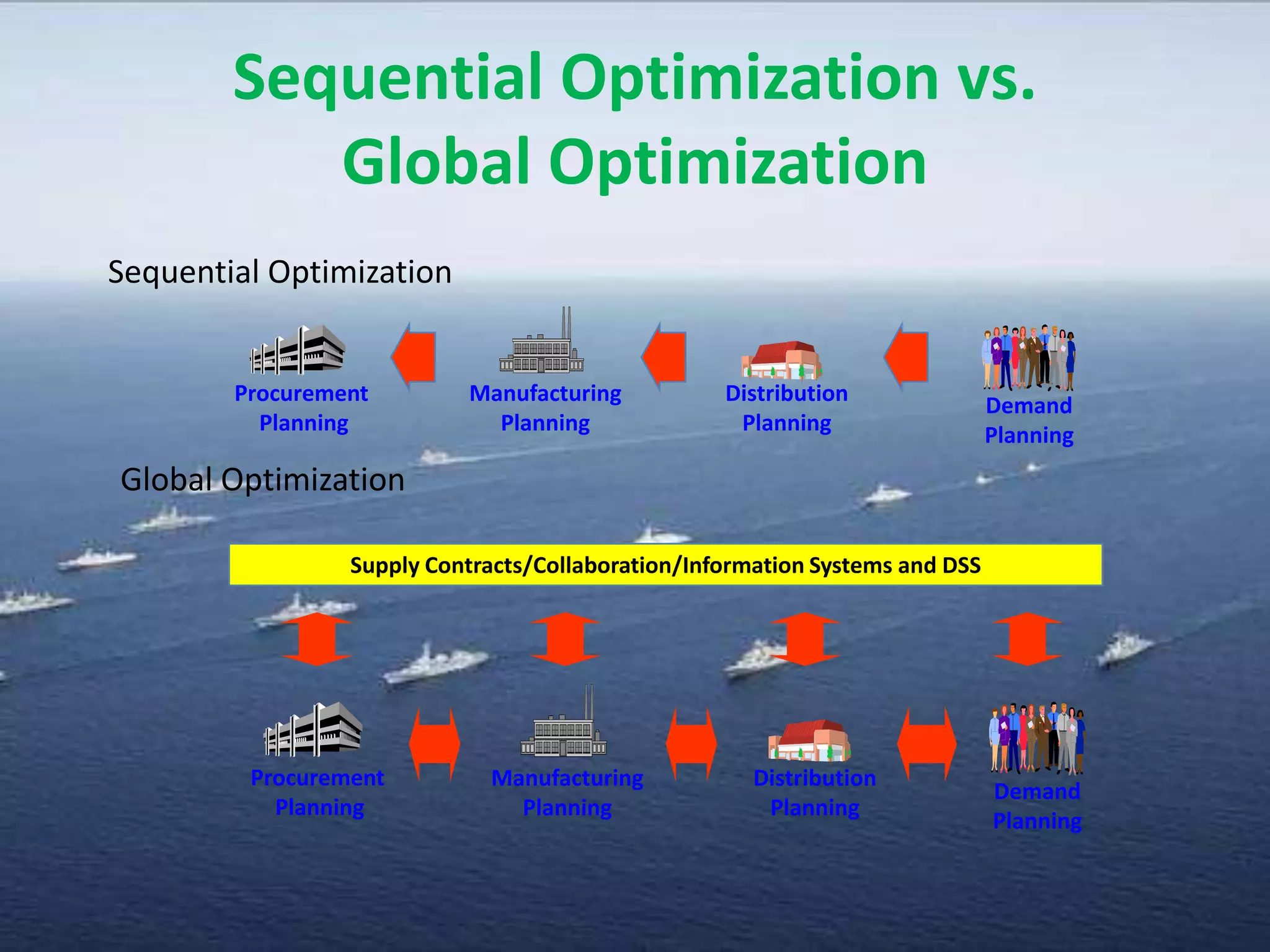
Sequential Optimization vs.
           Global Optimization
Sequential Optimization


        Procurement        Manufacturing           Distribution               Demand
          Planning           Planning               Planning                  Planning
Global Optimization

                 Supply Contracts/Collaboration/Information Systems and DSS


         Procurement         Manufacturing            Distribution
                                                                              Demand
           Planning            Planning                Planning
                                                                              Planning
Why is Global Optimization Hard?
 The supply chain is complex.
 Different facilities have conflicting
  objectives.
 The supply chain is a dynamic system.
 The system varies over time.
Conflicting Objectives
            in the Supply Chain
1. Purchasing
   •Stable volume requirements
   •Flexible delivery time
   •Little variation in mix
   •Large quantities
2. Manufacturing
   •Long run production
   •High quality
   •High productivity
   •Low production cost
Conflicting Objectives
          in the Supply Chain
3. Warehousing
  •Low inventory
  •Reduced transportation costs
  •Quick replenishment capability
4. Customers
  •Short order lead time
  •High in stock
  •Enormous variety of products
  •Low prices
Why Is Uncertainty Hard to Deal
                With?
 Matching supply and demand is difficult.
 Forecasting doesn’t solve the problem.
 Inventory and back-order levels typically
  fluctuate widely across the supply chain.
 Demand is not the only source of
  uncertainty:
  •Lead times
  •Yields
  •Transportation times
  •Natural Disasters
  •Component Availability
Dealing with Uncertainty
 Pull Systems
 Risk Pooling
 Centralization
 Postponement
 Strategic Alliances
 Collaborative Forecasting
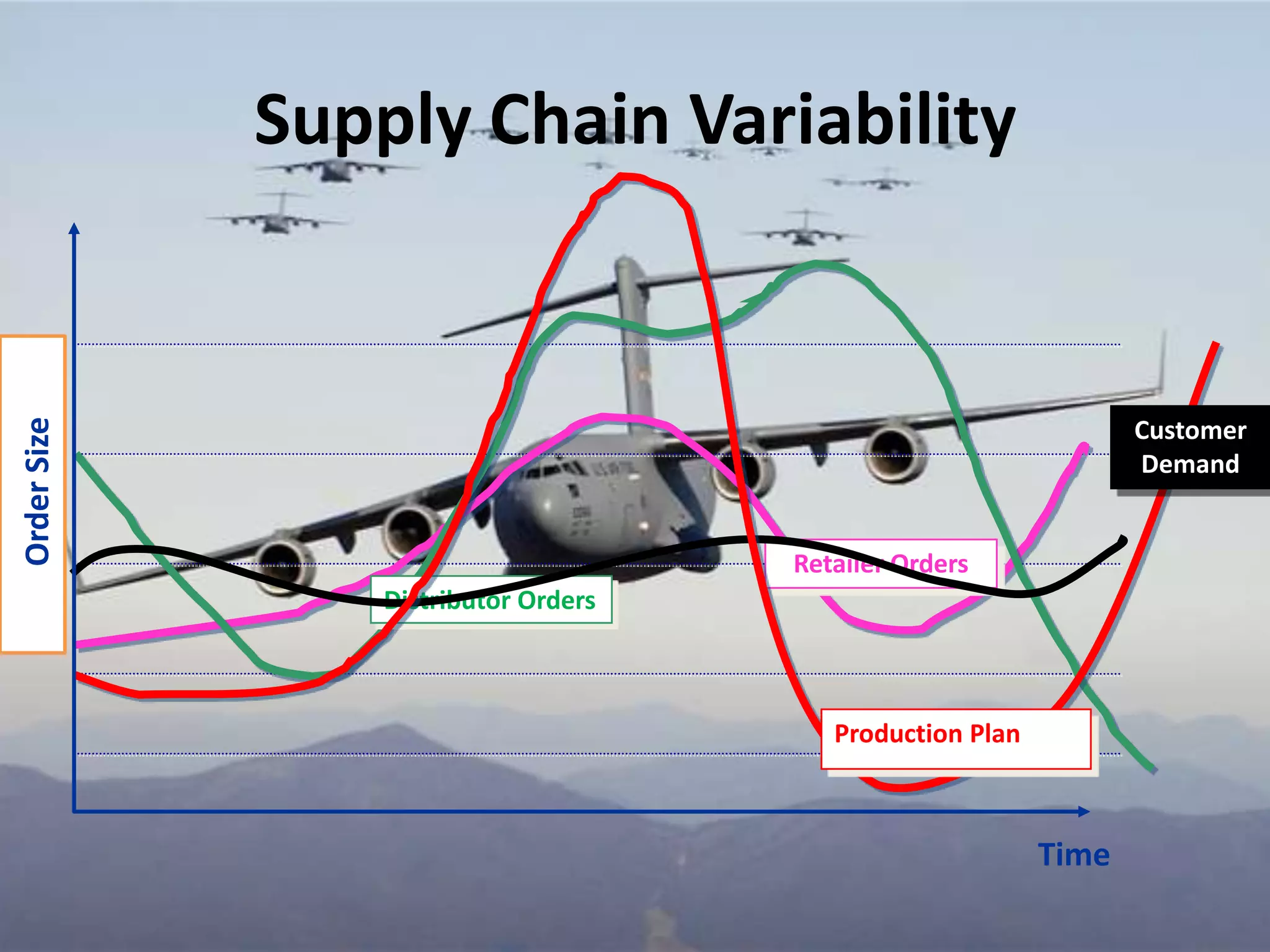
Supply Chain Variability
Order Size


                                                                  Customer
                                                                  Demand


                                      Retailer Orders
                 Distributor Orders


                                         Production Plan


                                                           Time
Key Issues on SCM
   Distribution Network Configuration
   Inventory control
   Supply Contracts
   Distribution Strategies
   Integration and Partnerships
   Procurement Strategies and Outsourcing
   Product Design
   Information Technology
New Concepts
   Push-Pull strategies
   Direct-to-Consumer
   Strategic alliances
   Manufacturing postponement
   Dynamic Pricing
   E-Procurement
The End
Thanks for your attention.


Your questions or comments will be
greatly appreciated.
email : kifliparis@gmail.com

Tugas scm kifli

  • 1.
    Introduction to Supply Chain Management NAMA: Z U L K I F L I NIM : 244312003 KELAS : B STMT TRISAKTI ANG XXII
  • 2.
    National Taiwan Ocean University Department of Transportation and Navigation Science
  • 4.
  • 6.
    What Is ASupply Chain? • The system of suppliers, manufacturers, • transportation, distributors, and vendors • that exists to transform raw materials to • final products and supply those products to customers. • That portion of the supply chain which • comes after the manufacturing process is • sometimes known as the distribution network.
  • 7.
    Warehouses and Distribution Customers Manufacturers Suppliers Centers Transportation Transportation Costs Costs Material Costs
  • 9.
    What Is theGoal of Supply Chain Management?  Supply chain management is concerned with the efficient integration of suppliers, factories, warehouses and stores so that merchandise is produced and distributed: •In the right quantities •To the right locations •At the right time  In order to •Minimize total system cost •Satisfy customer service requirements
  • 10.
    Sequential Optimization vs. Global Optimization Sequential Optimization Procurement Manufacturing Distribution Demand Planning Planning Planning Planning Global Optimization Supply Contracts/Collaboration/Information Systems and DSS Procurement Manufacturing Distribution Demand Planning Planning Planning Planning
  • 11.
    Why is GlobalOptimization Hard?  The supply chain is complex.  Different facilities have conflicting objectives.  The supply chain is a dynamic system.  The system varies over time.
  • 12.
    Conflicting Objectives in the Supply Chain 1. Purchasing •Stable volume requirements •Flexible delivery time •Little variation in mix •Large quantities 2. Manufacturing •Long run production •High quality •High productivity •Low production cost
  • 13.
    Conflicting Objectives in the Supply Chain 3. Warehousing •Low inventory •Reduced transportation costs •Quick replenishment capability 4. Customers •Short order lead time •High in stock •Enormous variety of products •Low prices
  • 14.
    Why Is UncertaintyHard to Deal With?  Matching supply and demand is difficult.  Forecasting doesn’t solve the problem.  Inventory and back-order levels typically fluctuate widely across the supply chain.  Demand is not the only source of uncertainty: •Lead times •Yields •Transportation times •Natural Disasters •Component Availability
  • 15.
    Dealing with Uncertainty Pull Systems  Risk Pooling  Centralization  Postponement  Strategic Alliances  Collaborative Forecasting
  • 16.
    Supply Chain Variability OrderSize Customer Demand Retailer Orders Distributor Orders Production Plan Time
  • 17.
    Key Issues onSCM  Distribution Network Configuration  Inventory control  Supply Contracts  Distribution Strategies  Integration and Partnerships  Procurement Strategies and Outsourcing  Product Design  Information Technology
  • 18.
    New Concepts  Push-Pull strategies  Direct-to-Consumer  Strategic alliances  Manufacturing postponement  Dynamic Pricing  E-Procurement
  • 19.
    The End Thanks foryour attention. Your questions or comments will be greatly appreciated. email : kifliparis@gmail.com