TSUNAMI
Patel Parth Sandipbhai. 200305103004
Padhiyar Parth Vijaysinh. 200305103023
DPPM
CONTENT
 Introduction
 Facts
 History
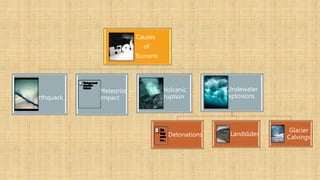
 Causes of tsunami
 Conseqences of tsunami
 What to do when its tsunami
 Previous Tsunamis
 Early Warning System
INTRODUCTION
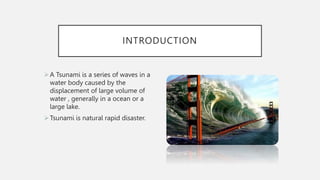
A Tsunami is a series of waves in a
water body caused by the
displacement of large volume of
water , generally in a ocean or a
large lake.
Tsunami is natural rapid disaster.
SOME FACTS
 The term seismic sea wave is also used to refer to the phenomenon
because the waves most often are generated by seismic activity such as
earthquakes.
 Tsunamis are sometimes referred to as tidal waves. This once-popular
term derives from the most common appearance of a tsunami.
 A tsunami can travel at well over 970 kph (600 mph) in the open ocean – as fast as a
jet flies. It can take only a few hours for a tsunami to travel across an entire ocean.
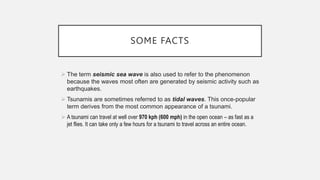
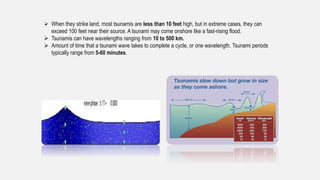
 When they strike land, most tsunamis are less than 10 feet high, but in extreme cases, they can
exceed 100 feet near their source. A tsunami may come onshore like a fast-rising flood.
 Tsunamis can have wavelengths ranging from 10 to 500 km.
 Amount of time that a tsunami wave takes to complete a cycle, or one wavelength. Tsunami periods
typically range from 5-60 minutes.
HISTORY
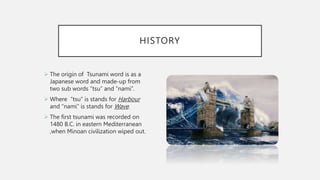
 The origin of Tsunami word is as a
Japanese word and made-up from
two sub words “tsu” and “nami”.
 Where “tsu” is stands for Harbour
and “nami” is stands for Wave.
 The first tsunami was recorded on
1480 B.C. in eastern Mediterranean
,when Minoan civilization wiped out.
Causes
of
Tsunami
Earthquack
Meteorite
Impact
Volcanic
eruption
Undewater
Explosions
Detonations Landslides
Glacier
Calvings
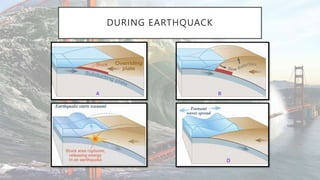
DURING EARTHQUACK
CONSEQUENCES
Loss of life and property :-- Tsunamis can have worst effects on life and
property. This large displacement of water destroys housing and
infrastructure in the areas affected by it.
Many people lose their lives. Records say that since 1850, tsunamis
have been responsible for the loss of more than 430,000 lives.
Tsunamis cause collapsing of buildings, electrocution, gas leakage and
explosions, damaging of tanks that further cause injury and death.
Disease – Tsunami causes flood in the affected areas and destroy the basic infrastructure like the sewage
systems. Flooding and contamination caused due to the destruction of sewage systems cause outbreaks of
diseases, infections and illness thus causing more death.
Effect on environment and biodiversity – Tsunamis not only affect human beings but also cause harm to
insects, animals, plants, and natural resources. Plants are uprooted due to violent waves of a tsunami, nesting
sites are destroyed, land animals get killed by drowning and marine life is harmed by the flow of toxic
chemicals into the waterbody. Solid waste and disaster debris are other critical environmental problems faced
by a disaster-hit area.
Economical Impact – Tsunami causes contamination of soil and water. It increases the salinity of the soil. The
mixing up of disaster debris with the soil and high salinity makes the soil infertile and unfit for cultivation thus
adding to financial loss to the farmers and raising the chances of food insecurity.
Post-tsunami reconstruction :- It also requires a huge amount of financial investment. Thus, tsunami has a
huge economic cost for an economy.
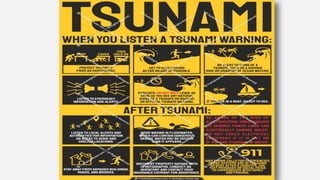
WHAT TO DO BEFORE,DURING,AFTER
TSUNAMI????
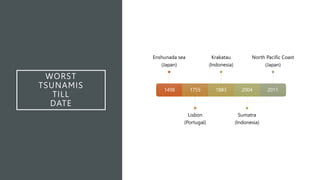
WORST
TSUNAMIS
TILL
DATE
1498
Enshunada sea
(Japan)
1755
Lisbon
(Portugal)
1883
Krakatau
(Indonesia)
2004
Sumatra
(Indonesia)
2011
North Pacific Coast
(Japan)
IN DETAILS
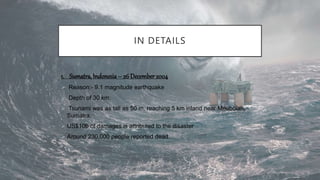
1. Sumatra, Indonesia– 26 December 2004
 Reason:- 9.1 magnitude earthquake
 Depth of 30 km.
 Tsunami was as tall as 50 m, reaching 5 km inland near Meubolah,
Sumatra.
 US$10b of damages is attributed to the disaster
 Around 230,000 people reported dead.
2. NorthPacific Coast,Japan – 11 March2011
 Reason:- 9.0 magnitude earthquake
 Speed:- 800km per hour
 Height:-10 m high waves swept over the east coast of Japan
 Killed more than 18,000 people.
 The tsunami was spawned 24.4km.
 $235 billion damages.
3. Lisbon, Portugal – 1 November 1755
 Reason:- 8.5 magnitude earthquake caused a series of three huge waves
 Height:-Up to 30 m high
 Tsunami killed 60,000 in the Portugal, Morocco and Spain.
EARLY WARNING SYSTEM
 There are two distinct types of early
tsunami warning systems:
1) International
2) Regional
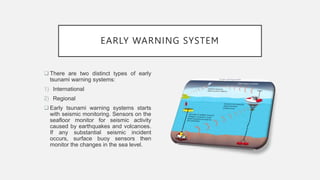
 Early tsunami warning systems starts
with seismic monitoring. Sensors on the
seafloor monitor for seismic activity
caused by earthquakes and volcanoes.
If any substantial seismic incident
occurs, surface buoy sensors then
monitor the changes in the sea level.
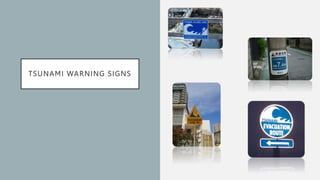
TSUNAMI WARNING SIGNS
QUESTION-ANSWER
1. What is Tsunami?
2. What are the average speed of Tsunami?
3. What are the causes of Tsunami?
4. What is the early warning system for Tsunami?
5. What to do when its Tsunami?
Tsunami.pptx

Tsunami.pptx

  • 1.
    TSUNAMI Patel Parth Sandipbhai.200305103004 Padhiyar Parth Vijaysinh. 200305103023 DPPM
  • 3.
    CONTENT  Introduction  Facts History  Causes of tsunami  Conseqences of tsunami  What to do when its tsunami  Previous Tsunamis  Early Warning System
  • 4.
    INTRODUCTION A Tsunami isa series of waves in a water body caused by the displacement of large volume of water , generally in a ocean or a large lake. Tsunami is natural rapid disaster.
  • 5.
    SOME FACTS  Theterm seismic sea wave is also used to refer to the phenomenon because the waves most often are generated by seismic activity such as earthquakes.  Tsunamis are sometimes referred to as tidal waves. This once-popular term derives from the most common appearance of a tsunami.  A tsunami can travel at well over 970 kph (600 mph) in the open ocean – as fast as a jet flies. It can take only a few hours for a tsunami to travel across an entire ocean.
  • 6.
     When theystrike land, most tsunamis are less than 10 feet high, but in extreme cases, they can exceed 100 feet near their source. A tsunami may come onshore like a fast-rising flood.  Tsunamis can have wavelengths ranging from 10 to 500 km.  Amount of time that a tsunami wave takes to complete a cycle, or one wavelength. Tsunami periods typically range from 5-60 minutes.
  • 7.
    HISTORY  The originof Tsunami word is as a Japanese word and made-up from two sub words “tsu” and “nami”.  Where “tsu” is stands for Harbour and “nami” is stands for Wave.  The first tsunami was recorded on 1480 B.C. in eastern Mediterranean ,when Minoan civilization wiped out.
  • 9.
  • 10.
  • 11.
    CONSEQUENCES Loss of lifeand property :-- Tsunamis can have worst effects on life and property. This large displacement of water destroys housing and infrastructure in the areas affected by it. Many people lose their lives. Records say that since 1850, tsunamis have been responsible for the loss of more than 430,000 lives. Tsunamis cause collapsing of buildings, electrocution, gas leakage and explosions, damaging of tanks that further cause injury and death.
  • 12.
    Disease – Tsunamicauses flood in the affected areas and destroy the basic infrastructure like the sewage systems. Flooding and contamination caused due to the destruction of sewage systems cause outbreaks of diseases, infections and illness thus causing more death. Effect on environment and biodiversity – Tsunamis not only affect human beings but also cause harm to insects, animals, plants, and natural resources. Plants are uprooted due to violent waves of a tsunami, nesting sites are destroyed, land animals get killed by drowning and marine life is harmed by the flow of toxic chemicals into the waterbody. Solid waste and disaster debris are other critical environmental problems faced by a disaster-hit area. Economical Impact – Tsunami causes contamination of soil and water. It increases the salinity of the soil. The mixing up of disaster debris with the soil and high salinity makes the soil infertile and unfit for cultivation thus adding to financial loss to the farmers and raising the chances of food insecurity. Post-tsunami reconstruction :- It also requires a huge amount of financial investment. Thus, tsunami has a huge economic cost for an economy.
  • 13.
    WHAT TO DOBEFORE,DURING,AFTER TSUNAMI????
  • 15.
  • 16.
    IN DETAILS 1. Sumatra,Indonesia– 26 December 2004  Reason:- 9.1 magnitude earthquake  Depth of 30 km.  Tsunami was as tall as 50 m, reaching 5 km inland near Meubolah, Sumatra.  US$10b of damages is attributed to the disaster  Around 230,000 people reported dead.
  • 17.
    2. NorthPacific Coast,Japan– 11 March2011  Reason:- 9.0 magnitude earthquake  Speed:- 800km per hour  Height:-10 m high waves swept over the east coast of Japan  Killed more than 18,000 people.  The tsunami was spawned 24.4km.  $235 billion damages. 3. Lisbon, Portugal – 1 November 1755  Reason:- 8.5 magnitude earthquake caused a series of three huge waves  Height:-Up to 30 m high  Tsunami killed 60,000 in the Portugal, Morocco and Spain.
  • 18.
    EARLY WARNING SYSTEM There are two distinct types of early tsunami warning systems: 1) International 2) Regional  Early tsunami warning systems starts with seismic monitoring. Sensors on the seafloor monitor for seismic activity caused by earthquakes and volcanoes. If any substantial seismic incident occurs, surface buoy sensors then monitor the changes in the sea level.
  • 19.
  • 20.
    QUESTION-ANSWER 1. What isTsunami? 2. What are the average speed of Tsunami? 3. What are the causes of Tsunami? 4. What is the early warning system for Tsunami? 5. What to do when its Tsunami?