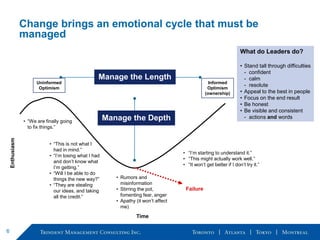
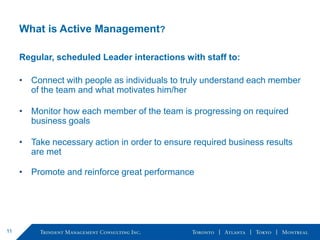
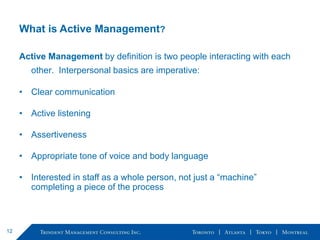
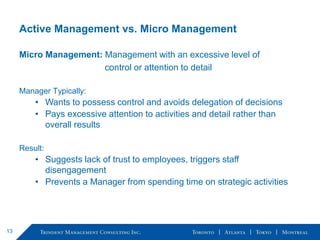
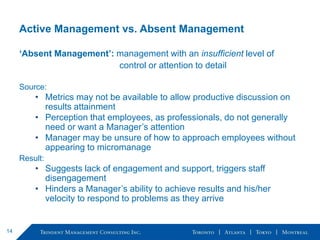
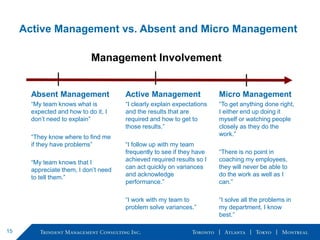
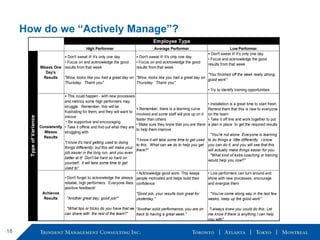
The document discusses active management training. It defines active management as regular, scheduled interactions between leaders and staff to connect, monitor progress, ensure goals are met, and recognize performance. This is contrasted with absent management, which lacks engagement, and micro-management, which lacks trust. Effective active management requires clear communication, listening, assertiveness and interest in staff. Common employee and leadership reactions to change are reviewed, as are phases of change adoption. FAQs address why active management is needed, how to handle high and low performers, and how leaders can make time for active management visits.










![What Is Blockchain Technology A Simple Beginner’s Guide [2026]](https://cdn.slidesharecdn.com/ss_thumbnails/whatisblockchaintechnologyasimplebeginnersguide2026-260101112141-cf432b44-thumbnail.jpg?width=640&height=640&fit=bounds)