Delivering Together for Development 
Dialogues on 
the Implementation 
of the Post-2015 
Development Agenda 
Dialogues on Implementation 
of the Post-2015 Agenda: 
http://www.worldwewant2015.org 
for more 
information 
The World 
We Want 
Background 
The initiative aims to ensure 
that the discussions are open 
and inclusive, providing a 
space for people’s voices, 
with a particular view to 
reaching out to poor and 
marginalized people. 
Through this process, nearly 
two million people have 
engaged in discussions on 
Since 2012, the United Nations 
Development Group (UNDG) 
has been spearheading 
an unprecedented, multi-stakeholder 
outreach to 
facilitate a global conversation 
on the future development 
agenda that is to become 
the successor framework to 
the Millennium Development 
Goals (MDGs) beyond 2015. 
the global development framework. So far the discus-sions 
have focused on what people see as necessary for 
their future. 
Participants in this conversation agree that the MDGs 
cover fundamental development areas that are still crit-ically 
important. They also emphasize the need to tackle 
inequality within and among countries, to protect the envi-ronment 
and to strengthen governance and accountability 
to measure progress on development targets.
Why Dialogues 
on Implementation? 
During the consultations so far, participants were 
keen not just to express their views on the content 
of the agenda, but they were also interested in 
how it will be implemented, including the roles 
and responsibilities of different stakeholders. 
People have raised issues that are important for 
implementation, related to ownership, localization, 
participation, capacities, partnerships, monitoring 
and accountability systems. The dialogues on imple-mentation 
are designed to give people a space to 
express their opinions on those issues. 
As it is increasingly clear that the what and the how 
are connected, these dialogues will give particular 
attention to issues necessary for implementa-tion 
but which have not been fully explored in 
inter-governmental negotiations yet. The dialogues 
will build on the first phase of consultations and 
continue to keep open the communication channel 
from people in countries across the world to the 
inter-governmental process underway to define 
Sustainable Development Goals. It is also hoped 
that the dialogues will kick-start partnerships and 
implementation mechanisms to form the foun-dation 
of the new development agenda, so that 
come September 2015 people the world over are 
mobilized to begin implementation. 
Focus on 6 themes 
The dialogues, which will run from April 2014 to April 2015, will be a 
series of public meetings and on-line discussions where policy plan-ners, 
civil society representatives, academics, community and private 
sector leaders can discuss how to best deliver the next sustainable 
development agenda that will build on the success of the MDGs. 
Dialogues on Implementation will explore the following six themes: 
1Localizing the Post-2015 
Agenda: To encourage grassroots 
support and community buy-in, 
this consultation will create 
opportunities to discuss the local 
dimensions of the future global 
development framework. This 
dialogue will also explore the 
increasingly important role of cities 
in advancing progress on national 
and global agendas. 
2 Helping to Strengthen 
Capacities and Build Effective 
Institutions: This consultation 
will build on the MDGs to 
explore the necessary institu-tions, 
leadership and capacities 
required to manage the com-plexity 
of inter-dependent social, 
economic and environmental 
issues as part of sustainable and 
inclusive development. 
3 Participatory Monitoring 
for Accountability: This dialogue 
will look at how participation and 
empowerment can improve 
accountability in the post-2015 
agenda. It will showcase how 
more accountable, transparent, 
responsive governance is 
being pursued at country and 
local levels using participatory 
research, participatory monitoring 
and citizen generated real-time 
monitoring activities. 
4 Partnerships with Civil 
Society: This dialogue will 
support civil society to contrib-ute 
to discussions related to the 
means of implementation for the 
post-2015 development agenda. 
The goal will be to advance 
partnerships with civil society 
that result in positive gains for 
society, are respectful of human 
rights and sustainability, and 
ensure and enhance transparency 
and accountability. 
5 Engaging with the Private 
Sector: This consultation will 
explore the following themes: 
enhancing partnerships, 
developing government policies 
that drive corporate sustainability, 
mobilizing private sustainability 
finance, engagement with small 
and medium-sized enterprises, 
and enhancing transparency 
and accountability. 
6 Culture and Development: 
This consultation will allow 
diverse stakeholders to explore 
how culture can contribute to 
development in areas such as 
poverty reduction, gender equal-ity, 
social inclusion, education, 
health,urbanization, popula-tion 
dynamics, climate change 
and reconciliation. 
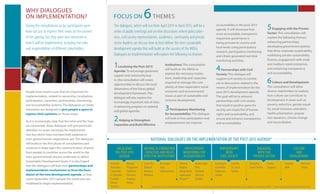
Localizing 
the post-2015 
agenda 
Helping to Strengthen 
Capacities and Build 
Effective Institutions 
Participatory 
Monitoring for 
Accountability 
Partnerships 
with 
Civil Society 
Engaging 
with the 
Private Sector 
Culture 
and 
Development 
Armenia 
Botswana 
Cameroon 
El Salvador 
Ecuador 
Ghana 
Jamaica 
Malawi 
Philippines 
Tajikistan 
Tanzania 
Uruguay 
Yemen 
Costa Rica 
Djibouti 
Malaysia 
Moldova 
Nicaragua 
Togo 
Turkmenistan 
Albania 
Algeria 
Bangladesh 
Guatemala 
Kosovo** 
Montenegro 
Peru 
Thailand 
Vietnam 
Zambia 
Azerbaijan 
Cambodia 
Indonesia 
Jordan 
Lesotho 
St. Lucia 
Tunisia 
Mongolia 
Saudi Arabia 
Turkey 
Uruguay 
Ecuador 
Mali 
Morocoo 
Serbia 
NATIONAL DIALOGUES ON THE IMPLEMENTATION OF THE POST-2015 AGENDA * 
* UN Country Teams were selected based on interest to receive seed funding for consultations. More countries may be added in the coming months. ** Under UN Security Council Resolution 1244

Trifold post 2015 dialogues on implementation(1)

  • 1.
    Delivering Together forDevelopment Dialogues on the Implementation of the Post-2015 Development Agenda Dialogues on Implementation of the Post-2015 Agenda: http://www.worldwewant2015.org for more information The World We Want Background The initiative aims to ensure that the discussions are open and inclusive, providing a space for people’s voices, with a particular view to reaching out to poor and marginalized people. Through this process, nearly two million people have engaged in discussions on Since 2012, the United Nations Development Group (UNDG) has been spearheading an unprecedented, multi-stakeholder outreach to facilitate a global conversation on the future development agenda that is to become the successor framework to the Millennium Development Goals (MDGs) beyond 2015. the global development framework. So far the discus-sions have focused on what people see as necessary for their future. Participants in this conversation agree that the MDGs cover fundamental development areas that are still crit-ically important. They also emphasize the need to tackle inequality within and among countries, to protect the envi-ronment and to strengthen governance and accountability to measure progress on development targets.
  • 2.
    Why Dialogues onImplementation? During the consultations so far, participants were keen not just to express their views on the content of the agenda, but they were also interested in how it will be implemented, including the roles and responsibilities of different stakeholders. People have raised issues that are important for implementation, related to ownership, localization, participation, capacities, partnerships, monitoring and accountability systems. The dialogues on imple-mentation are designed to give people a space to express their opinions on those issues. As it is increasingly clear that the what and the how are connected, these dialogues will give particular attention to issues necessary for implementa-tion but which have not been fully explored in inter-governmental negotiations yet. The dialogues will build on the first phase of consultations and continue to keep open the communication channel from people in countries across the world to the inter-governmental process underway to define Sustainable Development Goals. It is also hoped that the dialogues will kick-start partnerships and implementation mechanisms to form the foun-dation of the new development agenda, so that come September 2015 people the world over are mobilized to begin implementation. Focus on 6 themes The dialogues, which will run from April 2014 to April 2015, will be a series of public meetings and on-line discussions where policy plan-ners, civil society representatives, academics, community and private sector leaders can discuss how to best deliver the next sustainable development agenda that will build on the success of the MDGs. Dialogues on Implementation will explore the following six themes: 1Localizing the Post-2015 Agenda: To encourage grassroots support and community buy-in, this consultation will create opportunities to discuss the local dimensions of the future global development framework. This dialogue will also explore the increasingly important role of cities in advancing progress on national and global agendas. 2 Helping to Strengthen Capacities and Build Effective Institutions: This consultation will build on the MDGs to explore the necessary institu-tions, leadership and capacities required to manage the com-plexity of inter-dependent social, economic and environmental issues as part of sustainable and inclusive development. 3 Participatory Monitoring for Accountability: This dialogue will look at how participation and empowerment can improve accountability in the post-2015 agenda. It will showcase how more accountable, transparent, responsive governance is being pursued at country and local levels using participatory research, participatory monitoring and citizen generated real-time monitoring activities. 4 Partnerships with Civil Society: This dialogue will support civil society to contrib-ute to discussions related to the means of implementation for the post-2015 development agenda. The goal will be to advance partnerships with civil society that result in positive gains for society, are respectful of human rights and sustainability, and ensure and enhance transparency and accountability. 5 Engaging with the Private Sector: This consultation will explore the following themes: enhancing partnerships, developing government policies that drive corporate sustainability, mobilizing private sustainability finance, engagement with small and medium-sized enterprises, and enhancing transparency and accountability. 6 Culture and Development: This consultation will allow diverse stakeholders to explore how culture can contribute to development in areas such as poverty reduction, gender equal-ity, social inclusion, education, health,urbanization, popula-tion dynamics, climate change and reconciliation. Localizing the post-2015 agenda Helping to Strengthen Capacities and Build Effective Institutions Participatory Monitoring for Accountability Partnerships with Civil Society Engaging with the Private Sector Culture and Development Armenia Botswana Cameroon El Salvador Ecuador Ghana Jamaica Malawi Philippines Tajikistan Tanzania Uruguay Yemen Costa Rica Djibouti Malaysia Moldova Nicaragua Togo Turkmenistan Albania Algeria Bangladesh Guatemala Kosovo** Montenegro Peru Thailand Vietnam Zambia Azerbaijan Cambodia Indonesia Jordan Lesotho St. Lucia Tunisia Mongolia Saudi Arabia Turkey Uruguay Ecuador Mali Morocoo Serbia NATIONAL DIALOGUES ON THE IMPLEMENTATION OF THE POST-2015 AGENDA * * UN Country Teams were selected based on interest to receive seed funding for consultations. More countries may be added in the coming months. ** Under UN Security Council Resolution 1244