Transformative Online and Hybrid Teaching 
A 7-Module faculty development program in online/hybrid teaching 
and course design
A 7-Module faculty development program in 
online/hybrid teaching and course design… 
• focuses on designing coherent, integrated 
courses 
• prepares faculty to effectively infuse 
technology in online and hybrid courses to 
foster student interaction and engagement
Program Modules 
• Foundations of Online 
& Hybrid Teaching 
• Asynchronous 
Strategies 
• Synchronous Strategies 
• Creating Presentations 
and Podcasts 
• Integrating On-line 
Resources 
• Creating Social 
Presence and Fostering 
Community 
• Designing Integrated 
Hybrid/Online Courses: 
(competencies, 
assessment, materials 
and activities, 
developing course 
syllabus)
Each Module Contains… 
A selection of readings, videos, and other resources 
focused on the theories and practices on effective 
online and hybrid teaching 
Reflection prompts to encourage inquiry and 
collaboration 
Portfolio entrie(s) (technology-based products planned 
for integration in hybrid/online course) 
Access to technology video tutorials and other 
resources providing guidance in use of online teaching 
tools.
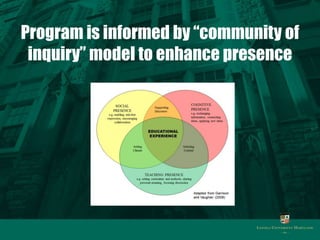
Program is informed by “community of 
inquiry” model to enhance presence
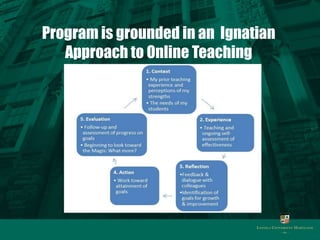
Program is grounded in an Ignatian 
Approach to Online Teaching
…and integrates Quality Matters® 
Standards for Online and Hybrid courses 
A set of standards (rubric) for the design of online and 
hybrid courses: 
• Course Overview and Introduction 
• Learning Objectives 
• Assessment and Measurement 
• Resources and Materials 
• Learner Interaction 
• Course Technology 
• Learner Support 
• Accessibility
Goals for: Foundations of 
Online/Hybrid Teaching 
• Identify differences between teaching 
online/hybrid and and face-to face. 
• Investigate the role of teaching, social, and 
cognitive presence in online teaching 
• Identify benefits and challenges of online and 
hybrid courses
Module 2: Asynchronous Instructional 
Strategies 
•Identify the characteristics of effective asynchronous 
communication 
•Differentiate between inadequate, excessive and optimal 
levels of instructor participation in student asynchronous 
discussions. 
•Devise guidelines, expectations, goals and deadlines that 
lead to active, motivated, focused student participation in 
asynchronous discussions. 
•Recognize and develop discussion facilitation styles that 
encourage higher-order critical thinking and lead to 
constructivist learning dialogues
Module 3: Synchronous Instructional 
Strategies 
•Identify the characteristics of effective synchronous 
communication 
•Identify strategies to facilitate interactive and productive 
synchronous meetings. 
•Devise guidelines, expectations, goals and deadlines that 
lead to active, motivated, focused student participation in 
synchronous discussions.
Module 4: Creating Presentations and 
Podcasts 
•Identify benefits of using recorded presentations and 
podcasts 
•Develop effective strategies for using recorded 
presentations. 
•Develop strategies for ways to use recorded presentations to 
"flip" the classroom 
•Create an effective audio and video recording that could be 
used in a hybrid or online course
Module 5: Enhancing Participation 
through Online Resources 
•Explore the way social media can enhance student learning 
and engagement 
•Consider the ways that web2.0 tools can broaden students' 
access to knowledge and collaboration 
•Integrate social media and web-based resources into a 
course design
Module 6: Fostering Social Presence 
and Building Community 
Identify the role of social presence in successful online 
teaching 
Develop strategies to enhance student collaboration and 
teamwork 
Understand the role of momentum and tone in online 
teaching
Module 7: Designing Integrated 
Hybrid/Online Courses 
Part 1: Course Competencies 
• construct course and module learning objectives 
that are consistent, measurable, and clearly 
articulated 
• What thinking strategies and processes do students 
need to develop? 
• What methods and techniques need to be learned? 
• What terminology and concepts are important to 
know?
Module 7: Designing Integrated Hybrid/Online Courses 
Part 2: Assessment 
Faculty develop: 
• A variety of assessments that measure the stated 
learning objectives are sequenced, varied, and 
appropriate 
• Specific and descriptive criteria for the evaluation 
of students work and participation 
• An explicit course grading policy 
• Assessment strategies that provide for student self-assessment 
and ability to measure their own 
progress.
Module 7: Designing Integrated Hybrid/Online Courses 
Part 3: materials and learning experiences 
Faculty develop: 
• Instructional materials that contribute to the 
achievement of course competencies and 
module/unit objectives 
• Learning experiences that provide opportunities for 
student/content, student/student, student/teacher 
interaction 
• Technology tools and strategies that support course 
learning competencies
Module 7: Designing Integrated Hybrid/Online Courses 
Part 4: Creating an online/hybrid course 
Faculty create a course syllabus that incorporates: 
• Explicit learning competencies for a course 
• Learning materials that contribute to the 
achievement of the stated course and module/unit 
learning objectives. 
• Course activities that promote the achievement of 
the stated learning objectives, provide opportunities 
for interaction; and integrate technology into the 
course design in ways that support student 
engagement.
Part 4b: Creating an online/hybrid course 
• Develop an course introduction that makes clear how to get 
started and where to find various course components and 
introduces students to the purpose and structure of the 
course 
• Develop course instructions that link to a clear description 
of the technical support offered 
• Ensure that the course employs accessible technologies and 
provides guidance on how to obtain accommodation.

Transformational online and hybrid teaching module overview

  • 1.
    Transformative Online andHybrid Teaching A 7-Module faculty development program in online/hybrid teaching and course design
  • 2.
    A 7-Module facultydevelopment program in online/hybrid teaching and course design… • focuses on designing coherent, integrated courses • prepares faculty to effectively infuse technology in online and hybrid courses to foster student interaction and engagement
  • 3.
    Program Modules •Foundations of Online & Hybrid Teaching • Asynchronous Strategies • Synchronous Strategies • Creating Presentations and Podcasts • Integrating On-line Resources • Creating Social Presence and Fostering Community • Designing Integrated Hybrid/Online Courses: (competencies, assessment, materials and activities, developing course syllabus)
  • 4.
    Each Module Contains… A selection of readings, videos, and other resources focused on the theories and practices on effective online and hybrid teaching Reflection prompts to encourage inquiry and collaboration Portfolio entrie(s) (technology-based products planned for integration in hybrid/online course) Access to technology video tutorials and other resources providing guidance in use of online teaching tools.
  • 5.
    Program is informedby “community of inquiry” model to enhance presence
  • 6.
    Program is groundedin an Ignatian Approach to Online Teaching
  • 7.
    …and integrates QualityMatters® Standards for Online and Hybrid courses A set of standards (rubric) for the design of online and hybrid courses: • Course Overview and Introduction • Learning Objectives • Assessment and Measurement • Resources and Materials • Learner Interaction • Course Technology • Learner Support • Accessibility
  • 9.
    Goals for: Foundationsof Online/Hybrid Teaching • Identify differences between teaching online/hybrid and and face-to face. • Investigate the role of teaching, social, and cognitive presence in online teaching • Identify benefits and challenges of online and hybrid courses
  • 10.
    Module 2: AsynchronousInstructional Strategies •Identify the characteristics of effective asynchronous communication •Differentiate between inadequate, excessive and optimal levels of instructor participation in student asynchronous discussions. •Devise guidelines, expectations, goals and deadlines that lead to active, motivated, focused student participation in asynchronous discussions. •Recognize and develop discussion facilitation styles that encourage higher-order critical thinking and lead to constructivist learning dialogues
  • 11.
    Module 3: SynchronousInstructional Strategies •Identify the characteristics of effective synchronous communication •Identify strategies to facilitate interactive and productive synchronous meetings. •Devise guidelines, expectations, goals and deadlines that lead to active, motivated, focused student participation in synchronous discussions.
  • 12.
    Module 4: CreatingPresentations and Podcasts •Identify benefits of using recorded presentations and podcasts •Develop effective strategies for using recorded presentations. •Develop strategies for ways to use recorded presentations to "flip" the classroom •Create an effective audio and video recording that could be used in a hybrid or online course
  • 13.
    Module 5: EnhancingParticipation through Online Resources •Explore the way social media can enhance student learning and engagement •Consider the ways that web2.0 tools can broaden students' access to knowledge and collaboration •Integrate social media and web-based resources into a course design
  • 14.
    Module 6: FosteringSocial Presence and Building Community Identify the role of social presence in successful online teaching Develop strategies to enhance student collaboration and teamwork Understand the role of momentum and tone in online teaching
  • 15.
    Module 7: DesigningIntegrated Hybrid/Online Courses Part 1: Course Competencies • construct course and module learning objectives that are consistent, measurable, and clearly articulated • What thinking strategies and processes do students need to develop? • What methods and techniques need to be learned? • What terminology and concepts are important to know?
  • 16.
    Module 7: DesigningIntegrated Hybrid/Online Courses Part 2: Assessment Faculty develop: • A variety of assessments that measure the stated learning objectives are sequenced, varied, and appropriate • Specific and descriptive criteria for the evaluation of students work and participation • An explicit course grading policy • Assessment strategies that provide for student self-assessment and ability to measure their own progress.
  • 17.
    Module 7: DesigningIntegrated Hybrid/Online Courses Part 3: materials and learning experiences Faculty develop: • Instructional materials that contribute to the achievement of course competencies and module/unit objectives • Learning experiences that provide opportunities for student/content, student/student, student/teacher interaction • Technology tools and strategies that support course learning competencies
  • 18.
    Module 7: DesigningIntegrated Hybrid/Online Courses Part 4: Creating an online/hybrid course Faculty create a course syllabus that incorporates: • Explicit learning competencies for a course • Learning materials that contribute to the achievement of the stated course and module/unit learning objectives. • Course activities that promote the achievement of the stated learning objectives, provide opportunities for interaction; and integrate technology into the course design in ways that support student engagement.
  • 19.
    Part 4b: Creatingan online/hybrid course • Develop an course introduction that makes clear how to get started and where to find various course components and introduces students to the purpose and structure of the course • Develop course instructions that link to a clear description of the technical support offered • Ensure that the course employs accessible technologies and provides guidance on how to obtain accommodation.