H
We are
The
Magician
NOW LET ME INTRODUCE MY GROUP TO YOU
ID 18 Md. Azmain Hossain
ID 19 Md. Ahsanullah
ID 20 Sadia Afrin Farha
ID 21 Sharmin Akter
ID17 Md. Saneat Sheikh
AND MY SELF
ID 22 Sajal Eahsan
ID 15 Md. Sabbir Hasan
ID14 Md. Tushar Imran
ID12 Rajani Kanta Roy
Transaction Processing (TP) & Enterprise Resource
Planning (ERP)
Let’s Get into Our Topic…
Transaction
Processing System
Transaction processing is
information processing in
computer science that is
divided into individual,
indivisible operations called
transactions
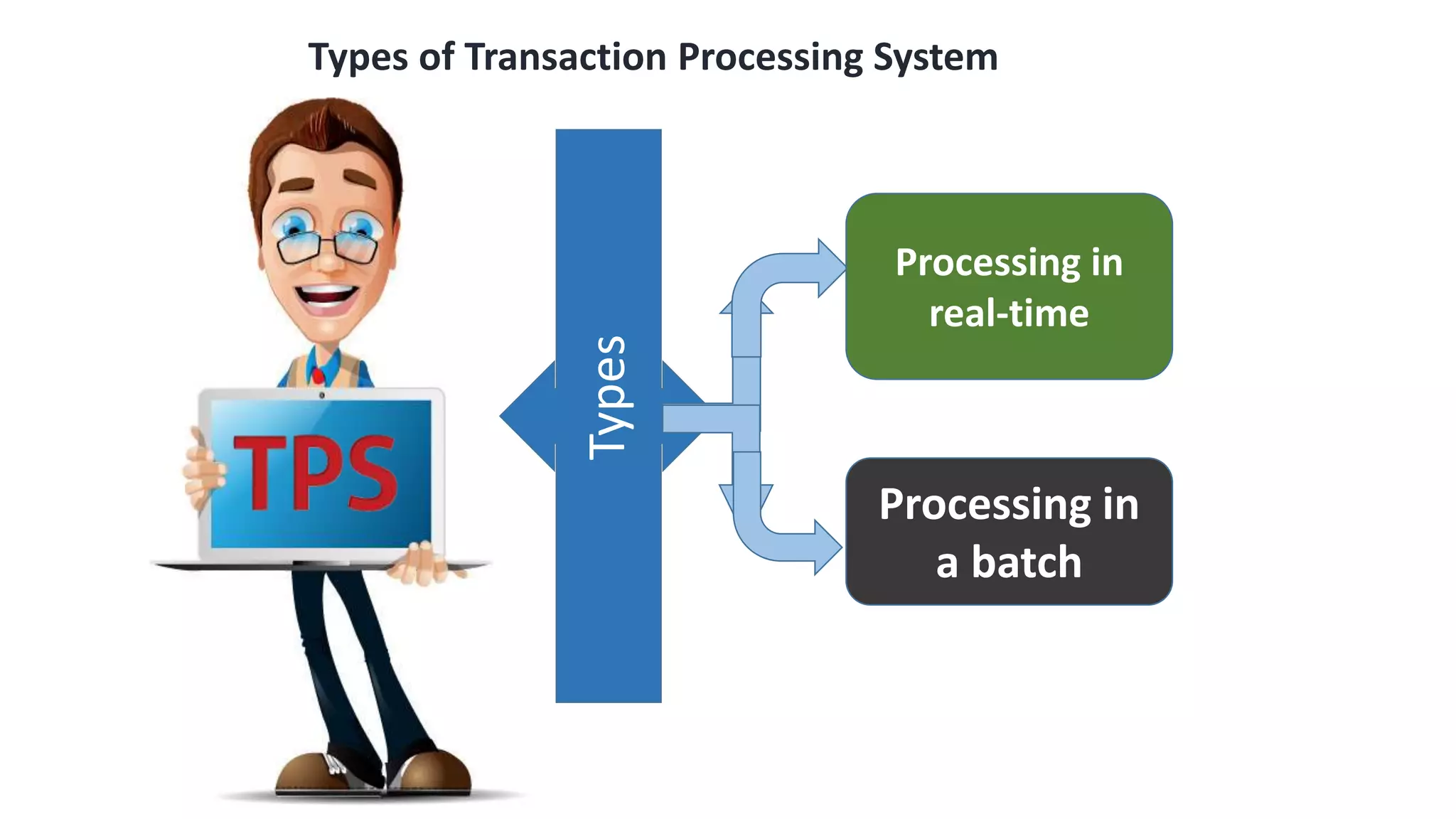
Types of Transaction Processing System
Types
Processing in
real-time
Processing in
a batch
 Fast performance
 Continuous availability.
 Data integrity.
 Ease of use.
 Modular growth.Features of Transaction Processing
 The following features are
considered important in
evaluating transaction
processing systems
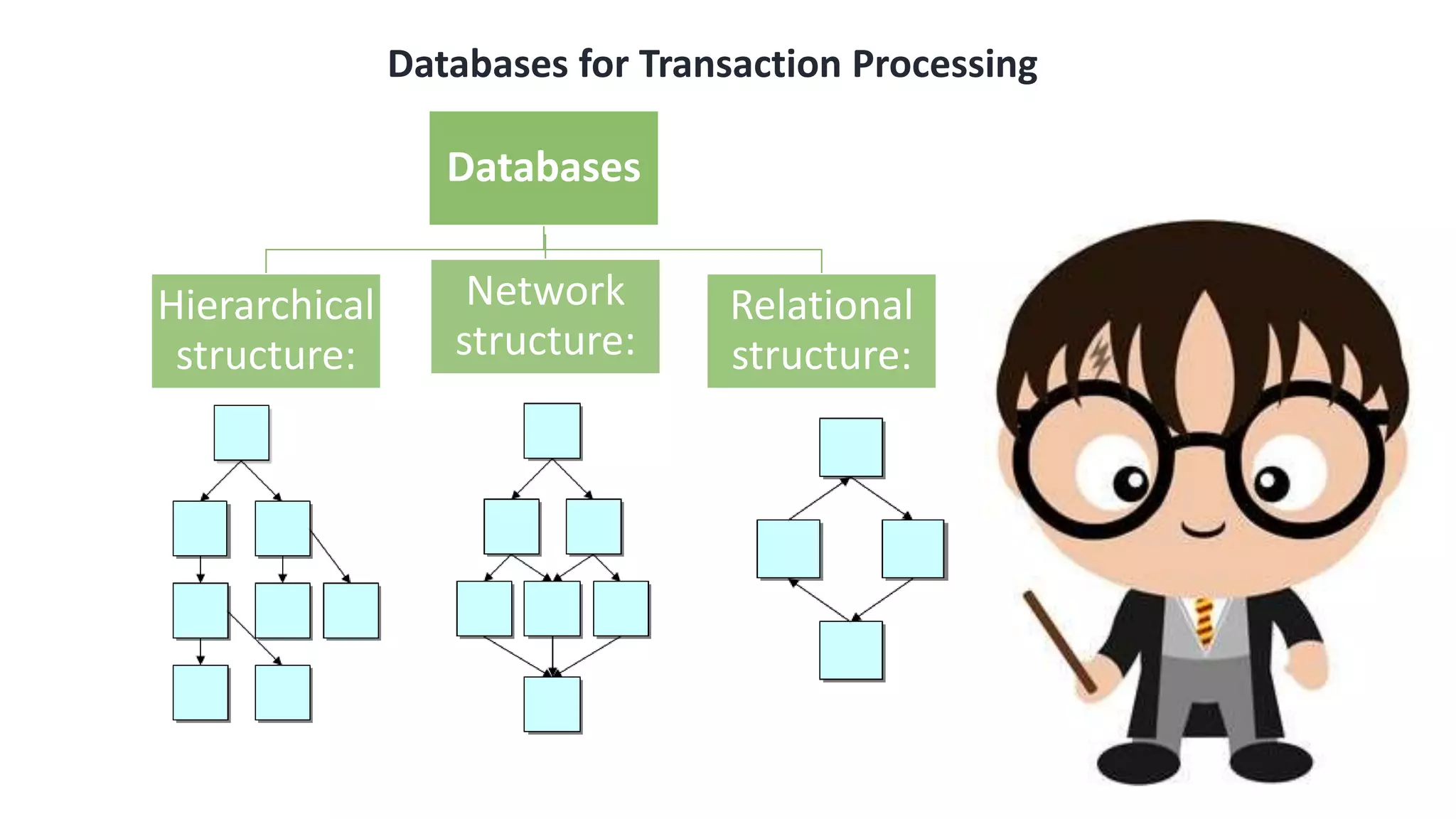
Databases for Transaction Processing
Databases
Hierarchical
structure:
Network
structure:
Relational
structure:
Enterprise ResourcePlanning
Now lets go with the topic
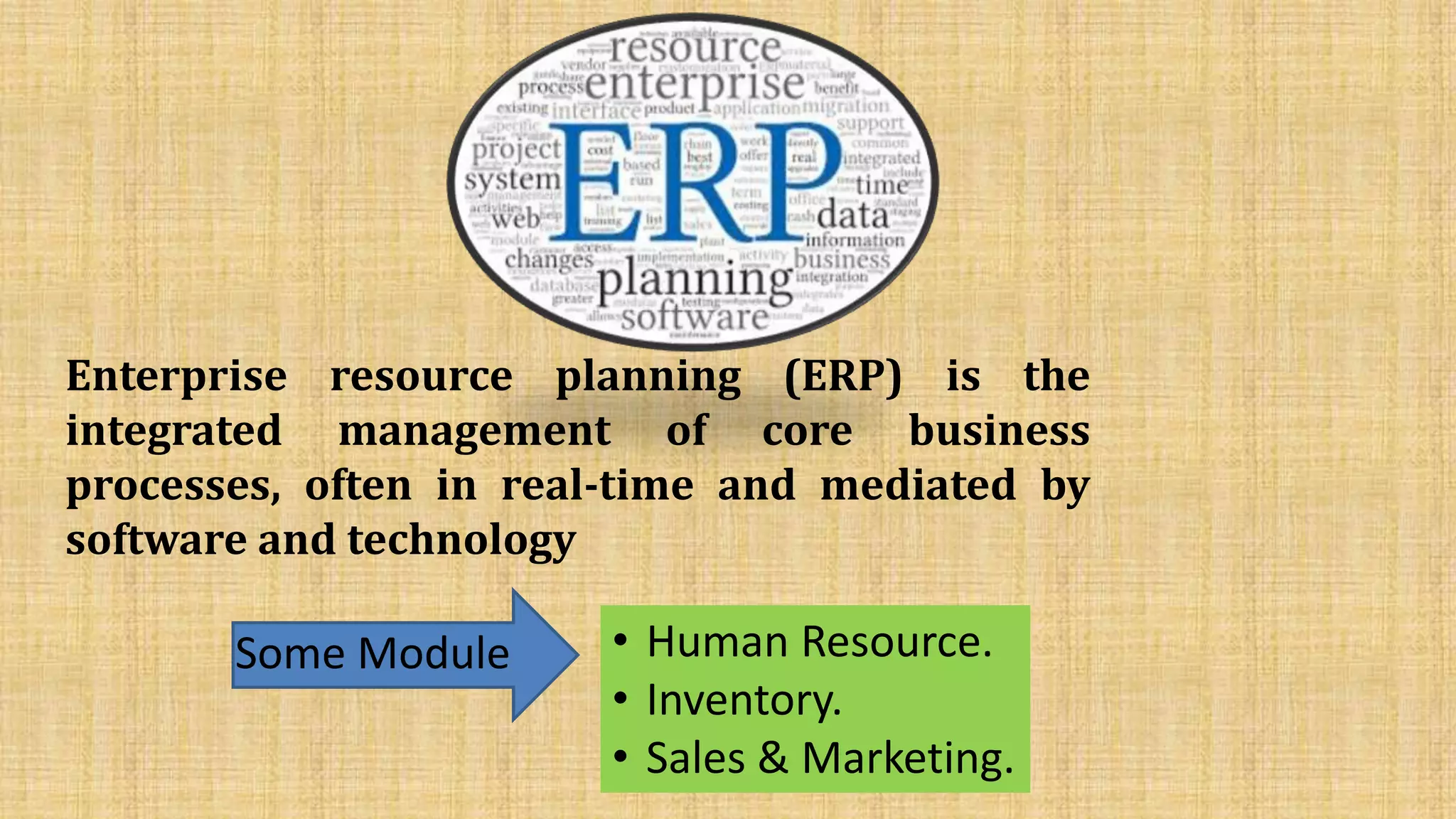
Enterprise resource planning (ERP) is the
integrated management of core business
processes, often in real-time and mediated by
software and technology
Some Module • Human Resource.
• Inventory.
• Sales & Marketing.
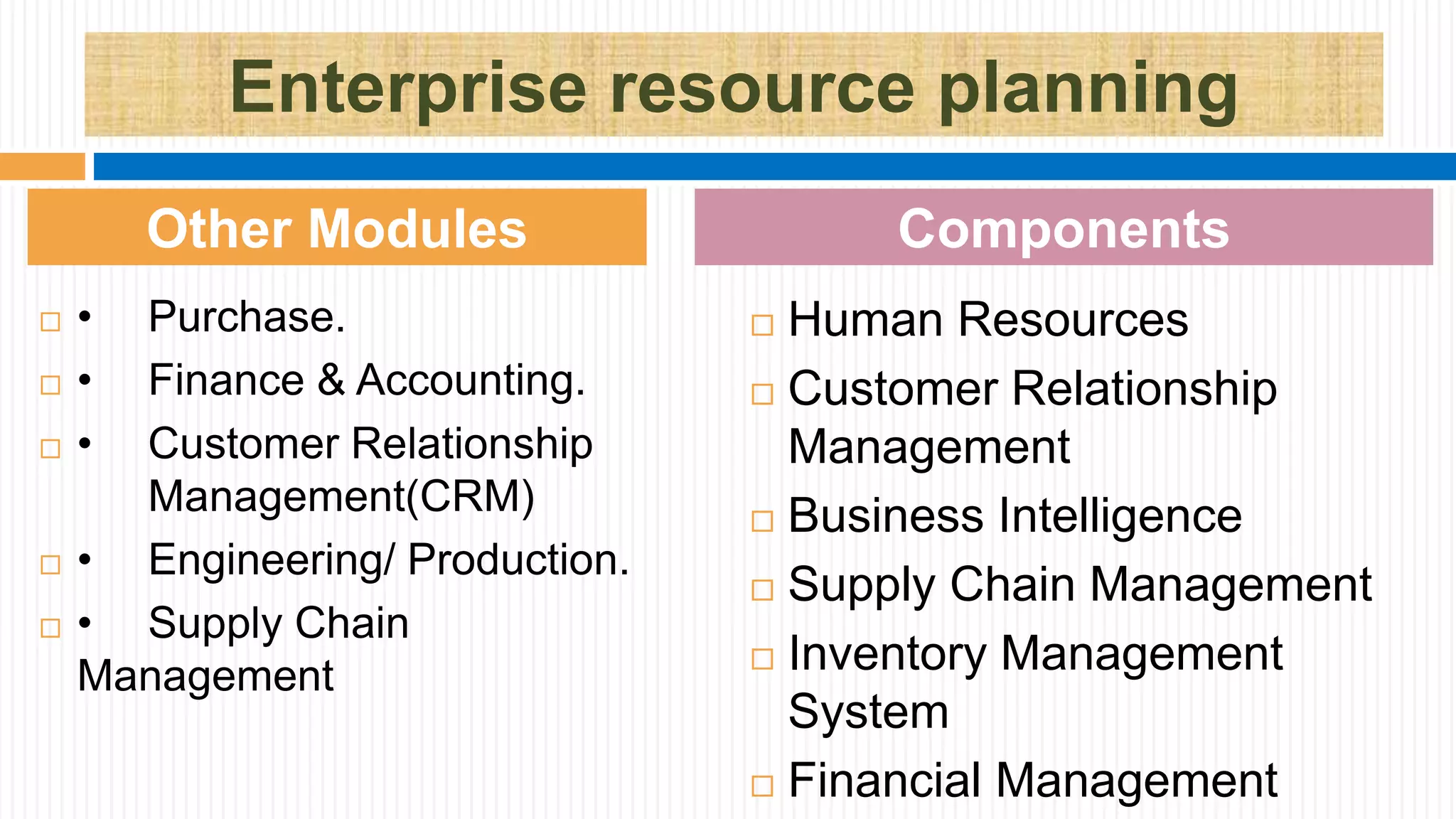
Enterprise resource planning
 Human Resources
 Customer Relationship
Management
 Business Intelligence
 Supply Chain Management
 Inventory Management
System
 Financial Management
Other Modules Components
 • Purchase.
 • Finance & Accounting.
 • Customer Relationship
Management(CRM)
 • Engineering/ Production.
 • Supply Chain
Management
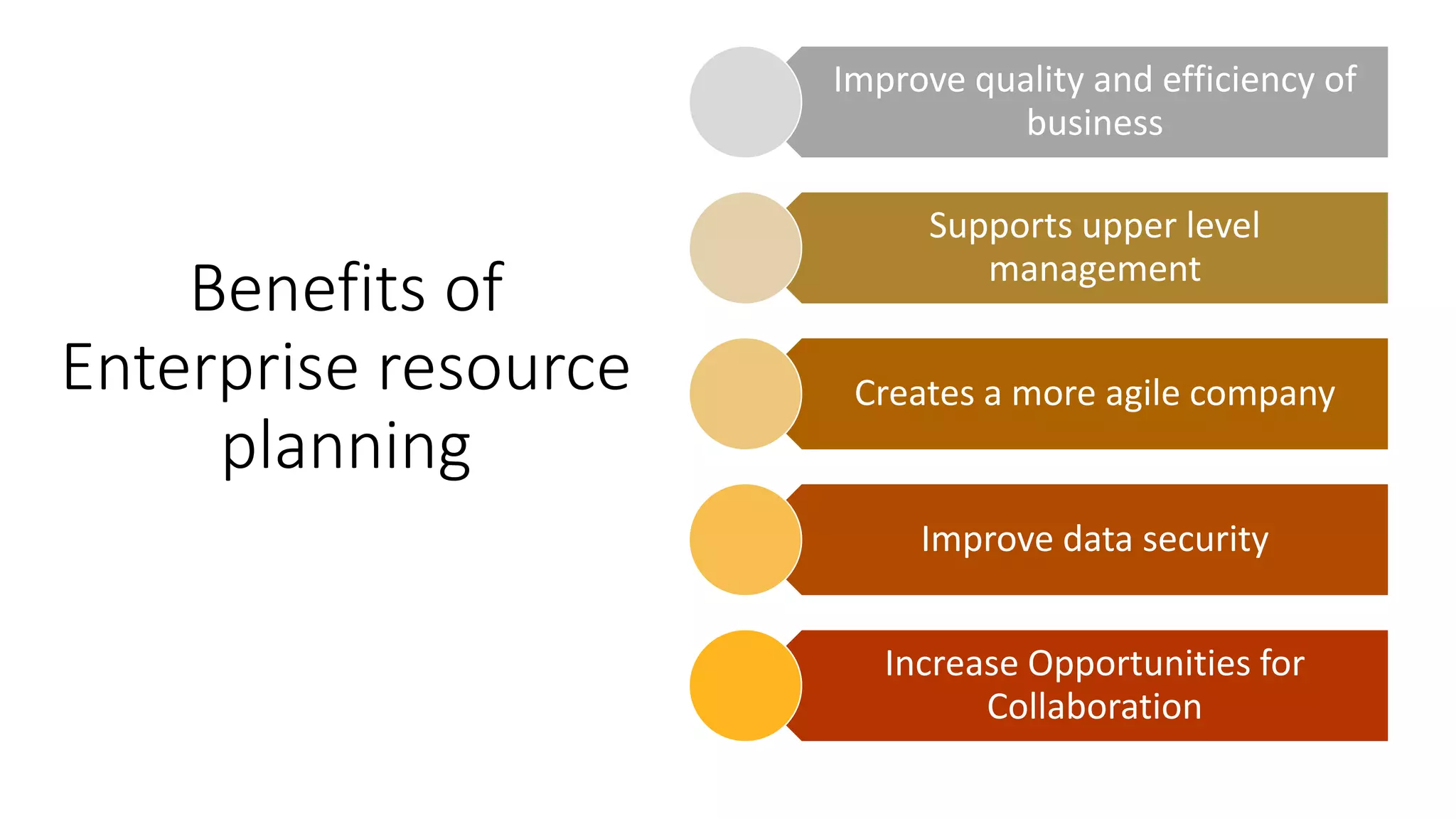
Benefits of
Enterprise resource
planning
Improve quality and efficiency of
business
Supports upper level
management
Creates a more agile company
Improve data security
Increase Opportunities for
Collaboration
Problems of ERP
• Customization can be
• more cost than less integrated
solutions.
• Increase support, maintenance,
and upgrade expenses.
• Create unnecessary
• Extensive training
requirements take
resources from daily
operations.
• Re-engineering
business processes to
fit the ERP system
may damage
competitiveness or
divert focus from
other critical activities.
THE END
ANY
QUESTIONS
Thank
you all

Transaction Processing (TP) & Enterprise Resource Planning (ERP)

  • 1.
  • 2.
  • 3.
    NOW LET MEINTRODUCE MY GROUP TO YOU ID 18 Md. Azmain Hossain ID 19 Md. Ahsanullah ID 20 Sadia Afrin Farha ID 21 Sharmin Akter ID17 Md. Saneat Sheikh AND MY SELF ID 22 Sajal Eahsan ID 15 Md. Sabbir Hasan ID14 Md. Tushar Imran ID12 Rajani Kanta Roy
  • 4.
    Transaction Processing (TP)& Enterprise Resource Planning (ERP) Let’s Get into Our Topic…
  • 5.
    Transaction Processing System Transaction processingis information processing in computer science that is divided into individual, indivisible operations called transactions
  • 6.
    Types of TransactionProcessing System Types Processing in real-time Processing in a batch
  • 7.
     Fast performance Continuous availability.  Data integrity.  Ease of use.  Modular growth.Features of Transaction Processing  The following features are considered important in evaluating transaction processing systems
  • 8.
    Databases for TransactionProcessing Databases Hierarchical structure: Network structure: Relational structure:
  • 9.
  • 10.
    Enterprise resource planning(ERP) is the integrated management of core business processes, often in real-time and mediated by software and technology Some Module • Human Resource. • Inventory. • Sales & Marketing.
  • 11.
    Enterprise resource planning Human Resources  Customer Relationship Management  Business Intelligence  Supply Chain Management  Inventory Management System  Financial Management Other Modules Components  • Purchase.  • Finance & Accounting.  • Customer Relationship Management(CRM)  • Engineering/ Production.  • Supply Chain Management
  • 12.
    Benefits of Enterprise resource planning Improvequality and efficiency of business Supports upper level management Creates a more agile company Improve data security Increase Opportunities for Collaboration
  • 13.
    Problems of ERP •Customization can be • more cost than less integrated solutions. • Increase support, maintenance, and upgrade expenses. • Create unnecessary • Extensive training requirements take resources from daily operations. • Re-engineering business processes to fit the ERP system may damage competitiveness or divert focus from other critical activities.
  • 14.
  • 15.
  • 16.