MODEL TRAINING
Muhammad Umar
UIAI Lab
CONTENTS
 Linear Regression
 Gradient Descent
 Polynomial Regression
 Learning Curve
 Regularized Linear Models
 Logistic Regression
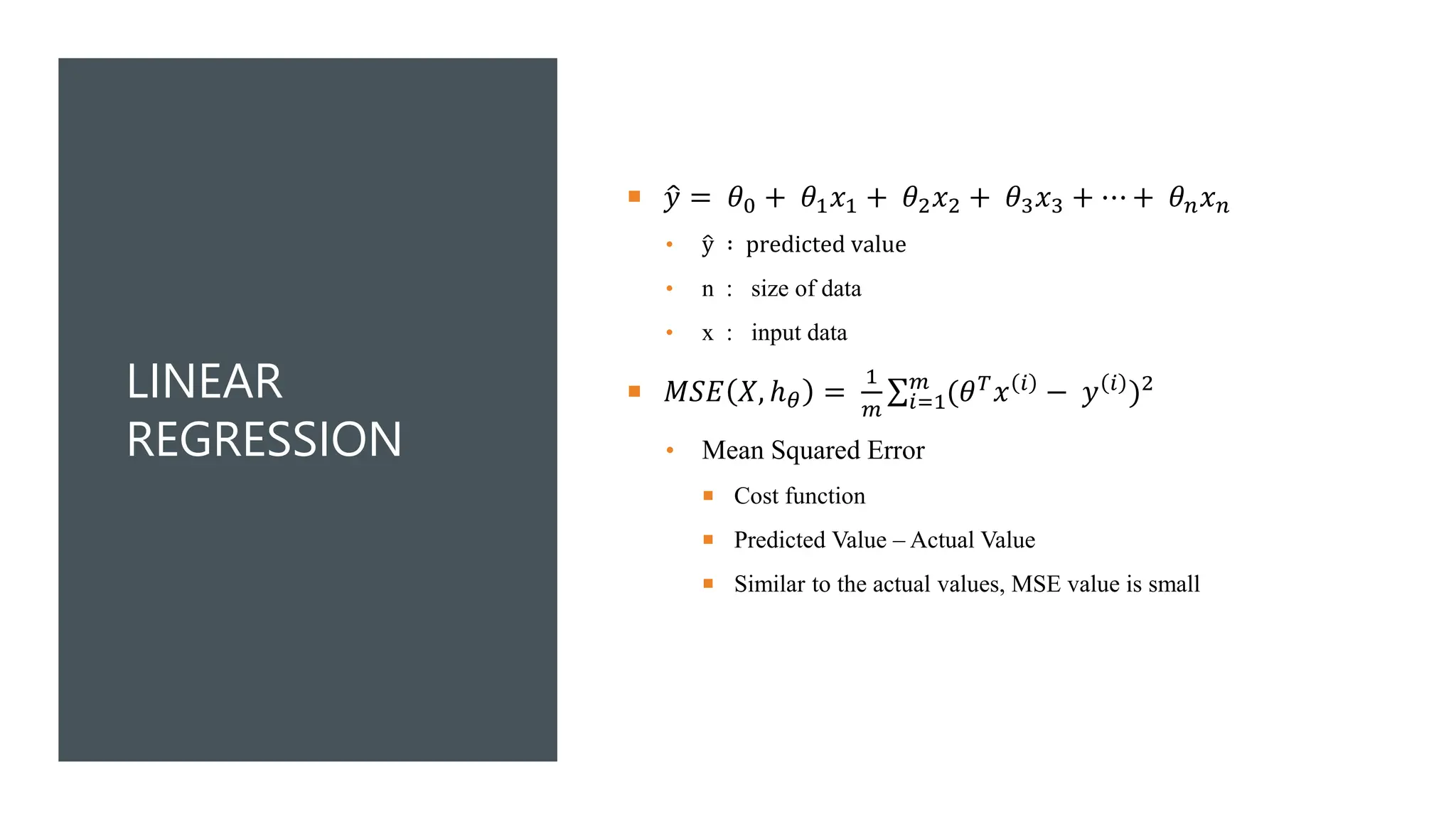
LINEAR
REGRESSION
 𝑦 = 𝜃0 + 𝜃1𝑥1 + 𝜃2𝑥2 + 𝜃3𝑥3 + ⋯ + 𝜃𝑛𝑥𝑛
• y ∶ predicted value
• n : size of data
• x : input data
 𝑀𝑆𝐸 𝑋, ℎ𝜃 =
1
𝑚 𝑖=1
𝑚
(𝜃𝑇𝑥 𝑖 − 𝑦 𝑖 )2
• Mean Squared Error
 Cost function
 Predicted Value – Actual Value
 Similar to the actual values, MSE value is small
GRADIENT
DESCENT AND
ITS TYPES
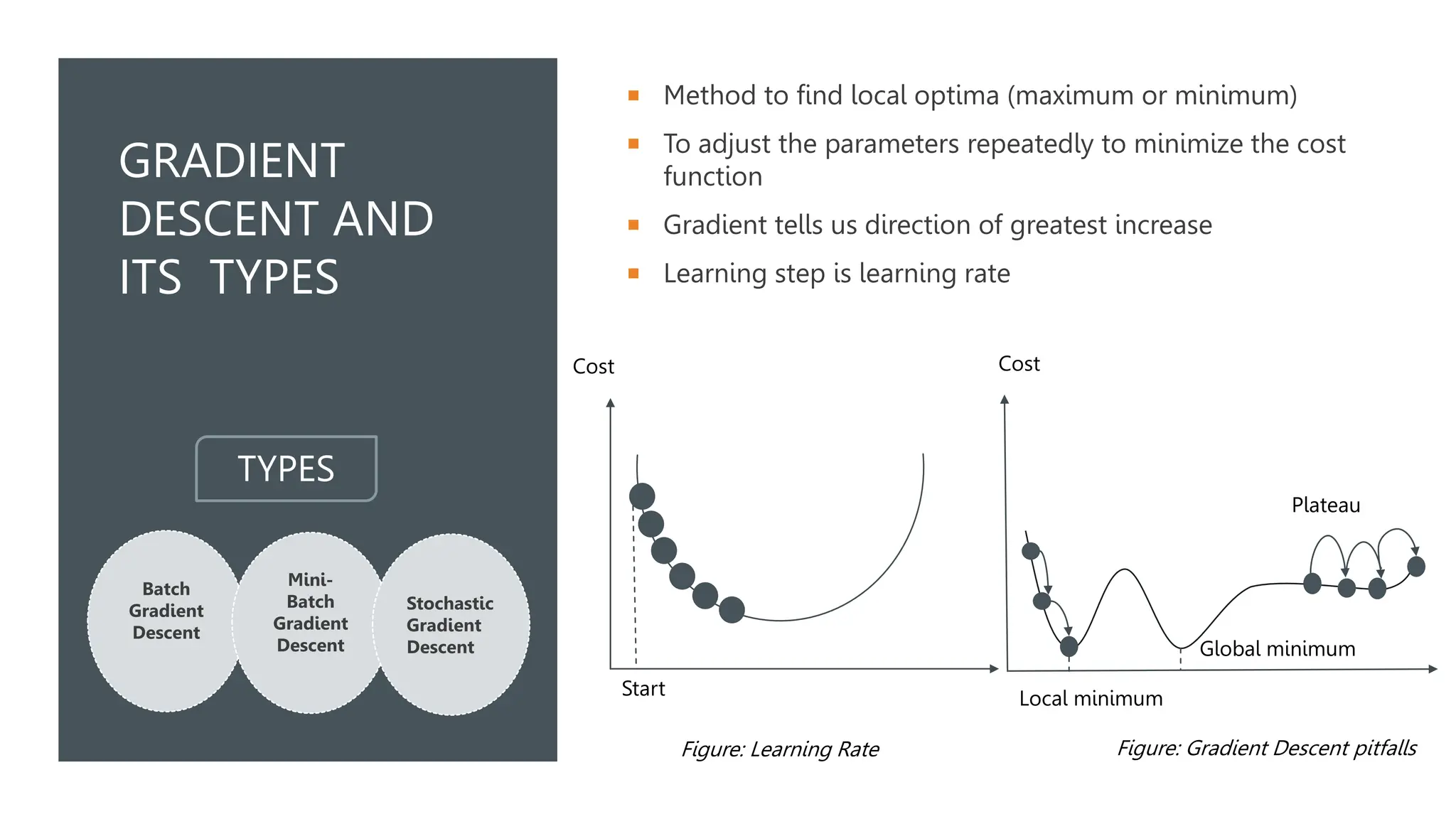
 Method to find local optima (maximum or minimum)
 To adjust the parameters repeatedly to minimize the cost
function
 Gradient tells us direction of greatest increase
 Learning step is learning rate
Cost
Local minimum
Global minimum
Plateau
Figure: Gradient Descent pitfalls
Cost
Start
Figure: Learning Rate
Batch
Gradient
Descent
Mini-
Batch
Gradient
Descent
Stochastic
Gradient
Descent
TYPES
POLYNOMIAL
REGRESSION
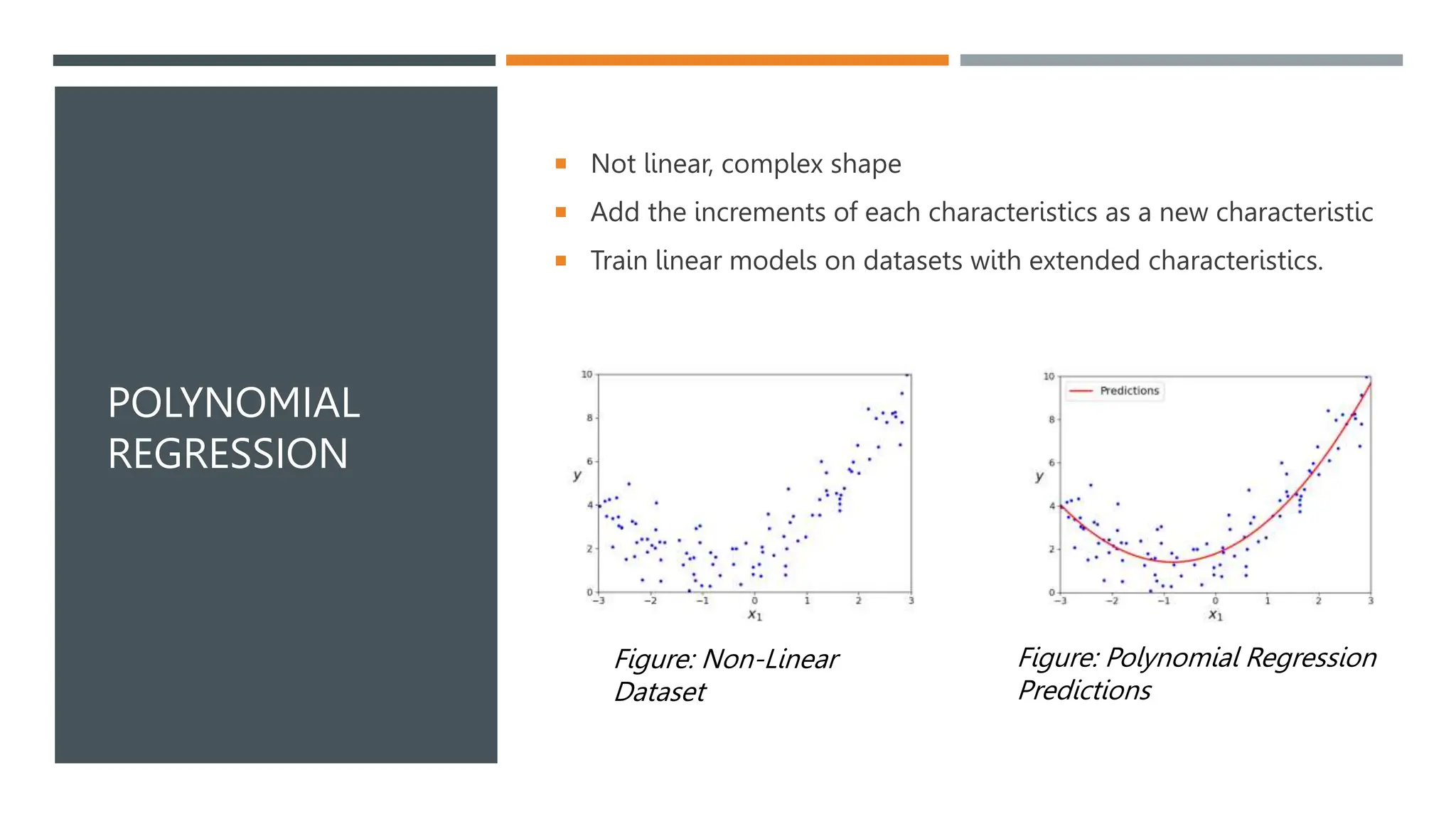
Figure: Non-Linear
Dataset
Figure: Polynomial Regression
Predictions
 Not linear, complex shape
 Add the increments of each characteristics as a new characteristic
 Train linear models on datasets with extended characteristics.
LEARNING
CURVE
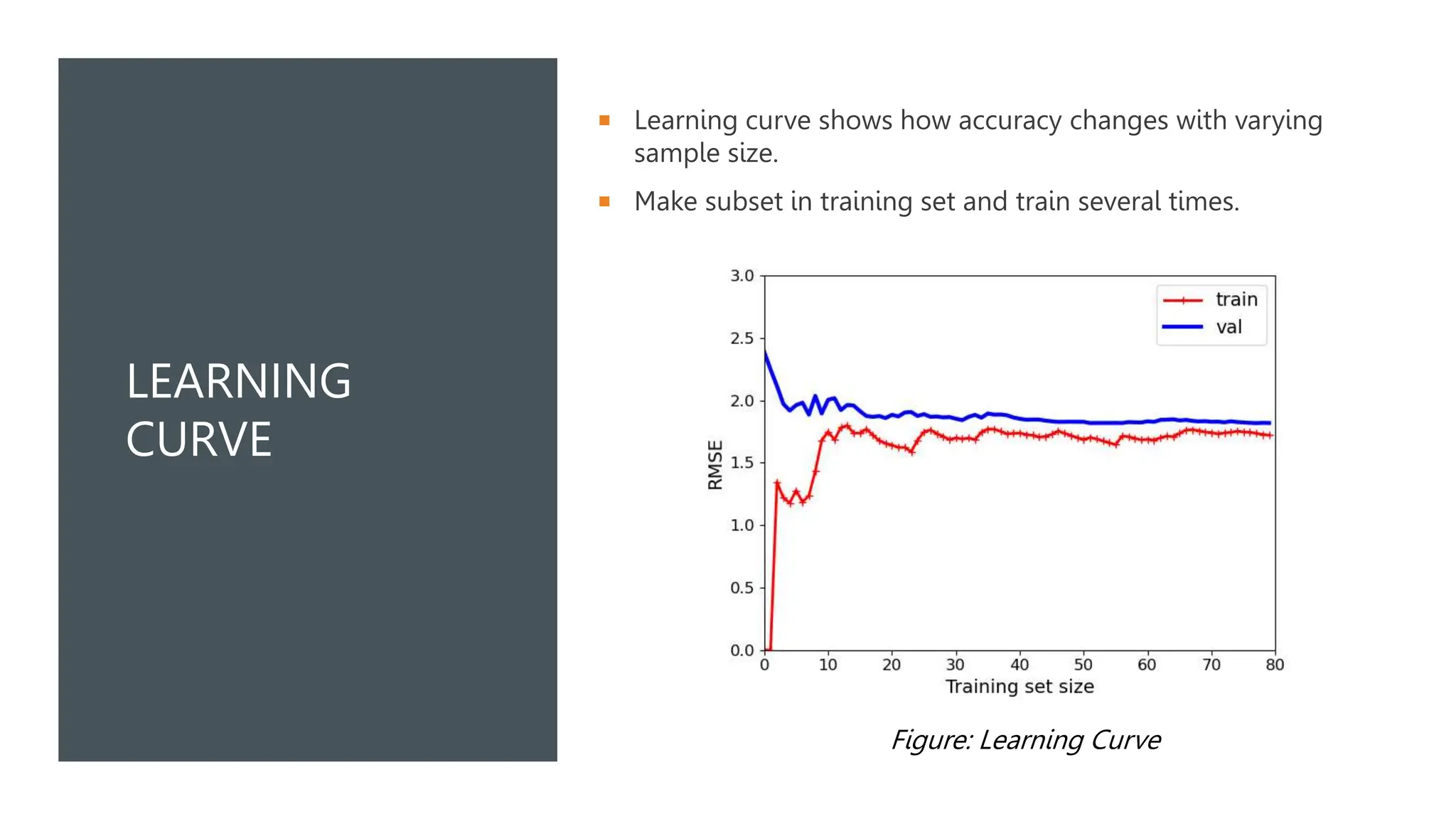
 Learning curve shows how accuracy changes with varying
sample size.
 Make subset in training set and train several times.
Figure: Learning Curve
REGULARIZED
LINEAR MODELS
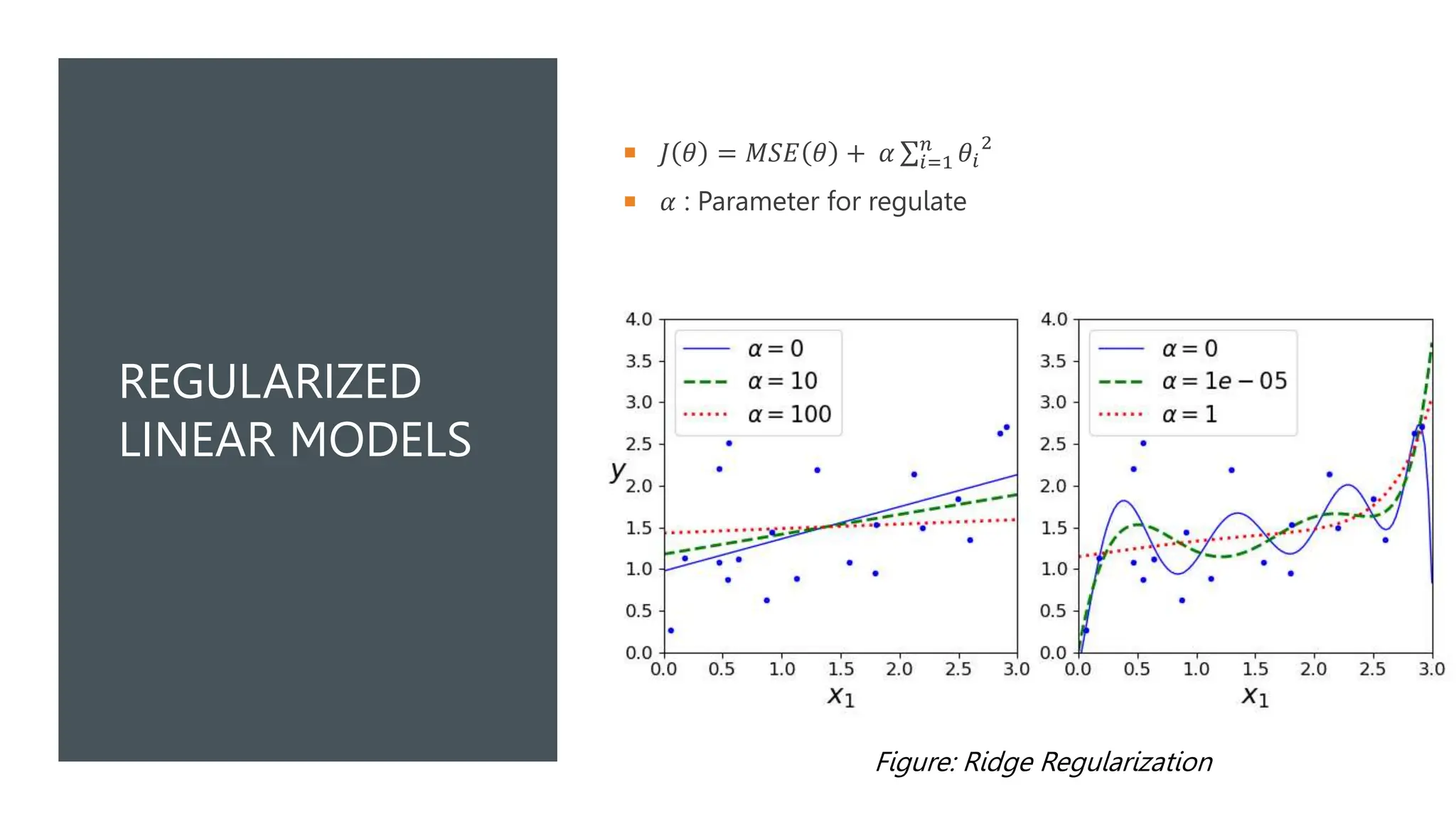
 𝐽 𝜃 = 𝑀𝑆𝐸 𝜃 + 𝛼 𝑖=1
𝑛
𝜃𝑖
2
 𝛼 : Parameter for regulate
Figure: Ridge Regularization
LOGISTIC
REGRESSION
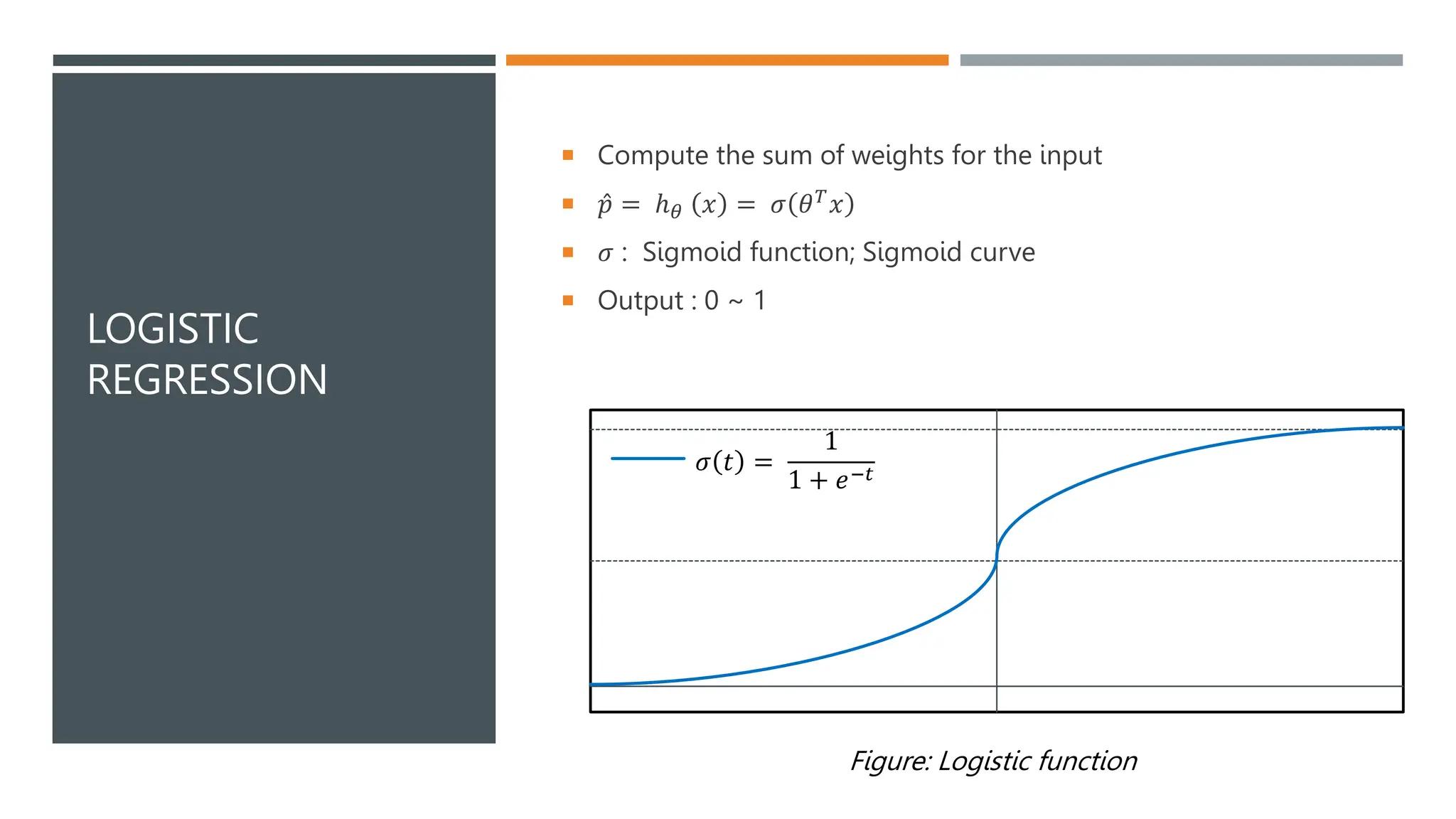
 Compute the sum of weights for the input
 𝑝 = ℎ𝜃 𝑥 = 𝜎 𝜃𝑇𝑥
 𝜎 : Sigmoid function; Sigmoid curve
 Output : 0 ~ 1
Figure: Logistic function
𝜎 𝑡 =
1
1 + 𝑒−𝑡
Thank You

Training Models Chapter 4 Hands on Machine Learning Book

  • 1.
  • 2.
    CONTENTS  Linear Regression Gradient Descent  Polynomial Regression  Learning Curve  Regularized Linear Models  Logistic Regression
  • 3.
    LINEAR REGRESSION  𝑦 =𝜃0 + 𝜃1𝑥1 + 𝜃2𝑥2 + 𝜃3𝑥3 + ⋯ + 𝜃𝑛𝑥𝑛 • y ∶ predicted value • n : size of data • x : input data  𝑀𝑆𝐸 𝑋, ℎ𝜃 = 1 𝑚 𝑖=1 𝑚 (𝜃𝑇𝑥 𝑖 − 𝑦 𝑖 )2 • Mean Squared Error  Cost function  Predicted Value – Actual Value  Similar to the actual values, MSE value is small
  • 4.
    GRADIENT DESCENT AND ITS TYPES Method to find local optima (maximum or minimum)  To adjust the parameters repeatedly to minimize the cost function  Gradient tells us direction of greatest increase  Learning step is learning rate Cost Local minimum Global minimum Plateau Figure: Gradient Descent pitfalls Cost Start Figure: Learning Rate Batch Gradient Descent Mini- Batch Gradient Descent Stochastic Gradient Descent TYPES
  • 5.
    POLYNOMIAL REGRESSION Figure: Non-Linear Dataset Figure: PolynomialRegression Predictions  Not linear, complex shape  Add the increments of each characteristics as a new characteristic  Train linear models on datasets with extended characteristics.
  • 6.
    LEARNING CURVE  Learning curveshows how accuracy changes with varying sample size.  Make subset in training set and train several times. Figure: Learning Curve
  • 7.
    REGULARIZED LINEAR MODELS  𝐽𝜃 = 𝑀𝑆𝐸 𝜃 + 𝛼 𝑖=1 𝑛 𝜃𝑖 2  𝛼 : Parameter for regulate Figure: Ridge Regularization
  • 8.
    LOGISTIC REGRESSION  Compute thesum of weights for the input  𝑝 = ℎ𝜃 𝑥 = 𝜎 𝜃𝑇𝑥  𝜎 : Sigmoid function; Sigmoid curve  Output : 0 ~ 1 Figure: Logistic function 𝜎 𝑡 = 1 1 + 𝑒−𝑡
  • 9.

Editor's Notes

  • #8 Consider talking about: Cybernetics and brain simulation Symbolic Sub-symbolic Statistical learning Integrating the approaches
  • #9 Consider talking about: Search and optimization Logic Probabilistic methods for uncertain reasoning Classifiers and statistical learning methods Artificial neural networks Evaluating progress