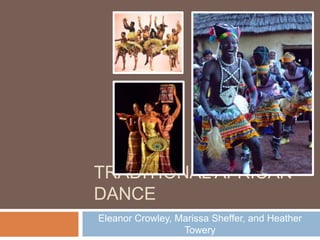
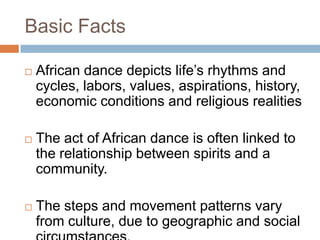
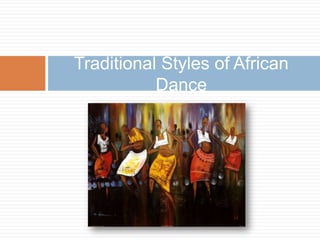
TRADITIONAL AFRICAN
DANCE
Eleanor Crowley, Marissa Sheffer, and Heather
                  Towery
Basic Facts

   African dance depicts life’s rhythms and
    cycles, labors, values, aspirations, history,
    economic conditions and religious realities

   The act of African dance is often linked to
    the relationship between spirits and a
    community.

   The steps and movement patterns vary
    from culture, due to geographic and social
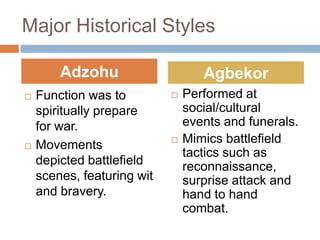
Traditional Styles of African
           Dance
Major Historical Styles

        Adzohu                     Agbekor
   Function was to            Performed at
    spiritually prepare         social/cultural
    for war.                    events and funerals.
   Movements                  Mimics battlefield
                                tactics such as
    depicted battlefield        reconnaissance,
    scenes, featuring wit       surprise attack and
    and bravery.                hand to hand
                                combat.
Social & Cultural Styles of
Dance
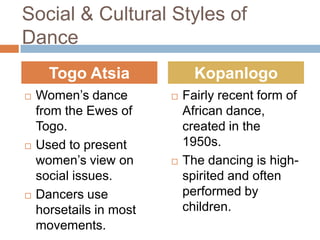
      Togo Atsia               Kopanlogo
   Women’s dance           Fairly recent form of
    from the Ewes of         African dance,
    Togo.                    created in the
   Used to present          1950s.
    women’s view on         The dancing is high-
    social issues.           spirited and often
   Dancers use              performed by
    horsetails in most       children.
    movements.
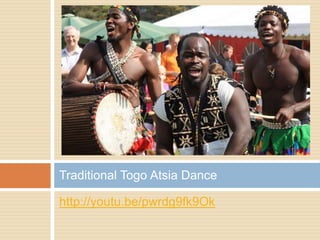
Traditional Togo Atsia Dance

http://youtu.be/pwrdg9fk9Ok
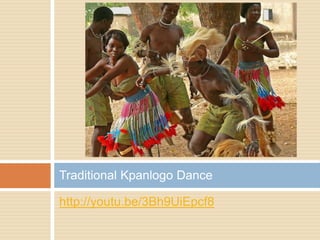
Traditional Kpanlogo Dance

http://youtu.be/3Bh9UiEpcf8
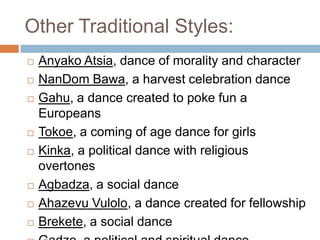
Other Traditional Styles:
   Anyako Atsia, dance of morality and character
   NanDom Bawa, a harvest celebration dance
   Gahu, a dance created to poke fun a
    Europeans
   Tokoe, a coming of age dance for girls
   Kinka, a political dance with religious
    overtones
   Agbadza, a social dance
   Ahazevu Vulolo, a dance created for fellowship
   Brekete, a social dance
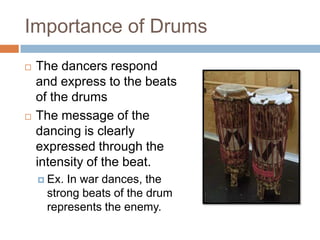
Importance of Drums
   The dancers respond
    and express to the beats
    of the drums
   The message of the
    dancing is clearly
    expressed through the
    intensity of the beat.
     Ex.In war dances, the
     strong beats of the drum
     represents the enemy.
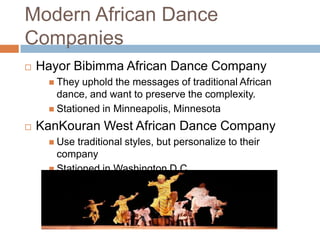
Modern African Dance
Companies
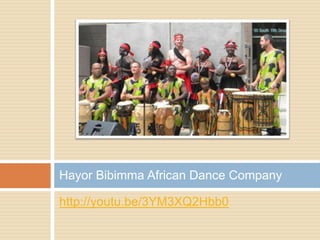
   Hayor Bibimma African Dance Company
      They  uphold the messages of traditional African
       dance, and want to preserve the complexity.
      Stationed in Minneapolis, Minnesota

   KanKouran West African Dance Company
      Use  traditional styles, but personalize to their
       company
      Stationed in Washington D.C.
Hayor Bibimma African Dance Company

http://youtu.be/3YM3XQ2Hbb0
Bibliography
   www.dancedirectory.co.za/content/
   www.buzzle.com/articles/african-dance-types.html
   www.alokli.com/site/dances/dances.html
   http://www.hayorbibimmadance.org/media.html
   http://www.kankouran.org/cms/

Traditional african dance

  • 1.
    TRADITIONAL AFRICAN DANCE Eleanor Crowley,Marissa Sheffer, and Heather Towery
  • 2.
    Basic Facts  African dance depicts life’s rhythms and cycles, labors, values, aspirations, history, economic conditions and religious realities  The act of African dance is often linked to the relationship between spirits and a community.  The steps and movement patterns vary from culture, due to geographic and social
  • 3.
    Traditional Styles ofAfrican Dance
  • 4.
    Major Historical Styles Adzohu Agbekor  Function was to  Performed at spiritually prepare social/cultural for war. events and funerals.  Movements  Mimics battlefield tactics such as depicted battlefield reconnaissance, scenes, featuring wit surprise attack and and bravery. hand to hand combat.
  • 5.
    Social & CulturalStyles of Dance Togo Atsia Kopanlogo  Women’s dance  Fairly recent form of from the Ewes of African dance, Togo. created in the  Used to present 1950s. women’s view on  The dancing is high- social issues. spirited and often  Dancers use performed by horsetails in most children. movements.
  • 6.
    Traditional Togo AtsiaDance http://youtu.be/pwrdg9fk9Ok
  • 7.
  • 8.
    Other Traditional Styles:  Anyako Atsia, dance of morality and character  NanDom Bawa, a harvest celebration dance  Gahu, a dance created to poke fun a Europeans  Tokoe, a coming of age dance for girls  Kinka, a political dance with religious overtones  Agbadza, a social dance  Ahazevu Vulolo, a dance created for fellowship  Brekete, a social dance
  • 9.
    Importance of Drums  The dancers respond and express to the beats of the drums  The message of the dancing is clearly expressed through the intensity of the beat.  Ex.In war dances, the strong beats of the drum represents the enemy.
  • 10.
    Modern African Dance Companies  Hayor Bibimma African Dance Company  They uphold the messages of traditional African dance, and want to preserve the complexity.  Stationed in Minneapolis, Minnesota  KanKouran West African Dance Company  Use traditional styles, but personalize to their company  Stationed in Washington D.C.
  • 11.
    Hayor Bibimma AfricanDance Company http://youtu.be/3YM3XQ2Hbb0
  • 12.
    Bibliography  www.dancedirectory.co.za/content/  www.buzzle.com/articles/african-dance-types.html  www.alokli.com/site/dances/dances.html  http://www.hayorbibimmadance.org/media.html  http://www.kankouran.org/cms/