TPCL
SUSTAINABLE HOLISTIC HUMAN CAPITAL DEVELOPMENT
1
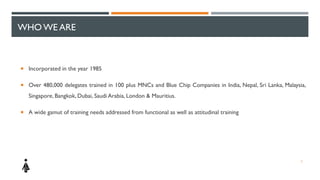
WHO WE ARE
 Incorporated in the year 1985
 Over 480,000 delegates trained in 100 plus MNCs and Blue Chip Companies in India, Nepal, Sri Lanka, Malaysia,
Singapore, Bangkok, Dubai, Saudi Arabia, London & Mauritius.
 A wide gamut of training needs addressed from functional as well as attitudinal training
2
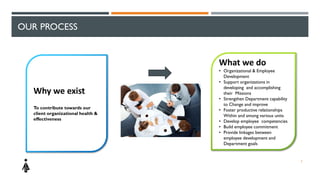
Why we exist
To contribute towards our
client organizational health &
effectiveness
What we do
• Organizational & Employee
Development
• Support organizations in
developing and accomplishing
their Missions
• Strengthen Department capability
to Change and improve
• Foster productive relationships
Within and among various units
• Develop employee competencies
• Build employee commitment
• Provide linkages between
employee development and
Department goals
OUR PROCESS
3
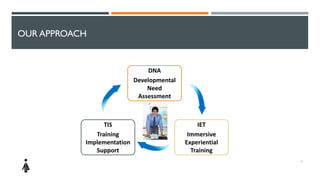
DNA
Developmental
Need
Assessment
TIS
Training
Implementation
Support
IET
Immersive
Experiential
Training
OUR APPROACH
4
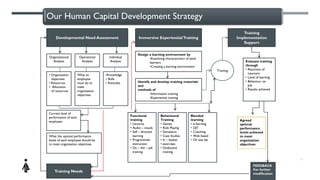
Our Human Capital Development Strategy
5
Developmental Need Assessment
Organizational
Analysis
Operational
Analysis
Individual
Analysis
• Organization
objectives
• Resources
• Allocation
of resources
What an
employee
must do to
meet
organization
objectives
•Knowledge
• Skills
• Attitudes
Current level of
performance of each
employee.
What the optimal performance
levels of each employee should be
to meet organisation objectives
Training Needs
Design a learning environment by
•Examining characteristics of adult
learners
•Creating a learning environment
Identify and develop training materials
and
methods of
•Information training
•Experiential training
Functional
training
• Lectures
• Audio – visuals
• Self – directed
learning
• Programmed
instruction
• On – the – job
training
Behavioural
Training
• Games
• Role Playing
• Simulation
• Case Studies
• In – basket
• exercises
• Outbound
training
Blended
learning
• e-learning
• OJT
• Coaching
• Web based
• On site lab
Evaluate training
through
• Reactions of
Learners
• Level of learning
• Behaviour on
Job
• Results achieved
Agreed
optimal
performance
levels achieved
to meet
organisation
objectives
Training
Implementation
Support
Immersive ExperientialTraining
FEEDBACK
For further
modification
Training
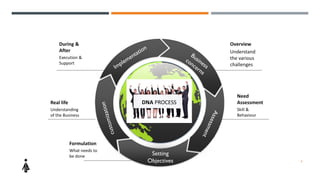
Setting
Objectives
Real life
Understanding
of the Business
During &
After
Execution &
Support
Overview
Understand
the various
challenges
Need
Assessment
Skill &
Behaviour
Formulation
What needs to
be done
6
DNA PROCESS
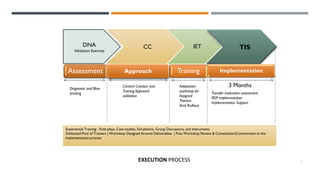
EXECUTION PROCESS 7
3 MonthsDiagnostic and Blue-
printing
Content Creation and
Training Approach
validation
Adaptation
workshop for
Assigned
Trainers
And Rollout
Transfer evaluation assessment
PDP implementation
Implementation Support
DNA
Validation Exercise
CC IET TIS
Assessment Training ImplementationApproach
Experiential Training - Role-plays, Case-studies, Simulations, Group Discussions, and Instruments
Dedicated Pool of Trainers | Workshop Designed Around Deliverables | Post Workshop Review & Consultation|Commitment to the
Implementation process
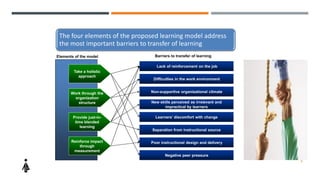
The four elements of the proposed learning model address
the most important barriers to transfer of learning
Take a holistic
approach
Work through the
organization
structure
Provide just-in-
time blended
learning
Reinforce impact
through
measurement
Lack of reinforcement on the job
Difficulties in the work environment
Non-supportive organizational climate
New skills perceived as irrelevant and
impractical by learners
Learners’ discomfort with change
Separation from instructional source
Poor instructional design and delivery
Negative peer pressure
Elements of the model Barriers to transfer of learning
8
SAMPLE CLIENT LIST
9
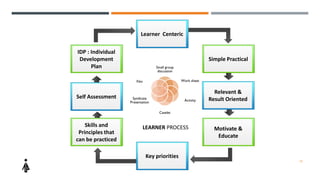
LEARNER PROCESS
Learner Centeric
Simple Practical
IDP : Individual
Development
Plan
Self Assessment
Relevant &
Result Oriented
Motivate &
Educate
Skills and
Principles that
can be practiced
Key priorities
Small group
discussion
Work sheet
Activity
Caselet
Syndicate
Presentation
Film
10
THANKYOU
www.tpcl.co.in
EMAIL ID:ASHOK.GEORGE@TPCL.CO.IN | ASHOKGEORGE@LIVE.COM
TEL: +9124-4061815 MOBILE: +91 9810699552
11

Tpcl 18.39d3co.6389

  • 1.
    TPCL SUSTAINABLE HOLISTIC HUMANCAPITAL DEVELOPMENT 1
  • 2.
    WHO WE ARE Incorporated in the year 1985  Over 480,000 delegates trained in 100 plus MNCs and Blue Chip Companies in India, Nepal, Sri Lanka, Malaysia, Singapore, Bangkok, Dubai, Saudi Arabia, London & Mauritius.  A wide gamut of training needs addressed from functional as well as attitudinal training 2
  • 3.
    Why we exist Tocontribute towards our client organizational health & effectiveness What we do • Organizational & Employee Development • Support organizations in developing and accomplishing their Missions • Strengthen Department capability to Change and improve • Foster productive relationships Within and among various units • Develop employee competencies • Build employee commitment • Provide linkages between employee development and Department goals OUR PROCESS 3
  • 4.
  • 5.
    Our Human CapitalDevelopment Strategy 5 Developmental Need Assessment Organizational Analysis Operational Analysis Individual Analysis • Organization objectives • Resources • Allocation of resources What an employee must do to meet organization objectives •Knowledge • Skills • Attitudes Current level of performance of each employee. What the optimal performance levels of each employee should be to meet organisation objectives Training Needs Design a learning environment by •Examining characteristics of adult learners •Creating a learning environment Identify and develop training materials and methods of •Information training •Experiential training Functional training • Lectures • Audio – visuals • Self – directed learning • Programmed instruction • On – the – job training Behavioural Training • Games • Role Playing • Simulation • Case Studies • In – basket • exercises • Outbound training Blended learning • e-learning • OJT • Coaching • Web based • On site lab Evaluate training through • Reactions of Learners • Level of learning • Behaviour on Job • Results achieved Agreed optimal performance levels achieved to meet organisation objectives Training Implementation Support Immersive ExperientialTraining FEEDBACK For further modification Training
  • 6.
    Setting Objectives Real life Understanding of theBusiness During & After Execution & Support Overview Understand the various challenges Need Assessment Skill & Behaviour Formulation What needs to be done 6 DNA PROCESS
  • 7.
    EXECUTION PROCESS 7 3MonthsDiagnostic and Blue- printing Content Creation and Training Approach validation Adaptation workshop for Assigned Trainers And Rollout Transfer evaluation assessment PDP implementation Implementation Support DNA Validation Exercise CC IET TIS Assessment Training ImplementationApproach Experiential Training - Role-plays, Case-studies, Simulations, Group Discussions, and Instruments Dedicated Pool of Trainers | Workshop Designed Around Deliverables | Post Workshop Review & Consultation|Commitment to the Implementation process
  • 8.
    The four elementsof the proposed learning model address the most important barriers to transfer of learning Take a holistic approach Work through the organization structure Provide just-in- time blended learning Reinforce impact through measurement Lack of reinforcement on the job Difficulties in the work environment Non-supportive organizational climate New skills perceived as irrelevant and impractical by learners Learners’ discomfort with change Separation from instructional source Poor instructional design and delivery Negative peer pressure Elements of the model Barriers to transfer of learning 8
  • 9.
  • 10.
    LEARNER PROCESS Learner Centeric SimplePractical IDP : Individual Development Plan Self Assessment Relevant & Result Oriented Motivate & Educate Skills and Principles that can be practiced Key priorities Small group discussion Work sheet Activity Caselet Syndicate Presentation Film 10
  • 11.
    THANKYOU www.tpcl.co.in EMAIL ID:ASHOK.GEORGE@TPCL.CO.IN |ASHOKGEORGE@LIVE.COM TEL: +9124-4061815 MOBILE: +91 9810699552 11