Towards the development of a
virtual 3D city model: Dundalk,
Ireland
Aidan Melia – Project Manager
Integrated Environmental Solutions
All-Energy 2016 - Sustainable and Smart Cities Conference, May 4-5, Glasgow
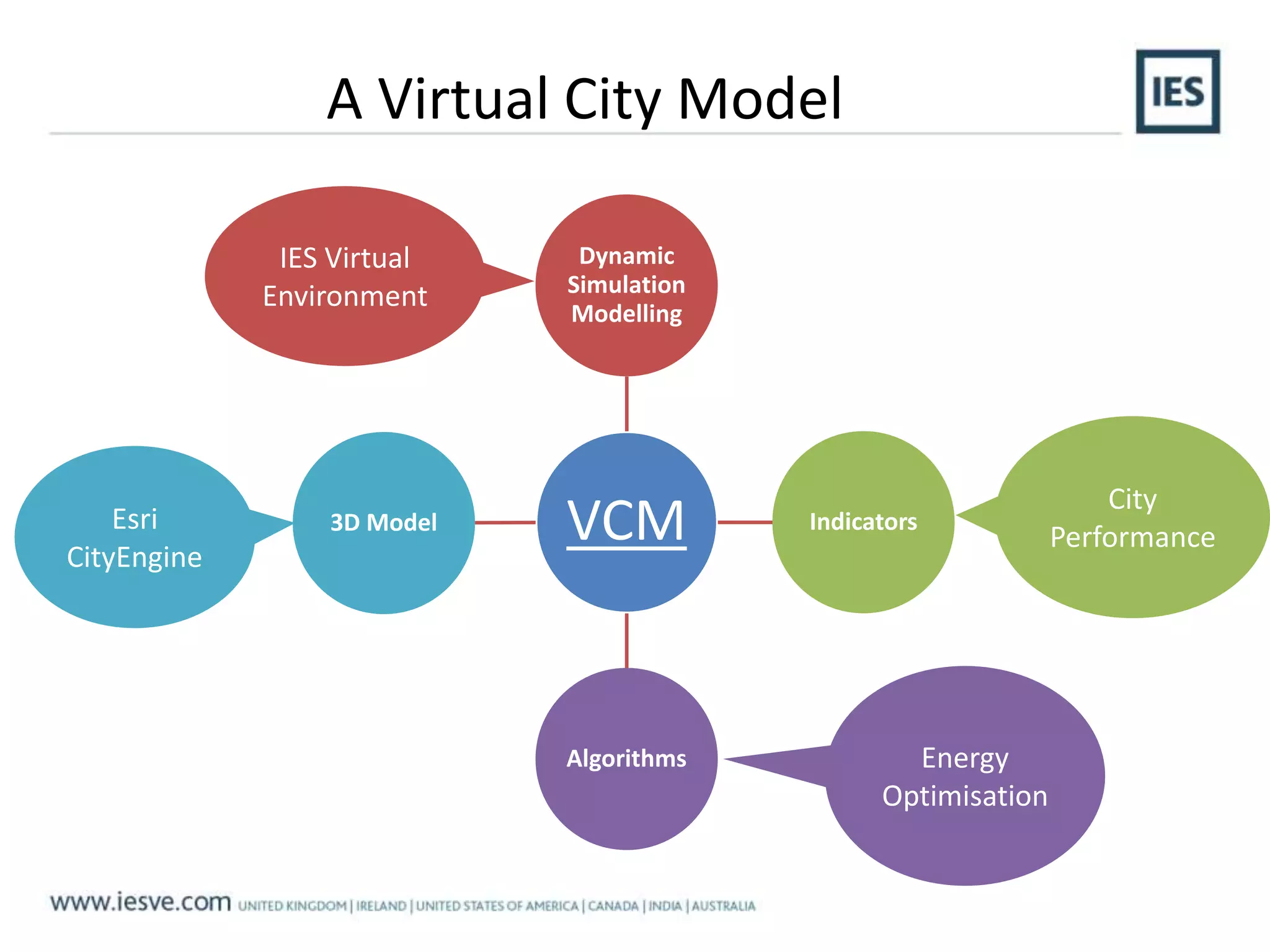
A Virtual City Model
VCM
Dynamic
Simulation
Modelling
Indicators
Algorithms
3D ModelEsri
CityEngine
IES Virtual
Environment
Energy
Optimisation
City
Performance
Project Objectives
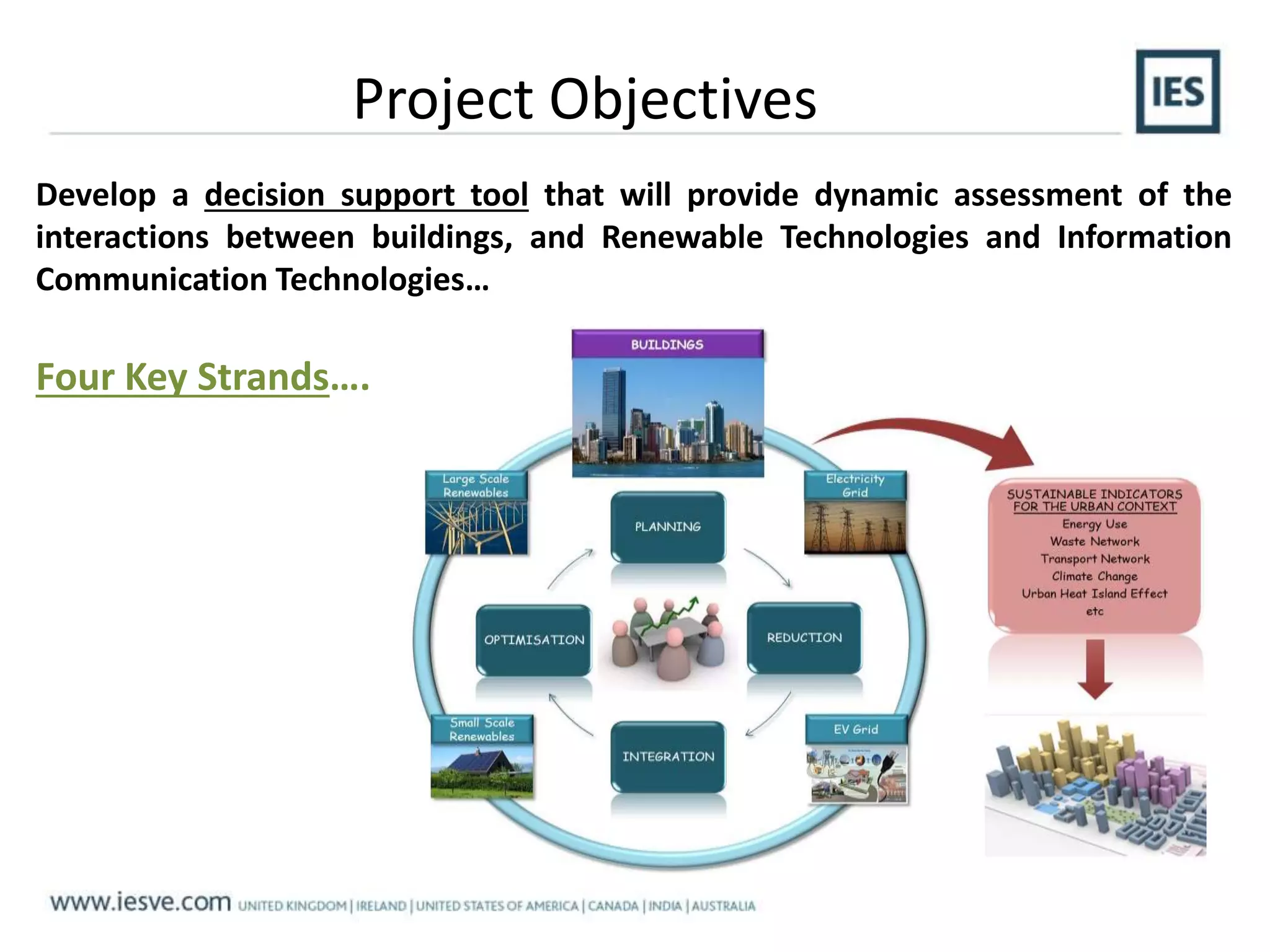
Develop a decision support tool that will provide dynamic assessment of the
interactions between buildings, and Renewable Technologies and Information
Communication Technologies…
Four Key Strands….
Concept
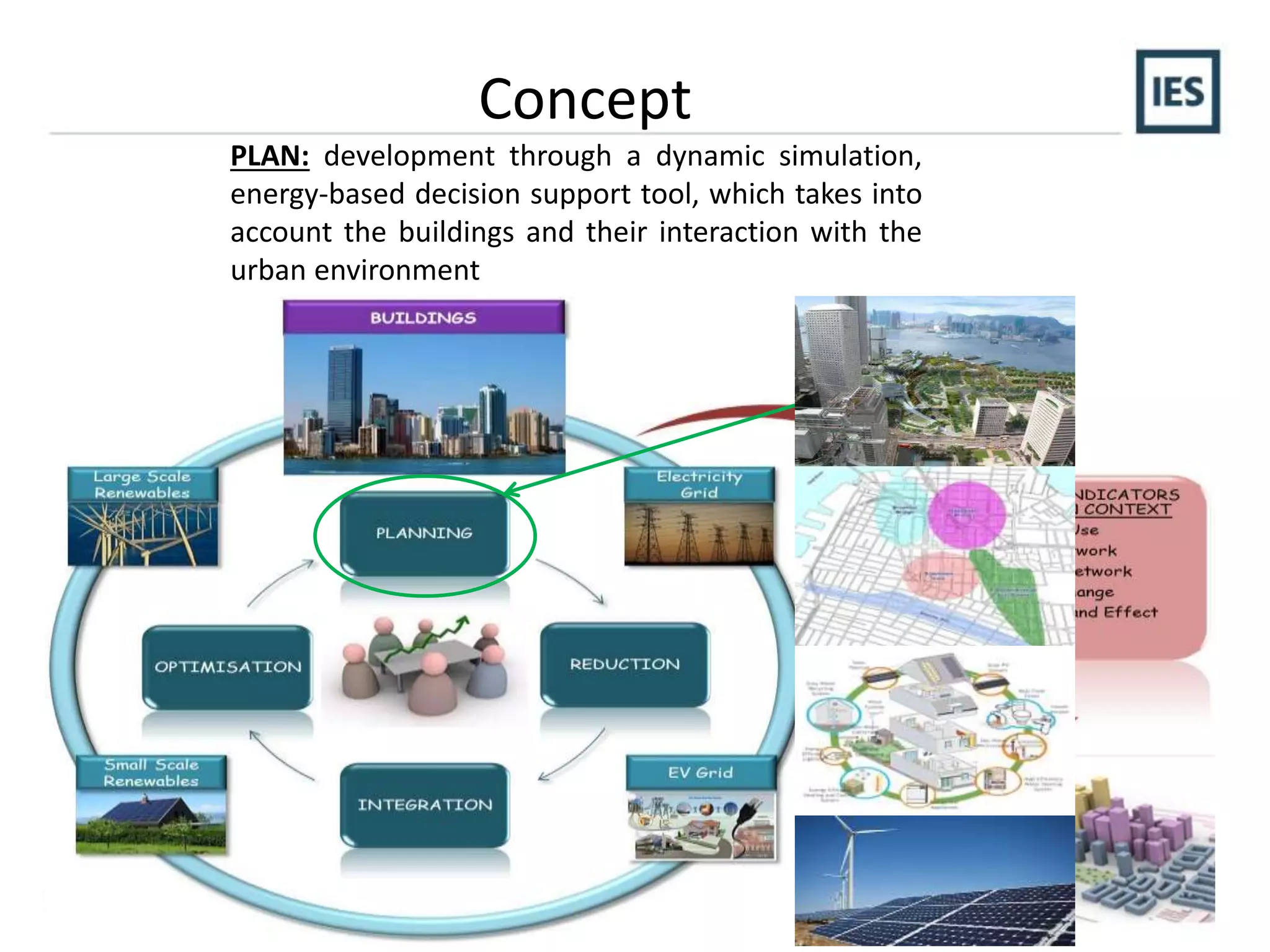
PLAN: development through a dynamic simulation,
energy-based decision support tool, which takes into
account the buildings and their interaction with the
urban environment
Concept
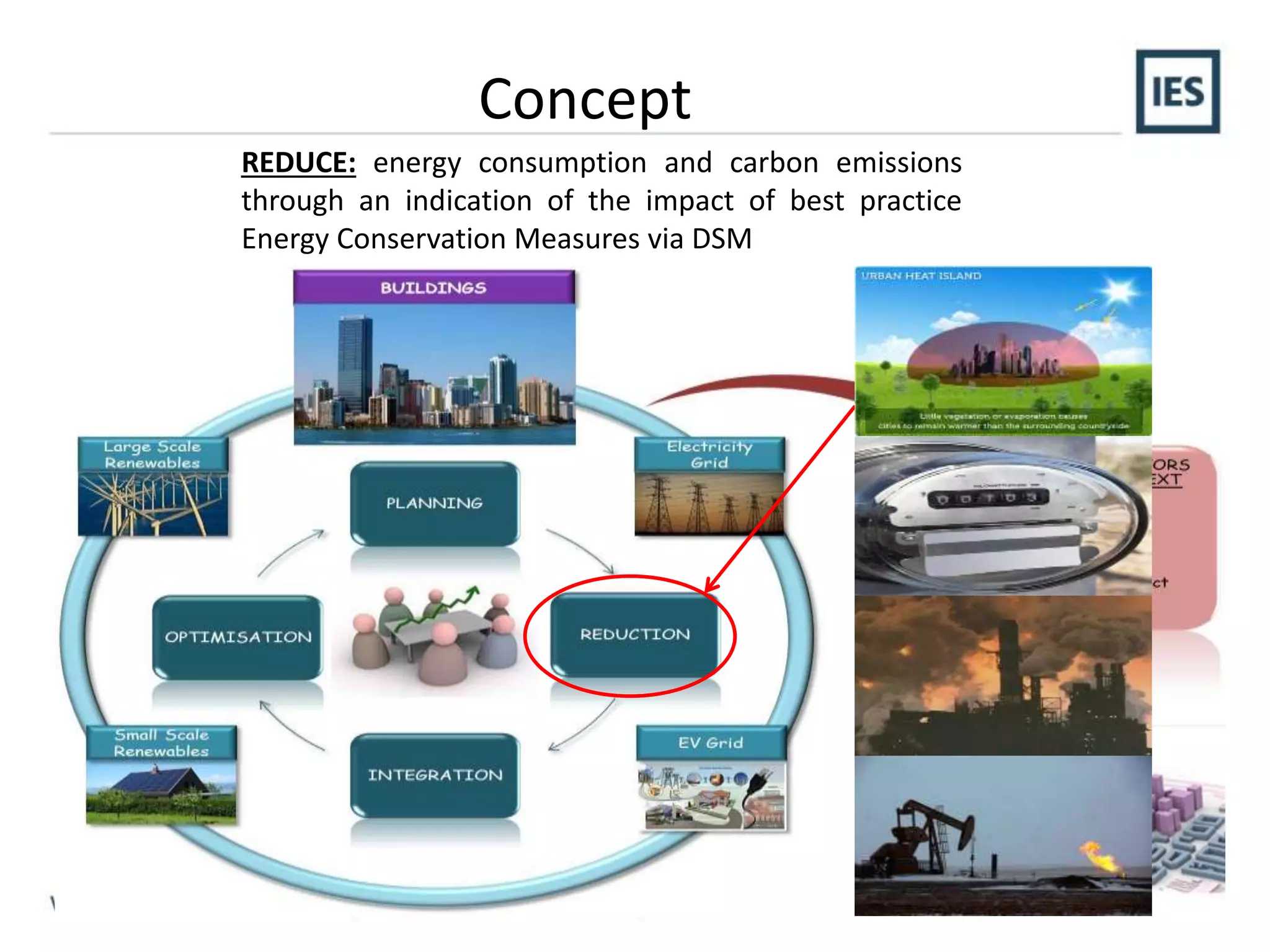
REDUCE: energy consumption and carbon emissions
through an indication of the impact of best practice
Energy Conservation Measures via DSM
Concept
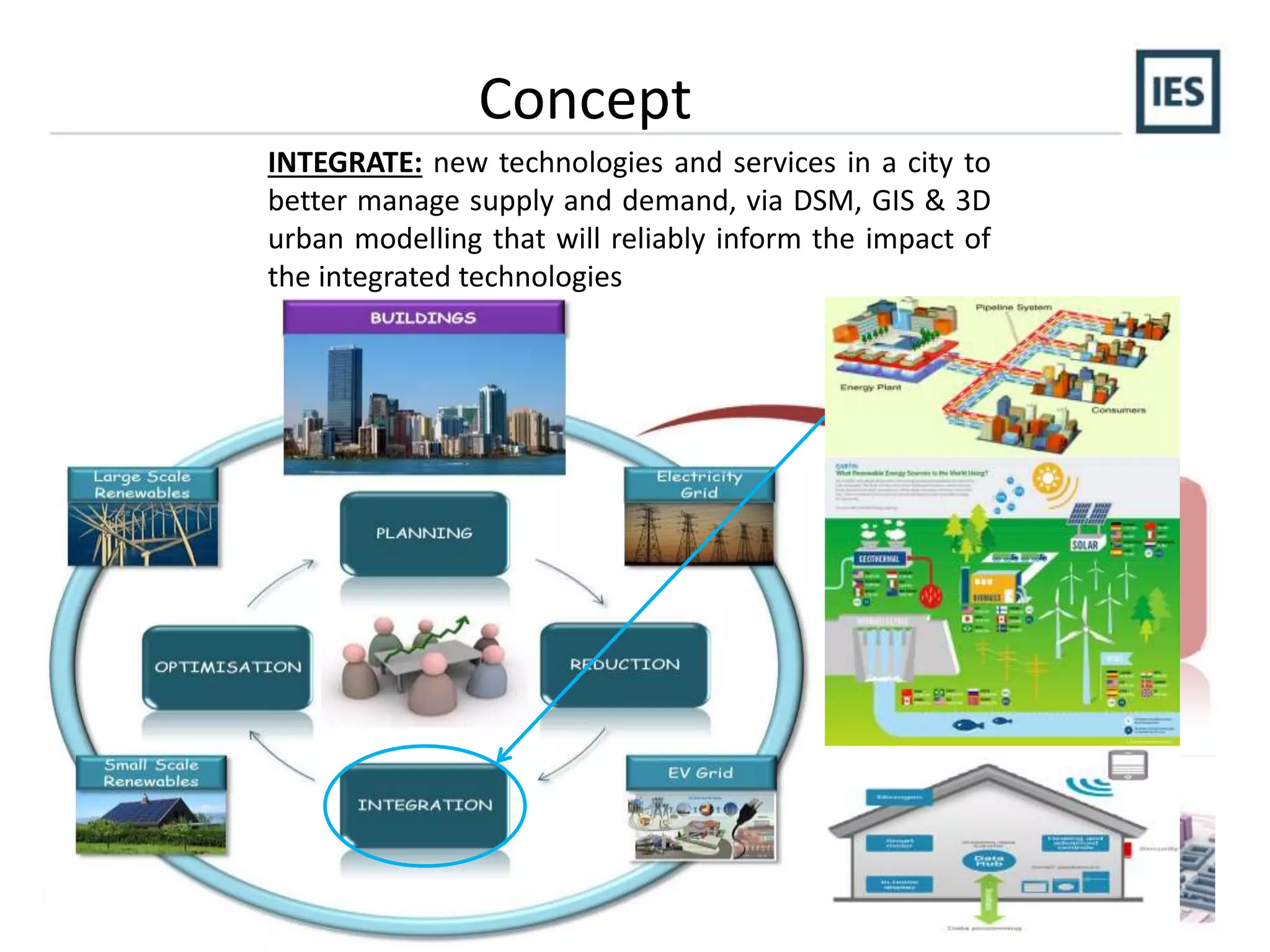
INTEGRATE: new technologies and services in a city to
better manage supply and demand, via DSM, GIS & 3D
urban modelling that will reliably inform the impact of
the integrated technologies
Concept
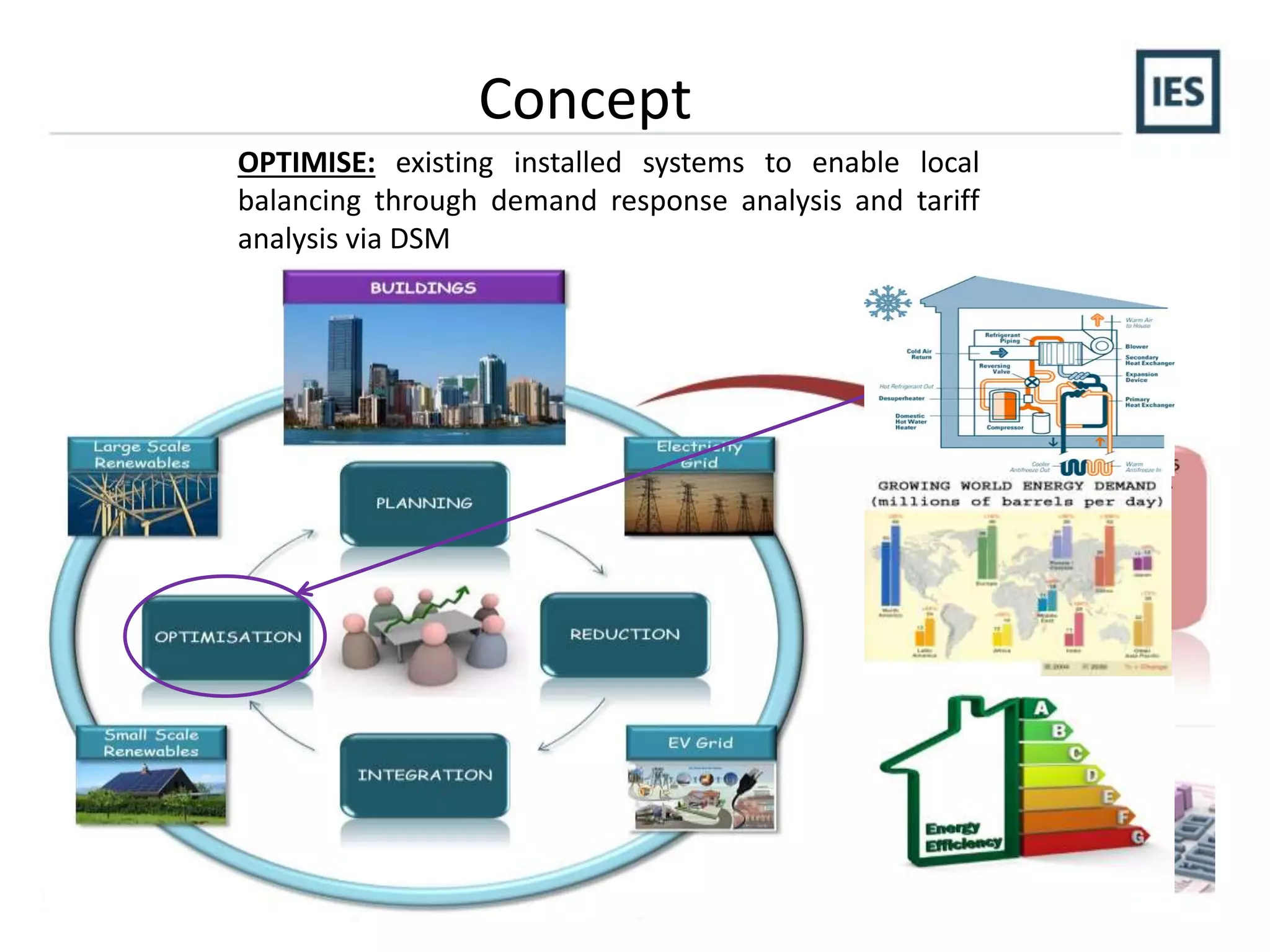
OPTIMISE: existing installed systems to enable local
balancing through demand response analysis and tariff
analysis via DSM
Concept
• Emission Reduction
• Energy Efficiency
• Cost Reduction
Main Outcomes
DSM
Environment
Methodology
for Evaluation
&
Quantification
Compilation of
Indicators
Link GIS with
Real City Data
Balance energy
consumption offer
investment
support
Integrate spatial,
geographic, and
building
information
Demand
Response, pricing
assess through
simulating city
model
Measure &
evaluate
parameters on
urban
environment
Dundalk Pilot Site
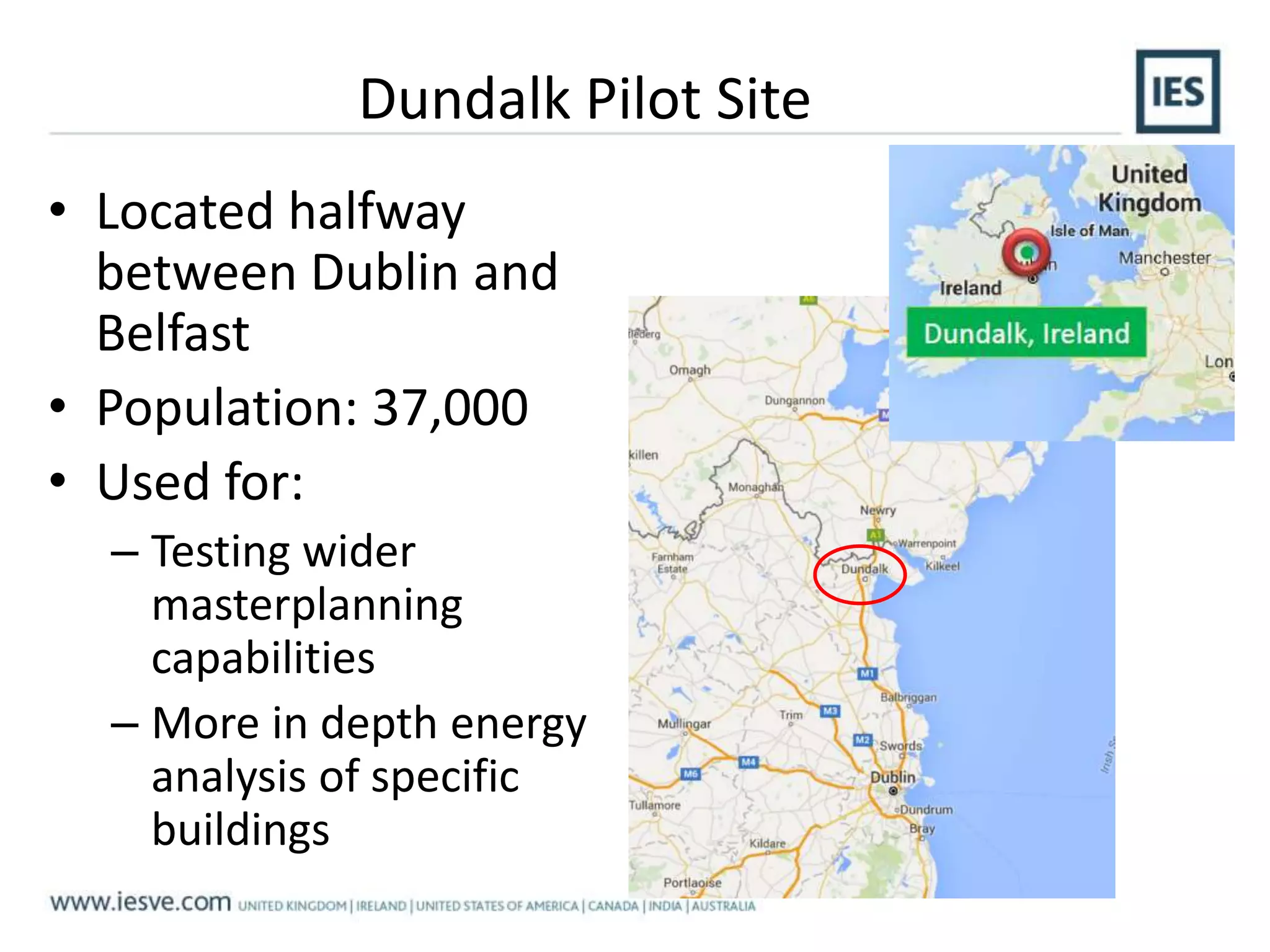
• Located halfway
between Dublin and
Belfast
• Population: 37,000
• Used for:
– Testing wider
masterplanning
capabilities
– More in depth energy
analysis of specific
buildings
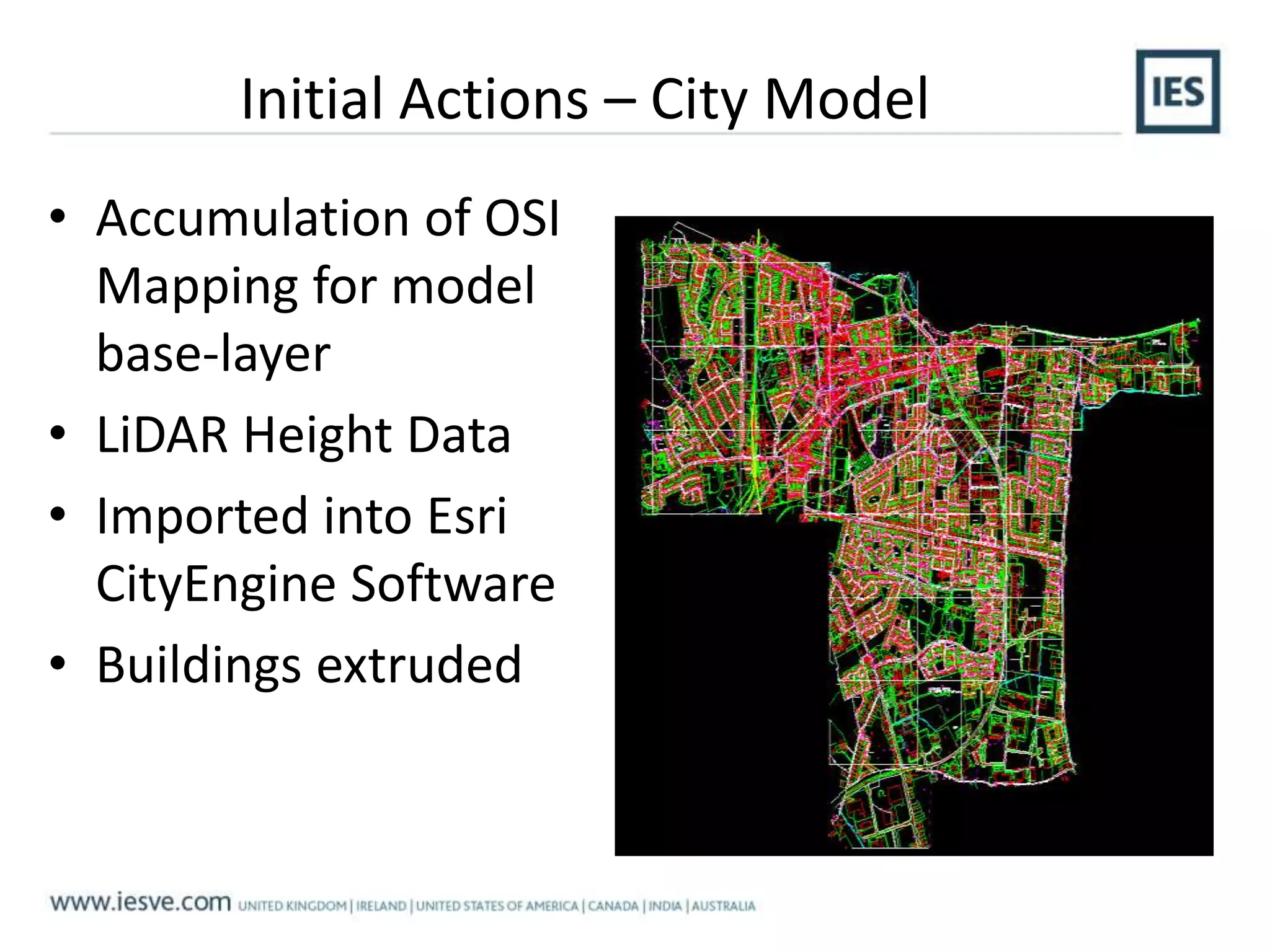
Initial Actions – City Model
• Accumulation of OSI
Mapping for model
base-layer
• LiDAR Height Data
• Imported into Esri
CityEngine Software
• Buildings extruded
Initial Actions – DSM
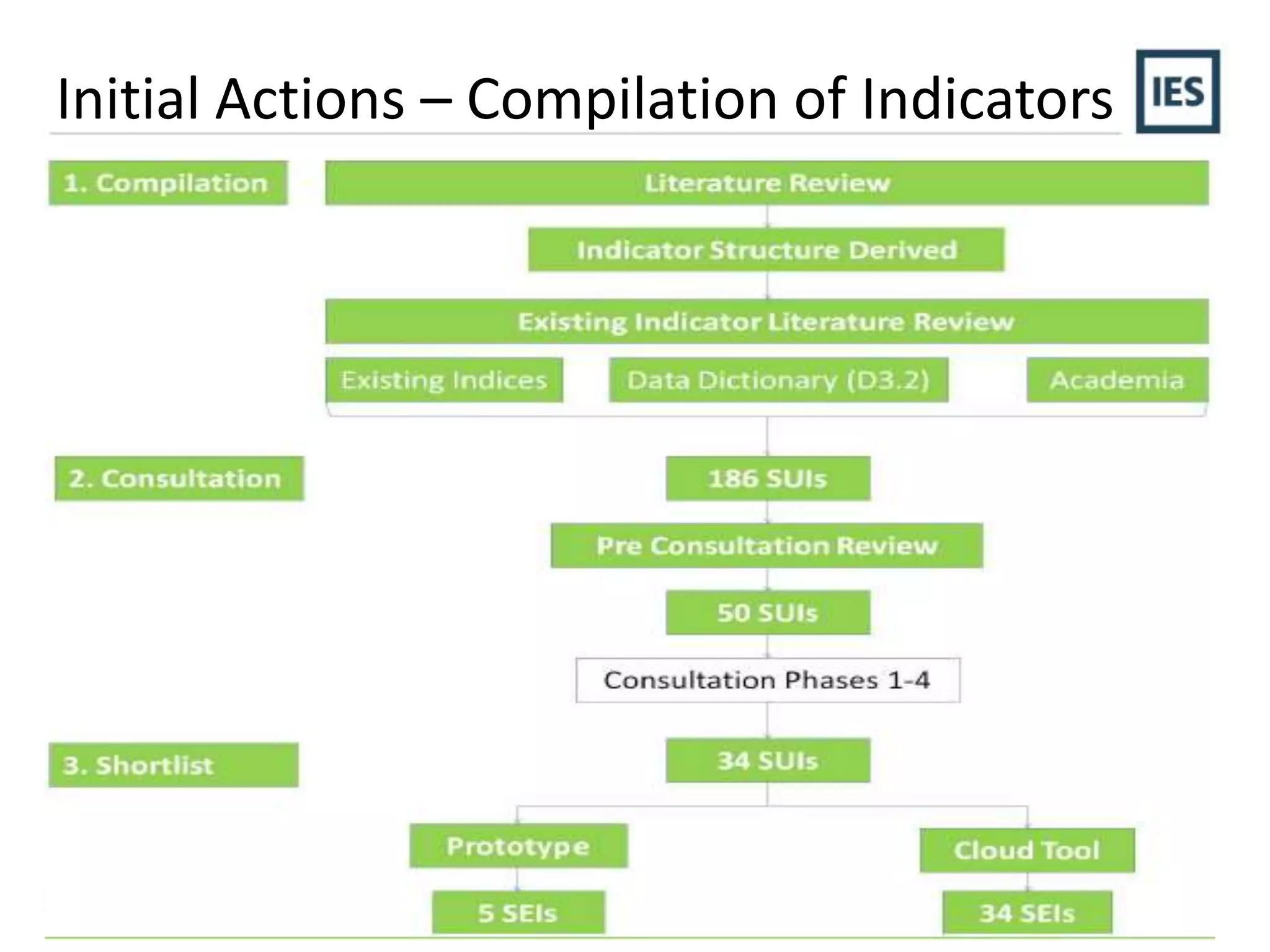
Initial Actions – Compilation of Indicators
Initial Actions – Background Algorithms
• Designed to take into consideration energy
forecasting and tariff analysis
• Will be tested across groups of building
• Aimed to be scaled up towards city level
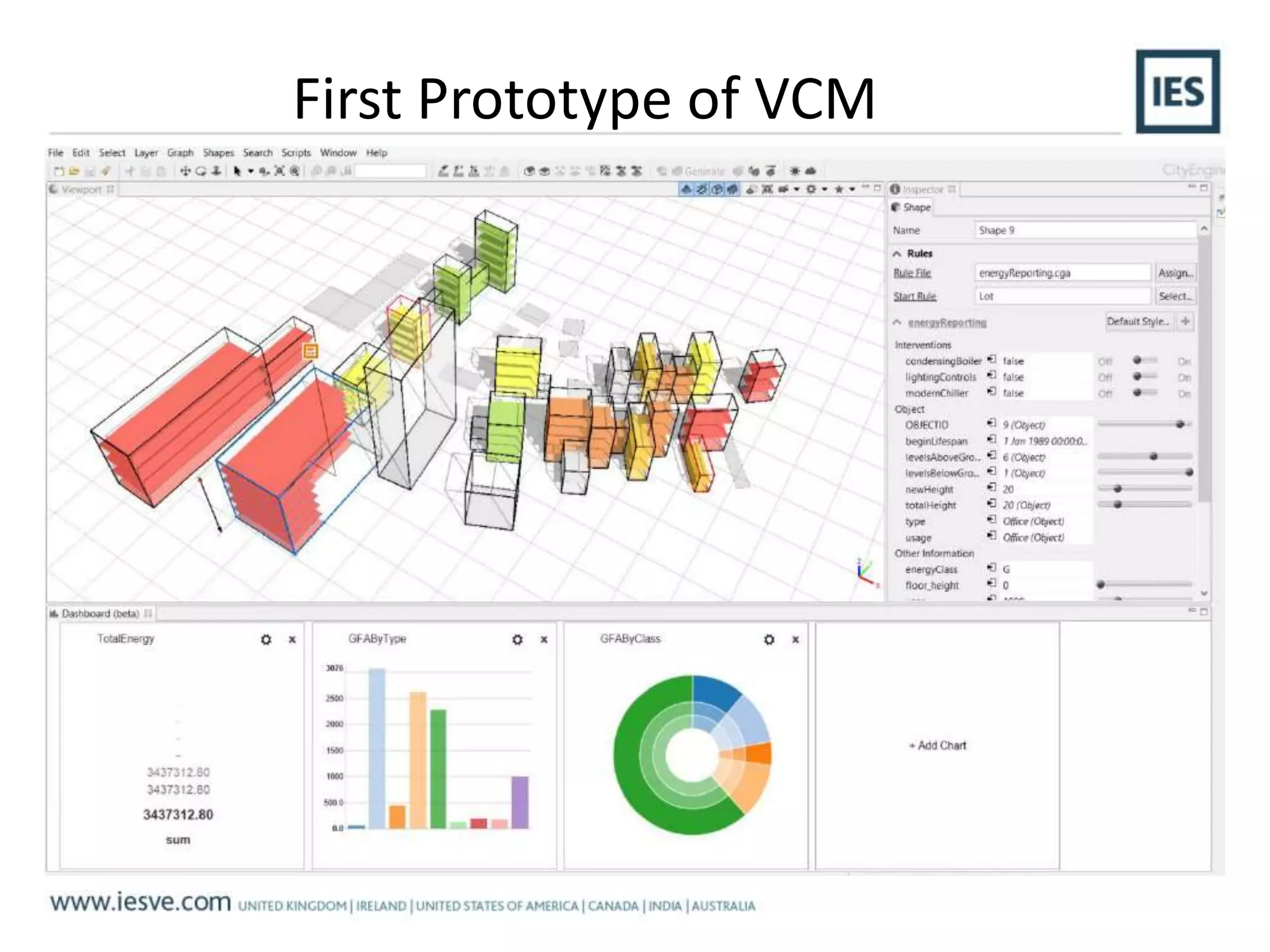
First Prototype of VCM
Aims
Incorporate
initial dashboard
First Batch of
Indicators
Direct link to
simulation
engine
First Prototype of VCM
Thank you!
Aidan Melia
Project Manager, Integrated Environmental Solutions Ltd.
Email: aidan.melia@iesve.com
Web: www.iesve.com
@INDICATE_EU
www.indicate-smartcities.eu

Towards the development of a virtual 3D city model: Dundalk, Ireland

  • 1.
    Towards the developmentof a virtual 3D city model: Dundalk, Ireland Aidan Melia – Project Manager Integrated Environmental Solutions All-Energy 2016 - Sustainable and Smart Cities Conference, May 4-5, Glasgow
  • 2.
    A Virtual CityModel VCM Dynamic Simulation Modelling Indicators Algorithms 3D ModelEsri CityEngine IES Virtual Environment Energy Optimisation City Performance
  • 3.
    Project Objectives Develop adecision support tool that will provide dynamic assessment of the interactions between buildings, and Renewable Technologies and Information Communication Technologies… Four Key Strands….
  • 4.
    Concept PLAN: development througha dynamic simulation, energy-based decision support tool, which takes into account the buildings and their interaction with the urban environment
  • 5.
    Concept REDUCE: energy consumptionand carbon emissions through an indication of the impact of best practice Energy Conservation Measures via DSM
  • 6.
    Concept INTEGRATE: new technologiesand services in a city to better manage supply and demand, via DSM, GIS & 3D urban modelling that will reliably inform the impact of the integrated technologies
  • 7.
    Concept OPTIMISE: existing installedsystems to enable local balancing through demand response analysis and tariff analysis via DSM
  • 8.
    Concept • Emission Reduction •Energy Efficiency • Cost Reduction
  • 9.
    Main Outcomes DSM Environment Methodology for Evaluation & Quantification Compilationof Indicators Link GIS with Real City Data Balance energy consumption offer investment support Integrate spatial, geographic, and building information Demand Response, pricing assess through simulating city model Measure & evaluate parameters on urban environment
  • 10.
    Dundalk Pilot Site •Located halfway between Dublin and Belfast • Population: 37,000 • Used for: – Testing wider masterplanning capabilities – More in depth energy analysis of specific buildings
  • 11.
    Initial Actions –City Model • Accumulation of OSI Mapping for model base-layer • LiDAR Height Data • Imported into Esri CityEngine Software • Buildings extruded
  • 12.
  • 13.
    Initial Actions –Compilation of Indicators
  • 14.
    Initial Actions –Compilation of Indicators
  • 15.
    Initial Actions –Background Algorithms • Designed to take into consideration energy forecasting and tariff analysis • Will be tested across groups of building • Aimed to be scaled up towards city level
  • 16.
    First Prototype ofVCM Aims Incorporate initial dashboard First Batch of Indicators Direct link to simulation engine
  • 17.
  • 18.
  • 19.
    Thank you! Aidan Melia ProjectManager, Integrated Environmental Solutions Ltd. Email: aidan.melia@iesve.com Web: www.iesve.com @INDICATE_EU www.indicate-smartcities.eu