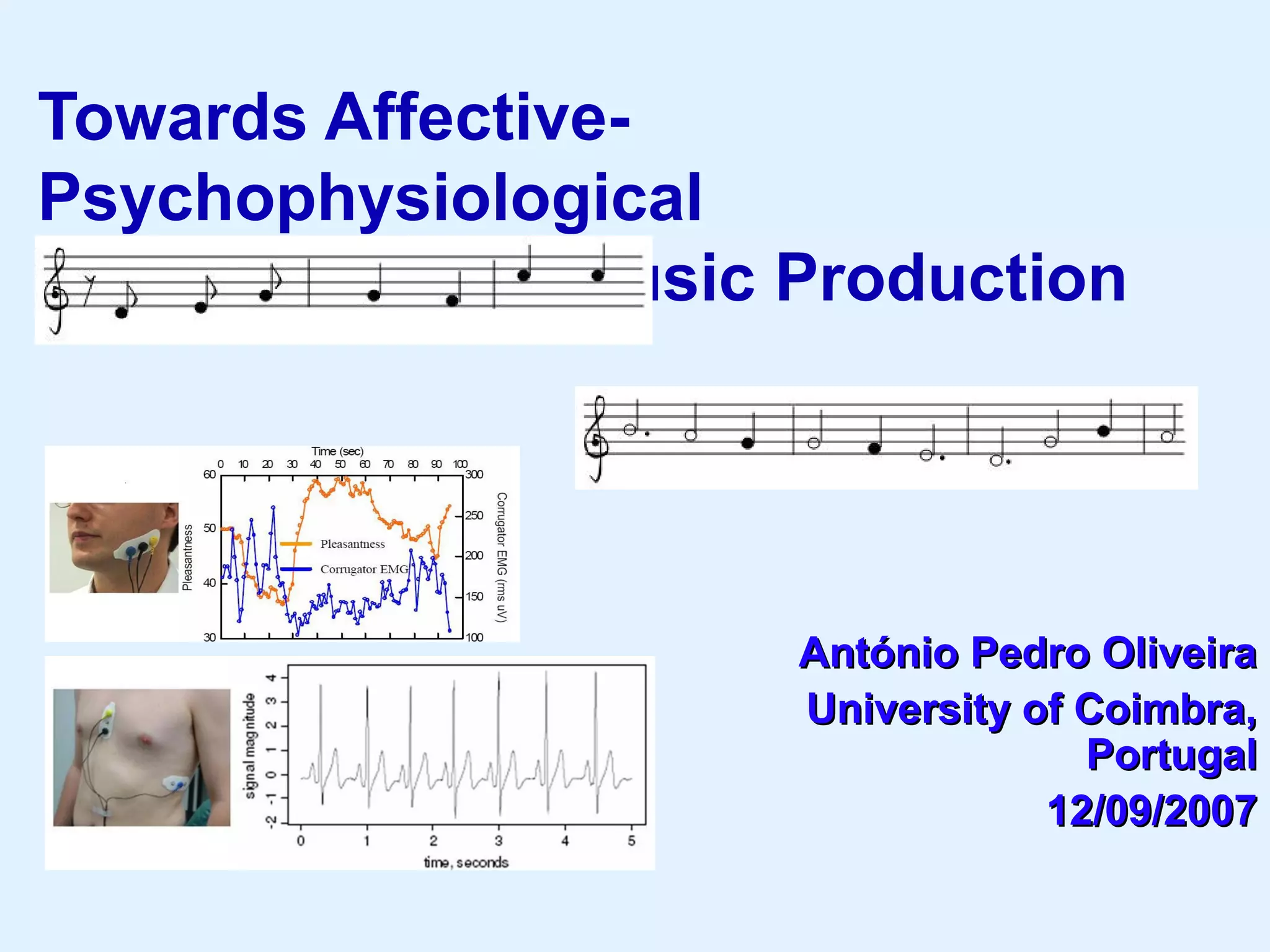
António Pedro OliveiraAntónio Pedro Oliveira
University of Coimbra,University of Coimbra,
PortugalPortugal
12/09/200712/09/2007
Towards Affective-
Psychophysiological
Foundations for Music Production
02/12/16 António Pedro Oliveira 2
OutlineOutline
 IntroductionIntroduction
 Background
 MethodologyMethodology
 Emotions representationEmotions representation
 Affective Music Knowledge BaseAffective Music Knowledge Base
 Music manipulationMusic manipulation
 Emotional output validationEmotional output validation
 ConclusionConclusion
02/12/16 António Pedro Oliveira 3
IntroductionIntroduction
 BackgroundBackground
 Music Psychology
 Understand perception, cognition and experiencing of
music
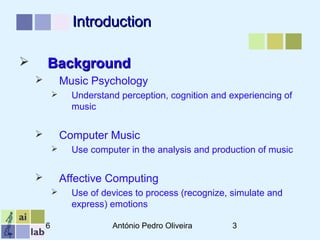
 Computer Music
 Use computer in the analysis and production of music
 Affective Computing
 Use of devices to process (recognize, simulate and
express) emotions
02/12/16 António Pedro Oliveira 4
IntroductionIntroduction
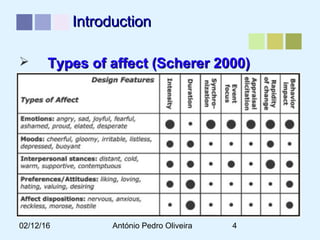
 Types of affect (Scherer 2000)Types of affect (Scherer 2000)
02/12/16 António Pedro Oliveira 5
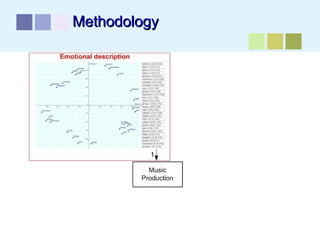
MethodologyMethodology
02/12/16 António Pedro Oliveira 6
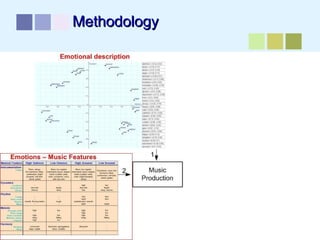
MethodologyMethodology
02/12/16 António Pedro Oliveira 7
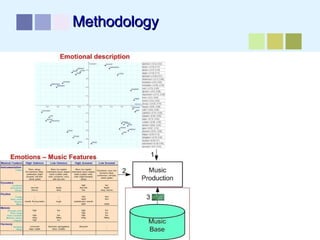
MethodologyMethodology
02/12/16 António Pedro Oliveira 8
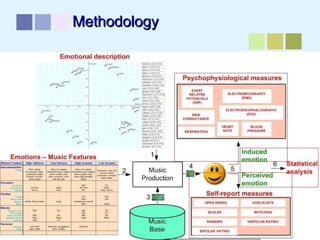
MethodologyMethodology
02/12/16 António Pedro Oliveira 9
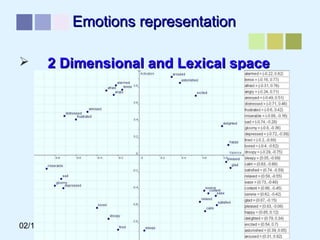
Emotions representationEmotions representation
 2 Dimensional and Lexical space2 Dimensional and Lexical space
02/12/16 António Pedro Oliveira 10
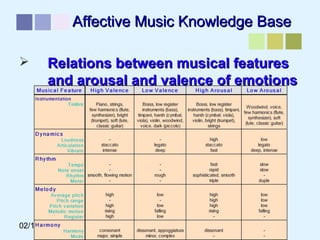
Affective Music Knowledge BaseAffective Music Knowledge Base
 Relations between musical featuresRelations between musical features
and arousal and valence of emotionsand arousal and valence of emotions
02/12/16 António Pedro Oliveira 11
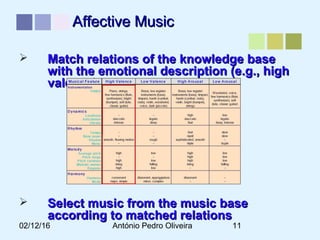
Affective MusicAffective Music
 Match relations of the knowledge baseMatch relations of the knowledge base
with the emotional description (e.g., highwith the emotional description (e.g., high
valence)valence)
 Select music from the music baseSelect music from the music base
according to matched relationsaccording to matched relations
02/12/16 António Pedro Oliveira 12
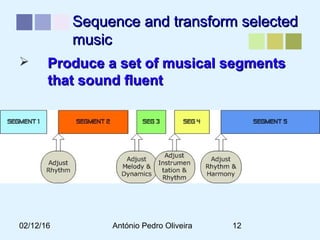
Sequence and transform selectedSequence and transform selected
musicmusic
 Produce a set of musical segmentsProduce a set of musical segments
that sound fluentthat sound fluent
02/12/16 António Pedro Oliveira 13
Perceived and induced emotionsPerceived and induced emotions
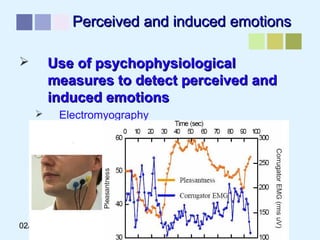
 Use of psychophysiologicalUse of psychophysiological
measures to detect perceived andmeasures to detect perceived and
induced emotionsinduced emotions
 Electromyography
02/12/16 António Pedro Oliveira 14
Perceived and induced emotionsPerceived and induced emotions
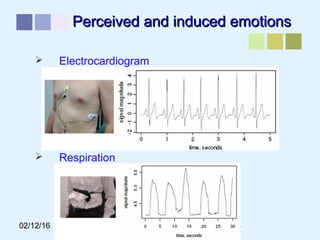
 Electrocardiogram
 Respiration
02/12/16 António Pedro Oliveira 15
Perceived and induced emotionsPerceived and induced emotions
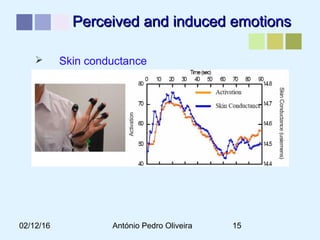
 Skin conductance
02/12/16 António Pedro Oliveira 16
Perceived and induced emotionsPerceived and induced emotions
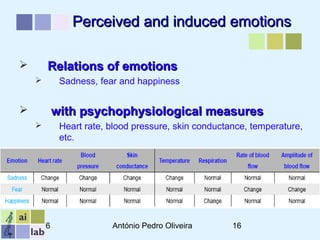
 Relations of emotionsRelations of emotions
 Sadness, fear and happiness
 with psychophysiological measureswith psychophysiological measures
 Heart rate, blood pressure, skin conductance, temperature,
etc.
02/12/16 António Pedro Oliveira 17
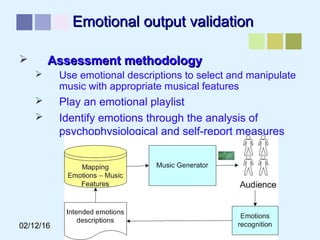
Emotional output validationEmotional output validation
 Assessment methodologyAssessment methodology
 Use emotional descriptions to select and manipulate
music with appropriate musical features
 Play an emotional playlist
 Identify emotions through the analysis of
psychophysiological and self-report measures
02/12/16 António Pedro Oliveira 18
ConclusionConclusion
 Design a computational model of music
production grounded on affective and
psychophysiological foundations
 Validate the model with users to promote a reliable
expression and induction of emotions by using music
 System can be applied in areas that intend to
produce music given an emotional input
 Music Therapy, soundtracks for arts, movies, dance, theater,
virtual environments, computer games, etc.

Towards Affective-Physiological Foundations for Music Production

  • 1.
    António Pedro OliveiraAntónioPedro Oliveira University of Coimbra,University of Coimbra, PortugalPortugal 12/09/200712/09/2007 Towards Affective- Psychophysiological Foundations for Music Production
  • 2.
    02/12/16 António PedroOliveira 2 OutlineOutline  IntroductionIntroduction  Background  MethodologyMethodology  Emotions representationEmotions representation  Affective Music Knowledge BaseAffective Music Knowledge Base  Music manipulationMusic manipulation  Emotional output validationEmotional output validation  ConclusionConclusion
  • 3.
    02/12/16 António PedroOliveira 3 IntroductionIntroduction  BackgroundBackground  Music Psychology  Understand perception, cognition and experiencing of music  Computer Music  Use computer in the analysis and production of music  Affective Computing  Use of devices to process (recognize, simulate and express) emotions
  • 4.
    02/12/16 António PedroOliveira 4 IntroductionIntroduction  Types of affect (Scherer 2000)Types of affect (Scherer 2000)
  • 5.
    02/12/16 António PedroOliveira 5 MethodologyMethodology
  • 6.
    02/12/16 António PedroOliveira 6 MethodologyMethodology
  • 7.
    02/12/16 António PedroOliveira 7 MethodologyMethodology
  • 8.
    02/12/16 António PedroOliveira 8 MethodologyMethodology
  • 9.
    02/12/16 António PedroOliveira 9 Emotions representationEmotions representation  2 Dimensional and Lexical space2 Dimensional and Lexical space
  • 10.
    02/12/16 António PedroOliveira 10 Affective Music Knowledge BaseAffective Music Knowledge Base  Relations between musical featuresRelations between musical features and arousal and valence of emotionsand arousal and valence of emotions
  • 11.
    02/12/16 António PedroOliveira 11 Affective MusicAffective Music  Match relations of the knowledge baseMatch relations of the knowledge base with the emotional description (e.g., highwith the emotional description (e.g., high valence)valence)  Select music from the music baseSelect music from the music base according to matched relationsaccording to matched relations
  • 12.
    02/12/16 António PedroOliveira 12 Sequence and transform selectedSequence and transform selected musicmusic  Produce a set of musical segmentsProduce a set of musical segments that sound fluentthat sound fluent
  • 13.
    02/12/16 António PedroOliveira 13 Perceived and induced emotionsPerceived and induced emotions  Use of psychophysiologicalUse of psychophysiological measures to detect perceived andmeasures to detect perceived and induced emotionsinduced emotions  Electromyography
  • 14.
    02/12/16 António PedroOliveira 14 Perceived and induced emotionsPerceived and induced emotions  Electrocardiogram  Respiration
  • 15.
    02/12/16 António PedroOliveira 15 Perceived and induced emotionsPerceived and induced emotions  Skin conductance
  • 16.
    02/12/16 António PedroOliveira 16 Perceived and induced emotionsPerceived and induced emotions  Relations of emotionsRelations of emotions  Sadness, fear and happiness  with psychophysiological measureswith psychophysiological measures  Heart rate, blood pressure, skin conductance, temperature, etc.
  • 17.
    02/12/16 António PedroOliveira 17 Emotional output validationEmotional output validation  Assessment methodologyAssessment methodology  Use emotional descriptions to select and manipulate music with appropriate musical features  Play an emotional playlist  Identify emotions through the analysis of psychophysiological and self-report measures
  • 18.
    02/12/16 António PedroOliveira 18 ConclusionConclusion  Design a computational model of music production grounded on affective and psychophysiological foundations  Validate the model with users to promote a reliable expression and induction of emotions by using music  System can be applied in areas that intend to produce music given an emotional input  Music Therapy, soundtracks for arts, movies, dance, theater, virtual environments, computer games, etc.

Editor's Notes

  • #2 Music labelling (features and emotions) Notas: arquitecture and algorithms