E-books in Public Libraries:
   Toward a digital future?
                 Carly Sharples
Why e-books?
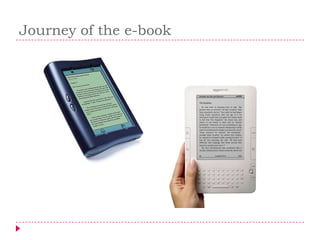
Journey of the e-book
State of play
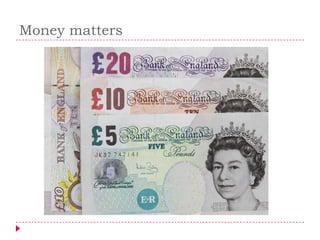
Money matters
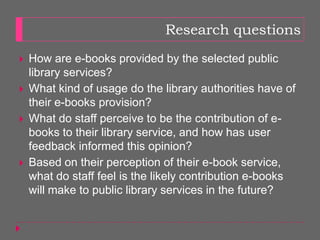
Research questions
   How are e-books provided by the selected public
    library services?
   What kind of usage do the library authorities have of
    their e-books provision?
   What do staff perceive to be the contribution of e-
    books to their library service, and how has user
    feedback informed this opinion?
   Based on their perception of their e-book service,
    what do staff feel is the likely contribution e-books
    will make to public library services in the future?
Research Design
Service providers

“I really don’t think that the future of e-books
is to read on screen from a PC”

 “there’s a growing proportion of people who
 want to put them onto their device – their e-
           book reader, even their phones…”
What’s popular?

    “There’s the issues of relevant stock and
      supply of current relevant stock – as in
         popular British fiction for example.”

“It would be good for us if more young
people use our services, ironically because
they’re an age group that traditionally fall off
don’t they?”
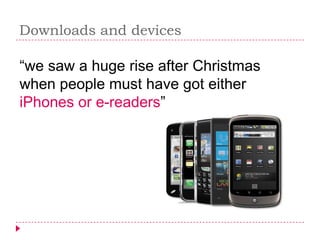
Downloads and devices

“we saw a huge rise after Christmas
when people must have got either
iPhones or e-readers”
Publishers and power

   “I can see the top ten bestsellers for kids
    books and the adults books on Smiths, I
 want that kind of stuff, why can’t I have that
                                        stuff?”

“OverDrive are losing a lot of their – a lot of
the rights to their e-books in the States, so
I’ve no idea whether the e-books from
OverDrive will be sustainable in the longer
term.”
So who are the users?
“Well, we were expecting the main user group
to be teen – say 11 or 12….[but] I’m certainly
aware from questions we get asked that it
seems to be all ages.”

  “We’re quite surprised by the number of quite
   mature people, or pensioners, who are using
the service…when we launched the service our
      impression was…we were marketing it to
                              people on the go.”
Future of the service
“If in a scenario where you have to rationalise
your library service, literally in terms of your
physical buildings…you’re going to have lots of
places where there used to be libraries and
there just isn’t one. I should have thought a
logical extension of that is that you beef up your
virtual services.”

        “If we can’t sustain it, you know, funding
       £15,000 from our book stock yearly, then
                          something has to give.”
Conclusions 1: a new way of working
Conclusions 2: a digital future?
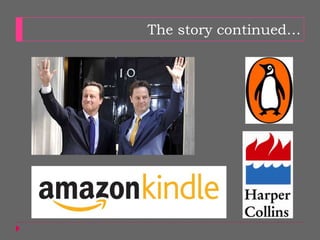
The story continued…
Carly Sharples
University of East Anglia
              @carlysharples
References
Slide 2: CIMG1501 by Patrik Tschudin on Flickr
Slide 3: Rocketbook on Literacy Kicks [blog] http://www.litkicks.com/FallingOut/, Kindle2
from Guardian Technology blog
http://www.guardian.co.uk/technology/blog/2009/feb/08/amazon-ebooks-kindle2
Slide 4: OverDrive logo Lebanon, Indiana, Public Library
http://bccn.boone.in.us/LPL/departments/av/index.html, PLO logo Cambridgeshire libraries
http://www.cambridgeshire.gov.uk/leisure/libraries/online.htm
Slide 5: Librarians against DRM Facebook page: http://www.facebook.com/nodrm
Slide 6: British Money by Petr Kratochvil on PublicDomainPictures
Slide 8: Qualitative Research Design by Operadewa http://operadewa.wordpress.com
Slide 11: Smartphones on The Full Proof Blog http://www.full-proof.co.uk/Blog/10-great-
smartphone-apps-for-freelancers/
Slide 15: Jigsaw puzzle from Christy Lee http://www.workwithchristy.com/jigsaw-puzzle-
mentality/
Slide 16: Moving forward on Emotions Run Through [blog]
http://emotionsrunthrough.blogspot.co.uk
Slide 17: Kindle logo from Amazon.co.uk, Penguin logo from Forbookssake.net, Harper
Collins logo from Somerset College http://www.somerset.qld.edu.au, David Cameron and
Nick Clegg from Guardian.co.uk
Quotations of findings all taken from: Sharples, C. (2011) E-books in public libraries: toward
a digital future? MSc. University of the West of England.

Toward a Digital Future?

  • 1.
    E-books in PublicLibraries: Toward a digital future? Carly Sharples
  • 2.
  • 3.
  • 4.
  • 6.
  • 7.
    Research questions  How are e-books provided by the selected public library services?  What kind of usage do the library authorities have of their e-books provision?  What do staff perceive to be the contribution of e- books to their library service, and how has user feedback informed this opinion?  Based on their perception of their e-book service, what do staff feel is the likely contribution e-books will make to public library services in the future?
  • 8.
  • 9.
    Service providers “I reallydon’t think that the future of e-books is to read on screen from a PC” “there’s a growing proportion of people who want to put them onto their device – their e- book reader, even their phones…”
  • 10.
    What’s popular? “There’s the issues of relevant stock and supply of current relevant stock – as in popular British fiction for example.” “It would be good for us if more young people use our services, ironically because they’re an age group that traditionally fall off don’t they?”
  • 11.
    Downloads and devices “wesaw a huge rise after Christmas when people must have got either iPhones or e-readers”
  • 12.
    Publishers and power “I can see the top ten bestsellers for kids books and the adults books on Smiths, I want that kind of stuff, why can’t I have that stuff?” “OverDrive are losing a lot of their – a lot of the rights to their e-books in the States, so I’ve no idea whether the e-books from OverDrive will be sustainable in the longer term.”
  • 13.
    So who arethe users? “Well, we were expecting the main user group to be teen – say 11 or 12….[but] I’m certainly aware from questions we get asked that it seems to be all ages.” “We’re quite surprised by the number of quite mature people, or pensioners, who are using the service…when we launched the service our impression was…we were marketing it to people on the go.”
  • 14.
    Future of theservice “If in a scenario where you have to rationalise your library service, literally in terms of your physical buildings…you’re going to have lots of places where there used to be libraries and there just isn’t one. I should have thought a logical extension of that is that you beef up your virtual services.” “If we can’t sustain it, you know, funding £15,000 from our book stock yearly, then something has to give.”
  • 15.
    Conclusions 1: anew way of working
  • 16.
    Conclusions 2: adigital future?
  • 17.
  • 18.
    Carly Sharples University ofEast Anglia @carlysharples
  • 19.
    References Slide 2: CIMG1501by Patrik Tschudin on Flickr Slide 3: Rocketbook on Literacy Kicks [blog] http://www.litkicks.com/FallingOut/, Kindle2 from Guardian Technology blog http://www.guardian.co.uk/technology/blog/2009/feb/08/amazon-ebooks-kindle2 Slide 4: OverDrive logo Lebanon, Indiana, Public Library http://bccn.boone.in.us/LPL/departments/av/index.html, PLO logo Cambridgeshire libraries http://www.cambridgeshire.gov.uk/leisure/libraries/online.htm Slide 5: Librarians against DRM Facebook page: http://www.facebook.com/nodrm Slide 6: British Money by Petr Kratochvil on PublicDomainPictures Slide 8: Qualitative Research Design by Operadewa http://operadewa.wordpress.com Slide 11: Smartphones on The Full Proof Blog http://www.full-proof.co.uk/Blog/10-great- smartphone-apps-for-freelancers/ Slide 15: Jigsaw puzzle from Christy Lee http://www.workwithchristy.com/jigsaw-puzzle- mentality/ Slide 16: Moving forward on Emotions Run Through [blog] http://emotionsrunthrough.blogspot.co.uk Slide 17: Kindle logo from Amazon.co.uk, Penguin logo from Forbookssake.net, Harper Collins logo from Somerset College http://www.somerset.qld.edu.au, David Cameron and Nick Clegg from Guardian.co.uk Quotations of findings all taken from: Sharples, C. (2011) E-books in public libraries: toward a digital future? MSc. University of the West of England.