Tourism
hospitality industry
Tourist & Tourism
• TOURISM IS THE TEMPORLY INVOLMENT OF
PEOPLE TO DESTINATIONS OUTSIDE OF
THE PLACES WHERE THEY NORMARLY LIVE
AND WORK ,AND THEIR ACTIVITIES DURING
THE IR STAY AT THESE DESTINATIONS.
Classification of Tourist
Domestic Tourist.
Those who travel within the country.
International Tourist.
Those who traveling from abroad.
Foreigners arriving to country call
Inbound guests
& departing nationals call
Outbound guests.
Definition of
Tourism
•Any activities that take people
away from their usual place of
residence for pleasure or a holiday
other than for work.
WHAT IS
TOURISM
ABOUT ?
• Did you know that more people are
employed in tourism than in any other
industry in the world.
• Did you know that it is a rapidly expanding
industry, that more and more people are
traveling every year, spending more and
more money every year as they travel. .!
What exactly is this tourism
industry about ?
• Tourism is about .people who travel away from
their familiar home environment.
• Often they traveling
• on holiday;
• on business trips;
• to visit friends and relatives
• on pilgrimage
• to a conference or a sporting event like the
World Cup Cricket series or the Olympic
• Games (either as spectators or participants). . "
The key
points here
are:
• Tourists can travel for a lot of different
reasons
• Tourists do not always come from another
country
Inbound
• International tourists arriving in another
country
Outbound
• Departing nationals setting off for another
country
WHAT MAKES THE TOURISM
PRODUCT DIFFERENT FROM
OTHERS …?
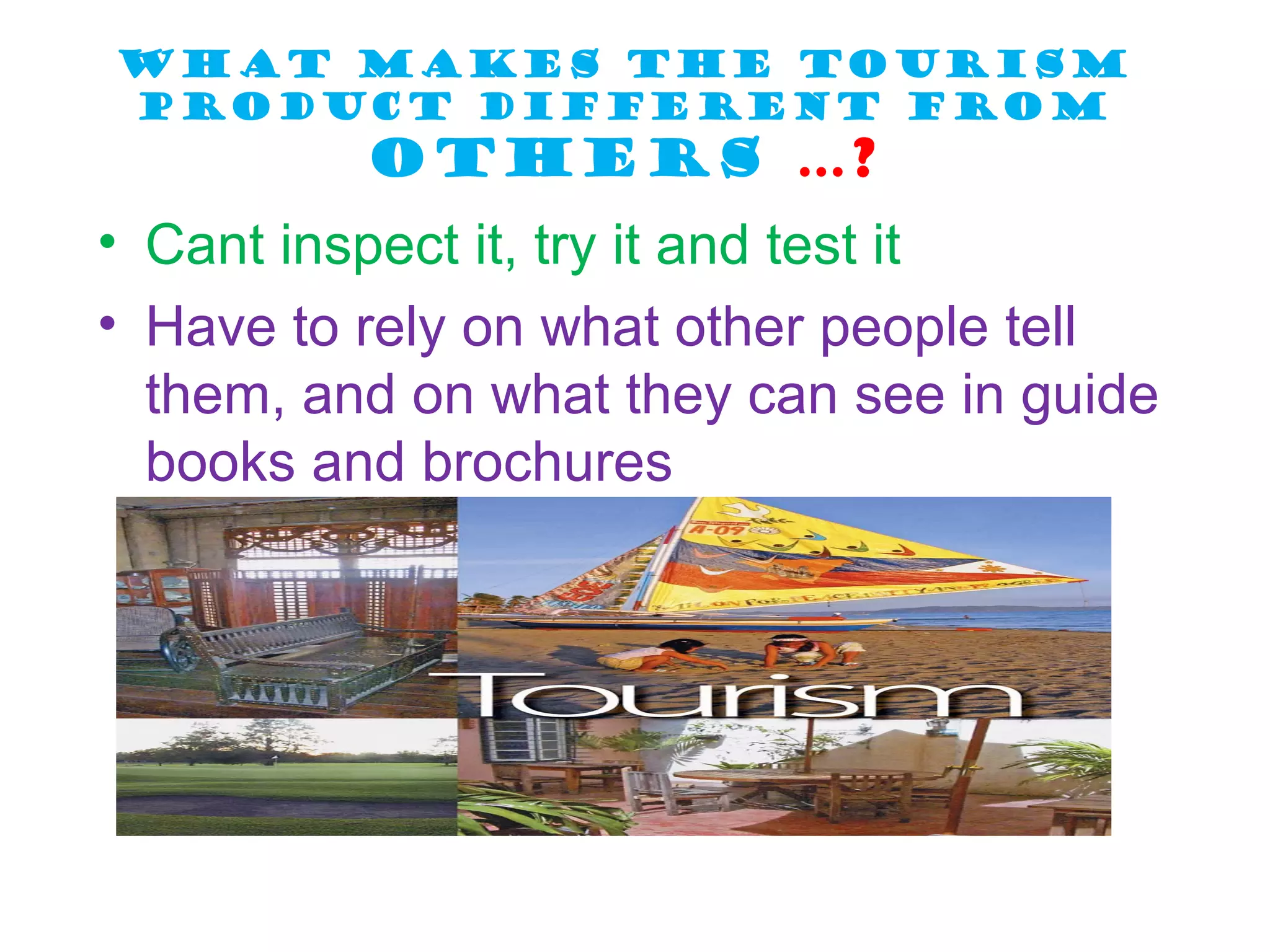
• Cant inspect it, try it and test it
• Have to rely on what other people tell
them, and on what they can see in guide
books and brochures
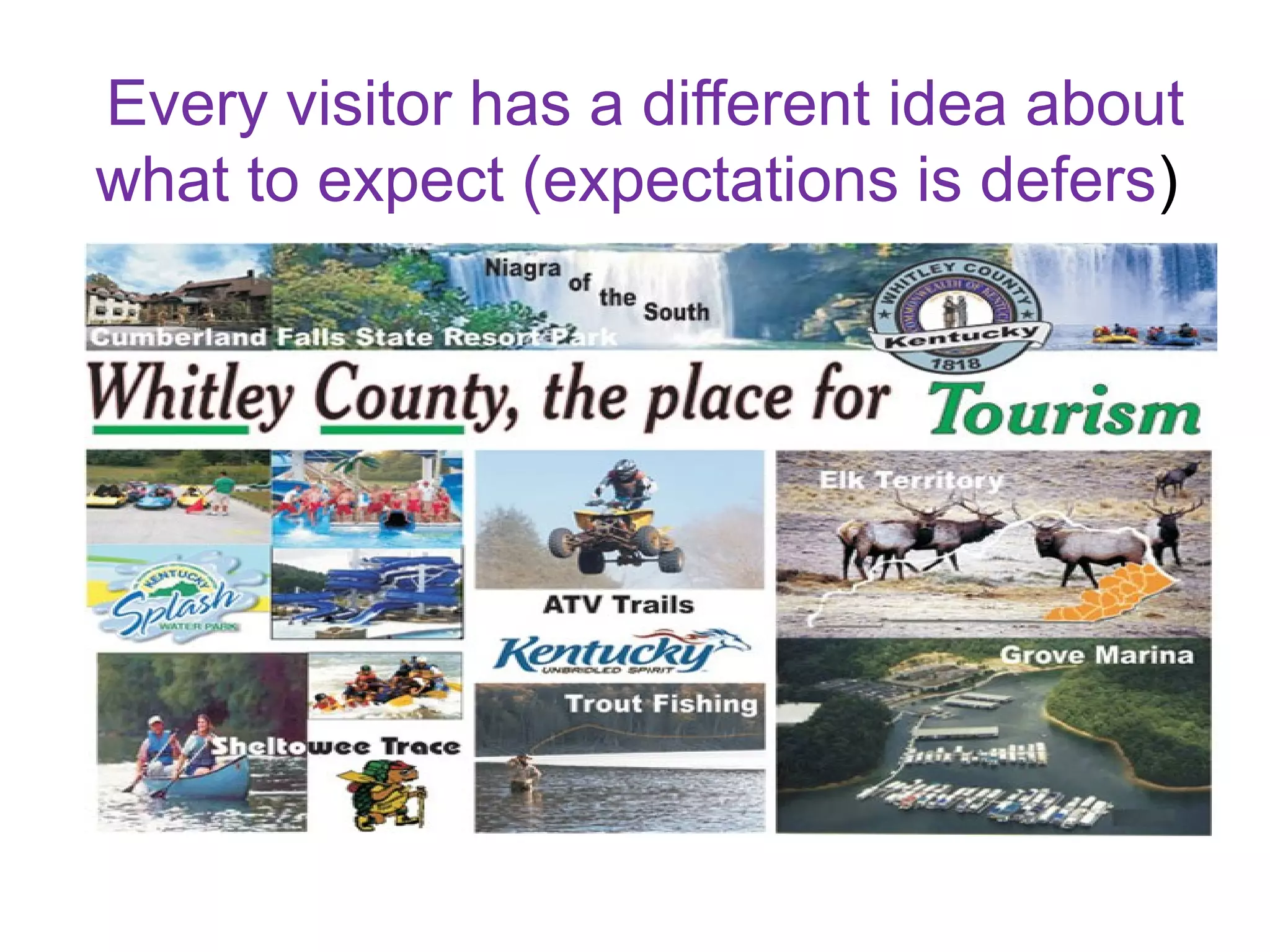
Every visitor has a different idea about
what to expect (expectations is defers)
HISTORY OF THE TOURIST
INDUSTRY DEVOLEPMENT
• The development of transport led to
lone travelers
• Horseback, giving way to stage coaches,
and other forms of horse drawn caravans.
Inns and lodges
• with the introduction of motor vehicles,
railways etc.
End of the 2nd World War, A large
number of airplanes built to carry
troops and supplies to the war front
Those airplanes used to transport
normal public to destinations
on vacations.
COMPONENTS OF TOURIST
INDUSTRY
• ACCOMMODATION
• TRANSPORT / CARRIERS
• ATTRACTIONS
• SUPPORT SERVICES
• FOOD AND BEVERAGE OPERATIONS
• RETAIL STORES
SUPPORT SERVICES
• TOUR OPERATORS
• TRAVEL AGENTS
• National Tourist Organisations
• Area / Régional Touristes Organisations
• Ports (public) / Air ports
• Local information offices
ATTRACTIONS
Natural : Land / sea scape
Mountains, etc.
Manmade : Ancient monuments
Archaeological sites
Museums/art galleries
Theme parks
ACCOMMODATION
• Hotels / Motels
• Villas / Chalets
• Guest Houses
• Camping Sites
• Caravan Sites
• Apartments
• Holiday Camps, etc.
TRANSPORT / CARRIERS
• Air Transport
• Sea Transport
• Railways
• Road Transport: Coaches/Car hire
FOOD AND BEVERAGE
OPERATIONS
• Restaurants
• Retail stores
• Vending
• Catering
• Snack bars
• Bars/Taverns
• Banquets
• Contract food services
RETAIL STORES
• Gift shops
• Souvenir shops
• Arts/Craft shops
• Shopping malls
• Markets
• Miscellaneous stores
NEW DEVELOPMENTS IN
THE INDUSTRY
• Aero plane that would carry 890
passengers
Future Trends
• In USA travel agents are selling seats in a
spacecraft meant for ordinary people.
• A hotel in space is not a far out
proposition.
• May be under water as well
• Another future development is that more
specialty hotels are coming up. Such as
Ladies only hotels, Ice hotels ,Cave hotels
Wish you all
a better future in
Sri Lankan Hospitality Industry.
thank you
Ashan Mendis
C H S G A.

Tourism introduction

  • 1.
  • 2.
    Tourist & Tourism •TOURISM IS THE TEMPORLY INVOLMENT OF PEOPLE TO DESTINATIONS OUTSIDE OF THE PLACES WHERE THEY NORMARLY LIVE AND WORK ,AND THEIR ACTIVITIES DURING THE IR STAY AT THESE DESTINATIONS.
  • 3.
    Classification of Tourist DomesticTourist. Those who travel within the country. International Tourist. Those who traveling from abroad. Foreigners arriving to country call Inbound guests & departing nationals call Outbound guests.
  • 4.
    Definition of Tourism •Any activitiesthat take people away from their usual place of residence for pleasure or a holiday other than for work.
  • 5.
    WHAT IS TOURISM ABOUT ? •Did you know that more people are employed in tourism than in any other industry in the world. • Did you know that it is a rapidly expanding industry, that more and more people are traveling every year, spending more and more money every year as they travel. .!
  • 6.
    What exactly isthis tourism industry about ? • Tourism is about .people who travel away from their familiar home environment. • Often they traveling • on holiday; • on business trips; • to visit friends and relatives • on pilgrimage • to a conference or a sporting event like the World Cup Cricket series or the Olympic • Games (either as spectators or participants). . "
  • 7.
    The key points here are: •Tourists can travel for a lot of different reasons • Tourists do not always come from another country
  • 8.
    Inbound • International touristsarriving in another country
  • 9.
    Outbound • Departing nationalssetting off for another country
  • 10.
    WHAT MAKES THETOURISM PRODUCT DIFFERENT FROM OTHERS …? • Cant inspect it, try it and test it • Have to rely on what other people tell them, and on what they can see in guide books and brochures
  • 11.
    Every visitor hasa different idea about what to expect (expectations is defers)
  • 12.
    HISTORY OF THETOURIST INDUSTRY DEVOLEPMENT • The development of transport led to lone travelers • Horseback, giving way to stage coaches, and other forms of horse drawn caravans. Inns and lodges • with the introduction of motor vehicles, railways etc.
  • 13.
    End of the2nd World War, A large number of airplanes built to carry troops and supplies to the war front Those airplanes used to transport normal public to destinations on vacations.
  • 14.
    COMPONENTS OF TOURIST INDUSTRY •ACCOMMODATION • TRANSPORT / CARRIERS • ATTRACTIONS • SUPPORT SERVICES • FOOD AND BEVERAGE OPERATIONS • RETAIL STORES
  • 15.
    SUPPORT SERVICES • TOUROPERATORS • TRAVEL AGENTS • National Tourist Organisations • Area / Régional Touristes Organisations • Ports (public) / Air ports • Local information offices
  • 16.
    ATTRACTIONS Natural : Land/ sea scape Mountains, etc. Manmade : Ancient monuments Archaeological sites Museums/art galleries Theme parks
  • 17.
    ACCOMMODATION • Hotels /Motels • Villas / Chalets • Guest Houses • Camping Sites • Caravan Sites • Apartments • Holiday Camps, etc.
  • 18.
    TRANSPORT / CARRIERS •Air Transport • Sea Transport • Railways • Road Transport: Coaches/Car hire
  • 19.
    FOOD AND BEVERAGE OPERATIONS •Restaurants • Retail stores • Vending • Catering • Snack bars • Bars/Taverns • Banquets • Contract food services
  • 20.
    RETAIL STORES • Giftshops • Souvenir shops • Arts/Craft shops • Shopping malls • Markets • Miscellaneous stores
  • 21.
    NEW DEVELOPMENTS IN THEINDUSTRY • Aero plane that would carry 890 passengers
  • 22.
    Future Trends • InUSA travel agents are selling seats in a spacecraft meant for ordinary people. • A hotel in space is not a far out proposition. • May be under water as well • Another future development is that more specialty hotels are coming up. Such as Ladies only hotels, Ice hotels ,Cave hotels
  • 25.
    Wish you all abetter future in Sri Lankan Hospitality Industry. thank you Ashan Mendis C H S G A.