TASTE AND TONGUE
DISORDERS
GROUP B
OBJECTIVES
• Tongue disorders
Developmental
• micro-macro glossia
• Lingual Thyroid
• Bifid tongue
• Infections
• HSV,Fungal,
• EBV associated,
• HIV associated conditions,
• Glossitis (mucositis)
• Micronutrient deficiencies
• Burning mouth syndrome
• Immune mediated
• Ulcerations (traumatic or otherwise)
• Stains (black hairy tongue)
• Tumours
OBJECTIVES
• Taste
• What is
• Taste
• Flavor
• aroma
• What are the normal taste sensations?
• Salt, sweet, sour
• Taste buds and their distribution, innervations and functional mechanisms
• Taste abnormalities
• Ageusia
• Hypogeusia
• Hypergeusia
• Dysgeusia
DORIS MUMBI
TONGUE DISORDERS
DEVELOPMENTAL DISORDERS
MICROGLOSSIA
• Microglossia is an uncommon developmental condition of unknown cause that is
characterized by an abnormally small tongue.
• In rare instances, the entire tongue may be missing (aglossia).
• Isolated microglossia is known to occur, and mild degrees of microglossia may be difficult
to detect and may go unnoticed.
• Most reported cases have been associated with one of a group of overlapping conditions
known as oromandibular-limb hypogenesis syndromes.
• These syndromes feature associated limb anomalies, such as hypodactylia (absence of
digits) and hypomelia (hypoplasia of part or all of a limb).
• Other patients have had coexisting anomalies, such as cleft palate, intraoral bands, and
situs inversus.
• Frequently is associated with hypoplasia of the mandible, and the lower incisors may be
missing.
TREATMENT
• Depends on the nature and severity of the condition.
• Surgery and orthodontics may improve oral function.
• Surprisingly, speech development often is quite good but
depends on tongue size.
MACROGLOSSIA
• An uncommon condition characterized by enlargement of the tongue.
• CAUSES
A)CONGENITAL AND HEREDITARY
i. Vascular malformations
ii. Lymphangioma
iii. Hemangioma
iv. Hemihyperplasia
v. Cretinism
vi. Beckwith-Wiedemann syndrome
vii. Down syndrome
viii. Mucopolysaccharidoses
ix. Neurofibromatosis type I
x. Multiple endocrine neoplasia, type 2B
B)ACQUIRED
i. Edentulous patients
ii. Amyloidosis
iii. Myxedema
iv. Acromegaly
v. Angioedema
vi. Carcinoma and other tumors
• The most frequent causes are vascular malformations and muscular hypertrophy.
CLINICAL FEATURES
• Most commonly occurs in children and can range from mild to severe .
• In infants, it may be manifested first by noisy breathing, drooling, and difficulty in eating.
• The tongue enlargement may result in a lisping speech.
• The pressure of the tongue against the mandible and teeth can produce a crenated lateral border to
the tongue , open bite, and mandibular prognathism.
• If the tongue constantly protrudes from the mouth, it may ulcerate and become secondarily infected
or may even undergo necrosis.
• Severe macroglossia can produce airway obstruction.
• Macroglossia is a characteristic feature of Beckwith-Wiedemann syndrome, a rare hereditary
condition that includes many other possible defects such as:
i. Omphalocele (protrusion of part of the intestine through a defect in the abdominal wall at the
umbilicus)
ii. Visceromegaly
iii. Gigantism
iv. Neonatal hypoglycemia
• Individuals with Beckwith-Wiedemann syndrome have an increased risk for several childhood
visceral tumors, including Wilms’ tumor, adrenal carcinoma, hepatoblastoma, rhabdomyosarcoma,
and neuroblastoma.
• Facial features may include nevus flammeus of the forehead and eyelids, linear indentations of the
earlobes, and maxillary hypoplasia (resulting in relative mandibular prognathism).
• In patients with hypothyroidism or Beckwith-Wiedemann syndrome, the tongue usually shows a
diffuse, smooth, generalized enlargement.
• In those with other forms of macroglossia, the tongue usually has a multinodular appearance.
Examples of this nodular type include amyloidosis and neoplastic conditions, such as
neurofibromatosis and multiple endocrine neoplasia, type 2B.
• In patients with lymphangiomas, the tongue surface is characteristically pebbly and exhibits
multiple vesicle-like blebs that represent superficial dilated lymphatic channels.
• The enlarged tongue in those with Down syndrome typically demonstrates a papillary, fissured
surface.
• In patients with hemifacial hyperplasia, the enlargement will be unilateral. Some patients with
neurofibromatosis also can have unilateral lingual enlargement.
• In edentulous patients, the tongue often appears elevated and tends to spread out laterally because
of loss of the surrounding teeth; as a result, wearing a denture may become difficult.
HISTOPATHOLOGIC FEATURES
• It depends on the specific cause.
• In some cases, such as the tongue enlargement seen with Down syndrome or in
edentulous patients, no histologic abnormality can be detected.
• When macroglossia is due to tumor, a neoplastic proliferation of a particular tissue can be
found (e.g., lymphatic vessels, blood vessels, neural tissue).
• Muscular enlargement occurs in those with hemihyperplasia and Beckwith-Wiedemann
syndrome.
• In the patient with amyloidosis, an abnormal protein material is deposited in the tongue.
TREATMENT
• The treatment and prognosis of macroglossia depend on the cause and severity of the
condition.
• In mild cases, surgical treatment may not be necessary,although speech therapy may be
helpful if speech is affected.
• In symptomatic patients, reduction glossectomy may be needed.
LINGUAL THYROID
• After the formation of the thyroid gland(3rd-4th week IU),the thyroid bud
normally descends into the neck to its final resting position anterior to the
trachea and larynx.
• The site where this descending bud invaginates later becomes the
foramen cecum, located at the junction of the anterior two thirds and
posterior third of the tongue in the midline.
• If the primitive gland does not descend normally, ectopic thyroid tissue
may be found between the foramen cecum and the epiglottis.
• Of all ectopic thyroids, 90% are found in this region.
CLINICAL FEATURES
• small asymptomatic remnants of thyroid tissue can be discovered on the posterior dorsal
tongue in about 10% of both men and women.
• Clinically evident or symptomatic lingual thyroids are much less common and are four to
seven times more frequent in females, presumably because of hormonal influences.
• Symptoms most often develop during puberty, adolescence, pregnancy, or menopause.
• In 70% of cases, this ectopic gland is the patient’s only thyroid tissue.
• Lingual thyroids may range from small, asymptomatic, nodular lesions to large masses
that can block the airway .
• The most common clinical symptoms are dysphagia, dysphonia, and dyspnea.
• The mass often is vascular, but the physical appearance is variable and there are no
reliable features to distinguish it from other masses that might develop in this area.
• Hypothyroidism has been reported in up to 33% of patients.
DIAGNOSIS
• thyroid scan using iodine isotopes or technetium-99m.
• Computed tomography(CT) and magnetic resonance imaging (MRI) can be helpful in delineating
the size and extent of the lesion.
• Biopsy is often avoided because of the risk of hemorrhage and because the mass may represent
the patient’s only functioning thyroid tissue. In some cases, incisional biopsy may be needed to
confirm the diagnosis or to rule out malignant changes.
TREATMENT
• For patients with asymptomatic lingual thyroids, periodic follow up is required.
• In symptomatic patients, suppressive therapy with supplemental thyroid hormone often can reduce
the size of the lesion.(Can also be used in asymptomatic cases to prevent possible enlargement),
• If hormone therapy does not eliminate symptoms, surgical removal or ablation with radioactive
iodine-131 can be performed.
• If the mass is surgically excised, auto transplantation to another body site can be attempted to
maintain functional thyroid tissue and to prevent hypothyroidism.
• Rare examples of carcinomas arising in lingual thyroids have been reported; malignancy develops
in about 1% of identified cases.
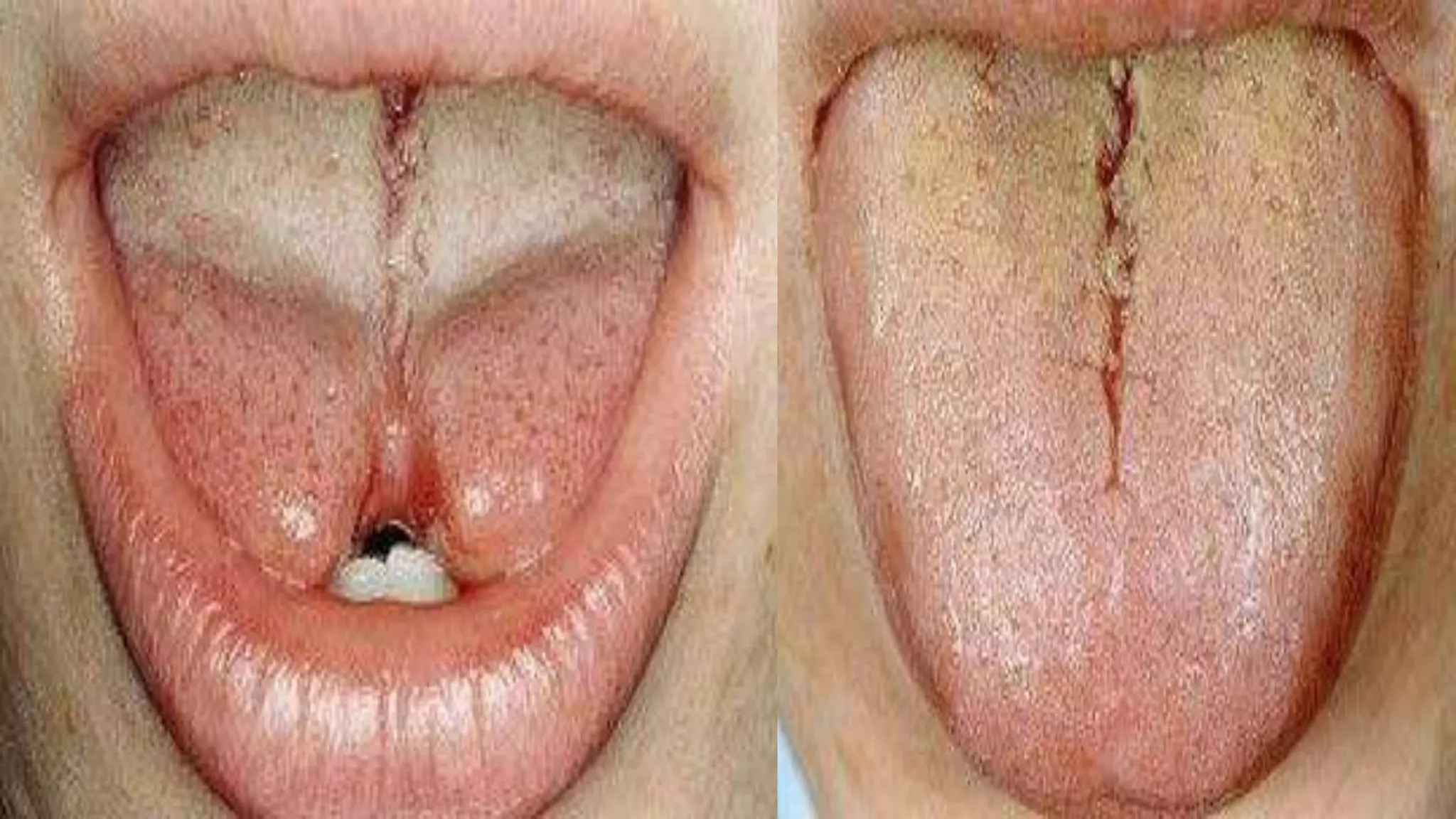
BIFID TONGUE/CLEFT TONGUE
• It can be complete or partial.
COMPLETE CLEFT TONGUE
• It is a rare condition that occurs due to lack of merging of the lateral lingual swellings.
PARTIAL CLEFT
• It’s a common condition
• Is due to incomplete merging and failure of groove obliteration by underlying mesenchymal
proliferation.
• Manifests as a deep groove in the middle of the dorsal surface.
Food debris and microorganisms collect in the base of the cleft and cause irritation
May occur as a feature of Orofacial digital syndrome.
Regular cleaning of the tongue should be carried out.
INFECTIONS
VIRAL
HERPES SIMPLEX VIRUS
• ACUTE HERPETIC GINGIVOSTOMATITIS
• Initially the tongue develops numerous pinhead vesicles, which rapidly collapse to form numerous
small, red lesions.
• These initial lesions enlarge slightly and develop central areas of ulceration, which are covered by
yellow fibrin .
• Adjacent ulcerations may coalesce to form larger, shallow, irregular ulcerations.
• dx
• clinical manifestatiions
• viral isolation and culture
• serologic tests for HSV antibodies
• cytologic smear and tissue biopsy
treatment
• Pain control measures—topical anesthetics like 2% lidocaine, 0.1% diclonine hydrochloride, 0.5%
benzocaine hydrochloride are used. Solution of diphenylhydramine hydrochloride (Benadryl) 5 mg
mixed with equal amount of milk of magnesia can also reduce the pain. In some cases systemic
administration of analgesics is also given
• Topical anti-infective agents—it is given to prevent secondary infection. Agents used are 0.2%
chlorhexidine gluconate, tetracycline mouth wash and elixir or diphenylhydramine.
• Supportive care—fluid is given to maintain proper hydration and electrolyte balance. Antipyretics
can also be given to control the fever.
• Good oral hygiene—oral hygiene should be properly maintained to avoid any secondary infection
• acyclovir 1000- 1600 mg daily
• valacyclovir,used wit famcyclovir
FUNGAL INFECTIONS
CANDIDIASIS
PSEUDOMEMBRANOUS CANDIDIASIS
• Also known as thrush
• It is characterized by the presence of adherent white plaques that resemble cottage cheese or
curdled milk on the oral mucosa.
• The white plaques are composed of tangled masses of hyphae, yeasts, desquamated epithelial
cells, and debris.
• Scraping them with a tongue blade or rubbing them with a dry gauze sponge can remove these
plaques.
• The underlying mucosa may appear normal or erythematous.
• If bleeding occurs, then the mucosa has probably also been affected by another process, such as
lichen planus or cancer chemotherapy.
• May be initiated by exposure of the patient to broad-spectrum antibiotics (thus eliminating
competing bacteria) or by impairment of the patient’s immune system.
• Sometimes patients complain of “blisters,” when in fact they feel the elevated plaques rather than
true vesicles. The plaques are characteristically distributed on the buccal mucosa, palate, and
dorsal tongue.
ERYTHEMATOUS CANDIDIASIS
• ACUTE ATROPHIC CANDIDIASIS/ANTIBIOTIC SORE MOUTH
• Typically follows a course of broad-spectrum antibiotic therapy.
• Patients often complain that the mouth feels as if a hot beverage had scalded it.
• This burning sensation is usually accompanied by a diffuse loss of the filiform papillae of the dorsal
tongue, resulting in a reddened, “bald” appearance of the tongue .
• Burning mouth syndrome frequently manifests with a scalded sensation of the tongue; however, the
tongue appears normal in that condition.
• CENTRAL PAPILLARY ATROPHY
• It appears as a well-demarcated erythematous zone that affects the midline, posterior dorsal tongue
and often is asymptomatic.
• The erythema is due in part to the loss of the filiform papillae in this area.
• The lesion is usually symmetrical, and its surface may range from smooth to lobulated.
• Often the mucosal alteration resolves with antifungal therapy, although occasionally only partial
resolution can be achieved.
• CHRONIC MULTIFOCAL CANDIDIASIS
• In addition to the dorsal tongue, the sites that show involvement include the junction of the
hard and soft palate and the angles of the mouth.
• The palatal lesion appears as an erythematous area that, when the tongue is at rest,
contacts the dorsal tongue lesion, resulting in what is called a “kissing lesion”
• The first two variants constitute most of the cases
• Although infrequently seen in immunocompetent patients, chronic multifocal oral involvement is
common in patients who are infected with HIV.
• Erythematous candidiasis typically begins to appear when the CD4 lymphocyte count drops below
400 cells/mm3, with the pseudomembranous pattern being noted when the counts drop below 200
cells/mm3.
• When comparing immunocompromised patients of different causations, those secondary to HIV
infection have a greater prevalence of oral candidiasis, suggesting that HIV may play a role in
initiation of the infection.
• Some studies have shown that development of candidiasis may be associated more closely with
viral load than CD4 cell count.
• Oral candidiasis can be painful and associated with a reduction in taste and smell, which may lead
to decreased intake of food and further wasting.
• The diagnosis of candidiasis often is obvious from the clinical presentation but can be confirmed by
cytologic smear or biopsy.
• Topical clotrimazole is associated with an improved response and typically produces a clinical cure
rate that equals that of the systemic azoles. In spite of this success, topical therapy is associated
with a high recurrence rate.
• The systemic azoles (i.e., fluconazole, ketoconazole, itraconazole) produce longer disease-free
intervals.
EPSTEIN BARR VIRUS(EBV)
ORAL HAIRY LEUKOPLAKIA
• Presents as a white mucosal plaque that does not rub off
• Most cases of OHL occur on the lateral border of the tongue and range in appearance
from faint white vertical streaks to thickened and furrowed areas of leukoplakia, exhibiting
a shaggy keratotic surface .
• mostly common in HIV positive patients.
• The lesions infrequently may become extensive and cover the entire dorsal and lateral
surfaces of the tongue.
• Rarely, the buccal mucosa, soft palate, pharynx, or esophagus may be involved.
Diagnosis
• Clinical features and pt history
• Histology shows viral inclusions in superficial layer cells,
hyperkeratosis, balloningdegeneration and and perinuclear clearing
Treatment
• Rarely needed.
• Antivirals i e Acyclovir which requires high doses(800 mg 5 times a
day)
HIV/AIDS
AIDS RELATED COMPLEX
A variable asymptomatic period that follows the acute viral syndrome.
Presents with oral candidiasis and Oral Hairy Leukoplakia
SYMPTOMATIC OVERT AIDS
GROUP 1
A)CANDIDIASIS
• Most common intraoral manifestation of HIV infection and often is the presenting sign that leads to
the initial diagnosis.
• Approximately one third of HIV-infected individuals and more than 90% of patients with AIDS
develop oral candidiasis at some point during their disease course.
• The following four clinical patterns are seen:
• 1. Pseudomembranous candidiasis
• 2. Erythematous candidiasis
• 3. Hyperplastic candidiasis
• 4. Angular cheilitis
B)HISTOPLASMOSIS
• Histoplasmosis is the most common fungal infection , with disseminated disease in AIDS
patients.
• Oral lesions are not uncommon and usually are caused by bloodborne organisms or
spread from pulmonary involvement.
• On occasion, the initial diagnosis is made from the oral changes, with some patients
demonstrating involvement isolated to the oral cavity.
• The most common oral presentation of histoplasmosis is a chronic, indurated mucosal
ulceration with a raised border .
• The oral lesions may be single or multiple, and any area of the oral mucosa may be
involved.
• dx-biopsy and culture
serology-abs against H.capsulatum
• The therapy of choice for disseminated histoplasmosis has been intravenous
amphotericin B, but itraconazole has been shown to be effective with fewer adverse
reactions and better patient compliance. Ketoconazole is another alternative, but its
hepatotoxicity makes this approach a less desirable form of therapy.
C) TUBERCULOSIS
• Oral lesions are uncommon and occur in less than 5% of individuals with active TB.
• When present, the tongue is affected most frequently, but lesions also can develop on the
buccal mucosa, gingiva, floor of mouth, lips, and palate.
• The affected areas present as chronic ulcerations, granular leukoplakias, or exophytic
proliferative masses.
• Confirming the diagnosis of TB often can be difficult in AIDS patients, because up to 80%
do not react to tuberculin skin tests.
• In such cases, identifying the organism by examining AFB-stained sections of biopsy
material and confirming its presence on culture of infected tissue are important.
• Management is difficult because of increasing drug resistance and difficulty in ensuring
patient compliance with the extended treatment protocols.
• Agents frequently used in the triple-drug regimens include rifampicin, isoniazid, and
pyrazinamide, with ethambutol added when isoniazid resistance is likely.
Tuberculosis.
Chronic mucosal ulceration of the ventral surface of the tongue on the right side.
D)Hairy leukoplakia-associated with EBV
E) HSV
• The lesions are more widespread, occur in an atypical pattern, and may persist for months.
• The prevalence of HSV lesions increases significantly once the CD4+ count drops below 50 cells/mm3.
F) HUMAN PAPILLOMA VIRUS
• HIV-infected patients often demonstrate more unusual variants such as HPV-7 (associated with butcher’s warts) or
HPV-32(often noted in multifocal epithelial hyperplasia)
• The oral lesions usually are multiple and may be located on any mucosal surface.
• The labial mucosa, tongue, buccal mucosa, and gingiva are frequent sites.
• The lesions may exhibit a cluster of white, spikelike projections, pink cauliflower-like growths, or slightly elevated sessile
papules.
• Immunohistochemistry or DNA in situ hybridization often is used to confirm the presence and type of HPV within
histopathologic specimens.
• The treatment of choice is surgical removal; however, recurrences are common, especially in patients with significant
immune deficiency.
• Other therapeutic modalities that have been used include topical podophyllin, imiquimod, interferon, cryosurgery, laser
ablation, and electrocoagulation.
HIV-associated histoplasmosis.
Indurated ulceration with a rolled border on the dorsal surface of the tongue on the right side.
G)KAPOSI’S SARCOMA
• Multifocal neoplasm of vascular endothelial cell origin.
• About 15% to 20% of patients with AIDS demonstrate KS.
• Human herpesvirus type 8 (HHV-8, Kaposi’s sarcoma– associated herpesvirus[KSHV]) is noted
within the tumor and believed to be responsible for the neoplasm’s development.
• KS typically manifests as multiple lesions of the skin or oral mucosa.
• The trunk, arms, head, and neck are the most commonly involved anatomic sites (Fig. 7-38).
• Approximately 70% of individuals with HIV-related KS of skin or viscera demonstrate oral lesions; in
22% the oral cavity is the initial site of involvement.
• Although any mucosal site may be involved, the hard palate, gingiva, and tongue are affected most
frequently .
• The lesions begin as brown or reddish purple macular lesions that do not blanch with pressure.
• With time, the macules typically develop into plaques or nodules .
• Pain, bleeding, and necrosis may become a problem and necessitate therapy
• A biopsy is required to make the definitive
diagnosis, although a presumptive diagnosis is
sometimes made from the clinical presentation and
history.
• Problematic lesions may be removed surgically or
with cryotherapy.
• Intralesional injection of oral lesions with vinblastine
(a chemotherapeutic agent) is effective.
Intralesional injection of sodium tetradecyl sulfate, a
sclerosing agent, has been effective for problematic
intraoral lesions less than 2.5 cm in diameter.
• Laser ablation or electrosurgery have been used to
treat KS.
H)NON HODKINS LYMPHOMA
• It is the second most common malignancy in HIV-infected individuals.
• Lymphoma in patients with AIDS usually occurs in extranodal locations,
with the CNS being the most common site.
• Oral lesions are seen in approximately 4% of patients with AIDS-related
NHL.
• Soft tissue lesions appear as nontender,diffuse swellings; they most
commonly affect the buccal vestibule, posterior hard palate, or gingiva.
• Such swellings characteristically have a boggy consistency. The lesion
may appear erythematous or purplish, and it may or may not be
ulcerated.
• Lymphoma of bone may cause vague pain or discomfort,which might
be mistaken for a toothache. The patient may complain of paresthesia,
particularly with a mandibular lesion
• Radiographs usually show an ill-defined or ragged radiolucency.
• If untreated, then the process typically causes expansion of the bone,
eventually perforating the cortical plate and producing a soft tissue
swelling.
• Histologically,lymphomas are broadly grouped into three categories:
1. Low grade
2. Intermediate grade
3. High grade
• Dx-Biopsy and histology
• Tx
• Monoclonal antibodies ie Rituximab for low grade
• For the intermediate-grade and high-grade lymphomas, the
treatment of localized disease consists of radiation plus
chemotherapy.
• With more advanced and disseminated disease, chemotherapy alone
is used.
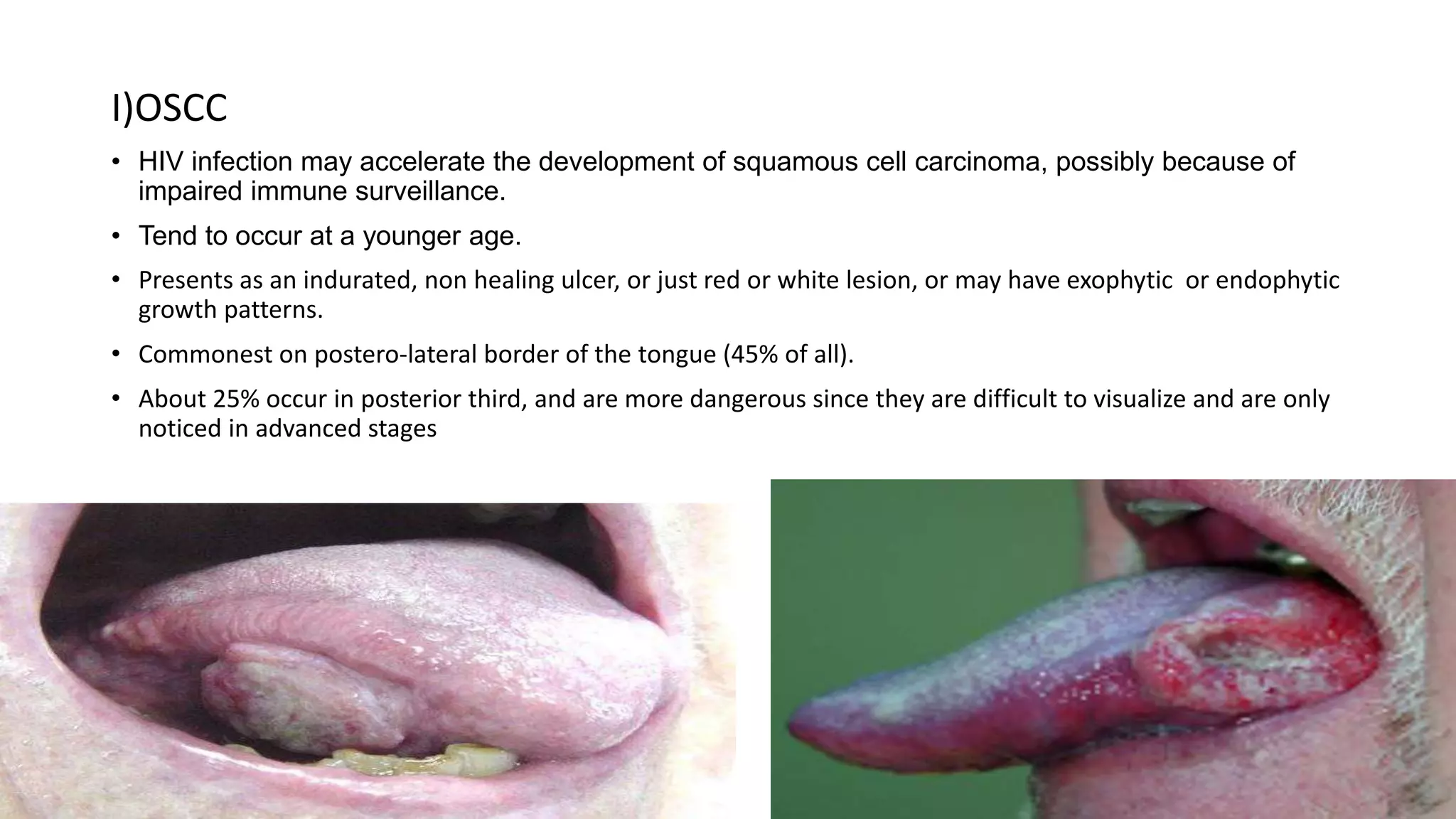
I)OSCC
• HIV infection may accelerate the development of squamous cell carcinoma, possibly because of
impaired immune surveillance.
• Tend to occur at a younger age.
• Presents as an indurated, non healing ulcer, or just red or white lesion, or may have exophytic or endophytic
growth patterns.
• Commonest on postero-lateral border of the tongue (45% of all).
• About 25% occur in posterior third, and are more dangerous since they are difficult to visualize and are only
noticed in advanced stages
• Treatment of squamous cell carcinoma is not significantly different for HIV-infected patients and consists
of surgical resection, radiation therapy, or combined radiation and chemotherapy.
• Clinical staging can be problematic because of HIV-related cervical lymphadenopathy.
• In these cases, cross-sectional computed tomography (CT) or magnetic resonance imaging (MRI) could
be performed in an attempt to distinguish lymphnodes enlarged by lymphoproliferative disease from
those containing metastatic carcinoma.
• The majority of HIV-infected patients with a diagnosis of squamous cell carcinoma have advanced
disease and exhibit a less favorable prognosis.
HIV-associated squamous cell carcinoma. Ulceration with raised, indurated borders on the lateral
tongue.
VICTOR BETT
GLOSSITIS
• Def:Refers to red, sore and smooth tongue.
• Tongue appears smooth, red & sore, smoothness is due to atrophy of filliform
pappilae
• In acute antibiotic stomatitis, there is associated angular stomatitis and other
features of candidiasis.
Etiology
• Cause is unknown but sometimes there is a positive family history
• Sometimes due to psoriasis
Geographical tongue (Benign Migratory
Glossitis)
Clinical Features
1. Lesions appears as an irregular, Smooth, red areas with sharply defined margins.The red area
is due to shortening of the filiform papilla.
2. lesions increase for few days and then disappear, only to reappear in another area.
3. Sometimes the lesion is annular with slightly raised pale margins and then after sometimes
these rings join to form a scalloped pattern.
4. Mostly ASYMPTOMATIC but some patients complain of soreness.
5. Typically involves the dorsum of the tongue, sometimes the ventrum, and rarely other sites of
the oral mucosa.
6. are irregular red, depapillated map like areas. Sometimes surrounded by distinct yellowish or
whitish slightly raised margins (serpentine/scalloped borders)
7. Spread or move to other areas sometimes within hours. The red areas change shape, increase
in size & spread or migrate.
8. tongue may be fissured.
9. Occasionally the similar lesions may be the oral manifestation of systemic conditions such as
Psoriasis or Reiter’s syndrome (Reactive Arthristis)
10. All ages
Clinical Features
The tongue exhibits well-demarcated areas of
erythema, primarily affecting the dorsum, and often
extending to involve the lateral borders of the
tongue. Within the area of erythema, the normal
tongue architecture is effaced, with loss of the
filiform papillae and atrophy of the overlying
mucosa. Surrounding this area of erythema is a well-
defined, hyperkeratotic, yellow-white border with an
irregular serpiginous outline.
Differential Diagnosis
• leukoplakia
• chemical burns
• contact stomatitis
• lichen planus
• mucosal candidiasis
• plaque psoriasis
Diagnosis and management
• Diagnosis is by history & clinical appearance.
• No medical intervention is required because the lesion is benign and
most often asymptomatic
• Treatment with topical and systemic antihistamines
• Topical corticosteroids are occasionally of benefit.
• In psoriatic patients, the lesions may resolve during systemic therapy
for the psoriasis.
Atrophic Glossitis: Burning Agony of Nutritional
Deficiency Anemia (Micronutrient Deficiencies)
• Atrophic glossitis (AG)is also known as smooth tongue because of the
smooth, glossy appearance with a red or pink background
• The smooth quality is caused by the atrophy of filiform papillae.
• Partial or complete loss of fungiform and filiform papillae on the
dorsal surface of tongue manifests as AG.
• Atrophic glossitis associated with vitamin B12 and/or vitamin B9 are
also termed as bald tongue, Hunter’s glossitis, and Moeller glossitis
Etiology
• It is a condition with multifactorial etiology, and can be a
manifestation of underlying local or systemic condition.
• They may include nutritional deficiencies including deficiencies in:
1. riboflavin/V-B2,
2. niacin/V-B3,
3. pyridoxine/V-B6,
4. vitamin B12 (pernicious anemia),
5. folic acid,
6. iron (iron deficiency anemia and Plummer-Vinson syndrome),
7. protein-calorie malnutrition, infections, alcohol abuse,
gastrointestinal diseases, and drug reactions.
ANEMIAS MANIFESTING AS ATROPHIC
GLOSSITIS
1. Normochromic Normocytic Anemia
• Associated with vitamin B2/riboflavin deficiency, normal plasma level
being 1 to 19 µg/L,
• normochromic normocytic anemia leads to magenta-colored glossitis.
• It is also generally associated with deficiency of vitamin
B6/pyridoxine, which further worsens the condition.
• Vitamin B2/riboflavin plays a major role in oxidation and reduction
reactions. The deficiency of the same leads to epithelial atrophy, also
associated with it is flattening of filiform papilla
2. Iron Deficiency Anemia (microcytic
hypochromic)
• Iron deficiency anemia is morphologically characterized by microcytic
hypochromic anemia.
• Iron plays a major role in hemoglobin formation, and as hemoglobin
is essential for transport of oxygen, iron deficiency affects this process
significantly.
• Also iron is required for proper development and epithelial
maturation, and it affects various epithelial structures.
Soreness of tongue with depappilation in iron
deficiency anemia
IDA (Soreness of tongue with depappilation
and angular chelitis)
3. Megaloblastic Anemia
• Anemia Associated with vitamin B12/cyanocobalamin and/or B9/folic
acid deficiency
• Macrocytic anemia may be normochromic/hypochromic.
• It is also characterized by hypersegmented neutrophils and plays a
major role in the synthesis of DNA and RNA in the prevention of
genetic alterations, and is required for epithelial maturation.
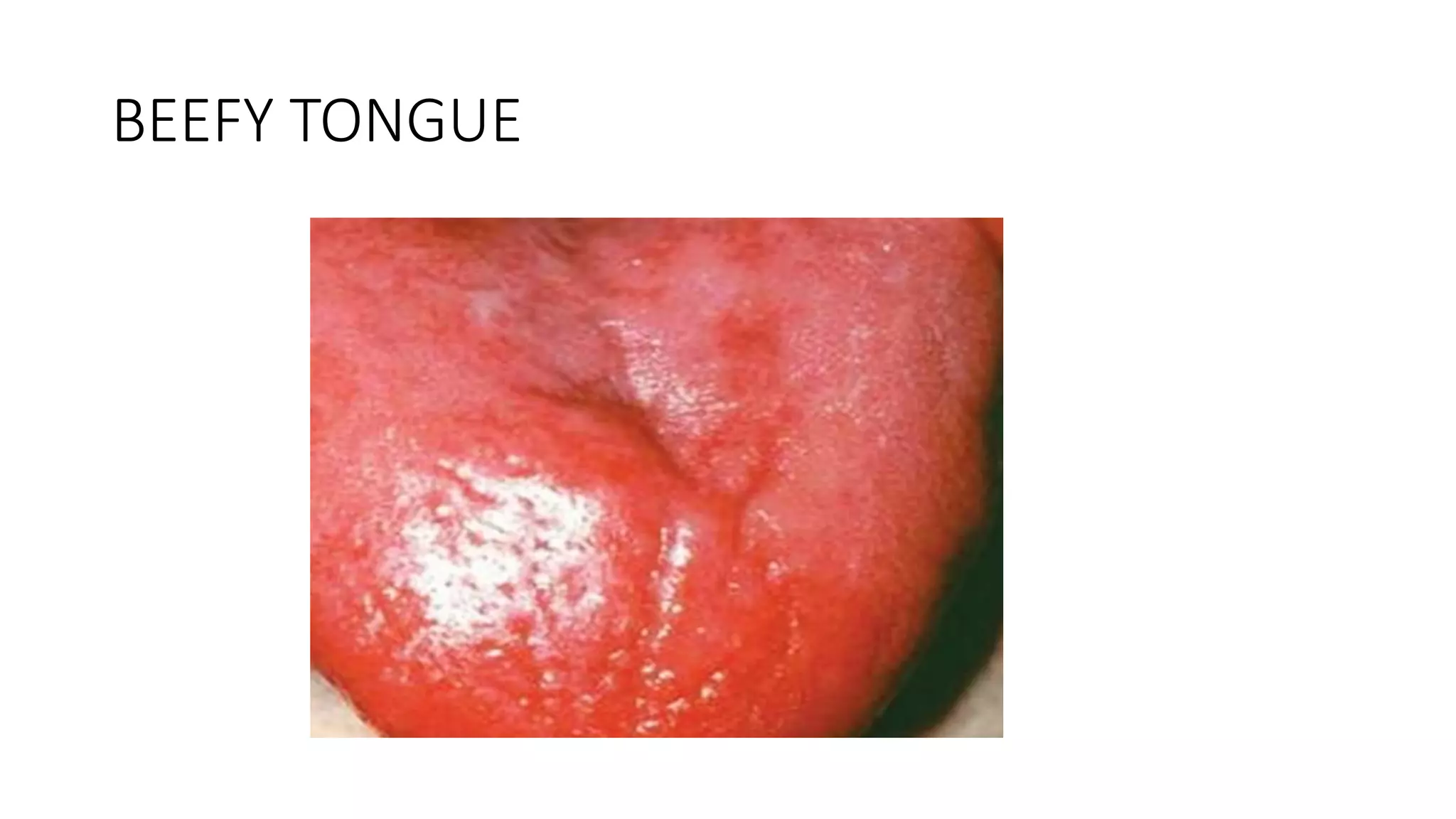
• Tongue appears as beefy/fiery red.
• In pernicious anemia (Vitamin B12 deficiency), the tongue appears as
smooth red
BEEFY TONGUE
Histopathology
• Histologically, AG is characterized by epithelial atrophy and varying
degrees of chronic inflammation in the subepithelial connective tissue
Diagnosis and Management
• Based on detailed history(dietary history) and physical examination
• Peripheral blood smear for red cell morphology, MCV (79-96 fl), Red Cell
Distribution width.
• Antibiotics, antifungal medications, or other antimicrobials may be
prescribed if the glossitis is due to an infection.
• Dietary changes and supplements are used to treat anemia and
nutritional deficiencies.
• Avoidance of irritants (such as hot or spicy foods, alcohol, and tobacco)
to reduce any tongue discomfort.
• Treatment usually aims at reducing inflammation by corticosteroids.
• Other preventive measures include maintaining proper oral hygiene,
irritants like hot, spicy foods, and alcohol should also be avoided to
recover from this disorder and minimize discomforts
Burning Mouth Syndrome
• Burning mouth syndrome (BMS) is an idiopathic condition
characterized by a continuous burning sensation of the mucosa of the
mouth, typically involving the tongue, with or without extension to
the lips and oral mucosa.
• Classically, burning mouth syndrome (BMS) is accompanied by
gustatory disturbances (dysgeusia) and subjective xerostomia.
• By definition, no macroscopic alterations in oral mucosa are
apparent.
• BMS occurs most frequently, but not exclusively, in peri-menopausal
and postmenopausal women.(decreasing hormone levels during menopause
that affect taste buds could also increase the sensitivity of pain receptors in the
mouth)
Classification
• BMS may be subclassified into
1. “primary” or idiopathic BMS- for which a neuropathological cause
is likely and cannot be attributed to any systemic or local cause
2. “secondary BMS” (SBMS) resulting from local or systemic
pathological conditions
Clinical Features of primary BMS
1. The primary location of the burning complaint is the tongue, usually the
anterior 2/3.
2. Usually more than one site is involved and in addition to the tongue, hard
palate, lips, and gingivae are frequently involved.
3. Pain is most commonly described as burning or hot and intensity varies from
mild to severe.
4. BMS is typically of spontaneous onset and lasts from months to several
years.
5. The pain pattern may be irregular, but some patients may complain that
pain increases toward the end of the day.
6. Although a chronic unremitting pattern is usual, partial remission has been
reported in about one half to two-thirds of patients, six to seven years after
onset.
7. Spontaneous remission is very rare.
8. Common aggravating factors include personal stressors, fatigue, and specific
foods (acidic, hot, or spicy).
9.More than two-thirds of the patients complain of altered taste
sensation (dysgeusia) accompanying the burning sensation, in many
cases described as a spontaneous metallic taste.
10. Abnormal sensations, such as feeling of dry mouth, are common
but true hyposalivation is less common and should be considered
under secondary or symptomatic BMS.
Secondary BMS
• Oral and perioral burning sensation as a result of local or systemic
factors or diseases is classified as SBMS.
• Local factors- oral candidiasis, lichen planus, and allergies.
• Systemic disorders- hormonal changes, deficiencies of vitamin B12,
folic acid or iron, diabetes mellitus, side effects of medications, and
autoimmune diseases.
• Successful treatment of the primary disease will usually (but not
invariably) alleviate the burning sensation in SBMS patients.
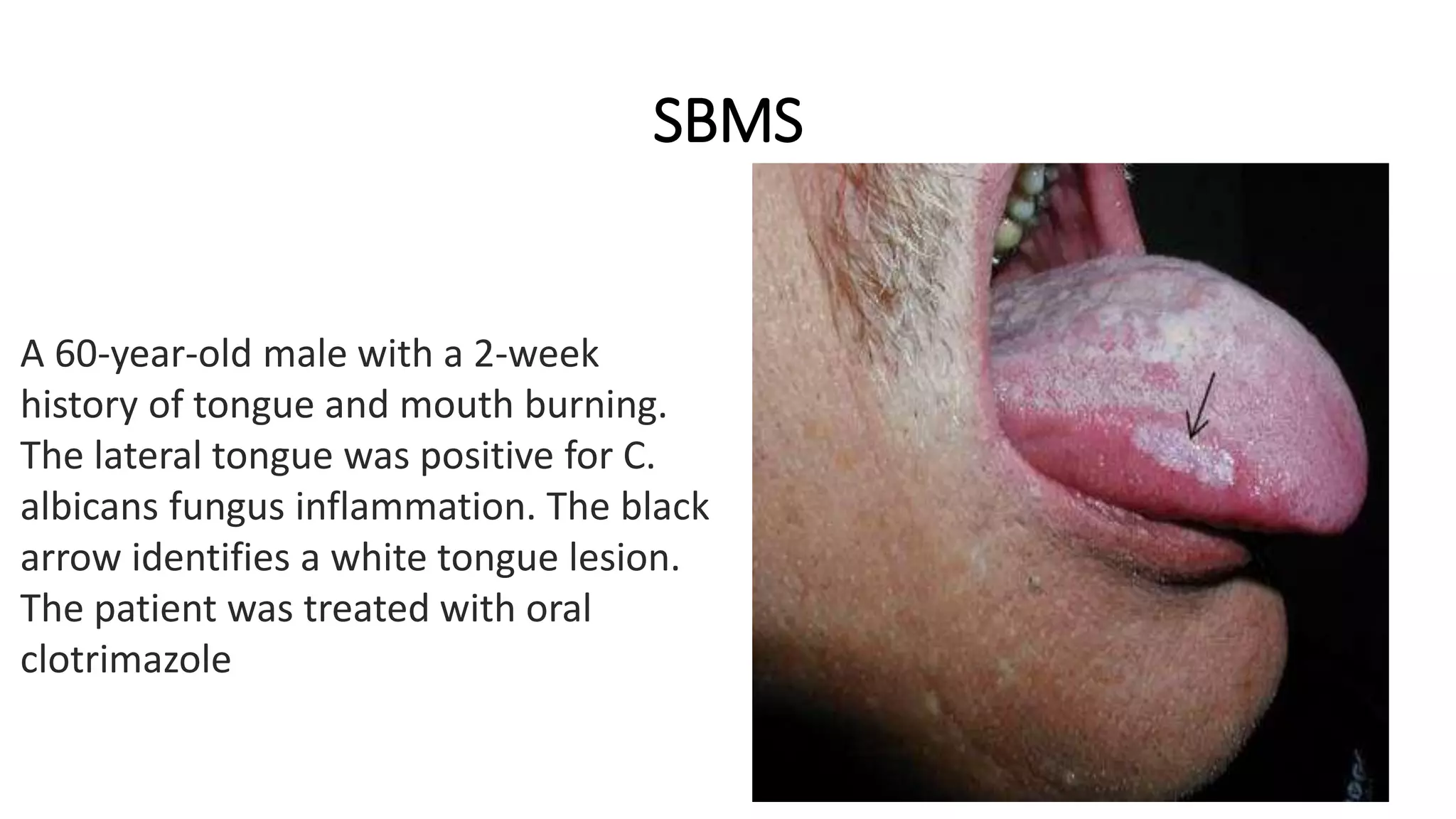
SBMS
A 60-year-old male with a 2-week
history of tongue and mouth burning.
The lateral tongue was positive for C.
albicans fungus inflammation. The black
arrow identifies a white tongue lesion.
The patient was treated with oral
clotrimazole
Treatment
• BMS is frustratingly resistant to therapy and there are few evidence-based
treatments.
• Topical therapies may be effective and are useful in elderly, medically
compromised patients.
• clonazepam (1 mg)- Is the most established drug which should be sucked and
subsequently spat out three times daily. .
• Systemic therapies include paroxetine (20 mg/d) and sertraline (50 mg/d) or
other (SSRIs). These may reduce pain and improve anxiety and depression.
• A combination of alpha-lipoic acid (600 mg/d) and gabapentin (300 mg/d)
results in greater improvement of the burning symptoms compared to these
medications taken alone.
• Pharmacotherapy-resistant BMS has been associated with underlying
psychological distress, and these patients may particularly benefit from cognitive
behavioral therapy.
Hairy Tongue (Lingua Villosa)
• An entirely benign condition than can have a striking presentation
Etiology
• unknown in most cases
• predisposing factors have been related to this disorder, such as neglected oral hygiene, a
shift in the microflora,antibiotics(Tetracycline,doxycycline,minocycline) and
immunosuppressive drugs, oral candidiasis,excessive alcohol consumption, oral inactivity,
and therapeutic radiation.
• The impact of ignored oral hygiene and oral inactivity is supported by the high
prevalence of hairy tongue in hospitalized patients, who are not able tocarry out their
own oral hygiene.
• Hairy tongue is also associatedwith smoking habits.
clinical features
• characterized by an impaired desquamation of the filiform papilla,
which leads to the hairy-like clinical appearance . The elongated papillae
have to reach lengths in excess of 3 mm to be classified as “hairy,” although
lengths of more than just 15 mm have been reported in hairy tongue.189
• commonly found in the posterior one-third of the tongue but may
involve the entire dorsum.
• may adopt colors from white to black depending on food constituents
and the composition of the oral microflora.
• Patientsmay experience both physical discomfort and esthetic
embarrassment related to the lengths of the filiform papillae.
Diagnosis and treatment
• Diagnosis based on clinical appearance and detailed history
• Treatment generally not necessary, and the elimination of causative
factors results in complete resolution.
• Gentle brushing or scraping of the tongue can be recommended if
lesion persists
• Trimming of the papillae may be necessary in extreme cases
Immune Mediated Tongue Disorders:
1.Recurrent Aphthous Stomatitis(RAS)
• The etiology of RAS of the tongue is unknown, but several possibilities have been
suggested, which include :
i. Immunologic disorders (T-cell mediated) such as autoimmune or hyperimmune
reaction to unknown antigens
ii. Nonspecific factors such as trauma with involvement of chemical mediators
iii. Neurogenic inflammation and release of neuro-peptides such as substance P
leading to localized epithelial necrosis and ulceration
iv. Infective agents, especially hypersensitivity to bacterial and viral antigens
v. Mucosal healing defects eg inhibition to function of various of cytokines
vi. Nutritional deficiencies eg Vit B12, folic acid and iron (ulcers seen in
malabsorption deficiencies such as celiac disease and Crohn’s disease
vii. Other causes include hormonal alterations, stress, food allergies
RAS
• Three recognized forms- minor, major and herpertiform
• diagnosis
• ddx
• mgt
2.Lichen Planus
• A chronic mucocutaneous immune-mediated disease of unknown
cause and resembles a hypersensitivity reaction characterized by
destruction of basal keratinocytes.
• Types include
1. Reticular
2. papular
3. Plaque
4. Erythematous
5. ulcerative
Clinical Features
• Plaque form commonly affects the
tongue
• The plaque form resembles
leukoplakia with multifocal slightly
elevated or smooth to flat white
plaques
Treatment
• Corticosteroids topically or locally injected.
• Antifungals to prevent secondary candidal infection
Traumatic Ulcerative Granuloma with Stromal
Eosinophilia(TUGSE)
• (TUGSE) is an uncommon condition considered to be a, reactive
benign lesion of the oral mucosa, usually affecting the tongue.
• Its aetiopathogenesis is still uncertain.
• However, trauma has been found to be a contributing factor in a
majority of the cases.
Clinical Features
1. most appear as a rapidly developing solitary ulcer with elevated or indurated
margins
2. It may be symptomatic associated with mild to severe pain in many cases,
suggestive of malignancy and infections such as deep fungal infections,
tuberculosis and primary syphilis
3. It can persist for several weeks or months and heals without any treatment.
4. A wide age range of patients are affected, seen from childhood to old age with a
peak incidence between the 6-7 decades of life.
5. A slight female predominance .
6. It occurs mainly on the dorsal or lateral surface of the tongue (60% of lesions),
which seems reasonable since movement makes it more vulnerable to trauma
7. self-healing with a benign course.
Diagnosis and treatment
• Incisional Biopsy
• Once diagnosis has been made, most effective 1st line is intralesional
corticosteroid injections
• High potency topical corticosteroid gel, floucinonide 0.05% or
clobetasol 0.05% applied 3 times daily
• 7-10 day course of high dose prednisone for non-responsive lesions
• Local surgical excision if refractory
IVY MUDAKI
TASTE DISORDERS
INTRODUCTION
• Taste is a flavor, a combination of taste, smell, texture (touch sensation) and
other physical features (e.g. temperature)
• The sense of taste is mediated by specialized taste buds.
• The neuroepithelial cells are rod-shaped with a peripheral hair-like process
projecting into the taste pores at the surface of the overlying mucous membrane.
• The terminal branches of the nerve fibers subserving taste end in close
relationship to these special neuroepithelial cells. Taste buds are found in the
mucous membrane of the tongue, soft palate,fauces and pharynx, and, in the
newborn, on the lips and cheeks.
• Taste buds on the tongue are on the fungiform, circumvallate and foliate, but not
on the filiform papillae.
• Papillae at the front of the tongue have more taste buds compared to the mid-
region.
• Taste buds are also located throughout the oral cavity, in the pharynx, the
laryngeal epiglottis and at the entrance of the esophagus.
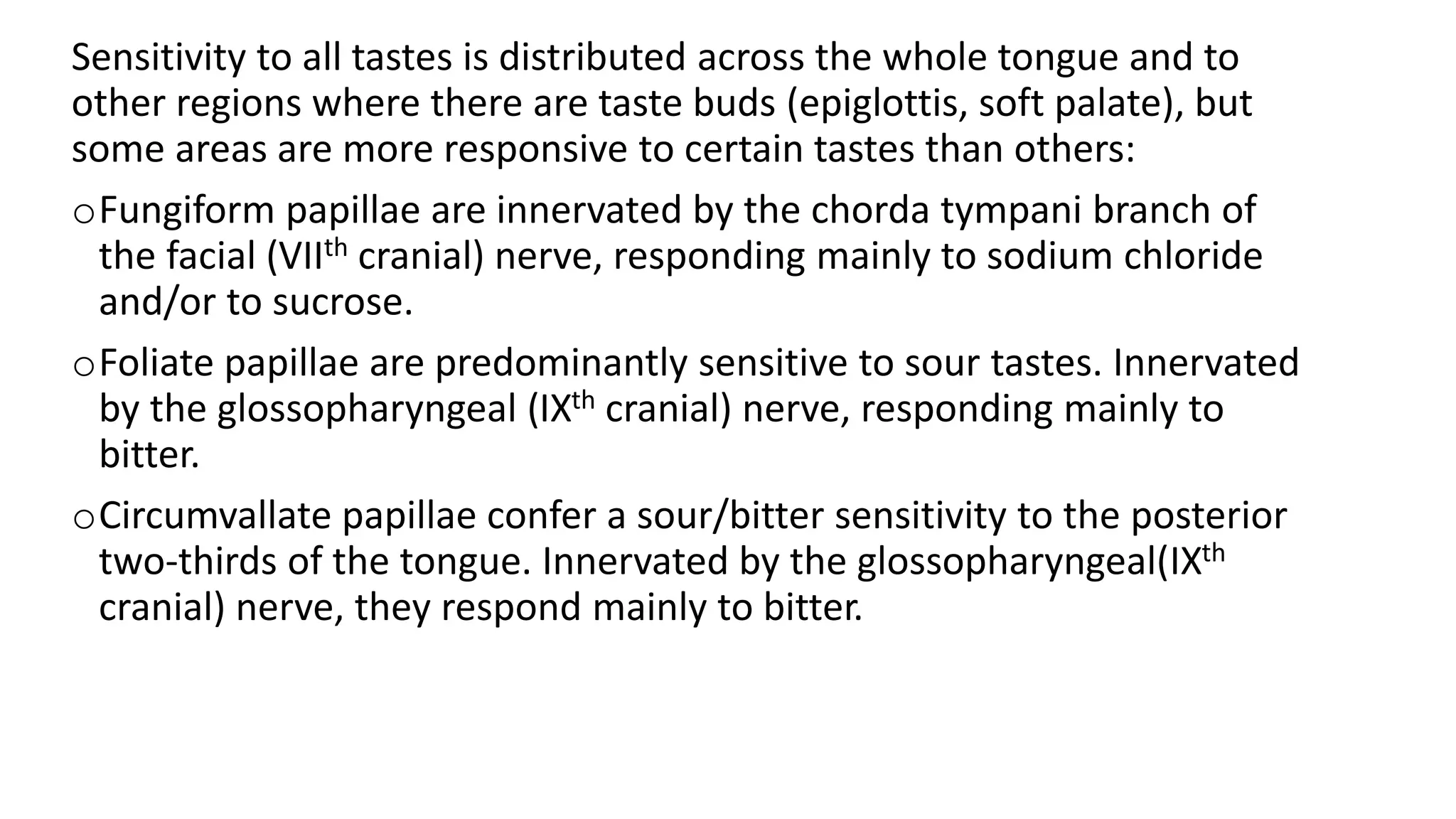
Sensitivity to all tastes is distributed across the whole tongue and to
other regions where there are taste buds (epiglottis, soft palate), but
some areas are more responsive to certain tastes than others:
oFungiform papillae are innervated by the chorda tympani branch of
the facial (VIIth cranial) nerve, responding mainly to sodium chloride
and/or to sucrose.
oFoliate papillae are predominantly sensitive to sour tastes. Innervated
by the glossopharyngeal (IXth cranial) nerve, responding mainly to
bitter.
oCircumvallate papillae confer a sour/bitter sensitivity to the posterior
two-thirds of the tongue. Innervated by the glossopharyngeal(IXth
cranial) nerve, they respond mainly to bitter.
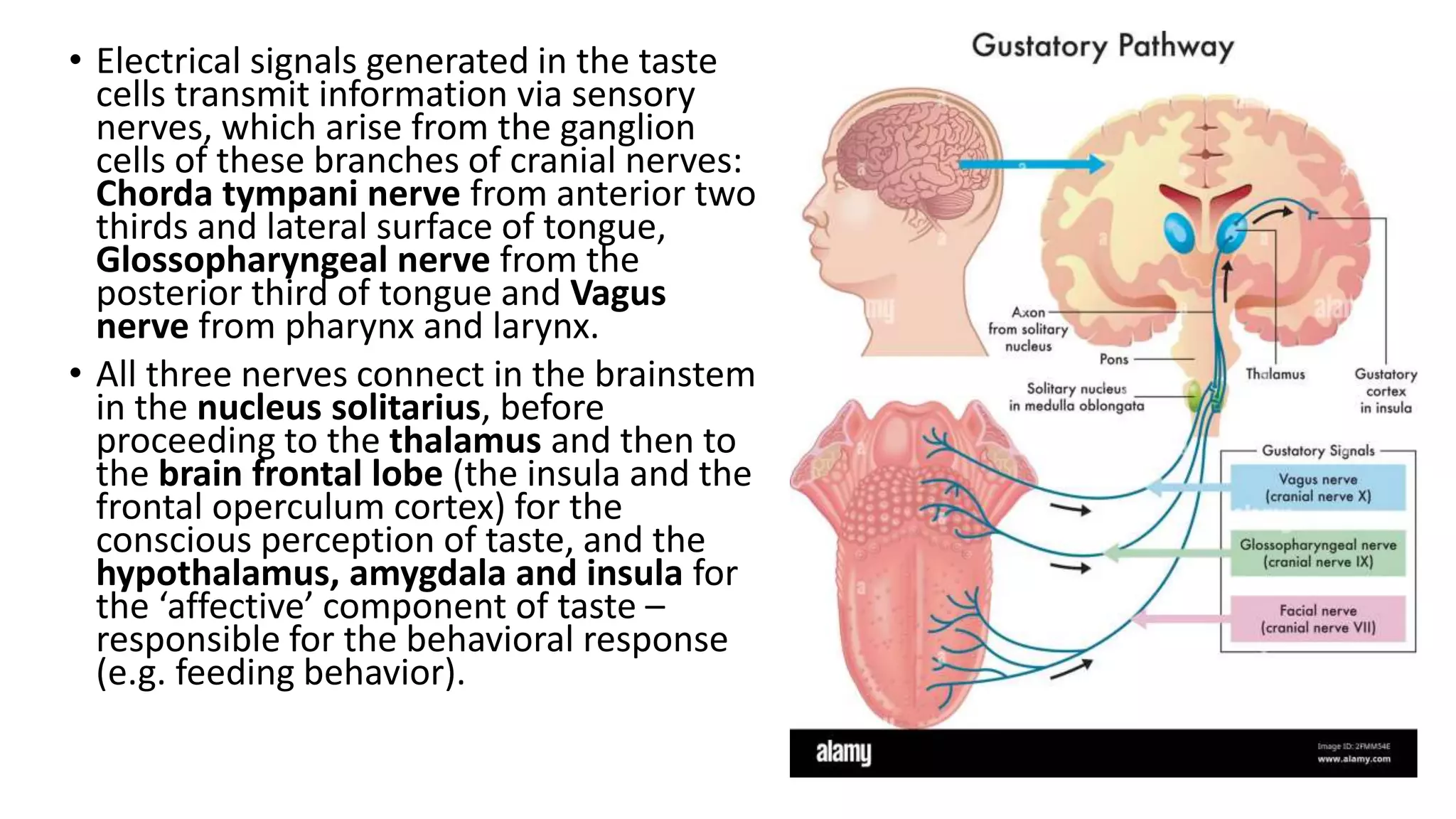
• Electrical signals generated in the taste
cells transmit information via sensory
nerves, which arise from the ganglion
cells of these branches of cranial nerves:
Chorda tympani nerve from anterior two
thirds and lateral surface of tongue,
Glossopharyngeal nerve from the
posterior third of tongue and Vagus
nerve from pharynx and larynx.
• All three nerves connect in the brainstem
in the nucleus solitarius, before
proceeding to the thalamus and then to
the brain frontal lobe (the insula and the
frontal operculum cortex) for the
conscious perception of taste, and the
hypothalamus, amygdala and insula for
the ‘affective’ component of taste –
responsible for the behavioral response
(e.g. feeding behavior).
• Salt taste: mediated via sodium chloride (NaCl) ions. Na+ ions enter the receptor
cells via Na+ channels, cause a depolarization, calcium ions enter through
voltage-sensitive Ca2+ channels, transmitter release occurs and results in
increased firing in the primary afferent nerve.
• Sour taste: mediated by protons (H+), which block potassium channels causing
depolarization, Ca2+ entry, transmitter release and increased firing in the primary
afferent nerve.
• Sweet taste: receptors bind glucose, which activates adenyl cyclase, thereby
increasing cyclic adenosine monophosphate(cAMP), causing phosphorylation of
K+ channels, inhibiting them. Depolarization occurs, Ca2+ enters and transmitter is
released, increasing firing in the primary afferent nerve.
• Bitter taste: bitter substances cause a second Messenger (inositoltrisphosphate
(IP3)) mediated release of Ca2+ resulting in transmitter release and firing of the
primary afferent nerve.
• Umami taste: certain amino acids (e.g. glutamate, aspartate) bind to a glutamate
receptor (mGluR4) activating a G-protein, raising intracellular Ca2+ Glutamate may
also stimulate the NMDA (N-methyl-D-aspartate)-receptor, when non-selective
cation channels open, and Ca2+ enters, causing transmitter release and increased
firing in the primary afferent nerve.
There are five basic tastes:
TASTE CHANGES
• Taste and olfaction are susceptible to the general sensory
phenomenon known as adaptation, i.e. the progressive reduction in
the appreciation of a stimulus during the course of continual
exposure to that stimulus.
• Taste exhibits almost complete adaptation to a stimulus – perception
of a substance fades to almost nothing in seconds. Both taste and
olfaction are also susceptible to genetic, hormonal, age and other
factors.
• The cells of the taste buds undergo continual renewal, with a life span
of about 10 days, renewal being modulated by nutrition, hormones,
and age, and other factors such as drugs and radiation.
• Genetics are important to taste. For example, sensitivity to the bitter
taste of phenylthiourea is genetically determined and some patients
are genetically unable, for example, to smell fish. In contrast, people
who have more than the normal number of taste papillae (and taste
buds and increased density of fungiform papillae) have extreme
sensitivity to n-propylthiouracil (PROP), are called supertasters and
account for 25% of the population (more women than men) –they
tend not to like green vegetables and fatty foods.
• Hormones may also influence taste: the sense of taste may vary
through the menstrual cycle and may be distorted during pregnancy,
often with the appearance of cravings for unusual foods.
• Age affects taste sense; the number of taste buds declines and there
are changes in taste cell membranes involving altered function of ion
channels and receptors with age.
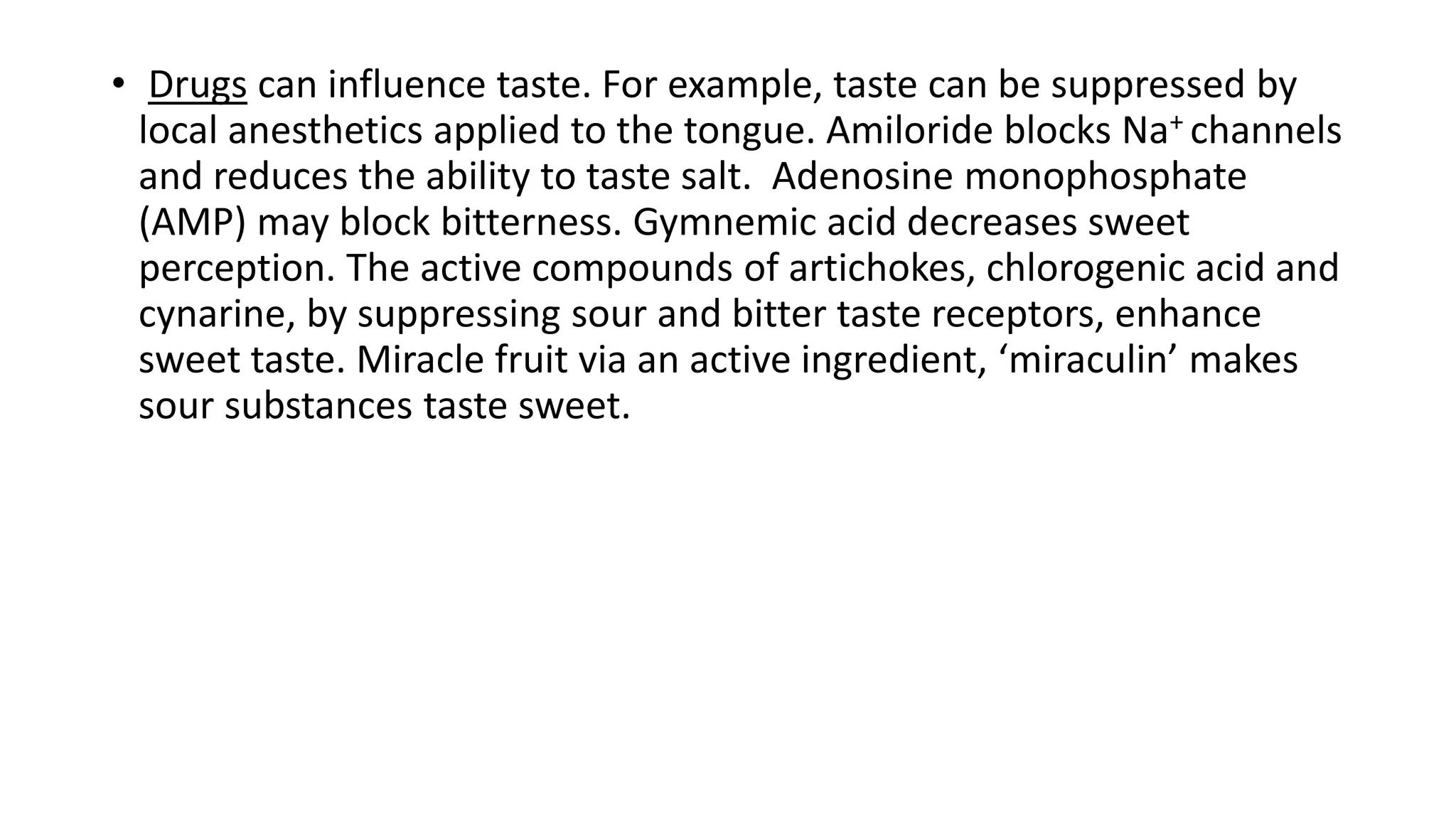
• Drugs can influence taste. For example, taste can be suppressed by
local anesthetics applied to the tongue. Amiloride blocks Na+ channels
and reduces the ability to taste salt. Adenosine monophosphate
(AMP) may block bitterness. Gymnemic acid decreases sweet
perception. The active compounds of artichokes, chlorogenic acid and
cynarine, by suppressing sour and bitter taste receptors, enhance
sweet taste. Miracle fruit via an active ingredient, ‘miraculin’ makes
sour substances taste sweet.
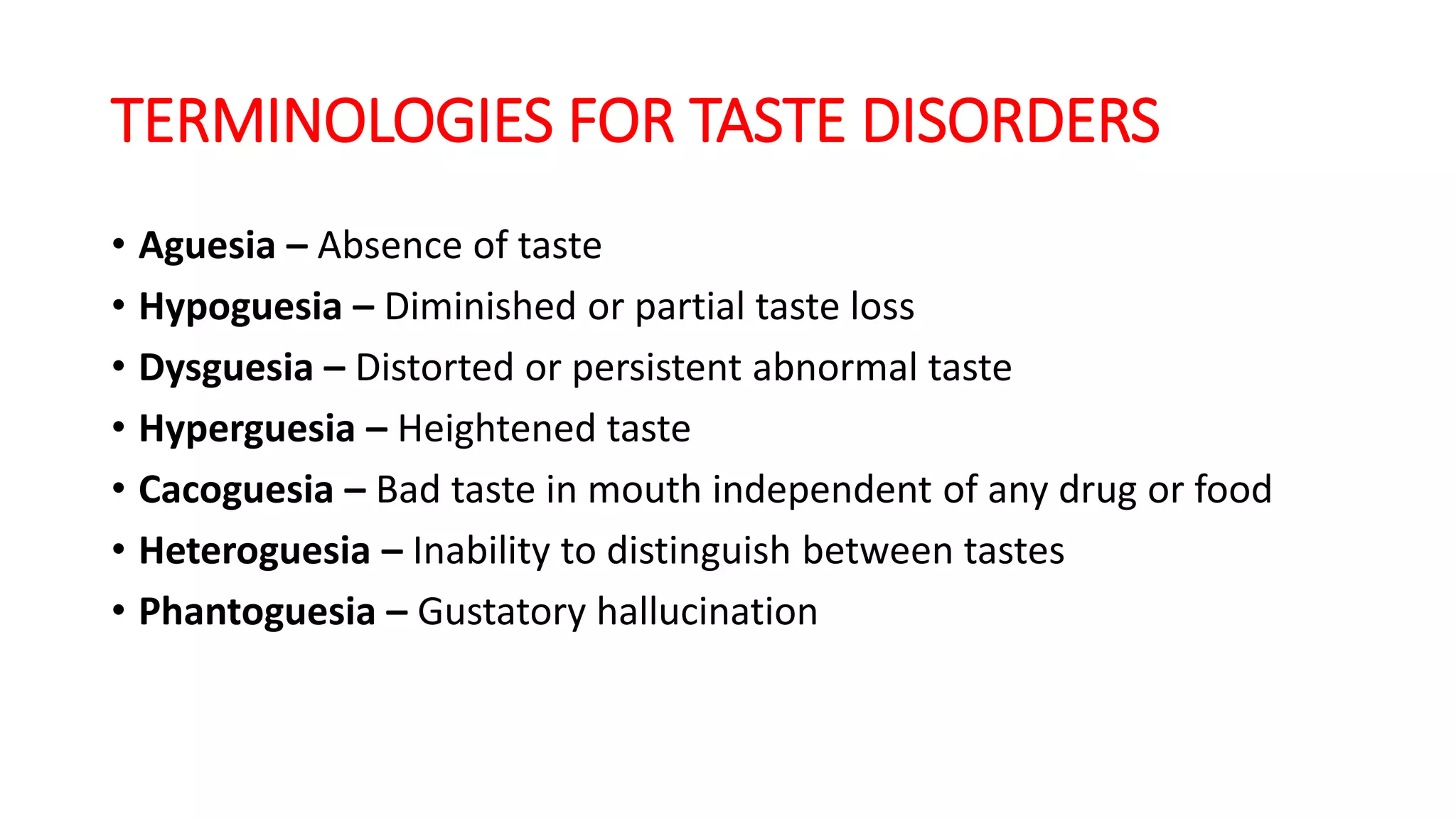
TERMINOLOGIES FOR TASTE DISORDERS
• Aguesia – Absence of taste
• Hypoguesia – Diminished or partial taste loss
• Dysguesia – Distorted or persistent abnormal taste
• Hyperguesia – Heightened taste
• Cacoguesia – Bad taste in mouth independent of any drug or food
• Heteroguesia – Inability to distinguish between tastes
• Phantoguesia – Gustatory hallucination
CAUSES OF TASTE DISORDERS
• Taste abnormalities can be caused by:
1. Anything that interrupts the taste pathways from the mucosa, taste
buds, non-myelinated nerves or cranial nerves to the brain stem
and brain, or
2. Conditions that affect brain interpretation of taste
LOCAL CAUSES
• Xerostomia
• Irradiation of the oral cavity
• Drugs: Antihistamines eg azelastine, antihypertensives eg Losartan,
antidepressants, cytotoxic agents, protease inhibitors
• Head injuries due to tearing of fibers
SYSTEMIC CAUSES
1. Viral Infections: Upper Respiratory Tract Infections: Common cold,
Influenza, Nasal Infection, Nasal Polyps, Sinusitis, Viral Pharyngitis, COVID.
2. Metabolic disorders: Chronic renal failure, Hepatic disease
3. Nutritional deficiencies: Gastric Regurgitation, Zinc deficiency, Vitamin B
deficiency
4. Endocrine Disorders: Addison’s disease, Diabetes, Cushing’s syndrome,
hypopituitarism, hypothyroidism
5. Neurological diseases: Alzeihmers disease, chorda tympani damage, facial
palsy, multiple sclerosis, Parkinson’s disease, temporal lobe epilepsy, Bell’s
palsy.
6. Ageing
DIAGNOSIS
1. Clinical examination:
Fissured tongue suggests xerostomia as the main cause of the taste changes
White lesions on the tongue may suggest fungal or viral infection
2. Microscopic examination of smear:
To rule out any infections.
To check for cellular architecture of the taste buds and rule out pathologic
cellular changes due to neoplasia or radiation
3. Chemical Gustometry
Determined by measuring the lowest concentration of a taste quality.
Patient is asked to compare the tastes of different substances.
Note how intensity of a taste grows when substance concentration is
increased
4. Electogustometry
Measures minimum amount of current required to excite sensation of taste.
Small current is applied to lateral border of tongue (-8dB)
Current slowly increased until patient is able to perceive the metallic taste
Normal threshold is 1mA
4mA in chorda tympani involvement
5. Positron emission tomography (PET): measures the functional activity of
cell to differentiate between physiological and pathological activity.
6. Taste testing
Sucrose for sweet taste
Vinegar or citric acid to produce sour taste concentrations
Sodium chloride for the taste of salt
TREATMENT
• Oral infections: Oral hygiene instruction and modulation, periodontal
therapy; extraction or root canal therapy for odontogenic abscess,
antifungal or antiviral medications.
• Xerostomia: Modification/elimination of potential causative medications;
hydration; sialagogues/pharmacotherapies (e.g., pilocarpine or cevimeline)
• Drug induced: Stop use of causative medication, change medication.
• Systemic diseases: refer to appropriate clinician for treatment or
management of disease
• Dietary counselling or modifications e.g. add seasoning, avoid unpleasant
foods, extend dietary choice
• Medications: Zinc Sulphate (reduce severity and duration of taste
dysfunction)

TONGUE & TASTE_DISORDERS.pptx

  • 1.
  • 2.
    OBJECTIVES • Tongue disorders Developmental •micro-macro glossia • Lingual Thyroid • Bifid tongue • Infections • HSV,Fungal, • EBV associated, • HIV associated conditions, • Glossitis (mucositis) • Micronutrient deficiencies • Burning mouth syndrome • Immune mediated • Ulcerations (traumatic or otherwise) • Stains (black hairy tongue) • Tumours
  • 3.
    OBJECTIVES • Taste • Whatis • Taste • Flavor • aroma • What are the normal taste sensations? • Salt, sweet, sour • Taste buds and their distribution, innervations and functional mechanisms • Taste abnormalities • Ageusia • Hypogeusia • Hypergeusia • Dysgeusia
  • 4.
  • 5.
  • 6.
    DEVELOPMENTAL DISORDERS MICROGLOSSIA • Microglossiais an uncommon developmental condition of unknown cause that is characterized by an abnormally small tongue. • In rare instances, the entire tongue may be missing (aglossia). • Isolated microglossia is known to occur, and mild degrees of microglossia may be difficult to detect and may go unnoticed. • Most reported cases have been associated with one of a group of overlapping conditions known as oromandibular-limb hypogenesis syndromes. • These syndromes feature associated limb anomalies, such as hypodactylia (absence of digits) and hypomelia (hypoplasia of part or all of a limb). • Other patients have had coexisting anomalies, such as cleft palate, intraoral bands, and situs inversus. • Frequently is associated with hypoplasia of the mandible, and the lower incisors may be missing.
  • 8.
    TREATMENT • Depends onthe nature and severity of the condition. • Surgery and orthodontics may improve oral function. • Surprisingly, speech development often is quite good but depends on tongue size.
  • 9.
    MACROGLOSSIA • An uncommoncondition characterized by enlargement of the tongue. • CAUSES A)CONGENITAL AND HEREDITARY i. Vascular malformations ii. Lymphangioma iii. Hemangioma iv. Hemihyperplasia v. Cretinism vi. Beckwith-Wiedemann syndrome vii. Down syndrome viii. Mucopolysaccharidoses ix. Neurofibromatosis type I x. Multiple endocrine neoplasia, type 2B
  • 10.
    B)ACQUIRED i. Edentulous patients ii.Amyloidosis iii. Myxedema iv. Acromegaly v. Angioedema vi. Carcinoma and other tumors • The most frequent causes are vascular malformations and muscular hypertrophy.
  • 11.
    CLINICAL FEATURES • Mostcommonly occurs in children and can range from mild to severe . • In infants, it may be manifested first by noisy breathing, drooling, and difficulty in eating. • The tongue enlargement may result in a lisping speech. • The pressure of the tongue against the mandible and teeth can produce a crenated lateral border to the tongue , open bite, and mandibular prognathism. • If the tongue constantly protrudes from the mouth, it may ulcerate and become secondarily infected or may even undergo necrosis. • Severe macroglossia can produce airway obstruction. • Macroglossia is a characteristic feature of Beckwith-Wiedemann syndrome, a rare hereditary condition that includes many other possible defects such as: i. Omphalocele (protrusion of part of the intestine through a defect in the abdominal wall at the umbilicus) ii. Visceromegaly iii. Gigantism iv. Neonatal hypoglycemia
  • 12.
    • Individuals withBeckwith-Wiedemann syndrome have an increased risk for several childhood visceral tumors, including Wilms’ tumor, adrenal carcinoma, hepatoblastoma, rhabdomyosarcoma, and neuroblastoma. • Facial features may include nevus flammeus of the forehead and eyelids, linear indentations of the earlobes, and maxillary hypoplasia (resulting in relative mandibular prognathism). • In patients with hypothyroidism or Beckwith-Wiedemann syndrome, the tongue usually shows a diffuse, smooth, generalized enlargement. • In those with other forms of macroglossia, the tongue usually has a multinodular appearance. Examples of this nodular type include amyloidosis and neoplastic conditions, such as neurofibromatosis and multiple endocrine neoplasia, type 2B. • In patients with lymphangiomas, the tongue surface is characteristically pebbly and exhibits multiple vesicle-like blebs that represent superficial dilated lymphatic channels. • The enlarged tongue in those with Down syndrome typically demonstrates a papillary, fissured surface. • In patients with hemifacial hyperplasia, the enlargement will be unilateral. Some patients with neurofibromatosis also can have unilateral lingual enlargement. • In edentulous patients, the tongue often appears elevated and tends to spread out laterally because of loss of the surrounding teeth; as a result, wearing a denture may become difficult.
  • 13.
    HISTOPATHOLOGIC FEATURES • Itdepends on the specific cause. • In some cases, such as the tongue enlargement seen with Down syndrome or in edentulous patients, no histologic abnormality can be detected. • When macroglossia is due to tumor, a neoplastic proliferation of a particular tissue can be found (e.g., lymphatic vessels, blood vessels, neural tissue). • Muscular enlargement occurs in those with hemihyperplasia and Beckwith-Wiedemann syndrome. • In the patient with amyloidosis, an abnormal protein material is deposited in the tongue. TREATMENT • The treatment and prognosis of macroglossia depend on the cause and severity of the condition. • In mild cases, surgical treatment may not be necessary,although speech therapy may be helpful if speech is affected. • In symptomatic patients, reduction glossectomy may be needed.
  • 15.
    LINGUAL THYROID • Afterthe formation of the thyroid gland(3rd-4th week IU),the thyroid bud normally descends into the neck to its final resting position anterior to the trachea and larynx. • The site where this descending bud invaginates later becomes the foramen cecum, located at the junction of the anterior two thirds and posterior third of the tongue in the midline. • If the primitive gland does not descend normally, ectopic thyroid tissue may be found between the foramen cecum and the epiglottis. • Of all ectopic thyroids, 90% are found in this region.
  • 16.
    CLINICAL FEATURES • smallasymptomatic remnants of thyroid tissue can be discovered on the posterior dorsal tongue in about 10% of both men and women. • Clinically evident or symptomatic lingual thyroids are much less common and are four to seven times more frequent in females, presumably because of hormonal influences. • Symptoms most often develop during puberty, adolescence, pregnancy, or menopause. • In 70% of cases, this ectopic gland is the patient’s only thyroid tissue. • Lingual thyroids may range from small, asymptomatic, nodular lesions to large masses that can block the airway . • The most common clinical symptoms are dysphagia, dysphonia, and dyspnea. • The mass often is vascular, but the physical appearance is variable and there are no reliable features to distinguish it from other masses that might develop in this area. • Hypothyroidism has been reported in up to 33% of patients.
  • 17.
    DIAGNOSIS • thyroid scanusing iodine isotopes or technetium-99m. • Computed tomography(CT) and magnetic resonance imaging (MRI) can be helpful in delineating the size and extent of the lesion. • Biopsy is often avoided because of the risk of hemorrhage and because the mass may represent the patient’s only functioning thyroid tissue. In some cases, incisional biopsy may be needed to confirm the diagnosis or to rule out malignant changes. TREATMENT • For patients with asymptomatic lingual thyroids, periodic follow up is required. • In symptomatic patients, suppressive therapy with supplemental thyroid hormone often can reduce the size of the lesion.(Can also be used in asymptomatic cases to prevent possible enlargement), • If hormone therapy does not eliminate symptoms, surgical removal or ablation with radioactive iodine-131 can be performed. • If the mass is surgically excised, auto transplantation to another body site can be attempted to maintain functional thyroid tissue and to prevent hypothyroidism. • Rare examples of carcinomas arising in lingual thyroids have been reported; malignancy develops in about 1% of identified cases.
  • 19.
    BIFID TONGUE/CLEFT TONGUE •It can be complete or partial. COMPLETE CLEFT TONGUE • It is a rare condition that occurs due to lack of merging of the lateral lingual swellings. PARTIAL CLEFT • It’s a common condition • Is due to incomplete merging and failure of groove obliteration by underlying mesenchymal proliferation. • Manifests as a deep groove in the middle of the dorsal surface. Food debris and microorganisms collect in the base of the cleft and cause irritation May occur as a feature of Orofacial digital syndrome. Regular cleaning of the tongue should be carried out.
  • 21.
    INFECTIONS VIRAL HERPES SIMPLEX VIRUS •ACUTE HERPETIC GINGIVOSTOMATITIS • Initially the tongue develops numerous pinhead vesicles, which rapidly collapse to form numerous small, red lesions. • These initial lesions enlarge slightly and develop central areas of ulceration, which are covered by yellow fibrin . • Adjacent ulcerations may coalesce to form larger, shallow, irregular ulcerations.
  • 22.
    • dx • clinicalmanifestatiions • viral isolation and culture • serologic tests for HSV antibodies • cytologic smear and tissue biopsy
  • 23.
    treatment • Pain controlmeasures—topical anesthetics like 2% lidocaine, 0.1% diclonine hydrochloride, 0.5% benzocaine hydrochloride are used. Solution of diphenylhydramine hydrochloride (Benadryl) 5 mg mixed with equal amount of milk of magnesia can also reduce the pain. In some cases systemic administration of analgesics is also given • Topical anti-infective agents—it is given to prevent secondary infection. Agents used are 0.2% chlorhexidine gluconate, tetracycline mouth wash and elixir or diphenylhydramine. • Supportive care—fluid is given to maintain proper hydration and electrolyte balance. Antipyretics can also be given to control the fever. • Good oral hygiene—oral hygiene should be properly maintained to avoid any secondary infection • acyclovir 1000- 1600 mg daily • valacyclovir,used wit famcyclovir
  • 24.
    FUNGAL INFECTIONS CANDIDIASIS PSEUDOMEMBRANOUS CANDIDIASIS •Also known as thrush • It is characterized by the presence of adherent white plaques that resemble cottage cheese or curdled milk on the oral mucosa. • The white plaques are composed of tangled masses of hyphae, yeasts, desquamated epithelial cells, and debris. • Scraping them with a tongue blade or rubbing them with a dry gauze sponge can remove these plaques. • The underlying mucosa may appear normal or erythematous. • If bleeding occurs, then the mucosa has probably also been affected by another process, such as lichen planus or cancer chemotherapy. • May be initiated by exposure of the patient to broad-spectrum antibiotics (thus eliminating competing bacteria) or by impairment of the patient’s immune system. • Sometimes patients complain of “blisters,” when in fact they feel the elevated plaques rather than true vesicles. The plaques are characteristically distributed on the buccal mucosa, palate, and dorsal tongue.
  • 25.
    ERYTHEMATOUS CANDIDIASIS • ACUTEATROPHIC CANDIDIASIS/ANTIBIOTIC SORE MOUTH • Typically follows a course of broad-spectrum antibiotic therapy. • Patients often complain that the mouth feels as if a hot beverage had scalded it. • This burning sensation is usually accompanied by a diffuse loss of the filiform papillae of the dorsal tongue, resulting in a reddened, “bald” appearance of the tongue . • Burning mouth syndrome frequently manifests with a scalded sensation of the tongue; however, the tongue appears normal in that condition. • CENTRAL PAPILLARY ATROPHY • It appears as a well-demarcated erythematous zone that affects the midline, posterior dorsal tongue and often is asymptomatic. • The erythema is due in part to the loss of the filiform papillae in this area. • The lesion is usually symmetrical, and its surface may range from smooth to lobulated. • Often the mucosal alteration resolves with antifungal therapy, although occasionally only partial resolution can be achieved.
  • 27.
    • CHRONIC MULTIFOCALCANDIDIASIS • In addition to the dorsal tongue, the sites that show involvement include the junction of the hard and soft palate and the angles of the mouth. • The palatal lesion appears as an erythematous area that, when the tongue is at rest, contacts the dorsal tongue lesion, resulting in what is called a “kissing lesion”
  • 28.
    • The firsttwo variants constitute most of the cases • Although infrequently seen in immunocompetent patients, chronic multifocal oral involvement is common in patients who are infected with HIV. • Erythematous candidiasis typically begins to appear when the CD4 lymphocyte count drops below 400 cells/mm3, with the pseudomembranous pattern being noted when the counts drop below 200 cells/mm3. • When comparing immunocompromised patients of different causations, those secondary to HIV infection have a greater prevalence of oral candidiasis, suggesting that HIV may play a role in initiation of the infection. • Some studies have shown that development of candidiasis may be associated more closely with viral load than CD4 cell count. • Oral candidiasis can be painful and associated with a reduction in taste and smell, which may lead to decreased intake of food and further wasting. • The diagnosis of candidiasis often is obvious from the clinical presentation but can be confirmed by cytologic smear or biopsy. • Topical clotrimazole is associated with an improved response and typically produces a clinical cure rate that equals that of the systemic azoles. In spite of this success, topical therapy is associated with a high recurrence rate. • The systemic azoles (i.e., fluconazole, ketoconazole, itraconazole) produce longer disease-free intervals.
  • 29.
    EPSTEIN BARR VIRUS(EBV) ORALHAIRY LEUKOPLAKIA • Presents as a white mucosal plaque that does not rub off • Most cases of OHL occur on the lateral border of the tongue and range in appearance from faint white vertical streaks to thickened and furrowed areas of leukoplakia, exhibiting a shaggy keratotic surface . • mostly common in HIV positive patients. • The lesions infrequently may become extensive and cover the entire dorsal and lateral surfaces of the tongue. • Rarely, the buccal mucosa, soft palate, pharynx, or esophagus may be involved.
  • 31.
    Diagnosis • Clinical featuresand pt history • Histology shows viral inclusions in superficial layer cells, hyperkeratosis, balloningdegeneration and and perinuclear clearing Treatment • Rarely needed. • Antivirals i e Acyclovir which requires high doses(800 mg 5 times a day)
  • 32.
    HIV/AIDS AIDS RELATED COMPLEX Avariable asymptomatic period that follows the acute viral syndrome. Presents with oral candidiasis and Oral Hairy Leukoplakia SYMPTOMATIC OVERT AIDS GROUP 1 A)CANDIDIASIS • Most common intraoral manifestation of HIV infection and often is the presenting sign that leads to the initial diagnosis. • Approximately one third of HIV-infected individuals and more than 90% of patients with AIDS develop oral candidiasis at some point during their disease course. • The following four clinical patterns are seen: • 1. Pseudomembranous candidiasis • 2. Erythematous candidiasis • 3. Hyperplastic candidiasis • 4. Angular cheilitis
  • 33.
    B)HISTOPLASMOSIS • Histoplasmosis isthe most common fungal infection , with disseminated disease in AIDS patients. • Oral lesions are not uncommon and usually are caused by bloodborne organisms or spread from pulmonary involvement. • On occasion, the initial diagnosis is made from the oral changes, with some patients demonstrating involvement isolated to the oral cavity. • The most common oral presentation of histoplasmosis is a chronic, indurated mucosal ulceration with a raised border . • The oral lesions may be single or multiple, and any area of the oral mucosa may be involved. • dx-biopsy and culture serology-abs against H.capsulatum • The therapy of choice for disseminated histoplasmosis has been intravenous amphotericin B, but itraconazole has been shown to be effective with fewer adverse reactions and better patient compliance. Ketoconazole is another alternative, but its hepatotoxicity makes this approach a less desirable form of therapy.
  • 35.
    C) TUBERCULOSIS • Orallesions are uncommon and occur in less than 5% of individuals with active TB. • When present, the tongue is affected most frequently, but lesions also can develop on the buccal mucosa, gingiva, floor of mouth, lips, and palate. • The affected areas present as chronic ulcerations, granular leukoplakias, or exophytic proliferative masses. • Confirming the diagnosis of TB often can be difficult in AIDS patients, because up to 80% do not react to tuberculin skin tests. • In such cases, identifying the organism by examining AFB-stained sections of biopsy material and confirming its presence on culture of infected tissue are important. • Management is difficult because of increasing drug resistance and difficulty in ensuring patient compliance with the extended treatment protocols. • Agents frequently used in the triple-drug regimens include rifampicin, isoniazid, and pyrazinamide, with ethambutol added when isoniazid resistance is likely.
  • 36.
    Tuberculosis. Chronic mucosal ulcerationof the ventral surface of the tongue on the right side.
  • 37.
    D)Hairy leukoplakia-associated withEBV E) HSV • The lesions are more widespread, occur in an atypical pattern, and may persist for months. • The prevalence of HSV lesions increases significantly once the CD4+ count drops below 50 cells/mm3. F) HUMAN PAPILLOMA VIRUS • HIV-infected patients often demonstrate more unusual variants such as HPV-7 (associated with butcher’s warts) or HPV-32(often noted in multifocal epithelial hyperplasia) • The oral lesions usually are multiple and may be located on any mucosal surface. • The labial mucosa, tongue, buccal mucosa, and gingiva are frequent sites. • The lesions may exhibit a cluster of white, spikelike projections, pink cauliflower-like growths, or slightly elevated sessile papules. • Immunohistochemistry or DNA in situ hybridization often is used to confirm the presence and type of HPV within histopathologic specimens. • The treatment of choice is surgical removal; however, recurrences are common, especially in patients with significant immune deficiency. • Other therapeutic modalities that have been used include topical podophyllin, imiquimod, interferon, cryosurgery, laser ablation, and electrocoagulation.
  • 38.
    HIV-associated histoplasmosis. Indurated ulcerationwith a rolled border on the dorsal surface of the tongue on the right side.
  • 39.
    G)KAPOSI’S SARCOMA • Multifocalneoplasm of vascular endothelial cell origin. • About 15% to 20% of patients with AIDS demonstrate KS. • Human herpesvirus type 8 (HHV-8, Kaposi’s sarcoma– associated herpesvirus[KSHV]) is noted within the tumor and believed to be responsible for the neoplasm’s development. • KS typically manifests as multiple lesions of the skin or oral mucosa. • The trunk, arms, head, and neck are the most commonly involved anatomic sites (Fig. 7-38). • Approximately 70% of individuals with HIV-related KS of skin or viscera demonstrate oral lesions; in 22% the oral cavity is the initial site of involvement. • Although any mucosal site may be involved, the hard palate, gingiva, and tongue are affected most frequently . • The lesions begin as brown or reddish purple macular lesions that do not blanch with pressure. • With time, the macules typically develop into plaques or nodules . • Pain, bleeding, and necrosis may become a problem and necessitate therapy
  • 40.
    • A biopsyis required to make the definitive diagnosis, although a presumptive diagnosis is sometimes made from the clinical presentation and history. • Problematic lesions may be removed surgically or with cryotherapy. • Intralesional injection of oral lesions with vinblastine (a chemotherapeutic agent) is effective. Intralesional injection of sodium tetradecyl sulfate, a sclerosing agent, has been effective for problematic intraoral lesions less than 2.5 cm in diameter. • Laser ablation or electrosurgery have been used to treat KS.
  • 41.
    H)NON HODKINS LYMPHOMA •It is the second most common malignancy in HIV-infected individuals. • Lymphoma in patients with AIDS usually occurs in extranodal locations, with the CNS being the most common site. • Oral lesions are seen in approximately 4% of patients with AIDS-related NHL. • Soft tissue lesions appear as nontender,diffuse swellings; they most commonly affect the buccal vestibule, posterior hard palate, or gingiva. • Such swellings characteristically have a boggy consistency. The lesion may appear erythematous or purplish, and it may or may not be ulcerated.
  • 42.
    • Lymphoma ofbone may cause vague pain or discomfort,which might be mistaken for a toothache. The patient may complain of paresthesia, particularly with a mandibular lesion • Radiographs usually show an ill-defined or ragged radiolucency. • If untreated, then the process typically causes expansion of the bone, eventually perforating the cortical plate and producing a soft tissue swelling. • Histologically,lymphomas are broadly grouped into three categories: 1. Low grade 2. Intermediate grade 3. High grade
  • 43.
    • Dx-Biopsy andhistology • Tx • Monoclonal antibodies ie Rituximab for low grade • For the intermediate-grade and high-grade lymphomas, the treatment of localized disease consists of radiation plus chemotherapy. • With more advanced and disseminated disease, chemotherapy alone is used.
  • 44.
    I)OSCC • HIV infectionmay accelerate the development of squamous cell carcinoma, possibly because of impaired immune surveillance. • Tend to occur at a younger age. • Presents as an indurated, non healing ulcer, or just red or white lesion, or may have exophytic or endophytic growth patterns. • Commonest on postero-lateral border of the tongue (45% of all). • About 25% occur in posterior third, and are more dangerous since they are difficult to visualize and are only noticed in advanced stages
  • 45.
    • Treatment ofsquamous cell carcinoma is not significantly different for HIV-infected patients and consists of surgical resection, radiation therapy, or combined radiation and chemotherapy. • Clinical staging can be problematic because of HIV-related cervical lymphadenopathy. • In these cases, cross-sectional computed tomography (CT) or magnetic resonance imaging (MRI) could be performed in an attempt to distinguish lymphnodes enlarged by lymphoproliferative disease from those containing metastatic carcinoma. • The majority of HIV-infected patients with a diagnosis of squamous cell carcinoma have advanced disease and exhibit a less favorable prognosis. HIV-associated squamous cell carcinoma. Ulceration with raised, indurated borders on the lateral tongue.
  • 46.
  • 47.
    GLOSSITIS • Def:Refers tored, sore and smooth tongue. • Tongue appears smooth, red & sore, smoothness is due to atrophy of filliform pappilae • In acute antibiotic stomatitis, there is associated angular stomatitis and other features of candidiasis. Etiology • Cause is unknown but sometimes there is a positive family history • Sometimes due to psoriasis
  • 48.
    Geographical tongue (BenignMigratory Glossitis)
  • 49.
    Clinical Features 1. Lesionsappears as an irregular, Smooth, red areas with sharply defined margins.The red area is due to shortening of the filiform papilla. 2. lesions increase for few days and then disappear, only to reappear in another area. 3. Sometimes the lesion is annular with slightly raised pale margins and then after sometimes these rings join to form a scalloped pattern. 4. Mostly ASYMPTOMATIC but some patients complain of soreness. 5. Typically involves the dorsum of the tongue, sometimes the ventrum, and rarely other sites of the oral mucosa. 6. are irregular red, depapillated map like areas. Sometimes surrounded by distinct yellowish or whitish slightly raised margins (serpentine/scalloped borders) 7. Spread or move to other areas sometimes within hours. The red areas change shape, increase in size & spread or migrate. 8. tongue may be fissured. 9. Occasionally the similar lesions may be the oral manifestation of systemic conditions such as Psoriasis or Reiter’s syndrome (Reactive Arthristis) 10. All ages
  • 50.
    Clinical Features The tongueexhibits well-demarcated areas of erythema, primarily affecting the dorsum, and often extending to involve the lateral borders of the tongue. Within the area of erythema, the normal tongue architecture is effaced, with loss of the filiform papillae and atrophy of the overlying mucosa. Surrounding this area of erythema is a well- defined, hyperkeratotic, yellow-white border with an irregular serpiginous outline.
  • 51.
    Differential Diagnosis • leukoplakia •chemical burns • contact stomatitis • lichen planus • mucosal candidiasis • plaque psoriasis
  • 52.
    Diagnosis and management •Diagnosis is by history & clinical appearance. • No medical intervention is required because the lesion is benign and most often asymptomatic • Treatment with topical and systemic antihistamines • Topical corticosteroids are occasionally of benefit. • In psoriatic patients, the lesions may resolve during systemic therapy for the psoriasis.
  • 53.
    Atrophic Glossitis: BurningAgony of Nutritional Deficiency Anemia (Micronutrient Deficiencies) • Atrophic glossitis (AG)is also known as smooth tongue because of the smooth, glossy appearance with a red or pink background • The smooth quality is caused by the atrophy of filiform papillae. • Partial or complete loss of fungiform and filiform papillae on the dorsal surface of tongue manifests as AG. • Atrophic glossitis associated with vitamin B12 and/or vitamin B9 are also termed as bald tongue, Hunter’s glossitis, and Moeller glossitis
  • 54.
    Etiology • It isa condition with multifactorial etiology, and can be a manifestation of underlying local or systemic condition. • They may include nutritional deficiencies including deficiencies in: 1. riboflavin/V-B2, 2. niacin/V-B3, 3. pyridoxine/V-B6, 4. vitamin B12 (pernicious anemia), 5. folic acid, 6. iron (iron deficiency anemia and Plummer-Vinson syndrome), 7. protein-calorie malnutrition, infections, alcohol abuse, gastrointestinal diseases, and drug reactions.
  • 55.
    ANEMIAS MANIFESTING ASATROPHIC GLOSSITIS 1. Normochromic Normocytic Anemia • Associated with vitamin B2/riboflavin deficiency, normal plasma level being 1 to 19 µg/L, • normochromic normocytic anemia leads to magenta-colored glossitis. • It is also generally associated with deficiency of vitamin B6/pyridoxine, which further worsens the condition. • Vitamin B2/riboflavin plays a major role in oxidation and reduction reactions. The deficiency of the same leads to epithelial atrophy, also associated with it is flattening of filiform papilla
  • 56.
    2. Iron DeficiencyAnemia (microcytic hypochromic) • Iron deficiency anemia is morphologically characterized by microcytic hypochromic anemia. • Iron plays a major role in hemoglobin formation, and as hemoglobin is essential for transport of oxygen, iron deficiency affects this process significantly. • Also iron is required for proper development and epithelial maturation, and it affects various epithelial structures.
  • 57.
    Soreness of tonguewith depappilation in iron deficiency anemia
  • 58.
    IDA (Soreness oftongue with depappilation and angular chelitis)
  • 59.
    3. Megaloblastic Anemia •Anemia Associated with vitamin B12/cyanocobalamin and/or B9/folic acid deficiency • Macrocytic anemia may be normochromic/hypochromic. • It is also characterized by hypersegmented neutrophils and plays a major role in the synthesis of DNA and RNA in the prevention of genetic alterations, and is required for epithelial maturation. • Tongue appears as beefy/fiery red. • In pernicious anemia (Vitamin B12 deficiency), the tongue appears as smooth red
  • 60.
  • 61.
    Histopathology • Histologically, AGis characterized by epithelial atrophy and varying degrees of chronic inflammation in the subepithelial connective tissue
  • 62.
    Diagnosis and Management •Based on detailed history(dietary history) and physical examination • Peripheral blood smear for red cell morphology, MCV (79-96 fl), Red Cell Distribution width. • Antibiotics, antifungal medications, or other antimicrobials may be prescribed if the glossitis is due to an infection. • Dietary changes and supplements are used to treat anemia and nutritional deficiencies. • Avoidance of irritants (such as hot or spicy foods, alcohol, and tobacco) to reduce any tongue discomfort. • Treatment usually aims at reducing inflammation by corticosteroids. • Other preventive measures include maintaining proper oral hygiene, irritants like hot, spicy foods, and alcohol should also be avoided to recover from this disorder and minimize discomforts
  • 63.
    Burning Mouth Syndrome •Burning mouth syndrome (BMS) is an idiopathic condition characterized by a continuous burning sensation of the mucosa of the mouth, typically involving the tongue, with or without extension to the lips and oral mucosa. • Classically, burning mouth syndrome (BMS) is accompanied by gustatory disturbances (dysgeusia) and subjective xerostomia. • By definition, no macroscopic alterations in oral mucosa are apparent. • BMS occurs most frequently, but not exclusively, in peri-menopausal and postmenopausal women.(decreasing hormone levels during menopause that affect taste buds could also increase the sensitivity of pain receptors in the mouth)
  • 64.
    Classification • BMS maybe subclassified into 1. “primary” or idiopathic BMS- for which a neuropathological cause is likely and cannot be attributed to any systemic or local cause 2. “secondary BMS” (SBMS) resulting from local or systemic pathological conditions
  • 65.
    Clinical Features ofprimary BMS 1. The primary location of the burning complaint is the tongue, usually the anterior 2/3. 2. Usually more than one site is involved and in addition to the tongue, hard palate, lips, and gingivae are frequently involved. 3. Pain is most commonly described as burning or hot and intensity varies from mild to severe. 4. BMS is typically of spontaneous onset and lasts from months to several years. 5. The pain pattern may be irregular, but some patients may complain that pain increases toward the end of the day. 6. Although a chronic unremitting pattern is usual, partial remission has been reported in about one half to two-thirds of patients, six to seven years after onset. 7. Spontaneous remission is very rare. 8. Common aggravating factors include personal stressors, fatigue, and specific foods (acidic, hot, or spicy).
  • 66.
    9.More than two-thirdsof the patients complain of altered taste sensation (dysgeusia) accompanying the burning sensation, in many cases described as a spontaneous metallic taste. 10. Abnormal sensations, such as feeling of dry mouth, are common but true hyposalivation is less common and should be considered under secondary or symptomatic BMS.
  • 67.
    Secondary BMS • Oraland perioral burning sensation as a result of local or systemic factors or diseases is classified as SBMS. • Local factors- oral candidiasis, lichen planus, and allergies. • Systemic disorders- hormonal changes, deficiencies of vitamin B12, folic acid or iron, diabetes mellitus, side effects of medications, and autoimmune diseases. • Successful treatment of the primary disease will usually (but not invariably) alleviate the burning sensation in SBMS patients.
  • 68.
    SBMS A 60-year-old malewith a 2-week history of tongue and mouth burning. The lateral tongue was positive for C. albicans fungus inflammation. The black arrow identifies a white tongue lesion. The patient was treated with oral clotrimazole
  • 69.
    Treatment • BMS isfrustratingly resistant to therapy and there are few evidence-based treatments. • Topical therapies may be effective and are useful in elderly, medically compromised patients. • clonazepam (1 mg)- Is the most established drug which should be sucked and subsequently spat out three times daily. . • Systemic therapies include paroxetine (20 mg/d) and sertraline (50 mg/d) or other (SSRIs). These may reduce pain and improve anxiety and depression. • A combination of alpha-lipoic acid (600 mg/d) and gabapentin (300 mg/d) results in greater improvement of the burning symptoms compared to these medications taken alone. • Pharmacotherapy-resistant BMS has been associated with underlying psychological distress, and these patients may particularly benefit from cognitive behavioral therapy.
  • 70.
    Hairy Tongue (LinguaVillosa) • An entirely benign condition than can have a striking presentation Etiology • unknown in most cases • predisposing factors have been related to this disorder, such as neglected oral hygiene, a shift in the microflora,antibiotics(Tetracycline,doxycycline,minocycline) and immunosuppressive drugs, oral candidiasis,excessive alcohol consumption, oral inactivity, and therapeutic radiation. • The impact of ignored oral hygiene and oral inactivity is supported by the high prevalence of hairy tongue in hospitalized patients, who are not able tocarry out their own oral hygiene. • Hairy tongue is also associatedwith smoking habits.
  • 71.
    clinical features • characterizedby an impaired desquamation of the filiform papilla, which leads to the hairy-like clinical appearance . The elongated papillae have to reach lengths in excess of 3 mm to be classified as “hairy,” although lengths of more than just 15 mm have been reported in hairy tongue.189 • commonly found in the posterior one-third of the tongue but may involve the entire dorsum. • may adopt colors from white to black depending on food constituents and the composition of the oral microflora. • Patientsmay experience both physical discomfort and esthetic embarrassment related to the lengths of the filiform papillae.
  • 73.
    Diagnosis and treatment •Diagnosis based on clinical appearance and detailed history • Treatment generally not necessary, and the elimination of causative factors results in complete resolution. • Gentle brushing or scraping of the tongue can be recommended if lesion persists • Trimming of the papillae may be necessary in extreme cases
  • 74.
    Immune Mediated TongueDisorders: 1.Recurrent Aphthous Stomatitis(RAS) • The etiology of RAS of the tongue is unknown, but several possibilities have been suggested, which include : i. Immunologic disorders (T-cell mediated) such as autoimmune or hyperimmune reaction to unknown antigens ii. Nonspecific factors such as trauma with involvement of chemical mediators iii. Neurogenic inflammation and release of neuro-peptides such as substance P leading to localized epithelial necrosis and ulceration iv. Infective agents, especially hypersensitivity to bacterial and viral antigens v. Mucosal healing defects eg inhibition to function of various of cytokines vi. Nutritional deficiencies eg Vit B12, folic acid and iron (ulcers seen in malabsorption deficiencies such as celiac disease and Crohn’s disease vii. Other causes include hormonal alterations, stress, food allergies
  • 75.
    RAS • Three recognizedforms- minor, major and herpertiform • diagnosis • ddx • mgt
  • 76.
    2.Lichen Planus • Achronic mucocutaneous immune-mediated disease of unknown cause and resembles a hypersensitivity reaction characterized by destruction of basal keratinocytes. • Types include 1. Reticular 2. papular 3. Plaque 4. Erythematous 5. ulcerative
  • 77.
    Clinical Features • Plaqueform commonly affects the tongue • The plaque form resembles leukoplakia with multifocal slightly elevated or smooth to flat white plaques
  • 78.
    Treatment • Corticosteroids topicallyor locally injected. • Antifungals to prevent secondary candidal infection
  • 79.
    Traumatic Ulcerative Granulomawith Stromal Eosinophilia(TUGSE) • (TUGSE) is an uncommon condition considered to be a, reactive benign lesion of the oral mucosa, usually affecting the tongue. • Its aetiopathogenesis is still uncertain. • However, trauma has been found to be a contributing factor in a majority of the cases.
  • 80.
    Clinical Features 1. mostappear as a rapidly developing solitary ulcer with elevated or indurated margins 2. It may be symptomatic associated with mild to severe pain in many cases, suggestive of malignancy and infections such as deep fungal infections, tuberculosis and primary syphilis 3. It can persist for several weeks or months and heals without any treatment. 4. A wide age range of patients are affected, seen from childhood to old age with a peak incidence between the 6-7 decades of life. 5. A slight female predominance . 6. It occurs mainly on the dorsal or lateral surface of the tongue (60% of lesions), which seems reasonable since movement makes it more vulnerable to trauma 7. self-healing with a benign course.
  • 82.
    Diagnosis and treatment •Incisional Biopsy • Once diagnosis has been made, most effective 1st line is intralesional corticosteroid injections • High potency topical corticosteroid gel, floucinonide 0.05% or clobetasol 0.05% applied 3 times daily • 7-10 day course of high dose prednisone for non-responsive lesions • Local surgical excision if refractory
  • 83.
  • 84.
  • 85.
    INTRODUCTION • Taste isa flavor, a combination of taste, smell, texture (touch sensation) and other physical features (e.g. temperature) • The sense of taste is mediated by specialized taste buds. • The neuroepithelial cells are rod-shaped with a peripheral hair-like process projecting into the taste pores at the surface of the overlying mucous membrane. • The terminal branches of the nerve fibers subserving taste end in close relationship to these special neuroepithelial cells. Taste buds are found in the mucous membrane of the tongue, soft palate,fauces and pharynx, and, in the newborn, on the lips and cheeks. • Taste buds on the tongue are on the fungiform, circumvallate and foliate, but not on the filiform papillae. • Papillae at the front of the tongue have more taste buds compared to the mid- region. • Taste buds are also located throughout the oral cavity, in the pharynx, the laryngeal epiglottis and at the entrance of the esophagus.
  • 86.
    Sensitivity to alltastes is distributed across the whole tongue and to other regions where there are taste buds (epiglottis, soft palate), but some areas are more responsive to certain tastes than others: oFungiform papillae are innervated by the chorda tympani branch of the facial (VIIth cranial) nerve, responding mainly to sodium chloride and/or to sucrose. oFoliate papillae are predominantly sensitive to sour tastes. Innervated by the glossopharyngeal (IXth cranial) nerve, responding mainly to bitter. oCircumvallate papillae confer a sour/bitter sensitivity to the posterior two-thirds of the tongue. Innervated by the glossopharyngeal(IXth cranial) nerve, they respond mainly to bitter.
  • 87.
    • Electrical signalsgenerated in the taste cells transmit information via sensory nerves, which arise from the ganglion cells of these branches of cranial nerves: Chorda tympani nerve from anterior two thirds and lateral surface of tongue, Glossopharyngeal nerve from the posterior third of tongue and Vagus nerve from pharynx and larynx. • All three nerves connect in the brainstem in the nucleus solitarius, before proceeding to the thalamus and then to the brain frontal lobe (the insula and the frontal operculum cortex) for the conscious perception of taste, and the hypothalamus, amygdala and insula for the ‘affective’ component of taste – responsible for the behavioral response (e.g. feeding behavior).
  • 88.
    • Salt taste:mediated via sodium chloride (NaCl) ions. Na+ ions enter the receptor cells via Na+ channels, cause a depolarization, calcium ions enter through voltage-sensitive Ca2+ channels, transmitter release occurs and results in increased firing in the primary afferent nerve. • Sour taste: mediated by protons (H+), which block potassium channels causing depolarization, Ca2+ entry, transmitter release and increased firing in the primary afferent nerve. • Sweet taste: receptors bind glucose, which activates adenyl cyclase, thereby increasing cyclic adenosine monophosphate(cAMP), causing phosphorylation of K+ channels, inhibiting them. Depolarization occurs, Ca2+ enters and transmitter is released, increasing firing in the primary afferent nerve. • Bitter taste: bitter substances cause a second Messenger (inositoltrisphosphate (IP3)) mediated release of Ca2+ resulting in transmitter release and firing of the primary afferent nerve. • Umami taste: certain amino acids (e.g. glutamate, aspartate) bind to a glutamate receptor (mGluR4) activating a G-protein, raising intracellular Ca2+ Glutamate may also stimulate the NMDA (N-methyl-D-aspartate)-receptor, when non-selective cation channels open, and Ca2+ enters, causing transmitter release and increased firing in the primary afferent nerve. There are five basic tastes:
  • 89.
    TASTE CHANGES • Tasteand olfaction are susceptible to the general sensory phenomenon known as adaptation, i.e. the progressive reduction in the appreciation of a stimulus during the course of continual exposure to that stimulus. • Taste exhibits almost complete adaptation to a stimulus – perception of a substance fades to almost nothing in seconds. Both taste and olfaction are also susceptible to genetic, hormonal, age and other factors. • The cells of the taste buds undergo continual renewal, with a life span of about 10 days, renewal being modulated by nutrition, hormones, and age, and other factors such as drugs and radiation.
  • 90.
    • Genetics areimportant to taste. For example, sensitivity to the bitter taste of phenylthiourea is genetically determined and some patients are genetically unable, for example, to smell fish. In contrast, people who have more than the normal number of taste papillae (and taste buds and increased density of fungiform papillae) have extreme sensitivity to n-propylthiouracil (PROP), are called supertasters and account for 25% of the population (more women than men) –they tend not to like green vegetables and fatty foods. • Hormones may also influence taste: the sense of taste may vary through the menstrual cycle and may be distorted during pregnancy, often with the appearance of cravings for unusual foods. • Age affects taste sense; the number of taste buds declines and there are changes in taste cell membranes involving altered function of ion channels and receptors with age.
  • 91.
    • Drugs caninfluence taste. For example, taste can be suppressed by local anesthetics applied to the tongue. Amiloride blocks Na+ channels and reduces the ability to taste salt. Adenosine monophosphate (AMP) may block bitterness. Gymnemic acid decreases sweet perception. The active compounds of artichokes, chlorogenic acid and cynarine, by suppressing sour and bitter taste receptors, enhance sweet taste. Miracle fruit via an active ingredient, ‘miraculin’ makes sour substances taste sweet.
  • 92.
    TERMINOLOGIES FOR TASTEDISORDERS • Aguesia – Absence of taste • Hypoguesia – Diminished or partial taste loss • Dysguesia – Distorted or persistent abnormal taste • Hyperguesia – Heightened taste • Cacoguesia – Bad taste in mouth independent of any drug or food • Heteroguesia – Inability to distinguish between tastes • Phantoguesia – Gustatory hallucination
  • 93.
    CAUSES OF TASTEDISORDERS • Taste abnormalities can be caused by: 1. Anything that interrupts the taste pathways from the mucosa, taste buds, non-myelinated nerves or cranial nerves to the brain stem and brain, or 2. Conditions that affect brain interpretation of taste
  • 94.
    LOCAL CAUSES • Xerostomia •Irradiation of the oral cavity • Drugs: Antihistamines eg azelastine, antihypertensives eg Losartan, antidepressants, cytotoxic agents, protease inhibitors • Head injuries due to tearing of fibers
  • 95.
    SYSTEMIC CAUSES 1. ViralInfections: Upper Respiratory Tract Infections: Common cold, Influenza, Nasal Infection, Nasal Polyps, Sinusitis, Viral Pharyngitis, COVID. 2. Metabolic disorders: Chronic renal failure, Hepatic disease 3. Nutritional deficiencies: Gastric Regurgitation, Zinc deficiency, Vitamin B deficiency 4. Endocrine Disorders: Addison’s disease, Diabetes, Cushing’s syndrome, hypopituitarism, hypothyroidism 5. Neurological diseases: Alzeihmers disease, chorda tympani damage, facial palsy, multiple sclerosis, Parkinson’s disease, temporal lobe epilepsy, Bell’s palsy. 6. Ageing
  • 96.
    DIAGNOSIS 1. Clinical examination: Fissuredtongue suggests xerostomia as the main cause of the taste changes White lesions on the tongue may suggest fungal or viral infection 2. Microscopic examination of smear: To rule out any infections. To check for cellular architecture of the taste buds and rule out pathologic cellular changes due to neoplasia or radiation 3. Chemical Gustometry Determined by measuring the lowest concentration of a taste quality. Patient is asked to compare the tastes of different substances. Note how intensity of a taste grows when substance concentration is increased
  • 97.
    4. Electogustometry Measures minimumamount of current required to excite sensation of taste. Small current is applied to lateral border of tongue (-8dB) Current slowly increased until patient is able to perceive the metallic taste Normal threshold is 1mA 4mA in chorda tympani involvement 5. Positron emission tomography (PET): measures the functional activity of cell to differentiate between physiological and pathological activity. 6. Taste testing Sucrose for sweet taste Vinegar or citric acid to produce sour taste concentrations Sodium chloride for the taste of salt
  • 98.
    TREATMENT • Oral infections:Oral hygiene instruction and modulation, periodontal therapy; extraction or root canal therapy for odontogenic abscess, antifungal or antiviral medications. • Xerostomia: Modification/elimination of potential causative medications; hydration; sialagogues/pharmacotherapies (e.g., pilocarpine or cevimeline) • Drug induced: Stop use of causative medication, change medication. • Systemic diseases: refer to appropriate clinician for treatment or management of disease • Dietary counselling or modifications e.g. add seasoning, avoid unpleasant foods, extend dietary choice • Medications: Zinc Sulphate (reduce severity and duration of taste dysfunction)