Managing YOU in 2011Ed TuriEmergeU
OUR SERVICESCoachingMid to upper level managersSmall Business ownersGroup CoachingEntrepreneursSales teamsEmotional Intelligence developmentLeadersSales Teams
Wouldn’t it be nice…..In 1967 testimony before a Senate subcommittee indicated that by 1985 people could be working just 22 hours a week or 27 weeks a year or could retire at 38. That would leave only the great challenge of finding a way to enjoy all that leisure (Time Magazine, 1989, The Rat Race)
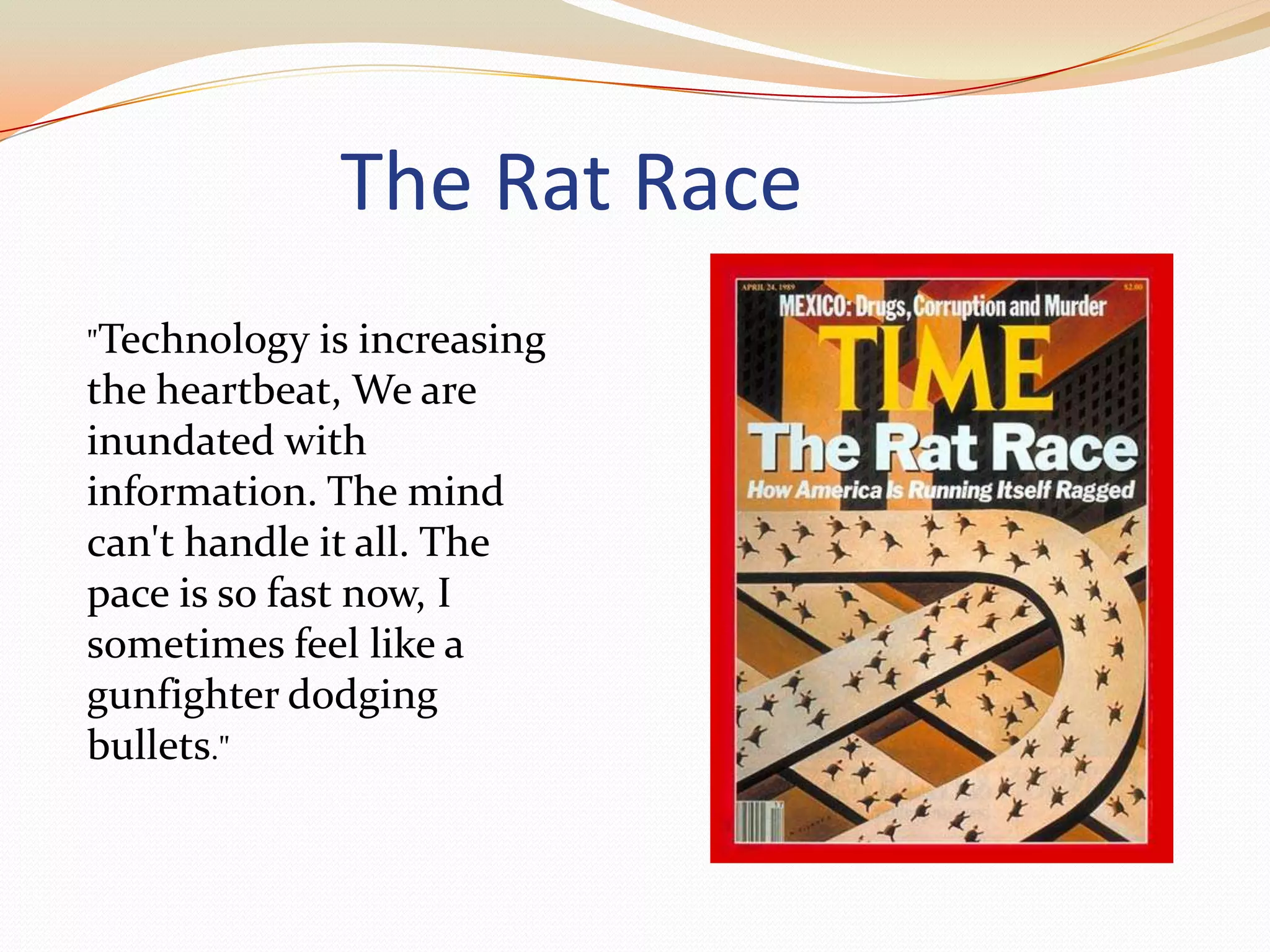
The Rat Race"Technology is increasing the heartbeat, We are inundated with information. The mind can't handle it all. The pace is so fast now, I sometimes feel like a gunfighter dodging bullets."
HOW WE NEED TO EVOLVEWhat’s OUTIQ 	TIME MANAGEMENTDISCIPLINEWhat’s INEQENERGY MANAGEMENT ROUTINES
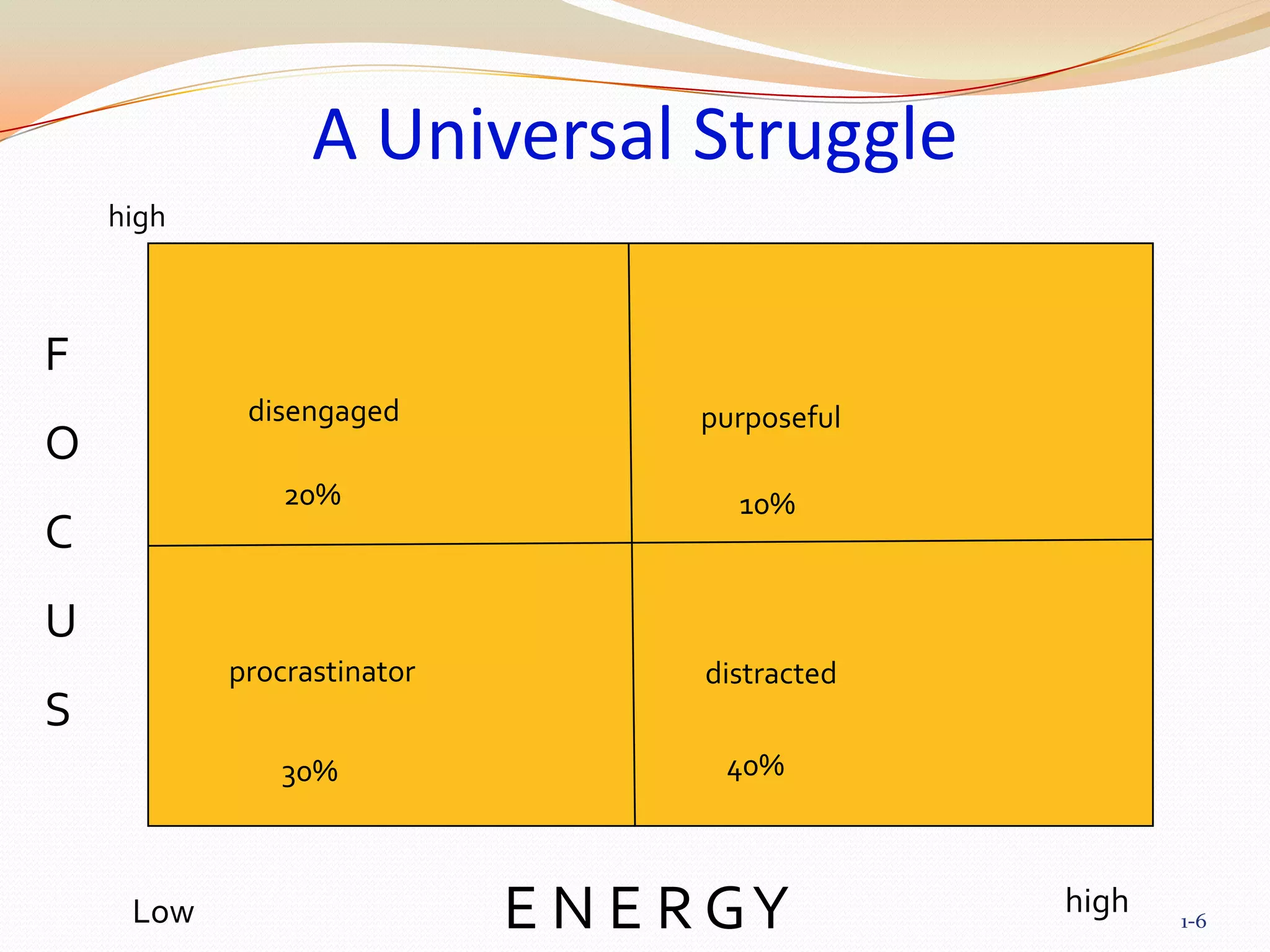
A Universal Struggle1-6highFOCUSdisengagedpurposeful20%10%procrastinatordistracted40%30%E N E R G YhighLow
Manage Your EnergyManaging your energy not your time is the fundamental currency of high performancePerformance, health, and happiness are grounded in the skilful management of energyGreat leaders are the stewards of organizational energy.  (Jim Loehr and Tony Schwartz, The Power of Full Engagement)
Principles to Managing EnergyFocus on Energy not TimeThink in terms of Routines not DisciplineLife is a series of  Sprints not a MarathonNo matter what you are facing you always have control over  your level of energy!
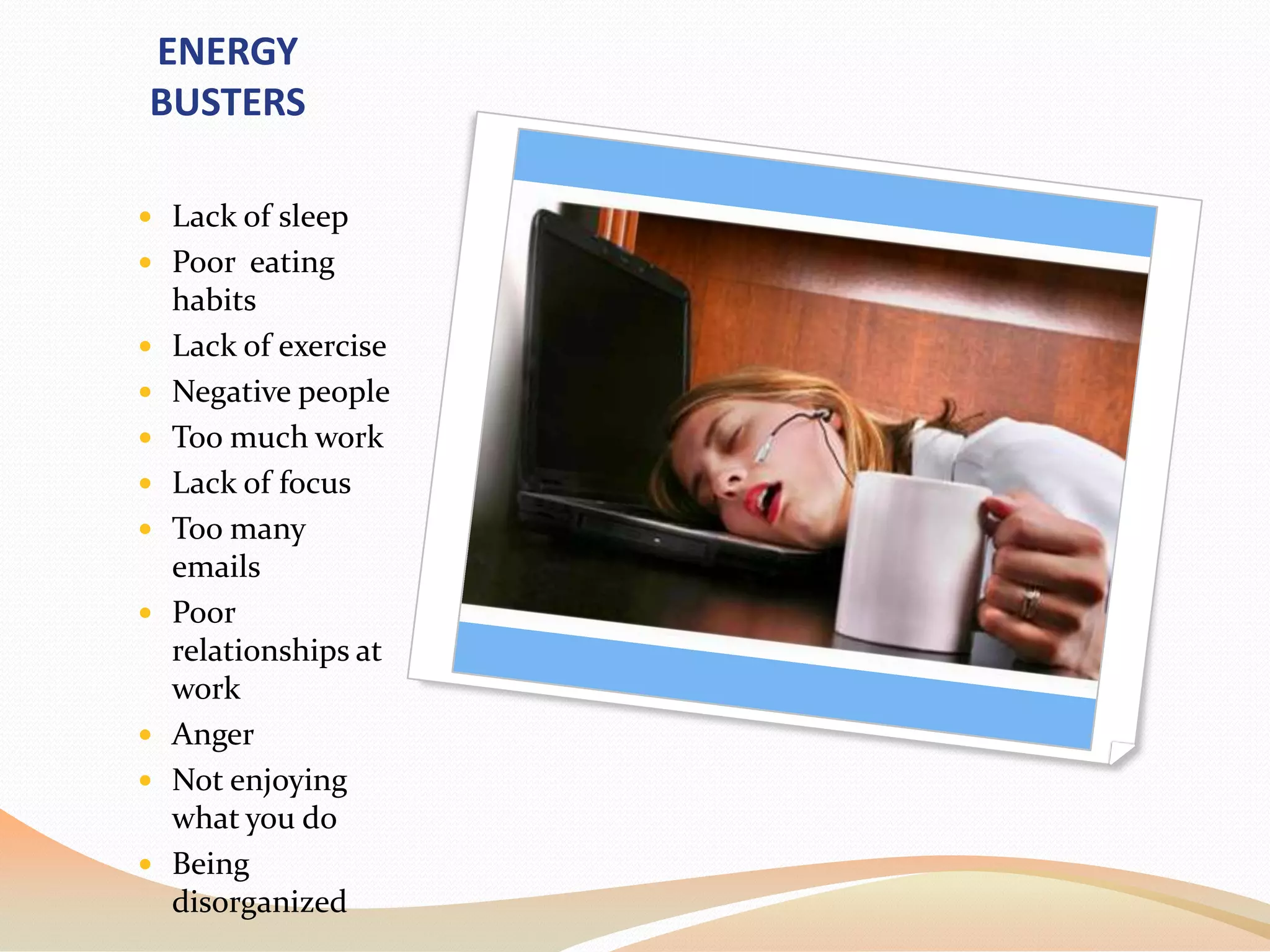
ENERGY BUSTERSLack of sleepPoor  eating habitsLack of exerciseNegative peopleToo much workLack of focusToo many emailsPoor relationships at workAngerNot enjoying what you doBeing disorganized
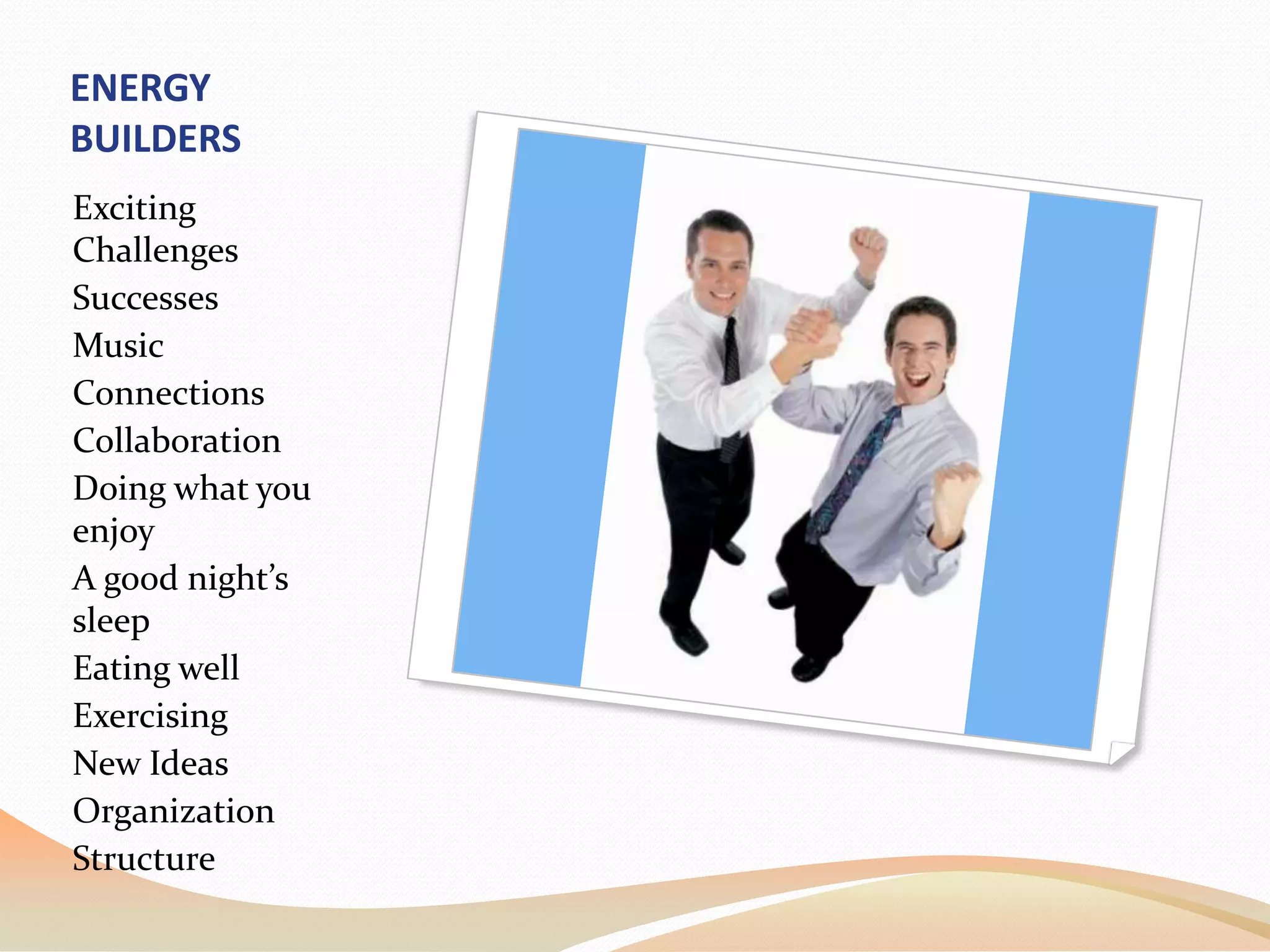
ENERGY BUILDERSExciting ChallengesSuccessesMusicConnectionsCollaborationDoing what you enjoyA good night’s sleepEating wellExercisingNew IdeasOrganizationStructure
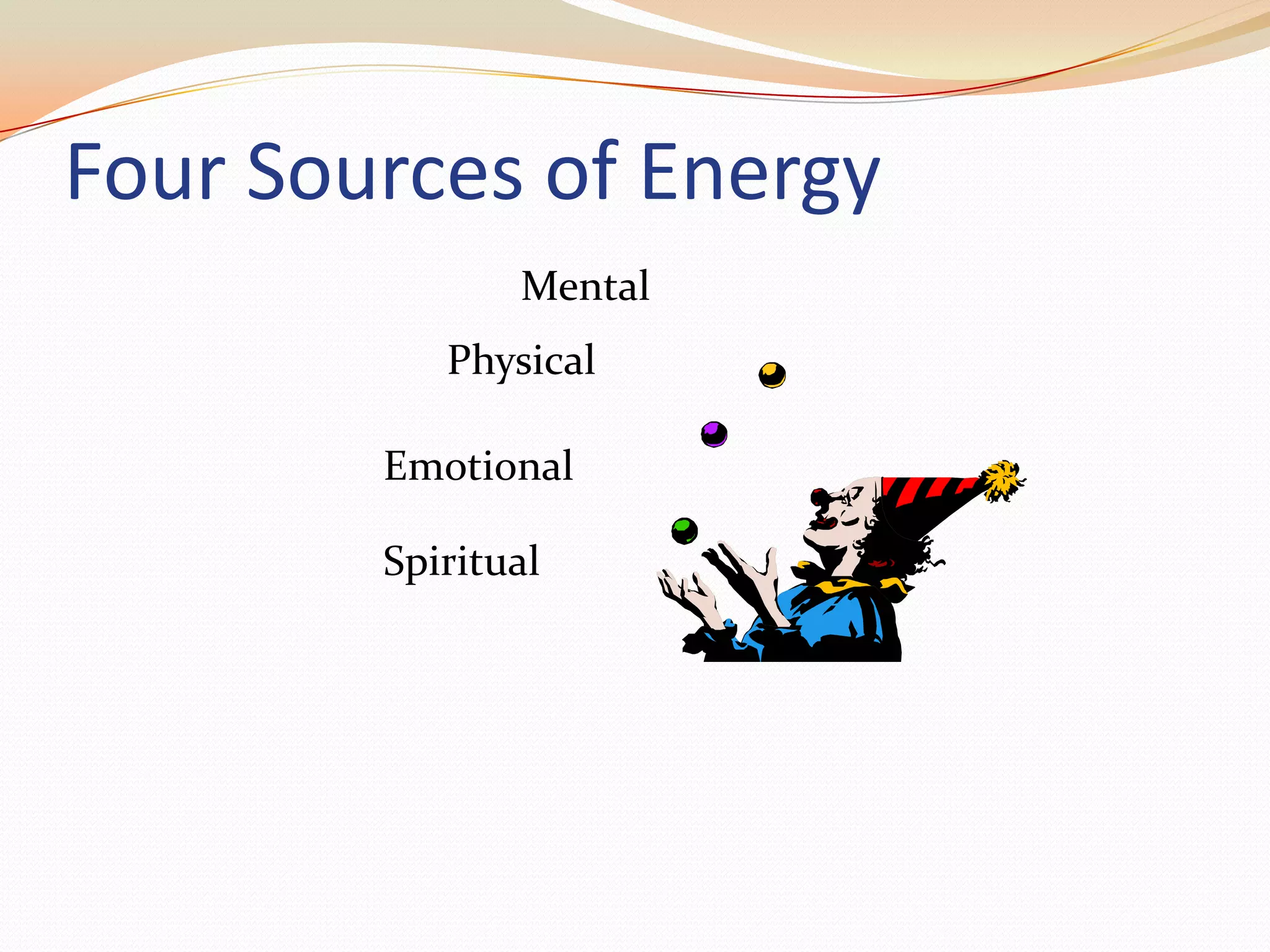
Four Sources of EnergyMentalPhysicalEmotionalSpiritual
Physical Energy: Fueling the FireSleepExerciseBrief but regular breaks throughout the workdayMaximum of 90 minutes on one activityTaking lunch every day
Emotional Energy: Transforming Threat into ChallengeIn order to perform at our best we must access pleasant and positive emotions.Negative emotions are very costly in the context of performance
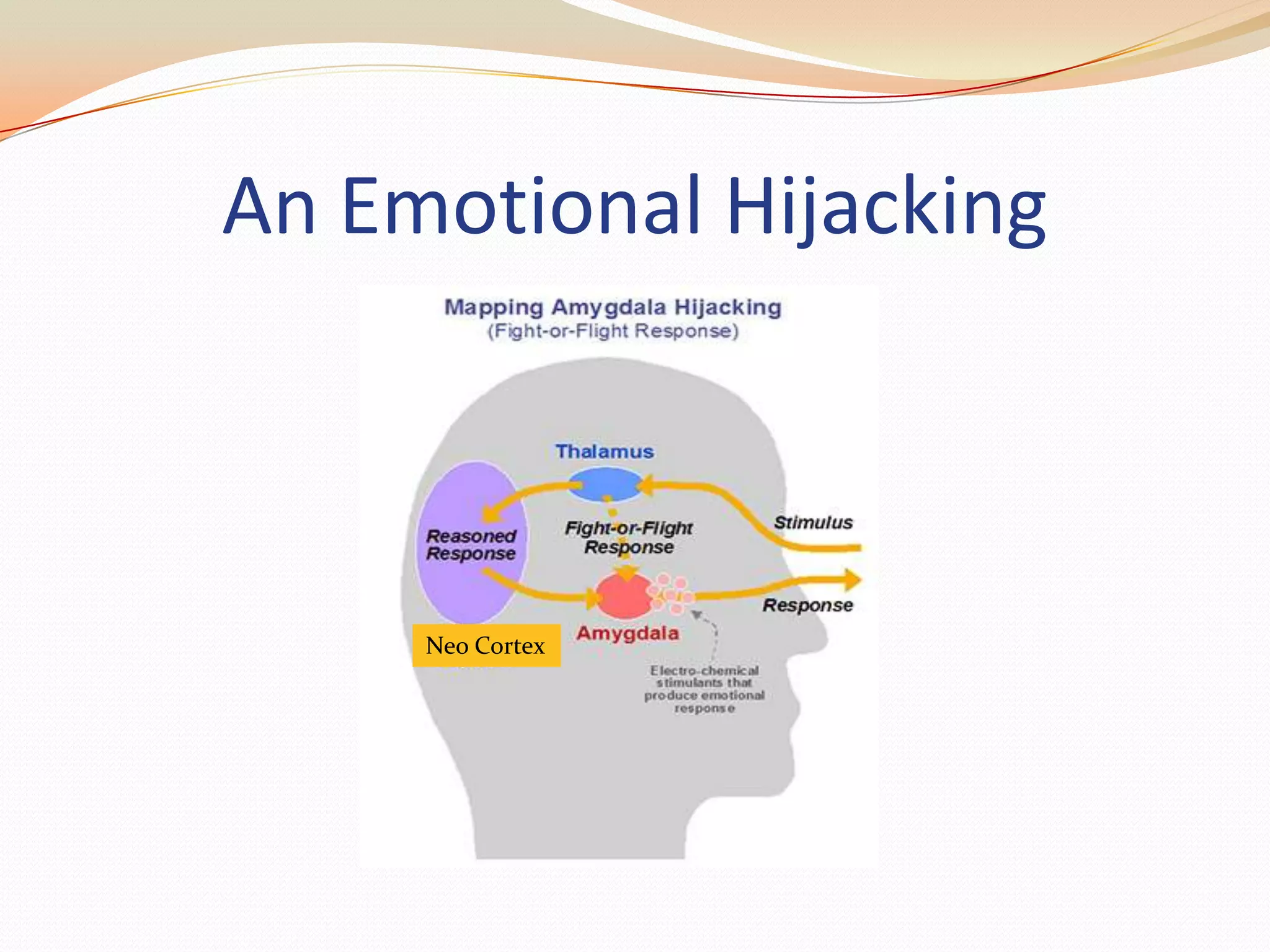
An Emotional HijackingNeo Cortex
Creating Positive EmotionsEnding your day being thankfulFocus on the most difficult person in your office and find something about them that you like. Write a letter/email to someone every day thanking them.Take a coworker to lunch and thank them for their hard work
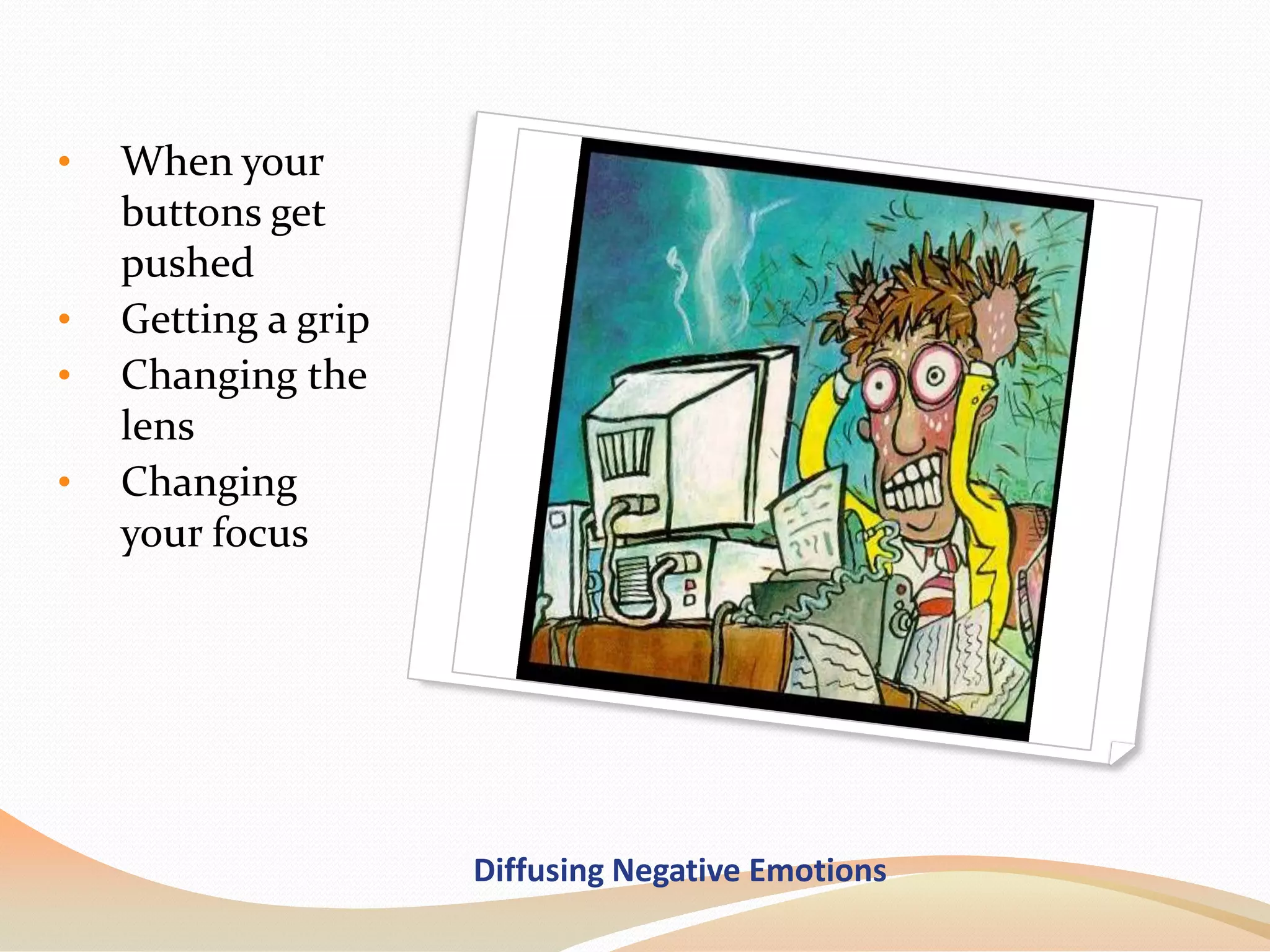
When your buttons get pushed
Getting a grip
Changing the lens
Changing your focusDiffusing Negative Emotions
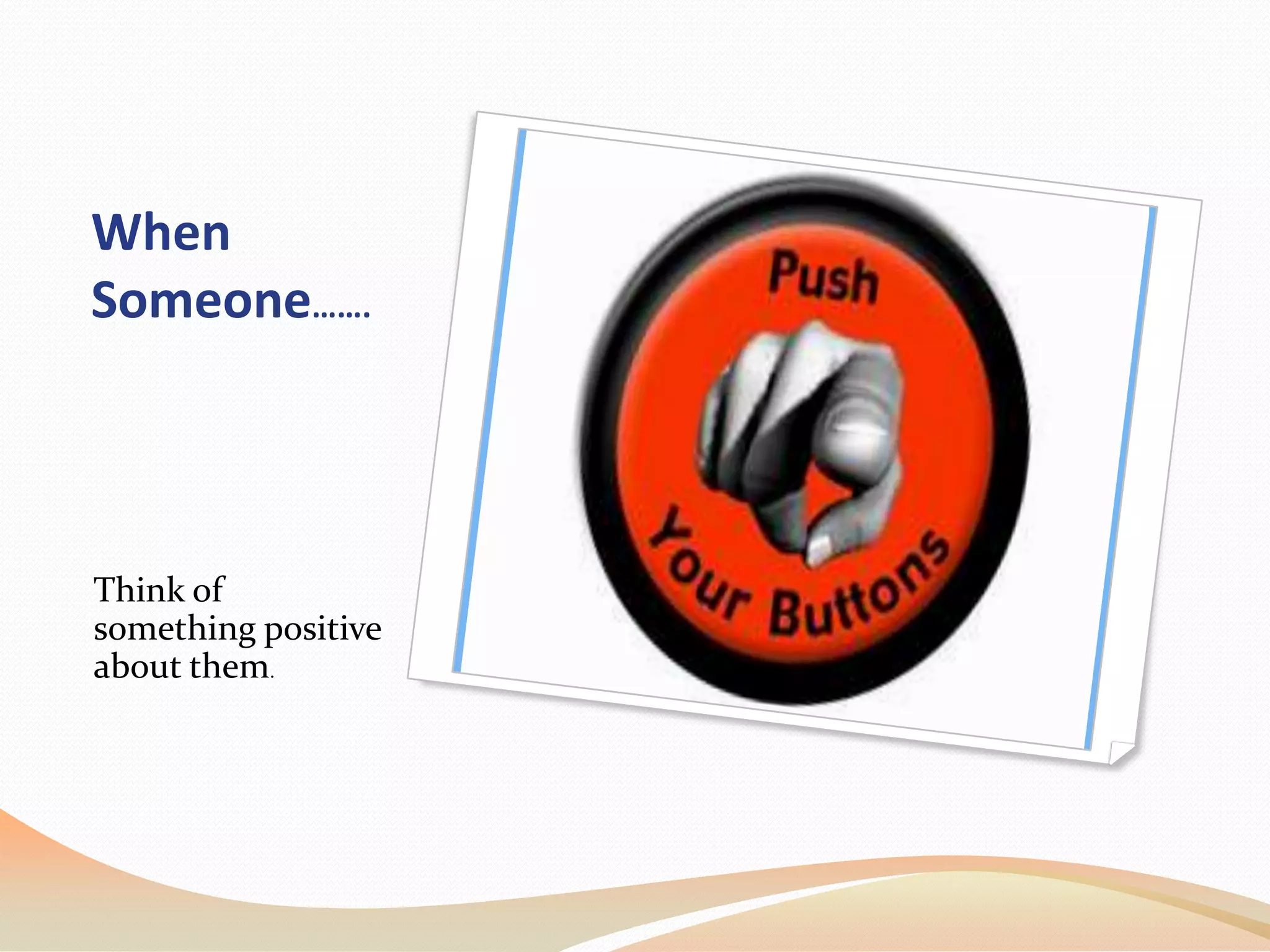
When Someone…….Think of something positive about them.
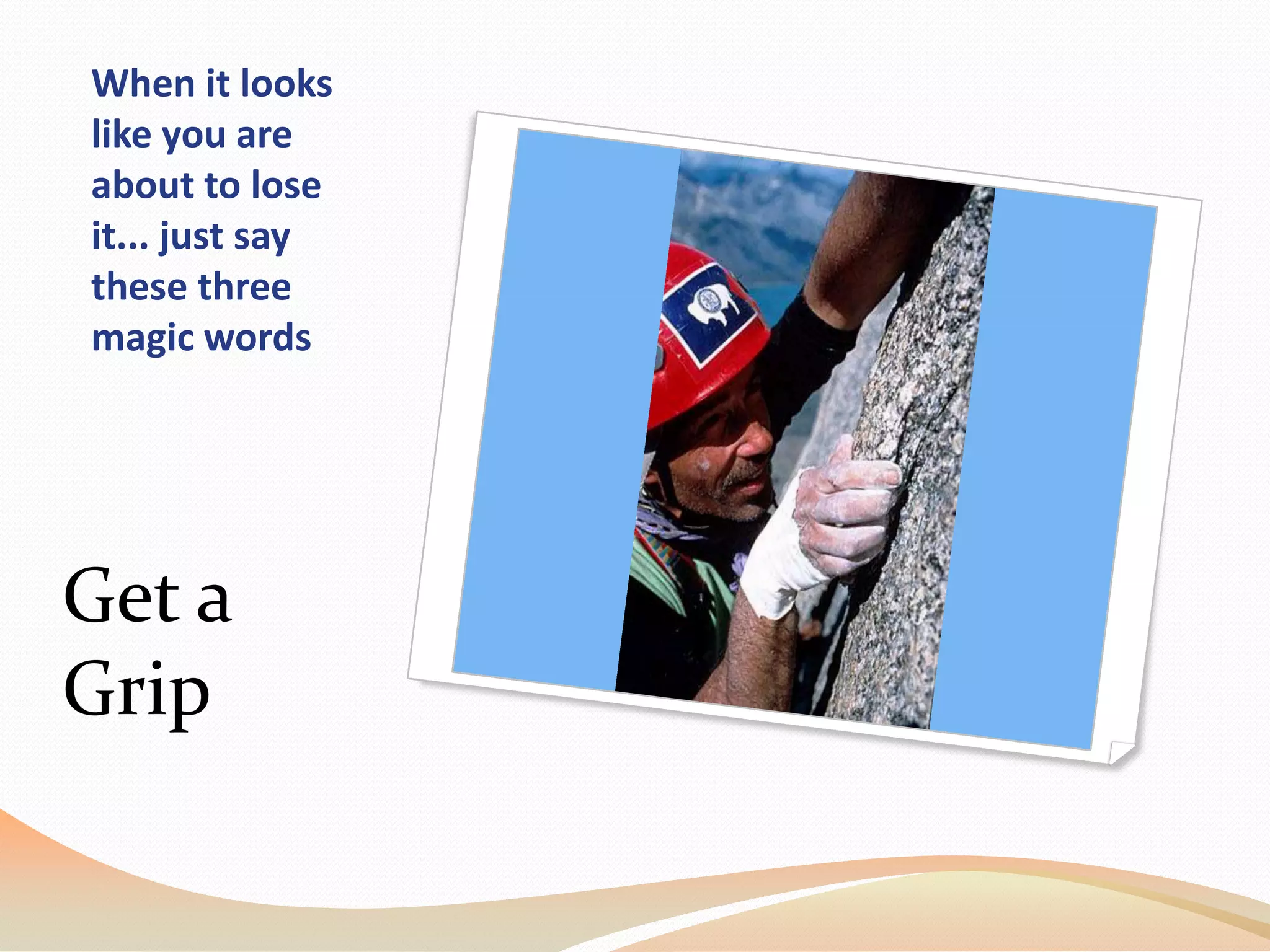
When it looks like you are about to lose it... just say these three magic wordsGet a Grip
Changing the LensLong lensHow will this look in six months?Reverse lensWhat would the other person in this conflict say and in what ways might that be true?A wide lensWhat is perfect about this situation that I am supposed to learn from?
Mental Energy: FocusCheck email no more than twice a day

Time management 2011

  • 1.
    Managing YOU in2011Ed TuriEmergeU
  • 2.
    OUR SERVICESCoachingMid toupper level managersSmall Business ownersGroup CoachingEntrepreneursSales teamsEmotional Intelligence developmentLeadersSales Teams
  • 3.
    Wouldn’t it benice…..In 1967 testimony before a Senate subcommittee indicated that by 1985 people could be working just 22 hours a week or 27 weeks a year or could retire at 38. That would leave only the great challenge of finding a way to enjoy all that leisure (Time Magazine, 1989, The Rat Race)
  • 4.
    The Rat Race"Technologyis increasing the heartbeat, We are inundated with information. The mind can't handle it all. The pace is so fast now, I sometimes feel like a gunfighter dodging bullets."
  • 5.
    HOW WE NEEDTO EVOLVEWhat’s OUTIQ TIME MANAGEMENTDISCIPLINEWhat’s INEQENERGY MANAGEMENT ROUTINES
  • 6.
  • 7.
    Manage Your EnergyManagingyour energy not your time is the fundamental currency of high performancePerformance, health, and happiness are grounded in the skilful management of energyGreat leaders are the stewards of organizational energy. (Jim Loehr and Tony Schwartz, The Power of Full Engagement)
  • 8.
    Principles to ManagingEnergyFocus on Energy not TimeThink in terms of Routines not DisciplineLife is a series of Sprints not a MarathonNo matter what you are facing you always have control over your level of energy!
  • 9.
    ENERGY BUSTERSLack ofsleepPoor eating habitsLack of exerciseNegative peopleToo much workLack of focusToo many emailsPoor relationships at workAngerNot enjoying what you doBeing disorganized
  • 10.
    ENERGY BUILDERSExciting ChallengesSuccessesMusicConnectionsCollaborationDoingwhat you enjoyA good night’s sleepEating wellExercisingNew IdeasOrganizationStructure
  • 11.
    Four Sources ofEnergyMentalPhysicalEmotionalSpiritual
  • 12.
    Physical Energy: Fuelingthe FireSleepExerciseBrief but regular breaks throughout the workdayMaximum of 90 minutes on one activityTaking lunch every day
  • 13.
    Emotional Energy: TransformingThreat into ChallengeIn order to perform at our best we must access pleasant and positive emotions.Negative emotions are very costly in the context of performance
  • 14.
  • 15.
    Creating Positive EmotionsEndingyour day being thankfulFocus on the most difficult person in your office and find something about them that you like. Write a letter/email to someone every day thanking them.Take a coworker to lunch and thank them for their hard work
  • 16.
  • 17.
  • 18.
  • 19.
  • 20.
    When Someone…….Think ofsomething positive about them.
  • 21.
    When it lookslike you are about to lose it... just say these three magic wordsGet a Grip
  • 22.
    Changing the LensLonglensHow will this look in six months?Reverse lensWhat would the other person in this conflict say and in what ways might that be true?A wide lensWhat is perfect about this situation that I am supposed to learn from?
  • 23.
    Mental Energy: FocusCheckemail no more than twice a day
  • 24.
    Spend a maximumof 90 minutes working on a project
  • 25.
    Plan 3-4 prioritiesfor the next day each night before you leave the office
  • 26.
  • 27.
    Take lunch everyday…. Not at your deskBe StrategicBe StrategicStart your day working on something that has long term valuePick the three most high value areas that you need to be spending your time in. Schedule days to work in those areas.
  • 28.
    What would bethe greatest good that could come from your work?
  • 29.
    How we Change?Implementingroutines into our life is the key to making changes to our energy level. Focus on things you have more control over firstGet support from others.

Editor's Notes

  • #4 We once believed that advancements in technology would reduce how much we work. It’s actually had the opposite affect. We now work longer than we have ever worked.
  • #5 This quote was published in Time Magazine in 1989! That was before the internet, email, and cell phones. The big technology in 1989 was the fax machine
  • #6 What worked before won’t work now. Traditional time management skills won’t work in 2011. We need to learn how to manage our energy, think in terms of routines and improve our emotional intelligence. In fact research shows that high performers are higher in emotional intelligence than low performers
  • #8 Jim Loehr and Tony Schwartz published the book- The Power of Full Engagement. You must focus more on managing your energy and less on managing your time.
  • #9 Routines are habits that we create over time. Discipline is something that we force ourselves to do. The most successful athletes are not necessarily disciplined, as much as they are better at creating routines
  • #10 What are energy busters for you? Why are you tolerating them?
  • #11 What gives you energy? Why aren’t you doing more of this?
  • #12 Energy Management is about juggling four sources of energy each day. If you feel exhausted at the end of your day chances are that you are not managing yourself well.
  • #13 If you are not getting 7-8 hours of sleep a night you will not be able to perform at a high level for a long period of time. There is a strong link between exercise and performance- consider that you might want to start some type of an exercise program to improve your performance.- more relaxed, make better decisions, less tired, more patient,
  • #14 Most people don’t pay much attention to their emotions. Yet, research clearly shows that managing your emotions well is critical to long term success.
  • #15 The emotional part of our brain (amygdala) often gets hijacked. When this happens it cuts off any connection to the thinking and logical part of our brain. When we are hijacked we make poor decisions. Emotionally intelligent people know how to manage and limit emotional hijackings
  • #16 We have the ability to generate positive emotions. If you regularly access positive emotions you will perform better.
  • #17 You also must know how to manage negative emotions.
  • #18 This sounds crazy doesn’t it…. But the next time someone gets you angry try thinking something positive about them. It will change your emotions and help you handle the situation better.
  • #19 Research shows that just by saying something like “Get a grip” when you are on the verge of getting hijacked, will reduce the strong negative emotions you are feeling.
  • #21 We are not supposed to multi-task. The key to focus is short bursts of focus. Never spend more than 90 minutes at your computer without taking a break.
  • #22 Never start your day by checking email. If you want to be successful you have to spend a little time each day working on strategic and long term goals. It will give momentum to your day.
  • #23 We need to tap into our purpose on a daily basis. This is what drives us past obstacles.