The Thylacine was a
carnivorous marsupial of modern
times. The thylacine resembled a
large, short-haired dog with a stiff tail
which smoothly extended from the
body in a way similar to that of
a kangaroo. Its yellow-brown coat
featured 13 to 21 distinctive dark
stripes across its back, rump and the
base of its tail, which earned the
animal the nickname, "Tiger". Its
body hair was dense and soft. The
mature thylacine ranged from 100 to
130 cm (39 to 51 in) long, plus a tail
of around 50 to 65 cm (20 to 26 in).
The thylacine probably preferred the
dry eucalyptus forests, wetlands, and
grasslands in continental Australia. In
Tasmania it preferred the woodlands of
the midlands and coastal health.
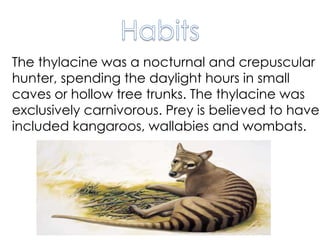
The thylacine was a nocturnal and crepuscular
hunter, spending the daylight hours in small
caves or hollow tree trunks. The thylacine was
exclusively carnivorous. Prey is believed to have
included kangaroos, wallabies and wombats.
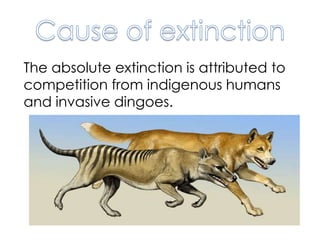
The absolute extinction is attributed to
competition from indigenous humans
and invasive dingoes.

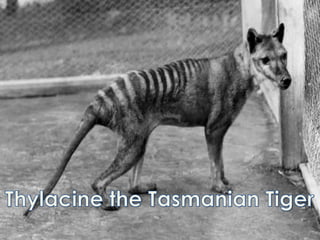
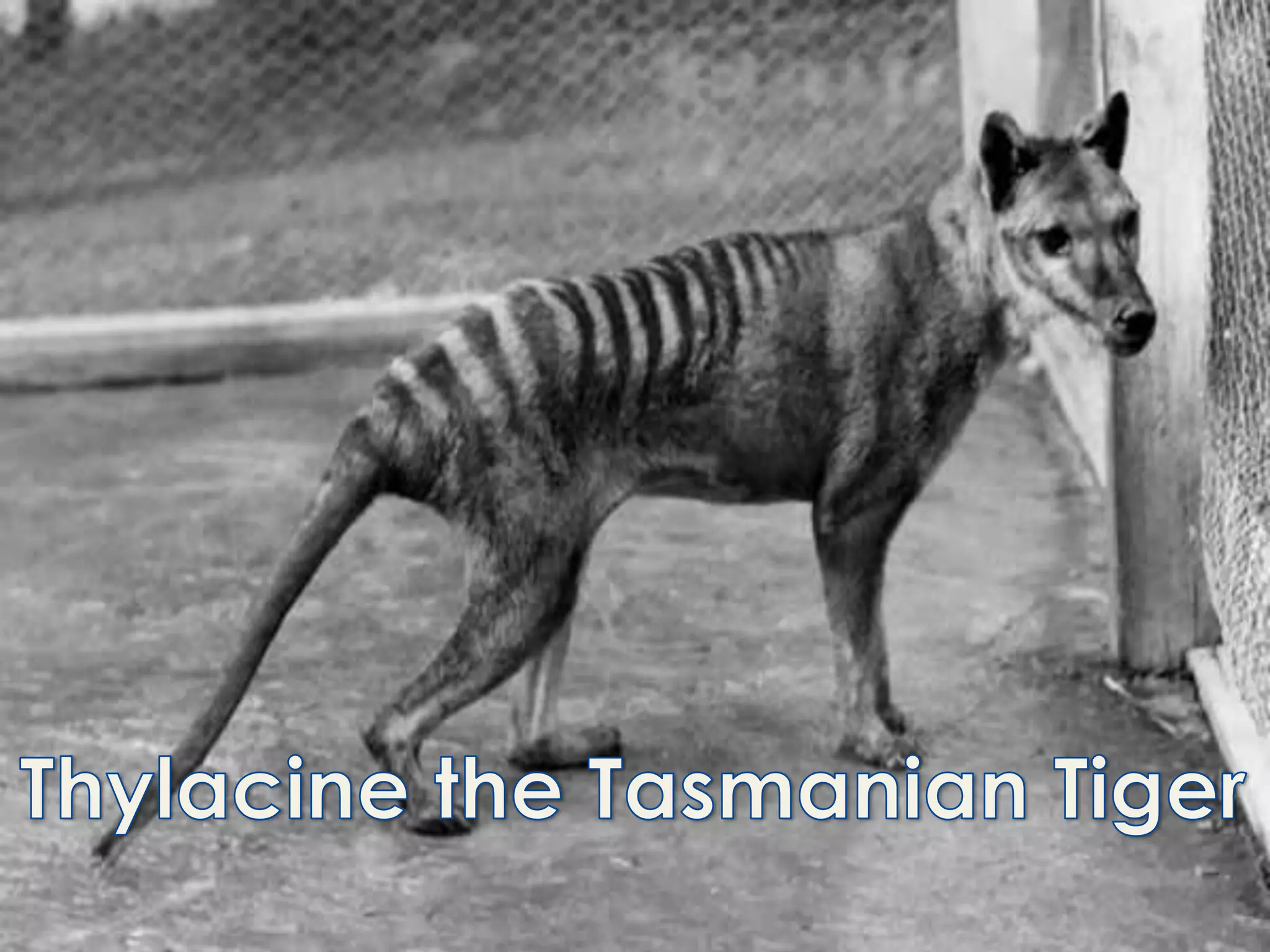
Thylacine the tasmanian tiger

  • 2.
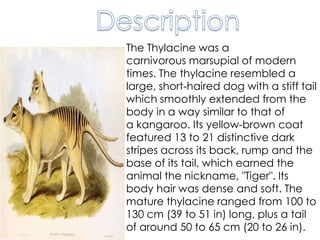
    The Thylacine wasa carnivorous marsupial of modern times. The thylacine resembled a large, short-haired dog with a stiff tail which smoothly extended from the body in a way similar to that of a kangaroo. Its yellow-brown coat featured 13 to 21 distinctive dark stripes across its back, rump and the base of its tail, which earned the animal the nickname, "Tiger". Its body hair was dense and soft. The mature thylacine ranged from 100 to 130 cm (39 to 51 in) long, plus a tail of around 50 to 65 cm (20 to 26 in).
  • 3.
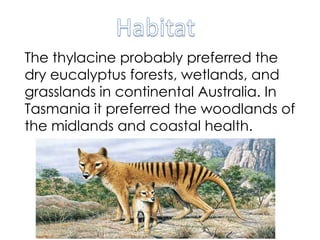
    The thylacine probablypreferred the dry eucalyptus forests, wetlands, and grasslands in continental Australia. In Tasmania it preferred the woodlands of the midlands and coastal health.
  • 4.
    The thylacine wasa nocturnal and crepuscular hunter, spending the daylight hours in small caves or hollow tree trunks. The thylacine was exclusively carnivorous. Prey is believed to have included kangaroos, wallabies and wombats.
  • 5.
    The absolute extinctionis attributed to competition from indigenous humans and invasive dingoes.